Author: Heritage

  • Iran Missile Defense Shield Good First Step

    On 02.01.10 07:20 AM posted by Baker Spring

    The Obama Administration is finally doing something that is likely to lessen the threat posed by an aggressive Iran. It is following the lead of the George W. Bush Administration and looking to expand missile defense capabilities in the Persian Gulf.

    This step has many advantages for the United States and its allies in the region. Reflective of a “protect and defend” strategy, it offers a defensive solution that highlights the aggressive intent of Iran. The alternative is to give the Iranians a first strike option. It also does not require the global consensus that has been holding up the imposition of effective sanctions against Iran. This is not to say that this step should substitute for the diplomatic effort to impose sanctions on Iran, only augment it. Third, it provides direct reassurance to U.S. friends and allies in the region and strengthens security ties there. Fourth, it will lessen the pressure on friends that do not have nuclear weapons to seek them in the future, and also will lessen the likelihood that allies who may have nuclear weapons will be put in a circumstance where they would be compelled to use them.

    This last point is critical. Last fall, The Heritage Foundation ran a series of exercises based on an abstract of Middle East regional setting, where all the nation-equivalent players were presumed to have nuclear weapons and the means to deliver them. The exercises demonstrated that pursuing a defensive option resulted in fewer nuclear weapons. On the other hand, a nuclear conflict broke out when the player equivalent to the United States simultaneously relied on nuclear retaliatory options, pursued a policy of nuclear disarmament, and chose not to pursue defensive options.

    The Obama Administration, however, needs to close the circle on this productive step. The plan is to place the Patriot missile defense batteries in four Persian Gulf states and Standard Missile-3 missile defense interceptors on Navy ships in the Gulf. These steps will permit a defense against shorter-range missiles. The problem is that these current systems will not provide a defense to the United States or its friends against the longer-range missiles that Iran is seeking. This will permit Iran to focus on threatening the United States directly in order to drive a wedge between the United States and its friends and force the United States out of the region. It is an obvious window of vulnerability that the Obama Administration must close.

    The Obama Administration can close this window of vulnerability by taking three steps. The first is to upgrade the sea-based missile defense system to make it capable of countering longer-range missiles. This sea-based system could also be used to protect the United States against an Iranian launch of a short-range missile off the coast that carries and electro-magnetic pulse (EMP) nuclear warhead. Such an upgrade program should be put on the fast track. The second step is to restore the larger number of Ground-based Midcourse Defense (GMD) interceptors that are designed to counter long-range missiles that were proposed by President Bush. The Bush Administration proposed placing 44 such interceptors in Alaska and California and ten in Poland. President Obama, last year, made the unwise decision to scale back the number to be place in Alaska and California to 30 and cancelled the agreement with Poland. The most powerful step the Obama Administration could take to close this window of vulnerability is to announce that it will revive a proposal of the Reagan Administration and the George H.W. Bush Administration to put missile defense interceptors in space. This is a missile defense program that will serve to put the Iranians on the defensive.

    Watch Heritage’s documentary on the necessity for missile defense: 33 Minutes.

    http://blog.heritage.org/2010/02/01/…od-first-step/

  • A True Roadmap to Fiscal Sustainability: The Numbers Don’t Lie

    On 02.01.10 08:22 AM posted by Kathryn Nix

    During his State of the Union Address, Obama said that if “anyone from either party has a better approach that will bring down premiums, bring down the deficit, cover the uninsured, strengthen Medicare for seniors, and stop insurance company abuses, let me know.”* Earlier that day, Representative Paul Ryan (R-WI) introduced his Roadmap for America’s Future Act of 2010, which provides all of the above.

    The Congressional Budget Office’s (CBO) analysis of Rep. Ryan’s legislation proves the plan would accomplish President Obama’s goals by reforming entitlements, reining in government spending, and setting the country on a long-term path to economic prosperity.

    CBO found that the Roadmap would reduce Medicare and Medicaid spending, slightly increase Social Security spending, and lower tax revenues.* Overall, these changes would reduce federal budget deficits and the federal debt.* Federal outlays would decrease from 26 percent of Gross Domestic Product in 2009 to 19 percent in 2020 and eventually 14 percent in 2080.* After 2030, federal revenues would be maintained at 19 percent of GDP.* By 2080 the budget would experience a surplus of approximately 5 percent.

    The Roadmap’s effect on the federal debt is particularly impressive because it reverses the unsustainable course of current policies.* Under the current trajectory, debt would skyrocket in the decades to come, reaching over 200 percent of GDP by 2043 and nearly 700 percent of GDP by 2080.* (Of course, this isn’t actually possible—the country would incur financial ruin well before it reached these levels).* But under Rep. Ryan’s proposal, the debt would peak at 100 percent GDP in 2043 and then decrease to zero by 2080.

    Specific to Social Security, revenues would exceed outlays by 2083 and would create a surplus for the trust funds thereafter.* Conversely, under currently law the trust funds would be exhausted by 2042.

    Finally, CBO predicts that the economy at large would benefit tremendously under the Roadmap, with real gross national product per person achieving levels 70 percent higher due to the Roadmap than would otherwise occur.

    http://blog.heritage.org/2010/02/01/…e2%80%99t-lie/

  • Oldest Air Force in History Asked to Do More than Ever Before

    On 02.01.10 08:43 AM posted by Mackenzie Eaglen

    We’ve all heard the statistics that many of the U.S. Air Force’s young pilots fly the same planes their fathers and grandfathers flew in Vietnam. They were once cutting edge but now are old, worn out, and technologically dated.

    Now it’s time to for Congress to do something about the problem of declining air power capabilities.

    The Air Force has invested billions to service and upgrade ever-aging fighter, cargo, and lift platforms, however, there are doubts about how long these aircraft can be maintained. Just over two years ago, an F-15/D fighter broke apart into pieces in the sky due to structural strain–serving to remind us of the dangerous consequences of under-investment in new airframes.

    As old planes fall out of service due to wear and tear or are retired, U.S. fighter aircraft inventories will fall far below the numbers identified by the Air Force as being necessary to meet the nation’s demands. The pace of new aircraft purchases is too slow to bridge the fighter gap, as the Heritage Foundation highlights in a chart book on “The State of the Military.”

    President Obama and Defense Secretary Gates cancelled the F-22 fifth-generation fighter program last year, instead investing in the Joint Strike Fighter. But now Pentagon leaders are cutting purchases of the F-35, further exacerbating the fighter shortfall.

    New planes are expensive and require significant upfront investment. But it should not be lost upon Americans that this investment reaps benefits—from deterrence, mobility, and air supremacy—for decades to come.

    It is becoming increasingly clear that Air Force budgets are being targeted as a billpayer for other federal spending, and that the entire defense budget is under pressure from exponential growth in entitlement spending and domestic programs. But allowing Air Force accounts to be plundered is shortsighted. The U.S. military can only patch up old planes for so long without risk to those in uniform and the nation’s security interests.

    As the President announces his fiscal year 2011 defense budget request today, Congress must fight to remedy the fighter gap and ensure that the Air Force pilots of tomorrow have the same technological advantage enjoyed by their forebears.

    http://blog.heritage.org/2010/02/01/…n-ever-before/

  • Bin Laden Goes Green

    On 02.01.10 10:24 AM posted by James Carafano

    Since running away at Tora-Bora, Bin Laden has mainly served as al Qaeda “propagandist in chief.” His main task is to make al Qaeda appear relevant. Osama spin is reflected through his video and audio tapes in two ways.

    First, al Qaeda’s chief makes veiled and vague threats; that way if something happens he can take credit for it. If nothing happens, he doesn’t lose credibility.

    Second, Bin Laden stays topical. He links al Qaeda’s goals and aspirations to events in the news. So, for example, when violence spiraled out of control in Iraq, he called the country—the central battleground for his cause. (On the other hand, when terrorists in the country got whacked right and left, he stopped talking about Iraq). More recently, Bin Laden tried to take credit for the attempted Christmas day bombing of a Detroit bound plane. (Though the group that launched the attack is linked to al Qaeda many doubt Bin Laden played any operational role). In his latest screed from his cave in Pakistan, Bin Laden attacked the United States over global warming.

    According to a report in The Washington Post, he “blamed the United States and other industrialized nations for climate change and said the only way to prevent disaster was to break the American economy, calling on the world to boycott U.S. goods and stop using the dollar.”

    Bin Laden must be getting desperate for ideas. Now, he is not even creative. He is just the latest in the long line of those that have jumped on the climate change bandwagon for no other purpose than to vilify and attack the United States.

    The truth is the United States already does more than most countries to protect the environment. Indeed, the more developed economies are, the more they do to take care of the environment. “Evidence abounds,” point out the Heritage Foundation’s Terry Miller and Anthony Kim, “ [t]he Environmental Performance Index (EPI), published by the World Economic Forum, the Center for International Earth Science Information Network (CIESIN), and the Yale Center for Environmental Law and Policy, provides ‘a composite index of current national environmental protection efforts.’ Levels of economic freedom and the EPI are positively correlated at a statistically significant level. The freer the economy, the higher — and more sustainable — the level of environmental protection.” The surest way to save the earth is to promote economic freedom.

    Sadly, it is not only terrorists like Bin Laden that advocate the opposite. Debunking their idiotic ideas is the first step to making them irrelevant.

    With regards to Bin Laden, however, that is not enough. Perhaps the most important take away from this latest tape is that winning the war in Afghanistan and rooting Bin Laden out of Pakistan matters. Words can kill. As long as al Qaeda holds out in Pakistan they will give hope to their cause. When they are crushed, their cause will die with them. Defeating terrorism means crushing its campaign to spread ideas and arguments as well as taking out its leadership, support networks and sanctuaries.

    http://blog.heritage.org/2010/02/01/…en-goes-green/

  • Rapidly Melting Credibility

    On 02.01.10 11:00 AM posted by Ben Lieberman

    The Washington Post asks: “Recently, a U.N. scientific report was found to have included a false conclusion about the melting of Himalayan glaciers. That followed the release of stolen e-mails last year, which showed climate scientists commiserating over problems with their data. Is there a broader meaning in these two incidents, and should they cause the public to be more skeptical about the underlying science of climate change?”

    You can’t call them isolated incidents now that they are coming in droves.

    It is clear that global warming science has been hijacked by a subset of researchers who have crossed the line into advocacy and alarmism. The cache of climategate e-mails alone reveals a number of scandals – key researchers and institutions manipulating temperature data to gin up a bigger warming trend, refusing to allow independent researchers to see the raw data, and strategizing to keep skeptical views out of the scientific literature and official reports. Climategate is just beginning to unfold.

    Now, the UN’s vaunted 2007 Intergovernmental Panel on Climate Change (IPCC) report turns out to contain a whopper. The report describes as “very high” the likelihood that continued global warming will cause the glaciers in Himalayan Mountains to disappear by 2035 if not sooner. Amazingly, it turns out that the source of this claim is an unsupported statement of one researcher that appeared in a magazine article. Worse yet, the IPCC report’s editors knew full well that the assertion was based on speculation rather than peer reviewed science, and in fact it was disputed by several scientists when it appeared in early drafts. Nonetheless, it was left in for political reasons.

    Similar shenanigans appear to have gone on with the IPCC’s claim that damage from hurricanes, floods and other natural disasters has worsened because of global warming. Like the Himalayan glacier melt assertion, it was based on the claim of a single researcher who had not published it in the scientific literature, and who now disassociates himself from the way it was used in the IPCC report. Indeed, when he did publish the study, he concluded that there was “insufficient evidence” of a link between warming and natural disaster damage.

    There is a clear pattern with these revelations. It’s the very scariest claims — rapidly melting Himalayan glaciers threatening a billion people with flooding and then with drought, an increase in Katrina-scale disasters, and others – that are the ones on the shakiest ground. Virtually everything the public has been told about global warming that sounds terrifying is not true, and what is true falls well short of being terrifying.

    There is a reason why the gloom and doom, however dubious and unscientific, keeps getting advanced by those who support an expansive global warming agenda. Without such hype, the threat of global warming does not justify the multi-trillion dollar costs and multi-million job losses of attempts to deal with it.

    There is another lesson from Glaciergate — it is high time to retire the distinction between the “skeptics” and the “consensus science.” All along, several so-called skeptics have complained about the Himalayan hyperbole. As is typical, they were denigrated as outliers or even kooks for doing so. As recently as a few weeks ago, Rajendra Pachauri, chair of the IPCC, derided such critiques as “voodoo science,” until he reluctantly had to admit they were true.

    By now, the skeptics have proven to be right about way too much, and the putative “consensus science” wrong about way too much, for the labels to make any sense. In fact, if there are additional revelations like Glaciergate (and it looks like claims of global warming devastating the Amazon rainforest may be next), it might make more sense for the labels to be reversed.

    Cross-posted at The Washington Post’s Planet Panel.

    http://blog.heritage.org/2010/02/01/…g-credibility/

  • Senator John Kerry on Useless Federal Fire Act Grants

    On 02.01.10 11:59 AM posted by Matt Mayer

    In a recent press release touting a federal fire grant, Sen. John Kerry (D-MA) noted that because “firefighters put their lives on the line every day,” we face a “moral issue” that required us to use federal funds to buy the Somerville Fire Department equipment.

    The reality is that despite billions in grants across the United States, the Fire Act program has not reduced the number of firefighter deaths or fires. As David Muhlhausen pointed out in his seminal data analysis paper on the Fire Act program, “fire grants, including grants that subsidize the salaries of firefighters, had no impact on fire casualties [and] failed to reduce firefighter deaths, firefighter injuries, civilian deaths, or civilian injuries.” More damning, Muhlhausen found that fire departments that did not received federal grants “were just as successful at preventing fire casualties as grant-funded fire departments.”

    As with most pork barrel spending, politicians should keep the “moral issue” card out of it and just admit they are doling out favors to those individuals or groups from whom they receive financial and campaign support. Don’t forget, when Senator Kerry ran for president in 2004, his constant companion on the campaign trail was none other than union head Harold Schaitberger, General President of the International Association of Fire Fighters. In the photo above from the 2004 Presidential campaign, that is Schaitberger on Kerry’s right.

    http://blog.heritage.org/2010/02/01/…re-act-grants/

  • Less Economic Freedom = Fewer Jobs for Americans

    On 01.31.10 03:01 PM posted by Theodore Bromund

    What does America’s declining economic freedom mean for you? It means that America will create fewer jobs. And that means that Americans will be poorer, as well as less free.

    A statement last week by Graham Mackay, the head of SAB Miller, one of the world’s largest brewers (they make, among many other beers, Miller Lite), explains how and why this will happen.

    In 1999, SAB Miller moved its headquarters to London, attracted, Mackay said, by “the liberal and predictable tax regime.” But since the mid-2000s, the UK has been losing economic freedom. In fact, in 2010, the UK fell out of the top ten for the first time, just as the U.S. dropped into the ranks of the ‘mostly free’ in the Index of Economic Freedom. The UK’s ranking has now declined for four consecutive years, and the level of economic freedom in Britain is now as low as it has been since the Index began to measure it in 1995.

    As a result, Mackay pointed out, the conditions that drew SAB Miller to Britain no longer exist:

    Today the tax system is not predictable and there have been numerous increases, particularly when it comes to personal taxation. This means that as a global company we are no longer able to attract our best global talent to the UK. Why would someone move from Hong Kong where the marginal tax rate is 15 per cent and come to the UK where it is closer to 52 per cent. Taxation was a key part of our decision to locate a new global procurement business not in the UK but in Zug in Switzerland.

    That single decision lost Britain 400 jobs. And SAB Miller is not the only company to flee the increasingly unfree economy of Britain. The damage goes far beyond the banking and financial sector: firms such as Vodafone, the cellular provider, have also departed.

    And where have they gone? SAB Miller is worried about drawing talent to Britain (ranked eleventh in the Index) from Hong Kong (ranked first) and instead set up its new business in Switzerland (ranked sixth). Vodafone went in part to Ireland (ranked fifth). This is a competitive world, and businesses have choices. If the U.S. continues to fall behind in economic freedom, some businesses – as the example in Britain of SAB Miller shows – will make a rational decision to move elsewhere, and others will have less money to pay workers because they will be giving more to the taxman.

    In his State of the Union address, the President stated that “And to encourage these and other businesses to stay within our borders, it’s time to finally slash the tax breaks for companies that ship our jobs overseas and give those tax breaks to companies that create jobs in the United States of America.”

    But they’re not “our jobs” by eternal right. They are jobs created by private enterprise, within the context of the burdens imposed by the federal government. And as those burdens get heavier, the number of jobs on offer in this country shrinks. If the President is serious about job creation, he will address the real threat to it: the policies of his administration, and of past ones, that reduced the willingness of companies to invest and their ability to grow by restricting our economic freedom.

    http://blog.heritage.org/2010/01/31/…for-americans/

  • ?Timber!? Look Out for Falling Trees ? and Companies ? if the Death Tax Hits

    On 01.31.10 10:07 AM posted by Mike Brownfield

    Hancock Lumber company has been around for 180 years, was started before more than half the states joined the Union, survived the Civil War and two World Wars, but now faces one of its greatest challenges: paying the death tax.

    Owner Kevin Hancock counts himself among the six generations of his family who have worked for the Maine-based company that provides lumber to contractors and home builders. Hancock explains that once the estate tax (otherwise known as the “death tax”) hits, Hancock Lumber will have to sell some or all of its 15,000 acres of open timberland for development in order to pay the tax bill. And that is pristine, open-access land that the public now uses for hiking and hunting.

    The death tax, which is assessed on the transfer of an estate from the deceased to their heirs, has been set to be phased-out and abolished for close to a decade now. The 2001 tax cut began an eight-year phase out of the death tax, lowered the rate from 55% in 2000 to 45% in 2009, and increased the untaxed portion of estates from $1 million to $3.5 million. This year, the tax is completely abolished, but it comes back to life in 2011 at a 55% rate and $1 million exemption.

    It’s because of problems faced by companies like Hancock Lumber that the tax should be permanently eliminated.

    The death tax makes it difficult for Hancock Lumber to grow and create new jobs. Since death tax obligations increase with the whims of Congress, there is a great degree of unpredictability for a company when it looks to plan ahead. In Hancock Lumber’s case, any business decisions must take into consideration the unknown tax obligations it will face down the road.

    That’s particularly troublesome for Hancock’s company because of the incredible, long-term investments it must make due to the nature of the lumber business. It takes 80 years to grow pine trees, and in the company’s history, it has only seen two complete crop cycles. Hancock Lumber is growing trees today for a generation that isn’t even born. The death tax’s uncertainty discourages family-owned businesses from growing and adding new jobs, especially when the nature of the business requires such long-term investment.

    As Heritage’s Curtis DuBay writes, it’s high time to end the death tax, eliminate this uncertainty, and allow companies to grow and create new jobs:

    Instead of passing a punishing tax increase, now is the time for Congress to repeal the death tax forever. Doing so would lift a tremendous burden from countless family-owned businesses across the U.S. that fear a death tax liability could wipe out their businesses.

    Full repeal of the death tax would have an enormous positive effect on the economy in addition to the relief felt by family-owned businesses. It would create millions of new jobs because the death tax is an enormous drag on the economy. It discourages hard work, saving and investing. Lifting impediments to these economy growing activities would put millions of unemployed Americans back to work.

    There are more real-life stories of companies struggling to grow under the yoke of the death tax. Watch the stories of Reliable Contracting and Grande Harvest Wines.

    Learn more about the death tax at heritage.org/deathtax.

    Do you have a comment or your own story to share? Leave a comment below and join the conversation.

    http://blog.heritage.org/2010/01/31/…eath-tax-hits/

  • The Public is Not Buying the Spending ?Freeze?

    On 01.31.10 12:00 PM posted by Todd Thurman

    During his State of the Union address, President Obama talked about a proposed spending freeze (underwhelming, as it is) and how such action can save money and get us out of debt.* Well, the good news is that no one is buying it. Virtually no one believes that the spending freeze will do anything to have an impact on the deficit.

    According to Rasmussen Reports, only 9% of the population think that the proposed spending freeze will have a big impact on the deficit. Forty-two percent believe that it will have no impact. However, there is a majority in support of a spending freeze, but there is a slightly larger majority in favor of reduced spending in government — *a message that the Obama administration clearly is not getting. Obama is giong to grow the deficit by $13 trillion over the next ten years while having a freeze of $447 billion with only 15 billion to be saved.

    Although it sounds like a large number (and 447 billion is certainly nothing to sneeze at), it is only a very small portion of federal spending. As we stated in our reaction to the State of the Union Address, it is only about 1/8 of all spending. They would not freeze all of government spending, just those that won’t “create” jobs. Aside from the obvious problem that the government cannot create jobs, it would cut costs from programs like the Judiciary, but others such as the Department of Education*would see increased spending.

    So with all of President Obama’s campaigning during the State of the Union address for his spending freeze, the public seems largely unimpressed. The Obama Administration needs to start realizing that the public is not buying their failed policies, and they should look in a new direction. We have a few good ideas here at Heritage.

    http://blog.heritage.org/2010/01/31/…ending-freeze/

  • The House and Senate Cloakroam: February 1-5, 2010

    On 01.31.10 06:00 AM posted by Dan Holler

    House Cloakroom:

    <ahref="http://blog.heritage.org/wp-content/uploads/House_of_Representatives-Seal.png"></p>Major Floor Action

    • Cybersecurity Bill – Next week, the House will consider <ahref="http://www.opencongress.org/bill/111-h4061/show">H.R. 4061, a cybersecurity enhancement bill which was approved by the Science Committee by voice vote in November 2009. *The bill would reauthorize several National Science Foundation programs that aim to enhance cybersecurity. <ahref="http://www.cbo.gov/doc.cfm?index=10850">CBO estimates (PDF) that H.R. 4061 would cost $639 million over five years and $320 million after 2014.
    • Debt Limit Increase – The House could consider a $1.9 trillion increase of the statutory debt limit as early as next week. *The bill would <ahref="http://money.cnn.com/2010/01/28/news/economy/debt_limit_vote_senate/index.htm">increase the debt limit by 15.3 percent, from $12.394 trillion to $14.294 trillion. * The $1.9 trillion increase is <ahref="http://blog.heritage.org/2010/01/29/senate-puts-politics-over-fiscal-responsibility-in-debt-limit-vote/">expected to ensure that Democrats will not have to bring another increase before Congress prior to the November elections.

    Major Committee Action

    • House Budget Committee will hold <ahref="http://waysandmeans.house.gov/Hearings/hearingDetails.aspx?NewsID=10968">a hearing on the Fiscal 2011 budget with Timothy Geithner, Secretary of the Treasury, on Wednesday.
    • House Ways and Means Committee will also hold <ahref="http://waysandmeans.house.gov/Hearings/hearingDetails.aspx?NewsID=10970">a hearing on the 2011 budget with Peter R. Orszag, director, Office of Management and Budget, on Wednesday

    Senate Cloakroom:

    <ahref="http://blog.heritage.org/wp-content/uploads/Senate-seal.png"></p>Analysis

    The President will release his budget next week, kicking off weeks of hearings and discussions about funding our nation’s priorities. However, the real news will once again be what is happening behind closed doors. Private discussions will continue on yet another stimulus and liberals must try to find a way to move Obamacare, perhaps through the politically poisonous reconciliation process. Even after the President’s State of the Union address, many questions remain in the Senate.

    Major Floor Action

    The Senate will try to dispense with two nominees early next week: M. Patricia Smith to be solicitor of the Department of Labor and Martha Johnson to be administrator of the General Services Administration. Senator-elect Scott Brown (R-MA) could be sworn in next week as well.

    Major Committee Action

    • The <atitle="http://armed-services.senate.gov/hearings.cfm?h_month=2#month" href="http://armed-services.senate.gov/hearings.cfm?h_month=2#month">Armed Services Committee will hold a hearing on the <atitle="http://www.heritage.org/Research/HomelandSecurity/wm2776.cfm" href="http://www.heritage.org/Research/HomelandSecurity/wm2776.cfm">Fiscal Year 2011 defense budget and on the military’s “Don’t Ask, Don’t Tell” policy.
    • The <atitle="http://banking.senate.gov/public/index.cfm?FuseAction=Hearings.Hearing&Hearing_ID=5 4b42cc0-7ecd-4c0d-88c0-65f7d2002061" href="http://banking.senate.gov/public/index.cfm?FuseAction=Hearings.Hearing&Hearing_ID=5 4b42cc0-7ecd-4c0d-88c0-65f7d2002061">Senate Banking Committee will hold a hearing on efforts to control <atitle="http://blog.heritage.org/2010/01/22/president-obama-and-the-war-on-banks/" href="http://blog.heritage.org/2010/01/22/president-obama-and-the-war-on-banks/">high-risk activities by banks.
    • The <atitle="http://finance.senate.gov/sitepages/hearing020310.html" href="http://finance.senate.gov/sitepages/hearing020310.html">Finance Committee will hold a hearing on various <atitle="http://fixhealthcarepolicy.com/" href="http://fixhealthcarepolicy.com/">health care proposals.

    http://blog.heritage.org/2010/01/31/…uary-1-5-2010/

  • Senate Should Uphold Reagan’s Vision on Arms Control

    On 01.30.10 07:22 AM posted by Owen Graham

    <ahref="http://blog.heritage.org/wp-content/uploads/missle-defense-test100128.jpg"></p>During his State of the Union Speech President Obama underscored his goal of “getting to zero” nuclear weapons by citing Ronald Reagan’s aspirations for a world without nuclear weapons:
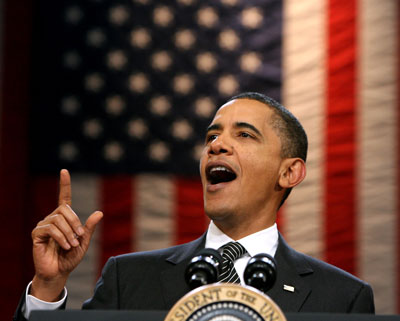
    I have embraced the vision of John F. Kennedy and Ronald Reagan through a strategy that reverses the spread of these weapons, and seeks a world without them.

    With all due respect, this statement was misleading and disingenuous. Ronald Reagan’s long-term vision of a world without nuclear weapons presupposed a robust missile defense—the Strategic Defense Initiative (SDI)—that would render offensive nuclear weapons directed at the U.S. obsolete. Reagan’s world view was buttressed by confidence in America’s leading role in the world. As such, Reagan always dealt with the Soviet Union from a position of strength. This included a robust nuclear modernization program, including the B-1 and B-2 bombers, filling out the Trident submarine fleet and its Submarine-launched ballistic missile (SLBMs) and the MX or Peacekeeper missile. <spanid="more-25142"></span>

    The Obama Administration, in contrast, has taken a different approach. Amidst a constant barrage of Russian demands, it canceled the Bush-era European missile defense and has sought to reduce total missile defense funding by $1.62 billion in its FY 2010 Budget Request. In December 2009, the Administration acquiesced to the reduction in missile defense spending—nearly a 15 percent decline from the FY 2009 appropriation of $10.92 billion.)

    After the cancellation of the Bush-era missile defense system, both President Dmitri Medvedev and Prime Minister Vladimir Putin pocketed the concessions, smiled, and demanded new ones. Russian president Dmitri Medvedev praised the decision saying, “We appreciate this responsible move by the U.S. president toward realizing our agreement…I am prepared to continue the dialogue.” Prime Minister Putin said that other US concessions should ensue: “I expect that after this correct and brave decision, others will follow…”

    The Obama Administration’s haste to <ahref="http://www.heritage.org/Research/RussiaandEurasia/wm2771.cfm">“get to zero” LINK has clearly emboldened Moscow in the negotiations over the successor treaty to the 1991 Strategic Arms Reduction Treaty (START). According to the Russian press, Kremlin sources are saying that Moscow feels it has the upper hand in the negotiations because the follow-on treaty is perceived as more important to the U.S. than Russia.

    U.S. lawmakers are now particularly concerned about what concessions the Administration may make in the final rounds of negotiations. A primary fear is that the Administration will not submit specific plans for U.S. nuclear modernization as stipulated in the National Defense Authorization Act for Fiscal Year 2010. There are also concerns that it will undermine Prompt Global Strike (PGS) intercontinental ballistic missiles with conventional warheads as well as limit options on U.S. missile defense.

    There is yet another key distinction between President Reagan’s approach to arms control and Obama’s. Reagan was clearly willing to walk away from an arms control deal at the summit with Soviet Secretary General Mikhail Gorbachev at Reykjavik, Iceland in the face of Soviet demands to scrap SDI. He was right to do so. He still achieved the 1987 intermediate-range nuclear force (INF) agreement he was seeking and put in place arrangements for the eventual conclusion of the START treaty and the Conventional Forces in Europe (CFE) Treaty. Ronald Reagan’s vision compelled him to walk away from the talks at Reykjavik on the grounds that Moscow’s proposals would make the U.S. more vulnerable. Likewise, the U.S. Senate must ensure that the new treaty is also consistent with Reagan’s principles or refuse to ratify it.

    http://blog.heritage.org/2010/01/30/…-arms-control/

  • Obama’s Deaf Ear May Cost His Success

    On 01.30.10 08:00 AM posted by Audrey Jones

    <ahref="http://blog.heritage.org/wp-content/uploads/obama-speaking100128.jpg"></p>This week, Obama showed himself once again to be out of touch with both Americans and with the current debt situation in the United States.* <atitle="http://abcnews.go.com/Politics/State_of_the_Union/state-of-the-union-2010-president-obama-speech-transcript/story?id=9678572" href="http://abcnews.go.com/Politics/State_of_the_Union/state-of-the-union-2010-president-obama-speech-transcript/story?id=9678572">He spoke of the determination, optimism, and fundamental decency in Americans that lives on and yet he seemed to suggest that that meant Americans would be determined to pass his health care reform and massive entitlement expansion.* If Obama wants his presidency to be a success and for our economy to turn around, he will need to learn the lessons of the recent elections.* To regain his footing with the American people, he will have to do more than institute a delayed, short-term, token spending freeze and acknowledge that the*key to pulling us out of this recession lies with the innovation and motivation of the American people—not with yet another expensive program.<spanid="more-25131"></span>
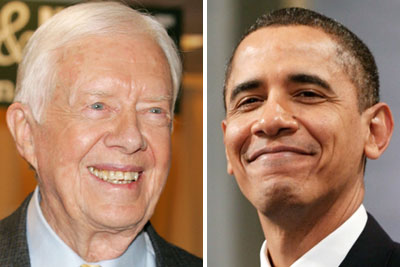
    In his speech, he promised that he wouldn’t do what was popular, but would do what was necessary.* Unfortunately, it seems he has done neither.* Over the past year he has pushed and shoved a tremendously unpopular health care agenda, and attempted to buy off the last <atitle="http://blog.heritage.org/2010/01/08/the-few-standing-between-current-law-and-tax-payer-funded-abortion/" href="../2010/01/08/the-few-standing-between-current-law-and-tax-payer-funded-abortion/">Senate vote with $100 million of our tax dollars.* His tax and regulatory policies, in one year, have dropped us, according to the Heritage Foundation’s 2010 edition of the Index of Economic Freedom, for the first time ever, from being the land of the free, to the land of the <atitle="http://blog.heritage.org/2010/01/21/welcome-to-america-land-of-the-less-free/" href="../2010/01/21/welcome-to-america-land-of-the-less-free/">“mostly free.”

    And even as he promised yet another “jobs” bill, he is*<atitle="http://blog.heritage.org/2010/01/08/jobs-decline-in-december-as-obama-jobs-deficit-continues-to-climb/" href="../2010/01/08/jobs-decline-in-december-as-obama-jobs-deficit-continues-to-climb/">7 million*jobs short of where he promised we would be right now.* He promised a growth of 3.5 million in the last year and instead lost over 3.5 million.* <atitle="http://blog.heritage.org/2010/01/27/morning-bell-president-obama-is-right-we-have-a-spending-problem/" href="../2010/01/27/morning-bell-president-obama-is-right-we-have-a-spending-problem/">Last year, federal spending reached the highest level in American history outside WWII, and under his leadership, the public debt is projected by the CBO to triple to $22.1 trillion by 2020.* And his crumb that he tossed to Americans was a paltry $447 billion spending freeze which won’t even take effect until a year from now and is only a tiny sliver of our $3.5 trillion budget and only a portion of his own $862 billion stimulus plan – which has failed.* His mission of change has brought Americans into a dangerous situation.

    Americans have responded to this failed way of handling our economy and this blind policy by reminding him that what had been claimed as “Kennedy’s seat,” was truly “the people’s seat.”**But, as evidenced by his speech last night, he*clearly has not gotten the message from the election results in the states of Virginia, New Jersey, and <atitle="http://blog.heritage.org/2010/01/22/why-is-opposition-to-obamacare-a-surprise/" href="../2010/01/22/why-is-opposition-to-obamacare-a-surprise/">Massachusetts. For his presidency to remain effective and for his policies to work, he must listen to the American people, push back his own ideas a little and realize that big government is not the way to go.

    As Obama noted, Americans have ideas and are motivated people, unafraid to take risks.* What he did not acknowledge was our fierce independence and our profound love for freedom.* It is the ingenuity of individual Americans that has made this country so*successful–not government programs and expansions.* *Americans have never wanted the huge government safety net which can also double as a noose.* Obama’s current policies would leave the next generation with only the memory of freedom, a country that is hobbled in the world, and one giant debt to pay.

    Surrounded by like-minded advisers, Obama seems to only hear echoes of his own voice.* He tunes out the poll numbers and election results and focuses on his out-of-touch policy goals.* Our forefathers, whom he referenced, took the risk to come to this land for freedom.* That spirit of determination and fundamental decency endures; we still love freedom.* He said, “Again we are tested, and again, we must answer history’s call.”* Should he continue along this path which in the past year has robbed people of opportunity, he may find, true to American nature, history’s call be to stop his own agenda.

    http://blog.heritage.org/2010/01/30/…t-his-success/

  • Obama’s State of the Union Address Dampens Hope for a Real Budget Action

    On 01.29.10 11:57 AM posted by Kathryn Nix

    In his State of the Union Address, President Obama made several commitments to fiscal responsibility in the years to come. What do they really mean though?

    President Obama’s proposed three-year discretionary spending freeze, excludes defense, homeland security, veterans’ and international affairs, is somewhat promising. The savings won’t be large — these programs comprise only one-eighth of the budget ($420 billion), and a freeze might save perhaps $20 billion (0.5 percent of the federal budget). Furthermore, these programs can still feast on their 19 percent hike over the past two years, plus their additional $311 billion in mostly-unspent stimulus funds.

    Though the President deserves credit for picking some of the low-hanging fruit on spending control, if he is serious about righting the fiscal ship, he needs to take tougher actions like canceling TARP, ending the stimulus program, and turning his attention to the tsunami of entitlement programs that threaten to swamp our economy in the years to come. At a time when the deficit is $1.4 trillion and we face a sea of even more red ink, such a freeze is tantamount to bailing out the Titanic with a dixiecup.

    The key question is whether the President’s freeze represents a first small step towards real fiscal responsibility or an attempt to divert nervous taxpayers’ attention away from larger spending increases elsewhere. The President’s continued support for a trillion-dollar health care expansion as well as yet another expensive stimulus bill suggests the latter.

    The President also offered proposals which would expand government and budget deficits (more student aid, health care, energy, and “stimulus”). Yet his accompanying calls to rein in budget deficits were weak: deficit commissions, pay-as-you-go budget rules, and pledges to “go through the budget line by line”. Once again, President Obama is tipping the scales towards more spending, higher taxes, and larger budget deficits.

    Finally, The President’s proposed entitlement commission would have no teeth to tackle surging entitlement spending. It is a hollow gesture, designed to buy time for Congress to kick the can down the road again in an election year so they can pass another huge budget filled with new spending while the Commission dithers away behind closed doors.

    Americans must watch the President closely in the months to come to observe whether or not Wednesday night’s rhetoric makes the transition to reality.

    http://blog.heritage.org/2010/01/29/…budget-action/

  • The Second Coming of Jimmy Carter?

    On 01.29.10 12:46 PM posted by Conn Carroll

    Council on Foreign Relations senior fellow Walter Russell Mead writes at Foreign Policy:

    Neither a cold-blooded realist nor a bleeding-heart idealist, Barack Obama has a split personality when it comes to foreign policy. So do most U.S. presidents, of course, and the ideas that inspire this one have a long history at the core of the American political tradition. In the past, such ideas have served the country well. But the conflicting impulses influencing how this young leader thinks about the world threaten to tear his presidency apart — and, in the worst scenario, turn him into a new Jimmy Carter.

    It is not only Americans who will challenge the new American foreign policy. Will Russia and Iran respond to Obama’s conciliatory approach with reciprocal concessions — or, emboldened by what they interpret as American weakness and faltering willpower, will they keep pushing forward? Will the president’s outreach to the moderate majority of Muslims around the world open an era of better understanding, or will the violent minority launch new attacks that undercut the president’s standing at home?

    If Obama’s foreign policy collapses — whether sunk by Afghanistan or conflicts not yet foreseen — into the incoherence and reversals that ultimately marked Carter’s well-meaning but flawed approach, it will be even more difficult for future presidents to chart a prudent and cautious course through the rough seas ahead.

    Astute analysis. Here is what Heritage scholar James Carafano wrote in October 2009:

    He followed an unpopular president. He received a strong election mandate. He changed the tone in Washington.

    He said that Human Rights mattered. That America’s image in the world had to be remade.

    He would receive a Nobel Peace Prize.

    As the end of his presidency’s first year drew near, the future looked bright. He had brought change — change that mattered.

    It was 1977. The next year was very bad…

    Why did things go south for Carter so fast? Because America’s enemies had taken measure of the man during his first, change-filled year in office. They saw weaknesses they could exploit. In the second year, they made their move.

    The rhetoric of soft power is inspiring and ever hopeful. But unless the nation seems firmly committed to backing that soft power with some hard muscle, those with no love of America will interpret the rhetoric as the vapid mooings of a nation in retreat.

    That interpretation could make 2010 a year of living dangerously.

    Nobody wants to see the resurgence of autocracies in Iran and Russia, or chaos in Iraq and Afghanistan, or emboldened leftists throughout our own hemisphere. But the parallels between the failures of Jimmy Carter and the challenges of President Obama are growing every day.

    http://blog.heritage.org/2010/01/29/…immy-carter-2/

  • Congress’ New Secret Plan to Pass ObamaCare – The Nuclear Option

    On 01.29.10 01:07 PM posted by Brian Darling

    Leaders in the House and Senate have a new secret plan to pass President Barack Obama’s sweeping health care plan using strong arm tactics and no transparency.

    I wrote back in September that Congress had a plan to ram through ObamaCare by the end of the year, but the American people stopped that plan. Public outrage was amplified by Rush Limbaugh and others in the media who took up the cause to educate Americans about Congress’ plan to railroad the unpopular bill through Congress with little debate and no opportunity for dissent. Cooler heads prevailed and Congress stopped efforts to sneak the bill through Congress.

    On January 19, the proponents of ObamaCare suffered a big setback. When little-known State Senator Scott Brown scored a shocking upset in a special election for Senate in Massachusetts campaigning as an opponent to ObamaCare, moderates in the Senate and House put the brakes on ObamaCare. The left had to retool their strategy, because there was no will in the Senate to take up and pass ObamaCare again. The only way proponents of Obamacare can win now is if they change the way the game is played, and liberals seem to be prepared to change the traditional rules of the Senate by triggering a legislative Nuclear Option in an effort to pass Obamacare by the end of February.

    This is a Nuclear Option, because the left is preparing a strategy to obliterate the filibuster rule — the rule that requires 60 votes to shut off debate on legislation, for the purposes of passing multiple pieces of legislation that add up to ObamaCare. They will either use reconciliation to pull an end around the filibuster rule or they may be bold enough to merely use a simple majority of Senators to exterminate the filibuster rule from the Senate rule book.

    Sources on Capitol Hill tell me that liberals in the House and Senate are a handful of votes away from a scenario where they can get ObamaCare to the President’s desk by the end of February. Here is the way it works. According to The Hill, “House Democrats are readying a series of smaller ‘sidebar’ healthcare provisions to introduce by mid-February even as they push for using reconciliation rules to move a broader healthcare package, according to leadership aides.” So the plan is to try to pass a few smaller issues and to prepare a so called “reconciliation measure” to make changes to the Senate passed ObamaCare bill awaiting action in the House.

    The reconciliation plan would be done by “using budget reconciliation rules to pass parts of the healthcare package (and) would require only 51 votes in the Senate. But those rules can only be used to move provisions affecting the federal budget.” If they can pass smaller portions of ObamaCare with Republican support, then they jam a reconciliation measure through the Senate with only 51 votes containing ObamaCare tax provisions. Next the House would take up and pass the Senate passed 2,700 page ObamaCare monstrosity. If that happens, then the game is over and the will of the American people will be ignored again.

    President Obama declared at the State of the Union, “here’s what I ask Congress, though: Don’t walk away from reform. Not now. Not when we are so close. Let us find a way to come together and finish the job for the American people. Let’s get it done. Let’s get it done.” This is a message from the President to Congressional liberals that he will support their efforts to ram through ObamaCare with all means at their disposal. The President showed his complete disconnect from the feelings of average Americans when he called for Congress to pass his health care proposal that has been rejected by the voters of liberal Massachusetts. Real Clear Politics has the President’s plan with the approval of an average of 37.4% and an opposition of 54.4% – that is an average poll deficit of 17% for ObamaCare, yet the President forges forward.

    Liberals can use the Nuclear Option to pass at least some part of ObamaCare and it allows them to deal with the tax or revenue aspects of health care reform. Then they will pull the trigger and force the House to pass the 2,700 page ObamaCare bill which is one House floor vote away from a Presidential signing ceremony. This is a multi-bill strategy. The reason why House members may vote for the Senate ObamaCare bill is because they may have their concerns addressed with the small bills and reconciliation measures that will have passed before this historic vote. This scenario also provides cover for moderate Democrats in the Senate who can vote against the reconciliation measure and claim to constituents that they were, in the end, against ObamaCare.

    This procedure is an indication that Congress understands that even the people of liberal Massachusetts hate ObamaCare, so they need to pass this bill as fast as possible and with little transparency to try to minimize the participation of the American people in this process. A rational politician would see the terrible polling numbers for ObamaCare and the results in Massachusetts as a sign that the bill should be scrapped. The problem today is that the American people are dealing with an elite class of politicians in Washington that don’t care what the American people think about ObamaCare.

    These elites make fun of people who participate in Tea Parties. They have distain for those that show up at Town Halls to voice opposition to the bill. They denigrate protesters who come to Washington, D.C. to demonstrate against a government takeover of health care. They laugh at all the poll numbers that indicate they are going in the wrong direction. They are ignoring the voters and their own constituents to further the cause of President Obama’s vision of a de facto government run health care system.

    This is one of those unique moments in history where a minority number of Members of Congress are protecting the will of a majority of the American people – the big question is who will win?

    http://blog.heritage.org/2010/01/29/…uclear-option/

  • Government Gone Green: Obama Sets Federal GHG Emission Cuts

    On 01.29.10 01:27 PM posted by Nick Loris

    President Obama called on the federal government, the nation’s largest energy consumer, to its increase energy efficiency and to reduce its greenhouse gas emissions 28 percent by 2020. According to the White House if the targets are met they “would reduce federal energy consumption by the equivalent of 646 trillion BTUs, equal to 205 million barrels of oil, and taking 17 million cars off the road for one year, according to a statement from the White House press office. That would save $8 billion to $11 billion in energy costs through 2020.”

    If the government can save $8-$11 billion of taxpayer’s money, it should be commended for such efforts. There are a few questions to ask.

    1.) If the plan is going to save this much money, why isn’t the government already doing it? Maybe they are, as chair of the President’s Council on Environmental Quality points out in her examples of agency actions. For instance, “The Marine Corps Logistics Base Albany, GA has signed a 20 year contract to burn methane gas from a nearby landfill, providing 22 percent of its energy needs, enough energy to power 1,200 homes.” If the taxpayers will save $8-11 billion, that should be the headline of the story – not the cut in greenhouse gas emissions.

    2.) Will the plan actually save money? Reducing energy intensity in buildings, reducing consumption of electricity and water, minimizing the generation of waste and optimizing the number of vehicles an agency’s fleet could very well reduce the federal government’s energy costs. Further, there are trade offs to energy-efficient projects, especially when mandated by the government including higher up front costs, reduced performance and unintended maintenance costs that could significantly reduce long-term savings. For instance, one attempt to use natural light for heating end up costing $5,000 per year in window-washing fees.

    3.) If renewable energy is economically viable, why isn’t there more in the market? President Obama’s executive order also calls for “increasing agency use of renewable energy and implementing renewable energy generation projects on agency property.” There’s a reason renewable energy provides a very small fraction of the country’s energy needs. It is intermittent and more expensive. Increasing renewable energy production to meet a GHG reduction target would likely end up costing taxpayers money.

    4.) Will it affect military preparedness? The good news is it most likely won’t. Obama’s executive order includes language that says, “The head of an agency may exempt law enforcement, protective, emergency response, or military tactical vehicle fleets of that agency from the provisions of this order.” The agency may also exempt activities and facilities that are in the interest of national security as well as submit additional requests to the president. That’s not to say the military and law enforcement is exempt from improving energy-efficiency and saving taxpayer dollars. Heritage defense analyst Mackenzie Eaglen notes that “The U.S. Air Force has set a goal to run all of its aircraft on synthetic fuel by 2011. This type of fuel costs $30–$50 less per barrel and burns cleaner without compromising performance.”

    There’s one other way the federal government can reduce its energy use, reduce its carbon dioxide emissions and save taxpayers money. Make it smaller.

    http://blog.heritage.org/2010/01/29/…emission-cuts/

  • Senate Puts Politics Over Fiscal Responsibility In Debt Limit Vote

    On 01.29.10 01:30 PM posted by Kathryn Nix

    On Thursday, the Senate passed a bill to increase the debt limit. Senate Majority Leader Harry Reid’s (D-NV) amended version of the bill passed by the House will raise the ceiling on the federal debt by $1.9 trillion. This is a huge increase from the House version, which allowed an increase of only $925 billion.

    Raising the debt ceiling by such a staggering amount is convenient for Congressional Leadership because they will not have to vote on another unpopular debt limit increase until after the 2010 elections. This strategy may allow lawmakers fearful of losing their seats to escape harsh criticism in an election year, but it will not address the dire situation of the federal government’s finances.

    The Congress must raise the debt limit in order to avoid defaulting on their financial obligations, which would have far-reaching negative effects on the economy. But lawmakers lost an opportunity to prove that they had gotten the message inherent in raising the debt limit: out-of-control spending must be addressed. Instead, Congress has elected to simply kick the can down the road to future legislators. In the end, this will only exacerbate the problem.

    During the State of the Union Address, President Obama addressed the need for fiscal responsibility. He outlined his plan to create an executive commission to explore ways to tighten in the belt on federal spending, and proposed a freeze on discretionary spending in the budget. The sentiment is noted, but these suggestions are not enough to have any kind of real effect on spending. So the question remains whether the President is serious about exploring fiscal reform, or whether Wednesday night’s rhetoric was simply a way to get out of hot water with angry Americans genuinely concerned with the financial state of the union.

    Either way, the Senate does not seem interested in engaging in the President’s presumed initiative to rein in spending. Earlier in the week, an amendment passed which will prohibit any commission formed to address spending from touching Social Security. This, despite the fact that the big three entitlement programs, which include Medicare, Medicaid, and Social Security, are the main culprits behind the looming deficit explosion. Throughout the amendment process, Democrats have consistently voted against proposals which would require the government to rein in wasteful and unnecessary spending. And then, to emphasize their unwillingness to tackle the problem, the Senate voted 60-39 to increase the debt limit by a whopping $1.9 trillion. Will the House follow suit?

    http://blog.heritage.org/2010/01/29/…bt-limit-vote/

  • Conservatives Deliver Ideas, Again, to President Obama

    On 01.29.10 01:49 PM posted by Mike Brownfield

    If a casual observer were to watch President Barack Obama’s speech today to House Republicans, they might walk away thinking that the minority party hasn’t offered up any ideas to fix the problems that plague America.

    But if that casual observer stuck around for the questions and answers, they would have seen an entirely different picture – a conservative party standing up to the President and making it clear that they do, indeed, have ideas but that their message has fallen on the President’s (and liberals’) deaf ears. The problem for the President is that the conservative message is resonating with America, as evidence by Scott Brown’s stunning electoral victory in Massachusetts’ Senate race.

    On the subject of health care, the President said that he didn’t get “a lot of nibbles” when he attempted to work with Republicans on the issue. But bipartisanship is a two-way street, and as Rep. Marsha Blackburn (R-TN) made clear to the President, her party has offered a slew of ideas. The trouble is, liberal leadership isn’t listening.

    As Rep. Blackburn said:

    We have over 50 bills … we’ve got plans to lower cost, to change purchasing models, address medical liability, insurance accountability, chronic and preexisting conditions, and access to affordable care for those with those conditions, insurance portability, expanded access, but not doing it with creating more government, more bureaucracy and more cost for the American taxpayer …

    And if those good ideas aren’t making it to you, maybe it’s the House Democrat leadership that is an impediment instead of a conduit.”

    Rep. Peter Roskam (R-IL), too, confronted the President on bipartisanship when he recalled the President’s service with Rep. Roskam in the Illinois legislature. Roskam told the President (as seen in the video above):

    You took on ethics reform. You took on some big things.

    One of the keys was you rolled your sleeves up, you worked with the other party, and ultimately you were able to make the deal.

    Now, here’s an observation.

    Over the past year, in my view, that attribute hasn’t been in full bloom. And by that I mean, you’ve gotten the subtext of House Republicans that sincerely want to come and be a part of this national conversation toward solutions, but they’ve really been stiff-armed by Speaker Pelosi.

    Now, I know you’re not in charge of that chamber, but there really is this dynamic of, frankly, being shut out.

    And shut out, too, are the American people, who have been taking to Tea Parties, townhall meetings, and the Massachusetts ballot box in protest of a runaway liberal Congress that is steering the country in the wrong direction.

    As much as the President would like to paint Republicans and conservatives as the party of “no,” his spin sounds quite hollow to an American public that sees the reality of their government through quite a different lens.

    http://blog.heritage.org/2010/01/29/…e-standing-in/

  • GDP Is Up, But Government Unions Ate Your Raise

    On 01.29.10 02:01 PM posted by James Sherk

    Figures released today by the Bureau of Labor Statistics provide less encouragement than today’s GDP report. Total compensation increased by only 1.5 percent in 2009 (without adjusting for inflation) – the lowest increase on record. If a turnaround has begun, workers are not feeling it in their wallets.

    However, this pain has not been distributed equally throughout the economy. In the private sector, total compensation grew just 1.2 percent in 2009. On the other hand the compensation paid to state and local government employees grew 2.4 percent. The average government employee got twice the raise that private sector workers did.

    Why did government workers get higher raises? In the private sector workers compete to produce goods and services that others value. In a recession, production falls and employers have less money to pay raises with. On the other hand, taxes fund government paychecks. Government employees can continue getting raises no matter the health of the overall economy, so long as taxes keep coming in.

    This fact has turned the labor movement into determined tax hikers. Union membership has grown in the government even as it has fallen in the private sector. Three times as many union members now work for the Post Office as in the Auto Industry. In 2009 the numbers crossed: a majority of union members now work for the government. Higher pay for government employees can only come through higher taxes on private sector workers.

    Unions almost never go on strike anymore. Instead, they fight to get more for their members by lobbying for tax increases. Unions spent tens of millions of dollars last year campaigning for higher taxes across the country: Illinois. California. Minnesota. Washington State. Arizona. In many cases they have succeeded.

    The latest example comes from Oregon, where public sector unions outspent businesses 3 to 2 to pass two ballot initiatives raising taxes by $700 million. The unions wanted higher taxes to prevent spending cuts. Had the taxes increases failed government employees in Oregon would have faced cost cutting measures such contributing toward the cost of their health benefits – something they currently do not do.

    Government employees have done well in this recession. Few government jobs have disappeared – unlike in the private sector – and their pay rose at twice the rate of their private sector counterparts. No wonder that government employees are almost three times as likely as private sector workers to believe that the economy is in “good or excellent” shape. The question for policy makers is why should private sector workers have to pay for this?

    http://blog.heritage.org/2010/01/29/…te-your-raise/