Author: Heritage

  • Side Effects: Obamacare Doesn?t Work on Children After All

    On 03.29.10 04:39 PM posted by Kathryn Nix

    <ahref="http://blog.heritage.org/wp-content/uploads/childrenhcr.jpg"></p>A signature achievement of Obamacare, we were told, was that it would provide immediate protection for children with pre-existing conditions.* In the brave new world of Obamacare, no ailing child could be denied coverage.

    Turns out, that just ain’t so.* <ahref="http://finance.yahoo.com/news/Gap-in-health-care-laws-apf-4272209396.html?x=0&.v=1">According to the Associated Press, “Under the new law, insurance companies still would be able to refuse new coverage to children because of a pre-existing medical problem, said Karen Lightfoot, spokeswoman for the House Energy and Commerce Committee, one of the main congressional panels that wrote the bill Obama signed into law Tuesday.* However, if a child is accepted for coverage, or is already covered, the insurer cannot exclude payment for treating a particular illness, as sometimes happens now.”<spanid="more-30101"></span>

    It’s a problem Congress could have fixed this without resorting to a massive restructuring of our health care system.

    How: Well, they could have made some simple changes to insurance rules to make sure policies will cover conditions discovered after the policy is issued.* They also should have moved to provide a path for the uninsured to get coverage of pre-existing conditions on a conditional basis.* And they certainly should have made it possible for individuals to by coverage from outside their states. This would both allow consumers to shop on a national basis for health insurance that best suits their needs and expand the coverage options available to them.

    <ahref="http://fixhealthcarepolicy.com/reality">In a recent video, Heritage analyst Ed Haislmaier lays out how best to reform the insurance market to meet the needs of Americans with pre-existing conditions.* To learn more about patient-centered, bipartisan approaches to health care reform, <ahref="http://www.heritage.org/Research/Reports/2010/02/The-Health-Care-Summit-A-Chance-to-Start-Over-and-Get-It-Right">click here.

    http://blog.heritage.org/2010/03/29/…ren-after-all/

  • Morning Bell: Our Long National Obamacare Nightmare is Just Beginning

    On 03.29.10 05:37 AM posted by Conn Carroll

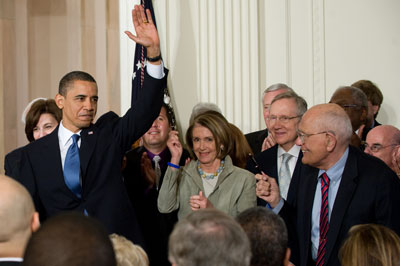
    <ahref="http://blog.heritage.org/wp-content/uploads/Obama-healthcare-signing-10.jpg"></p>If you are tired of our nation’s year-long health care debate and you were hoping that the passage of President Barack Obama’s health care bill would settle anything, then <ahref="http://www.politico.com/news/stories/0310/34785.html">Politico has some bad news for you: the real fight is just getting started. Starting today, a coalition of leftist groups will sink millions of dollars into television advertising and astroturf events selling the plan to the American people. But as a <ahref="http://www.washingtonpost.com/wp-srv/politics/polls/postpoll_032810.html">Washington Post poll conducted after passage last week shows, the Obama administration and their leftist allies face a steep climb.

    The <ahref="http://www.washingtonpost.com/wp-dyn/content/article/2010/03/28/AR2010032804094.html">top line numbers are bad but not daunting for the pro-Obamacare forces: 50% of Americans oppose the changes in the new law while 46% support them. But <ahref="http://www.washingtonpost.com/wp-srv/politics/polls/postpoll_032810.html">the numbers also show that most Americans believe the new law will cause “the overall health care system in this country” to get worse, “the quality of the health care you receive” to get worse, and “your health insurance coverage” to get worse. The poll also shows that most Americans believe the law will weaken Medicare and that there is “too much government involvement in the nation’s health care system.” And strong majorities of Americans believe Obamacare will increase the federal budget deficit (65%), increase “your health care costs” (55%), and increase “overall costs of health care in this country” (60%). The American people are right on all counts. And if the events of last week are any indication, these beliefs will only harden over time.<spanid="more-30031"></span>

    Pitching his failed stimulus plan back in February of last year, President Obama told a factory in East Peoria, Illinois, “So what’s happening at this company tells us a larger story about what’s happening with our nation’s economy, because, in many ways, you can measure America’s bottom line by looking at Caterpillar’s bottom line.” well, Caterpillar was quick to inform the markets exactly what Obamacare meant for its bottom line. Caterpillar <ahref="http://www.chicagobreakingbusiness.com/2010/03/caterpillar-health-care-bill-would-cost-it-100m.html">announced that Obamacare would raise its insurance costs by at least 20 percent – or more than $100 million – just in the first year of the health-care overhaul program. And Caterpillar was not alone. Other Fortune 500 firms quickly followed suit announcing <ahref="http://online.wsj.com/article/SB10001424052748704100604575146002445136066.html?m od=WSJ_hpp_sections_opinion">Obamacare hits to their bottom line including: Deere & Co., $150 million; AK Steel, $31 million; 3M, $90 million; Valero Energy, $20 million; and AT&T, $1 billion. The consulting firm Towers Watson tells the <ahref="http://online.wsj.com/article/SB10001424052748704100604575146002445136066.html?m od=WSJ_hpp_sections_opinion">Wall Street Journal that the total hit this year will reach nearly $14 billion. America’s employers simply can’t sustain losses like these, so many of these companies,<ahref="http://www.businessweek.com/news/2010-03-27/at-t-deere-ceos-called-by-waxman-to-back-up-health-bill-costs.html"> including Verizon, have informed their employees to expect significant changes to their current health care benefits.

    The leftist majorities in Congress were incensed that America’s employers would dare warn their investors about the costs of Obamacare at the same time as the Obama administration’s national sales pitch was set to begin. So using the full force of the federal government to bully and harass America’s job creators, House Energy and Commerce Committee Chairman Henry Waxman (D-CA) sent <ahref="http://energycommerce.house.gov/index.php?option=com_content&view=article&id=1944: energy-a-commerce-subcommittee-to-hold-hearing-on-impact-of-health-care-reform-law-on-large-employers&catid=122:media-advisories&Itemid=55">letters to the CEOs of Deere, Caterpillar, Verizon, and AT&T demanding all documents “from January 1, 2009, through the present” regarding “any analyses related to the projected impact of health care reform” and “any documents, including e-mail messages, sent to or prepared or reviewed by senior company officials related to the projected impact of health care reform.” Waxman intends to haul these CEOs in front of the Subcommitte on Oversight and Investigations, which just happens to be chaired by Rep. Bart Stupak (D-MI), for a hearing April 21st.

    While it is unfortunate that the left in Congress believes our nation’s business leaders’ time is best spent being browbeaten by congressmen for not doing more to support their policy preferences, the American public should look forward to these hearings. The more information the American public is given about Obamacare, the more they will oppose it. The more they oppose it, the easier it will be to repeal it. We have a long road ahead of us, but eventually the Obamacare nightmare will end.

    Quick Hits:

    • AFL-CIO and Service Employees International Union lawyer Craig Becker was <ahref="http://www.bloomberg.com/apps/news?pid=20601070&sid=aEdsca2LZ1ww">one of 15 appointments President Barack Obama plans to make during the Senate’s Easter recess in order to avoid confirmation votes.
    • The day after Rep. Bart Stupak (D-MI) and ten other House members compromised on their pro-life position to deliver the necessary yes-votes to pass health care reform, <ahref="http://reporting.sunlightfoundation.com/2010/after-health-care-vote-stupak-11-request-34-billion-worth-earmar/">the “Stupak 11″ asked for more than $4.7 billion in earmarks – an average of $429 million worth of taxpayer money for each lawmaker.
    • Directly contradicting Obama administration claims, the Kremlin confirmed that the treaty agreed to by President Dmitry Medvedev and President Obama contained a <ahref="http://beta.thehindu.com/news/international/article318475.ece">“legally binding linkage between” offensive weapons and missile defense.
    • This past Friday, <ahref="http://www.jpost.com/Israel/Article.aspx?id=171945">327 congressmen signed a letter expressing concern that “the highly publicized tensions” in US-Israeli ties will “not advance the interests” of either state.
    • The Los Angeles Unified school district wants to <ahref="http://www.latimes.com/news/local/la-me-lausd-permits29-2010mar29,0,5444213.story">end what little school choice parents have by limiting the more than 12,200 permits that allow students to attend schools elsewhere.

    http://blog.heritage.org/2010/03/29/…ust-beginning/

  • Strong Sanctions Needed to Counter Iran’s Nuclear Ambitions

    On 03.29.10 07:26 AM posted by Jeffrey Chatterton

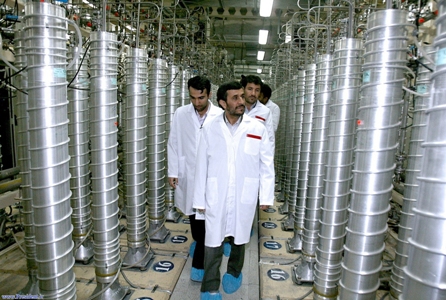
    <ahref="http://blog.heritage.org/wp-content/uploads/Natanz-Nuclear-Facility.jpg"></p>It has taken over a year for the Obama Administration to understand what seemed clear when the President extended his hand to Iran: <ahref="http://www.worldpoliticsreview.com/article.aspx?id=5314">engagement will not work. How Washington responds to this reality as it presses for new sanctions will have a huge impact on the future of Iran’s nuclear ambitions.

    The Heritage Foundation’s James Phillips <ahref="http://www.heritage.org/Research/Reports/2010/03/Iran-s-Nuclear-Program-What-Is-Known-and-Unknown">makes the case for the “strongest possible sanctions” to deter Iran from continuing its nuclear weapons program.<spanid="more-30050"></span>

    The alternative could be a nuclear Iran that will threaten American interests and spark a potential arms race across the volatile Middle East. However the administration has <ahref="http://www.latimes.com/news/nation-and-world/la-fg-iran-sanctions26-2010mar26,0,7120580.story">opposed congressional legislation, passed by overwhelming bipartisan majorities in both houses of Congress, to impose sanctions on foreign companies that export gasoline and other refined petroleum products to Iran.

    Thursday, Iranian President Mahmoud Ahmadinejad <ahref="http://www.csmonitor.com/World/Middle-East/2010/0325/Iran-nuclear-sanctions-Ahmadinejad-says-they-won-t-bite">brushed off the threat of new sanctions. If President Obama fails to ratchet up pressure on Tehran, Ahmadinejad rightly has little to worry about. Five United Nations Security Council resolutions and three rounds of sanctions <ahref="http://articles.latimes.com/2010/mar/01/world/la-fg-iran-nukes1-2010mar01">have not stopped Iran’s defiance of the International Atomic Energy Agency and the international community.

    Iran’s determined push for a nuclear weapon can not be blocked without extremely strong international sanctions that would impose excruciating economic pain and threaten the regime’s continued hold on power. Yet <ahref="http://www.reuters.com/article/idUSTRE62O1V520100325">the administration reportedly is weakening its proposed sanctions at the UN to <ahref="http://www.reuters.com/article/idUSTRE62G2W920100317">win Russia and China’s vote. Instead, “Washington should push for the strongest possible sanctions that it can squeeze out of the Security Council, but press its allies and other countries to impose even stronger sanctions outside the U.N. framework, such as freezing foreign investment in Iran, banning gasoline exports to Iran, banning the travel by Iranian officials abroad, and generally raising the price that the regime must pay to continue its nuclear program.”

    The “knowns” and “unknowns” surrounding the Iranian nuclear program all point to strong sanctions as the solution. Iran runs a nuclear program larger than necessary for a civilian program, <ahref="http://www.nytimes.com/2010/03/23/world/asia/23pstan.html">sought nuclear weapons material from the infamous A.Q. Khan, and continues to conceal its program. Furthermore, Iran contradicted its peaceful claims buy rejecting nuclear deal that would have improved its civilian program.
    Also, <ahref="http://www.nytimes.com/2010/03/20/opinion/20iht-edberman.html">we don’t know how close Iran is to gaining a nuclear weapon, how closely Iran is cooperating with North Korea, or how much foreign assistance their nuclear program has received.

    Phillips writes, “Iran’s strategy remains clear: to hide and lie about its nuclear program, feign cooperation with the IAEA to delay any sanctions, depend on its Russian and Chinese friends to block any effective sanctions in the Security Council, and eventually present the world with a nuclear fait accompli.”

    Reza Khalili, author of “A Time to Betray” <ahref="http://www.csmonitor.com/Commentary/Opinion/2010/0324/An-ex-CIA-spy-explains-Iran-s-quest-for-nuclear-weapons/(page)/2">adds: “We can either rise up to our principles and defend the aspirations of the Iranian people for a free and democratic government, or we can continue with our vacillation and indecision, allowing Iran to become a nuclear-armed state.”

    We may not know when Iran will get the bomb, but we will find out unless Washington changes its current strategy and imposes the necessary sanctions that this crisis calls for.

    Jeffrey Chatterton currently is a member of the Young Leaders Program at the Heritage Foundation. For more information on interning at Heritage, please visit: <ahref="http://www.heritage.org/About/Internships-Young-Leaders/The-Heritage-Foundation-Internship-Program">http://www.heritage.org/About/Intern…rnship-Program

    http://blog.heritage.org/2010/03/29/…ear-ambitions/

  • SEIU?s White House Visits Are Paying Off

    On 03.29.10 08:30 AM posted by Rob Bluey

    <ahref="http://blog.heritage.org/wp-content/uploads/seiu-healthcare-protest-100.jpg"></p>While most Americans were enjoying a weekend away from work, President Obama kept busy Saturday afternoon, <ahref="http://dailycaller.com/2010/03/27/obama-appoints-union-lawyer-to-key-labor-relations-board-despite-gop-protests/">appointing one of Big Labor’s lawyers to a post at the National Labor Relations Board.

    The <ahref="http://michellemalkin.com/2010/03/29/obama-2005-recess-appointees-are-damaged-goods-obama-2010-recess-appointments-are-critical-need/">recess appointment of Craig Becker was expected—<ahref="http://www.senate.gov/legislative/LIS/roll_call_lists/roll_call_vote_cfm.cfm?congress=111&session=2&vote =00022">despite the Senate’s bipartisan rejection of him in February. The White House knew media coverage would be minimal on the weekend, but Becker can’t escape the scrutiny. (Heritage’s Ryan O’Donnell <ahref="http://blog.heritage.org/2010/03/26/craig-becker-big-labor%e2%80%99s-big-ally/">wrote about the controversial pick last week.)

    Prior to his appointment, Becker served as associate general counsel to the Service Employees International Union. The union, which spent an estimated $66 million in 2008 for Obama’s election, has been rewarded dearly for its support. Becker is the third SEIU leader tapped for a post by Obama.

    <spanid="more-30054"></span>SEIU President Andy Stern and Secretary-Treasurer Anna Burger are among <ahref="http://blog.heritage.org/2009/12/31/for-obama-some-unions-are-more-equal-than-others/">the most frequent visitors to the White House. <ahref="http://www.whitehouse.gov/briefing-room/disclosures/visitor-records">Public records released by the Obama Administration show that Stern made 38 trips to the White House and Burger made 43 visits through Dec. 31, 2009. This prompted Americans for Tax Reform and the Alliance for Worker Freedom to <ahref="http://www.atr.org/investigation-request-filed-against-unregistered-lobbyist-a4270#">request a lobbying investigation into the SEIU given its close ties to the White House. (<ahref="http://hotair.com/archives/2010/01/06/video-cnn-looks-at-stern-lobbying-issue/">Stern is not a registered lobbyist.)

    The appearance of preferential treatment hasn’t stopped*Obama from rewarding his allies at SEIU. <ahref="http://thehill.com/blogs/blog-briefing-room/news/83889-obama-names-labor-leader-to-fiscal-commission">Stern was picked in February to serve on Obama’s debt commission. <ahref="http://www.seiu.org/2009/02/anna-burger-named-to-presidents-economic-recovery-advisory-board.php">Burger was tapped for Obama’s Economic Recovery Advisory Board in 2009. And now Becker, despite Senate opposition, has secured a coveted appointment to represent the Big Labor’s interests at the NLRB.

    http://blog.heritage.org/2010/03/29/…re-paying-off/

  • VIDEO: Solving Pre-Existing Conditions Doesnt Take 2,700 Pages

    On 03.29.10 09:00 AM posted by Mike Brownfield

    </p>Ed Haislmaier, Senior Research Fellow at The Heritage Foundation’s Center for Health Policy Studies, takes on the 2,700 pages of Obamacare — and the notion that all that legislation is needed to fix the problem of pre-existing conditions.

    As Haislmaier explains, Congress could solve the pre-existing conditions problem quite simply and in only two pages. How? Watch this video to find out.

  • What Exactly is the Deal Between President Obama and the Kremlin?

    On 03.29.10 09:26 AM posted by Conn Carroll

    </p>The White House <ahref="http://www.whitehouse.gov/the-press-office/key-facts-about-new-start-treaty">Fact Sheet on the <ahref="http://blog.heritage.org/2010/03/25/morning-bell-a-start-towards-undermining-our-nuclear-security/">New START Treaty agreed to between President Barack Obama and Russian President Dmitri Medvedev claims:

    No Constraints on Missile Defense and Conventional Strike: The Treaty does not contain any constraints on testing, development or deployment of current or planned U.S. missile defense programs or current or planned United States long-range conventional strike capabilities.

    But the Kremlin seems to be under the opposite impression. Vladimir Radyuhin <ahref="http://beta.thehindu.com/news/international/article318475.ece">reports:<spanid="more-30066"></span>

    Russia hailed a new nuclear arms treaty with the United States, but warned that U.S. missile defence plans could derail its implementation.

    The Kremlin confirmed that Presidents Medvedev and Barack Obama would sign the treaty in Prague on April 8. However, it disputed the U.S. claim that the treaty imposed no restrictions on the U.S. missile defence programmes.

    The Russian statement said the treaty contained a “legally binding linkage between strategic offensive and strategic defensive weapons”.

    <ahref="http://en.wikipedia.org/wiki/Trust,_but_verify">“Trust but verify” was Ronald Reagan’s approach to relations with the Soviet Union. The Senate should keep that phrase in mind when working with the Obama administration while deciding whether or not the should ratify this agreement.

    http://blog.heritage.org/2010/03/29/…d-the-kremlin/

  • Race to the Top Winners Announced

    On 03.29.10 11:27 AM posted by Lindsey Burke

    The administration has just announced its round one Race to the Top winners, and only two states – drum roll please – Tennessee and Delaware, made the cut. The stated purpose of $4.35 billion RttT program is to increase teacher quality, improve failing schools, enhance the quality of state assessments, and build data systems to measure student growth.

    The identification of just two first-round winners falls short of the number most analysts predicted. While it is unclear as of yet exactly why those two states made the cut, the <ahref="http://www.nytimes.com/2010/03/30/education/30educ.htmlhttp://www.nytimes.com/2010/03/30/education/30educ.html">New York Times surmises:

    Tennessee has long had a student-data tracking system that allows it to trace student achievement to individual teachers, and in its proposal the state promised to adopt an advanced statewide teacher evaluation system by the 2011-12 school year. Currently, teacher evaluation systems there, as in most states, are designed by school districts.

    <spanid="more-30093"></span>Delaware already has a statewide annual teacher evaluation system, and has recently adopted regulations requiring that those evaluations be based on growth in student achievement, according to the National Council on Teacher Quality, which rated the finalists’ proposals.

    <ahref="http://blogs.edweek.org/edweek/campaign-k-12/2010/03/st_st_and_st_win_race_to_the_t.html">Education Week made an interesting observation:

    Tennessee and Delaware just happen to be the home states of two powerful, Republican lawmakers the Obama administration is trying to court in its bipartisan push to renew the Elementary and Secondary Education Act: Sen. Lamar Alexander, R-Tenn., and Rep. Mike Castle, R-Del. Both chair the subcommittees in their respective chambers dealing with K-12 policy, and both are considered leading moderate voices on education who have worked well with Democrats in the past. In fact, in an interview with the Washington Post’s David Broder, Secretary Duncan singled out Alexander and Castle as the two Republicans who had offered ideas that were incorporated into the administration’s ESEA blueprint.

    What distinguished the winners from other states? Florida, for example, had a strong application and was widely expected to top the list of RttT candidates. The <ahref="http://online.wsj.com/article/SB10001424052702304370304575151682457897668.html?m od=WSJ_hpp_MIDDLENexttoWhatsNewsSecond">WSJ reports on at least one factor:

    The administration appeared to put a very high value on applications that had won wide support from unions and school boards within their states. Florida’s bid, for instance, received the support of just 8% of its unions.

    In that respect, for all its talk of reform, RttT still seems tied to significant elements of the status quo, as <ahref="http://jaypgreene.com/2010/03/29/blocking-the-race-to-the-top/">Dr. Jay Greene explains:

    If people know that union opposition scuttles a state’s chances, then no state will apply in the future unless they have union support. This means that the unions will dictate what reforms will be pursued, which means that there will be virtually no reform. This enhancement of union power also undermines the rhetorical effects that RTTT had by narrowing state and local policy debate to those measures acceptable to the unions.

    http://blog.heritage.org/2010/03/29/…ers-announced/

  • What Next? Leave Your Lights On Tonight

    On 03.27.10 08:00 AM posted by Rob Bluey

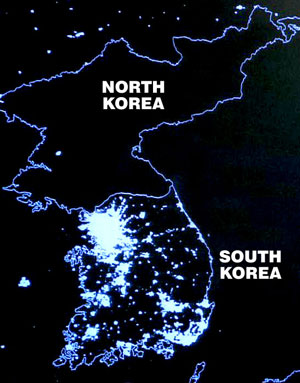
    Environmentalists are taking a page from North Korea, encouraging Americans to turn off the lights in celebration of “Earth Hour” tonight. The Communist dictatorship, of course, is in the dark every night.

    Tonight’s event, scheduled for 8:30 local time, is sponsored by the World Wildlife Fund. It’s the third year environmentalists have embarked on the campaign asking people around the global to cut the lights. They claim to have swayed 80 million Americans and 318 U.S. cities to flip the switch last year. Some notable landmarks included the Empire State Building, Brooklyn Bridge, Las Vegas Strip, United Nations Headquarters, Golden Gate Bridge, Seattle’s Space Needle and Gateway Arch in St. Louis.

    The Competitive Enterprise Institute has had enough. Rather than plunging into darkness and despair for Earth Hour, CEI is asking Americans to keep the lights on for Human Achievement Hour. Pitting the events as human innovation vs. stagnation, CEI’s Michelle Minton said, “We are so proud that millions of people plan to show their appreciation for human achievement by doing things like eating dinner, watching television, going to the movies, and brushing their teeth.”

    Even though the World Wildlife Fund boasts an impressive list of supporters, CEI has a list of its own: The U.S. Marine Corps won’t pull its troops from the battlefield, The New York Times will publish a newspaper, approximately 30,000 movies will be screened, and hospital emergency and operating rooms will remain in operation. Wal-Mart also plans to stay open — with the lights on.

    http://blog.heritage.org/2010/03/27/…ts-on-tonight/

  • Outside the Beltway: The High Cost of Environmentalism

    On 03.27.10 11:00 AM posted by Todd Thurman

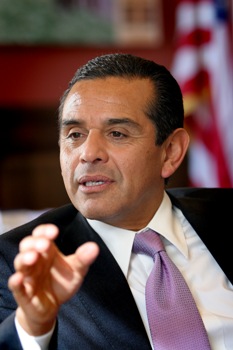
    In Los Angeles, in the heart of California’s anemic economy, Mayor Antonio Villaraigosa and the Department of Water and Power (DWP) hope to massively raise energy rates by a whopping 21% next year, with other rate increases slated through 2014, for a total 37% hike.

    Are the increased rates intended to pay for a budget shortfall? No. *Are they going up because the cost of energy is going up, too? Not exclusively. The increased rates would raise money to “invest” in renewable energy. In fact, Villaraigosa thought the hike was so important that he invited former Vice President Al Gore to present at the city council meeting via satellite.

    The good news is that some common sense remains in the L.A. city council chambers, and the rate increase has not yet been implemented.

    With unemployment at 12.5% in California, it would seem like now is the worst possible time for a rate hike. That fact, though, will not stop the environmental left.* They will stop at nothing to make sure people can’t afford essential things like electricity and heating oil, all in the name of unconfirmed science.

    Consumers aren’t the only ones who would take a hit under the plan. Villaraigosa also proposed a 22% rate increase for businesses and tried to hide the rate increases under the façade of creating 18,000 jobs His arguments fell on deaf ears at the Valley Industry and Commerce Association, where they voted against his proposal saying “They’re just making those [jobs] up.”

    It is just another costly tax increase that threatens to kill whatever growth there is in the stagnated economy. There is some good news though. Not many council members are in favor of the plan, and those that are say the extra money should go toward improving the DWP. Councilman Paul Krekorian said the plan was “an extraordinary burden on our homeowners and businesses” and *“unacceptable.”

    It is a telling sign that even in a place as liberal as Los Angeles, there is as much opposition to a progressive “green jobs” initiative as there is in this case. It just might be another indicator of the growing skepticism about global warming. Not even the presence of former Vice President Al Gore was enough to sway council members to pass a tax that would lead to more unemployment, more people unable to pay bills, and would worsen the recession in a state that is floundering.

    http://blog.heritage.org/2010/03/27/…ironmentalism/

  • Winds of Change in the Windy City’s School System

    On 03.26.10 01:30 PM posted by Sarah Torre

    Chicago witnessed one small victory for urban school reform and parental choice yesterday as the Illinois State Senate voted 33-20 to approve a pilot voucher program for low-income Chicago students currently attending the city’s worst performing schools. The School Choice Act, sponsored by Democrat James Meeks, provides children in Kindergarten through 8th grade state-funded vouchers to attend a private or parochial school in the city. Senator Meeks testified to the voucher program’s importance in providing low-income students a way out of the underperforming Chicago public schools.

    “‘By passing this bill, we’ll give 22,000 kids an opportunity to have a choice on whether or not they’ll continue in their failing school or go to another non-public school within the city of Chicago. Just as we came up with and passed charter schools to help children, now is an opportunity to pass this bill so we can help more children escape the dismal realities of Chicago’s public schools,’ Meeks said.”

    The Senate bill requires that the voucher amount be equal either to the average spending per public school student or equal to an enrolled student’s private school tuition costs, which ever is lower. Illinois currently spends an average $6,119 per public school student; but since the current average elementary parochial school only costs $3,234, the average per-pupil voucher amount will likely be lower than average per-pupil expenditure in public schools. If the bill is passed by the Illinois House, K-8 students currently attending a school ranked in the lowest 10 percent of the Chicago School District schools could receive vouchers for the 2011-12 school year, with enrolled students’ academic progress monitored for the following three years of the pilot program. If the voucher system is a success, Meeks hopes the program will expand to allow low-income students across the state a chance to escape failing schools and experience the socioeconomic opportunities afforded by a quality education.

    Despite the voucher program’s apparent savings to taxpayers and assistance for low-income students, the Chicago Teachers’ Union was ready with routine complaints that the program will drain resources and talent from the city’s public schools. A union spokesperson stated that, “It will endanger schools that are already struggling.” However, allowing students and families to choose among public and private schools has the potential to actually assist public education. Empirical studies have demonstrated that there is academic improvement within public schools as a result of the competitive pressure placed on those systems by school choice programs.

    If vouchers become a reality in Chicago, they will provide tens of thousands of families the opportunity to escape the underperforming public schools and pursue an educational path that best suits their needs.

    Sarah Torre currently is a member of the Young Leaders Program at the Heritage Foundation. For more information on interning at Heritage, please visit: http://www.heritage.org/About/Internships-Young-Leaders/The-Heritage-Foundation-Internship-Program

    http://blog.heritage.org/2010/03/26/…school-system/

  • Obamacare Implementation Timeline

    On 03.26.10 01:31 PM posted by Conn Carroll

    Obamacare has not even been the law of the land for one week and already major Fortune 500 companies are announcing hundreds of millions, and even billion, dollar hits to their bottom line. Heritage’s health care team has gone through the legislation and produced the following timeline (pdf) of major policy implementation. Highlights from each year include:

    2010: Establishes a requirement to provide coverage for non-dependent children up to age 26 to all existing health insurance plans starting six months after enactment.

    2011: Increases the additional tax for Health Savings Account withdrawals prior to age 65 that are not used for qualified medical expenses from 10% to 20%.

    2012: Reduces the benchmark payment for Medicare Advantage plans that cover 20% of all seniors.

    2013: Imposes a 2.3% excise tax on all medical device manufacturers.

    2014: All individuals must buy a government approved health insurance policy or face IRS tax penalties of up to $2,250 per family.

    2017: States may allow businesses with more than 100 employees to buy insurance on their exchange.

    2018: Imposes 40% tax on high cost health insurance plans.

    http://blog.heritage.org/2010/03/26/…tion-timeline/

  • A Guide to the Senate Vote-O-Rama: Part Two

    On 03.26.10 02:09 PM posted by Richard Sherwood

    The Senate’s health care bill became law earlier this week, but the fight against a government overhaul of our nation’s health system continued in the Senate. Senators voted on many amendments to the reconciliation bill passed by the House as a “fix” to the massive Senate health bill, H.R. 3590.

    This process proved extremely important, since it underscored some very key policy issues that have surfaced in the national debate. Forget what lawmakers say; look instead on how they act. Votes on key issues tell a big story. Consider the following policy issues:

    Medicaid For Congressmen: CBO and other experts estimate that more than 30 million Americans will secure health care coverage under the recently enacted health care legislation. But there is one little problem: Roughly half of those will be covered, not under private health insurance, but under Medicaid, a poorly performing welfare program that indisputably delivers low quality care. Even though Medicaid is a mess, Congress voted to extend Medicaid coverage to 16 million more Americans by 2019. If Congress thinks Medicaid is the right option to cover millions of their fellow citizens, then House and Senate members should not mind enrolling in it themselves.

    Senator George Lemieux (R-FL) thus proposed an amendment that would require members of Congress to get their health insurance coverage through Medicaid instead of the popular and successful Federal Employees Health Benefit Program (FEHBP). Evidence shows that Medicaid is not only costly, but can also result in reduced health outcomes. Needless to say, the enrollment of millions of Americans in Medicaid, including those who previously had private coverage, is a terrific idea, but not for the Senators. The Lemieux amendment was rejected by a vote of 59-40.

    Protecting Medicare Advantage: President Obama has said , repeatedly, if you like the coverage you have today, you should be able to keep it.

    Senator Orrin Hatch (R-UT) agreed, and presented an amendment that would remove cuts to the Medicare Advantage program if the bill would result in more than one million seniors losing Medicare Advantage coverage. Under the Medicare Advantage program, seniors are given the option to receive Medicare benefits through private insurance plans, allowing beneficiaries to obtain additional benefits, realize more cost savings, and contain more control over their care than other Medicare enrollees. According to the Center for Medicaid and Medicare Services, Medicare Advantage provided beneficiaries with an average savings of $90 per month through lower deductibles, premiums and co-payments. Sen. Hatch’s amendment would protect senior citizens enrolled in the program, allowing them to continue to enroll and realize its superior benefits.

    The Senate majority was not interested. The Hatch amendment was tabled by a vote of 56 to 42, with 2 abstaining.

    Freedom for States to Chart Their Own Course: Senator Kay Bailey Hutchison (R-TX) introduced an amendment to give states the ability to opt out of any provisions of the health care bill. Notwithstanding President Obama’s denials to the contrary, the bill is a federal takeover of healthcare. It not only trumps states’ authority, but also hurts the states financially. Among other things, it mandates a costly Medicaid expansion, which states would pay for through increased administrative and benefit costs beginning in 2017. Additionally, it imposes individual and employer mandates on residents of every state and sets strict restrictions on states in managing health insurance exchanges. States should not be forced to follow federal policies that undermine their traditional authority. They should retain the final authority to make law governing health insurance markets and exchanges, insurance regulations, and the management of their Medicaid programs.

    The Senate majority did not agree. The Hutchinson amendment was tabled a vote of 58 to 41, with 1 abstaining.

    Protecting Jobs. Senator Susan Collins (R-ME) proposed an amendment that would address employment concerns and job loss expected from the bill. The bill contains penalties that discourage businesses from hiring or retaining employees. Beginning in 2014, any business over 50 employees that does not offer health insurance to its employees shall be fined. Consequently, the bill discourages medium-sized businesses employees from hiring and retaining employees or expanding. The high tax penalties for employers will greatly influence business decisions and may ultimately result in discrimination against low income workers. Sen. Collins amendment would provide an exemption from these penalties for firms that hire workers who were previously unemployed. The Collins amendment would have granted relief to employers and help lower unemployment rates.

    But, no the majority of the Senate did not agree. The Collins amendment was tabled by a vote of 58 to 41, with 1 abstaining.

    Stopping Entitlement Growth. Entitlement cost growth poses an enormous fiscal challenge, and it would make sense to address the current entitlement programs before creating new ones.

    Senator John Thune (R-SD) offered an amendment to repeal the CLASS Act, which establishes a new long term care entitlement program. To qualify, individuals must have contributed to the program for five years prior to receiving benefits.
    The CLASS Act is another example of federal expansion in health care. Insurers argue that the benefits are too modest to protect Americans needing nursing home care or 24-hour assistance. Furthermore, it represents another budgetary gimmick employed by Obama and Democrat leaders to delay the negative impact on the federal deficit past the initial 10-year window and to double-count savings from the bill. Sen. Thune’s amendment, however, was rejected by a vote of 55 to 43, with 2 abstaining.

    Stop Taxing Investments. Senator John Cornyn (R-TX) offered an amendment to strike the controversial 3.8 percent Medicare tax on investment income. As shown by the Heritage Foundation, raising investment taxes during a recession discourages investing in the economy. Less investment will lead to less economic productivity, slower economic growth, weaker wages, higher unemployment, and lower household wealth. The impact of the investment tax would not only be felt by the rich—it will extend to all Americans who benefit from business investment.

    The Senate majority does not agree, and voted to table the Thune amendment by a vote of 52 to 46, with 2 abstaining.

    Rick Sherwood currently is a member of the Young Leaders Program at the Heritage Foundation. For more information on interning at Heritage, please visit: http://www.heritage.org/About/Intern…rnship-Program

    http://blog.heritage.org/2010/03/26/…rama-part-two/

  • START Follow on Treaty: In Pursuit of a Pipe Dream

    On 03.26.10 02:30 PM posted by Ariel Cohen

    MOSCOW – In meetings with Prime Minister Vladimir Putin, Foreign
    After more than a year of negotiations on a follow-on to the 1991 Strategic Arms Reduction Treaty (START), Presidents Barak Obama and Dmitry Medvedev finalized the agreement. It now appears that the new START will be signed on April 8 in Prague, to commemorate the first anniversary of Obama’s “getting to zero” speech. Getting to zero denotes an unrealistic goal of the world free of nuclear weapons.

    Before anyone breaks out the champagne, however, one should remember that it could be months before a START follow on is ratified by the U.S. Senate—if ever. It took 429 days to ratify the 1991 START agreement after it was submitted to the Senate, for example.

    And while many arms control advocates are jubilant about a 30 percent reduction in U.S. and Russian nuclear reductions, larger questions linger. Foremost, will the treaty be adequately verifiable, will it impose limitations on US defense modernization, and will it reduce the likelihood of aggression and war?

    There are legitimate reasons to be concerned. Onlookers have already seen concessions including cancellation of a key missile defense system in Europe.

    In addition, the White House clearly lost ground on the issue of verification. When the START treaty expired in December, the U.S. had to abandon a monitoring station for Russian weapons at the entry and exit portals in Votkinsk, Russia.

    By agreeing to leave this station, the U.S. will be unable to monitor the production of Russia’s highly destabilizing RS-24 mobile multi-warhead intercontinental ballistic missile (ICBM). Open sources indicate that this missile will be the mainstay of Russian strategic forces by 2016.

    As Russia could place multiple warheads on RS-24 and other ballistic missiles while the U.S. moves aggressively toward single warhead missiles, a disparity may be created. Fewer Russian missiles may carry more warheads.

    Arms control advocates frequently assert that the fewer nuclear weapons there are, the safer we all will be. This is not so. Thus, pursuing reductions in a haphazard way, to very low numbers, can lead to increased instability and heighten the likelihood of a nuclear war. This problem will be compounded many fold insofar as President Obama has made an unequivocal and unqualified campaign commitment to “de-alert” that the nuclear arsenal of the United States.

    Touting the treaty, the Obama administration is likely not to modernize U.S. nuclear forces as needed, despite the growing Chinese and, down the road, Iranian nuclear build-up. America’s nuclear infrastructure is rapidly aging and struggling to maintain its reliability and effectiveness.

    The Director of the National Nuclear Security Administration stated last year that “…maintaining certification of the finely-tuned designs of an aging Cold War stockpile solely via warhead refurbishments and absent nuclear testing involves increasing risk.”* Simply put, the U.S. is not producing new nuclear weapons, and its ICBM force is shrinking and not being modernized. In contrast, Russia and China are engaged in a major modernization effort.

    Finally, there are also concerns that it will undermine Prompt Global Strike (PGS) intercontinental ballistic missiles with conventional warheads as well as further limit directly or indirectly options on U.S. missile defense.

    The real danger now is that the Obama administration is codifying the old adversarial balance of terror relationship between the U.S.-Soviet Union. The Heritage Foundation has argued that the U.S. should instead have used the Treaty to move Moscow away from a nuclear posture based on threat of nuclear Armageddon and intimidation and toward a fundamentally more defensive posture. *Unfortunately, the Administrated has squandered this opportunity.

    Signing arms control treaties to score a public relations stint and a photo opportunity in pursuit of unrealistic “getting to zero” pipe dream is bad policy. The Senate should keep this in mind when considering the new Treaty’s ratification.

    http://blog.heritage.org/2010/03/26/…-a-pipe-dream/

  • Roots of Russian Anti-Americanism

    On 03.26.10 05:00 PM posted by Khrystyna Kushnir

    On Tuesday, The Heritage Foundation hosted a public discussion on Russian anti-Americanism, which has risen since 2000. So, what are the root causes of anti-Americanism, how do they affect US-Russian relations, and how should they be addressed?

    Helle Dale and Dr. Ariel Cohen, both senior research fellows at The Heritage Foundation’s Allison Center for Foreign Policy Studies and Davis Institute, as well as Daniel Kimmage, a senior fellow at the Homeland Security Policy Institute, agreed that the Russian government uses anti-Americanism to create an external enemy, to unite domestic support, and to bolster the authoritarian regime.

    Moscow also uses anti-Americanism to create negative global public opinion for the US, bolster a common adversary with China, Iran, Venezuela and other anti-Western regimes, thus promoting a model of the multi-polar world. Svetlana Babaeva, Bureau Chief of RIA Novosti, the Russian State Information Agency, suggested that the US today is similar to imperial Britain and Spain. As the most powerful state, cannot please everybody.

    It is important that Russians understand the deeper ideas behind America’s constitutional free market republic. These ideas are universal, and any country, including Russia has people that will respond to them and seek a higher standard [of governance] within their own country. The difference between Americans and Russians is not in the values of the importance of family, but in the government, Kimmage said. In the case of Russia, its rulers are frantic over letting people make informed choices of their future development.

    Dr. Cohen stressed that by and large, Russian national television networks are state controlled. “Talking heads” appear on government TV channels spewing anti-American propaganda, and often clear falsehoods, such as the US Government being behind the 9/11 attacks or the US Government financing the Bolshevik coup of 1917.

    The Government of Russia denies American broadcasters access to Russian TV channels and radio waves. Foreign broadcasting is available via cable, through a costly subscription. While Russia Today English language state channel has access to the cable box in the U.S., it is only fair that the U.S. should have the same access in Russia, Cohen suggested.

    In addition, American outreach on the internet, print media, and increased people-to-people contacts could make a difference. Unlike Russia, the US doesn’t need to create misleading documentaries or engage in propaganda, yet the Obama presidency failed to provide a comprehensive public diplomacy policy and leadership, Cohen said.

    http://blog.heritage.org/2010/03/26/…i-americanism/

  • The Use and Abuse of the Founders: The Individual Mandate is Still Unprecedented and

    On 03.26.10 07:10 AM posted by Julia Shaw

    <ahref="http://blog.heritage.org/wp-content/uploads/founders.jpg"></p>As soon as President Barack Obama signed the Affordable Health Care for America Act of 2010 into law, Virginia Attorney General Ken Cuccinelli filed suit against the federal government, arguing that the legislation is unconstitutional.

    Cuccinelli highlights the individual mandate as particularly offensive to the Constitution, emphasizing that “at no time in our history has the government mandated its citizens buy a good or service.”

    Some disagree with Cuccinelli, <ahref="http://blog.infinitemonkeysblog.com/?q=node/7196" target="_blank">pointing to the Second Militia Act of 1792 as evidence that the individual mandate is not unprecedented and furthermore that the Founders would have supported the recent health care bill. This argument is analytically defective. The Second Militia Act of 1972 neither sanctions nor foreshadows the individual mandate in the recently passed health care legislation.

    <spanid="more-29902"></span>Some point to this list of requirements in the Second Militia Act as evidence that Congress has, in fact, required its citizens to purchase a good or service. The Second Militia Act of 1792 indeed states <ahref="http://www.constitution.org/mil/mil_act_1792.htm" target="_blank">“that every citizen, so enrolled and notified, shall, within six months thereafter, provide himself with a good musket or firelock, a sufficient bayonet and belt, two spare flints, and a knapsack, a pouch, with a box therein, to contain not less than twenty four cartridges, suited to the bore of his musket or firelock, each cartridge to contain a proper quantity of powder and ball; or with a good rifle, knapsack, shot-pouch, and powder-horn, twenty balls suited to the bore of his rifle, and a quarter of a pound of powder.” Since the Second Congress passed the Second Militia Act that requires members of the militia to procure a musket and bullets, it is therefore suggested that the Founders (and the Constitution) would also have supported the recent health care bill that requires all members of society to purchase health insurance. Support of the Second Militia Act does not imply support for the health care bill.

    Unlike the reach of the health care bill, the Second Militia Act applies to a narrow sub-section of society: white, male citizens between the ages of eighteen and forty-five who are members of the militia. Section I of the Act, which includes the list of required goods, begins: “Be it enacted by the Senate and House of Representatives of the United States of America, in Congress assembled, That each and every free able-bodied white male citizen of the respective States, resident therein, who is or shall be of age of eighteen years, and under the age of forty-five years (except as is herein after excepted) shall severally and respectively be enrolled in the militia.” It follows that the Second Militia Act would not apply to anyone not enrolled in the militia: including non-citizens, the infirm, men younger than eighteen, men older than forty-five, or women.

    Section II of the Act further exempts a whole host of men, despite fitting the age and fitness requirements, from participating in the militia and therefore the requirement of procuring muskets, bullets, and other such items pertaining to militia service. Specifically exempted from the militia* are the Vice-President of the United States, judicial and executive officers, members of the House and Senate, post officers, certain ferry officers and stager drivers to name a few. Moreover, the language of the statute requires to a member of the militia “provide himself” with the list of goods. It is possible that a man could have inherited a musket, bartered for a knapsack, or made his own bullets, and still be in compliance with the Act. In contrast to the Second Militia Act, the health care bill applies to any living breathing person in America <ahref="http://www.politico.com/news/stories/0310/34900.html" target="_blank">(except maybe top Hill staffers) to purchase health insurance. It is unlikely one could inherit, barter, or create one’s own health insurance and avoid the penalty of law.

    The greatest difference between the health care bill and the Second Militia Act is constitutionality. There is solid constitutional basis for the Second Militia Act: Article I, section 8, clause 16 states thatCongress has the power “To provide for organizing, arming, and disciplining the Militia, and for governing such Part of them as may be employed in the Service of the United States, reserving to the States respectively, the Appointment of the Officers, and the Authority of training the Militia according to the discipline prescribed by Congress.” Articulating a list of goods required for militia service is certainly within the bounds of this clause. *Indeed, Federalist 29 emphasizes that such regulation of the militia is part of “<ahref="http://teachingamericanhistory.org/library/index.asp?document=797" target="_blank">superintending the common defense, and of watching over the internal peace of the Confederacy.”

    In contrast to the Second Militia Act, the health care legislation lacks any constitutional basis or legal precedent to support its requirement that every living person in America purchase health care insurance. Some have suggested the Commerce Clause to be basis for the individual mandate. But this is wrong. <ahref="http://www.heritage.org/Research/Reports/2009/12/Why-the-Personal-Mandate-to-Buy-Health-Insurance-Is-Unprecedented-and-Unconstitutional" target="_blank">The Commerce Clause does not empower Congress to impose a duty on individuals as members of society to purchase a specific service that would be heavily regulated by the federal government. To be clear, <ahref="http://blog.heritage.org/2009/08/20/is-national-health-insurance-constitutional/" target="_blank">neither the original meaning of the clause nor even the most expansive court interpretation of the commerce clause authorizes the individual mandate.

    The individual mandate is deeply problematic and truly unprecedented. While it is important to look to Founders’ writings and examples to guide today’s policy questions, one should avoid selectively quoting and ultimately mischaracterizing the Founders.

    http://blog.heritage.org/2010/03/26/…onstitutional/

  • New Video: What Obamacare Means For Americans

    On 03.26.10 08:00 AM posted by Brandon Stewart

    </p>Ever since Sunday’s vote to pass health care reform, the media has focused on the reconciliation vote in the Senate, analysis of how passage affects Democrats’ political standing, President Obama’s poll numbers—anything other than how this new law will affect the American people. However, now that Obamacare is law, it’s more important than ever to remind ourselves about the true consequences of this massive legislation and the importance of repealing it.<spanid="more-29903"></span>

    As Heritage Foundation President Ed Feulner says in the video: “While the Heritage Foundation recognizes that the health care system requires reform, such reform cannot proceed until this intolerable act is consigned to the dustbin of history.” Watch the video to learn more.

  • CBO Admits that 1.5 Million ‘Stimulus Jobs’ Estimate Ignored Deepening Recession, Mis

    On 03.26.10 09:00 AM posted by Brian Riedl

    <ahref="http://blog.heritage.org/wp-content/uploads/asteroid-earth100326.jpg"></p>A few weeks ago, I <ahref="http://blog.heritage.org/2010/02/24/cbo-report-was-pre-ordained-to-show-the-stimulus-succeeded/">posted that CBO’s <ahref="http://www.cbo.gov/ftpdocs/110xx/doc11044/02-23-ARRA.pdf">estimate that the stimulus created saved 1.5 million jobs was not based on any actual examination of the post-stimulus economy. Instead, CBO essentially re-released their initial prediction that the stimulus would work, and presented that as proof that it did work.

    This is like a weather forecaster saying that the high yesterday was 65 degrees, because that is what had been predicted — even though it actually never topped 50 degrees.<spanid="more-29928"></span>

    Now, CBO director Doug Elmendorf has finally conceded that they never actual examined this stimulus bills’ affect on the economy. Responding to a questioner following a recent <ahref="http://www.c-span.org/Watch/Media/2010/03/08/HP/A/30436/CBO+Director+Elmendorf+on+Stimulus+Law+and+the+Eco nomy.aspx">speech, he admitted that the CBO’s jobs count was “essentially repeating the same exercise” as their initial projections. When asked if this means their jobs projections would have ignored any failures of stimulus spending to perform as CBO predicted, Mr. Elmendorf responded “that’s right.” (Exchange begins at 38:20.)

    CBO never actually counted the jobs. Nor did their analysis take into account the rising unemployment rate. Or the economic figures. Or how effectively the money was spent. They merely assumed this government spending “must have” saved 1.5 million jobs.

    An asteroid could have destroyed the entire Unites States outside of Washington, D.C., and (as long as the money was spent), the CBO’s model would have still claimed the stimulus saved 1.5 million jobs

    More specifically, CBO first programmed their economic model to automatically assume that stimulus spending creates/saves millions of jobs. And then (surprise!), their model concluded that the stimulus created/saved millions of jobs. This is a classic case of the “begging the question” fallacy, also known as assuming what one is trying to prove.

    Calculating the stimulus’ impact on jobs is never easy or precise. Yet any jobs count that ignores the actual post-stimulus economy, and instead uses a computer model that is pre-programmed to guarantee a specific jobs figure should not be taken seriously.

    More <ahref="http://www.heritage.org/Research/Reports/2010/03/Stimulus-Jobs-Count-CBO-Admits-It-Ignored-the-Economys-Actual-Performance">here.

    <ahref="http://corner.nationalreview.com/post/?q=M2VmYjI0MmRjMzcxNjIwYmFlOTJiZjhiMmRmZjUwYTY=">C ross-posted at <ahref="http://corner.nationalreview.com/">The Corner.

    http://blog.heritage.org/2010/03/26/…isspent-funds/

  • Craig Becker: Big Labor’s Big Ally

    On 03.26.10 10:00 AM posted by Ryan O’Donnell

    <ahref="http://blog.heritage.org/wp-content/uploads/ACORN100326.jpg"></p>It’s hard not to sympathize with organized labor—at least to some extent. After all, during the 2008 elections, unions donated roughly half a billion dollars to Democrats, and so far have few legislative victories to show for their efforts; the <ahref="http://www.heritage.org/Research/Reports/2008/08/Employee-Free-Choice-Act-Effectively-Eliminates-Secret-Ballot-Organizing-Elections">Employee Free Choice Act (EFCA), the <ahref="http://www.heritage.org/Research/Reports/2009/05/How-the-RESPECT-Act-Hurts-Companies-and-Employees-Alike">Respect Act, and the Public Safety Employer-Employee Cooperation Act have all stalled in Congress.

    Union leaders were further outraged by <ahref="http://www.businessweek.com/news/2010-02-09/becker-labor-board-nomination-held-up-after-senate-cloture-vote.html">last month’s bipartisan Senate vote against Craig Becker<ahref="http://www.businessweek.com/news/2010-02-09/becker-labor-board-nomination-held-up-after-senate-cloture-vote.html">, President Obama’s nominee to the National Labor Relations Board (NLRB). Rather than accept another setback, however, Big Labor and its partisan allies in the White House are going on the offensive: <ahref="http://www.nytimes.com/aponline/2010/03/25/us/politics/AP-US-Labor-Board-Nominee.html">Obama is planning to use a recess appointment to place Becker on the NLRB. Doing so would not only disregard the Senate’s constitutional responsibility of advice and consent, but, according to all 41 Senate Republicans, would<ahref="http://hatch.senate.gov/public/index.cfm?FuseAction=PressReleases.Detail&PressRel ease_id=95b6b446-1b78-be3e-e0da-382faff34005"> “institute far-reaching changes in labor law policy far exceeding the Board’s authority and by-passing the role of Congress”—changes that, coincidentally, happen to mirror organized labor’s stalled legislative agenda.<spanid="more-29927"></span>

    The fact that Obama must resort to a recess appointment for Becker is itself a sign of weakness. When Becker was nominated in 2009, Democrats held 60 seats, a filibuster-proof majority. Yet Becker’s confirmation mustered only 52 votes for cloture in February, leaving him in limbo. Sens. Blanche Lincoln (D–AR) and Ben Nelson (D–NE) both voted against Becker.

    With the loss of an additional Senate seat to Scott Brown (R-MA) and the growing unlikelihood of Becker’s confirmation, Senate Majority Leader Harry Reid (D-NV) has changed his tune on recess appointments. Reid went to great lengths to block President George W. Bush from making recess appointments by keeping the Senate in pro forma session. Now, however, Reid says, “<ahref="http://www.politico.com/news/stories/0210/32653.html">What alternative do we have?” If organized labor’s agenda is going to be enacted without having to pass through Congress, then the answer is none.

    After all, who needs legislation when an ideologically pro-union recess appointee like Becker can change the nation’s labor laws without public scrutiny or congressional review? As Becker notes, labor “reforms” that failed to pass Congress, such as EFCA, can “<ahref="http://www.washingtontimes.com/news/2010/mar/25/unions-eye-new-pools-for-pensions/?page=4">be achieved with almost no alteration of the statutory framework” (and all the messy debate and public scrutiny that comes with it) by NLRB rulemaking and case-by-case decisions.

    A review of his writings, especially his article, “Democracy in the Workplace: Union Representation Elections and Federal Labor Law,” reveals that, if appointed to the NLRB, Becker would change America’s labor laws in ways that even the most labor-friendly legislator could only dream of. For instance, think EFCA’s elimination of the secret ballot via “card check” would hurt employees? Becker doesn’t. In fact, he would extend EFCA’s philosophical foundations to an eye-popping extreme: Becker doesn’t only support “automatic certification by ‘non-electoral means’ (e.g. card check) or eliminating the option of ‘no union’ from the ballot—he would leave employers with “no role in union organizing campaigns and in union representation elections.”

    Like EFCA, the RESPECT Act has also failed to garner legislative—let alone public—support. Becker, however, in an article predating the introduction of the RESPECT Act, has signaled that he favors limiting which workers the National Labor Relations Act (NLRA) classifies as supervisors. This limiting would be done, of course, not through Congress and a revision of statutory language but through the NLRB.

    Even if Becker’s policies were remotely mainstream, his role as <ahref="http://online.wsj.com/article/SB124226652880418035.html">ALF-CIO/SEIU super lawyer, his prior work for Obama, and his associations with ACORN all raise questions about his nomination. Becker is currently associate general counsel for the SEIU, the same position he held when, as part of the Obama transition team, Becker drafted <ahref="http://www.whitehouse.gov/the_press_office/notificiation_of_employee_rights_under_federal_lab or_laws/">Executive Order 13496, “requiring government contractors and subcontractors to post a Notice of Employees Rights under Federal Labor Laws.” Although Becker claimed he was on <ahref="http://help.senate.gov/Hearings/2009_10_21_E/Becker_QFR.pdf.">“vacation” while working with the Obama transition team, allowing a high-ranking, paid member of organized labor to draft executive orders benefiting (surprise!) organized labor contradicts the President’s pledge to enforce a high standard of government transparency.

    And then there is the ACORN issue. Although Becker rejects charges that he has ever done work for ACORN, he did admit he “worked with and provided advice to” SEIU Local 880 in Chicago. <ahref="http://biggovernment.com/dloos/2009/10/14/investigate-chicago-seiu-880s-acorn-rathke-connection/">Yes, that SEIU Local 880 in Chicago. In fact, ACORN co-founder Wade Rathke has praised Becker for his “<ahref="http://online.wsj.com/article/SB10001424052748704107204574471393545371128.html"> contributions.”

    Given both Mr. Becker’s radical vision for U.S. labor policy, and his close ties to the current Administration, a recess appointment to the NLRB is grossly inappropriate.

    http://blog.heritage.org/2010/03/26/…%99s-big-ally/

  • We Have to Increase Medicare Spending Before We Can Cut It

    On 03.26.10 11:00 AM posted by Conn Carroll

    <ahref="http://blog.heritage.org/wp-content/uploads/doctor_bill0906235.gif"></p>From day one we have been highly skeptical of Congress’ ability to cut Medicare as necessitated to fund Obamacare’s <ahref="http://blog.heritage.org/2010/03/18/obamacare-will-break-the-bank-not-cut-the-deficit/">$2.5 trillion in new spending. The <ahref="http://blog.heritage.org/2009/11/18/advisory-health-panels-good-obamas-super-medpac-bad/">top down cuts-by-committee-of-experts approach is far too susceptible to typical Washington deal making. Now we learn that in order to secure votes in the final days before passage, the House has already proved Obamacare will only increase, not decrease, Medicare spending. <ahref="http://www.kaiserhealthnews.org/Stories/2010/March/23/Medicare-deal.aspx">Kaiser Health News reports:

    A last-minute deal to win votes for the health care overhaul underscores the political dilemma for Congress as it tries to reduce health care costs.<spanid="more-29937"></span>

    As part of a manager’s amendment to the bill, House Speaker Nancy Pelosi agreed to increase Medicare payments by $800 million over the next two years to hospitals and physicians in Iowa, Wisconsin, Oregon and other states that argue they are low-cost, efficient providers of medical care.

    The Democrats’ health care bill would decrease Medicare spending by more than $400 billion over the decade and establish an independent commission to make recommendations on how to reduce Medicare spending.

    Some health care analysts questioned whether increasing Medicare reimbursement rates as Congress tries to overhaul the program was the right choice.

    Stephen Zuckerman, a senior fellow and health economist at the Urban Institute, said he was surprised to see the additional funding for low-cost hospitals since hospitals in the Midwest do not have “access issues” and the bill was trying to reduce Medicare spending.

    We’re not even through the first week and Obamacare’s deficit reduction claims are already being exposed as a complete fraud.

    http://blog.heritage.org/2010/03/26/…we-can-cut-it/

  • Liberals Deny Opportunity to Schoolchildren

    On 03.26.10 12:00 PM posted by Jennifer Marshall

    <ahref="http://blog.heritage.org/wp-content/uploads/Obama-speech-1001192.jpg"></p>President Obama is a school choice success story, and <ahref="http://www.heritage.org/Research/Reports/2009/04/How-Members-of-the-111th-Congress-Practice-Private-School-Choice">38 percent of those in Congress have sent a child to a private school. So why are they denying the same choice to low-income parents in our nation’s capital?

    The Obama administration and Congress have put the successful D.C. Opportunity Scholarship Program on a path to elimination. The program provides scholarships to 1700 low-income students to attend private schools. Students are making academic gains, and parents are satisfied now that their children finally can attend safe and effective schools.

    Ten days ago, <ahref="http://blog.heritage.org/2010/03/17/senate-votes-against-school-choice/">Senator Joe Lieberman argued from the Senate floor for the scholarships, which have been nothing short of life-changing for many of these children. That didn’t sway enough of his colleagues to save the scholarships. What would losing scholarships mean to the students? Let them tell you: <ahref="http://VoicesofSchoolChoice.org">VoicesofSchoolChoice.org .

    Cross-posted from<ahref="https://www.lauraingraham.com/b/Democrats-deny-opportunity-to-schoolchildren/-160745226378957272.html"> LauraIngraham.com

    http://blog.heritage.org/2010/03/26/…choolchildren/