Author: Heritage

  • Morning Bell: Welcome to the Obama Dependency Economy

    On 04.02.10 05:49 AM posted by Conn Carroll

    Today the Labor Department’s Bureau of Labor and Statistics released <ahref="http://www.bls.gov/news.release/jec.nr0.htm">its monthly jobs report showing that the nation’s unemployment is 9.7% for the third month in a row. While the jobs report does indicate that 162,000 net jobs were created in March, almost 50,000 of those jobs were temporary government Census jobs that do not reflect any real economic progress. In total, the U.S. economy has now lost a total of 3.8 million jobs since President Barack Obama signed his $862 billion stimulus plan. We are 8.1 million jobs short of the 138.6 million he promised the American people.

    It is good to see the American economy finally recovering again. It demonstrates the resilience of the American entrepreneur in the face a punishing job killing agenda from Washington. And don’t fall for any White House claims that this belated recovery is due to the stimulus. As the Congressional Budget Office (CBO) <ahref="http://blog.heritage.org/2010/03/26/cbo-admits-that-1-5-million-%E2%80%98stimulus-jobs%E2%80%99-estimate-ignored-deepening-recession-misspent-funds/">admitted last month, its analysis of the stimulus’ job creating record was simply “essentially repeating the same exercise” as the initial projections. In other words, the CBO numbers on the stimulus don’t take any actual new real world data into account. Working with actual data, Veronique de Rugy of George Mason University’s Mercatus Center has <ahref="http://corner.nationalreview.com/post/?q=MjNmODVmZWNmZWU4MjU5NTQwNWQwN2NlYzcxNDY0MzE=">f ound: 1) no statistical correlation between unemployment and how the $862 billion was spent; 2) that Democratic districts received one-and-a-half times as many awards as Republican ones; and 3) an average cost of $286,000 was awarded per job created. $286,000 per job created. That is simply a bad investment.<spanid="more-30428"></span>

    And President Obama’s future agenda is full bad investments. His recently released <ahref="http://www.heritage.org/Research/Reports/2010/03/Obama-Budget-Raises-Taxes-and-Doubles-the-National-Debt">budget would raise taxes on all Americans by nearly $3 trillion over the next decade; borrow 42 cents for each dollar spent in 2010; and double the publicly held national debt to more than $18 trillion. This is simply unsustainable. As Thomas Edsall writes in The Atlantic: “Net annual interest on the debt will more than triple during the next ten years, according to the CBO, shooting from $207 billion in 2010, to $723 billion in 2020, more than doubling as a share of GDP, from 1.4 percent to 3.2 percent.” The cause of these exploding deficits is spending and that spending is making the American public more and more dependent on the federal government Edsall continues: “According to the Federal Bureau of Economic Analysis (BEA), the share of total personal income in the United States that comes from government transfer programs – Social Security, Medicare, veterans’ benefits, unemployment compensation, etc. – has grown rapidly over the past six decades, from 5.9 cents of every dollar in 1950 … to 17.3 cents in 2009. In addition, according to BEA, another 9.8 cents of every dollar went, in 2009, to salaries for state, local and federal government employees, a figure that does not include costs of fringe benefits. In other words, more than a quarter of all personal income in the United States is paid for with tax dollars.”

    Heritage’s own <ahref="http://www.heritage.org/Research/Reports/2010/03/The-2009-Index-of-Dependence-on-Government">Index of Dependence on Government shows a steep rise in American reliance on government: “The burgeoning of flagship entitlement programs and the shrinking number of taxpayers who have any financial stake in the government threaten to bankrupt the government–which has led to an increasing interest across the political spectrum in the growth of dependency-creating initiatives.” And one of the strongest dependency-creating special interests, government unions, reached a key tipping this year. As Heritage’s own James Sherk was <ahref="http://www.heritage.org/Research/Reports/2010/01/Majority%20of%20Union%20Members%20Now%20Work%20for %20the%20Government">the first to document, government union workers now out number those in the private sector. Edsall explains what this means for the American people: “The consequences of this shift are profound. A majority of the American labor movement is now directly dependent on tax dollars. In terms of political orientation, these workers can now be described as tax consumers as well as tax payers. For these workers, a tax increase may result in a slightly smaller paycheck but, more importantly, the hike means more money is available to pay for raises and new benefits.”

    There is an alternative to the Obama dependency economy. We do not have to subject ourselves to chronically high unemployment and an ever-increasing government workforce. As bad as the media makes this recession seem,<ahref="http://www.heritage.org/Research/Reports/2010/03/The-Cause-of-High-Unemployment-Still-Due-to-Dwindling-Job-Creation"> job losses were actually far worse in the 2001 recession. The difference this time around is that <ahref="http://www.heritage.org/Research/Reports/2010/03/The-Cause-of-High-Unemployment-Still-Due-to-Dwindling-Job-Creation">the private sector has not created new jobs to replace the lost ones as fast as it did the last time around. Reduced hiring is particularly acute among small businesses: they <ahref="http://www.heritage.org/Research/Reports/2010/03/The-Cause-of-High-Unemployment-Still-Due-to-Dwindling-Job-Creation">account for 36% of the net job losses in this recession compared to just 12% in 2001.

    What small businesses need to start hiring is less government intervention in the economy, not more. To promote entrepreneurship Congress <ahref="http://www.heritage.org/Research/Reports/2010/03/The-Cause-of-High-Unemployment-Still-Due-to-Dwindling-Job-Creation">could: Freeze all proposed tax hikes and costly regula*tions until unemployment falls below 7 percent; Freeze spending and rescind unspent stimulus funds; Reform business regulations, such as repealing Section 404 of the Sarbanes–Oxley Act in order to reduce excessive auditing costs; Reform the tort system to lower costs and uncer*tainty facing businesses; Remove barriers to domestic energy production in Alaska and the Outer Continental Shelf; Repeal the job-killing Davis–Bacon Act; Pass pending free-trade agreements; and Reduce taxes on companies’ foreign earnings if they repatriate those earnings to the United States.

    Quick Hits:

    • Gallup’s Daily tracking finds that <ahref="http://www.gallup.com/poll/127091/Underemployment-Rises-March.aspx">20.3% of the U.S. workforce was underemployed in March — a slight uptick from the relatively flat January and February numbers.
    • Backed by the city’s private sector employers, the Los Angeles City Council <ahref="http://www.latimes.com/news/local/la-me-dwp-rates1-2010apr01,0,4539229.story">defeated Mayor Antonio Villaraigosa’s energy rate hike intended to pay for his leftist environmental agenda.
    • Leftist environmental <ahref="http://online.wsj.com/article/SB10001424052702303960604575158080659141248.html?m od=WSJ_hpp_MIDDLENexttoWhatsNewsThird">land use regulations in Oregon’s Rogue River Valley are preventing pear farmers from expanding their fields and hiring more workers.
    • The Obama administration finalized <ahref="http://www.politico.com/news/stories/0410/35299.html">expensive new gas mileage standards for new cars and trucks Thursday.
    • Have a blessed Good Friday, Passover and Joyous Easter, from your friends and family at The Heritage Foundation

    http://blog.heritage.org/2010/04/02/…dency-economy/

  • To Cut Unemployment, Opt for Economic Freedom

    On 04.02.10 06:56 AM posted by Terry Miller

    <ahref="http://blog.heritage.org/wp-content/uploads/IndexSpain.jpg"></p>The <ahref="http://en.wikipedia.org/wiki/FAES">Fundacion para el Análisis y los Estudios Sociales of Spain recently sponsored presentations on the 2010 Index of Economic Freedom (http://www.heritage.org/index) in Madrid and Barcelona. Discussion centered on Spain’s 18 percent unemployment rate, the highest in Europe, and its labor market regulations that are among the most severe in Europe.
    According to the <ahref="http://www.heritage.org/index/">Index of Economic Freedom, the average labor freedom score for the members of the European Union is 60.0, on the Index’s 0-100 scale. Spain’s score, by contrast, is only 47.3.

    The average unemployment rate for EU members was 6.2 percent in 2008 (the latest year for which we have complete data). Those with more labor freedom had lower unemployment rates (at 5.8 percent compared to a 6.6 percent rate in less free countries) The contrast in recession-plagued 2009 was even starker: EU members with more flexible labor markets averaged 7.9 percent unemployed; those with more rigid labor regulations averaged 10.1 percent unemployed.<spanid="more-30446"></span>

    Various economic studies have documented the negative employment impact of laws that restrict labor markets by setting minimum wages, restricting layoffs, or requiring excessive severance payments. For example, a recent National Bureau of Economic Research <ahref="http://www.nber.org/papers/w12663">study, which reviewed about 90 empirical papers from the early 1990s to the present, reports that two-thirds of those papers conclude that the effects of the minimum wage are negative. Further, among the most methodologically rigorous of those papers, “almost all point to negative employment effects.”

    Contrary to popular opinion, the U.S. recession did not cause a spike in layoffs. It did lead to much slower job creation than usual in the U.S. economy, and much higher unemployment. Increased government spending over the past two years has not created jobs, and Congress should be reminded that private-sector investment, entrepreneurship, and trade are the best engines of economic growth and job creation. All flourish in an environment of greater economic freedom.

    Let’s hope U.S. politicians get the message before we have to dig out of a labor market hole the size of Spain’s.

    http://blog.heritage.org/2010/04/02/…nomic-freedom/

  • EPA’s Fuel Efficiency Standards: Bad News for the Consumer

    On 04.02.10 06:58 AM posted by Nick Loris

    Government policies are typically sold as intuitively good ideas. We can give everyone access to health care and cut the deficit. We can inject money into the economy to create jobs and beat the recession. We’ll set up a “Consumer Protection Financial Agency” to do what? Protect the consumer, of course. Government mandates and regulations will help Americans save money on electric bills and at gas stations.** The “government knows best” mentality spreads through all sectors of the economy. Yesterday, the Environmental Protection Agency (EPA) delivered that very message <ahref="http://www.detnews.com/article/20100401/AUTO01/4010450/1148/Feds-set-fuel-economy-rules-to-an-average-34.1-mpg-by-2016#ixzz0jtM3VTgp">when it announced new fuel efficiency standards and tailpipe emission limits that will allegedly save consumers money at the pump. This is just the beginning of a long, regulatory path to regulate carbon dioxide emissions:

    The Obama administration unveiled a landmark regulation setting fuel efficiency standards and tailpipe emissions limits — a move that will save 1.8 billion barrels of oil and reshape what Americans drive. The 1,469-page joint final regulation from the National Highway Traffic Safety Administration and Environmental Protection Agency sets estimated average fleet-wide fuel economy requirements at 34.1 mpg by 2016. The reason it isn’t 35 mpg is because automakers can use air conditioning improvement credits to meet part of the requirements for the 2012-2016 model years.

    The regulation predicts the higher requirements will cost automakers $51.5 billion over five years and add $985 to the price of an average vehicle in 2016. EPA Administrator Lisa Jackson called it a “victory for automakers” and for drivers. Automakers will get certainty as they plan to meet new tough requirements and will meet just one standard for all states. But the government says the total value to society in reduced gasoline use and lower emissions will be about $240 billion, so the net benefit is about $190 billion.”

    <spanid="more-30452"></span>

    We’re lucky to have the government looking out for us. But what they forgot to mention were some of the unintended consequences of fuel efficiency standards. Mandating more miles-per-gallon increases the cost of buying a new car and makes them less safe. While the administration acknowledged higher sticker prices for vehicles, they may have underestimated those increases. Last year, President Obama <ahref="http://www.guardian.co.uk/world/feedarticle/8516003">said consumers would be better off paying $1,300 more for a new car because they will save $2,800 through better gas mileage. Jim Kliesch of Union of Concerned Scientists calls these estimates “completely realistic” <ahref="http://www.autoweek.com/article/20100323/CARNEWS/100329973&template=mobileart">in an Autoweek.com article, but other estimates place the price hikes at $1,800 for small cars and $8,000 for large pickups. Sandra Stojkovski of See More Systems, which <ahref="http://www.autoweek.com/article/20100323/CARNEWS/100329973&template=mobileart">specializes in systems engineering, “projects the sticker of a compact car will go up $1,800 to $2,000. The price of a mid-sized car is likely to increase $4,500 to $6,000, she says. Outfitting a full-sized pickup with a diesel, rather than a gasoline-powered V-8, and other new equipment could cost $9,000.”

    Megan McArdle <ahref="http://www.theatlantic.com/business/archive/2009/05/high-standards/17833/">adds, “It will reduce our carbon emissions, but not by as much as advertised, because more fuel efficient cars make driving cheaper, so people will do more of it. This “rebound” effect robs about 25% of gains, and also means more congestion, and more wear-and-tear on roads.”

    Consumers have a wide variety of choices when it comes to purchasing a vehicle; clearly, a number of smaller, fuel-efficient cars exist on the market today – including a growing number of hybrid vehicles. But Americans also need larger, safer vehicles for practical reasons: to take their kids to soccer practice, to tow their boat to the shore, or on small farms to haul equipment or produce. At first glance, more miles-per-gallon may sound like a good thing, but not when it obligates consumers to make sacrifices elsewhere. It’ll be fun for soccer moms to explain to their kids why they have to pile into a clown car and hold their bags on their lap while an 18-wheeler rumbles by next to them.

    http://blog.heritage.org/2010/04/02/…-the-consumer/

  • There Is Nothing Fair About Obama?s Wall Street Bailout Tax

    On 04.01.10 11:30 AM posted by Mike Brownfield

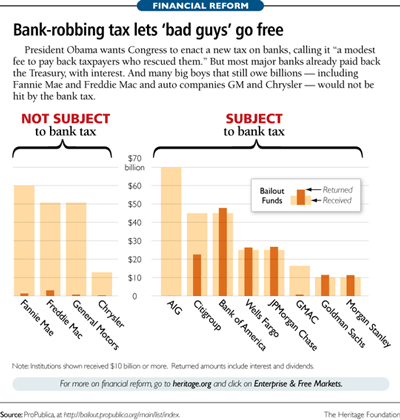
    <ahref="http://blog.heritage.org/wp-content/uploads/banktax2.gif"></p>Treasury Secretary Timothy Geithner <ahref="http://today.msnbc.msn.com/id/36131608/ns/business-stocks_and_economy/">appeared in an interview on The Today Show this morning and decried the “unfairness” of an economy where businesses on Wall Street are recovering, but where Americans still don’t have jobs. Quoth Geithner: “It’s not fair, it’s deeply unfair, and [Americans] should be angry about it.”

    The concern over “unfairness” is the unsettling ethos underlying President Obama’s economic agenda and, specifically, his proposed tax on America’s banks, intended to recoup dollars shelled out under the bailout program.

    President Obama aims to tax banks who received bailout money, despite the fact that they’ve already paid back the bailout money. That policy might “feel” good or sound good to those who are angry at Wall Street, but in practice it isn’t good. Consumers – those same unemployed Americans whose pain Geithner so deeply feels –*<ahref="http://blogs.abcnews.com/politicalpunch/2010/03/cbo-warns-obamas-proposed-bank-fee-could-end-up-costing-consumers.html">will be the ones who pay that penalty.

    <spanid="more-30377"></span>Despite Geithner’s concern over being “fair,” the president is awfully willing to accept unfairness in order to achieve his political ends. The bank tax, itself, is patently unfair. Firms who already paid-back bailout dollars will be taxed in order to “pay for” the bailout, but firms who haven’t repaid bailout dollars (General Motors, Chrysler, Fannie Mae, Freddie Mac)*<ahref="http://blog.heritage.org/2010/03/04/in-pictures-obama%E2%80%99s-bank-tax-robin-hood-comes-to-washington/">get off scot free.

    Then there’s the inherent unfairness of the backroom deals secured to pass the president’s health care plan. The president picked winners and losers to win the votes he needed. There’s nothing fair about giving away the farm to a select few, while others are left out in the cold.

    Fairness is defined as “being free from self-interest, prejudice, or favoritism.” That’s not the kind of treatment the president is doling out.*It’s a paradox of logic, it’s a philosophical compass gone haywire, and it’s what’s guiding the president’s economic policies.

    http://blog.heritage.org/2010/04/01/…t-bailout-tax/

  • Chavez to Putin: ?I Want to Be Your Friend?

    On 04.01.10 01:00 PM posted by Ray Walser

    <ahref="http://blog.heritage.org/wp-content/uploads/PutinChavez.jpg"></p>Almost a year ago, Venezuela’s President Hugo Chavez told President Obama, “<ahref="http://www.miamiherald.com/2009/04/18/1005924/chavez-to-obama-lets-be-friends.html">I want to be your friend.”* Today the much-photographed handshake at the Summit of the Americas in Trinidad has become a cold shoulder. **Sadly like much of the Obama Administration’s foreign policy, relations with arch-anti-American Hugo Chavez have fallen well short of expectations.* Good intentions, positive gestures, and, a little naïveté has not stopped Hugo Chavez from pursuing his mission to consolidate authoritarian rule in Venezuela and undermine U.S. leadership and influence in the Americas.

    Russian Prime Minister Vladimir Putin’s <ahref="http://www.businessweek.com/news/2010-03-31/putin-visits-chavez-in-russian-bid-to-grow-in-obama-s-backyard.html">visit to Caracas on April 2 is designed to show that Russia is once again a strategic player in the Americas.** It highlights the fact that Putin and Chavez share common objectives. They are united in hostility toward the U.S. and aim to trim U.S. global influence for democracy, economic freedom, and stable security.<spanid="more-30394"></span>

    The two countries enjoy an increasingly cozy buyer-seller relationship in advanced arms.* Russia has sold billions of dollars worth of sophisticated arms to Venezuela.* AK-47s, attack jets, tanks, armored personnel carrier, S-300 missile systems, and surface-to-air missiles have fattened Chavez’s arsenals and helped ignite a regional arms race.* More are on the way.* Finally, <ahref="http://en.rian.ru/russia/20100331/158384175.html">as major oil and gas producers, Chavez and Putin want to exploit the energy vulnerabilities of Western importers in order to keep prices high and drain off the resources needed to sustain their political and military ambitions.

    While in Caracas, Putin is also scheduled to meet with Bolivia’s Evo Morales.

    Some in Moscow and elsewhere might find it cruelly ironic that in the aftermath of the Moscow subway bombings, Putin still agrees to meet with <ahref="http://s3.amazonaws.com/thf_media/2010/pdf/bg_2362.pdf">a terror-friendly leader who has praised the career of Carlos “The Jackal” Ramirez, supported the narco-terrorism of the Revolutionary Armed Forces of Colombia (FARC), and stands on intimate terms with Hamas, Hezbollah and Iran.

    While most Americans find these growing Russian-Venezuelan ties troublesome, the Department of State and the Obama Administration have adopted a rather relaxed attitude.

    When asked if the arms build-up in Venezuela was cause for concern, <ahref="http://www.state.gov/r/pa/prs/dpb/2010/03/139318.htm">acting press spokesman Mark Toner answered “I think we’ve voiced our concerns, if you will, but our opinions about Venezuela’s need for these kinds of defense systems previously from the podium. Beyond that, Venezuela, Bolivia, any country, is entitled to pursue its own bilateral relationship with any other country, clearly.

    Perhaps Congress and the American need to take a closer look at the Obama Administration’s laissez-faire, perhaps negligent, approach to security issues in the region.

    http://blog.heritage.org/2010/04/01/…e-your-friend/

  • Time to Reverse Canada’s Sharp Competitive Edge against the U.S.

    On 04.01.10 02:00 PM posted by Anthony B. Kim

    <ahref="http://blog.heritage.org/wp-content/uploads/CanUSeconfree.bmp"></p>Early this year, the <ahref="http://www.heritage.org/index/">2010 Index of Economic Freedom, the Heritage Foundation’s data driven policy guide, reported that our economy is no longer in the top tier of economically free countries.* Worse, still, we slipped behind our northern neighbor Canada for the first time in the Index history. This disappointing news is vividly echoed in KPMG’s just released study, <ahref="ftp://ftp.competitivealternatives.com/2010_compalt_report_vol1_en.pdf">Competitive Alternatives 2010

    The report provides an updated comparison of global business locations, focusing on costs of conducting businesses. According to the report, “Canada now holds a 5 percent business cost advantage over the United States—an improvement over the virtual break-even position reported in the previous edition of the biennial study, last released in 2008.” <spanid="more-30406"></span>

    Among other factors that contributed to Canada’s high level of competitiveness, the <ahref="http://www.kpmg.ca/en/news/pr20100330.html">KPMG study pointed out that “a variety of tax cuts and reforms that have been implemented, or are in the process of being implemented, by both the federal and provincial governments, are also assisting the cost competitiveness of Canada for global business. Indeed, business taxes are now lower in Canada than in any of the other G7 countries.”

    By contrast, America’s current complex and investment-squashing tax code is a major factor in reducing our competitiveness. Other countries are not standing still. As the 2010 Index reveals, since July 2008 more than 30 countries have introduced reforms in direct taxes or have implemented tax cuts as previously planned, despite the challenging economic and political environment caused by the global economic slowdown.

    Governments’ policy choices shape business environments in the short term, but more importantly, over the long haul. Economies whose governments have responded to recession with higher stimulus spending are trading long-term competitiveness for short term gains that are proving ephemeral at best. Based on some of the early data available for the members of the Organization for Economic Development, the 2010 <ahref="http://www.heritage.org/index/PDF/2010/Index2010_Chapter1.pdf">Index shows that higher government spending during the recent economic slowdown has not resulted in greater economic growth. When you add in the cost of ever increasing government deficits and ballooning public debts, the long term effect can be catastrophic.

    Canadians have moved their economy to the direction of lower deficit, lower taxes, and lower debt. Canada’s relatively prudent federal budget management, coupled with sound fiscal reforms, has enabled the economy to sharpen its long-term competitiveness with better fiscal position.* It’s time for the U.S. to follow suit.

    A good first step would be for Congress to consider actions such as those proposed by <ahref="http://blog.heritage.org/2010/03/18/wyden-gregg-bipartisan-tax-reform-would-enhance-economic-freedom/">Senators Wyden and Gregg. *At a time when we are losing competitiveness, rhetorical promises or feeling-good slogans are not enough.* We need real policy actions to loosen the grip of government and restore our economic freedom. That’s a change that would carry real benefits for the American people.

    http://blog.heritage.org/2010/04/01/…ainst-the-u-s/

  • Fairness is in the Eye of the Beholder Vice President Biden

    On 04.01.10 02:15 PM posted by Curtis Dubay

    In a recent <ahref="http://finance.yahoo.com/tech-ticker/joe-biden-on-taxes-you-call-it-%22redistribution-of-wealth%22-i-call-it-%22just-being-fair%22-455245.html;_ylt=AtZC8PhTdXYeMHniA0cbaze7YWsA;_ylu =X3oDMTE2c3VvYW4wBHBvcwMxMQRzZWMDdG9wU3RvcmllcwRzb Gs">interview with Yahoo Finance, Vice President Joe Biden said the following:

    “the top 1 percent of earners get 22 percent of all income made in the U.S. Taxes have been lowered for the wealthy considerably over the years. It’s about time we get a little tax equity here.”

    Putting aside the fact that the Vice President thinks top-earners “get” their income instead of earning it through hard work, innovation and business acumen, he is right that the top one percent of taxpayers earn 22 percent of all income. But what he fails to mention is that they also <ahref="http://www.heritage.org/static/reportimages/223E5345AFF5E2729D4BAA491964B489.jpg">pay more than 40 percent of all income taxes. By most people’s standards that is more than enough “equity”.

    In fact, the top one percent of taxpayers <ahref="http://www.taxfoundation.org/news/show/25965.html">pay more taxes than the bottom 95 percent of taxpayers combined. And the bottom 50 percent of taxpayers pay less than 3 percent of all taxes. If current trends continue, the bottom 50 percent will soon pay no income taxes at all.

    <spanid="more-30423"></span>This is a dangerous situation because that means a majority of taxpayers, and therefore voters, will be able to vote themselves a larger and larger share of government benefits at no cost to themselves. All government spending will be financed entirely by a shrinking minority of taxpayers. Politicians will have no incentive to say no to more government spending since there are more votes to be won from increasing spending.

    According to Vice President Biden’s conception of fairness this isn’t a bad thing. In fact, he thinks top-earners should pay more and lower-earning taxpayers should pay less. But if he gets his way, we will quickly pass the threshold where more than half of all taxpayers pay no income taxes. If that were to occur, never-ending increases in government spending would be the result. And more and more taxpayers that pay nothing will inevitably lead to fiscal implosion when there are no longer enough productive taxpayers to fund all the government spending.

    Fairness is ultimately in the eye of the beholder, but consider the share of taxes the top one percent would pay under a more proportional tax system than our current highly progressive tax code. Under a flat tax, for example, if they earned 22 percent of all the income, they would pay 22 percent of all taxes.

    That seems more equitable than the system Vice President Biden desires that would only lead us into fiscal Armageddon.

    http://blog.heritage.org/2010/04/01/…esident-biden/

  • Race to the Bargaining Table: Does Federal Grant Program Reward Unions?

    On 04.01.10 08:00 AM posted by Sarah Torre

    <ahref="http://blog.heritage.org/wp-content/uploads/highschool-locker-100222.jpg"></p>Monday’s announcement that Delaware and Tennessee would win the first round of Race to the Top funds put a reality check on the grand expectations for the grant competition’s potential for true reform. While many of the first round’s 16 finalists presented applications strongly committed to the specific grant requirements outlined in the Race to the Top guidelines, Delaware and Tennessee went further to present a notably strong front of teacher union support.<spanid="more-30358"></span>

    Both states garnered almost 100 percent teacher union commitment to implementing the grant proposal’s reforms. Delaware even brought the head of its teachers’ union to present the state’s Race to the Top application to the U.S. Department of Education, pushing the First State over a $100 million finish line. Many of the remaining states, however, lost points in the competition for lack of labor buy-in. Florida, for example, despite <ahref="http://blog.heritage.org/2010/03/25/florida-students-%E2%80%93-and-education-policies-%E2%80%93-shine-in-new-naep-reading-results/">clear increases in student achievement after school choice and teacher performance pay reforms, received these comments from a <ahref="http://www2.ed.gov/programs/racetothetop/phase1-applications/comments/florida.pdf">Race to the Top reviewer (PDF):

    “There does not appear to be visible support from teachers or union leadership. The fact that only 8% union leaders (5 LEAs) in the participating LEAs endorsed the state’s application raises a concern about barriers that may need to be addressed by the state and at the local level.…The application does not address how the state will move forward assertively to generate union buy in. In order for Florida to ensure effective implementation of all plan criteria, teachers, along with their associations, are deemed essential especially in carrying out the RttT vision for Great Teachers and Great Leaders.”

    Lack of union support cost Florida and other first round states many of the precious 45 points allotted in Race to the Top to union, LEA, and other stakeholders buy-in. *Andy Smarick of the American Enterprise Institute <ahref="http://blog.american.com/?p=11940">asks what the seeming focus on union involvement will mean for reforms in the remaining states in round two:

    “First, Florida, Louisiana, and Rhode Island now have to wonder, “What reforms do we give up in order to get our stakeholders to support the plan? Do we lighten up on teacher evaluations? Do we give up performance pay? Do we take it easier on failing schools.” Second, and related, in other states, unions and districts may conclude that they have a veto over their states’ proposals. If a state adds an element with which they disagree, these organizations can simply say, “Unless you change that provision, we won’t sign on and you won’t win.” … the question becomes. “Which is better: a bold plan with no buy-in or a watered-down plan with buy-in?’”

    Despite some evidence pointing towards union favoritism in the scoring process, Secretary of Education, Arne Duncan, <ahref="http://www2.ed.gov/news/av/audio/2010/03/03292010.doc ">insisted (Word Document) during a press conference Monday that Race to the Top has encouraged reform-minded thinking in state leadership:

    “This is not about a pilot program or a small scale thing, this is trying to reach every single child in those states. And do it in a convincing way….”And so to see all the things that happened, 48 governors, 48 state school chiefs working to raise the bar and have higher standards for students without dumbing down expectation, to see restrictions removed in legislation and more innovation, see folks willing to challenge the status quo where things aren’t working and be not full on.”

    Challenging the status quo in American public education will take more than awarding states for victoriously racing to the union bargaining table. There are <ahref="http://www.heritage.org/Research/Reports/2010/01/A-Smarter-Path-to-a-Race-to-the-Top-in-Education-Reform">many reforms states can implement without competing for greater federal oversight or teacher union buy-in that promote increased student achievement and meaningful school choice for American families.

    http://blog.heritage.org/2010/04/01/…reward-unions/

  • Rep. Paul Ryan: The Way Forward on Health Care Reform

    On 04.01.10 09:00 AM posted by Kathryn Nix

    <ahref="http://www.heritage.org/budgetchartbook/Images/entitlements_03-580.jpg">

    <ahref="http://blog.heritage.org/wp-content/uploads/entitlements_03-580.jpg"></p>While President Obama and congressional liberals have yet to come down from the high of passing their historically horrible health care legislation, conservatives are still hard at work promoting health care reform.* This is because with its numerous new taxes, mandates, penalties, regulations, and new role for government, Obamacare can hardly be called reform.* Instead, the recently passed law is more likely to aggravate existing problems and create new ones for our health care system, not to mention add staggering new amounts to the federal deficit.

    One crusader still hard at work is Rep. Paul Ryan (R-WI).* <ahref="http://www.nytimes.com/2010/03/26/opinion/26ryan.html">In an article published last week in the New York Times, Rep. Ryan writes, “To be clear: it is not sufficient for those of us in the opposition to await a reversal of political fortune months or years from now before we advance action on health care reform. Costs will continue their ascent as the debt burden squeezes life out of our economy. We are unapologetic advocates for the repeal of this costly misstep. But Republicans must also make the case for a reform agenda to take its place, and get to work on that effort now.”<spanid="more-30344"></span>

    Rep. Ryan outlines the following as changes opponents of Obamacare can start making headway on now:

    1. Reforming the Regressive Tax Treatment of Insurance. <ahref="http://www.nytimes.com/2010/03/26/opinion/26ryan.html">Says Rep. Ryan, “This discriminatory tax treatment lavishes the greatest benefit on the most expensive plans while providing no support for the unemployed, the self-employed or those who don’t get coverage from their employer.” Removing this biased tax treatment and replacing it with a more equitable system of universal tax credits would create more affordable and portable care for all Americans.
    2. Coverage for Pre-Existing Conditions. New law ensures coverage for those with pre-existing condition by requiring guaranteed access.* However, in order prevent those who need insurance from waiting until they are sick to purchase it, this provision is accompanied by an unprecedented and unconstitutional individual mandate to purchase insurance.* Instead, <ahref="http://www.nytimes.com/2010/03/26/opinion/26ryan.html">Rep. Ryan suggests “focus[ing] on state-based solutions, including robust high-risk pools, reinsurance markets and risk-adjustment mechanisms.”
    3. Strengthening Patient Choice. One of the biggest faults with our current health care system is that patients are shielded from the financial choices surrounding their care.* Obamacare will only make this worse. Instead, <ahref="http://www.nytimes.com/2010/03/26/opinion/26ryan.html">Rep. Ryan argues that “We should ensure that health care decisions are made by patients and their doctors, not by bureaucrats, whether at an insurance company or a government agency. By inviting market forces into health care, we can encourage a system where doctors, insurers and hospitals compete against one another for the business of informed consumers.”
    4. Real Entitlement Reform. If middle-aged and younger Americans wish to receive the benefits of Medicare and Social Security in old age, something must be done to restore sustainability to these financially crippling programs.* As Rep. Ryan points out, entitlement programs create a long-term obligation of $76 trillion—it is impossible that the United States could fulfill this obligation without going bankrupt.* Entitlement programs alone will eclipse historical tax levels by 2052—this is to say nothing of other federal programs, such as defense and education.* Proponents of Obamacare claim that billions in cuts to spending on Medicare will prolong its solvency, but this is false—all projected savings from Medicare will go to paying for new entitlements under the new law.* Addressing this problem now will ensure that the safety net provided to senior citizens and low-income Americans will persist for generations to come.

    Repealing the breathtakingly sloppy legislation passed by Congress last week should remain a priority for proponents of true health care reform.* Rep. Ryan’s rallying cry reminds us that “[t]he opposition must always speak with vigor and candor on the need for wholesale repeal and for real reform to fix what’s broken in health care.”* Heritage analyst Nina Owcharenko further explains <ahref="http://www.heritage.org/Research/Reports/2010/02/The-Health-Care-Summit-A-Chance-to-Start-Over-and-Get-It-Right">here how Congress can achieve successful health care reform with bipartisan support.

    http://blog.heritage.org/2010/04/01/…h-care-reform/

  • The U.S. Senate, Not the U.N., Will Be the Judge of This Treaty

    On 04.01.10 10:00 AM posted by Conn Carroll

    </p>Last week, after <ahref="http://www.washingtonpost.com/wp-dyn/content/article/2010/03/24/AR2010032401535.html">the Kremlin leaked news that <ahref="http://blog.heritage.org/2010/03/25/morning-bell-a-start-towards-undermining-our-nuclear-security/">Presidents Barack Obama and Dmitri Medvedev had reached agreement on a new Strategic Arms Reduction Treaty (START), United Nations Secretary-General Ban Ki-moon released a <ahref="http://www.un.org/apps/sg/sgstats.asp?nid=4457">statement including:
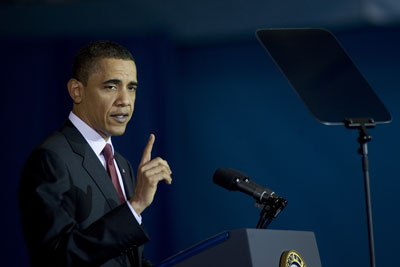
    I hope that this new treaty can be ratified without delay so as to allow its expeditious implementation.

    Secretary-General Ki-moon’s offices at U.N. headquarters in New York do enjoy the protection of United States security, but perhaps the head of the UN should not be deciding when a treaty is ready to be ratified.<spanid="more-30368"></span>

    In just the past week it has become clear that <ahref="http://blog.heritage.org/2010/03/29/what-exactly-is-the-deal-between-president-obama-and-the-kremlin/">the Obama administration and Moscow have very different ideas about what is actually in the treaty. Ratification of this treaty would have profound implications for the security of the United States for years to come. Accordingly, those actually charged with approving U.S. treaties, U.S. Senators, need to ask some probing questions about the agreement in the months to come. Heritage fellow Baker Spring <ahref="http://www.heritage.org/Research/Reports/2010/03/The-START-Follow-on-Treaty-Questions-the-Senate-Needs-to-Ask">identifies five:

    1. Does the Treaty, Either Directly or Indirectly, Limit the Missile Defense Options of the U.S.? The fact sheet released by the White House describing the content of the treaty in general terms states that the treaty places no constraints on the U.S. regarding missile defenses. Russian Foreign Minister Sergei Lavrov, however, begs to differ. He has stated that if the U.S. exceeds current levels of missile defense systems, then the new treaty will cease to have force. Lavrov also asserts that the limitations on strategic defenses take a legally binding form under the treaty. Even if this is not the case—and that cannot be certain until the text of the treaty is released—informal linkages to missile defense from the treaty can, as a practical matter, be just as limiting as actual text in the treaty. For example, President Obama established precisely such a linkage by canceling a plan to field defensive interceptors against long-range missiles in Poland and associated radar in the Czech Republic last September.

    2. Does the Treaty Limit U.S. Conventional Strategic Strike Systems? Again, the White House fact sheet says no. The White House assertion is difficult to fathom, however, because the fact sheet states that the treaty will limit both deployed and non-deployed strategic launchers at 800. Thus, such launchers would seem to be applicable against the numerical limit—whether or not they are armed with nuclear warheads. If launchers are subject to the numerical limitation regardless, then the treaty by definition imposes a limitation on U.S. options for fielding conventional strategic strike systems.

    3. Will the Obama Administration Modernize and Test the U.S. Strategic Nuclear Force? The White House fact sheet includes an anodyne statement that the U.S. is free under the treaty to structure its strategic nuclear force, within the numerical limits, as it sees fit. This would seem to include the freedom to upgrade its strategic nuclear force qualitatively. Upgrading the force, however, will require modernization steps, such as developing new generations of missiles and bombers and the warheads to go with them. Nevertheless, the Obama Administration has been nothing short of adamant that it will not conduct nuclear weapons tests and will press the Senate to consent to the ratification of the Comprehensive Test Ban Treaty, which the Senate rejected in 1999.

    4. How Will the Obama Administration Maintain an Effective Strategic Nuclear Arsenal Following President Obama’s Expected Order to “De-Alert” the Force? The White House fact sheet states that the limits imposed by the treaty are based on rigorous analysis conducted by strategic planners at the Department of Defense. During his campaign President Obama, without the benefit of analysis from the Department of Defense, asserted that U.S. nuclear forces are on “hair trigger alert” and unequivocally pledged to take them off alert. While a specific description of the steps the President would take to “de-alert” U.S. nuclear forces must await the release of the Nuclear Posture Review, any such steps will make it impossible to maintain a strategic nuclear force that can meet any reasonable military and operational requirements. Even with a large strategic arsenal, reducing the alert levels of U.S. nuclear forces would be a dangerous proposition; under the smaller force mandated by the treaty, it would be even more dangerous.

    5. Will the Treaty Limitation on Deployed Strategic Nuclear Warheads Be Adequately Verifiable? The White House fact sheet asserts that the verification measures in the treaty are adequate. The description, however, fails to explain whether the warhead limitation (1,550) will be verified directly or only through accounting principles applied through the limitations on launchers. If the verification regime is focused on ensuring that the launcher limits are observed but just assumes that the warhead limits will correspond to the number of launchers, the regime will be inadequate; the Russians will be able to explore options to put more warheads on each launcher than is assumed by the accounting principles. In fact, the Russians will likely argue that warhead numbers that exceed the 1,550 limitation could be perfectly legal under the treaty. Most likely, the Russians will make the reasonable argument that the verification regime is an integral part of the treaty and that, therefore, the treaty only seeks to limit what can be verified.

    http://blog.heritage.org/2010/04/01/…f-this-treaty/

  • Side Effects: Laws No Longer Mean What They Say

    On 04.01.10 12:00 PM posted by Kathryn Nix

    <ahref="http://blog.heritage.org/wp-content/uploads/SideEffectsLogo1.jpg"></p>Major flaws in the gargantuan Obamacare bill started to emerge almost immediately after it was signed into law.* One of the most embarrassing:* failure to ensure immediate coverage for kids with pre-existing conditions—something Obamacare supporters had constantly promised was part of the bill.

    Looking to provide cover for those who wrote the bill, Secretary of Health and Human Services Kathleen Sebelius fired off a <ahref="http://www.google.com/hostednews/ap/article/ALeqM5jYnajhWrPEXihcCrpRNfUKN7rN-AD9EOSK0O0">warning letter to insurers. “Health insurance is designed to prevent any child from being denied coverage because he or she has a pre-existing condition,” she scolded.* As though it was their mistake!<spanid="more-30359"></span>

    The pols got in the act too.* <ahref="http://www.google.com/hostednews/ap/article/ALeqM5jYnajhWrPEXihcCrpRNfUKN7rN-AD9EOSK0O0">According to the Associated Press, “House leaders later issued a statement saying their intent in writing the legislation was to provide full protection.”* Well all right, then!

    Luckily, in this case, the insurance industry is declining to take advantage of politicians’ sloppiness.* <ahref="http://www.google.com/hostednews/ap/article/ALeqM5jYnajhWrPEXihcCrpRNfUKN7rN-AD9EOSK0O0">The AP reports that Karen Ignagni, president of America’s Health Insurance Plans, wrote back to Sebelius, saying the industry will “fully comply” with the HHS regulations on this matter, once they are written.

    But is this anyway to run a country?* To have lawmakers and regulators coerce the private sector into doing what they simply declare to be their “intent,” rather than what is actually written in the law?* Legislation is supposed to be scrubbed of shortcomings such as this before it’s brought to the floor for a vote.

    Expect more episodes like this in the months to come.* Washington loves flexing new-found muscle—in this case, the heavy hand of lawmakers and regulators browbeating others for failure to do what they want ‘em to do, but failed to put into law.

    Episodes like this reveal the merits of taking a considered, incremental approach to health care reform.* To learn more about the right way to successful health care reform, <ahref="http://www.heritage.org/Research/Reports/2010/02/The-Health-Care-Summit-A-Chance-to-Start-Over-and-Get-It-Right">click here.

    http://blog.heritage.org/2010/04/01/…what-they-say/

  • Not an April Fool’s Joke: “School-Homing” Education Ideas

    On 04.01.10 12:25 PM posted by Jennifer Marshall

    <ahref="http://blog.heritage.org/wp-content/uploads/theonion.jpg"></p>“According to a report released Monday by the U.S. Department of Education, an increasing number of American parents are choosing to have their children raised at school rather than at home,” <ahref="http://www.theonion.com/articles/increasing-number-of-parents-opting-to-have-childr,17159/">The Onion “reports” today.

    “School-homing,” as the satirical source dubs the fictional trend, would be a witty April Fool’s fib if it didn’t sound so much like the liberal education ideas we’ve heard in the last few decades.

    The Clinton administration, for example, popularized the idea of “one-stop shopping” for social services at public schools. They also heavily promoted school-based clinics, which offer services including reproductive health counseling and contraceptives to minors.

    The Obama administration is following suit. The new health care law <ahref="http://blog.heritage.org/2010/03/25/parental-rights-and-civil-wrongs-school-based-clinics-and-abortion/">massively increases funding for school-based clinics–$250 million over the next five years.* Meanwhile, Secretary Duncan described his <ahref="http://budget.house.gov/hearings/2010/02.25.2010_Duncan_Testimony.pdf">“Department’s cradle-to-career education strategy” in testimony before the House Budget Committee last month.

    He went on to explain that the Obama administration’s Department of Education budget request includes:<spanid="more-30414"></span>

    $210 million to fund school reform and comprehensive social services for children in distressed communities from birth through college and career. A restructured Successful, Safe, and Healthy Students program would provide $410 million to – for the first time – systematically measure school climates, which we know can affect student learning.

    “School-homing” doesn’t sound far from the mark.

    At the classroom level, such policies put demands on teachers that they can’t fulfill. Most teachers and administrators will readily admit they can’t make up for the fundamental role of the family and don’t want to.

    At the same time, it’s frustrating for teachers if some parents don’t engage adequately in their children’s education because of challenges in their own personal lives. But the answer isn’t to push more government interventions into family life via public schools. It’s to start restraining government to its constitutional role, limiting public schools to their basic educational purpose, looking to civil society to restore family and community life, and empowering parents with real authority over and resources to direct their children’s education and upbringing.

    As Virginia Walden Ford, who’s organized thousands of parents in the District of Columbia on behalf of school choice, will attest, the difference that decision-making authority can make is powerful. She’s seen adults’ and families’ lives transformed as a result.

    On the other hand, if policies encourage “school-homing,” they’ll reap what they sow, sadly. As <ahref="http://www.theonion.com/articles/increasing-number-of-parents-opting-to-have-childr,17159/">The Onion sardonically concludes, “increasingly overburdened public schools have recently led to a steady upswing in the number of students being prison-homed.”

    If we believe the slogan that parents are a child’s first and most important teachers, then we need education policies that testify to its truth.

    http://blog.heritage.org/2010/04/01/…ucation-ideas/

  • Solar Investments: Stimulating the Economy or Reshaping It?

    On 04.01.10 11:00 AM posted by Nick Loris

    <ahref="http://blog.heritage.org/wp-content/uploads/money_stacks0902115.jpg"></p>So much for shovel-ready. In February of 2009 President Obama signed the $862 billion stimulus bill into law and of that; $36.7 billion was allocated to the Department of Energy. More specifically, $16.7 billion is geared towards increasing the production of renewable energy and improving energy efficiency in buildings and appliances. In what was supposed to provide timely, targeted funding to stimulate the economy, many projects are having trouble getting off the ground. For instance, solar companies are in jeopardy of <ahref="http://www.usatoday.com/money/industries/energy/environment/2010-03-31-californiasolar31_CV_N.htm ">missing the deadline for federal funding:

    NextEra Energy Resources thought it had a golden project. The company proposed a 2,000-acre solar farm, named Beacon, on fallow agricultural land on the edge of California’s Mojave Desert. The site has the great desert sun but is on degraded land near a freeway, an auto test track and old buildings. The site “is exactly where solar should be,” says David Myers, head of conservation group Wildlands Conservancy.

    But two years later, NextEra still awaits permission to begin construction from the California Energy Commission, which grants permits on such projects after environmental reviews. Time is running short, not only for NextEra but for several dozen green-energy projects in California. Ground must be broken on them before year’s end to get federal <ahref="http://content.usatoday.com/topics/topic/Legislation+and+Acts/U.S.+Government/Economic+Stimulus">stimulus funds worth 30% of the projects’ cost.”

    We <ahref="http://blog.heritage.org/2009/02/05/nepa-yet-another-reason-the-stimulus-is-guaranteed-to-fail/">predicted this would happen before the stimulus bill even passed. <spanid="more-30369"></span>While it is important to consider the environmental impacts of new project construction, California’s state regulators are making NextEra <ahref="http://www.usatoday.com/money/industries/energy/environment/2010-03-31-californiasolar31_CV_N.htm ">jump though several nonsensical hoops:

    “At a January hearing before the California Energy Commission, NextEra unfurled a string of complaints about the process. The Beacon site had to have a plan to relocate desert tortoises, although the site “has no desert tortoises,” NextEra’s Scott Busa said. The company had to redo a plan five times to monitor ravens that prey on baby tortoises, although the solar fields would draw fewer ravens than the sheep that currently graze and sometimes die on the land, providing a “raven buffet,” Busa said. He also said state regulators gave NextEra a 382-day plan to offset any effect on Native American cultural resources on the site, when the company didn’t have 382 days before it had to break ground to get stimulus funding. Given that the site was considered almost “perfect” for solar, Busa said, ‘I wonder why we’re here two years later?’”

    Instead of allowing the NextEra to finance the project without taxpayer assistance, Senator Dianne Feinstein (D-CA) <ahref="http://www.usatoday.com/money/industries/energy/environment/2010-03-31-californiasolar31_CV_N.htm ">is offering legislation to extend the deadline. The environmental hurdles were known well in advance of passing the stimulus bill. It’s clear this was less about an economic recovery and more an excuse to pour more subsidies into renewable energy projects. Unsurprisingly, the government is failing at both.

    http://blog.heritage.org/2010/04/01/…-reshaping-it/

  • Two Years of UI Benefits Contributing to High Unemployment

    On 04.01.10 07:00 AM posted by James Sherk

    <ahref="http://blog.heritage.org/wp-content/uploads/unemployedCA.jpg"></p>Unemployment has skyrocketed in this recession. Worse, it has remained abnormally high. Joblessness never rose above 8 percent in either the 2001 or 1991 recessions, but now almost one in ten Americans do not have jobs, and in some parts of the U.S. the rate is over 1 out of 5. Why?
    The weak economy and the job-killing policies coming from Washington are the biggest culprits. The collapse of the housing bubble and the credit crunch hammered businesses, and new taxes and regulations are hitting employers when they are down. However, policies designed to help the jobless are – ironically – also at fault.

    Congress extended the maximum length of time the unemployed can collect unemployment insurance (UI) beyond the usual six months. Congress often does this by recessions, but never before by so much. Now workers in high unemployment states can collect unemployment insurance for 99 weeks – almost two years of benefits. Congress did this to help those out of work. But <atitle="http://ideas.repec.org/p/nbr/nberwo/6714.html" href="http://ideas.repec.org/p/nbr/nberwo/6714.html">economic studies <atitle="http://ideas.repec.org/p/iza/izadps/dp294.html" href="http://ideas.repec.org/p/iza/izadps/dp294.html">consistently <atitle="http://ideas.repec.org/p/iza/izadps/dp978.html" href="http://ideas.repec.org/p/iza/izadps/dp978.html">show that when workers collect longer UI benefits they also <atitle="http://ideas.repec.org/a/bla/restud/v73y2006i4p1009-1038.html" href="http://ideas.repec.org/a/bla/restud/v73y2006i4p1009-1038.html">stay unemployed <atitle="http://ideas.repec.org/p/nbr/nberwo/2741.html" href="http://ideas.repec.org/p/nbr/nberwo/2741.html">longer.<spanid="more-30334"></span>

    This does not happen because unemployed workers are lazy, or want welfare handouts. It happens because unemployment insurance changes the jobs the unemployed look for. Most job losers would like to find work near where they currently live, and in their same industry or occupation. Who wants to move away from friends or family, or take a pay cut in a field in which you have less skills?

    Unfortunately a lot of workers will have to do just that. Many of the jobs the economy lost will never come back. The collapse of the housing bubble means construction employment will not recover anytime soon. The finance sector will likewise remain shrunken. General Motors cut almost three-fifths of its hourly workforce in recent years and most of those positions will never return.

    Two years of UI benefits allows these unemployed workers to delay the inevitable. They look for similar jobs in the same area as they used to work. They do not look as intently for work in other states or in other industries, jobs that would involve painful transitions. <atitle="http://ideas.repec.org/p/iza/izadps/dp3667.html" href="http://ideas.repec.org/p/iza/izadps/dp3667.html">Not until UI benefits begin to run out does their job searching surge. Then they become more willing to accept the painful sacrifices necessary to get a job, such as moving away.

    UI keeps many workers unemployed while they look for jobs that they will not find. That does little to benefit them: in any event, they ultimately wind up having to take the less desirable jobs.

    Studies show that <atitle="http://ideas.repec.org/a/ilr/articl/v56y2003i2p324-348.html" href="http://ideas.repec.org/a/ilr/articl/v56y2003i2p324-348.html">extending UI benefits has <atitle="http://ideas.repec.org/a/ecj/econjl/v112y2002i479p223-265.html" href="http://ideas.repec.org/a/ecj/econjl/v112y2002i479p223-265.html">this effect on unemployment whether jobs are hard to find or not. And it measurably raises the unemployment rate. A <atitle="http://www.brookings.edu/~/media/Files/Programs/ES/BPEA/2010_spring_bpea_papers/spring2010_elsby.pdf" href="http://www.brookings.edu/%7E/media/Files/Programs/ES/BPEA/2010_spring_bpea_papers/spring2010_elsby.pdf">recent Brookings Paper on Economic Activity, written by economists at the Federal Reserve and the affiliated with the National Bureau of Economic Research, concluded that:

    This back-of-the-envelope calculation therefore suggests that EUC [the extended UI benefits] can account for as much as 15 to 40 percent of the rise in aggregate unemployment duration, a potentially substantial effect. In terms of the unemployment rate, this corresponds to between 0.7 and 1.8 percentage points of the 5.5 percentage point rise in the unemployment rate witnessed in the current recession. There are reasons to believe, however, that the effect of extended UI benefits in the current recession on the duration of unemployment is likely to be at the lower end of these estimates.

    In English, the unemployment rate would be roughly a percentage point lower, if Congress had left unemployment benefits at six months. We would have 8.7 or 9.0 percent unemployment instead of the current 9.7 percent. Policies intended to help the jobless have kept many of them from finding new work. That may be a policy tradeoff Congress chooses to make. But not one should mistake it for an economic stimulus.

    http://blog.heritage.org/2010/04/01/…-unemployment/

  • Video of the Week: Congressman Thinks the Island of Guam Could Tip Over

    On 04.01.10 06:02 AM posted by Rory Cooper

    No, this is not an April Fool’s Joke. In an amazing video from last Friday’s House Armed Services Committee, Congressman Hank Johnson (D-GA) worries that Guam may tip over if the military sends more troops to be stationed there. <ahref="http://washingtonscene.thehill.com/in-the-know/36-news/3169-rep-hank-johnson-guam-could-tip-over-and-capsize">He says: “My fear is that the whole island will become so overly populated that it will tip over and capsize.” Give credit to Admiral Robert Willard, Commander of the Navy’s Pacific Fleet,*for keeping his composure, saying “We don’t anticipate that.”

    The Hill newspaper, doing its best to also be polite <ahref="http://washingtonscene.thehill.com/in-the-know/36-news/3169-rep-hank-johnson-guam-could-tip-over-and-capsize">said: “Like other islands, Guam is attached to the sea floor, which makes it extremely unlikely that it will tip over, even if there are lots and lots of people on it.” Yes, extremely unlikely.

    What doesn’t make this a laughing matter is that this committee discussion has real military policy implications. As the Admiral points out to Congressman Johnson in the video, Guam “is part of our nation.”

    http://blog.heritage.org/2010/04/01/…ould-tip-over/

  • Morning Bell: Don?t Fall For Obama?s Energy Shell Game

    On 04.01.10 05:18 AM posted by Conn Carroll

    <ahref="http://blog.heritage.org/wp-content/uploads/Obama-10-04-01.jpg"></p>Can the Obama administration’s desperate attempts to cover their true far left nature with centrist rhetoric and promises become any more transparent? Yesterday, the President announced <ahref="http://www.whitehouse.gov/the-press-office/remarks-president-energy-security-andrews-air-force-base-3312010">“an expansion of offshore oil and gas exploration” in selected areas off the coasts of the United States. The President claims this announcement was made <ahref="http://www.whitehouse.gov/the-press-office/remarks-president-energy-security-andrews-air-force-base-3312010">“in order to sustain economic growth and produce jobs,” but nobody believes him. Just take a quick look at today’s newspaper reporting:

    • <ahref="http://www.latimes.com/news/nationworld/nation/la-na-obama-drilling1-2010apr01,0,1355746.story">The Los Angeles Times: “President Obama … unveiled a controversial offshore drilling plan Wednesday that was driven largely by the politics of his agenda on energy and climate change — not by hopes of changing the nation’s energy supply.”
    • <ahref="http://www.washingtonpost.com/wp-dyn/content/article/2010/03/31/AR2010033100024.html">The Washington Post: “President Obama’s decision … reflects a high-stakes calculation by the White House: Splitting the difference on the most contentious energy issues could help secure a bipartisan climate deal this year.”
    • <ahref="http://www.politico.com/news/stories/0310/35223.html">Politico: “Obama’s decision is closely tied politically to the fate of the climate change bill jointly sponsored by Sens. Lindsey Graham (R-SC), John Kerry (D-MA), and Joe Lieberman (I-CT).”
    • <ahref="http://www.nytimes.com/2010/04/01/science/earth/01energy.html?partner=rss&emc=rss">The New York Times: “The proposal is also intended to … help win political support for comprehensive energy and climate legislation.”
    • <ahref="http://www.bloomberg.com/apps/news?pid=20601103&sid=a9L2Gy1bKjSk">Bloomberg: “President Barack Obama’s pledge to expand offshore oil and natural-gas drilling may help Democrats deliver legislation that regulates carbon dioxide emissions before any fuel is produced.”

    <spanid="more-30306"></span>In fact, if anything, the policies announced by President Obama yesterday will actually decrease and delay future U.S. oil production. The President actually canceled four lease sales off the Alaska coast that were planned to begin producing oil within the next two years, delayed a planned lease off Virginia until at least 2012, and placed some areas off limits for at least seven years. Go back and look at President Obama’s actual announcement again: he only promised new exploration off the Atlantic coast. There is absolutely no guarantee that any new drilling will ever occur. Secretary Ken Salazar’s Interior Department still has full discretion to never allow a single drop of oil to be harvested from these waters. And that doesn’t even begin to address the court challenges the enviro-left will employ to attack and delay the entire process.

    So if developing new energy sources that can create private sector jobs for Americans and new revenues for financially strapped states and the federal government is not the Obama administration’s real goal, then what is? Well, President Obama’s Energy Secretary Steven Chu, who was at yesterday’s announcement, has said, <ahref="http://blogs.abcnews.com/thenote/2008/12/obama-energy-pi.html">“Somehow we have to figure out how to boost the price of gasoline to the levels in Europe.” For reference purposes, when Secretary Chu said that, <ahref="http://www.heritage.org/Research/Commentary/2009/02/Obamas-Extreme-Team-on-Energy">Europeans were paying $8 a gallon for gas at the pump.

    Canceling current offshore oil leases and delaying future ones are not the only policy means the Obama administration is using to pursue the high energy price policy ends. The Obama administration has also <ahref="http://blog.heritage.org/2010/02/23/war-on-the-west-ii/">declared war on energy production in the Mountain West, <ahref="http://blog.heritage.org/2009/02/27/morning-bell-free-our-energy/">rescinding oil-shale development leases in Colorado, Utah and Wyoming. His administration has <ahref="http://blog.heritage.org/2010/02/16/obama%E2%80%99s-nuclear-push-good-but-not-enough/">completely failed to take on the real regulatory reforms necessary to allow a private sector nuclear industry to thrive. And just this week, <ahref="http://online.wsj.com/article/SB10001424052702304370304575152040858385342.html"> the Obama Environmental Protection Agency began its regulation of carbon emissions through the Clean Air Act.

    And let’s not forget the grand daddy of them all: a cap and trade energy tax bill. But don’t call it that. Secretary Salazar <ahref="http://tpmdc.talkingpointsmemo.com/2010/03/salazar-cap-and-trade-not-in-the-lexicon-anymore.php?ref=tn">told CNBC yesterday, “I think the term ‘cap and trade’ is not in the lexicon anymore.” Whatever you call it, placing an arbitrary penalty on carbon emissions would mean disaster for the American economy. The Heritage Foundation’s Center for Data Analysis <ahref="http://www.heritage.org/Research/Reports/2009/08/The-Economic-Consequences-of-Waxman-Markey-An-Analysis-of-the-American-Clean-Energy-and-Security-Act-of-2009">has found that cap and tax legislation would cost the average family of four almost $3,000 per year, cause 2.5 million net job losses by 2035, and produce a cumulative gross domestic product (GDP) loss of $9.4 trillion between 2012 and 2035.

    So don’t be fooled by President Barack Obama’s energy rhetoric. High energy prices are not a side effect of climate legislation – they are the whole point. According to the latest Pew poll, <ahref="http://pewresearch.org/pubs/1509/internet-cell-phone-users-news-social-experience">63% of Americans support allowing more offshore oil and gas drilling in U.S. waters. Americans deserve an energy policy that reduces prices, creates private sector jobs, and reduces our national debt. Right now they have the opposite.

    Quick Hits:

    • A new survey shows <ahref="http://online.wsj.com/article/SB10001424052702304252704575155522246442654.html"> private employers shed 23,000 jobs in March, but many expect tomorrow’s Labor Department report to show overall job growth thanks to increasing government employment.
    • A study by the George Mason University <ahref="http://corner.nationalreview.com/post/?q=MjNmODVmZWNmZWU4MjU5NTQwNWQwN2NlYzcxNDY0MzE=">s hows: 1) no statistical correlation between unemployment and how President Obama’s failed stimulus was spent; 2) Democratic districts received one-and-a-half times as many awards as Republican ones; and 3) an average cost of $286,000 was awarded per job created.
    • According to the latest Gallup poll, <ahref="http://www.usatoday.com/news/washington/2010-03-31-poll_N.htm">more Americans now blame President Barack Obama for the poor economy and unemployment with half now saying he deserves at least a moderate amount of blame.
    • The <ahref="http://articles.sfgate.com/2010-02-07/bay-area/17848482_1_same-sex-marriage-sexual-orientation-judge-walker">same federal judge who put supporters of California’s pro-marriage Prop. 8 on trial for bigotry, <ahref="http://www.nytimes.com/2010/04/01/us/01nsa.html?ref=todayspaper">ruled yesterday that National Security Agency’s post-9/11 surveillance program was illegal.
    • According to the <ahref=" http://www.democracycorps.com/strategy/2010/03/mixed-messages-on-the-deficit/">latest poll from the Democratic polling firm Democracy Corps, voters are deeply concerned about the federal budget deficit and overwhelmingly choose spending cuts over tax increases — 71% to 18% — to bring down the deficit

    http://blog.heritage.org/2010/04/01/…gy-shell-game/

  • Florida School Choice Rally Shows School Choice is Still on the March

    On 03.31.10 01:00 PM posted by Rachel Sheffield

    </p>Congress and the Obama administration seem to want to ignore the issue of school choice and let the D.C. Opportunity Scholarship Program <ahref="http://blog.heritage.org/2010/02/05/freezing-opportunity-budget-means-the-end-of-school-choice-for-many/">die of neglect. But across the nation, school choice is on the march and isn’t going away any time soon.

    Last week, the Democrat-controlled Illinois Senate passed a voucher bill for Chicago. And last Wednesday, in the largest rally for school choice in the nation’s history, more than 5,500 students and parents, as well as supporters from across political lines and an all-star team of speakers, gathered in Florida’s capitol city to voice support for the expansion of the state’s Tax Credit Scholarship. Participants traveled on buses from several cities throughout the state to champion the measure.

    <spanid="more-30299"></span>Over the past decade, Florida has implemented a variety of school reform strategies, including a tax credit for businesses that contribute scholarship money for low-income children. After implementing a suite of education reforms, <ahref="http://blog.heritage.org/2010/03/25/florida-students-%e2%80%93-and-education-policies-%e2%80%93-shine-in-new-naep-reading-results/">academic achievement for Florida’s children has increased, especially among minority students, <ahref="http://nationsreportcard.gov/reading_2009/summary.asp">despite the relatively stagnant student scores nationwide.

    The latest data from the <ahref="http://nces.ed.gov/nationsreportcard/">National Assessment of Educational Progress reveal that Florida’s special needs students now outpace their peers nationwide in reading. African American fourth graders outpace or tie the statewide average of all students in eight states, and Hispanic students outpace or tie the statewide average of all students in 31 states in reading.

    Speaking at the rally, Rep. James Bush of the Southern Christian Leadership Conference (the civil rights group created by Dr. Martin Luther King, Jr.) <ahref="http://jaypgreene.com/2010/03/24/florida-on-the-march/">stated:

    I say to you today that the Tax Credit Scholarship program is one of the keys we use to …reach some of those children who go to bed hungry at night. It is one way we show that an empty pocketbook doesn’t have to mean an empty bookshelf – that all our learning tools need to be on the table for all our children.

    I am here today as a messenger of the Southern Christian Leadership Conference, and I am here to proudly proclaim that the organization created by Dr. King believes that a scholarship for low-income children is one way to break the cycle and close the gap.

    http://blog.heritage.org/2010/03/31/…-on-the-march/

  • Energy Secretary Admits Nuclear Waste Commission Will Not Consider Yucca

    On 03.31.10 12:00 PM posted by Jeff Witt

    <ahref="http://blog.heritage.org/wp-content/uploads/2009/05/yucca_mtn_090223.jpg"></p>Testifying before the House Subcommittee on Energy and Water Development last Wednesday, Department of Energy Secretary Steven Chu acknowledged to the committee that he explicitly directed the Blue Ribbon Commission charged with recommending a nuclear waste storage policy to the Obama Administration to strike the Yucca Mountain repository from its purview.* This is unfortunate, as considering Yucca would add significant credibility to the recommendation of the Blue Ribbon Commission, which held its first meeting last week.* By asking the committee not even to consider Yucca Mountain, the Administration is solidifying the criticism that it is basing its decision on politics rather than scientific or technical data.

    Secretary Chu’s written statement submitted to the subcommittee only says concerning the Yucca decision that “The Administration has determined that developing a repository at Yucca Mountain, Nevada is not a workable option…”* Indeed, for over a year the Administration has insisted that there are better options than Yucca Mountain for dealing with storage of the nation’s nuclear waste, and the Administration has all the while expressed confidence that an impartial review by the Blue Ribbon Commission would show that its position on Yucca is the right one.* Given Secretary Chu’s admission before the House subcommittee, however, it is plain that the Administration is not, after all, confident in the soundness of its decision as adjudged apart from political considerations.<spanid="more-30291"></span>

    Make no mistake, the science so far very clearly shows that Yucca could safely house the nation’s nuclear waste. *<ahref="http://online.wsj.com/article/BT-CO-20100316-709744.html">As the Wall Street Journal reported earlier this month, “As recently as late last year, the DOE Web site said 20 years of research and billions of dollars-worth of scientific work found that the Yucca Mountain repository ‘brings together the location, natural barriers, and design elements most likely to protect the health and safety of the public.’”

    And yet, the Obama Administration is not just attempting to take Yucca off the table for the foreseeable future.* No—the Administration wants to really kill Yucca for good, and has accordingly chosen to go down a procedural path that, if decided in the Administration’s favor, will result in a permanent and irreversible termination of the Yucca project.* On this topic, Rep. Mike Simpson (R-ID) questioned Secretary Chu about why the Administration would opt for the most extreme measure in its effort to end Yucca when less stringent options were available to the Administration.* The most that Chu could do to explain the decision was to say that the Administration wanted to send a clear message about its intention not to go forward with Yucca.* Anyone who has been following the fate of Yucca knows that the Administration’s intention to terminate Yucca has never been in doubt.* Chu’s response does nothing to explain why the Administration has chosen such a drastic means of achieving its goal.

    Such a decision, made without a rational basis, does not bode well for the future of nuclear energy.* Indeed, as Heritage Research Fellow in Nuclear Energy Policy <ahref="http://www.heritage.org/Research/Reports/2010/02/Presidents-Yucca-Policy-Inconsistent-with-Nuclear-Rhetoric">Jack Spencer has said, “The Administration’s Yucca policy signals once again that the government cannot be a trusted partner.”* <ahref="http://www.heritage.org/Research/Reports/2008/05/Yucca-Mountain-Remains-Critical-to-Spent-Nuclear-Fuel-Management">A geologic repository is critical to the realization of a nuclear energy renaissance in America, and there’s nothing scientific or technological that says Yucca cannot be that repository. *The Obama Administration is jeopardizing America’s energy future by advancing political interests ahead of the national interest.

    If President Obama and Secretary Chu were truly confident that there are better ways to manage nuclear waste than Yucca, then they would have no reason to fear what an open inquiry on the part of the Blue Ribbon Commission would find.* Clearly, the president and the secretary do not have such confidence in the defensibility of their decision to end the Yucca Mountain repository project.

    Instead of rejecting the repository outright and thus potentially undermining the credibility of the Commission’s conclusions, the commission should recommend how to specifically resolve the Yucca Mountain impasse. *The commission should first make a technical and scientific conclusion about Yucca Mountain’s viability based on the data available. *If it determines that Yucca is not technically viable, then it should simply defend that conclusion. *However, if the commission concludes that it is viable and still determines that Yucca Mountain is not fit for nuclear waste disposal, then it should also state why that site should not be part of a comprehensive national nuclear waste disposition strategy and put forth a detailed recommendation on how to disengage from the program.

    This disengagement strategy should include how to repay to electricity ratepayers the $8 billion in sunk costs that have already been invested in Yucca and a <ahref="http://www.heritage.org/Issues/Legal">legal analysis of how its conclusions affect the U.S. government’s ability to fulfill its legal obligations to dispose of America’s nuclear waste. *Finally, it should make recommendations on whether the Nuclear Regulatory Commission should continue with its review of the Department of Energy’s permit application to build the Yucca repository.

    Jeff Witt is a member of the Young Leaders Program at the Heritage Foundation. For more information on interning at Heritage, please visit:<ahref="http://www.heritage.org/About/Internships-Young-Leaders/The-Heritage-Foundation-Internship-Program">http://www.heritage.org/About/Intern…rnship-Program

    http://blog.heritage.org/2010/03/31/…onsider-yucca/

  • Side Effects: Obamacare May Be Fatal for Your HSA

    On 03.31.10 11:00 AM posted by Kathryn Nix

    <ahref="http://blog.heritage.org/wp-content/uploads/SideEffectsLogo1.jpg"></p>President Obama promised Americans that “If you like the plan you have now, you can keep it.”* It was a fundamental promise of Obamacare.

    But if the coverage you like comes via a Health Savings Account (HSA) or a Flexible Spending Account (FSA), that promise may not hold.

    A recent <ahref="http://hsaconsultingservices.com/">analysis from HSA Consulting Services concludes the new law will probably lead to major changes in how consumers can use such plans.* And many of those changes may make the accounts far less appealing.* It all depends of how the Department of Health and Human Services writes the regs, says study author Roy Ramthun.<spanid="more-30285"></span>

    The Obamacare law limits these consumer-controlled accounts in two ways:* it restricts the types of health products you can purchase with your HSA money, and it reduces the amount of money you’ll be able to put into your FSA.

    Unsurprisingly, there’s a price hike, too.* It doubles—to a whopping 20 percent—the tax penalty for withdrawing HSA funds to cover non-medical expenses.

    But the worst news for those using HSAs is the provision requiring all policies to cover at least 60 percent of the actuarial value of the benefits offered.* What’s the actual value?* No one really knows—not until the Health and Human Services Department issues regulations on how to calculate it.

    Will contributions to HSAs be included in these actuarial-value calculations?* HHS Secretary Kathleen Sebelius will make that call.* And if she rules “no,” then high-deductible health plans including HSAs will no longer be viable… and you can kiss your plan good-bye.

    A major problem with our health system is that consumers typically have little say in how their health care dollars are spent.* HSAs and FSAs help vest that decision-making power in the hands of consumers, rather than in HSS bureaucrats.

    To learn more about the benefits of consumer-driven, patient-centered health reform, <ahref="http://www.heritage.org/Research/Reports/2006/10/Building-on-the-Successes-of-Health-Savings-Accounts">click here.

    http://blog.heritage.org/2010/03/31/…-for-your-hsa/

  • Does Time Magazine Know That Iran Exists?

    On 03.31.10 10:00 AM posted by Conn Carroll

    <ahref="http://blog.heritage.org/wp-content/uploads/Iran-rocket-100203.jpg"></p>Time’s Mark Thompson has a breezy item up attacking “the hawkish” Heritage Foundation for “pathetic” “cowering” in the shadow of an “exaggerated” “potential threat.” Our crime? Trying to raise awareness about the possibility that a single electromagnetic pulse (EMP) attack could send the entire eastern seaboard dark. Thompson <ahref="http://www.time.com/time/nation/article/0,8599,1976224,00.html">writes:

    The Cold War gave us warnings of missile and bomber gaps, later found to be largely mirages, that were supposedly leaving U.S. citizens vulnerable to Soviet attack. Fear of the supposed Soviet missile advantage spurred President Ronald Reagan’s Star Wars initiative and the $100 billion Washington has spent preparing to counter incoming enemy missiles even as the Soviet Union disappeared.

    <spanid="more-30170"></span>Maybe Thompson didn’t get the memo, but Reagan’s Star Wars program has been an immense success that both President Barack Obama and his Defense Secretary Robert Gates say is a cornerstone of out national security. In the<ahref="http://www.defense.gov/bmdr/docs/BMDR%20as%20of%2026JAN10%200630_for%20web.pdf"> February 2010 Ballistic Missile Defense report, Secretary Robert Gates writes:

    The protection of the United States from the threat of ballistic missile attack is a critical national security priority. The threat to our deployed military forces and to our allies and partners is growing rapidly. This threat has significant implications for our ability to project power abroad, to prevent and deter future conflicts, and to prevail should deterrence fail.

    And why is Thompson so infatuated with Russia? Is he unaware that North Korea and Iran both have rapidly developing ballistic missile programs? And that North Korea already has nuclear weapons and that Iran, according to a<ahref="http://www.washingtontimes.com/news/2010/mar/30/cia-iran-has-capability-to-produce-nuke-weapons/"> CIA report released today,* is close to having nuclear weapons capabilities? Read Thompson’s article it doesn’t mention Iran or North Korea once. Apparently Thompson believes it is best to just keep your head in the sand in pretend these threats don’t exist.

    Heritage fellow James Carafano <ahref="http://www.washingtonexaminer.com/opinion/columns/Dumping-Airborne-Laser-leaves-America-vulnerable-84912847.html">explains just one way Iran could use their existing ballistic missile technology to inflict a devastating EMP attack on the United States:

    Iran’s Shahab-3, an advanced Scud variant, seems capable of traveling 1,000 kilometers and carrying as much as a 10-kiloton warhead. It couldn’t reach Washington from Tehran, but then, it wouldn’t have to. Iran could easily extend the missile’s reach simply by moving it to a commercial freighter and firing it from nearby using an improvised vertical launch tube disguised as cargo.

    In many ways, Scud in a bucket is the ultimate weapon. It could sail close to U.S. waters without being subject to inspection by the Coast Guard or Customs. The enemy could fire the missile and scuttle the ship, leaving no record of who launched the attack.

    If Iran has one missile and nuclear weapon, it might have two. It could detonate one over New York in a low-altitude air burst that would kill up to a half-million and cripple Manhattan forever.

    Iran could fire a second at high altitude over the mid-Atlantic states, creating an electro-magnetic pulse that would take down a large portion of the national grid and plunge Washington, D.C., into permanent darkness.

    http://blog.heritage.org/2010/03/31/…t-iran-exists/