Author: IER

  • IER’s Hutzler Touts U.S. Resource Potential in Hearing

    IER Distinguished Senior Fellow Mary Hutzler testified today before the House Subcommittee on Energy and Power, where she described the vast energy resource wealth of the United States and identified burdensome administrative and regulatory actions that inhibit development and economic growth. The transcript of her remarks follow:

    Chairman Whitfield, Ranking Member Rush, and Members of the Subcommittee, thank you for the invitation to participate in today’s hearing.

    I am Mary Hutzler, senior fellow for the Institute for Energy Research, a non-profit think tank that conducts research and analysis concerning global energy issues.

    In the last several years, IER has monitored closely the boom in energy production that is taking place in the United States – primarily on private andstate lands.

    IER also tracks regulations and policies that limitthe potential to reduce our dependence on overseas oil regimes, hinder our ability to generate much-needed revenues, and harm efforts to foster an energy-based economic recovery that creates jobs.

    Just this morning, we released a study on the economic effect of immediately opening federal lands onshore and offshore to energy production.

    According to our analysis, immediately opening federal lands that are currently unavailable because of statutory or administrative action would result in an additional $14.4 trillion to our GDP over the next 37 years.

    In light of the recent Commerce Department report that GDP shrank for the first time since 2009, our economy needs the lasting stimulus that robust energy development on federal lands and waterswould provide.

    But today’s hearing is focused primarily on the resource availability and the potential under our feet and off our shores to achieve domestic energy goals almost unthinkable just a few years ago.

    In fact, for decades Americans were asking the question, “Where will we get the energy we need to heat our homes, fuel our cars, and meet the demands of a strong, 21st century economy?”

    Due to hydraulic fracturing and horizontal drilling technologies, we no longer question WHETHER we have the resources.

    Rather, the question is WHETHER we will be able to develop them – and thus reap the nation-wide economic benefits such development would foster.

    The myth of energy scarcity that has plagued our national conversation has been exposed.  Just in the last year, the misleading refrain that the U. S.only possesses 2 percent of the world’s oil reserves has been replaced by the mounting evidence of our nation’s resource abundance.

    IER highlighted this in an inventory of North America’s energy resources.  Using government information, we catalogued the vast resources of the United States and our neighbors.

    The U.S. has enough resources to provide reliable and affordable energy for centuries to come. The question is whether the federal government will permit us to access these abundant resources, andnot whether sufficient resources exist.

    We can now unlock our shale resources using technology proven for more than 60 years in over one million wells without a single confirmed case of contamination.

    Furthermore, while our use of fossil energy has dramatically increased over the last 50 years, our air quality has improved.  According to the EPA, emissions from the six criteria pollutants under the Clean Air Act have decreased 68 percent since 1970 even though our energy consumption has increased by 45 percent.

    There are, however, troubling trends in policy thatthreaten to restrict access to our vast energyresources, which could make American-made energy less available, affordable and reliable.

    Oil shale development has all but stopped because administration policy withdrew research andmuch-needed leasing activity that could bring these resources to market.

    Increased oil sands imports from our northern neighbor, Canada, could free the U.S. from energy dependence on foreign countries where American workers face increasing threats of kidnapping by terrorists and even murder.

    But, we need the transportation infrastructure to get it here, and the energy security that this infrastructure would provide.

    Onshore development on federal lands – which is roughly estimated at 700 million acres of subsurface mineral estate – is extremely limited and is increasingly so. In 2009, for example, the current administration leased fewer onshore acres for energy development than in any preceding year on record.

    Offshore development on 1.76 billion acres of mineral lands has suffered from a de-facto administration embargo, with lease plans cancelled, moratoria imposed, and cumbersome regulatory activity that serve to discourageexploration.

    Today, permitting delays by federal regulators have driven the wait to more than 300 days beforedrilling can begin on federal lands, about twice as long as it took in 2005.  By contrast, states like North Dakota are now turning permits in 10 days;Ohio, 14 days; Colorado, 27 days.

    Alaska’s energy resources lie dormant even thoughits pipeline has enough unused capacity to take twice the daily production of North Dakota.

    Decisions made today about access to energy resources affect energy production for years and decades to come. The more areas accessible to energy production today increases the likelihood of domestic production tomorrow, and with it,increased jobs, government revenues, and economic activity.

    ###

  • IER REPORT: Beyond the Congressional Budget Office

    WASHINGTON D.C. — The Institute for Energy Research released today a groundbreaking study that assesses the recent Congressional Budget Office analysis of revenues gained by opening federal lands and waters for oil and gas development. The study, conducted by Dr. Joseph Mason, a professor at the Louisiana State University and the University of Pennsylvania’s Wharton School, offers contrasting projections of the potential revenue impacts, job creation, and overall GDP growth that energy resource development on federal lands would provide.

    “As the United States looks for ways to generate much-needed revenue to fill trillion-dollar budget deficits, many Washington lawmakers are calling for punitive energy taxes that would result in fewer jobs and diminished private sector investment. This approach is both wrongheaded and counterproductive. Before adopting this course, policy makers deserve to know the staggering economic potential lying dormant under our feet and off our shores because of restrictive federal policies on our vast domestic energy resources,” IER President Thomas Pyle said upon release of the study.

    “America is no longer asking whether we have the energy to fuel our economy, or where we will get it. Today, we know where the energy is, and we have the technological capability and the private capital to develop it. What we lack, however, are the policies from Washington that could reverse course, unleash the private sector to produce the domestic energy we need, and get America on the road to a real recovery with good-paying jobs.”

    The study’s findings demonstrate that opening federal land that is currently closed-off because of statutory or administrative action would lead to broad-based, lasting economic stimulus.

    “This economic impulse could help break the U.S. economy out of its sluggish post-recession malaise without any increase in direct government spending,” Professor Mason notes in the study’s introduction.

    “As Congress again turns its attention to the means through which our ongoing budget crises — from the debt limit to budget sequesters to the simple act of funding our government beyond the current budget resolution — there will be no doubt renewed efforts to address revenue concerns by punitively taxing the oil and gas industry in pursuit of modest revenue gains. As this analysis notes, though, the revenue potential inherent to expanding access to resources found on Federal lands and waters is orders of magnitude greater than that which is measured by the Congressional Budget Office.”

    Among the studies key findings:

    • GDP would increase by $127 billion annually for the next seven years, and $450 billion annually for the next thirty years.
    • The cumulative 37-year increase in GDP would be $14.4 trillion.
    • 552,000 jobs would be created over the next seven years, with almost 2 million jobs annually for the next thirty years.
    • Job gains would be felt in high-wage, high-skill employment like health care, education, professional fields, and the arts.
    • $32 billion in annual wage increases over the next seven years, with a cumulative $3.7 trillion increase over the a 37 year cycle.
    • The federal government stands to receive $2.7 trillion more in tax revenues over the next 37 years, while state and local tax revenues equal $1.1 trillion in the same time period.

    To read the full report, click here.

    ###

  • HEARING PREVIEW: IER’s Hutzler to Testify on America’s Energy Potential

    IER Distinguished Senior Fellow and former acting EIA administrator Mary Hutzler will testify on Tuesday, February 5, 2013 at 10:00AM before the House Subcommittee on Energy and Power. The hearing will focus on “American Energy Security and Innovation: An Assessment of North America’s Energy Resources”. Hutzler’s testimony will evaluate North America’s vast energy resources and assail the federal energy policies that continue to deny access to those resources and stifle economic growth and job creation. Highlights from the testimony include:

     ”The United States has more combined oil, coal, and natural gas resources than any other country on the planet. As we used these energy resources over the past 50 years, not only did we grow our economy and improve our quality of life, but we improved our air quality as well.”

    “We are energy rich, not poor . . . The real question is whether the federal government will permit us to have access to our abundant energy resources, not whether sufficient resources exist.”

    “Increased energy production promotes jobs, government revenues from taxes and lease sales, and increased economic activity.”

    “The reason for the boom in both oil and natural gas production in the United States today is that our oil and gas industry was able to revolutionize drilling and production from shale formations by combining hydraulic fracturing and horizontal drilling technology . . . When combined with the incredible advances in computer interpretative capabilities, an energy miracle is afoot.”

    “Lower energy prices benefit the entire economy, but especially the economically disadvantaged and those on fixed incomes. Expanded energy production resulting in lower prices is thus a benefit to society. The increase in hydraulic fracturing, however, has led to attacks on natural gas production. Many special interest groups have launched anti-hydraulic fracturing campaigns, claiming that is a new, dangerous technology that contaminates groundwater. But the reality is far different.”

    “The Keystone XL pipeline would not only move Canadian oil but it would also help to move oil from areas in the United States where it is land-locked, such as shale oil production in North Dakota and crude oil stored at Cushing, Oklahoma . . . . The U.S. government has delayed, denied and delayed again its approval.”

    “Developing oil and natural gas production on federal lands is becoming more difficult and time consuming. As a result, oil production is decreasing in the federally-controlled offshore areas and Alaska, but increasing on state and privately-controlled onshore areas.”

    “If more oil is not allowed to be produced soon from Alaska, the Trans Alaskan Pipeline System, one of North America’s most valuable energy assets, will be at risk. The pipeline, which once delivered 2.1 million barrels of oil per day to the West Coast, now has sufficient underutilized capacity to accommodate twice the amount of oil that is currently being produced in North Dakota, the second largest oil producing state in the Union.  There is no lack of oil in Alaska or off its coasts; the problem is that government policies stand in the way of additional oil production in Alaska.”

    “As technology continues to advance, coal-fired power plants will become even cleaner and air quality will continue to improve . . . An irony of our current regulatory policy may be that China will ultimately become the world’s supplier of the most advanced clean coal plants, despite the U.S. coal resource base which dwarfs their own.”


    To read the full testimony, click here (PDF).

    Tomorrow’s hearing can be seen live on the Energy and Commerce website.

    ###

  • IER Statement on Secretary Chu’s Resignation

    WASHINGTON D.C. — IER Senior Vice President Daniel Kish released the following statement today in response to the announced resignation of Energy Secretary Steven Chu:

    “As Secretary Steven Chu leaves the Department of Energy, it is important to measure his tenure by his record. Under his watch, energy consumption in the United States declined by 2.24 percent while our leading economic competitor, China, increased energy consumption by 28 percent. Similarly, GDP growth in the United States has limped along at the anemic annual rate of 0.6 percent while China’s economy has soared at the annual rate of 9.12 percent, more than 15 times our own. Clearly, the policies and priorities of Steven Chu’s energy department have benefitted our global competitors and intensified the economic pain felt by millions of unemployed Americans.”

    ###


  • Germany’s Green Energy Destabilizing Electric Grids

    Germany is phasing out its nuclear plants in favor of wind and solar energy backed-up by coal power. The government’s transition to these intermittent green energy technologies is causing havoc with its electric grid and that of its neighbors–countries that are now building switches to turn off their connection with Germany at their borders. The intermittent power is causing destabilization of the electric grids causing potential blackouts, weakening voltage and causing damage to industrial equipment.

    The instability of the electric grid is just one of many issues that the German government is facing regarding its move to intermittent renewable technologies. As we have previously reported, residential electricity prices in Germany are some of the highest in Europe and are increasing dramatically (currently Germans pay 34 cents a kilowatt hour compared to an average of 12 cents in the United States). This year German electricity rates are about to increase by over 10 percent due mainly to a surcharge for using more renewable energy and a further 30 to 50 percent price increase is expected in the next ten years. These changes in the electricity generation market have caused about 800,000 German households to no longer be able to afford their energy bills.

    The Destabilization Problem

    More than one third of Germany’s wind turbines are located in the eastern part of the nation where this large concentration of generating capacity regularly overloads the region’s electricity grid, threatening blackouts. The situation tends to be particularly critical on public holidays when residents and companies consume significantly less electricity than usual with the wind blowing regardless of the demand and supplying electricity that isn’t needed. In some extreme cases, the region produces three to four times the total amount of electricity actually being consumed, placing a strain on the eastern German electric grid. System engineers have to intervene every other day to maintain network stability.

     Fluctuating output, wind and solar

    Source: http://www.spiegel.de/international/germany/bild-850419-389683.html

    To illustrate the problem that renewable energy instability can cause, here is an example. When the voltage from German’s electric grid weakened for just a millisecond at 3 am, the machines at Hydro Aluminum in Hamburg ground to a halt, production stopped, and the aluminum belts snagged, hitting machines and destroying a piece of the mill with damages amounting to $12,300 to the equipment. The voltage weakened two more times in the next three weeks, causing the company to purchase its own emergency system using batteries, costing $185,000.

    These short interruptions to the German electric grid increased by 29 percent and the number of service failures increased 31 percent over a 3-year period, with about half of those failures leading to production stoppages causing damages ranging from ten thousand to hundreds of thousands of Euros. These power grid fluctuations in Germany are causing major damage to a number of industrial companies, who have responded by getting their own power generators and regulators to help minimize the risks. However, companies warn that they might be forced to leave if the government does not deal with the issues quickly.[i]

    To deal with the excess electricity, eastern Germany exports it to western Germany, Poland and the Czech Republic. In 2009, exports of electricity to these areas totaled 6.5 gigawatts on days with strong winds, an amount that will increase as wind capacity increases. While the eastern German region would like to channel its excess electricity to southern Germany and the industrial Rhineland area, it lacks infrastructure to do so. Because German energy laws stipulate that “green” power must always have priority on the grid, control centers cannot take wind farms off the grid when too much electricity is being generated. System operators also try to avoid shutting down their coal, gas and nuclear facilities because they rely on these power plants to produce a consistent level of baseload power at all times. Thus, they need to export the wind capacity that exceeds their demand.[ii]

    Eastern German wind energy exports

    Source: http://www.dw.de/wind-energy-surplus-threatens-eastern-german-power-grid/a-14933985

    Germany’s Plans for Additional Transmission Infrastructure

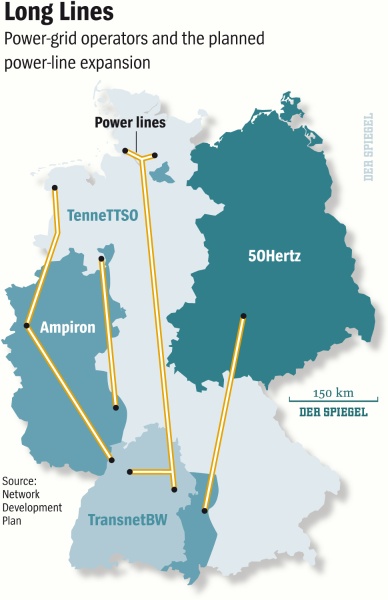
    The German Cabinet backed a plan to build three “power autobahns” stretching north to south to move growing supplies of renewable energy across the country. The plan involves laying about 1,740 miles of new transmission lines and upgrading 1,800 miles of existing cables by 2022, bringing wind power generated in the north to consumers in the south. This plan is a scaled down version of the recommendation made by Germany’s four main grid operators, who indicated that the country’s energy overhaul required about 2,400 miles of new cables and a fourth power-line corridor,[iii] costing $25 billion.[iv] The government also wants to cut the time it takes to develop power lines from 10 to 4 years, and most recently, there have been calls to nationalize the electrical grid.

    Long Lines, power grid Germany

    Source: http://www.spiegel.de/international/germany/bild-850419-359975.html

    In the meantime, Germany’s neighbors, Poland and the Czech Republic, are taking action on Germany’s use of their power grid that Germany undertook without asking permission and without paying for its use. These countries are building a huge switch-off at their borders to block the import of green energy that is destabilizing their grids and causing potential blackouts in their countries.[v] This action by German’s neighbors fragments the European electrical grid, turning Germany into an electrical island.

    germanyGrid

    Germany’s Renewable Program

    Germany is planning to get 80 percent of its energy from renewable energy by 2050 and phase out its nuclear program by 2022. Despite significant investment in wind and solar power, Germany still faces an energy shortfall because the renewable energy it invested in does not work in the cold winter weather when the sun does not shine and the wind does not blow. Further, the shift to renewable energy is taking a toll on family budgets.[vi] Germany increased a special tax levied on consumers to finance subsidies for green energy by almost 50 percent this year, increasing electricity prices by 10 percent. There are also growing concerns that price increases are hurting businesses, although the German response has been to charge some consumers with much more of the burden than favored industries.

    Ironically, to back-up the wind and solar energy, German utilities are using coal because it is cheaper than natural gas in Europe. For the most part, natural gas is moved through pipelines in Europe, and tends to be used close to where it originates. It is priced regionally and often linked to the price of oil. Many European gas contracts were negotiated years ago with the Russian gas company, Gazprom, and remain high. For example, in the summer of 2012, natural gas prices in Europe were more than three times the gas price in the United States and definitely more expensive than coal. According to Bloomberg New Energy Finance, at the beginning of November 2012, utilities in Germany were set, on average, to lose €11.70 when they burned gas to make a megawatt of electricity, but to earn €14.22 per megawatt when they burned coal.[vii]

    Conclusion

    The high use of renewable energy in eastern Germany driven by government green energy policies is  causing instability to its own electric grid as well as to neighboring countries, resulting in industrial companies having to purchase generators and emergency back-up systems rather than face replacing equipment damaged during disruptions of service. Electricity bills are also expected to go up by 10 percent this year. With residential electricity prices in Germany already about 3 times higher than prices in the United States and increasing further, it is no wonder that 800,000 German households can’t afford their electricity bills.

    The German government recently cut its 2013 growth expectations to 0.4 percent from an earlier estimate of 1 percent. Germany was prospering in 2011 with growth at 3 percent, but it dropped to 0.7 percent in 2012. While the European economy as a whole and the switch to the Euro has affected Germany, one wonders how much the country’s energy program is contributing. Perhaps, the United States should use the German experience as a warning regarding the right choice of energy policy.


    [i] Spiegel, Grid Instability Has Industry Scrambling for Solutions, August 16, 2012, http://www.spiegel.de/international/germany/instability-in-power-grid-comes-at-high-cost-for-german-industry-a-850419.html

    [ii] Wind energy surplus threatens eastern German power grid, March 26, 2011, http://www.dw.de/wind-energy-surplus-threatens-eastern-german-power-grid/a-14933985

    [iii] Bloomberg, Merkel Cabinet Backs Power-Line Plan to Absorb Renewables Growth, December 19, 2012, http://www.bloomberg.com/news/2012-12-19/merkel-cabinet-backs-power-line-plan-to-absorb-renewables-growth.html

    [v] International News, Poland and Czech Republic Ban Germany’s Green Energy, December 12, 2012, http://www.thegwpf.org/poland-czech-republic-ban-germanys-green-energy/

  • IER Statement on Governor Heineman’s Keystone XL Approval

    WASHINGTON D.C. — On today’s announcement that Nebraska Governor Dave Heineman has approved the new route for the Keystone XL pipeline that avoids the environmentally-sensitive Sand Hills region, IER Senior Vice President Daniel Kish issued the following statement.

    “Today’s announcement that Nebraska Governor Dave Heineman approved the revised route for the Keystone XL pipeline will be welcome news to thousands of Americans ready to start working on this important project. The president must now act to permit the full development of the Keystone XL pipeline, which will increase our North American energy security and serve our national interest. It is time for the United States to experience the economic benefits that the pipeline’s final construction will generate.”

    ###

  • Oil Industry Brings Jobs and Boosts State Economies

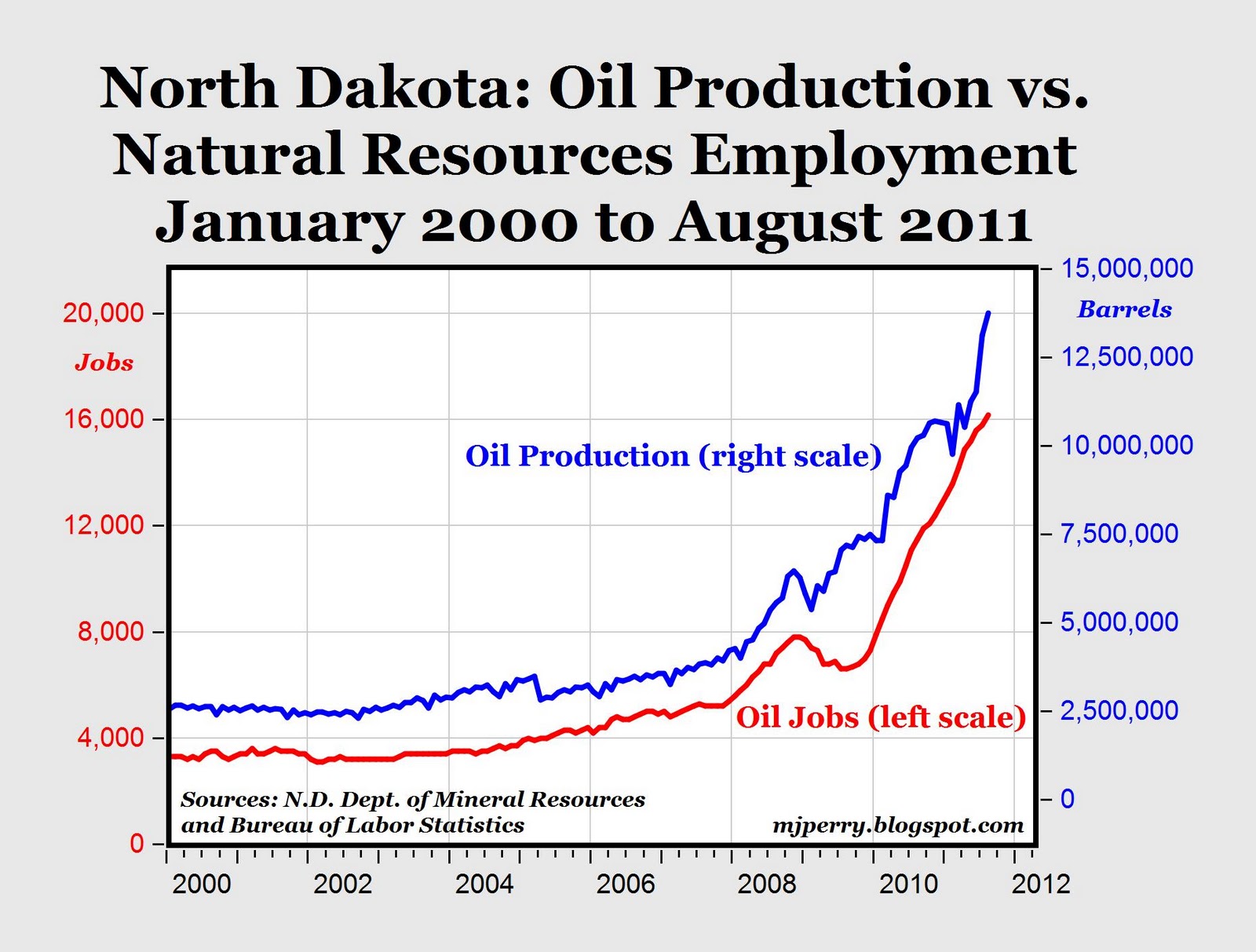
    States with oil production from shale oil formations have seen impressive revenue and job growth. In North Dakota, for example, the state’s economy is growing at 7 percent and its unemployment rate is a mere 3 percent — figures that should make most state governors envious. But, North Dakota is not alone in benefits stemming from oil production. Texas has a budget surplus of $8.8 billion that matches the record it set in 2007. The Texas economy has topped budget projections over the past 15 months, as energy output fueled job growth and an 11 percent fiscal first-quarter gain in sales-tax receipts, the biggest source of general-fund revenue in the state.[i] The story is simple—energy production creates economic growth creating thousands of good-paying jobs even during tough economic times.

    Young adults with a college education are finding it difficult to find jobs in most areas of the nation where the unemployment rate for that age group is over 12 percent.[ii] Further, a recent Rutgers University study showed that the starting salary for a recent college graduate is $27,000, 10 percent less than five years ago.[iii] But in Montana, teenagers are foregoing college to work on oil rigs and other related jobs with salaries that can start at $50,000 per year.

    The jobs in states embracing energy production not only include direct energy company jobs, but also support company jobs including the excavation, building and maintenance of oil wells, as well as construction of the hotels, apartments and camps for employees. Many of these companies offer $20 an hour to start, plus benefits. That contrasts with many jobs in the United States where benefits are only a dream to many workers.[iv]

    The Current Oil Boom

    This U.S. oil boom began in 2004 in North Dakota when hydraulic fracturing and horizontal drilling were combined and applied to a well, confirming that these technologies could unlock profitable amounts of oil in pockets deep underground. In horizontal drilling, a well is bored at an angle to run lengthwise along the richest slice of rock. Hydraulic fracturing uses a high-pressure stream of water, sand, and a few chemicals underground to crack apart the rock and free the crude. These technologies have made drilling faster, cheaper and better at obtaining oil from shale rock formations.

    North Dakota is now the second largest state producer of oil, behind only Texas, and produces 747,000 barrels a day. Other states have followed the lead set in North Dakota’s Bakken shale basin. Texas, where the Eagle Ford shale basin is located, produces 2,100,000 barrels per day–the most oil production since 1987. Output from Wyoming increased 7 percent, the biggest jump in records going back to 1981. New Mexico’s output increased by 13 percent, and Oklahoma’s by 18 percent.[v]

    Due to these technologies, U.S. oil production increased by a record 766,000 barrels a day in 2012, with an average of 6.43 million barrels per day produced–the highest level of domestic output in 15 years. Forecasters are predicting that the nation will surpass Saudi Arabia as the world’s largest oil producer by 2020 and that North America will become a net oil exporter by 2030. U.S. net petroleum imports in 2012 fell by 39 percent from the 2005 peak, now accounting for 41 percent of demand, down from its 2005 share of 60 percent.

     1.22.13-IER-Blog-USMonthlyOilProd-MKM

    Source: Energy Information Administration, http://www.eia.gov/totalenergy/data/monthly/pdf/sec3_3.pdf

    The most recent data from the Energy Information Administration supports these forecasted trends. In the week ended January 11, 2013, oil production increased to 7.04 million barrels per day, the highest level since January 1993. Oil production was 23 percent higher than a year ago. Further, the nation met 83 percent of its energy needs in the first 9 months of 2012, the highest annual rate since 1991.

    Oil producers deployed as many as 1,423 rigs in 2012, the most rigs deployed in records going back to 1987. The increased oil production has resulted in a bottleneck in Cushing, Oklahoma that caused the 500-mile Seaway pipeline last year to undergo construction to reverse its flow to carry crude oil south to Gulf Coast refineries instead of north. By adding pump stations and other modifications, the capacity of the reversed Seaway Pipeline increased to 400,000 barrels a day this month from its previous capacity of 150,000 barrels per day.[vi] The Seaway Pipeline also has the support needed to move forward with construction of a loop (twin) of the Seaway Pipeline, designed to parallel the existing right-of-way from Cushing to the Gulf Coast and more than doubling Seaway’s capacity to 850,000 barrels per day by first quarter 2014.

     EIA Crude Oil Rotary Rigs in Operation

    Source: Energy Information Administration, http://www.eia.gov/dnav/ng/hist/e_ertrro_xr0_nus_cm.htm 

    Railways are also moving oil from major production areas including North Dakota to refineries at levels not seen since World War II. Northeastern refiners now find it cheaper to replace foreign oil shipments from Africa, Europe and the Middle East with domestic oil brought in by rail, boosting the profits of tank-car maker American Railcar Industries Inc. and BNSF Railway Co., owned by Warren Buffett’s Berkshire Hathaway Inc.

    But railways and the expansion of the Seaway Pipeline have not removed the oil glut out of Cushing. The Energy Information Administration just reported that Cushing, Oklahoma added another 1.8 million barrels to storage with total Cushing stocks equaling 51.9 million barrels of oil in facilities at the energy hub. During the last 6 weeks, 6.2 million barrels of oil were added to Cushing stocks. Cushing oil inventories are now almost double their level this time last year when they stood at 28.3 million barrels.

    The glut of oil in Cushing has been caused by increased oil production from North Dakota’s Bakken basin and imports from Canada. The Keystone XL pipeline was to aid the movement of the increased oil production from these areas but was delayed, denied, and delayed again by President Obama and the U.S. State Department because of the need to determine if the pipeline is in the ‘national interest’ since it would cross the U. S. border with Canada. In February 2012, TransCanada announced it would build the southern section of the pipeline, from Cushing to the Gulf Coast refineries, which does not need State Department determination and a Presidential permit. Construction of Keystone’s “Gulf Coast Project” began in the fall of 2012. The $2.3 billion southern leg is expected to be in service by mid- to late 2013.[vii]

    Part of the issue with the delay was that the pipeline was to traverse a sensitive area in Nebraska. TransCanada, however, rerouted the pipeline away from the area. A report recently released by a state agency in Nebraska found the new route poses ‘minimal risks’ to the Nebraska’s environment, eliminating a hurdle to its approval.[viii]  And, Nebraska’s Governor Dave Heineman just announced his approval of the new route for the Keystone XL pipeline that avoids the environmentally-sensitive Sand Hills region.

    Recently, ten governors and the premier of Saskatchewan wrote to President Obama asking him to approve the proposed Keystone XL pipeline and citing its importance to the two countries. The letter indicates that with the Keystone XL pipeline U.S. imports from Canada could reach 4 million barrels per day, twice what is imported from the Persian Gulf. And, the pipeline would also provide “critical infrastructure” to move oil from the Bakken in North Dakota and Montana.[ix]  In their view, the economic, energy and national security benefits of Keystone XL overwhelmingly support its approval.

    Conclusion

    The oil industry is providing much needed jobs here in the United States, but impediments from our federal government are causing oil production to be bottlenecked in Cushing, where it cannot be refined into products demanded by the American public. Our current pipeline capacity is being expanded and our railways are moving oil to refining facilities, but Cushing still remains a bottleneck. Approving the Keystone pipeline would help alleviate the oil glut at Cushing and move North America towards energy independence as forecasters are predicting.


    [i] Bloomberg, Texas Starts Budget Debate Flush With Energy Boom Cash, January 7, 2013, http://www.bloomberg.com/news/2013-01-07/texas-starts-budget-debate-flush-with-energy-boom-cash.html

    [ii] New York Times, Pay in Oil Fields is Luring Youths in Montana, December 25, 2012, http://www.nytimes.com/2012/12/26/us/26montana.html?nl=todaysheadlines&emc=edit_th_20121226&_r=4&

    [iii] Wall Street Journal, Graduates Are Overqualified, Underemployed, August 25, 2012, http://professional.wsj.com/article/SB10000872396390444443504577603212344835808.html?mg=reno64-wsj

    [iv] New York Times, Pay in Oil Fields is Luring Youths in Montana, December 25, 2012, http://www.nytimes.com/2012/12/26/us/26montana.html?nl=todaysheadlines&emc=edit_th_20121226&_r=4&

    [v] Business Week, American Oil Growing Most Since First Wells Signals Independence, December 18, 2012, http://www.businessweek.com/news/2012-12-18/american-oil-most-since-first-well-in-1859-signals-independence#p3

    [vii] Reuters, TransCanada chops up Keystone XL to push it ahead, February 27, 2012, http://www.reuters.com/article/2012/02/27/us-keystone-idUSTRE81Q1II20120227

    [viii] Wall Street Journal, Keystone Pipeline Clears a Big Hurdle in Nebraska, January 4, 2013, http://professional.wsj.com/article/SB10001424127887323374504578221604253181848.html?mg=reno64-wsj

    [ix] The Hill, GOP governors, Canadian leader press Obama to approve Keystone pipeline, January 17, 2013, http://thehill.com/blogs/e2-wire/e2-wire/277789-gop-govs-canadian-official-press-obama-to-approve-keystone-pipeline

  • Oil Industry Investing In Rail Depots: An Alternative to Keystone

    A group of oil and natural gas pipeline operators are planning to spend about $1 billion on rail depot projects to move crude oil from land-locked inland fields to refineries on the U.S. coasts. For the first time, oil and gas companies that have traditionally rented rail capacity are buying those assets to move oil from oil sands fields in Alberta, the shale oil fields in the Bakken region of North Dakota, and the Eagle Ford in Texas. Moving oil by rail costs about 3 times as much as moving it by pipeline, but moving oil by rail is profitable because oil from these areas is priced about 20 percent less than imported crude because of the lack of pipeline takeaway capacity. [i]

    The price differential between Alberta’s oil sands and imported crude is even greater than the price difference between U.S. shale oil and imported crude. For Instance, prices for Western Canada Select heavy blend have dropped recently to around $50 a barrel, less than half the price of a barrel of imported crude oil.[ii] As a result, Canadian railroads moved 35 percent more petroleum and refined products in November 2012 than November 2011. Increased production in the oil sands and a lack of pipeline capacity to move the crude to market has created bottlenecks that pushed the price of oil from these regions down compared to imported crude. The Keystone pipeline, if approved by the U.S. state department when first requested, would be moving oil sands to U.S. Gulf coast refineries this year.

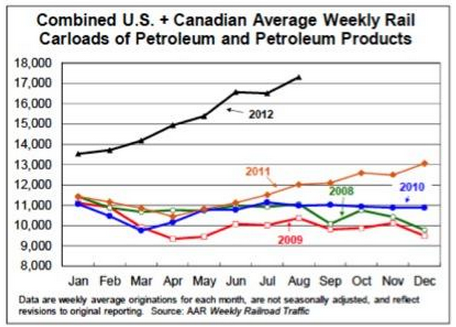
    According to the American Association of Railroads, total petroleum shipments exceeded 540,000 carloads in 2012, up from 370,000 carloads in 2011. Crude oil shipments alone are expected to exceed 200,000 train cars in 2012, up from 66,000 in 2011 and the most since World War II.  By the end of the third quarter of last year, about 430,000 barrels per day of crude moved out of Bakken fields in North Dakota by rail, up from nearly nothing in mid-2010.[iii]

    Screen Shot 2013-01-18 at 9.58.43 AM

    Source: http://www.desmogblog.com/2012/10/02/oil-tracks-how-rail-quietly-picking-pipeline-s-slack

    About 1 million barrels a day of rail-unloading capacity is being built in the United States, more than double the current level of shipments, which averaged about 456,000 barrels a day in the third quarter. Burlington Northern, which handles about 35 percent of U.S. oil shipments, is planning capital improvements to haul 40 percent more crude in 2013.

    Advantages and Disadvantages of Rail

    While rail transport is more expensive than transport by pipeline, rail traffic is more flexible, reaching into metropolitan areas where new pipes are hard to deploy and where refineries are paying the highest price for oil. As rail-oil infrastructure expands, it should become less expensive. Also, although pipelines are cheaper and more efficient, it is faster to build the tracks, unloading terminals and storage tanks to expand rail capacity than to lay new pipe. Currently, crude oil is carried by 120-car trains that span 1.2 miles, with each car carrying up to 762 barrels of oil. Thus, each shipment can be worth $8 to $10 million.

    In terms of disadvantages, besides higher costs, the rail industry is faced with a shortage of rail cars that can take two years to be built and delivered. The increased movement of oil by tank car means that companies such as Warren Buffett’s Union Tank Car Co. are reaping the benefits of expanded demand for rail tankers.[iv] Further, the Manhattan Institute indicates that oil spills are a greater risk with trains than pipelines. A U.S. railway is about 34 times more likely to spill hazardous materials than a pipeline transporting the same volume an identical distance. This is not to say that rail is dangerous. It is not. The American Association of Railroads touts a 99.997 percent hazmat safety record.[v] According to the American Association of Railroads, railroads have an accident rate two to three times higher than pipelines, but involve smaller amounts in each incident, since trains carry smaller amounts than pipelines.

    The Keystone XL Pipeline

    The bottleneck of moving Canadian oil sands and U.S. shale oil to Gulf Coast refineries was to be aided by the Keystone XL pipeline that was first proposed in 2008 at a cost of $7 billion, but has met with opposition from the Obama Administration and environmentalists that complain about environmental damage from pipeline spills and higher carbon dioxide emissions from the production of oil sands than conventional crude. As a result, the pipeline route and environmental impact have been reviewed and re-reviewed by the State Department, who must determine if it is in the ‘national interest’ and provide a permit since the pipeline which cross a U.S. border. The Obama Administration is supposed to make a determination early this year on a revised route that avoids a sensitive area in Nebraska.

    By not approving or delaying approval of the Keystone pipeline, the Obama Administration is denying Americans an estimated 20,000 jobs and $20 billion to the U.S. economy. However, if the Keystone pipeline is not built, another half-million barrels a day in new rail capacity may be built to deal with the bottleneck. As more rail capacity is built to move oil around North America, railroads should become more efficient. But moving oil by rail causes more carbon dioxide emissions than moving it by pipeline, something which opponents of Keystone XL have failed to address.

    Keystone critics must face the reality that if the United States does not import Canadian oil sands, the oil will be moved by pipeline and rail to the west coast of Canada and then transported by ship to be consumed in Asia. This means higher carbon dioxide emissions in transport over the Pacific ocean. And though current oil sands production techniques result in 15 percent more carbon dioxide emissions than conventional oil from well to wheel, new techniques are emerging that could result in a significant decrease in carbon dioxide emissions from oil sands extraction.  Moreover, regardless whether the Keystone XL pipeline is built or not, Alberta’s oil will be consumed somewhere in the world; it will not remain in the ground.  And, if the railroads are correct about adding rail capacity, oil sands will still be refined and used here in the United States.

    Conclusion

    What drives transportation of energy is its demand. As long as the United States and the world demands petroleum – and there is every reason to believe that will be the case for most of the 21st century — some method of transportation will be used to get the crude oil to refineries and refined products to consumers. The most economical means for transporting crude oil seems immaterial to the Obama Administration, which is not paying the increased cost of rail transport instead of pipeline transport.

    Regardless of the Administration’s stance, however, U.S. ingenuity will work out the impediments as it is doing by shipping crude oil by rail, even though it is less efficient and more expensive than pipeline transport. Favorable price differentials between landlocked crude production in U.S. shale oil basins and Alberta oil sands and coastal refineries due to transportation bottlenecks are covering higher rail transport costs.  This means more money in the pockets of railroads and less money to invest in new oil production in North America, another example of how government action – or inaction in this case – results in the picking of winners and losers.


    [i] Bloomberg, Oil Industry Beats Buffet in Railroad Investment Surge: Energy, January 14, 2013, http://www.bloomberg.com/news/2013-01-14/oil-industry-beats-buffett-in-railroad-investments-surge-energy.html

    [ii] Reuters, Canada heavy oil price nears tipping point, January 15, 2013, http://www.reuters.com/article/2013/01/15/canada-oil-idUSL2N0AKB6O20130115

    [iii] Reuters, U.S. petroleum rail shipments up by nearly 50 pct in 2012, January 3, 2012, http://www.reuters.com/article/2013/01/03/railshipments-crude-idUSL1E9C2A5420130103

    [iv] Bloomberg, Buffett Like Icahn Reaping Tank Car Boom From Shale Oil, January 3, 2013, http://www.bloomberg.com/news/2013-01-03/buffett-like-icahn-reaping-tank-car-boom-from-shale-oil.html

    [v] Oil On the Tracks: How Rail Is Quietly Picking Up the Pipelines’ Slack, October 8, 2012, http://www.desmogblog.com/2012/10/02/oil-tracks-how-rail-quietly-picking-pipeline-s-slack

  • Federal Assets Above and Below Ground

    The federal government owns a great deal of valuable assets both above and below ground. The above ground assets include buildings, lands, roads, railroad infrastructure, levees, dams, and hydroelectric generating facilities, to name just a few, many of which are underutilized. Below the ground, the federal government owns the rights to mineral and energy leases, from which they receive royalties, rents, and bonus payments.

    Federal real property totals over 900,000 assets with a combined area of over 3 billion square feet and more than 41 million acres of land. Additionally, the federal government owns over 600 million acres of lands and minerals onshore, and owns or manages a total of approximately 755 million acres of onshore subsurface mineral estate.  Offshore, the federal government owns some 1.76 billion acres of lands and mineral estate, extending out 200 nautical miles from our shores.  The federal government’s total mineral estate holdings are therefore about 2.515 billion acres of lands.  Thus, the federal government’s mineral estate land holdings surpass the total surface land area of the nation of Canada.   These holdings, as we will see, are vastly underutilized.

    Screen Shot 2013-01-16 at 5.22.33 PM

    (Click image for larger view)

    Source: Bureau of Land Management, http://www.blm.gov/public_land_statistics/pls11/pls1-3publandsmap_11.pdf

    In fiscal year 2009, federal agencies reported 45,190 underutilized buildings, an increase of 1,830 underutilized buildings from the previous fiscal year. In fiscal year 2009, these underutilized buildings accounted for $1.66 billion in annual operating costs, according to the General Accounting Office (GAO). The majority of federally owned and leased space is held by the Departments of Defense and Veterans Affairs, the U.S. Postal Service, and the General Services Administration (GSA).[i] For example, the federal government’s landlord, the GSA, owns or leases 9,600 assets with more than 362 million square feet of workspace. According to the GSA, in a 2009 report, almost 40 percent of its assets were under performing. In October 2010, a congressional study evaluated the savings that could occur based on better administration of the government’s above ground assets that totaled over several hundred billion dollars.[ii]

    IER estimated the worth of the government’s oil and gas technically recoverable resources to the economy to be $128 trillion, about 8 times our national debt. Further, the Congressional Budget Office (CBO) estimated that state and national coffers could generate almost $150 billion over a 10 year period from royalties, rents, and bonuses if these resources were immediately opened to oil and gas leasing. The CBO study estimates are considered to be conservative when compared to historical data and estimates by other analysts and do not consider the earnings from taxes paid by these industries. IER estimated the government’s coal resources in the lower 48 states to be worth $22.5 trillion for a total worth to the economy of fossil fuels on federal lands of $150.5 trillion, over 9 times our national debt. Most of the coal resources in Alaska are deemed to be federally owned and are estimated to be 60 percent higher than those in the entire lower 48 states but are not included in these estimates.

    The Federal Government’s Assets above the Ground

    As mentioned above, the GSA owns or leases 9,600 assets covering over 362 million square feet of workspace. GSA is one of nine federal agencies—Department of Defense, Veterans Administration, Department of Energy (DOE), Department of Homeland Security (DHS), Department of Interior(DOI), Department of State, National Aeronautics and Space Administration (NASA), and the U.S. Postal Service–that own or manage 93 percent of federal property.

    The average age of GSA’s real property inventory is 46 years and a third of its assets are older than the agency itself. In 2003, GSA indicated that it had 236 vacant or underused properties consisting of commercial office space, warehouses, manufacturing facilities, and special use facilities such as court houses and a shopping mall, and these still remain vacant or underutilized. According to the General Accounting Office (GAO), DOE, DHS, and NASA report about 10 percent of their facilities as excess or underutilized. If this number is extrapolated government wide, about 330 million square feet of government facilities would be excess or underutilized.

    Because of legal and regulatory requirements that agencies must meet when they dispose of government property, they are slow at taking those steps.  Government agencies are required to assess and implement corrective actions needed to meet environmental, repair and maintenance issues before a property can be disposed, as well as screening the property for other federal uses. Agencies rarely recoup the costs of these activities. Although Congress passed legislation in 2004 to bypass some of these requirements, agencies are still not readily disposing of unused assets.

    GSA now leases more property than it owns. For example, in fiscal year 2009, GSA leased 184 million rentable square feet, while owning 177 million rentable square feet. GAO found that leasing may be beneficial for small agencies or programs with short-term needs, but it is not beneficial for larger ones that need the space for 20 or 30 years.

    The Department of Transportation owns or leases about 69,500 real property assets—more than 4 million miles of roads, a heavily subsidized Amtrak, and more than $17 billion in passenger rail infrastructure. In each of these, a study found mismanagement of federal dollars to achieve goals that should have provided benefit. For example, Amtrak managed several projects to improve speed and performance but accomplished only half of the speed other countries are adopting in an area where high-speed rail could be profitable.

    The federal government also owns about 1,700 miles of levees, 650 dams, 383 major lakes and reservoirs, 12,000 miles of commercial inland channels, and 75 hydroelectric generating facilities. The study found that the Army Corps of Engineers is also underperforming, costing the government and taxpayers money because of delays in its project planning process that needs streamlining.

    While progress has been made on many fronts, including significant progress with real property data reliability and managing the condition of facilities, agencies face long-standing problems with overreliance on leasing, excess and underutilized property, and protection of federal facilities.

    Federal Government Assets below the Ground

    Federal assets below the ground are primarily mineral and energy resources, such as oil, natural gas, and coal.  For example, the United States owns millions of acres and billions of barrels of oil that can be developed on federal lands and waters. Currently, the government leases only 2 percent of federal offshore areas and less than 6 percent of federal onshore lands for oil and natural gas production. Areas that the federal government could open to oil and gas development include:

    These technically recoverable resources total 1,194 billion barrels of oil and 2,150 trillion cubic feet of natural gas that is owned by the federal taxpayer. At $100.00 per barrel of oil and $4.00 per thousand cubic feet of natural gas, the oil resources are worth $119.4 trillion and the natural gas resources are worth $8.6 trillion for a grand total of $128 trillion, or about 8 times the U.S. national debt.[iii]

    In August of this year, the Congressional Budget Office (CBO) produced a study that evaluated the potential budgetary effects of immediately opening most federal lands and waters to oil and gas leasing.[iv] In 2012, the office estimates that bonuses, royalties and rents to the government would total $10 billion, 6 times the amount the United States loses in annual operating expenses based on underutilized facilities according to GAO. Over a 10 year period, the CBO estimates that the amount from bonuses, royalties and rents would total $148.9 billion.

    While these are interesting numbers, IER has found them to be very conservative. For starters, we believe that the CBO is understating the potential for bonus bids in ANWR, which they estimate at about $5 billion for the decade of 2013 to 2022, since in FY 2008, total bonus payments were more than $10 billion.

    Further, other analysts have projected much larger receipts for federal and state governments from expanded oil and gas leasing. For example, in a February 2009 study, Joseph Mason estimated that in the long-run, expanded OCS development (not including ANWR) would yield an average of $14.3 billion in extra royalty revenue per year. He also estimated an additional $54.7 billion in federal tax revenue annually and $18.7 billion in additional state and local tax revenue that would result from expanded economic activity.[v]

    CBO is vastly restricted in its assessment of potential values that might accrue to the U.S. Treasury from oil and gas lease sales because a good portion of its work relies upon U.S. Department of Interior estimates, which are notoriously bad.  For example, DOI estimated that a February, 2008 lease sale in the Chukchi Sea off the northwest coast of Alaska would generate $67 million, but industry actually spent 40 times as much — $2.66 billion – for the right to explore for and produce oil and gas from the region.[vi]  CBO’s numbers should therefore be understood to be limited by the quality of the data it receives from the agencies who report data to it about oil and gas prospectivity of a given lease.  Clearly, those whose jobs depend upon finding and producing oil and gas arrive at different conclusions than those whose information may be much more limited and academic in nature.

    According to a multi-agency government study, the federal government owns 957 billion short tons of coal in the lower 48 states, of which about 550 billion short tons are located in the Powder River Basin in Wyoming and Montana. The study did not assess what portion of Alaska’s coal resources are federally owned, though much of them are deemed to be federally owned, due to the lack of specific data. Coal resources in Alaska are larger than those in the lower 48 states, exceeding them by about 60 percent.

    Within the Powder River Basin, less than 1 percent of the mineral estate is currently available for mining, containing less than 1 percent of the federal coal (3 billion short tons).[vii] Since the percentage is small, we evaluate the entire 957 billion short tons of federally owned lower 48 coal at an average price of $15 per ton for the subbituminous Powder River Basin coal and $35 per ton for the remainder of the federal lower 48 coal. Thus, the worth of federally owned coal in the lower 48 states to the economy is $22.5 trillion. Added to the oil and natural gas worth to the economy, we get a total fossil fuel worth of $150.5 trillion, excluding Alaskan coal.

    Conclusion

    The U.S. government owns assets both above and below the ground that could be better managed through sale or lease. The above the ground assets include underutilized buildings as well as roads, levees, rail infrastructure, and hydroelectric generating facilities to name a few. GAO estimated the cost to the taxpayer of annual expenses to underutilized buildings at $1.66 billion annually. These facilities could be sold but for onerous rules that the government has for environmental and structural issues regarding the properties.

    In contrast, the government owns an enormously large mineral estate (oil, natural gas, and coal resources) that has an estimated total worth to the economy of over $150 trillion, over 9 times the national debt. These resources could be leased under the right government policies to earn the state and national government royalties, rents, and bonus payments that CBO conservatively estimates could total almost $150 billion over 10 years for the oil and gas leases alone. That figure excludes tax payments that would be provided to state and national governments from the direct and indirect effects of unleashing tens of trillions of dollars of economic activity here in the United States and the extended benefits of more supplies on reducing the costs of energy for consumers and businesses.  It is well known that abundant, reliable and affordable energy supplies act as fertilizer for economic growth that in turn generates new revenue sources.

    It is time to better utilize government assets owned by the U.S. taxpayer, and in turn, unleash the U.S. economy’s potential.


    [i] General Accounting Office, Managing Federal Real Property, http://www.gao.gov/highrisk/risks/efficiency-effectiveness/federal_property.php

    [ii] U.S. House of Representatives, Committee on Transportation and Infrastructure, Sitting on Our Assets: The Federal Government’s Misuse of Taxpayer-Owned Assets, October 2010, http://republicans.transportation.house.gov/Media/file/111th/Sitting_On_Our_Assets_Report.pdf

    [iii] U.S. national debt was $16.2 trillion as of October 30, 2012, http://www.brillig.com/debt_clock/

    [iv] Congressional Budget Office, Potential Budgetary Effects of Immediately Opening Most Federal Lands to Oil and Gas leasing, August 2012, http://cbo.gov/sites/default/files/cbofiles/attachments/08-09-12_Oil-and-Gas_Leasing.pdf

    [v] Joseph R. Mason, The Economic Contribution of Increased Offshore Oil Exploration and Production to regional and National Economies, February 2009, http://www.americanenergyalliance.org/images/aea_offshore_updated_final.pdf and http://www.instituteforenergyresearch.org/2012/09/11/cbo-underestimates-potential/

    [vi] Oil Daily, Shell Spends Big at Record Alaska Lease Sale, February 8, 2008

    [vii] Departments of Energy, Interior, and Agriculture, Inventory of Assessed Federal Coal Resources and Restrictions to their Development, August 2007, http://www.fossil.energy.gov/epact/epact437_final_rpt.pdf

  • BREAKING NEWS: EPA Cover-up Exposed?

    Agency Denies FOIA Request Over Keystone, Alias Issues in Doctored Letter

    WASHINGTON D.C. — The Institute for Energy Research received a doctored letter from the Environmental Protection Agency in response to a FOIA request, sent last year for documents related to Administrator Lisa Jackson’s potential use of an alias email address to avoid public scrutiny of the agency’s activities on the Keystone XL pipeline permit application. For reasons unknown, EPA officials used what appears to be white-out to alter original information on the letter.

    “The American public deserves to know how EPA officials, and particularly retiring Administrator Lisa Jackson, have been involved in the administration’s review and ultimate rejection of the Keystone XL pipeline. Not only has EPA denied a FOIA request, but they have raised further questions about the agency’s handling of transparency issues and disclosures mandated under federal law,” said Dan Simmons, IER’s director of state and regulatory affairs.

    IER is formulating a response and appeal to the agency’s actions which will be released in coming days.

    To view the original FOIA request from IER, click here.
    To view the doctored response letter from EPA, click here.
    To view a backlit copy of the doctored response letter, click here.
    To view the original electronic FOIA denial, dated Dec 26, 2012, click here.

    ###

  • PTC Extension Passes; Layoffs and Cancellations Continue

    Congress passed an expansion of the wind production tax credit (PTC) in the recent “fiscal cliff” legislation, but employee layoffs and wind project cancellations continue. Why? Because, as we have previously written, the market has become saturated in areas where renewable portfolio standard mandates have been reached—or more than reached—and issues surrounding the use of wind are becoming more apparent including costs, visual and noise pollution, bird kills, and havoc to other more reliable and affordable technologies due to the instability it causes to the electric grid.  U.S. energy policy as represented by the PTC’s expansion continues the “reality debt” being accrued by the government, which ultimately will have to be paid by U.S. citizens.

    Last week, the Danish company Vestas announced additional personnel cutbacks at several of its Colorado facilities in spite of the PTC extension that should be sending people in the wind industry back to work. Vestas put its workers at several of their Colorado facilities on a 24-hour work week this month.[i] Further, Vestas still plans on eliminating 2,000 jobs this year reducing its work force from 18,000 to 16,000 employees by the end of the year. These job losses will occur in several countries including the United States. According to a company statement, “The extension of the PTC does not affect Vestas’ projections to deliver about 5 gigawatts this year and to employ about 16,000 people by the end of 2013.”[ii]

    Iberdrola Renewables, a Spanish company, has confirmed that it will no longer pursue developing a wind farm in Hammond, New York. Further, a spokesperson for the company indicated that Iberdola is cancelling 100 wind projects in the United States.[iii]

    The Production Tax Credit Extension

    Congress extended the production tax credit for wind for ‘one year’ in the ‘fiscal cliff’ bill that passed January 1. The credit provides 2.2 cents per kilowatt hour for electricity generated for the first 10 years of operation of the wind unit. Therefore, if wind investors are eligible to receive the PTC, they get it for 10 years in a row. While the original PTC stipulated that the wind unit must begin operation in the year of the credit, the extension that was passed only indicates that the project must begin construction in the initial year and that the unit has 2 more years to become operational. According to Senator Udall, “So if you put a shovel in the ground on Dec. 31, at the end of this year(2013), the tax credit will apply, in effect a two-year extension, and some might argue it would take the form of a three-year extension because some projects take more than a year” to get off the ground.  It is therefore a significant expansion of the current law.

    The wind industry is hoping that the Obama administration defines beginning “construction” very loosely; even more loosely than when Sen. Udall suggested they would qualify by putting a “shovel in the ground.” According to Politico, wind developers hope the federal government follows the Department of Energy’s example in the 1603 grant program and defines “construction” merely as when 5 percent of the total cost of the project has been invested.  According to the Joint Committee on Taxation, the expansion of the qualifying criteria for the PTC means that the credit will cost taxpayers over $12 billion over 10 years, or over a billion dollars per year.

    Xcel Energy, which is one of the top 10 biggest utilities in the country and had the largest wind capacity of any utility in 2011, is concerned that the PTC helps wind developers to the exclusion of customers. The PTC is a tax credit that goes to wind-energy developers, but does not benefit customers paying electricity bills or the utilities buying wind from renewable-energy generators.  As a result, a spokesperson for Xcel Energy indicated that the company may not buy any more wind power.[iv]

    Impact of Renewable Portfolio Standards on Wind Power

    Thirty states and the District of Columbia have renewable portfolio standards (RPS) that mandate specific levels of power to be generated by qualifying renewable technologies on a given timeline, and 7 other states have voluntary goals. Since onshore wind is the lowest cost qualifying renewable generating technology, it has been the major recipient of the mandate, obtaining 90 percent of the RPS market. As the graph below shows, the PTC was first passed in 1992, but it did little to generate interest in the wind industry in the 1990s. Once Texas introduced its RPS in 1999 and most other states followed between 2004 and 2007, wind construction began to take off.

     1.15.13-IER-Web-windgraph

    The importance of the RPS compared to the PTC can be seen from NextEra Energy Resources, a major wind developer, in its most recent Third Quarter earnings report, “we signed our first PPA for 2013 U.S. wind project, a project that is not dependent upon extension of the PTC program…we see it as supportive of the view we have publicly expressed that there will continue to be a wind development business in the U.S. post-2012 even if the PTC program is not extended.”[v]

    Issues with Wind Power

    Adapting wind power into the electric grid is one of the main issues facing it and other sources of intermittent renewable energy generation. Power plant and electric grid operators consistently attempt to match electricity demand, i.e. what people’s TVs, appliances, computers, and other electronic devices need, and the output from their generators. Because wind and solar energy are “unpredictable” sources of electricity, i.e. the amounts of electricity they produce are consistent only with wind speeds and the degree of sunlight received by panels, other sources of generation must be used to back-up these intermittent sources. This can cause havoc to baseload generators that have to pay fines when they cannot scale down their generation when the wind does blow, or hydroelectric power units that face issues with salmon and other fish runs if required to adjust their output when wind does produce.   Hydroelectric dams are the largest renewable energy source for electricity in the United States.

    Where natural-gas fired technology is available, the back-up power issue is less onerous, but the amount of wind power on-line now is stretching beyond our natural gas-fired generating capacity to serve as back-up in some areas of the country, resulting in coal or nuclear units being asked to ramp up or down according to wind production.

    Intermittency is not the only issue. Noise pollution is bothering residents who live near wind farms. For example, a couple had to abandon their home near Denmark, Wisconsin, because of the unbearable low-frequency noise produced by a half-dozen wind turbines that were built near their home. Shortly after the turbines began operating, the couple began experiencing numerous symptoms, including “headaches, ear pain, nausea, blurred vision, anxiety, memory loss, and an overall unsettledness.”[vi]  Wind shadow flicker has also caused concern in Wisconsin where the turning of the blades is causing shadows that “flicker” removing sunlight at intermittent periods. And, in Maine, local residents have complained about noise, low frequency sound pressure and vibrations that turbines and their blades make under various wind conditions due to insufficient setback distances. Setback distances are based on safety guidelines from the turbine manufacturer.[vii]

    Wind turbine blades have killed birds and bats that have come within their path. For example, conservation groups have asked the Fish and Wildlife Service to reduce birds and bats being killed at the 28-turbine Criterion Wind Project, located near Oakland, Maryland, about 175 miles northwest of Washington, D.C. It is believed that this wind farm ranks as the deadliest to birds and bats in the United States on a per-turbine basis. Because bats eat insects that are agricultural pests, bat losses at wind projects are detrimental to agriculture resulting in farmers either suffering agricultural losses or having to use more insect-controlling poisons on crops. Neither option is appealing or economic.[viii]

    While bird, bat and other wildlife deaths are a factor in wind production, wind power actually gets an indirect subsidy from being exempt from enforcement from wildlife laws. According to energy expert Robert Bryce, “Despite numerous violations, the Obama administration—like the Bush administration before it—has unofficially exempted the wind industry from prosecution under the Eagle Protection and Migratory Bird Treaty Acts. If Congress extends the PTC, federal taxpayers will, in effect, be subsidizing the killing of federally protected birds.”[ix]  Obviously, wind power – like all energy sources — is neither free nor without impacts, despite claims that it is both by supporters.

    Conclusion

    Thanks to President Obama as well as Senators John Thune, Chuck Grassley and other wind electricity supporters, the production tax credit got a reprieve, costing taxpayers over $12 billion for a ‘one year’ extension for a tax credit that has been around for 20 years and should have already accomplished its job.[x] But, unfortunately, to taxpayers, the expense of the PTC was not needed since another policy implemented by over half our states is driving most of the wind capacity additions. That policy, the RPS, is completely disconnected from market reality and cost-benefit considerations since the technologies that it promotes are not economic and are increasing the cost of electricity to consumers.  The mandate requiring a certain amount of energy be purchased from such sources is prima facie evidence of its disconnection from costs and markets.

    But, regardless of the PTC extension, wind power is reaching a saturation point for the next several years as some RPS’ are exceeding their mandates and wind companies are laying off personnel and cancelling projects as in the case of Vestas and Iberdrola. We can thank the President and Congress for here again spending our money foolishly on policies that drive up energy costs, destabilize the electric grid and simply do not make sense.  Ultimately, the “reality debt,” like the fiscal debt, will have to be repaid.


    [i] Money Wrenching America, Sen. Udall is an Easy Mark for Big Wind, January 7, 2013, http://monkeywrenchingamerica.com/?p=2366

    [ii] Wind credit extension lauded as industry reviver, but Vestas layoffs still ahead, January 5, 2013, http://www.mywindsornow.com/news/4239606-113/wind-extension-industry-credit

    [iii] Industrial Wind Action Group, Wind leaves Hammond; will pursue project in Clayton, January 9, 2013, http://www.windaction.org/news/36992

    [iv] National Journal, Battle Over Wind Subsidy Leaves Industry Bruised, January 3, 2013, http://www.nationaljournal.com/congress/influence/battle-over-wind-subsidy-leaves-industry-bruised-20130103

    [v] Money Wrenching America, Sen. Udall is an Easy Mark for Big Wind, January 7, 2013, http://monkeywrenchingamerica.com/?p=2366

    [vi] National Review Online, Wind Energy, Noise Pollution, February 2, 2012, http://www.nationalreview.com/articles/289920/wind-energy-noise-pollution-robert-bryce#

    [vii] Morning Sentinel, Turbine noise a complex issue, May 1, 2011, http://www.onlinesentinel.com/news/report-turbine-noise-a-complex-issue_2011-04-30.html

    [viii] American Bird Conservancy, Conservation Groups Call for Changes at Nation’s Most Deadly Wind Power Development, October 17, 2012, http://www.abcbirds.org/newsandreports/releases/121017.html

    [ix] Manhattan Institute, Subsidizing Big Wind: The Real Cost to Taxpayers, October 2012, http://www.manhattan-institute.org/html/ir_25.htm#.UO8HAuTBGSo

    [x] Freedom Works, Crony Capitalism Blowout, January 2, 2013,  http://connect.freedomworks.org/news/view/338451?destination=gac%2Fhome