Author: Jenny

  • Potted Cheddar with Bacon & Shallots

    baconspread

    Christmas, like all holidays, is intrinsically linked with food.  For me, beyond the sugar cookies and gingerbread, I always remember the cheese spreads.  I know.  It seems odd to think of cheese or bacon being intrinsically connected to the holidays. but each year we’d receive boxes of goodies from mail order companies: chocolate tortes, summer sausages, spiced nuts, ruby red grapefruit and, my favorite: potted cheese spreads. I’d steal into the kitchen after the holiday parties and eat the port cheese, Swiss or bacon and cheddar cheese spreads.  I loved them in all their salty, creamy glory.

    Of course, I haven’t seen them in years not that I’d purchase them now anyway, but I still crave them.  If you’re a believer in the low-fat mantra, you might want to skip this post – and the rest of Nourished Kitchen, for that matter as this recipe is full of  fat –  nourishing, satisfying and intensely flavorful.

    The combination of bacon, artisan raw milk cheese and caramelized shallots blends together beautifully for a satisfying potted cheese spread.  It assembles in just a few minutes, and is perfect for taking to holiday parties or, combined with sprouted grain crackers and a salad of winter greens, a light lunch.

    This recipe for potted cheese makes use of fresh, raw cream rich in food enzymes and beneficial, lactic acid bacteria as well as pasture-raised bacon which is a remarkably good source of vitamin D (read more about vitamin D deficiency and disease).  Moreover, tbe combination of artisan, raw milk cheese and fresh cream provides ample conjugated linoleic acid which is proving essential to heart health and weight maintenance.

    Potted Cheddar with Bacon and Shallots

    This creamy, salty and faintly smoky spread makes an excellent addition to the holiday table.  Makes approximately 1 pint of potted cheese spread.

    Ingredients:

    • 2 Tablespoons Ghee or Clarified Butter (see sources)
    • 12 oz Raw Milk Cheddar Cheese (see sources)
    • 1 lb Pastured Bacon (see sources)
    • 2 Shallots, Sliced Thin
    • 2 Tablespoons Sherry
    • 1 Cup Fresh Cream from Grass-fed Cows (not UHT)

    Instructions:

    1. Melt ghee in a pan and fry bacon until thoroughly cooked.
    2. Drain bacon fat and reserve.
    3. Add 2 tablespoons reserved fat to a cast iron skillet, and fry shallots until well-caramelized.
    4. Chop cheddar cheese into ½-inch cubes.
    5. Combine bacon and cheddar in a food processor and pulse until well-blended.
    6. Add fresh cream, sherry and shallots together and continue to pulse until the potted cheese is smooth and spreadable.
    7. Spoon into a ramekin or jar and chill until ready to serve.

    Like this recipe?  Order a recipe card for your collection: only $1.99.


  • Nourish Your Kitchen: Win a 1-yr Recipe Card Subscription

    THIS CONTEST IS CLOSED.  The winner has been selected and it’s Katie of Kitchen Stewardship! For those of you who didn’t win, the recipe cards are 25% OFF through December 31!

    To celebrate the holidays, Nourished Kitchen will be hosting giveaways all throughout the month of December!  What better way to launch a month of giving than with our new recipe cards by mail?  First unveiled at the Real Food Media booth at the recent Wise Traditions Conference, Nourished Kitchen Recipe Cards feature all the best,wholesome recipes of Nourished Kitchen with menu ideas and kitchen tips.  The full-color cards are sized 4.25″ x 5.6″ and easy to clean in case you spill that beautiful extra virgin olive oil on them.

    So if you can’t get enough Nourished Kitchen, are tired of lugging your laptop into the kitchen or want a creative holiday gift to a to a friend or family member, these recipe cards can really help out.  Each month, you’ll receive 10 cards featuring the recipes that make Nourished Kitchen so special – pastured pork, organ meats, sprouted grain, unrefined sweets and probiotic foods.  This is real food done right.  So, this week I’m giving away a 1-year subscription to Nourished Kitchen’s recipe cards.

    The Nitty Gritty Details

    The Prize

    • One participant will receive a 1-year subscription to the Nourished Kitchen’s Recipe Cards. This includes 10 recipe cards mailed each month for 12 months plus a tin to store them in.  Click here to view an sample card online.

    January’s Recipes: (Mailed December 15th)

    1. Peppered Gravlax
    2. Shirred Eggs with Bacon
    3. Mandarin Pudding
    4. Sorghum & Molasses Spice Cookies
    5. Butternut Squash & Sage Galette with Sprouted Spelt Crust
    6. Probiotic Apple & Beetroot Relish
    7. Braised Winter Greens with Black-eyed Peas
    8. Potted Cheese with Fresh Cream & Herbs
    9. Roast Leg of Lamb with Rosemary
    10. Maple-glazed Root Vegetables

    Eligibility

    • Due to shipping considerations, anyone can enter who resides in the United States or Canada. You just have to like real food.

    7 Ways to Enter

    Remember: Leave a separate comment for each entry.

    1. Do this first: Look around my site and comment letting me know what your favorite recipe is here at Nourished Kitchen
    2. Sign up for the Nourished Kitchen newsletter published twice monthly and let me know you did.  Folks: if you love real food, you should be signed up already – recipes, news and of course giveaways!
    3. Try any of the recipes posted on my site and blog about your experience – comment here with the link.
    4. Email this giveaway to a friend. Be sure to click the email icon for credit. Comment letting me know you did!
    5. Follow Nourished Kitchen on Twitter.
    6. Tweet about the giveaway and let me know you did by commenting.
    7. Tweet your favorite recipe from Nourished Kitchen.

    Why Enter?

    Because it’s FREE, and who doesn’t like free stuff?  Besides, if you win you’ll be able to enjoy all the best recipes at home in your own kitchen (and unplugged!)

    Announcing the Winner

    I will draw the winner’s name via Random.org on Friday, December 11th and will announce the winner on this site on Saturday, December 12th on this post.


  • Natural Sources of Vitamin D for the Dark Days

    I’ve talked at length about the importance of vitamin D in health – particularly its role in maintaining immunity and protecting fertility. Moreover, insufficient and deficient levels of vitamin D are linked to chronic disease: autoimmune disorders, infertility, cancer, depression, chronic pain, atherosclerosis, osteoporosis, cognitive dysfunction, you name it. This nutrient – truly a pre-hormone – is critical to overall health and well-being. It is vital to health.

    Sadly, approximately 70% of children suffer from suboptimal levels of vitamin D and so do most adults. While most of us in good health can manufacture vitamin D from adequate sun exposure, we’re still not getting adequate sun exposure. We spend our days indoors, and when we do venture outside we slather ourselves in UV-blocking sun creams which may very well block ultra violet light, but also block our bodies’ ability to produce vitamin D.

    Now that the days have grown dark and the sun hangs low in the sky, we’re receiving fewer and fewer of its valuable rays. After all, the shortest day of the year is but a few weeks away. So as the days become colder and shorter, it’s wise to investigate alternative sources of vitamin D. Fortunately, nourishing foods offer a good source of vitamin D – and that’s without fortification.

    Pastured Lard

    Believe it or not, lard is a health food. Yes, really. You see hogs are monogastric animals – that is they have one stomach, and like all monogastric animals, they store vitamin D in their fat. Of course, hogs, much like humans must have access to adequate sunlight in order to produce adequate levels of vitamin D in their fat.  The manner in which an animal is raised greatly affects the nutritional quality of its meat, fat and milk. Recent nutritional analysis indicates that the lard from a pasture-raised hog contains  significantly more vitamin D than that of one that has been conventionally raised.

    Pastured lard can be used in a variety of ways: homemade mayonnaise and potato chips, in biscuits and pie crusts or for frying and braising.

    Cod Liver Oil

    A Note on Seafood

    Fish and shellfish have played an enormous role in traditional diets cross-globally; however threats of overfishing, polluted waters and damaged the sustainability of these foods. Visit Seafood Watch for more information about making sustainable choices in your seafood consumption.

    Cod liver oil, especially fermented cod liver oil (see sources) is also a potent source of naturally occurring vitamin D as well as pre-formed vitamin A.  Just 1 teaspoon of high vitamin fermented cod liver oil contains approximately 1950 IU of vitamin D – though the vitamin content may vary slightly from batch to batch since a good cod liver oil will not be augmented by potentially toxic synthetic additives.

    Cold-water, Oily Fish

    Oily fish provide an excellent food-based source of vitamin D.  A 3-oz portion of sardines provide approximately 228 IU vitamin D. Herring, like other oily fish, is an excellent source of vitamin D with one 3-oz portion providing approximately 576 IU vitamin D.  100 grams of wild-caught, canned salmon with bones provides 763  IU vitamin D.  3 ounces of mackerel sashimi will provide approximately 300 IU of vitamin D.

    While pickled herring may take some getting used too, other oily fish can be served in a variety of ways.  Consider sardines on crackers or in a salad, and canned salmon can be easily served in a chowder or in my favorite version as salmon cakes with homemade wasabi mayonnaise.

    Oysters on the Half Shell

    Oysters are nutritional powerhouses, offering zinc, vitamin B12 and iron in addition to 269 IU vitamin D.  While some folks prefer their oysters naked, dressing them with vinegar, relishes or even Moroccan Preserved Lemon can be a nice change of pace.

    Pastured Egg Yolk

    Pastured egg yolk, like pastured lard, offers more vitamin D than an egg from a conventionally raised hen; however, its a small amount by comparison to pastured lard and oily fish.

    Caviar & Roe

    While you’re at the sushi bar enjoying your vitamin D-packed mackerel sashimi, consider adding an order of ikura or other roe.  Fish roe, like concentrated bubbles of nutrients, offer a fair amount of vitamin D as well as other fat-soluble nutrients.  Roe can also be served over pasta, in dips or on blini in the Russian style.


  • Hachiya Persimmon & Mandarin Ice Cream

    hachiya-fuyu-persimmons

    Sure, spring brings strawberries and summer brings peaches, but autumn with its bounty of turnips, rutabagas and curly kale is my favorite season.  It’s the season of under-loved and under-appreciated fruits and vegetables – the kind that rarely make it to the kitchen table for want of culinary know-how or for simple lack of desire.

    Persimmon is, indeed, one of these fruits.  Somewhat obscure, somewhat exotic and decidedly under-loved – that is unless you’re blessed enough to live on the west coast where a bounty of persimmons are available locally from sustainable farms.  These persimmons arrived alongside a box of mandarinsfrom Chaffin Family Orchards with which I made mandarin cranberry relish.

    A persimmon a cute fruit – largely reminiscent of a bright orange tomato.  The quartet of grey-green, rounded leaves at its stem look like something a pixie might wear for a hat.  A persimmon’s flavor is unmatched and a challenge to describe. Imagine hints of pumpkin combined with pear, apricot and even subtle notes of avocado.  It’s a flavor that combines well with orange and cream and spice.

    There are primarily two sorts of persimmon: the astringent and the non-astringent, and of these two sorts there are two varieties with which most of us are familiar: the hachiya and the fuyu.  Hachiyas are elongated, acorn-shaped persimmons with a deep red-orange color while fuyu persimmons are squat and lighter in color than their cousins.

    Hachiyas, you see, are of the astringent sort – the kind that ought not be eaten until fully ripe lest the fruit’s bitter tannins suck the all moisture from your mouth, leaving it as dry as desert on a July afternoon.  What this meant, for me, is that I really wanted to try an unripe hachiya.  Just to see, you know?  So I grabbed the a hachiya from the basket and sliced into it and swallowed.  It’s true, I tell you.  It’s true. An unripe hachiya is, indeed, astringent.  It’s like drinking overbrewed tea, only 100 times as strong.  A ripe hachiya, by contrast, is sweet, pudding-like and lush.

    persimmon-puree

    A ripe hachiya persimmon is soft – really soft – with the heft and softness of a water balloon.    When ripe, they’re so soft that you may very well question whether to keep it or toss it, thinking, “She said it was supposed to be soft, but this soft, really?” That’s the kind of softness we’re after.  From here, cut off the top  and scoop out its pulp.  This natural persimmon purée is fantastic for baking, but I chose to mix it with mandarin and vanilla for persimmon ice cream.

    The ice cream is only mildly sweet and, thanks to the texture and softness of the persimmon pulp, is also fluffy and light in flavor. It is also a raw food as none of its ingredients are cooked or heated. Persimmons are high in vitamin C, beta carotene, manganese and lycopene while cream from grass-fed cows is rich in conjugated linoleic acid and other nutrients.  The mandarins in this ice cream complement the persimmons well, providing just the perfect touch of acidity and vibrant aroma of citrus.

    Hachiya Persimmon & Mandarin Ice Cream

    This recipe makes approximately 1 quart of ice cream.  If you can’t or choose not to use raw cream, take care to use organic cream, preferably from grass-fed cows – avoiding ultra-high pasteurized (UHT) cream.  This recipe also makes use of raw egg yolk, which we love in our home for its vitamin A and wholesome, nourishing fats.  Some folks, however, may wish to avoid them.

    Other Ice Creams You Might Like

    Ingredients for Persimmon & Mandarin Ice Cream

    • Pulp of 3 Ripe Hachiya Persimmons
    • 1 Small, Fresh Mandarin Orange (see sources)
    • ¼ Cup Raw Honey (more or less to taste)
    • 1 Vanilla Bean
    • 2 Cups Fresh Cream
    • 1 Cups Fresh Whole Milk
    • 4 Egg Yolks from Pastured Hens

    Instructions for Persimmon & Mandarin Ice Cream

    1. Zest and juice the mandarin, reserving all but 2 tablespoons of juice for another recipe.
    2. Blend cream, milk, hachiya pulp, mandarin zest, 2 tablespoons of mandarin juice.
    3. Scrape the contents of vanilla bean into the mixture.
    4. Combine all ingredients in your food processor, blender or mixer and process until well-blended and smooth.
    5. Pour into your ice cream maker and freeze according to the manufacturer’s suggestion.

    persimmonicecream

  • Voodoo Stock: Chicken Feet & Chili Peppers

    chickenfoot

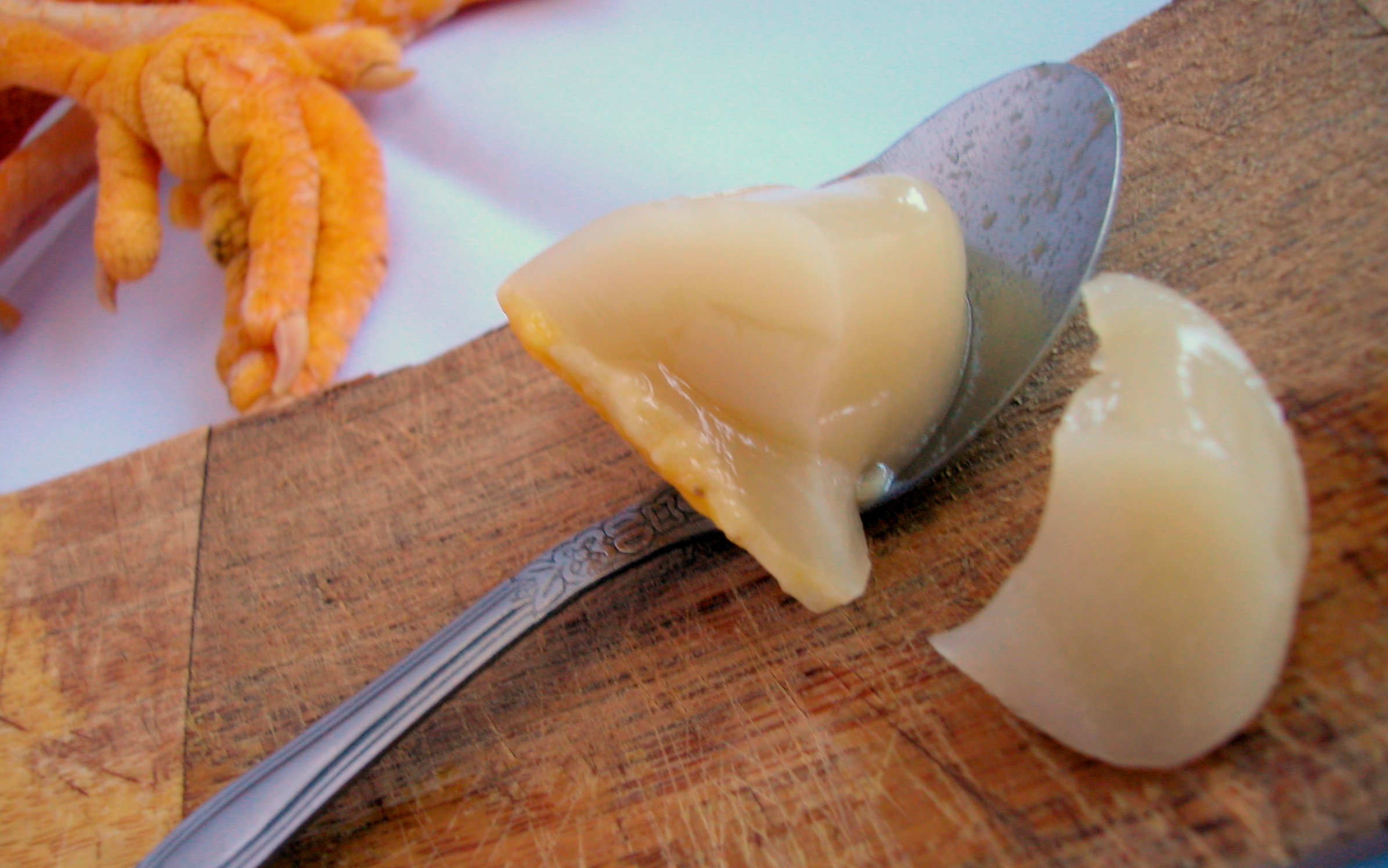
    Chicken feet – gnarly, repulsive and disturbing – make for the very best stock. Devoid of little else but tendons, bone and cartilage (sound appetizing yet?), chicken feet produce a fine golden broth that’s rich in all those obscure nutrients that make a good stock so nourishing: glucosamine chondroitin, collagen and trace minerals.  Moreover, a chicken stock is an excellent source of calcium without .  Understandably, a stock made from chicken feet gels beautifully just as a good stock should.

    Saturday morning, I pulled out a bag of chicken feet and as I peeled the yellow membrane from the feet and hacked away the talons, I couldn’t help but reflect upon my relationship with food.  Dear God, I thought, I was a vegan once I used to gag at opening a package of lunch meat, and now I can peel and hack my way through a bag of chicken feet with nary an ill feeling  That is until my 4-year old tapped me on a shoulder with a disembodied claw.  Eeeew! Then there was that time when I accidentally left a bag full of chicken feet fresh from the farmers market in the fridge at the office.

    3chickenfeet

    Chicken feet can be difficult to find – that is, until you know where to look.  They don’t come packaged on little Styrofoam trays, wrapped in plastic. Ethnic markets – those last bastions of traditional foods – often carry chicken feet, heads and other miscellaneous parts that are forgotten in conventional cooking.  Farmers markets can be another source.  Most importantly, your local farm offering pastured poultry may also have a stash from the latest harvest.  If purchasing your chicken feet at a market, they will usually run you $1 – $2 per pound; however, if you purchase your whole chickens farmer-direct they will often throw the chicken feet in the bag at your request.  These chicken feet came from a local, family-run farm that also specializes in grass-fed lamb.

    Preparing Chicken Feet for the Stock Pot

    In many cases, the chicken feet will arrive already prepared, more or less; however, if you receive them directly from your local farm you may need to dress the chicken feet yourself.  This is easy.  First, you’ll rub them with salt and scald them briefly in boiling water followed by an icy bath.  This practice enables you to more easily peel the yellow membrane on the foot.  After peeling the yellow membrane from the feet, chop the talons off at the first knuckle.  Some cooks prefer to leave the talon on the foot. In the above picture, you’ll see chicken feet in the three stages of preparation: 1. fresh, 2. peeled and 3. declawed.When blanching the chicken feet, take great care not to blanch the feet too long or you will overcook the feet, fusing the yellow membrane to the foot and activating the gelling process. Moreover, overcooking will also cause the tendons in the feet to contract, making peeling virtually impossible. Be brief.

    peeling chicken feet

    Once the feet are fully prepared by cleaning, blanching, peeling and talon removal, they’re ready for the stock pot.  A stock prepared from chicken feet, like any stock, is widely variable and can be seasoned based on your personal preference.  Preferring a mild-tasting broth in most recipes, I usually season my broth with vegetable scraps including celery leaves, onion and carrot peelings; however, from time to time, I like to change the flavor of the stock a touch and heat it up with chilies, ginger and other spices.  The stock recipe detailed below is very well-suited to Asian-inspired dishes and perfect for cold and flu season when a nourishing, mineral-rich broth infused with chilies and spice can help clear the sinuses.

    chickenstock

    Asian-inspired Chicken Foot Stock

    Prepared from chicken feet and no other bones or meat, this stock produces a solid gel.  One pound of feet will produce approximately ½ gallon of well-gelled stock.  Its aroma is faintly reminiscent of Top Ramen, no joke.  Even if you prefer to season your stock with a mild combination of onion, celery and carrot or herbs of your choice, follow the same method as outlined below.

    More on Stock & Broth

    Ingredients

    • 1 lb Chicken Feet, Peeled and Talons Removed
    • 1 2-inch Knob of Ginger
    • 1 Star Anise
    • 3 – 4 Fresh Cayenne (or other) Chili Peppers
    • 1 Bulb Garlic, Peeled
    • 1 4-inch Stalk of Lemon Grass (optional)

    Instructions

    1. Add all ingredients to your stock pot.
    2. Add water to cover.
    3. Simmer for a minimum of 4 hours and up to 12, adding more water as needed or desired.
    4. Skim any scum that rises to the top.
    5. Strain solids from the broth through a fine mesh sieve or cheesecloth.
    6. Bottle and reserve the stock.
    7. Serve in Asian-inspired soups and dishes.

  • Mandarin & Cranberry Relish

    tangerine

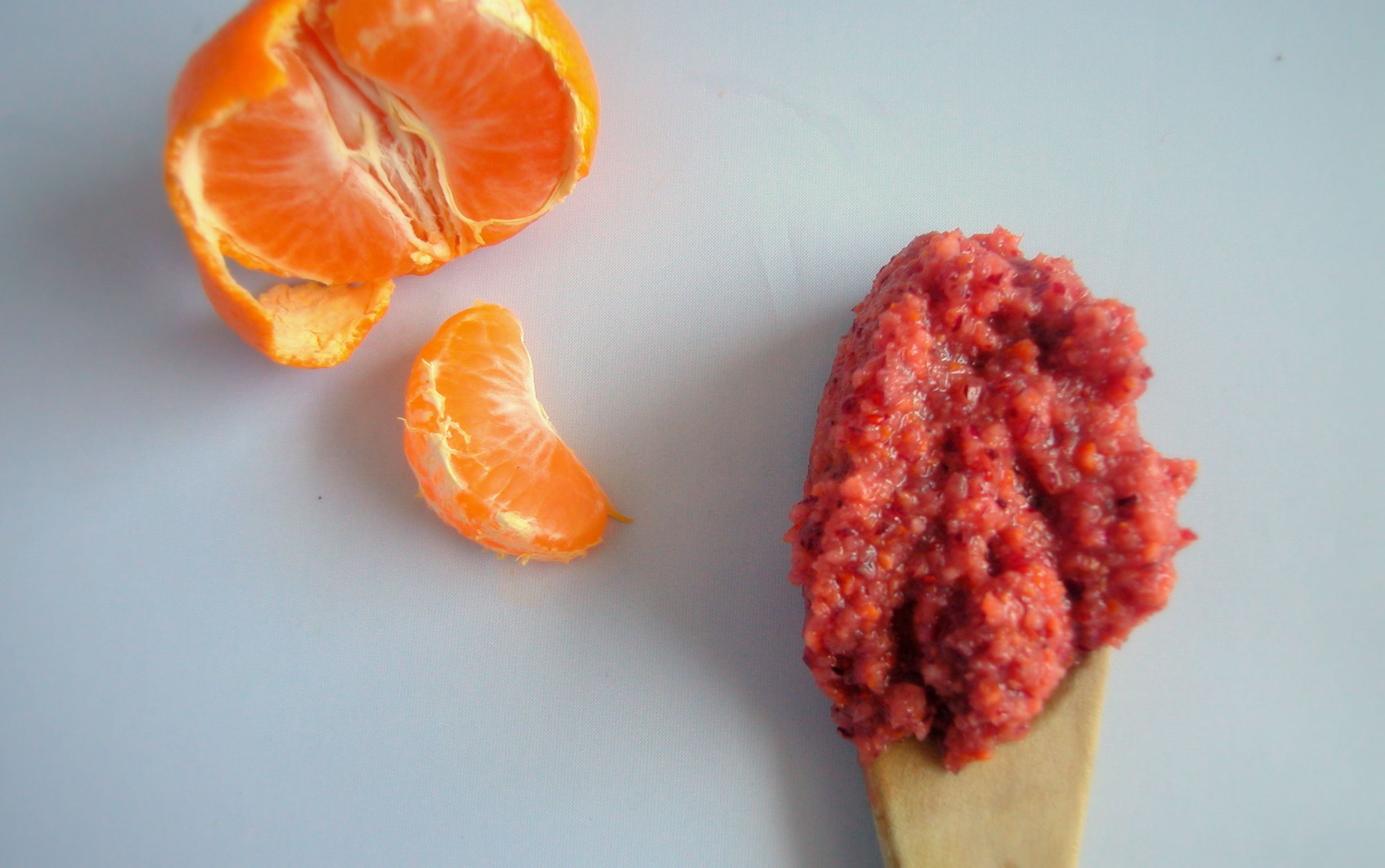
    Friday afternoon, a heavy box brimming with satsuma mandarins courtesy of Chaffin Family Orchards greeted me at the post office.   I’d anticipated their arrival all week – eager for something fresh and vibrant after a month when no other fresh fruit was available from our CSA but for apples.  These beautiful mandarins – like a palm full of sunshine – enlivened our kitchen, offering that slightly intense, perfect coupling of sweet and sour.  The moment I pierced the skin of the first mandarin pulled from the box, I brought it to my nose to inhale its aroma – a vibrant combination of piercing citrus and subtle floral notes.  Fresh.  Decidedly fresh.

    There’s beauty in the seasonality of any food, but citrus fruit is remarkably well-suited to its season.  Indeed, it’s one of nature’s best gifts that these bright fruits come into season just when the days become dark and we miss the sun the most. For this reason, mandarins make for a charming gift during the holiday season – a way to offer a little sunshine to someone during the deep dark days of winter.

    Of course, 15 lbs of mandarins seemed daunting at first.  How would I make use of this bounty without letting any of the orchard’s work go to waste?  While they make a perfect snack, peeled and eaten fresh, I wanted more.  Shall I make citrus mead? Mandarins poached in a star anise syrup? Candied mandarin peel? Mandarin rooibos tea?  Mandarin pudding?  With the upcoming holiday, I settled on my first dish: a mandarin cranberry relish.

    Both mandarins and cranberries are a potent source of vitamin C – although each offer a different combination of nutrients in addition to that vitamin C.  Mandarins provide folate and fresh cranberries offer vitamins E and K in addition to manganese.

    cranberry-tangerine-sauce

    Mandarin Cranberry Relish

    This recipe makes approximately 1 quart of relish. The cranberries and mandarins remain raw in this dish, and the mandarins are used whole.  The dish is fresh, lively and raw – with faint bitter undertones courtesy of the mandarin’s peel.  The peel, incidentally, is where much of the fruit’s ascorbic acid content is concentrated.

    Ingredients for Mandarin Cranberry Relish

    • 6 Cups Fresh, Organic Cranberries
    • 4 Organic Satsuma Mandarins (see sources)
    • ½ Cup Fresh, Organic Apple Juice
    • 2 Tablespoons Lemon Juice
    • ¼ Cup Whole, Unrefined Cane Sugar or to taste

    Instructions for Mandarin Cranberry Relish

    1. Rinse and pick over the cranberries, discarding any bruised or mushy fruit.
    2. Chop the mandarins coarsely – including the rind.
    3. Combine all ingredients in your food processor and process until it forms the desired texture which should be slightly coarse.
    4. Chill and serve.


  • 20% Off at the Homestead Company!

    homestead company

    I’m still recovering from the Wise Traditions Conference – which was wonderful – but wanted to announce the winner of the recent giveaway: Kristi Fogle! Kristi has until Monday at midnight mountain time to touch base with me, or we may elect to select an alternate.

    Even if you didn’t win, you should visit the Homestead Company one more time because they’re having a fantastic sale right now and, as a follow up to the giveaway here at Nourished Kitchen, they’re offering a 20% discount!

    The homestead company offers natural skincare and personal care products – and their sale, coupled with the coupon code presents an excellent opportunity to pick up some beautifully crafted, natural skin care products at a good price either for yourself or for the upcoming holidays.

    Remember: By shopping at the Homestead Company through the above link, you help to support Nourished Kitchen. If you click on the link above or any of the links on my resources page, Nourished Kitchen will earn a little bit of money which helps to off-set the costs of running this site. Moreover, please take care and disable your adblocker or you will not be able to see the coupon code and you’ll miss a good amount of other content here at Nourished Kitchen.


    More from Nourished Kitchen

    Looking for grass-finished beef or wild-caught fish? What about that exotic sourdough starter you’ve been after? Or water kefir grains? Check out the Nourished Kitchen Where to Buy List that outlines great companies that sell or support real and traditional foods.

    Don’t forget: I’m not a doctor, I’m a mom who loves preparing wholesome, natural foods for her family and I enjoy sharing our reasons in choosing these nourishing foods. Read the disclaimer and advertising/link policy and the privacy policy.

    © Jenny for The Nourished Kitchen, 2009. |
    Permalink |
    No comment |
    Add to
    del.icio.us

    Post tags:

  • Oeufs en Cocotte with Lox

    oeufs

    Oeufs en cocotte, with their simple elegance, make a for a charming, nourishing breakfast and are well-suited to a variety of accompaniments: fresh herbs, raw milk cheeses, ham or bacon or even my favorite – homemade gravlax.  Easily prepared in single-serving portions, oeufs en cocotte are perfect for those cooking for only themselves or for a very small family.   On hectic mornings – which, I might add, is nearly every morning – it’s easy to crack an egg into a dish, season it and slide it into a waiting oven.  By the time I’ve finished my shower, breakfast is ready.  This is fast food – in the true meaning of the words and without the disturbing additives or discomforting ecological, economical and social impacts.

    Eggs make for a good breakfast – packed with vitamin A, riboflavin, selenium and other micronutrients in beautiful combination with wholesome fats and protein.  Better yet if your egg comes from a hen raised on pasture.  Research into the nutritional composition conducted by the Weston A Price Foundation indicates that the yolk of a pasture-raised egg contains 8 times the vitamin A of a conventional, store-bought egg.  It’s no wonder.  An comparison of the yolks alone yields a remarkable story itself.  The yolk of a pasture-raised egg will be a rich orange compared to a conventional egg which is pallid and dull by comparison.  Remember, where there’s color and flavor, there’s nutrients.

    In this recipe, I combine pasture-raised egg with pecorino romano cheese, unrefined celtic sea salt and home-cured gravlax.  The gravlax, with its salty sweetness, adds a lovely richness to the dish and contributes much needed omega-3 fatty acids including EPA and DHA.  Gravlax is a raw food – cured at home easily and, in the best tradition of real food, without complication.  Wild-caught salmon or other oily fish combines with unrefined sugar, salt, fresh herbs and spices, is weighted down and allowed to cure in the fridge for a few days or up to a week before being served.  Wary of cooking’s effect on fragile polyunsaturated fatty acids found in salmon, I prefer to serve my fish raw or cured.

    When you’re rushed for time, consider the minimal effort and spectacular nutritional composition of this simple, wholesome dish.  It takes only a few minutes, and is well worth it.  If you don’t have gravlax on hand – and it’s likely you won’t as it’s not a regular feature in most kitchens – you can substitute purchased lox or smoked salmon, herbs or even ham or bacon.

    Oeufs en Cocotte with Lox: The Recipe

    This recipe serves 1; however, it is easily doubled, tripled, quadrupled … For a heartier breakfast, consider serving these eggs with buttered sprouted grain toast and fresh fruit or a tomato salad.

    Quick and Easy Breakfast

    • Oeufs en Cocotte with Lox and Herbs
    • Rooibos Tea with Cream and Honey
    • Sprouted Wheat Bread, Toasted and Buttered
    • Fresh Peaches

    Oeufs en Cocotte with Lox: The Ingredients

    • 1 Egg from a Pasture-raised Hen
    • 1 Tablespoon Raw Milk Artisan Cheese, Grated (see sources)
    • 1 oz Lox, Smoked Salmon or Home-cured Gravlax, Chopped Fine
    • 2 Teaspoons Chopped Fresh Herbs (Parsley and Chives work well for me)
    • Unrefined Sea Salt and Freshly Ground Black Pepper to Taste
    • ½ Teaspoon Butter from Grass-fed Cows (see sources)

    Oeufs en Cocotte with Lox: Instructions

    1. Butter a small 4-oz ramekin.
    2. Crack the egg and pour the contents into the buttered ramekin. Take care not to break the yolk.
    3. Add the lox to the dish.
    4. Sprinkle the cheese, herbs, salt and pepper to the egg.
    5. Bake in a water bath at 350º F until egg white is set, but the yolk is still runny or done to your liking.  Baking takes approximately 12 – 15 minutes – just enough time for a nice long shower.


    More from Nourished Kitchen

    Looking for grass-finished beef or wild-caught fish? What about that exotic sourdough starter you’ve been after? Or water kefir grains? Check out the Nourished Kitchen Where to Buy List that outlines great companies that sell or support real and traditional foods.

    Don’t forget: I’m not a doctor, I’m a mom who loves preparing wholesome, natural foods for her family and I enjoy sharing our reasons in choosing these nourishing foods. Read the disclaimer and advertising/link policy and the privacy policy.

    © Jenny for The Nourished Kitchen, 2009. |
    Permalink |
    8 comments |
    Add to
    del.icio.us

    Post tags:

  • Soy & Illinois Prisons: Tuskegee of the 21st Century

    sally fallon soy prison

    Beginning in 2003, shortly after notorious former governor of Illinois Rod Blagojevich took office, the Illinois prison system effected a change in the diet fed to their inmates.  Hand-in-hand with agricultural giant Archers Daniel Midland – the illinois prison system converted the diet of prisoners to one with grossly high levels of soy – upwards of 100 grams a day (read more about the soy prison case).  Earlier this year, a group of sickened inmates filed a lawsuit seeking to stop the serving of soy as a primary protein source in Illinois prisons.  Since that time, numerous sickened prisoners have come forward – some have even been subject to retaliation by prison staff for their action.

    The prisoners began to see the effects of the diet slowly, at first, but the results of the diet have grown ever more dramatic.  First, the inmates suffered from gastrointestinal upset which progressed to extreme distress and eventually to serious health concerns including thyroid disease and other issues.  The prison system’s response to the  prevalent illness showed a complete disregard for the health of the inmates that were clearly suffering due to the toxic levels of soy protein isolate included in their food.  Indeed, excessive consumption of soy isoflavones is linked to wide and varying health problems.  The FDA lists well over 200 studies illustrating soy’s toxic effects on health; yet, despite these clear contraindications to a diet so high in soy, the prison system in Illinois continued to provide a diet in which many foods contained 60-70% soy protein isolate.

    The Weston A Price Foundation – a not-for-profit organization devoted to the cause of nutrition and wellness – is championing the case of the Illinois prisoners.  It is, in effect, the first battle ground as the State of Illinois has plans to institute similar soy-based diets into other public institutions – including public schools.  Sally Fallon Morell, founder and current president of the organization, refers to the case as “the Tuskegee of the 21st century.”  Indeed, the two cases share some striking similarities – namely the systematic exploitation of a marginalized population by government.

    You can view videos from the press conference below:


    Photo credits and Videos.


    More from Nourished Kitchen

    Looking for grass-finished beef or wild-caught fish? What about that exotic sourdough starter you’ve been after? Or water kefir grains? Check out the Nourished Kitchen Where to Buy List that outlines great companies that sell or support real and traditional foods.

    Don’t forget: I’m not a doctor, I’m a mom who loves preparing wholesome, natural foods for her family and I enjoy sharing our reasons in choosing these nourishing foods. Read the disclaimer and advertising/link policy and the privacy policy.

    © Jenny for The Nourished Kitchen, 2009. |
    Permalink |
    2 comments |
    Add to
    del.icio.us

    Post tags:

  • Day One: Ferments, Kefir and Healthy Cooking for Kids

    amanadalove

    Amanda Love demonstrates the preparation of dairy kefir.

    This morning started off excitedly – a bleary-eyed awakening, a rush, quick registration and a charming, nourishing breakfast of faintly, but pleasantly, salty soaked oats, apples and raisins.  The day was a whirlwind – and worthwhile – from Scott Gryzbek’s quick and dirty tutorial on how to ferment anything, to Beverly Rubik’s fascinating pilot study analyzing the blood of adherents to the Weston A Price diet and Jennette Turner’s take on the intricate details of food and its effects on the mood and temperament of children.  My head’s still spinning – but one thing remained constant through this series: the importance of maximizing nutrient intake whether through the time-honored traditions of classic lactic acid fermentation or through consuming sacred foods dense in vitamins and minerals.  In essence, good food yields good health.

    Highlights of the first day of the Wise Traditions Conference:

    Beverly Rubik, PHD – a experienced researcher in biophysics and microscopy – delivered a fascinating slide show comparing the live blood analyses of persons adhering to the diet advocated by the Weston A Price Foundation and those following a modern, conventional which included organic foods and supplements:

    Cholesterol is the bandaid the body puts on an arterial injury.  The culprit is not the cholesterol … it’s the body’s way of trying to heal damaged arteries … Less blood coagulation is clear in WAP diet subjects compared to modern diet … Reduced red blood cell clumping may be associated with improved blood circulation.  Longer blood coagulation time is associated with reduced risk of cardiovascular disease. [The Weston A Price] diet gives you the protection without the drugs.

    Jennette Turner – a nutritional consultant who provides healthy workplace education – spoke at length about the intricate ways in which nutrients, or lack thereof, affect the cognitive and emotional health of our children:

    Healthy brains come from healthy foods … Liver is one of the most nourishing foods we can eat – helps kids manage stress effectively, helps with moodiness and best source of vitamin A necessary for growth.  Liver and pork ft is a source of vitamin D … crucial for everyone, especially teenagers.

    In eloquent simplicity, Amanda Love – a nutrition educator and natural foods chef – defined traditional foods and just how they play a role in our health:

    Ever since we’ve been eating food that’s far away from nature, our health has been in decline.  The root of health issues really is in the gut … the gut is the center of our health.

    Tomorrow brings discussions on cod liver oil, raw milk, grass-based farming and honoring sacred foods.  Check out twitter (#wapfconf) for today’s updates, videos and pictures.


    More from Nourished Kitchen

    Looking for grass-finished beef or wild-caught fish? What about that exotic sourdough starter you’ve been after? Or water kefir grains? Check out the Nourished Kitchen Where to Buy List that outlines great companies that sell or support real and traditional foods.

    Don’t forget: I’m not a doctor, I’m a mom who loves preparing wholesome, natural foods for her family and I enjoy sharing our reasons in choosing these nourishing foods. Read the disclaimer and advertising/link policy and the privacy policy.

    © Jenny for The Nourished Kitchen, 2009. |
    Permalink |
    5 comments |
    Add to
    del.icio.us

    Post tags:

  • Molasses & Cranberry Cinnamon Rolls

    cinnamon-roll-bite

    There is nothing quite like a warm cinnamon roll and a hot mug of tea on a cool Saturday morning. We love them – especially my husband and my son who crave them with a passion – but we could do without the mounds of refined flour, hydrogenated fats and white sugar that plague breakfast plates; rather, these cinnamon rolls are mildly sweet and offer a decidedly rustic texture of sprouted grain flour.  Dried cranberries with their tart flavor add interest and complement the inclusion of molasses and cinnamon.  Like all cinnamon rolls, these are relatively labor intensive so save them for a special occasion: Christmas or Thanksgiving morning, perhaps.

    I truly enjoy baking with sprouted grain flours – they have such a beautiful character and lovely, full flavor that we use them to the exclusion of other flours.  Initially, I assumed that any sprouted grain baked good would have that sour flavor and dense, chewy texture that you find in commercially available sprouted grain breads like Ezekial.

    I was wrong.

    Now, don’t misunderstand me.  I can appreciate those dense, chewy sour loaves as much as anyone else; however, the versatility of sprouted grain flours far exceeded my initial expectations.  Sprouted grain flour is remarkably well-suited to a variety of baked goods – not just bread, but also in cakes, cookies and pastries like these molasses cranberry cinnamon rolls. Aside from its sweet, nutty flavor and charming rustic texture, sprouted grain flour is more nutrient-dense than other flours.   Because grains are soaked as part of the sprouting process, sprouted grain flour is well suited to quick breads and other recipes where souring or fermenting dough would be unsuitable.

    I chose to omit white sugar in this recipe largely because you simply cannot find it in our home, but also because natural sweeteners such as date sugar and molasses enjoy a richer and more well-rounded flavor than white sugar.  Not only are nutrients removed during the processing of refined sugar, but also much of its natural flavors and those nuances of flavor, subtle as they are, can really add up – imparting a fuller flavor to the end dish.

    Molasses Cranberry Cinnamon Rolls

    We enjoy these cinnamon rolls with a pot of hot rooibos tea for brunch on the weekends.  This recipe prepares approximately 1 dozen rolls.  They keep well, if covered properly.  Surprisingly, these cinnamon rolls a lovely golden-orange, not the deep brown I expected to see with the inclusion of molasses in the dough.

    A Weekend Breakfast

    • Rooibos Tea with Cream and Honey
    • Molasses Cranberry Cinnamon Rolls
    • Poached Eggs with Classic Hollandaise Sauce
    • Lox with Capers and Shallots

    Molasses Cranberry Cinnamon Rolls: Ingredients

    • 5 Cups Sprouted Grain Flour (see sources)
    • 1 Package Yeast
    • ¼ Cup Molasses
    • ½ Teaspoon Unrefined Sea Salt
    • 2 Pastured Eggs, Beaten
    • 1 Cup Whole Milk from Grass-fed Cows
    • 3 Tablespoons Cinnamon
    • ¼ Cup Date Sugar
    • ½ Cup Butter from Grass-fed Cows (see sources)
    • ½ Cup Dried Cranberries (Unsweetened or Sweetened with Unrefined Cane Sugar)

    Molasses Cranberry Cinnamon Rolls: Ingredients

    1. Mix flour, yeast and salt together.
    2. In a saucepan over low heat, gently combine ¼ cup butter, 1 cup whole milk and ¼ cup molasses until well-blended and heated to blood temperature.
    3. Combine flour mixture with liquid until well blended.
    4. Knead for 10 minutes or until the dough is smooth and elastic, adding more flour as necessary to prevent sticking.
    5. Allow the dough to rise until double in bulk.  I use an Excalibur dehydrator (see sources) set to approximately 110° F to encourage an even and easy rise.
    6. When the dough has risen, punch it down and roll it out to a thickness of approximately ½-inch or slightly less.
    7. Meanwhile, preheat your oven to 375° F and prepare the filling by melting the remaining ¼ cup butter with cinnamon and date sugar.*
    8. Once the butter has melted and the cinnamon and date sugar are well-combined, gently spread the filling onto the surface of the dough.
    9. Sprinkle on cranberries.
    10. Gently roll the dough into a tube-like shape.
    11. Cut the roll into 1-inch pieces.  You may use a sharp knife for this, but I find that cutting the rolls with a string is more effective and results in a cleaner cut.
    12. To cut the rolls with string, simply slide a stretch of lightweight string beneath the roll to the approximate place that you wish to make the cut. Next pull up on the string, crossing the ends at the top and pulling.  This will slice the roll straight through without mashing it.
    13. Bake until golden-orange*.
    14. Serve with a coconut-honey glaze (see recipe at the bottom of this post).

    *NOTE: I live at an elevation of close to 10,000 ft above sea level.  For this reason, I have omitted baking times as altitude plays a significant role in how long any pastry or bread should bake.  Use your judgment: fragrance and color will let you know when your rolls are finished.  Moreover, due to altitude differences you may also wish to adjust the temperature at which these and other baked goods on this site bake.  High altitude bakers like myself usually have to increase oven temperature, so you may wish to decrease temperature.  Don’t worry, baking is much more forgiving than it seems.


    More from Nourished Kitchen

    Looking for grass-finished beef or wild-caught fish? What about that exotic sourdough starter you’ve been after? Or water kefir grains? Check out the Nourished Kitchen Where to Buy List that outlines great companies that sell or support real and traditional foods.

    Don’t forget: I’m not a doctor, I’m a mom who loves preparing wholesome, natural foods for her family and I enjoy sharing our reasons in choosing these nourishing foods. Read the disclaimer and advertising/link policy and the privacy policy.

    © Jenny for The Nourished Kitchen, 2009. |
    Permalink |
    9 comments |
    Add to
    del.icio.us

    Post tags:

  • Blogging Wise Traditions 2009

    This week brings the 2009 Wise Traditions Conference hosted by the Weston A Price Foundation – and I’ll be blogging live from the conference. The conference will cover sustainable farming practices, traditional diets, radical medicine, alternative approaches to cancer and infertility as well as myriad other topics focused on just how nourishing foods can help us to heal our bodies and our planet. If you can’t join us, you can still keep up to date on the conference, its lectures and fabulous meals in real time by checking in here at Nourished Kitchen, Hartke is Online, Cheeseslave and Kitchen Kop.

    Highlights of the Wise Traditions Conference

    Friday: Traditional Diets, Gut and Psychology/Physiology Syndrome, Radical Medicine, What Every Grass-based Farmer (and Consumer) Should Know, Cooking, Sacred Foods, Live Blood Analysis and Film Screenings.

    Saturday: Honoring Sacred Foods, Artisanal Farming with Livestock, Behind the Fuzzy Logic of Raw Milk Opposition

    Sunday: Healing with Traditional Foods, Plant Food Toxins, Holistic Cancer Treatments, Real Food Economics and Lifestyle, Farm Direct: the New Face of Marketing and Distribution

    Speakers: Speakers will include Sally Fallon Morrell, RJ Ruppenthal, Chris Masterjohn, Baden Lashkov, Scott Gryzbek and others who have made notable strides in the traditional and sustainable foods movements.

    Real Food: What excites me the most is the food. Lunches of artisanal cheeses and sourdough breads. Suppers featuring wild-caught salmon and grass-finished meats.

    Updating the Post Schedule for Wise Traditions

    Wise Traditions begins this Friday and ends Sunday – so this week I’m deviating from the norm to bring you new posts directly from the conference, its lectures and events on Friday, Saturday and Sunday of this week. We’ll resume our regular Monday through Friday posting schedule on Monday, November 16th. Over the course of these three days, each post will focus on a single aspect of the conference. For up-to-the-minute action, please consider finding me on twitter and facebook where I’ll be posting videos, photographs and details of the conference in real time.

    Follow the Conference Live on Twitter and Facebook

    Twitter: Follow me (NourishedMama) on twitter for live, real time updates of the conference. Ann Marie of Cheeseslave and Real Food Media, Kelly the Kitchen Kop and Kimberly of Hartke is Online will also be publishing real time updates discussing the conference.

    Tweet Chat: Keep it simple and checkout Tweet Chat – a service that allows you to follow specific conversations on twitter as they occur. Type in the hashtag #wapfconf which will keep you in the loop about every tweet discussing the Wise Traditions Conference as it occurs. If you have a specific question to ask or comment to make about our experiences at Wise Traditions, ask it here and you’ll get an answer in real time. It doesn’t get any more live than this!

    Facebook: Don’t forget, we’ll also be updating Facebook with links, photos, videos and status reports throughout the conference. Friend me on Facebook to keep fully updated about the conference and its progress. Don’t forget to friend Ann Marie, Kimberly and Kelly – each of whom will also be covering the conference live on facebook.

    Attending the Conference

    Attend the Conference Virtually: Don’t forget that we’re attending this conference in person not only to further our interests and knowledge about traditional foods, health and healing, but also to share our experiences at the conference with you – our readers. So, if you can’t make it, spread the love: chat us up! Tweet, retweet and share these posts and updates as they go live! You can even download conference handouts and even recipes.

    Attend the Conference in Person: If you’re planning to attend the conference in person, please stop by the Real Food Media booth while you’re there. Tee-shirts, bags and other goodies will be available for sale while and there may be a giveaway or two up our sleeves. Indeed, I’ve got a recipe cards available for free to any reader who stops by the booth and asks.  We love to meet our readers and anyone who has a passion for real food.

    Don’t forget: if you live within driving distance of Chicago, plan to attend the conference if only for a single day. Day passes are available for $75, not including food.


    More from Nourished Kitchen

    Looking for grass-finished beef or wild-caught fish? What about that exotic sourdough starter you’ve been after? Or water kefir grains? Check out the Nourished Kitchen Where to Buy List that outlines great companies that sell or support real and traditional foods.

    Don’t forget: I’m not a doctor, I’m a mom who loves preparing wholesome, natural foods for her family and I enjoy sharing our reasons in choosing these nourishing foods. Read the disclaimer and advertising/link policy and the privacy policy.

    © Jenny for The Nourished Kitchen, 2009. |
    Permalink |
    4 comments |
    Add to
    del.icio.us

    Post tags:

  • Home-cured Olives: Moroccan Style

    barouni-olivesHome-cured olives – seasoned with chilies, lemon and North African spices – have finally made their way into our kitchen, and happily so.  Not too long ago, we received a beautiful box of freshly harvested, green-ripe barouni olives from Chaffin Family Orchards out of California.   Since then we’ve patiently waited and waited for our olives to lose their soapy bitterness and gain a saltiness spiked by hot peppers, lemon and garlic.

    Olives are among our favorite foods.  They enjoy a rich heritage having been cultivated across the middle east and Mediterranean region for thousands of years.  Though olive oil has always been prized both for grooming and culinary uses, my love rests with the well-spiced and wonderfully salty fruit.  Olives are rich in mono-unsaturated fat, vitamin E and polyphenols which account for the fruit’s strong, bitter flavor.  A good soaking in brine and spices tempers the olive’s natural bitterness.

    In preparing my batch of olives at home, I chose to water cure them – as it’s a relatively faster approach to olive curing and, as you can imagine, I was eager to see the results of my first adventures in olive curing.  Other methods of curing olives at home include treating the fruit with lye, brining them whole and curing them in salt.  I imagine, next season, we’ll try a different method of curing olives.  Water curing is simple and remarkably easy; just clean the olives, discarding any marred fruit, and pound them with a mallet or rolling pin until the fruit is slightly bruised.  Over a period of days or even weeks, depending on how much bitterness you prefer, soak them in clean water, changing it frequently.  You’ll notice that the olives will release some of their oils and that oil will rise to the top of the water every day.  Follow this by a heavily spiced brine, and you have home-cured olives.

    We’re looking forward to serving our olives at the Thanksgiving table and throughout the year as appetizers or in lovely, rustic tapenades.  Some we seasoned with provincial herbs, others with Greek oregano and garlic, but these olives we seasoned with a savory array of North African spices.  I can’t wait to pair them with a Moroccan-spiced Roast Chicken or on fresh bread smeared with authentic labneh and a slice of preserved lemon.

    Cracked Olives: Moroccan Style

    Fresh olives are sold in bulk at very affordable prices.  While this recipe only makes use of a ½ gallon of olives, take advantage of larger quantities and spice them differently in order to vary the flavors in your kitchen. Incidentally, the water-curing method for preparing olives results in more oleuropein – an antioxidant thought to boost the immune system –  in the end product which is, in part, why we chose this method.

    Ingredients for Home-cured, Cracked Olives

    • ½ Gallon Fresh Green-ripe Olives
    • 1 Whole Preserved Lemon OR 1 Whole Lemon, quartered
    • 1 Small Bulb Garlic, Peeled
    • 3 – 4 Fresh Red Chili Peppers
    • 1 Bay Leaf
    • 1 Teaspoon Peppercorns
    • 1 Thin Slice Fresh Turmeric, juliennedOR ¼ Teaspoon Ground Turmeric
    • 1 Thin Slice Fresh Ginger, julienned
    • ½ Teaspoon Coriander Seeds
    • 6 Tablespoons Unrefined Salt
    • ¼ Cup Raw Vinegar

    Instructions for Home-curing and Seasoning Cracked Olives

    1. Rinse clean and pick over the fresh olives, discarding any obviously marred fruit. Discard any leaves or stems.
    2. Gently hit each olive with a rolling pin in order to bruise it.  The olives may crack, and they’ll most likely spit out some foamy white juice.  Eventually your fingertips will turn black as the olive’s juice oxidize.
    3. Once all the olives have been cracked, pour them into a container and fill it with filtered water.  Drain, rinse and fill the olive container with water again twice a day for at least a week, and up to a month.  We cured ours in this manner for two weeks.  You may taste them for bitterness throughout the process.
    4. Once the olives have lost much of their bitterness – they’ll still retain quite a bit – drain and rinse them a final time.
    5. Place them into a ½-gallon mason jar with spices, garlic, lemon and chilies.
    6. Pour raw vinegar over the olives.
    7. In a separate container, prepare a brine of 6 tablespoons unrefined sea salt to 1/2 gallon filtered water and pour over the olives and spices.
    8. Shake well to combine ingredients.
    9. Allow the mixture to ferment for at least ten days or until done to your liking.


    More from Nourished Kitchen

    Looking for grass-finished beef or wild-caught fish? What about that exotic sourdough starter you’ve been after? Or water kefir grains? Check out the Nourished Kitchen Where to Buy List that outlines great companies that sell or support real and traditional foods.

    Don’t forget: I’m not a doctor, I’m a mom who loves preparing wholesome, natural foods for her family and I enjoy sharing our reasons in choosing these nourishing foods. Read the disclaimer and advertising/link policy and the privacy policy.

    © Jenny for The Nourished Kitchen, 2009. |
    Permalink |
    7 comments |
    Add to
    del.icio.us

    Post tags: