Author: Jenny

  • Giveaway: Win over $100 in Grass-fed Meats

    I cook from scratch – lovingly and tenderly braising my meats in freshly render pasture-raised lard, or making pâté from scratch.  But I work full-time too – bet you didn’t know that, did you?  And, it’s awfully nice to have a stash of wholesome, easily prepared foods on hand for when those extended days make preparing supper a dreaded task instead of a joy; moreover, there’s always foods that prove difficult to make at home: salami, frankfurters or smoked meats.  The key in these instances is to choose wholesome alternatives: grass-finished meats prepared with natural ingredients – no MSG, no nitrates or nitrites.

    This week, US Wellness Meats is sponsoring a giveaway featuring their classic grass-fed meats but with a twist: every item in the package is not only wholesome, but also is easy to prepare at home for those nights when you just want to heat something up quickly or slap something on the grill.  It’s easy and healthy family favorites made all the better through natural ingredients and grass-fed meat.

    US Wellness Meats Giveaway: The Nitty Gritty Details

    The Prize

    Eating healthy doesn’t have to be hard, or time-consuming.  US Wellness Meats has put together a package of easy-to-prepare items from their selection of grass-finished and free-range meats.  One winner will receive the following package valued at over $100:

  • Real Food Solutions: How WIC Found Raw Milk & Grass-fed Beef

    Crested Butte Farmers Market

    Crested Butte Farmers Market

    What do soy milk, Honey Bunches of Oats, grape juice and Wonder bread have in common?

    They’re all listed among the Women Infants Children (WIC) Program’s allowable foods list.  WIC, a federal program whose mission is, “To safeguard the health of low-income women, infants, and children up to age 5 who are at nutrition risk by providing nutritious foods to supplement diets, information on healthy eating, and referrals to health care,” provides supplemental nutrition assistance to over nine million US women1, infants and young children; yet, despite its stated goal, many of the food choices available to WIC participants lack the vital nutrients they ought to provide to those at nutritional risk.

    Honey Bunches of Oats, Life cereal and grape juice might fill bellies, it does very little to provide real nutrition to the very people who need it the most.

    Moreover, many deeply nutritive foods are simply disallowed.  Want organic milk?  Think again.  What about organic vegetables? Or fresh whole grain breads? Nope.  Only Orowheat, Pepperidge Farms, Country Hearth, Sara Lee and Wonder breads make the cut.  Juice can’t be purchased in glass containers (plastic containers and canned varieties are fine – the bisphenol A is a bonus).  You can purchase peanut butter but not almonds (a source of vitamin E) and if you’re hoping to avoid genetically modified foods, you’re completely out of luck for the purchase of organic items – save fresh bananas – is off limits.  And once your kid hits the age of two, they’re cut off from full-fat milk though multiple studies indicate children, especially at such a critical time, need fat for brain development2.

    While Honey Bunches of Oats, Life cereal and grape juice might fill bellies, it does very little to provide real nutrition to the very people who need it the most.  The program excludes valuable, nutrient-dense foods such as meat, liver, butter, yogurt and similar foods – meaning that recipients are encouraged to fill up on juices, low-fat conventional milk and prepackaged cereals.

    Clearly, a better solution is needed.

    (…)
    Click here to read the rest of Real Food Solutions: How WIC Found Raw Milk & Grass-fed Beef (708 words)


    Wondering where your full feed went? Click here to learn why The Nourished Kitchenmoved to summary feeds. Don’t forget to find Nourished Kitchen on Facebook, Twitter, Flickr and
    © Jenny for The Nourished Kitchen, 2010. |
    Permalink |

    Post tags: , ,

  • Butter Your Vegetables: The Role of Fruits, Vegetables & Dietary Fat in Health

    Maple-glazed Parsnips & Carrots

    Antioxidant-rich Parsnips & Carrots Served with a Hefty Dose of Clarified Butter (View the recipe.)

    In our home, we eat our vegetables with butter – lots of butter, and newcomers to traditional foods are often shocked at the amount of fat recommended in the wholesome recipes featured on Nourished Kitchen.  After all fat, especially saturated fat, is bad, isn’t it?  It’s dangerous – all this despite significant evidence that dietary fat, including animal fats, featured prominently in the native diets of humans prior to the industrialization of the food supply1 thus nourishing and fostering human evolution along with other wholesome, unrefined foods. Indeed animal foods rich in dietary fat comprised approximately two-thirds of the average hunter-gatherer diet, with some pre-agricultural societies consuming up to 99% of their diet from animal foods and others as little as 26%2.  Fat nourishes.

    While the consumption of plant foods varies significantly among traditional societies, based largely on both climate and season, such foods also provide essential nutrients – vitamins, antioxidants and minerals. As valuable as these plant foods are, to maximize their value, it is essential to eat them with fat.  In an age when low-fat milk and steamed vegetables are heralded as a panacea for obesity, cancer, heart disease and other ills, it’s easy to forget the value of the foods that nourished our ancestors; moreover, it’s near blasphemy to suggest that we ought to butter our carrots, braise our greens in bacon fat or even spread our sandwiches with a homemade mayonnaise loaded with egg yolk and olive oil.

    Fruits, Vegetables, Dairy Fat and Disease(…)
    Click here to read the rest of Butter Your Vegetables: The Role of Fruits, Vegetables & Dietary Fat in Health (641 words)


    Wondering where your full feed went? Click here to learn why The Nourished Kitchenmoved to summary feeds. Don’t forget to find Nourished Kitchen on Facebook, Twitter, Flickr and
    © Jenny for The Nourished Kitchen, 2010. |
    Permalink |

    Post tags:

  • A Recipe: Whole Grain Buttermilk Biscuits

    buttermilk biscuits

    Buttermilk biscuits are a rare treat in our home.  We begin most mornings with a breakfast of pastured eggs and wilted greens or homemade yogurt and soaked oatmeal porridge.  Occasionally, just occasionally, I find the time to prepare buttermilk biscuits as a special treat.  I dust the flour off Meta Given’s Modern Encyclopedia of Cooking, a cookbook worn by six decades of use in various kitchens, and turn to page 236 which details a classic recipe for buttermilk biscuits that I’ve subsequently adapted for use in our kitchen.

    Given’s original version of buttermilk biscuits calls for all-purpose flour which has no place in our kitchen as we’ve grown to prefer the rustic texture and fuller flavor of sprouted grain flour.  Yet, these biscuits, despite the inclusion of whole grain or sprouted flour, are as tender and pleasantly flavored as the original, but richer in micronutrients.  Consider this improved vitamin and mineral profile a sort of gift of the whole grain that would otherwise be stripped and absent from its refined counterpart.  The generous use of freshly cultured buttermilk and freshly rendered lard or butter makes for a soft, tender and flaky crumb.

    Good homemade bread is easy to eat, and who isn’t thrilled to see puffy, crusty, golden-brown biscuits, muffins, rolls and loaves come out of the oven?  That’s why women in the cities as well as in the country will go on serving homemade breads. Meta Given, 1948.

    When I begin mixing the buttermilk and flour for fresh biscuits, my son’s eyes widen in anticipation.  He knows that a real treat awaits him.  He sets the table, taking care to place fresh butter in the center of the table and our raw, wildflower honey – an even greater treat in our home – just a touch closer to his plate.  From time to time, we’ll serve these biscuits in the southern tradition with pasture-raised pork sausage seasoned heavily with sage as well as a heavily peppered cream gravy.

    This recipe for buttermilk biscuits calls for a simple soak.  Soaking flour and grain in a slightly acidic solution – such as buttermilk – helps to mitigate the effects of phytic acid.   Phytic acid is an antinutrient naturally found in whole grain that binds minerals in your intestinal tract, preventing your body from fully absorbing them.  By soaking flour in buttermilk, you can help to release neutralize the effects of phytic acid.  The end result of this simple and traditional process is that your breads are more tender, easier to digest and more nutrient-dense. If using freshly ground flour, you’ll only need to soak the flour in buttermilk for a few hours as freshly ground flour is rich in food enzymes.

    Whole Grain Buttermilk Biscuit Recipe

    (…)
    Click here to read the rest of A Recipe: Whole Grain Buttermilk Biscuits (307 words)


    Wondering where your full feed went? Click here to learn why The Nourished Kitchenmoved to summary feeds. Don’t forget to find Nourished Kitchen on Facebook, Twitter, Flickr and
    © Jenny for The Nourished Kitchen, 2010. |
    Permalink |

    Post tags:

  • Giveaway: Win a Scandinavian Yogurt Starter (and how to make raw milk yogurt)

    yogurt starter

    Yesterday, we discussed the cultured milks of Scandinavia and the role they play in the culinary traditions of the region.  Viili, filmjölk and piimä all share a similarity and, in many ways, are best described as yogurt though they each offer their own, unique, characteristics.  Piimä is faintly cheese-like in flavor and drunk as a beverage while viili is gelatinous and mild with an unusual ropey character,while filmjölk is tart and versatile.  Culturing dairy decreases lactose or milk sugar while also increasing B vitamins – including folate, that vital nutrient critical to the proper growth and development of unborn babies.

    What makes these three cultured dairy products so peculiar and unique, at least to most people residing outside of northern Europe and Scandinavia, is that they are mesophilic in nature; that is, unlike yogurt, they thrive when cultured at room temperature.  This unique characteristic makes them remarkably easy and efficient to use in your kitchen.  The only trick is finding a source, since none of the three cultured dairy foods is regularly available in the dairy case of your local grocery store.

    How to Make Viili, Filmjölk and Piimä with Fresh Milk

    Many cultured dairy enthusiasts wish to prepare viili, filmjölk and piimä from fresh raw milk, but doing so is tricky as, overtime, the natural beneficial bacteria present in fresh milk will overtake the strains introduced by the starter.  For this reason, unless you keep a pure seed starter.  You accomplish this by scalding a pint of fresh milk, thus destroying heat-sensitive beneficial bacteria strains naturally present in the milk.  Cool this milk to room temperature and introduce your viili, filmjölk and piimä starter culture and allow it to ferment at room temperature for about one day.  This yogurt is your pure seed starter; take two tablespoons or up to one-quarter cup of this starter and add it to one quart fresh milk – allowing the milk to ferment at room temperature for roughly one day or until the cultured milk separates cleanly from the side of a mason jar when tilted.  Use only the pure seed starter in culturing your fresh milk yogurt, and take great care to save at least two tablespoons of pure seed starter to begin your next batch lest you allow the strains of bacteria in your fresh milk to overtake the starter.  The  pure seed starter must be recultured at least weekly.

    Room temperature yogurts like viili, filmjölk and piimä produce more consistent results when used with fresh milk than classic thermophilic yogurts which require a constant warm temperature to properly ferment and turn runny when used with fresh milk.  If you do not wish to use fresh milk to prepare these yogurts, you may use pasteurized milk (not ultra-high temperature) if you scald it first and cool it to room temperature.

    This week, we’ve paired up with Cultures for Health – an online source for all things fermented – in a fun giveaway that builds upon our recent lesson in the cultured milks of ScandinaviaCultures for Health will be giving away one of these starters to three Nourished Kitchen readers.  Three readers will win either a viili, filmjölk or piimä starter culture that they can use, reculture, enjoy and share in their own kitchens.

    Scandinavian Starter Culture Giveaway: The Nitty Gritty Details

    The Prize

    Cultures for Health is generously giving away viili, filmjölk and piimä starter cultures:

  • Sour Milk: Lessons from Scandinavia

    wooden bowl of yogurt

    a bowl full of yogurt

    Viili, piimä, filmjölk, skyr – all obscure mouthfuls of rolling foreign vowels – that mean but one thing: cultured milk.  The Scandinavians, whose ill-tempered northern climate necessitates creative application of food preservation techniques, celebrate  soured milks and cultured dairy foods in a manner unparalleled by even the yogurt-loving people of the Caucasus. Indeed, they thrive on all manner of cultured and soured milks which are deeply ingrained into their culinary tradition and heritage, and from their undying love for wholesome, naturally soured milks we can all learn a lesson.

    Scandinavia, though offering a remarkable plethora of cold-weathered vegetables, berries and other nourishing, suffers from severe, cold and dark winters characteristic of the north. No other word but harsh seems to better describe the challenges of a Scandinavian winter.  Indeed, it ought to for the word harsh itself is of Scandinavian origin, coming to the English language from the Norwegian word harsk.

    The peoples of Scandinavia are masters of food preservation – techniques won through difficult and hard winters in which many bellies went hungry.  From necessity and practicality, a heritage of cultured, naturally fermented foods was born. They bring us gravlax, pickled herring, cheeses and sourdough breads, inlagda rödbetor (a type of pickled beet) and, of course, a wide variety of yogurts such as viili, piimä, filmjölk and skyr.(…)
    Click here to read the rest of Sour Milk: Lessons from Scandinavia (766 words)


    Wondering where your full feed went? Click here to learn why The Nourished Kitchenmoved to summary feeds. Don’t forget to find Nourished Kitchen on Facebook, Twitter, Flickr and
    © Jenny for The Nourished Kitchen, 2010. |
    Permalink |

    Post tags:

  • Brown Soda Bread with Currants and Caraway

    brown soda bread

    Brown soda bread offers nourishment, a rich flavor and is quite simple to prepare in any kitchen – emboldening the the repertoire of even the novice cook.  While the Irish are known for their traditional soda bread which combines little else but flour, buttermilk, salt and baking soda, many home cooks have adjusted the recipe with the inclusion of raisins, currants and other ingredients.  This brown soda bread with currants and caraway is no exception.(…)
    Read the rest of Brown Soda Bread with Currants and Caraway (704 words)


    Wondering where your full feed went? Click here to learn why The Nourished Kitchenmoved to summary feeds. Don’t forget to find Nourished Kitchen on Facebook, Twitter, Flickr and
    © Jenny for The Nourished Kitchen, 2010. |
    Permalink |

    Post tags:

  • Giveaway: Win Over $83 in Organic, Grass-fed Ghee

    win grass fed ghee from pure indian foods

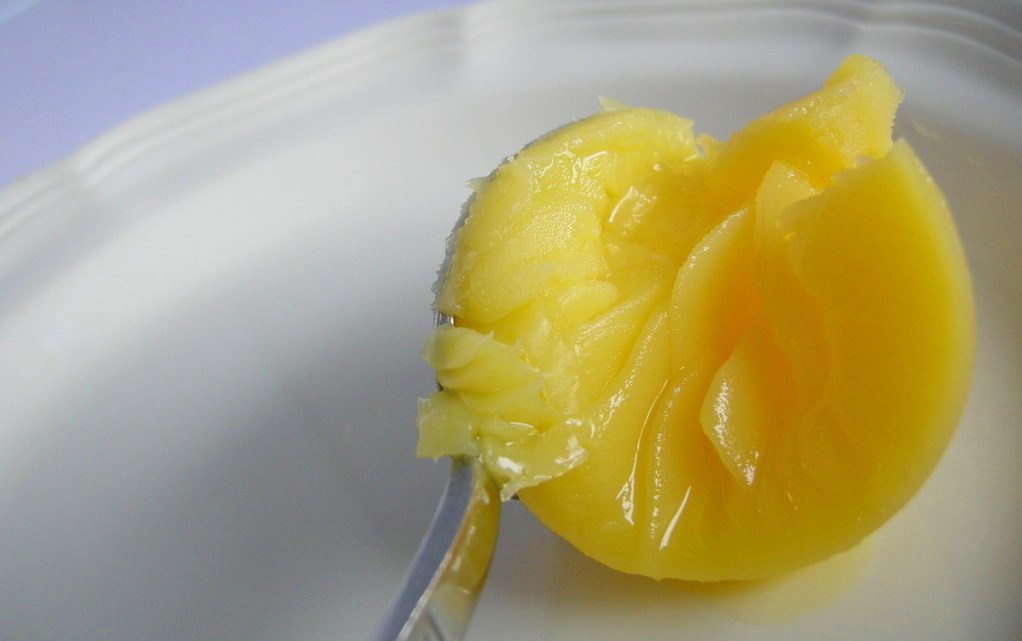
    If you’ve read Nourished Kitchen for any length of time, you know just how much I value wholesome, nourishing fats – and you might also know that even beyond pastured lard, ghee (a type of clarified butter) is – beyond a doubt – my favorite fat for cooking.  Many of the healthy, nourishing  recipes featured on my site make moderate to heavy use of ghee.  It’s remarkable for cooking: very stable even at relatively high temperatures and it imbues a subtle, almost nutty fullness to foods that enriches them without overpowering their natural flavor; moreover, ghee, like grass-fed butter, is deeply nourishing – a potent source of conjugated linoleic acid.

    It’s truly lovely – and even GAPS-friendly as milk solids such as casein and lactose have been gently removed through a natural, traditional clarification.  This also means that ghee, like olive oil, is shelf-stable and does not need refrigeration.  I keep my ghee in my kitchen cupboard – and use it with a heavy hand.

    This week, I’ve teamed up with Pure Indian Foods (fan them on Facebook), to offer a fantastic – and very generous – giveaway.   Pure Indian Foods will be giving away a beautiful package of Organic, 100% grass-fed ghee to a Nourished Kitchen reader.  The winner will receive six 7.8-ounce jars of Organic, 100% grass-fed ghee plus a sampler pack of herbal/flavored ghee – a value in excess of $83.  I first enjoyed the privilege of trying Pure Indian Foods herbal ghee at the most recent Weston A Price Foundation conference.  We enjoy Indian Dessert (a combination of fennel, cardamom and saffron) melted gently into our morning soaked oatmeal porridge, but their version of niter kebbeh (an Ethiopian flavored ghee) is intensely, and beautifully flavored and is, beyond a doubt, my favorite of their flavors.

    The Nitty Gritty Details

    The Prize

    One participant will receive the following from Pure Indian Foods (A value over $83):

    • Six 7.8-ounce jars of Organic, 100% grass-fed ghee.
    • 1.1-ounce jar of Italian ghee flavored by oregano, rosemary and thyme.
    • 1.1-ounce jar of Herbes de Provence ghee flavored by savory, thyme, rosemary, basil, tarragon and lavender.
    • 1.1-ounce jar of Garlic ghee
    • 1.1-ounce jar of Digestive ghee flavored by cardamom, cinnamon and ginger
    • 1.1-ounce jar of Indian Dessert ghee flavored by fennel, cardamom and saffron
    • 1.1-ounce jar of Niter Kebbeh flavored by cardamom, cinnamon, coriander, cumin, turmeric and nutmeg

    Eligibility

    • Due to shipping considerations, anyone can enter who resides in the United States.

    7 Ways to Enter

    Enter this giveaway by signing up at Pure Indian Foods’s website, and by spreading the word about the giveaway and sharing your favorite flavor of ghee (whether it’s their classic plain flavor or one of the spiced ghee flavors).  Remember: Leave a separate comment for each entry.  For better viewing, you must disable your ad-blocker.  There are seven ways to enter:

    (…)
    Read the rest of Giveaway: Win Over $83 in Organic, Grass-fed Ghee (229 words)


    Wondering where your full feed went? Click here to learn why The Nourished Kitchenmoved to summary feeds. Don’t forget to find Nourished Kitchen on Facebook, Twitter, Flickr and
    © Jenny for The Nourished Kitchen, 2010. |
    Permalink |

    Post tags: , ,

  • Home-cured Corned Beef

    home-cured corned beef

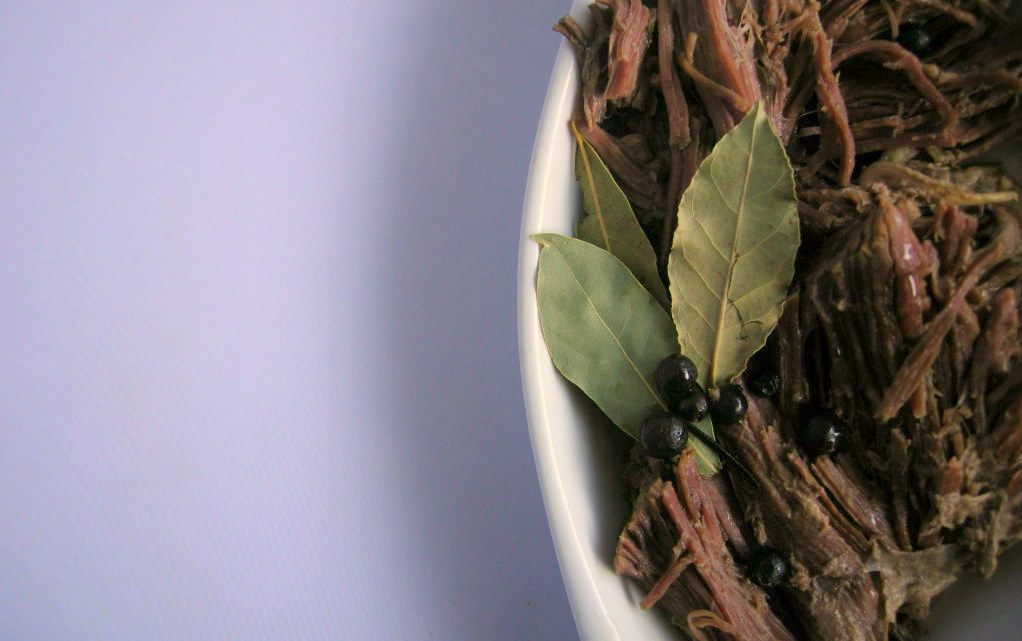
    Home-cured corned beef.  It seems daunting, doesn’t it?  Curing meat at home is much easier than you’d expect, and there’s a growing community of home cooks who are beginning to revive traditional methods of food preservation and charcuterie.  Preparing corned beef at home is a simple entrance into this lost art; moreover, the flavor is richer, less salty and more deeply spiced than the pre-packaged corned beef you find in the supermarket in the weeks before St. Patrick’s Day.

    Pairing corned beef wih cabbage on St. Patrick’s Day is decidedly more of an Irish-american tradition than it is a strictly Irish tradition.  The combination became popular in Irish-american homes during the 19th century as Irish immigrants began to settle down in American cities, they lacked easy access to their native foods – namely joints of cured pork which they customarily paired with cabbage – and thus began to use the more widely available cured beef.

    While the combination of corned beef and cabbage may be more American than Irish, that’s not to say that cured beef lacks its own heritage.  Curing meat with salt and brine, much like fermenting vegetables for sauerkraut or kimchi, has long been practiced.  It was born out of practicality more than culinary preference as, prior to the days of refrigeration, people needed a way to preserve meat that could not be immediately consumed after harvest.

    Traditionally, cooks would use saltpeter (a nitrate) to aid in curing their meat.  Saltpeter would help to preserve the meat’s pinkish color which, otherwise, would turn a dingy grey.  The substance was also to prevent contamination by pathogens.  While one could certainly use nitrates or nitrites for preparing home-cured corned beef, both nitrites and nitrates are not with out their own host  problems – having been linked to cancer.  Surely, only a small amount is used.

    In this recipe for home-cured corned beef, I skipped the inclusion of saltpeter and resolved instead to focus on fresh whey (a source of lactic acid) as well as celery juice, which are used to prepare nitrate- and nitrite-free cured meats.  While the exclusion of nitrates and nitrites failed to produce a brilliantly pink piece of meat, it did produce a meat with a charming dusty rose hue.

    As always, it is critical to choose grass-finished beef for home-curing as for any recipes here at Nourished Kitchen, it is a rich source of the wholesome fat conjugated linoleic acid which research indicates shows promise in the fight against cancer; moreover, violent strains of e. coli bacteria are greatly reduced in grass-fed beef.

    Recipe for Home-cured Corned Beef

    Prepared without nitrate or nitrate salts, this recipe for home-cured beef is quite simple to prepare, requiring little preparation – just good, wholesome ingredients.  We serve it with boiled cabbage and new potatoes seasoned with a sizable sprinkling of fresh parsley.  If you like to celebrate St. Patrick’s day with corned beef, cabbage and soda bread in the best of Irish-american tradition, you can begin brining the beef up to ten days prior to the date you plan to serve it. Want to see more photos of the curing process, view the full set on flickr.

    (…)
    Read the rest of Home-cured Corned Beef (510 words)


    Wondering where your full feed went? Click here to learn why The Nourished Kitchenmoved to summary feeds. Don’t forget to find Nourished Kitchen on Facebook, Twitter, Flickr and
    © Jenny for The Nourished Kitchen, 2010. |
    Permalink |

    Post tags:

  • Blackberry Sorbet

    blackberry sorbet

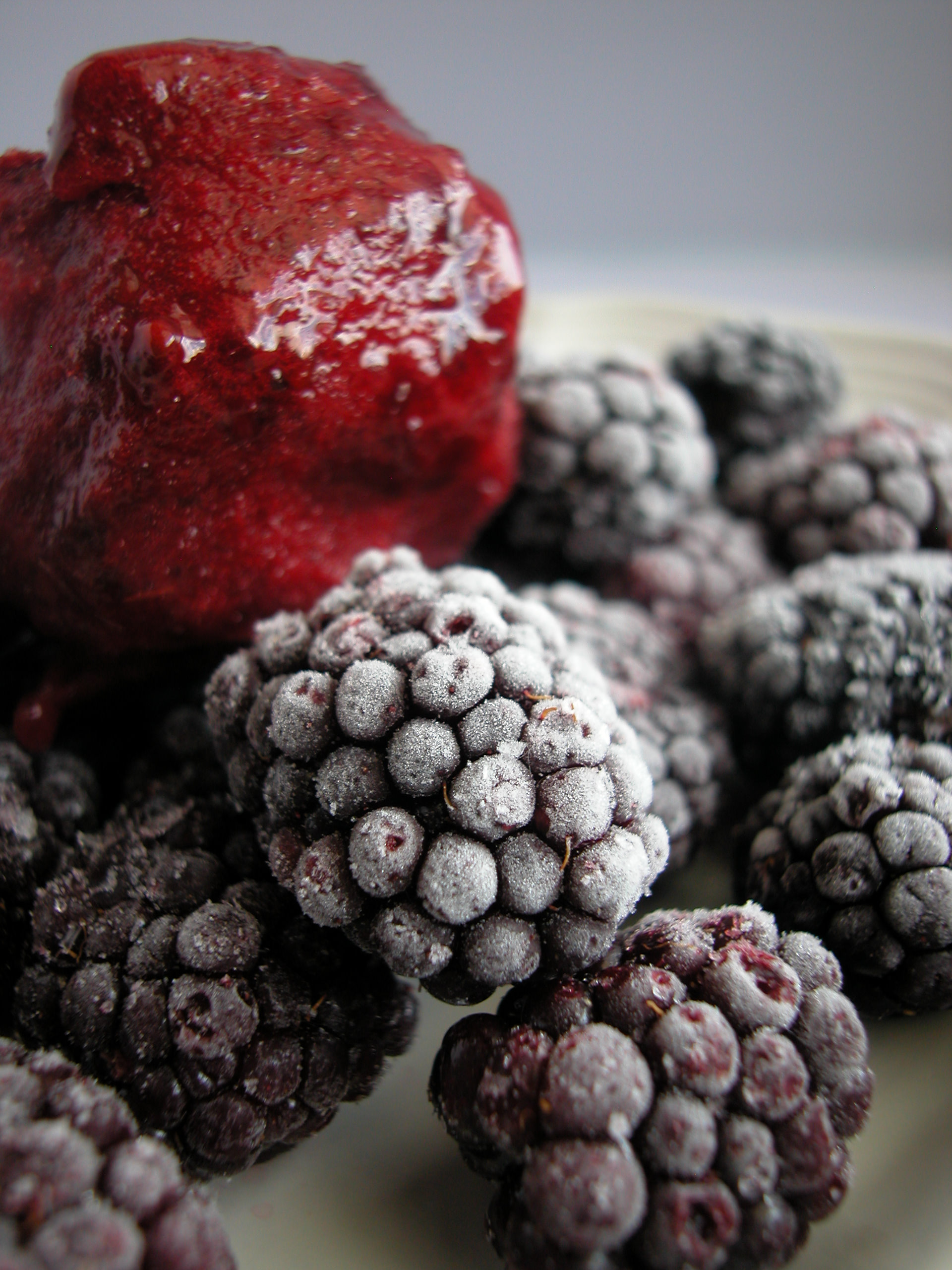
    Blackberry sorbet, with its deep, rich purple and its striking, mouth-puckering tartness, makes for a beautiful finish to a nourishing supper.  And while some families may prefer to balance their tartness with a touch of honey, we prefer to serve this blackberry sorbet without added sweetener so the full flavor of the berries, including their lovely sourness can shine.

    Indeed, even when sweetened by raw honey (a good source of the food enzyme amylase), a simple blackberry sorbet presents a charming alternative to commercially prepared ice creams and sherbets which often contain refined sugars and other unnatural additions.  At its most complex, this blackberry sorbet contains but three ingredients: blackberries, water and honey and can be prepared in about twenty minutes.  If you’re just learning to prepare nutrient-dense, whole foods in your kitchen – a simple berry sorbet is a great place to start.  It’s easy to prepare and offers a lovely flavor.

    Berries grow well in the mountains, and in early August, our market overflows with raspberries and blackberries.  We purchase the fruits by the case – filling our bellies with the sweet, tart berries and staining our fingers a brilliant purple with their juice.   Later, having eaten our fill, we freeze the berries and they wait until the deep, dark days of winter when nothing grows and we all long for a taste of summer.  I pull them from the chest freezer and prepare this blackberry sorbet.

    Blackberries are rich sources of micronutrients and, like all berries, a potent source of antioxidants.  Blackberries are remarkable source of manganese, a mineral required for bone development and skin health as well as vitamin K1.

    The Recipe for Blackberry Sorbet

    A decidedly tart finish to supper, our family prefers to prepare this wholesome, antioxidant-rich dessert without additional sweetener, appreciating, instead, the full flavor of local blackberries frozen at their height of ripeness.  For those of you who may prefer a little sweetness to balance out the potent, tart flavor of the blackberries, consider adding up to ¼ cup raw wildflower or orchard blossom honey.  This recipe was featured in March’s recipe cards, enter code MARCH25 at checkout for 25% off.

    Ingredients for Blackberry Sorbet (…)
    Read the rest of Blackberry Sorbet (140 words)


    Wondering where your full feed went? Click here to learn why The Nourished Kitchenmoved to summary feeds. Don’t forget to find Nourished Kitchen on Facebook, Twitter, Flickr and
    © Jenny for The Nourished Kitchen, 2010. |
    Permalink |

    Post tags: , , , , , ,

  • 28-day Real Food Challenge: The End

    Did you miss the 28-day Real Food Challenge?  You can always view the challenge’s archives, or why not sign-up as we give it a second go?


    real food challenge

    Twenty-eight days later, and here we are – at the end of the 28-day Real Food Challenge.  Throughout the challenge briefly examined the fundamental aspects of improving that which nourishes our bodies by ditching the packages of processed food and learning to prepare natural foods to maximize nutrient density.  We’ve learn, in short, how to eat Real Food.

    Over the last week, we focused heavily on meat, fish and fowl: learning to source these vital foods well by purchasing grass-fed, pasture-raised or wild-caught foods; moreover, you may have accepted my challenge to prepare a nourishing, mineral-rich broth or even to incorporate nutrient-dense organ meats into your family’s meals.  Tonight, in our home, we’re serving chicken livers fried in pasture-raised lard, gravy prepared from mineral-rich stock, a huge green salad with a naturally fermented, probiotic dressing and fresh vegetables served with plenty of butter.

    The Daily Challenges

    1. Ditch processed, packaged, refined foods.
    2. Choose wholesome, natural foods.
    3. Improve your grains.
    4. Start your sourdough.
    5. Sprout your grains.
    6. Mill your own sprouted flour or make wet-milled sprouted grain bread.
    7. Relax and evaluate.
    8. Fats for moderate and high heat.
    9. Fight against GMOs.
    10. Fats to eat raw.
    11. Bake your sourdough.
    12. Find real milk.
    13. Get your (good) bacteria.
    14. Relax, evaluate and eat some dark chocolate.
    15. What’s a SCOBY?
    16. Get cultured (veggies, that is).
    17. Make yogurt at home.
    18. Make cheese at home.
    19. Prepare nuts and seeds properly.
    20. Maximize the value of beans and legumes.
    21. Vegetables and salads and another reason to eat your fats.
    22. Why you should eat red meat.
    23. Eat your bacon, eggs and lard too.
    24. Homemade broth and stock.
    25. Not-so-awful Offal.
    26. Fish and seafood.
    27. Grow your foodshed.
    28. Beyond the challenge.

    See the archives here.

    What’s next for you on your real food journey?

    Today, it’s time to relax and reevaluate not just our final week on the challenge, but the challenge as a whole.  Where did you thrive?  Where did you struggle?  What will you take with you as the challenge winds to its end and you’re left with a decision to either revert back to prepackaged, processed foods or to expand further by introducing more nutrient-dense foods to your family’s plate?  If you’re like many participants and see the challenge as a beginning, rather than an end, please getting involved here at Nourished Kitchen or subscribing to the RSS email updates which are sent Monday through Friday and feature wholesome, nourishing recipes, activism alerts, tutorials and information about how real food and sustainable agriculture can help you.  Moreover, beginning this March you can cook along with me through easy-to-follow video tutorials featuring from-scratch cooking.

    Prizes:

    Don’t forget about the prizes!  If you’ve successfully finished the challenge, please check-in by comments or through the widget below.  We’ll be drawing for the Cultures for Health Prize and Nourished Kitchen Recipe Cards on Thursday!

    Share how Week #4 Went for You:

    If you blog, share a link (or two or three) outlining how you handled this week’s challenges.  What proved difficult, what proved easy?  What did you learn, what did you already know?  And, of course, what are you eating on your real food journey?  If you don’t blog, just share your experiences in the comments here:


    Wondering where your full feed went? Click here to learn why The Nourished Kitchenmoved to summary feeds. Don’t forget to find Nourished Kitchen on Facebook, Twitter, Flickr and
    © Jenny for The Nourished Kitchen, 2010. |
    Permalink |

    Post tags:
  • Fresh Chicken Broth: Achieving a Solid Gel

    A good stock is the backbone of a good kitchen; it provides flavor to your dishes as well as sustenance and nourishment for your body.   Broth features in the traditional foods of peoples across the globe.  Stock is the foundation of classical French cooking and provides critical sustenance in peasant cooking among traditional peoples everywhere.  Broth is dense in nutrients.  Rich in trace minerals such as magnesium and calcium as well as glycine – an amino acid that aids digestion and may help to assist in the healing of wounds and injuries which may account for broth’s fame as a healing, wholesome foods. (Read more about the benefits of bone broth.)

    Among traditional foods circles, the ultimate – and sometimes lofty – goal is to brew a broth that produces a beautiful, solid gel.  Indeed, a solid gel is the hallmark of a successful broth.  Roasting bones and simmering them for several hours will usually produce a solid gel, but gelatin also breaks down if heat is too high or if broth is simmered too long.  For this reason you might find that the pan drippings from your roasted chicken gel quite well, but the stock prepared from the chicken’s frame won’t gel at all.  Moreover, the quality of your ingredients greatly influences the ability of your broth to produce a successful gel, sometimes the bones, meat and skin of conventionally raised chickens will not produce a gel at all, regardless of simmering and brewing under optimal conditions.

    One surefire way to ensure a beautiful, mineral-dense stock that can produce a solid gel is to use a fresh pasture-raised chicken or a thawed frozen pasture-raised chicken, including the chicken feet if you’re fortunate enough to find them.  As the chicken will only undergo one period of cooking, as opposed to two (roasting and then simmering) producing a gel through this method of preparing chicken broth is more reliable.

    More Broth & Stock Recipes

    A Recipe for Fresh Chicken Broth

    To prepare a wholesome, mineral-rich chicken broth, you’ll need a heavy-bottomed stock pot as well as a fine mesh sieve.  I keep kitchen scraps: carrot peelings, onion ends, celery leaves and bits of leek in a gallon-sized plastic bag in my freezer.  While some purists insist that broth should not be prepared from vegetable scraps, I find that doing so cuts down on kitchen waste and expense.  There’s value in finding a use for every item in your kitchen.

    (…)
    Read the rest of Fresh Chicken Broth: Achieving a Solid Gel (250 words)


    Wondering where your full feed went? Click here to learn why The Nourished Kitchenmoved to summary feeds. Don’t forget to find Nourished Kitchen on Facebook, Twitter, Flickr and
    © Jenny for The Nourished Kitchen, 2010. |
    Permalink |

    Post tags:

  • Winter Minestrone Soup

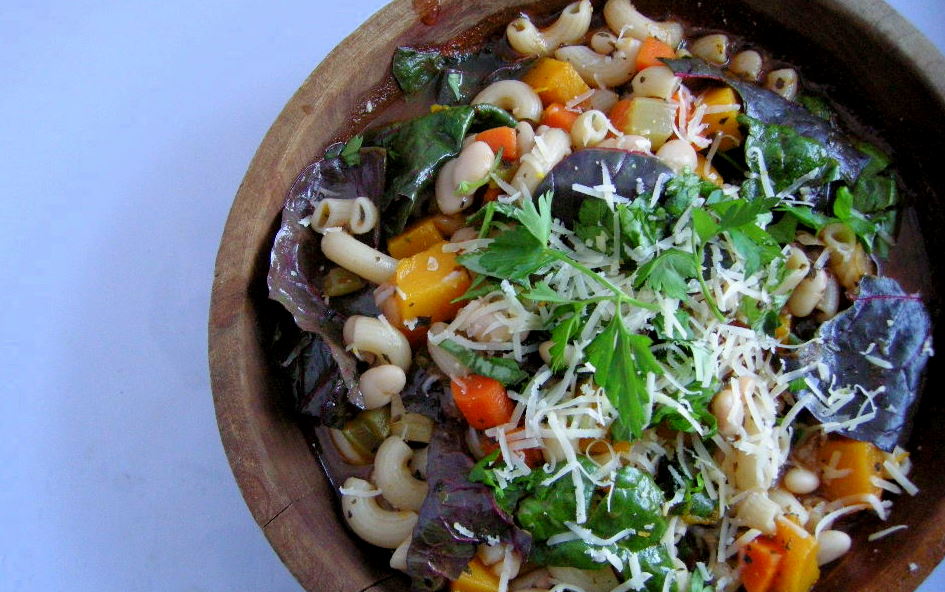
    It’s 20 below and the only thing that seems to sustain me through these long, dark, frigid days of winter is a warm, nourishing soup. While broths and thin soups serve a purpose – as an appetizer or beginning to a meal – nothing truly satisfies like a dense, full-bodied soup overflowing with flavorful ingredients: herbs, vegetables and beans.

    When prepared properly, a good soup fulfills not only the sense, but also the body. A homemade stock prepared from bones and aromatic vegetables provides trace minerals as well as glucosamine chondroitin, while squash and Swiss chard provide a hefty dose of vitamins – particularly vitamin A. Moreover, this winter minestrone provides a healthy dose of wholesome fats: aromatic vegetables are gently fried in pasture-raised lard which is a potent source of vitamin D which is a particularly important nutrient for the dark days of winter while the soup is served with a dose of fruity, unrefined olive oil at the very end providing antioxidants and vitamin E.

    Finish The Meal

    Winter Minestrone

    Overflowing with vegetables and brimming with nourishing, wholesome fats, this winter minestrone makes for a nourishing, nutrient-dense supper during the darkest days of the year.

    Ingredients for Winter Minestrone

    (…)
    Read the rest of Winter Minestrone Soup (531 words)


    Wondering where your full feed went? Click here to learn why The Nourished Kitchenmoved to summary feeds. Don’t forget to find Nourished Kitchen on Facebook, Twitter, Flickr and
    © Jenny for The Nourished Kitchen, 2010. |
    Permalink |

    Post tags: , , ,
  • Vote for Your Favorite Olive Oil Recipe

    Earlier this month, I asked you to submit your very  best olive oil recipe to February’s Clean Your Plate Challenge.  And we had some beautiful entries – each recipe offered something unique, so choosing finalists for the challenge proved difficult, but we settled on four finalists: Olive Oil Gelato, Olive Oil Ice Cream, One Quarter Dipping Sauce and Dark-chocolate Covered Olive Oil and Apricot Truffles.

    Now it’s time for you to vote on your favorite! Choose your favorite recipe that best, or most uniquely, showcases the beauty of unrefined extra virgin olive oil.  The winner, based on reader choice, will receive 1 gallon of Chaffin Family Orchards Late Harvest Extra Virgin Mission Olive Oil – a spectacular olive oil with unparalleled nuances of flavor.  Incidentally, Chaffin Family Orchard’s olive oil is on sale at a very good price:

    Vote for Your Favorite Olive Oil Recipe

    It was tough for Chris of Chaffin Family Orchards and me to sift through so many wonderful entries for this month’s challenge, but we settled on these four and now it’s  your turn to pick your favorite olive oil recipe among these four finalists.

    Note: There is a poll embedded within this post, please visit the site to participate in this post’s poll.

    Other Spectacular Entries

    Please remember to check out the other entries for  this month’s challenge.  There were some beautiful entries:

    1. Tomato Pesto Pie 2. One Quarter Dipping Sauce
    3. Roasted Tomato & Goat-Cheese Spelt Bruschetta 4. Greek Dressing
    5. Marinated tomato salad 6. Fresh Tomato Salad
    7. Freh Herb Dip 8. Quinoa Tabouli
    9. Vinaigrette 10. Olive Oil Ice Cream
    11. Meyer Lemon Salmon 12. Greek Salad California Style
    13. Olive Oil Gelato 14. Fettucine with Spicy Almond Butter Sauce
    15. Chocolate-covered Olive Oil and Apricot Truffles 16. Basil & Garlic Scape Pesto
    17. Old World Hummus 18. Simple Sauteed Asparagus & Red Potatoes
    19. Eggless Caesar Salad

    Wondering where your full feed went? Click here to learn why The Nourished Kitchenmoved to summary feeds. Don’t forget to find Nourished Kitchen on Facebook, Twitter, Flickr and
    © Jenny for The Nourished Kitchen, 2010. |
    Permalink |

    Post tags:

  • Real Food Challenge: Week #4 and Week #3 Re-cap

    real food challenge

    We’re on our last week of the 28-day Real Food Challenge!  Are you still with me?  Are you enjoying sourdough breads and wholesome natural yogurts?  Are you celebrating wholesome, healthy fats in all their nutrient-dense glory?  Now’s the time to sit back, relax and evaluate the week.  We even gave away our first prize a registration to the Fundamentals of Traditional Foods e-course by Wardeh of Gnowfglins ($135 value) to Shelly of Epic Organic.  Today’s the last day to register, so sign up for the 5-month long course covering real food basics if you haven’t already.  This week we’ll be giving away more goodies, so make sure to check in.

    Did you miss an assignment or a day?

    If you joined the challenge late, missed your email or assignment, get caught up by checking out the challenge’s archives.

    Coming up on Week #4

    We’ve gotten rid of the processed foods, bulked up on wholesome foods, celebrated wholesome fats, baked some bread, soaked some grains and learned how to serve vegetables properly.  Week #4 will focus on wholesome animal foods: grass-finished meats, pasture-raised poultry, wild-caught fish, and mineral-rich stocks and broths.  And, before the week’s out, you’ll learn to prepare some of the most nutrient-dense foods available: organ meats.  So draw your breath now, and dive in.

    Real Food Challenge Prizes:

    Remember, to be eligible to win these prizes you must check in every week to share your progress – where you succeeded and where you struggled.

    Share how Week #3 Went for You:

    If you blog, share a link (or two or three) outlining how you handled this week’s challenges.  What proved difficult, what proved easy?  What did you learn, what did you already know?  And, of course, what are you eating on your real food journey?  If you don’t blog, just share your experiences in the comments here:


    Wondering where your full feed went? Click here to learn why The Nourished Kitchenmoved to summary feeds. Don’t forget to find Nourished Kitchen on Facebook, Twitter, Flickr and
    © Jenny for The Nourished Kitchen, 2010. |
    Permalink |

    Post tags:

  • Baby-led Weaning: A Real Food Approach to Feeding Your Baby

    baby led weaning
    Baby-led weaning is the practice of trusting your baby’s innate sense of hunger, of want, of self-knowledge and of self-limitation. Baby-led weaning offers parents and their children a natural, relaxed approach to the introduction of solid foods and the eventual cessation of breastfeeding. Instead of relying on prepared, commercial baby foods or even homemade purees, mothers and fathers simply introduce their babies to natural, wholesome real food from the start – relying on their babies to self-regulate and lead the way.  In her book Real Food for Mother & Baby which is available online (see sources), author Nina Planck discusses her experiences with the baby-led approach to solids at length.

    Baby-led Weaning: Our Family’s Experience

    At six and a half months, my exclusively breastfed son seemed to take an interest in food and exhibited other signs of readiness. So, like any dutifully crunchy mother holding true to her naturalistic ideals, I began preparing mashes and purees like a madwoman. I mashed avocadoes and bananas into a slick, lumpy green goop. I blended roast butternut squash and spooned it neatly into ice cube trays – two tablespoons, a perfect serving! I pureed blueberries until they’d stain your skin a vibrant purple if you just looked at them the wrong way. When it came time to feeding my son, we’d stretch out a blanket or sheet on the floor, sit him in its center and start spoon-feeding him from the little pots of colorful slop I’d so dutifully prepared.

    It was a disaster.

    He’d laugh and giggle as I spooned blueberry puree into his mouth, sending bits of purple flying. He’d dig his hands into the butternut squash and paint his torso a vivid orange. And, occasionally, he’d grimace or gag as I’d plop mashed avocado into his mouth with a spoon. Within a few days, spoon-feeding my baby boy became a power struggle (have I explained to you how extraordinarily obstinate my child is, and was for the get-go?); he wanted to do it himself, dammit. And why shouldn’t he? After all, I certainly wouldn’t appreciate someone spooning strange goopy mashes into my mouth.

    It was about this time that I stumbled across the concept of baby-led weaning, an approach to solid foods that simply made sense. Rather than my spoon-feeding our son, we’d simply follow his own interests and cues and allow him to feed himself real food from the start. No more purees. No more mashes. No more bits of blueberry shooting like little purple missiles from a grimacing mouth.  (Learn more about how I’ve nourished my child.)

    A baby-led approach starts at the breast.

    Baby-lead weaning is a natural approach to solid foods and to feeding your baby in general, and it starts at the breast. When you breastfeed your child, you rely on your baby to let you know when he or she is hungry and you allow your baby to self-regulate his or her eating patterns – feeding your baby on demand. This level of innate parent-child connection and your trust in your baby’s ability to self-regulate based on his or her own hunger is the essence and foundation of baby-led weaning.

    Feeding by bottle presents challenges to the baby-led approach, which is not to say it cannot be a nurturing method of feeding your baby or that baby-led weaning will not be successful for mothers who must bottle feed their babies for whatever reason. Bottles drip into the mouths of babies making it difficult for babies to self-regulate intake (a critical aspect of the baby-led approach). Researchers into baby-led weaning strongly encourage breastfeeding as the foundation for this unique, natural approach to the introduction of solid foods.

    Signs of Readiness

    In many cases, parents introduce solid foods to their babies far too early – with some parents feeding industrially processed rice cereal as early as four weeks. Others rely on stated dates and ages for the introduction of solid foods – thinking they must start solids at six months, no earlier and no later.

    (…)
    Read the rest of Baby-led Weaning: A Real Food Approach to Feeding Your Baby (810 words)


    Wondering where your full feed went? Click here to learn why The Nourished Kitchenmoved to summary feeds. Don’t forget to find Nourished Kitchen on Facebook, Twitter, Flickr and
    © Jenny for The Nourished Kitchen, 2010. |
    Permalink |

    Post tags:
  • Molasses Custard

    molasses custard

    Gently flavored by blackstrap molasses – a mineral-rich, natural sweetener – this custard has quickly become a favorite dessert in our home, and one my four-year-old relishes.    Molasses custard is well-suited to winter’s supper tables – it’s soft, sweet and satisfying. Dense in wholesome fats from pastured egg yolks and fresh cream, molasses custard is not a particularly light dessert, though it is dense in vitamin A, riboflavin, selenium, phosphorus and calcium.

    Molasses Custard

    In searching through my vintage cookbooks, I happened across a recipe for molasses custard, and I fell in love.  The original recipe didn’t produce a smooth  custard, and broke easily, but the inclusion of a greater fat content due to the use of egg yolks, as opposed to whole eggs, and cream as opposed to milk produced a creamier, rich custard.  This recipe is adapted from the Ladies Home Journal Cookbook, published in 1960.  This recipe was featured in February’s Recipe Cards.

    Molasses Custard: Ingredients

    • butter, for greasing the custard dish
    • 8 pastured egg yolks, slightly beaten
    • 1 quart heavy cream OR 2 cups heavy cream and 1 cup whole milk, not ultra-pasteurized
    • ¼ cup blackstrap molasses
    • dash unrefined sea salt

    Molasses Custard: Method

    1. Preheat your oven to 350 degrees Fahrenheit.
    2. Grease a large custard dish, soufflé dish or individual ramekins and set them aside.
    3. Gently stir beaten egg yolks, one quart heavy cream or two cups heavy cream and two cups whole milk together with one-quarter cup blackstrap molasses and a dash unrefined sea salt until well-blended and uniform in color.
    4. Pour the mixture into your greased dish or individual ramekins and place them in a deep baking dish, filing the baking dish dish with enough warm water to reach a depth of about one inch.
    5. Bake the custard for about forty minutes or until a toothpick inserted into the center of the custard comes out clean.
    6. Serve immediately as this dish does not store well.

    YIELD: Approximately 6 servings.

    TIME: 45 minutes (preparation and baking time)


    Wondering where your full feed went? Click here to learn why The Nourished Kitchenmoved to summary feeds. Don’t forget to find Nourished Kitchen on Facebook, Twitter, Flickr and
    © Jenny for The Nourished Kitchen, 2010. |
    Permalink |

    Post tags:

  • Real Food Challenge: Week 3 & Week 2 Re-cap

    We’re half-way finished with the challenge: you’ve tackled the pantry, stocked up on wholesome food, learned to properly prepare grains and wholesome fats and even started to source good, fresh raw milk if you hadn’t already done so.  So, sit back and evaluate the week.  If you blog, share a link to your post (or posts) below so we can check them out and give you some support.  If you don’t, make sure to check in by commenting.

    Did you miss an assignment or a day?

    If you joined the challenge late, missed your email or assignment, get caught up by checking out the challenge’s archives.

    Coming up on Week #3

    Week three is all about my very favorite subject when it comes to traditional foods: fermentation!  You’ll learn the basics of lactic-acid fermentation including how to ferment vegetables, dairy products and how to produce naturally effervescent beverages that are a great substitute for sodas and other soft drinks.

    Real Food Challenge Prizes:

    Remember, to be eligible to win these prizes you must check in every week to share your progress – where you succeeded and where you struggled.

    Share how Week #2 Went for You:

    If you blog, share a link (or two or three) outlining how you handled this week’s challenges.  What proved difficult, what proved easy?  What did you learn, what did you already know?  And, of course, what are you eating on your real food journey?  If you don’t blog, just share your experiences in the comments here:


    Wondering where your full feed went? Click here to learn why The Nourished Kitchenmoved to summary feeds. Don’t forget to find Nourished Kitchen on Facebook, Twitter, Flickr and
    © Jenny for The Nourished Kitchen, 2010. |
    Permalink |

    Post tags:
  • Taramasalata: A Seasonal Savior

    This post was generously contributed by Heidi Robb, a natural foods enthusiast with a penchant for wholesome real food.  Heidi blogs about her life in recipes – one of the most visually stunning real food blogs I’ve ever happened across.  With a personal history in the restaurant business, Heidi has transitioned into culinary media where she blends her passion for natural foods with a talent for writing and photography.  I’m so thankful she shared her recipe for taramasalata – a beautiful dish featuring nutrient-dense fish roe and one of my favorite seasonings: smoked paprika.  If you have a dish or a special post you’d like to share at Nourished Kitchen, please contact me. Blessings — Jenny


    taramasalata

    Omega-3: A Seasonal Savior

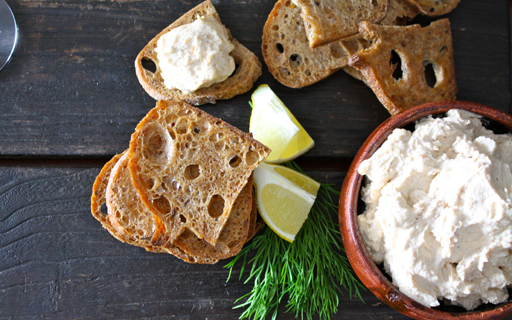
    Figuring, if the Eskimo people could make it through long, frigid winter months of darkness without soul-weakening bouts of the blues, it was time to channel my inner Inuit and adopt a fat-enriched, omega-3 diet in hopes that my own seasonally sad spirit would benefit. Luckily, I like full-flavored fish, so it was easy to fill my cupboards, refrigerator and belly with omega-3 dense meal additions. Tins of sardines, mackerel, smoked oysters, anchovies and tuna went into the cupboard – simple lunches at the ready with just a pop of the tab and some grainy mustard, crackers and fresh vegetables. In the refrigerator were jars of pickled herring ready to enjoy as-is, or to enhance creamed style with a dollop of yogurt or creme fraîche and sliced onion, as well as a piece of bottarga (dried and cured roe of grey mullet) to grate on salads or pasta to give the salty umami punch I crave. And taramasalata. I was going through a jar of the creamy Greek-style carp roe delicacy at an alarming rate. On the run, I generously slather home made crisps with the pale pink stuff several times a day. Though tasting good and satisfying, I didn’t want to be eating so much soy oil (a major ingredient in the jarred product), and began easily making my own healthier version with a higher quality of oil and whole grain sourdough bread.

    A couple of weeks ago I started noticing some true physical differences: my hair which is generally dry and frizzy during Cleveland’s arid winter was thick, shiny, healthy and growing full corkscrew curls. My skin appeared clear, lips moist and crack-free. In fact, a woman much younger than myself stopped me and asked what product I used on my face – how’s that for a seasonal lift! The exterior routine hadn’t varied, but the extra interior nutrition was giving me an entire body glow from the inside out. Most importantly, my mood has been mostly elevated and outlook positive, energy high and steady, and coping with unexpected stress – not a such an enormous deal. The couple of days I succumbed completely to collapse was justifiable exhaustion derived from a Herculean holiday work schedule. I fully and completely believe the daily additions of concentrated omega- 3 foods to my diet are what made the difference. February has been fabulous for the first time in years – you’ll get no carping from me.

    taramasalata from overhead

    Taramasalata

    Heidi Robb

    Taramasalata: Ingredients

    • 4 ounces crustless whole grain sourdough bread, soaked in water
    • 1/2 cup tarama (carp roe available in jars)
    • 2 – 4 tablespoons fresh lemon juice, or to taste
    • 1/2 teaspoon smoked paprika (optional, if you enjoy a slightly smoky flavor)
    • 1 large pastured egg yolk
    • 1 1/2 cups good light olive oil (see sources)
    • 1 1/2 tablespoons minced shallot

    Taramasalata: Method

    1. Squeeze the water from the bread and place in the bowl of a food processor with the tarama.
    2. Process until combined.
    3. Add 2 tablespoons of the lemon juice and the optional smoked paprika and process to blend.
    4. Drop in the yolk and pulse to blend. Very slowly, drizzle in the olive oil and process until the mixture is whipped, light in color and creamy.
    5. Add in additional lemon juice to taste.
    6. At this point, if the mixture is too thick, add in some water, a little at a time until desired consistency is achieved.
    7. Remove mixture to a bowl and stir in the minced shallot.
    8. Keeps one week covered in the refrigerator.

    YIELD: 2 1/2 cups


    Wondering where your full feed went? Click here to learn why The Nourished Kitchenmoved to summary feeds. Don’t forget to find Nourished Kitchen on Facebook, Twitter, Flickr and
    © Jenny for The Nourished Kitchen, 2010. |
    Permalink |

    Post tags:

  • For the Love of Organic Dark Chocolate

    organic dark chocolate

    Organic dark chocolate – sweet but not too sweet and almost lustful in its intensity.  There’s no treat that quite fulfills the essence of Valentine’s Day like a good, organic dark chocolate.  Serve it as it suits: in a mousse, in hot chocolate or in a beautiful bar of chocolate.  Organic dark chocolate is a special treat – especially when shared with your loved one on Valentine’s Day.

    Why Choose Organic Dark Chocolate

    Chocolate is a potent source of antioxidants – and some research indicates that chocolate benefits the circulatory system and may offer anti-carcinogenic effects.    These effects are made more potent the higher the cocoa content is; that is, the darker the chocolate, the better it is for you. Chocolate is also a rich source of minerals including magnesium, manganese, zinc, copper and iron. Milk chocolate should be avoided, if possible, as it contains powdered milk which rife with oxidized cholesterol.

    Organic Dark Chocolate: A Brand-by-brand Analysis

    The quality of ingredients and the integrity of manufacturers can vary from brand-to-brand.  From types of sugar and whether or not a company uses soy-based emulsifiers, we examine the details of six organic dark chocolate brands, their ingredients, parent companies and their ethics surrounding social and global responsibility.

    (…)
    Read the rest of For the Love of Organic Dark Chocolate (881 words)


    Wondering where your full feed went? Click here to learn why The Nourished Kitchenmoved to summary feeds. Don’t forget to find Nourished Kitchen on Facebook, Twitter, Flickr and
    © Jenny for The Nourished Kitchen, 2010. |
    Permalink |

    Post tags: , , , , , , , ,