Author: Joseph Smith

  • Out-of-Towners Buy Foreclosures in Arizona Amid Pleasures

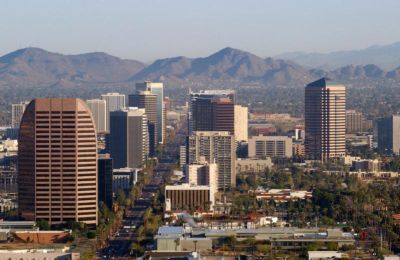
    Out-of-state investors buy foreclosures in Arizona while enjoying the Grand Canyon, the warm weather and other tourist attractions in the state.
    Out-of-Towners Buy Foreclosures in Arizona Amid Pleasures

    According to real estate professionals, such as Scottsdale lawyer Jordan Rose, investors from other states come to Arizona to enjoy sights and laze in resorts while looking for bargain-priced foreclosures as second homes and investments. There are even some deciding to move to Arizona and make their purchases as their primary residences.

    According to a report from a California-based foreclosure research firm, Arizona had 163,210 or 6.1 percent of its housing units put into the foreclosure process in 2009, an increase of nearly 40 percent from its 2008 foreclosure activity and an overwhelming 323-percent jump from its foreclosure pace in 2007. Arizona was second only to Nevada in intensity of foreclosure activity last year.

    In December, foreclosures in Arizona shot up by 40 percent from November. For the entire year of 2009, Arizona and three other states – California, Florida and Illinois – accounted for more than half of the total foreclosure filings in the country, which reached 2.8 million.

    It is expected then that people with cash and other sources of funding come to Arizona to buy foreclosures. They would have a lot of properties to choose from, including HUD home foreclosures. The number of HUD homes has been rising as the percentage of government-backed home loans continue to increase.

    In addition to the large number of available foreclosures for sale, investors are also attracted to Arizona because of the sharp decreases in home prices. According to First American CoreLogic, the state continues to post some of the sharpest house price declines in the country. In October last year, home prices fell by more than 17 percent over a 12-month period.

    Excluding short sales, bank-owned homes and government tax foreclosures from the calculations, house prices dropped by 14 percent in October.

    Meanwhile, the state of Arizona was one of only six states that received six-digit funding from the U.S. Department of Housing and Urban Development under its Neighborhood Stabilization Program. Arizona got $117.95 million. Florida and California topped the allocation list with $348.31 million and $318.05 million, respectively.

    Of the money given to Arizona, Chicanos Por La Causa Inc., an Arizona-based consortium that also operates in other states, got $35.78 million while the city of Phoenix received $60 million. The county of Pima got $22.165 million. The millions in funding are expected to revitalize neighborhoods and entice more investors to buy foreclosures in Arizona.
  • Buying Foreclosed Houses in NSP-Funded Counties and Cities

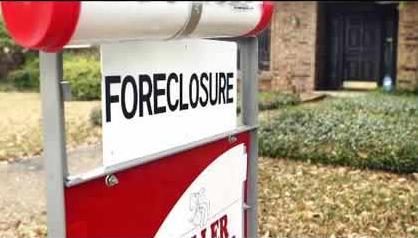
    Buying foreclosed houses in counties and cities that received the biggest grants from the second funding round of the Neighborhood Stabilization Program could be advantageous for two types of buyers: low-income families looking for affordable homes and investors looking for lower-priced units that have the greatest potential for price appreciation.

    Buying Foreclosed Houses in NSP-Funded Counties and Cities

    The cities that got the biggest funding from the second round were Los Angeles, which received $100 million; Chicago, which got more than $98 million; Phoenix, which was allocated $60 million; and Philadelphia, which received nearly $44 million.

    The states provided with the biggest allocations were Florida, which received $348.31 million; California, which got $318.05 million; Michigan, which was granted $223.88 million; Ohio, which got $175.21 million; Illinois, which was given $160.15 million; and Arizona, which received $117.95 million.

    Under the NSP grant program, recipient entities must spend the funds to revitalize neighborhoods through various schemes, namely purchasing lands and properties for redevelopment, demolishing dilapidated properties, creating land banks, buying foreclosed houses and rehabilitating them, providing down payment or closing cost aid to lower-income families buying homes.

    The NSP also requires families receiving assistance to have home ownership counseling and to take out their loans from lenders implementing responsible lending policies.

    In Michigan, which was eighth in rate of residential foreclosures in 2009, about 1,500 homes would be acquired and fixed, 2,500 units would be demolished and more than 4,600 properties put in land banks for future redevelopment.

    Detroit, where most foreclosure auctions in Michigan occurred, would be getting the biggest share — $40.8 million. Lansing would receive $17.4 million and Pontiac would get $13.9 million.

    Among the organizations that got the biggest share was Chicanos Por La Causa, a consortium that operates in Arizona, California and seven other states. It received $137.11 million.

    The others were the Neighborhood Housing Services of South Florida, which got $89.375 million; the nonprofit Community Builders, which received $78.62 million and the Los Angeles Neighborhood Housing Services, which got $60 million. Community Builders has been operating in several states including Ohio and New York.

    The Neighborhood Lending Partners of West Florida was given $50 million while the Metropolitan Development and Housing Agency in Tennessee was granted $30.47 million.

    As these NSP funds are allocated to help rejuvenate neighborhoods, both investors and eligible households benefit from buying foreclosed houses in these areas. Families get affordable properties while investors buy properties expected to appreciate in value as neighborhoods improve.

  • Atlanta Foreclosures Dipped, but Expected to Rise Again

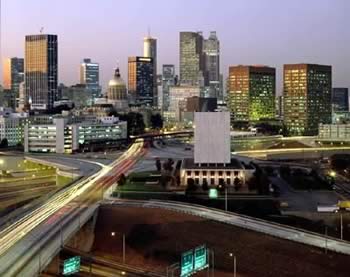
    The number of Atlanta foreclosures listed in January for the February public auctions dipped, but is expected to rise again in February, based on data from real estate analyst Equity Depot.

    Atlanta Foreclosures Dipped, but Expected to Rise Again

    More than 8,100 homes in the Atlanta metro area were notified of foreclosure in the first days of January, marking a three-percent drop from January 2009 and a 21-percent decrease from December. These properties are scheduled for public auctions in February.

    Under foreclosure laws in Georgia, foreclosure notices must be published in a newspaper distributed in the county where the property is located once a week for 4 weeks prior to the auction, so foreclosures are counted in advance. Owners of delinquent properties must also be notified by registered mail not less than 15 days prior to the auction.

    Barry Bramlett, president of Equity Depot, said that the decrease in foreclosures in January does not indicate that the market is recovering. Decreases in a quarter are more significant, he added. Other analysts also said that filings dropped because major lenders suspended pre foreclosures during the holidays.

    Meanwhile, Eugene James, head of the Atlanta division of Metrostudy, said that what has been rising is the percentage of Atlanta foreclosures in the commercial property sector. He said that commercial foreclosures, which are currently about 10 percent of total property listings, are growing significantly.

    Early this month, two high-profile buildings were put into foreclosure – the 20-story Campanile Building and a prime lot in Midtown. Campanile owner Transwestern Investment owed Wells Fargo a total of $98.35 million while prime lot owner Tivoli Realty Properties owed First Citizens Bank and Trust a total of $13.5 million.

    Based on the report from Equity Depot, among the 13 counties that comprise the metro Atlanta area, Fulton County posted the biggest number of home foreclosures for the February public auctions with a total of 1,716. Gwinnett followed with 1,617; DeKalb with 1,230; and Cobb with 870; Clayton posted a total of 673.

    Cobb and Clayton had significant drops in foreclosures as they fell from their respective benchmarks of 930 units and 700 units in January, but buyers looking for fixer uppers can still find units in these counties.

    Statewide, based on a report from another research firm, foreclosure filings increased by nearly 25 percent from 2008 to a total of 106,110 filings in 2009. The number marked a nearly 80-percent increase from 2007.