Author: Main Feed – Environmental Defense

  • Change is a Good Thing….

    Out of the car and enjoying the Sacramento sunshine. Photo: C. Denning.

    Out of the car and enjoying the Sacramento sunshine. Photo: C. Denning.

    Some of you may remember our December 2 posting in which I mentioned a dinner guest who drives eight blocks to work to take advantage of free parking. Well, there’s good news.

    I saw the acquaintance at an office party earlier this week. The good news is that he has started walking to work most days. He was proud of his new commute choice and credited the change to the persuasiveness of his housemate (who happens to work at EDF). He’s getting exercise and the local air and traffic are benefitting.

    Mark one up to the power of persuasive housemates.

  • Ocean Acidification: A Hidden Risk of Global Warming

    I love swimming in the ocean, but I also know plenty of people who wouldn’t dream of it. There are too many unseen perils: the ominous tug of a current, razor-sharp oyster shells, sting rays buried in the sand and shadowy, slimy things brushing past. Even my fishermen friends, who depend on the ocean for their livelihoods, keep a respectful distance from the waves.

    The ocean is awe-inspiring. We were born of it, and it gives us life by producing much of the oxygen we breathe and the water we drink. It is mysterious and vast. No wonder we speak of emptying oceans with teaspoons to describe impossible tasks.

    Yet, unfathomably, we have accomplished the impossible. We have changed the basic chemistry of the oceans — drop by drop — in such a profound way that we may be destroying a web of life that we depend upon for our very existence. Those ocean creatures should be wary of us — not the other way around.

    "Scientists are concerned that we are changing the ocean's chemistry so rapidly that we are outstripping the evolutionary pace of many organisms to adapt."

    The change we've introduced is called ocean acidification.

    The basic science is pretty straightforward: Since the industrial revolution, humans have been pumping ever increasing amounts of carbon dioxide into the air. Some of that CO2 is absorbed by the ocean, where it dissolves to form carbonic acid.

    The ocean today absorbs nearly a third of the carbon dioxide we produce, probably mitigating the impact of climate change. But the ocean has absorbed so much CO2 that overall acidity levels are rising, and at a much faster rate than previously thought.

    More acidic water makes it harder — and ultimately impossible — for some creatures like oysters, corals and mussels to form shells, which are made largely from the calcium carbonate, plain old chalk, that occurs naturally in seawater. That’s why acidification is sometimes referred to as "osteoporosis of the sea."

    Photo by Victoria Fabry
    These tiny, lentil-sized pteropods are essential to the survival of creatures like the humpback whale. (Top photo: Limacina Helicina by Victoria Fabry.)
    Humpback Whale and Calf

    This process affects creatures up and down the food chain — from the tiny organisms that build the planet's coral reefs and the plankton drifting with the ocean currents, all the way to the whales that feed on the plankton.

    Also affected are the lentil bean-sized pteropods, delicate, balletic creatures that nourish many of the fish we then consume. In other words, the ability of all ocean life to sustain itself is being compromised.

    Scientists have been surprised at how sensitive plants and animals are to even small changes in CO2 levels. Some creatures have shown an ability to adapt to more acidic waters; lobsters, for instance, harden their shells in an initial response to acidity. But for many creatures, acid is deadly: Their shells disintegrate. And many scientists are concerned that we are changing the ocean's chemistry so rapidly that we are outstripping the capacity of many organisms to adapt.

    Because the science is fairly new, we still do not fully understand the long-term effect of increasingly acidic oceans. The ocean is a complex, integrated, self-regulating system; how it will change is hard to predict.

    As we conduct this uncontrolled experiment on two-thirds of the planet, scientists are racing to find ways to make the ocean more resilient. Doug Rader, EDF's chief ocean scientist, says: "Along with our partners from around the world — from Cuba to the EU, and beyond — EDF scientists are scrambling to understand why some reefs are more robust than others, why some fish populations bounce back, when others languish, and exactly what mix of strategies will suffice to maximize the resilience of the world's oceans.

    "One thing is already clear," he adds. "Rebuilding ecosystem complexity, including restoring populations of large predators such as sharks, is central to the long-term survival of the seas."

    The Obama administration signaled its commitment to acidification research when it appointed Jane Lubchenco to head the National Oceanic and Atmospheric Administration (NOAA). Lubchenco, a widely respected marine ecologist and former EDF Board member, has made clear, in Congressional testimony and elsewhere, the seriousness of this threat to the seas.

    There is no controversy surrounding the science underlying the acidification of the ocean. There is no question about where the CO2 is coming from. There is no question about how the chemistry works. And there is only one known way to stop acidification: to reduce emissions of carbon dioxide. The more we reduce now, the less severe, and costly, the future consequences.

    What can you do? Become an advocate for the oceans. Take care to minimize your carbon footprint—but keep in mind one of my favorite phrases: living sustainably is necessary, but not sufficient. It's equally important to demand comprehensive legislation that cuts carbon emissions.

    And go ahead, take a swim. Bathe in those natal waters, and give thanks for the life they support. The ocean has the capacity to heal itself much faster than one teaspoon at a time. We need to give it that chance. We would be doing ourselves a big favor — giving our grandchildren a chance to inhabit a livable planet.

    Personal Nature
    Take action! Tell the Senate to cap the global warming pollution causing ocean acidification.

    Editor's note, 2/12: The list of animals that will experience difficulty in forming shells has been updated.

  • Healing the Ocean

    Here are a few suggestions if you wish to learn more about the oceans in general, and acidification in particular.

    Acidification
    I urge you to watch Dr. Jane Lubchenco’s fascinating, jargon-free testimony before the Select Committee on Energy Independence and Global Warming hearing, "The State of Climate Science" held on December 2, 2009. Lubchenco, a marine ecologist, runs the National Oceanic and Atmospheric Administration (NOAA) and was, until recently, vice-chair of the EDF Board of Trustees. She is a terrific teacher; her demonstration of the process of acidification is classroom-friendly, and makes the science clear.

    Part One:

    Part Two:

    The Monaco Declaration, recently approved by 155 scientists from 26 countries, sets forth the acidification problem in a straightforward manner. It also addresses the option of geoengineering as a solution. (Bottom line: only cutting carbon emissions will work.) The paper, which came out of the Second International Symposium on the Ocean in a High CO2 World, concludes: "Ocean acidification is rapid, but recovery will be slow. The current increase in ocean acidity is a hundred times faster than any previous natural change that has occurred over the last many millions of years."

    The broader picture
    State of the World's Oceans, by Michelle Allsopp et al, is a comprehensive overview of the latest published scientific information about the condition of the oceans. It is written by scientists working at the Greenpeace Research Laboratories at the University of Exeter in the UK. It is also clear and accessible, though goes into some depth — I recommend this for the committed amateur as well as for the dedicated science student.

    Rachel Carson is widely known for her influential book on the dangers of pesticides, Silent Spring, but she wrote wonderfully and extensively about the ocean. She was a biologist in the U.S. Bureau of Fisheries in the forties; her first job was to write radio copy for a series of weekly educational broadcasts, "Romance Under the Waters." Two of my all-time favorite books are The Sea Around Us, which was bestseller in 1951, and The Edge of the Sea, which also became a best seller. Though some of the information is outdated, both of these books are eminently worthwhile. Carson's style is poetic. She writes movingly about life in the tidal zones, and makes you care about those unseen, tiny, tough, resilient sea creatures. Her sense of wonder is contagious. After reading The Edge of the Sea, your beach walks will never be the same.

    Nearly a half century after Carson's books appeared, Dr. Rod Fujita's Heal the Ocean: Solutions for Saving Our Seas, is a clarion call for action to stop the desecration of the seas. Fujita, a senior scientist at EDF, paints a picture that is both frightening and inspiring: He reveals the mysteries of sea life and of ecosystems gone awry due to humans' over-exploitation: seagrass meadows where turtles once grazed, majestic kelp forests reduced to rubble from an explosion of urchins because their natural predators have been fished out, delicate coral reefs, harboring a quarter of the world's fish, under threat everywhere from climate change and pollution. Dr. Fujita offers a wealth of creative solutions grounded in science and economics and backed by real-world examples. He makes you believe in the ocean's ability to restore itself — if humans can become caring stewards of the seas.

  • T4’s Plan to Create Half a Million Green Jobs

    Earlier today the Economic Policy Institute (EPI) released a report, The Labor Market Impact of Transportation for America’s Jobs Plan, which models Transportation for America’s (T4's) jobs proposal. The $34.3 billion proposal, focusing predominately on Fix-it-First transportation infrastructure repair and public transportation, would create 480,000 jobs.

    These jobs would help out Americans who need it most. Low-wage workers, including workers without college or high school degrees, would benefit the most from this jobs package. In fact, 70% of these jobs would help Americans without college degrees.

     T4’s proposal calls for the following funding split:

    • $8 billion in Fix-it-First bridge repair and interstate highway maintenance
    • $16 billion for transit (split between rehabilitation, new starts projects, intercity bus routes, and capital funding, which could be flexed for operations)
    • $1.3 billion for Amtrak
    • $2 billion for clean air and technology
    • $2.5 billion for High Speed Rail
    • $3 billion for TIGER performance-based grants (split between new roads, transit, and technology)
    • $1.5 billion for Fix-it-for-All: Livability and bicycle/pedestrian improvements

    These jobs are immediate. And no one region benefits- these jobs are located across the U.S., in both rural and urban areas.

    EPI’s report shows us that prioritizing transit, Fix-it-First, and funding transit operations creates immediate, good jobs for all Americans and benefits the environment. The Senate is drafting its version of a jobs bill. This report should be recommended reading for these bill drafters.

  • Maryland Watermen Keep Open Mind Towards Future and Catch Shares

    Kate Culzoni speaks to watermen at the East Coast Commercial Fishermen's & Aquaculture Trade Exposition in Ocean City, Maryland.

    Kate Culzoni speaks to watermen at the East Coast Commercial Fishermen’s & Aquaculture Trade Exposition in Ocean City, Maryland.

    Over a half a foot of snow couldn’t keep watermen away from the East Coast Commercial Fishermen's & Aquaculture Trade Exposition in Ocean City, Maryland this past weekend. The state’s biggest fishing association, the Maryland Watermen’s Association, organized a weekend full of events and seminars highlighting issues on watermen’s minds. Environmental Defense Fund had the honor of participating in this event by organizing a seminar called “Co-Managing the Future of Your Fishery – Experiences and Lessons from Fishermen across the Country.” 

    To bring some context to the subject, we brought in fishermen from around the nation including the President and Treasurer of the Gulf of Mexico Reef Fish Shareholders' Alliance, David Krebs and Buddy Guindon. We also tapped the expertise of Alaska halibut fisherman, Mark Lundsten and New England fisherman and catch shares expert, Dick Allen. These fishermen led a panel discussion on their experiences and lessons going from traditional fisheries management systems to catch shares management.

    Gulf fishermen and Maryland watermen talk at the East Coast Commercial Fishermen's & Aquaculture Trade Exposition in Ocean City, Maryland.

    Gulf fishermen and Maryland watermen talk at the East Coast Commercial Fishermen’s & Aquaculture Trade Exposition in Ocean City, Maryland.

    The President of the Maryland Watermen’s Association, Larry Simns, opened the session requesting something from the 50 or so watermen in the audience. “Whether you are for or against catch shares, we all need to keep an open mind and see how at least parts of this system can help the future of our fisheries,” Simns stated. 

    Maryland watermen asked many questions and raised concerns about catch shares but repeatedly said they were maintaining an open mind about the solutions that catch shares can offer to fisheries.

  • Fleet Emissions Down Significantly in 2009

    Emissions from fleet vehicles are down 17% from 2008 levels and 18% from 2006 levels, according to the State of Green Business 2010 annual report released today. The emissions data was provided by six of the seven largest fleet management companies.

    Pages from StateOfGreenBusiness2010

    While the sour economic condition was definitely a factor in the size of this decrease, the numbers likely also reflect – and to a significant degree – the fact that over the recent years corporate fleets have made strides to lower per vehicle emissions.

    A likely leading non-economic factor in reducing emissions is the adoption of vehicle “right-sizing” practices. Abbott Labs, Infinity Insurance and Owens Corning were among the first companies to demonstrate the value of moving from moving to more efficiency vehicles on a wide-scale. The record gas prices of 2008 gave the shift real momentum. The 2009 emissions data reflects the first full year of operations by the more-efficient vehicles that were cycled into fleets in the mid-2008 buy cycle.

    Read more about our work with these companies and partner PHH Arval.

    The expansion of other emission reduction tactics is also likely reflected in these numbers. Over the past two years, there has been a proliferation of efforts that work with drivers to adopt fuel-smart driving practices. Here at Environmental Defense Fund (EDF), we noted the many companies entering this space in our 2009 Innovations Review and also create a suite of materials for fleets to use.

    Increased use of efforts to improve routing and reduce idling likely also has contributed to the emissions decline. Leading fleets, including Carrier and Poland Spring, have leveraged telematics software to improve operational efficiency.

    Read more in these case studies about Carrier [PDF] and Poland Spring [PDF].

    I am optimistic that the trend in fleet emission reductions will continue as the economy recovers of the coming years.

    From measuring emissions, right-sizing vehicles, improving routing, reducing idling and improving driving habitats, corporate fleets are broadly adopting strategies to reduce their emissions.

  • Recommendations for New CCS Task Force

    Scott Anderson, EDF Senior Policy Advisor

    EDF welcomed today's announcement by President Obama establishing an Interagency Task Force on Carbon Capture and Storage (CCS).

    In the next six months, the Task Force is charged with proposing a plan to "overcome the barriers to the widespread, cost-effective deployment of CCS within 10 years, with a goal of bringing 5 to 10 commercial demonstration projects online by 2016."

    "By 2016?" a reporter asked me. "Is that doable?" I responded yes, absolutely. CCS as a technical matter is ready for deployment now.

    While there are two fundamental obstacles to widespread deployment of CCS, it's my opinion (and that of EDF) that both can be addressed in well under 10 years. Those obstacles are:

    1. Lack of a market driver – Congress needs to set a limit on carbon emissions to make CCS economically attractive to project developers. If necessary, EPA acting under the Clean Air Act can help create incentives.
    2. Lack of a regulatory framework – We need adoption of rules pending approval for 2010-2011 under EPA's Safe Drinking Water Act, followed by rules on verifying the lack of air emissions.

    Other important topics the task force will want to consider include:

    • Improving capacity assessment techniques by the U.S. Geological Survey;
    • Developing leasing policies for federal lands;
    • Assisting research and development efforts on the costs of capture;
    • Assisting in geologic characterization efforts, especially in basins that have relatively challenging geology, such as the Appalachian basin;
    • Clarification of who owns the storage space underground;
    • Consideration of state law mechanisms for amalgamating storage space owned by multiple owners (i.e., eminent domain issues); and
    • Whether to indemnify early adopters for any potential liabilities.

    Some say the last three bullet points are absolutely necessary, others disagree. I do not believe that they are "make or break" obstacles but they're certainly worth serious deliberation.

    Again, with a market driver and regulatory framework, we will have resolved the only two fundamental obstacles to widespread deployment of CCS. Subsequently, bringing five to 10 commercial demonstration projects online by 2016 will definitely be achievable.

  • Social Media and Transit Team Up in a Fun Online Game

    Play Foursquare, ride BART, and win free passes and the envy of your friends. Courtesy: BART.

    Play Foursquare, ride BART, win discounted passes and maybe the envy of your friends. Courtesy: BART.

    While Facebook helps you keep in touch with friends and Twitter provides real time sharing of articles and news, Foursquare, the latest social media game, puts socializing on a whole new geographic level, and they’ve just teamed up with Bay Area Rapid Transit.

    So how does Foursquare work? Instead of telling friends what you’re doing or what you’re reading, Foursquare let’s you tell your friends where you are and makes neighborhood exploring a game. As a user, you can check-in at a hip new restaurant and let your friends know what the best dish is. Do this enough times, and you can earn the “Local Badge.” Better yet, become the most frequent visitor, and you can become the “Mayor.”

    Regular BART riders can earn a BART-themed badge and additional perks. This winter BART is awarding $25 tickets each month for Foursquare users who check-in at BART stations. Users can also become a mayor of one of BART’s 43 stations, and the competition is fierce. New mayors and ousted mayors are relayed via BART’s live twitter feed.

    It’s not all just a game though. Users have noted some pretty cool things, like great local restaurants within walking distance of BART stations, quirky facts on street performers, and other interesting shops and kiosks.

    At Way2Go, we’d like to see more collaborations that encourage transit use, like Foursquare and BART, as well as other social media tools, like San Francisco County Transportation Authority’s Cycletracks and New York MTA’s open source data app. These are great ways to get people out of their cars in a way that’s fun, social, and useful.

  • Climate Video Action Week: Start Your Camera!

    Cameras are standard on most cell phones, which has led to a surge in goofy videos of things like co-workers dozing off. But for one week in March, your camera phone can serve a higher purpose — stopping climate change.

    Be a part of Environmental Defense Action Fund's Climate Video Action Week, a video campaign to connect you directly to your Senators. To participate, create a 30-second video explaining why you want a strong climate bill with a real cap on carbon — now.

    During the first week of March, we'll send the videos to your Senators, and we'll also feature the best ones in our next online ad campaign.

    My colleague, Erin, explains more in the video below.

    Please spread the word and re-post this video for your friends to see! And again, here's where to get the full details of the video action week.

  • Book Review: Nudge: Improving Decisions about Health, Wealth and Happiness

    Nudge coverHave you ever gone shopping for a particular item, and after scanning shelf after shelf of virtually indistinguishable options, you throw the box bearing the “Energy Star” logo in your cart, even though it may be the most expensive choice?
    You’ve just been nudged.

    Seeing that logo made you assume that by purchasing that particular product, you would be doing your part to help the environment. And that feels good. This is precisely the idea behind Richard Thaler and Cass Sunstein’s book, Nudge: Improving Decisions about Health, Wealth and Happiness. They touch on the environment, as well as other hot topics like money and health, and how we can be nudged – and nudge others – into making better decisions to save the planet and ourselves.

    For busy readers of this blog, I would suggest reading the first part of the book that highlights the main points and establishes some of the terminology Thaler and Sunstein uses throughout (such as “choice architecture”, which refers to how the design or context of an object or place can nudge people into making certain choices and “Libertarian Paternalism,” that is, preserving the liberty to choose) and then skip ahead to chapter 12, “Saving the Planet."

    This may also enable you to skip over what I found to be the most annoying part of Nudge, which is the continuous use of Homer Simpson as the model of bad decision-making. Other than that, I would recommended this book to those interested in gaining a better understanding of why humans—whether they be our customers, employees or shareholders—make poor choices and ways that we can be nudged into making better decisions for ourselves and the planet.

  • New Gulf Grouper Catch Share Already Proving Good for Fish & Businesses

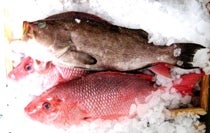
    grouperOn Jan. 1, 18 Gulf of Mexico commercially-caught grouper and tilefish species were added to the region’s individual fishing quota (IFQ) program, a type of catch share. This newly expanded program is a big conservation victory. Now, 19 valuable Gulf fisheries are being managed under a tool proven to rebuild struggling fish stocks.


    This move is good for small and large fishing businesses. A year-round fishing season is just one of many benefits. See National Fisherman's article on how the new IFQ program is already making a difference.

    Unfortunately, grouper fishermen in the Southeast aren’t faring as well under traditional management. They’re in the middle of a four month fishing closure. This isn’t just hard on fishermen, it’s hard on local restaurants and other businesses too. Southeast fishery managers should consider catch shares to eliminate these devastating season closures and bring fish populations back to health quickly.

    Finally, we want to congratulate the fishermen, Gulf of Mexico Fisheries Management Council and others who worked so hard to add grouper and tilefish to the Gulf’s IFQ. We are excited to see the progress that these fisheries will make in the coming year.

  • Householder words — and my reply

    Richard Denison, Ph.D., is a Senior Scientist.

    Interesting exchange this afternoon between Joe Householder, Executive Director of the Coalition for Chemical Safety, and myself in comments on my last blog post. See Mr. Householder's comment here, and my reply here.

  • Coastal Restoration Projects Secure Proportional Spending Boost in FY 2011 CPRA Draft Budget

    As Mark Schleifstein reported in last Friday’s edition of the New Orleans Times-Picayune, the Coastal Protection and Restoration Authority of Louisiana (CPRA) released its preliminary $621 million annual plan for review ahead of public hearings scheduled for February 8 – 10. Despite overall budget cuts of nearly $74 million, coastal restoration is slated to receive a higher fraction of CPRA funds in FY 2011 than in FY 2010. Using a broad budget/employment conversion factor from the Economic Policy Institute of 20.3 jobs per budgeted million, we estimate that $300 million in FY11 funding will translate into more than 6,000 jobs in wetland restoration.

    Coastal Protection and Restoration Authority (CPRA) Spending, FY 2011-2013 (Source: CPRA)

    Coastal Protection and Restoration Authority (CPRA) Spending, FY 2011-2013 (Source: CPRA)

    This marks the first time in the authority's three-year history that a larger share of agency expenditure will be bracketed for ecosystem rehabilitation than levee construction. Still, FY11 funding for the Morganza to the Gulf levee project, at $82.2 million, is nearly twice as much as the largest line item in the coastal restoration budget.

    Breakdown of FY11 CPRA Spending (Source: CPRA)

    Breakdown of FY11 CPRA Spending (Source: CPRA)

    The five biggest coastal restoration line items, accounting for more than one-sixth of FY11 spending, are:

    • $43.8 million for shoreline rebuilding in western Cameron Parish
    • $22 million for protecting the U.S. 90 land bridge along the northwestern shore of Lake Borgne
    • $21.5 million for restoring the Biloxi Marsh in St. Bernard Parish
    • $17 million for thirty-four restoration projects under development through the Coastal Wetlands Planning, Protection and Restoration Act (CWPPRA)
    • $5.5 million for cypress reforestation and marshland improvements in the Central Wetlands Unit, a 30,000-acre area straddling Orleans and St. Bernard Parishes

    In addition, the Coastal Protection and Restoration Authority has budgeted $19.3 million for operations, maintenance, and monitoring (OM&M) across all restoration projects.

    Coastal restoration project spending will translate into well-paying jobs for the people of southern Louisiana. Assuming labor costs equivalent to one-third of project spending and an hourly wage of $10 for landscapers in New Orleans, we can estimate that the Central Wetlands reforestation alone will create ninety-two landscaping jobs for residents of the Lower Ninth Ward and nearby communities. In comparison with $7/hour in jobs in retail and restaurant service, these green jobs would offer people both higher pay and a chance to purposefully contribute to local flood protection, a critical need in areas devastated by storm surges during Hurricane Katrina.

    These green jobs and others like them would provide an economic kick-start for communities struggling with degraded wetlands and Depression-era levels of unemployment. We hope that this CPRA budget marks the beginning of a stronger shift towards marshalling state resources to boost employment in coastal restoration.

  • EDFix Call #6: GreenXchange, Nike, & Davos

    Last week at the World Economic Forum in Davos, Nike and Creative Commons announced their new open innovation initiative, GreenXchange. Nike explains:

    Nike and Creative Commons believe in the power of open innovation and share a vision of creating a platform that promotes the creation and adoption of technologies that have the potential to solve important global or industry-wide sustainability challenges.

    On Monday, February 8 we will be joined by John Wilbanks, VP for Science at Creative Commons and Kelly Lauber from Nike to talk about the status and goals of GreenXchange.

    For more information about GreenXchange you can check out the nifty marketing video, a longer descriptive video, or a creative PDF brochure.

    Join us on February 8, 2010 at noon ET (9am PT) for the call:

    • Phone number: +1 (213) 289-0500
    • Code: 267-6815

    Get Updates about EDFix Conference Calls

    If you'd like to get announcements about upcoming EDFix conference calls and the results with podcast releases, please sign-up here:

  • NOAA’s New National Catch Shares Program: An investment that makes (dollars and) cents

    Amanda Leland, EDF Oceans Program - National Policy Director

    Amanda Leland, EDF Oceans National Policy Director.

    Yesterday NOAA released its budget request to Congress for Fiscal Year 2011. While the National Marine Fisheries Service budget request was decreased by 1.5%, it included a key feature: the creation of a new National Catch Shares Program, which would provide significant resources—over $50M—to those fisheries wanting to transition to catch shares. 

    This federal investment comes at the right time because under conventional management fishermen struggle to make ends meet and fish stocks continue to decline. Well-designed catch shares, on the other hand, can end overfishing while increasing fishermen’s profitability and wages and decreasing government costs. NOAA’s announcement is a welcome shift in fisheries policy that will quickly accrue benefits to fishermen, fish populations, and the federal budget’s bottom line.

    Fishermen are increasingly embracing catch shares because they boost profitability, wages, and safety. Catch shares enhance fishery economics with optimized catch limits (as overfished stocks recover and science improves), increased efficiency of fishing operations, and higher dock-side prices. On average, fisheries in North America have realized an 80% increase in revenues five years after catch share implementation. In contrast, for many prized species the alternative to catch shares is closures, which will push fishermen off the water and have a devastating economic impact on coastal communities. 

    As fisheries grow economically, catch shares can transition management costs to fishermen, reducing and stabilizing the overall federal investment needed to support fishing jobs. For example, fishermen are required to recover 100% of program costs in the Alaska crab catch share. That catch share has increased the overall value of the fishery because populations are recovering (so catch limits are increasing), and dock-side values have increased. The economic increase has resulted in a surplus for management costs in 2009.

    At the same time, as fisheries stabilize under catch shares, the federal government’s costs for disaster relief could substantially be reduced, which has averaged some $70 million annually over the past decade (not including salmon).
    NOAA should be applauded for charting a new course and making an investment today in the solution that will help fishermen, fish populations, and the federal treasury recover. 

    Now we need Congress to support NOAA’s budget request.

  • Chemical industry “astroturf” group pads membership with agribusinesses – even though TSCA doesn’t regulate ag chemicals!

    Richard Denison, Ph.D., is a Senior Scientist.

    The chemical industry’s fake grassroots group formed to feign broad support for its version of reform of the Toxic Substances Control Act (TSCA) – the Coalition for Chemical Safety, issued a press release today touting that it’s surpassed 150 members. 

    I blogged earlier about how some of the small businesses it has enlisted apparently weren’t told about the Coalition backers’ actual positions on toxic chemicals.

    Now a review of the 150 members that have allowed the Coalition to meet its latest “milestone” reveals it has supplemented unwitting small businesses with dozens of agriculture-related companies and associations – despite the fact that TSCA doesn’t regulate ag chemicals!

    Who knew that growing astroturf requires pesticides??

    At least 40 of the Coalition’s members are clearly in the farm, landscaping or seed business – begging the question of whether they’ve been attracted to sign up by the Coalition backers wrongly claiming TSCA reform might lead to bans on pesticides.

    More generally, the Coalition’s release makes clear it’s more than willing to play the “chemical ban” card to scare up members. One choice quote: “The Virginia State Police Association (VSPA) joined the Virginia Coalition for Chemical Safety to help ensure that our troopers have access to the very best safety equipment available,” says VSPA’s Executive Director.

    Of course, real TSCA reform is not about halting the use of chemicals – it’s about driving the replacement of dangerous chemicals with safe ones. It’s about integrating the heretofore largely missing ingredient of health and environmental safety – alongside traditional considerations of performance, cost and consumer needs – into all decisions made about which chemicals and products our nation makes, uses and sells. It’s about ensuring the market has robust information needed to inform those decisions, and government has the authority to distinguish between safe and unsafe chemicals.

    If the Coalition is serious about TSCA reform, it ought to embrace all aspects of the platform of a real grassroots coalition calling for comprehensive reform – Safer Chemicals, Healthy Families – which doesn’t depend on misleading or scaring potential members to get them to sign up.

  • Welcome to Restoration and Resilience!

    The Coastal Louisiana Restoration team at Environmental Defense Fund (EDF) is working to protect the wetlands of the Mississippi River Delta. This region provides important services for southern Louisiana and the nation as a whole, but it’s disappearing at an alarming rate. As each acre of threatened marshland subsides or erodes away, we lose vital habitats for fish and wildlife as well as critical hurricane protection for the people of southern Louisiana. This crisis imperils important industrial facilities, densely populated communities, and unique cultures that have developed along the bayous and rivers of southern Louisiana.

    EDF, in partnership with local organizations (Coalition to Restore Coastal Louisiana and Lake Pontchartrain Basin Foundation) and national groups (National Audubon Society, National Wildlife Federation and The Nature Conservancy), is finding solutions to rehabilitate this vital ecosystem. Putting people to work in green-collar restoration jobs will be critical to protecting the wetlands of southern Louisiana.

    Restoration and Resilience will serve as a forum for discussing job creation 2008_wetlands_cypressthrough wetland regeneration and smart hazard protection. Our blog will also showcase original research by EDF staff members and guest contributors.

    While conversations on ‘Green Jobs’ are ubiquitous (See Here, Here and Here), they have narrowly focused on energy efficiency at the expense of other sectors. This blog aims to show that restoring the Louisiana coast is as important as building wind turbines for America’s environmental and economic security.

    We’ll take a uniquely EDF approach and provide thoughts and analysis grounded in good science and sound economics. We welcome your feedback and look forward to the conversation.

  • The Frank Luntz Poll About Global Warming: Still Hot News

    Remember the Frank Luntz poll we told you about last week? The prominent pollster found bipartisan support for a strong climate and clean energy bill, and it's been generating a lot of buzz.

    Here are just a few of the many stories about it:

    • True/Slant talks about Luntz's surprising views on the climate issue, saying he's "teaming up with Fred Krupp of all people" …
    • The Vine has an even better summary of the "strange bedfellows" effect:

    It was a little surprising to see [Luntz] this morning at the National Press Club, teaming up with the Environmental Defense Fund on a new set of poll findings about climate legislation. Even Luntz couldn't help joking about it: "When Fred asked me to do this with him, I asked, 'Do you know who I am?'

    • And Climate Progress and Treehugger both talk about the meaning of poll's bipartisan results in the wake of recent Democratic election losses.

    If you'd like to skip the news clips and see for yourself, in addition to the full audio we shared earlier, we now have 5 minutes of highlights:

    httpv://www.youtube.com/watch?v=ZSrwjINxEio

  • Video: With Vehicle Fleets Small Changes Add Up

    Small changes can make a big difference. EDF's Corporate Partnership Program recently teamed up with stresslimitdesign to create this short video on how small changes to companies’ vehicle fleets can result in savings of $700 per driver.

    That might seem like a small number, but if you scale that number up to include all 3 million corporate fleet vehicles in the United States, these small changes could save American corporations over $2 billion per year and eliminate 45 million metric tons of carbon dioxide.

    You don't need to have an entire fleet to benefit from some of the small changes. Watch the video to find out how little things like smarter route mapping and tire pressure, make a big difference.

    Check out EDF's Innovations Exchange for more information on the video with stresslimitdesign, EDF’s work on fleet vehicles and ways to improve both vehicle performance and help the planet.

  • Local Seafood is Key to Florida Keys Culture

    Kate Culzoni with a spiny lobster at the Florida Keys Seafood FestivalA few weeks ago, I attended the 5th Annual Florida Keys Seafood Festival in Key West where I learned what Florida Keys culture is all about – seafood, sun and fun. As I enjoyed the fresh lobster tails and crab claws, I was able to speak with the actual commercial fishermen who catch Caribbean spiny lobster, stone crab and a variety of sumptuous reef fish. 

    Fish houses, which act as fish buyers, retail markets and restaurants, are often a lifeline for fishermen needing financial assistance and are the heart of the fishing industry in the region. I used some of my time touring the operations and observing how fish from the nearby reefs become delicious seafood fare in restaurants. 

    Key West has a vibrant and diverse culture. Only 90 miles from Havana, the Cuban influence can be seen everywhere. As I walked the historic docks, I practiced my Spanish with Cuban American fishermen. "A donde se van a pescar?"

    Talking with fisheries managers, academics and state of Florida researchers also educated me on the complexity of fisheries and some of the challenges facing the living marine resources in the Florida Keys. Of particular interest to me was the spiny lobster fishery, which is unique because spiny lobster's tail meat is the only commercially valuable part, unlike the cold water American lobster that has meat-filled claws and tails.

    Spiny lobster is valuable to the Keys’ culture and national economy, however, research reveals some discontent with the current management system. Growing concerns over proposed new regulations, the high cost of doing business, and illegal poaching and black markets have some commercial fishermen wondering how they can even survive in the spiny lobster fishery.

    After listening to fishermen’s stories and ideas at the Seafood Festival, which is sponsored by the Florida Keys Commercial Fishermen’s Association, I have a much better understanding of the adverse impacts of the spiny lobster management system. This year I’ll be spending more time researching and analyzing this fishery and working closely with the fishermen on potential management improvements. I’ll keep EDFish readers abreast of my findings.