Author: Main Feed – Environmental Defense

  • How Much Water Does the Delta Need? State Board Set to Hold Hearing

    Mark Hitchcock Legal Fellow, EDF

    EDF supported the 2009 water policy reform package passed by the California legislature, but we have always maintained that the true test of the legislation will be how effectively its provisions are implemented. An early test of the legislation begins on March 22-24, when the State Water Resources Control Board (“SWRCB”) will hold a public hearing to develop flow criteria for the Sacramento – San Joaquin Delta. The hearing is an immensely important opportunity for the SWRCB to determine how much water is needed in the Delta to restore and protect its natural resources.

    The Legislation
    The hearing is a central part of the Sacramento-San Joaquin Delta Reform Act of 2009 (“Reform Act’), one piece of the five water reform bills passed in November, 2009. The Reform Act established a new governance structure for state agencies responsible for the Delta with the goal of managing the Delta in sustainable way. The bill created a new Water Code §85086 that directs the SWRCB to, “pursuant to its public trust obligations, develop new flow criteria for the Delta ecosystem necessary to protect public trust resources.” Under the public trust doctrine, the SWRCB is entrusted with protecting the Delta’s aquatic resources for the benefit of the people of California. The doctrine protects a wide-range of Delta uses, including “navigation, fishing, recreation, ecology and aesthetics.” Thus, the Reform Act charges the SWRCB with developing flow levels that will ensure the biological health of the Delta estuary.

    Keys to Success:
    • Public Participation: The legislation requires that “[t]he flow criteria shall be developed in a public process” and that the hearing “shall provide an opportunity for all interested persons to participate.” Twenty-four parties submitted testimony to the SWRCB and will participate in the hearing, including state and federal agencies, cities, water districts and environmental groups.
    • Use of the Best Available Scientific Data: The legislation requires the SWRCB to use the “best available scientific information” in its assessment of the Delta’s needs. This means that the SWRCB should rely on the most recent and rigorously peer-reviewed studies relevant to the Delta ecosystem. It does not mean that the SWRCB should adopt “certainty” as its evidentiary standard.
    • Focus on the Specific Needs of the Delta: The legislation requires the SWRCB to focus on the basic flow requirements needed for a healthy Bay-Delta ecosystem without considering, at this point, how such flows would be implemented or the potential water supply impacts of such implementation. Indeed, the legislation is explicit that no water rights can be affected by the Board’s public trust flow determination unless and until a full adjudicatory water right proceeding is held at a later date

    Links to a Successful Bay Delta Conservation Plan
    A key benefit to having the State Board address public trust flow needs at this point is to allow the timely incorporation of its recommendations into the Bay-Delta Conservation Plan (“BDCP”). As my colleague Ann Hayden noted, the BDCP Steering Committee has struggled to determine the instream flows needed to protect and recover the ecosystem, and this flows determination will be important information that must be incorporated into the BDCP before the plan is finalized later this year. As the BDCP Steering Committee analyzes the biological effects of a new conveyance, it is essential that the needs of the Delta ecosystem be fully taken into account.

    It’s Time to Get These Flows Right
    With falling fish populations and the viability of the Delta ecosystem increasingly in question, the time is overdue to establish policies that guarantee a healthy and sustainable Delta ecosystem. That was one of the fundamental goals of 2009 water reform legislation, and now it is up to the SWRCB to restore the public’s trust and show that the legislation will truly be implemented in a manner that sets California on a path to long-term water solutions.

  • Online Radio Show Dives into Catch Shares

    Tom Lalley

    Amanda Leland and I were guests on Moir’s Environmental Dialogues the other day. The host, Rob Moir is the president and executive director of the Ocean River Institute. Rob has had an illustrious career as an educator, scientists and environmental activist and wanted to hear from EDF about catch shares. This is an important time for fishing as a new catch shares policy gets underway.

  • It’s FIX-A-LEAK week

    Even the EPA knows how much water Texas can save. Well – not exactly, but EPA does realize that “Texas sized saving” equals a lot of water!!! Across the country, household leaks are wasting more than 1 trillion gallons of water per year—enough water to supply every home in Texas with its annual water needs. Fixing leaks are a great place to start saving water. “Easy-to-fix leaks in the average American home waste enough water each year to fill a backyard swimming pool,” said Peter Silva, assistant administrator for EPA’s Office of Water. That’s why March 15-21 is Fix a Leak week. 

    Dallas, San Antonio, Austin and Laredo are already participating in the program. If your city isn’t one of these, just check out the list of things you can do on your own. A quick trip to Home Depot could save you some cash on your monthly water bill. Hopefully, more Texas cities will embrace this simple opportunity for savings and join EPA in this challenge.

  • How to Clean Up Freight? See our New Report “The Good Haul”

    Today, we released The Good Haul, a report that highlights how clean freight innovations improve reliability, while also reducing freight-related health and environmental risks.

    The U.S. freight system needs to be modernized in a way that reduces environmental impacts. The Good Haul [PDF] profiles 28 projects, programs, and technologies around the U.S. and internationally that do just that. That is, they have simultaneously increased freight reliability while lowering air pollution and greenhouse gas emissions.

    These cases studies include practice changes, like eco-driving, as well as new technologies, like the Port of Virginia’s hybrid diesel locomotive. The case studies also include large, planned freight hub clean up projects, such as the CREATE program in Chicago and the Clean Air Action Plan at the ports of Los Angeles and Long Beach.

    None of the projects highlighted in The Good Haul are industry standards or have been adopted broadly, but they ought to be.

    Funding is one of the barriers to widespread adoption of these practices, technologies and projects. Smart, directed, public investments that demand a better freight transportation system that also reduce pollution, can chip away at this barrier. The federal transportation bill now being drafted by Congress is one place to begin this smart approach.

    Freight is the fastest growing transportation sector, and as we discussed in a post last week, pollution from freight—everything from trucks to tugboats to rail locomotives—is a huge health and environmental challenge.

    Over the next few weeks, we’ll profile several of the innovations highlighted in our report. Stay tuned for examples that prove that that U.S. freight system can be cleaner and more efficient at the same time.

  • Is It Patriotic to Prop Up Your Home?

    Source: Capitol City Scaffolding & Equipment Company, Inc.

    Apparently, yes. Based on a new report from the Home Performance Resource Center, home elevation and weatherization are more American than apple pie.

    Or at the very least, the apples.

    As noted Friday on The New York Times blog “Green Inc.”, researchers from the consulting firm Newport Partners found that a remarkably high percentage of the inputs for domestic home weatherization are produced in the United States. Using data from the 2007 Economic Census, the authors found that more than 90% of the duct sheet metal (99.4%), vinyl windows (98.4%), caulking (95.7%), and attic insulation (93.7%) used in the United States were manufactured domestically. That same year, only 91% of the apples consumed in the U.S. were grown here.

    We’re not trying to take the comparison between apples and orange insulation too far, but the point remains that when it comes to home efficiency materials, “Buy American” isn’t so much a rallying cry for beleaguered manufacturers as it is a description of the status quo.

    Source: Home Performance Resource Center

    Given the potential synergies between home efficiency repairs and home elevation (something we’ve mentioned before on our blog), a campaign to benefit construction and bolster household resilience could also boost jobs in domestic manufacturing.

    With more than one out of every fourteen Louisiana jobs in the manufacturing sector, this work would provide a stimulus for both installation contractors and industrial companies in the Pelican State. It’s all the more reason why the proposed HOME STAR program should take the logical step of including home elevation within eligible activities for weatherization grants.

    Wouldn’t that be something to celebrate this Fourth of July?

  • 72-Hour Campaign Generates 300,000 Calls

    Our regular readers will remember this recent post about the launch of our 72 Hours for Clean American Power calling campaign. EDF joined forces with 10 fellow environmental organizations to flood the Senate with calls demanding action on climate change legislation.

    We're happy to say the campaign was a big success. An amazing 300,000 of you called our Senate hotline during those 72-hours.

    We can't thank you enough for your efforts. You made sure that the Senate got your message: America needs a comprehensive climate and clean energy bill, and we need it now.

    Lots of you have told us that you'd like to do even more. Keep in mind that our 100,000 letter campaign is still going on. You can make sure your Senators get the same message in writing — that a climate and clean energy bill should be a national priority.

  • The Katrina chronicles: Formaldehyde-laced trailers set to claim another set of victims

    Richard Denison, Ph.D., is a Senior Scientist.

    The Washington Post ran a front-page article Saturday, written by Spencer Hsu, which reported the auction sale by FEMA of most of the 120,000 notorious formaldehyde-tainted trailers it had purchased five years ago to house the victims of Hurricane Katrina.

    The article cites FEMA as saying that “wholesale buyers from the auction must sign contracts attesting that trailers will not be used, sold or advertised as housing, and that trailers will carry a sticker saying, ‘Not to be used for housing’.”

    Think that’s likely to be enough? 

    Think again. Consider this excerpt from a consumer alert issued by the Attorney General of Arkansas, Dustin McDaniel: “Proceed with caution, extreme caution, if you are tempted to respond to what appears to be an attractive offer for a travel trailer or manufactured home.” He and others pointed to the high likelihood that the trailers will now enter a market where they may be sold and resold repeatedly and the warning label removed or ignored.

    Hsu cites one woman who several years ago purchased a trailer for her son – days before all the publicity broke about dangerous levels of formaldehyde. Now she’s worried about him keeping the trailer, but also has qualms about selling it to someone else. “This is like history repeating itself," she said. "People are all going to buy them, move into them and then start getting sick."

    Some buyers appear to have fewer qualms: The highest bidder for the FEMA trailers says he already has buyers – retailers who intend to resell the trailers – for the 15,000 units he bought at auction, adding that formaldehyde is a “non-topic” that his buyers don’t even ask about.

    This story vividly illustrates just how enduring the lifecycles of dangerous chemicals can be when our policies let chemicals get so deeply embedded into commerce without requiring they be shown to be safe.

    It’s not an isolated incident. In another recent front page Washington Post article, Lyndsay Layton documented the difficulties faced by the food industry in trying to replace a chemical used to make the lining used inside virtually every food can sold in America. That chemical is bisphenol A (BPA) – a hormone-like compound which is found in the bodies of 93% of the American public, and is now suspected of interfering with human reproduction and early development. Some 6 billion pounds of BPA are produced annually.

    But back to formaldehyde, an estimated 46 billion pounds of which are made annually.

    TSCA shares the blame

    A year ago, in the House of Representatives’ first oversight hearing on the Toxic Substances Control Act (TSCA) in decades, I testified about how the structural flaws in this 34-year-old law played a key role in allowing those FEMA trailers to be built and to deliver a second knock-out blow to Katrina victims.

    The FEMA trailers were made using plywood imported from China. That plywood is made using adhesives that release high levels of formaldehyde, a known human carcinogen. China makes a low-formaldehyde product for export to Europe and Japan, and even for domestic use in China, because in those markets there are regulatory limits in place. But they have a ready market here in the U.S. for the cheaper, more dangerous plywood because we have no such restrictions. That plywood ended up in the FEMA trailers – and continues to be sold into countless other markets across the country.

    In 2008, the U.S. Environmental Protection Agency (EPA) was petitioned under TSCA to regulate this use of formaldehyde. It denied the petition, citing its insufficient legal authority under TSCA and saying that further study is needed. 

    Meanwhile, the tainted trailers live on and are now slated to expose yet another group of unwitting victims as they descend to the next sad stage in their lifecycle.

    Ironically, unique among all federal environmental laws, TSCA is supposed to give EPA the ability to reduce risk along the entire lifecycle of a chemical, from its production and distribution, through its use and all the way to disposal of products containing it. But TSCA made actually exercising any of that authority dependent on EPA proving a chemical presents an “unreasonable risk,” something it was unable to do even for asbestos back in 1991, and which it has never tried again.

    It’s long past time we had a federal law that gives EPA the power to protect Americans from dangerous chemicals already on the market – and to prevent future repeats of episodes like the FEMA trailer debacle. That will only happen when producers are compelled to prove their chemicals are safe as a condition for entering or remaining in commerce.

    I urge you to join the Safer Chemicals, Healthy Families campaign in pressing for real reform of TSCA that will serve the next generation of Americans far better than it did the last. And tell your members of Congress to do the same.

  • Can the U.S. Compete with China? Fred Krupp Says “Yes”

    China's growing economic power is a growing concern for many Americans. Can the U.S. continue to compete with China in the global marketplace?

    In a new piece for Reuters, EDF President Fred Krupp says "yes" — through the power of comprehensive climate and energy legislation.

    Fred talks about the new "tripartisan" effort to pass a climate and clean energy bill in the U.S. Senate.

    He also talks about how that effort is our best hope to beat China in the world's clean energy markets — and win the jobs those markets create:

    Along with Sens. Graham, Kerry, and Lieberman, I believe we can match the scale of China’s centralized industrial policy by fully deploying the engine of American prosperity: our marketplace. It is the only tool we have with the scale and capital to compete with China. If the U.S. puts a limit on carbon pollution, we will send a clear signal to the marketplace that will unleash a massive wave of private investment in low-carbon energy sources and technologies like carbon capture and storage that would allow us to compete with the Chinese. Only when American policy creates a profit motive for investors, inventors and entrepreneurs, will we have a chance to win the race.

    You can read the full piece here.

  • In Xynthia’s Wake, Increased Awareness of the Link between Windstorm Vulnerability and Wetland Loss

    Storm surge aftermath in Aytré, Charente-Maritime (Source: Associated Press)

    The communities of the Côte de Lumière, a string of seaside resorts on France’s Atlantic coast, sit an ocean away from the bayous of coastal Louisiana. Better accustomed to hosting Parisians and (the original) Orleanais on their weekend getaways, the towns received a rude visit from an unexpected guest late last month.

    Unfortunately, this one left a lot more than broken furniture and unpaid tabs when it cleared out.

    Arriving on February 28, Xynthia, a late winter windstorm, walloped southwestern France with rain and fierce gusts of more than 100 miles per hour. Two days of violent weather left at least 47 dead in France and caused an estimated $4 billion in damages across western Europe.

    This disaster highlighted both the global need for enhanced community resilience measures and the importance of wetland defenses in areas like France’s Atlantic coastline. The folks at StormSmart Coasts noted that only 7% of French coastal communities in the path of winter windstorms have risk prevention plans that delineate permitted building zones. In addition, many seaside homes in the Côte de Lumière are built with unreinforced masonry, leaving them vulnerable to severe damage during storms of Xynthia’s strength. Unchecked real estate development in coastal areas (often on drained wetlands) has exacerbated the problem by placing millions of people in the line of fire of storms like Xynthia. Indeed, Swiss Re has estimated that severe windstorms accounted for 75-80% of all European insured losses between 1970 and 2007, making them by far the most damaging natural disasters in Europe.

    A section of sea wall destroyed by Xynthia, Île de Ré, Charente-Maritime (Source: Associated Press)

    While France has over 6,200 miles of sea walls, these manmade defenses have proven woefully inadequate due to chronic underinvestment, deferred maintenance (with some sea walls dating back to the 18th century), and the continued disappearance of coastal marshlands. One solution to bolster community resilience would be for towns to restore the wetlands that had served as natural defenses against storm surges in the past.

    Over the past two decades, France has enhanced its legal protection of wetlands, and earlier in February, Chantal Jouanno, France’s Secretary of State for Ecology, launched a €20 million wetlands action plan to maintain French marshes. However, this is a relatively small amount to cover the 7,000 square miles of wetlands in metropolitan France.

    Storm damage in La Faute-sur-Mer, Vendée after Xynthia (Source: Getty Images)

    Think of what could have been saved (to say nothing of the jobs that could have been created) if the marshes of France’s coasts had been restored as natural barriers against wave action. Scientists have estimated that, on average, three linear miles of wetlands reduces hurricane-strength storm surges by one foot. The combination of natural buffers with concrete and stone sea walls could have provided multiple lines of defense for communities along France’s windswept Atlantic Coast.

    The crisis facing this region is indicative of the global market for companies that can advise communities seeking resiliency measures against weather disasters. This includes fields like home elevation, storm window design, and wetland restoration. This is part of the reason why Louisiana must actively incubate the sorts of firms that can develop solutions in these areas, not just for Cajun communities down on the bayou, but for their French cousins along the Bay of Biscay.

  • H20 Conservation is Everywhere this Week. Coincidence? I think not

    The last few days have been all about conserving Texas water. First, there was the release of the National Wildlife Federation/Sierra Club report on Monday. Then, on Tuesday I went to not one, but two meetings about how Texans can save water and use it more wisely. The trend tells me that Texans are finally waking up to the fact that water is finite, and aggressive water conservation is in order.

    House Natural Resources Interim Hearing

    The first event I attended was the House Natural Resources (HNR) interim hearing in San Antonio. It was great to be in my hometown talking about saving water. (If I could have fit in some Mexican food it would have been a perfect day!)

    The topic of the hearing was Interim Charge Number 3, which includes recycled water resources, desalination projects, initiatives to promote water conservation and drought contingency. 

    For those who may not be familiar, in-depth studies of important issues often are conducted between sessions, or the interim, because the legislature is only in session every two years for 180 days. Each committee receives interim charges, which are a list of important topics to prepare the committee for potential legislation. Information gathering is usually done through a series of public hearings with both public and invited testimony on the topics. In the end, a report is written with their findings.

    The San Antonio hearing featured testimony from the cities of San Antonio, Dallas, El Paso and Tarrant Regional Water District, and Lone Star Chapter of the Sierra Club director Ken Kramer, among others. 

    There were lots of great success stories. San Antonio stated that they stabilized overall pumping, while adding considerable population. El Paso saved $400 million in infrastructure capital costs through conservation and reduced their peak day water use by 25%. 

    Still, it was clear that much more work needs to be done and many cities do not have robust conservation plants or water reuse programs.

     Austin’s Citizen Conservation Task Force

    Speaking of work to be done, I also attended a public meeting in Austin Tuesday evening to review the work of the Citizen’s Conservation Task Force, of which I was a designated participant. The 60-page report was the result of a city resolution passed in August 2009, intended to produce a policy document recommending conservation measures to reduce water use beyond the planned measures. There are some great recommendations, including a per capita per day goal of 140 gallons by 2020, which would get Austin to the state recommended goal!

    This document is now open for public comment. Thoughts can be sent to [email protected], so please send the task force your comments.

     There is a good reason why water conservation is being talked so much. Texas water is for all of us and it is in short supply. Please help protect it.

  • Putting the Cart Before the Horse: The Legislature calls out the Administration on rushing water decisions

    Cynthia KoehlerCynthia Koehler is Senior Attorney and
    California Water Legislative Director for EDF.
    Ann HaydenAnn Hayden is a Senior Water Resource Analyst at EDF.

    If nothing else, Tuesday’s joint oversight hearing before the Assembly Water Parks and Wildlife and the Senate Resources and Water Committees made clear that while the Delta package was enacted last year, the Legislature remains keenly focused on how that package will be implemented.

    Assemblymember Jared Huffman honed in on the composition of the Delta Stewardship Council. He also raised a number of concerns regarding the role of the Department of Water Resources in getting out in front with a “Request for Qualifications” for consultants to craft the Delta Plan before the Council that is responsible for that Plan has even been selected. “We seem to be having an Al Haig moment – DWR is in charge,” he observed. Natural Resources Secretary Lester Snow offered that it was not the Administration’s intent to preempt the Council’s authority, but rather to ensure that things get moving so that when the Council is up and running it will have the option of moving forward more expeditiously, but of course it could start over if it chooses to do so.

    In addition to the general concerns related to the Stewardship Council, the legislature provided specific concerns about the substance and schedule of the Bay-Delta Conservation Plan. As we highlighted before, there are specific provisions in the recent Delta legislation that are specific to the development of the BDCP. Many members expressed issues about how well the BDCP is adhering to the legislation. Below is a sampling of some of the key issues raised by members:

    1. Need to align with goal of reduced reliance on the Delta – the "Purpose and Needs" (PDF) statement for the environmental impact review of the BDCP states a purpose is to “restore and protect the ability of the State Water Project and the Central Valley Project to reliably divert and deliver water up to full contract amounts”. This statement should be revised to be consistent with the recent Delta legislation which mandates a reduced reliance on the Delta for water supply.

    2. Need to incorporate demand management strategies – Given the mandate in the Delta legislation to reduce reliance on the Delta, the BDCP should consider demand management strategies (e.g., water use efficiency, conjunctive use, etc.) as a way to meet the water supply reliability goals of the plan. To date, the BDCP has focused on the quantity of exports (supply side) rather than reducing demand through conservation (demand side).

    3. Need for a more realistic timeline– the BDCP must fully incorporate the new provisions in the legislation related to the State Boards’ instream flow recommendations (due in August) and Department of Fish and Game's development of biological performance objectives (due in November). The current BDCP schedule – which to many is overly ambitious – does not allow time to incorporate these provisions given that a draft plan is expected to be completed by September.

    4. Need for transparent governance of water operations– the BDCP governance structure must be consistent with the legislative mandate that states that “transparent real-time decision-making of water operations that allows the fishery agencies to take protective actions in the Delta so that biological performance objectives are achieved”.

    5. Need for local input – the BDCP must make a serious effort to engage and address the concerns of the five Delta counties in the development of the plan. Without their involvement and consideration it is unlikely the BDCP will be successful.

    The legislature’s interest in the development of the BDCP should be seen as an encouraging sign. They have done a thorough job of identifying key areas where more progress must be made in order for the BDCP to move in a positive direction. As a member of the BDCP Steering Committee, EDF has raised many of these very same issues and we will continue to do so until they are fully resolved—the ultimate success of the BDCP hinges on this.

  • Listening Sessions with Gullah/Geechee Fishermen Continue

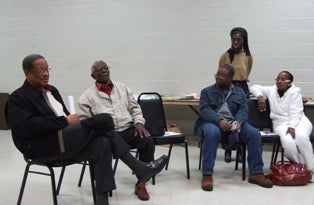
    Gullah/Geechee fishermen listening session with EDF and Queen Quet (standing).

    Gullah/Geechee fishermen listening session with EDF and Queen Quet (standing).

    My journey to engage and build relationships with Southeastern, African-American fishermen continued last week with stops in Florida and Georgia. On Friday and Saturday, I reunited with Queen Quet, Chieftess of the Gullah/Geechee Nation and founder of the Gullah/Geechee Sea Island Coalition, to co-sponsor listening sessions in Fernandina, Florida and Brunswick, Georgia. Mirroring the session previously held in South Carolina, the focus of the events was to document the concerns of African-American fishermen in these areas regarding their ability to continue fishing.

    Both coastal areas have a large Gullah/Geechee community and a history in the fishing tradition. The Gullah/Geechee have been a part of this history for years. Fishing is truly a valued craft upon which this group places great importance. It enabled them to become self-sufficient, feed their families and neighbors, bring the community together, and generate a sufficient income. However, as seen in fishing communities throughout the United States, many fishermen have left the waters due to various impediments that have made it difficult to continue this way of life.

    Fernandina, Florida

    Held at the Martin Luther King Recreation Center in Fernandina Beach, Queen Quet began the meeting asking attendees to share what the community had and what it has today. According to participants, seafood became a major industry in Fernandina. Equipped with the knowledge of their elders, African-Americans perfected the craft of cast net making, crab picking, and shrimp heading, among other skills. Although the fishermen harvested a variety of fish including shad, porgy, oysters, and shark, most fishermen were shrimpers. 

    Participants in the session provided poignant accounts of their relationship with the sea. Some vividly described events they experienced on the water that were nothing short of miracles; for instance, one fisherman was able to survive turbulent waters for days after his ship capsized. There was an apparent religious connection between the waters and the heavens in the Gullah/Geechee culture.

    While some had their prayers answered in such times of need, others witnessed problems developing that complicated African-American participation in fisheries. Attendees noted several issues that affected their ability to fish:

    • The price of fuel blowing out of proportion,
    • Great overhead costs,
    • Diminishing waterfront access,
    • Pollution, and
    • Difficulty competing with the prices of foreign imports.
    Coastal ...

    Coastal Florida

    The community really changed with the emergence of mills; many people left the fish houses to work in mills because of the benefits and wages. The number of small boat owners today is nearly non-existent, and there isn’t a large interest by the youth to fish.

    Brunswick, Georgia

    During the meeting, Brunswick was described as once being the seafood capitol of the world – oysters were in excess and the conditions were good for shrimp. Today there are two major seafood plants, SeaPak and King & Prince Seafood, among other smaller companies. Such companies had their own boats when they first started, and African Americans served as crew members, but problems began to rise once the supply was gone.

    It was believed that around 20 years ago, area companies started to heavily rely on imported fish from Asia and South America. Now, although there is marketing for fish from Georgian waters, fishermen are having trouble competing with the much lower prices of imported seafood.

    Fishermen in Brunswick have traditionally harvested whiting, oysters, mullet, catfish, croaker, blue crab, shad, shrimp, oysters, and at one time turtle eggs. There are a handful of boat owners currently; many became discouraged from going out into the waters because of the costs of owning a boat. Concerns raised during the session were similar to those stated in Fernandina:

    • High costs,
    • Overfishing,
    • High levels of mercury,
    • Run-off and pollution from chemical plants,
    • Poor quality of farm raised seafood,
    • Competition with imports, and
    • Scarcity of the resource forcing fishermen to go father away from local fishing grounds.

    Is there a future?

    When asked if there is sufficient interest here for newcomers to enter the industry, there was a mixed bag of reactions to this question. While some believed they knew of a couple of people interested in teaching the next generation these useful skills, others didn’t believe such efforts were worthwhile.

    However, many attendees called for a better fishing future because they see fishing as essential to sustaining their way of life and families. They expressed a need to have young people present in these talks or there will be no future, as this will reconnect children to their culture and history. Queen Quet stated that the community suffers if it does not know how to feed itself. She concluded “we recognize collectively we have something to offer.”

    The last listening session is slated for April 17 in North Carolina. All comments made thus far will be reviewed with those in the next session to determine what steps can be taken in addressing some of issues this group is facing. In understanding the challenges they are dealing with, EDF hopes to work further with the Gullah/Geechee Nation to provide a voice for a culture striving to retain a way of life that gets them back to the way they were.

    Nicole Smith is a 2009 – 2010 Oceans Program Fellow working to engage African-American fishermen in the U.S. southeast.

    Never miss a post! Subscribe to EDFish via a email or a feed reader.

  • Profiles in Restoration: The Central Wetlands Unit, Part II

    One of our goals at Restoration and Resilience is to offer a better analysis of green jobs potential than past jobs multipliers have provided. To do this, we’ll examine case studies of completed and proposed wetland restoration projects. This is the second in a series of posts that lay out some estimates of the job creation that could be generated by restoration of the Central Wetlands Unit. Bear in mind that we rely on assumptions and estimates throughout our analysis, and we encourage you at the outset to send us feedback on our methods.

    Last week, we introduced a jobs framework that we will use to estimate the employment generated by marsh restoration. Continuing with the discussion of site preparation, let’s look at the indirect and induced job creation that could result from site preparation in the CWU. We estimate that a $3.71 million dredging and filling project in the Central Wetlands could create more than 100 direct, induced, and indirect jobs in the state of Louisiana.

    A Waukesha hopper dredge (Source: Dredge Brokers LLC)

    For this study, we estimated that the work crews would be based on a 1,500 cubic meter, 1400-horsepower trailer suction hopper dredger. A boat of this size would be capable of hosting a ten- to fifteen-person staff of material movers and dredging managers. Based on data from a 2003 report on an Australian dredging project by Evers Consult, we estimate that dredger draft could vary from 1.5-2 meters (empty) to 3-4 meters (loaded vessel), with a draft of 2-2.5 meters during storm swells. We assume that the vessel will operate twenty-four hours a day, seven days a week, as is standard for dredgers.

    Cross-section of a 1000 cubic meter hopper dredge in deep-water conditions (Source: Gippsland Ports, Government of Victoria (Australia))

    We assume a high workability percentage (close to 100%) because of the natural and manmade barriers that dampen the effect of ocean swells on water levels in the Central Wetlands, the Mississippi River, and Lakes Borgne and Pontchartrain. We assume that workers will be paid even during the infrequent events when dredging is delayed by weather, hence why we factor in continuous eight-hour shifts for our estimates of labor costs.

    There is wide variation in the cost per cubic yard of a dredging project. Waldemar Nelson estimated that the all-in or turn-key cost of fill material would be $7 per cubic yard in 2004, equivalent to roughly $7.95 in 2009 USD. Converting the fill material costs from the Evers Consult study yields a range of dredge material costs from $5.92 per cubic yard at the low end to $16.75 per cubic yard at the high end. If we took the midpoint of this $10.83 range as our average cost per cubic yard of the CWU dredging ($11.34), then the estimated all-in cost for a five-million cubic yard fill would be $56.7 million.

    We estimate that the cost could be much less if the CWU project used beneficial-use material from local dredging. In addition, because potential sources of fill material are close to the basin, transport costs would be significantly lower than comparable dredging initiatives, which often involve trips out to confined disposal facilities (CDFs) upriver or depositing sites miles offshore.

    Estimating the Total Employment Effects of CWU Dredging

    To estimate the indirect and induced jobs, we looked at how much might be spent on (i) mobilization of materials and personnel for site preparation, (ii) legal work and scientific analysis ahead of dredging, (iii) material inputs (boats, fuel, etc.) for fill dredging and transport, and (iv) demobilization after project completion.

    These costs are summarized in the below chart. We then used employment multipliers provided by the Bureau of Economic Analysis for economic activity in the state of Louisiana to estimate the cumulative jobs impact of dredging and site prep at the Central Wetlands Unit.

    After speaking with freight brokers, we found estimated dredger costs ranging from $1.6 million to $4.725 million. We decided to base our estimates on the newer, more expensive vessel, as it would likely have greater horsepower, better machinery, and easier maneuverability within the canals and lakes east of New Orleans. We assumed that the vessel would be delivered at Port of Houston, as Texas is a larger market for dredging activities than southern Louisiana, but close enough for feasible transport to the New Orleans area.

    Tugboats for both work crews and equipment would be needed during mobilization. In addition, there would be standby fees for both the dredge and piping materials before the project started in earnest. In total, we estimated that mobilization spending would equal about $92,460.

    Scientific studies and legal paperwork would need to be processed and presented prior to the project. We estimated that a team of six scientists, one lawyer, and two paralegals would be sufficient for this. The cumulative cost of this phase of the project would be $114,491.

    During dredging itself (estimated to take fifty weeks in Part I), we estimated that the fee for the hopper vessel would be about $151,000, based on a weekly lease rate just north of $3,000 ($3,029 = $4,725,000 hopper cost / (52 weeks of leasing per year * 30-year lifespan of a hopper dredge)). If the lifespan of a dredging vessel were longer, then the weekly lease rate would be lower. Aside from expenses on pipelines ($252,840) and supplies and tools for the crew ($340,113), we estimated that more than $1.238 million would be spent over the fifty-week period on gasoil, the likely fuel for the hopper dredge. This was based on an estimated cost per gallon of $2.19. For 8,400 hours of dredging activity ( = 24 hours per day * 7 days per week * fifty weeks per year ), we estimated that the average hourly fuel cost be $147.41, equivalent to roughly sixty-seven gallons of gasoil every sixty minutes.

    Demobilization would require less expenditure than mobilization, and we based our estimates for this phase of the dredging project on the numbers calculated earlier. Before transfer to the next lessee, we assumed that the hopper dredge user would pay for some clearing of the piping and the boat, as well as relocation costs for personnel.

    Added with the direct jobs payroll ($1,344,252) from Part I, we estimated that the cumulative cost of labor and materials for dredging and site preparation at the Central Wetlands Unit would be approximately $3.71 million. To estimate the total number of jobs created, we referred to the Regional Input-Output Modeling System (known as RIMS II), a model developed by the Bureau of Economic Analysis to estimate the economic effects of new employment and spending. RIMS II aggregates information into several dozen industry categories, such as “oil and gas extraction” or “transit and ground passenger transportation”. These multipliers and ratios are calculated for user-defined areas, such as individual metropolitan regions, U.S. states, or combinations of contiguous counties across state lines, such as in the "BosWash" megalopolis.

    The most recent RIMS II multipliers and employment ratios available are from 2006. To adjust for changes in wage levels over the past four years, I adjusted down the employment impact ratios by 6%.

    For “industry category”, we selected “construction”. For construction in 2006 in Louisiana, the direct effect employment multiplier was 2.0306. This means that for every additional job in Louisiana’s building sector in 2006, there were 2.0306 total jobs – 1 direct job in construction = 1.0306 indirect and induced jobs created in the state. This information is useful because it allows us to estimate the cumulative effect of spending on the economy, which is often multiples of the original budget allocation.

    If we adjust the 1.0306 indirect/induced jobs / 1 direct job in construction ratio down by 6%, then the new ratio is 1.0306 * (1 – 0.06) = 0.9688. If we take this ratio and multiply it by the total number of full-time equivalent direct jobs from Part I (54.6), we get 0.9688 * 54.6 = approximately 53 indirect and induced jobs.

    So, for $3.71 million in total spending on dredging and site preparation at the Central Wetlands Unit, we estimate that approximately 107 jobs are created (direct, indirect, and induced) in Louisiana. This is roughly equivalent to 29 jobs per budgeted $1 million. As a point of comparison, the Political Economy Research Institute (PERI) at the University of Massachusetts, Amherst estimated that $1 million in spending in the oil and gas sector creates a total of 5.18 jobs, and that $1 million in spending on building retrofits, a central part of the $5 billion weatherization stimulus plan, creates 16.66 jobs. Thus, dredging and filling as part of wetland and coastal restoration compares favorably with other economic sectors in terms of its employment effects.

    Once the mud and other fill material has been deposited in the CWU, designers and scientists will have to direct installation of water control structures to channel treated water and nutrients through the basin. These issues, and others related to water provisioning, will be examined in our next post on job creation from restoration of the Central Wetlands Unit.

  • Events: Grant Application Deadlines for the Road Home and Individual Mitigation Measures Programs, March 10

    As reported by (the appropriately named) David Hammer in the New Orleans Times-Picayune on Monday, today is the deadline for applications by Louisiana homeowners to secure extra construction aid from the Road Home program. These grants of up to $100,000 are available to those who had selected "Option 1" under the original Road Home grant process, and can be used for additional repairs. Today is also the deadline for the Individual Mitigation Measures program, which is administered separately from Road Home.

    Road Home was established to provide funding for rehabilitation of homes damaged by Hurricanes Katrina and Rita in 2005. The State of Louisiana was given more than $10 billion by the Department of Housing and Urban Development (HUD) to establish Road Home. Eligible homeowners received as much as $150,000 from the original budget to cover repair costs. In addition, the program provided support for owners of rental properties and training opportunities for contractors and engineers contributing to the massive rebuilding effort.

    Using funds from the Hazard Mitigation Grant Program (HMGP), Louisiana launched the Individual Mitigation Measures program, which provides up to $7,500 for homeowners to complete storm-resistant improvements like shutter installation, elevation of air conditioning units, and anchoring of heating fuel tanks. All together, more than $850 million was spent on home elevation in the four years after Katrina, boosting construction sector jobs and muting the effects of the nationwide housing downturn in Louisiana until recently.

    Road Home participants who have not received applications for supplementary reconstruction and mitigation grants should call 1.888.762.3252 or e-mail [email protected]. Owners of rental properties can also e-mail [email protected]. For questions about IMM, call the state's toll-free mitigation hotline at 1.877.824.8312 or e-mail [email protected].

    Homeowners who return forms after March 10 may still receive funding on a first-come, first-served basis, so make sure to apply as soon as possible!

  • Drop by Drop: Seven Ways Texas Cities Can Conserve Water

    Guest post by Ken Kramer, Director of the Lone Star Chapter of the Sierra Club.

    The best and cheapest source of water is the one that’s already on tap.

    Unfortunately for Texas – which is the fastest growing state in the union – a new report from National Wildlife Federation and the Lone Star Chapter of the Sierra Club concludes that most cities are not making the most existing use of their water supplies.

    Drop by Drop: Seven Ways Texas Cities Can Conserve Water describes and recommends seven efficiency measures that have a proven track report at reducing water use, then it reviews 19 Texas cities to see how they measure up.

    The cities surveyed were rated on several of those measures, including:

    Water Pricing Structure: The report recommends a strongly tiered rate structure with affordable prices for those who use water efficiently and effectively higher water rates for customers who use excessive amounts of water. Austin was the only city whose residential use pricing structure earned a "Strong" rating, while Beaumont, Lubbock and Plano all had rate structures that, when assessed as an effective rate, offered significant discounts for high users, thereby encouraging wasteful water use.

    Water Savings Goals: Texas cities are required to create conservation plans with five- and ten-year water use reduction goals, however many cities set easily-achievable but not very impressive targets. Dallas, for example, had the highest rate of per capita water use in our review and committed to just a modest reduction. On the other hand, San Antonio-which has already achieved impressive reductions in per capita water use-committed to continued reductions.

    Toilet Replacement: New high-efficiency toilets can save 12,000 gallons annually over older models, but only six cities in the review had active programs encouraging the replacement of inefficient toilets.

    Conservation Funding: Most of Texas's biggest cities now have reasonably well-funded conservation departments. The city of Houston was the only major city in the state without a conservation department or any significant specific funding for conservation.

    Outdoor Watering: In Texas, a significant amount of treated drinking water is used for watering lawns. The Texas Water Development Board estimates that over half this water is wasted due to overwatering or run-off. Only two cities in our survey-El Paso and Austin-had "Strong" outdoor watering ordinances while ten cities placed no restrictions at all on outdoor watering.

    Read the report online.

    Ken Kramer is the Director of the Lone Star Chapter of the Sierra Club. He has worked on water and other environmental issues in Texas for over 30 years as a volunteer or professional advocate.

  • Let’s Stay in Touch

    An important objective of Environmental Defense Fund's Innovation Exchange is to connect with other people who work at the nexus of business and sustainability and make the whole network more effective. We believe networking and shared learning are central to the rapid innovation needed to dramatically improve sustainability in business. We want to know who you are, what you are doing and to give you the opportunity to know what we are doing and learning.

    Therefore, we are maintaining a number of networking channels to help us find each other as well as communications channels to help us inform each other. We hope you'll join in by connecting with us, following what we're doing and sharing back your activities, products and lessons. Here are some ways:

    Let's meet face-to-face. We're helping organize a series of 1-day events in cities around the country. These "Green Innovation in Business Solutions Labs" are "open space" events with lots of opportunity to network and share experience. We will be in 10 cities in 2010. In addition to Durham, NC (where we were in January), we'll have events in Washington DC, New York, Fayetteville, Chicago, Minneapolis, Seattle, San Jose, Boston, and Austin. To get announcements about Solutions Labs activity, add your email address to the list. You'll get a few emails each month letting you know what's coming up next as well as reports from the Solutions Labs after they happen.

    If you can't make one of the Solutions Labs, you can look for us at another event in which we are participating. We keep a calendar of "events of interest" and mark the ones where you can find EDF staff. You can find out what we look like and are interested in on these individual Corporate Partnerships team bio pages.

    Talk to us via phone. We host EDFix Conference Calls twice a month which featuring doers and thinkers of note. You can join us for these calls every 2nd and 4th Monday at 9 AM PT (noon ET). To receive announcements about upcoming calls and find out what happened in calls you missed, add your email address to this list. We send emails to announce the topics a few days before each call, as well as "afterthoughts" a few days after each call.

    Staying in-touch on-line.

    • The best way to learn about what we are doing is to follow postings to the Innovation Exchange blog. Almost all our activities and new materials end up on the blog in some form. You can follow via RSS feed or email [1 email every weekday or two].
    • We have organized lessons learned, tools and other guidance developed from our 20 years of experience working with business on our Innovation Exchange website.
    • We also use Twitter daily. You can follow us @EDFix and tag your tweets with #EDFix to be sure we see them.
    • We maintain a set of "bookmarks" of what we are reading on Del.icio.us – you can visit Delicious or subscribe to our feed using Google Reader to see green business, innovation and other stories that we think are interesting.

    Following one of our projects. Perhaps you don't want to know about everything we are doing, but would like to hear news about a specific project. You can sign-up for project-specific email announcements for these projects [each tends to generate less than one email per week]:

    (Note: if you are already signed up for all the blog announcements, you don't need to sign up for the projects too.)

    Tracking EDFix Strategy. If you are really interested in the objectives and approach of EDF's Innovation Exchange – details about what we are thinking, planning to do, and why – please participate in the EDF Innovation Exchange Community Google Group, which contains strategy and planning documents we're using as we set up and assess our work. Sign-up with the group to participate. [There is a low level of email activity.]

    Contact me. If all else fails, contact me — 202 572 3250 via phone, [email protected] via email, @dwitzel (or @EDFix) on twitter or on Linkedin.

    I'm looking forward to being in touch.

  • Yes Virginia, Texas has a James River too…

    NEW REPORT REVIEWS POTENTIAL THREATS TO CENTRAL TEXAS RIVER

    Guest post by Tyson Broad, author of The Unknown River of Central Texas and a Llano resident.

    Despite being a major tributary to the Llano River and the home to one the nation’s largest nursery caves for bats, the James River is not well known because travelers do not often cross it. At the few crossings you can find, the river is small, giving the traveler little hint of the scenic canyons carved downstream. The river’s spring-fed flows are also small in comparison to other nearby rivers, such as the South Llano, but they provide exceptional aquatic habitat and water for domestic, livestock and wildlife purposes, even during drought. Understanding the important role that the James River plays in Central Texas is vital to its protection.

    Mexican Free-tailed bats emerging from James River Bat Cave

    I recently completed a report for Environmental Defense Fund that details the James River, its springs and its watershed. The purpose of the report is to cultivate an understanding by local residents of the characteristics of the river and potential threats to its health, to prompt local action to protect the river.

    The potential problems facing the James River watershed are similar to the potential problems facing many watersheds in the Texas Hill Country. Not far from the James River, the South Llano Watershed Alliance provides a good example of the opportunity for coordinated efforts among landowners and area residents to protect the river.

    James River below James River Springs.

    One of the potential threats to the James River results from the division of large ranches into smaller “ranchettes.” As more wells and septic systems are introduced to the landscape, the potential for reductions and contamination of springflow increases. Unfortunately, there is little research available to measure these impacts. However, a new stakeholder group could work with local groundwater conservation districts to drive local involvement in data collection and groundwater conservation and protection efforts.

    Methods for protecting river systems may vary from watershed to watershed, but all will likely require collaboration and partnerships among landowners, area residents, resource agencies and educational institutions to provide lasting protections for Texas’ water resources.

  • Can Elevating Houses Keep Unemployment From Rising?

    The following is a pretty stark visualization of unemployment rates in Louisiana compared to the rest of the United States (a nifty tool provided by the folks at Google).

    Before Katrina (that big spike there in 2005), Louisiana's unemployment consistently hovered above the national average. But after the storm, unemployment dipped below and stayed below the national average. This is probably due to a number of factors including population migration and oil and gas exploration, but one of the biggest contributors to employment was construction jobs in the rebuilding effort.

    At the end of 2009, construction jobs made up about 7% of the total workforce in Louisiana, compared to 4.5% in the nation as a whole.

    Signs of pain have already crept into the local construction sector. Between December 2008 and December 2009, construction companies in Louisiana shed 4,900 workers, accounting for 10.4% of total job losses in the state. As recovery efforts slow, even more construction jobs could disappear, but it doesn't have to be this way.

    One area ripe for construction labor is storm resilience. Sometimes referred to as "non-structural mitigation", we at Restoration and Resilience prefer resilience as a catch-all for preventative measures that will help communities bounce back faster from hurricanes or floods. 

    Storm resilience involves elevating homes, flood-proofing commercial buildings, hardening critical facilities (fire stations, schools, hospitals) etc. – all work that can be done by most general contractors with little to no extra training.

    This type of work is already creating jobs in other coastal states. By one estimate in Florida, resilience work created 160 construction jobs for every 50 to 75 houses that were installed through mitigation projects.

    A robust program of restoration and resilience work in Louisiana can keep construction jobs and create a safer Louisiana.

  • A New Tool for the Fleet Manager’s Toolkit: Reduce Costs and Emissions from Medium-Duty Trucks

    Medium-duty trucks are the workhorses of the American economy. They deliver food and beverages to restaurants and convenience stores, drop off packages at homes and offices, serve as mobile workshops for all types of technicians and perform thousands of other daily tasks. They are also responsible for producing over 80 million metric tons of carbon dioxide each year.

    To help fleets reduce their greenhouse gas emissions and harness cost savings, Environmental Defense Fund teamed up with past partner PHH Arval, a leading fleet management company, to identify and showcase a number of effective and replicable strategies to reduce emissions and costs from medium-duty trucks.

    Highlights of this new whitepaper, available at http://edf.org/greenfleet, include:

    • How Frito-Lay saved 10% on fuel by downsizing its urban grocery store delivery truck model from a 24-foot Class 6 straight truck to a 20-foot Class 5;
    • How by reducing speeding and after hours use and deploying a telematics solution, LKQ decreased idling by 62% and saved 16 gallons of fuel per vehicle each month;
    • How Staples modified the transmission control unit and installed speed governors to increased the fuel economy of its single-unit trucks by 12-16% and
    • How PoolCorp improved fuel economy by 4% by making adjustments to the Engine Control Module (ECM) that limit speed and shorten engine idle intervals.

    Recognizing that every fleet is different, the whitepaper showcases 14 strategies and includes options for every duty cycle to improve efficiency and cut emissions.

    Look for opportunities to drive medium-duty trucks in your fleet onto the onramp of a lower-carbon future.

    This content is cross-posted on Greenbiz.com

  • Science and Policymaking: Spin on science can lead to mischief and extinction

    Rod FujitaRod Fujita is Senior Scientist and Director, Ocean Innovations, for EDF.

    The National Research Council Reviews Biological Opinions Designed to Protect Endangered Fish Species
    On March 15th, the National Research Council (NRC) of the National Academy of Sciences will issue an important report. It will detail the NRC’s evaluation of the science that has been used to determine how much water can safely be pumped out of the Delta for cities and farms while preventing the extinction of endangered salmon and other fish.

    This science forms the basis of the Biological Opinions at the heart of a very contentious debate over the role of science in policymaking. If science is to serve policy well here, expectations need to be realistic and the results of the NRC review must be accurately communicated. Otherwise, we may see political mischief – the science may be misinterpreted in ways that justify old ways of doing business in the Delta and serve special interests at the expense of salmon, the fishing community, the natural ecosystem, and the public trust.

    Politics spurred a review of the science
    The science underlying the Biological Opinions has already been subject to rigorous scientific peer-review, the gold standard of scientific credibility. The science-and common sense-supports the notion that salmon (and other important fisheries) require more protective flows to recover. The tricky part is to figure out how much flow will be needed. At this point, it is impossible to tell whether the recommended flows will prevent extinction of endangered fish species; we are only into the second year of implementation, so they haven’t yet had a chance to work. Hence, it seems clear that this new scientific review by the NRC was not triggered by performance issues. Instead, it is being undertaken at the request of Senator Diane Feinstein following appeals from agricultural interests squeezed by a 3 year drought.

    The credibility of the National Academy of Sciences and its National Research Council is on the line. It is imperative that the NRC review panel not only get the science right, but also that it provides guidance to policymakers on the risks associated with the various courses of action on the table. The panel must also communicate its findings accurately, without bias. It is equally critical that policymakers interpret the NRC’s findings correctly, and resist the temptation to use the absence of certainty (which is inevitable) to justify the old ways of doing business or even worse.

    The real world is not a laboratory
    When scientists are working in the laboratory, they ask very precise, narrow questions and pose hypotheses – possible answers that they consider to be reasonable. They then test the hypotheses with experiments that are controlled – in other words, designed to eliminate other possible answers. Their results are held to a high standard, because the rigorous application of the scientific method allows strong inferences to be drawn from data. Even so, most scientific articles are full of qualifiers and never claim certainty.

    In the world of environmental policymaking and natural resource management, scientists don’t get to ask precise narrow questions or conduct controlled experiments. Policymakers usually ask vague, broad questions like “how much flow do endangered fish need to recover” that are very difficult to answer. Moreover, policymakers often question science that points to actions that will result in short-term economic impact. This reflects in many cases a legitimate sensitivity to livelihoods and the health of economies.

    Rigorous scrutiny of science that informs policy is a good thing. When the economic stakes are very high, however, policymakers often hold science to an impossible standard – absolute certainty – and then use the fact that science is uncertain to justify actions that serve their political interests or favor certain stakeholders. If policymakers believe that farm jobs and revenues are more important than fishing jobs, fishing revenues, preventing extinctions, and restoring the Delta ecosystem to health, they should just act on that belief and on those values. It is dishonest to use scientific uncertainty to justify their failure to protect natural resources.

    We are dealing with a double standard here. NRC reviews of the science underlying economic development decisions – such as mining or dam projects – are almost unheard of. No one requires that these governmental decisions be supported by “certainty”. However, the scientific basis of actions aimed at protecting ecosystems and endangered species is often held to an unreasonable standard – the “certainty” that a specific amount of water will yield a specific ecosystem benefit. In fact, relatively high levels of uncertainty are inevitable regarding ecosystems like the Delta and that’s why we employ strategies like adaptive management.

    This principle applies to many environmental issues and also to everyday problems. There is extraordinarily strong evidence, for example, that fossil fuel combustion has already led to major changes in the earth’s climate. Yet uncertainty remains, because it is not possible to conduct a controlled experiment using an identical earth with no fossil fuel combustion. The prudent action is of course to reduce fossil fuel use despite this uncertainty, because of the enormous risks associated with destabilizing our climate. However, opponents use scientific uncertainty to argue that we should delay action indefinitely.

    People and societies routinely make decisions – some of which are extremely consequential – based on uncertain evidence, in order to reduce risk. Examples include buying insurance, going to war, and convicting people of crimes. We use various kinds of standards of evidence to make these decisions – but we never insist on certainty, because it is unobtainable in complex situations.

    Klamath Basin: An emphasis on uncertainty contributes to environmental catastrophe
    Unrealistic expectations of scientific certainty, combined with understandable caution on the part of scientists who wish to protect their credibility, can result in catastrophe. While many scientists view statements such as “the results of our review are inconclusive” as objective and prudent, policymakers often use such statements to justify the status quo (“we need more research before taking action”) or to favor a group of vocal stakeholders at the expense of environmental stewardship so that they can reduce conflict or win political points.

    In the Klamath Basin, science supporting higher lake levels and more freshwater flows had been sufficient to justify higher flows for salmon in 2001. But a drought that year meant that these flows would result in reduced water diversions, angering some farmers. Suddenly, that same science was not good enough.

    A National Research Council panel was convened to review the science. While the panel’s interim report concluded that most of the science behind the original flow recommendations was strong, it found the evidence used to justify higher lake levels and more flows to reduce temperatures “inconclusive.” The interim report itself was even-handed, but unfortunately press releases about the report emphasized the lack of scientific support for higher lake levels and more flows to reduce temperatures. The interim report also found that there was no scientific support for the lower flow levels proposed by the Bureau of Reclamation, but this finding was largely ignored. Politicians and policymakers interpreted the report as justification for keeping flows and lake levels at low levels.

    In September 2002, following this decision, more than 33,000 salmon died in the Klamath Basin. An entire economic sector – sport and commercial fisheries – was completely shut down. The region is still recovering from this disaster ecologically, economically, and culturally. The misuse of scientific uncertainty to justify lower flows was a likely cause of this tragic die-off of salmon, whose populations could hardly afford the loss: they were already stressed by habitat loss and reductions in water flows.

    Bay Delta: An opportunity for clearly communicated science to guide policy
    We are now experiencing déjà vu all over again and this time, the stakes are even higher. Since the listing of salmon, smelt and other fish as endangered species over the last twenty years in the San Francisco Bay Delta, many management actions have been taken, including large habitat restoration projects and the removal of some dams to open up salmon spawning habitat. More natural patterns of flows are of course essential if such actions are to actually benefit fish and ecosystem health.

    But instead of increasing flows and making them more natural, state agencies have instead relented to pressure from water users and increased water diversions. The drought resulted in less water for both people and fish, triggering reductions in these record high diversions. As a result, once again Biological Opinions are under political attack, and once again we face the possibility that influential people will play politics with the science and use the inevitable scientific uncertainty to justify the old ways of doing business and favor certain stakeholders, while risking the extinction of species and depriving others of their livelihoods, recreational opportunities, and their right to a healthy Bay-Delta ecosystem.

    A lot of effort has gone into restoring habitats and improving water operations in the Bay Delta over the years. But improving habitats and tweaking water operations without restoring more natural flow patterns is like trying to resuscitate a patient by patching up the wounds but failing to re-start the heart. Water is the lifeblood of the Delta ecosystem and the species that depend on it, and the natural flow pattern is its pulse.

    What’s certain: Salmon are at Risk
    The irony in the current debate about the need for certainty before taking action to save our salmon, other fishes, and the fishing industry is that we are certain about the most critical issue. There is no doubt that these species are declining at an alarming rate and that absent protective actions they will disappear along with the commercial fishing industries and sport fisheries that depend on them.

    Let’s hope that the NRC upholds its credibility and integrity in reviewing and communicating the science behind the Bay Delta Biological Opinions; and let’s hope that all stakeholders and policymakers will have the honesty and integrity to interpret the science as it is, not as they wish it to be.