Author: Natasha Lomas

  • IDC: Tablet Sales Grew 78.4% YoY In 2012 – Expected To Pass Desktop Sales In 2013, Portable PCs In 2014

    Ipads

    Strong growth in tablet sales is helping to drive overall growth in the global smart connected device market, according to analyst IDC, as the market reshapes itself with mobility at its core. Posting a new report for full year 2012 and projections through to 2017, the analyst notes that market expansion last year was “largely driven” by 78.4% year-over-year growth in tablet shipments — which exceeded 128 million units. But this is just the beginning for tablets: IDC expects tablet shipments to surpass desktop PCs in 2013, and portable PCs in 2014.

    Overall, worldwide shipments of smart connected devices grew 29.1% year over year in 2012, and the entire market pushed past one billion units shipped, with a total market value of $576.9 billion.

    IDC said it expects tablets to grow their share of the overall smart devices market from 10.7% in 2012, to an estimated 16% by 2017 — with a projected growth rate of 174.5% between 2012 and 2017. Over the same period, the desktop PC category will have negative growth of -5%, and will slide from 12.4% share in 2012 to 6% share in 2017.

    Portable PCs are also project to take a declining share of the market, dropping from a 16.8% share in 2012 down to 11% estimated for 2017. The category will still see some growth, according to IDC, which is projecting 19.3% growth for portables over 2012 to 2017. But the powerhouse growth is in the tablets and smartphone categories — the latter projected to also grow by triple-digits (109.9%).

    This year IDC said it expects the tablet market to reach “a new high” of 190 million shipment units, with year-on-year growth of 48.7%. While the smartphone market is expected to grow 27.2% to 918.5 million units.

    “Consumers and business buyers are now starting to see smartphones, tablets, and PCs as a single continuum of connected devices separated primarily by screen size,” said Bob O’Donnell, IDC Program Vice President for Clients and Displays, in a statement. “Each of these devices is primarily used for data applications and different individuals choose different sets of screen sizes in order to fit their unique needs. These kinds of developments are creating exciting new opportunities that will continue to drive the smart connected devices market forward in a positive way.”

    Powered by growth in the tablet and smartphone categories, IDC predicts the worldwide smart connected device market will continue to “surge” — with shipments forecast to surpass 2.2 billion units and revenues reaching $814.3 billion in 2017. By 2017, 83% of the market is projected to be comprised of smartphones and tablets, up from 70.8% in 2012.

    Returning to 2012, IDC noted that in Q4 of the year Apple significantly closed the gap with market leader Samsung in the quarter, thanks to the combination of its refreshed smartphone (iPhone 5) and new smaller tablet (iPad Mini). Apple took 20.3% unit shipment share in the quarter versus 21.2% for Samsung, according to IDC. On a revenue basis, Apple continued to dominate with 30.7% share versus 20.4% share for Samsung.

  • $25 Raspberry Pi Model A Now Shipping In Asia, After Landing In Europe Last Month – Heading Stateside Soon

    raspberry Pi model A

    The $25 Model A Raspberry Pi has gone on sale in Asia, following its launch in Europe last month – suggesting a U.S. landing can’t be too far off for the most affordable of the Pi Foundation’s two low-cost microcomputers. One of the Foundation’s distributors, RS Components, said today it is now shipping the Model A Pi in Asia.

    Speaking to TechCrunch at the end of last month, Raspberry Pi founder, Eben Upton, said the not-for-profit organisation had completed the paperwork required to kick off global sales of the Model A, adding that it and “hope[d] to be able to enable these within the next couple of weeks”.

    The $25 Model A is the most affordable Pi in the Foundation’s microcomputing arsenal, a full ten dollars cheaper than the original Model B. To get the price down, the unit has half the RAM (256MB) of the second revision Model B, only one USB port and no Ethernet connection. It also consumes less power, making it suitable for remote battery-powered applications — although it can still support a ‘home media centre’ use-case too, according to the Foundation.

    Asked about early sales of the Model A Pi at the end of February, Upton said: “Early indications are that we’ve been selling between 5,000 and 10,000 units per week across the two distributors: so, roughly a quarter of the sales rate of Model Bs.”

    “It will be interesting to see whether these sales have displaced Model B sales, or have grown the market,” he added.

    In January, Raspberry Pi passed the one million Model B sales mark — a far cry from the founders’ original estimates of a few thousand units. The Pi was conceived as a tool to get kids learning to code – but has also proved popular with big kids who like to tinker. And with Google.

    As well as being used for powering DIY gadgets, the Pi has had plenty of software ported over to it — including classic first-person shooter Quake, block-building community game Minecraft – and for those who really want to relive the old days of computing: a DOS (PC) emulator, rpix86 (shown below running a benchmark):


  • This Is Not A Smartwatch

    this is not a smartwatch

    Confession: I have a few storage boxes in my loft that contain old, but barely used, gadgets. Stowed away, still in their boxes, as if waiting for the right time to be brought out like unloved Christmas decorations.

    Ignoring the generations of well-used feature phones also put in storage (thanks to the data locked up inside their tiny brains) many of these devices are gadgets that never lived up to their promise. Which may be why I haven’t been able to throw them out. It just seems wasteful since they never had a useful life.

    Among this collection there is even a smartwatch. Or rather a Bluetooth watch, to give it its correct title. The smartwatch of its day, if you will.

    At first glance all these boxed-up gadgets look like they’re just waiting to be plugged in to finally start paying back the debt they owe for being made in the first place. Some even look a bit glamorous, gathering an air of mystery thanks to the pelting pace of technology evolution. But pick up yesteryear’s rejects and it soon becomes clear why they’re in stasis: they weren’t good enough to be useful. This is where the mystery stops.

    Here’s what passed for a smartwatch in 2008 – made by the now defunct Sony Ericsson joint venture:

    The Sony Ericsson MBW-200 Bluetooth watch was only ever an accessory to a mobile phone – and a limited accessory at that. It’s a timely reminder of the pitfalls of building a smartwatch, as the tech industry’s heavy hitters scramble their fighter jets to scream towards the next must-have wearable gadget.

    Sure, Pebble has proved there’s a market for some kind of wrist-mounted gizmo that connects to your smartphone and extends the experience of carrying a pocket-sized computer around with you all day every day — but boy it better be worth it.

    The MBW-200 wasn’t even good at being a watch, let alone acting as sidekick to the mobile phone. It was top heavy and chunky, so that rather than sit pleasingly on the wrist, it felt like it wanted to swing around it like a high bar gymnast. While its tiny OLED screen, resting forlornly at the bottom of the watch face, wiped a third of the markings off the dial. Aesthetically it was unbalanced and, when not displaying anything, gave the watch a vacant appearance. An ugly and uneasy conjunction of old tech and new.

    (It should be noted that the MBW-200 was a range of ladies’ watches – so these devices were even smaller than other SE Bluetooth watches, leaving very little room on the dial to accommodate a screen, hence its squashed situation.)

    I reckon a two-inch curved screen is the largest pane that could comfortable fit on my lady-sized wrist, without pushing into bangle territory — which illustrates a key design challenge for today’s smartwatch builders: wrists not only offer very limited real estate to build on, the plots aren’t all sized the same. Ergonomically the MBW-200 was already teetering on the brink of what’s acceptable everyday wrist wear — and its circular watch face was less than one-and-a-quarter inches in diameter.

    Squeeze in a SIM tray, and could an iWatch actually become the fabled low-cost iPhone?

    Another ergonomic problem with this early attempt at a smartwatch were its (physical) buttons, five in all, lined along the two strap-less sides. Being small, stiff and awkwardly placed, they required two fingers to be engaged in a pincer squeeze when pressing each one. One to push the button, the other to create an equal and opposite push from the other side to stop the watch from being shunted down your wrist.

    A touchscreen watch wouldn’t necessarily need any physical buttons so shouldn’t have to contend with such anchorage issues. But wrist-mounted touchscreens face other challenges — from how to protect such a large screen from the bumps and scrapes of everyday life, to how to fit in a big enough battery to power a rich, colour touchscreen display without building a chunky, ugly mess of a watch again.

    Hardware aside, the absolute worst thing about the MBW-200 was its ‘smart’ functions. They just weren’t smart enough to make it worth wearing.

    Setting aside the hassle of having to make sure watch and phone were properly paired each time you strapped the thing on, the OLED screen was ludicrously tiny: a mere 0.7 inches x 0.15 inches. Lengthier data (such as phone numbers) had to be scrolled to view, rather than being visible all at once. Not exactly helpful if you’re trying to figure out who’s calling. Incoming text messages were announced by a vibration to get your attention, and a text message icon appeared on the screen. This was fine except the actual message itself was not displayed. The screen didn’t indicate who it was from, either — both pretty huge constraints on usefulness.

    The watch’s other main function was to allow you to reject or accept calls via two of its physical buttons. Rejecting a call had some value – say if you wanted to stop your phone ringing and didn’t want to go to the trouble of pulling it out of your bag/pocket to do that. But having a button to accept a call but no way to take the call without getting the phone out anyway (unless you already owned and had previously paired a Bluetooth headset with it and happened to have it to hand/in your ear)? Well, that feature could actually feel pretty dumb.

    Will an Apple iWatch or a Samsung Galaxy watch or a Google Android watch let you talk directly into your wrist when someone calls you? And include a speaker so you have to lean in close to listen? It might have to in order to avoid being annoying, but that’s more kit to fit in and more stuff to power. Not to mention a new type of behaviour to think about: people talking into and listening to their wrists. (Albeit, that doesn’t seem so odd when you consider Google is trying to get people talking to their spectacles.)

    And if you can make calls on a smartphone, could it actually work as a standalone phone? Squeeze in a SIM tray, and could an iWatch actually become the fabled low-cost iPhone? It’s a stretch but maybe a smartwatch has to be that useful to be, well, useful enough.

    Five years is an ice age in technology terms so some of the MBW-200’s features weren’t as dumb as they look now. This watch was made to marry a dumbphone after all. And hey, some of what Sony Ericsson was doing five years ago, Pebble is doing now – which perhaps goes to show that despite a human appetite for a wrist-mounted computer, building something that genuinely works in that coveted, curved, convenient but constrained location is a harder problem than a lot of companies realise. Because a lot of companies have tried to make a smartwatch and made cupboard trash instead.

    When I was given the watch, after some initial excitement at the concept of being able to screen calls and texts, the reality of its limited usefulness vs. the hassle involved with charging, pairing, wearing and actually using the dumb thing soon sunk in. And, well, to cut a long story short, this not-so-smart-watch was put back in its box for good.

  • HTC One Landing In U.K., Germany & Taiwan Next Week, Heading To North America, Asia-Pac & Across Europe Before End Of April

    htc-one2

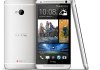
    HTC’s new flagship smartphone, the HTC One, will go on sale in the U.K., Germany and the company’s home market of Taiwan next week, HTC has confirmed today. The rollout will then ramp up “across Europe”, North America and “most of Asia-Pacific” before the end of the April.

    The company had previously said the handset would start rolling out to customers “from mid-March”.

    A HTC spokeswoman provided the following statement: “HTC has seen unprecedented demand for and interest in the new HTC One, and the care taken to design and build it is evidenced in early reviews. The new HTC One will roll out in the UK, Germany and Taiwan next week and across Europe, North America and most of Asia-Pacific before the end of April. We appreciate our customers’ patience, and believe that once they have the phone in their hands they will agree that it has been worth the wait.”

    The One has a 4.7-inch 1080p screen — putting it close in screen size to ‘phablet’ territory — which is topped and tailed with aluminium trim. Inside it’s powered by one of Qualcomm’s new quad-core Snapdragon 600 chipsets, clocked at 1.6GHz, and also packs in 2GB of RAM.

    In looks the One resembles BlackBerry’s Z10, and that’s not the only similarity between the two companies at this point. Both have a lot riding on their respective flagships as rivals have gobbled up huge chunks of the smartphone market.

    HTC needs the One to fly, having struggled to make an impact in an Android space dominated by Samsung’s Galaxy series of devices. Earlier this month the company reported its lowest sales since January 2010. Sales for the month of February fell by nearly 44% to 11.37 billion Taiwan dollars ($384 million). But with falling revenues, HTC has fewer resources to marshal in its fight with Samsung — perhaps explaining the One’s staggered rollout — making it all the more important it gets a hit with the device.

    Enders Analysis analyst Benedict Evans noted recently that HTC has now “given up every penny of revenue growth it picked up from Android” — illustrating the rise and fall on the following graph:

    Evans added that while the HTC One “is a very nice phone” in the current highly competitive handset market nice hardware is ” insufficient to compete”. HTC will be hoping it can prove him wrong.

  • Google’s Schmidt Says Chrome & Android Will Remain Separate – But Don’t Be Fooled: Two Years Ago He Confirmed They Will Merge

    eric-schmidt

    Google’s Eric Schmidt has said Mountain View will keep its two OSes, Android and Chrome, separate after all, according to a Reuters report. Schmidt, who is in India attending an IT event called Big Tent Activate Summit, said the two operating systems will remain separate products but apparently also said there could be more “commonality” between them.

    A conference attendee, @scepticgeek, also tweeted Schmidt saying Android and Chrome would be “separate & independent for a long time”:

    TechCrunch contacted Google and asked it to confirm whether it plans to keep Chrome and Android separate but Google declined to comment.

    What’s most interesting about Schmidt’s comments today is that his words, as reported, seem to contradict comments he made back in February 2011, when he told delegates at the Mobile World Congress tradeshow that Chrome and Android would absolutely converge.

    We’re working overtime to get [Chrome & Android] merged in the right way

    “We’re working overtime to get those technologies merged in the right way,” he said at the time, but added: “I learned a long time ago, don’t force technology to merge when it’s not ready, wait for the technology to mature to the point when it can be merged.”

    In other words: a Chrome-Android merger is inevitable, but also won’t be rushed. So his comments today — about increasing commonality between Chrome and Android — suggest Google is still building a gradual path towards convergence (as Schmidt said it was in 2011).

    Rumours that Google’s quasi-desktop OS Chrome and its touch-based mobile OS Android might be about to merge were sparked earlier this month when head of Android, Andy Rubin, was shuffled out to another role within Google — with Sundar Pichai, head of Chrome and apps, taking over. Pichai did not leave his existing duties but rather added the Android brief to his Chrome and apps portfolio, suggesting a unifying impetus for the job changes.

    Chrome and Android ‘remaining separate and independent for a long time’ has much the same emphasis as Schmidt’s comments from two years ago — when he said they would merge, ultimately. Exactly what he meant by trying to ensure they are “merged in the right way” is up for debate — whatever it means, two years of Google working overtime still apparently hasn’t created those sought after, clement conditions. (It’s likely Google needs to wait for the market to mesh with its mobile centric vision — so growing the Android platform and expanding its reach is one way Mountain View may have been “working overtime”.)

    Make no mistake though: the ultimate merger of Chrome and Android is inevitably since the differences between hardware categories are being eroded. Chrome OS was announced in mid 2009 — at a time when netbooks were riding high. Remember them? The launch of the iPad in 2010 created the tablet category afresh and tablets quickly pulled the rug out from under mini laptops, and started eroding the desktop computing market too — putting the emphasis squarely on touch and mobile computing. And from there it’s but a short hop to gestures and wearables.

    All of which underlines that ultimately having two separate OSes — one mobile and one quasi-mobile — makes no sense for Google in the long run. It’s not a question of if Chrome and Android will merge — the big question is how soon it can be made to happen.

  • Gridcase’s Reactor Is A $149 iPhone 5 Case With A Battery-Boosting Built In Hand-Crank (Or It Will Be If It Gets Crowdfunded)

    Gridcase

    One of the criticisms Android fans like to level at the iPhone is its non-get-at-able battery — meaning you can’t carry a spare (or rip the battery out to hard reset the phone). So here’s a bit of kit that proposes to help iPhone owners who have run out of juice. Gridcase’s Reactor case for the iPhone 5 will include a crank for manually charging the battery to eke a little more juice out of your device when there’s no wall sockets in sight.

    Reactor doesn’t exist yet — Gridcase is kicking off a crowdfunding campaign to ”provide the funds for the final industrial design and transition of the prototype into production” — with its target goal being a rather hefty $350,000. But it has knocked up the following 3D renders of the Reactor:
    Details of exactly how the Reactor works are pretty thin on the ground at this point because unfortunately for the company the new crowdfunding site it intends to use for the campaign, Crowd Supply, hasn’t launched yet (instead you get a ‘launching soon’ holding page). Update: The Reactor crowdfunding page (and Crowd Supply site) has now launched.

    Here’s how Gridcase describes the Reactor in its release:

    The Reactor utilizes a patent-pending, ultra-thin generator to enable users to manually charge the battery of their iPhone 5 when wall outlets are unavailable. The Reactor is designed to provide an all-important power boost when critical data must be retrieved or essential communication becomes necessary.

    Since the Reactor is embedded into the phone’s case, there’s never a circumstance where the phone is without power. A small built-in battery provides enough of a boost to revive a dead phone, while manually cranking the generator can extend the battery life of the iPhone indefinitely.

    The product specifications on the Reactor crowdfunding page are as follows:

    • iPhone 5 Two-Piece Case with Built-in Patented Micro-Generator
    • 400mAh Boost Battery
    • 500mA Manual Generator
    • 8.5mm Thickness
    • 4.5 oz Weight

    Hand-crank-powered charging is unlikely to generate a huge amount of charge, without a huge amount of effort so manage your expectations accordingly of exactly how practically useful a hand-cranked battery charger will be.

    Gridcase’s wording talks of “an all-important power boost when critical data must be retrieved or essential communication becomes necessary”. So think sending a few text messages, rather than being able to finish watching that movie on Netflix. Notably the project page does not include any concrete details on how much charge an hour of cranking will earn you.

    While Gridcase is starting with the iPhone 5, it says it plans to expand the range to other smartphones in future. Assuming, of course, it managed to crank up enough interest to get its project funded.

    The Reactor for iPhone 5 case is expected to retail for $149, although the first 10,000 Reactors are being offered at an early-bird pledge level of $99. Deliveries are slated to begin in October 2013. As well as hosting the crowdfunding campaign, Crowd Supply will stock the Reactor once/if it’s available — acting as Gridcase’s ecommerce reseller.

  • Samsung Galaxy S 4′s Quad-Core/Octa-Core Chipsets Are Focused On Efficiency And LTE

    gs4

    Much about the Galaxy S 4, Samsung’s new flagship smartphone, is the company remixing its Galaxy S III formula — with no big changes to the design or UI look and feel, and new software features such as face tracking additions like Smart Scroll and Smart Pause that add to and build on what came before. On the hardware side Samsung is also following its prior pattern, putting different chipsets in the U.S. and international versions of the phone as it did with the S III. So while the U.S. S 4 has a 1.9GHz quad-core chip, the international version gets a 1.6GHz octa-core chip.

    Samsung did not confirm exactly what the U.S. chipset is at yesterday’s launch, but the word on the street is it’s Qualcomm’s Snapdragon 600. The international S 4 chipset, however, is apparently Samsung’s own Exynos 5 chip, which is built on ARM’s big.LITTLE architecture — so what you’re really getting is a quad-core phone with two clusters of four chips that it switches between, depending on how taxing whatever you’re asking it to do is.

    Octa-Cores vs Eight Cores

    “It isn’t an eight-core chip in the traditional sense of eight cores — it’s not like the same jump from dual-core to quad-core,” says Nick Dillon, analyst at Ovum. “The lower powered cores run when it’s just idling in the background and then when you need the full power it kind of clicks over to the other one.”

    So this is not a case of the U.S. getting shortchanged on S 4 cores, rather it’s just two different approaches to achieving similar power-plus-efficiency ends — all the more important for a phone with such a big screen (pushed up to a full ‘phablet’ 5 inches from the S III’s slightly more modest 4.8-inch pane).

    “I guess somebody like Qualcomm would probably argue they don’t need to have that complexity [of octa-cores] because what they’re able to is dial down the power of their main chip to a lower power when it just needs to idle,” Dillon adds. “They can adjust the clockspeed and the power that goes into them on the fly so they really don’t need this compromise of having four extra chips.”

    Speaking to TechCrunch at the Mobile World Congress tradeshow in Barcelona last month, Qualcomm’s Raj Talluri, SVP of product management, did argue just that — saying the chipmaker is focused on “heterogeneous compute” for the next generation of chipset innovation, or getting the various components to work together better, rather than just sticking in more cores.

    “Clearly we will do the right number of cores to get the right performance but that’s not all we focus on,” Talluri told TechCrunch, pointing to video, audio, camera, LTE, touch input, gestures, different forms of user interface, noise cancelling tech, gaming and more as all areas the chipmaker now has to consider. “If all we had to do was multicore my job would be very easy.”

    So which approach is best? Four big cores that can act like they’re little or a pair of big and small quad-cores? At this early point it’s hard to say, until the comprehensive benchmarks and real-world tests start rolling in.

    “Whether [Samsung’s octa-core chip is] actually going to bring any real world benefit in terms of top end speed or in fact battery life… we’ll have to see,” says Dillon, adding: “This is the  first device with the chip in it — the first phone at least.”

    Of course, from a spec sheet point of view, Samsung’s octa-core boast might garner a little more attention than the quad-core label. ”From a marketing point of view, it obviously sounds impressive,” adds Dillon. “It’s still a specs race at the top end. You’ve got to have the fastest process so if you’re able, through your own technology, to include what looks like an even better processor — on paper at least — then you’ve got to.”

    But marketing vanity metrics won’t win you long term customer loyalty if the overall experience is poor. And while mobile apps that truly tax multicore chips remain thin on the ground, every mobile user knows what it’s like to run out of juice — hence both Samsung and Qualcomm are focusing on making less wasteful use of all that power sitting in our pockets.

    LTE

    Why can’t Samsung just stick its own Exynos chip across the board in the S 4? The answer is likely to be LTE/4G — underlining once again how Qualcomm’s decision to wrong-foot the competition by moving quickly on LTE continues to pay off for mobile’s No. 1 chipset maker.

    “Samsung is not as advanced in terms of their LTE modem development as Qualcomm are, who are by far the leaders in that space,” notes Dillon.

    IHS Screen Digest analyst Ian Fogg also explains the chip variation between geographies as “almost certainly” down to “LTE maturity in terms of bands available” — since the processor is integrated with the LTE hardware (and different LTE bands are in use in different parts of the world).

    While Samsung have now got LTE connectivity in their own modem, it’s likely they don’t have support for commonly used bands in the U.S. such as 700Mhz, says Dillon.

    “Maybe they’ve had to fall back on Qualcomm to provide that variant, that connectivity in that market,” he adds. “You imagine that if that capability was there they’d stick their chip in everything.”

    Quad-Core Apps

    What about apps? Is there much making use of quad-cores at this point? ”It’s hard to tell whether Samsung are making the most of all this extra power,” concedes Dillon. Many of the Samsung software additions to the S 4 are focused on the camera, with apps like dual record and dual shoot, but such apps are likely to be able to lean on dedicated image processing hardware to do the grunt work, rather than requiring massively multicore processors.

    “We’ve kind of got to the point where most dual-core chips and definitely quad-cores, there’s nothing really that pushes the limits of them,” adds Dillon. “There are a few very specific applications — some augmented reality stuff for example is pushing the boundary but the majority of what you’re doing on most phones, switching between apps, general usage, you’re not going to see any difference.

    “So I think the focus has shifted somewhat to power efficiency and battery life — which is where the whole big.LITTLE thing comes in. Having the high power but also using less power meaning you can actually make it through the day on a charge — which is a real issue.”

    The multicore race for mobiles may not quite be over — at least not on the marketing front — but it looks like a war of diminishing returns at this point. “I think it will be of reducing interest for consumers,” concludes Dillon. “I don’t think consumers will see a direct benefit from it. Never mind looking on paper but in terms of reality — having a quad-core over an eight core, whether you’ll actually see any difference between those is debatable.”

    It’s pretty much the same point Qualcomm’s Talluri made last month, when asked whether phones actually need eight cores: “We definitely haven’t said eight cores, we said we have four good ones,” he told TechCrunch.

    But Talluri did point to some apps — such as video games and a video editing application Qualcomm was demoing at MWC — as examples of software that is beginning to tax quad-core hardware.

    He also suggested video is are an area where quad-core chips have the potential to support new types of (disruptive) experiences and applications. “Slowly applications are catching up to using multicore,” he said. “We have very nice video editor application – the first real quad core application I think that’s not a gaming or a browser. And you can see as you plug in more cores the performance is better.”

  • Even More Raspberry Pi Now Made In The U.K. As Largest Distributor Of $35 Microcomputer Shifts All Production To Wales

    raspberry-pi-logo

    The Raspberry Pi affordable microcomputer is now almost entirely made in the U.K., after Premier Farnell/element 14 — the largest of the Pi Foundation‘s distributors — announced it has shifted all its production to Sony’s Pencoed factory in Wales.

    The company inked a multi-million pound contract with Sony to manufacture Pis last fall but also had two locations in China producing Pis — meaning that around 70% of its Pi production was coming out of the U.K. at the turn of the year. Today, after a “period of transition”, Premier Farnell said the Pencoed factory now accounts for 100% of its Pi output.

    “The business stated back in September its intention to bring production of the computer back to its home, the UK, and now after a period of transition we are delighted to announce that all production is in Wales,” said Claire Doyle, Global Head of Raspberry Pi at element14, in a statement.

    “We are constantly amazed by the demand for the Raspberry Pi across the world and have done everything we can to ensure we keep our supply chain stocked,” she added. “We believe that a UK creation should be produced in its home country and since partnering with Sony UK Tec we have been delighted with the quality and the commitment they have shown in developing the product.”

    There is still some non-U.K. Raspberry Pi production, as the Pi Foundation has another distributor, but Premier Farnell/element 14 is apparently the larger of the two. (The Foundation has previously said it does not disclose exactly how much of the Pi pie each of its licensees accounts for.)

    Since the Pi’s launch on 29 February last year, Premier Farnell said it has distributed more than 500,000 Raspberry Pi’s. Back in January, it estimated more than a million Pis had been sold – a considerable bump on the Foundation’s original projections of a few thousand units.

    The Foundation has previously produced this short video showing some of the manufacturing processes taking place at the Pencoed Pi factory:


  • Forrester: U.S. Online Retail Sales To Rise To $370BN By 2017 (10% CAGR) As Ecommerce Motors On With Help From Tablets & Phones

    shopping cart online

    Despite years of chewing the digital cud — not to mention a global financial downturn — there’s no sign of the U.S. or European ecommerce cash-cows ailing, according to two new forecasts from Forrester. In the U.S. Forrester is projecting online retail sales will reach $370 billion by 2017, up from $231 billion in 2013 — a 10% compound annual growth rate (CAGR) over the next five years.

    The ecommerce growth rate in Europe is expected to be fractionally higher over the same period, although the overall market is obviously smaller. Europe’s online retail sales are projected to hit €191 billion ($247.1 billion) by 2017, according to Forrester, up from €128 billion ($165.6 billion) in 2013 – a 10.5% CAGR.

    In the U.S. Forrester notes that online retail will continue to outpace the growth of physical retail stores — something the category has done since its inception, so no change there. The analyst notes two “notable changes” have helped prop up ecommerce growth in recent years: firstly the rise of smartphones and tablets, which is says are boosting the amount of time consumers spend online and generating more buying opportunities.

    Forrester’s report notes:

    Consumers are more likely to use their phones not only to research purchases — both to learn about products and store options — but also to find the best price for a given item. But it’s not just phones that drive retail web traffic; virtually all retailers report that traffic to their sites from tablets spikes during evening prime-time hours, when consumers are in a leisure state of mind. This also suggests incremental web sessions and conversions, because web retail traditionally spikes not in the evening, but during business hours.

    And secondly, Forrester notes that traditional retailers have invested heavily in their web divisions — including by offering hybrid online/offline capabilities such as in-store pickup for online purchases — which it says is also helping to grow ecommerce.

    U.S. ecommerce growth is not coming from newbies, according to Forrester, which said it expects only four million people to shop online for the first time in 2013. But rather growth is down to existing web shoppers spending more of their time and money online — and spending it on a variety of goods. Forrester notes that online loyalty programmes such as Amazon Prime and ShopRunner are “one driver”, but the wider driver here is web shoppers getting more accused to spending their cash digitally, and therefore becoming more comfortable buying “high-touch, high-consideration goods like furniture or appliances online”.

    The report also notes that ecommerce is also helping to boost the U.S. jobs market — with Forrester and Shop.org estimating that more than 400,000 individuals are currently employed by ecommerce companies in the U.S., projected to reach 500,000+ by 2017. And of course more people in employment means more disposable income that can be spent buying goods online (so arguably that could be another factor fuelling online retail).

    European Ecommerce

    In its European forecast, Forrester includes a breakdown by country of online retail spend — noting there is considerable variation in the landscape across key markets in Europe. Despite this, it’s projecting CAGRs from 2012 to 2017 of between 9% at the low end, for the Netherlands, jumping up to 18% and 16% for Spain and Italy respectively, the fastest growing European markets over the forecast period:


    The ecommerce growth disparity between European countries is generally down to a divide between more mature markets in Northern Europe, where Forrester says online shopping is “the norm”, vs markets in the south where ecommerce has yet to become a mainstream activity — but is projected to grow to become one by 2017.

    In more mature Northern European markets, such as the U.K. and Sweden, Forrester forecasts that ecommerce growth will continue to outstrip physical retail growth but will slow, as the markets enter what it calls a “new phase of competitive expansion”. In this phase online retailers will need to optimise and innovate, by creating more personalised shopping experiences across “new touchpoints”, in order to stay ahead of the competition.

    The report notes:

    Mobile presents an opportunity to reach out to shoppers in new ways, influencing the decision to buy at a critical moment. eBusiness execs must support their online strategies with a mobile strategy that considers mobile as more than just another transactional touchpoint. Instead, they must use features like barcode scanning and augmented reality to capture and analyze offline activity in order to more accurately personalize future online interactions and drive web sales.

    European markets currently display considerable variation when it comes to “multiple touchpoints” for online shopping, according to the report — with increasingly sophisticated and complex behaviours in some but not all Northern markets. For example, Forrester notes that Germany has “notably lower” mobile shopping adoption than elsewhere in Europe, and few “multichannel customer offers”.

  • ABI: Tablets Will Take A 35%, $8.8BN App Revenue Share This Year – Passing Smartphones By 2018

    ipad-mini-white

    Despite being such a (relatively) new category of device tablets are racing up on their smaller cellular cousins, with rapidly growing user adoption and smartphone-surpassing web page traffic generation. Little wonder then that tablet apps are also generating increasing amounts of revenue — predicted to pass smartphone app revenue within five years.

    Making a forecast in a new report, analyst ABI Research predicts tablets will account for more than a third (35%) of total app revenues this year, or some $8.8 billion out of a total pool of $25 billion. That’s still a way behind smartphones of course — projected to generate $16.4 billion this year, or just under double the amount generated by tablet apps — but the revenue share is growing and ABI reckons tablets will surpass smartphones in app revenue generation by 2018.

    The reasons for tablets to become ultimate app revenue winners are down to their larger screen, which offers plenty of scope for developers to build attractive wares, and also lower cost slates helping to ramp up tablet ownership and increase app downloads, reckons ABI.

    “The larger screen makes apps and content look and feel better, so there are more lucrative opportunities,” says senior analyst Aapo Markkanen in a statement. ”One might think that the bigger installed base of smartphones would compensate for the disparity, but that notion fails to take into account the arrival of low-cost tablets, which hasn’t even started yet at its earnest. The smartphones paved the way for them, but in the end we believe that it’s the tablets that will prove the more transformative device segment of the two.”

    The analyst adds that the tablet category is also well placed to open up the computing market by addressing underserved demographic groups such as the elderly and children. “The really big deal about tablets is how they will help to finally bring the computing age to, for instance, children and the elderly,” says Markkanen. ”The business opportunity associated with them is undeniable, but at the same they can also bring about very significant social benefits.”

    On the OS front, ABI predicts that the lion’s share of the app wealth this year will continue to be generated within Apple’s iOS ecosystem: it expects 65% of the combined $25 billion to come from iOS vs just over a quarter (27%) from Google’s Android ecosystem. While “the other mobile platforms” will generate the remaining 8% between them (ABI does not break this out).

    Despite dominating app revenue, ABI recently predicted that Apple’s iOS will only account for 33% of the smartphone app downloads this year, vs. 58% being Android apps. However Apple’s tablet lead with its iPad devices continues to be a big one, with ABI expecting 75% of the tablet apps downloaded this year to be iPad apps, vs. just 17% being Android apps. Amazon (with its Kindle Fire tablet) is projected to get around 4% app share, while Windows tablets are relegated to around 2%.

  • More Bad News For Mobile Maker HTC As Haptics Company Immersion Applies To Restart Patent Litigation & Push For Damages

    htc-logo

    As if smartphone maker HTC doesn’t have enough to worry about in an Android space so saturated with Samsung-branded hardware it’s driving HTC’s sales back to 2010 levels. But now the Taiwanese company is facing the prospect of having to fork out for damages if haptics company Immersion gets its way. Immersion, which counts Samsung among the licensees for its “touch feedback technology”, had been content to stay a U.S. lawsuit against HTC — in order to wait for the completion of an International Trade Commission investigation into whether HTC has been infringing some of its patents. But, given HTC’s recent performance in the mobile space, Immersion has decided this strategy is no longer appropriate and today said it plans to ask for the stay of its lawsuit to be lifted — so that it “may prosecute its claim against HTC for damages immediately”.

    The ITC action was originally scheduled for “final determination” on October 28, 2013 — after which Immersion may have been able to secure an exclusion order against HTC preventing infringing devices being imported into the United States. But with HTC’s fortunes in the doldrums, Immersion reckons it can get a better outcome via the U.S. District Court route, where it can win damages, attorneys’ fees, and potentially injunctive relief.

    “Given HTC’s recent performance in the mobile market, we believe an exclusion order preventing HTC from importing infringing devices would no longer be an impactful win, and we are turning our energies to seeking damages for past and ongoing shipments of infringing devices,” noted Immersion CEO Victor Viegas in a statement.

    Immersion filed its original complaint against HTC (and also Motorola) with the ITC on February 7, 2012, alleging infringement of six U.S. patents relating to the use of haptics technology — namely: 6,429,846 (“the ’846 patent”); 7,592,999 (“the ’999 patent”); 7,969,288 (“the ’288 patent”); 7,982,720 (“the ’720 patent”); 8,031,181 (“the ’181 patent”); and 8,059,105 (“the ’105 patent”).

    A multi-year license for Immersion’s haptics technology signed by Samsung last week included a patent license covering “Samsung’s prior and future use of simple forms of haptic effects, sometimes referred to as Basic Haptics, in its smartphones and other mobile devices”, according to the company.

    Immersion, which was founded back in 1993, says it has more than 1,300 issued or pending patents in the U.S. and other countries.

  • Chinese Version Of Samsung Galaxy S IV Apparently Captured In Hands-On Video

    galaxy s iv leak video

    After yesterday’s photos posted to a Chinese forum of a device claimed to be the Samsung Galaxy S IV, a video of what looks like the same device has landed on YouTube —  again purporting to be the sequel to Samsung’s flagship Galaxy S III. As with the leaked photos, the video was spotted by SammyHub. The video shows a large handset, initially with the back off and the battery removed, before the battery is inserted, the plastic back snapped on and the phone turned on. As it boots up, it displays Chinese carrier China Unicom’s Wo logo before loading what appears to be a version of Samsung’s TouchWiz UI.

    The design of the device looks very similar to the Galaxy S III, with a high gloss plastic casing — tallying with other S IV reports – and metallic looking bands around the edges. The physical home button is present and correct, below a screen that looks longer than the S III’s pane — in keeping with rumours that Samsung is upping the touchscreen inch count to 5 inches (from the 4.8 inch pane on the S III). A five inch screen will push Samsung’s flagship handset into phablet territory, alongside Samsung’s Galaxy Note range.

    The demo of the device goes on to showcase the camera function, the dialler and the settings menu — including the about page (in Chinese) which shows it’s apparently running Android 4.2.1 (Jelly Bean). In the background of the video, another video can be heard (and briefly seen reflected in the device’s screen) running Apple’s iPad Mini promo — doubtless to suggest that the Galaxy S IV is hoping to tread on the mini iOS tablet’s toes.

    As with all such leaks, it’s not possible to confirm whether this is the real deal — although, being a video, it’s certainly more elaborate than many of the blurry leaked photos that crop up online ahead of flagship product releases. Either way, Galaxy fans don’t have long to wait as Samsung is due to unveil the real deal at an event in New York on Thursday.

    Update: For a bona fide glimpse of the real deal, Samsung’s US Twitter account tweeted the following graphic, ahead of Thursday’s event:

  • More Data Showing iOS, Especially The iPhone, Still Killing It In The Enterprise, At Android’s Expense

    iphoneapple

    Apple’s iOS is consolidating its grip on the enterprise market and taking share from Android, according to customer data from enterprise file sharing and hybrid cloud storage company Egnyte, which offers cloud back-up and storage services for a mix of customers, from large corporates with thousands of seats to SMEs with just a handful.

    Of course different enterprises have very different needs and requirements when it comes to mobile devices. Take a look at governments, for instance, and you’d be convinced BlackBerry is still killing it. But as a snapshot of the mobile OSes being favoured by different sized companies, mostly U.S.-based (80 percent of the data, with the other 20 percent pertaining to European businesses), this data is an interesting subset to add to the pile.

    The data, shared directly with TechCrunch, covers 100,000 of Egnyte’s paying customers over the last year-and-a-half+, tracking which OS they are using to access its services on mobile devices and also splitting out iPhone and iPad use. The numbers look strong for Apple, with the iPhone especially growing its proportion of users since the second half of 2011 to-date — perhaps helped by the halo effect of iPads arriving in the enterprise and persuading business folk to trade their BlackBerrys for iPhones. Egnyte’s data doesn’t specifically refer to BlackBerrys but does show Apple taking share away from Android.

    “Apple seems to have at least temporarily won the hearts and minds of business users with its products accounting for about 70 percent of our traffic,” Egnyte told TechCrunch.

    In Q3/Q4 2011, Egnyte’s data shows the following device breakdown — giving iOS a 68 percent majority of Egnyte’s enterprise user-base:

    • iPhone 28%
    • iPad 40%
    • Android 30%  (phones and tablets)
    • other 2%

    In 2012, the iPhone grew its proportion, while the iPad’s very sizeable share shrank to below a third — suggesting iPhone usage cannibalised iPad usage to an extent. Overall, though, Apple’s percentage rose to 69 percent:

    • iPhone 42%
    • iPad 27%
    • Android 30% (phones and tablets)
    • other 1%

    Egnyte has also scraped some early data for Q1 2013, which shows both iPhone and iPad usage rising — this time apparently at the expense of Android phones and tablets, which had previously held a steady share of 30 percent. There is also no sign as yet of a Microsoft enterprise mobile resurgence with its Windows Phone OS (the ‘other’ catch-all category doesn’t yet figure in the 2013 data). Apple holds a whopping, ‘Pacman-shaped’ 78 percent share of the user base as of Q1 2013:

    • iPhone 48%
    • iPad 30%
    • Android 22% (phones and tablets)

    Egnyte’s data on enterprise users’ preference for iPhones tallies broadly with data from mobile device management company Good Technology, covered recently by CITEworld. Good reported even higher percentages for iOS — with nearly 77 percent of devices activated by its corporate customers in Q4 2012 powered by iOS, up from 71 percent in the fourth quarter of 2011. Good also found Android’s enterprise mobile shared declining, dropping to 22.7 percent in Q4 2012, down from 29 percent in Q4 2011. (It also tracked a 0.5 percent rise for Windows Phone.)

    Returning to Egnyte’s data for 2012, almost a fifth (19 percent) of the Android traffic was generated using a Nook tablet — so despite the iPad’s popularity with business users, some enterprises are evidently not immune to the lure of using cheaper tablet hardware.

    The company also breaks out Wi-Fi access by device for 2012. It found that 40 percent of iPad sessions occurred over Wi-Fi, while just 31 percent of iPhone sessions did — suggesting the iPhone still prevails as the device of choice in the most mobile situations, ie when users are moving around a lot or aren’t in range of a Wi-Fi network (perhaps because businesses have purchased Wi-Fi only iPads to keep ongoing costs down).

    Egnyte speculates that smartphones are fractionally quicker to begin using than tablets, typically sitting within easy reach, so tend to be the device of choice for viewing files on the fly, with users waiting for a more comfortable environment before getting out the tablet to do some editing.  ”Overall, tablet use in the corporate marketplace hasn’t been as high as we would expect, but… we think this may be more due to people’s love affairs with their phones, than for any lack in the capabilities of a tablet,” the company said.

    Commenting generally on the data, Egnyte told TechCrunch:

    While initially iPads dominated our use, iPhones have taken over.  2011 use showed the iPad accounting for 40 percent of our usage, in 2012 iPhones are now 42 percent of usage, and Android has remained constant at about 30 percent of use. There are two interesting points here, first, Apple seems to have at least temporarily won the hearts and minds of business users with its products accounting for about 70 percent of our traffic. This is important because it’s a flip-flop from the days of old, where Apple products were rarely seen in the corporate landscape.   It’s also an indication that when BYOD wrested control over what devices consumers used from IT, they overwhelmingly chose an easy to use product that focused on UI and usability, perhaps even at times over depth.

    The second interesting point is that while tablets are certainly hot, iPhones are driving most of the traffic. This may be due to the fact that the iPad doesn’t replace a laptop yet as the corporate device of choice, but try and take a business person’s smartphone away from them, and you may not have a hand left.  Smartphones are a must have, and we suspect that since people are already checking email on such a phone while they are working remotely, it’s an extra step to get out and bootup your tablet, so if you have a great phone app that does the same thing, just use it to view your files. Most editing we think still happens on the laptop/desktop.  This ‘on the go’ access is further confirmed by the fact that only 31 percent of iPhone sessions occurred over Wi-Fi, that means over three-quarters of access happens via cellular services.

  • Tablets Now Taking A Greater Global Share Of Web Page Views Than Smartphones, According To Adobe’s Digital Index

    iphone-ipad

    The proportion of web traffic coming from tablets has pushed past smartphones for the first time, according to Adobe’s latest Digital Index which has tracked more than 100 bil­lion vis­its to 1,000+ web­sites worldwide, between June 2007 to date, to compare which device types are driving the most page views. The monitored markets are the  U.K, U.S., China, Canada, Australia, Japan, France and Germany. While the difference between smartphone and tablet traffic is marginal — with tablets accounting for eight per cent of the measured page views and smartphones seven per cent — the growth in tablet page views is impressive, especially considering how new the category is (the first iPad launched in April 2010).

    Of course both mobile device types still account for a fraction of the total share of page views when compared to desktops/laptops — which accounted for 84 per cent of the page views, according to Adobe’s data – but both are taking a growing share, and tablet growth is on an especially steep trajectory:

    Adobe attributes the rise of tablet page views to how well-suited the form factor is for web browsing, with the most obvious attribute being tablets’ larger screen size vs smartphones (albeit, that gap is closing as some tablets shrink and some smartphones swell). On average, Adobe found that Inter­net users view 70 per cent more pages per visit when brows­ing with a tablet com­pared to a smartphone — so tablet users are doing more leisurely (and presumably leisure time) browsing.

    While there is a good spread of different activities across both tablets and smartphones, Adobe’s index indicates that online shopping is a particularly popular activity for tablet users. Retail web­sites receive the high­est share of tablet traf­fic across all indus­tries, according to its data, while auto­mo­tive and travel shop­ping websites also get a “sig­nif­i­cant share” of tablet traffic:

    Writing on its digital index blog, Adobe adds:

    We’ve been keep­ing a close eye on how quickly tablets have taken off. Just ayear ago in Jan­u­ary we uncov­ered that vis­i­tors using tablets spend 54% more per online order than their coun­ter­parts on smart­phones, and 19% more than desktop/laptop users. Dur­ing the past hol­i­day shop­ping sea­son we saw that 13.5% of all online sales were trans­acted via tablets. And last month before the Super Bowlwe learned that online view­er­ship via tablets dou­bles dur­ing big sport­ing events. Now we know that not only is tablet traf­fic more valu­able in terms of ecom­merce and engage­ment, tablets have also become the pri­mary device for mobile browsing.

    The U.K. leads Adobe’s Index for tablet page views, with the U.S. second:

    All coun­tries tracked saw their share of traf­fic from tablets dou­ble over the course of 2012 — a trend Adobe expects to con­tinue through 2013. It added that some slight dips in tablet share in certain countries in November were down to PC traffic surging, rather than tablet page views dropping:

  • Raspberry Pi’s Eye Landing In April, Call For Testers To Put Camera Through Its Paces

    raspberry pi camera

    The Raspberry Pi mini computer won’t be blind for much longer: a video camera unit shown off last month that will allow Pi owners to build video applications is expected to go on sale in April, according to the Pi Foundation’s Liz Upton.

    “We’ve sent the first camera boards to production, and we’re expecting to be able to start selling them some time in April,” she writes on the Foundation blog.

    In the meanwhile, in a Google Glass style contest (but without the extortionate $1,500 price-tag — an entirely free giveaway in fact), the Foundation has 10 camera boards to gift to testers who will put the Pi’s Eye through its paces.

    The boards will go to folk who “have a magnificent, imaginative, computationally interesting thing you’d like to do with a Raspberry Pi camera board”, as Upton puts it, to help the Foundation do “extra-hard testing”.

    She writes:

    The reason we’re giving these cameras away is that we want you to help us to do extra-hard testing. We want the people we send these boards to to do something computationally difficult and imaginative with them, so that the cameras are pushed hard in the sort of bonkers scheme that we’ve seen so many of you come up with here before with your Pis, and so that we can learn how they perform (and make adjustments if necessary)… We want you to try to get the camera doing something imaginative. Think about playing around with facial recognition; or hooking two of them up together and modging the images together to create some 3d output; or getting the camera to recognise when something enters the frame that shouldn’t be there and doing something to the image as a result. We are not looking for entries from people who just want to take pictures, however pretty they are. (Dave Akerman: we’ve got one bagged up for you anyway, because the stuff you’re taking pictures of is cool enough to earn an exemption here. Everybody else, see Dave’s latest Pi in Space here. He’s put it in a tiny TARDIS.)

    Pi owners hankering to have an eye to play with should email [email protected] and explain exactly what they want to do with the board, backing up their application with example of prior project work (with or without cameras) and GitHub code or the like, says Upton.

    The Foundation also needs your postal address should you win. The competition is open worldwide until March 12.

  • Chinese Ministry Critical Of Android’s Dominance — But How Much Power Does Google Really Have In China?

    android-china-248

    China’s technology Ministry is worried about the dominance of Google’s Android platform, according to Reuters. The news agency links to a whitepaper authored by the research arm of China’s Ministry of Industry and Information Technology which contains the above graph — so it’s not difficult to see what the Ministry’s issue is: Android has grown from a standing start in 2008 to saturate the local market, taking 72.4 per cent in Q3 2012 (Gartner sourced data).

    According to Reuters, the Ministry’s whitepaper is critical of China’s dependency on a platform it argues is ultimately controlled by Mountain View. “Our country’s mobile operating system research and development is too dependent on Android. While the Android system is open source, the core technology and technology roadmap is strictly controlled by Google,” the whitepaper states.

    It also claims that Google has deliberately impeded the progress of some Chinese companies seeking to develop their own operating systems (presumably by forking Android) by delaying code sharing, and accuses Google of using commercial agreements to restrain the business development of mobile devices of these companies. The paper goes on to pile praise on homegrown companies such as Alibaba, Baidu and Huawei for creating their own systems.

    Google declined to comment on the allegations in the whitepaper when contacted by TechCrunch.

    Alibaba’s Aliyun OS was going to be used by Acer to power a Chinese smartphone planned for launch last year — but cancelled, at least in part, after Google intervened. (Google argued that Acer was building what it described as a “non-compatible” Android device, having previously committed to building compatible devices.) Presumably this is the sort of commercial pressure the whitepaper is critical of.

    Alibaba also declined to comment on the Chinese whitepaper when contacted by Techcrunch.

    Another graph in the whitepaper pegs the Aliyun OS’s share of the 2012 Chinese market at around one per cent — versus 86.4 per cent for Android: 
    Reuters speculates that the Chinese government could be planning to impose regulations on Android to try to rein it in and give Chinese companies a chance to take some a greater share. That could also be good news for smaller foreign players such as Finnish startup Jolla, which is using the MeeGo open source OS as the foundation of its new Sailfish platform. Jolla is targeting its debut smartphone at China first, as well as setting up a base in Hong Kong to build an alliance around Sailfish. It has also attracted investment from China.

    The smartphone market in China is undoubtedly huge — Jolla’s CEO describes it as a “300 million device market”.  China also passed the U.S. as the world’s top country for active Android and iOS smartphones and tablets last month so it’s also a growing market. But while Android undoubtedly dominates the OS landscape not all Chinese Android-powered device are equal since a large proportion of homegrown mobile makers heavily customise Android and do not carry any of the standard Google services such as its Play store.

    Analyst Enders Analysis created the below chart last year depicting Android page view data, sourced from Baidu, which illustrates how smaller Chinese device makers are increasingly dominating China’s device landscape — accounting for 39 per cent of the page views on Baidu properties in September 2012 vs just 22 per cent for the otherwise globally dominant Android OEM Samsung:

    “Almost none” of the ‘other’ category of devices in this chart have Google services on them, according to Enders analyst Benedict Evans — so you could say that while Google’s platform is huge in China, Google itself may have far less influence than Android’s spread suggests because such a large swathe of locally made Androids are cut off from its services and thus can’t generate advertising sales for Mountain View.

    In a recent blog post discussing Google’s failure to deliver any Android activation data since September 2012, Evans also notes that: “The great majority of Android devices sold in China, which are probably a third of total Android sales, come with no Google services installed, including no Google Play, and hence are not even included in Google’s activation numbers, since signing into Google Play is what counts as ‘activation’.”

  • U.K. Phone Retailers Offer Cheaper BlackBerry Z10 Tariffs A Month After Launch — Soft Demand For First BB10 Handset?

    z10-6

    After taking so long to transition to its next-gen OS platform, the company formerly known as RIM has an awful lot riding on its first BlackBerry 10 handset, the Z10. The handset launched at the end of January in the U.K. and early February in Canada (and is due to make its official U.S. debut this month). Not a great sign, then, that some U.K. phone retailers appear to be cutting the price of Z10 tariffs, a mere month after launch — suggesting demand isn’t as strong as hoped, and that the device isn’t as competitive against the high end of Android and iOS as BlackBerry needs it to be.

    Both Carphone Warehouse and Vodafone have slashed tariffs, according to the Telegraph. It also appears that Phones 4u is offering cheaper deals too now. BB10 is BlackBerry’s attempt to turn around its sliding smartphone fortunes by offering a device to compete with the likes of the iPhone and Samsung’s Galaxy SIII. BlackBerry’s global smartphone marketshare fell to just 3.5 per cent in Q4 2012, according to analyst Gartner, down from 8.8 per cent in Q4 2011, while Samsung and iOS took 52 per cent of all smarphones sales in Q4 2012.

    Carphone Warehouse initially priced the BlackBerry Z10 from £36 per month on pay monthly contract, bundling the cost of the handset into that tariff. It is now offering the phone from as little as £29 per month, although that tariff includes a £29 up front free for the handset.  The Telegraph also says Vodafone has introduced a new web-only deal for the Z10, costing £33 per month (this tariff also requires an up front fee of £129). Phones 4u is also offering the Z10 on a £29 per month contract (again with a £29 charge for the handset), having initially launched the phone on contracts starting at £36 per month. It is also offering even cheaper tariffs, of around £20 per month, but with a much higher up front fee for the device.

    The Telegraph quotes James Faucette, an analyst at Pacific Crest, who said the tariff cuts move the Z10 away from the highest margin segment of the smartphone business. “We believe that meaningful price cuts so soon after launch, while probably at the initial discretion of the carriers, is likely to relegate the Z10 to being a mid-tier device with very low gross margins,” he said.

    BlackBerry has been making a lot of noise about Z10 sales but hasn’t backed up its hype with any hard numbers, saying only that demand had exceeded expectation and that the Z10 is selling in “large numbers“. We’ve reached out to BlackBerry, Carphone Warehouse and Phones 4u for comment on the tariff reductions and will update this story with any response.

    Asked how sales were going in the Z10′s launch market, the U.K., at the Mobile World Congress tradeshow in Barcelona last week, BlackBerry’s U.K. & Ireland MD Rob Orr also shied away from sharing any numbers, saying he was unable to provide much detail ahead of BlackBerry’s quarterly results.

    Early sales in the U.K. have been “very positive”, he told TechCrunch, adding: “I’m in a quiet period so I’ll caveat my statement with the fact that our fiscal year ends on [March 1st] and we publish results on the 28th. Regulated from a quiet period perspective I can’t share too much detail but I’m very pleased with the results, the partners are very pleased with the results. Take a look at some of the feedback on Phones 4u’s site or Vodafone’s site are very positive.

    “The feedback from our enterprise customers has been brilliant. Really really good. They love what we’ve done with BES 10, they’re aligned with the approach that we’re taking, they’re cracking on with all their internal trials and their user testing and all the stuff that enterprises do before they do mass rollouts. So I’m really pleased. Couldn’t really have asked more from the support I’ve had in the market.”

    Expect to get more concrete details on exactly how positive (or not) the BB10 launch has been when the company announces its fiscal Q4 and fiscal full year results at the end of this month.

    While the introduction of cheaper monthly tariffs may not help BlackBerry’s bottom line in the long run, it may help to drive a few more Z10 sales in the short term to to help buoy up its results. In the mean time, all the vague, non-quantifiable statements aren’t helping dispel the sense that RIM isn’t yet doing enough to dig itself out of the smartphone doldrums.

  • Fujitsu’s Senior-Focused Smartphone Is A Thoughtful Use Of Android That Tucks Away Complexity

    stylistic-homescreen-2

    Japanese electronics company Fujitsu has taken its time pushing beyond its home smartphone market. The company is best known for slick, slender high end smartphones in Japan but earlier this month it announced a European play — eschewing the crowded top tier of devices in favour of a niche in the seniors space, with a custom skinned Android-based smartphone. The Stylistic S-01 is designed to be easier for older people to use. Fujitsu is bringing the device to France in partnership with France Telecom/Orange in June but was showing it off at Mobile World Congress, where we went hands on.

    Now Fujitsu is not the first to enter the senior mobile space. Other established players include Emporia, which basically makes simplified feature phones, and Doro, which makes a mix of devices (including dabbling in tablet software). Doro was showing off its own Android-based seniors phone at MWC last year so, again, Fujitsu is a follower here too. But late to the party though it is, it has crafted what feels like a solid and well thought through first offering.

    The handset has a rubberised coating to add grip and more curves than the sleek, slick high end smartphones du jour so rests nicely on the palm and feels less inclined to take a tumble than the average slab phone. On the front, there’s a clearly labelled home button below the 4 inch touchscreen. The button is slightly convex making it stand out so it’s easy to press. The buttons on the side of the device — power and volume up & down keys on one side, plus a dedicated camera key on the other — are also labelled (albeit with icons). These keys are raised slightly but don’t feel like they stick out enough to press accidentally.

    Click to view slideshow.

    Fujitsu has made the Stylistic S-01′s capacitive touchscreen deliberately less sensitive to cut back on erroneous key presses for a target group of users which isn’t likely to be as dexterous as the average mobile owner. The screen didn’t feel awkwardly unresponsive during my hands on but on-screen buttons did sometimes need a more deliberate press — which seems like a reassuring feature for the intended user-base.

    There are a couple of odd hardware touches. The Micro USB port sits behind a cover which has to be prised off with a fingernail. The cover has likely been included because the phone is dust and waterproof but it does mean that accessing the charging port isn’t as easy as it could be.

    The phone is also equipped with an alarm — in case of emergencies. This makes a loud noise to alert people in the vicinity that the owner is in trouble and also dials out pre-chosen contacts. The alarm is located on the back of the device, to the left of the camera lens. The physical switch is rather small and again has to be pushed out with a fingernail or similar. Of course it’s no good having the alarm go off accidentally but in an emergency it could prove a little difficult to activate.

    Android but not as you know it

    Moving on to the software, this is where the phone really stands out from the Android crowd, thanks to a simplified custom UI that foregrounds key functions, tucks away complexity and does a spot of thoughtful hand-holding — with help buttons and guides and even a phone manual included on the device. The homescreen is divided up into large, clearly labelled icons that decrease in size as you scroll down to reach functions that are likely to be accessed less. The two largest buttons are the call button, and the phonebook (a much more senior-friendly way to describe contacts).

    Messages and email also appear on screen at the top of the homescreen, along with three numbered buttons that can be pre-set with specific functions for quick access. Scroll further down and there’s an info widget displaying news updates and weather. Below that, there are a variety of phone functions laid out in a grid of squares — and again clearly labelled. These include Internet, camera, maps, video, gallery, a help forum and a manual. The only button that stands out as slightly obtuse is the one labelled ‘Play Store’ (thanks Google).

    Android apps can be downloaded to the phone via the Play Store, or via a ‘download apps’ button. Other preloaded apps are tucked away under ‘More applications’ and ‘Orange services’ — so although the phone has been simplified, the functionality has not been removed entirely. Rather they are cleared out of harm’s way until the user feels confident enough to drill a little deeper.

    There are lots of thoughtful little touches in the design, such as the Phonebook app being made to resemble a traditional filofax, and the button called ‘My number’ to help users out who can’t remember their phone number. The gallery also includes a ‘Take a picture’ button, to steer anyone who went into the gallery looking for the camera in the right direction. The back button is also clearly labelled with the word ‘back’ — rather than having a cryptic symbol to confuse people. And the browser has a question mark button at the top which leads to a help page to explain the browsing process for first time mobile web users.

    Elsewhere apps are nicely stripped down, simplified and clearly labelled — such as the camera app, which has just a camera button and a flash toggle button, and the dialler app which has two folder-style tabs to show either a dial option, or history (for call log). Time has clearly been well spent by the UI designer figuring out an intelligent way to layer a smartphone for a senior user-base that will probably feel most comfortable taking small steps away from telephones in order to get to know smartphones.

    Click to view slideshow.

  • Meet The Entirely E-Ink 3G Smartphone That Could Cost As Little As A Dumbphone

    fndroid02

    It takes a lot to stand out at a trade show the size of Mobile World Congress. But here’s one device that caught my eye today: an e-ink smartphone. Unlike Yota Phone, the Russian startup that’s using e-ink as a second screen to augment the back of a powerful high end smartphone in a bid to stand out in the uber crowded Android space, this prototype device has just the one screen. A single e-ink screen on the front of the device — so it’s a true e-ink phone.

    It’s also a true smartphone. There were two prototypes on show at Eink‘s stand, both with a 1GHz chip inside and one (the white one) with a 3G chip in it. The other had Edge connectivity. The phones run Android but, as you’d expect, the OS has been simplified with a custom UI that strips back the functionality to focus on the applications that make sense for a fully e-ink smartphone — such as a reader app, a dialer and email. The UI also includes a web browser since certain types of webpages can be viewed on an e-ink screen. It won’t support video of course but text-based sites can still be read.

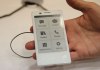
    The black prototype device (pictured below) also includes a backlight for reading in the dark. Both screens are capacitive, but as you’d expect with e-ink the refresh rate can be a little slow. Ghosting on the screen from past renders can be removed by shaking the device. The technology can support both portrait and landscape orientation so the e-ink smartphone could be turned on its side to switch the orientation to more of an e-reader sized width. Both devices felt incredibly lightweight.

    Why do you want an only e-ink phone? Price for one thing. Battery life for another. Not to mention visibility in bright sunlight. Put all those factors together and this could be the perfect device for some emerging markets where electricity is at a premium. The prototypes are proof of concept at this point but Giovanni Mancini, director of product management for E-ink — the company which makes the screen — said the Chinese OEM which has made the prototypes, Fndroid, is talking to telcos and could launch a device this year.

    So how much would this e-ink smartphone cost? Mancini said the device maker would set the price but in his view it would be comparable with a feature phone price tag. A big theme of this year’s MWC has been smaller mobile players — from open source OSes like Firefox that are seeking to drive openness and accessibility and drive down the cost of devices, to mobile veterans like Nokia focusing afresh on building smarter feature phones to target cost-conscious users in emerging markets. So it’s interesting to see companies toying with the idea of an entirely e-ink smartphone to cut device costs while preserving key smartphone functions such as access to the internet and email.

    Click to view slideshow.

  • Why Qualcomm Wants To Bring Ultrasound Transmitters To Smartphones And Tablets

    qualcomm logo

    Mobile chipmaker Qualcomm has a track record of pushing new capabilities into its chips faster than its competitors in a bid to carve out a bigger chunk of the market. Last year, for instance, its LTE Snapdragon processor helped it to take a 48 per cent revenue share in H1 (Strategy Analytics‘ figure), helping to drive more LTE handsets into the market which in turn accelerated the rate of 4G adoption.

    The company made an interesting acquisition last November, buying some of the assets of an Israeli company called EPOS which makes digital ultrasound technology. Ultrasound may seem an odd technology to push into consumer electronics but Qualcomm clearly sees it as another differentiator for its chips, thanks to its potential to offer some novel additions to the user interface space — both for stylus-based inputs and even touch-less interfaces like gestures.

    Discussing Qualcomm’s interest in ultrasound at the Mobile World Congress tradeshow in Barcelona, Raj Talluri, SVP of Product Management, explained that to put the technology to work in mobile devices an ultrasound transmitter could be located in a stylus, with microphones sited on the mobile device that can then detect the position of the pen.

    Samsung has already included a capacitive stylus with its Galaxy Note phablet but Talluri said an ultrasound-based stylus would extend the capabilities — allowing a stylus to be used off-screen, say on the table top next to where your phone is resting, and still have its input detected.

    “It’s is better [than a capacitive stylus] in some key different ways which we’re working on getting to market – for example you could write here [on the table next to the phone] and it will still detect where it is. So let’s say you have a [paper] notepad… and you have a phone [nearby on the table] and you can start writing on your notepad it will actually also be transcribed into text on the phone because what happens is the ultrasound can be used to calibrate any reasonable distance,” he told TechCrunch.

    The technology could also support gesture-based interactions by positioning an ultrasound transmitter on the mobile device. “There are many use cases of ultrasound,” said Talluri. “You could put a little ultrasound transmitter here [on the corner of the screen] and transmit stuff and then when you cut the ultrasound field [by swiping above the device’s screen] you can do gestures.

    “There’s many different things you can do with it, once you have it. So we’re working on it and hopefully we’ll get it to commercial products.”

    Talluri would not be drawn on the likely timeframe of bringing this technology to market in Qualcomm chips, or which device makers Qualcomm is working with. “We haven’t announced anything yet. There’s clearly a lot of work to be done on it. We’re working on it we’re just not ready to announce,” he said. “We are very interested in in, that’s why we acquired the assets.”

    He would say that Qualcomm is looking at both phone and tablet form factors for the ultrasound tech but added that it could work “anywhere” — including in wearable devices, such as Google Glass.

    The system also doesn’t necessarily require new microphones to function — opening up the possibility of ultrasound-enabled accessories that can be retrofitted to existing devices to extend their capabilities.

    “The other nice thing is that we find that the microphones [on existing mobile devices] that we put in to use for speech can also detect ultrasound waves — so you probably don’t need special microphones. There are lots of interesting ways to do it… You just need a transmitter somewhere,” said Talluri.

    Discussing how mobile chipsets are generally going to evolve, Talluri said in his view the focus will be, not so much on on simply adding more and more cores, but rather on getting all the various chipset elements to work together better.

    “We think the next generation of innovation is going to be more on heterogeneous compute. Right now if you look in the phone we’ve got CPUs, we’ve got GPUs, we’ve got video engines, we’ve got audio engines, we’ve got cameras, we’ve got security blocks but they all do one thing at a time.  Ideally you just want to say I want to do this and it should just go map itself to whatever its logical place is and if that place is busy it should work on something else, maybe not optimally,” he said.

    “That’s what I mean by heterogeneous compute. Every block should be able to do other things so that’s kind of where I think SOC in general will evolve to. How can you take advantage of the silicon that you put inside the die to do multiple things, not just one thing at a time. I think that’s a more interesting concept than just put more cores.”