Author: Natasha Lomas

  • Tablet Usage Edges Past Mobile On BBC’s On-Demand iPlayer For First Time: Record 41M Tablet Requests In March Vs. 40M Mobile

    iplayer

    Another sign of the swift rise of tablets today: last month tablet usage of the BBC’s on-demand online TV service iPlayer edged past mobile for the first time, with 41 million programme requests by tablet vs. 40 million on mobile, according to BBC stats for the month. There were 200,000 more requests on tablets than mobiles. Overall, across all device types, the service saw 272 million full length programme requests in March in the U.K.

    As a percentage of the overall requests by device type, tablets and mobiles took a 15% of the March pie. Judging by the below graph, the two devices have clearly been eating into the share of the main iPlayer access device: the traditional computer. The stats show mobiles and tablets have driven down the usage on computers from 59% in March 2012 to 47% in March 2013. Over the same period, tablets have grown their share from 6% to 15%, and mobiles from 9% to 15%.

    This finding aligns with wider industry analysis that PC shipments are declining as people buy and use alternative smart connected devices, such as tablets and smartphones. Gartner predicts almost 200 million tablets will ship globally this year, powered by YoY growth of nearly 70% (IDC pegs the rate at 78.4%). While PC shipments are predicted to decline 7.3% this year. In another related data point to the BBC’s figures, last monthAdobe’s latest Digital Index recorded the proportion of web traffic coming from tablets also pushed past smartphones for the first time.

    The BBC’s on-demand TV service, which lets viewers catch up on scheduled programmes after they have been broadcast, is exactly the sort of app you’d expect to thrive on the tablet form factor — which is both portable and has a screen that is large enough to view high production value video content without compromising the overall viewing experience. And the BBC’s iPlayer data bears this out: with considerably higher tablet usage for TV programmes vs radio content.

    Looking specifically at TV content, the BBC said tablets took a 19% share of iPlayer programme requests in March compared to 17% for mobile. But its radio only data shows tablets dropping right down to 4% while mobile took 10%. Computers swelled their share to 68% of the radio data — suggesting people who are using their computer to multitask use iPlayer to stream radio in the background while they browse the web or work.

    The BBC’s iPlayer data also flags up another interesting difference between how people consumer TV and radio content online — with the majority (88% in March) of TV requests being on-demand (i.e. catch up) requests, rather than live TV viewing. But for radio the proportion is almost reversed, with 83% of the radio requests being for live listening.

    The BBC licence fee may explain a portion of this behaviour, since iPlayer users are required to be licence-fee paying to view live TV (but do not need to for radio). But it also suggests continued decline in live TV viewing among the iPlayer demographic (which skews younger than traditional TV viewers, with 76% of iPlayer users aged under 55 as of Q4 2012). The proportion of live TV viewing on iPlayer did increase in August (to 32%), possibly owing to the Olympics.

  • iOS Still Top Platform For Monetising Mobile Ads, Opera’s Q1 Study Finds, iPhone Also Beating Android For Generating Ad Traffic

    Faceboook iPhone mobile app ads

    Opera has just put out its latest State of Mobile Advertising report for Q1 2013 and its findings put the iPhone back on top for “impression volume” (i.e. generating the most traffic to mobile ads), regaining its lead over Android. iOS also maintains its top position for monetisation compared to the other mobile platforms.

    Opera draws its data from its mobile advertising platform business, which consists of AdMarvel, Mobile Theory, 4th Screen Advertising and Opera Mediaworks Performance. The platform serves 50+ billion ad impressions per month via 12,000 mobile sites and apps.

    Mobile ad campaigns running on Apple devices “consistently achieve the highest average eCPMs”, according to Opera’s findings, and account for nearly half (49.23%) of all revenue delivered to mobile publishers.

    In addition, Opera’s data shows that the iPhone edged out Android phones in ad impression volume in Q1, having temporarily lost the number one position at the end of 2012. Add in ad impressions and clicks on the iPad and iOS has a clear lead over Android, with 44.53% of the ad traffic and 49.23% of the revenue vs 31.26% of the ad traffic and 26.72% of the revenue.

    Here’s Opera’s full breakdown of ad traffic and revenue share by mobile OS:

    Across all of its ad platforms, Opera said the U.S. continues to drive the majority of ad requests but notes that this lead is shrinking as other regions see faster rates of growth. The U.S. still generates the most revenue (75.4%) across Opera’s platform, even with diminished impression volume (50.7% vs. 60% last quarter).

    Opera’s report flags up especially accelerated ad request growth in Europe, with the European market now generating more than 21% of ad requests, up from 14.61% in the previous quarter.

    It said the majority (65%) of European ad traffic originates in five key markets: the U.K., Italy, Germany, France and Spain.

  • Nokia To Follow Samsung’s Lead By Launching A Phablet This Year, Along With 40MP Lumia PureView & Lighter Lumia 920, Reports FT

    lumia

    Rumours that Nokia is working on a Windows tablet, to supplement its line of Windows Phone-based Lumia smartphones, have been doing the rounds for well over a year, with extra fuel poured on the speculative bonfire last year when Microsoft announced its own line of tablet hardware. Earlier this year, Nokia CEO Stephen Elop told an Australian newspaper it was looking closely at the tablet market — and thinking about “what the right way to participate would be and at what point in time”.  Well, if a story in the FT is on the money, Nokia may have decided that a phablet — rather than a tablet — is what it needs right now. (And with Windows tablet sales failing to make a huge impression so far, who could blame it?)

    Phablets, for those fortunate enough to have avoided this most distressing of tech portmanteaus, stands for phone+tablet(=phablet). Phablets are typically classed as smartphones with screens of 5 inches or more on the diagonal, which can therefore function as small tablets. Phablets with 6+ inch screens are not now too unusual, pushing the category within touching distance of the mini tablet segment where screens tend to start at 7 inches.

    According to the FT, which cites people with knowledge of Nokia’s plans, the former worldwide number one mobile maker (whose crown was snatched by Samsung) is planning several high end smartphones this year — including “a device that can work as a phone and a tablet [aka a phablet]… similar in size but with more advanced specifications to Samsung’s popular Galaxy Note”. The forthcoming phablet is described as the most “innovative” of Nokia’s planned smartphone releases this year, but there is no detail on exactly what features that will translate into (beyond obviously a bigger screen). The largest screened Lumia to date is Nokia’s current flagship, the Lumia 920, which packs a 4.5 inch pane.

    Should Nokia be looking to launch its own phablet, hardware alone is unlikely to be enough to compete with Samsung. The latter arguably created the category with its original Galaxy Note (launched in 2011), and since then it has expanded its phablet efforts on both hardware and software fronts, creating apps and an SDK for its S Pen stylus, plus other phablet-specific software such as a split screen view feature. It has also expanded its phablet portfolio, with the Note II and a freshly  announcing new (likely cheaper) pair of devices, under a new brand: the Galaxy Mega.

    Nokia will need to pour in similar feature-focused effort to ensure that any Lumia phablet is not just a big Windows Phone — but adds new functionality that make full use of the extra size. To date, with Lumia, Nokia has focused on the camera/imaging function for flagship devices, as well as differentiating via colourful hardware — so perhaps image editing software is one area where it could look to make a Lumia phablet stand out. (Especially as the Windows Phone platform still lacks the popular Instagram app.)

    We reached out to Nokia for comment on the phablet rumour and a company spokesman said: “Nokia does not comment on market rumour or speculation.”

    Other planned launches in Nokia’s pipeline this year are the previously rumoured ‘true PureView’ Lumia — which the FT’s sources say will have a 40 megapixel camera plus flash, and may get a July launch — and “a lighter and more advanced version” of the Lumia 920, presumably responding to complaints about the device’s weight. “Another lower priced version” of the 920 is also pegged for a fall launch. Rumours of an aluminium Lumia coming this year have surfaced before. Any ‘true PureView’ Windows Phone would be a considerably hefty creature — so offsetting such bulk by expanding the portfolio to offer lighter Lumia alternatives would make sense. Expanding the range of mid-range Lumias is something Nokia has been focusing on this year.

    When TechCrunch spoke to Nokia’s Elop back in February 2012 we asked about phablets, and he told us it was an area of interest to Nokia, saying: “Tablets are an opportunity, and smartphones up to a certain size are an opportunity. We are looking closely [at the mid-size tablet market] and looking to see whether it will catch on.” Adding that while he personally liked the form factor of the Lumia 800 best because he can reach across the whole screen with his thumb “different things for different people in different markets” is its philosophy.

    And when asked in a second interview, in February this year, about what innovation Nokia could bring to tablets Elop said: “We, obviously we’re looking at this market very closely. Like right now there’s a lot of shifting and things going on with all of us getting our first exposure to Windows 8, both from a PC perspective and a tablet perspective and we’re watching that very closely and based on what we’re learning there – and correctly answering the question you asked, what innovation [could you bring] because just a tablet by itself? Ok, so there’s many other tablets and so we have to make sure that in the same way with Lumia we said no we’re going to stand out, we have to make sure we’re thinking about that. So we’re watching that market – but haven’t announced a thing.”

    Nokia has played in the tablet/phablet space before. Indeed, it was an early mover, unboxing its N800 Internet Tablet (which looks more like a phablet by today’s enormo-phone standards) back in 2007, years before the iPad burst onto the scene. But since transitioning from Symbian to Windows Phone, Nokia has concentrated its mobile efforts on phones exclusively.

  • Jolla Confirms It Will Show Its Debut Handset Next Month And Kick Off “Pre-Sales Campaign” For Fans After Mid-May

    Sailfish

    Jolla, the Finnish startup comprised of ex-Nokians who left to keep the MeeGo fire burning, has confirmed it will be showing off its first handset next month, and kicking off a “pre-sales” campaign to allow fans to register to buy the phone. Although Jolla has demoed its Sailfish UI in some detail before, it has generally been tight-lipped about its plans for the device’s hardware design — so next month will mean another big reveal.

    Jolla had previously pegged the second half of this year for its debut device launch. Today it has confirmed to TechCrunch that this launch timeframe is not changing, despite its intention to show the phone next month. It provided the following emailed statement confirming the pre-sales campaign and noting that the shipping timeframe remains the same:


    Jolla will showcase its first device in May. The exact timing of the introduction will be announced later. A pre-sales campaign is expected to start after mid-May. The campaign is currently being planned and further details will be available at the time of the product introduction. The sales start of the first Jolla device will take place during the second half of 2013 as earlier announced.

    The pre-sales campaign was reported earlier in Finnish publication digitoday, which ran an interview with Jolla chairman Antti Saarnio. According to the  interview (translated from the Finnish by Google translate), the pre-sales campaign will be a “Kickstarter-style” crowdfunding campaign, whereby early backers can expect to get a device with a few special extras compared to buyers who pile in later.

    Jolla told TechCrunch via Twitter that the pre-sales campaign is not a crowdfunding campaign to fund the initial production run, rather it’s a “pre-sales is for the fans to sign up their interest and make sure they get the device first”. However the distinction between a pre-sales campaign for fans and a crowdfunding campaign to fund production is a minimal one, and mostly a difference of emphasis.

    In its interview with digitoday, Saarnio apparently talks about taking “advance payments” and “pre-payments” from fans who register to buy the device — payments that “will not be so great as to constitute a threshold for the fans” but will be tiered, allowing them to get a more “tailored” phone, the more they pay.

    Jolla has not, however, confirmed this down payments detail separately to TechCrunch. Its statement suggests it is still finalising plans for the pre-sales campaign.

    The pre-sales campaign is clearly part of Jolla’s marketing and community-building efforts to spread the word about Sailfish and build momentum behind it. But taking down payments ahead of production would also make sense for a startup with limited resources to build hardware and one that is competing in such as fiercely competitive space, against smartphone makers with such huge resources.

  • Smartwatch Market Could Be A Third The Size Of The Netbook Market This Year (Maybe)

    1477041425_bc134130c7

    It’s almost like Apple, Google, Samsung and Microsoft have actually launched smartwatches. Except of course they haven’t. But who cares! Analyst house ABI Research has been stroking its collective beard and come up with a forecast for the size of the nascent smartwatch market. And — drum roll please! — it reckons you can bank on more than 1.2 million of the wrist-strapped gizmos shipping this year.

    Put another way, that’s about as many Raspberry Pi microcomputers shipped in its first year on sale. Or just over a third as many netbooks are predicted to ship this year (3.97 million units globally, according to IHS iSuppli). Which means smartwatches could be about as popular as a niche gadget for learning about computing/making a DIY robot, but less popular than the PC that’s cannonballing towards extinction the quickest.

    Which sounds about as plausible as any guesstimate produced prior to any mainstream tech companies actually launching product. If you’re in the business of reading tea  leaves it helps if you wait for someone to make a brew before doing divinations.

    ABI says its “market intelligence” of the “strong potential emergence of smart watches” — note the careful hedge, and don’t bet the farm on this one just yet — is based on the emergence over the past nine months of “a number of new smart watches”, which is likely referring to Kickstarter-funded Pebble and its myriad of wrist-coveting, crowdfunded competitors.

    The analyst also says its forecast is based on ”contributing factors” that it reckons are encouraging the smartwatch market to (maybe) emerge from its Kickstarter-powered chrysalis and (possibly) blossom into a standalone butterfly — namely:

    …the high penetration of smartphones in many world markets, the wide availability and low cost of MEMS sensors, energy efficient connectivity technologies such as Bluetooth 4.0, and a flourishing app ecosystem.

    Even though the smartwatch market remains a partially formed, largely limp-wristed creature, listlessly stuck within its chrysalis of potential, ABI has already spotted four categories hoping to fly in the months and years ahead — aka: notification types (such as MetaWatch and Cookoo); voice operational smartwatches (such as Martian); hybrid smartwatches; and completely independent smartwatches — i.e. smartwatches that have their own OS and aren’t just playing second fiddle to a smartphone.

    In the latter category, ABI cites I’m Watch as an example but also suggests that other “possible archetypes” could be “Apple’s hotly anticipated iWatch, Samsung’s Galaxy Altius and Microsoft[‘s ‘Windows Watch’, or whatever catchy name Redmond ends up bestowing on it, if indeed it ends up making such a thing at all]. If Mark Zuckerberg or Jeff Bezos or Justin Bieber decide to launch their own Android-powered smartwatches ABI would presumably add those in here too.

    “Smartwatches that replicate the functionality of a mobile handset or smartphone are not yet commercially feasible, though the technologies are certainly being prepared,” adds senior analyst Joshua Flood in a quasi-illuminating statement of the potential factors that could influence this nascent market’s potential as the hands on our (non-smart)watches push inexorably on.

    [Image by Telstar Logistics via Flickr]

  • Jomi’s Smart Water Bottle Sleeve-Plus-App Wants To Track & Chart Your Liquid Intake To Make You Drink More

    Jomi band rendered

    Move over HAPIfork. Estonian startup Jomi Interactive is cooking up a pair of smart devices that will remind people to drink more water. Or at least whatever liquid/poison of choice you put in your water bottle. The aim, says the startup, is to encourage healthy behaviour and counteract the mild dehydration we are all apparently afflicted with. No, not just hungover folk; everyone who fails to glug down the requisite 2.5-3 litres of water per day.

    Jomi is prototyping a device — or rather two devices — that aim to fix the problem of having plentiful water on tap but never remembering to drink enough of it (perhaps the ultimate #firstworldproblem). So far, Jomi has created design prototypes and 10 milled PCBs for developers to play around with but no final product. It’s bootstrapping development but will be launching a crowdfunding campaign to fund a production run once it has finalised hardware design and testing.

    The two devices it’s planning are the Jomi Band, which will be the more basic of the pair (pictured above in an early design concept render, and below right in prototype form). This will attach around a water bottle and remind the user at pre-set intervals to take a sip (presumably by flashing/beeping). The second more pro product — the Jomi Sleeve — will attach to the bottom of the bottle and, in addition to reminders, will periodically weigh the bottle, to figure out how much water is being consumed. The data will then be sent via Bluetooth to a mobile/tablet app so that pro users can geek out over graphs and charts showing their beverage consumption data (and share their relative ‘liquidity’ with friends).

    What specifically does the device hardware consist of? “PCB is custom built, it features an accelerometer, MCU, LEDs, and a few other bits and pieces,”  Jomi founder and CEO Andre Eistre tells TechCrunch. Although he stresses they are still at an early stage, with the hardware set to shrink — and the design to be reworked. The software will be open to other developers to hack around with it — so perhaps another app could be made to warn alcoholic beverage drinkers when they have reached a daily safe unit intake level. (Or track soft drink guzzlers’ sugar intake and chart their rising risk of Type 2 diabetes.)

    “Designers (from Estonian Arts Academy) are working on the next version of the design model and the design is expected to change drastically over the next few weeks,” he says. “Right now we are focusing on hardware (revision 3) and embedded software of the device… The hardware isn’t final either — it will be a lot smaller than that. Software will be open source — we want people to have fun with the device.”

    Eistre says Jomi will 3D-print new silicone molds for the first test batch — due to be handed out to a test group by the end of this month. After that it will be turning to Kickstarter to get the funding ball rolling for a first production run, as it continues product development.

    The target market for the devices are 20- to 40-year-old health conscious U.S. consumers who have  a penchant for gadgets — the sort of folk who likely own a Fitbit or Fuelband.

    Jomi is partnering for testing the market in Europe with bottle maker KOR water, and is hoping to get similar companies in the U.S. interested. ”Our intended target market is the U.S., where we would like to secure deals with a few larger water vessel producers, like Sigg, Gobble, CleanKanteen, CamelBak, etc,” Eistre says.

    It’s also making the most of Estonia’s startup-friendly environment, securing help and small bits of funding (totalling around €8,000/$10,500 to date) from a variety of domestic companies to keep development costs down.

    For instance, Eistre says the hardware development costs have been completely funded by local electronic design firm Hedgehog. Other Estonian companies and organisations that have kicked in free services/grants include Trinidad Consulting, 7BlazeVelvet Creative Alliance and — quelle surprise — local water company Tallinna Vesi.

    Jomi is also down to the last eight (out of a starter pool of 100 original “best business ideas”) in Estonia’s “largest entrepreneurial competition” — Ajujaht (aka “brain hunt”) – which has a €50,000 prize for the winner.

    Jomi’s water-measuring gizmos can be put into a category (connected objects/the Internet of things) that looks set to explode over the coming years, as more everyday objects are augmented with data-generating sensors, and that data is in turn funnelled into the Internet’s matrix via smartphones and home routers.

  • Where In The World Are The 1.2M Raspberry Pi Microcomputers? Mostly In The West – But Pi Founders Want More Spread This Year

    rastrack

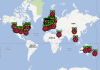
    One to 1.2 million Raspberry Pi microcomputers have shipped since the device’s launch just over a year ago but where in the world are they located? While it’s impossible to say exactly where* each Pi has ended up, the vast majority of the devices sold to-date have shipped to developed nations — including the U.S. and the U.K. But the potential of the Pi as a low cost learning-focused computing platform for developing countries remains very exciting.

    Last week the U.K.-based Pi Foundation blogged about a volunteer group that had taken a suitcase-worth of Pis to a school in rural Cameroon where they are being used to power a computer class. At $35 apiece, and even $25 for the Model A Pi, the Pi does a lot to break down the affordability barrier to computing — although it still requires additional peripherals (screen, keyboard, mouse) to turn it into a fully fledged computer terminal.

    Asked about the global sales distribution of the Pi, the Foundation provided TechCrunch with some “very rough”, internal estimates of Pi sales to developing/emerging nations — and the figures (listed below) suggest that the first million+ Pi sales have overwhelmingly been powered by wealthier nations.

    The most Pi-populous country on the developing/emerging nations list (India) can lay claim to roughly 0.5%-0.6% of total global Pi sales to-date, according to this data. While, collectively, these listed nations make up between only 1.4% and 1.7% of total global Pi shipments. So more than 98% of the Pi pie has been sold to the world’s wealthiest countries thus far.

    India 6000
    Indonesia 1200
    Lao P.Dem.R. 600
    Malaysia 3400
    Philippines 500
    Pakistan 100
    Sri Lanka 50
    Thailand 2000
    Vietnam 500
    Egypt 150
    South Africa 2000
    Tunisia 200
    Zimbabwe 50
    Bolivia 100
    Chile 400
    Colombia 20
    Peru 50

    There are also, of course, scores of (apparently) Pi-less developing nations that do not make this list at all. One of which – the Kingdom of Bhutan — does actually have a princely one Pi sale to its name at present, according to the Foundation. “It’s a server for Khan Academy Lite in a school, whose 64GB SD card costs more than twice what the Pi cost,” the Foundation’s Liz Upton tells TechCrunch. “We’re working on getting more out there!”

    It’s likely that some of the Pis shipped to developed countries have found their way to less wealthy nations – via charities and other ‘suitcase schemes’ such as the Cameroon school project mentioned above which took out 30 Pis. Or via individual buyers seeking to avoid high import tariffs that can push up the price of bulk commercial imports (such as in Brazil).

    But even factoring in some extra spread, there’s no doubt the Pi is predominantly disrupting the living rooms and schools of the developed world. Which, it should be noted, was the original ambition of the Pi founders — specifically they wanted to get more U.K. kids coding, following a national slump in interest in computer science education.

    But the Pi’s unexpected popularity has generated additional momentum for the project — and even grander geographical ambitions.

    “We’re weighted very strongly towards the developed world,” admits Pi founder Eben Upton, when he sends the data, but he says that this spread — or rather concentration — is something the Foundation is keen to work on. “A major challenge for us this year is to find ways of making Pi more available, and more appealing, in these [developing/emerging] markets,” he says.

    The Pi hardware seems to offer huge potential to the developing world — being cheaper than most mobile phones, let alone most smartphones — the other device touted as the likely first computing experience for connecting the “next billions” to the Internet. The Pi is also cheaper than another Linux-based low cost learning-focused computing project: the one laptop per child’s XO laptop. And it has an advantage over general Linux PCs or Android tablets in being conceived and supported as first and foremost a learning environment, making it well-suited to push into schools.

    As for low cost PCs in general, the netbook category — still more expensive than Pi — is facing extinction by 2015, according to analyst IHS iSuppli, which has put out a forecast today predicting zero netbook shipments within two years, and just 3.97 million units globally this year.

    As the traditional desktop PC declines, it’s great to see the rise of a new computing device that, unlike the slick consumer tablets du  jour, is intended to encourage hacking, tinkering and learning about hardware and software, rather than passive consumption of prepackaged apps — in the best tradition of the home computer. And a device which also, thanks to its tiny price-tag, has such huge disruptive potential.

    So here’s hoping a lot more of the next million+ Pis end up very far from home indeed.

    *At the time of writing, the Rastrack map, a project to get Pi-owners to report the location of their Pi and plot the owner locations on a map, was not accessible. The map is used in the feature image at the top of this post, showing a snapshot of self-reported Pi distribution in May last year

  • Google Play, Apple’s App Store Might Face “Legal Undertakings” In OFT’s Investigation Of Freemium Games For Kids

    kids on tablets

    The freemium kids’ app party that has seen some parents left with hefty bills because of their kids’ use of games could be heading for a sticky end — at least in the U.K. The Office of Fair Trading has announced a six-month investigation into whether children are being “unfairly pressured or encouraged to pay for additional content in ‘free’ web and app-based games”.

    The OFT says in a press release that it cannot identify the companies that are subject to investigation but a spokesman confirmed to TechCrunch  it is contacting Apple and Google as part of this process — being the proprietors of the two largest app stores: the iTunes App Store and Google Play.

    Once the investigation has concluded — and if the OFT is  unhappy with what it learns and the discussions it’s had — the spokesman said it “can seek legal undertakings from court”.  Companies subsequently ignoring any court directions could face “an unlimited fine”, he added.

    The OFT is concerned that developers are designing children’s content to deliberately encourage kids to make payments after the initial free download/access. It’s not citing any examples or naming any problematic apps at this point but it’s not hard to find instances that are likely to have triggered the investigation — such as the five-year-old British boy who accidentally made in-app purchases totalling £1,700 in 15 minutes playing  Zombies vs Ninja. Or the British six-year-old girl who amassed a £900 bill in half an hour on the My Little Pony app.

    The OFT points out that “direct exhortations” (ie strong encouragement) to children to make purchases themselves, or ask another adult to do something that results in a purchase, are unlawful under the Consumer Protection (from Unfair Trading) Regulations 2008. The sort of in-app purchases that might fall foul of the regulation could include membership, virtual currency/rewards, additional levels, faster gameplay and additional game features, it added.

    The OFT said it has written to companies that are offering free web or app-based games asking for information on in-game marketing to children. It is also asking for parents and consumer groups to contact it with information about “potentially misleading or commercially aggressive practices they are aware of in relation to these games”.

    The spokesman said the aim of the investigation is to get more “clarity” about the digital market for kids’ games, and the sorts of behaviours/mechanics apps are utilising, by talking to games developers, app stores, parents and consumer groups.

    The investigation will also specifically consider whether the full cost of games aimed at children is being made clear when they are downloaded/accessed. ”The information [gathered during the investigation] will be used to understand business practices used in this sector, to establish whether consumer protection regulations are being breached and if so what the consumer harm is,” the OFT said today, adding that it “expects to publish its next steps by October 2013″.

    Commenting in a statement, Cavendish Elithorn, OFT Senior Director for Goods and Consumer, added: “The OFT is not seeking to ban in-game purchases, but the games industry must ensure it is complying with the relevant regulations so that children are protected. We are speaking to the industry and will take enforcement action if necessary.”

    The  spokesman stressed that the OFT hopes to be able to solve any issues uncovered through “conversations” with the various companies involved — including Apple and Google — rather than taking the court route . ”We hope this is going to be resolved by talking to the big companies,” he added.

    Google declined to comment on the investigation when contacted by TechCrunch.

    At the time of writing Apple had not responded to a request for comment.

    Both Google’s and Apple’s app stores require developers to sign developer agreements in order to successfully submit apps, and both have been known to remove content that violates these developer guidelines — so app stores are already in the app policing business.

    Google’s Play Store developer guidelines include the following (vague) stipulation, for instance, that could potentially be used to boot freemium kids’ apps that are misleading about the potential costs:

    Developers must not mislead users about the applications they are selling nor about any in-app services, goods, content or functionality they are selling.

    Apple does more policing of its store than Google, with iOS developers required to submit apps for approval prior to publication on the store. “We review all apps to ensure they are reliable, perform as expected, and are free of offensive material”, Apple notes on its developer site,  warning app makers to: “Before submitting your new or updated apps for review, check out the latest App Store Review Guidelines and Mac App Store Review Guidelines.”

    There are  also signs that Cupertino has been looking more closely at some of the problems posed by having kids interact with apps. Earlier this month it relocated age ratings from the bottom of app listings on its store, to the top near the title where they are easier for parents to spot.

    This change is likely to have been triggered by concerns about apps powered by user-generated content that can contain adult material appearing in the app store where children could find them — such as Twitter’s Vine video app — rather than specifically helping parents prevent kids making in-app purchases.

    Here’s the OFT’s summary of the investigation:

    Many children’s web- and app-based games are free to sign up to or download.  Some of those games give players the opportunity to ‘upgrade’ their free accounts through paid-for membership, providing access to parts of the game not available to non-paying players. Others encourage in-game purchases to speed up gameplay or to give access to extra game features.

    The OFT will look into whether those children’s games are in line with the Consumer Protection (from Unfair Trading) Regulations 2008 to ensure that any commercial practices they include are not misleading or aggressive. In particular, the OFT will consider whether children’s web- and app-based games directly encourage children to buy something or to pester their parents or other adults to buy something for them. [see note 1]

    The OFT will gather information on this issue for the next six months and is interested to hear from businesses operating in the market and mobile app platform operators. The OFT will also consult with relevant UK and international regulators.

    The OFT is also keen to hear about potentially misleading or commercially aggressive practices experienced by parents whose children play these games, and also from consumer groups with an interest in this area.

    note 1: The Regulations, under Annex Practice 28, prohibit advertisements from including direct exhortations to children to buy something or to ask their parents or other adults to buy something for them.

  • Samsung Launches New Phablet Brand – Galaxy Mega – Confirms Two Devices: 6.3″ HD, 1.7GHz Dual-Core & 5.8″ QHD, 1.4GHz Dual-Core

    GALAXY Mega 6.3 Product Image (4)

    Samsung has confirmed the arrival of a new sub-brand within its Galaxy range of mobile devices: the Galaxy Mega expands its mini-tablet-sized-phone (aka phablet) portfolio by firing two new devices into the category, building on the momentum generated by its extant Galaxy Note line.

    Samsung said the Mega will be available globally — “beginning May from Europe and Russia”, adding that product availability will vary  by market and roll outs will be gradual. There’s no official word on Mega pricing yet but since both devices pack dual-core chips (vs the Galaxy Note II’s quad-core chipset) it’s possible they will be a slightly more affordable than Samsung’s other phablets.

    Here’s how Samsung describes Mega:

    The newest addition to the GALAXY family balances an optimal viewing experience on a 6.3-inch HD screen, yet is ultra-thin and portable enough to put into a pocket or hold in one hand. The GALAXY Mega offers a mix of popular smartphone and tablet features such as an effortless user experience, a split screen, multitasking between video and other apps and more.

    JK Shin, CEO of Samsung’s mobile business, added in a statement that Mega is about bringing more choice to buyers who want a portable device with a big screen. “We are aware of a great potential in the bigger screen for extensive viewing multimedia, web browsing, and more. We are excited to provide another choice to meet our consumers’ varying lifestyles, all while maintaining the high-quality features of the award-winning GALAXY series,” he said.

    Samsung has climbed to a position of dominance in the smartphone market by offering a hugely diverse portfolio of devices, hitting price points from low end budget to high end flagship and everything in between — so little surprise that it’s beefing up its phablet line with Mega.

    The company has also fuelled an industry wide trend for smartphone screen size inflation, following the introduction of the original Galaxy Note in 2011. That device had a 5.3 inch screen — which seemed massive at the time. But Samsung’s latest pair of phablets push out even more, adding a full extra inch in the case of the full HD device.

    Design wise, Mega does not push the boat out — sharing the same look as fellow Galaxy devices, such as Samsung’s new flagship Galaxy S4 (which packs in a 5 inch pane).

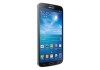
    Here’s the 6.3 inch Galaxy Mega:

    And here’s the 5.8 inch Galaxy Mega:

    On the specs side, the 6.3 inch Mega is the clear flagship of the pair — packing in a full HD screen, 4G/LTE connectivity and a 1.7GHz dual-core chip while the 5.8 inch Mega has a QHD display, HSPA+ and a 1.4GHz dual-core chip. There’s also a 1mm difference in thickness, with the flagship being 8mm thick vs 9mm for the Mega 5.8.

    Full dimensions for the two devices are 167.6 x 88 x 8.0 mm and 162.6 x 82.4 x 9.0 mm. Weight is 199g and 182g respectively. Both devices have 1.5GB RAM. Memory is 8GB/16GB options for the flagship Mega, and 8GB on board the other. Both support microSD card memory expansion up to 64GB. Battery capacity is 3,200 mAh and 2,600 mAh respectively.

    Each device has an 8 megapixel rear camera and a 1.9 megapixel front-facing lens. They also both run Android 4.2 Jelly Bean, skinned with Samsung’s TouchWiz UI.

    Also on board is a full contingent of Samsung software services — including the likes of Sound & Shot and Drama Shot, introduced at the launch of the Galaxy S4 — plus even more new features, including:

    • ‘S Travel: Provides trip information, local guides and resources and more
    • ‘Story Album: Allows customers to create albums of daily events, keep special moments in one place using a timeline, geo-tag information and publish digital albums in hard copy
    •  ‘Group Play’: Enables easy content sharing for up to 8 devices on the same Wi-Fi network.
    • Samsung WatchON: Transforms into an IR remote controller for a richer TV experience. Connect the device to your home entertainment system, and it will provide program recommendations, schedules, and even remotely control your TV.
    •  Samsung Link: Easily streams photos, videos, notes, or music to your television, tablet or computer.
    •  S Translator: Say or text what you need translated into the GALAXY Mega, and it will provide instant translation, using text or voice translation on applications including email, and ChatON.
    • ChatON: Share what’s on your screen with friends to stay more connected.

    Samsung was criticised for larding the S4 with too many software add ons, but it’s clearly not rowing back from this strategy of differentiating its Android devices with scores of its own software extras.

    As with the Galaxy Note II, the new Mega devices support split screen viewing for applications including email, messages, ‘MyFiles,’ ‘S Memo’ and ‘S Planner’ — which, beyond their larger screen size, is one way Samsung differentiates its phablets from its flagship smartphones.

    Back in January, analyst house IHS iSuppli predicted  smartphones with 5 inch+ screens would more than double in number this year — rising from 25.6 million in 2012, to 60.4 million in 2013, up “a notable” 136 per cent year on year.

    Last fall, Samsung said channel shipments of its Galaxy Note II had pushed past five million two months after the device launched. Samsung does not break out actual sales of the Note.

  • Microsoft Reportedly Working On 7″ Surface Tablet As PC Market Slumps To Four-Year Low

    Surface_031_typecover

    According to a report in the WSJ, Microsoft is working on a new line-up of its Windows 8-powered Surface tablets that includes a seven inch version of the slate. This small form factor size would enable Microsoft to compete with the likes of the Android-powered Google Nexus 7, Amazon Kindle Fire and Samsung Galaxy Tab 2, as well as Apple’s iOS-based iPad Mini.

    The paper quotes a person familiar with the situation saying that while 7-inch tablets were not part of Microsoft’s product plans last year  company executives have realised they need to respond to the growth and popularity of small slates. Which boils down to Redmond is having to play catch up yet again.

    Microsoft has previously been tipped to release three new and distinct generations of Surface this year — albeit, none of those prior rumours had pointed to a seven inch device. And perhaps with good reason, as Gartner analyst Michael Gartenberg noted via Twitter today the small tablet form factor poses some usability challenges for Microsoft’s full-fat Windows OS. Rival small slates are powered by lighter weight mobile OSes, and while Microsoft has now unified its smartphone (Windows Phone) and desktop OSes on a shared kernel it’s still using ‘desktop’ Windows for tablets.

    But it’s not just that computing devices are getting smaller. Shrinkage appears inextricably linked with the market in another way. Gartner put out its figures for worldwide PC shipments for Q1 late yesterday — which show shipments declining to their lowest level since Q2 2009. The analyst says alternative smart connected devices — aka those small smartphones and tablets running lighter weight smartphone OSes — are eroding the traditional PC market.

    Global PC shipments totalled 79.2 million units in Q1 2013, which Gartner said was an 11.2% year-on-year decline. All global regions showed a decrease in shipments, with the EMEA region experiencing the steepest decline.

    “Consumers are migrating content consumption from PCs to other connected devices, such as tablets and smartphones. Even emerging markets, where PC penetration is low, are not expected to be a strong growth area for PC vendors,” said Mikako Kitagawa, principal analyst at Gartner in a statement.

    Microsoft’s Surface tablet straddles the gap between a tablet and a laptop, having a touchscreen and a keyboard cover add-on. But Gartner said touchscreen-based Windows 8 PCs took only a small percentage share of consumer PC shipments in Q1 — owing to their relatively high price.

    “Touchscreen-based Ultramobiles [such as Surface Pro] offer PC manufacturers an opportunity to recover market share from media tablets, but Windows 8 PCs with touchscreens accounted for only a small percentage of consumer PC shipments in the first quarter of 2013,” noted Isabelle Durand, principal research analyst at Gartner in a statement. “The majority of consumers remain unwilling to pay the price premium for touchscreen capabilities on PCs at this stage.”

    Android tablet sellers including Google and Amazon have been driving down the cost of seven inch slates — with the Nexus 7 and the Kindle Fire currently costing from as little $199 and $159 respectively — and that price erosion is likely helping to accelerate the consumer migration away from the traditional PC category. Microsoft’s Surface RT tablet was priced from $499 at launch, while Surface Pro was from $899.

    How Microsoft chooses to price any ‘Surface Mini’ will be key to driving sales — and with the iPad mini starting at $329, there is not much scope for Redmond to be able to undercut the small slate competition. Yet it can’t afford for Surface to fail.

    As Gartner analyst Carolina Milanesi told TechCrunch last week, discussing its smart devices forecast: “You need to own consumers in terms of mobile and tablet in order to remain relevant in this market… Consumers have options and consumers are choosing and Microsoft can not take that for granted that they’ll be the one to be chosen.”

  • Yandex, Russia’s ‘Homegrown Google’, Looks At Gesture-Based Interfaces To Power Apps

    Yandex gesture social TV interface

    Russian search giant Yandex has collaborated on developing an experimental gesture-based interface to explore how similar technology could be incorporated into future social apps and mobile products. The company offers digital services beyond search already, launching and expanding mapping services and translation apps, for instance, in a bid to drive growth as its domestic search share (60.5% as of Q4 2012) has not grown significantly in recent quarters. Future business growth for Yandex looks likely to depend on its ability to produce a pipeline of innovative products and services — hence its dabbling with gestures.

    Yandex Labs, the division that came up with its voice-powered social search app Wonder (an app that was quickly blocked by Facebook), has been working with Carnegie Mellon University on a research project to create a gesture-based social interface designed for an Internet-connected TV. The interface, demoed in the above video, pulls in data from Facebook, Instagram and Foursquare to display personalised content that is navigated by the TV viewer from the comfort of their armchair using a range of hand gestures.

    Here’s how Yandex describes the app on its blog:

    The application features videos, music, photos and news shared by the user’s friends on social networks in a silent ‘screen saver’ mode. As soon as the user notices something interesting on the TV screen, they can easily play, open or interact with the current media object using hand gestures. For example, they can swipe their hand horizontally to flip through featured content, push a “magnetic button” to play music or video, move hands apart to open a news story for reading and then swipe vertically to scroll through it.

    The app, which was built on a Mac OS X platform using Microsoft’s Kinect peripheral for gesture recognition, remains a prototype/research project, with no plans to make it into a commercial product. But Yandex is clearly probing the potential of gestures to power future apps.

    Asked what sort of applications it believes could be suitable for the tech, Grigory Bakunov, Director of Technologies at Yandex, said mobile apps are a key focus. “Almost any [Yandex services] that are available on mobiles now: search (to interact with search results, to switch between different search verticals, like search in pictures/video/music), probably maps apps and so forth [could incorporate a gesture-based interface],” he told TechCrunch when asked which of its applications might benefit from the research.

    Bakunov stressed these suggestions are not concrete plans as yet — just “possible” developments as it figures out how gesture interfaces can be incorporated into its suite of services in future. ”We chose social newsfeeds to test the system [demoed in the video] as it can bring different types of content on TV screen like music listened by friends, photo they shared or just status updates. Good way to check all types in one app,” he added.

    As well as researching the potential use-cases for gesture interfaces, Yandex also wanted to investigate alternatives to using Microsoft’s proprietary Kinect technology.

    “Microsoft Kinect has its own gesture system and machine learning behind it. But the problem is that if you want to use it for other, non-Microsoft products you should license it (and it costs quite a lot), plus it has been controlling by Microsoft fully. So, one of the target was to find out more opened alternative with accessible APIs, better features and more cost-effective,” said Bakunov.

    Yandex worked with Carnegie Mellon students and Professor Ian Lane to train gesture recognition and evaluate several machine learning techniques, including Neural Networks, Hidden Markov Models and Support Vector Machines — with the latter technique showing accuracy improvements of a fifth vs the other evaluated systems, according to Yandex.

    The blog adds:

    They [students] put a lot of effort in building a real training set – they collected 1,500 gesture recordings, each gesture sequenced into 90 frames, and manually labeled from 4,500 to 5,600 examples of each gesture. By limiting the number of gestures to be recognized at any given moment and taking into account the current type of content, the students were able to significantly improve the gesture recognition rate.

  • Android Home Gaming Console GameStick, A Kickstarter-Funded OUYA Competitor, Gets Its Release Delayed Til June

    GameStick

    GameStick, a would-be OUYA competitor that we wrote about back in January when it launched its Kickstarter campaign, has been delayed. The device achieved backing on Kickstarter in February and originally planned to start shipping in March, with “fulfilment to customer” pegged for April. But the launch has now been delayed until June — with the project creators saying it’s been a victim ”of the success we have created”.

    Close to $650,000 was pledged via Kickstarter by almost 5,700 backers — more than 6x more money than the GameStick’s creators original goal of $100,000. When funding hit $560,000 they added a stretch goal introducing one more console colour to the mix, and giving backers the option to vote on a fourth colour choice via Facebook.

    In an update to backers, the GameStick creators pointed to greater than expected production volumes as the reason for the three month delay, along with switching from air freight to sea shipping to keep costs down. ”The main production run has gone from a few thousand units to tens of thousands of units. This has meant that we have had to change production methods and move to high-volume tooling,” the message said.

    The first backers are not expected to receive their GameSticks until the last week in June.

    Initially we had hoped to deliver GameStick to you at the end of April. We now expect to complete mechanical tooling about 4 weeks later at the end of May. Then the units are assembled, tested and assuming there are no issues, packed prior to shipping to each territory. We expect to ship around the 10th June. The volumes are now too large for us to be able to afford to air-freight them, which was our plan, so now we are going to have to use sea freight to deliver them. That’s going to take around 2 weeks. Then we have fulfillment in territory – which we estimate will take between 1 and 5 days depending on where you are located. This means we think the likely date of arrival of your hand crafted GameStick will be at the last week of June.

    The GameStick is so named for its USB stick design, which means the console is even smaller than the cube-shaped OUYA. The GameStick controller has a space to fit the console inside for safe keeping when it’s being carried in a bag or pocket.

    As for internal hardware, the GameStick has a dual-core Cortex A9 chip clocked at 1.5GHz, along with a dual-core Mali 400 GPU at 400MHz, plus 1GB of memory and 8GB of flash storage. It uses Bluetooth 4.0 and 802.11b/g/n Wi-Fi for connectivity and runs Android Jelly Bean. Gamepads, mice and keyboards can be hooked up to it — with support for up to four controllers at once.

  • Health & Wellness Retailer Vitacost Turns To Tablets To Drive Serendipitous Sales

    vitacost

    Vitamin and health food online retailer Vitacost has launched a tablet app that’s designed to encourage shoppers to put more than just the core items on their shopping list into their digital basket. Introducing a little serendipity into the buying process makes a lot of sense when you’re selling 40,000+ different products but what’s interesting is that Vitacost sees tablets as the place to do this.

    Vitacost already has a smartphone app but says its tablet “experience”, which is designed for the iPad but built in HTML5 so is not a native app, is “entirely different” to the smartphone app — with a focus on allowing shoppers to discover new items, rather than just making it quick and easy to shop by category.

    “The tablet size and form-factor encourages browsing,” says Vitacost CMO David Zucker. ”Information-rich, large catalog retailers work really well in a browsing format on a tablet, which is difficult to achieve on a smartphone.”

    “The iPad experience is not an app but an actual website in HTML 5 to exploit the tablet and its functionality.  Our phone app is optimized for that size screen while the new iPad experience is designed for the mid-size screen and the iPad functionality,” he adds.

    It’s still early days in the retail gold rush to mine riches out of tablets. As slate ownership ramps up — with almost 200 million tablets predicted to ship globally this year (Gartner‘s figure), powered by YoY growth of nearly 70% — the swelling addressable market for selling stuff via slates is putting the dollar signs in retailers’ eyes. Especially as tablet owners are already showing signs that they are in the mood for casual browsing – so may be more likely to make an impulse buy.

    Designing tablet-centric ecommerce that encourages a more casual kind of shopping, to help shoppers discover products they didn’t know they were looking for, seems like a natural next step in digital retail strategy. Certainly for ecommerce companies that have a large number of SKUs to sell.

    “The tablet is the ideal ‘couch commerce’ browsing environment,” says Zucker. ”Their large screen, high resolution and good sound make rich browsing experiences possible… We see the growth in tablet usage as a ‘third screen’ and interaction with commerce and brands is increasing. Tablet usage has grown 10x faster than smartphone usage comparing the first two years after introduction [and] is expected to grow at 50% compounded annual rate through 2015 – this is where the puck is going.”

    So what exactly does Vitacost’s tablet “experience” do to get more shoppers encountering stuff they didn’t already know about? Firstly, the shopping experience is built around gestures to make it easier to browse and choose items, with swipes to quickly flick through scores of items on virtual shelves. Products that the shopper wants to buy are then dragged off the virtual shelf to the bottom of the screen where they are added to the basket.

    Another feature, called ‘browsing bubbles’, displays related info next to the products (such as ingredients and dietary info) but also bubbles up similar products to get users to widen the spectrum of their search.

    Add to that, a proprietary ‘sprinkler algorithm’ introduces an element of pure serendipity by pushing random categories and items into the mix too, so that shoppers end up encountering a much broader collection of products than if they have been shopping via the traditional ecommerce staple of drop-down category menus.

    The effect Vitacost was aiming for was to digitally recreate a bricks and mortar style shopping experience where the act of shopping naturally involves discovery, says Zucker. “Consumers using our new digital platform are offered an endless array of product suggestions through the browsing bubbles, increasing awareness of the vast selection of products and brands that Vitacost carries,” he adds in a statement.

    The company gets 1.5 million unique views to its ecommerce website per month but does not yet publicly disclose traffic to mobile devices. Zucker tells TechCrunch that “mobile/tablet revenue is a non-trivial portion of our total revenue” but said, first and foremost, the decision to develop the tablet shopping platform was driven by “the desire to remove friction in the buying process for our 40,000+ SKUs”.

    “We chose the iPad to exploit the functionality that this device has, such as dragging, swiping and other functionality that enables more gesture-based shopping.  Second, we needed a user experience that better enabled a consumer to discover the products we have; since a typical consumer will enter a brick and mortar grocery shopping experience and emerge with items they did not initially intend to buy,” he says.

    “This ‘discover’ process is difficult to build in a website and we believe we have made significant strides with our new experience to develop a sense of discovery using our shopping bubbles and sprinkle algorithm. Finally, we wanted something that people actually liked to use and found fun to interact with.  I don’t think anyone would say that web shopping is in itself a fun experience, although theVitacost iPad experience is.”

    Here’s a screengrab of the less fun/more utilitarian shopping experience offered on Vitacost’s website:

  • Raspberry Pi Microcomputers Are Powering A School Computing Lab In Rural Cameroon

    Pi in Cameroon

    The Raspberry Pi microcomputer has already put more than a million Pis in the hands of makers, tinkerers, parents and kids in its first year on sale. Which is an  impressive feat for a device that’s designed to get more people dabbling in electronics and thinking about how software works. The Pi Foundation actually wanted to create a device that U.K. kids could cut their coding teeth on. But here’s a sign of how much more potential Pi has, above and beyond its original mission: Pis are been used to power a secondary school computing lab in rural Cameroon.

    In a guest post on the Pi Foundation’s blog, a volunteer from a Belgian group that raised the funds to build and equip the school writes how they took 30 Pis out to Cameroon in their suitcase and used them to create a computing lab — along with screens, keyboards and mice bought locally. This Pi-powered computing class is itself powered by an on-site generator since the school is not connected to the public power network.

    The school in question — Saint Marcellin Comprehensive College — is located in a small village called Binshua, close to Nkambe in the Northwest region of Cameroon. At present the Pis are being used for teaching the children how to use office productivity software but the aim is to get the kids coding too, in time:

    All of the systems run on the Raspbian image from December, with LibreOffice and CUPS installed. The Pis are currently used to teach the children the basics of working with an Office suite. But we made sure that we gave the teacher a little introduction (and a good book) on programming in Scratch. So, now we are hoping that this will get Scratch introduced in the school curriculum as well.

    The school’s lab doesn’t currently have an Internet connection but that’s something the Belgian group is working to change too.

    The computers are all connected in a network. The central point of the network is a router that’s ready to be connected to a WAN modem. We hope to be able to provide a connection to the internet in the near future, which would certainly bring a small revolution into this rural area. Even without an internet connection, we believe that we created an advanced computer lab in this underdeveloped area. Giving the children in the area a chance to work their way to a better future. And that is our motivation.

    It isn’t a stretch to say this small, low cost, low power microcomputer has the potential to provide a first computing experience for many more people in developing countries. The Pi hardware is cheaper than most mobile phones, let alone most smartphones — the other device touted as the likely first computing experience for the “next billions”. And it’s a lot cheaper than another Linux-based low cost computing project: the one laptop per child’s XO laptop (albeit, the price of the peripherals needs to be factored it).

    In the following video, a teacher at the school is shown introducing the Pi to the class, and even though she mentions Microsoft’s Windows OS the reference is not likely to put smiles on many faces in Redmond:  ”This small box is not working with Windows operating system… It works with another type of operating system. It’s Linux. It’s also very popular — and it’s for free.”


  • Gartner: Tablet Shipments To Grow 69.8% YoY To 197M Units In 2013, As PCs/Laptops Decline 7.3% To 315M Units

    SurfaceProRight

    After IDC’s global device forecast last month, Gartner has published its latest report with smart devices projections for smartphones, tablets, ultramobiles and PCs from 2012 to 2017. The numbers make more grim reading for Microsoft — the company with the most to lose as old empire of the PC continues its slow decline, trumped by the price, simplicity and convenience of Android and iOS-powered mobile computing devices.

    “You need to own consumers in terms of mobile and tablet in order to remain relevant in this market,” said Gartner analyst Carolina Milanesi. Gone are the days when Windows is the “default” option for the majority of consumers, thanks to alternatives being too technical (Linux) or too expensive (Macs), she said. “Consumers have options and consumers are choosing and Microsoft can not take that for granted that they’ll be the one to be chosen.”

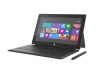
    Gartner is projecting a 7.3% decline in the traditional desktop and laptop computer category this year, although ultramobile devices (portables running a full desktop OS such as Microsoft’s Surface Pro tablet, pictured above) are expected to offset the decline slightly — so the collective drop for these two categories is projected to be 3.5%.

    But the real engine of growth is of course tablets, with worldwide shipments forecast to total 197 million units in 2013: a 69.8% increase on 2012 shipments of 116 million units. By 2017, Gartner expects tablets to be outshipping desktop computers and ultramobiles combined, although it does not make a specific prediction for the tipping point year for tablets. (IDC said last month that it expects tablet shipments to outstrip PCs this year, and portable PCs next year.)

    Over its forecast period Gartner also projects steady growth for smartphones. Overall, the total smart devices market is projected to grow 9% this year, to reach 2.4 billion units.

    On the breakdown of OSes, Microsoft’s loss and Google’s and Apple’s gain is clear: Android consolidates its dominance this year, pulling further away from Windows, while iOS/MacOS narrows the gap with its old computing foe. By 2017 Gartner projects a huge lead for Android, with approaching 1.5 billion device shipments (powered by Android’s dominance in the smartphone space). And while Windows (in both its desktop and phone flavours) is still forecast to be ranked second, iOS/MacOS is not far behind, with 570.9 million vs 504.1 million respectively.

    “If you look at the OS numbers and you look at Microsoft vs Apple vs Android, you see from a sales perspective, Microsoft is still pretty much relying on their PC core… [and not] expanding their numbers. They’re defending by shifting some of the losses that are coming from the PC onto the tablet and ultramobile but they’re not conquering,” Milanesi told TechCrunch. ”With mobility and with the shift from PCs to tablets and smartphones there are going to be implications that go beyond just the hardware side that will really impact OS and applications like Office for example.”

    “The role that Apple is going to play in the computing device — when you’re thinking about computing devices all the way from the smartphone to the PC — is going to be much bigger,” she added.

    The low price of tablets is a key factor driving their adoption, says Milanesi, but it’s not just price that’s powering the category.  Smartphones are acting as halo devices to drive tablet adoption, thanks to users’ existing investments in apps and familiarity with the lighter weight OSes. Touch interfaces and cloud computing are also playing a role, along with the integration of Wi-Fi. While consumers in emerging markets are coming to computing from the phone, not the desktop PC — making tablets a “more natural upgrade path”, rather than the PC, she said.

    “Another misconception is you need a PC in order to be productive and that productivity is measured as far as you need a PC to do Excel work. Well there are an awful lot of people out there who are very productive without ever touching Excel,” added Milanesi. ”The change that touch and tablets are bringing are here. They’re not going to go away. So you better enable that transition so that people can take full advantage of it vs continue to fight it.”

    Windows Phone not BlackBerry in 3rd

    Gartner’s current forecast for 2017 pegs Microsoft’s Windows Phone OS in third place in the smartphone OS rankings behind Android and iOS — with RIM/BlackBerry languishing far behind. BlackBerry shipments will continue to decline throughout the forecast period, according to Gartner, despite its OS reboot with the QNX-based BlackBerry 10 and the launch of the first BB10 device, the Z10. “RIM is even more limited than Microsoft,” said Milanesi. “They have a limited reach as far as where that OS goes as far as devices… We see consumers are more and more looking for an OS that goes across the board.

    “Gone are the days that you have one product can make a company. One product can break a company but one product is no longer enough to make a company. The ecosystem the brand has is becoming much more important from a consumer choice perspective.”

    From that perspective, Microsoft is in a stronger position than BlackBerry, having pushed Windows 8 into the touchscreen era with its Windows Phone-style tile-based UI, while BlackBerry’s own tablet effort has had to take a back seat while it rebooted its mobile platform.

    “Windows Phone is going to be the third largest OS on the phone side after Android and iOS, not too distant from iOS,” Milanesi predicted, although she also noted that the gap between second and third place is a small one so Microsoft’s mobile OS could push iOS into third place.

    She also noted that Gartner’s device projection does not take into account a lower end iPhone, should Apple choose to launch such a product — which could shift the goal-posts again and generate more mass market momentum for the iPhone.

    Should Facebook or Amazon make a phone?

    Asked whether in the current smart mobile devices market it makes sense for Facebook or Amazon to launch their own smartphone, Milanesi gave a qualified “no”.

    In the case of Facebook (which is thought to be holding an Android-focused phone-related event today), she said it makes sense for the company to “enable Facebook in the best possible way” on smartphones — ergo it may therefore make sense for it to build a deep software integration that lives on a phone to deliver the desired experience. But she added: “I don’t think from a brand perspective that people will want to get a Facebook phone because of the Facebook brand. But people will want to have a deeper integration of Facebook on their phone.

    “Facebook want users and they want engagement — and that’s not just coming from a dedicated phone, that come from a much better application and integration of their application in the hardware.”

    For Amazon, which has been rumoured to be looking at building a phone, she said the case is slightly different since the focus for the ecommerce giant is not about driving engagement and gathering user data so much as  ”selling — selling content, selling merchandise, getting consumers onto their website”.

    “I think you do that much more on a tablet than you do on a phone,” she added. “The only way I see a phone making sense is if Amazon continues to fork from Android… where it would make sense to have a phone and a tablet [to sell consumers a connected device ecosystem] — for the same applications and so forth.”

    Building a phone is also less straightforward than building a tablet, noted Milanesi, since carriers enter the mix and complicate the value chain.

  • Google Will Refresh Nexus 7 Tablet This Summer, May Drop Price To $149, Says Reuters

    nexus 7

    Google will refresh its Nexus 7 tablet this summer, launching a new version powered by Qualcomm’s Snapdragon processor around July, according to Reuters – which is about a year after it launched the original Nexus 7. The news agency said two unnamed sources also told it Google is aiming to ship between six and eight million of the tablets in the second half of the year.

    Google has not released official sales figures for its $199 to $249 slate, which is made by Asus, but an analyst estimate pegged sales for 2012 at between 4.5 million and 4.8 million, suggesting Mountain View is hoping to grow Nexus 7 sales significantly this year – even by as much as almost double.

    According to Reuters’ sources, the forthcoming version of the Nexus 7 will get some hardware improvements, with a higher screen resolution and a thinner bezel design both being mentioned. It will also use Qualcomm’s chipset in place of Nvidia’s Tegra 3 which was used in the original Nexus 7s. Qualcomm’s chip was chosen over Nvidia’s for “power reasons”, according to one of the sources. The slate will continue to be co-branded with Asus.

    If Google is hoping to significantly ramp up Nexus 7 sales it’s possible it will drop the price to encourage adoption but Reuters’ sources said pricing is “yet to be determined and Google’s plans are fluid”. One option is for Google to retain the $199 entry level price. Another is to price the slate even lower, at $149, according to one of the sources. The old model would be discontinued. A key factor that could determine how Google ultimately decides to price the Nexus 7 is if Apple launches new iPads this year.

    Reuters goes on to quote Fubon Securities analyst Arthur Liao noting that a ”zero-margin strategy” plays to Google’s core business strengths — underlining the reasons for Google to push the Nexus 7 price lower. “Ninety-seven percent of Google’s revenue comes from advertisement, so it needs to sell more mobile devices in order to reach more consumers,” he told the news agency.

    Last fall Amazon refreshed its Kindle Fire line-up of tablets, including dropping the price of the old model to $159. So a $149 Nexus 7 would undercut Amazon’s cheapest slate — at least, for now. Last month Amazon was rumoured to be working on building a $99 tablet – a rumour the company denied, telling TechCrunch:  “We are already at the lowest price points possible for that hardware.”

  • DuoFertility Is A Fertility Monitoring Sensor-Plus-Service That Helps Childless Couples Get Pregnant

    DuoFertility Colours 2

    UK startup DuoFertility is tackling a really tough problem: infertility. The company has built a sensor-plus-service business to predict the most fertile days of women who are having difficulty conceiving to improve the chances of conception — hence its tagline: “assisted natural conception”. There is no invasive technology involved, just a lot of number crunching.

    The startup’s approach sits somewhere in the middle of the competition in this space. It argues its technology is more sophisticated than more basic over-the-counter physical products such as home urine tests or body-basal-thermometers (which are also cheaper than DuoFertility’s offering), as the data captured by its wearable sensor is more accurate. Data is also sent back to DuoFertility staff for monitoring and reviewing – so it’s being looked at by specialist staff using bespoke algorithms rather than generalised models.

    On the other hand, the product is cheaper than a cycle of artificial insemination — and much cheaper than IVF. It’s also nowhere near as invasive as either of those alternatives. DuoFertility costs £495 with unlimited support vs around £800 for a cycle of artificial insemination (including drugs and tests) and around £4,5000 for a cycle of IVF, says CEO and co-founder Shamus Husheer.

    “It is this combination of both automated analysis and expert review of this data that sets us apart from anything else out there, and probably to a large extent explains why our pregnancy rates are so high for patients who are well past buying something off the shelf at the pharmacy,” he says

    “The really surprising thing is that, for only a relatively small increment in cost over the [more basic, competitor] at-home devices, DuoFertility gives a vastly higher pregnancy rate than artificial insemination, and even matches or exceeds that of IVF.”

    Success is a little difficult to measure, however, as a variety of factors have to be considered – as Husheer explains: “Although 80% of normally fertile women will get pregnant within their first year of trying to conceive, infertile couples (those who have been trying for more than two years) have only about a 12% chance of getting pregnant over a year. Therefore simply saying x% of patients will get pregnant is meaningless (or worse, misleading) – this does not however prevent some less scrupulous clinics and products from doing exactly this.

    “Therefore we publish our success rate data only on these ‘difficult cases’ of infertile patients, and specifically those who have qualified for or already been through IVF. We then break this data down by both female age and time trying for a baby, which are the most important factors in determining success rate. A peer-reviewed scientific paper on exactly this was published at the end of 2011, demonstrating a pregnancy rate that was higher than that from a cycle of IVF for every age group under 45 (the rates themselves ranging from over 40% to less than 15%).”

    The Technology

    So what exactly does DuoFertility’s technology do? The product consists of a wearable sensor, worn inside an adhesive patch so it remains attached day and night, which logs the woman’s “body temperature and movement thousands of times a day and night to calculate deep sleep core temperature”, plus a reader unit which receives the data from the sensor via a modified version of RFID. The reader calculates likely future fertility — based on “all of the information it has seen about you to date” (users can enter “a range of different parameters on the reader, from menstruation to ovulation pain to illness”).

    The reader connects to a PC via USB to display past and near future fertility charts. Additional data can then be added by the user, such as medical or home test results and notes for DuoFertility’s staff to read. And all the data is automatically transferred to DuoFertility’s servers in Cambridge, U.K. for analysis and expert review.

    “We use all of the data for each individual woman, and all of the thousands of others that we’re monitoring, to work out exactly which algorithms work for the woman most similar to this one,” says Husheer. “That allows us to dramatically improve the prediction of fertility, but also allows us to identify a range of underlying issues that may be preventing conception. There are of course many cases where the data does not perfectly fit any existing model, and so these cases are escalated to human fertility experts for review and, if necessary, a discussion with the patient or their doctor.”

    DuoFertility aims to identify the 42-78 hour monthly window when couples should be trying to conceive — and says that by continually monitoring women it can pick up on signs that a particular cycle is similar or different to a previous cycle, as well as compare a cycle to similar cycles in its database.

    “Basically, there is zero point in providing a prediction of ovulation down to the minute, if in fact it is five days wrong. Far better to give couples a realistic assessment of when they are likely to be fertile, and update this as we get more data. This means that for some couples ‘the goalposts move’ – they can quite literally see our algorithms updating the prediction when they connect to our servers. And if we recalculate something at our server, and they haven’t connected recently so might miss the newly calculated critical moment – we send an email or give them a call. That call has resulted in more than one baby,” adds Husheer.

    Of course not every couple will be able to get pregnant — even after using the product for a long time — so customer relationship management is a “pretty critical” component of the business. Raising false hope is certainly not part of DuoFertility’s business model, says Husheer — although he notes that for couples who can’t afford IVF, continuing to use DuoFertility despite poor “absolute chances” may be their best hope. ”We find that being absolutely crystal clear about this often makes for a difficult but ultimately necessary and productive conversation with the couple,” he says. The startup also offers refunds to new users if it believes it won’t be able to help them, and reviews users after four to five months (and regularly after that) to ensure continued use still makes sense for them.

    Starting up

    The idea for Duofertility was conceived during Husheer’s PhD research at Cambridge University. The link is indirect, since his research was actually building instruments for particle accelerators. “I realised that several of the instrumental techniques we used could be applied to human physiology, and specifically to monitoring fertility,” he tells TechCrunch. 

    Husheer (pictured right, with fellow co-founder Oriane Chausiaux) and a group of fellow graduate students – “scientists and medics”, some with PhDs in infertility – then got together and entered a university business plan competition in 2006, going on to win £20,000. The money funded a prototype and the filing of the first patent. “By mid 2007 we had brilliant data and several local Angel investors telling us to hurry up and graduate so that they could fund the project,” says Husheer. “Just 18 months and less than £1 million later, DuoFertility had been through design, development, trials, medical approvals and sold to the first customer.”

    The first DuoFertility was bought in May 2009, although Husheer says the first pregnancy was “actually somewhat before that” — during early trials. “Sales really stepped up when DuoFertility was stocked by the largest UK pharmacy chain, Boots, in 2011 as the result of our participating in a reality-TV show hunting for innovative new products for the major retailers,” he adds.

    Further funding came via the competition route, after DuoFertility won Qualcomm’s European QPrize in 2011. That in turn led to attention from Qualcomm’s venture capital arm. Husheer says the company has now raised a little over £2 million in funding from three Angel investor groups and from Qualcomm Ventures.

    Growing In The U.S.

    DuoFertility’s next big step will be raising its profile in the U.S. — by targeting key national medical conferences such as the American Congress of Obstetricians and Gynaecologists in May, and the American Society for Reproductive Medicine in October to properly enter the market. Husheer notes the company “recently achieved FDA clearance”, and although U.S. users can buy the device via DuoFertility’s website and be supported in using it, he says the business needs to spend time introducing the product to the medical community to make doctors aware of it and ensure they are happy to recommend it.

    “We have a small team on the ground in the U.S., calling on doctors in New York and California to introduce the product and make sure that DuoFertility fits into the way that they practice medicine. Over the next few months we will be hiring several more commercially focused people, both for activities directed at the medical community and the consumer — so any [TechCrunch] readers with experience in bringing similar technologies to market in the US should drop me a line,” says Husheer.

    “From a regulatory perspective we are clear to sell anywhere in the E.U. or U.S., and in several countries that accept their medical clearances (e.g. South Africa and many Arab states). As a company selling on the Internet it will be no surprise that we have patients in almost all of these places – in fact we now have babies on every continent except Antarctica. That said, our primary focus is the U.K. and U.S.,” he adds.

    Part of the issue with the U.S. market is that, for legal reasons, DuoFertility is not allowed to provide medical advice to the patient directly — but must work through the patient’s doctor. “This means their doctor is preferably included ‘in the loop’ from the beginning, however if the patient just uses DuoFertility without a doctor we can refer to a doctor we work with in their city if they need one,” Husheer adds.

    DuoFertility has more than 30 staff at present, working shifts to ensure U.S. timezones are covered. The number of staff is likely to rise over the next year — especially if the company  replicates its U.K. fertility centre on U.S. soil so that American couples can be monitored by staff in the same timezone.

    The company broke even in 2011 but has been ploughing investment into ramping up for the U.S. market so, overall, the business has not been profitable recently but Husheer says that’s all part of its growth plans: “Our investors seem to be very happy with this strategy, as everyone can see that the US will be the major market for us.”

  • Lowest Cost Raspberry Pi Microcomputer Now On Sale In The U.S. – $25 Model A Suited For Battery/Solar Powered Projects

    raspberry-pi-logo

    The Raspberry Pi microcomputer prides itself on being affordable, with its tiny $35 price-tag for the original Model B Pi. But now its lowest cost board — the $25 Model A — has gone on sale in the U.S. The Raspberry Pi Foundation confirmed to TechCrunch that Model A can now be purchased in the U.S. via reseller Allied Electronics (which currently appears to have 70 units in stock).

    What does $25 buy you? Enough processing power to use it to run a home media centre if you so desire, according to the Foundation. But the Model A was conceived with lower power consumption projects in mind, perhaps battery or solar powered, as Model A consumes around a third less power than Model B. It also has half the RAM of the second revision Model B, plus only one USB port and no Ethernet connection — to keep costs down.

    Model A sales kicked off in Europe in early February, with Asia coming on stream last week. Eben Upton, Raspberry Pi founder, said today that sales of the Model A Pi have been amounting to “a few thousand a week” thus far.

    “We burned through the first 20,000 units quite quickly, and are building a few thousand a week at the moment, but we don’t have good visibility of sell through yet,” he told TechCrunch when asked about early sales data, adding: “I’d expect us to dip in and out of availability for the next month or so until we reach a steady state.”

    The Foundation passed  one million Model B sales in January, less than a year after it launched the Pi in March 2012. The microcomputer was conceived as a tool to get kids learning to code – but has also proved popular with the maker community to power all manner of DIY gizmos and gadgets.

  • Google Glass Early Adopters Want To Build Learning, Healthcare, Accessibility & Safety Apps

    Glass winners

    Wondering who has won a Google Glass? Stanford PhD student Andrej Karpathy has used Twitter’s API to compile a partial list of the so far close to 4,000 winners of Google’s Glass Explorers first adopter competition who applied to buy the high tech specs via Twitter. Google still hasn’t confirmed that the last Glass winners have been named yet so there may yet be a few more invites to go out. Update: Karpathy’s list has now been updated to 4238 people, so Glass invites are still going out today.

    Big G has been busy this past week sending out notifications to winners of its #ifihadglass purchase campaign (and even rescinding a few that failed to live up to its T&Cs). Winners don’t actually win a free pair of Glass. Rather they get a VIP pass to spend $1,500 to be among the first group of folks to own a pair of the Glass Explorer Edition of Google’s high tech specs. So it’s a high stakes, high visibility marketing competition as Google seeks to both evangelise, humanise and normalise a technology that’s new, different and impossible to ignore — being as it sits right on the face.

    Successful applicants on the Twitter list (whose Twitter descriptions are shown above in Word Cloud form) include famous names such as former Speaker of the House, Newt Gingrich, who pledged “#ifihadglass i would take it on tours of zoos and museums to share the animals and fossils”, and — at the polar opposite end of the celebrity spectrum — electronica singer songwriter Imogen Heap who wants to ”hook them up w/my gloves to help me navigate music making in 3D”.

    As you’d expect, the list of winners is heavy on performers and extroverts promising to livestream their gig/music/show/art/sports activity/skydive. There are also a fair few marketing types — pledging to do stuff like “learn & write how it will change marketing & brands”. But — more interesting than either of these categories — are the developers with app ideas for Glass. Earlier this month Google demoed some of its own Glass apps such as Gmail, and also showed a few third party apps from the likes of the New York Times, Evernote and Path. But Glass will fly or die based on cool new apps that likely don’t exist on other platforms yet.

    I’ve collated a list (see below) of some of the app ideas that Glass winners are pledging to create — and, beyond the obvious use-cases of recording and streaming a first person perspective, themes for potential Glass apps are already emerging. Education, healthcare, accessibility and safety application ideas are plentiful among this wave of Glass early adopters (albeit, these developers likely haven’t had a chance to properly live with Glass yet).

    It looks likely that Glass will be the tech arena where augmented reality can seriously take off — thanks to both the natural visual overlay and the hands-free nature of the device. On smartphones and tablets AR remains something of a gimmick, since the user has to hold the device up to create a field-of-vision overlay — limiting how they can interact with it and how long they can use it for. Neither are problems for Glass.

    I would create information retrieval apps that work with the Glass #ifihadglass – like repair information, etc. [link]

    we build an entirely new shopping app leveraging the power of glass+android. [link]

    I’d make a http://t.co/WWcsHNbZcD app so that little “icons of trust” hover over user heads. I’d know who to trust, instantly/ [link]

    I’d build an application for travelers to keep in touch with their loved ones. Show beauty is in the eye of the Glass holder. [link]

    I’d develop a micro-expression detector that would enable appropriate responses to the sometimes subtle reactions in others.  [link]

    I would develop innovative apps for publications [link]

    I’d create an app that had real-time information about cabs when you looked at their taxi number using AR #ifihadglass [link]

    Being partially blind, #ifihadglass I’d use it to augment my lack of peripheral vision, use presence apps to avoid bumping into others, etc.[link]

    I’d help develop new applications for its use in health & medicine & inspire others to as well http://t.co/JKNXWI4Dyk [link]

    I’d write apps for smartwatches that display tokens for the Glass to pick up and display expanded information @projectglass [link]

    I’d make mashups with @LeapMotionDev for augmented reality apps like these http://t.co/JZlTdeD0rc and evangelize to devs [link]

    I would develop a driving safety app to help decrease driver distraction, detect drowsiness, and display upcoming road concerns [link]

    I’d create a ski app to show you speed, distance, calories. Take action pics in series. Add sensors to jacket for more safety. [link]

    i’d create a skill/barter app where people could indicate skills/goods they have/need for trade. Haves/needs appear overhead.[link]

    I’d create the ultimate nerd app — crosshairs. [link]

    I create an app to show people how much carbon energy they were using. [link]

    develop apps that can be useful for parents and children like medical [link]

    I’d make an app that converts the sheet music you see into a MIDI file. =D [link]

    I’d explore applications for education [link]

    I would build apps for people who shop. [link]

    I would create an input and recall application for just.me – an app that enables us to capture, share and remember our life. [link]

    I would build an app to display key running and heart rate data to me while I run and bike/ [link]

    I’d create an app called momento that allowed me to remember where things are by using playback. [link]

    I would build applications for dentists, doctors, and manufacturers to empower the industrial AR dream. [link]

    I would build a dating app (that would inevitably be deemed creepy). [link]

    i’d create an app to help ppl with their dieting/eating habits by showing you nutrition info for things you eat. (hook me up) [link]

    I will create a face recognition app to remind me the name of the people I meet and count how much time I spend with them. [link]

    I would explore and write about the possible retail applications… i.e., shop my glass off [link]

    I would develop a location and image recognition based augmented reality app for blind or visually impaired people. [link]

    I would build a persistent knowledge AI: build an application to automatically bring search results apropos of conversation [link]

    I would develop some kind of app to help children develop art skills. [link]

    I would immediately start on my commute/family trip tracking assistance app, and wear glass daily on… http://t.co/T7dneqFsfN [link]

    To prevent and reduce obesity, with an app that records physical activity and food intake to provide nutritional guide #ifihadglass [link]

    Check out Tour, a concept guided tour app for Google Glass #ifihadglass . Making the invisible visible http://t.co/GZsFZrvVi1 [link]

    I would write an app to identify lawmakers on the fly. A covert visual shazam. [link]

    I’d write an app to make it easier to read nutrition facts on processed food [link]

    We would use our AR to make the best ever #travel app with information about monument/landscape and boards translation overlay #ifihadglass[link]

    I want to make an app that helps deaf people “see” what others are talking about. [link]

    I would build a speedometer app to track my top and average speeds while luging, http://t.co/RnDFKyFw5w [link]

    build an app that suggests people to meet based on who is nearby. [link]

    I would write a running app that would show the @strava route names and course records of whatever streets I was running on[link]

    I would use the heads-up/subject-overlay attributes to make better apps for healthcare professionals, researchers and students [link]

    I would work to find applications for its use in hospitals and other healthcare settings. [link]

    I would create GhostRunner. An application that enables me to run against my own best time. Visually. http://t.co/wF2loUrOqz [link]

    I would create an app that uses facial recognition to reunite lost pets with their parents #ifihadglass http://t.co/zVaD80lWwv [link]

    I would build an app capable of taking billboards, and replacing them with things you are trying to remember (or cat pictures).[link]

    I would create an app to have the “Yellow Line” at football games in real life. http://t.co/REmY5GrX [link]

    I would create a Marine Navigation application for both the casual cruiser and racing sailor #WindSpeed #BuoyLocations [link]

    Customer service application that utilizes live video from callers to walk them through solutions #ifihadglass [link]

    I’d build an app to identify fashion on the street and find a place to purchase it. #iloveyourdress #wheredidyougetit [link]

    I’d write an app that records a minute buffer of video that will save to Google Drive on command. Document amazing things. [link]

    I would make a doorbell app, so I could see who’s knocking and easily let them in. http://t.co/fL4gJ3w1DF [link]

    #ifihadglass remind people of their appointments, would use Google maps to figure out when to send reminder, ie farther away, earlier ping [link]

    Innovate: App 2 reduce gun violence! http://t.co/zCzxF5ESfv [link]

    Hands-free teaching! No longer tethered to a laptop or Elmo, limitless creative & practical classrm applications! [link]

    Hate it when your Dr. always looks down during your appointment? I’m going to change that with Glass. http://t.co/LnW8po2FfV #ifihadglass [link]

    I would create an app to let general aviation pilots prep and fly their airplanes via checklists they can see in the glass. [link]

    I’d build in voice-control for all of our features in our products so that customers could use our apps while on the treadmill. [link]

    I will test my AR android app for climbing, suggesting improvements, and sharing this experience with the climbing community[link]

    I would create an app that would make people, especially young women like myself, feel safe in their current surroundings. [link]

    I will develop a driver-training app to detect improper driving behaviors and provide training feedback. [link]

    I would develop an application to enable the communication with deaf people by showing a live transcription in Google Glass 1/2 [link]

    develop an application for musicians, by entering into a database that would help tablature to play the instrument [link]

    I would develop an app that could suggest desired recipes by simply looking into my fridge and scanning its food items [link]

    i’d develop an app to help waiters keep track of tables, orders and customer preferences [link]

    i would create an app measuring stress levels by the size of your pupils. Data could show stress visualised across the world [link]

    I would create a gps app that gave historical information. [link]

    I’d develop an app that would alert parents when their teenager isn’t paying attention to the road while driving. [link]

    4 Architecture app Glasses could be conected with SketchUp so the clients could se the building proposals directlly on site. [link]

    Develop app integrating BIM – construction workers build with greater speed and accuracy – designers visualize concepts in situ [link]

    I’d create apps for retailers to survey merchandise, check stock and order replenishments automatically – by looking at shelves [link]

    I’d build an app to help first responders get the information they need while keeping their eyes on the subject. [link]

    Make an app or hardware mod that understands mood to change UX (based on pupil dilation) #ifihadglass [link]

    I would construct a real-time medical history taking app that would record & upload doctor/patient interactions into an EMR! [link]

    I’d make apps to control all my Internet of Things with #Android@Home.[link]

    I would develop an application that makes home improvement projects easier by replacing measuring tapes and standard box levels [link]

    I would develop location aware applications, like auto translate of detected text, information on objects seen etc. [link]

    Program smart subtitles to reality. Hyperlink objects. Design apps for self-directed learning #edtech http://t.co/QGE49Q82uC [link]

    I would design an app to notify the deaf when a loud noise identifies a hazard outside of their field of view [link]

    Use it to create an app the rewards users when they throw their trash away, would take pics to validate it [link]

    I would make an application that enables users to crowdsource live coverage of public events. #youtube2 [link]

    Think about applications for use with kids and learning disabilities. [link]

    I would make them Wi-Fi intuitive with app support so that you can use them to adjust settings on your DSLR or GoPro. [link]

    I’d build tools to make quantifying the self across multiple domains easier, more transparent, and more effective than ever. [link]

    I’d build info sharing tools for enriching IRL conversations. If I search for something, the friends with me should see result. [link]

  • Playdek Closes $3.8M Series A To Build A Digital Community Where Tabletop Gamers Can Feel At Home

    playdek

    Fresh from putting smiles on the faces of tabletop gaming geeks everywhere, with yesterday’s news that it would be helping to bring Dungeons & Dragons to iOS devices later this year, mobile game publisher Playdek has closed a $3.8 million Series A funding round.

    The round was led by Qualcomm Incorporated, via its venture investment arm, Qualcomm Ventures, with IDG Ventures and ff Venture Capital also participating. Existing investors Deep Fork Capital, Greycroft Partners, Jarl Mohn and unnamed angel investors also joined in. The company had previously raised $1.56 million in funding from its seed and Angel rounds — taking its total funding post-Series A to $5.36 million.

    Playdek said the new funding will allow it to expand its digital hobby games portfolio with new launches, including its forthcoming app, Agricola, based on the strategy board game of the same name. Flagship existing titles from Playdek include its Ascension series.

    The company’s other big plan for the funding is to build a hobby gamer community and online platform for players to meet and hang out, due to launch later this year. It said this platform will “provide the services that hobby gamers value” — so presumably stuff like leaderboards ranking players by score and forums to discuss the merits of different gaming strategies. In a press statement, Joel Goodman, CEO, said it would be about “giving gamers that ‘around the table’ feeling in the digital realm”. The platform will also offer events and tournaments.

    Commenting on the funding in a statement, Phil Sanderson, Managing Director, IDG Ventures said: “The market category is poised for growth, and Playdek has proven that it is the expert when it comes to bringing this dedicated audience what they want in mobile gameplay.”

    “Playdek gives gamers what they want — compelling online games based on the franchises they know and love.  Playdek allows people to explore these worlds and stories in a compelling new way,” added John Frankel, ff Venture Capital, also in a statement. “We love the team, the strategy, and what they have done to date; we expect great things from them in the future.”