Author: Nicole

  • Dreyers’s Tagalong Ice Cream, reviewed

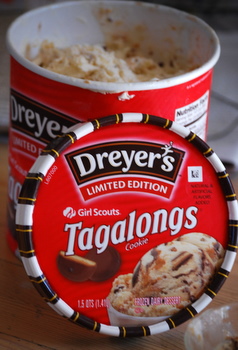
    Dreyers’s Tagalong Ice Cream

    Since it’s Girl Scout cookie season again – whether you’re buying from a local troop or using it as an excuse to make some Homemade Girl Scout Cookies – it also means that Dreyer’s has put its seasonally available Girl Scout cookie ice creams back in grocery store freezer cases. These limited edition ice creams feature some of the most popular Girl Scout cookie flavors, like Samoas and, in this case, Tagalongs. Tagalongs are shortbread cookies topped with a layer of peanut butter and then coated in chocolate, a bit like a peanut butter cup with a cookie base. This Dreyer’s (Edy’s on the East coast) flavor has a vanilla ice cream base, along with swirls of peanut butter and fudge, and some Tagalong cookie bits.

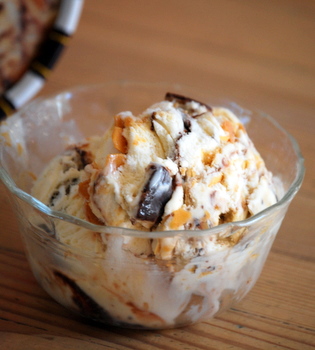
    The ice cream is good, it has a nice vanilla flavor to it and is both creamy and light, along the lines of other Dreyer’s Grand ice creams. The fudge and peanut butter swirls really make it taste like a peanut butter cup, too, and there are plenty of each mixed into the ice cream. Unfortunately, I can’t say the same for the cookie content. While I found plenty of recognizable cookie chunks in the Samoas ice cream, the cookie pieces were few and far between – and they tended to be so small that they really didn’t contribute much. So, while it was good, I might stick to mixing in some Tagalong cookies that I’ve crunched up myself to make sure that I get a lot of crunchy cookie pieces along with all that fudge and peanut butter.

    Dreyers’s Tagalong Ice Cream, close up

  • Cookies for your inner geek

    Science Cookies

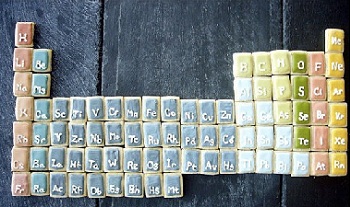
    Cookies are not generally geeky things, they fall more into the “all around” category of things that can be enjoyed by anyone. But once you move away from chocolate chip and peanut butter and into more complex cookies, it’s only natural that things will sometimes go to far. Besides, didn’t anyone ever tell you that baking was a science? Today, The Huffington Post celebrates all of the Geekiest Cookies Ever with a big gallery that features everything from Periodic Table Cookies to gingerbread men clad in lab coats.

    Most of the innovative cookies featured come from the very creative Not So Humble Pie, who has been putting a nerdy twist (in a good way!) on cookies for quite some time now. I am particularly fond of the containment suit cookies and the gel electrophoresis cookies, although of course the Wii controllers look very tasty, too. You can also find two more big galleries of Science Cookies on her site.

    Periodic Table of Cookies

  • Streusel Topped Banana Bread Cobbler

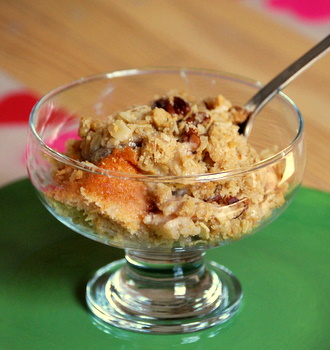
    Streusel Topped Banana Bread Cobbler

    I saw a photo of a Banana Bread Cobbler in an issue of Southern Living and immediately knew I had to give it a try, since I am a big fan of both cobblers and banana bread. As I read through the recipe, I realized it wasn’t what I expected it to be. I assumed it would be something along the lines of a bread pudding with a streusel on top, using a loaf of banana bread as a base. Instead, this dessert has a cake base that is topped with slices of fresh bananas. The bananas are topped with a streusel and everything is baked until the cobbler is tender and the topping is crunchy.

    Over the course of trying the recipe, I made some big changes to the original recipe. I cut down the amount of butter in the recipe by half, used a combination of buttermilk and milk in the banana bread base, and added cinnamon, nutmeg and vanilla to spice up the overall flavor and make it more like my favorite banana breads. I also used fewer bananas than the original recipe suggested because too many bananas tend to make this dessert get a little mushy, especially the leftovers a day or two after baking.

    So, although it may sound like an unusual combination, this is a delicious dessert. The cake at the bottom is tender and flavorful, and a great backdrop to hold everything together. The streusel topping is delicious and crunchy, and the toasted pecans are a fantastic addition to the dessert, both in terms of flavor and texture. The bananas really stand out, too. This was great on the first day when it was still warm, but tasted just as good as leftovers served at room temperature. I ate mine plain, but I can see how a scoop of ice cream, a bit of hot fudge and some whipped cream could turn this cobbler in to a great base for a riff on a banana split.
    (more…)

  • Dial-a-Slice Fruit Corer and Wedger

    Dial-a-Slice Fruit Corer and Wedger

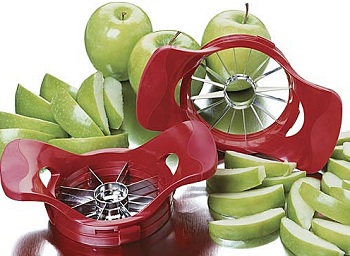
    The most time consuming part of making an apple pie is prepping the fruit. The apples need to be cored, peeled and sliced – and when you’re talking about 6 or more apples, that turns into quite a bit of work! This is the reason that tools like fruit wedgers exist, to make it even easier to slice up those apples (or any similar sized fruit) once they are otherwise ready to go. This particular tool, the Dial-a-Slice Fruit Corer and Wedger has an unusual feature to it: you can adjust the size of the slices because there are two sets of blades, so you’re not stuck with one size of fruit slice. It’s funny how a simple change like this can really expand your options and make a tool a little more useful. The Dial-a-Slice cuts either 8 thick wedges or 16 thin ones. Use the thin wedges for cakes, tarts, muffins and other quick cooking desserts. The thicker wedges are better for pies and cobblers, but you can use a mix of thick and thin if you like to have a variety of slightly crisp thick pieces and ultra-tender thin ones in your desserts.

  • What is pearl sugar?

    Pearl Sugar

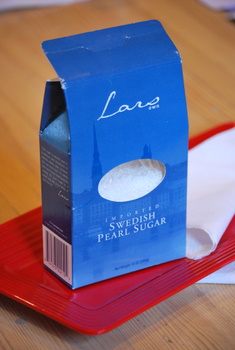
    Pearl sugar is a type of specialty sugar that is often used in baking in Scandinavia and a few other countries in Northern Europe. The sugar is not completely round, like real pearls, but it comes in large round-ish chunks of sugar. The most remarkable thing about this type of sugar is that it doesn’t melt easily when exposed to moisture or to high heat, meaning that you can mix it into some cookies for a little crunch or sprinkle it on top of a cake and the sugar will stay put (and stay very visible) as you bake. Pearl sugar can be found in different sizes, varying primarily by brand. Some are the size of large sea salt flakes, while others are more like peas or macadamia nuts. For me, the smaller sizes tend to me more versatile because they can double as sprinkles for baking.

    At a glance, pearl sugar resembles sugar cube pieces. Sugar cubes are compressed blocks of sugar that are designed to dissolve easily in hot liquid. The individual grains of sugar are not held tightly together. Pearl sugar is much more heavily compacted, which is why it does not melt easily during baking. Mixing pearl sugar into baked goods will give them soem extra sweetness and crunch. Sprinkling it over the top of a bread or pastry will do the same, and will also give your baked good a nice finishing look.

    You won’t find pearl sugar in just any market – not unless you live in Scandinavia, Belgium or some other country where it is commonly included in goodies – but you can find it at some specialty cooking stores, like Sur La Table, and at Scandinavian import stores, like the food section at Ikea. And, of course, you can also find it online.

  • Mocha Chocolate Chip Muffins

    Mocha Chocolate Chip Muffins

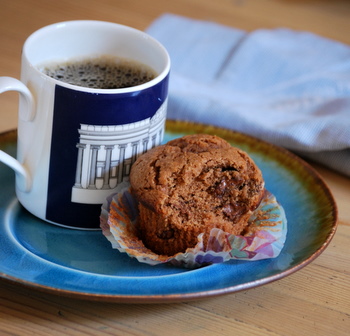
    I definitely like my muffins with a cup of coffee in the morning, and this muffin has a nice infusion of coffee on its own. Mocha Chocolate Chip Muffins have a nice combination of coffee and cocoa, thanks to the inclusion of some instant espresso powder to the recipe. They also get a little extra hit of chocolate from the generous amount of chocolate chips stirred into them!

    These are big muffins that, thanks to a thick batter, rise up well over the top of the muffin pan. They’re very satisfying as breakfast or as a snack. The muffins are also very soft, tender and moist inside, though the have a good firm feel to their muffin tops (not too soft, like a cupcake). Most muffins can be served warm or at room temperature, but I would definitely recommend serving these just warm enough that the chocolate is slightly melty when you take a bite.

    Because of the chocolate chips, these are a little bit more chocolate than coffee on the mocha scale. The muffins aren’t too sweet, largely because of the coffee and cocoa powder in the batter, but I used milk chocolate chips to add some extra sweetness back into them. Dark chocolate will work, too, if you’re more a fan of that, though I definitely thought that milk chocolate worked very well for these. If you want to increase the coffee flavor in these, just double the amount of instant espresso powder (or Starbucks Via, which is what I used) in the recipe.
    (more…)

  • Irish Puddings, Tarts, Crumbles, and Fools

    Irish Puddings, Tarts, Crumbles, and FoolsIrish food is much more than stews and soda breads, although they are some of the dishes that first come to mind when thinking about Irish cuisine. Irish Puddings, Tarts, Crumbles, and Fools is dedicated to the desserts of Ireland, and there certainly are a lot of good looking desserts in this book.

    The book is divided up into six chapters by recipe type: Puddings, Tarts, Crisps & Crumbles, Fools & Flummeries, Tea Breads & Cakes, and Christmas treats. Each of these chapters starts off with a little introduction to the recipe type, why the recipes are popular and what types of recipes – and ingredients – you can expect to find in each category. The descriptions get even more specific when you turn to the individual recipes, as each is accompanied by a paragraph describing some of the history of the recipe or baking tips for it. The recipes are simply written and easy to follow. Many include a number of variations that will enable you to experiment with the recipe to suit your own tastes. There are plenty of beautiful pictures to inspire you to get into the kitchen, as well.

    All the recipes call for Kerrygold Irish butter. Irish butter is European-style butter, which has a higher butterfat than your average American butter, so it tastes slightly creamier. It also has a very slight tang of cheese or buttermilk to it, which makes it taste richer. You can find it at some markets and at specialty stores, but you can also simply substitute regular butter into all of these recipes if you can’t find it. For me, while I like to use it in baking, I like it even more on toast (perhaps on Soda Bread!) and end up using it for that and run out before I use it strictly for baking.

  • Lime and Coconut Crumble Bars

    Lime and Coconut Crumble Bars

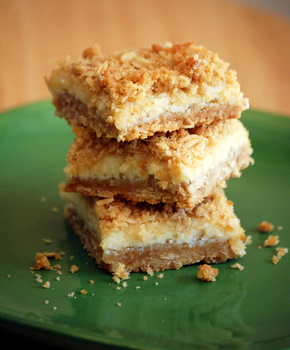
    I’m always up for making a new bar cookie recipe. As much as I like regular drop cookies, bar cookies usually take even less time to make because everything goes into one dish. I suppose that you have to wait longer for them to cool (unless you don’t mind the first piece or two crumbling apart) than with individual cookies, but when I’m pressed for time, it’s the prep that I want to cut down on and not the cooling. That said, these Lime and Coconut Crumble Bars are well worth making whether you want to bake something in a hurry or have a whole afternoon to spend in the kitchen.

    These are very delicious, and even more so if you are a fan of key lime pie, since they really remind me of the flavors of that dessert. The bars have a crumbly, shortbread-like bottom layer and a crispy streusel topping. Both start with the same crumbly dough mixture that contains butter, brown sugar, oats and shredded coconut. The middle layer of these bars is made with sweetened condensed milk and fresh lime juice. It has the same tangy flavor and creamy texture as a key lime pie does! The oats and coconut toast up beautifully as these bars bake, so the finished dish is a great combination of flavors and textures.

    These are good at room temperature, but if you’re making these during the spring or summer when it’s hot, they can actually be quite refreshing if you chill them before serving. Plus, they store a little better in the refrigerator when it’s very hot outside, although they do just fine when stored at a normal or cool room temperature.
    (more…)

  • WSJ reviews mail order cupcake companies

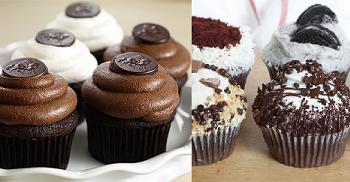
    Mail Order Cupcakes

    There is nothing better than a batch of homemade cupcakes, but a dozen or so from a favorite bakery can come in at a close second – and can actually take the first place spot for those who don’t bake. Cupcake shops are still more popular than ever (especially here in LA), but that doesn’t mean that you can find one as easily as you might find a Starbucks. The Wall Street Journal’s Cranky Consumer column, which rates mail-order products, took on the oh-so-difficult task of taste-testing a variety of mail order cupcakes that promise to deliver a gourmet bakery-quality cupcake to your door.

    They compared cupcakes from Georgetown Cupcake, Dean & Deluca and Godiva, all of which came via overnight shopping with cupcakes frozen for freshness, as well as cupcakes from Crumbs, a bakery which had a nearby NYC location and was able to deliver locally(although they ship overnight, as well). They compared these cakes to a batch of cupcakes made with a cake mix and looked for both flavor and freshness in the finished cake.

    (more…)

  • CR rates hand mixers

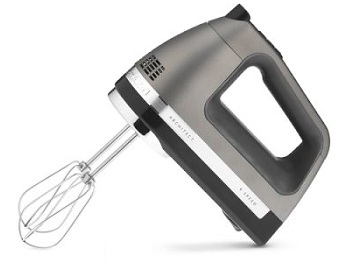
    KitchenAid Architect Series mixer

    I have had my trusty KitchenAid hand mixer for more than a few years. In fact, I actually don’t remember when I first got it, only that it has help up very well and works well. This is a good testament to the longevity of my model, but hand mixers can actually vary a lot in size, power and their ability to get the job done in the kitchen, whether you’re beating egg whites or mixing cookie dough. In their most recent issue (March 2010), Consumer Reports put nine different hand mixers to the test to see which were the best.

    The compared the mixers on several features: whipping time (heavy cream), mixing ability (cookie dough), convenience and noise.The top finished was a KitchenAid Architect Series model, with lots of speed, great turning power and a quiet motor, it was easy to use and whipped up cream in less than half the time of some of the low-finishing models. It is also the most expensive mixer tested, so it is worth noting that the second place finisher – a KitchenAid UltraPower 5 – was $30 less and performed just about as well, although it was a touch less powerful.

    They also noted that most of these models are available with additional attachments, including whisks and dough hooks, which are well worth looking for if you don’t have a stand mixer and want to get a lot more versatility from your hand mixer! Ratings for all models tested are listed below:

    (more…)

  • Cake Pan Gripper

    Cake Pan Gripper

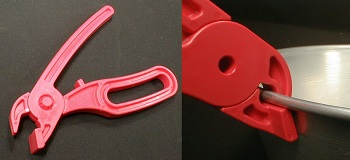
    Some cake pans and baking dishes have handles that make them easy to slide out of the oven when the baking time for your cake, casserole or other dish is up. Other pans have virtually no edge beyond a thin roll of metal at the top of the pan. It can be very difficult to get a good grip on these pans when pulling them out of the oven, especially when you’re wearing thick, chunky potholders that don’t give you a lot of flexibility of movement. I know that there have been many times when I’ve touched the top of a high-rising cake – deflating a small portion of it in the process – much too firmly with a mitt-clad hand in my attempts to get the pan out of the oven.

    Occasionally, I’ve used tongs or a knife to slide the pan to a flat surface, such as a wire rack, that I can more easily lift it from. There is a gadget out there that is specially purposed for solving this problem, however. It’s called a Cake Pan Gripper (scroll down on the linked page to see it). The spring-loaded gripper is made of a heat resistant material and has what looks like a small lobster claw on the end. It fits over the vast majority of rolled-edge pans and gives you a very strong grip, enabling you to lift the cake out of the oven.

    I still wouldn’t rely on this entirely with a very heavy cake, but you could still easily use it to grip the pan and pull it safely to a spot where you can take a better hold of it. No burns from the oven and no deflating the cake with a misplaced finger or edge of a potholder.

  • Sock-It-To-Me Cake, from scratch

    Sock-it-to-me-Cake from scratch

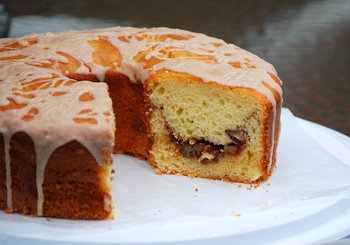
    A Sock-it-to-me-Cake is a type of coffee cake that has a pecan, cinnamon and brown sugar filling that is baked in a bundt or ring pan. It is moist and almost always made with a generous amount of sour cream. It is also almost always made with a yellow cake mix, preferably a Duncan Hines brand mix. With the cake mix, the recipe is very easy and fast to put together. As easy as it may be, I still like to have a from-scratch version of the recipe available to me, so I put one together that bakes a very similar Sock-it-to-Me cake without the mix.

    Cake mix cakes are designed to be very tender and moist, and this cake is, too. I used cake flour, rather than all purpose, to give it an even lighter and more cake-mix-like texture than it might otherwise have. I also used a combination of butter and vegetable oil in the cake. The vegetable oil, along with a good portion of sour cream, gives it some extra moisture and helps to keep the cake tasting fresh even a few days after baking. The butter helps the tenderness of the cake, but more importantly, it lends a really nice flavor to everything. This cake has a good, light texture and a soft crumb. I baked it in a tube pan because it’s so easy to get a cake out of a pan with removable sides. That said, you could easily bake this in a bundt pan instead.

    The filling for this coffee cake is not a streusel, which many coffee cakes have. Instead it is a mixture of cinnamon, toasted pecans and brown sugar. It is a bit dry on its own and may seem to be too strongly cinnamon flavored before you put it into the cake. Don’t worry too much about this because the cake is relatively plain and all of that cinnamon in the filling really balances out well with the rest of the cake when you’re eating it. Speaking of cinnamon, I also added some cinnamon to the glaze on top of this cake, which adds a little extra sugar and spice to each bite.

    This cake is great in the morning with coffee and is equally good served with dessert. As coffee cakes go, it is very easy to throw together because you don’t need to fuss with streusel or any special fillings, just a simple and flavorful mix that comes together in a few seconds before going into the cake.

    (more…)

  • Choosing a ramekin for creme brilee

    Creme Brulee Dishes

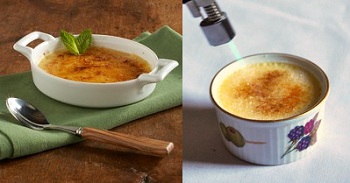
    I use regular 6-oz ramekins when I make creme brulee. I like to have a high custard-to-crust ratio and I have two full sets of ramekins at home that I use for a variety of things besides creme brulee, like souffles. If you go to a kitchen supply store, however, you’ll see that they sell large, shallow ramekins that are often called creme brulee dishes. Which one is better – the more generic ramekin or the more specific creme brulee dish?

    The shallow dishes are a great choice if you like to make a lot of creme brulees. They’re even better if you like to have a lot of caramel crust on your creme brulees and a higher crust-to-custard ratio. The baking time will be bit shorter with a shallower dish (it will vary widely with the size of the dish so check them early to see if they’re nearly set, then at 5 minute intervals thereafter), and you’ll need to be very careful when pouring the water for the water bath into the baking dish, but otherwise the method is exactly the same. Still, I’ll stick with my deeper , all-purpose ramekins and would recommend them as a great option to just about anyone.

  • Cakewich Cake Pan

    Cakewich Cake Pan

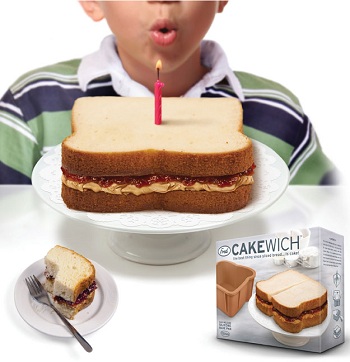
    I have to say that, as a fan of peanut butter and jelly sandwiches, Fred’s new Cakewich Cake Pan appealed to me immediately. This is a cake pan shaped like a big slice of bread. When you bake a cake in it – preferably a white cake or other cake that will be similar to the color of sandwich bread – you can simply slice it in half to get a finished product that looks remarkably like a giant sandwich!

    This is a silicone pan and users of silicone pans will know that they don’t brown as well as regular metal pans do. To improve the color on the outside of this white bread look-a-like, be sure to butter and flour the pan before using it. Using butter, rather than cooking oil, will give you some extra browning during baking, and having a thin layer of flour will contribute to the “crust” look – although if you were a kid who went crustless, just bake the cake directly in the pan.

    I like the sweet PB&J idea pictured for this cake pan, but you can bake savory quick breads – like a savory cornbread  – in this pan, halve them and fill them with savory fillings. You can then slice up the sandwich into wedges and have savory snacks with a great presentation.

  • Vanilla Creme Brulee

    Vanilla Creme Brulee

    Creme brulee is a classic and elegant way to end a meal. The best thing about it – besides cracking that crisp caramel crust to get to the delicate custard within – is the fact that it is actually easy to make at home!

    Creme brulee starts off with a mixture of cream, milk, sugar and egg yolks. The cream gives the custard a lot of richness, while the yolks make it very tender and give it a good mouth-feel. I like to use a mixture of cream and milk for my creme brulees because I think it makes them a little bit lighter and silkier than a recipe that uses cream alone. Whole milk is a good choice for this recipe, but low fat milk will work out just fine. The custard is mixed up and strained into ramekins, which are placed in a water bath before being put in the oven to finish cooking. Baking in a water bath allows the custard to cook very slowly, ensuring a smooth finished product.

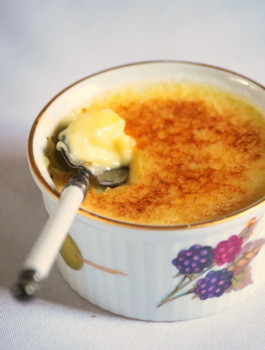
    Since I wanted a lot of vanilla flavor, I took the time to infuse a vanilla bean into the heavy cream before adding it to the yolk mixture. You can use vanilla extract in this recipe instead of infusing the cream with a vanilla bean to streamline the whole recipe. You’ll still get a good vanilla flavor, you just won’t get the look of specks of vanilla bean inside of the custard when you dig in with a spoon.

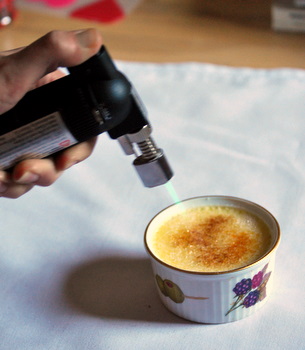
    I use regular 6-oz ramekins for creme brulee. I like to have a high custard-to-crust ratio, so I use the regular 6-oz ramekins I have on hand in the kitchen, rather than the large, shallow ramekins that are often used for creme brulee in restaurants. Creme brulee can be baked a day or two in advance and stored in the refrigerator. Add sugar to the tops of the custard and brulee them – burn the sugar into a crisp carame – right before you want to serve them. Use a small kitchen torch to do this, and it is definitely worth picking up a small one at a kitchen supply store to have if you plan to make your own creme brulees.

    Vanilla Creme Brulee, torched

    (more…)

  • DamGoodSweet: Desserts to Satisfy Your Sweet Tooth, New Orleans Style

    DamGoodSweet: Desserts to Satisfy Your Sweet Tooth, New Orleans StyleMardi Gras starts this week and, if you’re not headed down to the Big Easy yourself, what better way to celebrate than with some New Orleans-style desserts? DamGoodSweet: Desserts to Satisfy Your Sweet Tooth, New Orleans Style is the perfect book to put you on the right track, with a collection of tasty recipes that you don’t have to take a trip to Louisiana to enjoy.

    The book starts right off with classic N’awlins favorites, including a buttermilk beignet recipe. These light, crisp , bite-sized donuts are synonymous with the Cafe du Monde, a New Orleans cafe where they are a signature treat, and are so popular that they may as well be synonymous with the name of the city itself. All of the recipes are thoroughly written out and are easy to follow along with. There are plenty of photos in the book to give you an idea of what you’re finished result should look like – and to tempt you in to trying all kinds of dishes.

    One of the nicest features of the book is the way that every recipe is accompanied by a story of what makes this recipe so popular, or such a signature dish for the area. There are also asides that talk about some of the city’s most famous culinary hot-spots (at least where sweets are concerned!), such as the Cafe du Monde and McKenzie’s Pastry Shoppe. Many of the stories include personal anecdotes from the author, a pastry chef who grew up in the Big Easy. His easy writing style makes the book fun to read, as well as to cook from.  These types of stories really help you connect with the food culture of the area a little bit and, by the time you’re done with the book, you’ll probably feel pretty enthusiastic about the area and its food – and you might even feel like taking a little trip out there to try it for yourself.

  • Salted Dark Chocolate Chunk Cookies

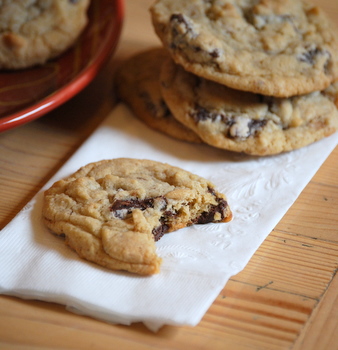
    Salted Dark Chocolate Chunk Cookies

    A few years ago, the idea of adding salt as an accent flavor to a dessert – in addition to just having a pinch in with the ingredients – was new and exciting. Now, it’s a lot more common to find salt in slightly unexpected places, such as sprinkled on top of cookies and caramels in a much more obvious way than ever before. I’ve also seen salt blended into a bars of chocolate. I saw a handful of bars like these a year or so ago – very gourmet items with a premium price – but have seen the combination much more frequently. A coffee shop I like (the Los Angeles based Coffee Bean and Tea Leaf) is now selling their own brand of salted dark chocolate that you can pick up with your morning latte.

    I did pick up a couple of these bars recently, but not just to eat. No, I picked them up to bake with them. The dark chocolate is creamy and smooth, with a rich cocoa flavor and berry notes. It also has noticeable specks of sea salt sprinkled throughout that infuse the bar with a hit of salt when they melt on your tongue. I figured that the chocolate bars would be delicious in cookies, where that saltiness would serve to set off the sugars in the cookie dough as well as the sugar in the chocolate.

    The cookies turned out beautifully. They’re crisp on the edges and chewy in the center. I added some ground oats to the cookies to help keep them moist and preserve that chewiness even after keeping them for a couple of days. The salt in the chocolate adds a nice savory – and definitely unexpected – twist to these cookies, too.

    If you can’t find a bar of salted chocolate, dark or milk, you can still make these cookies. Pick up your favorite dark chocolate and chop it into chunks. Stir them into the cookies along with 1/4 tsp sea salt (fairly coarse, but not like rock salt). Add the salt with the chocolate so that the grains don’t dissolve into the dough when you mix them in. This way, you’ll get that same small hit of salt as you much your way through the cookie.
    (more…)

  • Meyer lemons vs regular lemons

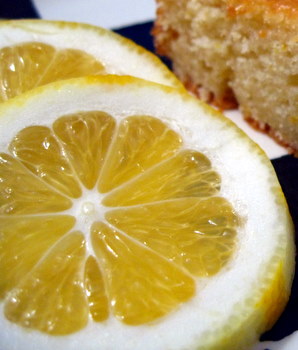
    During citrus season, you start to see all kinds of recipes that call for oranges, lemons, limes and even grapefruits. You also start to notice that recipes call for specific types of citrus, such as blood oranges, key limes and Meyer lemons. Meyer lemons, a sweet hybrid lemon, are still relatively new to the kitchen scene when compared to some of these other fruits (key limes are probably the best example). Whether you happen to have a surplus of Meyer lemons or just of Meyer lemon recipes, you’ve probably wondered whether you can substitute regular lemons for Meyer, and vice versa, when cooking.

    The good news is that you can always make a 1:1 substitution of the juice and zest of various lemons, whether you’re talking about Meyer lemons or otherwise. You should keep in mind that it isn’t the consistency of the lemons that varies when changing types of lemon, but the flavor. Meyer lemons are sweeter and much less acidic tasting than regular lemons. This means that they have a good lemon flavor, but lack the “bite” of a regular lemon. Meyer lemon juice is still quite acidic, even if it doesn’t taste that way, so you can expect recipes to turn out then exact same way when it comes to how the lemon juice interacts with other ingredients, such as curdling milk into buttermilk.

    In a glass of lemonade, you’ll need less sugar when you use Meyer lemons. In a cake that calls for regular lemons, you may be able to reduce the sugar slightly if you substitute with Meyer lemons, since many lemon recipes include extra sugar to account for the tartness of the lemons. That said, read the descriptions of the recipes carefully, since some highlight that same tartness by not adding extra sugar, so there may be no need to cut down the amount included.

  • Red Velvet Pancakes

    Red Velvet Pancakes

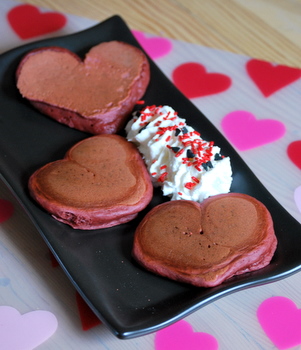
    I think that holidays like Valentine’s Day always deserve a special breakfast. Why not start off the day on a good note? Of course, I could say the same thing about just about every morning, because I tend to think that every day should start out on just as good a note as the holidays. These pancakes are perfect for surprising your loved one – holiday or not. They’re heart-shaped Red Velvet Pancakes.

    I took the inspiration for the pancakes from classic red velvet cake, which is typically flavored with a little bit of cocoa powder and a generous amount of buttermilk. In the cake, the cocoa flavor is noticeable, but there isn’t enough to really give the cake a chocolaty feel. It primarily lends some dark color to the cake (red in theory, as cocoa powder reacts with baking soda and takes a reddish tinge as a result). The real color of these pancakes, however, comes from food coloring just as the red color of a red velvet cake does. The more food coloring you use, the redder your pancakes will be. Take the amount given below as a guideline and color to your own specifications.

    The pancakes are not too sweet because they’re meant to be topped with lots of syrup and maybe some whipped cream. You can definitely get the cocoa notes from them, as well as the rich flavor of buttermilk. They’re a nice change – both in taste and appearance – from regular pancakes. You can use a spoon to spread the batter into heart shapes or use a pastry bag to draw them. You can also place a heart-shaped cookie cutter on the hot pan and pour the batter right into it.

    Serve with syrup, whipped cream, berries and a big kiss, too.

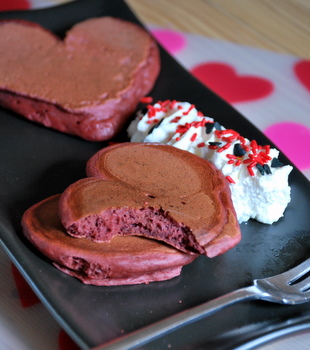
    Red Velvet Pancakes, innards

    (more…)

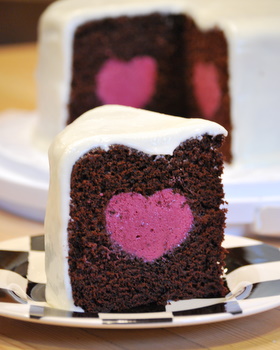
  • Deep Chocolate Cake with a Raspberry Mousse Heart

    Deep Chocolate Cake with a Raspberry Mousse Heart

    When I saw Wilton’s Tasty Fill Heart Cake Set, I knew that I wanted to try making one of the lovely heart-centered cakes myself. A cake with a heart-shaped center is perfect Valentine’s Day. After I picked up the cake pan set, all I needed to do was decide what flavor cake I wanted to make. I decided to work backwards and, knowing that I wanted a pink heart at the center of the cake, I ended up opting for a very dark-colored chocolate cake for the cake itself.

    The cake pans come in a pair and you get the heart center when the two cakes are stacked on top of each other. This cake recipe fits the pans perfectly, and it rose up just to the top of them, easily filling the cavities built-in to the pans which produce the heart shape. This is a recipe that I would ordinarily use to make two thick 8-inch cake layers. There is a whole cup of cocoa powder in the cake, so it has a really delicious chocolate flavor to it. It is very moist and tender, but is not too dense and is very easy to handle the cake (it isn’t too delicate or likely to crumble as you move the pieces around). There is coffee in the cake to emphasize some of the cocoa notes, but there is no coffee flavor to the finished cake – just a lot of chocolate.
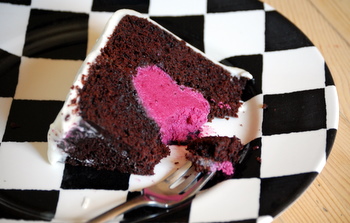
    A bite of Chocolate Cake with a Raspberry Mousse Heart

    While I knew from the start that I wanted a pink filling, the hardest part of making this cake was figuring out what that filling should be. Ice cream is a good option, but not great in the wintertime, and many of the suggestions that came with the pan included Cool Whip – which I didn’t want to use. I ended up making a very light raspberry mousse, held together with a little bit of plain gelatin to give it stability. It has a great raspberry flavor, a beautiful color (black raspberries will give you a more purple color, regular will be lighter pink; I used a mixture of both) and a very light, fluffy texture to it. I used a pasteurized egg white, beaten to soft peaks, to give this mousse a lot of volume. You can actually use meringue powder as a good substitution in this case if you can’t get pasteurized eggs, so I’ve made notes about the substitution below.

    The finishing touch for this cake is the cream cheese frosting on top. The creamy frosting has a nice sweetness to it that goes well with the chocolate cake. It also blends nicely with the bright raspberry flavor of the mousse. You can use other berries for the filling – strawberries, blackberries, etc.  – and you can use either fresh berries or frozen, defrosted berries.

    This cake should be stored in the fridge to keep the mousse filling firm. That said, the cake must be stored in an airtight container to prevent the cake from becoming dry in the fridge.

    This cake didn’t disappoint me in any way. It was delicious, with a great cake, a great combination of flavors and a finished product that looked just like the cake does on the box! This is definitely a great treat for Valentine’s Day, and I like the pan enough that I’m going to have to look for other excuses to have a cake with a heart-shaped center around, too.

    (more…)