Author: Robert X. Cringely

  • Accidental Empires, Part 5 — The Demi-God (Chapter 1b)

    Fifth in a Series. Editor: Serialization continues of landmark 1991 book Accidental Empires, looking at younger Microsoft CEO Bill Gates and Microsoft Word 3.0 for Macintosh — proverbial vaporware at the time.

    Several hundred users of Apple Macintosh computers gathered one night in 1988 in an auditorium in Ann Arbor, Michigan, to watch a sneak preview demonstration of a new word processing application. This was consumerism in its most pure form: it drew potential buyers together to see a demonstration of a product they could all use but wouldn’t be allowed to buy. There were no boxes for sale in the back of the room, no “send no money, we’ll bill you later”. This product flat wasn’t for sale and wouldn’t be for another five months.

    Why demonstrate it at all? The idea was to keep all these folks, and the thousands of people they would talk to in the coming weeks, from buying some competitor’s program before this product — this Microsoft Word 3.0 — was ready for the market. Macintosh users are the snobs of the personal computer business. “Don’t buy MacWrite II, WordPerfect for Macintosh, or Write-Now”, they’d urge their friends and co-workers. “You’ve got to wait for Microsoft Word 3.0. It’s radical!”

    But it also didn’t work.

    To make the demonstration even more compelling, it was to be given by Bill Gates, Microsoft’s billionaire boy chairman of the board who had flown in from Seattle for that night only. (This follows the theory that if Chrysler issued invitations to look through a telescope at one of its new minivans circling a test track, more people would be willing to look if Lee Iacocca was the driver.)

    There is an art to demonstrating a computer program like this — a program that isn’t really finished being written. The major parts of the program were there, but if the software had been complete, Microsoft would have been taking money for it. It would have been for sale in the back of the room. The fact that this was only a demonstration and that the only fingers touching the keyboard that night would be those of the highly talented Bill Gates proved that the program was in no way ready to be let loose among paying customers.

    What the computer users would be seeing was not really a demonstration of software but a virtuoso performance of man and machine. Think of Microsoft Word 3.0 as a minefield in Kuwait and Bill Gates as a realtor trying to sell a few lots there before all of the land mines have been cleared. To show how safe the property is, he’d give a tour, steering prospects gently away from the remaining mines without telling them they were even in danger.

    “Looks safe to me, honey”, the prospective buyer would say. “Let’s talk business while the kids play in the yard”.

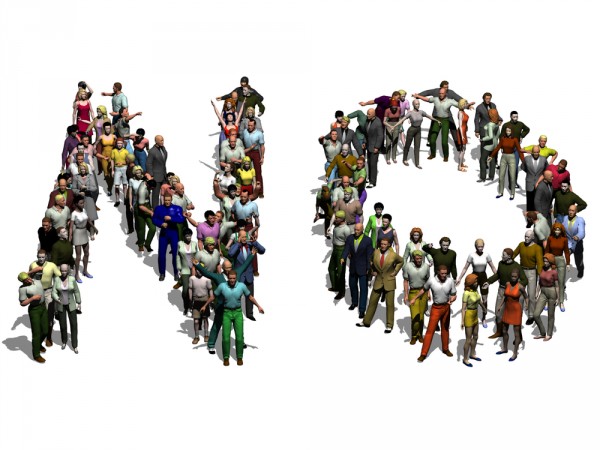
    “NO!!!”

    That night in Ann Arbor, according to testers back in the Microsoft quality assurance department, the version of Microsoft Word that Gates was demonstrating contained six land mines. There were known to be six Type-A bugs in the software, any one of which could lock up the Macintosh computer in an instant, sending Aunt Helen’s gothic romance into the ether at the same time. All Gates had to do was guide his demo past these six danger areas to make Ann Arbor and the rest of the Macintosh world think that all was well with Microsoft Word 3.0.

    Gates made it through the demonstration with only one mistake that completely locked up — crashed — the computer. Not good enough for the automotive world, of course, where having to push the car back from the test drive would usually kill a sale, but computer users are forgiving souls; they don’t seem to mind much if the gas tank of their digital Pinto occasionally explodes. Heck, what’s one crash among friends?

    In fact, the demo was brilliant, given that the Microsoft QA department had no idea how bad the program really was. Word 3.0 turned out to have not six but more than 600 major bugs when it finally shipped five months later, proving once again that Bill Gates is a demo-god.

    Late night in Ann Arbor brings with it the limited pleasures of any college town — movie houses, pizzerias, and bars, each filled with a mix of students and townies that varies in direct relation to its distance from the University of Michigan campus. Bored with the Lysol ambiance of the Holiday Inn, the pair aimed their rental car into the heart of town, looking for something, well, different. Bill Gates sat on the passenger side, sniffing like a setter the evening air through his open window, a 33-year-old billionaire on the prowl.

    The Word 3.0 demo was over, but Gates, now a little drunk, apparently had a few things left to prove.

    “Here, stop here!” Gates commanded, jumping unsteadily from the car as it settled next to the curb near a group of young blacks.

    “What’s happening!” the pencil-necked billionaire cheerfully greeted the assembled boom boxers, who clearly had no idea who or what he was — this bespectacled white boy with greasy blond hair and bratwurst skin, wearing a blue and white plaid polyester shirt and green pullover sweater.

    “Bill, let’s go someplace else”, called Gates’s companion from the driver’s seat.

    “Yeah, Bill, go someplace else”, said one of the young blacks.

    “Nah, I want to rap. I can talk to these guys, you’ll see!”

    This is not just a gratuitous “Bill Gates gets drunk” story. “I can [fill in the blank], you’ll see!” is the battle cry of the personal computing revolution and the entire philosophical basis of Microsoft’s success and Gates’s $4 billion fortune.

    This guy thinks he has something to prove. A zillion dollars isn’t enough, 7,000 employees who idolize him aren’t enough — in fact, nothing is enough to prove to Bill Gates and to all the folks like him in the personal computer business that they are finally safe from the bigger, stronger, stupider kids who used to push them around on the playground.

    “I can (fill in the blank], you’ll seel” is a cry of adolescent defiance and enthusiasm, a cry as much against the status quo as it is in favor of something new. It’s a cry at once of confidence and of the uncertainty that lies behind any overt need to prove one’s manhood. And it’s the cry that rings, at least metaphorically, across the desks of 45 million Americans as they power up their personal computers at the start of each working day.

    There was no urge to fly, to see the world, to win a war, to cure disease, or even to get rich that explains how the personal computer business came to be or even how it runs today. Instead, the game was started to satisfy the needs of disenfranchised nerds like Bill Gates who didn’t meet the macho standards of American maleness and so looked for a way to create their own adolescent alternative to the adult world and, through that creation, gain the admiration of their peers.

    This is key: they did it (and do it) to impress each other.

    In the mid-1970s, when it was hard to argue that there even was a PC industry, 19-year-old Bill Gates thought that he could write a high-level programming language — a version of the BASIC language — to run on the then-unique Altair hobbyist computer. Even the Altair’s designers thought that their machine was too primitive to support such a language, but Gates, with his friend Paul Allen, thought otherwise. “We can write that BASIC interpreter, you’ll seel” they said. And they were right: Microsoft was born.

    When Steve Wozniak built the first Apple computer, his goal was not to create an industry, to get rich, or even to produce more than one of the machines; he just wanted to impress his friends in Silicon Valley’s Homebrew Computer Club. The idea to manufacture the Apple I for sale came from Wozniak’s friend, Steve Jobs, who wanted to make his mark too, but lacked Woz’s technical ability. Offering a VW Microbus and use of his parents’ garage in payment for a share of his friend’s glory, Jobs literally created the PC industry we know today.

    These pioneers of personal computing were people who had little previous work experience and no previous success. Wozniak was an undistinguished engineer at Hewlett-Packard. Jobs worked part time at a video game company. Neither had graduated from college. Bill Gates started Microsoft after dropping out of Harvard during his sophomore year. They were just smart kids who came up with an angle that they have exploited to the max.

    Reprinted with permission

  • Accidental Empires Part 4 — The Demo-God (Chapter 1a)

    Fourth in a series. Editor, with one, two, three introductions behind, Robert X. Cringely’s serialized version of 1991 classic Accidental Empires begins.

    Years ago, when you were a kid and I was a kid, something changed in America. One moment we were players of baseball, voters, readers of books, makers of dinner, arguers. And a second later, and for every other second since then, we were all just shoppers.

    Shopping is what we do; it’s entertainment. Consumers are what we are; we go shopping for fun. Nearly all of our energy goes into buying — thinking about what we would like to buy or earning money to pay for what we have already bought.

    We invented credit cards, suburban shopping malls, and day care just to make our consumerism more efficient. We sent our wives, husbands, children, and grandparents out to work, just to pay for all the stuff we wanted — needed — to buy. We invented a thousand colors of eye shadow and more than 400 different models of automobiles, and forced every garage band in America to make a recording of “Louie Louie”, just so we’d have enough goods to choose between to fill what free time remained. And when, as Americans are wont to do, we surprised ourselves by coming up with a few extra dollars and a few extra hours to spare, we invented entirely new classes of consumer products to satisfy our addiction. Why else would anyone spend $19.95 to buy an Abdomenizer exercise machine?

    I blame it all on the personal computer.

    Think about it for a moment. Personal computers came along in the late 1970s and by the mid-1980s had invaded every office and infected many homes. In addition to being the ultimate item of conspicuous consumption for those of us who don’t collect fine art, PCs killed the office typewriter, made most secretaries obsolete, and made it possible for a 27-year-old M.B.A. with a PC, a spreadsheet program and three pieces of questionable data to talk his bosses into looting the company pension plan and doing a leveraged buy-out.

    Without personal computers, there would have been — could have been — no Michael Milkens or Ivan Boeskys. Without personal computers, there would have been no supply-side economics. But, with the development of personal computers, for the first time in history, a single person could gather together and get a shaky handle on enough data to cure a disease or destroy a career. Personal computers made it possible for businesses to move further and faster than they ever had before, creating untold wealth that we had to spend on something, so we all became shoppers.

    Personal computers both created the longest continuous peacetime economic expansion in U.S. history and ended it.

    Along the way, personal computers themselves turned into a very big business. In 1990, $70 billion worth of personal computer hardware and software were sold worldwide. After automobiles, energy production, and illegal drugs, personal computers are the largest manufacturing industry in the world and one of the great success stories for American business.

    And I’m here to tell you three things:

    1. It all happened more or less by accident.

    2. The people who made it happen were amateurs.

    3. And for the most part they still are.

    Reprinted with permission

    Photo Credit: Robert Hope

  • Accidental Empires Part 3 — 1991 edition preface

    Third in a series. Editor: In parts 1 and 2 of this serialization, Robert X. Cringely presents an updated intro to his landmark rise-of-Silicon Valley book Accidental Empires. Here he presents the original preface from the first edition.

    The woman of my dreams once landed a job as the girls’ English teacher at the Hebrew Institute of Santa Clara. Despite the fact that it was a very small operation, her students (about eight of them) decided to produce a school newspaper, which they generally filled with gossipy stories about each other. The premiere issue was printed on good stock with lots of extra copies for grandparents and for interested bystanders like me.

    The girls read the stories about each other, then read the stories about each other to each other, pretending that they’d never heard the stories before, much less written them. My cats do something like that, too, I’ve noticed, when they hide a rubber band under the edge of the rug and then allow themselves to discover it a moment later. The newspaper was a tremendous success until mid-morning, when the principal, Rabbi Porter, finally got around to reading his copy. “Where”, he asked, “are the morals? None of these stories have morals!”

    I’ve just gone through this book you are about to read, and danged if I can’t find a moral in there either. Just more proof, I guess, of my own lack of morality.

    There are lots of people who aren’t going to like this book, whether they are into morals or not. I figure there are three distinct groups of people who’ll hate this thing.

    Hate group number one consists of most of the people who are mentioned in the book.

    Hate group number two consists of all the people who aren’t mentioned in the book and are pissed at not being able to join hate group number one.

    Hate group number three doesn’t give a damn about the other two hate groups and will just hate the book because somewhere I write that object-oriented programming was invented in Norway in 1967, when they know it was invented in Bergen, Norway, on a rainy afternoon in late 1966. I never have been able to please these folks, who are mainly programmers and engineers, but I take some consolation in knowing that there are only a couple hundred thousand of them.

    My guess is that most people won’t hate this book, but if they do, I can take it. That’s my job.

    Even a flawed book like this one takes the cooperation of a lot of really flawed people. More than 200 of these people are personal computer industry veterans who talked to me on, off, or near the record, sometimes risking their jobs to do so. I am especially grateful to the brave souls who allowed me to use their names.

    The delightfully flawed reporters of InfoWorld, who do most of my work for me, continued to pull that duty for this book, too, especially Laurie Flynn, Ed Foster, Stuart Johnston, Alice LaPlante, and Ed Scannell.

    A stream of InfoWorld editors and publishers came and went during the time it took me to research and write the book. That they allowed me to do it in the first place is a miracle I attribute to Jonathan Sacks.

    Ella Wolfe, who used to work for Stalin and knows a lost cause when she sees one, faithfully kept my mailbox overflowing with helpful clippings from the New York Times.

    Paulina Borsook read the early drafts, offering constructive criticism and even more constructive assurance that, yes, there was a book in there someplace. Maybe.

    William Patrick of Addison-Wesley believed in the book even when he didn’t believe in the words I happened to be writing. If the book has value, it is probably due to his patience and guidance.

    For inspiration and understanding, I was never let down by Pammy, the woman of my dreams.

    Finally, any errors in the text are mine. I’m sure you’ll find them.

    Reprinted with permission

  • Accidental Empires Part 2 — 1996 edition preface

    Second in a series. Editor: Robert X. Cringely is serializing his classic Accidental Empires , yesterday with a modern intro and today with the two past ones. The second edition of the book coincided with release of documentary “Triumph of the Nerds”. The intros provide insight into a past we take for granted that was future in the making then. Consider that in 1996, Microsoft had a hit with Windows 95 and Apple was near bankruptcy.

    The first edition of Accidental Empires missed something pretty important — the Internet. Of course there wasn’t much of a commercial Internet in 1990. So I addressed it somewhat with the 1996 revised edition, the preface of which is below. Later today we’ll go on to the original preface from 1990.

    1996

    In his novel Brighton Rock, Graham Greene’s protagonist, a cocky 14-year-old gang leader named Pinky, has his first sexual experience. Nervously undressing, Pinky is relieved when the girl doesn’t laugh at the sight of his adolescent body. I know exactly how Pinky felt.

    When I finished writing this book five years ago, I had no idea how it would be received. Nothing quite like it had been written before. Books about the personal computer industry at that time either were mired in technobabble or described a gee-whiz culture in which there were no bad guys. In this book, there are bad guys. The book contains the total wisdom of my fifteen-plus years in the personal computer business. But what if I had no wisdom? What if I was wrong?

    With this new edition, I can happily report that the verdict is in: for the most part, I was right. Hundreds of thousands of readers, many of whom work in the personal computer industry, have generally validated the material presented here. With the exception of an occasional typographical error and my stupid prediction that Bill Gates would not marry, what you are about to read is generally accepted as right on the money.

    Not that everyone is happy with me. Certainly Bill Gates doesn’t like to be characterized as a megalomaniac, and Steve Jobs doesn’t like to be described as a sociopath, but that’s what they are. Trust me.

    This new edition is prompted by a three-hour television miniseries based on the book and scheduled to play during 1996 in most of the English-speaking world. The production, which took a year to make, includes more than 120 hours of interviews with the really important people in this story — even the megalomaniacs and sociopaths. These interviews, too, confirmed many of the ideas I originally presented in the book, as well as providing material for the new chapters at the end.

    What follows are the fifteen original chapters from the 1992 edition and a pair of new ones updating the story through early 1996.

    So let the computer chips fall where they may.

    Reprinted with permission

  • Accidental Empires Part 1 — an accidental story in the making

    First in a series. February, 2013 — We stand today near the beginning of the post-PC era. Tablets and smart phones are replacing desktops and notebooks. Clouds are replacing clusters. We’re more dependent than ever on big computer rooms only this time we not only don’t own them, we don’t even know where they are.  Three years from now we’ll barely recognize the computing landscape that was built on personal computers. So if we’re going to keep an accurate chronicle of that era, we’d better get to work right now, before we forget how it really happened.

    Oddly enough, I predicted all of this almost 25 years ago as you’ll see if you choose to share this journey and read on. But it almost didn’t happen. In fact I wish it had never happened at all…

    The story of Accidental Empires began in the spring of 1989. I was in New York covering a computer trade show called PC Expo (now long gone) for InfoWorld, my employer at the time. I was at the Marriott Marquis hotel, the phone rang and it was my wife telling me that she had just been fired from her Silicon Valley marketing job. She had never been fired before and was devastated.  I, on the other hand, had been fired from every job I ever held so professional oblivion seemed a part of the package. But she was crushed. Crushed and in denial. They’d given her two months to find another job inside the company.

    “They don’t mean it”, I said. “That’s two month severance. There is no job. Look outside the company”.

    But she wouldn’t listen to me. There had to be a mistake. For two months she interviewed for every open position but there were no offers. Of course there weren’t. Two months to the day later she was home for good. And a week after that learned she had breast cancer.

    Facing a year or more of surgery, chemotherapy and radiation that would keep my wife from working for at least that long, I had to find a way to make up the income (she made twice what I did at the time). What’s a hack writer to do?

    Write a book, of course.

    If my wife hadn’t been fired and hadn’t become ill, Accidental Empires would never have happened. As it was, I was the right guy in the right place at the right time and so what I was able to create in the months that followed was something quite new — an insider view of the personal computer industry written by a guy who was fired from every job he ever held, a guy with no expectation of longevity, no inner censor, nothing to lose and no reason not to tell the truth.

    And so it was a sensation, especially in places like Japan where you just don’t write that Bill Gates needed to take more showers (he was pretty ripe most of the time).

    Microsoft tried to keep the book from being published at all. They got a copy of the galleys (from the Wall Street Journal, I was told) and threatened the publisher, Addison-Wesley, with being cut off from publishing books about upcoming Microsoft products. This was a huge threat at the time and it was to Addison-Wesley’s credit that they stood by the book.

    Bullies tend to be cowards at heart so I told the publisher that Microsoft wouldn’t follow-through and they didn’t. This presaged Redmond’s “we only threatened and never really intended to do it” antitrust defense.

    The book was eventually published in 18 languages. “For Pammy, who knows we need the money” read the dedication that for some reason nobody ever questioned. The German edition, which was particularly bad, having been split between two different translators with a decided shift in tone in the middle, read “Für Pammy, weiß, wer ich für Geld zu schreiben”.

    “For Pammy, who knows I write for money”.

    Doesn’t have the same ring, does it?

    The book only happened because my boss at InfoWorld, the amazing Jonathan Sacks (who later ran AOL), fought for me. It happened because InfoWorld publisher Eric Hippeau signed the contract almost on his way out to door to becoming publisher at arch-rival PC Magazine.

    Maybe the book was Hippeau’s joke on his old employer, but it made my career and I haven’t had a vacation since as a result. That’s almost 24 years with no more than three days off, which probably in itself explains much of my behavior.

    Accidental Empires is very important to me and I don’t serialize it here lightly. My point is to update it and I trust that my readers of many years will help me do that.

    Join me for the next two months as we relive the early history of the personal computer industry. If you remember the events described here, share your memories. If I made a mistake, correct me. If there’s something I missed (Commodore, Atari, etc.) then throw it in and explain its importance. I’ll be be with you every step, commenting and responding in turn, and together we’ll improve the book, making it into something even more special.

    And what became of Pammy? She’s gone.

    Change is the only constant in this — or any other — story.

    Reprinted with permission

    Photo Credit: urfin/Shutterstock

  • These are the good old days

    Yesterday was my 60th birthday. When I came to Silicon Valley I was 24. It feels at times like my adult life has paralleled the growth and maturation of the Valley. When I came here there were still orchards. You could buy cherries, fresh from the fields, right on El Camino Real in Sunnyvale. Apricot orchards surrounded Reid-Hillview Airport in San Jose, where I flew in those early days because hangars were already too expensive in Palo Alto. My first Palo Alto apartment rented for $142 per month, and I bought my first house there for $47,000. I first met Intel co-founder Bob Noyce when we were both standing in line at Wells Fargo Bank.

    Those days are gone. But that is not to say that these days are worse.

    For almost 36 years people have asked me when is the best time to start a company and my answer has always been the same: right now. New technologies have yielded opportunities we could never have imagined and along the way lowered the cost of entry to the point where anyone with a good idea and a willingness to take risks has a chance to make it big.

    These are the good old days.

    And so it is time for me to move forward with my life and my so-called career. As a guy with three sons ages 10, 8, and 6, you see, my devil sperm has provided me the opportunity to work until I die. Or more properly it has determined that I must work until I am at least 76, when my last kid graduates from college. Whichever comes first.

    A year ago I forecast my own retirement of sorts and so I’m here today to explain better what that means, because it certainly doesn’t mean I’ll stop working or that I’ll even go away.

    Blogging no longer works for me as a career. As I’ve explained before, declining ad rates have led to this being no longer a viable occupation, at least for me. So while I’m not going completely away I have to assume even more duties that will limit, somewhat, my presence here. I hope you’ll understand.

    One thing I am about to do is write a book — a very serious book for a very real publisher who has written a very substantial check with the assumption that I’ll deliver 120,000 words a year from today. I have to get it finished soon, you see, before book publishing dies in turn.

    Then I have a new startup company — The Startup Channel — which I hope you’ll hear more of in coming weeks. We’re about to close our seed round and if we don’t then I’ll just pay for the thing myself, it’s that good an idea. I’m open to investment proposals, by the way, but only accredited investors need apply, sorry (that’s the law).

    I’ll continue to blog as often as I can, though mainly about startups, somewhat like I did a few years ago when my startup was Home-Account.com and the topics were mortgages and economics.

    So you’ll see more of me and less. I’ll be working harder than ever. But why not? There’ s plenty still to be done, and I don’t feel a day over 59.

    Reprinted with permission

    Photo Credit: Joe Wilcox

  • Defy the law in protest and publicly unlock your smartphone

    … Milo carefully said nothing when Major —— de Coverley stepped into the mess hall with his fierce and austere dignity the day he returned and found his way blocked by a wall of officers waiting in line to sign loyalty oaths. At the far end of the food counter, a group of men who had arrived earlier were pledging allegiance to the flag, with trays of food balanced in one hand, in order to be allowed to take seats at the table. Already at the tables, a group that had arrived still earlier was singing “The Star-Spangled Banner” in order that they might use the salt and pepper and ketchup there. The hubub began to subside slowly as Major —— de Coverley paused in the doorway with a frown of puzzled disapproval, as though viewing something bizarre. He started forward in a straight line, and the wall of officers before him parted like the Red Sea. Glancing neither left nor right, he strode indomitably up to the steam counter and, in a clear, full-bodied voice that was gruff with age and resonant with ancient eminence and authority, said:

    “Gimme eat”.

    Instead of eat, Corporal Snark gave Major —— de Coverley a loyalty oath to sign. Major —— de Coverley swept it away with mighty displeasure the moment he recognized what it was, his good eye flaring up blindingly with fiery disdain and his enormous old corrugated face darkening in mountainous wrath.

    “Gimme eat, I said”, he ordered loudly in harsh tones that rumbled ominously through the silent tent like claps of distant thunder.

    Corporal Snark turned pale and began to tremble. He glanced toward Milo pleadingly for guidance. For several terrible seconds there was not a sound. Then Milo nodded.

    “Give him eat”, he said.

    Corporal Snark began giving Major —— de Coverley eat. Major —— de Coverley turned from the counter with his tray full and came to a stop. His eyes fell on the groups of other officers gazing at him in mute appeal, and, with righteous belligerence, he roared:

    “Give everybody eat!”

    “Give everybody eat!” Milo echoed with joyful relief, and the Glorious Loyalty Oath Crusade came to an end.

    — from Catch-22, by Joseph Heller

    This weekend it became illegal for U.S. residents to jailbreak their smartphones. The penalty for this violation of the Digital Millennium Copyright Act of 1996 (DMCA) is “first time offenders may be fined up to $500,000, imprisoned for five years, or both. For repeat offenders, the maximum penalty increases to a fine of $1,000,000, imprisonment for up to 10 years, or both”.

    This is a larger penalty, I’ll point out, than the one for turning my un-jailbroken smart phone into an explosive device, though to be fair the ATF can throw an extra penalty on top for “brandishing“.

    There is some question among readers whether “jailbreaking” or “unlocking” is what’s illegal here and there is certainly some overlap in the two terms. When I wanted to make my original iPhone work on the T-Mobile network rather than the AT&T network, for example, the way it was done back then was called “jailbreaking”, which explicitly enabled “unlocking”, for it was only by unlocking (enabled in that case by jailbreaking) that I was able to switch from one GSM network to another.

    Maybe times have changed and I am now using the wrong term, but I think these disagreements about terminology are mainly pedantic excuses not to consider the underlying fact that the U.S. Government is messing with my innate right to do whatever I damn well please with what’s long paid for and sitting in my junk drawer.

    Jailbreaking has actually been illegal since 1996 when there were no smartphones, but those doing it enjoyed an exemption allowed by the Librarian of Congress, whom I have never thought of as either a law enforcement official nor possibly the biggest jerk in the U. S. Government, but I’m rethinking that today.

    This is stupid and represents exactly the type of government nobody needs. It is also a perfect issue to deal with through civil disobedience.

    I never even considered jailbreaking my five year-old iPhone 3 but this week I’m going to do it — and I suggest you do, too.

    I haven’t decided yet whether to do it at the AT&T Store, the Apple Store, or in the middle of the Reading Room at the Library of Congress, but I’m going to do it.

    If 10,000 people publicly jailbreak that old iPhone sitting in a drawer the legal system will temporarily grind to a halt and this stupid law will grind with it.

    Reprinted with permission

  • Do you think that all smart people actually work at Nokia, Qualcomm, and the X-Prize Foundation?

    Third in a series.  This is my response to the message from Qualcomm Tricorder X-Prize director Mark Winter, who said my objections to his contest design were without merit.

    Let me make a point here: this isn’t about me receiving $10 million. We all know that’s not going to happen. It’s about designing a contest that actually encourages innovation. Please read on as I explain.

    I appreciate your position, Mark, and might have sent the same reply were I standing in your shoes. However, I am sure I’ve uncovered exactly the sort of poor contest design that may well doom your effort. As such I will go ahead and publish the letter I wrote to Paul Jacobs so my readers can weigh-in on this issue. Certainly it will make your contest more visible.

    Bill Joy used to say “not all smart people work at Sun Microsystems,” and by this he meant that there is plenty of useful brainpower outside every organization — brainpower that is likely to see the germ or find the flaw in any strategy. Well not all smart people work at Qualcomm, Nokia, or the X-Prize Foundation, either. And what worries me about this is the inflexibility engendered in your announcement, which actively discourages the participation of prior art. Why would anyone with something well in hand wait 35 months? For that matter, what makes you think that 35 months from now this prize will even have relevance? What if it doesn’t? Do you just cancel it and say “never mind?”

    The proper way to have designed this contest was by setting a goal and an overall ending date, not a date six years out to begin evaluation. If anyone accomplishes the contest tasks prior to that date, they should win. Your design assumes every entrant is starting from scratch. It also assumes every entrant is amateur, because no business these days would plan a 35-month R&D effort toward a single product. Ask Nokia and Qualcomm about that one.

    Some of this thinking is simply not thinking while some of it is self-serving thought. You make the point that the X-Prize Foundation is in the business of running these contests, which suggests to me that a 6-7 year time frame probably suits the business model of the Foundation much more than it does the pursuit of this type of knowledge. We’ve seen this before from your organization, notably with the Google Lunar X-Prize, which also seems to have been designed to fail.

    Note: In the case of the Google Lunar X-Prize, the X-Prize Foundation changed the rules several times including at one point inserting a delay of more than a year before the “final” rules would be set — a year during which entrants were supposed to blindly continue raising budgets of up to $100 million. 

    What I read in your message is an unwillingness to consider changing the contest rules. This is ironic given the immense likelihood that over time you will do just that for any number of reasons. This seems to happen on most of the X-Prize competitions at one point or another. This is the ideal time to correct an obvious flaw, so why not do it?

    Or do you think that all smart people actually do work at Nokia, Qualcomm, and the X-Prize Foundation?

    All the best,

    Bob Cringely

    Reprinted with permission

    Photo Credit: Creativa/Shutterstock

  • X-Prize Foundation answers my tricorder competition complaints

    Second in a series. This message from the X-Prize Foundation is in response to the letter I sent Qualcomm’s CEO.

    They seem to feel the contest is fine as-is and my objections are without merit.

    Dear Bob,

    I am the Senior Director in charge of this competition and I appreciate receiving your letter of interest dated January 11.  First, let me offer you my highest level of encouragement for your creation of a SIDS monitoring device. As you know, medical technology is one of the most difficult areas to make significant progress in. To make something really work and pass through all the regulatory hurdles in this space is challenging as you point out.  Second, my sincere personal condolences on the loss of your child. I understand and respect your total commitment to solve this challenging problem and admire your dedication and passion to address this urgent need.

    We announced the Qualcomm Tricorder X PRIZE in January 2012 and spent a year refining the guidelines and structure of the competition, which includes the winning parameters, registration fees, rules and a timeline.  The guidelines were finalized and released this month after receiving input from the scientific and medical communities, companies working in this space, and the general public.  We are asking teams to develop a medical device that will allow consumers to diagnose a set of 15 diseases and monitor 5 vital signs, independent of a healthcare provider or facility.  While we recognize that there are a number of unique new technologies, including yours, that address important public health concerns, we could not include every one of them in this competition. We did choose a range of core and elective conditions that are widely recognized as being significant for public health in North America and also offered a wide range of sensing and interpretive challenges.

    As of today there isn’t an integrated personal health device on the market that does everything that we’re requiring in the guidelines. That is the essence of the competition and sets the stage for a unified solution that can capture data from many types of sensors, potentially including yours. As with many innovation competitions and Prizes, there is a registration fee required to participate.  The registration fee, which is $5,000 until April 10th, helps us cover operational expenses such as numerous team and judging summits, ongoing communications to many stake holders, comprehensive device testing and judging processes that are essential to staging a fair and objective competition.

    Please realize that we are a competition that intends to drive innovation and help to usher in a new digital health marketplace. We are not investors and in fact, we are not even the Judges who will act totally independent of us in determining the finalists.  Our goal is stimulate an influx of consumer devices on the market in the near future. Even if you decided not to compete, the overall effect of these competitions will help to lift all boats in the digital health space, including yours we believe.

    I encourage you to consider entering the Qualcomm Tricorder X PRIZE and/or Nokia Sensing X CHALLENGE, or join a current pre-registered team and incorporate your device into their submission. Although SIDS is not one of the defined conditions in the requirements it does not mean that the inclusion of your technology would not be advantageous to existing teams who all seek to commercialize their solutions.  Inventing, developing, funding and bringing to market medical technology is a very difficult endeavor and a team approach may help.  At the X PRIZE Foundation, one of our jobs is to provide a forum for sharing ideas, concepts and new technologies that might have otherwise gone unnoticed. That has been a guiding principle of this and all our competitions. We hope that you will consider becoming involved on this basis.

    If you have additional questions or would like to speak further, please don’t hesitate to contact me.

    Sincerely

    Mark Winter

    Senior Director, Qualcomm Tricorder X PRIZE and Nokia Sensing X CHALLENGE

    Reprinted with permission

    Photo Credit: tanewpix/Shutterstock

  • There’s something missing from Qualcomm’s Tricorder contest

    First in a series. I wrote a letter to Qualcomm CEO Paul Jacobs. This went out January 11th and was delivered on the morning of the 14th.

    The response will be my next post.

    Dear Mr. Jacobs:

    As a professional blogger I’d normally be posting this letter on my web site but this time I’ll first try a more graceful approach.  You see I have a beef with your Qualcomm Tricorder X-Prize and I want you to make some changes.

    In 2002 my son Chase died of Sudden Infant Death Syndrome (SIDS) at age 73 days. I wrote about it at the time and received great support from the Internet community. My pledge to do something about SIDS manifested itself in a research project that came to involve online friends in Canada, Israel, Japan and Russia as well as the United States.

    Our goal was to create a device that would plug into a power outlet. It would identify and wirelessly monitor all mammal life forms in a room, gathering data about whatever babies, dogs or old people were there, detecting as they entered and left the room and setting off a loud alarm if anyone stopped breathing or their heart rate dropped below a certain threshold. SIDS can’t be cured, you see, but it can be cheated and all that requires is judicious use of a 120 dB alarm to scare the baby back into consciousness. No parental intervention is even required.

    Making the product a wall wart meant no batteries needed changing. Making it wireless meant no sensors needed to be attached or removed. It would be a no-brainer, completely plug-and-play.

    And we did it.

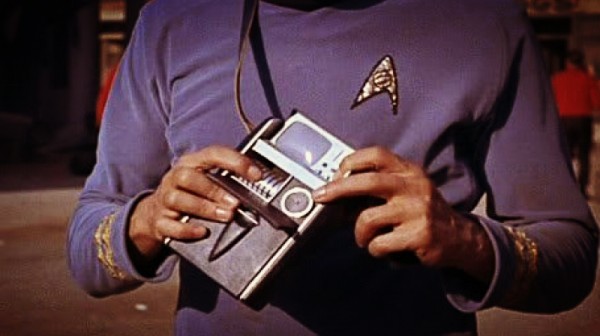
    It took four years but we completed a working prototype. We were going to call it the Tricorder and I even bought the Tricorder domain.

    But then we ran out of money, lawyers and medical experts told us there were liability issues, that gaining FDA approval would take years and millions, though why that should be the case for a non-contact device we never understood. By this time, too, I had three young sons and a so-called career to manage so we put the project aside. That was in 2006.

    Then last week you announced a $10 million prize seeking almost exactly what we had already built. But your prize rules say I have to pay $5,000 so that 35 months from now you’ll look at the work we have already done.

    How stupid is that?

    We can claim your prize in 30 days, max, by porting our old code to Android or IOS (our team includes a crack tablet developer who is also an MD and specializes in medical apps). Why shouldn’t we be allowed to? This would give us the funds to finally complete our work and eradicate SIDS. How many lives won’t be saved because of these silly rules?

    So please correct this error by changing your prize to allow the immediate recognition of scientific achievement. I’m sure you’d rather succeed earlier than later. The good publicity that will come from a quicker award will be no less sweet. After all, it will have pulled from obscurity technologies that might have been lost forever.

    All the best,

    Bob Cringely

    Reprinted with permission