Author: Shirin Samimi-Moore

  • TED Weekends breaks the silence for suicide survivors

    JD-Schramm-at-TEDActiveAt TEDActive 2011, JD Schramm shares the story of his friend, John, who, after surviving a suicide attempt, JD Schramm: Break the silence for suicide attempt survivorsJD Schramm: Break the silence for suicide attempt survivorsfound that there were few resources available for someone in his position to be able to communicate the hardship he experienced and the depression he continued to battle. And there are others in this position, too – as Schramm points out, 19 out of 20 people who attempt suicide live but feel extreme isolation from others. This can lead to second, sometimes successful, attempt.
    This week’s TED Weekends on the Huffington Post emphasizes the importance of having an honest conversation about the taboo of suicide in order to help people in this at-risk situation. Below, find open and thoughtful essays on the subject.

    JD Schramm: Revealing a Heartbreaking Secret on the TED Stage

    My sharing of John’s story was my first attempt to spark a conversation about the taboo subject of suicide, and in particular the challenge of coming back from an attempt and choosing life. It worked well enough to bring more than a half million viewers to see it. It’s been lovingly translated into 39 languages by volunteers and shown at numerous TEDx events around the world. I said in the talk that I was trying to “start a conversation worth having about an idea worth spreading.” That idea is determining how best to support the many people who attempt suicide but fail and seek to return to life.

    What I’ve learned since the privilege of delivering this talk and then having TED put it online has been profound. Read the full essay »

    Lea Lane: What I’ve Learned from My Best Friend’s Suicide

    Sometimes, especially when a person seems to have a satisfying life, we dismiss suicidal signals that would otherwise alert us. I know this first-hand.

    Delia had a loving husband, two adorable and adoring young daughters, an 18th-century farmhouse filled with antiques. She was smart, kind, beautiful, active in the community and was revered in our Westchester County village, north of New York City.

    When I moved to a nearby house with my first husband and two young sons, she came over with a bouquet of garden flowers to welcome us. I was charmed by her grace and warmth, and we soon became best friends. Read the full essay »

    Mary Robin Craig: Faith-filled responses to suicide

    During one of those interminable sleepless nights that followed the death of my oldest son, I crept downstairs in the dark and logged on to the computer to explore the views of the Christian Church on suicide. I was a midlife seminary student but, like most people, my knowledge of religious attitudes toward suicide was limited. I knew that suicide had been condemned by the early church and that those who died of suicide were once understood to be sinners of the worst sort, headed straight for hell. I knew that churches had at some point come to recognize that mental illness may reduce a person’s capacity to make decisions and, therefore, his or her responsibility for a self-inflicted death. My hours on the computer that terrible night revealed little beyond that basic information.

    Five years have passed and I have learned a great deal more about the attitudes of both the general public and the clergy toward suicide. I now realize that our family benefited tremendously from knowledgeable attitudes toward mental illness and from the generosity of religious authorities. Read the full essay »

  • X marks the spot: TEDx on Mount Everest, for the second time

    TEDxEverest2Call it TEDx from the mountaintop: This photo is brought to you by TEDxEverest, which was organized by Nate Mook and Eiso Vaandrager on the 60th anniversary of Sir Edmund Hillary and Tenzing Norgay’s first hike up the mountain. These ambitious organizers brought bold ideas to an audience of sherpas and climbers at an Advanced Basecamp, elevation 21,000 feet — for the second time. This is the devotion of TEDx organizers — literally climbing Everest to spread ideas.

    This week, from events held across the world, we’ve handpicked four TEDx Talks that encapsulate this diverse venture. Ranging from bringing the mammoth back to a game that helps neuroscientists map the human brain — all of these talks are brought to you by our vast TEDx community. Below, find this week’s talks.

    http://www.youtube.com/watch?feature=player_embedded&v=TRvjFt7Ut8o

    What are wild animals up to?: Nick Whitney at TEDxSarasota
    If you want to study true animal behavior, you ultimately have to watch them where they live, which can be difficult underwater. By strapping accelerometers to wild sharks, sturgeon, snakes — and even his own children — zoologist Nick Whitney found a clever and inexpensive way to monitor the activities of these animals in the wild. At TEDxSarasota, he shows how we can discover amazing things about the animal kingdom using ubiquitous technologies. (Filmed at TEDxSarasota.)

    http://www.youtube.com/watch?feature=player_embedded&v=7gKt8iT08Zc

    A game to map the brain: Amy Robinson at TEDxNijmegen 2013
    The next great leap in neuroscience may require a full, detailed map of the human brain. But it can take a researcher up to 50 hours to map just one neuron — and there are around 80 billion neurons in every brain. The solution? The crowd. In this exciting talk, Amy Robinson demos EyeWire, a game that gives ordinary people the chance to participate in this new kind of cartography. (Filmed at TEDxNijmegen.)

    http://www.youtube.com/watch?feature=player_embedded&v=DajRM7VyeZ4

    How to bring a mammoth back to life: Beth Shapiro at TEDxDeExtinction
    Complete mammoth genetic sequences are deteriorating over time, complicating any efforts at cloning the species. But Beth Shapiro and her team may have found a solution. She reveals the novel approaches that she and her colleagues are taking to revive ancient mammoths. (Filmed at TEDxDeExtinction.)

    http://www.youtube.com/watch?feature=player_embedded&v=NUxaNYO_mFY

    Do others feel the same as you do?: Makio Kashino at TEDxKeioSFC
    What makes our minds different? Makio Kashino has spent a lifetime trying to quantify the distinct mental worlds that we experience. At TEDxKeioSFC, he explains that the best strategy for progress is communication — “minding the gap” between our different perceptions to find common ground. (Filmed at TEDxKeioSFC.)

    And highlights from the TEDx blog this past week:

  • Playing memory games on this week’s TED Radio Hour

    TED-Radio-Hour-memoryHow do you keep memories? And how much can you trust those preservations? This week’s TED Radio Hour, “Memory Games,” looks at recollections versus actual experiences, sorts through our tendency to create false memories, and unpacks how we can actually enhance our ability to remember.

    Forensic psychologist Scott Fraser starts the hour. He is the guy called upon by attorneys or prosecutors when they have issues with a witness’s statement. Fraser discusses the importance of implanted memories — believing that you remember something that is the result of “post-experience information” — which is akin to what happens when a photograph or a story from our parents lead us to recall an experience that we may not actually remember. These false memories may seem innocent enough, but when on the witness stand of a murder trial, it could lead to wrongful conviction.

    Next, Nobel laureate Daniel Kahneman reveals his insights into the space between experience and memory. He has found that, typically, the end of an experience is what is most important. In other words — a beautiful, moving symphony with a screeching sound at the end will not be remembered fondly. Kahneman gives an evolutionary explanation for this phenomenon. And in an unmissable part of the interview, he also shares a remarkable story from his youth — as a 7-year-old Jewish boy in occupied Paris, he remembers being hugged by an SS soldier. His various memories of this moment differ, and always serve to remind him that human nature isn’t always black or white.

    To close the show, writer and US Memory Champion Joshua Foer describes how he remembers mundane details, like a group of random numbers, by associating each with an imagined grotesque, creepy, or outlandish act occurring in his various rooms in his childhood home. Think: cookie monster riding a horse in his kitchen. These striking images give him something notable to associate with an ordinary memory. This practice has been used by memory champions as far back as Ancient Greece, and anyone can use this tool. If you want to have good memory, says Foer, all you need to do is practice.

    Check your local NPR schedule to find out when the show airs today, or listen via NPR’s website »

    Or head to iTunes where the podcast is available now »

  • TED Weekends investigates why we judge others

    Rebecca-Saxe-at-TED

    Rebecca Saxe speaks at TEDGlobal 2009. Photo: James Duncan Davidson

    Above and slightly behind your right ear, exists a part of your brain many scientists believe is specifically dedicated to thinking about other people’s thoughts – to predicting them, reading them, and empathizing with them. It’s called the temporoparietal junction, and this is the area cognitive neuroscientist Rebecca Saxe focuses on in her research.

    Rebecca Saxe: How we read each other's mindsRebecca Saxe: How we read each other's mindsAt TEDGlobal 2009, Saxe delves into our amazing capacity to identify and predict others’ emotions and actions, and how this ability is learned throughout childhood. This skill serves an important function in human relationships – we learn how to fill in the unspoken blanks between what someone is thinking and how they are presenting themselves. This is what allows us to glance at a photo of someone and be able to know what she is feeling.

    Saxe’s talk is this week’s featured idea for TED Weekends on the Huffington Post. Below, find essays all about our ability to, in a sense, read minds.

    Rebecca Saxe: Learning to Read Someone Else’s Mind

    My TED Talk, above, is about the process by which we learn to read each other. Here are five reasons that I study how human brains think about other minds.

    (1) It is a hard, and awesome, problem. To me, the most breathtaking idea I’ve ever heard is that each thought a person ever has, every moment of experience, of insight, of reflection, of aspiration, is equivalent to a pattern of brain cells firing in space and time. How does a pattern of brain activity constitute a moral judgment? A moment of empathy for a fictional character? The idea for a sentence you’re about to write? Someday, scientists will be able to imagine, simultaneously, these abstract thoughts and how each corresponds to a specific pattern of brain activity. I don’t expect this understanding to arrive in my lifetime. But it’s thrilling to imagine that future, and to feel that my research might be a small step on the route that gets us there. Read the full essay »

    Phillip M. Miner: The Neurology of Disgust

    Growing up believing you are an abomination is strange. But, if you are gay and grew up in Kansas (or many other parts of the world) — like I did — it’s not all that uncommon. We’re told from a very young age that being gay is wrong and gross. The lesson that men who have sex with men are disgusting is repeated so frequently, your average kid quickly gets the message.

    Sometimes the moral judgment is delivered directly — often times through someone with religious moral authority or family. Other times it comes more subtly through language cues. In my experience, the euphemisms for men who have sex with men seem to bleed together to form a powerful and often false identity, saying all men who have sex with men are feminine (“pansy”, “fairy”, “poof”), perverts (“pillow biter,” “corn holer,” “sword swallower”), and abominations (“queer,” “bent”).

    There’s disagreement on the physical mechanisms for creating moral beliefs in the brain. Read the full essay»

    Barbara Ficarra: Equipped for Empathy

    “The great gift of human beings is that we have the power of empathy.” These are heartfelt words by award-winning actress Meryl Streep.

    Do we all have the power of empathy? Are we hardwired to know what other people want? Is it easy to think about other people’s thoughts?

    Rebecca Saxe’s enlightening TEDTalk ”How To Read Each Other’s Minds” asks: “Why is it so hard to know what somebody else wants or believes?” “Why is it so hard to change what somebody else wants or believes?” And “How is it so easy to know other minds?” Read the full essay »

  • X marks the spot: TEDx event brings hope after bombing, plus this week’s TEDx Talks

    TEDxBahrialUKarachi

    The TEDxBahrialUKarachi show went on, despite a bombing in the city the day of the event. Why? To give hope. Photo: TEDxBahrialUKarachi

    The city of Karachi, Pakistan, was on lockdown after bomb blasts claimed 57 lives in the midst of a tumultuous election. And on the day of TEDxBahriaUKarachi, yet another bomb shocked the area. Still, organizers Furqan Hussein and Sana Nasir boldly tread onward toward putting on a memorable event. “‘Ideas for Survival,’ our theme, sowed the idea of surviving in situations when there’s [little] or no hope,” Nasir tells the TEDx Blog in an interview. “The one thing we wanted our audience to take back [with them] was hope.”

    These are the lengths some TEDx organizers go to in order to put on great events — dozens of which are held across the world every week. From these events, the TEDx team chooses four favorite talks each week, highlighting just a few of the enlightening speakers from the TEDx community and its diverse constellation of ideas. Below, listen to this week’s talks – on topics ranging from the data revolution to how we perceive pain.

    Democracy’s data revolution: Simon Jackman at TEDxSydney
    At TEDxSydney, Stanford researcher Simon Jackman demonstrates some of the ways in which an increased availability of data gives us a more accurate picture of electoral trends, the political zeitgeist, and the serious implications this has on the shape of public conversation. (Filmed at TEDxSydney.)

    Pain is all about perception: Silje Endersen Reme at TEDxNHH
    Nearly everyone will suffer from some form of back pain during their lifetime, often without a specific cause. At TEDxNHH, Silje Endersen Reme explains how our mental state can affect the way we perceive chronic and acute forms of back pain. (Filmed at TEDxNHH.)

    Detecting cancer before it spreads: Raj Krishnan at TEDxSanDiego 2012
    Curing cancer isn’t just about better treatment, says Raj Krishnan. If we can improve detection, patients will enjoy much better odds of survival and recovery. Krishnan demonstrates how doctors can use existing technology to scan for DNA markers of cancer cells — even before the patient is showing symptoms. (Filmed at TEDxSanDiego.)

    African thumb piano jam: Hiroyuki at TEDxTokyo
    At TEDxTokyo, Japanese artist Hiroyuki plays a remarkable musical performance on the kalimba — also known as the thumb piano. A handheld plucking instrument still relatively obscure in Western music, the kalimba is an ancient part of the heritage of several cultures in sub-Saharan Africa. (Filmed at TEDxTokyo.)

    And here, some of the week’s highlights from the TEDx blog:

  • Giving It Away: TED Radio Hour examines generosity and philanthropy

    giving_it_awayHow can we give in better and smarter ways? This week’s new episode of TED Radio Hour explores the effects of giving – of your money, your time and your love.  As our consciousness of philanthropy is shifting towards crowdsourcing and justice-centered discourse, people begin to self-organize around the causes they are passionate about. This episode describes how we, on a grassroots level, can give in new ways.

    Volunteer firefighter Mark Bezos kicks off the hour with a story of a small, seemingly insignificant act of heroism. Through a tiny act of kindness, he realizes the dozens of possibilities we have in a day to be heroes in our own humble ways. Next, self-named “renegade ecolutionary” Ron Finley describes the garden that he began on the sidewalk in front of his house in South Central Los Angeles, meant for anyone to eat from. Finley expresses the importance of the yin and yang of giving and receiving — one cannot simply take, but must create a cycle of giving.

    The second half of the show continues with Dan Pallotta, who wonders why we are so much more willing to invest in a private company’s enterprises than we are to donate to a non-profit. Pallotta stresses the paradigm shift that we need to enact — away from viewing non-profits as things that must produce results in the here-and-now to seeing them as organizations that can grow and thrive on long-term investments. Amanda Palmer closes the show, sharing her experience as a musician in a budding economy built on trust. As she talks, she emphasizes the importance of the simple act of asking when you need something — and the joy that comes from the connection found through mutual support.

    To hear TED Radio Hour’s “Giving It Away,” check your local NPR schedule to find out when the show airs today. Or listen to it via NPR’s website »

    Head to iTunes, where the podcast is available now »

  • Space oddity, indeed: 18 talks from astronauts, including Chris Hadfield

    Chris Hadfield, the Canadian astronaut who’s become a YouTube sensation aboard the International Space Station, has showed us why tears won’t fall in space and the dangers of clipping one’s fingernails in zero gravity. But he has truly outdone himself with his latest video. Scheduled to leave the space station tonight at 7pm – and to touch down in Kazakhstan hours later — Hadfield has remade David Bowie’s “Space Oddity.” (For those not up on their Bowie song titles, this is the song that starts: “Ground control to Major Tom.”) Watch it — it’s truly awe-inspiring.

    At TED, we’ve had talks from explorers of the mind, charterers of the polar regions and investigators of insects. Today, we’re taking a look at talks from those who’ve seen the earth from outside its atmosphere. All of these TED, TEDx, and TED-Ed speakers are astronauts, yes, but they also have something else in common: a desire to never stop exploring. We’ll start, of course, with Hadfield welcoming TED to Canada, upon hearing that TED2014 would be held in Vancouver.

    1. Commander Hadfield welcomes TED to Canada
    2. Mae Jemison: On teaching arts and sciences together
    3. Cady Coleman greets TED2011 from the International Space Station
    4. Roberta Bondar: The challenge of change
    5. Lodewijk van den Berg: How a crystal growth scientist became an astronaut
    6. Joseph Allen: A sense of place in space
    7. Yvonne Cagle: The human microscopic
    8. Jerry Carr: Life of an astronaut
    9. Ed Lu: The biggest conversation project imaginable (See also: Changing the course of the solar system and Oceans of robots)
    10. Michael Massimino: Spaceflight
    11. Nicole Stott: The glass floor: Reaching for the stars
    12. Stephanie D. Wilson: My journey to space
    13. Michael E. Lopez-Alegria: Human exploration of space
    14. Ron Garan: The orbital perspective of our fragile oasis (See also: Connecting humanity’s changemakers and his greeting to TED2011 from ISS)

  • TED Weekends dissects our collective notion of beauty

    Cameron Russell: Looks aren't everything. Believe me, I'm a model.Cameron Russell: Looks aren't everything. Believe me, I'm a model. Cameron Russell wants to have a discussion about the way that we, as a society, perceive beauty. Media representations of women, she says, are replete with racist and sexist representations, encouraging women to live up to a standard that is both oppressive and unattainable. Russell’s profession offers an insider’s perspective on the topic – after all, she has been modeling for over a decade.

    Her candid talk from TEDxMidAtlantic led to this edition of TED Weekends on the Huffington Post. Below, find essays to start the discussion on our perceptions of beauty.

    Cameron Russell: Beauty Is in the Lies of the Beholder

    Women are not crazy for wanting to have a discussion about body image. And the conversation isn’t as superficial as the one Dove keeps encouraging us to have. It is a conversation about sexism and racism. It is a conversation about the real reason we try to shrink our waists and whiten our teeth (and sometimes even our skin). Most of the time we don’t do those things to make ourselves happy, we do them for someone else. I think we should start talking about that.

    The easiest place to see discrimination is our incomes. Modeling is one of the few professions where women actually out-earn men. And across all jobs, studies have found that more attractive women earn more. A woman’s value is too often skin-deep. In 2004 a study found that resumes with very African-American-sounding names were 50 percent less likely to get called for an initial interview. And racial bias in salaries is overwhelming. While white women make an average of 78 cents for every man’s dollar, for African-American women that number drops to 62 cents, and for Hispanic women to 54 cents. Read the full essay

    Donna Highfill: Beauty and Biblical Plagues

    There is nothing like a biblical plague landing on your face to make you question the importance of physical appearance. I was 24 years old when I noticed a massive knot on my face that caused my left eye to close slightly. I was sure that something horrible had bitten me and was equally sure that some topical cream and an antibiotic would cure it. But when my normally personality-less dermatologist sat down beside me, put his hand on my arm and said, “You are so young and pretty. I am so sorry,” I knew I was wrong on both counts.

    At the time the plague descended, I was a trainer for a mid-sized bank, which called for me to present in front of people on a regular basis. I was also getting married soon… that special time in a girl’s life when you prepare for that walk down the runway that church folks call an aisle.

    Sparing the more vivid details of cystic acne, I will tell you that it is a cruel skin disease that can ravage the skin with huge, painful cysts. See? Biblical plague stuff. Fortunately, mine hit only one place on my body. Unfortunately, that place was my face. Read the full essay

  • TED Talks Education speakers make playlists for you

    Talks Ed cast

    On Tuesday night, PBS and TED joined forces to air TED Talks Education, a one-hour televised special, featuring passionate teachers, students and researchers from the field who shared their ideas about transforming the US education system. We were so inspired by these spirited speakers that we asked them to curate playlists of their favorite TED Talks for you to enjoy.

    Sir Ken Robinson chose his favorite talks, spanning creative methods of learning and powerful spoken word. Watch his favorite talks

    Educator Angela Duckworth selected inquisitive talks about human behavior and psychology. Watch her talk picks

    Bill Gates’ extensive playlist includes a variety of eye-opening selections on medicine, robots and violence. Watch the talks that inspire him

    Teacher and activist Geoffrey Canada’s playlist reflects his passion for advocacy through an exploration of violence, slums and environmental activism. Watch his favorite talks on social justice

    Poet Malcolm London picked talks from speakers with candor – poets and educators alike. Watch this poet’s selections

    High school teacher Pearl Arrendondo chose motivating talks that reflect her own drive. Watch her inspiring picks

    Ramsey Musallam, chemistry teacher, selected talks on imaginative ways of repurposing education and learning. Watch his inventive collection of talks.

  • X marks the spot: This week’s TEDx Talks all about education

    A view of the stage before TEDxDelft. Photo: Roy Borghouts

    A view of the stage before TEDxDelft. Photo: Roy Borghouts

    From dancing math to teaching in languages other than English – this week’s X marks the spot is a selection of TEDx Talks about rethinking education. Each week, TEDx chooses four of our favorite talkshighlighting just a few of the enlightening speakers from the TEDx community, and its diverse constellation of ideas worth spreading. Below, find this week’s edition on education.

    Teaching math through movement: Erik Stern and Karl Schaffer at TEDxManhattanBeach
    Erik Stern and Karl Schaffer took their love of dance into the classroom. Now, they promote the teaching of complicated mathematics concepts to kids using the power of movement, as they demonstrate. (Filmed at TEDxManhattanBeach.)

    Teach for tomorrow’s world: David Garner at TEDxIndianapolis
    With new technology, rapid changes in the global economy, and an evolving workforce, we have an urgent need to improve the way we teach, says David Garner. He explains why we should leave behind outdated models like specialization and standardization and move to a more multidisciplinary approach. (Filmed at TEDxIndianapolis.)

    Language and the wealth gap: Phiwayinkosi Mbuyazi at TEDxSoweto
    In a passionate talk, Phiwayinkosi Mbuyazi takes issue with the convention of teaching international students in English, suggesting that this practice often hurts much more than it helps. (Filmed at TEDxSoweto.)

    Teach both 007 and MacGyver: Marc Chun at TEDxDenverTeachers
    “Why am I learning this?” It’s a question familiar to parents and teachers alike. Marc Chun and other researchers set out to discover how students actually use general knowledge — and he now recommends curriculums that focus on creativity in solving problems. (TEDxDenverTeachers.)

    Below, find some highlights from the TEDx blog this week:

  • 7 talks for inspiring transformed curriculums

    With more colleges shifting courses to the online classroom and high school teachers and students alike expressing a strong desire to move away from rigid, mandated lesson arcs, it’s clear — classes don’t have to be exactly as they are. Educators across the globe have begun to look at ways of transforming curriculum to suit different kinds of learners, and to make education more active for all involved. As TED celebrates Education Week, we were inspired to create this playlist all about tweaks to teaching.

    Dan Meyer: Math class needs a makeoverDan Meyer: Math class needs a makeoverDan Meyer: Math class needs a makeover
    A high-school math teacher, Dan Meyer says the experience of teaching within the set curriculum is like “[selling] a product to a market that doesn’t want it, but is forced by law to buy it.” His students don’t learn how to retain information, but instead, how to decode a textbook. The key, for him, lies in trusting in students’ ability to problem-solve. In this talk from TEDxNYED, he imagines lessons where kids are involved in the formulation of problems.
    Mae Jemison on teaching arts and sciences togetherMae Jemison on teaching arts and sciences togetherMae Jemison on teaching arts and sciences together
    At TED2002, astronaut and designer Mae Jemison points out a false dichotomy: that the arts and sciences are mutually exclusive. In this outdated view, students are either creative or logical. Instead, she says, students need to be treated as both — because their curiosity often leads them to design and physics. Analysis, ingenuity and imagination all stem from our inclination towards creativity, she says.
    Liz Coleman's call to reinvent liberal arts education Liz Coleman's call to reinvent liberal arts education Liz Coleman’s call to reinvent liberal arts education
    The president of Bennington College, Liz Coleman posits at TED2009 that modern liberal arts education pushes students towards a single discipline with an exclusive viewpoint with an aversion to social values. Coleman emphasizes that the responsibility of academics is to empower students instead of deflate them. She stresses the importance of action and self-driven education, and how with them a new liberal arts can emerge.
    Shimon Schocken: The self-organizing computer courseShimon Schocken: The self-organizing computer courseShimon Schocken: The self-organizing computer course
    In this talk from TEDGlobal 2012, computer science professor Shimon Schocken shares the idea that educators don’t necessarily need to actively teach, but instead can provide an environment for self-learning. In his lessons, he gives his students the tools and guidance to build a computer from the bottom up, giving them ownership over their learning. Seeing the success of this model, Schocken then open-sourced the course online – and saw it take on a life of its own.
    Geoff Mulgan: A short intro to the Studio SchoolGeoff Mulgan: A short intro to the Studio SchoolGeoff Mulgan: A short intro to the Studio School
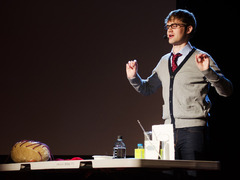
    Faced with droves of uninspired dropouts and employers who complained about the new generation’s lack of experience, Geoff Mulgan asked, “What kind of school would have teenagers fighting to get in, not fighting to stay out?” At TEDGlobal 2011, he shares his findings — the simple idea that you learn by working. Thus, the Studio School was created, with pupils getting real world experience in business and the trades, while they contribute to their communities.
    Tyler DeWitt: Hey science teachers -- make it funTyler DeWitt: Hey science teachers — make it funTyler DeWitt: Hey science teachers – make it fun
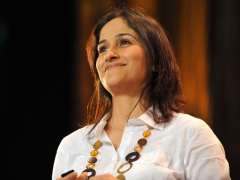
    High school science teacher Tyler DeWitt had a scary classroom moment – he walked into school excited for a lesson on bacterua, only to find that his class hasn’t understood a lick of the assigned reading. At TEDxBeaconStreet, he calls for science teachers to rethink their lesson plans and ask: do they involve a lot of jargon? Are they so precise that they keep students from getting the basic concepts? More than anything, he asks teachers not to lean on textbooks but to find ways to make science pop to life.
    Kiran Bir Sethi teaches kids to take chargeKiran Bir Sethi teaches kids to take chargeKiran Bir Sethi teaches kids to take charge
    In schools across India, Kiran Bir Sethi began an experiment: to find out what would happen if you took students out of the classroom and showed them their potential to shift injustice around them. At TEDIndia 2009, Bir Sethi shares the story of children who were taught the importance of literacy and who were inspired to hold a campaign to educate their illiterate parents. By broadening their horizons, these children learned much — and transformed their communities. Takeaway: homework doesn’t have to involve worksheets.

  • Meet five New York high school students with fascinating stories

    No television special exploring ideas on improving education in the United States would be complete without hearing from students themselves. And so it was essential that students be able to tell their own stories during our first television special, TED Talks Education, which premiered on PBS last night.

    To that end, we invited Market Road Films, the production company of two-time Emmy-winning filmmaker Tony Gerber and Pulitzer Prize-winning playwright/MacArthur Genius Award-recipient Lynn Nottage, to create short documentaries about high schoolers in New York City with incredible stories. Several of these docs appeared in last night’s show, but several went unsurfaced … until now. Watch all five below.

    Shahruz Gaehmi is lucky enough to attend one of the most competitive schools in the nation — but he feels that some of his best learning happens outside the classroom. While studying with his jazz piano teacher, Gaehmi is dropped into an environment where he is forced to think differently. While standardized testing can be confining, this creative outlet helps him understand concepts in new ways. “[Education] ought to be able to provide everyone in America with opportunity,” he says. “But an administrative culture that focuses on standardized testing does us no good at all.”

    Two years ago, Melissa Perez didn’t have graduation on the brain at all. In fact, she barely attended classes. Then she got pregnant — and becoming a parent changed everything. Melissa wanted to be able to provide for her daughter, and with the help of her math teacher — who recognized her talent — she quickly improved her grades. Thanks to that push from her teacher, she rose to the challenge and became the first in her family to graduate high school. “She always said that she saw something in me,” Melissa says. “She was like, ‘I know there’s something inside you that wants to fight for it.’”

    You can tell Julia Delmedico is sharp from the way she observes her school environment in the Bronx. But as a hands-on learner, she struggles during exam time. In this documentary, Julia is the voice of students who feel the weighty pressure of tests as something that keeps them from learning as much as they could. “I think the best kind of education is one that teaches you to speak and think for yourself,” she says. “That’s much more valuable than passing your exams.”

    Shayna Cody’s work ethic is unmistakable as she competes with her twin sister to finish homework. Full of energy, she takes it upon herself to channel it towards her education by participating in a program for teenagers who hope to become doctors. For Shayna, learning isn’t about being a receptacle of knowledge, but about pursuing more. She says, “I think a fully rounded education is not just sitting there doing the work that’s required of you but actually taking the time to learn what you can’t out of your classes.”

    Being young sounds carefree, but Grier Montgomery reminds us that it can be filled with anxiety. He speaks to the hard parts of being a high-schooler: the harsh bullying, the pressure to achieve and the assignments that pile up. Grier finds some relief among all of this, though, in the arts. “The arts is what I live for,” he says. “If it wasn’t for theater, I think I definitely would have dropped out of school.”

  • TED Radio Hour presents “Unstoppable Learning”

    Unstoppable-LearningOur minds and bodies constantly master lessons from our surroundings. In other words, we seem to have a natural inclination to learn. That is the idea behind this week’s TED Radio Hour: “Unstoppable Learning,” brought to you by NPR. This episode explores that dynamic experience of learning that begins in the womb and how recognizing this essential nature will revolutionize the way we teach.

    What happens when you stick a computer in a wall, three feet off the ground, in a slum without so much as running water? “Unstoppable Learning” kicks off with TED Prize winner Sugata Mitra, who found that he had stumbled upon a new method of education — self-directed, with no adults around. He found that the children in the slum, who had little access to education, were able to teach themselves English and even biology just from a computer.

    In the next segment, science writer Annie Murphy Paul asks, “When does learning begin?” She shares a startling answer: that learning begins not in preschool or kindergarten, but in the womb. Alison Gopnik then continues to examine the learning that happens during infancy — she finds that despite the drooling and baby talk, these little ones may in fact be geniuses.

    Finally, teacher Rita Pierson — the star of today’s talk — expresses the value of establishing strong relationships between student and educator. This begins by being a positive presence, constantly inspiring students to look towards their potential. On Tuesday, May 7, this inspiring teacher will also appear in TED Talks Education — our first televised special — alongside Sir Ken Robinson and Geoffrey Canada. Make sure to tune in to PBS at 10/9c to see her in action.

    To hear TED Radio Hour’s “Unstoppable Learning,” check your local NPR schedule to find out when the show airs today. Or listen to it via NPR’s website »

    Head to iTunes, where the podcast is available now »

  • A new TED playlist delivers talks on language from curious wordsmiths

    Language is at the heart of all our interactions — whether you’re texting, emailing, talking, singing or heatedly debating. So of course, quite a few TED Talks are about the art of language. That’s why we created the new TED playlist, “Words, words, words.”

    Included in this playlist: Mark Pagel reveals how language transformed humanity, Erin McKean delivers the joy of lexicography and John McWhorter explains how texters are actually bilingual.

    TED playlists are collections of talks around a topic, built for you in a thoughtful sequence to illuminate ideas in context. A new playlist is added every week. We hope you enjoy this installment.

  • TED Weekends shares the story of a once locked-in grafitti artist

    TEMPT-grafittiCompletely paralyzed except for his eyes, graffiti artist Tony “TEMPT” Quan could no longer create his art, let alone communicate with his family. Mick Ebeling: The invention that unlocked a locked-in artistMick Ebeling: The invention that unlocked a locked-in artistWhen entrepreneur Mick Ebeling met Quan, he was determined to help the artist accomplish both of these things. Thus, the EyeWriter was born — a pair of glasses with hardware that allows the wearer to draw and communicate … just by using their eyes. Ebeling shared this incredible invention, and the story behind its creation at TEDActive 2011.
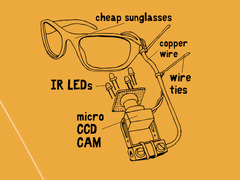
    This week’s TED Weekends on the Huffington Post explores this talk – taking a look at the EyeWriter as well as the artform Quan loves. Below, find some selected essays to pique your interest.

    Mick Ebeling: The Incredible Power of a Single Pair of Glasses

    It all started with Date Night. My wife and I received advice long ago that Date Night was the key to a successful marriage. We had plans, but a friend came by and asked if we wanted to go to an art show instead. That was the night I was introduced to Tempt.

    When we got to the show there were posters and signs everywhere saying “TemptOne Benefit.” There was a palpable buzz about the place. I kept hearing people talking about this Tempt. Even the art on the walls by incredibly famous artists had his name worked into them. After being there a while and hearing about this Tempt, I finally asked “So where is this guy anyway?” The answer was shocking. “He lives in a hospital. On life support. He’s completely paralyzed. He has ALS.” Since that night, my life has never really been the same. Read the full essay »

    Tomes Olesen: Tagging: It’s More Than Just Scrawl

    From the outside looking inwards, graffiti must be baffling. It is easy to see why it would inspire abhorrence. Even those with a professed appreciation for the artform will invariably say something along the lines of: “I like it when it’s proper pieces but I hate tagging.”

    There’s no denying that at its worst, tagging (writing one’s chosen name on a wall) is little more than territorial pissing, but to understand it is to understand the aesthetic of graffiti in the same way that understanding the International Gothic allows one to understand the aesthetic of the Early Renaissance; it is the root from which everything else develops. Read the full essay »

    John M. Eger: The Changing Voice of Graffiti

    Artists everywhere have been using street art — some legal, some not — to express themselves for years. These are mostly artists who, in the best tradition want to see change in the world, change in public perceptions or government attitudes and actions. Street art, sometimes called graffiti, is a vehicle for people the world over to express themselves. It is also a vehicle that gives a community a sense of place and an identity.

    From the Berlin Wall separating East Germany from West Germany, to the “democracy wall” in Beijing, people have used street art to demonstrate some of their most poignant frustrations and concerns about the world.

    Even in Afghanistan, street art, stencil art specifically, has popped up on several walls across Kabul over the past few years. Under the cover of night, artists take to the streets of Kabul. Armed with stencils, spray paint and cameras. Read the full essay »

  • TEDWeekends traces the origin of the All-American Chinese takeout

    Chinese-foodTurns out the fortune cookie that came with your chop suey isn’t actually Chinese … and neither is the chop suey. So where did they come from?
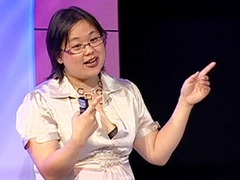
    Jennifer 8. Lee hunts for General TsoJennifer 8. Lee hunts for General TsoIn this TED Talk, journalist Jennifer 8. Lee shares the origins of some of America’s favorite “Chinese” food, and takes us on a culinary tour of Chinese restaurants around the world — whose menus often do not resemble those of restaurants in China.

    This week’s TEDWeekends on the Huffington Post explores culinary cross-cultural evolutions, with great essays about the origins of our associations between cuisines and cultures. Below, find three great essays to pique your interest. And make you hungry.

    Jennifer 8. Lee: Made in the USA… Chinese Food

    When a dish really hits a nerve with the American palate, it can take off across the entire country, facilitated by food vendors’ freedom to copy good ideas. We saw it happen with General Tso’s chicken. We’re seeing it happen with other Asian-influenced culinary creations too…

    When I was researching my book on Chinese food in America, The Fortune Cookie Chronicles, it puzzled me why Korean cuisine (unlike many of its Asian brethren) had not gone mainstream yet.

    Chinese, Japanese, Thai, Indian and Vietnamese restaurants had all hit critical mass, with footholds in suburban towns. But Korean cuisine remained mostly ensconced within Korean-American communities, with an occasional lone outpost defiantly offering bibimbap. This puzzled me, because Korean savory barbecued meats — short ribs, grilled marinated beef — should be widely appealing to an American palate, which never met a barbecue recipe it didn’t like. But Korean restaurants basically remained serving Korean clientele, with the occasional Chinese family, like mine, that celebrated our Thanksgivings there. Read the full essay »

    Fabio Parasecoli: General Tso Chicken: An Immigrant Life Saga

    When I was studying Asian languages in Italy, back in the 1980s, the few Chinese restaurants open in my native city of Rome only served two kinds of desserts: fried fruit and fried ice cream — the unlikely creation that Jennifer 8. Lee singles out in her TED Talk about Chinese American food. When I moved to Beijing to pursue my studies, I soon discovered that these crunchy treats are unheard of in China. Chinese cooks in Italy likely came up with the concoctions to meet the expectations of Italian customers.

    Fried ice cream, just like the General Tso’s Chicken, highlight the role of immigrants in facilitating the global circulation of culinary traditions, and in shaping the food of their host communities. These two examples show how moving populations have practiced the adaptation, assimilation, and appropriation of foreign or unfamiliar flavors, dishes, techniques, and behaviors all around the world. Culinary exchanges have been taking place for a very long time in the most remote corners of the globe, and they were not always peaceful and enjoyable. Lee reminds us that nineteenth century Asian immigrants to the U.S. were disparaged for eating rice, instead of more civilized fare. Sicilian cuisine still echoes the food traditions of the Islamic communities that once ruled the Mediterranean island in the Middle Ages. Roti became a common dish in many Caribbean locations after farmers were brought from India to work in the sugarcane plantations after the abolition of slavery. Read the full essay »

    Theodore Johnson: African Americans and the Watermelon Stereotype

    A photo of my expecting mother eating a slice of watermelon is a family favorite. She attributes my lifelong disdain for the fruit to the fact that she ate it every day while pregnant with me. I carry this story in the form of an oval, deep green blemish on my left hand. It’s true — I’m a black man with a watermelon for a birthmark.

    In many countries and cultures around the world, this would be unremarkable. But in the United States, where watermelon is associated with historic African-American stereotypes, my birthmark takes on a more complex symbolism. Just as the undesirable leftovers of farm animals, such as pig intestines and feet, are linked to the slave diet, watermelon is the food most associated with the 19th and 20th century depictions of blacks as lazy simpletons. Read the full essay »

  • The 55 TEDGlobal 2013 speakers who tweet

    TEDGlobal 2013, themed “Think Again,” will take place from June 10 to 14, which for some may be too long of a wait. So until then, we’ve compiled a list of the conference’s speakers who tweet — an amazing 55 of them. Start following these bold thinkers now — individually or in a single click — so you can get to know them before they’re on the TED stage.

    1. Sandra Aamodt, @sandra_aamodt

    2. Mustafa Abushagur, @MustafaAG

    3. Alessandro Acquisti, @ssnstudy

    4. Anant Agrawal  https://twitter.com/edXOnline

    5. Manal Al-Sharif, @manal_alsharif

    6. Nassim Assefi, @nassefi

    7. Benjamin Barber, @BenjaminRBarber

    8. Natasha Bedingfield, @natashabdnfield

    9. Carin Bondar, @DrBondar

    10. Tania Bruguera, @immigrantmove

    11. Stephen Burt, @accommodatingly

    12. Grégoire Courtine, @gcourtine

    13. Abha Dawesar, @abhadawesar

    14. Toby Eccles, @tobyecc

    15. Shereen El-Feki, @shereenelfeki

    16. Elizaveta  https://twitter.com/elizavetaka

    17. Dina El-Wedidi, @ElwedidiDina

    18. May El-Khalili, @beirutmarathon

    19. Tim Exile, @timexile

    20. Chrystia Freeland, @cafreeland

    21. Greg Gage, @BackyardBrains

    22. Gabriella Gomez-Mont, @ToxicoCultura

    23. Charmain Gooch, @Global_Witness

    24. Lesley Hazleton, @accidentaltheo

    25. Yaron Herman, @yaronherman

    26. Erik Hersman, @WhiteAfrican

    27. Annette Heuser, @AnnetteHeuser

    28. Adrian Hong, @adrianhong

    29. Salvatore Iaconesi, @xdxd_vs_xdxd

    30. Just a Band, @justaband

    31. Lian Pin Koh, @lianpinkoh

    32. Bernie Krause, @BernieKrause

    33. Lissie, @lissiemusic

    34. Elizabeth Loftus, @lissiemusic

    35. Mariana Mazzucato, @MazzucatoM

    36. Kelly McGonigal, @kellymcgonigal

    37. Alexa Meade, @alexameade

    38. An Xiao Mina, @anxiaostudio

    39. Holly Morris, @hollymorris

    40. Dambisa Moyo, @dambisamoyo

    41. George Papandreou, @GPapandreou

    42. Juan Pardinas, @jepardinas

    43. Trita Parsi, @tparsi

    44. Gavin Pretor-Pinney http://idlermag.com

    45. Andreas Raptopoulos, @andreasx

    46. Apollo Robbins, @ApolloRobbins

    47. Charles Robertson, @RencapMan

    48. RuthAnne, @ruthannemusic

    49. Sonia Shah, @soniashah

    50. Toby Shapshak, @shapshak

    51. Jose Miguel Sokoloff, @jmsokoloff

    52. Daniel Suarez, @itsDanielSuarez

    53. Le Trio Joubran, @LeTrioJoubran

    54. Eben Upton, @Raspberry_Pi

    55. Naomi Wolf, @naomirwolf

    56. Anant Agrawal, @edXOnline

    57. Elizaveta, @elizavetaka

    58. Gavin Pretor-Pinney, @idlermag


    Read all about these speakers here »

  • Daring greatly and acting boldly: Chelsea Clinton challenges youth to rise to the occasion

    Chelsea Clinton has some advice for those with the greatest potential to become change-makers — the young. At TEDxTeen, held in New York City on March 16, Clinton delivered this bold talk, saying that despite negative assumptions, today’s youth are in a unique position to do good. Teens today have big advantages over those who are older, says Clinton: they are more likely to take risks, they lack deeply engrained biases and they are digital natives. As a result, millennials – those coming of age in the 21st century — are more likely to be confident, connected and open to change. This makes for vast potential.

    So how can teens harness it? Clinton says that it’s a matter of finding what you’re passionate about and then not being afraid to try it — because you never know how great your impact could be. Clinton challenges young people to “dare greatly and act boldly,” because “the worst thing that happens in life,” as they say in the Clinton family, “is that you get caught trying.”

    Clinton’s talk is especially salient, as she hosted the Clinton Global Initiative University last weekend. At CGI U, a thousand college students with a desire to serve others gathered to innovate solutions for problems on both the global and local scale — and to make commitments to act upon them.

    Clinton tells Parade Magazine that she was inspired to host the event by her grandmother, Dorothy Rodham. “She would always say life is not about what happens;” says Clinton, “it’s about what you do with what happens to you.” Rodham challenged her granddaughter to strive to live with a greater consciousness for helping others, even though Clinton naturally shies away from the spotlight. “[My grandma] thought I wasn’t doing enough with the opportunity I’d been given to be Chelsea Clinton,” she tells the magazine.

  • Holocaust Remembrance Day: Remembering those lost and those who survived

    Today, we remember the 11 million lives taken during the Holocaust — a catastrophe that thoroughly transformed our world. As we take time to honor lives lost, we look towards people like Viktor Frankl, who gave this talk “Why to believe in others.”

    A Holocaust survivor and renowned author, in this rare clip, Frankl discusses the importance of searching for the meaningful, not the material. His firsthand experience with suffering has not disheartened him; instead, he discusses the importance of optimism and positivity. Viktor Frankl delivered this talk in 1972, but his message is just as applicable now –- and today of all days — as it was some 40 years ago.

    Below, some more talks to watch to help us remember the Holocaust, and learn to move forward and prevent acts of genocide in the future.

    Ben Dunlap: The life-long learnerBen Dunlap: The life-long learner
    Ben Dunlap: The life-long learner
    When Ben Dunlap tells the story of his life, it is as though it was all preparation for his encounter with Hungarian Holocaust survivor Sandor Teszler. In this touching talk from TED2007, he shares the invaluable lessons learned from their sweet friendship.
    Sarah Kaminsky: My father the forger Sarah Kaminsky: My father the forger

    Sarah Kaminsky: My father the forger
    At TEDxParis 2011, Sarah Kaminsky shares the story of her father’s life — a story she herself did not hear until she was an adult, when she learned of his role in World War II as a master forger, as he sacrificed his time and risked his life to save countless others.
    Moshe Safdie on building uniquenessMoshe Safdie on building uniqueness
    Moshe Safdie on building uniqueness
    Architect Moshe Safdie designed Yad Vashem, Jerusalem’s Holocaust Remembrance Museum. In this talk from TED2002, he explains the motivations behind its design — the emotions he wished to evoke, and how he honored victims through its building.
    Samantha Power on a complicated heroSamantha Power on a complicated hero
    Samantha Power on a complicated hero
    In this talk from TED2008, Samantha Power opens a discourse for understanding how genocides like the Holocaust are able to continue for years, despite public knowledge. Power emphasizes the need for a truly global movement in order to prevent crimes of such great magnitude.

  • TEDWeekends explores the truth about medical studies

    Photo: James Duncan Davidson

    Photo: James Duncan Davidson

    At TEDMED 2012, Ben Goldacre shared a startling reality: that doctors are not able to read all the studies conducted on a pharmaceutical before prescribing it to their patients. Ben Goldacre: What doctors don't know about the drugs they prescribeBen Goldacre: What doctors don't know about the drugs they prescribeThis is because of a bias in medical research toward positive results – while one study confirming a drug’s effectiveness may be published, the results of other studies may simply be unavailable. Goldacre warns that about half of all drug trial result are buried – and this is across all medical fields – and thus doctors are left hugely uninformed even as they reach for their prescription pads.

    This week’s TED Weekends on the Huffington Post explores Ben Goldacre’s talk on the truth about medical research. Below, find a selection of essays to pique your interest:

    Ben Goldacre: We Need to See Pharma’s Failures

    TED can sometimes portray science in triumphalist tones, with fabulous innovations that are changing the world forever. But the real action in science is often around dirty, messy, angry problems, and my TED Talk is about the dirtiest I’ve seen yet.

    Doctors need the results of clinical trials to make informed choices, with their patients, about which treatment to use. But the best currently available evidence estimates that half of all clinical trials, for the treatments we use today, have never been published. This problem is the same for industry-sponsored trials and independent academic studies, across all fields of medicine from surgery to oncology, and it represents an enormous hidden hole for everything we do. Doctors can’t make informed decisions, when half the evidence is missing. Read the full essay »

    Wray Herbert: Is the Placebo Effect Dangerous?

    Physician and medical gadfly Ben Goldacre is well known for his relentless crusade to keep medical researchers and drug makers honest — and improve healing in the process. His recent and popular TED Talk focuses on a particular form of research misconduct that strikes at the core of all evidence-based treatment — the failure to publish negative findings. This publication “bias” is not subtle or inadvertent in most cases; indeed the opposite. The deliberate non-reporting of results unfavorable to a drug’s reputation is often motivated by greed, and can be lethal to patients.

    As Goldacre and others have described elsewhere, other clinical research biases are less blatant and criminal, but they nevertheless undermine consumers’ trust in science and clinical evidence. I’d like to discuss one of those less obvious biases here today — this one from psychological science. It’s the result of a fundamental misunderstanding of placebo effects and control groups — a misunderstanding that, scientists are now arguing, invalidates any claims of effectiveness for almost all psychological interventions. Read the full essay »

    Toni Miller: Getting Past the Idea of Failure

    In his eye-opening talk, “What Doctors Don’t Know About the Drugs They Prescribe”, doctor and epidemiologist Ben Goldacre shows us the ways in which researchers can, and often do skew the data in studies, particularly those conducted in trials funded by the pharmaceutical industry, in order to influence the perception of their products. He points out that often times as much as half of the data is missing because the researchers typically do not publish the results of negative studies.

    In absence of the full picture, doctors and the public can easily fall prey to the idea that a particular drug or treatment is effective, when in fact, the data would say otherwise. This is a serious problem. It is not a matter of simply persuading people to buy a new wrinkle cream. In many cases, particularly in the case of heart medication or cancer treatments, it is the difference between life and death. Read the full essay »