Author: Terrence Murray

  • Energy Secretary Steven Chu Announces $100M For “Innovative” Energy Research

    Energy Secretary Steven Chu says the DOE’s Advanced Research Projects Agency-Energy (ARPA-E) will invest $100 million in stimulus money to support renewable energy projects.

    It’s not clear if this is a new batch of stimulus money (on top of the $400 million the agency already allocated) or already announced funding for grant applications the DOE received in December.

    ARPA-E is not your mother’s venture fund. The government agency steps in to finance risky renewable energy technologies that would have a hard time finding a private sector funder — See here for the full press release posted today.

    ARPA-E recipients are all developing cleantech technologies set to meet the DOE’s broad mandate in the Obama age: Cut carbon emissions, improve energy efficiency, and lower oil exports.

    As part of its first batch of grants, in October ARPA-E awarded $157 million to dozens of startup companies and university labs.

  • Bosch Solar Set Sights On Ontario

    Germany’s Bosch Solar, a unit of the Stuttgart-based industrial conglomerate, has teamed up with Calgary-based Sustainable Energy Technologies to build a plant in Ontario that will integrate Bosch’s thin-film solar module with Sustainable Energy’s inverter technology.

    Botch is the latest industrial company to announce a large investment in Canada’s most populous province. Last month Samsung of South Korea announced a $7 billion (€5.19 billion/ £4.68 billion) 2,500 megawatts wind and solar deal. Both Samsung and Botch (and a lot of other renewable energy developers) are eager to take advantage of the province’s green-energy legislation and  progressive feed-in-tariff program.

    The Toronto Star’s Tyler Hamilton, who was first to report on this investment, says the Bosch deal could create 750 new jobs by 2012.

    Sustainable Energy and Bosch tell Hamilton that their plant could produce up to 70 megawatts of thin-film photovoltaic panels.

  • First Solar Chairman’s $141M Payout

    On Thursday First Solar’s Chairman, Michael Ahearn sold 1.5 million company shares (half of his stocks in the company). The maker of thin-film photovoltaic panels announced the sale in a release issued Friday.

    Based on Thursday’s closing price of $102.97 the share sale earned Ahearn $141.8 million.

    Ahearn stepped down as CEO of First Solar in September, after leading the company from its startup launch to become one of today’s largest corporates in the renewable energy sector.

    On Thursday Rob Gillette, who replaced Ahearn as CEO, purchased 10,000 shares of First Solar common stock in the open market with his personal funds.

    As part of his compensation package Gillette was granted $9.25 million in stock options, including  $3.25 million in unrestricted shares and $6 million in restricted shares. He also got a $5 million signing bonus.

  • In Quest of a Biofuel Feedstock [VIDEO]

    The Massachusetts Institute of Technology’s Technology Review  — (Green Energy Reporter will  be on the MIT campus this weekend for the university’s annual energy conference) — visited the Brazilian lab of U.S. biofuel startup Amyris. We’ve posted a link to the video below the fold.

    Amyris, using a process developed at the University of California – Berkeley, has created a sugar-based hydrocarbon molecules that can be converted into greener jet fuel, industrial chemicals or biodiesel. See  here to see the video.

    Last month U.S. venture capital firm Stratus Group  invested 10 million reais ($5.4 million/€4.0 million/ £3.61 million) in Amyris’s Brazilian subsidiary. The investment will help Amyris finance its 140 million reais acquisition of 40 percent of the Boa Vista  sugar cane mill.

    Since launching in 2003, Amyris has raised around $165 million from funds Texas Pacific Group, Kleiner Perkins Caufield and Byers, and Khosla Ventures, reports GreenTechMedia via SeekingAlpha.

  • Long-Time Green Activist Crosses Over To American Petroleum Institute

    This press release hit the GER email this morning from the American Petroleum Institute (API), the powerful lobby group representing the interest of the oil and gas industry in Washington.

    It announces that Deryck Spooner, the head of the Nature Conservancy’s climate change outreach is jumping ship to the API to build the institute’s grass roots strategy.

    That’s quite a coup for the API. In Spooner, the API gets one of the green community’s “top grass-roots organizer,” reports GreenWire, which first reported the news on Friday.

    The move probably raised some eyebrows (it raised ours) but is actually not that surprising.

    Indeed, while the API is an obvious backer of carbon-loaded energy, some of its key members (BP, Royal Dutch Shell) are on the record supporting cap-and-trade and have accepted human-made climate change.

    However, expect Spooner to use his organizing skills to defend the API’s green and not so green agenda.

    API spokeswoman Cathy Landry tells GreenWire:

    Jack’s vision is to mobilize the 9.2 million people whose jobs rely on the oil and gas industry. We do plan to step that up.

    In a prepared statement Spooner says:

    The position at API is a tremendous opportunity and challenge.  My father was a petroleum engineer in the oil business.  I spent part of my childhood on the rigs.  I know how important oil and natural gas are today and will be for the nation’s energy future even as the use of alternative energy grows.  I’m determined to work hard to help ensure the nation’s energy policies reflect this reality.

  • What To Expect This Week: BP, The Kerry Climate Bill

    Tomorrow British oil and gas company BP is releasing its 2010 capital expenditure program. Expect company Chief Executive Officer Tony Hayward to reaffirm his company’s focus on its oil and gas business.

    Last quarter BP posted a fourth-quarter profit of $4.3 billion after losing $3.34 billion in the prior-year period. For the year, BP earned $16.58 billion. Most of that revenue was generated by the company’s upstream and downstream oil and gas business.

    On clean energy, a sector BP until a few years actively anchored its marketing outreach, Hayward will likely announced continued investments in biofuel businesses in Latin America and in its recently acquired carbon capture and storage project in the United Arab Emirates. Don’t expect new investments in wind outside the U.S.

    In Washington as the White House works to revive its healthcare overhaul, Senator John Kerry (D-Mass.) is trying to do the same with his climate change bill.  Kerry is working in a tri-partisan coalition, comprised of  Sen. Lindsey Graham, (R-S.C.), and Sen. Joseph Lieberman, (I-Conn.), to try to find a bill that can attract sixty votes.

    On the Kerry bill expect supporters to point out that the alternative is an unattractive, rigid, EPA-led regulatory regime. The opposition will likely make light on a series of stumble by the climate change scientific community, including most recently criticism on the on the U.N.’s Intergovernmental Panel on Climate Change (IPCC) own scientific conclusion on human-made climate change.

  • This Week In Green Energy: Where’s The Money? …In Washington!

    Capitol Building -- Washington DC

    For cleantech companies Washington has become a crucial financial partner.

    In the post-Lehman/global financial meltdown era it’s been repeatedly said that the money power has left Wall Street for the shores of the Potomac in Washington.

    This is not just a talking point, but a stark reality for whole industries — the renewable energy sector among them– which have come to rely on Washington for their mid-to-long-term survival.

    The government’s pivotal role as a funder of last and first resort was glaringly apparent this week with the announcement that BrightSource Energy was offered a $1.37 billion loan guarantee (if it meets certain conditions) from the Department of Energy. The BrightSource loan guarantee dwarfs the $535 million thin-film photovoltaic cell maker Solyndra got last year, which, until now, was the largest such loan guarantee.

    BrightSource, based in Oakland, Calif. will use the DOE’s financial backing to structure financing to support construction of the 440 megawatt Ivanpah Solar Power Complex, located in a six square mile (15.53 square kilometer) area on the Nevada side of the Mojave Desert.

    How crucial is the government financing for BrightSource? A banker we met in Austin this week at the Renewable Energy Conference & Expo (See, here or here for our conference coverage), probably said it best. “Without the loan guarantee that project would have been D.O.A,” he told GER. He adds, “For project finance banks the days of lending to the multi-billion solar thermal power projects are over.” At least for now…

    There was a lot of buzz this week surrounding Silicon Valley fuel cell developer Bloom Energy, which on Wednesday officially launched its Bloom Box. The $800,000 conracsion has been described as a “power plant in the box” and generates electricity, using natural gas, methane or biofuel.

    The Bloom Box rollout was a fine-tuned PR-led exercise that began Sunday with a 60 Minutes segment and ended Wednesday with the official unveiling of the “Box.”  Bloom Energy and its VC backers — the company has raised $400 million in venture capital since its launch in 2001 –   inundated the media  with PR-approved messages,  highlighting the Box’s green creds.

    However, pretty quickly some media questioned whether the Bloom Box was really green since it does produces CO2. GER reblogged one critic by  Silicon Valley blog TechPulse 360. Also read this piece by Todd Woody or this one.

    This week also saw two significant policy developments. One was in Germany, the other in Washington.

    In Germany, after months of anticipation and speculation, the country’s conservative coalition finally released the draft of its long-awaited cuts to its solar feed-in tariff subsidies. The cuts were not as bad as expected with cuts of 15 percent for solar parks built after July 1. This is three months later and 10 percent less than what had originally been floated, when the plan first emerged.

    Earlier this week in Washington, Environmental Protection Agency (EPA) Administrator Lisa Jackson said her agency won’t start regulating carbon emissions and other greenhouse gases as part of its recently issued “endangerment finding” until 2011. That deadline should give plenty of time for opponents of this regulated approach to try to derail the EPA’s plans. Already, the agency’s endangerment finding is  facing a pile of lawsuits (16 at last count) from the U.S. Chamber of Commerce and other carbon-dependent industries.  These plaintiffs can also count on Senator Lisa Murkowski (R- Alaska), who has vowed to curb the EPA’s regulatory powers.

    VC Watch:

    Intel, via an outfit known as the Invest in America Alliance,  rolled out a $3.5 billion VC investment initiative that will invest in cleantech and other  U.S.-based technologies.

    We learned that a group of unnamed, U.S.-based venture funds was in talks with Husk Power Systems,  a startup that’s developed a system that turns rice husks into biogas to fuel mini power plants. The company initially secured funding from the Overseas Private Investment Corp., a government agency and Royal Dutch Shell ’s philanthropic arm, the Shell Foundation.

    Montreal-based waste-to-biofuels company Enerkem got a CDN $53.8 million ($51.15 million / €37.55 million  / £33.54 million) round of financing from one of its lead investors, garbage hauling company Waste Management.

    And — as we wrote earlier — Bloom Energy, which is backed by a string of heavyweight investors including, Kleiner Perkins Caufield & Byers, officially rolled out its Bloom Box fuel cell.

    On Friday, Silver Spring, the SmartGrid software developer, which has raised $275 million in venture capital since its 2001 launch, announced it had hired Morgan Stanley and Jefferies & Co. to underwrite a possible IPO.

    Rambling

    As some of you know, this week Green Energy co-editor Terrence Murray traveled to Austin, Texas to cover the Renewable Energy World Conference & Expo. A diverse crowd of startups, well funded Chinese wind companies and seasoned project finance bankers and lawyers converged to the city’s convention center, a few blocks from the Texas State Capitol for the two-day event.

    Two themes emerged from the conference:

    The first is China. Chinese renewable energy companies should not be underestimated; they are ready to grab market shares in the U.S. and other overseas markets and they have the money to do so.

    The other is the state of U.S. Capital Markets. While markets are on a much more solid footing compared to a year ago, funding remains hard to get for most cleantech companies, even for those with bullet-proof projects.  What’s emerging is a new paradigm for all industries, not just cleantech. Today, when it comes to financing large projects, the DOE or the Treasury Department are the “lead underwriters” and traditional banks play second fiddle.

    Image: Flickr, Grundlepuck

  • Silver Spring Eyes IPO, Morgan Stanley, Jefferies & Co. Underwriters

    Silver Spring, the SmartGrid software developer, which has raised $275 million in venture capital since its 2001 launch, is prepping for a likely Initial Public Offering (IPO).

    According to GreenTechMedia (citing an earlier Dow Jones news wire report) Silver Spring has hired Morgan Stanley and Jefferies & Co. as underwriters.

    This potential IPO comes just a couple of months after Silver Spring, based in Redwood City, Calif., raised $100 million in new funding, mostly from returning investors including Google Ventures, Foundation Capital, Kleiner Perkins Caufield & Byers, and Northgate Capital.

    Smart grid is one of the “it” sectors in cleantech these days. Besides a pool of VC money, unprecedented funding from the Department of Energy is also supporting the technology. Over the next couple of years DOE plans to disburse nearly $4 billion in stimulus grants to support the development of smart grid technologies.

    Specifically, Silver Spring, which has been called the “Cisco of he smar grid” develops Web-based tools that allow utilities and consumers to actively control their energy consumption.

    Silver Spring is involved in a number of test projects that will likely get some of that government money, including one launched this summer in Chicago.

  • A Tale of Two Cities: Austin Not Giving Up On Yingli Solar Plant [UPDATE]

    Austin Aglow

    Yingli Green Energy, the photovoltaic solar panel manufacture (and FIFA World Cup sponsor), scored a $4.5 million subsidy from the U.S. Department of Energy. In its application to the DOE the Chinese company had used a Phoenix address, which fueled speculations that the company was planning to  build and operate its first North American PV plant in Arizona.

    Not so, an official at the City of Austin’s economic development office tells GER, that as  far as they’re concerned, nothing’s set in stone and Austin is still in the running to get the $20 million plant and its 300 jobs.

    As part of its campaign to lure Yingli to Texas, yesterday, the city released an incentive package worth some $354,000.

    How this latest push by Austin fits with the $4.5 million DOE tax credit Yingli got earlier this year remains unclear.

    Brian Gildea, economic development manager for the City of Austin, tells GER that he does not believe the DOE incentive is tied to Phoenix and it could also be used  in Texas.

    UPDATE: However, a DOE spokesman emails GER this statement:

    Geographic location was part of the criteria for selection for the tax credit.  Major changes to the project, including change of location or materials produced, need to be reviewed before the credit is awarded.

    Obviously, this debate is far from settled.

    What the City of Austin is offering Yingli, Gilda explains, is a grant that over the next decade would support 80 percent of new property and personal taxes generated by the plant.

    Austin has had a tough time luring renewable energy companies. Last November Chinese solar developer Suntech Power picked Goodyear, Ariz., a suburb west of Phoenix, over Austin to house its first U.S. plant.

    We’ve called the DOE and will post with any update.

    We’ve also emailed Yingli’s investor relations department for details on its North American strategy.

    Demand for cheap Chinese solar PV  is surging. To meet that demand  Yingli and other Chinese solar companies are eager to grow their overseas presence.

    Besides a cost of production advantage, Chinese renewable energy companies can also rely on generous local banks that — unlike their U.S. or European counterparts – can provide cheap debt to finance their international expansion.

    Image: Flickr, atmtx

  • India to Tax Coal For National Renewable Energy Fund

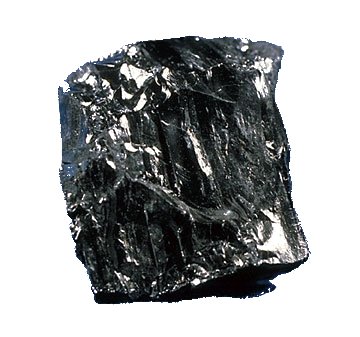
    Coal goes green in India

    India plans to tax carbon. Specifically, on Friday the world’s fourth largest polluter announced that it will tax coal to finance a national fund that will support renewable energy projects like solar and wind farms.

    The news is encouraging and comes just a couple of months after the disappointing Copenhagen Climate Change Conference, where India China, Brazil and most of the developing world fought against UN-mandated cuts in carbon and green house gas emissions.

    In his annual speech to parliament on Friday, Finance Minister Pranab Mukherjee said the tax was “a credible strategy for combating global warming and climate change,” reports Bloomberg News.

    The Indian government plans to impose a clean energy tax of 50 rupees ($1 / €0.79 / £0.70) a metric ton on domestic and imported coal. Mukherjee did not say how much money would be raised by the new tax.

    Indian power producers use about 375 million tons of domestic and imported coal. Based on that metric the new tax could raise about 25 billion rupees, Bloomberg writes, citing an estimate compiled by Emergent Ventures, a climate change consulting company.

    In his speech Mukherjee also said:

    Harnessing renewable energy sources to reduce dependence on fossil fuels is now recognized as a credible strategy for combating global warming and climate change.

    Ahead of Copenhagen, India had vowed to cut its carbon intensity, or the amount of carbon dioxide released per unit of gross domestic product, by up to 25 percent by 2020.

    India’s latest federal budget, for the 2010 – 2011 period, also includes tax incentives to grow solar, wind and geothermal power generation.

    Image: Wikipedia Commons

  • What Happens When The Stimulus Ends?

    As we near the end of the first quarter of 2010, the renewable energy industry is asking “what next?”

    Indeed, as appetite (and dependence) by renewable energy companies for federal money keeps growing, many of the stimulus’ key provisions, including the very popular direct cash grant program, are slated to end at the end of the year. So, with the 2010 deadline looming, what’s in store for the renewable energy sector in the post-stimulus era?

    The short answer, don’t expect Washington to close the money tap anytime soon, says Edwin Feo, a partner overseeing Milbank, Tweed’s cleantech practice. He was speaking at a panel at the Renewable Energy World Conference, which ended today in Austin, Texas.

    Incentives like investment and production tax credits are not going away, he says. And Capitol Hill is moving to extend the cash grants.

    On the Senate side, Senators Dianne Feinstein, (D-Calif.), and Jeff Merkley, (D-Ore.) recently introduced a measure that would extend the grants until 2012. That’s likely the scenario favored by renewable energy companies. Ironically, so far these grants have mostly benefited European companies.

    On the House side bill H.R. 4599 was introduced earlier this month.  The legislation would actually change the cash grants into refundable tax credits.  Renewable energy companies would apply for these credits as part of their standard tax filing.

    Project finance bankers like the grants, points out Feo, and have been willing to lend against them.

    A banker at a New York investment bank tells GER that without the direct cash grants, “lots of renewable energy projects would have been dead on arrival.” Feo ponders:  “It will be interesting to see how they [banks] work under a tax refund regime.”

    The money these days, at least amongst the bankers we informally polled, is on an extension of the grants.

    Regarding other government funding streams, Milbank, Tweed’s Feo says he does not expect tax equity investments to grow much over the next year as traditional tax equity investors  — mostly financial services firms — remain cautious. He points out that even before the global financial crisis, “the tax equity market was never that deep.”

    Overall, as GER has reported before (see, here or here), the crazy times experienced from 2006 to 2008 are done.  “The days of thin covenants are over,” Piper Jaffray project finance banker Tina Neal says, in a sober assessment of the market.  “Credit committees are now actually paying attention,” adds another banker, speaking to GER on the side of the conference. But even in this more cautious environment 2010 and 2011, unlike last year,  will see deals get done.

    Feo  says “terms of [project finance] debt are improving,” and as a result he predicts, “lenders will expand the roster of eligible borrowers.”

  • Reblog: Clean Energy Bloom Boxes Still Have a Dirty Side

    Amidst the über hype surrounding the release of Bloom Energy’s Bloom Box, we came across this insightful and sobering post by Mark Boslet, co-editor of TechPulse 360, a Silicon Valley news site that chronicles the innovation and companies defining the clean-tech industry.

    Coca-Cola expected five Bloom boxes will help it cut the carbon footprint of an Odwalla plant by 35 percent.

    In the gush of enthusiasm for Bloom Energy’s new energy box, one topic has received scant attention: its environmental impact.

    The hype is that the new Bloom Energy Server is ready to save the world, to generate electricity without producing greenhouse gases. It is not quite that simple.

    When most people think of fuel cells – Bloom hut-sized device is in fact a fuel cell – they think of hydrogen cells, which consume hydrogen and oxygen and produce heat and water. Very clean.

    The Bloom Box is different. It requires oxygen and a fuel, such as natural gas, methane or biofuel. So while it generates electricity without combustion, it does produce the greenhouse gas CO2.

    At a coming out event Wednesday morning, Bloom argued the box’s emissions were substantially less than those of a traditional power plant. Hence the claim of clean energy.

    But it is a matter of degrees. Bloom says its new 100 kW box is 67 percent cleaner than a coal-fired plant, the dirtiest of the traditional electric plants. To drive home this point, it offered testimony from its first Fortune 500 customers.

    Coca-Cola, for instance, has five boxes it intends to install at its Odwalla plant in California. The Energy Servers will run on biogas, generate 30 percent of the facility’s power and cut its carbon footprint by 35 percent. Coca was the most detailed.

    Bank of America plans to use five Bloom boxes to run a call center in Southern California. The units will replace diesel generators and cut carbon emissions, though the company didn’t say exactly how much.

    On its Web site, Bloom aims to be more specific. Customers will cut CO2 emissions by 40 percent to 100 percent, depending on the fuel they use, and virtually eliminate sulfur oxides, nitrogen oxide and other smog-forming emission. A biofuel would likely equate to the 100 percent claim, though it, too, would produce CO2.

    Looked at another way, says Bloom, since the Energy Servers first appeared at customer sites in July 2008, they have generated more than 11 million kilowatt hours of electricity and reduced CO2 by about 14 million pounds.

    That’s an important step. But alone it wouldn’t solve the climate crisis.

    Link to original post

  • The Big Chinese Stand

    Here in Austin, the mood amongst delegates attending Renewable Energy World Conference, North America is upbeat. The financial crisis is now mostly in the rear-view mirror of developers, who have been enjoying the Obama administration’s stimulus funding.

    There are still some important issues hampering the industry, including access to cheap, long-term capital. Bankers are lending but they are a lot more selective compared to say, 2007 or 2008.

    Besides funding issues, what’s also been on a lot of delegates mind is China and the very visible push this year by Chinese renewable energy companies to enter the North American renewable energy market.

    And that’s what brings us to the “Chinese stand.”

    One of the best-placed expo-stand at Renewable Energy World is the large, white, sleek stand of Chinese PV maker CEEG. You can’t miss it, it’s strategically anchored in the middle of the large expo center, like the  updated version of the traditional  “open for business” neon sign.

    Inside, are sharply dressed executives, who have traveled from headquarter in Nanjing, some from Shanghai and greet visitors in a polished but somewhat broken English. One CEEG rep. tells GER that after Austin they’re packing up the stand and heading back home.

    The head of an executive search firm, which works with green energy companies, visited the stand and he is impressed. He tells us that the emergence of Chinese renewable energy companies “is this year’s front page story” in the sector and is really worrying some of his European and U.S. clients.

    The Obama administration is also aware of the China emergence and has made no bones that it wants to win the green race and that in that race China – not Europe — is its main competitor.

    On the China / U.S. green race, General Electric CEO Jeff Immelt recently said:

    The Chinese will build more nuclear plants than we will this year. The Chinese will install more wind energy than we will this year…. If we don’t get off our butts and move aggressively forward, the world is not going to wait for us.

    How strong of a contender is China to win the global green race?  A recent report by UBS notes that today Chinese photovoltaic panels sell for about 40 percent less than European ones. GCL-Poly Energy, a Chinese company and the world’s third-largest polysilicon maker, expects to sell the photovoltaic raw material it manufacturers for $45 (€33.36 / £29.42) per kilogram in 2011, down from over $50 (  €37/ £32.60) per kilogram, says the UBS report.

    Some U.S. companies, which until recently manufactured their renewable energy products in the U.S., are heading east, to China to take advantage of these cheaper production costs. Marlboro, Mass.-based Evergreen Solar, a makes String Ribbon silicon wafers, is constructing a 100-megawatt solar panel plant in China with Jaiwei Solarchina Co., that should go live this year.

    Besides cheap labor and declining prices of raw material, Chinese green energy companies, like CEEG, are also supported by cheap capital. At a panel yesterday a group of project finance bankers said they expected Chinese banks this year and in 2011 to provide lots of cheap financing to Chinese renewable energy companies, specifically to help them access the North American market

    Solar developers Suntech Power and Yingli Green Energy as well as wind developer A-Power Energy Generation Systems are all ramping up their respective U.S. and Canadian operations.

    Back in Austin CEEG’s marketing and sales executive are folding up their sleek expo stand today and heading back to China. But they will be back.  They tell us that they are planning to attend the Intersolar trade show this July in San Francisco.

  • Renewable Energy Financing and Rice-Powered Electricity

    The theme of this year’s Renewable Energy World Conference in Austin, Texas, which we’re attending, is: “Power Shift.”

    And indeed, over the past three-to-five years, a shift has occurred in the energy sector as renewable energy has evolved from a lifestyle into a growth sector. But the question remains: Will it become a long-term industry? It’s certainly on its way. However, a lingering issue is access to capital, something we’ve talked about before.

    While the clean energy market is obviously more liquid than it was a year ago, anecdotal discussions we’ve been having with renewable energy developers here in Austin demonstrate that even for projects with good technology and strong partners, private financing remains elusive in this post-credit crash era.

    Cindy Thyfault, a managing director with White Rock Advisors, a boutique investment bank in Dallas, pointed out during a panel we attended that one of her clients, a biomass developer looking for $5 million in debt financing, was recently asked by a  bank  to provide the equivalent of about $100 million in equity as collateral!

    Thyfault says that today, getting serious long-term financing is extremely difficult without some sort of government support (investment tax credit or direct cash grants, for example).

    The tight credit conditions are funneling new alternative funding routes, points out Mark Crowdis, CEO and founder of Think Energy, a consultancy in Silver Spring, Md. He says that over the past year, he’s been working with what he describes as “private finance groups,” individuals and institutions who pool their money to invest in renewable energy. Crowdis says he’s currently working with three such groups, which have $180 million in combined capital.

    We later asked Crowdis for details on these private investment groups but he remained tight lipped.

    So, what about those rice husks…

    Lynn Tabernacki of the Overseas Private Investment Corp., (OPIC) a Washington agency that finances private sector businesses mostly in developing nations, talked about her experience with Husk Power Systems, which has developed a system that turns rice husks into biogas to fuel mini power plants, some currently operating in India.

    OPIC invested $750,00 in the company launched by two University of Virginia MBA students, Tabernacki says. The Shell Foundation, the philanthropic arm of Royal Dutch Shell, also put some money into the startup.

    Tabernacki says that Husk is now being courted by a number of cleantech-focused, U.S., -based venture capital funds. She declined to give names.

  • What to Expect from Austin and Beyond… Bloom Box, John Kerry and Ed Miliband

    Today, we are in Austin, Texas (and no, we’re not attending South by Southwest, that’s next month) for Renewable Energy World’s North America Conference. The agenda includes a mix of technical discussions (one panel is entitled “Overcoming Supply Chain Challenges to Wind Power in the U.S.”) and panels looking at U.S. renewable energy policy and access to development capital.

    We plan to attend as many panel discussions as possible, with a slight bias for those focusing on project finance. Speaking today at one such panel, called “Financing renewable energy: after the stimulus,” are Raymond Wood of Credit Suisse and Mit Buchanan of JP Morgan Capital.

    For this panel GER will try something new: A Live Tweet! If you would like to get real time updates on the panel discussion, click here to become a follower of Greenenergyrep, Green Energy Reporter’s Twitter feed.

    The Austin gathering is a concentrate of bread-and-butter issues for GER, so count on us keeping you up-to-date on key take aways.

    Beyond Austin

    A lot of the renewable energy news cycle, today, should focus on the much-anticipated rollout of the Bloom Box. For the past eight years secretive Bloom Energy has been developing this energy storage devise, raising $400 million in VC funding along the way. The company started lifting the veil on its box Sunday with a feature on 60 Minutes. Correspondent Lesley Stahl best described the technology as “a little power plant in a box.” Check out the Bloom Energy Web site, which as we write, has a ticking clock counting down the hours until the official launch.

    In Washington expect some feedback — both positive and negative — on the Senate version of the climate change and energy bill drafted by Senator John Kerry (D-Mass.). The bill received a 100 percent rating from the League of Conservation Voters and Senator Kerry now seems ready to introduce his legislation for a full vote.

    In the UK Energy and Climate Change Secretary Ed Miliband’s (#1 in our January Top Ten Players in Green Energy) Carbon Capture and Storage (CCS) policy faces a major test in the House of Commons. A group of rebel Labor MPs are threatening to vote against the green bill because its provisions blocking future coal-fired power plants, they say, are not robust enough, writes BusinessGreen.com.

  • Intel To Lead VC Investment Push in Cleantech

    Chip maker Intel and group of venture capital firms are planning to invest $3.5 billion over the next two years to support “U.S. technology” a broad term that also includes cleantech.

    Intel, via an outfit known as the Invest in America Alliance, plans to cooperate with up to 24 venture capital firms to invest and support the development of U.S.-based technology.

    Joining Intel in this investment effort with a patriotic twist are leading renewable energy-focused venture capital funds. They include: Kleiner Perkins Caufield & Byers, Khosla Ventures,  Braemar Energy Ventures, Flywheel Ventures, Good Energies.

    Part of these investments will be channeled via the newly formed  $200 million Intel Capital Invest in America Technology Fund.  See here to read the full press release.

  • EPA’s Lisa Jackson Says Regulation of Green House Gases and CO2 Wouldn’t Start Until 2011

    As we retweeted last night, the Environmental Protection Agency (EPA) says it won’t start regulating carbon emissions and of other greenhouse gases as part of its recently issued “endangerment finding” until 2011. We’ve posted a copy of the original letter below the fold.

    In a letter to Senator Jay Rockefeller (D-W.VA) and seven other Democrats from coal producing states, EPA Administrator Lisa Jackson writes:

    Based on the anticipated actions, I expect that EPA will phase-in permit requirements and regulations of greenhouse gases for large stationary sources beginning in calendar year 2011.

    As part of the Jackson timeline, companies already applying for Clean Air Act permits will have to start addressing greenhouse gas emissions in their permits during the first half of 2011. That move that would impact 400 plants, Jackson writes.

    In her letter, Jackson says that small businesses impacted by the ruling would not have to comply with EPA regulations until 2016. She writes:

    In any event, EPA does not intend to subject the smallest sources of Clean Air Act for greenhouse gas emissions any sooner than 2016.

    Jackson addressed attempts to derail the EPA’s regulatory gauntlet,  including Senator Lisa Murkowski’s (R-Alaska) recent introduction of a “resolution of disapproval” of the agency’s attempts to cut emissions of carbon and greenhouse gases.

    She said passage of the Murkowski amendment would “be viewed by many as a vote to move the United States to a position behind that of China on the issue of climate change, and more in line with the position of Saudi Arabia.”

    For a complete overview of Administrator Jackson’s letter and her testimony before the Senate Environment and Public Works Committee yesterday, read Solve Climate’s good analysis.

    EPA Administrator Lisa Jackson’s letter to Senator Jay Rockefeller

  • BrightSource Gets $1.37 bln DOE Loan Guarantee For Ivanpah Project, Whoa!

    BrightSource Energy was offered a $1.37 billion loan guarantee from the Department of Energy on Monday, the largest such loan awarded by the DOE –see official press release here. The Oakland, Calif.-based company will use this crucial government backing to secure financing to support construction of its 440-megawatt Ivanpah Solar Power Complex, located in a six square miles (15.53 square kilometers) area on the Nevada side of the Mojave Desert, owned by the Bureau of Land Management (BLM).

    Ivanpah is the first utility-scale solar power plant to undergo licensing in California in nearly two decades, reports Todd Woody in the New York Times, who first tweeted about the loan guarantee.

    BrightSource is backed by a roster of blue-chip investor including, Google, Chevron, BP, Morgan Stanley as well as VantagePoint Venture Partners.

    To generate electricity BrightSource will deploy 400,000 mirrors to reflect sunlight onto seven 459-foot metal towers.

    The Ivanpah projects uses CSP power tower technology, which uses a field of heliostats that focus the sun’s rays on a receiver at the top of a tower. Each heliostat is a flat, high-efficiency mirror mounted on a frame that reflects solar energy toward the receiver. The receiver collects the energy as heat, which is used to turn water into steam that in turn powers electricity-generating turbines.

    To actually get that loan guarantee BrightSource will have to pass state and federal environmental review.

    And that brings us to the desert tortoises. Earlier this month BrightSource agreed to reduce the project’s footprint and megawattage to have less impact on about 25 threatened tortoises. The move, comical on paper, might have actually have been the crucial step that helped the company secure this massive loan.

    Until now thin-film photovoltaic cell developer Solyndra’s $535 million DOE loan guarantee was the largest awarded, since the funding program began in 2005.

    In this challenging funding environment, without the loan guarantee BrightSource would probably have had a very difficult time securing financing from project finance bank. As we’ve reported, while banks are underwriting loans again, their credit requirements — post global financial crisis – are much tighter.

    Also, last year the DOE revamped the program’s rigid regulations to deploy the loans to support a wider range of projects. DOE officials say they expect to award 15 loan guarantees over the next six months.

    BrightSource’s Ivanpah project is part of the company’s 2,600-megawatt project portfolio that is backed by long-term purchase agreements with Pacific Gas and Electric and Southern California Edison.

  • Buzz Boom for Bloom Box Ahead of Wednesday Launch [VIDEO]

    Bloom Energy, the Silicon Valley company, which has spent eight years developing a container-like  energy storage devise that could revolutionize how we get our electricity,  is generating quite a bit of buzz ahead of its official coming out party, set for Wednesday.

    At last count Mashable’s Bloom article was retweeted 1069 times since its posting yesterday.

    Bloom has been working on its energy storage technology for eight years, raising $400 million in venture capital from a string of heavyweight investors including, Kleiner Perkins Caufield & Byers. VentureBeat reports that Bloom was Kleiner Perkins’s first cleantech investment.

    The PR rollout for the Bloom Box started Sunday with a segment on 60 minutes, which we’ve posted below the fold. Correspondent Lesley Stahl best described the technology as “a little power plant in a box.”

    According to GreenTechMedia Bloom customers testing the energy storage devise include eBay, Google, Lockheed, Wal-Mart, Staples and the CIA.  Backlog and sales are in the $2 billion range, the news site reports.

    One Bloom Box can provide enough electricity to power 100 U.S. homes and retails for up to $800,000.  Bloom says it hopes it can, in the next five to 10 years, manufacture a box for individual homes that retails for $3,000.


    Watch CBS News Videos Online

  • Breaking News: U.S. Ethanol Company Makes Money

    Not The Answer (from corn, at least)Ethanol producer Green Plains Renewable Energy has posted a fourth quarter profit. That’s worth noting considering the poor state of the industry, which has been particularly  hard hit by the global financial crisis and the lack of affordable credit.

    The Omaha, Neb.-based company posted a net income of $23.1 million, or 91 cents a share, compared with a net loss of $1.8 million, reports Reuters.

    Revenues rose 138 percent from the year ago period to $436.7 million from 183.2 million.

    Green Plains’s corn-based ethanol generated $235.9 million of these revenues, up 80 percent from the year-ago period.

    Earlier today, we kicked-off the week with a post on a Pike Research report that bullishly predicts that revenues for biodiesel could peak to $21 billion by 2020.

    Like a lot of strategic investors looking to buy discounted refining assets,  Green Plains’s Chief Executive Officer Todd Becker said it was looking to acquire plants, writes BusinessWeek.

    Image: 3dphoto.net / Flickr