Author: Tim Conneally

  • Palm’s free hotspot functionality will help evolve the mass market smartphone

    By Tim Conneally, Betanews

    PalmPalm hasn’t exactly been raking in the dough for the last few years. Quite the contrary, it has consistently posted quarterly losses since well before its switch to webOS last year.

    But Palm has so much going for it. Its devices are aesthetically pleasing, they offer a high level of functionality, they’re available on three of the four major wireless carriers, and above all, they’re cheap.

    Today the devices got even more appealing. Verizon now lets subscribers use their Pre Plus or Pixi Plus as a 3G hotspot for no additional cost. The device can connect to a 3G signal and then share Internet connectivity with up to five Wi-Fi devices, and it used to incur an additional $30-$50 per month charge. The exact same functionality on a standalone device like the Novatel MiFi could cost as much as $60 per month. Now your first 5 GB of data each month is free if you decide to go with a Palm device.

    Verizon’s Web site now says: “Customers who purchase or upgrade to a Palm Pre and Palm Pixi will get the Mobile Hotspot for free. Existing customers who already have the service will find charges on their next bill will be $0.00.”

    To include the feature for free in devices that cost only $29.99 (Pixi) and $49.99 (Pre) makes them downright irresistible.

    In the United States, smartphones are still too expensive to be the default mobile device of the average consumer, but not by much. Last year, Research in Motion pushed down its BlackBerry prices and snagged a much bigger piece of the mobile device market, breaking the Canadian company out of its enterprise niche.

    In fact, three of the top five best-selling smartphones of 2009 were BlackBerrys, according to NPD market data, and the number one best-seller was the Curve, the BlackBerry model aimed at consumers.

    But even then, all four models of the BlackBerry Curve combined only constituted 35% of the smartphone market which is itself less than 30% of all mobile phones sold.

    Since that time, smartphones have taken a growing share of the overall mobile phone market as featurephones dwindle in popularity. They will eventually come to be in the majority, but it will still take a few years.

    What Palm and Verizon are doing is offering top-tier smartphone functionality at mass market prices. This may not reap the most profits for Palm, but it will definitely encourage featurephone users to make the jump over to smartphones, and that will help the overall evolution of the mobile device market.

    Copyright Betanews, Inc. 2010


    Add to digg
    Add to Google
    Add to Slashdot
    Add to Twitter
    Add to del.icio.us
    Add to Facebook
    Add to Technorati


  • MeeGo launches for developers, users given very little to get excited about

    By Tim Conneally, Betanews

    MeeGo, the mobile Linux project that merges Nokia’s Maemo with Intel’s Moblin, has officially launched for developers today.

    Both the MeeGo core distribution infrastructure and the operating system base are now available as downloadable images from the MeeGo project’s Web site, here.

    “The MeeGo common core includes the various key subsystems including the core operating system libraries, the comms and telephony services, internet and social networking services, visual services, media services, data management, device services, and personal services,” Imad Sousou, Director of Intel’s Open Source Technology Center and Co-chair of the MeeGo TSG said today.

    The MeeGo architecture is meant to support a wide variety of devices, including netbooks, smartphones, in-vehicle systems, and connected TVs; but today’s images correspond only to Atom-based netbooks, Atom-based smartphones (Moorestown), and the ARM-based Nokia N900.

    It’s pretty much exactly the same stuff that was offered when the two projects were separate: it’s the same devices, and the new MeeGo UI is not included in the downloadable core. Instead, all of these images boot into terminal.

    Copyright Betanews, Inc. 2010


    Add to digg
    Add to Google
    Add to Slashdot
    Add to Twitter
    Add to del.icio.us
    Add to Facebook
    Add to Technorati


  • Sprint Nextel announces free 30-day trial contracts

    By Tim Conneally, Betanews

    While most U.S. wireless carriers offer a 30-day grace period where users can return their new phone and cancel their service package without having to pay the exorbitant early termination fee, the subscriber who canceled his plan never really gets all his money back. There are activation fees, restocking fees, and fees for all the minutes/data used during that grace period.

    Today, Sprint Nextel announced a new “Satisfaction Guaranteed or Money Back” program which gives users the customary 30 day grace period, but if they decide to cancel their plan and return their phone, they get all their money back. Sprint refunds everything included in its plans, but will not reimburse users for services above and beyond that. For example, if they sent a bunch of text messages without a texting plan, or if they used services with third-party billing, Sprint won’t reimburse that.

    The new plan goes into effect on April first, and includes both handsets and mobile broadband hardware.

    This new plan gives customers a hassle-free incentive to try out Sprint’s service in their area if there’s a particular Sprint phone they might like, such as the upcoming EVO 4G.

    …Of course, it also leaves the door open for people who want a free mobile broadband modem for their two-week vacation; so they can sign up and then return it when they get home for a full refund.

    Copyright Betanews, Inc. 2010


    Add to digg
    Add to Google
    Add to Slashdot
    Add to Twitter
    Add to del.icio.us
    Add to Facebook
    Add to Technorati


  • Microsoft’s Hohm smart grid service pairs with Ford’s 2011 electric car

    By Tim Conneally, Betanews

    Microsoft and Ford have worked closely for more than three years on the Sync in-car communication, navigation, and entertainment system, and today the companies announced their partnership has branched out into energy management for electric vehicles.

    At the New York International Auto Show today, the two companies announced that the 2011 Ford Focus Electric will be the first vehicle to utilize Microsoft Hohm for automation and optimization of charging. Hohm is a cloud-based service that provides actionable info on your energy consumption that Microsoft first debuted nine months ago.

    Microsoft says that 42% of consumers say they’re likely to buy a hybrid or electric vehicle in the next two years. But an often overlooked fact about these vehicles is that they instantly become the biggest user of electricity in your home, and if everyone plugged in their cars at once, the energy grid could be crippled.

    Hohm will help users determine the most efficient and affordable times to recharge their Ford Focus Electric.

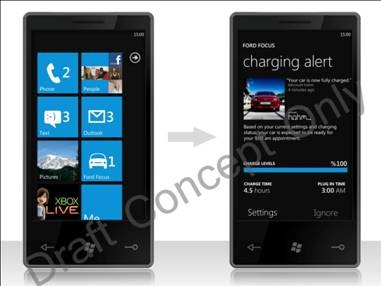
    Microsoft Hohm for Windows Phone 7 Series

    With only one vehicle in the program so far, this collaboration is still in its early phases. However, that didn’t preclude Microsoft from throwing in a teaser shot of a Hohm application for Windows Phone 7 Series.

    “Our plan is to make electric vehicle ownership easier and more affordable for consumers and help utility companies manage the added demands of electric vehicles on the electric grid,” Microsoft wrote in the Hohm community blog today.

    Copyright Betanews, Inc. 2010


    Add to digg
    Add to Google
    Add to Slashdot
    Add to Twitter
    Add to del.icio.us
    Add to Facebook
    Add to Technorati


  • Apple launches iPad-friendly iTunes 9.1

    By Tim Conneally, Betanews

    Just four days ahead of the iPad’s first day of availability, iTunes has received an upgrade which adds sync for the new device. According to the software updater, the new version of iTunes lets users “Organize and sync books you’ve downloaded from iBooks on iPad or added to your iTunes library,” and “Rename, rearrange, or remove Genius Mixes.”

    The icon under “Library” which formerly was called “Audiobooks” is now simply, “Books,” and Genius mixes can now be re-named and moved. Otherwise, there is not much of an outward difference between 9 and 9.1

    The new iTunes also brings a new version of VoiceOver for the iPod Shuffle and Nano. This is the feature which says artist names, song titles, and playlists with the Voiceover-equipped iPods with an earphone remote. With iTunes 9.1, there are several unspecified performance upgrades for VoiceOver, and pronunciation updates for the kit have become an automatic download.

    Copyright Betanews, Inc. 2010


    Add to digg
    Add to Google
    Add to Slashdot
    Add to Twitter
    Add to del.icio.us
    Add to Facebook
    Add to Technorati


  • ‘Hands-off’ review of Dial2Do’s solution to the texting and driving problem

    By Tim Conneally, Betanews

    Back in December, I tried to enable everything I use on my Motorola Droid with text-to-speech, with only limited success. Ideally, I would have been able to have all of my incoming text-based media from Twitter, RSS, e-mail, and SMS read aloud to me so I could use my phone while driving. Unfortunately, Android’s built in TalkBack functionality is very limited, and the talking apps I’ve tried are also pretty limited in what they do.

    But with safe driving legislation in committee in Congress, and a growing list of states that have banned texting while driving, the market for eyes- and hands-free phone interfaces is hot.

    At CTIA last week, there was actually a whole section of the show floor dedicated strictly to safe driving solutions, and a number of hardware manufacturers, like LG, addressed the topic in their booths as well.

    So I found a couple of services that approximately do what I wanted to do back in December, and checked them out.

    One of them is Dial2Do, which utilizes text-to-speech and voice recognition software to let a user check her e-mail, calendars, Twitter feeds, SMS, weather updates and news feeds, personal notes, and a growing list of other services without using her hands or eyes.

    With the free Dial2Do Android app, you can have your incoming text messages read aloud to you as they arrive, and you can create 20-second audio notes which are transcribed and e-mailed to you. Access to all the other functionality of Dial2Do costs $3.99 per month ($39.99 per year.)

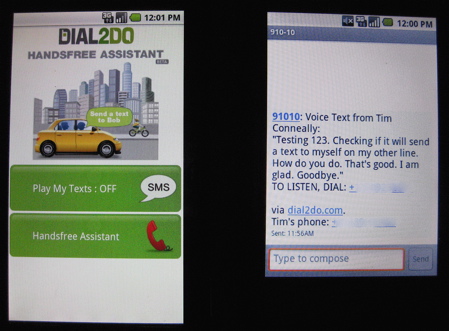
    When you hit “hands-free assistant” in the Android app, it dials into the local Dial2Do menu system. From there, you can then use voice commands to access your different linked services. Saying “Send a text to [contact name],” for example, will give you 30 seconds to speak a message to that contact which will then be transcribed and sent without the need for lots of “Are you sure?” prompts. Saying “Twitter” lets you post a tweet to your feed which includes a partial transcription and a link to your recorded messages.

    Like most voice recognition software, Dial2Do requires a somewhat slower cadence for accurate transcription, and has difficulty recognizing arcane words and proper names. After testing the notation software, I chose a random passage from a Rudyard Kipling book: “Free People, and ye too, jackals of Shere Khan, for twelve seasons I have led ye to and from the kill, and in all that time not one has been trapped or maimed.”

    What came through in transcription was passable: “Free people and jekyll’s of (Sherkan?) for 12 seasons I have led thee to and from the hill and in that time not one has been trapped or named.”

    Dial2Do handsfree assistant

    When navigating through the service, you may find some dead ends. If you’re listening to a long string of tweets or listening to headlines in Yahoo News, for example, you cannot say the name of another service to switch tasks, and if you say “go back,” it always registers as “goodbye” and asks if you want to hang up.

    Any phone can use Dial2Do since it’s based on calling in to access the command system. But Android and BlackBerry both have apps in beta which make interacting with the service much simpler.

    While Dial2Do is extremely useful for replying to messages and sending out communications to others, the built-in reader voice still suffers from lots of mispronunciations, and it reads at an awkward pace. It works well enough for text messages and e-mails, but when you’re going through lists of tweets or news headlines (which is the main thing I wanted an application to do) it is often hard to understand what is being said.

    So if you’re looking for a voice command service to use while driving, Dial2Do is an excellent choice. If you’re looking for a voice-driven feed reader that will speak clearly and let you drill down into articles that interest you, Dial2Do is probably not what you’re going to want.

    The Handsfree Assistant app is available for download directly from Dial2Do or in the Android market.

    Copyright Betanews, Inc. 2010


    Add to digg
    Add to Google
    Add to Slashdot
    Add to Twitter
    Add to del.icio.us
    Add to Facebook
    Add to Technorati


  • The explosion of non-Flash devices is driving HTML 5 growth, Brightcove says

    By Tim Conneally, Betanews

    Video sharing site Brightcove is using the impending launch of the Apple iPad as a platform to talk up its support for HTML 5, the updated spec for the Web’s core markup language which brings rich functionality to sites (such as video) without the need for third-party plug-ins like Adobe’s Flash or Microsoft’s Silverlight.

    Earlier this year, Brightcove’s bigger competitors YouTube and Vimeo announced they were experimenting with HTML 5, but both warned that not everyone would be able to see videos unless they had a compatible browser. Vimeo, for example, said 90% of its videos would work in HTML 5-compatible browsers, but only 20% of viewers would be using one.

    Flash remains the most ubiquitous vehicle for video delivery today, and is likely to remain deeply entrenched as a necessary plug-in for PC Web browsers.

    Brightcove’s founder and CEO, Jeremy Allaire referred to this as “runtime hegemony,” and sees the mobile world as an opportunity to break out of it.

    So the video site has launched “The Brightcove Experience for HTML5,” a framework for publishing HTML 5 videos and advertisements aimed at companies and marketers looking to make an iPad-ready site.

    “Our customers want to be able to deliver their video content to every screen without sacrificing the quality, interactivity and monetization capabilities they have come to expect from the Brightcove platform,” Allaire said in a statement. “The Brightcove Experience for HTML 5 fills the gap between the current playback capabilities of the emerging standard and what our customers need to operate successful online video businesses.”

    This solution has already been used to produce the iPad-formatted New York Times Web site.

    “The ubiquitous Flash Platform technology stack…has allowed us to reach 99% of the world’s Internet connected computers with a consistent video experience that just works,” Allaire wrote in the Brightcove blog yesterday. “Now we have seen the incredibly broad adoption of devices such as the iPhone (and soon the iPad) that do not support Flash, but do support the HTML 5 standard. Many device platforms have pledged to support Flash video, but the adoption of non-Flash devices is expected to be broad enough that many publishers are worried that they will be missing a substantial audience if they rely exclusively on a Flash-only strategy. That is driving publishers to look for ways to deliver an equivalent video experience to what they can offer with Flash, but implemented using the HTML 5 standard.”

    Copyright Betanews, Inc. 2010


    Add to digg
    Add to Google
    Add to Slashdot
    Add to Twitter
    Add to del.icio.us
    Add to Facebook
    Add to Technorati


  • Apple rolls out Snow Leopard update (10.6.3)

    By Tim Conneally, Betanews

    Mac OS X 10.6 Snow Leopard boxIt’s been about five months since Apple put out the Mac OS X 10.6.2 update, which fixed a potentially damaging guest account bug that could delete a user’s account data if another user logged in and out of a guest account on a Snow Leopard machine.

    Today, the company rolled out its next update to the operating system, which has reportedly been in beta since late December. The update includes more than 70 security fixes and 49 general improvements to Snow Leopard, including fixes for Mail, MobileMe, and AirPort. The full release notes are here.

    Snow Leopard users can simply choose “Software Update” from the Apple menu, and install the upgrade from there, or they can download the standalone update installer from Apple Support.

    Copyright Betanews, Inc. 2010


    Add to digg
    Add to Google
    Add to Slashdot
    Add to Twitter
    Add to del.icio.us
    Add to Facebook
    Add to Technorati


  • Swype and T9 Trace are on a collision course

    By Tim Conneally, Betanews

    You may not know the name Nuance Communications, but you can bet you’ve used this company’s products. It deals with linguistic solutions in the health care, enterprise, and the consumer mobile spaces. Yet you’d probably know Nuance as the company that owns T9 text completion, which ships on 85% of all mobile phones.

    You may also not know the name Cliff Kushler, but he was one of the inventors of T9 at Tegic Communications. He went on from there to launch the company Swype after Nuance acquired Tegic in 2007.

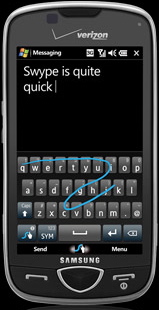
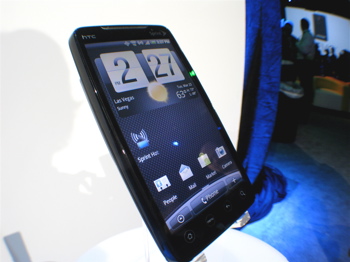
    Swype offers a new method of text entry that lets a user drag his finger to each letter on a virtual keyboard, rather than have to peck each letter out. It has been getting a lot of positive press, and has appeared as a pack-in feature on two new Android handsets this week — the impressive Samsung Galaxy S and the Motorola i1 — as well as the Windows Mobile-powered HTC HD2 which just launched on T-Mobile.

    SwypeThis week, Nuance announced its new method of text entry called T9 Trace, which is pretty much exactly the same as Swype. Both Nuance and Swype market their products directly to OEMs rather than fiddle with the consumer app space, so the name of the game for them is getting as many manufacturers to pick up their technology, and establishing ubiquity.

    Swype is doing pretty well in terms of partnerships so far, and Nuance hasn’t announced any yet. Nuance hopes to grab OEMs by offering the same input technology as Swype, only integrated into some of their other intellectual properties.

    “We’ll go through OEMs and do hybrid interfaces with some of our connected services such as Dragon Dictation,” Richard Mack, VP of corporate communications for Nuance said yesterday. “If you wanted to go in there and edit, you can call up the keyboard and do Trace there, so we’re beginning to integrate all these into a combination, multi-modal experience for text information input.”

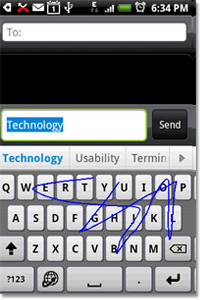
    Nuance's T9 TraceIn other words, manufacturers who already license T9 will be able to get a package licensing deal with Nuance for Trace and whatever other technologies they want.

    “We’ve also got a higher number of languages than anyone else out there [80], integration time is much easier because it can be built on top of T9 which is already there,” Mack said. Truly, when I tried T9 Trace yesterday, the words that popped up in the suggestion list were rather consistently in Italian.

    But really, the way T9 Trace and Swype work is secondary to the way their stories could end. After all, Swype is a small company still working on Series B investment capital, but with significant interest from OEMs. Also, Nuance is a big company with a long list of clients, no T9 Trace partners yet, and history of buying up Kushler’s technology.

    I would be remiss to say Nuance is copying Swype…that’s for you to decide. Either way, Kushler and Nuance look to be coming to a meeting point again, and it could be the bargaining table or it could be the courtroom.

    Disclosure: Tim Conneally is an investor in Nuance Communications.

    Copyright Betanews, Inc. 2010


    Add to digg
    Add to Google
    Add to Slashdot
    Add to Twitter
    Add to del.icio.us
    Add to Facebook
    Add to Technorati


  • That phone you’re about to throw away could be worth $500

    By Tim Conneally, Betanews

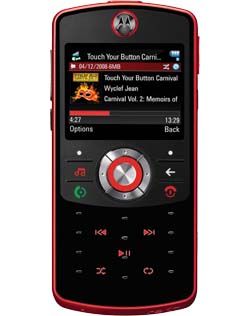
    Motorola's ROKR EM30 Linux-based mobile phoneThe lifespan of mobile phones is getting very short, and CTIA is packed with evidence to prove it. When I met with HTC at CES in January, they had an array of eight handsets to show off, most of which had only been released into the market within the last six months.

    Now, just two months later, HTC has added four new high-end smartphones that put the entire batch that I saw in January to shame. Smartphones only remain on the cutting edge for a matter of weeks before they’re usurped by the latest hot device. In the case of Android, sometimes it’s only a matter of days.

    When your phone draws close to the end of your two-year contract, it may seem old and worn when compared to the hot new devices. But its constituent parts have a much longer lifespan and retain a very high value.

    The lens in your iPhone camera, for example, can fetch as much as $200 in the second-hand market. All those high-megapixel cameraphones with Karl Zeiss optics that were released in 2008 retain quite a bit of resale value for the camera parts alone.

    In short, many high-end smartphones are worth nearly as much now as they were at launch.

    I had a chance to sit down and chat with CBM Wireless Group (CWG), a consortium of companies that reconditions, recycles, and repurposes old mobile devices. From what they told me, it appears the second-hand business is thriving.

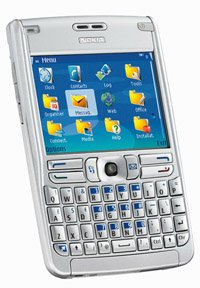
    Nokia E62And why shouldn’t it be? More than a billion phones are taken out of circulation every year already, and now that the lifespan of individual devices is shortening to just a single year in many cases, there is a lot of hardware to reclaim.

    While a strong recycling policy is ultimately better for the environment, companies are jumping into recycling for reasons far beyond the “green” buzzwords. It’s very profitable.

    So what does CWG recycle? In short, everything. They buy back used handsets from OEMs and wireless carriers in any condition. If they can be brought back to working condition, they wipe all data, replace the broken parts, and send them back into the market. If they aren’t reusable as a complete unit, they’re broken down into desirable parts and resold back to manufacturers, repair shops, and the carriers. And that’s not just the major parts, like keyboards, screens, and chipsets; they reclaim individual parts less than a single square millimeter in size. Everything else is then destroyed, and the case of many plastic components, turned into a new, composite recycled plastic.

    So if we’re going to be ditching our year-old phones en masse for the new EVO 4G this summer, its good to know that recycling them will be as good for the economy as it is for the environment.

    Copyright Betanews, Inc. 2010


    Add to digg
    Add to Google
    Add to Slashdot
    Add to Twitter
    Add to del.icio.us
    Add to Facebook
    Add to Technorati


  • Review: Eye-Fi X2, my CTIA secret weapon

    By Tim Conneally, Betanews

    Two years ago, Lexar brought the Eye-Fi brand into the mainstream when it released 2GB SD cards endowed with Eye-Fi’s 802.11b/g wireless connectivity. The capability turned any camera with an SD slot into one with Wi-FI. Since that time, Eye-Fi has grown its product line to include support for 802.11n, improved security features, improved capacities, and overall performance improvements.

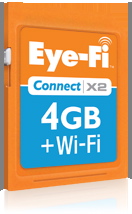
    Eye-Fi Connect X2On Tuesday, Eye-Fi’s new X2 series of wireless SD cards hit retail, bringing the 4GB Connect X2 ($49.99), 8GB Explore X2 ($99.99) and 8GB Pro X2 ($149.99) to photographers across the country.

    I’d been toying with the idea of pairing up an Eye-Fi camera with a MiFi portable hotspot for a sort of goofily-named dream team that could provide a constant connection for shooting tons of pictures that instantly piped up to the cloud. Since I was headed to Vegas for CTIA this week, and Eye-Fi was launching its new X2 series, I thought it was time to try it out with a 4G Sprint Overdrive.

    So I’ve been walking the showfloor with a WiMAX hotspot in my backpack, and the Eye-Fi Connect X2 in my point-and-shoot Canon. Short of having a camera with a built-in mobile broadband module, this is the best way to shoot pictures. While I have been concentrating on getting exciting shots, Eye-Fi has quietly been uploading them to photography-sharing sites the second they’re snapped. When I finally get to sit down in the press room, all the photos are up, sorted by date, and geotagged online, and when I connect my computer to a hotspot, the photos automatically download to my Eye-Fi desktop folder.

    I stuck to sending all the photos to Picasa, but I could have chosen Flickr, Snapfish, Photobucket, Shutterfly, MobileMe, Fotki, Facebook, Whrrl, Evernote, Dotphoto, SmugMug, TypePad, or even to a custom FTP site. Eye-Fi offers 28 different destinations that your photos can be sent to. Additionally, it can send video to YouTube, Flickr, Facebook, Picasa, SmugMug and Photobucket.

    The only troublesome aspect of the X2 was installing the software on my computers. I first tried it on a Vista PC, but it kept crashing it, and then I tried it on a Mac running the older 10.4 Mac OS, and it also did not want to work after half a dozen attempted installs. Eventually, however, it managed to get itself installed and has been running ever since.

    Though the Eye-Fi helps heat up my camera very quickly, it has not had an appreciable effect on its battery life. In the three days I’ve been using it, I have not run out of battery any quicker than I would have if I was using a regular SD card. This will no doubt vary from camera to camera, and I intend to test it with other models to corroborate. Not all SD-supportive cameras are compatible with Eye-Fi SD cards.

    And it doesn’t require a mobile hotspot in your pocket for Eye-Fi to be useful on the go. Eye-Fi users have automatic free connectivity at 21,000 U.S. hotspots including Starbucks coffee shops and Harborlink hotspots such as BP gas stations.

    Copyright Betanews, Inc. 2010


    Add to digg
    Add to Google
    Add to Slashdot
    Add to Twitter
    Add to del.icio.us
    Add to Facebook
    Add to Technorati


  • How I slashed my connection to cable TV without missing anything

    By Tim Conneally, Betanews

    Mission: Find an affordable alternative to cable/pay TV using only off-the-shelf products.

    Deadline: Today (with a clause for extension)

    Like 24 million other Americans, I have a subscription to Comcast for cable television; and like an untold number of those subscribers, I feel that it costs far more than it should.

    Annually, I pay more than $675 for service on one HD receiver with no premium content, even though I only watch a couple of hours of television a week. It amounts to 212 unique stations (minus the redundant HD channels.) This wasted money could be put toward something I’d actually use, like a mobile broadband subscription or a second data line, so I began looking for more cost effective alternatives.

    I started this project with the idea that I could replace cable with a second broadband connection, dedicated strictly to grabbing video content from the Web, but I ended up going in a totally different direction thanks to a serendipitous TiVo Premiere review I was supposed to be writing at the same time.

    You see, TiVo sent us its new Premiere DVR to check out, and I was going to hook it up to my Comcast signal to review it, but that required a cableCARD. I called Comcast to get one, and they had to send a technician out to install it, and one wouldn’t be able to come out to my house for 20 days.

    With the TiVo Premiere review due in just 8 days, I had no choice but to hook up the TiVo to a DTV antenna and try to make the best of it. Little did I know that this would completely change my mind about how I could cancel cable for my other project.

    Part 1: Using TiVo Premiere without pay TV
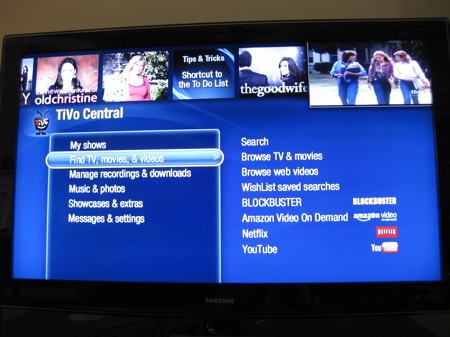
    TiVo Premiere Central menu

    I hadn’t turned on over-the-air television since long before it shifted to digital broadcast, and I thought I was going to be reviewing TiVo’s brand new DVR with only a measly handful of channels to work with. I was not happy.

    Some quick background: I grew up in the Baltimore area, and we only got about 6-10 over-the-air stations depending upon where you were tuning in. If you moved northward, for example, you may have been lucky enough to pick up some Pennsylvania stations, If you moved southward, you started to get Washington D.C. and Virginia stations. But as far as central Maryland goes, there were 3 VHF and 3 UHF channels and nothing else.

    When I plugged the brand new DTV antenna into the TiVo Premiere, I was shocked to find that I was receiving 33 over-the-air stations. Furthermore, with the TiVo Premiere, I could hit “guide” and find information about what I was watching, and what was scheduled to come on later in the day.
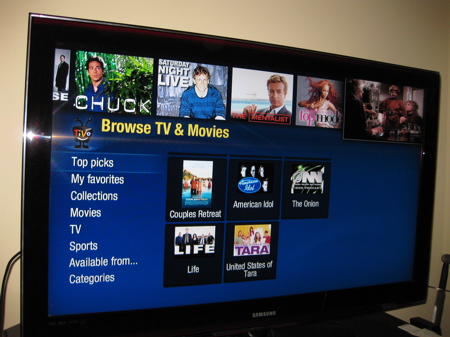
    TiVo Premiere

    Then it dawned on me. I have 33 channels worth of free linear content that TiVo can turn into free on-demand content.

    What’s more, TiVo beefs up the free stuff I’m going to be watching by indexing casts, and linking shows to related Web-based content like Netflix Streaming, Amazon on Demand, Blockbuster on demand, and YouTube. It makes watching free, over-the-air content as good as, if not better than, pay television.
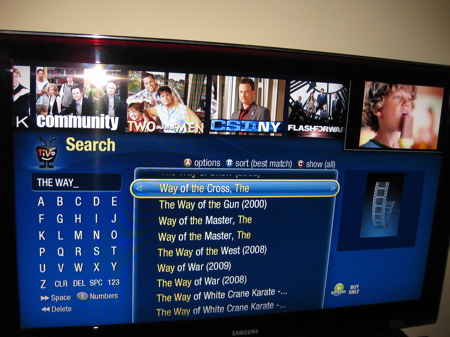
    TiVo Premiere search

    Sure, the TiVo Premiere’s new UI has issues…well, one issue, really. It’s not finished. Some menus are in HD and some are in SD, and the switch between them is jarring both on the viewer and a little laggy. As long as you’re parked on the home screen, information pops up quickly and smoothly. But when you have to get into a part of the UI that’s still in SD, you’re going to encounter all-black loading screens pretty frequently.
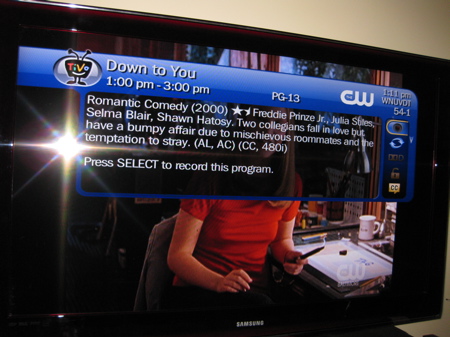
    TiVo over live TV (SD)

    Maybe I’m too forgiving, but I can overlook a menu that’s both HD and SD. After all, I’m not offered standard 100% HD service packages from any content provider, either, and streaming videos vary in quality from 720p all the way down to tiny, blurry molecules of unwatchable crap.

    Besides, TiVo says it’s going to be rolling out UI updates pretty frequently, which will make the menus that pop up over live TV high definition, and then the utility screens and messages sections will follow. The first update to the Premiere will roll out in May and will improve the features of the discovery bar located across the top of the main TiVo menu.
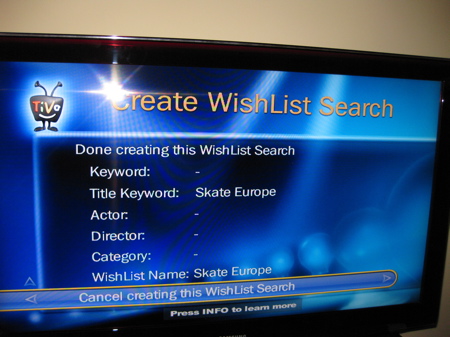
    TiVo Wishlist

    The funny thing about the TiVo Premiere is that it really doesn’t do anything new. It’s a TiVo, it does what TiVo always does. It does it with a more powerful dual-core processor and high definition Flash-based UI, but it remains the same viewing experience that turns regular TV viewers into TiVo cultists.

    That said, it’s got a number of limitations that mean it’s only a single part of my solution for canceling cable, one of them is the fact that it cannot access the majority of the free content on the Web.

    At $299, the TiVo Premiere makes up about half of the year’s cable bill that I’m saving and helps to replace 11 channels in the Comcast package. Some of the over-the-air networks I receive are not included in my Comcast package, but could serve as a loose replacement for others. MGM’s THiS network, for example, takes on characteristics of both TV Land and AMC.

    I have not broken it down to its show-by-show replacement value because that would have REALLY extended me past my deadline, but my early estimate is that an OTA TiVo Premiere could replace between 20%-25% of the content I would have been watching on my cable subscription. This is made up of the content it captures from live broadcasts, the access it has to YouTube, and its extensive roster of video podcasts it can capture. With the addition of a single-disc Netflix account, my overall annual cost rises by $108, but the amount of content available to me also significantly increases. (note: I don’t think I should include this in my overall cost since I was paying for Netflix already, but I am just for the sake of everyone who doesn’t.)

    Since Amazon on Demand and Blockbuster on Demand are both pay-per-item, they also increase available content, but only really replace the pay-per-view section of Comcast’s lineup.

    Next: Bringing the Web to your TV for $40…

    Part 2: Bringing Web content fully to the TV

    The bottom line in free web-based television content is still Hulu, and your options for bringing that to your TV with regular old consumer gear are pretty limited. However, there is one software solution that gives all three major home video game consoles access to Hulu and other Web video sites for a single $39.99 license fee: MediaMall’s PlayOn Digital Media Server.
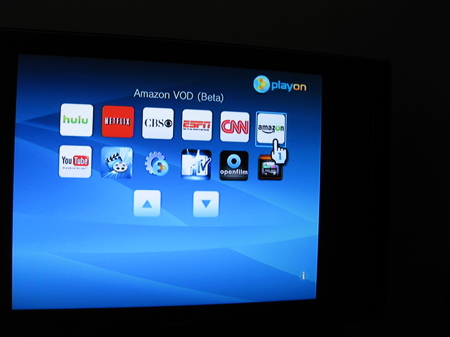
    PlayOn's main menu on the Wii

    Now, I’ve heard people complain about PlayOn because of MediaMall’s charge for the license. But the fact remains that it’s been the most consistent TV-based access to Hulu when all the other free solutions keep getting blocked. That alone is worth it to me.
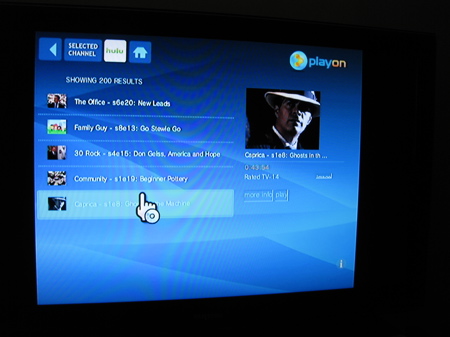
    PlayOn does Hulu on the Wii

    So PlayOn gives your console access to content from networks like NBC, ABC, Disney, PBS, and Comedy Central via Hulu, and there are user-installable plugins (or “channels” if you prefer) for Cartoon Network/Adult Swim, Discovery Channel, SyFy, ESPN, Food Network, Fox News, HGTV, a surprisingly comprehensive one for MTV, Spike TV, C-Span, VH1, Nickelodeon, and CNN.
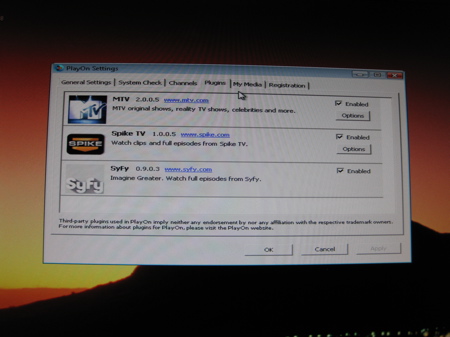
    PlayOn's PC-based server component

    You install the MediaMall server on your connected PC, and all of your game consoles have access to PlayOn channels, the content on your PC’s drives, and any networked storage.

    One of the most startling parts of PlayOn is that every single feature works on the humble Nintendo Wii through its built-in Opera browser. THE most startling part is that it’s actually the best implementation of PlayOn on all three consoles, and it’s still only in beta. I am fully aware that the Wii is not an HD device, but when you consider the source quality of most of the content you’ll be watching, you realize that the lack of HD can actually be a blessing.
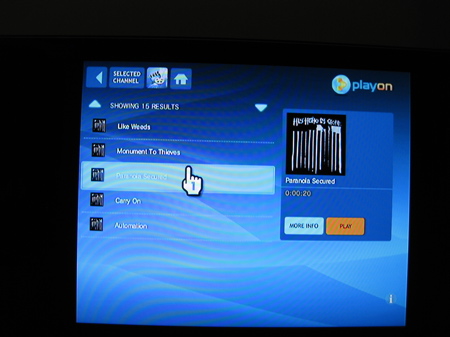
    PlayOn accessing music on a local server

    With Hulu and all of the other plugins, PlayOn delivers content from more than 20 networks, and could replace as much as 40% of the content that I paid for on Comcast.

    The problem remains that there are still a ton of cable channels putting up their content for free on the Web, but there’s no central place to view them on your television. This includes stations like FX, Bravo, E!, USA, and ABC Family, all of which offer full episodes of their most popular shows directly on their Web sites, and other stations like QVC and Home Shopping network, which run 24/7 streams of their channels on the Web.

    In a nutshell, the content is out there, there’s just no comprehensive way to get it without building a custom home theater PC. However, I’ve cut my expenses by 33% and have access to anywhere from 55%-70% of the content at my disposal with Comcast, I consider quitting cable easily justified.

    I’m still looking for a way to increase my access to online video without significantly adding to the price to sweeten the setup further. I’ve got $227 left before I’m back to what I’d spend for one year of Comcast, so I’d say things are looking pretty good.

    Mission: Ongoing

    Copyright Betanews, Inc. 2010


    Add to digg
    Add to Google
    Add to Slashdot
    Add to Twitter
    Add to del.icio.us
    Add to Facebook
    Add to Technorati


  • Exclusive: Olympic snowboarder Shaun White discusses his first skateboarding game

    By Tim Conneally, Betanews

    Of all the things we expected to come from a conference about wireless technology, an interview with a two-time gold medal olympian was not one of them, but today, Betanews got an exclusive interview with professional snowboarder/skateboarder Shaun White about his first skateboarding-only videogame from Ubisoft.

    Olympic Snowboarder Shaun White

    Truth be told, running into Shaun was purely accidental. I was scheduled to talk to Marvell about its Armada 600 platform at the very same time the he was scheduled to do an autograph signing for the company. As a huge line amassed around Marvell’s booth, I completely expected to have my discussion time bumped. Instead, Marvell invited me to ask Shaun a few questions.

    “We’ve got a skateboarding game coming out that’s been three years in the making,” White said. “I’ve finished the soundtrack, voice-over stuff within the next little bit here. But it’s amazing, it’s one of the best games we’ve played. We had a writer from Family Guy to write the script. I mean…when I play a game, I wanna have fun, I want to enjoy it and also laugh, you know what I mean? It’s got to be a mixture of things, so it’s pretty cool.”

    As a skateboarder and snowboarder, I assumed White has played at least one of the long-running Tony Hawk’s Pro Skater series. I asked him how this game compares.

    “It’s a mixture, obviously. You can’t just deny the fact that Tony [Hawk]’s games are incredibly fun, and the SKATE game is a bunch of fun. But…I’m proud to say, it’s not a re-do of their games in the slightest. We have certain elements, certain controller things that we kind of borrowed from SKATE — trick styles, and the way the levels are built, it’s like we got [ideas for] those things from Tony’s, but it’s definitely like a mixture of those two,” White said.

    “Basically, everywhere you go, everything changes. So as you skate, you create your whole world. It’s like the whole world’s black and white and you have to basically change the world through your actions. So you’re only [at] this little stair, and then when you land, the shock wave goes out, and trees start sprouting, rails start growing. The whole thing changes, the music picks up, it’s just really entertaining. It’s just like you shaping the world, and you can actually get on rails and, like, shape the way they’re going to go. You control everything.”

    Unfortunately, I didn’t get to talk to White any more about the upcoming game, but he’s very excited about it. White’s talents as a professional skateboarder are sometimes overlooked by his domination in competitive snowboarding.

    I was going to ask him what kind of phone he uses, but that was when I was actually bumped. Specifically by Marvell’s COO, Weili Dai, who came in to meet the olympian, who she said “looks just like a UC Berkley student.”

    Copyright Betanews, Inc. 2010



    Add to digg
    Add to Google
    Add to Slashdot
    Add to Twitter
    Add to del.icio.us
    Add to Facebook
    Add to Technorati


  • Why Sony Ericsson is worth watching in the Android space

    By Tim Conneally, Betanews

    Sony Ericsson Xperia X10 Mini Pro

    In the past, having too many different screen resolutions to support was a problem for Windows Mobile developers. For the users of Android phones, it seems like too few screen sizes could become a problem. With Android, there are only three general screen classes: small, medium, and large.

    And the trend lately among Android devices has been to have bigger and brighter screens. When the Motorola Droid debuted last October, the device’s 3.7″ screen looked downright huge. Yesterday, the 4″ screen on the Samsung Galaxy S and 4.3″ screen on the HTC EVO made the Droid look small by comparison. Unfortunately, the shape of the chassis must reflect the size of the screen. What’s happening is that we are seeing bigger, flatter phones.

    That’s why Sony Ericsson’s Xperia X10 line is so compelling. The X10 was one of the first Android devices with a 1 GHz Qualcomm Snapdragon processor, and the first to offer a 4″ screen, but Sony Ericsson isn’t using that model as a baseline to crazily push toward tablet-sized phones. Quite the contrary, it’s using it as the biggest model in a line of phones conceptually more like the iPod. At Mobile World Congress in February, the company announced that it was going against what most other manufacturers appeared to be doing with Android, and made their devices smaller.

    In fact, now Sony Ericsson has made the smallest Android phone yet.

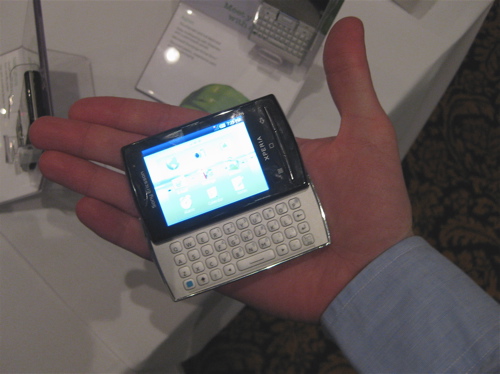
    Last night, I got a chance to play with the Xperia X10 Mini Pro, and I was supremely impressed. The tiny X10 Mini Pro can fit in the palm of my hand, and yet almost no usability has been sacrificed. The chiclet keyboard is highly responsive, and though it is running an older version of Android, the UI has been totally redesigned to make it easy to use on a small screen.

    Though Sony Ericsson isn’t one of the hotter brands in the United States, its products are highly compelling, especially if you are looking for something outside of the standard touchphone form factor.

    The Xperia X10 Mini Pro will be available in Europe in May, but sadly, no US release plans have yet been announced.

    Copyright Betanews, Inc. 2010


    Add to digg
    Add to Google
    Add to Slashdot
    Add to Twitter
    Add to del.icio.us
    Add to Facebook
    Add to Technorati


  • Get in on the limited beta of new suggestion engine, Zite

    By Tim Conneally, Betanews

    Actual Beta News feature bannerLate last year, I took a look at how search services were being affected by the unchecked growth of ultra-digested, 140-character-or-less news blips. In my research, I talked to a Vancouver-based startup called Worio that was tackling the difficult problem of creating a search engine that “understood” what kind of data was important to the user.
    Now, the team is working on creating a new content discovery service, which it is calling Zite.

    Zite harvests keywords and themes from your Twitter feed and Delicious bookmarks and turns them into a “follow list.” The same way you follow individuals on Twitter, you follow keywords on Zite, and you can customize your list to be as long or short as you like.

    Based upon this follow list, Zite then creates a news feed of articles it thinks you will like. The results are broken into two lists: articles published within the last 24 hours, and articles that are more than a day old.

    It’s a super new service, and the Zite team wants your help, so they’ve given us 50 beta invites which will let you get in and access Zite directly right now.

    Click here to get access to the Zite beta!


    Only the first 50 readers to click that link will be able to participate in this round of testing, so click quickly!

    Copyright Betanews, Inc. 2010


    Add to digg
    Add to Google
    Add to Slashdot
    Add to Twitter
    Add to del.icio.us
    Add to Facebook
    Add to Technorati


  • T-Mobile talks network upgrades

    By Tim Conneally, Betanews

    Rather than debut anything unknown or surprising, mobile network operator T-Mobile today presented everything it had already announced, and then concentrated on talking about the widespread 3G network upgrade it’s rolling out this year.

    While this doesn’t always get people drooling, T-Mobile looks to be taking a level-headed approach to network growth which the company says will result in the overall fastest 3G network in the US.

    T-Mobile says its HSPA+ network upgrade will be complete by the end of this year, bringing a theoretical peak throughput of 21 Mbps to the company’s entire 3G footprint.

    Now, there’s been some confusion as to what this upgrade will mean, as evinced by some of the questions in today’s Q&A session with T-Mobile at CTIA.

    As of right now, T-Mobile has launched or announced about 12 HSPA 7.2 devices. Every single one of these will be compatible with HSPA+ because the network upgrade is fully backward compatible. T-Mobile said this path is much easier on users because it doesn’t require any new hardware on their side. Once the network is upgraded and activated, they simply get faster service.

    In an era where the lifespan of mobile devices keeps getting shorter, T-Mobile’s growth plans are a refreshing change. Instead of tempting customers into new hardware, the carrier is actually trying to add value to the devices customers have already purchased.

    Copyright Betanews, Inc. 2010


    Add to digg
    Add to Google
    Add to Slashdot
    Add to Twitter
    Add to del.icio.us
    Add to Facebook
    Add to Technorati


  • CTIA’s ‘other’ Android superphone: Samsung Galaxy S

    By Tim Conneally, Betanews

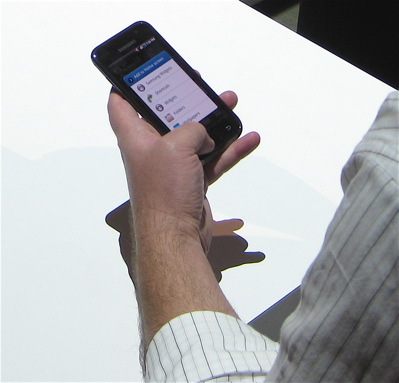
    Samsung Galaxy S

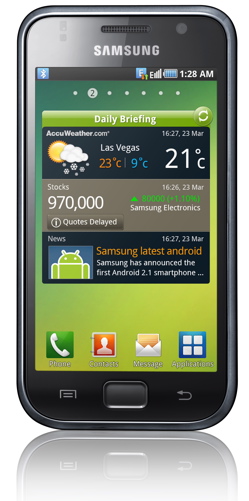
    HTC and Sprint’s EVO may have stolen the show at CTIA today, but Samsung showed off its own Android 2.1 superphone called the Galaxy S. It’s just as impressive as the EVO, just without the 4G muscle.

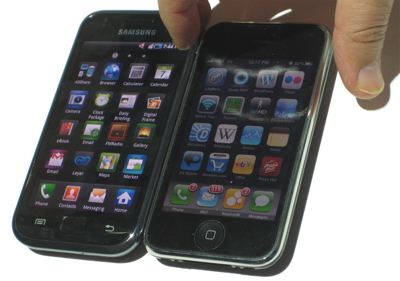
    Separated at Birth?  Samsung Galaxy S and Apple iPhone

    And while it may look like the fraternal twin of Apple’s iPhone, especially with the TouchWIZ UI, Samsung’s Galaxy S is no iClone.

    The Galaxy S has 4″ Super AMOLED (800 x 480) capacitive touchscreen, a 1 GHz Cortex A8 application processor, quad-band GSM and 7.2 Mbps HSPA 3G radios, A-GPS, Bluetooth 3.0, 802.11n, a 5 megapixel camera and a VGA front-facing camera, 720p video recording capabilities, either 16 GB or 8 GB of internal memory expandable to 32 GB via microSD, accelerometer, digital compass, proximity and light sensors.

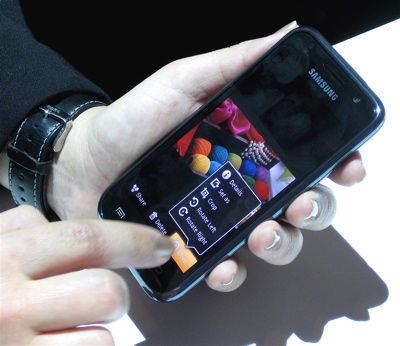
    Samsung Galaxy S

    While all of that is impressive on its own, Samsung has packed it all into a chassis with a 9.9mm profile. It makes the device slightly thinner than the iPhone 3GS (12.5mm in thickness) and thicker than the iPod Touch (8.5mm).

    Samsung Galaxy S

    Some of the most outstanding features so far, however, appear to be the exclusive applications that come with it. Galaxy S has a built in app for tethering; a Samsung AllShare app, which gives the phone instant DLNA compatibility for multimedia sharing in the home; and an e-book reader app from Skiff. That’s the company that rose to popularity earlier this year when Hearst Publishing announced the Skiff e-reader. The screenshot Samsung showed today looked perfectly identical to the iBooks app that’s due to launch with the iPad on April 3.

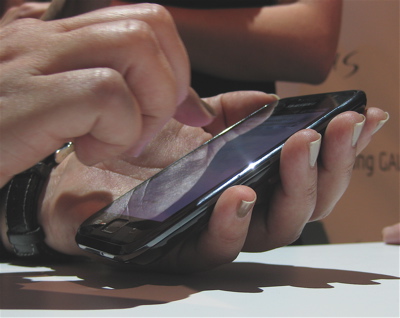
    Samsung Galaxy S press photo

    If it wasn’t for the EVO announcement which came just two hours afterward, the Galaxy S would have undoubtedly been today’s most intriguing new device unveiling at CTIA. Battery life for the EVO, however, remains a pivotal issue, and it may turn out that the more typical 3G radio array in the Galaxy S was the smarter choice for Samsung.

    Samsung says the Galaxy S will be launched worldwide “soon.”

    Copyright Betanews, Inc. 2010


    Add to digg
    Add to Google
    Add to Slashdot
    Add to Twitter
    Add to del.icio.us
    Add to Facebook
    Add to Technorati


  • Sprint has the game changer: The first 4G smartphone

    By Tim Conneally, Betanews

    Sprint and HTC this afternoon finally took the wraps off of the “Supersonic” 4G smartphone, the HTC EVO 4G, and everything about this device is killer.

    Sprint HTC EVO

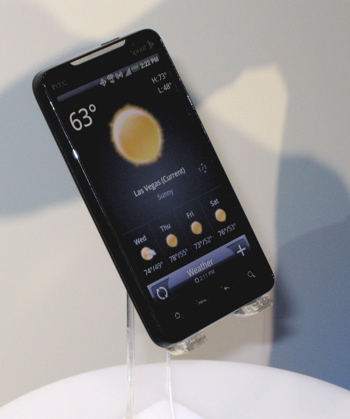
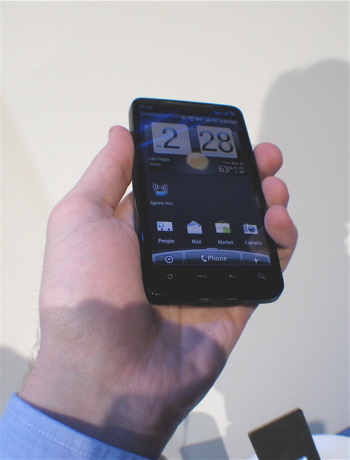
    HTC and Sprint have spared nothing in this top-of-the-line device. It has a 1 GHz Qualcomm Snapdragon (QSD8650) processor, a 4.3″ (800×480) capacitive touchscreen, an 8 megapixel dual flash camera, and a 1.3 megapixel forward-facing camera. Add Android 2.1, 4G WiMAX/3G EV-DO Rev. A, the ability to act as an 8-device 4G hotspot, an FM radio, Bluetooth 2.1, digital compass, proximity, velocity, and light sensors, GPS and 3.5mm headphone and HDMI output. In short, pretty much everything you could want.

    HTC EVO

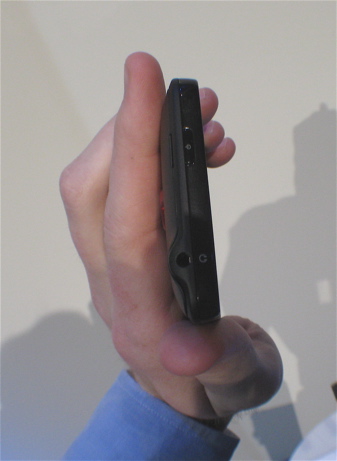
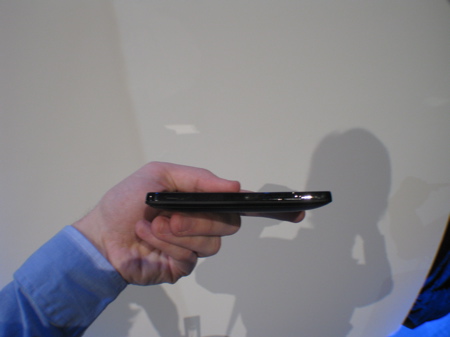
    Physically, it looks and feels a lot like the Windows Mobile-powered HD2 on T-Mobile, with a 4.8″ x 2.6″ x .5″ chassis that weighs 6 ounces. Onboard memory is 1 GB ROM, 512 MB RAM. Though the battery is 1500mAh Lithium (Li-ion) battery, HTC representatives didn’t talk much about the actual life of it other than to say they expect it to be able to last all day. Obviously, if eight devices are using it as a 4G hotspot, it won’t last anywhere near as long as that.

    HTC EVO

    The biggest unanswered questions about the EVO now are: How much will it cost, and when will it be available? Sprint CEO Dan Hesse said at CTIA this afternoon it should be out in the summer, but he did not go into any more specifics. He also did not say if it will be released nationwide, or only in the 27 WiMAX-connected Sprint markets. I grilled Sprint representatives further today, but they were careful to not give any more details.

    HTC EVO

    Video streaming on the device was excellent. Sprint showed off a new YouTube HQ browser specifically made to view higher-resolution YouTube content on the EVO. In the demonstration today, Sprint showed both sideloaded and live streaming HD content, and they were both flawless.

    HTC EVO 4G

    EVO is, simply stated, the most powerful smartphone to date, passing the Samsung Galaxy S simply because of the advantages 4G connectivity affords. I’ll post something about the Samsung Galaxy S next, and I have a meeting with HTC tomorrow so we’ll be able to get a little more one-on-one time with the EVO. Today, handling of the device was under semi-strict control (they wouldn’t let me drop into the “about phone” menu to see what was going on with the software) and the model HTC will have on the show floor will be under glass.

    HTC EVO 4G

    One thing is absolutely certain about CTIA today, though: Android just took charge of the superphone category, this time for real.

    Copyright Betanews, Inc. 2010


    Add to digg
    Add to Google
    Add to Slashdot
    Add to Twitter
    Add to del.icio.us
    Add to Facebook
    Add to Technorati


  • Nintendo wants to try its hand at 3D again

    By Tim Conneally, Betanews

    Today, a very dodgy looking PDF file appeared on Nintendo’s Japanese investor relations site with the title “Launch of New Portable Game Machine” (PDF available here).

    In the document, Nintendo quietly announced that it will be launching “Nintendo 3Ds” during the fiscal year ending in March 2011. The new handheld gaming console will support 3D effects without the need for special viewing glasses, and Nintendo will talk more about it at the E3 conference in June.

    This comes as a rather big surprise today, as Nintendo only just recently launched the super-sized DSi LL (a.k.a., DSi XL) in Japan, and that device hasn’t even been released in the United States yet.

    Nintendo is no stranger to attempting to bring 3D gaming to the masses, but the company has never quite achieved any degree of success in its endeavors. In fact, it could be the area where the company has failed the most. Nintendo’s Virtual Boy console, which achieved full stereoscopic monochrome 3D via a spinning mirror inside a large visor, is considered by American gamers to be Nintendo’s biggest flop.

    Virtual boy
    Virtual boy tennis

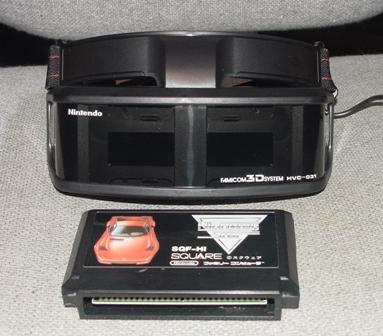
    Our experience with 3D Nintendo games has been somewhat limited in the United States. The Nintendo Entertainment System only had three 3D games, 3-D Worldrunner and Rad Racer by Square and Orb 3D. These games required the use of cardboard red and blue 3D Glasses for the anaglyphic 3D effect to work. But Nintendo was actually more daring in the 3D space in other markets, and released an active shutter 3D system to coincide with the Famicom disk system for 3D effects closer to what we experience in modern 3D systems.

    In terms of software support, this was actually far worse of a flop than the Virtual Boy. Virtual Boy had a total of 22 games released worldwide, the Famicom 3D system had less than ten, and none of them were made by Nintendo itself. Some of the titles include Famicom Grand Prix II: 3D Hot Rally, Falsion, and Attack Animal Gakuken.

    Famicom 3D system

    Right now, very little is known about the 3DS other than its tentative name and its intended purpose. We’ll follow up with more information as it becomes available.

    Copyright Betanews, Inc. 2010


    Add to digg
    Add to Google
    Add to Slashdot
    Add to Twitter
    Add to del.icio.us
    Add to Facebook
    Add to Technorati