
Category: Mobile
-
WSJ: Google developing wireless networks to boost Internet access in Africa, Asia
-
How to permanently delete Snapchat photos

Snapchat has taken the mobile world by storm. The application allows users to send pictures and videos to friends that will self-destruct after a maximum of 10 seconds. Even better, if someone tries to take a screenshot of the image, the sender is automatically notified. Although its founders may not be proud of it, the application has become rather popular among the “sexting” crowd, a practice in which you send naked pictures and videos to another person. The application isn’t perfect, however. As we saw earlier this year, SnapChat videos can be secretly saved. The truth of the matter is that while Snapchat deletes the images from its servers, they are still stored deep inside the receiver’s smartphone and can be retrieved with the proper knowledge. There are ways to permanently delete Snapchat photos, though.
-
Galaxy S4 camera found to outperform iPhone 5, Lumia 920

-
Why I don’t want iOS, Android or any other OS to ‘win’

-
Bad news, Glass fans: Google Glass will probably launch with terrible battery life

-
HTC One with stock Android will reportedly be announced within two weeks

-
The Fairphone, World’s First Ethically Sourced Smartphone, Opens Pre-Sales To General Public
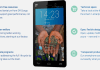
Netherlands-based hardware initiative Fairphone began around three years ago as a project designed to highlight the use of conflict minerals in the construction of consumer electronics, and then evolved three years later into a full-fledged hardware startup, with the aim of turning its knowledge into action with the building of an ethically sourced, built and distributed smartphone. Now, it’s opening up pre-orders to the general public, beginning with customers in Europe.
The Fairphone needs 5,000 pre-orders in order to begin production, and retails for a total of €325 ($436). That price included taxes, however and what you get for that is an unlocked, 4.3-inch smartphone running Android 4.2, powered by a quad core processor. It has an 8 megapixel rear camera, and a 1.3 megapixel front facing shooter, with dual-SIM trays for easy carrier switching and international travel.
As a smartphone, the Fairphone seems capable enough, but it’s the manufacturing process that’s really core to the concept of the device. The phone itself is made using materials from a completely transparent supply chain – Fairphone is looking at the provenance of each mineral used to make each component, the people who build each part and the processes evolved and their social and ecological impact, and will make all of that information available to buyers and the general public. The idea is to flag stuff that’s being done poorly, highlight ways to make changes, in both the short and long term, and also build a collection of best practices that can be shared with the rest of the industry.
Fairphone initially had opened sales only to the over 16,000 people who signed up to express interest when it initially announced the project, giving them first crack at the initial pre-order run. It seems like the percentage of those that were actually willing to put their money down on a device and contribute to the initial fund was much lower, however, which has prompted the expansion of sales to anyone in Europe who might want to contribute.
The Fairphone is being transparent about the sales process, too; thus far, it has managed to sell 2,333 phones through pre-orders, with 20 days left in its campaign. Hopefully broadening the buyer pool will spark more interest, because the project stands to be able to shed a lot of light on what for many is a completely invisible or poorly understood process.
-
Nokia’s 41-megapixel Lumia rumored for July launch

-
Apple to reportedly start production for cheaper iPhone in July

-
Citrix Synergy Highlights Megatrends of Mobile Workstyles
Cloud solutions for mobile workstyles is the theme at the anual Citrix Synergy conference this week in Los Angeles. Citrix (CTXS) unveiled advancements toward its mobile workstyles vision, providing powerful new ways for people to work whenever, wherever and however they choose. The event conversation can be followed on Twitter hashtag #citrixsynergy.
XenMobile Enterprise
With Citrix cloud solutions serving as the engine, the company hopes to enable delivering any type of app, to any type of device, over any type of network, while supporting new forms of social collaboration. Launched at the event Wednesday, Citrix announced XenMobile Enterprise, the edition that combines mobile device, app and data management, a unified corporate app store, mobile productivity apps and “one-touch” live support into an inclusive solution for delivering mobile services to business. With a workforce that requires secure and seamless access to apps and data from any mobile device, Citrix is positioning XenMobile Enterprise as the only solution that delivers everything required to mobilize the enterprise.
“Customers are continuing to ask for consolidation of enterprise mobility technologies under a single provider,” said Stephen Drake, Program Vice President for Mobility Enterprise at IDC. “The introduction of XenMobile Enterprise with the inclusion of Citrix mobile apps demonstrates that Citrix continues to make strides and is raising its visibility as a key enterprise mobility company through a growing portfolio of technologies.”
XenDesktop 7
Citrix also announced the next major release of its XenDesktop desktop virtualization solution. XenDesktop 7 is the first release of project Avalon, an initiative to deliver Windows as a cloud service. XenDesktop 7 offers integrated Windows app and desktop mobility, easier deployment options and simplified management, all delivered through a new, cloud-style architecture. The new version enables any Windows app to function intuitively and transparently on mobile devices, providing a seamless experience on devices of any type.
New HDX Mobile technologies incorporate H.264 compression and compression capabilities can dynamically optimize the bit rate of full HD video so it is viewable over 3G mobile networks. New Citrix StoreFront interface unifies and secures app and desktop access through a seamless user experience. An advanced cloud management capabilities provide a purpose-built help desk console and real-time troubleshooting with EdgeSight end-user experience analytics tools. A simplified architecture can deliver Windows Server (RDS) or VDI desktops from a single console, speeding production deployments by as much as 80 percent.
Many Citrix partners announced solutions for XenDesktop to help mobilize, simplify and secure virtual Windows app and desktop deployments:
- Dell announced three end-to-end offerings for Citrix XenDesktop 7, and a Wyse Xenith Pro 2 dual-core zero client, based on the Wyse Zero framework and purpose built for Citrix XenDesktop.
- CA Technologies (CA) announced new infrastructure management capabilities for XenDesktop 7, providing customers with faster problem resolution and optimized service delivery.
- NVIDIA (NVDA) announced it is unleashing the full graphics potential of enterprise desktop virtualization with the availability of NVIDIA Grid vGPU integrated into Citrix XenDesktop 7. New Citrix HDX 3D technology enhancements offer unmatched direct GPU acceleration to support the most complex 3D and graphical applications.
- NetApp demonstrated that a combined architecture with XenDesktop and NetApp Data ONTAP can help customers deploy storage for persistent and non-persistent virtual desktop use cases for as low as $35.
-
BlackBerry, Nokia, Apple could be hurt by flood of ‘good enough’ Android phones

-
Microsoft working on integrating Windows Phone with Xbox One

-
Why does the iPhone 5 cost so much to repair?

-
Windows Phone and BlackBerry 10 still don’t offer apps people want

-
Google Glass: Not just for nerds

-
Facebook Home Hits The Rocks In Europe, With UK And France Launch Of HTC First Delayed Indefinitely

More signs today the HTC First might also be the last smartphone to ship with Facebook Home pre-installed: UK carrier EE confirmed today that the first Facebook Home phone won’t be launching in the UK soon as planned, as Facebook has decided to concentrate its efforts on making improvements to the Home software before looking to add international markets. EE says it will soon be contacting customers who already used its pre-order system to express interest in the First to let them know about the delay, which is indefinite in length.
Here’s the full statement direct from EE:
Following customer feedback, Facebook has decided to focus on adding new customisation features to Facebook Home over the coming months. While they are working to make a better Facebook Home experience, they have recommended holding off launching the HTC First in the UK, and so we will shortly be contacting those who registered their interest with us to let them know of this decision.
Rest assured, we remain committed to bringing our customers the latest mobile experiences, and we will continue to build on our strong relationship with Facebook so as to offer customers new opportunities in the future.
We’ve also received a near-identical statement from Orange in France, where customers were also able to register their interest, so this isn’t limited to just the UK.
This is not great news for either Facebook or HTC. We’ve seen reports that Facebook Home has been performing poorly as a download, and that the First isn’t selling well in the U.S. Home currently has a 2.5 cumulative average rating in the Google Play store, and AT&T is reportedly in the process of discontinuing the HTC First, though we’ve not heard definitely either way if that’s the final word as of yet.
A so-called “Facebook Phone” under-performing is nothing new; the HTC Status did almost just as poorly, lasting only 36 days before AT&T started considering a swing of the axe.
As of press time, there’s still a button on the Facebook Home splash page that directs you to a page where you can express interest in a pre-order, but presumably that will come down as the carriers move to reflect this change in their own pages and alert customers of the change in the First’s status.
Update: Facebook has povided the following official statement regarding its decision, which mirrors those issued by EE and Orange France:
We’ve listened to feedback from users on their experience using Home. While many people love it, we’ve heard a lot of great feedback about how to make Home substantially better. As a result we’re focusing the next few months on adding customization features that address the feedback we received. While we focus on making Home better, we are going to limit supporting new devices and think it makes a lot of sense for EE and Orange to hold off deploying the HTC First in Europe.
-
Wireless carriers raise alarms by selling private customer data to marketers

-
Google Updates Search On Chrome For Android
Chrome didn’t just get a major update on the desktop. Google has also updated Chrome for Android with some new features.
Users will now see search queries in the omnibox, as opposed to the long search URL. This makes it easier to refine the query and to view more results.

“To make browsing the mobile web even easier, web pages also display in fullscreen on phones,” says Google in a blog post. “As you scroll, the top toolbar disappears so you can immerse yourself in the web page content. When you scroll up, the toolbar returns so you can get on to the next thing.”
An update for Chrome for iPhone and iPad is on the way, which will include the ability to speak searches into the omnibox. This should hit the App Store in the coming days.
“This update also enables faster reloading of web pages by using the cache more efficiently when the network is slow, which is especially useful when you’re on the go. Finally, other iOS apps can now give you the option to open links in Chrome and then return to the app with just one tap,” says Google.
Google has a rundown of other features for the Android app here.
-
Lazaridis: iPhone, Android users will abandon iMessage and WhatsApp for BBM

-
Google’s X Phone confirmed for Sprint
