
Category: Mobile
-
How AT&T keeps you connected after even the worst disasters
-
Video: Samsung shows how the Galaxy S4 is the perfect gadget for stalkers

-
NVIDIA updates Tegra 4i processor, adds LTE-Advanced support

-
Sprint exec hints more BlackBerry 10 devices are on the way in 2013

-
Samsung reportedly prepping fingerprint scanning tech for Galaxy phones

-
The future is mobile

-
Meet Agent, A Smartwatch With A Second Processor For Minimizing Power Consumption And Wireless Charging
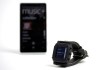
Smartwatches are all the rage, and judging by the turnout and level of enthusiasm at the recent year one meetup for Pebble Kickstarter backers in San Francisco, there’s at least a passionate niche audience for the things. So it isn’t surprising to see them continue to pop up on Kickstarter. A new one called Agent has a few unique tricks, however, which its creators believe set it above the competition.
What the Agent has that others don’t is a combination of power management features and wireless charging. It has not one but two processors, for instance, one with higher performance capabilities and one extremely low-power variant to handle simple background tasks. There’s a new Sharp Memory Display that combines the advantages of both a traditional LCD and e-ink black and white, which is very power conscious, as well as wireless Qi induction charging with an included pad. Since it’s based on the widely-accepted Qi standard, however, it should work with charging pads from a variety of manufacturers.
The Agent is a refreshing change from other Kickstarter smartwatches in that it actually offers something new in terms of technical aspirations. The watch should get up to 7 days of battery life with its smart functions activated, or up to 30 days of standby in ‘watchface-only” mode. Even if that misses the mark by a bit, it should still beat the stated and actual battery life of existing devices like the Pebble. The gadget also features a 120HMz ARM Cortex-M4 processor, a 1.28-inch display, Bluetooth 4.0 (aka “Low Energy”), onboard motion and light sensors and an OS that allows developers to write apps for it using C# and Microsoft Visual Studio. It uses a Microsoft .NET runtime environment that Agent’s creators say will maximize memory and power efficiency, unlike with other smartwatches. The team says you’ll be able to start writing and emulating apps on the desktop as soon as the funding campaign is complete, which would be faster than the staged rollout of the Pebble SDK.
The creators of the Agent are Secret Labs, a team of engineers that has been building open-source products under the brand name Netduino since 2010, as well as smart home technologies, and House of Horology, a custom timepiece manufacturer that brings some real watch cred to the game. Early bird pledges get a pre-order for $129, where the final price is expected to come in at around $249 when the product ships late this year.
-
Google’s subscription music streaming service coming to iPhone and iPad – unofficially

-
Video: Samsung’s Galaxy S4 Active leaks again

-
Consumer Reports: The Galaxy S4 is the world’s best smartphone

-
LG’s 5-inch unbreakable displays to debut later this year

-
HTC One with stock Android to reportedly launch by the end of the summer

-
AT&T says all customers will soon get access to FaceTime, Hangouts over cellular

-
Samsung keeps inching away from Google, wants more Galaxy-exclusive apps

-
New Samsung Galaxy S4 features coming soon to Galaxy S III

-
Jolla’s Software Chief Says Co-Creation Is What Makes The MeeGo Startup’s Phone Hardware So Special
Jolla, a Finnish startup formed in response to Nokia’s decision to ditch MeeGo in favour of Windows Phone, has finally taken the wraps off the smartphone hardware that will be paired with its “unlike” Sailfish UI. Being a startup is challenging enough in any business sector but Jolla is seeking to compete in the fiercely competitive smartphone space, going up against giants Samsung and Apple who hold the majority of the market in a pincer grip. So it’s hard not to dismiss their efforts as too late. But it’s a lot harder to accuse them of doing too little.
Jolla’s strategy for fighting the mobile industry’s Goliaths is all about standing out by doing things different. Today’s hardware underlines how this startup is hoping to disrupt the concept of a single flagship device — such as the Samsung Galaxy S4 — that’s hankered after and owned by millions yet with only a little variation in case colourings to tell the difference between each one.
In seeking to break down software homogeneity with its Sailfish UI and a business model that encourages working with third parties to develop new types of smartphone experience that loop in others’ data, Jolla is also taking aim at hardware commoditisation via a cross-over feature in its debut device that it’s calling the Other Half. The Other Half refers to removable hardware shells that snap on to the back of the handset and can be changed and customised by the user. But the feature goes further than interchangeable shells — which is not at all new, dating back in spirit to early Nokia mobile phones of the 1990s with their removable facias, and more recently to a device like Nokia’s Lumia 820, which has a coloured and swappable backplate.
Jolla’s Other Half isn’t just decoration but links to the software on the handset — using an unconfirmed bridging technology that sounds to my ear like NFC — allowing content on the phone to be tied to the addition of a new shell, or even for new physical features to be incorporated and supported.
Jolla’s Marc Dillon, now head of software but until recently CEO, gave some examples of how the Other Half feature could be used — noting that this is about opening up the back of the device for others to come in and augment.
“You have the processor side of the device, the power side, the engine, and then the Other Half is about adding to that. This is a new kind of media where it could be anything from your favourite artist could release their latest album on the other half of the Jolla device, and then when the user buys this they have a physical thing from their favourite artist then when they snap it on to the other half of their Jolla device, then everyone can see it, that they support and love their artist and then on the inside they could get the content. They could get maybe special content, that could only be released in this format like videos or links to websites or tickets or special offers, things like that but because of this interface between the two halves,” he told TechCrunch.
“It can not only be media, it can be very simple things — so maybe you have a colour palette, so when you go out of an evening you might have a different colour depending on your outfit and that colour then carries through to the software updating the Ambience of the device. So you might have — if you have a green dress, you might have a green device and then you have green icons and green Ambience [Sailfish UI theme] on your phone. But it can also be more interesting — you can add features. Like the camera is a good example, the native camera of course has a flash but maybe you’re going to a party and you want to have a big flash so you can take pictures in the dark at a nightclub. So really the imagination is the only limit here.”
“Instead of having a device with some bulky things attached to it or some things sticking out the side of it to extend the capabilities of the device, or to add content, we’re giving a new way for users to actually design and co-create with us new ways of using the device,” Dillon added.
“Of course we will be offering a choice of Other Halves for the user to buy but this is a place where we want to see others get involved. Designers can design Other Halves for the device, engineers or hackers or techies can design new interfaces and maybe add physical hardware features that they wish they had on their device but might have a smaller market than to deserve having a whole entire device,” he said. “We talked about 3D printing them today. So it could be those kinds of things, but really we’re offering a new kind of interface for a device so that people can really take their imagination, and I believe there will be a lot of third parties and a lot of people who have a lot of great ideas in order to help you use the Other Half of the Jolla device.”
The Other Half may be a bit of a clumsy name but it’s a savvy move that taps into the custom hardware trend that’s growing off the back of the rising profile of 3D printing. That said, it does of course remain to be seen how much interest Jolla can spark for others to get involved in co-creation with only one device to its name and that device not launching for another six months. It will need enough traction to get the co-creation party started.
The idea to link the hardware and software has been part of Jolla company discussions and plans since the beginning, according to Dillon. “It’s been something that we’ve been planning and working towards the whole time. The Ambience was a hint of how this can come together,” he noted, adding: ”Hardware like many things, it’s become a commodity, so the problem with commodities is it generally forces things down — things become kind of lowest common denominator… We set out to make the greatest device that we could, and we understood that the software and the user experience is key because that’s where the value comes from in the device and the hardware is the realisation of that, it’s a productisation of the software.
“So we kind of took this tack, then of course the hardware has to be fantastic it has to support the software and support the user and be something the user can be proud of and my belief is that when people see the Jolla device they want to see what’s inside.”
“This iteration, the direct stuff here, has been about a year in development. It started getting really good for me about six months ago and I’ve been using the device for a while now, and it’s really started to feel fantastic, when the hardware and the software have come together. They were done by the same designers and the same people so it has been kept in mind that the two go together, that the two have a synergy the entire time. We’ve had a roadmap the entire time as well so we’ve had a set of hardware specifications to work with,” he added.
It’s worth flagging that Jolla is not the only mobile maker to take an interest in 3D printing and custom hardware, even if it’s taken that further by creating a link between custom hardware and phone content. 3D printing is something Nokia has done with the Lumia 820 shell, for instance. Dillon said Jolla may also look to open source the 3D design of the Other Half, telling TechCrunch “I could see that happening”.
Asked specifically about the bridging technology between the hardware shell and the software, Dillon declined to give specific details, saying: “There’s a number of options here but there is a connection between the Other Half and the software. And of course all of that needs to be open as well.”
Asked whether the device will launch in the U.S. he said Jolla is looking at other markets but opting for Europe and China first. ”We’re starting with Europe and China and we will be extending to other markets as we go. We’re in the delivery phase at the moment so we’re building the infrastructure, and the logistics in order to be able to deliver and care for the users of the device, and we’re of course going to look at other markets as we go.”
“It’s the target to get the Christmas market in Europe, Chinese New Year. That’s the big milestones,” he added. “The most important thing is we come out with a fantastic product… When we’re shipping at the end of the year if it’s a fantastic product then it’s really going to resonate and I think we’re really going to have a lot of demand.”
-
Google Glass Year In Review

It’s been a little over a year since Google started teasing something it called “Project Glass.” The futuristic, wearable computer that would change the way that you interact with the world was nothing more than a series of rumors for months before it was “formally introduced” in April 2012. Not known for hardware and not having a current bonafide physical device that was popular among consumers, many opined that this was Google’s way of begging for attention. It might have been, and it definitely worked.
In thirteen months, Glass has gone from Star Trek fantasy to reality. It’s been quite the whirlwind of activity.
The “wearable computing” age is upon us, and it’s been widely reported that Apple was working on a watch, therefore many assumed that Google was working on a similar device to keep up. This was clearly not the case and Google’s co-founder Sergey Brin took special interest in the Glass project and has been leading the charge going back to when prototype weighed around eight pounds in August 2011.
Let’s take a stroll down memory lane, as a lot has happened over the past year in Glassland.
It’s real(ish)
The video from Google itself got sent people’s imaginations into overdrive. It was called “One day…” and gave us a glimpse into the life of a daily user of what Google had up its sleeve. We now know that the “One day…” reference had more to do with what the product could become, not what it would be in its first iteration:
The user experience in this video is aspirational, at best, as the current iteration of Glass is more of a compliment and utility to your day, rather than the augmented reality “enhancer” as this video demonstrates. Still, the elements that make Glass handy are all there, taking calls, getting directions and taking pictures from a new point of view.
Immediately after the video, and public admonishment that the project was real, the press wondered out loud if Apple should compete and that other companies should stand up and take notice. We also now know that the rumored final name for the device, Google Eye, isn’t likely. Good thing, because it sounds way creepier than Glass. We’ll get to more “creepiness” later.
It was clear that Glass was getting a lot of attention, both positive and negative, from the start. Even Jon Stewart did a parody about them.
OK, now they’re really real(ish)
Before Google’s I/O developer conference in 2012, Sergey Brin started showing Glass off to folks like Gavin Newsom. This is the first time that we found out that Glass had a trackpad that would let you scroll through its UI, even though we didn’t know what that UI looked like yet.
Even Google CEO Larry Page got into the act, wearing his pair at the Google Zeitgeist event in London. Was Page making important company decisions without us knowing, using his futuristic eyewear? Probably not, but it was cool to think about.
Holy crap, they’re really really real(ish)
At Google I/O 2012, developers sat in the Moscone Center not knowing what to expect from the company that has been using its advertising business to fund all types of cool projects. After all, who would have thought that a search and advertising company could actually pull off something like Gmail? Or a web browser? And now a driving car? A pair of glasses? Crazy talk. Well, on June 27th, 2012, Google fed into that crazy talk with…a crazy stunt.
The man at the helm of Google X and Project Glass, Sergey Brin, pulled off a stunt so memorable, that many of us in attendance still don’t fully understand what we saw.
Brin jumped out of a zeppelin wearing Glass, and participated in a live video Hangout the entire time:
After that, a bunch of people hopped onto bikes and drove into the keynote auditorium. The audience looked at one another, as if to say, “Did this just really happen?”
It was indeed Google’s “Apple moment.”
After Brin took the stage, we were left to wonder if he would then go into full Oprah mode and tell us all to check under our seats for a pair of Glass that would be our very own. Nope. At I/O 2012, the “Glass Explorer Program” was announced, and the first 2,000 attendees that wanted to pledge to pay $1,500 for the opportunity to develop apps for the Glass platform, could.
There was no date given for when the device would be shipped, but nobody cared. These things were real(er). Think about it, developers signed up to pay $1,500 for a device that they had never even touched. I was one of them, and even I felt silly. There was something about the cadence that Google had been marching to up to I/O that year that felt right.
Bloggers got to try Glass on for a few seconds, but didn’t get to do anything with them. The hypefest was on. Our founder, Michael Arrington, had a fun, and grounded, thought after the announcement:
“I can imagine in a couple of years we’ll all be wearing these at events. Then a couple of years after that maybe we’ll look back and think we all looked like idiots.”
Perhaps.
They’re real(er)(ish)
After I/O, Google started communicating with its Glass “Explorers” about all of the device happens, introducing its skunkworks team along the way. Those who joined the program at the conference would get to participate in Hangouts, attend conferences and get exclusive news on Glass. In retrospect, Google set itself up for people to start making fun of those clamoring for the device, whom are affectionately/unaffectionately referred to as “Glassholes.” You see, whenever something is only available to a select group of people, those not inside of that group tend to lash out a bit. Sure, there are those who think that Glass will never amount to anything, but those on the fence had no choice but to attack. It’s kind of like high-school.
As the months went on, the press flirted with Glass, as more and more Googlers starting wearing them on campus. Stories about Microsoft’s “Glass” plans and a reminder of Apple’s wearable tech patents were peppered in, too.
In late 2012 and early 2013, Hackathons were announced, Brin rode the subway wearing Glass and its API, dubbed Mirror, was introduced at SXSW.
OK, Glass. You’re real.
In April, a group of heavyweights in Silicon Valley announced a partnership called “The Glass Collective.” Developers who wanted to build things for Glass, without ads or any means to make actual money, could visit either Google Ventures, Andreessen Horowitz or Kleiner Perkins, and if their project was interesting enough, they could get funding from all three.
It was at that event that Google Glass team member, Steve Lee, let it slip that developers would soon be receiving invitations to pick their pair of Glass up from Mountain View, Los Angeles or New York City. They could have them shipped, but that’s no fun. Glass was officially real.
In just a few days after that Collective event, the first pairs of Glass for developers were coming off of the production line, the Mirror API guidelines were posted, its companion app for Android was released and full specs were released for the first time.
This “moonshot” that Google had been cooking up in its super-secret X Labs were going to see the light of day, outside of Google’s campus’. People just then started to realize that certain folks would be meandering around town with cameras on their face, and focused solely on how the device would affect them…the ones not wearing the device. The ones not in the “club.” A quick search for the term “Google Glass privacy” shows the same story written by hundreds of reporters, most of them never having worn the device.
I was able to pick up my pair of Glass on April 17th, and it’s interesting to see what the device really is in its current state, as opposed to what we saw in the video released last year. We did a “day in the life” video, showing what I was seeing on the display:
While it’s not as “pretty” as Google’s first teaser video, the elements are all there. In its current state, Glass is a utility that allows you to do some of the things that your smartphone does now. The difference with Glass is that you can do these things hands-free, quicker than before and in a less socially disrupting way.
What’s next for Glass?
For a period of time, we’ll see the same types of stories about how creepy Glass is. At this year’s I/O, none of Google’s executives wore the device on stage or while walking around the Moscone Center. It was its way of turning the “lens” onto developers and saying “It’s time to make this yours.” Still, we heard about people wearing Glass in the bathroom, as if to remind us that not everyone is ready to feed into the hype of the device.
It’s hard to argue with the point that the Glass platform is the most interesting one for developers to iterate upon since Apple’s introduction of the App Store. For the first time in years, these developers are getting a chance to re-imagine their existing services, or build new ones, for a brand new device. Glass isn’t perfect, and will only be as good as the apps that are developed for it.
During this year’s I/O, Twitter, Facebook and a slew of others announced their own Glass apps. The Facebook app is great, while the Twitter app will need more work. As I’ve continued to wear the device while I’m not at the computer, I’m finding myself trying to get away from all of the crazy and unnecessary notifications that I get on my phone and desktop. The Twitter app, for example, sends me mobile updates that I’ve subscribed to, @ replies and direct messages. This simply won’t fly, and Glass users are going to need more granular controls for what pops up on their display. It’s early though, and these are good learning experiences.
No matter what you think about Glass, you have to admit that the past year has been a good one for Google and its fancy, futuristic device. From a secret pet-project to developer-only playground, it will be fascinating to see what happens next in Glassland. There’s no telling when the device will be available for everyday consumers, but I can guarantee that it won’t be until developers have had ample time to explore the possibilities. I do know one thing: If you’re really worried about being spied on by someone wearing Glass, don’t be. You’re not that interesting.
-
HTC Pledges To Pump Up ‘One’ Production While Samsung’s New Flagship Ships Like Crazy
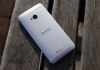
Oh HTC. You’ve produced one of the finest Android smartphones ever (seriously, just look at all these reviews), but you’ve faced more than your share of challenges when it came to actually pumping your top-tier One smartphone. As it happens, that may all soon change.
FocusTaiwan reported earlier today that HTC is preparing to pump out more of its wonderful Ones in short order — Jack Tong, the company’s North Asia president, noted that this month’s production capacity for the flagship device is twice that of April, and that surge will only continue into June.
Sounds pretty yawn-worthy, right? Normally I would spend too much time dwelling on the finer points of production capacity, but here’s a device that was launched to widespread praise by an underdog smartphone company some people have written off, and HTC has basically been getting screwed thanks to part shortages for the One’s Ultrapixel camera and a brief injunction due to the HDR microphone it uses. It’s like a perfect storm of headaches for a company that really, really doesn’t need it — one look at its Q1 financials and it’s clear that HTC needed this launch to go as smoothly as possible. It didn’t.
For what it’s worth, HTC hasn’t disclosed how many Ones it’s shipped since it launched earlier this year. Meanwhile, rival Samsung’s Galaxy S4 has become the Korean electronics giant’s fastest moving smartphone — Samsung shipped 6 million units in just over two weeks, and it hopes to cross the 10 million unit threshold by the end of this month. Oh, and let’s not forget the fact that Google’s Hugo Barra showed off a version of the S4 at the company’s I/O developer conference that runs a version of Android that’s unfettered by the software bloat that many a reviewer took umbrage at. Company representatives were careful not to call it a Nexus — even though it seems to harbor many of the advantages inherent to the Nexus line like a clean Android build and access to frequent software updates.
As I noted towards the end of my HTC One review, the wireless industry isn’t a meritocracy — the well-executed device doesn’t always wind up saving the day. Hopefully now that some of these production woes have been ironed out we’ll see HTC live to fight another day, but that’s still far from a given.
-
Verizon cuts prepaid plan prices, piles on more data

-
Leak suggests Nokia ‘EOS’ will feature 4.5-inch 720p display, 41-megapixel camera


