
Category: Mobile
-
Microsoft confirms Windows Phone 8 devices are upgradeable
-
Fujitsu’s Senior-Focused Smartphone Is A Thoughtful Use Of Android That Tucks Away Complexity

Japanese electronics company Fujitsu has taken its time pushing beyond its home smartphone market. The company is best known for slick, slender high end smartphones in Japan but earlier this month it announced a European play — eschewing the crowded top tier of devices in favour of a niche in the seniors space, with a custom skinned Android-based smartphone. The Stylistic S-01 is designed to be easier for older people to use. Fujitsu is bringing the device to France in partnership with France Telecom/Orange in June but was showing it off at Mobile World Congress, where we went hands on.
Now Fujitsu is not the first to enter the senior mobile space. Other established players include Emporia, which basically makes simplified feature phones, and Doro, which makes a mix of devices (including dabbling in tablet software). Doro was showing off its own Android-based seniors phone at MWC last year so, again, Fujitsu is a follower here too. But late to the party though it is, it has crafted what feels like a solid and well thought through first offering.
The handset has a rubberised coating to add grip and more curves than the sleek, slick high end smartphones du jour so rests nicely on the palm and feels less inclined to take a tumble than the average slab phone. On the front, there’s a clearly labelled home button below the 4 inch touchscreen. The button is slightly convex making it stand out so it’s easy to press. The buttons on the side of the device — power and volume up & down keys on one side, plus a dedicated camera key on the other — are also labelled (albeit with icons). These keys are raised slightly but don’t feel like they stick out enough to press accidentally.
Fujitsu has made the Stylistic S-01′s capacitive touchscreen deliberately less sensitive to cut back on erroneous key presses for a target group of users which isn’t likely to be as dexterous as the average mobile owner. The screen didn’t feel awkwardly unresponsive during my hands on but on-screen buttons did sometimes need a more deliberate press — which seems like a reassuring feature for the intended user-base.
There are a couple of odd hardware touches. The Micro USB port sits behind a cover which has to be prised off with a fingernail. The cover has likely been included because the phone is dust and waterproof but it does mean that accessing the charging port isn’t as easy as it could be.
The phone is also equipped with an alarm — in case of emergencies. This makes a loud noise to alert people in the vicinity that the owner is in trouble and also dials out pre-chosen contacts. The alarm is located on the back of the device, to the left of the camera lens. The physical switch is rather small and again has to be pushed out with a fingernail or similar. Of course it’s no good having the alarm go off accidentally but in an emergency it could prove a little difficult to activate.
Android but not as you know it
Moving on to the software, this is where the phone really stands out from the Android crowd, thanks to a simplified custom UI that foregrounds key functions, tucks away complexity and does a spot of thoughtful hand-holding — with help buttons and guides and even a phone manual included on the device. The homescreen is divided up into large, clearly labelled icons that decrease in size as you scroll down to reach functions that are likely to be accessed less. The two largest buttons are the call button, and the phonebook (a much more senior-friendly way to describe contacts).
Messages and email also appear on screen at the top of the homescreen, along with three numbered buttons that can be pre-set with specific functions for quick access. Scroll further down and there’s an info widget displaying news updates and weather. Below that, there are a variety of phone functions laid out in a grid of squares — and again clearly labelled. These include Internet, camera, maps, video, gallery, a help forum and a manual. The only button that stands out as slightly obtuse is the one labelled ‘Play Store’ (thanks Google).
Android apps can be downloaded to the phone via the Play Store, or via a ‘download apps’ button. Other preloaded apps are tucked away under ‘More applications’ and ‘Orange services’ — so although the phone has been simplified, the functionality has not been removed entirely. Rather they are cleared out of harm’s way until the user feels confident enough to drill a little deeper.
There are lots of thoughtful little touches in the design, such as the Phonebook app being made to resemble a traditional filofax, and the button called ‘My number’ to help users out who can’t remember their phone number. The gallery also includes a ‘Take a picture’ button, to steer anyone who went into the gallery looking for the camera in the right direction. The back button is also clearly labelled with the word ‘back’ — rather than having a cryptic symbol to confuse people. And the browser has a question mark button at the top which leads to a help page to explain the browsing process for first time mobile web users.
Elsewhere apps are nicely stripped down, simplified and clearly labelled — such as the camera app, which has just a camera button and a flash toggle button, and the dialler app which has two folder-style tabs to show either a dial option, or history (for call log). Time has clearly been well spent by the UI designer figuring out an intelligent way to layer a smartphone for a senior user-base that will probably feel most comfortable taking small steps away from telephones in order to get to know smartphones.
-
4.5-inch polycarbonate iPhone rumored for 2014 launch

-
Google CFO admits Motorola’s phones haven’t had a ‘wow’ factor

-
Apple Has Sold Over 8M iPads Direct To Education Worldwide, With More Than 1B iTunes U Downloads
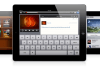
Apple announced a new milestone for its iTunes U online digital education outlet, which has just crossed the 1 billion download mark. Alongside the announcement, Apple has also informed us exclusively that the company has so far sold more than 8 million iPads directly into educational institution worldwide. iTunes U became a standalone app, complete with its own course marketplace and catalog in June 2012.
At the time, iTunes U had served up over 700 million downloads. The additional 300 million downloads mean that the pace of engagement for iTunes U is growing rapidly. iTunes U was introduced in May 2007, meaning that it took the educational product a full five years to rack up just a little over twice that amount. The rapid growth over the last nine months has likely been the result of a combination of factors, including the introduction of the standalone app and an increase in the adoption of iPads in educational settings.
AllThingsD reported earlier that to date, Apple has sold more than 4.5 million iPads to U.S.-based educational institutions, a figure which Apple confirmed to us as correct. Thanks to some clever calculation on the part of 9to5Mac’s Jordan Kahn based on publicly available information, it looks like the vast majority of that number was sold recently, over the past year in fact. Apple CEO Tim Cook has repeatedly stressed how important the education market is in the context of the iPad, and the fact that it’s doing so well with institutional sales both at home and abroad backs that up.
Apple also shared some details about school participation in iTunes U today, noting that more than 1,200 universities and colleges, and over 1,200 K-12 schools host over 2,500 public courses on iTunes U, along with thousands more private courses available only to enrolled students. Some big institutions are embracing iTunes U with particular vigor, Apple notes, including Standford and The Open University, both of which have racked up over 60 million content downloads alone. Some of the more popular individual courses have around 250,000 students enrolled, Apple noted.
Greg noted in a recent article that online education is fast replacing physical colleges, with startups like Coursera reaping many of the benefits. Apple has the advantage of being a very early player in this space, and the ubiquity of its iPad tablet is clearly helping the company add a lot more momentum to its efforts to help institutions embrace online learning.
-
Bing Fund Adds Sonar To Its Roster
Bing announced today that it has added another company – Sonar – to its Bing Fund roster.
Bing Fund was launched last year as an “angel investor with an incubator”. In August, Bing unveiled its initial startups. Now, after remaining quiet for the rest of the year, they seem to be picking up the pace a bit.
Last month, Bing announced the addition of LikeBright to the Bing Fund fold. Today, it’s Sonar. Bing Fund program manager Aya Zook writes on the Bing blog:
March is full of excitement and promise. Spring is just around the corner and people are beginning to get restless. As Austin readies itself for the geek-stampede that is SXSW Interactive, it seems a fitting time for this announcement. It will be an occasion for us to once again have the pleasure of hanging out with the Sonar crew led by founder, Brett Martin.
Over the years, we have crossed paths with Sonar across the land of tech probably more than any other startup. Whether it was TC Disrupt NYC, PSFK NYC, at our own epic pop-up gallery, SMW, and most recently Xconomy NYC, wherever we went, it seemed that the cool little periscope was right there with us. We would bring each other up to speed, and talk about “hey, wouldn’t it be cool to work together?” And go our separate ways until the next serendipitous encounter.
Sonar is a social discovery app that tells users when their friends and friends’ friends are nearby, and as the company puts it, “reveals the hidden connections and small world moments you might have otherwise missed.”
The app takes advantage of social and location data from Facebook, Foursquare, Twitter and LinkedIn to give users context about the people they’re near.
-
Samsung invites public to Galaxy S IV debut in Times Square

-
Apple Patent Would Use The iPad’s Built-In Magnets To Turn The Tablet Into An In-Car Entertainment System

A new patent application by Apple published by the USPTO this week describes a stand for the iPad that uses magnets to hold the Apple tablet in place. iPads already come with fairly powerful magnets built into their frames, something Apple introduced along with the very first model to make the iPad compatible with its smart cover. The patent describes a magnetic stand which would be able to hold the iPad firmly in place in a number of different settings, and perform various functions.
Some examples provided in the patent include mounting the iPad to a tripod, a treadmill, or a music stand, and even attaching two iPads together via a hinge that would allow iPads to be used together in a book-style configuration. The patent text says that the mounting device would work together with a shielded, in-built magnetic component on the target device (which the iPad already has), thus enabling for a much stronger connection that would normally be possible, since powerful unshielded magnets could have an adverse effect on internal electronic components.
The mounting system described in the patent does more than just provide for a stand that can grip the iPad firmly: different permutations also include data connections, so that in the book type instance, for example, both tablet devices have a wired connection built in to their portion of the hinge, making communication between the two tablets possible. That would mean things like flipping pages in a book would actually have an effect on both tablet displays simultaneously, instead of each acting independently.
The patent also goes into a lot more detail about how an in-car mount might work with an iPad. A rotational sensor could be used to activate and deactivate the tablet, for instance, meaning the iPad could have an on and off position (likely portrait and landscape respectively), and there’s also potential to have a tablet-to-vehicle connection initiated when a car detects a specific “magnetic signature.” That, combined with wireless connection direct to a car’s communication system, would effectively render a person’s iPad a unique and personalized in-car entertainment device and control console.
The patent describes a driver issuing voice-based commands to the iPad, which are passed on to the car to change the car’s “configuration.” The communication would be two-way, too, with the car feeding ”car status information “ back to the iPad, which would also be able to handle navigation duties and play back music through the connected car’s stereo.
At first glance, this patent application by Apple is just about using the iPad’s magnetics for more than simply holding onto a cover. But digging in deeper, it’s actually about turning the iPad into pretty much exactly the kind of in-car accessory I recently hoped for aloud in a post bemoaning the current state of in-car entertainment systems. Overall, this patent could do a lot to help expand the iPad’s dominion even further, by turning it into a carry-anywhere intelligent, integrated media console for a variety of different devices and applications that currently have less than impressive built-in versions of the same.
-
Foursquare CEO Looks Beyond Mobile Handsets: Anywhere There’s A Screen, We Want To Be On It

Google has yet to release the Mirror API that will open Google Glass as a platform, but developers of some of the more popular mobile apps today are gearing up for when wearable computing products, like Glass, will. Today, speaking at a keynote at the Mobile World Congress in Barcelona, Dennis Crowley, CEO of social location app Foursquare, highlighted Google’s new headgear as an example of how mobile screens are evolving, and later he told TechCrunch that Foursquare is looking at how it can evolve along with that.
“Anywhere there’s a screen, we want to put our stuff on it, whether that’s on a phone, or a watch, or whatever,” he said. He also added that Foursquare hasn’t yet worked with Google Glass itself.
This week at MWC, Google did not have a formal presence at the main exhibition, but it’s been here nevertheless. Apart from the many Android device makers here — with the biggest of all, Samsung, taking stand space in multiple halls and even the train station nearby — Google had its usual Android party and there have been Google Glass sightings both at the official event and elsewhere.
Wearable computing devices like Google Glass, which make interacting with services ever more seamless, dovetail with how Foursquare is trying to make its services more automatic and easy to use, requiring less proactive input from consumers in order to function.
Crowley said that Foursquare would like to launch a new feature that builds on this concept, enhancing the “contextual awareness” (his words) introduced by like Radar. (Introduced in 2011, Radar alerts users to when they are near places that they have flagged in their app.)
“The best version of Foursquare is the one you don’t think about using,” he told TechCrunch on the sidelines of today’s keynote. “The relaunch of Radar is inevitable: it’s very important to us.”
And while for Foursquare part of reaching that goal is to be on as many platforms as possible, it’s also about integrating with other applications, furthering its own position as a platform for location services. The company already works with 40,000 developers to power location services, including Path, Instagram and Evernote. “We’re slowly starting to become the location layer for the Internet,” Crowley said.
In January, Google started to run its first hackathons, in San Francisco and New York, for developers interested in Google Glass and getting an early look at the Mirror API.
More from TechCrunch’s longer conversation with Crowley coming soon.
-
iOS Passbook tickets to be utilized by 13 MLB teams this season

-
iPhone sales falling 50% short of obligation at Leap Wireless

-
The CAT B15 Android Smartphone Has A Weird Name But The Brawn To Back It Up
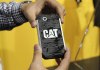
Just as some people are put on this earth to create things, others are prone to destroy everything they touch. Those people should probably spend some time with the Caterpillar-branded CAT B15, an aluminum-and-rubber-clad Android smartphone that (inadvertently) encouraged people to work on their stress issues here at MWC.
Naturally, Caterpillar isn’t actually making the phones — it’s a very far cry from the engines and bulldozers that the company is better known for. The device itself is made by a licensee called Bullitt Mobile, a U.K.-based company whose sole reason for existing seems to be churning out these sorts of rugged handsets.
In fact, It’s actually rather hard to get a firm idea of how tough this thing actually is. Sure, it’s completely dust-proof (assuming all the ports are properly closed) and the 4-inch display is swathed in second generation Gorilla Glass, but it’s all sort of abstract until you hold the thing in your hand the feel the urge to heave it somewhere. In spite of its considerable chubbiness, the B15 is actually lighter than you’d expect, though it’s still going to elicit some stares should you shove the thing into your pocket.
In a classic case of brawn vs. brains, the B15 isn’t the snappiest thing you’ll ever see with its dual-core 1GHz Qualcomm processor and but it’s still got enough horsepower to handle most daily tasks. If anything, performance is aided by the fact that the particular build of Android loaded up on the B15 is totally stock — no garish, cumbersome UI to be found here.
And perhaps best of all, the 4-inch display recognizes touch input even when it’s wet — mostly. After a booth representative shot down my attempt to hurl the thing like baseball (not a huge loss, my fastball is pretty lousy), I settled for dunking the B15 in some water a few times. For the first few instances, things worked fine, but at some point you’ll eventually have to wipe the thing down for it to start behaving properly again. Hardly a big deal, but those of you looking for an Android-powered diving buddy will have to look elsewhere (especially because it’s only waterproof until you go deeper than 1 meter).
In the event that your current smartphone is just too puny to keep up with your lifestyle, the CAT B15 will be available in March for €395 — try not to hurt yourself until then.
-
Meet The Entirely E-Ink 3G Smartphone That Could Cost As Little As A Dumbphone
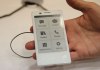
It takes a lot to stand out at a trade show the size of Mobile World Congress. But here’s one device that caught my eye today: an e-ink smartphone. Unlike Yota Phone, the Russian startup that’s using e-ink as a second screen to augment the back of a powerful high end smartphone in a bid to stand out in the uber crowded Android space, this prototype device has just the one screen. A single e-ink screen on the front of the device — so it’s a true e-ink phone.
It’s also a true smartphone. There were two prototypes on show at Eink‘s stand, both with a 1GHz chip inside and one (the white one) with a 3G chip in it. The other had Edge connectivity. The phones run Android but, as you’d expect, the OS has been simplified with a custom UI that strips back the functionality to focus on the applications that make sense for a fully e-ink smartphone — such as a reader app, a dialer and email. The UI also includes a web browser since certain types of webpages can be viewed on an e-ink screen. It won’t support video of course but text-based sites can still be read.
The black prototype device (pictured below) also includes a backlight for reading in the dark. Both screens are capacitive, but as you’d expect with e-ink the refresh rate can be a little slow. Ghosting on the screen from past renders can be removed by shaking the device. The technology can support both portrait and landscape orientation so the e-ink smartphone could be turned on its side to switch the orientation to more of an e-reader sized width. Both devices felt incredibly lightweight.
Why do you want an only e-ink phone? Price for one thing. Battery life for another. Not to mention visibility in bright sunlight. Put all those factors together and this could be the perfect device for some emerging markets where electricity is at a premium. The prototypes are proof of concept at this point but Giovanni Mancini, director of product management for E-ink — the company which makes the screen — said the Chinese OEM which has made the prototypes, Fndroid, is talking to telcos and could launch a device this year.
So how much would this e-ink smartphone cost? Mancini said the device maker would set the price but in his view it would be comparable with a feature phone price tag. A big theme of this year’s MWC has been smaller mobile players — from open source OSes like Firefox that are seeking to drive openness and accessibility and drive down the cost of devices, to mobile veterans like Nokia focusing afresh on building smarter feature phones to target cost-conscious users in emerging markets. So it’s interesting to see companies toying with the idea of an entirely e-ink smartphone to cut device costs while preserving key smartphone functions such as access to the internet and email.
-
This Bluetooth Smart Trigger Turns Your iPhone Into A Canon DSLR Remote And Intervalometer
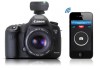
If you’re into DSLR photography, remotely controlling the thing is a pretty common want for new users and seasoned veterans alike. Satechi’s BT Smart Trigger, which starts shipping today, is a remote that works with a range of Canon DSLRs, connecting to the camera’s hot shoe and giving them full control over their camera’s shutter. It also doubles as an intervalometer, making it possible to get those cool time lapse and extended exposure shots that never fail to draw the appreciation of photography fans.
The Smart Trigger connects to your camera via USB, and rests in the hot shoe mount normally reserved for flashes and other accessories. It communicates with the iPhone via Bluetooth 4.0, meaning it’s a low power consumption device which can get up to 10 years of battery life, and has a range of 50 feet. The trigger app works with iPhone and iPad, and features both a basic standard shooting mode, as well as Manual Shot, which allows for long exposures (like the ones where you see people writing things in the air with sparklers), or Time Shot, which captures a series of images that are then stitched together to generate time-lapse images (like the lightstream photos you see of nighttime cityscapes with busy thoroughfares).
The Satechi Bluetooth 4.0 Smart Trigger might not be able to relay a live feed of the camera’s digital viewfinder, as Canon’s official remote app can with the Canon 6D’s built-in Wi-Fi radio, but at $44.99 it’s an excellent option for amateurs and enthusiasts looking for an easier way to take time-lapse and long exposure specialty shots, using the iPhone they already know and love. Satechi also says that Galaxy S III and Galaxy Note 2 compatibility will be coming sometime in March, so owners of two of the most popular Android smartphones will be able to join in on the fun at that time, too.
-
Yota Devices Becomes Qualcomm Licensee, Which Should Help Its Chances Of Going Global

Yota Devices, the Russian company that has nerds like me excited with its combo e-ink/LCD display smartphone designs, today announced at MWC that it has entered into a software licensing agreement with Qualcomm to help it bring LTE-capable smartphones, modems and routers to market. Yota becomes the first Qualcomm software licensee in Russia with the deal, and for Qualcomm, it means securing a partner in a key target area in terms of future mobile market growth.
“Russia is strategically important to us as we expect strong growth in the number of 3G smartphones over the next two years,” Qualcomme Europe President and Senior VP of QTI Enrico Salvatori is quoted as saying in a release announcing the news. As a hardware company, Yota Devices already has a lot of expertise under its belt from building modems and routers, including its own self-branded designs starting in 2010. The arrangement with Qualcomm will help them work directly with QTI at every stage of the design process of new devices, which will help the Russian firm better compete on a global scale with established OEM handset and mobile device manufacturers.
Yota announced earlier this month that it will begin mass producing its innovative e-ink phone in Signapore, with commercial launch planned first for Russia by the second half of this year, and then expanding to Asian markets. The YotaPhone features an e-ink display on the back of the handset, which can show relatively static and notifications info while sipping power, allowing a user to only turn on the more power-hungry LCD screen on the front when they need to view video, for instance, or browse the web. The YotaPhone is powered by a 28nm Qualcomm Snapdragon S4 processor.
With Qualcomm’s backing, Yota improves its chances of becoming a global contender in the smartphone market. The firm has made waves with its first smartphone design, but now it has to ship the device before we get a better idea of just how much demand there is out there for a dual-splay handset.
-
Designer Imagines What An iPhone Phablet And iPhone Mini Might Look Like
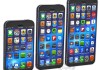
Big screens are the talk of the town at MWC. Got nothing else to announce that makes your handset stand out from the crowd? Throw a huge screen on the sucker. Or just put phone features in a tablet and call it a day. Apple seems to be the only smartphone OEM out there without a giant-screened smartphone, but designer Peter Zigich has created a concept of what a Cupertino phablet could look like, should Apple ever feel the need to big it up.
In a new blog post, Zigich envisions a number of different concepts for a next-generation iPhone, including a design that gains screen real estate simply by shifting the home button to the side of the device, clearing the entire front for display. That adds an extra row of apps, above and beyond the five plus dock available on the iPhone 5. A recessed, side-mounted home button actually makes a lot of sense, especially with one on each side for convenience/ambidextrous use, as Zigich has placed them in his mockup. Would Apple actually add a button to its design in the real world though? Never, say I.
Zigich’s basic iPhone 6 redesign borrows cues from the iPad mini to reduce the size of the bezel around the display, which is feasible if Apple integrates its accidental screen edge touch filters to the smartphone. The designer also employs the same tricks in developing an iPhone mini concept, and what he calls an “iPhone 6 XL,” or an iOS powered equivalent of a Galaxy Note-style handset with a big ol’ screen.
With his nearly edge-to-edge screen, Zigich says that his concept is still perfectly usable with one hand, which has been a sticking point for Apple in the past, at least in terms of the public line it has taken regarding bigger displays on smartphones. And the squat iPhone mini uses the same size screen as is found in an iPhone 4/4S, but in a much smaller package thanks to the new placement of the home button(s) and the shrunken bezel elements.
These concepts are excellent in that they don’t venture too far from Apple’s current design, making them look and feel like something we could actually see out of Cupertino, but despite their merits I doubt we’ll see Apple unveil very similar designs at any upcoming event. Still, with rumors of different screen sizes and new iPhone SKUs flying, it’s interesting to see a material take on how exactly Apple might go about that kind of product differentiation.
-
Why Qualcomm Wants To Bring Ultrasound Transmitters To Smartphones And Tablets

Mobile chipmaker Qualcomm has a track record of pushing new capabilities into its chips faster than its competitors in a bid to carve out a bigger chunk of the market. Last year, for instance, its LTE Snapdragon processor helped it to take a 48 per cent revenue share in H1 (Strategy Analytics‘ figure), helping to drive more LTE handsets into the market which in turn accelerated the rate of 4G adoption.
The company made an interesting acquisition last November, buying some of the assets of an Israeli company called EPOS which makes digital ultrasound technology. Ultrasound may seem an odd technology to push into consumer electronics but Qualcomm clearly sees it as another differentiator for its chips, thanks to its potential to offer some novel additions to the user interface space — both for stylus-based inputs and even touch-less interfaces like gestures.
Discussing Qualcomm’s interest in ultrasound at the Mobile World Congress tradeshow in Barcelona, Raj Talluri, SVP of Product Management, explained that to put the technology to work in mobile devices an ultrasound transmitter could be located in a stylus, with microphones sited on the mobile device that can then detect the position of the pen.
Samsung has already included a capacitive stylus with its Galaxy Note phablet but Talluri said an ultrasound-based stylus would extend the capabilities — allowing a stylus to be used off-screen, say on the table top next to where your phone is resting, and still have its input detected.
“It’s is better [than a capacitive stylus] in some key different ways which we’re working on getting to market – for example you could write here [on the table next to the phone] and it will still detect where it is. So let’s say you have a [paper] notepad… and you have a phone [nearby on the table] and you can start writing on your notepad it will actually also be transcribed into text on the phone because what happens is the ultrasound can be used to calibrate any reasonable distance,” he told TechCrunch.
The technology could also support gesture-based interactions by positioning an ultrasound transmitter on the mobile device. “There are many use cases of ultrasound,” said Talluri. “You could put a little ultrasound transmitter here [on the corner of the screen] and transmit stuff and then when you cut the ultrasound field [by swiping above the device’s screen] you can do gestures.
“There’s many different things you can do with it, once you have it. So we’re working on it and hopefully we’ll get it to commercial products.”
Talluri would not be drawn on the likely timeframe of bringing this technology to market in Qualcomm chips, or which device makers Qualcomm is working with. “We haven’t announced anything yet. There’s clearly a lot of work to be done on it. We’re working on it we’re just not ready to announce,” he said. “We are very interested in in, that’s why we acquired the assets.”
He would say that Qualcomm is looking at both phone and tablet form factors for the ultrasound tech but added that it could work “anywhere” — including in wearable devices, such as Google Glass.
The system also doesn’t necessarily require new microphones to function — opening up the possibility of ultrasound-enabled accessories that can be retrofitted to existing devices to extend their capabilities.
“The other nice thing is that we find that the microphones [on existing mobile devices] that we put in to use for speech can also detect ultrasound waves — so you probably don’t need special microphones. There are lots of interesting ways to do it… You just need a transmitter somewhere,” said Talluri.
Discussing how mobile chipsets are generally going to evolve, Talluri said in his view the focus will be, not so much on on simply adding more and more cores, but rather on getting all the various chipset elements to work together better.
“We think the next generation of innovation is going to be more on heterogeneous compute. Right now if you look in the phone we’ve got CPUs, we’ve got GPUs, we’ve got video engines, we’ve got audio engines, we’ve got cameras, we’ve got security blocks but they all do one thing at a time. Ideally you just want to say I want to do this and it should just go map itself to whatever its logical place is and if that place is busy it should work on something else, maybe not optimally,” he said.
“That’s what I mean by heterogeneous compute. Every block should be able to do other things so that’s kind of where I think SOC in general will evolve to. How can you take advantage of the silicon that you put inside the die to do multiple things, not just one thing at a time. I think that’s a more interesting concept than just put more cores.”
-
LG discusses webOS strategy, no current plans for smartphones or tablets

-
Alcatel One Touch Fire preview: This anemic Firefox phone might be a tough sell

-
HTC plans to release more Windows Phones in 2013
