
Category: Mobile
-
Jelly Bean keeps gaining ground as Ice Cream Sandwich, Gingerbread start to fade
-
Your Galaxy S IV Will Probably Be Plastic, And That’s For The Best, Says Samsung VP
We’re just over a week away from the Galaxy S IV’s official unveiling in New York City, and the pieces are starting to fall into place. Sure, we still don’t know what the thing is going to look like, but persistent rumors have pegged the device as sporting the same sort of plastic body that Samsung has been (in?)famous for.
While she wouldn’t weigh in on the Galaxy S IV specifically, Y.H. Lee, executive VP of Samsung’s mobile unit, told CNET’s Roger Cheng that the love-it-or-hate-it plastic chassis endemic to the company’s gadgets aren’t going anywhere just yet.
According to Lee, it’s just as much about practicality as it is about style: In order to churn out (and sell) as many devices as Samsung does, the company has to pay plenty of attention to how efficiently they can be made. Naturally, Samsung can’t just pump out loads of shoddy devices and call it a day, so durability weighs heavily on the company’s mind when it comes time to picking out materials for a final design.
Meanwhile, would-be rivals like HTC have embraced metal with open arms in its latest flagship device designs. The benefits are as plentiful as they are subjective — the adjective that seems to be bandied about most often is “premium,” since these metal-clad devices tend to feel more weighty and substantial when compared to the sorts of flimsy plastic bodies that many Android-friendly OEMs still cling to. I’ll be the first to admit that I prefer handsets that feel like they could withstand some abuse, though in fairness I’ve found that devices like the Galaxy S III and the Galaxy Note II can handle their fair share of turmoil despite having light, plastic bodies.
Granted, I can see how the choice of materials could prove to be occasionally problematic for the companies involved here. Crafting a device like the HTC One or an iPhone 5 out of aluminum can be more exacting (and therefore more time-consuming), not to mention more expensive than sticking with a less ornate body.
But here’s the thing — Samsung doesn’t need to play by those same rules. It’s an undeniable juggernaut in the smartphone space, and has proven ably over the past months and years that yes, people will often buy their smartphones even when faced with alternatives that arguably feel more premium. That’s not to say that Samsung will never rethink its position on the materials it uses. Lee concedes that the company “listen[s] to the market” and tries to accommodate it, so that sentiment could soon change if the masses demand it.
-
Samsung executive defends sticking with plastic for its smartphone casings [updated]

UPDATE: A Samsung representative chimes in to say that it’s incorrect to infer from the CNET story — which contains the headline “Why the Galaxy S4 won’t be shedding its plastic roots” and includes a line about “Samsung’s plastic GS4” — that the Galaxy S IV will have plastic casing because the Samsung executive in the interview never specifically mentions the Galaxy S IV and only talks about Samsung’s general design philosophy and its reasons for its continued use of plastic for its major devices. The representative also claims that it’s incorrect to refer to an unannounced Samsung device as the “Galaxy S IV” because that device may or may not exist, the person can or cannot confirm. We’ll know for sure if the device-that-shouldn’t-be-referred-to-as-the-Galaxy-S-IV has plastic casing in less than two weeks when Samsung may or may not unveil it in New York.
-
Instagram rumored to arrive on Windows Phone 8 as a Nokia exclusive

-
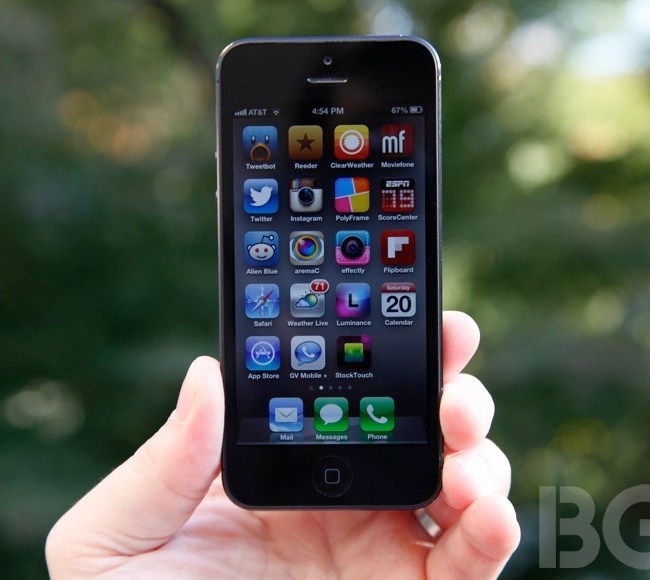
Apple could ditch the home button for pressure-sensitive casing in future iPhones
-
Most solid sources yet point to late-summer launch for Apple’s iPhone 5S and cheaper iPhone

-
Chinese Ministry Critical Of Android’s Dominance — But How Much Power Does Google Really Have In China?

China’s technology Ministry is worried about the dominance of Google’s Android platform, according to Reuters. The news agency links to a whitepaper authored by the research arm of China’s Ministry of Industry and Information Technology which contains the above graph — so it’s not difficult to see what the Ministry’s issue is: Android has grown from a standing start in 2008 to saturate the local market, taking 72.4 per cent in Q3 2012 (Gartner sourced data).
According to Reuters, the Ministry’s whitepaper is critical of China’s dependency on a platform it argues is ultimately controlled by Mountain View. “Our country’s mobile operating system research and development is too dependent on Android. While the Android system is open source, the core technology and technology roadmap is strictly controlled by Google,” the whitepaper states.
It also claims that Google has deliberately impeded the progress of some Chinese companies seeking to develop their own operating systems (presumably by forking Android) by delaying code sharing, and accuses Google of using commercial agreements to restrain the business development of mobile devices of these companies. The paper goes on to pile praise on homegrown companies such as Alibaba, Baidu and Huawei for creating their own systems.
Google declined to comment on the allegations in the whitepaper when contacted by TechCrunch.
Alibaba’s Aliyun OS was going to be used by Acer to power a Chinese smartphone planned for launch last year — but cancelled, at least in part, after Google intervened. (Google argued that Acer was building what it described as a “non-compatible” Android device, having previously committed to building compatible devices.) Presumably this is the sort of commercial pressure the whitepaper is critical of.
Alibaba also declined to comment on the Chinese whitepaper when contacted by Techcrunch.
Another graph in the whitepaper pegs the Aliyun OS’s share of the 2012 Chinese market at around one per cent — versus 86.4 per cent for Android:
Reuters speculates that the Chinese government could be planning to impose regulations on Android to try to rein it in and give Chinese companies a chance to take some a greater share. That could also be good news for smaller foreign players such as Finnish startup Jolla, which is using the MeeGo open source OS as the foundation of its new Sailfish platform. Jolla is targeting its debut smartphone at China first, as well as setting up a base in Hong Kong to build an alliance around Sailfish. It has also attracted investment from China.The smartphone market in China is undoubtedly huge — Jolla’s CEO describes it as a “300 million device market”. China also passed the U.S. as the world’s top country for active Android and iOS smartphones and tablets last month so it’s also a growing market. But while Android undoubtedly dominates the OS landscape not all Chinese Android-powered device are equal since a large proportion of homegrown mobile makers heavily customise Android and do not carry any of the standard Google services such as its Play store.
Analyst Enders Analysis created the below chart last year depicting Android page view data, sourced from Baidu, which illustrates how smaller Chinese device makers are increasingly dominating China’s device landscape — accounting for 39 per cent of the page views on Baidu properties in September 2012 vs just 22 per cent for the otherwise globally dominant Android OEM Samsung:
“Almost none” of the ‘other’ category of devices in this chart have Google services on them, according to Enders analyst Benedict Evans — so you could say that while Google’s platform is huge in China, Google itself may have far less influence than Android’s spread suggests because such a large swathe of locally made Androids are cut off from its services and thus can’t generate advertising sales for Mountain View.
In a recent blog post discussing Google’s failure to deliver any Android activation data since September 2012, Evans also notes that: “The great majority of Android devices sold in China, which are probably a third of total Android sales, come with no Google services installed, including no Google Play, and hence are not even included in Google’s activation numbers, since signing into Google Play is what counts as ‘activation’.”
-
Leaked Samsung Galaxy S IV images may finally reveal design

-
Is This The Galaxy S IV? No – Just An Expansys Web Designer’s Mock-Up
Don’t worry, the Samsung Galaxy S IV won’t look like an iPad mini with the camera relocated after all. Famed Android device leaker Evleaks tweeted out a render he suggested was the upcoming Galaxy S IV, but it turns out there was less to the image than meets the eye: it was in fact the work of an Expansys web designer, creating a placeholder image based on exactly no insider information, for illustration purposes only.
Now normally, a bad leak isn’t a story so much as it is an expected outcome of obsessively watching the ‘nets for the slightest hint of the next big thing. But in this case, the source was Evleaks, the masked and anonymous leaker of some of the most reliable unverified pre-release information on the web. Seeing that kind of track record marred with a gaffe this big is enough to shake your faith in the whole dirty business.
The original Evleaks tweet where he shared the image to begin with is long gone, but it survives in retweets and images saved by other publications. For its part, Expansys says it has been engaged in a massive effort via its social media channels to spread the word about the true source of the pics – even going so far as to claim that Evleaks “stole them and added his own logo.” We’ve heard separately that the image wasn’t stolen by Evleaks directly, but came in through their usual channels. Over the course of this morning, the Expansys social media accounts have been actively responding to RTs of the original Evleaks post in order to direct people to the correct source.
Really, this is a good thing, because I didn’t want that phone depicted in the render anyways. But is it the end of an era for the normally solid Evleaks? Or just a one time slip up? Whatever the case, a little more transparency than deleting the tweet and pretending it never happened probably isn’t the best course of action.
-
Apple Patents Squeeze Sensitive Device Housings That Could Be Used In Future iPhones And iPads
Apple received a patent from the USPTO today (via AppleInsider) that describes a technology that would allow device casings to employ a combination of pressure and capacitive sensitivity to detect input. At the very least, the tech could be used to map functions like those Apple currently assigns to the home, power and volume buttons to areas of an iPhone or iPad’s bezel.
Other uses for the patent, which was originally filed in 2009, are described by Apple as a backup or alternate input method for when standard capacitive-based touch interaction either won’t work or is impractical. Capacitive input, the kind used in the iPhone’s touchscreen currently, is much more accurate and responsive than resistive input, but it doesn’t work when wearing gloves, or when there’s sufficient grime on a screen, or when unwanted input signals are coming from a wrist resting on the display and confusing the sensors.
Apple’s system is proposed as an alternative input mechanism for those kinds of situations. And since it’s not exactly a traditional resistive (pressure-only) resistive input method, it could also use capacitive clues to make it more refined as well as being much more sensitive to changes in pressure than capacitive systems. The combination of both types could guard against accidental input when a device is in a pocket, for example.
As the system could live right in the housing of a device (the iPhone 5′s metal casing would be pretty perfect for it, in fact), it could greatly alter the way people interact with Apple devices. You could put scroll bars on either side of a smartphone, for instance, so that moving a finger or thumb up or down with differing pressure pages through content faster or slower.
The company could build context-dependent controls into the back or side housing of all-metal devices with this tech, or even use it to add input to an iWatch housing. The benefits are mainly that it could provide a way to keep the screen clear, which becomes more important as we move to devices with smaller bezels, or smaller displays in the case of an iWatch.
As with any Apple patent, however, this isn’t a roadmap. But it could be a neat way of adding another dimension of interaction to compete with recent changes from other OEMs, including touch input through gloves and eye movement tracking.
-
IDC: Smartphone shipments to top feature phone shipments for first time ever in 2013
-
Sony aims for third place in global smartphone market

-
Verizon executive thinks carriers can slash smartphone subsidies without hurting consumers

-
Next major Windows Phone release due this holiday season

-
Galaxy S IV Gets The Pre-Launch Benchmark Treatment, Complete With Leaked Specs
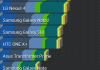
The Galaxy S IV, Samsung’s next big flagship smartphone, is only around a week from its public introduction, and it’s getting mighty leaky. Today, the NYT reported that Samsung will be including an eye scrolling feature in the GS IV’s software, and now a set of benchmarks have emerged that supposedly lay bare the smartphone’s complete hardware profile.
Italian site HDBlog.it received word of a record of an Antutu benchmark from the device, which was later also found by SamMobile, and which details the specs associated with the Galaxy S IV supposedly tested. The test results reveal that the smartphone has an Exynos 5410 1.8GHz processor, with an ARM PowerVR SGX 544MP GPU. It was running Android 4.2, had a screen just under 5-inches with a resolution of 1920×1080, and featured a 13-megapixel rear camera, along with Bluetooth 4.0 and capacity of either 16 or 32GB. The display stats line up with what we’ve heard earlier about the Galaxy S IV’s screen, as do the processor details, the amount of on-board memory and camera information.
The chipset supports GSM/WCDMA/LTE networks, which means that unlike previous Galaxy smartphones, this one will be a true worldphone, if these specs prove to be the real deal. The performance results on the GS IV should reassure any users who might have been expecting a less-than-impressive hardware release, following the NYT’s report earlier that the launch event March 14 will focus mostly on software: it easily beats current category leading devices like the Optimus G and Nexus 4, as well as the Galaxy Note II and Galaxy S III.
-
Popular iOS jailbreaking tool surpasses 14 million downloads in one month

-
Netflix will not develop a BlackBerry 10 app

-
White House: “It’s Time to Legalize Cell Phone Unlocking”
Less than two weeks after a petition on the We The People site crossed the 100,000 signature threshold, the White House has issued on official response on making cellphone unlocking legal again.
And they totally support it.
In a statement that can only be seen as a huge win for activists in this arena, the White House just announced that “it’s time to legalize cellphone unlocking.”
“The White House agrees with the 114,000+ of you who believe that consumers should be able to unlock their cell phones without risking criminal or other penalties,” said Senior Advisor for Internet, Innovation, & Privacy David Edelman. “In fact, we believe the same principle should also apply to tablets, which are increasingly similar to smart phones. And if you have paid for your mobile device, and aren’t bound by a service agreement or other obligation, you should be able to use it on another network. It’s common sense, crucial for protecting consumer choice, and important for ensuring we continue to have the vibrant, competitive wireless market that delivers innovative products and solid service to meet consumers’ needs.”
In January, unlocking new cellphones became illegal via a decision from the Library of Congress. In short, they reversed their decision to exempt cellphone unlocking from the Digital Millennium Copyright Act. It’s still legal to unlock phones purchased before January 26th, but doing so on any device purchased after that cutoff mean you could run afoul of the Digital Millennium Copyright Act.
Edelman goes on to explain that the Department of Commerce’s National Telecommunications and Information Administration (NTIA) previously made their opinion on the matter known – full support for the concept of cellphone unlocking. But that the NTIA’s recommendation was ultimately rejected by the Library of Congress.
The Library of Congress also released a statement.
“The rulemaking is a technical, legal proceeding and involves a lengthy public process,” they said.
And although they recognize that “rulemaking serves a very important function, but it was not intended to be a substitute for deliberations of broader public policy,” it doesn’t look like the Library is planning on fast-tracking the will of the people here (and now the White House).
“Clearly the White House and Library of Congress agree that the DMCA exception process is a rigid and imperfect fit for this telecommunications issue, and we want to ensure this particular challenge for mobile competition is solved,” said Edelman, also noting that the White House respects the process performed by the Librarian of establishing and eliminating exceptions – in this case having to do with the DMCA.
Here’s what the White House says about moving forward:
The Obama Administration would support a range of approaches to addressing this issue, including narrow legislative fixes in the telecommunications space that make it clear: neither criminal law nor technological locks should prevent consumers from switching carriers when they are no longer bound by a service agreement or other obligation.
We also believe the Federal Communications Commission (FCC), with its responsibility for promoting mobile competition and innovation, has an important role to play here. FCC Chairman Genachowski today voiced his concern about mobile phone unlocking, and to complement his efforts, NTIA will be formally engaging with the FCC as it addresses this urgent issue.
Last week, FCC Chairman Julius Genachowski said that the FCC would be looking into the issue.
-
Samsung’s Galaxy S IV Will Scroll Content Based On Eye Movement, Report Says
Samsung is about to show off a new flagship phone at an event on March 14, and details continue to leak out about the new smartphone. The New York Times’ Brian X. Chen reports today that eye movement-based content scrolling will be among the Galaxy S IV’s features. Chen’s source, a Samsung employee, also says that the emphasis will be on software, not hardware at the upcoming press event.
Samsung’s next smartphone will be able to track a user’s eyes and scroll articles and other types of content based on where they’re focused, the source said, so that if a user was reading a web page and hit the bottom, the device could automatically scroll more content up into view. There’s no guarantee it will be demoed on stage, according to the article, but the Korean company should be showing off more new software features, instead of demoing hardware advancements.
A software-centric approach to an Android flagship device launch is nothing new. HTC showed off its own new flagship device, the One, at an event in NYC last month and the bulk of the presentation focused on Sense 5.0. Android OEMs seem keen to highlight what it is that makes the experience of using their devices fundamentally different from using the Android phones of other makers, a good strategy when each successive generation of devices seem to share more in common than not when it comes to specs and internal components.
The NYT points out that Samsung already has trademarks on “Eye Scroll” technology, as it could be applied to smartphones as well as tablets, cameras and other devices. A trademark in this case might actually be more indicative of product plans than a patent, since it demonstrates at least some intent to actually bring the named product to market.
Eye movement-based scrolling could work well, but only if perfectly executed. If the tech registers too many false positives or disappoints in other regards, it’ll end up being more of an annoyance than a feature, and users will simply turn it off. But if executed properly, it could definitely be a decent differentiating factor. And if Samsung opens up access to scrolling features to third-party apps, that could really help its platform stand apart from others in the Android space. But again, if it’s even a bit touchy in terms of implementation, the eye-tracking tech will likely be more of a forgettable edition than anything with real value, at least for this generation.
-
Apple iWatch Will Reportedly Run iOS, Still Has To Overcome Battery Issues Before Launch

Apple’s iWatch will run full-flavored iOS, according to a new report, and the company is indeed targeting an end-of-year launch, but will first have to tackle battery life issues. According to sources speaking to The Verge, Apple’s prototype watch hardware is currently getting only a couple of days out of its battery, and the company is targeting at least four to five (around what the Pebble gets) before ramping up for a public release.
The news that Apple is opting to go with a reworked version of iOS on the iWatch instead of an alternative system is very interesting, if true. In the sixth generation iPod nano, which was released in 2010, Apple used a separate mobile OS that resembled iOS but was actually a lighter-weight and much more limited platform. Using iOS instead of the nano’s operating system has some advantages for Apple (a single code base across its mobile line, more potential for third-party developers, and a familiar system for new users), it also comes with big challenges, and potentially adds one more degree of fragmentation to Apple’s mobile OS.
It’s worth noting that Apple originally launched the iPhone’s operating system as being the same as OS X, a somewhat confusing move that they eventually went back on when they began referring to it as iPhone OS, and later iOS. The company could be taking a similar approach to the iWatch at launch, with an OS for the wrist-top computer that ends up diverging considerably from the version on the company’s phones and tablets, once modifications are built-in to account for its different features.
If the reports are accurate, Apple is making the right move in pushing for better battery life. The value of a watch-based computer depends largely on its ability to operate inconspicuously: the reason wearable computing is attractive to begin with is that it promises to be less conspicuous, and easier to integrate into your everyday life than smartphones or tablets. An iWatch that needs to hit the charger every day loses a lot of that value.
The Verge also says that Apple has work to do in terms of building in the proper pathways for transmitting information and notifications between an iPhone and an iWatch. That could prove the single-biggest source of information regarding the device and its development going forward; you can bet devs and Apple watchers will be going through iOS developer builds with a fine-toothed comb for evidence of any changes on that front.