
AT&T is telling employees not to take vacation in June, according to Boy Genius Report. You know what that means: iPhone 4 is right on schedule. More »
AT&T is telling employees not to take vacation in June, according to Boy Genius Report. You know what that means: iPhone 4 is right on schedule. More »

California-based Aptera has been teasing us for upwards of two years now with images and even a prototype test-drive of its two-seat, teardrop-shaped 2e. (Some of us think the teardrop resembles a few other things, too—particularly in white—but we shant go there.) While the overall form has remained pretty consistent, the details have changed numerous times in the interests of safety, comfort, and engineering. At an airplane hanger in Carlsbad, California, Aptera rolled out what it claims is the final final design. The company says it will begin production in the spring of 2011.
Back in December, we got official images of the refined machine, and seeing it in the flesh brought few surprises. As we reported, the latest evolution brings a new hood, fender skirts, beefy new suspension arms, larger outside mirrors, roll-down windows, and a redesigned tail that features a crumple zone (as does the front). The target coefficient of drag is 0.15, and according to chief engineer Tom Reichenbach, the car has met and beat that target. Other important newly released details include a target weight of 1800 pounds (476 of which are accounted for by the 20-kWh lithium-ion phosphate battery pack) distributed roughly evenly between the three wheels.
Unlike the battery packs in many electric vehicles, which operate within a truncated state-of-charge range, never fully charging or discharging, the battery pack in the 2e is allowed to charge and deplete fully without risk of premature degradation, according to Aptera. We’ll go ahead and log our skepticism here. Either Aptera has the wrong approach to batteries, or everyone else in the world does.
The range estimates still call for 100 miles between charges. Aptera claims that the 2e’s rate of energy consumption is equal to 200 mpg, and will cost owners about 2 cents per mile. It also is said to have only half the well-to-wheels carbon footprint of the Toyota Prius.
Though the 2e is technically a trike—a classification that comes with a separate set of safety standards—Reichenbach states that he wants to meet all safety requirements that the government places on four-wheeled passenger cars. He cites the fitment of front and side (head and thorax) airbags, side-impact beams in the doors, and a roll hoop integrated into the composite body.
Aptera says that 90 percent of the 2e’s parts and pieces will come from domestic suppliers, and provided a detailed list of companies including Pratt & Miller and Continental Tires, as well as the New Jersey–based NRG utility company. NRG supplied Aptera with funding to keep it going until government assistance—some $184 million worth—gets approved. That is but one of the hurdles that Aptera must clear before production can begin, but if it does, Californians could start seeing Apteras on the roads in about a year, with distribution likely spreading to other regions in 2012.
Related posts:
 Glympse today added Facebook support to its user-controlled location-based personal tracking service on its iPhone and Android software. Previously, the Glympse client could only send a user’s whereabouts to friends via an email, SMS or Twitter link that opened a mobile browser window to show location data for a specific time. The updated service now supports real-time mapping directly in a Glympse users’s Facebook page. The dynamic map indicates location, speed and the estimated time of arrival if a destination is entered within Glympse.
Normally, the idea of having one’s location tracked or broadcasted raises valid privacy concerns. But as Glympse has told us before — the company presented as a LaunchPad participant at our Mobilize ‘09 event — it offers total user control to alleviate privacy issues. Instead of an “always on” tracking approach, Glympse users specify when to enable tracking, for how long and who to share the location data with. Having used the service, I can best sum it up by saying: it’s a quick and simple real-time way to temporarily let your friends know where you are, where you’re headed and when you’ll be there.
Prior to the latest client update, Glympse already simplified the hassle of telling friends or peers where you are on an as-needed basis. In less than 30 seconds, you can shoot a Glympse to friends you’re scheduled to meet or ping the office so your colleagues know when to expect you. Adding Facebook support with real-time maps, simply makes sense — for many, Facebook is a de facto database of the very friends you want to share your location with.
Glympse’s updated client is now available for free in both the iTunes App Store and the Android Market.
Related research on GigaOM Pro (sub req’d):
Location-Based Services: From Mobiles to Mobility


Gregory T. Huang wrote:
Question: Where is Glympse? Answer: Getting more socially connected.
The Redmond, WA, startup, which makes location-based software for mobile phones, is announcing today it has integrated its service with Facebook. This means consumers can automatically share where they are in real-time with certain friends and contacts in their social network via their iPhone or Android smartphone.
It’s not a custom deal with Facebook, but it takes advantage of the social network’s capabilities and reach. The integration allows anyone who has the Glympse service to have their location pop up on a map within Facebook so their friends can see where they in real time. The move “will help in the distribution” but doesn’t generate direct revenue, says Glympse co-founder and CEO Bryan Trussel. “It’s a breadth awareness and usage play for us.” Translation: it could help the company grow, and in a big way.
The idea behind the company is that your friends, family, and business contacts can get an immediate “glympse” of where you are, automatically and dynamically (your position moves on the map; see photo below), for a certain amount of time that you set. So you don’t have to text or call them saying you’re going to be a few minutes late, or you just left the house. About a year ago, we pointed out that the main challenge the company faces is getting a critical mass of consumers to use the technology—and then figuring out how to get paid. A pretty familiar road for any Internet or mobile startup.
Since then, location-based mobile services have exploded, with the rise of map applications on smartphones, more widespread adoption of smartphones themselves (and “social phones” like the new Microsoft Kin), and the popularity of location-based social networks like Foursquare. Other companies in the sector include Loopt, Brightkite, uLocate, Pelago, and Google with its Latitude service.
“People are expecting their phone to know where they are, and to filter information based on their location,” says Trussel, who had a 16-year run at Microsoft before starting Glympse. In terms of building a reliable and mainstream location-sharing service, he says, “We set out to be the quickest, lightest, simplest way to do it.”

Trussel says Glympse has kept true to its original vision from the company’s founding in 2008. Now it is being flexible about how it is approaching things like integrating into all the online social networks. For example, the fact that Facebook is soon coming out with its own location-sharing service doesn’t seem to concern Trussel. “We look at Facebook not as a competitor but as a great social network we can integrate into,” he says. “The more larger networks are built, and even built around location, the better for us.” One question for startups like Glympse, though, will be whether Facebook will try to “own” its location-based services itself, or keep the software platform open for application developers to build on.
The Glympse app remains free, and is available on Windows phones as well as the iPhone and Android phones; a BlackBerry version is coming soon too. It sounds like location-based advertising will be a big part of Glympse’s business model, as well as licensing its technology to partners (presumably wireless carriers and handset makers). Trussel declined to comment on the company’s partners, revenues, number of customers, or funding plans. Last year, he said Glympse had been angel-financed and had a half-dozen employees.
“We feel we’ve hit critical mass now,” Trussel says. “We’ve filed the IP patents. We have breadth on the platform, we’ve got the social network integration, and we’ve distinguished ourselves in the location space, where you can share as much or as little as you want…The good part for us is, the opportunity is much greater than the resources we have.”
UNDERWRITERS AND PARTNERS

It’s no wonder that long-time mobile content companies like Myxer see smartphones as the big thing. It took the Miami-based company five years to hit one billion mobile downloads—probably one ringtone at a time—when it took Apple (NSDQ: AAPL) only 14 months to hit two billion downloads.
The company, which is one of the bigger destinations for mobile entertainment, including ringtones, wallpapers and games, said today it has launched its first consumer-facing smartphone application. The free Android application, called GeoPix, does not stray too far from the company’s roots. It allows users to update their phone’s wallpapers with pictures based on their location. If traveling to San Francisco, a picture of the Bay Bridge would be appropriate, or it can be simply show a picture of your school’s mascot when in class. Myk Willis, Myxer’s CEO, said: “This is another in a series of announcements that show our commitment to innovation and bold expansion beyond ringtones.”
The application is free, but doesn’t sound entirely automatic. Users must go in and choose specific images in order for them to show up when on the go. GeoPix has access to Myxer’s wallpapers of which 95 percent are free. Premium wallpaper items cost between 49 and 99 cents, but a bit of effort would be required to actually pay for and use them.
Myxer has tested the smartphone waters before. The company’s MobileStage service helps musicians and labels to create mobile Web sites and applications for Blackberry, iPhone, and Android to sell mobile content. But this is the first time Myxer has launched an application aimed directly at consumers. Next up, Willis said the company will be experimenting with a number of apps that include over-the-air music downloads, mobile streaming video, and other services. Whether Myxer will be able to replicate its current feature phone business on smartphones will be key. It now has 34 million users who routinely download more than 90 million pieces of content every month.

If you’re one of the many American Alfisti whose hearts beat fast when the new Alfa Romeo Giulietta was unveiled at the Geneva auto show last March, we have some bad news, tempered by a little bit of good news.
Your hearts beat faster, because this nifty new front-drive five-door seemed to be a likely vehicle for Alfa’s return to American showrooms, greased by the new relationship between its Fiat Group parent company and Fiat’s teetering U.S. partner, Chrysler.
At a glance, the stars and planets might seem to be aligned—a sweet-handling hatchback that embodies Alfa’s traditions of style and passion, and a dealer body hungry for new product. But as we return from a brief preview drive on Italian byways, duly impressed by this sexy new compact, we must report that the Giulietta probably isn’t destined for the U.S. Not, at any rate, in the immediately foreseeable future.

The April 21 Proviso
We hasten to add that this is informed speculation on our part, and that the definitive word on Alfa’s future, as well as the future of Chrysler’s relationship with the Fiat Group, will be passed along on April 21 by Fiat CEO Sergio Marchionne.
However, pending Marchionne’s announcement, which will detail a five-year plan for all components of Fiat’s complex enterprises, Alfa’s new CEO, Harald Wester, is cautious concerning the U.S. Now in his second month with Alfa after four-plus years as Fiat’s technical director, Wester expresses concern about the Giulietta’s U.S. sales potential—a hatchback in a market with a historical preference for formal sedans. Wester was willing to confirm that Alfa is evaluating Chrysler’s dealer organization with an eye toward outlets suitable for a European premium brand. On the other hand, development of the all-new Giulietta architecture—code-name C-Compact Wide—did not include crash-testing to U.S. standards, which differ from those in Europe.

Alfa Bits
There is at least a modicum of good news. If the Giulietta, an Alfa nameplate dating to 1954, doesn’t make it to the U.S. as a complete car, elements of its all-new structure and advanced technology features will likely be at the core of new compact and mid-size cars from Chrysler, as well as vehicles already under development by Fiat.
The list of techno elements is impressive, including a new 1.8-liter DOHC gasoline turbo four-cylinder rated for 235 hp (one of five Giulietta engines—three gas, two diesels, all turbos). There’s also a new six-speed dual-clutch automated manual transmission option, and a sophisticated vehicle-control system with three presets setting operating parameters for engine mapping, automatic gearbox shift patterns, the car’s electronic limited-slip differential, stability control system, and its new dual-pinion electric power steering. Alfa calls the new operational matrix DNA, for the three modes—Dynamic, Normal, and All-weather.
Target: Wolfsburg
Wester and his colleagues freely admit that the new Giulietta is aimed squarely at Volkswagen’s recently renewed—and ever-popular—Golf lineup, including the hot-hatch GTI. The Golf commands a worldwide market of over a half-million cars annually. Alfa Romeo hopes to sell about 40,000 Giuliettas during the remainder of the 2010 model year, and 100,000 in 2011.
This would represent a nice uptick for a company that produced just 110,000 cars in 2009. It would also assure the survival of a 100-year-old brand that’s been flirting with extinction the past few years. As to when (or if) the patience and yearning of American Alfisti will be rewarded—it’s been 15 years since Alfa Romeo left the U.S. market—only Signor Marchionne knows. He’ll share his knowledge with the rest of us come April 21.
Over to you, Serge.
Related posts:

Gregory T. Huang wrote:
It has been a busy week indeed in Microsoft land. While the man on the street has been scrambling to file his taxes, the Redmond, WA, company has been making headway in smartphones, real-time search, and other important areas. Let’s get right to the highlights:
Microsoft talks up Kin “social phone”
This is a phone specifically designed for heavy social network users. (In other words, something I won’t be buying anytime soon.) The interface emphasizes your contacts and supposedly makes it easy to do things like share photos and Web information, and stream music and video. It’s coming out in May. You can read some local writeups of the Kin by the Seattle Times, TechFlash, and mocoNews.
Bing incorporates Twitter updates
Microsoft’s search engine is amping up its partnership with Twitter, providing up-to-the-minute results from the Twitter stream in its main search results. The Bing team is currently testing the new features with a subset of its users and search queries, so it’s not quite prime-time yet. But it’s the latest move in the increasingly important battle over “social search” between Microsoft and Google, which really only started last year.
Microsoft outsources IT to InfoSys
Infosys Technologies said it will be managing internal IT services for Microsoft worldwide. The three-year deal amounts to the Indian company providing employee help desk services and managing applications, devices, and databases for Microsoft in 450 locations across 104 countries. This seems like a pretty big deal, and probably is a way for Microsoft to save a lot of money. The impact on Microsoft’s inner workings and product development remains to be seen.
Microsoft Research dominates at CHI conference
At the big international human-computer interaction expo this week (CHI 2010 in Atlanta), Microsoft presented 38 technical papers, or about 10 percent of all papers accepted by the conference. They ranged from a telepresence project to help employees communicate with remote colleagues to efforts in interactive touch displays, pen and touch interfaces, and studying how changing Web content affects people’s interactions with the Web.
UNDERWRITERS AND PARTNERS
India’s Bharti Airtel will become the fifth-largest telecom provider in the world by purchasing 15 African markets from Zain in deal valued at $10.7 billion, according to Wireless Intelligence. Combining the 15 new markets with the three that Bharti held prior, the purchase will give it just under 170 million subscribers out of a potential customer population of 450 million in all 18 areas. Unless a regulatory issue holds up the deal, the newly acquired markets will include: Burkina Faso, Chad, Congo Brazzaville, Democratic Republic of Congo, Gabon, Ghana, Kenya, Madagascar, Malawi, Niger, Nigeria, Sierra Leone, Tanzania, Uganda and Zambia.
As I review the largest mobile providers in the world, I’m reminded that I need to spend more time looking beyond my backyard in the U.S. It would take the combined subscriber counts of the two largest carriers here — Verizon’s 91 million and AT&T’s 85 million — to rival Bharti’s new size. Perhaps Nokia’s focus on emerging markets isn’t such a bad strategy after all. This worldwide approach is rubbing off on others as Dell just announced a deal with Telfonica Group in Latin America, the world’s No. 3 three mobile provider, to provide services and smartphones such as its Android-powered Aero handset. Now if we could only get the carriers to work out better international roaming agreements so that no one ever gets another $10,000 monthly bill, we’d be in business.
Here’s a look at where Airtel will fit in among the top mobile providers in the world:
| Rank | Provider | Total Connections | Markets |
|---|---|---|---|
| 1 | China Mobile | 525,331,266 | 2 |
| 2 | Vodafone Group | 309,580,257 | 23 |
| 3 | Telefonica Group | 202,333,430 | 20 |
| 4 | America Movil Group | 186,544,900 | 17 |
| 5 | Airtel Group | 169,468,523 | 18 |
| 6 | China Unicom | 147,587,000 | 1 |
| 7 | Deutsche Telekom Group | 127,919,986 | 12 |
| 8 | Telenor Group | 101,367,838 | 10 |
Table Source: Wireless Intelligence


Rhys Millen has been drifting and racing Hyundai vehicles for several years now, and this June he hopes to set a new record at the Pikes Peak International Hill Climb, a record once held by his father, Rod. The current record for the 12.42-mile course is 10:01.41, set by Nobuhiro “Monster” Tajima and Suzuki in 2007. Millen hopes to be the first driver to break the 10-minute barrier.
He’ll drive an all-new car dubbed the RMR / Hyundai Genesis PM580, a teaser image of which is shown above. Full info on the car will be revealed April 19, but we know from the preliminary entry list that it’s four-wheel-drive and will compete in the Unlimited class. Knowing that, and judging from the last RMR Genesis we saw, the PM580 won’t bear much resemblance to the Hyundai in your driveway.
No related posts.
 The three cable providers in the New York City metro area have banded together to create a Wi-Fi network that any of the companies’ customers can use, essentially turning the city into a cluster of hotspots for all those folks toting smartphones and iPads. Cablevision, Time Warner Cable and Comcast have signed roaming agreements, so customers of one can get on the Wi-Fi network owned by one of the others for free.
Last month, Om mentioned that Time Warner Cable was offering Wi-Fi service to its customers in partnership with Cablevision. The announcement today adds Comcast and formalizes the idea of the three as roaming partners anywhere the members have Wi-Fi networks in the NYC area. Back in January I pondered this exact sort of relationship developing among ISPs:
So will ISPs take the consumer love of ubiquitous broadband and carriers’ need for offload to the next level and create the equivalent of roaming agreements for Wi-Fi? Greg Williams, the new SVP of corporate development at Bel Air Networks, thinks they might. …He wonders if carriers will negotiate with each other and fixed-line ISPs to get access for their wireless subscribers, especially in congested cities such as New York or San Francisco.
At the time I was skeptical because I couldn’t see the big carriers — namely AT&T and Verizon — doing anything to radically cut into their data revenue (GigaOM Pro sub req’d) from their 3G networks, but having cable providers offer such a service makes sense, especially given that the cable guys right now are also up against Verizon FiOS in some of their markets. The ability to offer free Wi-Fi while on the go (plus paid mobile broadband service through the partnership with Clearwire) makes their broadband product portfolio competitive with Verizon (which signed a Wi-Fi agreement of its own), and is decreasing churn. And all of this makes for happy Wi-Fi users.
Thumbnail image courtesy Flickr user Adventures in Librarianship.


In case you had forgotten that Chevrolet plans to offer a convertible version of the Camaro, here are two images of a pre-production car from the official Chevy Camaro Facebook page. The pictures show a Camaro RS convertible that looks like it’s ready to hit showroom floors (either that, or it’s getting ready for a grade-school assembly).

Unfortunately, the pictures don’t reveal all that much about the convertible’s styling. There is no profile shot to show how Chevy chopped the roofline, nor any pictures of the Camaro with its cloth top in place. The convertible’s muscular front end and bulky rear fascia are almost identical to those of the Camaro coupe.
Regardless of how it looks, the topless Camaro is sure to set buyers’ hearts and checkbooks on fire when it goes on sale in the second quarter of next year—which will be just in time for summer cruising season.
Related posts:
Apple’s iPad is already nearly even with the BlackBerry line of devices when it comes to mobile device browser market share, Computer World reports this morning citing data from NetApplications.com. With just 500,000 iPads sold in the U.S. so far compared to millions of BlackBerry devices worldwide, the numbers underscore a huge problem for Research In Motion. While BlackBerry devices are the indisputable king when it comes to pocketable email machines, the world is moving to the web, applications and social networking, which their browsers simply aren’t powerful enough to support.
Indeed, BlackBerry devices lost market share in the final quarter of 2009, while iPhone OS and Android, whose browsers are both based on WebKit — grew. And this week a Morgan Stanley trend report indicated that social networking users surpassed email users back in July of 2009. Research in Motion clearly understands the changing trends, but it’s taking a long time to react. In August of 2009, the company purchased Torch Mobile, a development firm that at the time had already created Iris, a WebKit-based browser for Microsoft Windows Mobile devices. Immediately following the purchase, Torch Mobile announced that all work on the Windows Mobile client would cease, presumably so the company could focus efforts on a BlackBerry web client. Eight months has produced a “coming soon” announcement and a video demo, but no new web client for customers to use.
Although WebKit browsers arguably offer a better browsing experience on mobiles, one could argue that it’s not fair to compare the iPad to BlackBerry handsets since browsing on a 9.7-inch display is so much more enjoyable than on the small screen of a handheld device. And given that Apple — citing the “runaway success” of the iPad — yesterday postponed international iPad orders due to overwhelming U.S. demand, I wouldn’t be surprised if the devices succeeds in trouncing most smartphones when it comes to browser market share. That aside, Research In Motion needs to get in motion on its web browser, because the attention of mobile device users is focused on web activities.
Related research on GigaOM Pro (sub req’d):
What Does the Future Hold for Browsers?


It’s pretty logical that a phone that can support a higher quality of game play will be used to play more games, but the rate at which it is happening is fairly shocking.
ComScore (NSDQ: SCOR) reported today that the number of people playing games on a lower-end feature phone plummeted by 35 percent over the past year, while the population of smartphone users playing games ballooned by 60 percent. Overall, the shift led the industry to fall by a painful 13 percent. The report compared the three month average ended in February 2010 to the same period a year earlier.
We’ve already seen some evidence of these trends with companies, like Glu Mobile (NSDQ: GLUU) and others, shifting their production to smartphone games as revenues have dropped over the past year. While many have struggled with the change, the good news is that despite the drop, comScore sees the overall adoption of games increasing with the shift to smartphones. “We can expect to see a profound increase in adoption of this activity, both in terms of audience size and overall engagement,” said comScore’s Mark Donovan.
Some supporting evidence:
—Smartphone users are three times more likely than feature phone owners to play games once a month.
—Smartphone users are five times as likely to play games almost every day.
—A third of smartphone owners have installed five or more games, while less than 1 percent of feature phone subscribers have installed that many.
—13 percent of smartphone owners play a game almost every day vs. 2.4 percent of feature-phone users.

With Toyota’s unintended-acceleration woes still a hot topic, the company received another blow yesterday when Consumer Reports issued a “Don’t Buy: Safety Risk” warning for the 2010 Lexus GX460. After running the luxury SUV through one of its emergency-handling testing procedures, CR found that the rear of the GX slid out much too far, nearly 90 degrees, before the electronic stability-control system brought the skid under control.
Lexus yesterday responded by saying it was looking into the issue and then later in the day issued a stop-sale notice to its dealers, offering loaner cars to GX owners until the issue can be resolved. So while the rest of the media was whipping up its usual frenzy of drama and general fear, we gave CR a call to find out more about this specific test and hear firsthand about the publication’s experience with the GX460.
We spoke with senior automotive engineer Jake Fisher and he explained that each vehicle CR evaluates is put through a series of tests that include those with constant parameters, such as slaloms and acceleration runs, as well as others indicative of real-world responses—CR calls them “elicit reaction” tests—to a given scenario. The test that the GX460 failed was of the latter type. While the GX made it through CR’s coned handling course (similar to our lane-change test) without incident, it failed one portion of a test where the testers attempted to emulate a driver who has entered a corner with too much speed.
In this particular test, the GX was driven down a straightaway at 60–65 mph and steered into a decreasing-radius turn that the SUV could only safely negotiate at a maximum of 50 mph. CR’s testers then emulated various responses by either braking, turning abruptly, or lifting off of the throttle. The vehicle behaved normally and the stability control intervened satisfactorily in the first two cases, but not in the third. The last action caused the rear to lose traction as a result of forward weight transfer, inducing what is called “lift-throttle oversteer,” one of the things stability control is intended to prevent. All four of CR’s test engineers were able to reproduce the response, concluding that the GX460’s stability control allows the vehicle to get too far sideways before the stability control collects it, which could lead to all manner of bad things, such as a rollover if a wheel falls off the road or strikes a curb.
Stability-control software programming could be the cause of (and therefore solution to) the issue, but it’s entirely possible that the fix could require hardware changes. The same day CR tested the GX, it also ran the 2010 Toyota 4Runner through the same exercises. The 4Runner and GX share a platform as well as many components, but the 4Runner didn’t have the same issue with any portion of the test, safely understeering during the lift-throttle situation. The two big differences between the SUVs? Tire compound and rear suspension hardware. The GX460 is available with two different tires, one made form a harder compound than the 4Runner’s rubber and one made from a softer compound than that found on the Toyota. If the GX in question was on the hardest possible compound, it’s possible that lower levels of grip could be to blame; that tire may slide a bit more than the stability-control system is programmed to deal with. (We’re checking back with CR to determine the tires worn by their test vehicles.) It’s also important to note that the 4Runner uses coil springs at all four corners while the GX460 is equipped with adaptive, adjustable air springs in the rear, which could account for a difference in transient response.
But if you’re one of the approximately 5000 owners of a new 2010 GX, do the results of CR’s test justify a major-league freak-out? Just like the unintended-acceleration fiasco, probably not. It’s important to note a few things here. First, as reported by CR, there have been no known rollover problems with the GX under normal conditions. Second, Fisher told us that in the two other non-lift-throttle runs through the same test, the GX460’s stability control acted quickly and appropriately. Finally, while it’s great that CR has noted this issue with the GX—and we certainly think the stability control should be more effective in preventing lift-throttle oversteer—drivers of top-heavy SUVs, or any vehicle for that matter, are ultimately responsible for knowing the physical limitations of their vehicles and driving accordingly. No matter how familiar or unfamiliar a person is with a road or individual corner, it’s on them if they’re driving too fast for both the vehicle and conditions. So don’t do that.
Related posts:

The simple Sony Ericsson Spiro is aimed at someone who wants a simple phone with above average features. It’s a slider cell phone with a 2.2 inch screen (240×320, 262k colors), 2 megapixel camera with 2x digital zoom and video recording.

Fancy colors such as Contrast Black, Sunset Pink, Spring Green and Stealth Black will be available. Other notable additions include FM radio, Stereo Bluetooth, TrackID, PlayNow, Facebook, and Twitter integration. MP3/AAC/AAC+/eAAc+ audio formats are supported. I can’t imagine this phone being very excuse at launch and will most likely land on AT&T eventually later this year.
 |
 |
 |
 |
 |
 |
 |
 |
The Spiro uses a MicroUSB connector and it can double as a mass storage device. You’ll also enjoy the 3.5mm headphone jack which enables you to use just about any headphone or earphone. The Spiro is compatible with MicroSD.

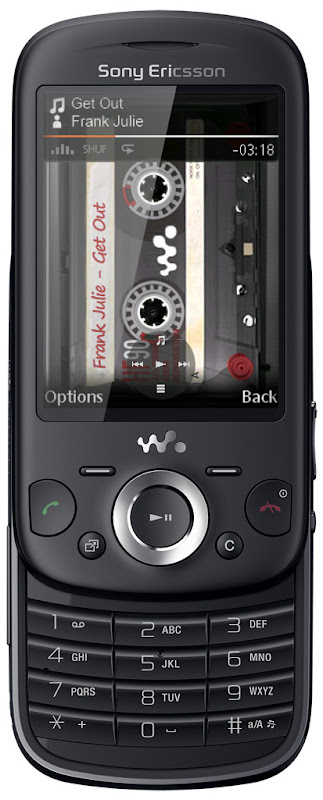
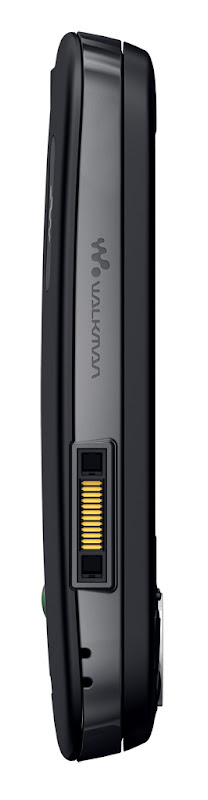
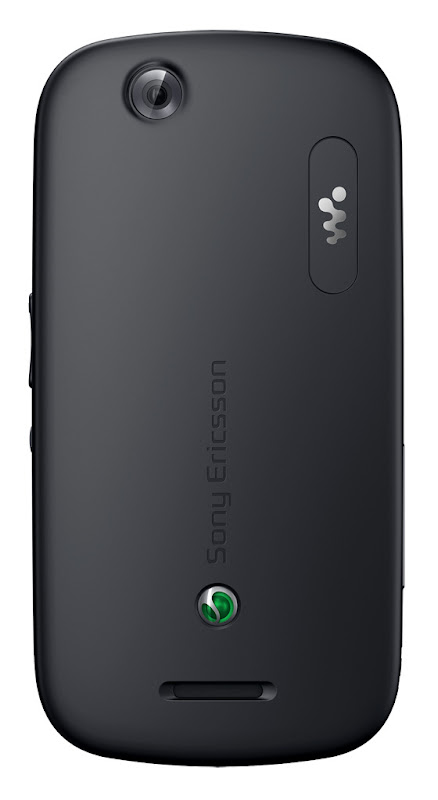
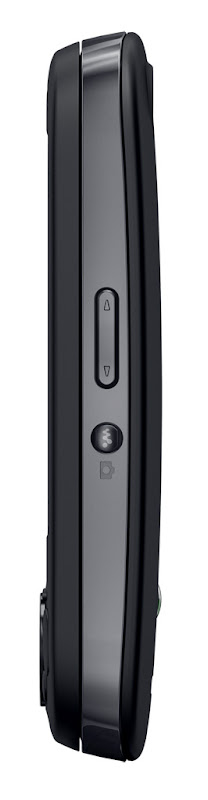
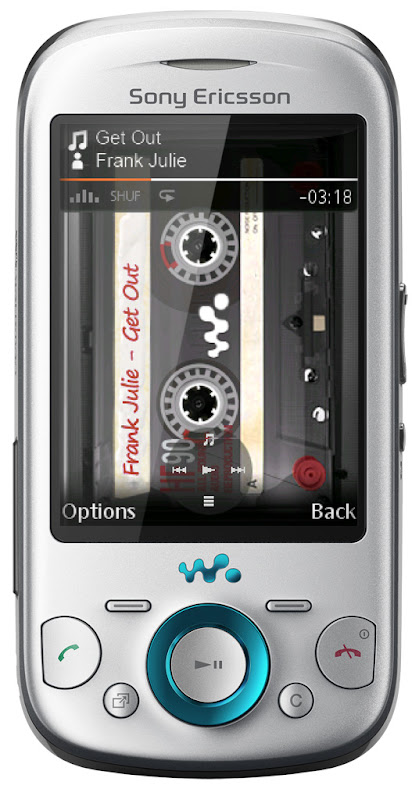
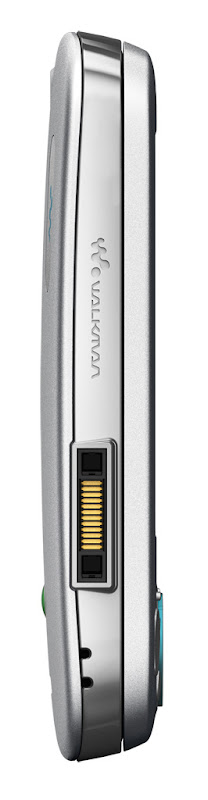
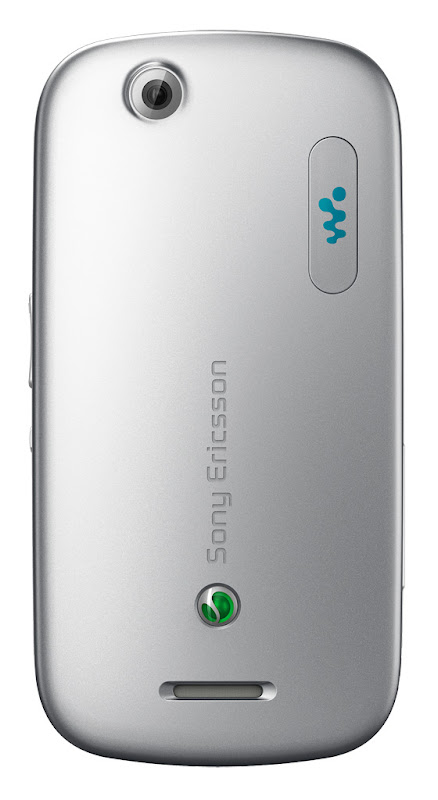
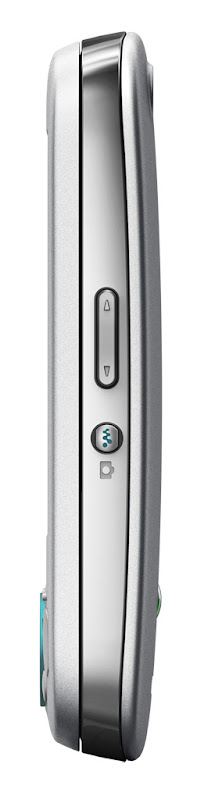
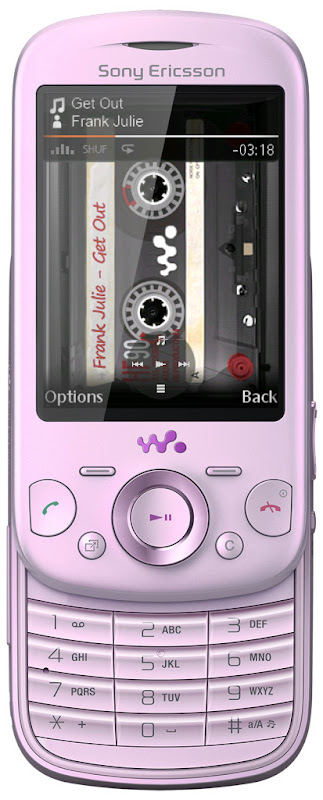
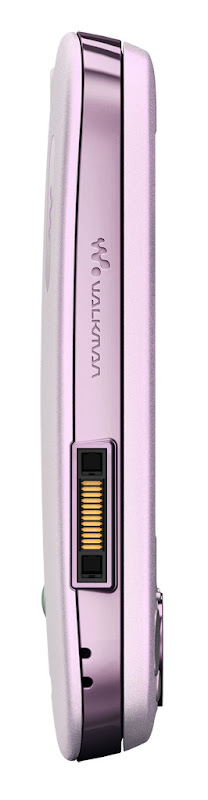
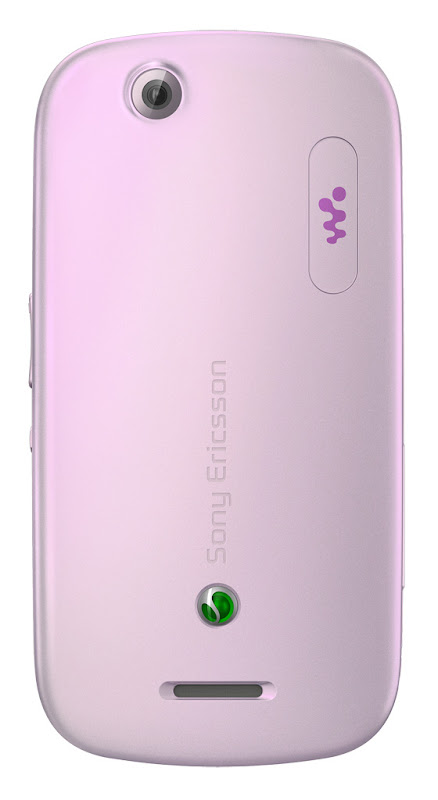
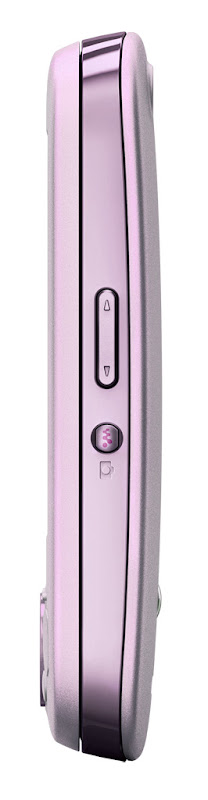
Sony Ericsson has refreshed its compact Walkman phone line with two new models, and within this post I will be covering the Zylo. This is a basic slider cell phone but has some interesting tricks up its sleeve that make it quite dapper. It’s quite amusing, actually. Sony Ericsson has once again chosen psychadelic color names for this piece of kit, including Jazz Black, Chacha Silver and Swing Pink colors. The Zylo truly is odd. It does have an average 2.6 inch screen (240×320, 262k colors, scratch resistant). However, as I continue on with stating that it has a 3.2 megapixel camera, 2x digital zoom, geo tagging, video recording for the camera, you probably start to wander off. However, simply remember that this is pretty excellent stuff for what will probably be a low price.
 |
 |
 |
 |

Thankfully the Zylo has support for MicroSD, and here is where things actually go from eh, not bad to awesome. The Zylo can play MP3/AAC/AAC+/eAAc+/WMA/FLAC files. Yeah, read that again. FLAC. WHAT! Does this mean that Sony may integrate such compatibility with future Walkman devices? There is also word that you can play your favorite tune in the background while chatting away on the handset. And for the little heavens out there, the Zylo also comes preloaded with sounds so you can pretend you are still at work, walking on the street or in a restaurant.
Let’s look at the other specifications; it is fully loaded with things to give it a Walkman experience, such as Album Art, Playlists, Clear Bass/Stereo, PlayNow, SensMe, Shake Control, and Walkman Player (with cool styles, as shown in the pictures). A NetFront browser is integrated within, and it has Facebook, and Twitter. There is also a built-in accelerometer, gesture control, and animated wallpapers. 3D games are supported, as well as an integrated FM Radio, YouTube, and several other interesting features.
 |
 |
 |
 |
 |
 |
 |
 |
 The Linux Foundation Collaboration Summit, a 3-day event for open source developers and mobile partners, kicks off today. Among the various agenda topics are both a keynote and multiple workshop sessions devoted to MeeGo, the platform created when Intel’s Moblin project and Nokia’s Maemo operating system merged at February’s Mobile World Congress. With the workshop sessions, Intel and Nokia are fighting for the attention of developers, much like other platforms are, as exemplified with the Twitter and Facebook programmer events as well as Apple and its new iPhone 4.0 OS. So why might a developer be interested in MeeGo?
For starters, MeeGo offers opportunities in both the smartphone and the netbook or tablet space. There are two MeeGo user experience frameworks — one for handsets and one for netbooks — but applications designed for MeeGo aren’t constrained to one device type. While smartphone software could require visual adjustment to run on the larger display of a netbook, for example, the software itself is created with Qt, a cross-platform development tool. Think of Qt, which Nokia purchased in January 2008, like Java’s write-once, run-anywhere approach. Nokia’s VP of MeeGo devices, Ari Jaaksi, explains the benefits best in a Linux.com interview from earlier this morning:
“Qt is a cross-platform application and UI framework used by hundreds of thousands of developers worldwide looking to create amazing user experiences on Windows, Mac, Linux, Windows Mobile, Symbian and Maemo devices. Qt will be the primary application framework for MeeGo and both Intel and Nokia are committing their investment in it. For developers interested in MeeGo, Qt helps increase the scope for their applications and services across multiple platforms, all using consistent application APIs.”
Two more carrots dangling in front of potential MeeGo developers are the Linux tie-ins and application stores. Intel’s documentation from its Beijing Developer Forum, also in progress now, points out MeeGo support for potentially thousands of native Linux software titles. And those titles targeted for MeeGo, as well as those built with the Qt framework will be available through two partner storefronts. The Intel App Up store offers software for netbooks, while Nokia is leveraging its Ovi store for handset titles. The Ovi store shelves were a little bare when I last checked on Nokia’s Maemo-powered N900 handset, so the handset maker is looking to boost the available titles.
MeeGo devices are expected in the second half of this year and 27 partners ranging from Acer to Xandros are expressing support. Notable members of the partner list include high-profile software shops like EA Mobile and Gameloft. But industry friends alone won’t turn MeeGo into a contender against the likes of Apple, Google and others with established mobile platforms. As Stacey alluded last summer in her interview with Peter Farago, the VP of mobile analytics firm Flurry, developers are the new kingmakers. The programmers attending this week’s Linux Foundation Collaboration Summit will likely decide if MeeGo gains a royal crown or simply becomes a mobile bard just passing through.


Related research on GigaOM Pro (sub req’d):
Mobile OSes Are No Longer Just About Mobile
Images courtesy of Intel


Ford has launched the Transit Connect Graphics site, allowing anyone to custom-design a vanlet of their own. Anyone apparently includes us, so we figured we’d give it a shot. Pretty cool, eh?

Step one of the process has you select which Transit Connect configuration you own or are planning to purchase, be it cargo or passenger, with or without rear and side glass. You can then select a standard Ford color or any custom color as a base, and from there the online tool lets you add text, pre-made graphics, and free-hand drawings to all of the Transit Connect’s surfaces, and you can also upload your own graphics like we did.

After submitting our design, a rep. from the company that offers the service through Ford, Original Wraps, gave us a call to discuss the quote and explained that pricing is dependent on three factors. First is the portion of the vehicle that’s being covered by graphics, which can range from about 25 square feet to a maximum of 225 for a Transit Connect. Design work is the next cost, as all user-submitted designs are massaged by Original Wraps’ team before being sent to the printer—the designer’s time is charged at a rate of $60/hour and wraps usually require about three and as many as five hours to complete. Then there is the price of installation, which is usually about 30 percent of the cost of the graphics. Our elaborate design uses $2500 worth of graphics and would require about three hours in the hands of the designers, so we’d be all in for an estimated $3180 on the wrap job. More simple schemes range from about $800 to $1200.

While we don’t, you know, actually have a Transit connect to wrap, we think the service is perfect for anyone trying to help hawk their wares with one of these little rolling billboards. Original Wraps also offers a range of graphics for other Ford products, graphics for the Nissan cube, custom graphics for Minis, and even a design-your-own-water-bottle site for Sigg.
 This is the point where we shamelessly plug our wares: You can buy a t-shirt with the awesome C/D metal logo here.
Related posts:

For every automaker, recalls are simply part and parcel of being in business—stuff sometimes goes wrong, and thousands of vehicles of all makes get pulled into dealers every year to fix one problem or another. Generally, and for good reason, recalls receive little fanfare, but the Toyota fiasco—and the accompanying Congressional witchhunt—has made the auto companies a little jumpy.
Witness Acura and its ZDX, which was just recalled. The issue is that some examples may be missing the scoring on the underside of the dashboard that allows the front-passenger airbag to bust through the dashtop in the event of a collision. No injuries or incidents have been reported; Acura discovered the issue during its own internal processes and issued the 1850-vehicle recall. Acura dealers will inspect the vehicles and replace the dashboards if necessary. For more info, owners can go to Acura’s recall website.
Related posts:

A dozen broadcasters escalated their mobile TV efforts yesterday after forming a joint venture that included financial and content commitments.
The more aggressive measures appeared to be in response to the FCC’s National Broadband initiative, which called for reclaiming unused spectrum from broadcasters for more wireless broadband networks. Without the spectrum, it would limit broadcasters’ ability to roll out mobile TV. But yesterday, FCC Chairman Julius Genachowski, who was speaking at the NAB Convention, declared it a “myth” that the plan would kill Mobile DTV, reports Broadcasting & Cable.
Genachowski said pretty much that broadcasters can have their cake and eat it, too. In other words, they would be able to provide that service and turn over some spectrum for wireless broadband. The FCC is currently looking into how it could pay the broadcasters for those airwaves, which is not currently legal. In his speech, he said that he’s happy with the progress that broadcasters have made in establishing standards and getting trials off the ground. “Our job is not to prevent innovation or business models, but to enable them. Under the incentive auction plan, broadcasters will be able to provide mobile DTV, both licensees that choose to retain all 6 megahertz, and those that choose to share.”
It’s unclear whether the broadcasters share that view that there’s enough spectrum to go around. In a press release issued yesterday by the group of broadcasters, it said the venture “is designed to complement” the initiative by reducing congestion of the nation’s wireless broadband infrastructure. In other words, they are arguing that if they can offload video to broadcast spectrum from today’s mobile networks fewer new networks will have to be built.
Related


