Category: News
-
Samsung LiMo-powered i8330 leaks, to be called Vodafone H2
 Another day, another leak, right? Next up we have the Samsung LiMo-R3-powered i8330. The device will form part of the Vodafone 360 lineup in Europe, and will be known as the H2.
The specs so far seem decent, with a 1GHz Cortex A8 processor, an 800×480 Super AMOLED screen, 8MP autofocus + flash camera with HD video recording, and the usual GPS, and WiFi, as well as a touch of HSDPA.
Now, if you’ve got a thing for obscure phone OSes, then this phone could be the thing for you, but with so many tasty Android handsets around, even the most obsessive of Linux fans will surely find more joy elsewhere.
Admittedly, the phone does build a strong bridge over the uncanny valley that divides higher-end feature phones from feature-laden smart phones, so there could be an interested market for it… if the price is right.
Samsung Firmwares (the site that provided the leaked images) say that the device should see a release sometime before the World Cup (June 11th), so Europeans can expect it soon. No word on prices or a US release just yet.
[via Slash Gear]
-
Novo superesportivo Hulme CanAm de 600 cavalos

O bólido Hulme Can-Am desenvolvido pelo empresario James Freemantle é o mais novo superesportivo a disposição dos entusiastas por carros de alto desempenho. Os interessados já podem fazer a sua reserva por 10.000 euros, ou R$ 22.743,91 e terão direito a ter uma previa e um test-drive do modelo antes de seu lançamento, em 2011, e que terá um produção limitada de 20 unidades.
Sua denominação Hulme Can-Am, é em homenagem ao piloto de formula 1 Denny Hulme, campeão mundial da categoria em 1967 e da American Challenge Cup (Can-Am) nos anos de 1968 e 1970. O superesportivo combina a tradicional receita de motor potente + uma carroceria de baixo peso.
Dessa forma, seu chassis de baixo peso é confeccionado em fibra de carbono, enquanto recebeu o potente motor V8 do Chevrolet Corvette de 7.0 litros e com 600 cavalos de potencia. Além disso, o superesportivo Hulme Can-Am recebe de serie um cambio manual de seis velocidade, enquanto que um sequencial com trocas por borboletas no volante sera oferecido com opcional.
Com isso, o modelo deverá acelerar de 0 a 100 km/h em apenas 3 segundos e atingir uma velocidade máxima de 320 km/h. De acordo com a companhia, o Hulme Can-An teve seu “design e desenvolvimento focado na dirigibilidade, com fornecimento de energia e tratamento dinâmico otimizado para o máximo prazer de condução nas pistas e na rua”.
O superesportivo Hulme Can-Am é fruto de sete anos de trabalho do empresario James Freemantle, que teve que vender sua própria casa e pedir ajuda dos amigos, que viraram sócios do projeto. Seu preço final deverá ficar em torno de 295.000 euros ou R$ 666.262, mais as taxas locais. Veja abaixo a galeria de foto completa e um video do modelo.
-
Oklahoma legislature overrides veto of pre-abortion questionnaire bill


[JURIST] The Oklahoma Senate [official website] voted 33-15 [roll call, PDF] Tuesday to override the veto of bill [HB 3284 text, RTF] that would require women seeking an abortion [JURIST news archive] to complete a questionnaire. The vote comes a day after the Oklahoma House of Representatives [official website] voted 84-13 to override the veto, allowing the proposed legislation to take effect November 1. The Statistical Abortion Report Act would require women to answer questions such as marital status, reasons for seeking the abortion, and whether the pregnancy is the result of rape or incest. It would also require doctors performing the procedure to fill out a questionnaire about complications resulting from it. The bill was vetoed [press release] by Governor Brad Henry (D) [official website] on Monday, because of its “personally invasive” nature:
While I support reasonable restrictions on abortion, this legislation has numerous flaws. As with previous abortion bills I have vetoed, HB 3284 lacks an essential exemption for rape and incest victims. By forcing them to submit to a personally invasive questionnaire and posting the answers on a state website, this legislation will only increase the trauma of an already traumatic event. Victims of such horrific acts should be treated with dignity and respect in such situations, as should all people.
Paul Sund, a spokesman for Henry, criticized [Tulsa World report] the Senate’s override because of the cost of litigating legal challenges that may arise from the bill. Supporters have said the measure is necessary to protect unborn children.
Two weeks ago, the Oklahoma Senate voted 32-11 [JURIST report] to pass the bill. Identical legislation was signed into law last session but was struck down [JURIST report] because it was part of a broader bill that violated the state constitution’s single subject requirement. Earlier this month, Oklahoma Attorney General Drew Edmondson [official profile] agreed to delay the implementation of another controversial new state law [HB 2780 text, RTF] requiring women seeking an abortion to consent first to an ultrasound after the Center for Reproductive Rights [advocacy website] requested a restraining order temporarily barring enforcement of the law. In April, the Oklahoma Senate voted to override [JURIST report] Henry’s veto of two anti-abortion bills, including the ultrasound bill. The Oklahoma laws join another restrictive abortion law passed recently in Nebraska, which bans abortions after 20 weeks [JURIST report].
-
Apple, Hewlett-Packard and Dell could change manufacturing sites?
 Three major clients of the Foxconn (Hon Hai Precision Industry Co., Ltd.) electronics manufacturing group are pressuring the company demanding a joint investigation effort regarding working conditions at Foxconn’s Chinese site.Apple Inc.’s spokeswoman Kristin Huguet said on Tuesday “We are saddened by the tragic loss of this young employee and we are awaiting results of the investigations into his death,” and added “We require our suppliers to treat all workers with dignity and respect.” Apple had sent a team to evaluate the working conditions at Foxconn’s Chinese facility, in the mean time HP and Dell too are evaluating and examining reports from Foxconn since they have outsourced production contracts too with this electronics manufacturing group.The questions which this “suicide cluster case” brings up against Foxconn is that, is Foxconn really running sweatshops? Are all Foxconn operations based on human misery? The inadecvat working conditions at Foxconn are a result of a corporate directive or is this just an isolated case which is present only in one particular manufacturing site of the Foxconn factory grid? Terry Gou, Chairman of Hon Hai tried to defend the manufacturing giant by stating that Foxconn does not operates human sweatshops but normal and legit businesses, how ever all the evidences point at the opposite.Also a question remains open. will Apple, Dell and HP move its operations to other manufacturing companies if it will be proven that this suicide cases are a result of some sort of company directive?In the case of Sun Danyoung, a worker of Foxconn who committed suicide because of the interrogation process that he was subjected to, an interrogation which was conducted because he lost the prototype of an iPhone, one could wonder did Apple pressure the interrogation? If yes, Apple may become the prime cause of this suicide case.
Three major clients of the Foxconn (Hon Hai Precision Industry Co., Ltd.) electronics manufacturing group are pressuring the company demanding a joint investigation effort regarding working conditions at Foxconn’s Chinese site.Apple Inc.’s spokeswoman Kristin Huguet said on Tuesday “We are saddened by the tragic loss of this young employee and we are awaiting results of the investigations into his death,” and added “We require our suppliers to treat all workers with dignity and respect.” Apple had sent a team to evaluate the working conditions at Foxconn’s Chinese facility, in the mean time HP and Dell too are evaluating and examining reports from Foxconn since they have outsourced production contracts too with this electronics manufacturing group.The questions which this “suicide cluster case” brings up against Foxconn is that, is Foxconn really running sweatshops? Are all Foxconn operations based on human misery? The inadecvat working conditions at Foxconn are a result of a corporate directive or is this just an isolated case which is present only in one particular manufacturing site of the Foxconn factory grid? Terry Gou, Chairman of Hon Hai tried to defend the manufacturing giant by stating that Foxconn does not operates human sweatshops but normal and legit businesses, how ever all the evidences point at the opposite.Also a question remains open. will Apple, Dell and HP move its operations to other manufacturing companies if it will be proven that this suicide cases are a result of some sort of company directive? In the case of Sun Danyoung, a worker of Foxconn who committed suicide because of the interrogation process that he was subjected to, an interrogation which was conducted because he lost the prototype of an iPhone, one could wonder did Apple pressure the interrogation? If yes, Apple may become the prime cause of this suicide case.
Related posts:
- Labor activists blame Foxconn, world’s largest electronics maker
- Android-based Dell Streak Tablet Soon
- Apple iPad is sold out?
-
T-Mobile USA Gets New CEO: Here’s What He Needs to Do

T-Mobile USA President and CEO Robert Dotson will leave the nation’s fourth-largest carrier as of May 2011 and will be replaced by Philipp Humm, who was the former CEO of T-Mobile Deutschland. Dotson has been at the helm of T-Mobile USA, which is owned by Deutsche Telekom, for the last 15 years. However, as the mobile market shifts to higher-powered devices that consume a lot of data, T-Mobile has faltered with late network upgrades and a recent quarter that showed off weakness in its once-strong prepaid offering.
Humm will take over as CEO of T-Mobile USA in February 2011, while Dotson will remain on as a non-executive board member until May of that year. But as the mobile market in the U.S. deals with the fact that most Americans already own a cell phone and that growth now has to come from machine-to-machine services and stealing customers away from the competition, things could get rough. As the new head of the smallest player in the space, here are a few things Humm will need to keep an eye on:
Transition to LTE: T-Mobile may say its rollout of HSPA+ technology across its network will offer “4G speeds,” and for the next two years or so it might, but T-Mobile can’t rest on smartphones during that time without preparing for the delivery of data. LTE is a key component of such delivery, as it not only has the potential for faster speeds but is a more efficient user of spectrum, which means it will boost T-Mobile’s capacity.
Spectrum: T-Mobile USA’s spectrum holdings limit where it can expand and how much capacity it will have for tomorrow’s bandwidth-sucking applications. The availability of 60 MHz of AWS spectrum, which will be auctioned off next year, would help, as would a deal with another player like Clearwire, which may be shopping its spectrum around.
Prepaid: T-Mobile had its lunch handed to it during the first quarter, when its prepaid net adds drop by 92 percent. More competitors are entering the prepaid market and prices are falling rapidly as those providers compete for market share. T-Mobile either has to cut costs to the bone so it can offer rock-bottom prices or differentiate (GigaOM Pro sub req’d) so subscribers will pay more for its service.
M2M: AT&T, Verizon, and even Sprint have efforts to sell their underlying network capacity to makers of gadgets and appliances. T-Mobile is no exception, although it has been quieter than the others. However, it has an agreement with Echelon to supply network capacity for smart grid services, and has also offered up its network for other devices, but it’s smaller coverage area makes it a hard sell.
So as Humm takes over T-Mobile USA the problems of stalled growth and a saturated market may be familiar to him from his time running the T-Mobile cellular network in Germany. But he will have his work cut out for him.


-
Via Labs is showing off its 4-port USB 3.0 host controller at Computex

Via first showed off its USB 3.0 host controller at CES 2010 and it just broke cover at Computex. The VL800 series chip can handle four USB 3.0 devices simultaneously while providing data rates up to 5Gbps. Via aims to put this single chip solution into desktops, notebooks, servers, and everything else on God’s green earth.But we still don’t know when this is going to happen. Via hasn’t announced when we’ll actually see this chip make its way into any devices although we are getting in a 4-port USB 3.0 hub for review shortly, but we’re not sure if it contains this Via chip. Guess we’ll have to tear it apart to find out.
-
EC Communications analysis costs and benefits of 30% CO2 reduction target
Om May 26 he the European Commission presented an analysis of the costs, benefits and options for moving beyond the EU’s greenhouse gas reduction target for 2020 from 20% below 1990 levels to 30% once the conditions are met. At present these conditions have not been met. This communication follows the Commission’s Communication on “How to reinvigorate international climate negotiations” and the Council’s request to present an assessment on the impacts of a conditional move to a 30% emissions cut. The measures taken to support energy-intensive industries against the risk of carbon leakage are also examined as required under the ETS (Emissions Trading System) Directive. The Communication shows that the reduction in EU emissions as a consequence of the economic crisis, together with a drop in carbon prices, has changed the estimations two years ago when the revised ETS was presented. Therefore in light of the new data, an analysis of the implications of the different levels of ambition as a motor for modernising the EU economy and creating new jobs by promoting innovation in low-carbon technologies is provided. This analysis encompasses the efforts required in the main different sectors to reduce greenhouse gas emissions beyond 20%, up to 30%, looking also at the impacts of these efforts and the potential policy options to achieve them. The current context of constrained public finances and economic contraction is also fully taken into account when assessing possible alternatives.
-
Left on the Cutting Room Floor: Climate Depot’s Marc Morano Takes on ABC News’ Dan Harris by Jeff Poor
Article Tags: Marc Morano, Video Link
‘World News’ segment cut skeptic interview from 11 minute to just 10 seconds, then links it with white supremacists.
We’ve all sort of known the media have been in the tank for the global warming alarmist movement. For evidence, look no further than a March 2008 segment that aired on ABC “World News” attacking leading climate skeptic, University of Virginia environmental scientist Professor Emeritus Fred Singer.
And the same culprit behind that 2008 segment, “World News” weekend anchor Dan Harris, was at it again with a piece that aired on May 23 attempting to link climate change skeptics to white supremacists.
But for balance, Harris included a few brief remarks, all of 10 seconds, from Marc Morano of ClimateDepot.com, a news aggregator website Harris called “aggressive.” But the actual interview Harris conducted with Morano was much more extensive and in depth. Throughout the interview, Harris asked Morano questions, but with premises that weren’t necessarily true.
During the back-and-forth, Harris asked Morano about the “threat” from people who challenged global warming skeptics, the validity that ClimateGate was a real scandal, the charges from Sen. James Inhofe, R-Okla., that ClimateGate exposed fraud, how someone could be skeptical of global warming with such a broad consensus and what Harris deemed as “interesting,” that climate skeptics were susceptible to threats as well. However, 99 percent of that was left out of the segment. What was left out of the ABC News segment? Transcript as follows:
Click source to read FULL report from Jeff Poor Inc. Video Link
Source: businessandmedia.org
-
Dialing for dollars on departure at Dex One …
 For a man who led his company into bankruptcy, and back out again, David C. Swanson probably won’t have to worry about solvency for while.
Swanson, of course, has been chief executive of Dex One (DEXO), the yellow-pages company previously known as R.H. Donnelley Corp., for the last eight years, and chairman for about half that time. That means he’s the same man who led the company into a voluntary bankruptcy filing last year, a development the company blamed on ongoing economic challenges in its post-emergence 10-K this spring. On the downhill slide to bankruptcy and during the restructuring, the company cut its headcount 20% in 2008 and “continued to actively manage expenses and enacted a number of initiatives to streamline operations and contain costs” in 2009, among other things freezing pension benefits for employees. The company emerged, restructured, on Jan. 29.
Now he’s stepping down, effective Friday. Described as a retirement in the 8-K that Dexo put out on Friday, it was announced just seven days before his departure date, and the same document notes that he
“will receive severance benefits to which he is entitled under his Amended and Restated Employment Agreement dated as of December 31, 2008, as amended … in connection with a termination not for Cause following a Change of Control…”
In any case, he eased out in style. According to the Separation Agreement filed with the 8-K, he’s getting a $6.45 million lump-sum cash payment, plus unspecified accrued and unpaid vacation time, and a pro-rata annual bonus for 2010. He’ll be reimbursed for the cost of getting health, dental and life insurance through as late as May 31, 2013 — a good three years.
He gets to keep his 25,230 unvested stock appreciation rights — valued at $468,521 Tuesday night — which he can exercise between March and June next year, and he’s eligible for a long-term incentive payment of as much as $3.49 million. He gets another $5.7 million payout from a special executive pension that survived the bankruptcy process, on top of the pension he’s due under the company’s plan for all employees, which was worth $1.4 million as of Dec. 31, according to the company’s latest 10-K. He also gets his deferred-compensation account balance, which was $124,014 at the end of last year (over and above the $538,230 he collected from the deferred comp plan at the beginning of 2009.)
And last but still not insignificantly, he gets payments to make up for some of his customary perks — also continuing until as late as May 2013. Those include health-club and country-club memberships ($8,340 a year), financial planning reimbursement of up to $14,700 a year, “executive health at the annual rate of $1,585″ and outplacement-services reimbursement totaling as much as $25,000.
The total haul by our calculation? As much as $17.72 million if he collects the full long-term incentive bonus and maxes out the perks, and if Dexo’s stock doesn’t change for the next year.
That would cover the bill for calling 411 to get the phone numbers of every household in New York state. Or he could let his fingers do the walking all the way to the bank.
Image source: jamiesrabbits via Flickr
————
Want to see more of what’s hidden in corporate filings? Check out FootnotedPro, where we highlight unusual opportunities and potential problems before the rest of the market notices. For more information, or to inquire about a trial subscription, email us at [email protected].

-
Powered by Lithium: Nissan CEO Ghosn Sticks With Bullish Electric-Car Forecast TNR.v, CZX.v, RM.v, LMR.v, WLC.v, LI.v, SQM, FMC, ROC, NSANY, BYDDY, F,
 This devise above is the basis for the Next Big Thing and we have it at every home which can afford to buy any car now.
Now we need these cars to be on the road and drive the market.“The main open question is: will Electric Cars’ adoption rate be correlated with Washing Machines’ one or will it enjoy more explosive growth like Mobiles with rate of acceleration like iPods on the chart below? First, we will strike brutally and cynically (the way the Wall Street works): how can you compare washing machines and Cars? Even Electric ones? Cars are all about men, their personal social security space with a statement. How many of us discussed washing machines even the best ones? Brutal history about washing machines is that it was for the “best part” – to make her life better, it was not about status and not about statement – so it took 80 years to get to the 80% adoption rate. On a more serious note time has changed: it will not be about him all the time this time and it is not about U.S. only this time, but first back to iPod Moment.” WSJ:Carlos Ghosn, credited with turning around ailing Nissan a decade ago, said today he’s confident sales of electric cars will account for 10% of the market by 2020. He isn’t worried by naysayers who, he says, are often car makers who simply aren’t prepared to compete in the rising electric segment.
The Nissan and Renault CEO said in a meeting with Wall Street Journal editors and reporters that the two car companies plan to roll out several electric models in the next few years. If anything, he says, that pace may still be too slow because demand for electrics is almost certain to accelerate once consumers see them in action. His biggest worry: that demand for electric vehicles “will take off faster than expected and we will be under capacity.”
So why he so bullish on electric cars when many analysts and industry watchers predict they will account for only about 2% of the market in 10 years? Part of the reason is infrastructure. Ghosn says Nissan is pursuing agreements with governments and businesses to install charging stations in parking garages, shopping areas, office parks and elsewhere so drivers won’t have to worry as much about range, a nagging disadvantage for electrics compared with gasoline-powered cars.
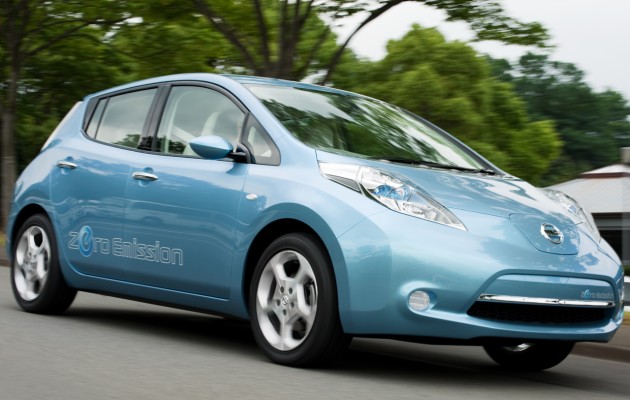
Ghosn also says there are charging systems in development that can cut the time it takes to recharge electric car batteries from hours to minutes. Nissan is focused on the U.S. launch in December of the Leaf, an electric sedan with a range of about 100 miles. Ghosn says the company is in contact with 130,000 “hand raisers” — people who have expressed interest in the Leaf, and 13,000 advance orders for the car. He says these numbers represent individual consumers, not government and corporate fleets.” -
Watch The Hills Season 6 Episode 5 “The Next Minute” Now
 The Hills, a television program that follows several people’s personal lives on their living in Los Angeles.
The program started its premier on May 31, 2006, and followed the personal life of Lauren Conrad, former Laguna Beach star, and her friends.
After 5 seasons in the program, Conrad chose to leave and was replaced by another Laguna Beach star, Kristin Cavallari, and would be starting on her character in the second half of the season 5.
Cavallari is best known for her appearances in the series Laguna Beach: The Real Orange County on MTV. Born in Denver, she is the youngest of the two children in her family.
However, on March 27, 2010, Entertainment Weekly ran a story announcing that The Hills 6th season will be its last. The last season is comprised of 12 episodes, although Cavallari said to E! that the network might double the final season to 24 episodes.
The Hill’s latest episode, “The Next Minute” was released this May 25, 2010. Shows and replays are available online. Get it free through stream or download.
For easy access on The Hill Season 6 Episode 5, Click on the Links below:
The Hills Season 6 episode 5 Stream
Related posts:
- Watch Naruto Shippuden Episode 157 Live Stream Online – Latest Episode
- Watch it online The Secret Life of the American Teenager episodes
- Mexico vs Ecuador 2010 Live Streaming International Friendlies Soccer
-
LGBT Groups Gear Up for Today’s ‘Don’t Ask, Don’t Tell’ Repeal Fight
The Senate Armed Services Committee goes into room 222 of the Russell building today at 2:30 p.m. to mark up the fiscal 2011 defense authorization bill. Until members emerge at 9 p.m., it’s a black box of information for determining the contours of the half-trillion-dollar-plus piece of legislation, including the fate of Sen. Joe Lieberman’s (I-Conn.) amendment to repeal the military’s ban on open gay service. That’s why the coalition of LGBT-rights organizations pushing to secure passage in the committee and then later this week on the House floor are trying as hard as they can to lock down votes by mid-afternoon.
There’s going to be a rally/press conference on the Hill at 11 a.m. with six veterans, five of whom were either discharged or chose not to re-enlist because of “Don’t Ask, Don’t Tell,” urging senators and congressmembers to vote for repeal. Veterans are going to deliver 20,000 pro-repeal postcards to Congress — focusing mostly on the Senate. Specifically, the coalition – comprised of groups like Servicemembers United, the Human Rights Campaign and the Servicemembers Legal Defense Fund — continues to target six states represented by undecided or wavering legislators: West Virginia, Virginia, Massachusetts, Nebraska, Indiana and Florida. Already, its released polling in those states that show scrapping “Don’t Ask, Don’t Tell” has wide support.
In advance of a complementary House floor vote later this week, the coalition sent an email alert yesterday asking 750,000 people around the country to email their members of congress in support of repeal. It’s going to send another one today asking them to phone member offices. The idea is to escalate pressure, capping off a build-up of several months that’s brought veterans affected by “Don’t Ask, Don’t Tell” — and those who just believe overturning it is the right thing to d0 — to key states and districts.
That effort got the White House to acquiesce to the strategy on Monday, and Defense Secretary Robert Gates to reluctantly accept the legislative push on Tuesday. But it’s not won over every member of Congress it’s targeted. Sen. Scott Brown (R-Mass.) saw 77 percent of Massachusetts voters backing “Don’t Ask, Don’t Tell” repeal, but the new senator — a lieutenant colonel in his state’s National Guard — said yesterday that he’s voting against Lieberman’s amendment. So is Sen. Jim Webb (D-Va.), a Marine veteran of Vietnam and a former Navy secretary, even after the coalition sent a letter from Virginia servicewomen urging him to support repeal. Both claim that Gates’ original plan — to hold off legislative efforts at repeal until a Pentagon working group on its implementation issues guidance to him in December — ought to proceed. Over in the House last night, the chairman of the armed services committee, Rep. Ike Skelton (D-Mo.), made the exact same argument as his grounds for opposition.
The coalition believes that the Senate committee still has a significant number of undecideds, soft-yes and soft-no votes. (For what it’s worth, I’m not going to give my own whip count, because I don’t believe that’s journalistically responsible in a fluid situation like this one.) But it’s also used to setbacks, even though the legislative compromise provides perhaps the best shot for repealing the law since its enactment in 1993, and that speaks to the resilience of the activists who have pushed the White House, Congress and the Pentagon this far already.
“This is one of the best opportunities for repeal that has come around,” said Michael Cole of the Human Rights Campaign. “The fact that you have congressional leaders supporting it, the president supporting it and Secretary Gates and Adm. Mullen saying it will do what they want in respecting the working group, the stars have aligned for putting repeal closer to reality than ever.” If the votes are there.
-
Ford recalling select 2010 Ranger pickups over rollaway risk
Filed under: Truck, Recalls, Safety, Ford
 2010 Ford Ranger – Click above for high-res image gallery
The last major Ford Ranger redesign ocurred in 1993. Bill Clinton was president, the Internet was almost completely unknown and many Autoblog readers were in utero or non-existant. In the 17 years that followed, Ford has done next to nothing to their neglected little pickup, yet we still have a recall notice for the 2010 model year.
The National Highway Traffic Safety Administration has announced the recall of 2,934 Ford Rangers equipped with manual transmissions. The vehicles reportedly contain a potentially defective parking brake cable that can be disconnected from the right rear actuator in colder climates. The condition presents itself when the brake is released and a wet parking brake shoe is frozen in the applied position. If the cable becomes disconnected, the parking brake may not fully engage.
Affected vehicles were built between June 8, 2009 and February 2, 2010. If you purchased one of these Rangers, you can take it to the nearest Ford dealer. The dealer will replace your faulty parking brake actuator free of charge. Hit the jump to read over the NHTSA press release.
Gallery: 2010 Ford Ranger


[Source: NHTSA]
Continue reading Ford recalling select 2010 Ranger pickups over rollaway risk
Ford recalling select 2010 Ranger pickups over rollaway risk originally appeared on Autoblog on Wed, 26 May 2010 08:30:00 EST. Please see our terms for use of feeds.
-
And here’s another picture of the Motorola Droid Shadow

And the Motorola Droid Shadow is spotted again! This time the Droid Shadow is shown from the uber-sexy side angle and from the looks of it, we’re quite impressed with the overall thinness and clean lines of it. In this shot we can clearly see the HDMI out that’s in line with previous leaked info but the Howard Forums user who posted the pic says that the Droid Shadow "only" has a 4.1-inch screen, TI OMAP 3630 processor (720 ARM Cortex A8), 8GB internal storage, and 8-megapixel camera. That’s a little off from previous information so we’ll have to wait and see who’s right. We’d like Snapdragon and the extra .2 inches in screen size please. Other than that though, this phone looks sweet. Those of you who passed on the Droid Incredible might have a great thing in your hands soon. [via engadget]
This is a post by Android Central. It is sponsored by the Android Central Accessories Store
-
Global cooling by Mark Landsbaum
Article Tags: World Temperatures

The Heartland Institute’s James M. Taylor, an environmental policy expert, said global cooling is already happening. Figures from the Rutgers University Global Snow Lab show snow records from the last 10 years exceeded the records set in the 1960s and 1970s.
The past “decade set a record for largest average global snow extent,” Taylor said.
There is this too: “Eight straight years’ global temperature downtrend: The authoritative SPPI composite index of global mean surface temperature anomalies, taking the mean of two surface and two satellite datasets and updated through November 2008, shows a pronounced downtrend for eight full years. Not one of the climate models relied upon by the IPCC had predicted this downturn.” – Lord Christopher Monckton
Click source to read FULL report from Mark Landsbaum
Source: orangepunch.freedomblogging
-
Researchers Find ‘Million-Follower Fallacy’ in Twitter – Wired Campus – The Chronicle of Higher Education
Drawing a huge following on Twitter does not necessarily mean that your tweets will have much influence. It turns out that some noncelebrities with meager followings have the greatest ability to start discussions and spread ideas.

-
Sony announces portable DVD player with LED backlight and 7.5 hours of battery life

We have numerous super-light laptops, a plethora of netbooks, and the iPad to choose from. But some companies still produce portable DVD players. One example is Sony, which yesterday in Japan announced [JP] just that, the DVP-FX950. The player has two selling points: a 9-inch LCD screen that features an LED backlight and a battery life of 7.5 hours (up 25% from the previous model).
Other than the LED backlight, the screen features a resolution of 800×480 and a viewing angle of 180 degrees. Next to DVDs and CDs, the player also has a USB port, meaning you can plug in a USB stick to view JPEGs or listen to MP3s (other formats aren’t supported through USB). The player, which is sized at 227×170.8×34.4mm and weighs 0.88kg, also has an internal speaker.

Sony plans to start selling the DVP-FX950 in Japan on June 16 (price: $390). The company hasn’t said yet whether the device will go on sale in other markets as well.
-
Two solar ISS transits! | Bad Astronomy
I have two more amazing images for you! Both show the same thing — the International Space Station crossing the Sun — but in different ways.
The first is, once again, from Thierry Legault:

Wow! You can clearly see the station (with Atlantis docked on the left!) as it crosses the Sun. Here’s a slight closeup:

There’s a nice sunspot pair there in the upper right; the one on the right looks like a face, actually. Cute. This shot was taken at 1/8000th of a second, which froze the action nicely. He has higher resolution pictures on his webpage for this event.
The second picture is slightly different:

It was taken by Heiko Mehring and obviously shows a series of silhouettes as the ISS and Atlantis crossed the Sun. You can clearly see the same sunspots, but the path of the spacecraft is slightly different, and the spots look a bit different as well. The equipment Heiko used was less fancy than what Thierry has, but you can still see a lot of detail in the image. It really is amazing that we can see such detail on the station from the ground!
I suspect the atmosphere was steadier at Thierry’s observing site too; in the images on his page you can see the granulation on the surface of the Sun. Those granules are vast columns of hot gas rising to the Sun’s surface, cooling off, then sinking again. It’s a grand version of the convection that happens when you boil water in your teapot!
[Update: A third site with a great shot of the transit was pointed out in the comments below. I wonder how many more are out there?]
These kinds of shots take a lot of planning, a lot of experience, and a bit of good fortune (or whatever politically correct term skeptics are supposed to use these days). When I was younger I shot a LOT of film of the Moon, and got maybe a 10% success rate if I was doing well. Digital cameras and the Internet make it a whole lot easier to get spectacular shots like these. I’m glad to see more people tackling these difficult shots, and expect that we’ll be seeing lots more like these as time goes on.
Tip o’ the dew cap to Thierry Legault and Jan Sorg for sending these to me.
-
POWER POLITICS
After years of inaction, federal officials are mulling new regulations to confront the growing problem of coal ash. But energy companies have fought off regulation before, and they’re fighting the new rules every step of the way.
A special Facing South investigation by Sue Sturgis
 When the catastrophic coal ash spill occurred at the Tennessee Valley Authority’s Kingston plant in 2008, a quiet debate over how to regulate coal ash had already been going on for decades, largely outside the view of the public or press.

That all changed with the Kingston spill, which aside from releasing a billion gallons of toxic waste into a nearby community and river system also pushed the problem of coal ash into the national spotlight and led to calls for change.
The month after the Tennessee disaster, EPA Administrator Lisa Jackson signaled during her Senate confirmation hearing that the agency would revisit the issue of coal ash regulation. “The EPA currently has, and has in the past, assessed its regulatory options, and I think it is time to re-ask those questions,” Jackson said.
Jackson soon began to make good on her promise. The EPA launched an inventory of coal ash impoundments like the one that failed at Kingston, sending information requests to more than 160 electric generation facilities and 60 corporate offices. Armed with this and other data, Jackson and the EPA concluded that the nation’s standards for regulating coal ash needed revision.
But the agency’s efforts soon ran up against massive resistance from an array of powerful interests — industries and groups that had succeeded in enabling coal ash to escape federal oversight for decades, creating a regulatory vacuum that many say made a Kingston-like disaster almost inevitable.
Fending off ‘burdensome regulatory requirements’
 The battle over regulating coal ash goes back to 1976, when Congress passed the Resource Conservation and Recovery Act, the main federal law that governs disposal of hazardous and non-hazardous waste.
In the beginning, coal combustion waste was not included in RCRA, and in 1978 EPA proposed that coal ash be covered under the law as a special hazardous waste.
But before that happened, Congress passed the Bevill Amendment in 1980, which effectively exempted the coal waste from RCRA. The amendment was named for Rep. Tom Bevill, a 15-term Democratic congressman from coal-dependent Alabama who chaired the powerful House Energy Development and Water Appropriations Subcommittee. During congressional debate, Bevill declared that “it would be unreasonable for EPA to impose costly and burdensome regulatory requirements without knowing if a problem really exists, and if it does, the true nature of that problem.” Bevill’s amendment called on the agency to delay regulation and study the matter instead.
Congress’ reluctance to regulate was reinforced when the EPA went on to release two reports — one in 1988 and another in 1999 — finding that damages from coal ash did not warrant lifting the regulatory exemption.
But in 2000, the agency began to change course. That year, as required by the Bevill Amendment, the EPA published a proposal titled “Regulatory Determination on Wastes from the Combustion of Fossil Fuels” that concluded federal regulations for the disposal of coal ash — either under RCRA and/or the Surface Mining Control and Reclamation Act — were necessary to protect public health and the environment.
“Public comments and other analyses . . . have convinced EPA that these wastes can, and do, pose significant risks to human health and the environment when not properly managed, and there is sufficient evidence that adequate controls may not be in place for a significant number of facilities,” the proposal found. “This, in our view, justifies the development of tailored regulations under Subtitle C of RCRA.”
In other words, the EPA was saying that it was finally ready to treat coal ash as hazardous waste.
The EPA sent its report to President Bill Clinton’s White House Office of Management and Budget for review. An EPA employee involved in the internal debate told the Center for Public Integrity “it really hit a brick wall at OMB.”
The administration was flooded with letters from electric utilities and visits from their lobbyists warning that regulating coal ash as hazardous waste would lead to economic hardship for them and their customers. New standards would increase the cost of disposing of coal ash waste, an extra cost the EPA estimated at about $1 billion per year. But industry representatives argued the cost would be astronomically higher — perhaps upwards of $13 billion.
After the lobbying onslaught, EPA backed away from regulating coal ash as hazardous waste in 2000. But the agency promised to issue guidelines to help states oversee it more effectively — a critical step, since most states lacked even basic safeguards for coal ash disposal sites.
But the EPA didn’t follow through. And without federal guidelines, states continued with business as usual. Five years later, a report prepared for EPA’s Office of Solid Waste found that most states didn’t require monitoring the impact of coal ash disposal sites on groundwater, more than half didn’t require liners, and more than a quarter didn’t even require something as basic as dust controls at coal ash landfills. The report also found that most of the coal ash produced in the top 25 coal-consuming states could legally be disposed of in a way that directly threatened drinking water supplies in underground aquifers.
A consensus for regulation grows
 Meanwhile, even within the EPA, evidence was mounting that coal ash posed a growing threat to environmental and human health.
In 2007, a draft assessment was prepared for the EPA titled “Human and Ecological Risk Assessment of Coal Combustion Wastes” that found some unlined coal ash impoundments pose a cancer risk 2,000 times above what the government considers acceptable. The assessment found that the use of a composite liner — a multi-layered liner like those required in municipal waste landfills — significantly reduced the risk of exposure to health-threatening pollution. However, most states don’t require such liners for coal ash impoundments.
That same year, a report by the EPA Office of Solid Waste tallied up the number of cases nationwide where coal ash was found to have caused environmental damage, documenting 24 cases of proven damages caused by coal ash and another 43 potential damage cases related to coal ash. Most of those cases involve toxic contamination from coal ash impoundments leaching into groundwater, rivers and lakes.
The EPA’s internal studies were complemented by a growing body of research by independent scientists and advocacy groups documenting the environmental and health consequences of coal ash.
Earlier this year, for example, the Environmental Integrity Project and Earthjustice released a report titled “Out of Control: Mounting Damages From Coal Ash Waste Sites” that found serious water contamination problems from coal ash dumps at 31 locations in 14 states. The report noted that the contamination is concentrated in communities with family poverty rates above the national median.
Recently the EPA also acknowledged that toxic elements like arsenic, chromium and selenium can leach out of unlined coal ash dumps and into local water supplies in much higher concentrations than was earlier believed. After 20 years of using a testing method that the EPA’s own Science Advisory Board argued was low-balling the contamination risk, the agency recently began using an updated test that found the level of toxic contaminants leaching into water clearly crossed the threshold for designating coal ash as a hazardous waste.
“These unregulated sites present a clear and present danger to public health and the environment,” said Earthjustice attorney and former EPA official Lisa Evans. “If law and science are to guide our most important environmental decisions, as EPA Administrator Lisa Jackson has promised, we need to regulate these hazards before they get much worse.”
Hitting another brick wall
 But Washington’s latest effort to regulate coal ash — spurred by the TVA disaster — has again met massive resistance from a familiar array of powerful political interests.
Last October, the EPA sent a draft regulation to the White House Office of Management and Budget. The proposed rules immediately became the target of a massive lobbying onslaught by electric utilities and energy interests determined to prevent coal ash from being regulated as hazardous waste.
The Charleston (W.Va.) Gazette reported that OMB held 30 meetings about the rules with industry officials compared to only 12 with environmental and public health groups. The intense lobbying campaign was notable because of the electric utility industry’s already considerable clout in Congress: One of the most politically generous, it’s contributed more than $9 million to members’ campaigns during the 2009-2010 election cycle so far, according to the Center for Responsive Politics.
Joining the lobbying effort were state agencies and federal lawmakers who voiced concern about the cost of strict regulation and how it would affect the recycling of coal ash into products and its use as fill in construction projects.
Many of the congressional defenders of coal ash represent states where the toxic waste has been implicated in environmental damages. For example, a Facing South analysis found more than 50 proven and suspected coal ash damage cases in the states represented by the more than 90 senators and representatives who wrote to the Obama administration opposing the regulation of coal ash as hazardous waste.
As the political battle raged behind closed doors, the latest push to regulate coal ash seemed like it might again be derailed. The EPA originally said it would roll out a proposed rule for public comment by the end of 2009, but the release was postponed with the agency blaming the delay on the “complexity of the analysis.”
The new rules were then supposed to be released in April 2010, but were put off again.
Finally, earlier this month the EPA released the rules to the public. But instead of issuing a clear standard that would treat coal ash as a hazardous waste as it originally planned, the agency released two options: one that would empower the federal government to oversee the material like other hazardous waste, and one that would treat coal ash like ordinary trash and leave oversight up to the states.
The agency asked the public to help decide which approach makes the most sense during a three-month comment period that will begin when the regulation is published in the Federal Register, which is expected to happen as soon as this week.
Environmental watchdogs expressed disappointment over the agency’s equivocation. Eric Schaeffer, a former EPA official who now directs the nonprofit Environmental Integrity Project, said the move “sets up a boxing ring.” However, he also said he sees value in moving the fight from behind OMB’s closed doors out into the open.
“It’s in the public arena now, and that’s really important to move things along,” he said.
* * *
TOMORROW: Dumpsites in Disguise? Coal ash doesn’t just end up in dangerous dumps — the waste is also used increasingly as building material and even as fertilizer for farm crops. It’s called “beneficial use,” but is it safe?* * *
Sue Sturgis is an investigative reporter and editorial director of
Facing South. This piece is the third installment in an in-depth,
week-long series on the growing national problem of coal ash and the
political battle over regulations. To read the entire series, click here.