Category: News

  • HTC EVO 4G rooted before its official release


    Yes you read it correctly 🙂  The Sprint Evo 4G appears to have been rooted, before its officially released.  Android developer Matt Mastracci at his blog grack.com has some pictures to show us, and by the looks of things the HTC EVO 4G has been rooted. This is excellent news, and the development community should  quickly grow for this beast. 

    Sorry Incredible users, looks like this one won’t work for you.  But have no fear, the right people are hard at work.

    Follow the jump to see a few more pics and blurrycam video of the results.  You can bet we’re keeping a watchful eye on this one.  Stay tuned. [grack.com]

    read more

  • Dodge vehicles will lose the legendary horns logo!

    Dodge LogoAs you may know already Dodge announced that the Ram brand will be exclusively used for its pickup range but it appears that the American manufacturer is also preparing another move.

    The Ram brand will keep the distinctive ram’s horns logo that adorned Dodge vehicles while the other cars from Dodge will adopt the twin red slashes of Chrysler Group’s SRT performance brand. “It signifies our sporty character. Most SRTs are Dodges.” said Dodge CEO Ralph Gilles. The first car which will receive the new logo will be the 2011 Dodge Charger and the seven-seat Dodge crossover which will replace the Durango.

    [via autonews – sub. required]

    Source: Car news, Car reviews, Spy shots

  • NormOxys Pockets $17.5M for Drugs Against Heart Failure, Cancer

    norm
    Luke Timmerman wrote:

    NormOxys, the Wellesley, MA-based company on a quest to make a new class of drugs that normalize oxygen levels in deprived tissues, has raised $17.5 million in venture capital to run its first set of tests in people with chronic heart failure and cancer.

    The financing was led by a new investor, Princeton, NJ-based Care Capital, and included the company’s original backer, Switzerland-based Index Ventures. NormOxys, founded in 2004, has now raised about $30 million since its founding.

    NormOxys, which we profiled when it emerged from stealth mode in December, is certainly pursuing a novel idea. The company’s lead drug candidate is a small-molecule compound that it says can induce tiny oxygen-carrying red blood cells to release a controlled amount of their oxygen payload into tissues that desperately need more oxygen. NormOxys is thinking specifically about heart muscles laboring under the stress of congestive heart failure, unable to pump enough blood to provide the energy people need. This is a tricky thing to do, because delivering too much oxygen too fast can be a bad thing. Other companies have tested drugs that increase the production of red blood cells, or the amount of hemoglobin that carries oxygen, but have led to serious side effects, including heart attack and death.

    But if NormOxys can show in a couple early studies over the next year that its controlled release of oxygen works in people like it has in animals, the company could tap into a potentially very big market. An estimated 5 million people in the U.S. suffer from chronic heart failure, a condition that causes severe fatigue and death. NormOxys could offer an alternative therapy to the standard beta-blockers and ACE inhibitors that have a more limited effect in boosting exercise capacity, at least compared to what NormOxys says it has seen in animals so far.

    “We can get to proof of concept relatively quickly, and it will have a large impact on our value,” says CEO Martin Tolar. The prize, once the concept is proven, will be a partnership with a big drugmaker or an acquisition, Tolar says.

    The NormOxys method is based on biology research from Claude Nicolau, a visiting professor at Tufts University in Medford, MA, and chemistry research from Jean-Marie Lehn, a Nobel laureate at the College de France in Paris. Their approach is to create drugs that work as “oxyrens,” which interact with hemoglobin in a way that allows that protein to release much more than the usual one-fourth of oxygen it binds with. The lead drug candidate is called OXY111A.

    Today, NormOxys is also announcing that it has started the first clinical trial …Next Page »

    UNDERWRITERS AND PARTNERS


  • President Obama official schedule and guidance, May 24, 2010. Lebanon P.M. Saad Hariri; Asian-American reception

    THE WHITE HOUSE
    Office of the Press Secretary
    _______________________________________________________________________________________
    FOR IMMEDIATE RELEASE
    May 23, 2010

    DAILY GUIDANCE AND PRESS SCHEDULE FOR
    MONDAY, MAY 24, 2010

    In the morning, the President will receive the Presidential Daily Briefing in the Oval Office. This briefing is closed press. Later, the President will attend a reception for the Federal Judge Association at the White House. This event is closed press.

    The President will meet with senior advisors in the Oval Office. This meeting is closed press. The President will then participate in the daily briefing call with Gulf Coast Governors on the BP oil spill. This briefing is closed press.

    In the afternoon, the President will welcome Prime Minister Saad Hariri of Lebanon to the White House. This will be the Prime Minister’s first official visit to Washington during his premiership and the President looks forward to consulting with Prime Minister Hariri on a broad range of mutual goals in support of Lebanon’s sovereignty and independence, and regional peace and security. There will be a pool still photographer spray at the bottom of the meeting.

    Later, the President will host a reception to celebrate Asian American and Pacific Islander Heritage Month in the East Room. This event is pooled press.

    The President will then meet with Secretary of Defense Gates in the Oval Office. This meeting is closed press

    At 3:00 PM, United States Coast Guard Commandant Admiral Thad Allen will join Press Secretary Robert Gibbs to hold a press briefing in the Brady Press Briefing Room at the White House. This briefing is open press.

    In-Town Travel Pool
    Wires: AP, Reuters, Bloomberg
    Wire Photos: AP, Reuters, AFP
    TV Corr & Crew: FOX
    Print: Regional Reporters
    Radio: SRN

    EDT

    9:00AM In-Town Travel Pool Call Time

    9:30AM THE PRESIDENT receives the Presidential Daily Briefing
    Oval Office
    Closed Press

    10:20AM THE PRESIDENT attends a reception for the Federal Judge Association
    State Floor
    Closed Press

    11:05AM THE PRESIDENT meets with senior advisors
    Oval Office
    Closed Press

    12:00PM THE PRESIDENT participates in the daily briefing call with Gulf Coast Governors on the BP oil spill
    Oval Office
    Closed Press

    2:30PM THE PRESIDENT welcomes Prime Minister Saad Hariri of Lebanon to the White House
    Oval Office
    Pool Still Photographers Spray at the Bottom (Pool Gather Time 2:10PM–Brady Press Briefing Room)

    4:00PM THE PRESIDENT host a reception to celebrate Asian American and Pacific Islander Heritage Month
    East Room
    Pooled Press (Pre-Set 2:00PM //Final Gather 3:30PM–North Doors of the Palm Room)

    4:30PM THE PRESIDENT meets with Secretary of Defense Gates
    Oval Office
    Closed Press

    Briefing Schedule

    3:00PM Briefing by Press Secretary Robert Gibbs and United States Coast Guard Commandant Admiral Thad Allen

    ###

  • AutoblogGreen for 05.24.10

    Reuters: UAW pressuring Tesla/Toyota to hire union workers at former NUMMI plant
    Will the Model S be a union car?
    IIHS condemns use of mini trucks and low-speed vehicles on public roads
    Don’t get in crash with one of these, dummy.
    Report: Mitsubishi i-MiEV on sale in Hong Kong, priced at $50,000 U.S.
    Mitsubishi is only looking for 50 buyers, though.
    Other news:

    AutoblogGreen for 05.24.10 originally appeared on Autoblog on Mon, 24 May 2010 05:58:00 EST. Please see our terms for use of feeds.

    Read | Permalink | Email this | Comments

  • Facebook’s Zuckerberg Admits “Mistakes,” Says He’ll Address Privacy Outrage This Week

    Via Prison Planet.com » Prison Planet

    Henry Blodget
    Business Insider
    May 24, 2010

    After writing a post blasting Facebook for allegedly deleting comments critical of Facebook (an allegation that Facebook says is ludicrous), Robert Scoble got an email from Facebook CEO Mark Zuckerberg.

    In the email, which Scoble published only after receiving permission from Mark, Mark says he is planning to address the Facebook privacy criticism directly this week–in conjunction with Facebook rolling out a fix.

    Here’s the email Mark sent to Scoble:

    Hey,

    We’ve been listening to all the feedback and have been trying to distill it down to the key things we need to improve. I’d like to show an improved product rather than just talk about things we might do.

    We’re going to be ready to start talking about some of the new things we’ve built this week. I want to make sure we get this stuff right this time.

    Facebooks Zuckerberg Admits Mistakes, Says Hell Address Privacy Outrage This Week 100210banner1

    I know we’ve made a bunch of mistakes, but my hope at the end of this is that the service ends up in a better place and that people understand that our intentions are in the right place and we respond to the feedback from the people we serve.

    I hope we’ll get a chance to catch up in person sometime this week. Let me know if you have any thoughts for me before then.

    Mark

    Mark’s making several smart moves here.

    First, he’s addressing the criticism directly himself, which lessens the perception that he’s holed up in some bunker somewhere and doesn’t give a damn what anyone thinks. Second, and more importantly, he appears to be listening to the criticism and fixing the problem. Third, he’s adopting the Steve Jobs technique of answering questions and issuing statements via private emails, which have a far more human and intimate feel than quotes to a journalist or a public press release.

    Despite this latest PR flap, we still think Facebook’s approach to innovation is the smart one (make the changes, and then roll back or change anything people are unhappy with).  We also continue to think that this latest PR storm over privacy will be forgotten as quickly as all the others have been.

  • Energy Efficiency Consultant

    UK – Home working, Acre Resources

    A leading, successful provider of energy management solutions is looking for an outstanding energy consultant to join their rapidly growing UK team

    This dynamic company provides businesses with innovative, strategic solutions to help manager their energy usage more intelligently.

    Responsible for the development of the energy efficiency service, you will work with commercial, institutional and industrial facilities to help establish optimal performance and persistent energy savings.

    Main responsibilities will be to:

    • Initiate and develop robust client relationships
    • Generate and convert leads into profitable business
    • Solve customers’ energy management issues
    • Develop control strategies
    • Apply energy-affecting activity strategies
    • Maintain up to date knowledge of legislation, technologies and solutions
    • Produce forward strategies for plant, equipment and control systems
    • Prepare and present financial and sales proposals

    Having previous experience in closing new business, you will have managed high value solution sales. Comfortable working through long sales cycles your experience will also include:

    • Environment, engineering or technical degree; ideally up to Masters level (or equivalent)
    • Experience in buildings operations
    • Building management systems (BMS) experience
    • Experienced in refrigeration, lighting and HVAC
    • Knowledgeable of web-based energy/engineering tools

    As a confident self starter, you will have the opportunity to work in fast paced environment with a business that believes in meritocracy and changing the way we use energy.

    To apply you must have the right to work in the UK.

  • Kraft / Philly Cream Cheese Sustainability Efforts

     phiil logo


    " … Philly plant in Lowville, NY … making to reduce our carbon footprint. … almost ¼ of the Lowville’s total energy use now comes from alternative sources."

    " … converting the waste stream from Cream Cheese production (whey) into methane gas. … replaces about 1/3 of the natural gas usage and prevents virtually 100% of whey land-spreading. Annual energy savings are approximately 87,000 mm BTUs, or enough energy to heat around 1,100 average sized households for 1 year. … In early 2008, … Lowville … replaced its interior lights with energy efficient T-8 lighting fixtures. … saves 1,350,068 KWH of usage per year. That’s enough electricity to light 2,164 homes for a year."

    " …  In 2008, … cut its total water use by 9%. … [and] sent 33% less garbage to the landfill. …"


    Via:  Kraft  LINK

  • ‘We must live more sustainably’ says Jeremy ‘Seven Homes’ Irons

    Via Prison Planet.com » Prison Planet

    James Delingpole
    London Telegraph
    May 24, 2010

    The voice of Scar in the Lion King has spoken:

    “We must live more sustainably,” he growls from Pride Rock – as he probably doesn’t call a single one of his seven homes, not even the pink castle in Co Cork, because in real life he’s not a lion at all but a Sherborne-educated luvvie who takes himself very, very seriously called Jeremy Irons. (Hat tip: Brown Bess)

    Irons has just announced his plans to become an eco-campaigner. He wants to be a bit like Michael Moore, he says, only not “as silly”. Sounds fun, Jezza. Tell us more.

    The increasing global population would put an intolerable strain on the world’s resources, Irons said, and the gulf between developing countries and westerners living a bountiful “pie-in-the-sky” existence must be addressed.

    “One always returns to the fact that there are just too many of us, the population continues to rise and it’s unsustainable,” he said in an interview with The Sunday Times. “I think we have to find ways where we’re not having to scrap our effluent junk and are a really sustainable planet.”

    Full article here

    We must live more sustainably says Jeremy Seven Homes Irons  100210banner1

  • “Glee” Renewed Through Season 3

    Glee has been greenlit for a third season on FOX!

    The freshman show is still in its first season, but has already earned strong numbers for the network and spun off in the form of a live tour and a four best-selling albums.

    “In just one year, Glee has transcended the television landscape and emerged as a global pop culture phenomenon,” Peter Rice, the FOX Networks Group Entertainment Chairman, told Entertainment WeeklySunday.

    The Glee season finale airs June 8.


  • Pennsylvania AG Drops Twitter Subpoena

    Last week, the news came out that Pennsylvania Attorney General (and gubernatorial candidate), Tom Corbett, was so thin-skinned that he had subpoenaed Twitter to try to get at the identity of some anonymous online critics. Of course, all this really did was draw attention to (a) the criticism of Corbett and (b) his incredibly thin skin when it comes to criticism. Twitter, thankfully, didn’t just roll over, and now Corbett has dropped the subpoena. Of course, one of the reasons Corbett was trying to unmask the identity of the commenter was because he believed it may have been someone he had already targeted in a political corruption scandal — who was being sentenced on Friday. However, without being able to identify the user by the time of the sentencing, he couldn’t use that in pushing for a tougher sentence. So, in the end, Corbett didn’t get what he was after, but called a lot more attention to criticism of him. Nice work.

    Permalink | Comments | Email This Story


  • Chrysler: We’re not accepting applications for second shift at Jefferson North

    2011 Jeep Grand Cherokee

    At the production launch of the new 2011 Jeep Grand Cherokee on Friday, Chrysler CEO Sergio Marchionne said that a total of 1,080 employees will staff a second shift with nearly all new hires at its Jefferson North Assembly Plant in Detroit. The news spread excitement and interest in many job seekers looking for new employment; however, there’s some bad news – Chrysler isn’t accepting any applications.

    Click here to get prices on the 2011 Jeep Grand Cherokee.

    “We have enough people who have already applied,” said Chrysler spokeswoman Shawn Morgan.

    Nonetheless, Chrysler is not discouraging applicants from monitoring its job search site since it could need to add people as the economy grows and sales increase. New hires by Chrysler will be paid an hourly wage of about $14, which is well below what an experienced worker makes. The wage was agreed to by the UAW in a 2007 national agreement with Chrysler, General Motors and Ford.

    The 2011 Jeep Grand Cherokee is in production now and will go on sale next month with prices starting at $30,995.

    Click here for more news on the Jeep Grand Cherokee.

    2011 Jeep Grand Cherokee:

    – By: Omar Rana

    Source: Free Press


  • Dannel Malloy and Ned Lamont Already Clashing in Democratic Primary Race; Still Had Not Talked Early Sunday

    Former Stamford Mayor Dannel Malloy and Greenwich cable TV entrepreneur Ned Lamont still had not talked as of Sunday morning regarding their upcoming primary contest.

    One of the questions that Malloy was asked Saturday after winning the Democratic Party’s gubernatorial convention nomination at the Expo Center in Hartford was if he had talked to Lamont yet. He had not.

    Within minutes of his acceptance speech, Malloy was sharply criticizing Lamont regarding his views on campaign finance reform as Malloy is accepting public financing in the race and Lamont is not. Malloy also criticized Lamont on paid sick leave – an issue that Malloy supports that failed again this year to be approved by the state legislature. The issue did not get a vote in either the House or the Senate, which are both controlled by the Democrats with veto-proof majorities.

    On a television program on Sunday morning on Channel 3 at the studios in Rocky Hill, Malloy was asked again if he had spoken yet to Lamont.

    “I think he left the hall while I was speaking,” Malloy responded.

    As reported by The Hartford Courant on Saturday and Sunday, Lamont was actually speaking to a group of reporters as Malloy was making his acceptance speech. Lamont had walked to the press area near the back of the hall, diverting the attention of many reporters as Malloy was still speaking on stage.

    Lamont remained in the hall throughout the balloting in the lieutenant governor’s race between his running mate, Simsbury First Selectman Mary Glassman, and Malloy’s running mate, state Comptroller Nancy Wyman. Wyman defeated Glassman with almost exactly the same number of votes that Malloy surpassed Lamont – by more than a 2 to 1 ratio.

    The next major stop for all four candidates is the August 10 primary – which is surely to be a hotly contested matchup.

    Lamont has been the leader in the Democratic primary in the past three Quinnipiac University polls over the past several months. He had initially been behind Secretary of the State Susan Bysiewicz, but she dropped out of the governor’s race in January and will not be on the ballot this year.

  • How town hall snoopers are watching you: Councils use anti-terror laws to spy on charity shops and dog-walkers

    Via Prison Planet.com » Prison Planet

    James Slack
    UK Daily Mail
    Monday, May 24th, 2010

    Council snoopers have used a controversial Big Brother anti-terror law to spy on people making unwanted donations to charity shops.

    Covert cameras were placed inside shop windows to film anyone who left bags of books, clothes or CDs outside a branch with a view to prosecuting them for ‘fly-tipping’.

    The extraordinary operation was among 8,575 instances of town halls using covert surveillance rights granted under the Regulation of Investigatory Powers Act against the public in the past two years.

    It is the equivalent of 11 secret missions being carried out by bureaucrats every day.

    They range from undercover patrols for dog walkers whose animals are suspected of breaking dog-fouling rules to spying on their own staff and on smokers believed to be flouting the nationwide ban.

    Full article here

    How town hall snoopers are watching you: Councils use anti terror laws to spy on charity shops and dog walkers  150410banner7

  • ‘Shame on you, democracy,’ Vanunu yells as he returns to prison

    Via Prison Planet.com » World News

    Nir Hasson
    Haaretz
    Monday, May 24th, 2010

    After having served 18 years for leaking Israeli nuclear secrets, Mordechai Vanunu begins serving additional 3 months for violating terms of his parole.

    Nuclear whistleblower Mordechai Vanunu, released in 2004 after 18 years in prison for leaking Israeli nuclear secrets, began serving an additional 3-month sentence on Sunday for refusing to carry out court-mandated community service.

    “I survived 18 years – I could survive another six,” Vanunu called out outside the Jerusalem District Court. “Are you trying to discipline me? You cannot take my freedom of expression away”

    “Freedom is freedom. You won’t get from me in three months what you didn’t get in 18 years,” he added.

    Full article here

    Shame on you, democracy, Vanunu yells as he returns to prison 150410banner1

  • Italian Soccer: A Matter Of Life And Death?

    Italians are essentially crazy about three things: food, fashion and football. Football, of course, being what Americans call soccer.

    People don’t normally kill each other over food and fashion, but in Europe, at least, they do over football, and it happened this weekend in Italy.

    The Champions League final was played in Madrid between the Milan-based Internazionale and Bayern Munich. Internazionale won the game 2-0 with two beautiful goals by the Argentine striker Diego Milito.

    A lot of people in Italy hate Internazionale, also known as Inter, especially fans of cross-town rival A.C. Milan and  the one-time powerhouse Juventus, based in Turin.

    For two grown men watching the game at a bar in Turin, the tension was just too much. One was an Inter fan; the other a passionate follower of Juventus, which just finished a horrendous season, not winning a thing.

    Inter had just sewn up its third title of the year with the Champions League victory, so when the Juve supporter said that Inter wasn’t really an Italian team, since its coach and almost all of its starting line-up were foreigners, that was just too much for the Interista.

    After some pushing and shoving, the Interista took out a knife and stabbed the other man. A 63-year-old was dead, and a 60-year-old hauled off to jail.

    It brought back to mind a quote attributed to former Liverpool coach Bill Shankly: “Some people believe football is a matter of life and death. I am very disappointed with that attitude. I can assure you it is much, much more important than that.”

  • France debates age of retirement

    Via Prison Planet.com » World News

    Peggy Hollinger
    Financial Times
    Monday, May 24th, 2010

    Expectations are growing that France is set to remove the right to retire at 60, as it embarks on a contentious reform of its debt-laden pension system and brings public finances back into line.

    Christian Estrosi, industry minister, yesterday said the government was “leaning towards an increase in the [retirement] age” in its talks with unions and employers’ federations, despite denials from cabinet ministers over the weekend of a decision being taken.

    Although there has been much speculation that France’s legal retirement age of 60 – one of the lowest in Europe – would be abandoned, Mr Estrosi’s comments on national radio are the clearest statement yet of government intentions.

    His comments are likely to give ammunition to unions planning a national strike on Thursday to protest against spending cuts and pension reforms.

    Full article here

    France debates age of retirement  150410banner1

  • Tammy Lynn Michaels Lashes Out At Melissa Etheridge In Wake Of Split

    When Exes Attack — Melissa Etheridge Edition: Actress Tammy Lynn Michaels lashed out at ex Melissa Etheridge in a poem posted to her blog last Thursday. The couple split in April and Michaels has grown fed-up with the Grammy-winning singer’s insistence that the breakup was “mutual.”

    The former couple wed with a commitment ceremony in 2003, welcoming twins Johnnie Rose and Miller three years later, but love between the pair began to unravel in recent years.

    “Thank you for telling an interviewer that you WON’T censor me on my blog. I did not go anywhere, honey. And you and I both know it. Please stop telling the press it was mutual,” Tammy wrote. “Things can be a long time coming to one and smash the hell out of another,” she added.

    “I’d rather hear 10,000 fans screaming my name in worship than hear my wife harp on meabout my family intimacy issues too, you know? You evolved, you needed to be happy- but really… you withdrew your hands from family and intimacy to pluck those [guitar] strings more.”

    In conclusion, Michaels wrote: “I still love that damn woman so much, I’m still trying to stop. I had a dream last where honey and I were fighting and going to get a divorce, and I woke up sobbing…. then I realized. Oh. It’s true.”


  • 5 Things You Can Eat With Beets

    Farmersmarket_beets

    Beets for many people do not rank as a favorite vegetable and I get it because when I was younger I didn’t care for beets that much because it tasted like grass to me.

    But, as I’ve gotten older and tried beet dishes made by some really good cooks, I’ve come to love the beet in both red and yellow. Last week, I made this awesome and simple, “Soft Golden Beets With Shaved Manchego and Toasted Pecans.”

    Growing up, most of the beets I ate came from a can. When you have fresh beets, there is a huge difference in the flavor and texture…at least to me. I avoid eating canned and frozen veggies as much as possible simply because fresh tastes so much better to me.

    So, with the help of some tasty food bloggers, here are some ideas for things you can eat with beets:

    • Beet salad with Blood orange, Mineolas, Clementines, Kumquates, and mixed greens [Cheeky Chili]
    • Asparagus and Pasta cooked with beets and red wine. The color of the pasta shells is amazing [Peas Love Carrots]
    • Oven Roasted Yukon Gold Potatoes with Beets in Garlic-Lemon-Thyme
      Dressing [Gourmeted]
    • Warm citrus beet salad with goat cheese, grilled onions, and country ham [Zested]

    There you have just a few ideas. What is one of your favorite beet dishes?


  • 60 Minutes Transcript on the Inferno


    For those who missed the broadcast, this is a transcript of the 60 minutes report on the deepwater Horizon a few weeks back.  What is reported bodes rather ill for the chain of command established by BP.  The Blow out preventer was clearly damaged and this was not sufficient to initiate extreme caution.   A first step would have been to set the final plug to seal of the risk of a blow out and then to even replace the BOP.
    There are always times when projects do not behave and the time must be spent to do it right.  The signals reported here were obvious.  Why did the managers choose to not heed them?  Did the managers even know about the BOP?
    An unreported accident could have lulled BP management into thinking that the fast approach was safe.
    I suspect that this will be a very expensive accident for BP before it is all over, and it is not as if BP cannot be made to pay.  It has huge holdings in the USA including a huge stake in Alaska.
    ’60 Minutes’ Investigates:
    BLOWOUT: THE DEEPWATER HORIZON DISASTER

    A SURVIVOR RECALLS HIS HARROWING ESCAPE; PLUS, A FORMER BP INSIDER WARNS OF ANOTHER POTENTIAL DISASTER! –  60 Minutes, Monday, May 16, 2010


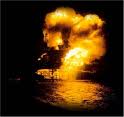
    The gusher unleashed in the Gulf of Mexico continues to spew crude oil. There are no reliable estimates of how much oil is pouring into the gulf. But it comes to many millions of gallons since the catastrophic blowout. Eleven men were killed in the explosions that sank one of the most sophisticated drilling rigs in the world, the “Deepwater Horizon.”

    This week Congress continues its investigation, but Capitol Hill has not heard from the man “60 Minutes” correspondent Scott Pelley met: Mike Williams, one of the last crewmembers to escape the inferno.

    He says the destruction of the Deepwater Horizon had been building for weeks in a series of mishaps. The night of the disaster, he was in his workshop when he heard the rig’s engines suddenly run wild. That was the moment that explosive gas was shooting across the decks, being sucked into the engines that powered the rig’s generators.

    “I hear the engines revving. The lights are glowing. I’m hearing the alarms. I mean, they’re at a constant state now. It’s just, ‘Beep, beep, beep, beep, beep.’ It doesn’t stop. But even that’s starting to get drowned out by the sound of the engine increasing in speed. And my lights get so incredibly bright that they physically explode. I’m pushing my way back from the desk when my computer monitor exploded,” Williams told Pelley.

    The rig was destroyed on the night of April 20. Ironically, the end was coming only months after the rig’s greatest achievement. Mike Williams was the chief electronics technician in charge of the rig’s computers and electrical systems. And seven months before, he had helped the crew drill the deepest oil well in history, 35,000 feet.

    “It was special. There’s no way around it. Everyone was talking about it. The congratulations that were flowing around, it made you feel proud to work there,” he remembered. Williams worked for the owner, Transocean, the largest offshore drilling company. Like its sister rigs, the Deepwater Horizon cost $350 million, rose 378 feet from bottom to top. Both advanced and safe, none of her 126 crew had been seriously injured in seven years.

    The safety record was remarkable, because offshore drilling today pushes technology with challenges matched only by the space program. Deepwater Horizon was in 5,000 feet of water and would drill another 13,000 feet, a total of three miles. The oil and gas down there are under enormous pressure. And the key to keeping that pressure under control is this fluid that drillers call “mud.”

    “Mud” is a manmade drilling fluid that’s pumped down the well and back up the sides in continuous circulation. The sheer weight of this fluid keeps the oil and gas down and the well under control. The tension in every drilling operation is between doing things safely and doing them fast; time is money and this job was costing BP a million dollars a day. But Williams says there was trouble from the start — getting to the oil was taking too long.

    Williams said they were told it would take 21 days; according to him, it actually took six weeks. With the schedule slipping, Williams says a BP manager ordered a faster pace. 

    “And he requested to the driller, ‘Hey, let’s bump it up. Let’s bump it up.’ And what he was talking about there is he’s bumping up the rate of penetration. How fast the drill bit is going down,” Williams said. Williams says going faster caused the bottom of the well to split open, swallowing tools and that drilling fluid called “mud.”

    “We actually got stuck. And we got stuck so bad we had to send tools down into the drill pipe and sever the pipe,” Williams explained. That well was abandoned and Deepwater Horizon had to drill a new route to the oil. It cost BP more than two weeks and millions of dollars.

    “We were informed of this during one of the safety meetings, that somewhere in the neighborhood of $25 million was lost in bottom hole assembly and ‘mud.’ And you always kind of knew that in the back of your mind when they start throwing these big numbers around that there was gonna be a push coming, you know? A push to pick up production and pick up the pace,” Williams said. 

    Asked if there was pressure on the crew after this happened, Williams told Pelley, “There’s always pressure, but yes, the pressure was increased.” But the trouble was just beginning: when drilling resumed, Williams says there was an accident on the rig that has not been reported before. He says, four weeks before the explosion, the rig’s most vital piece of safety equipment was damaged.

    Down near the seabed is the blowout preventer, or BOP. It’s used to seal the well shut in order to test the pressure and integrity of the well, and, in case of a blowout, it’s the crew’s only hope. A key component is a rubber gasket at the top called an “annular,” which can close tightly around the drill pipe. Williams says, during a test, they closed the gasket. 

    But while it was shut tight, a crewman on deck accidentally nudged a joystick, applying hundreds of thousands of pounds of force, and moving 15 feet of drill pipe through the closed blowout preventer. Later, a man monitoring drilling fluid rising to the top made a troubling find.

    “He discovered chunks of rubber in the drilling fluid. He thought it was important enough to gather this double handful of chunks of rubber and bring them into the driller shack. I recall asking the supervisor if this was out of the ordinary. And he says, ‘Oh, it’s no big deal.’ And I thought, ‘How can it be not a big deal? There’s chunks of our seal is now missing,’” Williams told Pelley.

    And, Williams says, he knew about another problem with the blowout preventer. The BOP is operated from the surface by wires connected to two control pods; one is a back-up. Williams says one pod lost some of its function weeks before. Transocean tells us the BOP was tested by remote control after these incidents and passed. But nearly a mile below, there was no way to know how much damage there was or whether the pod was unreliable.

    In the hours before the disaster, Deepwater Horizon’s work was nearly done. All that was left was to seal the well closed. The oil would be pumped out by another rig later. Williams says, that during a safety meeting, the manager for the rig owner, Transocean, was explaining how they were going to close the well when the manager from BP interrupted.

    “I had the BP company man sitting directly beside me. And he literally perked up and said ‘Well my process is different. And I think we’re gonna do it this way.’ And they kind of lined out how he thought it should go that day. So there was short of a chest-bumping kind of deal. The communication seemed to break down as to who was ultimately in charge,” Williams said.


    On the day of the accident, several BP managers were on the Deepwater Horizon for a ceremony to congratulate the crew for seven years without an injury. While they where there, a surge of explosive gas came flying up the well from three miles below. The rig’s diesel engines which power its electric generators sucked in the gas and began to run wild.

    “I’m hearing hissing. Engines are over-revving. And then all of a sudden, all the lights in my shop just started getting brighter and brighter and brighter. And I knew then something bad was getting ready to happen,” Williams told Pelley.

    It was almost 10 at night. And directly under the Deepwater Horizon there were four men in a fishing boat, Albert Andry, Dustin King, Ryan Chaisson and Westley Bourg. 

    “When I heard the gas comin’ out, I knew exactly what it was almost immediately, ” Bourg recalled. 

    “When the gas cloud was descending on you, what was that like?” Pelley asked. 

    “It was scary. And when I looked at it, it burned my eyes. And I knew we had to get out of there,” Andry recalled. Andry said he knew the gas was methane. On the rig, Mike Williams was reaching for a door to investigate the engine noise. 

    “These are three inch thick, steel, fire-rated doors with six stainless steel hinges supporting ’em on the frame. As I reach for the handle, I heard this awful hissing noise, this whoosh. And at the height of the hiss, a huge explosion. The explosion literally rips the door from the hinges, hits, impacts me and takes me to the other side of the shop. And I’m up against a wall, when I finally come around, with a door on top of me. And I remember thinking to myself, ‘You know, this, this is it. I’m gonna die right here,’” Williams remembered.

    Meanwhile, the men on the fishing boat had a camera, capturing the flames on the water. 

    “I began to crawl across the floor. As I got to the next door, it exploded. And took me, the door, and slid me about 35 feet backwards again. And planted me up against another wall. At that point, I actually got angry. I was mad at the doors. I was mad that these fire doors that are supposed to protect me are hurting me. 

    And at that point, I made a decision. ‘I’m going to get outside. I may die out there, but I’m gonna get outside.’ So I crawl across the grid work of the floor and make my way to that opening, where I see the light. I made it out the door and I thought to myself, ‘I’ve accomplished what I set out to accomplish. I made it outside. At least now I can breathe. I may die out here, but I can breathe,’” Williams said. Williams couldn’t see; something was pouring into his eyes and nm that’s when he noticed a gash in his forehead.

    “I didn’t know if it was blood. I didn’t know if it was brains. I didn’t know if it was flesh. I didn’t know what it was. I just knew there was, I was, I was in trouble. At that point I grabbed a lifejacket, I was on the aft lifeboat deck there were two functioning lifeboats at my disposal right there. But I knew I couldn’t board them. I had responsibilities, ” he remembered. 

    His responsibility was to report to the bridge, the rig’s command center. “I’m hearing alarms. I’m hearing radio chatter, ‘May day! May day! We’ve lost propulsion! We’ve lost power! We have a fire! Man overboard on the starboard forward deck,’” Williams remembered.

    Williams says that, on the bridge, he watched them try to activate emergency systems. “The BOP that was supposed to protect us and keep us from the blowout obviously had failed. And now, the emergency disconnect to get us away from this fuel source has failed. We have no communications to the BOP,” he explained.

    “And I see one of the lifeboats in the water, and it’s motoring away from the vessel. I looked at the captain and asked him. I said, ‘What’s going on?’ He said, ‘I’ve given the order to abandon ship,’” Williams said. Every Sunday they had practiced lifeboat drills and the procedure for making sure everyone was accounted for. But in the panic all that went to hell. The lifeboats were leaving.

    “They’re leaving without you?” Pelley asked.

    “They have left, without the captain and without knowing that they had everyone that had survived all this onboard. I’ve been left now by two lifeboats. And I look at the captain and I said, ‘What do we do now? By now, the fire is not only on the derrick, it’s starting to spread to the deck. At that point, there were several more explosions, large, intense explosions,” Williams said. 

    Asked what they felt and sounded like, Williams said, “It’s just take-your-breath- away type explosions, shake your body to the core explosions. Take your vision away from the percussion of the explosions.” About eight survivors were left on the rig. They dropped an inflatable raft from a crane, but with only a few survivors on the raft, it was launched, leaving Williams, another man, and a crewwoman named Andrea.

    “I remember looking at Andrea and seeing that look in her eyes. She had quit. She had given up. I remember her saying, ‘I’m scared.’ And I said, ‘It’s OK to be scared. I’m scared too.’ She said, ‘What are we gonna do?’ I said, ‘We’re gonna burn up. Or we’re gonna jump,’” Williams remembered. Williams estimates it was a 90-100 foot jump down. In the middle of the night, with blood in his eyes, fire at his back and the sea ten stories below, Williams made his choice.

    “I remember closing my eyes and sayin’ a prayer, and asking God to tell my wife and my little girl that Daddy did everything he could and if, if I survive this, it’s for a reason. I made those three steps, and I pushed off the end of the rig. And I fell for what seemed like forever. A lotta things go through your mind,” he remembered.

    With a lifejacket, Williams jumped feet first off the deck and away from the inferno. He had witnessed key events before the disaster. But if he was going to tell anyone, he would have to survive a ten-story drop into the sea. 

    “I went down way, way below the surface, obviously. And when I popped back up, I felt like, ‘OK, I’ve made it.’ But I feel this God-awful burning all over me. And I’m thinking, ‘Am I on fire?’ You know, I just don’t know. So I start doin’ the only thing I know to do, swim. I gotta start swimmin’, I gotta get away from this thing. I could tell I was floatin’ in oil and grease and, and diesel fuel. I mean, it’s just the smell and the feel of it,” Williams remembered.

    “And I remember lookin’ under the rig and seein’ the water on fire. And I thought, ‘What have you done? You were dry, and you weren’t covered in oil up there, now you’ve jumped and you’ve made this, and you’ve landed in oil. The fire’s gonna come across the water, and you’re gonna burn up.’ And I thought, ‘You just gotta swim harder.’ So I swam, and I kicked and I swam and I kicked and I swam as hard as I could until I remember not feelin’ any more pain, and I didn’t hear anything. 

    “And I thought, ‘Well, I must have burned up, ’cause I don’t feel anything, I don’t hear anything, I don’t smell anything. I must be dead.’ And I remember a real faint voice of, ‘Over here, over here.’ I thought, ‘What in the world is that?’ And the next thing I know, he grabbed my lifejacket and flipped me over into this small open bow boat. I didn’t know who he was, I didn’t know where he’d come from, I didn’t care. I was now out of the water,” he added.

    Williams’ survival may be critical to the investigation. We took his story to Dr. Bob Bea, a professor of engineering at the University of California, Berkeley.

    Last week, the White House asked Bea to help analyze the Deepwater Horizon accident. Bea investigated the Columbia Space Shuttle disaster for NASA and the Hurricane Katrina disaster for the National Science Foundation. Bea’s voice never completely recovered from the weeks he spent in the flood in New Orleans. But as the White House found, he’s among the nation’s best, having investigated more than 20 offshore rig disasters.

    “Mr. Williams comes forward with these very detailed elements from his viewpoint on a rig. That’s a brave and intelligent man,” Bea told Pelley. “What he’s saying is very important to this investigation, you believe?” Pelley asked. 

    “It is,” the professor replied.

    What strikes Bea is Williams’ description of the blowout preventer. Williams says in a drilling accident four weeks before the explosion, the critical rubber gasket, called an “annular,” was damaged and pieces of it started coming out of the well.

    “According to Williams, when parts of the annular start coming up on the deck someone from Transocean says, ŒLook, don’t worry about it.’ What does that tell you?” Pelley asked.

    “Houston we have a problem,” Bea replied.

    Here’s why that’s so important: the annular is used to seal the well for pressure tests. And those tests determine whether dangerous gas is seeping in. 

    “So if the annular is damaged, if I understand you correctly, you can’t do the pressure tests in a reliable way?” Pelley asked.

    “That’s correct. You may get pressure test recordings, but because you’re leaking pressure, they are not reliable,” Bea explained. Williams also told us that a backup control system to the blowout preventer called a pod had lost some of its functions.

    “What is the standard operating procedure if you lose one of the control pods?” Pelley asked.

    “Reestablish it, fix it. It’s like losing one of your legs,” Bea said.

    “The morning of the disaster, according to Williams, there was an argument in front of all the men on the ship between the Transocean manager and the BP manager. Do you know what that argument is about?” Pelley asked.

    Bea replied, “Yes,” telling Pelley the argument was about who was the boss. In finishing the well, the plan was to have a subcontractor, Halliburton, place three concrete plugs, like corks, in the column. 

    The Transocean manager wanted to do this with the column full of heavy drilling fluid — what drillers call “mud” — to keep the pressure down below contained. But the BP manager wanted to begin to remove the “mud” before the last plug was set. That would reduce the pressure controlling the well before the plugs were finished. 

    Asked why BP would do that, Bea told Pelley, “It expedites the subsequent steps.” 

    “It’s a matter of going faster,” Pelley remarked.

    “Faster, sure,” Bea replied.

    Bea said BP had won that argument. “If the ‘mud’ had been left in the column, would there have been a blowout?” Pelley asked. 

    “It doesn’t look like it,” Bea replied.

    To do it BP’s way, they had to be absolutely certain that the first two plugs were keeping the pressure down. That life or death test was done using the blowout preventer which Mike Williams says had a damaged gasket. Investigators have also found the BOP had a hydraulic leak and a weak battery. 

    “Weeks before the disaster they know they are drilling in a dangerous formation, the formation has told them that,” Pelley remarked. “Correct,” Bea replied.

    “And has cost them millions of dollars. And the blowout preventer is broken in a number of ways,” Pelley remarked.

    “Correct,” Bea replied.

    Asked what would be the right thing to do at that point, Bea said, “I express it to my students this way, ‘Stop, think, don’t do something stupid.’” 

    They didn’t stop. As the drilling fluid was removed, downward pressure was relieved; the bottom plug failed. The blowout preventer didn’t work. And 11 men were incinerated; 115 crewmembers survived. And two days later, the Deepwater Horizon sank to the bottom.

    This was just the latest disaster for a company that is the largest oil producer in the United States. BP, once known as British Petroleum, was found willfully negligent in a 2005 Texas refinery explosion that killed of its 15 workers. BP was hit with $108 million in fines — the highest workplace safety fines in U.S. history.

    Now, there is new concern about another BP facility in the Gulf: a former BP insider tells us the platform “Atlantis” is a greater threat than the Deepwater Horizon.  Ken Abbott has worked for Shell and GE. And in 2008 he was hired by BP to manage thousands of engineering drawings for the Atlantis platform. “They serve as blueprints and also as a operator manual, if you will, on how to make this work, and more importantly how to shut it down in an emergency,” Abbott explained.

    But he says he found that 89%of those critical drawings had not been inspected and approved by BP engineers. Even worse, he says 95% of the underwater welding plans had never been approved either.

    “Are these welding procedures supposed to be approved in the paperwork before the welds are done?” Pelley asked.  


     “Absolutely. Yeah,” Abbott replied. “They¹re critical.”

    Abbott’s charges are backed up by BP internal e-mails. In 2008, BP manager Barry Duff wrote that the lack of approved drawings could result in “catastrophic operator errors,” and “currently there are hundreds if not thousands of Subsea documents that have never been finalized.”

    Duff called the practice “fundamentally wrong.”

    “I’ve never seen this kind of attitude, where safety doesn’t seem to matter and when you complain of a problem like Barry did and like I did and try to fix it, you’re just criticized and pushed aside,” Abbott said.

    Abbott was laid off. He took his concerns to a consumer advocacy group called Food & Water Watch. They’re asking Congress to investigate. And he is filing suit in an attempt to force the federal government to shut down Atlantis. 

    “The Atlantis is still pumping away out there, 200,000 barrels a day, and it will be four times that in a year or two when they put in all 16 wells. If something happens there, it will make the Deepwater Horizon look like a bubble in the water by comparison,” Abbott said. In an e-mail, BP told us the Atlantis crew has all the documents it needs to run the platform safely. We also wanted BP’s perspective on the Deepwater Horizon disaster.


    The company scheduled an interview with its CEO, Tony Hayward. Then, they cancelled, saying no one at BP could sit down with “60 Minutes” for this report.  In other interviews, Hayward says this about Transocean, the owner of the Deepwater Horizon: “The responsibility for safety on the drilling rig is with Transocean. It is their rig, their equipment, their people, their systems, their safety processes.”

    “When BP’s chief executive Tony Hayward says, ‘This is Transocean?s accident,’ what do you say?” Pelley asked Professor Bea.

    “I get sick. This kind of division in the industry is a killer. The industry is comprised of many organizations. And they all share the responsibility for successful operations. And to start placing, we’ll call it these barriers, and pointing fingers at each other, is totally destructive, ” he replied. 

    Asked who is responsible for the Deepwater Horizon accident, Bea said, “BP.”

    We went out on the Gulf and found mats of thick floating oil. No one has a fix on how much oil is shooting out of the well. But some of the best estimates suggest it’s the equivalent of the Exxon Valdez spill everyfour to seven days. Scientists are now reporting vast plumes of oil up to 10 miles long under the surface. The spill has cost BP about $500 million so far. But consider, in just the first three months this year, BP made profits of $6 billion.

    There are plenty of accusations to go around that BP pressed for speed, Halliburton’ s cement plugs failed, and Transocean damaged the blowout preventer.  Through all the red flags, they pressed ahead. It was, after all, the Deepwater Horizon, the world record holder, celebrated as among the safest in the fleet. 

    “Men lost their lives,” survivor Mike Williams told Pelley. “I don’t know how else to say it. All the things that they told us could never happen happened.”


    ———— ——— ——— ——— —

    Copyright © 2010 CBS News ’60 Minutes’