Category: News

  • $180,000 Porsche Crash by Globe journalist’s son: Best ad in 2010

    $180,000 Porsche Crash by Globe journalist’s son: Best ad in 2010

    I love good advertising and I think Porsche just hit the jackpot with this $180,000 Porsche Crash and has just taken the top spot of being my best ad of 2010! Best ad? Well, let me explain.

    To me, the best ads are those you don’t pay a dime for the medium and don’t even plan (but you need to handle it well and have a bit of “luck”). The next best ads are those that you don’t pay (or don’t pay much) but plan meticulously (see VW’s Fun Theory ads). The least favourite type of ads for me are those that you pay mega big bucks to get the obvious “best coverage” (front pages in newspapers, TV prime time slots, etc).

    If you think about it correctly, the purpose of any ads are to get our attention. The following accidental $180,000 Porsche crash by Globe journalist’s son costed Porsche a tiny $11,000 (initial body shop estimate) and this is a “cost” with profit built-in, so it will cost Porsche likely much less than $11,000.

    I am happy that Mr. Rick Bye (manager of the Porsche press fleet) and Porsche made the right decisions. Congrats to Porsche for your injury-free $180,000 crash!

    In my chart, your “ad” has just beat Alec Brownstein’s $6 Google reverse job ad for its Canadian and worldwide potential impact and because yours had the added advantage of not being planned at all!

    Congrats Porsche, you’ve earned a free link from this blog!

    Globe journalist’s son crashes $180,000 Porsche – Take an expensive sports car, a curious teen and a garage door – and mix together to get one very embarrassed automotive writer

    “Some moments are lived backwards. The great ones run through your mind like a favourite movie. Then there are the other kind, where you try to roll back the clock – like the afternoon my teenage son launched a brand new Porsche Turbo through our garage door.

    So far, I have not managed to invent a time machine, go back, and snatch the key from his hands (and in case you were wondering, the car goes for $180,000, not including freight, tax or a new garage).

    That day began with deceptive perfection. I woke up in a sunlit bedroom next to my beautiful wife. We had celebrated 26 years of marriage just the day before. Our cherry tree was in full blossom, and in the garage, locked away like a crown jewel, was a 2010 Porsche 997 Turbo, the latest (and costliest) in a long series of test cars.

    [… And here come the funny bites. …] Will stuck his head into the office and asked me if he could show his buddy the Turbo. I told him to go ahead. He and his friends always checked out my cars. Their main focus seemed to be the interior and stereo systems – details I barely cared about.

    I went back to my computer. My car buddies knew I’d been at the track with the Turbo, and they wanted my verdict. I told one it was like a tiger in an Armani suit – killer chassis, unbeatable power, but suave and comfortable, too.

    I shut down my computer and prepared to head to the office, smiling at the thought of a few minutes in the Turbo. As I headed out the back door, I saw my son running toward the house. His eyes were the size of dinner plates. He sputtered: “Dad, the Porsche … the Porsche …”

    I thought the Turbo had been stolen. Our garage has a full security system, but this is one of the most desirable cars in the world, so you never know. Will tried to speak again. “The Turbo rolled into the door….” I walked past him into the garage.

    For nearly a minute, I was too dumbfounded to speak. The Turbo hadn’t rolled into the door – it had launched itself through the entire structure. In a distance of approximately four feet, the Turbo had developed enough kinetic energy to blow the entire door apart. Parts of the roller mechanism were scattered through the alley. Dazed, I picked up a bent metal piece – it looked like a Crazy Bone, a toy Will had collected as a little boy.

    When I parked it, the Turbo had been pristine. Now it looked like the car from Dukes of Hazzard after a chase through the southern backwoods. Stunned, I surveyed the damage. The hood was raked with gouges, the top of the right front fender was flattened, and the driver’s door (which is made from aluminum to save weight) had taken a beating. Worst of all was the rear fender, which had hit the concrete door frame as the Turbo launched itself into the alley – it looked like a giant blacksmith had smacked it with a sledge hammer.

    […] Postscript:

    My son has agreed to do a minimum of one week’s labour for Mr. Bye

    Initial body shop estimate for the 2010 Porsche Turbo – $11,000 plus taxes.

    My garage door was replaced last week, along with the door tracks, opener and door frame. I spent seven hours working alongside the installer. Total cost was $2,700. My insurance deductible was $500. I lose my no-claims insurance discount for three years.

    Later this summer, based on his schedule, my son will attend Apex driving school, where he will be trained in advanced car control and learn to drive a standard transmission.”

    Filed under: advertising, Business, Canada, funny, ideasRevolution, Internet, social media, social network, World

  • Sky Train: Tibetan Women on the Edge of History by Canyon Sam, foreword by His Holiness the 14th Dalai Lama

    Last night, six of my book hens (my mother likes to refer to my book club as “the chicken coop,” which has an amusing ring to it in Korean: “kkoh-kkoh-jang”) got together for a lively discussion of  Canyon Sam‘s debut, Sky Train. Even though I usually play dictator in naming the book, this one was chosen because two of the hens requested a title on contemporary Tibet … plus Sam is scheduled to come to the Smithsonian this fall (stay tuned for details!).

    Sky Train was 20 years in the making for third-generation Chinese American Sam. The book went through multiple revisions, eventually whittled down from an original 36 interviews gathered over numerous trips to Tibet, China, and India, which shrunk in number to 16, then 12, then 9, to the four contained here.

    Sam’s final four are phenomenal women: Mrs. Paljorkhyimsar, who was left behind by her husband who chose to escort a religious leader to safety over his own family, who survived 22 years of death-defying separation in horrific labor camps before being reunited with her family in Switzerland; Mrs. Namseling who began her adult life as the teenage bride of a much older government official, who spent nine years in prison for her lofty position, and was only released to save face when her son-in-law, the prince of Gangtok (today, the capital of India’s last state, Sikkim), arrived on royal visit; Mrs. Taring who became a major advocate for orphan children and education of the Tibetan diaspora in India; and Sonam Choedron who, in spite of the years of suffering and deprivation she survived in unlawful prisons, somehow was able to forgive the man who murdered her son, who asked for nothing more than her son’s driver’s license as that was the only picture she would have of him because all her family pictures had been previously been destroyed by Chinese security officials. Indeed, the true story of Tibet proves to be testimony to the immense suffering and even greater strength of Tibetan women.

    As much as Sky Train gives voice to Tibet’s memorable women, it is as much – if not more so – Sam’s own life journey towards acceptance and ultimately forgiveness. “A Jewish woman commented years ago that my going to China for a year and coming back a Tibetan advocate was like her going to Israel for a year and coming back a Palestinian supporter,” Sam writes. “I didn’t see it that way. I had felt little affinity for China before I’d first visited.”

    That first visit to Sam’s ancestral homeland left Sam “[o]utraged and saddened.” Indeed, the problematic history between China and Tibet is violent, vicious, tragic. China invaded Tibet in 1950, and the 14th Dalai Lama fled to India on March 10, 1959, which is commemorated annually as National Uprising Day. Tibetans were forced to scatter, and those who remained were trapped in cycles of indescribable brutality, genocide, labor camps, and decades of pervasive injustice. Subjugation continues today. The opening of the eponymous “sky train” now irreversibly links Tibet to China.

    Sam takes us along on her own Sky Train voyage, sharing her palpable disappointment trying to get an uninterrupted shot of a once open skyline of natural wonders, her joyful if bittersweet reunion with the Tibetan family she calls her own in a chaotically transformed Lhasa she no longer recognizes, her ongoing search for the women who will finally allow her to finish her book, and eventually her own path towards her own brand of enlightenment. “Clean your heart. Keep the vision. ‘Tibet’ is a state of mind.”

    Readers: Adult

    Published: 2009

    Filed under: ..Adult Readers, .Memoir, .Nonfiction, Chinese American, Tibetan Tagged: Civil rights, Colonialism, Cultural exploration, Family, Friendship, Historical, Politics, Race

  • GameStop looking forward to EA’s Online Pass

    Most gamers aren’t happy with EA Sports’ Online Pass initiative, but GameStop seems to be delighted. In its quarterly investors conference call, the retail chain said that they’re looking forward to Online Pass and that EA’s “Project

  • Biological Diversity, Development, and Poverty Alleviation

    The International Day for Biological Diversity highlights the need to manage ecosystems to fight poverty.

    May 22 is the International Day for Biological Diversity, part of an entire year of celebration. This year’s theme, “Biodiversity, Development, and Poverty Alleviation,” highlights the critical roles that biodiversity and ecosystems play in human livelihoods around the world. With new species (and new threats) discovered every day, now is a critical time to protect the vast array of life on Earth for nature’s, and for people’s sake.

    Through our work, WRI aims to reduce poverty and encourage effective ecosystem stewardship. In our Ecosystem Services for Development project, we help developing countries and multilateral development banks (MDBs) understand the interactions between ecosystem services, people, and poverty.

    Below are some useful resources:

    Publications

    World Resources 2005 – The Wealth of the Poor: Managing Ecosystems to Fight Poverty

    World Resources 2008 – Roots of Resilience: Growing the Wealth of the Poor

    Banking on Nature’s Assets: How Multilateral Development Banks Can Strengthen Development by Using Ecosystem Services

    Mapping: WRI has helped Kenya and Uganda develop maps that will allow them to reduce poverty through better management of the countries’ ecosystems:

    Nature’s Benefits in Kenya: An Atlas of Ecosystems and Human Well-Being

    Mapping a Better Future: How Spatial Analysis Can Benefit Wetlands and Reduce Poverty in Uganda

    Mapping a Healthier Future: How Spatial Analysis Can Guide Pro-Poor Water and Sanitation Planning in Uganda

    Commentary

    Shattering Glass Walls at the Multilateral Development Banks by Janet Ranganathan: Investing in ecosystem services will help MDBs improve the livelihoods of the poor.

    Promoting Development, Protecting Environment by Janet Ranganathan: MDBs can and should integrate nature’s ecosystem services into their planning and decisions.

    Growing the Wealth of the World’s Poor by Jonathan Lash: The food crises of the present will seem as nothing to those of the future unless the world brings some urgency and intelligence to managing the planet’s nature-based assets.

    Data

    Visit our sister site Earthtrends for a wealth of statistics on current environmental, social, and economic trends in more than 150 countries.

  • What Quantitative Easing Is And Why It’s One Of The Biggest Risks Right Now

    Tightrope

    Quantitative easing (QE) is what happens when governments can’t cut interest rates much lower.

    It’s the kitchen sink of easy money from the government.

    While the U.S. and UK have been neck-deep in QE for awhile already, now Europe’s joining the action in order to save its financial system.

    QE is an extremely radical act of support for markets that involves a tight balancing act between stimulating your financial system and preventing hyperinflation.

    None of the guilty parties above have yet to cross the chasm. Europe’s just begun the process.

    (Partly sourced via Morgan Stanley’s ‘ABC’s of QE’ by David Greenlaw)

    What is ‘Quantitative Easing’?

    What is 'Quantitative Easing'?

    Image: AP

    It’s basically when a central bank can’t cut interest rates anymore, because they are too low.

    It can also happen if a central bank decides that cutting rates won’t work for some reason.

    To meet its liquidity objectives, the central bank instead manipulates the size of its balance sheet.

    How does it normally work?

    How does it normally work?

    The central bank buys financial assets from financial institutions using money it creates out of thin air.

    This causes bank reserves in the financial system to increase, creating ‘excess reserves’. The result is a huge increase of the monetary base in the economy.

    It’s called quantitative easing because it ‘involves a change in the quantity variable (reserves and/or the monetary base) as opposed to a change in the interest rate target.’

    Source: Morgan Stanley

    What’s the point?

    What's the point?

    It’s meant to provide needed liquidity to a financial system and stimulate economic activity, though it carries inflation risk.

    But… then what is ‘sterilization’ and how does it control things?

    But... then what is 'sterilization' and how does it control things?

    Image: frankenstoen via Flickr

    Sterilization is used to offset the acquisition of assets by a central bank.

    After the central bank buys new assets, it can ‘sterilize’ these assets by either getting rid of different assets or adding an equal, counterbalancing amount of liabilities.

    It is important to understand that ‘when the acquisition of an asset is sterilized, there is no QE because the balance sheet effects are neutralized.’

    Thus, when sterilization is happening, quantitative easing hasn’t happened yet, even though the central bank is buying financial assets from the market as a form of support.

    Source: Morgan Stanley

    When did QE in America start?

    When did QE in America start?

    ‘The Federal Reserve shifted to quantitative easing in September 2008 when it expanded a number of liquidity programmes, including the term auction facility (TAF) and central bank FX swap lines (see Exhibit 5), and ceased its sterilization efforts.’

    QE started in September 2008, when sterilization ended but the central bank was still buying financial assets from financial institutions.

    Source: Morgan Stanley

    See the huge jump below? That’s when sterilization ended and QE began.

    See the huge jump below? That's when sterilization ended and QE began.

    ‘Up to this point, the Fed had been sterilizing the impact of its new support facilities by liquidating Treasuries.

    Liquidating Treasuries. For example, the TAF was introduced in late 2007 and was scaled up to US$150 billion by May 2008. Over that same interval, the Fed liquidated more than US$200 billion of its holdings of Treasuries in order to sterilize the TAF and other special programmes (see Exhibit 6).

    So, the volume of bank reserves was essentially unchanged during this period, but the mix of balance sheet items shifted.’

    Source: Morgan Stanley

    QE caused bank reserves to explode.

    QE caused bank reserves to explode.

    ‘In September 2008 – as financial markets were melting down – the Fed cried uncle and gave up trying to sterilize.

    Excess reserves rose from a normal level of US$1.0-1.5 billion to US$270 billion in October 2008 as the liquidity support programmes continued to expand (see Exhibit 7).’

    Source: Morgan Stanley

    These reserves were created from central bank money created out of thin air. This was the ‘money-printing’ so many have complained about.

    These reserves were created from central bank money created out of thin air. This was the 'money-printing' so many have complained about.

    By the end of 2008, excess reserves reached US$800 billion and the monetary base had nearly doubled in size.

    By the end of 2008, excess reserves reached US$800 billion and the monetary base had nearly doubled in size.

    ‘In early 2009, the Fed started to purchase large quantities of MBS and agency debt, and in March it began buying Treasuries.

    However, it’s important to note that the bulk of the QE took place several months before the Fed started buying mortgages and Treasuries.

    Thus, it is incorrect to simply refer to the Fed’s bond purchases as QE.’

    Source: Morgan Stanley

    The Fed’s objective was to restore liquidity to important markets, and it did.

    The Fed’s objective was to restore liquidity to important markets, and it did.

    ‘The Fed succeeded in achieving these goals. The TAF, FX swap lines and alphabet soup of other liquidity support facilities appeared to play an important role in reining in LIBOR (see Exhibit 8).’

    Source: Morgan Stanley

    The economy was jump-started, and pressure was taken off of housing, by far cheaper mortgage rates.

    The economy was jump-started, and pressure was taken off of housing, by far cheaper mortgage rates.

    ‘Meanwhile, the LSAPs (large-scale asset purchases) helped to drive mortgage rates lower.’

    This provided a significant amount of stimulus to the economy.

    Source: Morgan Stanley

    Many were worried about the effects of giant growth in money supply… but here’s why it has been okay so far.

    Many were worried about the effects of giant growth in money supply... but here's why it has been okay so far.

    ‘As mentioned earlier, the monetarist view is that QE represents an important event because the expansion of the monetary base is likely to be accompanied by growth in the money supply.

    However, this was not really the case in the US. While the base doubled, growth in narrow money experienced only a modest acceleration, as the money multiplier plummeted.

    This reflected the fact that the excess reserves created by the Fed were parked in cash.’

    Source: Morgan Stanley

    Banks have been paid interest on their reserves to prevent inflation.

    Banks have been paid interest on their reserves to prevent inflation.

    The Fed has been paying interest on banks’ reserves in order to incentivize them not too lend everything out, and thus in an attempt to prevent huge excess bank reserves from translating into inflationary forces.

    This interest is likely higher than the market-rate which would banks would get if such a program didn’t exist.

    It’s meant to put a floor under short-term rates.

    This entire process could prove itself to have been extremely smart.

    This entire process could prove itself to have been extremely smart.

    ‘If the Fed can now engineer a successful exit from QE, any inflation consequences and market distortions should largely evaporate.’

    Source: Morgan Stanley

    It all depends on whether the Fed can restore normalcy to its balance sheet successfully.

    It all depends on whether the Fed can restore normalcy to its balance sheet successfully.

    The Fed plans to use multiple methods in order to reduce the size of its balance sheet and remove excess reserves from the banking system.

    For our purposes here, the exact methods need only be briefly referenced:

    ‘The Fed plans to use term deposits, reverse RPs and asset sales to unwind QE.

    The asset sale option has generated a lot of interest recently and appears to have gained unanimous acceptance among Fed officials.

    But the sequencing still appears to be reverse RPs and term deposits first, followed by asset sales later on.’

    Source: Morgan Stanley

    It’ll be a tricky balancing act for the U.S. going forward…

    It'll be a tricky balancing act for the U.S. going forward...

    Image: donald judge via Flickr

    The trick will be whether the Fed can use the aforementioned methods to drain at least one trillion dollars of excess reserves from the banking system, as a completion of the QE process, in a balancing act between unsettling the financial system and high U.S. inflation.

    ‘We are… concerned that the Fed may not be able to hike the fed funds rate when the time comes, unless it is willing to drain away a size able portion of the excess reserve position.

    Bernanke is saying that the Fed will try to engineer a gradual exit from QE, but could be forced into a more rapid exit. It should be obvious that the process of draining US$1 trillion or more of excess reserves in a short period of time is fraught with potential market risks.’

    Source Morgan Stanley

    A rapid exit, in a bid to prevent emerging inflation, could cause a substantial shock to the financial system, as it would be a very sudden form of monetary tightening.

    A rapid exit, in a bid to prevent emerging inflation, could cause a substantial shock to the financial system, as it would be a very sudden form of monetary tightening.

    It’s perilous, and now Europe is beginning a similar journey, just as the U.S. is exiting.

    It's perilous, and now Europe is beginning a similar journey, just as the U.S. is exiting.

    ‘Last week, the ECB announced that it would start to intervene in euro area bond markets and buy public and private debt under a new Securities Market Programme (SMP)

    The ECB’s recent decision to purchase debt securities in order to ease market ‘dysfunction’ has certainly had the desired impact on bond yields, but it has also left many questions unanswered. Do the bond purchases represent QE or a move towards QE?’

    Source: Morgan Stanley

    Join the conversation about this story »

  • On Second Installment: Kendra Could Be A Lesbian

    On Second Installment: Kendra could be a LesbianAfter exploitation and exposition claims from the release of her first sex video, Kendra is again at the center of intrigues and scrutiny. One more video appeared over the internet, but this time Kendra caughthaving sexual moments with another female, according to Radar Online.

    A lot of questions sparked from this incident. Is she a Lesbian? Was this crafted on purpose because Kendra is losing that “exciting” factor? Where did this video come from? Is this another money-making activity of Kendra, her ex-boyfriend or Vivid? Kendra’s partner’s name in the video was dropped like a bomb—poor Taryn.

    The ex-boyfriend of the latter affirmed that the two indeed made out and that there is video to show what transpired between the two girls. The sudden exposure of this new explicit tape is believed to be a teaser to what Vivid Entertainment possess. As you can remember, Vivid Entertainment bought the full rights of Kendra’s first tape from her ex-boyfriend, Justin Frye. The guy was reported t have collected at least $100,000.00 from the sale with unknown amount for profit
    sharing. May 28th marks the day of the anticipated (by men) Vivid’s launch of Kendra Exposed. Who knows, this might be another business tricks of either parties…

    Related posts:

    1. Kendra’s Sex tape Exposed!
    2. Kendra Wilkinson’s Sex Tape Exposed
    3. Nicki Minaj : Another Sex Tape Exposed

  • Adobe Plans a Flash Revolution with P2P Features

    Adobe’s new version for Flash Player (10.1) could be a real game changer when it comes to online video streaming. With the public war with Apple at its peak, Adobe reveals some of its plans to fight back against the iPad blockage.

    Adobe will implement new P2P features in its Flash Player that will allow the user to download streamed … (read more)

  • Lindsay Lohan Cocaine Photos?

    Cocaine, Blohan, and Butt Cracks — Oh My!

    It appears the “perfectly clean and sober” trainwreck formerly known as screen star Lindsay Lohan will have to pull a pretty impressive excuse out of her dime bag to explain newly-released photos, which appear to show LiLo — cut straw in hand — nuzzling beside what looks mysteriously like a plate of blow.

    An arrest warrant for Lohan was lifted Thursday after the actress posted $100,000 bail. Earlier on Thursday, a Los Angeles judge issued the warrant when Lohan failed to appear in court for a probation hearing. Lohan claimed she was stuck at the Cannes Film Festival due to her passport being stolen. That’s funny, since TMZ says the star sent the night “stuck” on a party yacht off the French Riviera.

    Uh-Huh….


  • Video: The Delicate Flutter of Robotic Butterfly Wings | Discoblog

    Butterfly in the sky, researchers wonder how you fly. To this end, Harvard University’s Hiroto Tanaka and the University of Tokyo’s Isao Shimoyama have built a butterfly doppelganger by combining angelic plastic wings, balsa wood, and rubber bands. The exact model for this “ornithopter” is the swallowtail: Tanaka and Shimoyama mimicked the exact size and weight of a flesh-and-blood member of the Papilionidae family. They even made detailed plastic veins on their butterfly’s polymer wings. As the BBC reports, a high-speed video of their model’s flight allowed Tanaka and Shimoyama to calculate the forces on the insect’s wings. Also, by constructing the butterfly themselves, they could determine the essential bug pieces for forward flight. They found, for example, that those pretty veins are a must, but that the creatures need not continually adjust their wings during flight as other insects do. Bioinspiration & Biomimetics will publish their complete paper in June. Given existing robotic caterpillars, is anyone thinking Transformer? Related content:
    80beats: Monarch Butterflies Navigate With Sun-Sensing Antennae
    Not Exactly Rocket Science: Caterpillars must walk before they can anally scrape
    Not Exactly Rocket Science: Butterflies evolve resistance to male-killing bacteria in record time
    DISCOVER: The Calculating Beauty of Butterflies (photo gallery)


  • Don’t have gravity? Take your lumps. | Bad Astronomy

    It might seem like a tautology — and that’s because it is — but sometimes the only word you can use to describe an image from the Cassini Saturn probe is otherwordly:

    cassini_rhea_epimetheus

    [Click to engasgiantize.]

    This otherworldy picture was taken on March 24, 2010. The big moon is Rhea, seen from 1.2 million kilometers (750,000 miles) away, and the little one below it is Epimetheus, from 1.6 million km (990,000 miles) away. Perspective makes them look right next to each other, but in reality the distance between them is the same as the Moon from the Earth! Saturn and its rings provide the backdrop for this stunning alien portrait.

    To me, the most striking thing about this picture is the difference between the two moons. Rhea is a ball, a sphere, while Epimetheus is clearly a lumpy rock. Rhea is also clearly a lot bigger, even accounting for perspective in the picture; it’s about 1520 km (940 miles) across, while Epimetheus is 144 x 108 x 98 km (86 x 64 x 58 miles) in size.

    Why is Rhea round, and Epimetheus lumpy? Gravity. Rhea, being so much bigger, has a lot more mass, so its gravity is much stronger. Objects bigger than a few hundred kilometers across have enough mass that self-gravity becomes important in shaping them. A rock you might see lying on the ground is small and has very little gravity, so the important things that shape it are its chemistry, the crystal structure inside it, and its history (getting banged by another rock, erosion, and so on).

    But as the mass increases, so does the influence of gravity. Eventually, gravity wins: it doesn’t matter what the composition is (metal, ice, rock) or the history (getting knocked around), because gravity is strong enough to shape the object into a sphere. Sure, other forces can be at play (for example, rotation can flatten an object out a bit), but gravity is the one with the biggest influence.

    Gravity is an inward force, trying to draw everything into the center of the mass. That’s why big objects are spheres; anything large enough to stick up very far gets pulled down. Look at mountains on Earth: they can only get to a certain size before slumping. They can’t support their own weight! Olympus Mons on Mars is much bigger than any mountain could ever be on Earth, because Mars has less gravity.

    So this is more than just a beautiful picture from Cassini; it’s an object lesson in gravity. And as science tells us over and again, size matters.

    Credit: NASA/JPL/Space Science Institute


    Related posts:

    Rhea:
    Happy Valentines Day. Love Rhea
    A marvelous night for a (Saturn) moon dance
    Peek-a-moon
    Epimetheus:
    The real Pandora, and two mooning brothers
    Cassini eavesdrops on orbit-swapping moons


  • BlackBerry Bold 9800 spotted in the wild with WebKit

    At this point, seeing shots of the BlackBerry Bold 9800 slider in the wild is nothing new, but seeing proof of a native WebKit browser on OS 6.0, well that’s something else!  Thanks to the folks at TheCellularGuru, the picture you see above is the 9800 passing the Acid3 browser test (a test that checks how well a browser renders content based on certain web standards) with a perfect score, a feat not to be taken lightly.

    According to TheCellularGuru, a tipster sent them the pictures which shows a keyboard very similar to the Bold 9700 coupled with a touchscreen like that of the Storm.  Also displayed is the “About” page showing OS 6.0, and the “Memory” page which alludes to 4GB of on-board memory.  Word on the street is that the Bold 9800 will be sliding on over to AT&T sometime this June, with the announcement to come a few weeks prior.

    Will you be waiting for a BlackBerry slider with the newest BlackBerry OS?  Let us know in the comments!

    Via SlashGear, TheCellularGuru 


  • QUOTE: I think there’s a benefit to being one of

    I think there’s a benefit to being one of six people that no one knew. No VCs would return our calls and we were broke and bootstrapping it and operating under the radar so we could focus on the most important things: the product, the users, what we were building. There’s all this noise, the tech-crunch, which you have to tune out if you want to build a good product. None of that stuff is additive; it all takes away from building a product.

    Caterina Fake on developing in obscurity.

  • Rand Paul calls White House pressure on British Petroleum “un-American,” defends BP’s recklessness: “sometimes accidents happen” – Asserts “I don’t think Washington should have anything to do with the mining” of coal: “My energy policy is let the marketplace decide through capitalism.”

    Rand Paul4Such are the joys of listening to a true libertarian unfiltered.

    The Tea Party crowd may get GOP voters to go ga ga over the likes of Kentucky Senate candidate Rand Paul — son of Ron (but not named after Ayn).   But that’s only because the “mainstream” GOP is so extreme that they barely noticed how anarchical a pure libertarian is.

    Fundamentally, libertarians think the government should be out of the civil rights and regulation business entirely.  Environmental harm should be dealt with through private lawsuits.  Safety regulations should either be nonexistent or left to local officials.  I hope we get more tough interviewers exposing his dangerous views.

    Today, ABC News’ Good Morning America today, host George Stephanopoulos pushed Paul on “how far” he would “push” his anti-government views.  The answer is pretty damn far, as this video (via TP) reveals:


    STEPHANOPOULOS: But you don’t want to get rid of the EPA?

    PAUL: No, the thing is is that drilling right now and the problem we’re having now is in international waters and I think there needs to be regulation of that and always has been regulation. What I don’t like from the president’s administration is this sort of, you know, “I’ll put my boot heel on the throat of BP.” I think that sounds really un-American in his criticism of business. I’ve heard nothing from BP about not paying for the spill. And I think it’s part of this sort of blame game society in the sense that it’s always got to be someone’s fault. Instead of the fact that maybe sometimes accidents happen. I mean, we had a mining accident that was very tragic and I’ve met a lot of these miners and their families. They’re very brave people to do a dangerous job. But then we come in and it’s always someone’s fault. Maybe sometimes accidents happen.

    Uhh, yeah, accidents happen — to companies run with Recklessness, Arrogance, and Hubris.

    We now have a pretty clear understanding that BP was grossly negligent — and still is (see “Should you believe anything BP says?” and “NWF: BP cover-up begins to unravel“).  BP has been working overtime to hid the true scale of the undersea gusher from the nation — but for Paul, apparently that really isn’t anybody’s business but the executives of British Petroleum.

    Paul’s hypocrisy is staggering.  In the worldview of extreme libertarians like Paul — and yes, the phrase is a somewhat redundant — it is government that is to blame for all of our woes.  That’s why Paul demands utterly unfettered capitalism, as in this 2010 interview with a local newspaper, The Middlesboro Daily News:

    MDN: Regarding energy policy, on your website, you wrote: ‘By subsidizing certain new energies like solar and wind, we distort the marketplace and make it impossible for companies to know what is really the most efficient solution.’ Can you elaborate on your idea of sound energy policy?

    RP: I would say that my energy policy is let the marketplace decide through capitalism. So it shouldn’t be me saying: ‘I like wind mills and I hate coal, so therefore I’m going to give all these benefits to wind mills and punish coal.’ That’s kind of what I think the Obama administration is doing. Mine would be more of: let’s step back and let the marketplace decide. Coal’s still pretty cheap and it’s a cheap form of producing electricity. As far as the mining aspect of it, it should be decided in Perry county and Pike county and all these individual counties should make the rules for how the mining occurs. I don’t think Washington should have anything to do with the mining.

    It seems like Paul shares the Darwinian worldview of the Massey CEO — Don Blankenship warned West Virginia that he believes in “survival of the fittest”

    He blames government for everything, including our energy crisis.  But when a self-regulating, self-certifying oil company recklessly causes a tragic catastrophe, he attacks anyone who tries to blame them.

    Well, at least he is intellectually consistent — except, of course, when he isn’t (see TP’s Rand Paul opposes government spending — except for when it benefits him).

    Rand Paul is a good face for the Tea Party extemists and the new Republican Party.  Let’s hope he continues to get as much airtime as possible with people who know how to ask reasonably tough questions.

    Related Post:

  • “$10 Minimum For Credit Card Purchase” Signs May Soon Be Totally Legit

    As we all know, merchants are generally not supposed to mandate minimum credit card purchases. It’s a violation of the merchant agreements they sign with the credit card companies. (For more info, check out this article.) The proposed finance bill, however, may legitimize those handwritten signs if it ends up passing.

    The NYT says that current Senate version of the bill will allow such minimums as long as there is no discrimination between which type of card the customer is using. A Bank of America card, for example, could not have a $10 minimum while an Amex had none.

    On the other had, offering discounts to certain preferred card holders would be allowed. So you could get a $1 discount for having a MasterCard while people with Visa were stuck paying full price.

    The provision is part of a larger reworking of the way merchant fees are handled. The credit card companies are against it, because it would require banks to lower fees for merchants who use debit cards. The banks currently use those fees to pay for things like rewards programs and free checking accounts — products that are attractive to consumers and easy to market.

    “This is an incredible con job,” MasterCard’s general counsel, Noah J. Hanft, told the NYT. “Under the guise of helping small business, this is just a shrewd and cynical effort that ultimately harms consumers.”

    How the Finance Bill Affects Consumers [NYT]

  • Vision Tyrano Goes to Military Boot Camp

    Yes, one of my favorite subjects to talk about is the Vision Tyrano truck (which I had the pleasure of checking out in person recently), because it is in class of its own, literally. The Tyrano is a heavy duty class 8 truck weighing 80,000 lbs that runs on compressed hydrogen gas and hybrid electric energy.

    The Vision Tyrano has 3,300 lbs.-ft. of torque available and a range of around 200 miles which can be extended to 400 miles over an 8 hour shift. The Tyrano is quiet, uses zero fossil fuels and gives off zero emissions.

    This is why the U. S. military is interested in such a vehicle. Vision Industries has just signed an agreement to have Burtek Incorporated represent them in the U. S. defense marketplace.

    According to Dr. James I. Finley, President and Chief Executive Officer of Burtek, “Consider the fact that a full 80 percent of all United States Marine Corps fatalities occur in convoys; 40 percent of which are primarily involved in the transport of both water and fossil fuels. Reducing or eliminating the need to transport fossil fuels and water further entrenches the value of the hydrogen-fuel solution in saving American lives.”

    Now, it’s obvious to me on how the Tyrano will help reduce the hauling of fossil fuels in military situations, but I’m not sure how the truck will help reduce the need for water. Will water not still be needed for the troops to drink and for the creation of hydrogen?

    Be that as it may, the U. S. military is known for testing leading edge transportation technology. And whether it is being used in active duty or not, the Tyrano truck stands a good chance of being part of the Defense Department’s lineup of heavy vehicles for years to come.

  • Hampton Inn Wants You To Use Imaginary Boxspring Measurements

    Older stairwells were apparently not designed to handle the massive boxsprings that come with today’s double beds. When Sarah ordered a mattress set from Hampton Inn, she didn’t realize this, and ran up against a no-return policy and an inexplicable $500 markup for a split boxspring.

    I recently purchased a mattress and box spring set from Hampton Inn Home Collections, thinking “why not have as good night sleep in my own house as in hotels!” I read the website carefully, and understood the no return policy. What I didn’t understand was the inability of the box spring to fit up my home’s narrow 1920s stairwell.

    The delivery men tried for about an hour, ripping into paint on the wall and doorframe, which I told them was acceptable because I was so bound and determined to get that box spring up the stairs. Finally, we all relented and I sent the box spring back with the delivery men, keeping only the mattress (and the old box spring we had which I guess was worn enough to have fit up the stairs).

    I inquired about receiving a split or low profile queen box spring to the company through email. They called and said that, yes, they could offer a split box spring for $500. I already paid over $1000 for the set, so inquired whether the box spring I had just returned to them would count against that $500. No, was the response. So the cost of the mattress set just went up by 39%? I refused and said that I would like the split box spring at a lower cost. End of conversation. Oh, they did offer to send the original box spring back to me, but I would need to pay for shipping.

    My husband is a diamond member of the Hilton chain, and has brought me along to his brand loyalty over the years. This has definitely set me back in terms of my views of their customer service though. Especially since the customer service person told me “well, you should have measured it before you bought it,” when there are no measurements available on their website.

    This sounds like a ripe situation for an executive e-mail carpet bomb. Launch one, and remind the company of your husband’s loyalty. And, perhaps, that posting measurements on the site would be wise.

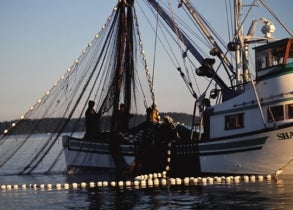
  • Can Catch Shares Lower the Number of Fishery Closures?

    The oil disaster in the Gulf of Mexico has put fishery closures in the headlines, but closures are nothing new or unusual. In fact, numerous fisheries are closed every year. In an era of declining fish stocks, managers essentially have two tools at hand to meet the legal requirement of ending overfishing and rebuilding stocks – closures or catch shares. Closures have been used extensively and increasingly.

    Read the full post »

  • Hyundai Genesis é lançado na Argentina


    Finalmente, depois de um tempo de espera, a Hyundai acabou de lançar o seu coupé Genesis em solo argentino. Agora o veículo está disponivel em suas duas versões, sendo a menor delas a 2.0 turbo, com 200 cv de potência, e o Coupé atual possui um motor 3.8 V6 de 310 cv de potência.

    O Genesis 3.8 possui todos os itens do modelo 2.0 turbo, ou seja, tem seis airbags, freios ABS, ESP e controle de tração inclusos. Também possui um revestimento interno totalmente em couro e teto solar, além do sistema de abertura de portas sem chave, pela proximidade do motorista.

    Existem duas opções de câmbio, sendo automático ou manual de , e a troca de marchas é feita no volante. O Genesis Coupé 3.8 V6 com câmbio manual está custando US$ 44.000, aproximadamente R$ 80.800, enquanto a versão com câmbio automático sai por US$ 47.000 (R$ 86.300). Já o Genesis 2.0 Turbo está saindo por US$ 37.000.

    Via | Carplace


  • Hard at work? Congress spends all day playing with the iPad

    The iPad is a huge hit in the United States Congress. I mean, passing any sort of meaningful banking reform is apparently out of the question with these guys , but there’s always time for the iPad. Just amazing, really.

    The story is that several members of Congress, including Sen. Claire McCaskill of Missouri, are head-over-heels in love with the iPad. My immediate reaction was, “Um, you do know that the American people have a very low opinion of you guys right now, right? It’s probably not the time to be gloating about how your $500 toy is the new hotness. There’s a lot of people out there who are out of work and would love to have an extra $500 to blow on a shiny piece of plastic, but that’s not going to happen any time soon.”

    That was my first reaction. Then I cooled down a bit and thought to myself, “Well, if they’re just using the iPad to replace their BlackBerry, reading and sending e-mail to their staff, checking their calendar, and so forth, then that’s probably not such a big deal.”

    There’s an “iPad caucus,” too, which I guess is trying to extol the merits of the device. Said one member, Rep. Rob Wittman of Virginia:

    We are really trying to engage people about ways to apply this technology. This is definitely the wave of the future. … We’re explaining to people that this could actually make us all more efficient, especially when you only have 24 hours in the day.

    See? Innocent enough.

    But then you read something like this:

    A small crowd of lawmakers gathered last week in the House Republican cloakroom, cheering on Rep. Aaron Schock (R-Ill.) as he wildly steered Chaffetz’s iPad in his hands, the tablet serving as the steering wheel for an iPad-compatible race car game.

    Yeah, that’s pretty ridiculous.

    Isn’t Congress great? I turn 25 next year, maybe I should run? My platform will be, “I won’t spend all day screwing around on my iPad. Oh, and I love America.”


  • Bret Michaels in hospital again after suffering a TIA

    Bret Michaels returned in hospital after suffering a TIAPoison singer has been admitted once again in hospital after suffering a TIA. While recovering, doctors are questioning his plans to get back in business by the end of the month.

    According to Bret Michaels report on its website, Thursday he had to return to hospital after suffering a TIA, which for a short time prevents blood from flowing properly to the brain.

    In late April, the former lead singer of Posion and U.S. TV star had to be in the hospital which left him in critical condition. Fortunately, two weeks later was able to leave the medical center.

    However, Michaels, 47, returned to the hospital after starting to notice some numbness on the left side of his body “predominantly in their hands and face,” says the website.

    In Bret’s scans, doctors found that he has a ‘hole’ in his heart, but they do not believe that it’s related to the TIA he suffered last month.

    The medical team said that both the TIA and the hole in the heart are treatable, but has challenged the singer to return to the stage later this month as planned or resume his appearances on Celebrity Apprentice.

    “Without a doubt, is determined to get well and recover one hundred percent. Clinically speaking is a fantastic attitude both mentally and physically for him,” says neurosurgeon Joseph Zabramski.

    However, neither the brain nor the body of Bret Michaels “is a hundred percent yet, especially with the hole in his heart that we have found,” added the doctor, who in any case considered “good news” that they have found the problem so quickly.

    For its part, the singer’s representative, Janna Elias, has assured fans that Michaels is optimistic about his recovery, tired of being in the hospital and is ready to return to action again.

    Related posts:

    1. Brett Michaels back in hospital after a “Warning Stroke” – Update in his Condition
    2. Bret Michaels Re-Hospitalized Because Of Possible Stroke
    3. After Brain Hemorrhage Bret Michaels is Now Stable