Category: News

  • Scaling up Green Infrastructure


    Green infrastructure has been widely discussed as a solution for taking pressure off of outdated stormwater systems. Through natural technologies like green roofs, rain gardens, bioswales and green road medians, green infrastructure can absorb and filter excess water at the source, in effect, decentralizing storm water management. Green infrastructure systems can also reduce the costs of water treatment because these natural systems reduce water flow, remove toxins, and recharge groundwater supplies.

    At an ASLA-organized advocacy event, Becky Hammer, a lawyer with the water team of the Natural Resources Defense Council (NRDC), outlined a recent legislative proposal gaining support on Capitol Hill, “The Green Infrastructure for Water Act,” which would help take green infrastructure methods from theory to practice. As Hammer explained, “at the Washington, D.C. headquarters of the E.P.A., they like green infrastructure in theory.” However, there are a range of obstacles preventing expanded use of these technologies.

    Representative Donna Edwards (D-MD) is the lead sponsor of the green infrastructure legislation, which would ramp up the use of green roofs, rain gardens, and “constructed restorations of green spaces” for stormwater management through $350 million in annual funding. The proposal would help expand the use of green infrastructure to “use green technologies to improve water quality,” Hammer said.

    “These systems not only take stress off old infrastructure systems (many of which are combined sewer / water systems) but also save money and create jobs.” Additionally, all those working green infrastructural spaces have potential dual uses — some can also function as parks (see earlier post) or green spaces that reduce the urban heat island effect. The idea is to both integrate green infrastructure into communities and make these systems more visible so people understand the natural processes.  

    There are three key components:

    Centers of Excellence: $25 million would go to 3-5 centers dedicated to green infrastructure research. The centers would be housed at universities across the country. “Right now, there are great pilot projects, but no centralized knowledge base so many designers have to recreate the wheel when doing green infrastructure projects,” Hammer argued.

    E.P.A. grants: Some $300 million in grants would be awarded by the E.P.A. to state or local governments or local water authorities to design or implement green infrastructure projects. Designing projects could include the creation of portfolio standards. The legislation would target communities with “combined sewer / water treatment infrastructure as well as low-income or disadvantaged communities.” The idea is that green infrastructure would not only reduce the cost of stormwater management, but also create green amenities for underserved communities.

    New E.P.A. Office of Green Infrastructure: A new office of green infrastructure would be created and staffed under the E.P.A.’s Water office. “Right now, the E.P.A. has one person full-time dedicated to green infrastructure. She’s great, but we need more people.” The new E.P.A. office would receive $25 million in funding.

    Hammer outlined a few key obstacles to expanding the use of green infrastructure for stormwater management:

    • Lack of centralized information on green infrastructure and stormwater managment best practices.
    • Local regulatory barriers. “In some municipalities, you can’t plant trees right next to roads or use pervious pavement materials. We need to change that.”
    • Lack of E.P.A. acceptance and guidance. “While E.P.A. headquarters supports green infrastructure, the regional field offices have a lot of power over local permitting and other regulatory decisions.”

    In selling the economic benefits, Hammer said green infrastructure should be viewed as an infrastructure investment. “These approaches means reduced lower stormwater feed-in levels and reduced amounts of water going into water treatment facilities. Also, green infrastructure projects designed as appealing green spaces lift neighboring property values and can lead to energy savings.” What many don’t realize is that those massive water treatment facilities use tons of energy.

    To learn more, check out green infrastructure resources, including research studies, projects, and government reports.

    Image credit: 2010 Professional Honor Award, General Design. Underwood Family Sonoran Landscape Laboratory, Tucson, AZ USA. Ten Eyck Landscape Architects, Inc., Phoenix USA

  • 2010 South African Music Award Winners are……..

    sama2010The 16th Annual MTN South African Music Awards Winners are………..

    Male Artist of the Year: Black Coffee – Home Brewed

    Female Artist of the Year: Lira in Concert -A Celebration

    Duo/Group of the Year: Jaziel Brothers – The Journey

    Newcomer of the Year: Tshepo Mngoma- People and Places

    Album of the year: Big Nuz – Disputed

    Best Music Video of the Year: The Parlotones – Push Me To The Floor

    Best Maskandi Album: Umgqumeni – I SMS

    Best Rock Album (English): The Parlotones -Stardust Galaxies

    Best Pop Album (English): Axene – 16

    SAMA16_normal

    Best Pop Album (Afrikaans): Bobby Van Jaarsveld – Net Vir Jou

    Best Pop Album (African): Ntando – Inqubenko

    Best Urban Pop Album: Jozi – Wild Life

    Best Sokkie Dance Album: Die Campbells – Mamma Maria

    Best Dance Urban Album: Black Coffee – Hom Brewed

    Best Rap Ulbum: Teargas – Dark or Blue

    Best Kwaito Album: Big Nuz – Undisputed

    Best Contemporary Jazz Album: Adam Glasser – Free at First

    Congratulations to all the winners:)

  • Where water management meets electricity consumption, and other notes from New Orleans

    Michael Giberson

    Phil Carson reports a few parting thoughts from last week’s IEEE Power and Energy Society’s Transmission and Distribution Conference in New Orleans.  One of those thoughts centered on the last-mile link up of communications and energy systems:

    Marty Travers, president for telecommunications at Black & Veatch, reminded me that the “telecom” piece at electric utilities is really a toolbox full of options, from fiber optic cable to public wireless networks, from land mobile radio to microwave. These options are being combined in a mix-and-match strategy to meet the unique needs of various utilities in disparate geographies.

    As “last mile” mesh networks employ machine-to-machine (M2M) modules, Travers sees “smart farming” as a potential market, where water management meets electricity consumption, literally out in the field.

    The communications network overlay on the grid has been made possible, in part, by the simple fact that costs have been driven down, Travers told me. But the United States market remains a state-by-state proposition.

    “Our theory is that [smart grid work] is driven by regulatory input from the state public utility commissions, so it’s still a state-by-state patchwork,” Travers said.

    By the time I made it to New Orleans last week all of the IEEE PES 2010 fun was over, so there was nothing left to do but get rained on (Friday), trudge through the mud (Saturday), and enjoy the glorious sunshine (Sunday) of the first weekend of the New Orleans Jazz and Heritage Festival. (A few more photos here.)

  • Play Rape

    Reader Chad emails:

    Why so many rape fantasies in women’s romance novels? How to take advantage of this female perversion without getting arrested?

    It’s true. Romance novels, read almost entirely by women, are flush full of rape fantasies. If fantasy (or as I like to call it, “hyperreality”) didn’t reflect reality then we would hear and read of fantasies by women featuring beta males, short dweebs, nerdos, fatsos, and charmless stutterers in the role of desired man. But we don’t. Women’s fantasies, like men’s fantasies, provide a window into a wished-for reality where all options are available, all choice catered to, all desires quenched. Rape fantasy, despite the protestations to the contrary of the “fantasy is different than reality” crowd, is as much a reflection of real female desire as any other form of sexual fantasy.

    Women fantasize about a lot of things that no one argues don’t reflect reality if that reality were an option. What fantasizing woman wouldn’t truly want to be a princess who gets swept off her feet by a prince living in a castle? What single woman who dreams it wouldn’t sleep with Johnny Depp in real life if he propositioned her? These are common fantasies of women which they never argue aren’t reflections of how they wish reality were. So why should we grant a plenary indulgence to rape fantasies? How is it that rape fantasy is the one glaring exception to the reality-reflection rule? Men also fantasize about stuff like threesomes with supermodels, but no one in their right mind would argue that men don’t actually want threesomes with supermodels in reality, if having them were possible. (Wives or girlfriends, don’t bother asking your partners. You won’t get an honest answer.)

    Back when I was a stripling newly intoxicated to the allure of women, I went to the local library and read a few pulp romance novels to better understand the contours of female desire. (I knew even then that romance novels are wank material for women.) Naturally, being a man, I chubbed out reading the surprisingly explicit sex scenes and was bored with the rest of the plot. Let me tell you, the dreck of the literary world lies in the pulp romance genre. But I soldiered on. I knew that some keys to successfully seducing women would be found in between the pages of those trashy paperbacks.

    And, yes, the books I read had rape scenes. I remember recoiling at those, wondering at the depravity of women if this is what they craved. I looked for commonalities in those scenes and noticed that words like “overpowered”, “overwhelmed” and “powerless” were used frequently. The horny protagonists victims were often pushed up against solid objects, like big oak trees, and roughhoused from behind, never once seeing the face of their attacker (he often wore a mask), although there was much florid description of his musky aroma and muscular body pressing into her helplessly yielding flesh.

    Rape fantasy reflects a deep, inborn, uncompromising sexual desire by women to be rendered helpless, almost childlike, by a more powerful man. It is the submissive scrawling of their hindbrains, a message in a novel sailing forth from the female limbic labyrinth. And from submission to a dominant male force is born the strongest love.

    I loved that he was so powerful I was nothing.
    – O

    Does this mean women would be sexually turned on by real life rape? It is a question not so easily dismissed when we begin to examine closely the sexual fantasies of women. Dismissed it is, though, because no one — man or woman — wants to creak open the vault door that houses such primeval female decadence. For if women do harbor secret desires for dark seductions, then what is left of the pretext to chivalry? Women benefit from some amount of cultural pedestalization. *Societies* benefit. There is no room in a healthy, functioning society for mischievous inquisitors to lay bare the true soul of woman.

    My understanding of women, and from what I’ve gleaned from their romance novel porn, leads me to believe that rape is a fantasy for women when the rapist is implied or otherwise insinuated to be the sort of man for whom women would surrender themselves in other contexts willingly, (i.e. an alpha). Women do have a natural sociobiological revulsion to rape by losers, because their most precious asset — their womb — cannot suffer lightly the gimped seed of omega chumps forcibly implanted. But what of rape by a masked alpha? That’s where the moral certainty yields to an unforgiving, and wholly discomfiting, ambiguity.

    To Chad’s question above — how to take advantage of this female perversion without getting arrested — I would not suggest actual rape of your beloved. Don’t jump out at her from behind a bush while she’s walking home alone at night. But there are ways to simulate the heady rush of a lustful rape that will not only press her buttons, but yours as well.

    Inform her that one night in the not too distant future she will experience something she won’t be prepared for, and shouldn’t expect to prepare for. On that night, while she’s getting ready for bed, you will cut the fuses so all the lights go out. As she’s standing in the dark, approach the doorway wearing a ski mask and dark clothes, and slowly instruct her to put her hands against the wall, in front of the window. She will, naturally, recognize your voice, so some of her fear will be mediated, but she won’t be able to see your face. It is important for the rape enactment that you act as if you are not who she thinks you are. She will appreciate this ruse, and might even be able to tempt herself with the thought that you are a stranger who sounds like her lover.

    With her hands on the wall, you will approach her from behind, reminding her not to look back at you. Tell her not to struggle or make a sound. As you step up behind her, put a knife to her throat (for advanced rape enactors only) and allow your body to linger closely without touching her for a minute. Breathe heavily, creeper style. Then thrust your hand violently under her oversized nighty t-shirt and grab her panties, pulling them across her ass until they rip. Bury your hand in her mound. She will be dripping wet. Put your wet hand to her nose and angrily whisper in her ear that her wet pussy belies her fear. She will attempt to turn around to see you. With your hand firmly clutching her face, force her eyes forward. Press her cheek hard into the windowpane. Enter her.

    When you are spent, I guarantee that afterward she will lovingly rest her head in your chest and confess that she had the most earth shattering orgasm of her life. Repeat for your other three girlfriends.

    Filed under: The Pleasure Principle

  • Does HP Want to Be the New Apple?

    With HP’s $1.2 billion planned acquisition of Palm, the computer giant hopes to turn Palm’s webOS operating system into a platform to rival Apple’s mobile computing franchise. “Ultimately the Palm webOS and Apple are the two that can scale best over multiple devices and we are going to compete with Apple going forward in the broader mobile category,” said Brian Humphries, SVP of corporate strategy and development at HP.

    I spoke with Humphries last night after the deal was announced, but he declined repeatedly to give details as to when or what devices may get webOS. So we have no idea if the HP Slate that Steve Ballmer, the CEO of Microsoft, was waving about at CES will continue to have Windows or webOS, but we do know that HP has a big vision for webOS — it hopes to put it across an array of mobile devices, creating a platform backed by the power of HP’s sales and distribution channels to which developers will flock.

    A huge portion of HP’s message around this deal is aimed at reassuring developers that webOS isn’t a dying platform and that HP is willing to invest. Humphries was adamant that developers will find a supportive HP (GigaOM Pro, sub req’d). “We’re clearly giving them dev tools, a platform they can port to, an easy financial model that’s viable to them and confidence that the OS will be scaled globally and on many different form factors,” Humphries said.

    It’s clear that HP is modeling its mobile computing vision on Apple’s platform, and when I asked how many mobile operating systems the world has room for, Humphries hedged for a bit saying the market is large and that it was difficult to see how things might develop, however when pressed he said that only webOS and Apple really have the ability to scale across many devices and many markets.

    As for HP’s willingness to be more open than Apple, perhaps taking a page from its personal computing heritage, it doesn’t look good. “Apple is proprietary but it also has a tremendous relationship with the app developer,” Humphries said. “And it may have a closed OS on which the app community can sit, but the apps make it open.”

  • Crashing NASA Space Balloon Versus Car [Crashes]

    In this corner: a multi-million dollar NASA-sponsored space balloon, crashing magnificently in the Australian desert. In the other: an dark SUV of indeterminate make and model. I’m not a betting man, but I’d say the smart money’s on the balloon. More »


  • The Droid Incredible is sold out online

    Apparently you can add incredible demand to the list of adjectives describing Verizon’s latest and greatest. The Droid Incredible sold out on Verizon’s site about 6 hours after its official launch (pre-orders of course have been open for 10 days now).

    Never fear if you didn’t get your order in yet as the wait for the next shipment won’t be too long, orders placed as of this posting will ship on May 4th. You can try heading down to your local Verizon retail location, but depending on your location you may want to try looking them up and giving a call first.

    If you want to get a real steal on the Incredible don’t forget that your friendly neighborhood Android and Me Store has a special discounted introductory price available right now.

    If anyone has picked up or received their Incredible already I’m sure everyone would love to hear some first impressions.

    Related Posts

  • Oil Disaster Could Clean Up Climate Bill


    Today, a Republican Senator joined with Democrats representing coastal states threatened by the massive oil spill in voicing continued alarms over including off-shore drilling in a climate and energy bill. As new reports reveal that the oil spill is now five times worse than estimated: “We need to move heaven and earth to stop this from becoming an environmental disaster.” said Florida’s Republican Senator, George LeMieux.

    “The continued failure to stop the leak threatens to wreak untold damage on Florida’s coastlines” says Republican Senator LeMieux – albeit along with his diatribes against “government spending” – on his YouTube web page.

    “The federal government needs to make this their immediate, number one priority.”

    There is an economic cost of failure to keep the Everglades safe. The huge oil spill could prove to be a tipping point; switching a Republican vote from dirty energy to clean energy. (more…)

  • Palm Developer Day presentation slides posted

    Palm Developer Day presentation

    If you weren’t able to make it to the Palm Developer Day(s), or just want to recap what happened while you were there, Palm’s here to hook you up. They’ve posted 14 sets of slides from the various development-related presentations at the two days of the Palm Developer Day weekend, ranging from Intro to webOS to debugging to working with the SDL and PDK. If you weren’t there, soon enough Palm will be posting the videos of the presentations so you can follow along just like you were in Sunnyvale.

  • Frost-Covered Asteroid Suggests Extraterrestrial Origin for Earth’s Oceans | 80beats

    AsteroidThere are millions of asteroids in the asteroid belt between Mars and Jupiter, but yesterday attention focused on just one. According to a couple of studies in Nature, a large asteroid called 24 Themis is rife with water ice and organic molecules, and the researchers say that it could be more evidence that the water so precious to life on Earth came to our planet on board such rocks.

    Two research teams took infrared images of 24 Themis, which is about 120 miles in diameter and was discovered in 1853. This asteroid has an extensive but thin frosty coating. It is likely replenished by an extensive reservoir of frozen water deep inside rock once thought to be dry and desolate [AP].

    The team, led by Humberto Campins, says finding so much ice on the surface was a surprise; at the asteroid’s distance from the sun—3.2 astronomical units (AU), or just more than three times further than the Earth—exposed ice has a “relatively short lifetime,” the scientists write. As a result, the idea of a below-surface reservoir seems likely. (Icy comets aren’t nearly so close to the sun on average; Halley’s comet can come within .6 AU of the sun, but then retreats to a farthest distance of more than 35 AU.)

    It might seem implausible that our planet’s water supply arrived incrementally as cargo on board comets or asteroids. But here’s how it may have happened: More than four billion years ago, after a massive collision between Earth and another large object created the moon, our planet was completely dessicated. Then, during the Late Heavy Bombardment period that followed, during which lots of asteroids hit Earth, the ice that the objects carried became our store of water [Wired.com]. The bombardment period, which occurred nearly 4 billion years ago, was largely responsible for our moon’s puckered appearance. A 2005 Nature study estimated that between 3 and 8 zettagrams of material slammed into the moon during that time (zetta means 10 to the 21st power, or a billion times a trillion), which implies that plenty of rocks slammed into the Earth, too.

    Asteroids just keep getting more interesting. As we noted on Monday, the Japanese spacecraft that was the first to touch down on an asteroid is limping home to Earth, hoping to return its results to the home world by June. And President Obama’s revised space exploration plan includes the idea for astronauts to visit an asteroid—a possibility that’s all the more scientifically enticing if they were the bringers of our water.

    Related Content:
    DISCOVER: Did An Early Pummeling of Asteroids Lead to Life on Earth?
    80beats: Did An Asteroid Strike Billions of Years Ago Flip the Moon Around?
    80beats: Our Alien Atmosphere? Earth’s Gases May Have Arrived Here Aboard Comets
    80beats: Danger, President Obama! Visiting an Asteroid Is Exciting, But Difficult

    Image: NASA


  • NYTimes’ Boss Pretends That A Paywall Creates A Stronger Emotional Bond

    We’re still surprised that the folks at the NY Times think that a paywall is a smart idea — especially since they already tried the idea and it failed pretty miserably. But, lately, it seems like they’re completely making stuff up to make themselves believe it’s a good idea. At the company’s annual meeting, publisher Arthur Sulzberger Jr. tried to convince everyone (including himself, we’re guessing) that by putting up a paywall, you increase the emotional connection readers have with the site — to which Jeff Jarvis noted, that “emotional connection” is probably anger.


    At the core of our thinking is the necessity of increasing engagement. This is about having our users generally spend more of their valuable time with us, either on our site or on other sites that are integrating our content. It is about enhancing the emotional connection that our users have with us.

    We start off with the premise that the key to increasing engagement is about compelling storytelling. This transcends technology — it is not about the printing press, or the server, or the cave drawing, for that matter. It is about an essential human connection, and we are working hard to explore this notion and enhance our relationship with our audiences worldwide.

    The real issue is that Sulzberger seems to have the relationship backwards. Charging doesn’t create an emotional relationship. What we’ve been pointing out over and over again is that you have to build the relationship first, and then on top of that you can charge for providing scarce value. The obvious response, of course, is that many people already do have an emotional connection with the NY Times, but you don’t increase that by charging for the content that helped build that connection. That weakens the connection. The connection is what makes people willing to buy. Buying doesn’t build a stronger connection by itself.

    Permalink | Comments | Email This Story


  • 2010 Honda Civic Sedan Sport

    Civic Synonymous with High-Quality Economy in Canada
    Trevor Hofmann, Canadian Auto Press

    When the term economy car comes to mind, the word Civic won’t be far behind.  World over, the venerable compact has been front and centre on the C-segment scene since day one.  You could even go so far to say that the Civic was partially responsible for initially swaying the entire North American auto market towards the “Japanese means quality” mindset.  And while some brands and haven’t exactly measured up to the aforementioned mantra, Honda has long been a quality and dependability leader.

    2010 Honda Civic Sedan Sport

    2010 Honda Civic Sedan Sport

    The Civic, which just happens to be made in Canada, incidentally, is one of the highest rated vehicles for reliability in the compact class.  Independent third-party research firm J.D. Power and Associates gives it an 8 out of 10 for predicted reliability based on the past three years of historical data from its Vehicle Dependability Study (VDS) combined with more up to date info via its Initial Quality Study (IQS).  That’s an enviable score.

    For 2010, the Civic remains almost identical to the 2009 model except for a standard centre console armrest and a standard auxiliary jack.  Other than these items the only additional changes are exterior colours, with one added, Dyno Blue Pearl, and five discontinued, including Neutron Blue Metallic, Urban Titanium Metallic, Rallye Red, Polished Metal Metallic and Tango Red Pearl.  You’d think that Honda had only a few left, but a quick glance at the automaker’s website shows that

    My Civic was outfitted to Sport designation and therefore priced at $20,780 and filled with extra luxury and convenience features like a leather-wrapped steering wheel, heated mirrors, variable intermittent wipers, a power sunroof, USB device connector, exterior temperature display, map lights, an auto up/down driver’s window, a rear centre armrest, and 60/40 split-folding rear seatbacks.  The exterior gets body-colour mirrors and door handles to spiff up the look, while 16-inch alloy wheels wrapped in 205/55R16 all-season rubber look better and increase performance, living up to the Sport moniker, as do four-wheel disc brakes and an exhaust finisher.

    Si and Hybrid aside, the Sport model is near the top of the Civic pecking order in Canada, with only the $22,680 EX-L above it.  That last model adds premium features such as leather seats with heated cushions up front, steering wheel-mounted audio controls, a stereo upgrade to six speakers, plus traction and stability control.

    Most Civic buyers, however, won’t splurge for the highfalutin version, but rather opt for something in the middle.  The Civic starts in DX trim for a rather paltry $15,990.  With this trim level the Civic gets power windows, power mirrors, a tilt and telescopic steering wheel, two-speed intermittent wipers, a driver’s seat manual height adjuster, a four-speaker CD/MP3/WMA audio system, fold-down rear seatback, plus a rear spoiler, front splashguards and 15-inch steel wheels riding on 195/65R15 all-season tires. For a little more, air conditioning can be added bringing the price up to $17,290.  It gets a 340-litre (12.0-cu ft) trunk for no extra charge too, as well as a three-year or 60,000 km comprehensive warranty and five-year or 100,000 km powertrain warranty, not to mention front, side-thorax and side-curtain airbags, plus ABS brakes.

    Option up to the $18,580 DX-G package and air conditioning is standard while the steel wheels and covers give way to a set of 15-inch alloy rims.  Also included are power locks with keyless remote entry, cruise control, and an auxiliary input for the stereo.

    All Civic sedans, except for the Si and Hybrid, get Honda’s wonderfully smooth and rev-happy SOHC, 16-valve, 1.8-litre four-cylinder engine mated to a five-speed manual transmission or optional five-speed automatic.  This is a very good engine with expected fuel economy of 7.4 L/100km in the city and 5.4 on the highway while delivering 140 horsepower at 6,300 rpm and 128 lb-ft of torque at 4,300 rpm.  And when mated to the manual gearbox the Civic turns into an engaging driver’s car.  Sure the suspension setup is a bit on the soft side compared to the current Si or the slot cars that made the Civic name legendary amongst enthusiasts and tuners, but it’s still better than many in the segment and enjoyable to sling through a curvy road.

    What’s also better than many is the experience from behind the wheel, and I’m not talking about the thrill factor of a well-sorted chassis and zippy powertrain.  I’m talking about the design and layout of the cabin and materials used to build it.  The latest Civic took things up a notch in the compact class, with soft-touch materials on the windowsills and other places where skin might rest, high-quality switchgear, superb graphics in an ultra-cool, two-tiered, space-age instrument package, excellent seats that conform to every body part, and a general airiness inside that’s been part of the Civic experience since the car became part of the fabric that makes up our daily lives here in North America.

    There is a reason why Civics dot each and every road in our nation, why they fill up shopping mall parking lots, can be seen in multiples commuting to work in rush hour traffic and found in more driveways than just about any other car in Canada.  The Civic is a bloody good car.

    2010 Honda Civic Sedan Sport
    2010 Honda Civic Sedan Sport
    2010 Honda Civic Sedan Sport
    2010 Honda Civic Sedan Sport
    2010 Honda Civic Sedan Sport
    2010 Honda Civic Sedan Sport
    2010 Honda Civic Sedan Sport
    2010 Honda Civic Sedan Sport
    2010 Honda Civic Sedan Sport
    2010 Honda Civic Sedan Sport
    2010 Honda Civic Sedan Sport
    2010 Honda Civic Sedan Sport
    2010 Honda Civic Sedan Sport
    2010 Honda Civic Sedan Sport
    2010 Honda Civic Sedan Sport

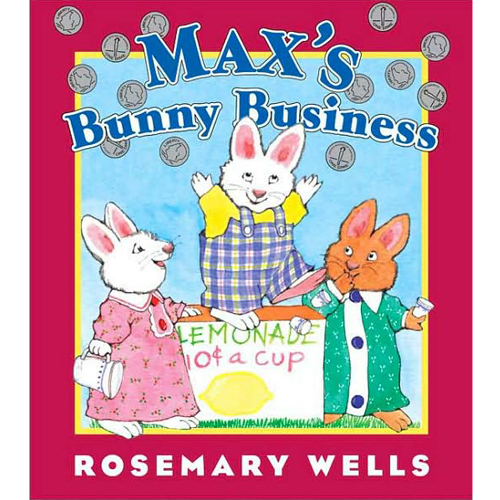
  • Teaching Economics with Children’s Literature: Max’s Bunny Business

     maxs_bunny_business.jpg

    Introduction

    Max’s Bunny Business is a very cute and fun way to help teach kids about buying things and earning money to pay for those things. This story follows Max the bunny and his friends as they scheme up ideas to earn enough money to buy a fire angle ring from their favorite store. Max and his friends do everything from selling lemonade to selling Halloween candy in an effort to earn enough money for the desired ring. However, a competition ends up occurring between Max and his friends when they don’t see eye to eye on business practices. As a result, only Max ends up with a fire angel ring because the store ran out of rings so this book could also help introduce the concept of supply and demand.

    Curriculum Connections

    This book could be used to satisfy VA SOLS K.7 (b). This strand requires that students recognize that people use money to purchase goods. This book would be fun to read prior to hosting an activity where students sell items to their classmates (using fake money of course!) or a classroom store is opened up. Another fun thing to do after reading this book would be to have students brainstorm different fun/odd jobs they could do to earn money.

    Additional Resources

    This website managed by Nick Jr. is all about the TV series Max & Ruby and the website features lots of online games, activity ideas, recipes, and TV clips. A great resource to accompany the book.

    This webpage features several coloring pages that feature Max & Ruby!

    This site provides lesson plans and activity ideas that incorporate the main characters from Max’s Bunny Business.

    General Information

    Book: Max’s Bunny Business
    Author: Rosemary Wells
    Illustrator:Rosemary Wells
    Publisher: Viking Juvenile
    Publishing date: May 15, 2008
    Pages: 32
    Grade range: K-2
    ISBN-10: 0670011053

  • Report: Georgia finally mandates seatbelt usage among pickup truck drivers

    Filed under: ,

    Now it’s just New Hampshire. For decades, any effort in Georgia to require universal seatbelt use couldn’t get passed – such matters would just get stuck in the throat of the House by extra-regulation-resistant rural lawmakers. The consistent rejection kept pickup truck driving adults from being legally required to buckle up, an exemption that drove safety advocates up the wall.

    According to The Washington Post, however, statistics about needless deaths, avoidable accidents and potential medical cost savings seem to have finally connected with enough House members to send the bill through, with the measure passing by a tally of 132-29.

    For what it’s worth, not wearing a belt when you’re using your pickup truck on a construction site or farming doesn’t seem like a contentious issue. Speeds are low and drivers may be in and out of the truck rather regularly, but those situations are not on public roads at normal speeds. Despite what some view as as unneeded regulation, it seems that members of the Georgia House now consider a law requiring adults to buckle up when in pickup trucks (the same as in cars) as a vote for common sense that will keep more money in state coffers.

    Now it’s just the Granite State as the lone state that doesn’t mandate seatbelt use. Live free and/or die?

    [Source: The Washington Post | Image: Getty]

    Report: Georgia finally mandates seatbelt usage among pickup truck drivers originally appeared on Autoblog on Thu, 29 Apr 2010 11:31:00 EST. Please see our terms for use of feeds.

    Read | Permalink | Email this | Comments

  • Obama’s 3 Fed Picks Satisfy Political Objectives

    President Obama has chosen his three nominees to fill vacant slots at the Federal Reserve, reports indicate. We’ve already heard that he will choose San Francisco Fed President Janet Yellen to take over for Vice Chairman Donald Kohn. But the two new names — MIT Professor Peter Diamond and Maryland financial regulation commissioner Sarah Bloom Raskin — are interesting choices to round out the group. Each of these nominees appears to satisfy a specific political objective.

    Janet Yellen

    As an expert on unemployment Yellen can help with the present problem the U.S. economy faces. Some have complained that the Federal Reserve is too worried about the financial industry and not concerned enough with Main Street’s problems. As vice chair, Yellen would provide greater focus on the unemployment problem. Since so many economists believe the labor market recovery will be a slow one, that expertise will be needed for some time.

    Peter Diamond

    Diamond also makes perfect sense in the context of the deficit problem. He has studied and written extensively on pensions and Social Security. He even co-authored a book on saving Social Security with Obama’s Office of Management and Budget Director Peter Orszag back in 2005. To the extent that the Fed can help with the deficit and entitlements problems, the President must want someone with strong expertise on the team.

    Sarah Bloom Raskin

    At this point, there’s almost no doubt that the Federal Reserve will obtain additional regulatory oversight of the financial system through whatever financial reform bill is passed by Congress. It’s just a question of how much. Raskin would presumably be Obama’s choice to make sure that new regulation is effectively executed. She’s a lawyer with extensive experience in financial regulation. By perusing her recent speeches, it’s pretty clear that she’s a strong advocate for consumer protection — a specific aspect of financial reform that the Obama administration is particularly interested in.


    Email this Article
    Add to digg
    Add to Reddit
    Add to Twitter
    Add to del.icio.us
    Add to StumbleUpon
    Add to Facebook


  • Former F1 Champion Jacques Villeneuve Eyeing an F1 Return

    jacques villeneuve

    It’s not only Michael Schumacher who’s looking for an F1 comeback, the likes of 1997 World Champion Jacques Villeneuve are also eyeing their return to the circuit. Villeneuve is still practicing to make his dream come true which is why he is maintaining his fitness condition by using a bespoke EUR400,000 machine which has been conceived by his famous trainer, Erwin Gollner. Villeneuve almost made it back to the F1 circuit with the Serbian outfit Stefan GP but sadly the Zoran Stefanovich headed unit was not granted an entry in this year’s competition. He also mentioned that he is ready to replace any current driver in the ongoing season and he is confident that there is still place for experienced contenders on the circuit.

  • Sony Dash Now Available

    The Sony Dash, a device with a 7 inch touchscreen with access to personalized Internet content via Wi-Fi, is now available to US consumers at SonyStyle and various retailers for $199. Think of it as the alarm clock for the 21st century. After being introduced at CES 2010, it was quickly apparent that the Dash was the biggest hit of the show and easily generated the most interest. And there’s a good reason for that – this is the adult version of a Chumby device (as twitter follower @glynnjamin put it). I’d have to agree – if you look at the current Chumby product, which the Dash is based on, there is something left to be desired in its design.

    Sony changed that with the introduction of the Dash – it is a black, monolithic looking product with minimalistic styling that compliments nearly any environment it is placed in. Looks aren’t everything, either – the Dash is full to the brim with functionality.

    We wish the Dash was portable (it requires a power source), was a little slimmer in size, and had a iPod/iPhone dock. Regardless, the 7 inch color touchscreen on this device utilizes Wi-Fi to serve more than a 1,500+ free applications, many provided by chumby; examples of apps include news, calendars, weather, sports, and social networking. This is great for people who are tired of waking up to the same old alarm clock that has remained relatively unchanged for decades. You can now wake up, quickly check the essentials online and not have to activate the laptop or phone. Every morning when I wake up I have to check my e-mail, twitter, weather, and baseball/football scores like many of you out there.

    However, the applications aren’t just limited to those simple examples; the Dash is actually quite advanced for its $199 price tag. Through BRAVIA Internet Video, Dash can bring you TV episodes, films and additional video content and music from providers such as CBS, Netflix, YouTube, Pandora, Slacker and more. That’s pretty amazing.

    And fortunately it’s not a one application at a time ecosystem, unlike other products currently on the market. Sony has noted, “Dash can multitask. For example, if used on a kitchen countertop, internet radio can be playing in the background while you use your Dash to follow a recipe step-by-step.”

    Here’s the rest of today’s press release which highlights some other things I didn’t mention above –

    With Dash, a playlist of your own personalized internet world is constantly refreshed and pushed to you, reducing the need to search for your favorite content or to log onto your favorite sites. Dash also allows you to “wake up a whole new way” with music videos, internet radio, or any video content available on the Dash instead of a traditional alarm clock buzzer.

    Further, Dash can multitask. For example, if used on a kitchen countertop, internet radio can be playing in the background while you use your Dash to follow a recipe step-by-step.

    Adding to Dash’s impressive content offerings, CNBC(TM) and Martha Stewart Living Omnimedia will each be offering apps for the Dash, displaying business news and market information as well as enabling you to access the highest quality simple recipes. In addition, Dr. Oz will provide a series of video health tips for Dash users.

    Martha Stewart Living Omnimedia’s app for the Sony Dash, titled “Dinner Tonight(TM) Recipe of the Day,” will come pre-loaded on the device and will provide a daily recipe from Martha Stewart’s vast library of Everyday Food magazine recipes consisting of eight ingredients or less, as well as allow you the ability to utilize any of the daily “Dinner Tonight” recipes from the past month.

    CNBC’s app will also be pre-loaded in the Sony Dash and will feature real-time financial and business news, market information, stocks to watch, and more.

    The video health tips provided by Dr. Oz are especially well suited for your wake-up experience. Each video is approximately one minute in length and provides specific steps you can take to live a healthier life.

    In the coming weeks, Dash will be highlighted on several national broadcasts including Dr. Oz, Martha Stewart, CNBC, as well as in music videos from several high-profile Sony Music(TM) artists.

    Check out the offical Sony Dash website, or the Dash fan page on Facebook.

  • Ukraine MPs could face charges for disrupting vote on Russia treaty

    [JURIST] Ukrainian prosecutors said Thursday that they may file criminal charges in connection with Tuesday’s Parliament session in which lawmakers hurled eggs and smoke bombs and engaged in physical violence. Chaos broke out Tuesday as lawmakers approved a treaty that will extend Russia’s lease on a naval base in the Ukrainian Sevastopol port on the Black Sea until 2042 in exchange for discounted Russian gas. The agreement was strongly opposed by pro-Western lawmakers who threw eggs and smoke bombs at the speaker in an attempt to stop the vote. Despite the pandemonium, the measure passed with 236 votes in the 450-member parliament, and the treaty was signed into law Thursday. Prosecutors said that those responsible for the mayhem could face charges of hooliganism, which carries a penalty of four years imprisonment.
    The treaty comes soon after the election of President Viktor Yanukovych, who took office in February. Yanukovych replaced Viktor Yushchenko, who had sought to cut ties with Russia and strengthen relationships with Western Europe. Yushchenko opposed the extension of Russia’s Black Sea lease.

  • AriZona Iced Tea: Don’t Hate Us, We’re From New York

    While there’s much heated discussion about Arizona’s controversial new immigration laws, the folks at AriZona Iced Tea have somehow found themselves caught in the crossfire, with some even calling for a boycott on the beverage brand. That’s why one of the founders of the company wants everyone to know that, just like inauthentic picante sauce, they’re originally from New York City.

    Explains Don Vultaggio:

    AriZona Beverages proudly traces its origins back to New York… In 1992, two hard working guys from Brooklyn with a dream created AriZona Iced Tea. Since then … we have remained loyal to our family-run business based in New York. For the last 16 years, our headquarters have remained on Long Island.

    While the AriZona folks hope this takes the heat off their iced tea for a bit, there are still several Arizona-based companies being targeted for boycott by those against the immigration laws.

    From the NY Daily News:

    Actual Arizona firms that face a boycott: Cold Stone Creamery, Dial soap, PF Chang’s, Fender guitars, U-Haul, Go Daddy, Sky Mall, US Airways and Best Western.

    San Francisco has banned official city travel to Arizona and pressure is growing on Major League Baseball to move the 2011 All Star Game from Phoenix.

    AriZona Iced Tea brewed in New York, actual Arizona firms include Cold Stone Creamery and U-Haul [NY Daily News]

  • Alivia tus alergias montándote en un Volvo

    v70-interior.jpg

    La que probablemente sea la medicina de mayor tamaño para ayudar a las personas que sufren de alergias, un problema que se agrava ahora en primavera, es un Volvo. El fabricante sueco lleva tiempo desarrollando sistemas que depuran el aire contenido en el habitáculo de sus modelos, de forma que son capaces de llevarse las partículas que empeoran los síntomas de estas enfermedades.

    Volvo ha instalado en los S60, S80, V70, XC60 y XC70 un filtro que tiene dos funciones. La primera es bloquear totalmente la entrada de esas partículas una vez un sistema que mide la calidad del aire del interior del coche detecta que hay una proporción alta de las mismas, evitando así que haya demasiadas. La segunda es emitir carbono activo cuya misión es eliminarlas. Próximamente se incorporará en toda la gama del fabricante.

    xc60-interior.jpg
    Además de ese filtro, hay un sistema de ventilación automática que expulsa todo el aire que se ha mantenido en el habitáculo cuando el conductor abre el coche. De esa forma, al entrar los ocupantes, éstos se encontrarán con un ambiente purificado. En la actualidad, el departamento de Volvo que desarrolla interiores antialérgicos está trabajando en filtros todavía mejores que sean capaces de neutralizar las partículas más pequeñas.

    El jefe de esa área de la marca, Andreas Andersson, señala: “Las partículas pequeñas son las más peligrosas. Puede que no produzcan síntomas inmediatos como las grandes (…) . Sin embargo, son capaces de producir efectos negativos para la salud a largo plazo“. Aparte de los diversos filtros, Volvo también utiliza tejidos para las tapicerías que evitan el empeoramiento de alergias, y los acabados en aluminio poseen una fracción reducida de níquel.

    Todo este cuidado en los interiores le ha hecho valer a la marca de Gottenburgo la aprobación por parte de la Asociación Sueca del Asma y la Alergia, así como de la estadounidense “Healthy Car”, que otorgó altas calificaciones a sus modelos por la erradicación de partículas dañinas en sus habitáculos. No obstante, en la actualidad China es el único país que tiene leyes que regulan la calidad del aire encerrado en los vehículos, y Japón solamente la aplica a las marcas nacionales.

    Fuente | Volvo