[JURIST] The Russian government on Wednesday made public documents relating to the 1940 Katyn Massacre in which 20,000 Poles were killed by the USSR. While the documents were previously available to historians, political officials, and victims’ families, this is the first time that copies of the original documents have been made available to the general public. Russian President Dmitry Medvedev chose to make the documents public as relations between Russian and Poland have apparently improved following the April 10 plane crash that killed Poland’s president. Among the documents is a 1940 note signed by Joseph Stalin ordering the execution of Polish “nationalists and counter-revolutionaries.”
The 1940 killings have long been a point of tension between the two governments, with Russia originally blaming the Nazis and only acknowledging responsibility in 1990. In February, the Polish government joined a class-action lawsuit against Russia filed in the European Court of Human Rights (ECHR) by 13 Polish citizens who are relatives of the victims. In January 2009, victims’ relatives were denied an appeal to the Russian Supreme Court to reopen investigations into the killings. The court reasoned that the Soviet-era criminal code to be applied to the killings places a 10-year statute of limitations on the proceedings.
Category: News
-
Russia makes public 1940 Katyn massacre documents
-
HP Buys Palm: How It Changes Everything [Hp]

Rejoice: HP is buying Palm! If the boring beigeness of HP doesn’t kill it in the process, this could only be good for anyone looking for a neat solid smartphone that beats Google and Apple in many areas. More »
-
How the AT&T iPad 3G data plans will work
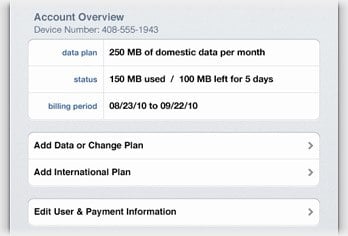 So the 3G iPad is set to launch this Friday at 5:00 PM, and AT&T has finally got on the ball and given full details on how their 3G data plan for the iPad will work. First order of business, you get two data plans that work in the US – the charges are automatically billed on a monthly basis, but you can start and stop that at any time right from the iPad 3G, and both options are contract-free:
- $14.99 per month for 250 MB
- $29.99 per month for unlimited data
- Unlimited access – no added cost – to AT&T’s 20,000+ Wi-Fi Hot Spots
That third one is a nice bonus. Basically, if you have an active iPad 3G subscription, then you get access to any AT&T Wi-Fi hotspot at no additional cost. The plans renew every 30 days, which starts on the date and time of the purchase, and charges appear like normal on your credit card bill. You can make changes to your plan at any time, which starts a new 30 day window. To manage all this, you go to the Cellular Data area under Settings on the iPad.
For those of you thinking about starting out with that $14.99 250MB plan, the iPad will actually alert you when you’ve got 20 percent of your data left, then again at 10, and finally once more at zero. As each alert pops up, you have the option to add more data, if you so choose.
Tags:
att,
data plans,
ipad,
ipad 3g,
ipad 3g data plans,
sidefeatured,How the AT&T iPad 3G data plans will work originally appeared on Gear Live on Wed, April 28, 2010 – 12:10:58
-
How Real Is That Olive Garden Cooking School?

We’ve all seen the Olive Garden ads where the popular chain of Italian eateries touts the Olive Garden Culinary Institute of Tuscany, a picturesque cooking school in Italy where they claim to educate chefs and develop new products. But, like many others, the folks at Jaunted.com wanted to know just how reality stacks up against the advertisements.
To their surprise, they found that the Culinary Institute isn’t a complete load of PR bull.
Writes Jaunted:
It is indeed a group of beautiful rustic buildings (even a pool!) in the region of Tuscany, close to Siena, and it does indeed host Olive Garden cooks, managers, and waiters from their chain restaurants every so often, but it’s not a full-time Olive Garden cooking school.
They explain that it’s actually called the Tuscan Culinary Institute, and while it was created by O.G., the restaurant only uses it a handful of times during the year — mostly in the winter — for training and menu development.
The site of the school, known as the Riserve di Fizzano, is available for visitors who want to tour the school or even take classes.
Is There Really an Olive Garden Cooking School in Tuscany? [Jaunted]
-
HP To Buy Palm for $1.2 Billion

Breaking news, fresh off of the wire: HP just finalized agreements to buy Palm for $1.2 billion dollars.
HP’s $1.2 billion dollar purchase breaks down to roughly $5.70 per share of common stock. While this is spot on with the $1.2-$1.3 billion pricetag Palm was rumored to be shopping around as of late, it’s still a mammoth difference from what Palm was trading at just months ago. In October 2009, Palm was worth about $17.46 per share; by January of this year, that was down to $13.41. It has, unfortunately, been a downward spiral ever since.
And for all you webOS fans out there: Don’t worry — it doesn’t look like the platform is going anywhere just yet. It appears that the companies plan to continue the development of webOS, leveraging HP to “rapidly accelerate the growth” of the platform.
HP has seemingly been lightening their efforts in the pocketable mobile space lately — but with the iPAQ line and countless Pocket PC handsets behind them, they’re by no means strangers to it.
However, the smartphone space might not be HP’s only interest here – given HP’s recent desire to take on Apple in the tablet space (with the HP Slate) and that Windows-powered tablets just don’t seem to sell, might we see a webOS-powered tablet sometime in the future? Paired with the proper hardware, webOS could easily make for an absolutely incredible tablet experience.
Even if HP abandoned webOS altogether (which, again, doesn’t appear to be the plan right now), they just bought them selves a monstrous card to play: Palm’s patent catalog. It’s a porcupine tactic: It’s hard to make a big dent in the smartphone biz when every company around can throw patent infringement suits at you — but when you’ve got hundreds upon hundreds of patents (or quills) in your armory, people are going to be a whole lot more careful about stepping on you.
Contrary to previous whispers, it appears that CEO Jon Rubinstein will be staying with the company. To quote the release, “Palm’s current chairman and CEO, Jon Rubinstein, is expected to remain with the company.”
-
Kia Forte Earns 2010 “Top Safety Pick” by IIHS
Kia Forte Earns 2010 “Top Safety Pick” by IIHS
Kia Motors has announced that its compact Forte sedan has received a “Top Safety Pick” status for 2010 by the Insurance Institute for Highway Safety.

This is the third model from the Hyundai/Kia line-up to receive this prestigious title for 2010, with the other two being the Kia Soul and the all-new Hyundai Sonata.
It is important to note that this rating only applies to Forte’s built after October 2009, as the automaker made revisions to the car’s B-pillar and roof to qualify it for the award.
For a vehicle to qualify for the rating, it must score the top rating of Good in frontal-offset, side-impact, and rear-impact crash tests. New for 2010, a car must also score a good rating in its roof-strength test that measures occupant protection in the case of a rollover.
The car must also be equipped with electronic stability control (ESC), standard equipment in the Forte.
With the new standards implemented for 2010, there are only 31 vehicles in the market that qualify for the Top Safety Pick, a low number compared to that of 2009. Other cars in the compact segment that earned the top rating are the Volkwagen Golf, Toyota Corolla, Subaru Impreza, Scion xB, and Nissan Cube.
2010 Kia Forte Video Review
Have a look at the video of Kia’s Chief Design Officer, Peter Schreyer, as he talks about some of the exciting styling characteristics of this completely redesigned model.
2010 Kia Forte Koup Movie
Source: Kicking Tires
-
Higher Water Prices Needed Globally, OECD Says
A report from 30 of the richest countries in the world says raising water rates will help protect and maintain the precious resource for the future.
 Photo by Elsie esq. via Flickr / CC BY-NC-SA 2.0
Water prices should rise to encourage less waste and pollution as well as to fund improvements to supply systems, according to three studies released by the Organization for Economic Cooperation and Development.
As fast-growing cities are expanding beyond the limits of their water supply, some experts argue that higher prices will delay the cost of expensive system expansions and maintain existing supply lines.
“Putting a price on water will increase the awareness of the scarcity and make us take better care of it,” said OECD Secretary-General Angel Gurria.
The OECD, a network of high-income economy countries, surveyed residential and agricultural water prices in each of its 30 members. A 2008 Global Water Intelligence/OECD survey of water prices in 261 cities found that Copenhagen had the highest combined water and sewer rates globally.
Though higher prices can lead residents to conserve, it can also bring financial instability to a water utility if price increases are poorly implemented. Many cities in the U.S. are facing revenue shortfalls because customers are conserving too much, according to a Circle of Blue survey.
Because price increases are publicly and politically unpopular, conservation education programs and rebates for water-wasteful appliances are common alternative measures utilities take. However, water conservation is not the only justification for higher prices. Many utilities need to replace aging infrastructure or install new treatment plants, but insufficient funding is a major obstacle.
This creates what is known as the low-level service trap.
Governments charge too little for water, leaving the utility short of cash to invest in the water system. Meanwhile customers are reluctant to pay for poor service and resist price increases, forcing the price to stay low. As a result, revenues are low and the government cannot improve the service.
“We were in a vicious cycle,” said Virgilio Rivera, a director of Manila Water, to the Guardian.
Manila Water, a private company, took over the water supply system in the Philippine capital in 1997 when the government service was privatized. The company raised prices to 30 pesos per cubic meter, up from 4.5, according to the Guardian. There was public anger at first, but Manila Water doubled the number of connections in the city by 2003. The city’s poorest residents, who used to buy expensive water from tanker trucks, now pay one-tenth of what they used to for water.
The OECD says that farmers also need to pay more. Agriculture uses roughly 70 percent of global water supplies and much of that is wasted through leaky pipes and inefficient irrigation techniques. Infrastructure improvements and conservation will be needed to double agricultural production by 2050–an increase in output necessary to feed the world’s growing population, the report states.
Source: OECD, Guardian
Read more from Circle of Blue about water prices and water usage in the U.S. -
HP Buying Palm For $1.2 Billion (PALM, HPQ)

Hewlett Packard is buying Palm for $1.2 billion, the company announced today.
HP is paying $5.70 per share for Palm, a 23% premium over today’s close. Palm’s stock was trading as high as $18 in the last year.
Analysis here: “Why HP is buying Palm and why it will fail.”
HP will be spending nearly $1 billion in cash. According to data from Capital IQ, HP has $13.6 billion in cash and short term investments. The deal will close in the fiscal third quarter, which ends July 31 2010.
Palm has been on the block for the better part of the year.
Palm built a nice operating system in WebOS, but it failed to catch on. Palm’s market share in the smartphone world has been shrinking.
Google’s Android operating system passed Palm earlier this year in the US, according to comScore data. Palm is in last place.
Todd Bradley, who is HP EVP of the group that will oversee Palm, was once CEO of Palm.
In the release announcing the deal, HP says Palm CEO and chairman Jon Rubinstein is expected to stay with the company.
Palm’s attempted resurgence was backed by Elevation Partners who put a lot of money into the company. Dan Primack of PEHub just tweeted, “Back of envelope math shows Elevation would get $485m from HP/Palm deal. Compared to $460m in. Not even a single, but certainly a save”
HP explains the purchase in its release, saying Palm provides “an ideal platform to expand HP’s mobility strategy and create a unique HP experience spanning multiple mobile connected devices.”
It adds, “Palm possesses significant IP assets and has a highly skilled team.”
Our first take: Look out for the HP tablet running on Palm’s OS.
See Also: Meet The iPad Rivals
Join the conversation about this story »
See Also:
- Palm Is On The Block And Getting Desperate
- Palm (PALM) Now Officially On The Block
- Meet The iPad Rivals
-
Feds Green-Light the Nation’s First Offshore Wind Farm | 80beats

The Obama administration reaffirmed its commitment to clean energy sources today by giving the green light to the controversial Cape Wind project, clearing the way for 130 wind turbines to be built off the coast of Cape Cod. The wind farm will be built in Nantucket Sound, and aims to harness the steady breezes blowing along the East coast to produce clean, albeit expensive energy.
The project had been delayed for almost a year due to opposition from local Native American tribes. Two Wampanoag tribes said the turbines, which will stand more than 400 feet above the ocean surface, would disturb spiritual sun greetings and possibly ancestral artifacts and burial grounds on the seabed, which was once exposed land before the sea level rose thousands of years ago [Boston Globe]. U.S. Interior Secretary Ken Salazar, who approved the project, assured the tribes that he had ordered modifications to lessen the turbines’ impact. He also said that the approval would require Cape Wind to conduct additional marine archaeological surveys and take other steps to reduce the project’s visual impact [Boston Globe]. If not held back by any other legal hurdles, construction could begin later this year.
The Horseshoe Shoals area of Nantucket Sound is said to be one of the best sites for a wind farm along the entire East coast: It not only has shallow, sheltered waters close to the shore, but also a strong supply of steady breezes. The wind farm is expected to produce as much power as a medium-size coal-fired power plant, and the project is also expected to reduce carbon emissions by the equivalent of 175,000 cars [Boston Globe]. The company behind the project, Cape Wind, says it can begin generating power by 2012 and hopes to supply power to the residents of Cape Cod and the nearby islands of Martha’s Vineyard and Nantucket.
Some economic details still need to be worked out: The price of its electricity is expected to be higher than conventional power, and Cape Wind is still in negotiations with the utility company National Grid, which has agreed to purchase and distribute some of the wind farm’s power. Despite this hiccup, Cape Wind says the wind farm will be source of hundreds of green jobs and a reliable domestic energy source, while offshore wind advocates are hoping it can jump-start the U.S. industry [WBUR]. Opponents, however, contend that the turbines won’t just endanger marine life but will also be an eyesore in this scenic tourist stop.
The United States is the world’s largest producer of wind power, but there are still no commercial offshore wind farms; Cape Wind hopes to be the first. The U.S. Department of Energy envisions offshore wind farms accounting for 4 percent of the country’s electric generating capacity by 2030 [WBUR].
Related Content:
80beats: Huge Offshore Wind Network Could Solve the Calm-Day Problem
80beats: Windmills on NYC Skyscrapers Sound Cool, but Wouldn’t Work
80beats: Wind Turbines Could Theoretically Power the Entire World, and Then Some
DISCOVER: High-Flying Windmills Blow Away Their Ground-Based CousinsImage: iStockphoto
-
Another Up Day: Here’s What You Need To Know
 DJIA: Up 53 points to 11,045.
NASDAQ: Up .25 points to 2471.
S&P 500: Up 7 points to 1191.Commodities:
Oil: Up 0.8% or $0.68 to $83.12 a barrel.
Gold: Up 0.5% or $5.80 to $1147 an ounce.
Silver: Flat at $18.14 an ounce.Now here’s what you need to know as you leave work today:
- Spain’s sovereign debt was downgraded today and while the Spanish IBEX felt the hit, it has not had the same effect on North American markets. Fears over the negative outlook for the Spanish economy could spread to the country’s banking sector tomorrow.
- The build up to the Greece bailout continues, with the number now balooning to €135 billion. The deadline is likely sometime late next month, when Greece owes significant debts to creditors.
- The quest to start a debate over financial reform continues with the Republicans now, according to CNBC, begin a debate on the bill.
- Wall Street is returning to the products at the center of the derviatives debate with four new indixes for mortgage products opening today. The indixes track jumbo-mortgage prices and are backed by several firms including Markit, which is partially owned by Goldman Sachs.
- The merger of Continental and United Airlines is looking closer. A deal could be announced as early as next week, according to CNBC.
Join the conversation about this story »
-
Microsoft Suggests Android Violates Its Patents… But Gets HTC To Buy A License
Ah, the patent games Microsoft plays. For years, it’s spread FUD, claiming that open source operating systems, such as Linux, violate its patents — though it has never detailed what patents or really sued anyone directly over those patents (though some have argued that it has done so with a couple patents tangentially). Now it appears that Microsoft is also claiming that Google’s Android violates its patents. Of course, it’s not doing so by going after Google. Instead, it’s part of what came out in an announcement concerning Microsoft licensing certain patents to HTC specifically to allow HTC to run Android.
Seems a bit strange, right? Why should Microsoft have any say in whether or not HTC can put Google’s Android operating system on its phones. The whole thing seems even odder when you realize that HTC was, for a long time, one of the major makers of smartphones running Windows Mobile operating system. But, the complicating factor here might be Apple. Apple, of course, famously went on the patent offensive and sued HTC over its Android phones a couple months ago. So now, with Microsoft doing this deal, it seems to very publicly be entering the patent fight between Apple and Google, which for bizarre reasons is playing out with HTC as the pawn getting bounced around between them all.
Of course, Microsoft’s press announcement on this particular deal is hilarious in how disingenuous it is:
The licensing agreement with HTC underscores the important role IP plays in ensuring a healthy and vibrant IT ecosystem.
Uh, no. It underscores the exact opposite. It underscores just how totally screwed up the smartphone market is because of the absolutely ridiculous patent thicket that’s been built up around pretty much everything that goes into a smartphone. This deal doesn’t show “the important role IP plays.” It shows how a big company that has nothing whatsoever to do with a particular fight can suddenly throw its weight around on the topic in an attempt to cause confusion in the marketplace and potentially scare off competitors. It’s the exact opposite of what the patent system is supposed to do.
Permalink | Comments | Email This Story
-
How to Predict Whether a Startup Will Succeed or Fail: Testing the “Disruptive Innovation” Model

Gregory T. Huang wrote:Thomas Thurston is a startup predictor. Tell him about your company, and he’ll tell you whether it will survive or fail.
No, he’s not an investor, or a psychic. By day, Thurston is a mild-mannered researcher and consultant whose training is in law and business. He’s the founder of Portland, OR-based Growth Science International, a research firm that works with entrepreneurs, investors, and corporations on their business strategy. By night, though, he’s testing every possible angle of a theory that could change the way a lot of people think about startup strategy.
Here’s the upshot of Thurston’s recent research, and why it’s important. Pretty much every startup you’ll ever meet will say it is better than its competitors. However you want to measure it—speed, technology, revenue model, whatever—a young company will say it outperforms others in its class. What’s more, it’s smaller and nimbler than the big companies, so it will be able to innovate faster and stay ahead of the curve.
Just one problem: That’s exactly why it will fail.
What a startup should do instead—to give itself the best chance of surviving—is enter the market at the low end of performance, Thurston says. That is, offer a product that’s not necessarily as good as its competitors, but is cheaper and more accessible. “Lower cost, lower performance, and gets better over time,” is how Thurston puts it.
If this sounds familiar, you’ve probably read Clayton Christensen’s books on business innovation. Christensen, a Harvard Business School professor, is the author of The Innovator’s Dilemma, The Innovator’s Prescription, and Disrupting Class, and he is coming to Seattle on May 17 to give the keynote at the Technology Alliance’s annual State of Technology Luncheon. The connection to Thurston is that he and Christensen have collaborated on testing predictions about startups and other companies.
In 2005, Thurston was working at Intel Capital when he got interested in whether a mathematical model could predict startup success or failure better than chance. He plowed through obscure academic papers and popular books, tried different things, and settled on building a sophisticated model based on Christensen’s principles of “disruptive innovation” (more on this definition shortly). Thurston got a hold of 48 business plans from within Intel—new businesses that had corporate funding—and checked how they did (survive or fail) against what Christensen’s model would predict. To his surprise, the model made accurate predictions more than 85 percent of the time, and the results were highly statistically significant.
Thurston decided to take a year off from his job in 2007 to continue the research with Christensen in Boston, co-sponsored by Intel and Harvard. They expanded their analysis to include all new businesses Intel has supported (roughly 100), as well as hundreds of outside companies across different industries and geographies. The result was the same: 85 percent accuracy.
Skeptics would say the model was tested by its own proponents, so it’s not surprising they would find it accurate. But Thurston maintains he is an independent researcher; he would happily switch to another model if it worked better, he says. He has since returned to Portland and continued the work at Growth Science, where doing the modeling is part of his consulting gig. He says he’s been getting lots of interest from companies and venture capitalists seeking advice.
So here’s how the predictions work, in a nutshell. First, a company is classified according to whether its market strategy is “sustaining” or “disruptive.” Sustaining means it is positioned as …Next Page »
UNDERWRITERS AND PARTNERS
-
Video: Drifting Cadillac thwarts purse snatching
Filed under: Sedan, China, Etc., Government/Legal, Videos, Cadillac, Luxury
Crime fighting Good Samaritans can take on all forms, and apparently that includes in the form of a 3,900 pound, rear-drive Cadillac CTS. FailBlog has stumbled upon a what looks to be a Chinese news program running street camera footage of a petty thief stealing the purse of an unsuspecting woman. But instead of running off into the night, the robber is instead intercepted by the Caddy driver in rather spectacular fashion.
It’s almost a good enough display to have us wondering about the authenticity of what’s going on (there are a lot of staged viral videos these days), but assuming it’s the real deal, now might be a good time to change Cadillac’s tagline to “Life, Liberty and the Pursuit of Bad Guys.”
Hit the jump to watch the Caddy doing Starsky and Hutch proud.
[Source: Failblog via YouTube]
Continue reading Video: Drifting Cadillac thwarts purse snatching
Video: Drifting Cadillac thwarts purse snatching originally appeared on Autoblog on Wed, 28 Apr 2010 15:00:00 EST. Please see our terms for use of feeds.
Read | Permalink | Email this | Comments
-
Incredible Perching UAV Lands On And Takes Off From Walls [UAVs]

This little guy is pretty remarkable: a fixed-wing aerial drone that lands by clinging vertically to a wall, and takes off from the same position. I’m not saying this is the future of spy planes—but it should be. More »
-
Mors Footwear Arctic Fish Leather Sneakers – Fall/Winter 2010

Mors is a UK based sneaker brand by footwear designer Jonathan Morss. The label will be releasing a range of sneakers made from Arctic fish skin for Fall/Winter 2010 in limited quantities. The ‘hoop’ high top will be available in electric blue fish leather and a black/blue fish leather colourway. The ‘net’ low cut model will be available in a dark blue fish leather. The salmon leather comes from the north of Iceland, it is a very strong and supple leather with amazing textures and colours that have to be seen to really be appreciated. It is very difficult to make sneakers from fish leather, so they can only be produced in small numbers. They are handcrafted to the highest standard in Portugal.
Continue reading for more images.


-
Neighbor to Neighbor Car Rentals

Here’s a truly great business idea. Maybe even the next Craigslist or eBay. Rent your car to a neighbor when you don’t need to use it. You could be earning money from your car.What a timely idea: over the next few years, as long-awaited electric cars become available, with their high initial costs; many of us are finally going to buy a car again. We know an investment in an EV is the right thing to do for the planet, and over the long term will pay back those initial costs, but how to cover the upfront higher cost?
In London; WhipCar is just opening its virtual doors for business this week. They expect to be able to help participants earn back some of the nearly $8,000 a year it takes to operate a car in London. In San Francisco, serial entrepreneur Sunil Paul is working on the same idea, but he has a small hurdle to overcome first. The law. (more…)
-
Android Powered Vodafone 845 Announced


Vodafone just pulled the curtain back on their first Android handset, the Vodafone 845. To be clear, this marks the first of their own branded phones. They currently offer the HTC Legend, Nexus One, and Sony Ericsson Xperia X10. So what’s the 845 all about? Is it a superphone like the rest of their lineup? Not so much.
The specs read like an entry level Android phone with its Android, 2.1, 2.8-inch screen and 3.2 megapixel camera. But you know what, that’s quite okay. As much as our average reader might disagree, the world doesn’t need high end Snapdragon phones. If these are the types of handsets that help Android take over the world, we’re cool with it. Other specs gathered by Engadget include 128MB RAM and 512MB storage.
As of right now, we don’t know what the price or official release date is. Interested consumers are advised to register for updates via Vodafone’s website.
Might We Suggest…
-
Solar Power Partners Raises $115M In New Financing


S
olar Power Partners (SPP), a developer and operator of solar-powered facilities, has raised $115 million in new financing.
The new funding is a combination of tax equity, debt and term debt and was structured by Minneapolis-based U.S. Bank and WestLB AG, the German bank.
PeHUB reports that Solar Power previously raised $150 million in debt and equity from United Commercial Bank, Globespan Capital Partners, Energy Investors Funds, The Enlightened World Foundation, Carrelton Asset Management, Dry Creek Ventures and Silicon Valley Technology Group.
SPP President and CEO Bob Powell said:
This round of funding allows us to continue our track record of project execution, and will more than double our installed system capacity. In an industry where delivering results rather than hype is scarce, SPP is focused on putting real shovels in the ground to construct projects.
-
Car Care Tips To Keep Your Automobile in Top-Notch Condition
Car Care Tips To Keep Your Automobile in Top-Notch Condition
Operating Your Car
We’ve compiled our best expert advice, surprising tricks, and maintenance and fix-it tips to prolong the life of your car!

1. Be patient during the break-in period
You’ve bought your dream car and now you want to make it last at long as possible in top condition. Here are some things to remember as you pull it out of the dealer’s lot:- During the break-in period, typically the first 1,000 miles (1,600 km), keep your speed under 55 mph (88 kpm) or to the speed recommended by your car’s manufacturer.
- Avoid heavy loads on the drive train, such as towing trailers, and loading the roof rack or trunk with heavy construction materials.
- Do not allow your new car to idle for long periods — this is good advice for the life of your car, but especially during breakin. The oil pressure generated by doing so may not be sending oil to every part of your engine.
- Use only light to medium acceleration, keeping the engine rpms below 3,000 for the first few hours of driving.
2. Drive with care everyday
Being car considerate shouldn’t stop after the break-in. Drive with care every day and your car will reward you with longer intervals without repair.- Do not race your car’s engine during start-up.This is a quick way to add years of wear to your engine, especially if it’s cold outside.
- Accelerate slowly when you begin your drive.The most wear to the engine and drive train occurs in the first ten to twenty minutes of operation.
- Warming the engine by letting it idle in the driveway is not a smart idea.The engine doesn’t operate at its peak temperature, resulting in incomplete fuel combustion, soot deposits on cylinder walls, oil contamination, and ultimately damaged components.
- Put less strain on your engine and automatic transmission by shifting to neutral at red lights. Otherwise, the engine is still working to push the car even while it’s stopped.
- Avoid driving at high speeds and accelerating quickly, especially when it’s very hot or very cold outside. Such driving behavior will result in more frequent repairs.
- Extend the life of your tires with careful driving. Observe posted speed limits. Avoid fast starts, stops, and turns. Avoid potholes and objects on the road. Don’t run over curbs or hit the tire against the curb when parking. And, of course, don’t burn rubber.
- When turning your steering wheel, don’t hold it in an extreme right or left position for more than a few seconds. Doing so can damage the power-steering pump.
- Consolidate your short driving trips. Most of the wear and tear — as well as the pollution your car generates — takes place in the first few minutes of driving. Doing several errands at once, during low traffic hours if possible, will keep your engine happier longer.
3. Buy gas at reputable service stations
Ask whether the gas you buy is filtered at the pump and if the station has a policy about changing the pump filters regularly. If you get a song and dance, find another gas station. Some stations don’t have pump filters, making you more vulnerable to dirty gasoline. Other stations may not mix alcohol and fuel properly — or worse, water down their product. Find a station you trust and stick to it.4. Don’t fill up if you see the tanker
If you happen to see a gasoline tanker filling the tanks at your local gas station, come back another day or go to a different station. As the station’s underground tanks are being filled, the turbulence can stir up sediment. Sediment in your gas can clog fuel filters and fuel injectors, causing poor performance and possibly necessitating repairs.5. Go easy when you’re stuck
When stuck in mud or snow, don’t make the problem worse by damaging an expensive component. Gently rocking in an attempt to free the car is fine. But if it looks as though you’re really stuck, don’t keep at it. Throwing your car from forward to reverse repeatedly, as well as spinning tires at high speeds, can generate lots of heat and spell trouble for transmissions, clutches, and differentials. It may be cheaper in the long run to call the tow truck rather than risk big repair bills down the road. It’s a good idea to carry a traction aid in the trunk, such as sand, gravel, or cat litter.6. Lighten up your key chain
Does your car key share a chain with a dozen or more other keys? That’s a pretty heavy load hanging off the car key when it’s in the ignition.The weight, combined with bouncing while you drive, can wear out the tumblers inside the ignition and eventually lead to ignition switch failure.To add years of service to your ignition switch, purchase a lightweight key chain that allows you to separate your ignition key from the others. Drive with only the ignition key in your ignition. If your ignition key “sticks” when you try to turn on the car, it’s a warning that your ignition switch is about to fail. Replace it before you get stranded.7. Choose a good car insurer
Sometimes, no matter how careful you are, disaster inevitably strikes — typically in the form of an accident. Make sure that your car will be repaired to the best possible standard by finding an insurer that will pay for parts from the original manufacturer and guarantee the repairs it authorizes.8. Keep an auto log
Keep a pad and pencil in the glove compartment and use them to record your gas fill-ups and mileage. If you notice that your gas mileage worsens, mention it to your service man. It may be an early warning sign that something is wrong with your car.9. Preserve your car during long-term storage
If you are not going to use your car for more than a month, store it properly to prevent unnecessary damage and repairs upon your return.- Fill the gas tank to help prevent condensation from accumulating in the gas tank. Add a fuel stabilizer and drive the car around a bit to distribute the additive to engine parts.
- Wash and wax the car thoroughly to protect the finish.
- Place a vapor barrier on your garage floor. A 4-mil polyethylene drop cloth will do.
- Disengage the parking brake to help avoid brake corrosion.
- Put the car on jack stands to take the weight of the vehicle off the wheels and tires.
- Disconnect and remove the battery to keep it from draining. Place the battery on a trickletype charger. Or periodically drain the battery, using a small light bulb, and then recharge it with a low-volt charger.
- Plug the tailpipe with a rag to prevent moist air from infiltrating into it.
Please read more than 50 advices for your car on the source. Thank you!
-
Dr. Drew Thinks The Cast Of “Jersey Shore” Needs Professional Help
Dr. Drew thinks the “guidos and guidettes” of the season’s biggest reality cyclone — MTV’s Jersey Shore — could benefit from a bit of “professional help.”
(Gee Doc, tell us something we don’t know….)
And he’s not talking about the kind of treatment that’s often characterized by patients lounging on a sofa in the cozy quaintness of some shrink’s office up on Fifth Avenue. The television addiction specialist with an opinion on almost everything tosses around words like abuse, alcoholism, and sex addiction when talking about the tanned-to-a-tangerine complected stars of The Shore.
In fact, Drew would love to get series spitfire Snooki, resident spinner Pauly D, and the rest of the gang one of his various VH1 programs (Celebrity Rehab, Sober House, Sex Rehab with Dr. Drew) before making a final diagnosis.


