Category: News

  • Merex Group Names New CEO

    Merex Group, a Dubin Clark portfolio company, has named Christopher R. Celtruda as its new CEO. Merex is based in Camarillo, Calif., and is a provider of defense platforms.

    PRESS RELEASE

    CAMARILLO, Calif.–(BUSINESS WIRE)–Merex, a Dubin Clark Portfolio Company, is pleased to announce the appointment of Christopher R. Celtruda to the role of Chief Executive Officer. Mr. Celtruda will be responsible for the Merex Group of businesses headquartered in Camarillo, California, including the recently acquired ALCO aircraft equipment repair and overhaul business located in Livermore, California. He succeeds President and CEO Andy Shams, who will act as Chairman of the Board and continue to serve in a business growth role.

    “Total Support“ approach of providing spares/components, repair/overhaul management, and project management of systems upgrades has been instrumental in the company’s success in this growing market. The Merex Group is headquartered in Camarillo, California, and is a Dubin Clark Portfolio Company. Further information is available at www.merexinc.com.”

    Celtruda has over 20 years of experience managing complex businesses in the aerospace, defense and industrial markets. He is an accomplished leader with expertise in business and operations leadership, engineering, M&A, restructuring, and business development.

    He was most recently engaged as Managing Principal at Destiny Equity Partners, LLC providing advisory services to public and private equity backed firms for strategy, business management, transactional M&A and investment in manufacturing enterprises.Celtruda served as President and Corporate Officer for the $1.2 Billion Gardner Denver (NYSE:GDI) Industrial Products business unit. Prior to joining Gardner Denver, Celtruda was the Group Executive and Corporate Officer who led the formation of the global CIRCOR Aerospace division of CIRCOR International (NYSE:CIR) through acquisitions of a number of companies recognized for their proprietary technology in fluid control, landing gear systems and electro-mechanical control. During his tenure as the CIRCOR Aerospace Group Vice President, he deployed strategies for growth through strategic acquisitions and new product development as well as profit expansion through lean manufacturing, business consolidation and leverage of a global, low cost supply chain. He led the executive team to the successful closing of six acquisitions and the awarding of significant new program wins on the Airbus A350 and F-35 Joint Strike Fighter.
    Celtruda spent more than 12 years in a variety of roles of increasing responsibility in the aerospace market vertical with Honeywell International (NYSE:HON) and the former AlliedSignal. These assignments included Operating Director for the $600M Engine Systems business unit and General Manager for the $250M Honeywell Aerospace Fuel Systems. He also held a variety of roles with the former AlliedSignal Aerospace in product management, factory repositioning, operations, sales and new product development.
    Celtruda began his career with the General Dynamics Corporation and is a Six Sigma Black Belt. He holds a Bachelor of Science degree in Mechanical Engineering from the University of Maine and an M.B.A. from the W.P. Carey School of Business at the Arizona State University, with studies in International Management at Ecole Superieure de Commerce in Toulouse, France.
    He is a life member of each of the following: the Association of the United States Army (AUSA), the United States Air Force Association (AFA) and the United States Naval League.
    He is also a member of the International Society of Transport Aircraft Trading (ISTAT), National Business Aviation Association (NBAA), National Defense Industrial Association (NDIA) and the Los Angeles Chapter of the Association for Corporate Growth (ACG).
    “Chris hails from a long history of high profile roles for key defense and aerospace entities where he has successfully led executive teams in achieving strong organic growth objectives. His wealth of experience and new perspective make Chris well suited to forge a similar growth path for Merex. He is the right person at the right time. I look forward, as Chairman, to assisting Chris in realizing our goal of becoming the industry leader in international legacy platform support,” offered Andy Shams, Merex Group Chairman.
    About Merex:
    The Merex Group is a global provider of comprehensive support for U.S. manufactured legacy defense platforms including aircraft, helicopters and their respective engines. Supporting more than 35 armed forces worldwide that operate legacy defense platforms, Merex’s “Total Support“ approach of providing spares/components, repair/overhaul management, and project management of systems upgrades has been instrumental in the company’s success in this growing market. The Merex Group is headquartered in Camarillo, California, and is a Dubin Clark Portfolio Company. Further information is available at www.merexinc.com.
    About ALCO:
    ALCO operates as a Maintenance, Repair and Overhaul (MRO) facility for servicing auxiliary power units (APUs), engine driven compressors (EDCs) as well as a variety of other components for hydraulic, pneumatic, fuel and electrical systems. ALCO supports military aircraft including: C-130, P-3, F-18, F-16 and F-15 as well as commercial aircraft including: 737, 757 and 767. ALCO currently maintains FAA Open Class I, II, III, Accessory and Limited Instruments Ratings. Further information is available at www.alco.aero.
    About Dubin Clark & Company:
    Dubin Clark & Company is a private equity investment firm founded in 1984 exclusively on purchasing and cultivating businesses into profitable enterprises, all the time working alongside the businesses’ preexisting management. The organization has a philosophy of “Maintaining each company’s values, independence and culture; our goal is to build on what has already been achieved.” Further information is available at www.dubinclark.com.

    The post Merex Group Names New CEO appeared first on peHUB.

  • Google unveils 41 new features for Google+

    Google Plus resigned

    During its annual I/O Developers Conference in San Francisco on Wednesday, Google senior vice president Vic Gundotra announced 41 new features for the company’s social networking site. Google+ will receive yet another redesign that looks to unify the website on smartphones, tablets and desktop computers. The redesign will adapt based on the screen size of the device from one column when viewing on a smartphone to two to three columns when on a tablet or laptop. One of the new features Google added is called “related hashtags,” which can analyze the content of a post and automatically apply a hashtag to them. Another feature, known as Auto Enhance, will analyze uploaded photos and help make them look even better by adjusting the saturation levels, brightness, contrast and color.

    Continue reading…

  • Tour of the BlackBerry Booth in the BlackBerry Live Showcase

    BlackBerry

    Greetings from #BBLive 2013. Hope you’re all having as much fun as we are. This year’s schedule is definitely keeping us busy – so many can’t-miss sessions. If you haven’t already made your way to the BlackBerry Booth, you’ll want to head over and check it out before you leave.

    One of the highlights of the BlackBerry Live conference (the amazing keynote, aside) is the BlackBerry booth in the conference showcase. This year is no exception. We’re showing off the best that BlackBerry has to offer, devices, accessories and even the QNX Bentley show-car and special demo vehicle from our partners on the MERCEDES AMG PETRONAS team.

    I had the chance to check it all out this week at BlackBerry Live, so check out the quick video below and see for yourself:

    [ YouTube link for mobile viewing ]

    You can find more info by following @BlackBerry, @BlackBerry4Biz and @BlackBerryDev on Twitter and as always, stay tuned here for updates and the latest info. Were you attending BlackBerry Live this year? What were your favorite parts of the BlackBerry Booth? Let us know in the comments.

  • Airbourne: Live It Up

    Airbourne: Live It Up

    Holy shit! These guys are awesome! We’re talking 1980′s hair metal all over again and it’s flippin’ glorious. Combine that with a snot-load of tire shredding Aussie-only muscle cars and some hot chicks and WHAMMO – instant classic. Click through and prepare to rock out to Airbourne’s newest video, LIVE IT UP!

    Source: Youtube.com

  • Spring 2012 Earliest on Record

    March 2012 set records for warm temperatures that promoted early leafing and flowering across large areas of the United States. A team of scientists at the USA National Phenology Network, which is sponsored by the U.S. Geological Survey, have published a study which shows that 2012 was the earliest spring over the 48 U.S. states since 1900 when systematic weather data began to be available for the entire area. 

    Phenology is the study of recurring plant and animal life cycle stages, especially their timing and relationships with weather and climate. Assessing the severity and impacts of such extreme climatic events, either in the past or as they happen, requires consistent indicators of variability and change that can be mapped both nationally and historically. 

    The USA National Phenology Network provides a suite of “spring indices” based on the accumulated warmth needed to end dormancy and initiate growth in many native and cultivated plants. These complex, evidence-based algorithms can be calculated for any weather station that records daily maximum and minimum temperatures. Spring indices are independently validated using historical observations of leafing and flowering in lilac and honeysuckle nationwide. 

    The historical trend of spring indices suggests that the 2012 growing season advanced as much as 20-30 days in the East and Midwest from the 1900-2012 long-term mean.  

    “The results of this study clearly demonstrate the great importance of long-term monitoring of natural processes. A long record allows us to identify patterns of change that we might otherwise miss,” said Suzette Kimball, acting USGS Director. 

    Today the response of vegetation to temperature and precipitation can be readily observed across wide areas by Earth-observing satellites at intervals of only a few days. USGS scientist Julio Betancourt, a co-author of the study, noted, “Indicators such as spring indices and satellite-based evaluations of vegetation growth will become essential tools for assessing climate variability and change and their impacts.” 

    Satellite data show that the cumulative effects of the unusually early 2012 spring were most pronounced across the Corn Belt, the western Great Lakes region, and the northeastern U.S. 

    The beneficial effects of spring’s quick start in 2012 were subsequently offset by a late spring frost and summer drought. In fact, the unusually early spring combined with late frosts in April to produce a so-called “false spring” that damaged fruit trees across the Upper Midwest and Great Lakes regions. 

    The study appears in EOS, Transactions of the American Geophysical Union. 

    Learn more 

  • Google Aims To Simplify Mobile Shopping With Chrome [Google I/O]

    According to Google, the abandonment rate of shopping carts on mobile is a whopping 97%. With that, they’re providing an HTML5 autocomplete function in mobile Chrome to fill out info in three steps: checkout button, review billing and shipping, and submit. That’s down from these 21 steps, as outlined during today’s Google I/O keynote:

    1. Checkout Button
    2. Sign in or Guest
    3. Billing name
    4. Credit Card Type
    5. Cred Card Number
    6. Expiration – MM
    7. Expiration – YY
    8. Credit Card CSC
    9. Billing Address
    10. Billing City
    11. Billing State
    12. Billing Zip
    13. Billing Country
    14. Shipping Address
    15. Shipping City
    16. Shipping State
    17. Shipping Zip
    18. Shipping Country
    19. Shipping telephone
    20. Contact Email
    21. Submit

    So yeah, it’s easy to see where Google’s model could be a bit more helpful.

    The Verge, liveblogging the event, says, “BIg play from Google to take its payment service to mobile in a subtle way.”

  • Vox Mobile VoIP App Coming to BlackBerry 10

    Vox is a mobile VoIP client for Android that will soon break out to other mobile platforms including BlackBerry 10. Expected to launch at the end of 2013 it looks like BlackBerry 10′s VoIP, IM, and video conferencing options are becoming plentiful.

    E1196E4F-A1E3-BD51-65A0CC968DAD6813

    Vox originally launched in 2005 as a competitor to Vonage and has been transitioning to the mobile ever since. By next year they should be running on all cylinders and supporting the top 4 smartphone platforms. The app also has the ability to call mobile phones in certain regions like the UK, Mexico, India, Pakistan and Vietnam.

    Click here for details on the current Vox app on Google Play.


  • No new Nexus, but how about a Google branded Galaxy S4?

    One thing that surrounds Google I/O is rumors — almost as much as an Apple event. We have heard of an X phone from Motorola, we have seen a possible Nexus 5 from LG, and the latest is a Google branded version of the new Samsung Galaxy S4. So which one is the winner in this strange sweepstakes?

    The latest rumor turns out to be the most accurate, as Google unveils its own flavor of the Samsung Galaxy S4. The Android maker is taking the new darling of the smartphone market and making it a Nexus phone, just not in name.

    The S4 will run the latest version of Android and Google promises it will receive prompt updates whenever an updated version of the mobile operating system is released. The Google S4 will be sold directly through the Play store beginning June 26. The 16 GB model will be LTE, compatible with AT&T and T-Mobile and comes unlocked and with an unlocked bootloader.

    Pricing manages to generate a few groans from the I/O audience, as $649 is considerably more than a Nexus 4, but customers can likely look at the lack of a contract as a way of off-setting the cost, and the Galaxy S4 is certainly a step up.

  • Airware Raises $10.7 Mln Round led by Andreessen Horowitz, Google Ventures

    Airware has received a $10.7 million round of financing led by Andreessen HorowitzGoogle Ventures also participated. Also, Chris Dixon, a partner at Andreessen Horowitz, will join Airware’s board. Airware, which is based in Newport Beach, Calif., which develops autopilots for drones.

    PRESS RELEASE
    Newport Beach, Calif., May 15, 2013 – Airware, creators of a universal development platform for commercial drones, today announced a $10.7 million Series A round of financing. The funding will enable Airware to meet increasing customer demand in the rapidly growing global market of commercially-operated drones. The round was led by Andreessen Horowitz with Google Ventures also participating. Chris Dixon, partner at Andreessen Horowitz, will join the company’s board.

    “Airware’s technology fulfills an immense need for a universal operating system and platform enabling the use of drones for commercial enterprises, which we believe is a global market with huge potential,” said Airware founder and CEO Jonathan Downey. “This funding and the addition of Chris to our board will allow us to continue to expand our team, meet existing customer and market demand and scale for future growth.”

    Airware democratizes the use of drones without compromising safety for companies of all sizes, from small start-ups to big corporations and non-profit organizations. Airware is currently integrating their technology into drones produced by commercial companies for uses including the prevention of rhino poaching in Kenya, vaccine delivery to remote areas in Africa and Southeast Asia, skier search and rescue, and open air mining

    “As investors, we try to back brilliant founders pursuing audacious ideas,” said Chris Dixon, General Partner at Andreessen Horowitz. “Robotics has long been a field that overpromised and under delivered. We think drones are the most likely way to rectify that, and Jonathan is the person to make it happen.”

    Airware is a graduate of both Lemnos Labs and Y Combinator incubators. Previous to the Series A round, Airware raised seed financing from First Round Capital, Firelake Capital, RRE Ventures, Shasta Ventures, Promus Ventures and several Y Combinator partners.

    Airware created a universal platform for professional grade, customizable autopilots for micro to mid-size fixedwing, helicopter, multiple-rotor, and custom configuration unmanned aerial systems.  Founded in 2011 and headquartered in Newport Beach, CA, the company’s platform comprises on-board hardware, software, and a flexible API. For more information, go to: http://www.airware.com.

    The post Airware Raises $10.7 Mln Round led by Andreessen Horowitz, Google Ventures appeared first on peHUB.

  • Google turns up location data usage on Android apps

    Amid all the announcements Google is making at the Google I/O conference in San Francisco this week are three APIs that show Google wants to make the most of the sensors in Android devices and will let developers incorporate rich location data into their apps.

    The first API, called Fused Location Provider, will use very little battery power — less than 1 percent per hour, said Hugo Barra, director of product management for Android — to share Android device users’ locations.

    The second API is Geofencing, which “lets you define virtual fences around geographial areas” and creates triggers whenever a user enters or exits a location. And, get this, users can have “over 100 geofences simultaneously active per app,” Barra said.

    Google's new Geofencing API. Source: Janko Roettgers

    Google’s new Geofencing API. Source: Janko Roettgers

    Finally, the Activity Recognition API will track users’ physical activities and uses machine learning to determine exactly how users are moving — whether they’re walking, running, riding in a car or just idling, Barra said.

    Taken together, the APIs could let companies gain far more intelligence about their customers through Android apps, without annoying them with user-experience issues like battery drain. At the same time, apps making use of these APIs could make consumers more conscious of how and when they are being tracked — can companies see where customers are all the time? — and could lead to new discussions and best practices around privacy.

    Developers interested in using these APIs can sign up to get access to them through Google Play Services today.

    Related research and analysis from GigaOM Pro:
    Subscriber content. Sign up for a free trial.

  • Google launches Google Play Music All Access

    Google has just announced a new on-demand subscription music service called Google Play Music All Access. The service, which is available on Android and the web, gives users access to a massive library of millions of tracks. Google’s Chris Yerga calls it “radio without rules”.

    It allows you to explore songs from all of the major record labels, listen to it like a radio station, provides Google-powered recommendations, charts and playlists, and blends your personal library with Google’s. Everything from your Google Music locker is pulled into the new service.

    All Access is launching in the US today, and will be arriving in other countries shortly. It will cost $9.99 a month, but there’s a free 30-day trial available so you can try it out before tying yourself into a regular subscription. Start a trial by June 30 and Google will give you a discount and just bill you $7.99 a month. A sweet incentive.

    Apple has been rumored to be considering a similar service for a while now, but clearly Google has beaten the fruit-logo company to the punch.

    What do you think of the new service? Will you be signing up?

  • Google To Sell Galaxy S4 With Stock Android [Google I/O 2013]

    At the end of the Android portion of the Google I/O 2013 keynote, Google’s Hugo Barra announced that it will start selling a new Android device on its Play store. Those expecting a Nexus device were in for a surprise though.

    Barra announced that it will be selling the Galaxy S4 with stock Android instead of Samsung’s TouchWiz software. This version of the Galaxy S4 will come with all the features one expects from stock Android, and it will receive updates directly from Google.

    More importantly, Google’s own version of the Galaxy S4 is sold unlocked, and can be activated on AT&T and T-Mobile. It’s the first official LTE phone to be sold on Google Play. As expected, the bootloader is also unlocked.

    Those expecting a subsidized Google Play price are going to be disappointed though. Barra announced that the stock Android Galaxy S4 will be available on Google Play for $649 on June 26.

  • Chrome Now Has Over 750 Million Active Users [Google I/O]

    Earlier, Google announced that Android has seen over 900 million activations. After talking about Android and Google Play for about an hour, the Google I/O keynote shifted to Chrome.

    Last year Chrome had 450 million monthly active users. Since then, it has added over 350 million new users in last 12 months.Today, it has over 750 million active users.

    Much of the new Chrome use comes through mobile, according to Google’s Sundar Pichai. He also talked up the Chromebooks (coming out from an increasing number of partners) and Chrome OS.

    Google also showed off a new Chrome experiment inspired by The Hobbit.

    More from Google I/O here.

  • Avenue Capital Provides Loan for H.I.G.’s Freedom Finance Buy

    Avenue Capital Group said  Wednesday it has provided a loan to support H.I.G. Europe’s buy of Freedom Finance Nordic. Avenue Capital also made a minority equity investment in Freedom. The debt facilities provided by Avenue closed in early May.  H.I.G. Europe announced yesterday it had acquired Freedom, a prime consumer loan broker operating in Sweden, Norway and Finland

    PRESS RELEASE

    LONDON, May 15, 2013 /PRNewswire/ – Avenue Capital Group, a global investment firm focused on the private and public debt, equity and real estate markets in the U.S., Europe and Asia, today announced it has acted as sole lender and agent in connection with the debt financing of the acquisition of Freedom Finance Nordic, the largest prime consumer loan broker operating in Sweden, Norway and Finland, by H.I.G. Europe .  Avenue also has made a minority equity investment in Freedom Finance Nordic alongside H.I.G. Europe , the European arm of global private equity firm H.I.G. Capital.  The debt facilities provided by Avenue consist of a unitranche acquisition facility and a revolving credit facility. They closed in early May 2013.

    “Avenue is very pleased to have been able to provide the debt facilities to Freedom Finance Nordic, which, under the stewardship of H.I.G. Europe , is expected to continue its rapid growth in serving the consumer loans market in Scandinavia,” said Marc Lasry , the Chairman and CEO of Avenue Capital Group.   ”This financing was the first completed by our recently formed direct lending team, which provides an alternative source of debt financing predominantly to mid-sized European corporate borrowers with limited access to traditional lines of credit following the financial crisis.”

    Peter Lockhead , who joined Avenue from Bank of America Merrill Lynch, is the Portfolio Manager leading the firm’s direct lending initiative in Europe.  The team also includes Luis Mayans , who joined Avenue from GE Capital’s Leveraged Finance team in London, and Cliff Wagner , who was previously with Cerberus European Capital Management in London.

    Avenue’s Europe Strategy is led by Senior Portfolio Manager Richard Furst , who oversees a team of 22 dedicated investment professionals in London and Munich.  Mr. Furst also serves as Avenue’s Chief Investment Officer.

    About Freedom Finance
    Freedom Finance is the leading Nordic unsecured consumer loan broker with operations in Sweden, Norway and Finland. Founded in 2003, the company today markets, processes, and distributes loan applications for all unsecured borrowing uses such as loan refinancing, vehicle purchase, holiday financing and home refurbishments. Through its co-operation with more than 20 lenders, Freedom Finance is able to provide highly competitive terms for borrowers across a broad range of credit profiles, thereby providing a free, rapid and effective comparison service to the benefit of potential borrowers. The Company is headquartered in Angelholm (Sweden) with offices in Bergen (Norway) and Espoo (Finland) and currently employs more than 100 fulltime employees.

    About Avenue Capital Group
    Avenue Capital Group is a global investment firm focused the private and public debt, equity and real estate markets in the U.S., Europe and Asia.  The firm is headquartered in New York, with offices in London, Luxembourg and Munich, and five offices throughout Asia.  As of March 31, 2013, Avenue oversees approximately $11.5 billion of assets under management, on behalf of a sophisticated global base of institutional investors, the majority of which is pension funds, and also includes family offices, foundations, insurance companies and sovereign wealth funds.  Avenue was founded in 1995 by Marc Lasry and Sonia Gardner and draws on the skills and experience of approximately 200 employees worldwide.

    The post Avenue Capital Provides Loan for H.I.G.’s Freedom Finance Buy appeared first on peHUB.

  • How Stanford’s Andreas Weigend leads by example in pursuit of data symmetry

    Advances in technology tend to lump people into three categories: the indifferent, the luddites and the trendsetters, who, by virtue of their behavior and the beliefs they share with others, influence the future. When it comes to how companies use the ever-growing supplies of data on consumers, one of those trendsetters is Andreas Weigend, once the chief scientist at Amazon.com and now a lecturer at Stanford University.

    At a talk alongside other data scientists in San Francisco in April, he brought up the notion of a single place where consumers could see the data companies collect. This sort of thinking suggests that Weigend is part of a group of people defining what data sharing should look like in the years to come, and how both companies and consumers will have to adapt.

    Perhaps another indication is that he’s got fans. After the April talk, he took a few students and friends out to dinner at a family-style Italian restaurant. Long after the meal, some students lingered and asked him questions, as if he were an oracle or celebrity. And it is easy for people to listen to him talk for hours. He frequently makes references to foreign people, places and companies and seems to take it for granted that you are just as worldly as he is. If you engage him in conversation, you will immediately receive a vigorous response, as if he is pre-programmed to share his views, so as to have the best shot at getting others on board. This is not a man who keeps his hunches to himself. He looks the part of an idea guy, with blond curls fizzing up from his head.

    Andreas Weigend. Source: Flickr user alvy.

    Andreas Weigend. Source: Flickr user alvy.

    When your data is no longer your data

    When it comes to being transparent with data, Weigend thinks Amazon has done a pretty good job. “One of the things we worked for at Amazon was to make it trivially easy (to show) all of the things you clicked on,” he said. The site also lets customers see what they purchased. Those are key data points for Amazon’s recommendation engine, which Weigend describes as a grid — if you view or purchase one item and then another, Amazon can line up that performance with that of other users and then to serve up items you might like.

    Amazon also uses customers’ purchase history to help improve the user experience for purchases that customers attempt to make in real time. “If you buy a book which you have bought before, Amazon tells you, ‘Are you sure? You bought this item already, on December 17, 2007,’” he said. “It’s trying to help you minimize regret. It’s trying to help you make a better decision. This is how we refine the raw data, the data you created, in order to help you make a better decision.”

    Other companies are not so revealing. “Some airlines don’t remind you, ‘Look! Your miles are expiring in three months,’” he said. He has nothing against airlines. It’s just that he flies a lot — he splits his time between homes in San Francisco and Shanghai and attends many conferences each year — and has plenty of examples to share in the context of flight.

    An airline customer-service representative won’t permit Weigend to hear about his previous customer-service calls over the phone or see that data on the screen behind the counter at an airport, even though Weigend was the one who helped the airline create that data. And flight attendants might use fake names on name badges, even though they could conceivably access customers’ names. Weigend has a word for this sort of peculiarity: asymmetry. He is trying to fight against it.

    As a consultant, he tries to change the way companies generate, analyze and share data about users and customers, among other things. That might mean advocating for data symmetry. It also might mean motivating companies to assign costs to problems such as unresolved customer calls and then figure out ways to improve the situation. His ideas stem from experiences such as ensuring that particle-physics data wasn’t being thrown off with dirt on a photo plate at CERN and incorporating external data sets to arrive at new insights while reviewing financial data for Goldman Sachs and other companies.

    Voice recordings, itineraries, maps

    Still, the world is not yet as Weigend feels it should be. How does Weigend live in this imperfect world so lacking in data symmetry? He leads by example, in a sense.

    On his personal website, Weigend lists his flight reservations. When he does call an airline customer-service representative, as soon as he hears someone say this call may be recorded, he retorts that he will most certainly be recording the call. He carries around a voice recorder, and he has a mic that can hide underneath his shirt.

    recorderRecording customer-service calls might come across as a bit awkward. But should it really push our social buttons? One day it could be common for companies to share that sort of data with customers, and then it will not seem so surprising.

    Weigend also uses mobile devices in combination with Google Latitude for keeping tabs on his whereabouts, going back several years. He makes current location data public on his website and shares it with friends.

    When it comes to Latitude, he knows he is an “edge case.” But his father, Johann Weigend, spent years as a political prisoner in East Germany, where the government was convinced he was an American spy. “I believe in having people know where I am. If something happens to me, somebody at least knows where I am,” said Weigend, a native of Germany, no stranger to issues of personal privacy.

    When data is just wrong

    In using geolocation, Weigend has become aware of a problem he calls sketchy data. He believes users should be able to correct data, because it’s not always right. At least once, Google Latitude has shown Weigend was in one place (Weehawken, N.J.) when he was actually in another (the west side of Manhattan). Google might think Weigend is in a head shop when in fact he is visiting his friend who lives above the head shop. And it’s not unusual for county officials to enter real-estate data into computer systems wrong, he said.

    Some websites permit users to change their data, such as Amazon.com, on which customers can remove items from their purchase history. And it asks if something is a gift, so the system won’t use gifts to modify its algorithms on users’ actual preferences. Weigend likes those options a lot.

    Where personal and business meet

    How do his personal patterns overlap with his perspectives about what companies should do? It might come down to the best way to help people and companies and engender trust among all.

    “Getting people to think about the amazing world of big data, that’s more about Hadoop and all that poop,” he said. “It really is about the questions that we ask. What world do we want to create? And that’s, you know, my little part in this world.”

    Feature image courtesy of Flickr user aweigend.

    Related research and analysis from GigaOM Pro:
    Subscriber content. Sign up for a free trial.

  • Don’t Let Predictability Become the Enemy of Innovation

    Unhappily shocked by Sputnik’s unexpected 1957 success, President Eisenhower quickly pushed the Pentagon to establish the Defense Advanced Research Projects Agency (DARPA). Its ostensible mission: “to prevent technological surprise to the U.S. military, and to create surprises of its own.”

    Anticipating and enabling “technological surprise” has become even more challenging, DARPA director Arati Prabhakar recently told an MIT audience, because more people in more places have more access to more technology that ever before. Surprises can come from anywhere. In an era of greater global trade, knowledge transfer and transparency, Prabhakar unsurprisingly reports DARPA’s core value proposition demands disproportionately greater imagination and ingenuity. Predictability breeds complacency. Predictability is DARPA’s cultural, technical and organizational enemy.

    The more Prabhakar talked, the clearer it became that DARPA’s intimate historical relationship with surprise offered a powerful conceptual model for serious innovators worldwide. What role should surprise play in defining one’s innovation brand in the minds of customers and competitors? To surprise or not to surprise? That is the innovation question. (This question from a marketing perspective was recently explored on this site.)

    For Apple, the iPhone and iPad were unquestionably strategic surprises explicitly intended to disrupt established industries and disorient entrenched competitors. Steve Jobs, who had always sought to surround his company in auras of mystery and secrecy, was a master of injecting the unexpected into the zeitgeist. Indeed, Apple assiduously cultivated “expect the [delightfully] unexpected” as part of its innovation brand.

    While seen neither as flashy nor as glamorous as Apple’s offering, Amazon’s Kindle and Fire platforms similarly signaled strategic surprise. Jeff Bezos transformed perceptions surrounding Amazon as a global retailer by making clear they wanted to be a global innovation ecosystem as well. Amazon had made itself accessibly and invitingly unpredictable.

    After initially dismissing tablets as inferior to laptops, Microsoft surprised a number of its partners and developers by introducing Surface. A defensive surprise, to be sure, but one acknowledging Microsoft’s competitive environment had completely changed.

    But the greatest determinant of effective innovative surprise is not technical capability — it’s expectations.

    Surprise is about expectations. Successful surprises subvert, destroy and/or exceed expectations. The great innovation tension in business is appropriately managing expectations. With apologies to Clay Christensen, this other “innovator’s dilemma” asks, “Is it better to be ‘predictably surprising’ or ‘surprisingly predictable’?” That is, do customers and clients prefer the comforts of predictable improvements and enhancements that fall squarely within educated expectations? Or would they rather the thrill and novelty of innovations that challenge and intrigue them in unexpected ways?

    If you’re an Apple or a Samsung or an Amazon, is your brand better off building expectations around “no surprises” innovations that happily soak your customers in the warm bath of familiarity? Or do you gain greater brand equity by creatively disrupting the very expectations they’re predisposed to bring to your products and services?

    The simple thought-experiment and test I advise innovators to explore is substituting the phrase “pleasant surprise” for “innovation” whenever they discuss new offerings and upgrades. There’s a world of UX difference between a significant innovation and a significant pleasant surprise. In fact, as many innovators discover to their sorrow, many of their most innovative features and functions are frequently regarded as unpleasant surprises.

    How intimately do your designers and marketers link and measure the value of an innovation to the pleasure of its surprise? The great paradox, of course, is that the more people expect surprises, the less surprising those surprises are.

    And surprise, like any other differentiator, can quickly hit diminishing returns. But, as DARPA’s successful history as a surprise-based innovator suggests, understanding the differences and distinctions between “proactive” surprise and “reactive” surprise can pay huge dividends. What’s surprising is how few innovators appreciate that.

  • Google Play Music All Access Launches Today at $9.99 Per Month [Google I/O]

    Today at the Google I/O conference, the company announced their long-rumored new steaming music service called Google Play Music All Access.

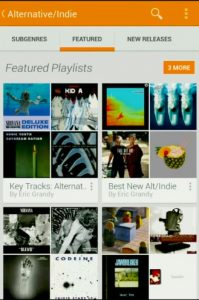
    It’s built on the concept of music discovery, with an “explore” section with personalized suggestions, featured content, and new releases. You can also search music based on 22 genres, each with curated playlists. There’s also a “Listen Now” section with even more recommendations.

    You can turn anything you’re listening to into it’s own radio station, filled with related tracks. You can reorder tracks in the curated radio station, look ahead to what’s coming up, and more.

    “It’s Radio without rules,” said Google’s Chris Yerga.

    With one tap, you can add any song or album to personal library, so that your owned music mixes with the music available on All Access.

    It’ll run you $9.99 a month in the U.S., and there’s a 30-day free trial – but if you start a trial by June 30th, it’s only $7.99 a month. Launching today in U.S., it will roll out in additional countries later.

    Google didn’t mention its label partners at the conference, but reports indicate that Universal and Sony are now both on board. Of course, the streaming music service will compete with the likes of Spotify, Rdio, and even Pandora with the curated radio features. But unlike a service like Spotify, for instance, Google Music All Access doesn’t offer a free, ad-supported tier.

    More to come…

  • Google I/O 2013 Keynote: Play Store will bring more Play Store personalized recommendation, apps that will be “Designed for Tablets” and new All Access music subscription service

    Google_All_Access_Music


    There’s no doubt that Google Play has seen some extensive improvements, but Google I/O is highlighting some of the cool functionality that users will see using the service moving forward. One of the great things that Google does for its users is learn about its users, so the Play Store can now give personalized recommendations of games, music, movies and whatever else may be good for users. Additionally, Google has implemented a new strategy for its ever-growing tablet users by showcasing a brand-spanking new “Designed for Tablets” section— ensuring the various tablet apps out there will operate at a smooth level. Oh and for you music lovers out there— Google Play Music All Access is Google’s first subscription-based music service, which allows listeners to enjoy the huge library of songs Google has— complete with the ability to customize your music as you choose— all for $9.99/month. “Radio without rules” is the motto of the All Access service, which means that we may have yet another means to enjoy our awesome music.

    Look for the new improvements to start rolling out over the coming weeks.

    Come comment on this article: Google I/O 2013 Keynote: Play Store will bring more Play Store personalized recommendation, apps that will be “Designed for Tablets” and new All Access music subscription service

  • Google To Begin Offering Unlocked Samsung Galaxy S4 With Stock Android For $649 On June 26

    38

    Google is offering a version of the Samsung Galaxy S4, arguably one of the top current Android devices, with Jelly Bean 4.2 unlocked on Google Play beginning June 26, the company revealed at I/O today. The news is big because it’s the first non-Nexus device to get blessed with this opportunity, and Google says it will be updated in time with all other Nexus devices.

    The Galaxy S4 will cost $649 with no contract, and will be usable on both AT&T and T-Mobile in the U.S., Google said today. At that price it isn’t exactly cheap, but people are probably willing to pay for an untouched Android experience on some of the most powerful smartphone hardware available.

    The S4 is not only carrier unlocked, but it also has a fully unlocked bootloader. That means that owners of the device can load their own software on to the device, including things like CyanogenMod, which allows for extremely deep device software customization options. In other words, this new unlocked S4 will essentially be the ultimate developer plaything, but again it’s likely to have more or less niche appeal because of the high price tag.

    What’s interesting about this is that Samsung emphasized all its software additions to the stock Android experience at the Galaxy S4 launch event, and this is basically stripping all that away. Reviewers seemed more or less overwhelmed by Samsung’s software smorgasbord, so this might result in a much better device overall.

  • BlackBerry Q10 Accessories – for Life on the Move

    IMG_00000428(1)_edit

    I love accessories. Period! It doesn’t really matter if we’re talking shoes, watches, curtains, throw pillows, or garden gnomes, I love them all and my technology is no exception. I’ve recently started using a BlackBerry Q10 and I have really enjoyed choosing my accessories. I get the feeling everyone else does too. The accessory booth is hopping here at BlackBerry Live with people itching to get their hands on this incredible line up of accessories that have been designed specifically for the BlackBerry Q10 smartphone.

    Don’t worry if you weren’t able to join us this year. Head over to www.BlackBerry.com/Q10accessories or your local retailer to pick up these awesome accessories.

    What’s the first accessory you’d buy for your BlackBerry Q10?