Category: News

  • Daley cool to idea of National Guard troops on Chicago streets

    Update by Hal Dardick at 3:26 p.m. with Quinn comment, homicide rate; originally posted by Hal Dardick at 1:56 p.m.

    Mayor Richard Daley today reacted coolly to the idea that the National Guard be called out to help slow the violence on Chicago’s streets, as two state representatives had suggested a day earlier.

    “Everybody knows their frustration, when one crime is one too many in any community — any death or any injury,” Daley said, taking a quick break from an international municipal conference to address the issue. “But like anything else, you have to look at long-term solutions. You can’t just put something temporary in there.”


    “People have to get involved in their community, family by family and block by block,” he added. “Like anything else, that is the  key. The community must be as upset as anybody else.


    "And so you have to look for long-term solutions. There’s no quick band aid. You just can’t think you’re going to fix it in one weekend and walk away," Daley said. "And that’s what the problem would be.”

    Daley’s remarks came a day after state Reps. John Fritchey and LaShawn Ford, both Chicago Democrats, held a news conference to suggest the National Guard be deployed in Chicago to quell the violence, at a time when the city’s murder rate is on the rise. They said as many people have been slain in the city this year as U.S. soldiers in Iraq and Afghanistan combined.

    While the city’s homicide rate is on an uptick in the early part of this year, it is generally down from years past, when more than 500 people a year were killed.

    Gov. Pat Quinn said today that he will not deploy members of the National Guard to help patrol city streets unless requested to do so by Daley. Quinn said it could be counter productive to police efforts, as law enforcement officers and military personnel are trained differently.

    The governor suggested the National Guard could be most helpful by providing intelligence assistance and the use of helicopters for aerial surveillance. But even that step would be extraordinary, and Quinn said it would not happen without a request from Daley — a possibility that seems remote.

    Quinn was asked if the crime situation rose to the level of needing the National Guard, since the homicide rate is not higher than in years past.

    "One homicide is too many in my book, and I think we should always look for every way to coordinate our public safety resource in Illinois at every level to make sure we have safe streets and safe communities and safe people," Quinn said.

    Ousted Gov. Rod Blagojevich was summarily dismissed by the mayor when he suggested sending in the National Guard two years ago, so Quinn took pains to try to stay on the mayor’s good side.

    "It is, I think, imperative that any governor work always with local law
    enforcement," Quinn said. "The notion of trying to step in, in any way step on the
    toes of people who are on the front line every day fighting crime in
    tough neighborhoods, I think is really not the way to go."


    Mark Donahue, president of the city police union, said more police officers are needed, at a time when hundreds are retiring while hiring is slowed.

    “Members of the Chicago Police Department can handle the situation with the proper resources,”Donahue said. “Right now, the proper resources needed are more police officers.”


    Donahue also noted police officers are schooled in the federal and state constitutions.


    “With the guard coming in, it’s making a statement that your constitutional rights will be diminished,” he said. “They don’t have the training that Chicago police officers do.”


    The mayor also sounded his familiar theme of needing more gun control laws and suggested Fritchey and Ford back him in those efforts.


    “This is all about guns, and that’s why the crusade is on,” Daley said. “We hope to get their cooperation in Springfield.”


    Police Supt. Jody Weis, who was at the mayor’s side today, a day earlier said bringing in the National Guard was not necessary.


    “Less than nine percent of the city blocks are really our problem areas,” Weiss said today, reiterating a point he had made earlier. “We can focus on that less than nine percent. That’s what we are going to do this summer.”


    Daley also asked some rhetorical questions about how the National Guard would operate on the city’s streets.


    “You put them on for a weekend, without ammunition?” he asked. “Think of the repercussions you have to look at. . . . A fully automatic weapon? It’s just the idea. You have to be very careful when you look at that. But everybody is open to suggestions. You need more resources, of course. . . . It’s something to think about, you can always think about it.”


    Daley made his comments minutes after delivering opening remarks at the Richard J. Daley Global Cities Forum, attended by dozens of mayors stretching from suburban Channahon to Johannesburg, South Africa.


    This year the conference is focused on public-private partnerships.


    “Not long ago, it was very rare for mayors and other local government officials to truly travel outside their cities,” Daley said. “Nowadays, creating worldwide partnerships to help us share experiences and best practices with each other is a critical part of the hard work of any mayor in the world.

  • Top 5 ways for Android to close the gap – #5

    Part Five of a five-part series, “Top 5 ways for Android to close the gap.” See also:

    1. Get Another Killer Phone to Market

    2. Serve Up Some FroYo

    3. Get Nexus One Into Stores

    4. Make Android Entertaining!


    5. Define A Killer App

    BlackBerrys kill Email. iPhones kill Apps. Nokia N-Series devices killed Multimedia in their heyday. Windows Mobile killed MS Exchange access back when nobody else really did.


    So what do Android phones kill?


    Android does a lot, but I’ve yet to see a single ad or other piece of marketing that really defines what makes Android phones killer. Marketing is huge when it comes to selling consumer tech, and while “Droid Does” is nice and all, I really don’t think the average consumer has any idea why he wants an Android phone. Until that happens, Google is not going to close the gap on BlackBerry, Apple and Microsoft in the battle for American smartphone market share. 


    Think about it – Everyone knows BlackBerry means Email. That’s a no brainer. RIM’s day in the sun may or may not have passed now that other smartphones do enterprise reasonably well, but everybody knows what BlackBerrys are all about, even if they’ve never used one (RIM’s install base is so huge that even if they’re on the decline, it’ll be at least a few years before that base really erodes).


    And everyone knows iPhone means entertainment. Even if you hate all things Apple and cringe every time you hear indie folk-pop, thanks to those iPhone ads on TV, the phrase “There’s an app for that,” is likely emblazoned on the surface of your brain for years to come.


    So what about Android? Why doesn’t the general phone buying public associate Android with a Killer App (or, Killer Feature)? 


    It’s an important question to consider. When Google launched Google Maps with Navigation, the standalone GPS makers suffered at the hands of Wall Street. I figured we’d start seeing TV and Web ads touting this killer feature along the lines of, “Buy a smartphone, get a Turn-by-Turn GPS unit free.” Did I miss the ad campaign? Seriously, maybe I did. If not, I have no idea why not: Free turn-by-turn voice navigation is a huge selling point, and was more or less Android’s domain in the US (save for a few Nokias only available unlocked/off-contract in America).


    Similarly, Speech-to-Text rocks on Android phones that support it. So why don’t I see TV ads showing how cool, easy, efficient, and safe (please don’t talk while you’re driving, though) it is to command your Droid with your voice. I’d love to see an ad showing some totally together woman strutting down the street dictating text messages and tweets to her HTC Incredible via voice while a sea of bumbling iPhone/BlackBerry/Whatever users around her keep bumping into everything – lampposts, parked cars, one another – because they’re walking head down while tapping away at their devices.


    Or widgets and customizable home screens? HTC’s kind of headed down that path with their current “You” campaign, but that’s more about HTC as a brand than Android devices in particular. Why not get people to think “Information I WANT, not just a bunch of icons, right there on the home screen,” when they think “Android”?


    Maybe it’s just me, but “A bare knuckled bucket of does,” doesn’t do much for me. It’s negative, not positive – tell me what Android does that other devices don’t, not just that it “does it all.” Give me something very specific, and very cool, to associate with Android. Navigation, speech-to-text, widgets … something! I really think that when people are able to word-associate on a product without even thinking about it, that product has a much better chance of selling. 


    BlackBerry? EMAIL!

    iPhone? APPS!

    Android? Um … a bucket of knuckles?


    I know it’s not quite as easy to market Android as it is, say, iPhone because Android is an operating system deployed across multiple devices, and not an actual product that’s for sale. Android’s an open source OS that’s skinned and tweaked and versioned umpteen different ways by manufacturers and carriers, as well, which makes it even harder to boil it down to a slick marketing slogan. But, hey, that’s why big companies pay big ad agencies big bucks: To hammer brands and products into our collective consciousness.


    Android does a ton of things really well. But outside of the hardcore enthusiasts, I really don’t think folks quite know what to associate with Android – other than “Google,” perhaps. And so long as you can Google from an iPhone, BlackBerry, or most any other phone, “Android means Google” ain’t gonna be enough.


    There’s no lack of killer apps and features for Android devices. So pick a few, Google, and market the heck out of them. Actually, wait. Stick to engineering and hire an ad agency to do the marketing for you. Considering how quickly the whole, “We’ll sell Nexus Ones ourselves!” experiment is going, maybe you should stay away from the whole retail marketing thing for awhile.


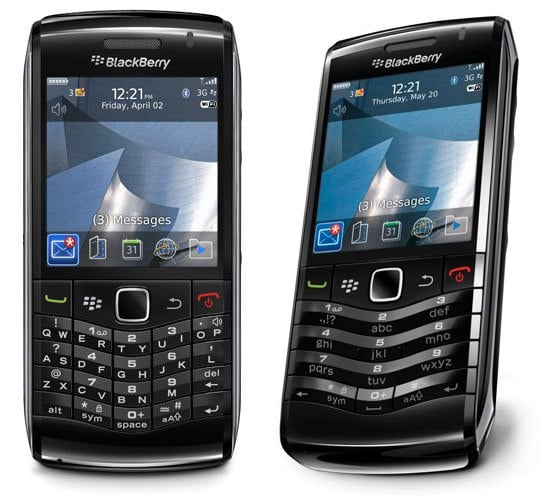
  • BlackBerry Pearl 3G coming in May with 802.11n

    BlackBerry Pearl 3G

    is finally looking to bring something even better to their consumer handset line than the BlackBerry Pearl (which has been around for over three years now,) and the BlackBerry Pearl 3G looks to be a worthy follow-up. This will be the first BlackBerry, Pearl or otherwise, to sport 802.11n Wi-Fi, and it will also boast a 3.2 megapixel camera, 256MB storage (with microSD expansion up to 32GB,) GPS, and a 360 x 400 display. Even more interesting is that, aside from the multiple colors you can choose from, you also get to choose between two difference keyboard layouts. You get the numberic 14-key or the SurePress 20-key. You’ll be able to get a BlackBerry Pearl 3G sometimes in May, likely from both AT&T and T-Mobile.


    Tags:
    ,
    ,
    ,
    ,
    ,
    ,
    ,
    ,
    ,
    ,
    ,
    ,

    BlackBerry Pearl 3G coming in May with 802.11n originally appeared on Gear Live on Mon, April 26, 2010 – 10:53:44


  • Hanson Chats About New Album “Shout It Out” On “The TODAY Show”

    Children of the ’90s will almost certainly remember Hanson. The clean-cut and good-natured trio was made up a group of brothers who tasted music stardom with their hit ‘97 single “MMMBop.” (Hated it!) Well Isaac, Taylor, and Zac Hanson aren’t exactly flopped-haired blondes anymore. These days, the musicians pass their times basking in the joy of being married dads — couple of them even have facial hair!

    Proving that at least some ex-child stars manage to stay off dope (We see you Lindsay Lohan), the guys talk about their families, their new CD Shout It Out, and growing up in the spotlight in this video from The TODAY Show Monday.

    Visit msnbc.com for breaking news, world news, and news about the economy

    Hanson’s debut single, “Thinking ‘Bout Somethin,” was released to digital outlets on Friday and the band starts its “Shout it Out” Summer in Burbank on July 21.


  • Mike Stanton hits homer No. 7 … then 8 … then 9

    http://a323.yahoofs.com/ymg/ept_sports_fantasy_experts__26/ept_sports_fantasy_experts-600654163-1272303752.jpg?ymIS2CDDpD3NOEKW

    Florida Marlins outfield prospect Michael Stanton(notes) single-handedly destroyed the Carolina Mudcats on Monday, belting three homers and driving in seven runs. That makes seven hits, five home runs and 11 RBIs over the past two days for the 20-year-old. He’s gone deep nine times for Jacksonville in 17 games, and he’s now batting .338. Double-A pitching doesn’t seem to be much of a challenge for him this year.

    You’ll recall that Stanton impressed everyone in spring training, hitting .286/.355/.714 over 28 at-bats. In the image above, he’s admiring the flight of a home run hit against Francisco Liriano(notes) on March 15. He entered the season ranked No. 3 on Baseball America’s top prospect list, behind only Jason Heyward(notes) and Stephen Strasburg(notes), so it’s not as if expectations were low. 

    If you’re in a larger league and looking for a mid-season lottery ticket in the power categories, keep Stanton in mind. He hit 39 homers at Single-A in 2008 and 28 across two levels last year. He’s already in the player pool, too. (Just don’t mistakenly add this dude). In the past, Ks have been a serious issue for Stanton (144 in ’09), but he’s walked as often as he’s struck out this season. Both of Florida’s corner outfielders are struggling, so a May/June Stanton call-up no longer seems farfetched. 

    Photo via Getty Images

  • Ninth Circuit affirms class certification in Walmart gender discrimination case

    [JURIST] The US Court of Appeals for the Ninth Circuit on Monday affirmed certification of the largest class action lawsuit in US history against Wal-Mart for allegedly discriminating against female employees. The 6-5 en banc ruling upholds a previous decision by the Ninth Circuit that the lawsuit could go to trial despite the large size of the class. The case was filed in 2001 by female Wal-Mart employees who contend that Wal-Mart’s nationwide policies violate Title VII of the Civil Rights Act of 1964, alleging that women employed by Wal-Mart are paid less than men in comparable positions and wait longer for management promotions than men, despite their higher performance ratings and seniority. In a statement, Wal-Mart said that they are going to proceed by reviewing their options:
    We disagree with the decision of the sharply divided 6-5 court to uphold portions of the certification order, and are considering our options, including seeking review from the Supreme Court. It is important to remember the court did not address the merits of this case. The court reiterated, “our findings relate only to class action procedural questions; we neither analyze nor reach the merits of Plaintiffs’ allegations of gender discrimination.” The court further noted that the trial court “has the discretion to modify or decertify the class.”The certified class, which in 2001 was estimated to encompass more than 1.5 million women, includes all women employed by Wal-Mart nationwide at any time after December 26, 1998. The Ninth Circuit granted an en banc rehearing to Wal-Mart last year. According to the order, a majority of the Ninth Circuit judges, excluding the three judges who heard an earlier appeal in which class certification was upheld, voted in favor of an en banc hearing. A three-judge panel of the Ninth Circuit originally ruled against Wal-Mart’s appeal of the class certification in February 2007, then issued a new opinion in conjunction with its decision in December 2007. Wal-Mart appealed to the Ninth Circuit in 2005, arguing that the six lead plaintiffs were not typical or common of the class. Wal-Mart also objected to the size of the class certified, which it says would violate its due process rights. Wal-Mart argued that its stores operate independently and should be sued individually, while plaintiffs’ lawyers countered that individual lawsuits would be impractical. The district court also rejected Wal-Mart’s claim that the class size was “impractical on its face” and approved a statistical formula for paying damages if discrimination is proven.

  • Motricity Reports First Quarter Net Loss As IPO Still Awaits


    Motricity mCore Marketplace announced at CTIA 2010

    Motricity, which is in the increasingly tough business of providing back-end infrastructure to U.S. wireless carriers, lost $1.5 million on revenues of $29.1 million in the first quarter 2010, according to an SEC filing.

    The Bellevue, Wash.-based company, which filed its registration papers back in January and is seeking $250 million in a public offering, reported that revenues increased by almost 25 percent compared to the same period a year ago, while the company’s losses narrowed significantly to $1.5 million from $69.7 million.

    Most of Motricity’s current business is focused helping carriers sell mobile content, such as ringtones, applications and other services, to its end-users. However, that business is increasingly at risk as customers go directly to the web for content, or download applications from third-parties. In March, Motricity announced a three-part overhaul of its carrier offerings that attempts to bring them—and their customers—up to speed in the areas of applications, advertising and social networking. The company did not mention these new services in the filing, likely because they are too new to register any revenues.

    Despite these overall trends, Motricity said storefront revenues continue to rise. In the first quarter, the company said managed service revenues increased $700,000, or 3.3 percent to $20.9 million. However, the amount of revenues obtained on a per transaction fell because one of its carriers converted a contract to a fixed fee arrangement. In the first quarter, user-based fees made up about 52 percent of revenues vs. 76 percent in the year-ago period. In addition, the average monthly number of users on the company’s “non-messaging based solutions” decreased to 34.4 million from 34.5 million in the comparable period of 2009.

    Related


  • Is there really an iPad interference problem?

    By Scott M. Fulton, III, Betanews

    A slow, but steadily increasing, trickle of messages on Apple’s iPad discussion forums appears to confirm the findings of Princeton University’s Network Systems engineers, who dealt this month with a rapid influx of iPads over a concentrated area. What they’ve been noticing is that Wi-Fi on iPads that are set for dynamic DHCP leases — assignments of IP addresses to clients for limited time periods — are failing to renew those leases when time expires, often after just a few hours.

    As a result, users’ iPads are stuck with the message “Connecting…” and no easy, or apparent, way to renew their network connections. Although Princeton discovered the problem as early as April 4, and Apple forum discussions began April 11, Apple’s only suggestion has left some customers struggling.

    “Apple iPads began appearing on Princeton University’s campus soon after they become available April 3, 2010. On April 4, we observed our first DHCP client malfunction from an iPad. Over the next few days, additional iPads malfunctioned in the same way,” reads an ongoing page on the subject from Princeton’s Office of Information Technology. “The malfunction we see is that the iPad uses DHCP to obtain a lease, renews the lease zero or more times (as expected), but then continues using the IP address without renewing the lease further. The iPad allows the DHCP lease to expire, but it continues using the IP address after allowing the lease to expire. The incident continues for some time (typically hours); usually it ends when the iPad asks for a new DHCP lease, or the iPad disconnects from the network.”

    Since the iPad was released, there have been a number of reported cases of weak Wi-Fi connectivity. But these cases don’t appear to have a common root, and in some instances, it appears users’ wireless routers were at fault, rather than the iPad. Some have suggested — and one site demonstrated with regard to dropping signals from Netflix — simply restoring Wi-Fi settings to factory defaults. One Australia-based consultant suggested setting Wi-Fi connectivity to “Auto,” and the positive public response made him something of an online hero.

    But that’s not related to the DHCP lease case, which has a more defined profile. Some forum contributors report their network connectivity is stuck after putting their iPads to sleep for a while. That could be related to the Princeton issue, or it could be related to the cloud of weak Wi-Fi issues. Nonetheless, on April 5, Apple responded to the sleep problem by taking the Netflix route: resetting to default.

    And since that time, volunteer supporters have been referring iPad owners with possibly related issues, such as the DHCP lease case, back to the April 5 message: Have you tried resetting to defaults? Other users with home routers have set their routers to static IP addresses, which they report solves the problem.

    That doesn’t help Princeton, which runs a campus-wide network. As its OIT team explained late last week, it sets up dynamic IP addresses to expire no later than three hours after lease. “Shorter leases allow us to recover unused IP addresses rapidly, in turn permitting us to assign globally-routable IP addresses to clients without requiring Princeton to impose a NAT between wireless clients and the Internet,” the team’s iPad problem announcement page reads.

    It goes on to chide some technology blogs for having reported that Princeton “banned” the use of iPads on campus, when it never did any such thing. The team’s later, in-depth explanation suggests that some on the team may resent the implication that Princeton is the one at fault here, at the very least for making an issue out of the “magical” iPad.

    “We could choose instead to not take a pro-active stance to these kinds of issues. A more common approach is to ignore the kinds of problems caused by devices using IP addresses not leased to them, allowing such malfunctioning devices to cause sporadic mysterious network problems for customers as their IP addresses are ‘stolen.’ Sites that use that approach may take action only when a victim of a malfunctioning device chooses to complain. Most victims probably don’t complain because these kinds of problems appear random and short-lived to each victim, and often go away when they ‘try again.’ We feel that the stance we take ultimately benefits our customers, as it results in more reliable network service to the customers. It reduces the frequency that our customers experience network disruptions due to others’ malfunctioning devices.”

    Princeton is not alone in having noticed the issue; a warning about iPad DHCP leasing turned up on this knowledge base page at LSU.

    Probably gearing up for a round of “See, I Told You So” with reporters are members of Israel’s Ministry of Communications. A few weeks ago, it banned the import of iPads into the country, prior to Apple’s commencement of its distribution deal there with premium reseller iDigital. Though it was reported that iPads themselves were banned in Israel, in fact, it was the import of American versions of the device that the Ministry had banned, and then partly restored in an announcement Saturday (PDF available here).

    “The scrutiny conducted by the Ministry technical team vis-à-vis Apple’s team, International laboratory and European counterparts confirmed that the device which could be operated in various standards will be operated in Israel in accordance to the local standards,” reads the Ministry spokesperson’s announcement.

    But as TG Daily contributor Aharon Etengoff first noted, and Time Magazine later expounded on, iDigital is owned by Nehemia “Chemi” Peres, the son of Israel’s prime minister, Shimon Peres — a fact that was not lost on iPhone customers last year. An Israel-based commenter to the LA Times noted that iDigital had exclusive Israel sales rights to the iPhone, and only began selling it there for the first time in June 2009, well over two years after its worldwide introduction, at essentially full market prices.

    That’s a total of three iPad interference problems, only one of which may have any real substance to it. That doesn’t mean it’s not real, though.

    Copyright Betanews, Inc. 2010


    Add to digg
    Add to Google
    Add to Slashdot
    Add to Twitter
    Add to del.icio.us
    Add to Facebook
    Add to Technorati


  • New developer challenge offers Android devs a trip to TED if they can get people moving

    Obesity sucks. Unfortunately, smart phones generally don’t do much to make the problem any better. Sure, there are plenty of exercise-assistance apps, like RunKeeper, built to make exercising easier and thus more likely to happen — but for the most part, our smartphones help us to move less. Why walk to the computer downstairs, when you’ve got the web in your pocket? Why walk aimlessly around the city looking for a fun new restaurant, when there are a million review apps telling you where to go and Google Maps telling you the shortest way there?

    Looking to counteract this, Snaptic has launched the “Move Your App!” developer challenge. The idea is simple: develop an Android app that gets people up and moving, and you could win an all-expense paid trip to the TED Global 2010 conference.

    We don’t generally write about third-party developer challenges here on MobileCrunch, but I dig the motive of this one. Getting people to be healthy and live longer is a pretty noble goal.

    The contest is free to enter, though there’s one catch: whatever your app is, it needs to make use of at least one of Snaptic’s APIs. Snaptic’s APIs are largely focused around the creation and syncing of notes — so, depending on what your app is, it might be tough to work that in.

    The challenge runs until May 27th, so get crackin’. You can check out the full details for the dev challenge here. Be sure to let us know if you enter, won’t you? Good luck!


  • More Whitney Houston Concert Woes As Fans Walk Out Of UK Show

    Well, this is one tune that’s becoming part of an all too familiar song. Whitney Houston performed live at England’s O2 Arena over the weekend…and the critically-panned performance left mirrors cracking all over the UK.

    The singing icon had another difficult night while performing to a sold out house on Sunday night. According to The Daily Mail’smusic reviewer Georgina Littlejohn, who had a front run seat for the foolery, hundreds of people walked out in the middle of a two-hour show which saw Houston reportedly missed multiple lines in multiple songs, panting excessively while performing, and randomly pausing without explanation.

    Even Whit was startled by her bizarre performance, telling the disappointed concertgoers: “She don’t want to come, my soprano friend… Sometimes the old girl sings, but not tonight…I want to do it, but she doesn’t want to… She’s getting a little… temperamental, even.”

    The singer reportedly blamed the air conditioning in the arena for the debacle (Insert rolling eyes here….Uh-Huh. It’s totally the air conditioner’s fault!) — critics, on the other hand, were far less forgiving.

    Littlejohn wrote: “She struggled further with another of her classic songs, this time cutting short ‘Greatest Love Of All,’ only managing to pull of a couple of verses. And during much of the set she paused and panted for breath between songs while her backing singers did a great job of carrying her with their melodies. Her outfit also left a bit to be desired. She came on stage in tight leather trousers, a sequinned jacket that struggled to fasten at her middle and a bloated face. Whitney did manage to stay on stage for the majority of the two-hour gig, her first of three at the Docklands venue. But fans were still unhappy, with some even demanding their money back.”


  • REPORT: Smart climate policy will boost growth, create 2.8 million jobs, slash pollution

    Climate Policy Creates Millions Of JobsA new macroeconomic analysis of green economic policies finds that cutting global warming pollution will make the economy grow faster.  Brad Johnson has the story in this Wonk Room repost.

    The Center for Climate Strategies (CCS), building upon analysis they did of state-level climate plans for the National Governors Association, analyzed the economic and environmental impact of legislation in line with the planned Kerry-Graham-Lieberman framework. As long as state-level policies are boosted, CCS found that previous economic analyses by federal agencies and industry groups are wrong. This CCS analysis finds that instead of slowing the economy, household wealth and jobs will grow faster in a green economy. Carbon limits and efficiency-focused policies would have a net positive employment impact of 2.8 million jobs and expand the economy by $154.7 billion by 2020, while US emissions are cut to 27 percent below 1990 levels — if strong standards are set:

    The modeled job creation is consistent with the findings of Political Economy Research Institute at the University of Massachusetts, which used an input-output model to find that a green economy would create 1.7 million new jobs. The center looked at three different policy scenarios, using the industry-standard REMI Policy Insight PI+ macroeconomic model:

    – Strong local, state and federal implementation of green economic policies like green building codes and smart growth
    – These strong policies combined with a federal cap-and-trade system and coupled fuel fee to guarantee emissions reductions of 27 percent below 1990 levels by 2010

    – Scaled-back implementation of the policies and cap-and-trade system in line with President Obama’s goal of six percent below 1990 levels, similar to the Kerry-Graham-Lieberman bill soon to be considered

    The cap-and-trade system modeled uses full auction of permits and 75 percent of proceeds going directly back to consumers and 25 percent going to technology investments. No proceeds are dedicated to deficit reduction, as none is needed — a faster-growing economy will increase other tax receipts.

    In every single scenario, policies that cut waste and save money by eliminating market failures predominate, making the U.S. economy a more efficient free market and accelerating job growth and household wealth. The report finds that stronger environmental targets and standards deliver greater economic benefits — even if the tremendous benefits of reducing pollution have for health and environmental costs are ignored.

    The 23 recommended climate strategies range the gamut from agriculture, energy supply, electricity use, to transportation. These strategies — most of which save money — combined can achieve major carbon pollution reductions:

    Climate Strategies Cost Curve

    This is what true all-of-the-above energy policy looks like. The suite of recommended policies coming from the consultants to the Center for Climate Strategies report — the stakeholders in local and state governments, businesses, and energy users — must be taken as a top priority, even if they don’t have an army of lobbyists to promote this green economic agenda. The current level of ambition in Washington is not only insufficient to mitigate the damages of global warming, it is leaving hundreds of thousands of jobs on the table.

  • One Night With Cadillac

    One Night With Cadillac

  • Forget Oil: 15 Countries Sitting On A Fortune Of Metals And Minerals

    south africa iron ore

    The most resource-rich country in the world is… probably Saudi Arabia.

    But oil isn’t the only valuable resource. A Citi report lists the richest countries in terms of metals and ore.

    Investors should look for countries where production is relatively low and the resource lifetime is long.

    Guinea — $222 billion in metal & ore reserves

    Guinea -- $222 billion in metal & ore reserves

    Bauxite mine

    Reserves composition (value):

    100% Bauxite

    Years of production: 444

    Indonesia — $227 billion in metal & ore reserves

    Indonesia -- $227 billion in metal & ore reserves

    Port facilities at Indonesia’s Benete Bay copper mine

    Image: mining-technology.com

    Reserves composition (value):

    48% Copper
    33% Gold
    19% Nickel

    Years of production: 27

    Mexico — $240 billion in metal & ore reserves

    Mexico -- $240 billion in metal & ore reserves

    Mexico’s huge Cananea copper mine

    Reserves composition (value):

    56% Copper
    15% Gold
    10% Iron ore
    10% Zinc

    Years of production: 62

    Kazakhstan — $292 billion in metal & ore reserves

    Kazakhstan -- $292 billion in metal & ore reserves

    Kostanay region open-cast iron ore mine

    Reserves composition (value):

    64% Iron ore
    22% Copper
    10% Zinc
    4% Bauxite

    Years of production: 117

    India — $296 billion in metal & ore reserves

    India -- $296 billion in metal & ore reserves

    Image: The Hindu

    Reserves composition (value):

    86% Iron ore
    8% Bauxite
    6% Zinc

    Years of production: 164

    Photo: The Hindu

    Peru — $328 billion in metal & ore reserves

    Peru -- $328 billion in metal & ore reserves

    Southern Peru Copper Corporation

    Reserves composition (value):

    68% Copper
    11% Gold
    10% Zinc

    Years of production: 23

    Ukraine — $516 billion in metal & ore reserves

    Ukraine -- $516 billion in metal & ore reserves

    Gleyevatskiy iron ore mine

    Reserves composition (value):

    99% Iron Ore
    1% Potash

    Years of production: 161

    USA — $613 billion in metal & ore reserves

    USA -- $613 billion in metal & ore reserves

    Bingham Canyon Open Pit Copper Mine in Utah

    Reserves composition (value):

    20% Copper
    19% Iron Ore
    12% Gold
    5% Platinum (PGM)
    4% Zinc
    3% Potash

    Years of production: 44

    Chile — $661 billion in metal & ore reserves

    Chile -- $661 billion in metal & ore reserves

    Chilean copper mine

    Image: duquesneminesupply.com

    Reserves composition (value):

    85% Copper
    8% Gold

    Years of production: 31

    China — $717 billion in metal & ore reserves

    China -- $717 billion in metal & ore reserves

    Chinese execs of Australia’s Rio Tinto

    Reserves composition (value):

    57% Iron ore
    15% Copper
    8% Zinc
    7% Gold

    Years of production: 17

    Brazil — $726 billion in metal & ore reserves

    Brazil -- $726 billion in metal & ore reserves

    Samarco Alegria Iron Ore Mine, Brazil

    Image: mining-technology.com

    Reserves composition (value):

    70% Iron ore
    8% Bauxite
    8% Nickel
    7% Gold
    7% Potash

    Years of production: 31 

    Canada — $1,000 billion in metal & ore reserves

    Canada -- $1,000 billion in metal & ore reserves

    Potash feldspar in Canada

    Reserves composition (value):

    79% Potash
    6% Iron ore
    5% Nickel
    3% Gold
    3% Copper
    1% Zinc
    1% Platinum (PGM)

    Years of production: 56

    Australia — $1,588 billion in metal & ore reserves

    Australia -- $1,588 billion in metal & ore reserves

    Western Australia iron ore mine

    Image: leighton.com.au

    Reserves composition (value):

    46% Iron ore
    22% Nickel
    12% Bauxite
    9% Gold
    5% Copper
    1% Zinc

    Years of production: 43

    Photo: Leighton Holdings

    Russia — $1,636 billion in metal & ore reserves

    Russia -- $1,636 billion in metal & ore reserves

    Image: France 24

    Reserves composition (value):

    49% Iron ore
    20% Potash
    14% Platinum (PGM)
    8% Gold
    5% Nickel
    4% Copper

    Years of production: 99

    Photo: France 24

    South Africa — $2,494 billion in metal & ore reserves

    South Africa -- $2,494 billion in metal & ore reserves

    Image: northam.co.za

    Reserves composition (value):

    91% Platinum (PGM)
    6% Gold
    2% Nickel
    1% Iron ore

    Years of production: 184

    Don’t miss…

    Don't miss...

    15 Drill-Crazy Countries That Are Running Out Of Oil >

    Join the conversation about this story »

  • Green:Net 2010 — Hurry, Just a Few Tickets Left!

    Green:Net is almost sold out! The only conference dedicated to the intersection of Internet technology and green has just a handful of tickets left; they’re available on a first-come, first-serve basis. GigaOM readers can get a $75 discount — just follow this link to register now.

    The speakers at Green:Net 2010, which will take place this Thursday, will be focused on one thing: how software, computing and the web can be leveraged to save the planet. At the same time, attendees will glean insights into huge new technology markets that will spearhead the green economy.

    A selection from our speaker list includes:

    • Jerry Brown, California Attorney General and Gubernatorial Candidate
    • Vinod Khosla, Founder, Khosla Ventures
    • Steve Jurvetson, Managing Director at Draper Fisher Jurvetson
    • Bill Weihl, Google’s Green Energy Czar
    • Bill Gross, Founder and CEO of Idealab
    • Dian Grueneich, Commissioner for the California Public Utilities Commission
    • Laura Ipsen, SVP and GM, Smart Grid, Cisco
    • Eric Dresselhuys, EVP, Silver Spring Networks
    • Michael Harrigan VP of Electric Vehicle Services, NRG Energy
    • Pedro Pizarro EVP, Power Operations, Southern California Edison

    Companies represented include Ford, IBM, Nissan, General Motors, Cisco, Silver Spring Networks, SAP, Reliant Energy, Microsoft, Greenpeace and many more.

    So join us this Thursday, April 29th in San Francisco as we uncover new opportunities for entrepreneurs to shape the future of greentech.

    • Green:Net 2010
    • April 29, Mission Bay Conference Center, San Francisco

    For exhibit opportunities call Mike Sly at (415) 235-0358 or email events at gigaom dot com.

    Image courtesy of bisonblog’s photostream.

  • Nexus One launching on Vodafone this Friday and at a quarter past never on Verizon

    So we’ll do the good news first; Vodafone customers can pre-order their Nexus One today and retail launch will be this Friday, April 30th. The Nexus One will be free on a two-year contract, which to our U.S. readership will seem crazy, but my understanding is that’s how you guys roll. Data limitations are a little sketchier with a 1GB 3G data cap, but I’m sure you’ll manage to muddle through.

    Now for the bad news; Verizon customers who’ve been hemming and hawing over whether to get the Nexus One or the Incredible can finally stop worrying and just buy the Incredible. Google hasn’t come right out and said that it will never be available, but the familiar “coming soon” has been pulled from their phone site and replaced with “For Verizon’s network, you can buy the Droid Incredible by HTC, a powerful Android phone and similarly feature-packed cousin of the Nexus One.” The Google Nexus One Board was similarly updated to direct Verizon Nexus One holdouts to go out and buy the Droid Incredible.

    So while it isn’t over until the fat multi-billion dollar company sings; I’d definitely say they are warming up their pipes.

    Now by all accounts the Droid Incredible is a fantastic device and even fixes issues that the Nexus One suffered from, but I understand the allure of the cutting edge Android OS updates that the Nexus One offers.

    So will those of you holding out for the Nexus One on Verizon make do with the Droid Incredible, continue waiting for the Nexus One in hopes that Google is just testing your faith, move to another carrier for the Nexus One, or just wait for the next big thing to come down the pike?

    Update: The official Google response provided to Engadget.

    “We won’t be selling a Nexus One with Verizon, and this is a reflection of the amazing innovation happening across the open Android ecosystem. Verizon Wireless customers who want an Android phone with the power of the Nexus One can get the Droid Incredible by HTC.”

    Related Posts

  • The acceptance letter | Gene Expression

    I heard an interview on the radio by the author of No Longer Separate, Not Yet Equal: Race and Class in Elite College Admission and Campus Life. The study focused on elite universities. I decided to poke around and see what I could find. The chart on probability of acceptance by SAT score broken down by race has no surprises.

    page82a

    Equalizing standardized test scores I assume everyone knows that at elite universities there’s an Asian penalty, and blacks and Hispanics tend to get a bonus, with whites as a reference population in the middle. The author warned though that looking at standardized test scores may not indicate any discrimination against Asians, as it didn’t include in other “soft” aspects of the application such as leadership, which Asians naturally must lack because of their conformist and collectivist nature (OK, I added the last part!). But the class chart was more interesting to me….

    page82b

    It looks like you better not be too dumb if you’re middle class. Lower class people get a nice handicap, while presumably the low scoring upper class types are stereotypical legacies. But at elite universities if you’re of middle socioeconomic status I guess all the leadership and exceptional talents can’t help; acceptance rates ~0 once your SAT scores approach the national norm.

    But is this a matter of the confounds? In other words is this is a real signal of class based discrimination, or are there differences in the makeup of each class demographically skewing this? Here’s a regression model which seems to suggest there isn’t much to class, but more to race. The blacks in this case are broken down between descendants of slaves, and those who are presumably the children of immigrants or immigrants from the West Indies and Africa.

    pag90

    The racial effects are the ones which are statistically significant. It’s interesting that black Americans who don’t have any recent immigrant ancestry get a very significant boost vis-a-vis West Indians, etc.

  • App Deals: Get Glu Mobile’s Glyder 2 For 99 Cents

    Another day, another chance to snag a great 3D gaming title for a great price. This time around, the popular (and highly-rated) Glyder 2 from Glu Mobile can now be had for just under a buck, on sale from the regular (and still reasonable) $4.99 asking price. 

    Thanks to H2O for the tip!