Category: News

  • Beijing 2010: Dongfeng shows off whitewalled, hand-crafted “Hummer”

    Filed under: , ,

    Dongfeng Hummer

    Dongfeng “Hummer” – Click above for high-res image gallery

    “Hand-crafted” can be something of a double edged sword in the car business. Rolls-Royces and Aston Martins are hand-made treasures that show off their artisans’ decades of experience. The attention to detail is obsessive.

    On the opposite end of the spectrum, there are machines that look like they were haphazardly slapped together by some drunken hack in a toolshed. This Dongfeng “Hummer” falls solidly into the latter category.

    The Beijing Motor Show presented our first opportunity to see one up close. Now, love ’em or hate ’em, a real H1 has that genuine military-industrial chic going for it. This vehicle, however, was a hot mess of the first order. The tires had painted-on whitewalls that looked as if they were applied by someone with a five-minute deadline, a paintbrush, and a gallon jug of Wite-Out. Truly, it’s something very special to behold.

    Photos by Sam Abuelsamid / Copyright (C)2010 Weblogs, Inc.

    Beijing 2010: Dongfeng shows off whitewalled, hand-crafted “Hummer” originally appeared on Autoblog on Sat, 24 Apr 2010 20:01:00 EST. Please see our terms for use of feeds.

    Permalink | Email this | Comments

  • Lieberman: “allegations of partisan politics” derailed climate change bill

    Call off the press conference: The climate change and energy bill that Sen. Joe Lieberman, John Kerry and Lindsey Graham worked on for months won’t be unveiled Monday as planned.

    Graham, a Republican from South Carolina, said Saturday he can no longer participate in the negotiation process. His anger stems from the decision by Senate Democratic leaders to move ahead with a sweeping immigration overhaul before taking up the energy legislation. The departure of the only Republican to take an active role process could doom any hope of a comprehensive climate change bill in the Senate this year.
    As recently as Friday afternoon, Lieberman said he believed the energy bill would move forward and that immigration had nothing to do with the bill he worked on with Kerry and Graham. 
    Lieberman issued a statement a few moments ago saying he remains committed to the climate bill.

    “I want to thank Senator Graham for his contribution to writing the American Power Act and I regret that allegations of partisan politics will prevent us from introducing the bill on Monday as planned,” Lieberman said. 


    “I know from all of our work over the past year that Senator Graham shares our commitment to this bill that will create American jobs, move us closer to energy independence, and reduce pollution.  I look forward to Senator Graham rejoining our efforts after we work through the concerns that are preventing us from advancing a cause the three of us believe in so deeply.


    “I remain committed to the American Power Act and am excited about what passage of the bill will do to promote energy security and invigorate our economy.  I will not give up and will continue to work with Senator Kerry, Senator Graham, and the broad coalition of industry and environmental support this bill has generated to pass the American Power Act this year.”

  • T-Mobile Garminfone In The Wild

    Looking for a better navigation experience on your Android device? Garmin’s entry into the Android game may the device you’ve been waiting for. this phone promises to have great navigation features that many of may feel Google Maps is lacking.

    The guys over at Tmonews have gotten their hands on some pictures of the handset in the wild. I don’t know about you but no matter what the device is, I love pictures of things that haven’t hit the market yet. The device looks pretty cool and the box art is eye catching as well. head over for the full picture gallery and post your thoughts on the device here.

  • Cisco 7-inch Android communications tablet in works?

    Rumor alert, Cisco may be entering the Android game. This rumored was pieced together during a recent CNET podcast. They received a tipped that said Cisco may be working on a 7 inch Android tablet that will be centered around audio, video and WebEx.

    Along with the possible outing of the tablet, a few specs were also leaked. This device has a front-facing video camera, dual microphones with noise cancellation, and VPN support. This tablet will be marketed towards business people who want to have a secure portal to their office. It’s refreshing to see more companies adopting Android and putting their own flavor into the OS.

    [via slashgear]

  • Windows Phones 7 Metro Theme V2

    image

    The world of Windows Phones changed when the 7 was added to the end, and it seems every graphic designer has been trying to replicate this change by bring the look and feel of “7” to “6.” This new theme was created by nickschot over at XDA, and why is it special? Well it comes with 3 different sections and more coming soon.

    The bootscreen gives you the feeling of WP7S whenever you start your device.

    The 6.5.X theme keeps that feeling going through your menus, and even through curtain application.

    The start menu mod changes the layout of the menu, and changes the background and selector color.

    The titanium theme, dialer theme, and lockscreen theme will be available very soon, but for the time being I think we have enough WP7S feeling for now. I mean I will not personally install this on my device because I am not a huge fan of WP7S look and feel, but a lot of readers are, so hopefully you enjoy this.

    Download it


  • Cleaning up the Gas Grid

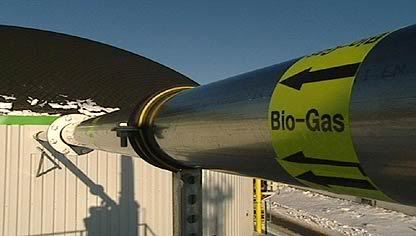
    Renewable Energy World has an article on expanding the use of biogas in the gas network, taking a detailed look at experience in Germnay – Cleaning up the Gas Grid.

    In Germany electricity production from renewable sources is supported at a special rate as set out under the renewable energy law (EEG). This special rate applies to electricity produced from biogas transmitted through the natural gas grid, but is also increased by an additional bonus for use of innovative technology, such as biogas upgrading. In addition, a new law on heating with renewable energies came into effect in 2009, which requires new buildings to be heated with a share of at least 20% of renewable sources or combined heat and power (CHP). Furthermore, there is a negotiated environmental agreement by the gas utilities in Germany to add at least 10% biogas to natural gas for vehicle fuel (LPG) in 2010 and 20% by 2020.

    The main operational advantages of biogas feed-in to the natural gas distribution grid are that the biogas can be used at higher energy efficiency where the waste heat can be used. In addition, by using the gas grid for virtual storage, time-decoupling between biogas production and consumption can also be achieved.

    In spring 2008 the energy utility Energie Baden-Württemberg (EnBW), together with its gas grid subsidiary Erdgas Südwest (ESW), began operations at a new facility, upgrading biogas and feeding it into to the natural gas grid. The bio-methane is produced in co-operation with an agricultural company of 20 farmers who own and operate the fermentation biogas plant and procure the biomass. The gas is produced by the farmers and sold to EnBW-ESW, which ensures the quality necessary in the gas distribution system, the measurement required for invoicing and deals with transport to the customer. Around 5 million Nm3 of raw biogas is upgraded annually to around 2.8 million Nm3 of biogas at natural gas quality and fed into the gas grid.

    In conventional biogas plants in Germany the biogas is burnt in a co-located reciprocating-engine. This is normally in a rural area, where heat demand is very restricted. While some 15%–20% of the exhaust heat is consumed by the fermenter, in most cases the rest is difficult to sell and, as a consequence, the efficiency of biogas plants is limited. However, even under EEG-tariffs for electricity production, without heat sales it is becoming more and more difficult to achieve the economic operation of a biogas plant. Conversely, if biogas can be transported to a heat sink, a CHP plant can utilize the bioenergy much more efficiently and can supply heat at a better value and so at a higher income. If the biogas is to be transported in the wider natural gas grid, it has to be upgraded to meet the quality needed for the grid.


  • Big Energy Storage in Thin Films

    Technology Review has an article on research into combining ultracapacitors with thin film solarBig Energy Storage in Thin Films.

    Energy storage devices called ultracapacitors can be recharged many more times than batteries, but the total amount of energy they can store is limited. This means that the devices are useful for providing intense bursts of power to supplement batteries but less so for applications that require steady power over a long period, such as running a laptop or an engine.

    Now researchers at Drexel University in Philadelphia have demonstrated that it’s possible to use techniques borrowed from the chip-making industry to make thin-film carbon ultracapacitors that store three times as much energy by volume as conventional ultracapacitor materials. While that is not as much as batteries, the thin-film ultracapacitors could operate without ever being replaced.

    These charge-storage films could be fabricated directly onto RFID chips and the chips used in digital watches, where they would take up less space than a conventional battery. They could also be fabricated on the backside of solar cells in both portable devices and rooftop installations, to store power generated during the day for use after sundown. The materials have been licensed by Pennsylvania startup Y-Carbon.

    An ultracapacitor is “an electrical energy source that has virtually unlimited lifetime,” says Yury Gogotsi, professor of materials science and engineering at Drexel University in Philadelphia, who led the development of the thin-film ultracapacitors. “It will live longer than any electronic device and never needs to be replaced.” While batteries store and release energy in the form of chemical reactions, which cause them to degrade over time, ultracapacitors work by transferring surface charges. This means they can charge and discharge rapidly, and because the electrode materials aren’t involved in any chemical reactions, they can be cycled hundreds of thousands of times. Researchers have begun developing thin-film ultracapacitor materials but have had difficulty getting high enough total energy storage using practical fabrication methods, says Gogotsi.

    Gogotsi’s group uses a high-vacuum method called chemical vapor deposition to create thin films of metal carbides such as titanium carbide on the surface of a silicon wafer. The films are then chlorinated to remove the titanium, leaving behind a porous film of carbon. In each place where a titanium atom was, a small pore is left behind. “The film is like a molecular sponge, where the size of each pore is equal to the size of a single ion,” says Gogotsi. This matching means that when used as the charge-storage material in an ultracapacitor, the carbon films can accumulate a large amount of total surface charge.


  • Android DAB Radio?

    The versatility of the Android OS has it capabilities once again. Android has been seen on kitchen appliances and many other things. It’s only fitting that a radio is in the works.

    This is a prototype called the Dreamer, it is manufactured by a company in Hong Kong company called HDigit. It features a TFT resistive touch screen, WIFI, 2W Speaker, to support DAB, DAB +, Last.fm, UPnP, Podcast and a few other unnamed surprises. This prototype is running Android 1.5 and is expected to retail for around $200 when it is released.

    Click here to view the embedded video.

    [via engadget]

  • Beijing 2010: 2011 Volkswagen Tiguan

    Filed under: , ,

    2011 VW Tiguan

    2011 Volkswagen Tiguan – Click above for high-res image gallery

    Along with a refreshed Phaeton, Volkswagen also pulled the satin off a refreshed Tiguan here in Beijing. Like the flagship, the Tiguan has adopted the new corporate horizontal bar grille that we’ve seen on other recent VWs, including the Mk VI Golf. As near as we can tell, not much else has changed. The new look serves the Tiguan well, giving its face a lower, wider appearance. We’re guessing the refresh will hit U.S. shores this fall when the 2011 models arrive.

    Photos by Sam Abuelsamid / Copyright (C)2010 Weblogs, Inc.

    Beijing 2010: 2011 Volkswagen Tiguan originally appeared on Autoblog on Sat, 24 Apr 2010 19:02:00 EST. Please see our terms for use of feeds.

    Permalink | Email this | Comments

  • Tornado devastates parts of Mississippi

    We’re here in Yazoo City, Mississippi, a town about 35 minutes from Jackson. A tornado tore a 3/4 mile path of destruction at about noon today. AP is reporting at least 10 dead in the state.

    Driving in, we saw an acre of old tall trees that were still standing, but looked like they’d been sawed in half. A bar made of brick that had been there for fifty years is now like a grotesque doll house. The bar is there. The back wall and bathrooms are there, but the front, ceiling and sides are all gone. An old jutebox and video games are tossed among the rubble. A whole church nearby is gone. Of the three crosses on the hill nearby, one is gone, two are still standing but are damaged.

  • Video: 855-hp Lingenfelter LS9 Camaro SS runs quarter mile in 10.36 at 140 mph

    Lingenfelter LS9 Chevrolet Camaro SS

    This past weekend, the Lingenfelter LS9 powered 2010 Chevrolet Camaro SS ran a quarter mile in 10.36 at 139.95 mph at the Camaro5Fest in Georgia making this the quickest and fastest TR6060 manual transmission equipped Chevrolet Camaro so far.

    The LPE LS9 Camaro is powered by Lingenfelter’s 855-hp ZR1 LS9 engine with several of the company’s ZR1 supercharger upgrades.

    The Camaro5Fest held this past weekend is said to be the largest-ever gathering of fifth-generation Camaro owners.

    Hit the jump for the video.

    – By: Omar Rana


  • Report: China To Overtake U.S. As World’s Biggest Asshole By 2020

    The Onion has a look at the rise of China and decline of the US – Report: China To Overtake U.S. As World’s Biggest Asshole By 2020.

    According to a new report released Monday by a panel of top economists and social scientists, the People’s Republic of China will overtake the United States as the world’s dominant asshole by the year 2020.

    The findings, published in the most recent issue of Foreign Affairs, support recent speculation that America’s unquestioned reign as the leading super-prick may soon be drawing to a close, leaving China as the foremost shithead among all developed nations.

    “We are seeing a changing of the asshole guard,” said Andrew Freireich, noted economist and lead author of the article. “Although the U.S. will remain among the world’s two or three biggest cocks through much of this century, we can now confidently project that China, with its soaring economic growth, ever-expanding cultural influence, and total disregard for basic human rights, will overtake America as King Prick Numero Uno within the next 10 years.”


  • Peak oil predictions

    The Guardian has an article on peak oil saying it is clean energy that will bring about the end of the oil age – Peak oil predictions.

    It’s now a truism – among oil companies, and governments alike – that even in an age when we risk catastrophic climate change, and its attendant catastrophes such as we’ve seen in the Gulf of Mexico this week, oil exploration is an inevitable part of our future. It may be a truism, but is it true?

    As former Shell CEO Jeroen van der Veer has said several times, the era of “easy oil” is over. This means that the bulk of the oil that is left to exploit is to be found in the tar sands and in ultra-deep water and other marginal resources, such as the Arctic. All of these resources are very expensive to produce, require long lead-in times to bring on-stream and, in many cases, have controversial environmental and social impacts that will cost more to ameliorate.

    Even without addressing the social and environmental costs, the break-even point for these kinds of oil projects is close to the ceiling at which oil prices could be sustained by the global economy. At between $65 and $90 a barrel, the room for long-term profitability appears slender. With the global economy remaining in a fragile state and oil prices rallying, it’s important to ask whether the economy can withstand further price increases, not to mention whether the climate can sustain further growth in carbon emissions.

    Will the expense of bringing this oil to market mean that the sustained oil prices needed to produce the oil will also consistently drive the global economy back into recession?

    At the launch of BP’s most recent Statistical Review of World Energy in early June 2009, BP’s chief executive, Tony Hayward, said that as the oil price went over $90, consumers “began to change their behaviour” and that there was significant “elasticity of demand above $100 a barrel”. In other words, if it costs too much, we can’t – and won’t – buy it.

    The difference between the recovery periods following previous oil shocks and the current one is that a significant proportion of today’s oil demand is in permanent decline. This particularly applies to developed countries where demand for oil is past its peak. In other words, this recession has triggered demand destruction, not demand suppression.

    It’s possible the day of “peak oil” has arrived – but not in the way everyone expected. Instead of peak oil, we’re looking at a peak in demand for oil. The oil age won’t end tomorrow, but the idea that it will go on for ever – with its attendant catastrophes and tragedies – is seriously in question.

    Against this backdrop, the economic case for investing in clean technology becomes as clear as the environmental case. The faster we introduce efficiency in the transport sector, making better cars that use less fuel, adopting cutting-edge hybrid technology and pushing vehicle electrification, the faster the oil industry of the last century will be replaced by the cleaner, safer and economically more sound industries of today.


  • Facebook for Android updates to 2.1, gains inbox support

    Facebook for Android got an update yesterday, bringing the application up to version 1.2. The major change within was the integration of Facebook messaging right into the UI, letting users browse their inbox messages instead of sending them to the mobile browser. As a fan of less reliance on mobile sites whenever possible, I approve this change.

    Other notes include the removal of the ability to directly upload photos straight to Facebook from within the app; this may seem like a big deal, but with Android’s ability to “Share” photos (to Facebook and elsewhere) straight from the gallery, this isn’t that big of a loss.


    Related Posts

  • What I’ve Been Up To Recently…

    Talks

    My talk at UC Santa Cruz went well. Video may be available at some point.

    My talk at Social Business Edge went very well — I’ll have video as soon as it’s available.

    2010-04-19 21:35:15: @cascio just said like five excellent things in 2 sentences and i can’t keep up. #sbenyc #smartpeoplerule
    via randomdeanna (Deanna Zandt)

    IFTF Ten-Year Forecast meeting starts tomorrow evening.

    I speak at LIFT10 in less than two weeks, and have been asked to speak at Activate2010 in London on July 1.

    Fast Company

    Earth Day post at Fast Company: “Earth Day 2020” — a set of four scenarios of what we might be doing in 10 years…

    Scenario #2: “Signs of Desperation”
    Unlike scenario #1, in this world the signals of looming environmental chaos are unmistakeable, and the sense of desperation is palpable. Unfortunately, what results is even greater political and social friction, as the dynamic changes swiftly from denial to blame. There are more Congressional hearings on the role that energy and transportation companies played in suppressing debate about the climate than there are hearings to figure out what to do. Environmental scientists are regularly attacked by TV pundits for not doing enough to make people believe that a crisis was at hand. Advocates for a wide variety of quick-response schemes come out of the woodwork, trying to take advantage of a fearful society.

    Also, Futures Thinking: A Bibliography at Fast Company.

    Other Articles

    Bouncing Back: Building a Resilient Tomorrow,” for the Swiss Federal Institute of Technology, Zurich, International Relations and Security Network.

    At the core of the resilience concept is a simple argument: Failure happens, so we need to be ready. Yet strategies that depend upon complete, ongoing success – and that collapse under pressure – are distressingly common. We saw it in Iraq war planning that paid insufficient attention to the potential for post-war instability and in financial models that assumed that home prices only go up; we see it now in environmental arguments that assert that our only option is an immediate, complete cessation of carbon emissions. This way of thinking – call it the “aspirational” model – has us ask one big question: “What can we do to maximize our results?” When everything works as desired, this approach can be quite efficient and sometimes enormously successful.

    But what if things don’t go as planned?

    The Potential and Risks of Geoengineering,” for The Futurist (World Future Society) — part of the “20 Forecasts for the Next 25 Years” series.

    It’s hard to exaggerate the sheer complexity of the situation. If the great obstacle to our continued survival and prosperity as a species were “just” global warming, achieving success would be tricky but doable. The challenge we face is global warming plus resource collapse plus pandemic disease plus post-hegemonic disorder plus the myriad other issues.

    Nonetheless, there are reasons for optimism.

    (Some of the essay might sound familiar; I was encouraged to go ahead and re-use bits to streamline the process of writing it.)

    …whew…

  • Slick Thinking: new API oil standard

    Filed under: ,

    There are broad strokes that you can take toward increased efficiency. Going that route results in expensive new technology or plucking the low-hanging fruit. The other way, of course, is to optimize everything obsessively, from wheel bearings to wiper blades. Engine oil is a vital, yet unsung necessity, and it can play a big role in fuel consumption as well as its obvious task of protecting the engine’s internals.

    Oil is asked to do more than battle friction. It now has to hold junk in suspension for longer drain intervals than ever before and even drive the camshaft phasers on some variable valve timing systems. In light of the new requirements, the American Petroleum Institute has introduced a new rating. The GF-5 kicks in on October 1st, 2010, and the spec calls for an increased capacity for deposits and longer life, as well as a lower propensity to sludging. With the turbocharger’s resurgence, GF-5’s call for better protection will keep those red-hot snails from creating coal in their bearings.

    How does all of this help fuel economy? Thinner oils that perform like more gooey viscosities in terms of heat tolerance and deposit control siphon off less of the engine’s power. An oil pump with an easier life means an engine that gets more work out of a gallon of fuel. In the future, we’re likely to see oils like 0W-20 increase in popularity as fuel economy standards tighten.

    [Source: Autoweek | Image: GF-5.com]

    Slick Thinking: new API oil standard originally appeared on Autoblog on Sat, 24 Apr 2010 18:01:00 EST. Please see our terms for use of feeds.

    Read | Permalink | Email this | Comments

  • Saturday Short Film: The Anachronism [Films]

    Katie and Sebastian are just two children who love to explore. They’re fascinated by creatures, plants, and their respective taxonomies. They’re charming and relatable! And then there’s the giant mechanical squid. More »


  • Drawing power from Dutch coastal dikes

    dikes-tidal

    Plans are being considered to turn the famous Dutch dikes into tidal power generators. Although originally built to protect the people and land of the Netherlands, now a committee of various government representatives has issued a recent report including some suggestions to revise the operation of the dikes to create a more pleasant and more natural land behind the dikes, and to provide a source of power. Openings in the series of dikes would provide ideal locations for tidal power plants.

    The Netherlands have had protective ocean dikes to guard the coastline since the disaster in 1953 when more than 1800 people were killed and over half a million acres of land was flooded by the North Sea. After this tragedy, the extensive Delta Works were constructed over the next four decades, and the last parts of the project were finally completed in 1997.

    Energy, however, is not the primary motivator for this. Instead, it is an interest in restoring the natural condition to estuaries and tidal flats whose character has significantly degraded over the years since the dikes were installed. “Opening water locks would allow the tide to return to now stagnant waters, the report stated. This would be a boon to nature, because certain plants and animals, which have all but disappeared since the estuaries were closed off, can return. Deeper into the delta lies a fresh water basin where smelly algae bloom in the summer. Allowing salt water to reach these outer stretches again could improve conditions for residents and holiday-makers.”

    In the aftermath of a catastrophe, it is all to easy to focus solely on preventing that tragedy, no matter the cost. “With all the focus on safety after 1953,” [committee director Joost] Schrijnen said, “other aspects were neglected.” He now wants to change that. “But without sacrificing safety,” he added. Turning the dikes into a power generating solution, as well as improving environmental quality seems like a solution that will provide multiple benefits, in addition to protecting the land from the sea.

    link: nrc handelsblad

    via: Slashdot

  • Welcome to Climate Progress, Green Tea Partiers!

    Cover image of Joe Romm's book, Straight Up: America's Fiercest Climate Blogger Takes on the Status Quo Media, Politicians, and Clean Energy SolutionsTom Friedman has a new column, “Tea Party With a Difference.”  He refers to my “insightful new book” Straight Up.  If you want to buy that book, which has been called the “premiere book on climate change,” click here.

    If you want to know more about me or this website, start with “An Introduction to Climate Progress.”  You can get daily email updates on climate science, solutions, and politics by clicking here.  The Climate Progress post he quotes from is “Straight Up: What to look for in the bipartisan climate and clean energy jobs bill.”

    Friedman proposes a Green Tea Party of the “radical center” to supersede the current fringe Tea Party that is lurching to the “hard libertarian right”:

    Indeed, the Green Tea Party could say, “We’ve got our own health care plan — a plan to make America healthy by simultaneously promoting energy security, deficit security and environmental security.”

    “Think about it,” said Carl Pope, the chairman of the Sierra Club. “Green tea is full of antioxidants,” which some believe help reduce cancer and heart disease. “It’s really good for your health.” And a Green Tea Party, he added, could be good for the country’s health “by harnessing all of its energy and unconventional politics” to end our addiction to oil.

    Yes, I know, dream on. The Tea Party is heading to the hard libertarian right and would never support an energy bill that puts a fee on carbon.

    So if there is going to be a Green Tea Party, it will have to emerge from a different place — the radical center, a center committed to a radical departure from business as usual. Acting on that impulse, Senators John Kerry, Lindsey Graham and Joseph Lieberman are expected to unveil a bipartisan climate/energy/jobs bill on Monday that deserves an energetic centrist Green Tea Party to support it.

    This bill is far from perfect. It is a shame the fossil fuel industries still have such a stranglehold on Congress. But it’s the best we’re going to get, and we have got to get started. But without a centrist Green Tea Party Movement — one that brings the same passion to cutting emissions that the Tea Party brings to cutting deficits — even this effort will never pass.

    I think that we won’t get serious climate and clean energy jobs legislation until we have a movement of single-issue voters on the issue with the intensity of the current Tea Partoers, but much larger than that tiny, overhyped group.  [For more on that hype, the Politico had a must-read piece Thursday, “The tea party’s exaggerated importance.”]

    And yes, breaking news creates a real possibility that the bill won’t be introduced Monday, at least not with Graham.

    Friedman quotes me on the bill’s virtues, such as they are:

    This bill introduces a carbon price and other means to control the CO2 emissions of various sectors of the economy, without an economywide cap-and-trade system. The bill’s goal is to cut greenhouse gas emissions by 17 percent below 2005 levels by 2020. But to garner broad support, it will also expand domestic production of oil, natural gas and nuclear power and offer tax breaks to manufacturers who make their facilities more energy efficient and create green jobs.

    “No bill that could pass Congress right now or in the immediate future would be sufficient to produce enough clean power to mitigate climate change at the rate we need,” remarked the physicist Joe Romm, who writes the blog climateprogress.org and is author of an insightful new book on this subject, Straight Up. “We simply aren’t sufficiently desperate to do what is needed, which is nonstop deployment of a staggering amount of low-carbon energy, including energy efficiency, for the rest of the century.”

    The reason a Green Tea Party should coalesce to support this bill, argued Romm, is because it will set a price on carbon pollution and help foster commercialization of clean technologies — like hybrids, batteries and solar — at sufficient scale to enable the U.S. to rapidly ramp up when the seriousness of climate change becomes inescapably obvious to all.

    In short, the bill is a step in the right direction toward reducing greenhouse gases and expanding our base of clean power technologies so we can compete with China in this newest global industry. It ain’t perfect, but it ain’t beanbag. And if we don’t start now, every solar panel, electric car and wind turbine we’ll have to buy when climate change really hits will come with instructions in Chinese. Go Green Tea Party.

    You can’t win if you don’t play (see “The only way to win the clean energy race is to pass the clean energy bill“)

    Related Post:

  • Ford recalling 33,256 2010 models to fix seat recliner issue

    2010 Ford Fusion

    According to a notice filed with the U.S. safety regulators, FoMoCo is recalling 33,256 of its 2010 model year passenger cars and SUVs to replace a faulty front seat recliner that it says can cause injuries in an accident.

    The recall covers some 2010 Ford Fusion and Mercury Milan, 2010 Ford Explorer and the Mercury Mountaineer.

    The Dearborn automaker notified the National Highway Traffic Safety Administration of the potential defect in a letter dated April 16. Ford said that there have been no reports of accidents or injuries related to the defect as of April 14.

    Customers will be notified of the recall by letter on April 30.

    – By: Stephen Calogera

    Source: Automotive News (Subscription Required)