Category: News

  • Hours of Fun with SoupToys on Your Desktop

    souptoys-icon [Windows Only] Souptoys is a collection of toys that you can play with on your PC desktop. Rather than tell you about it, I’ll show you in a video …

    Link to video

    As you can see, each type of toy has it’s own physical properties and you can place them on your screen so that they form a Rube Goldberg device. If you’re a kid playing with this, you may not care if you make anything interesting. These toys are simply fun to play with.

    Here’s what the home site says:

    Designed with players aged 5 to 12 in mind, but enjoyed globally by everyone, this physics sandbox game replicates a child’s wooden toy box full of toys, including basketballs, robots, wooden blocks, snowmen, cannons, flying bees and a pirate ship. With its open-ended design, the possibilities are endless and players are limited only by their imagination.

    As you continue to build your own playground, you can save the toy placements as “playset” files. You can also download playsets from the home site or use any of the dozens of playsets that come with the program.

    souptoys-logo

    Download Souptoys

    Techie Buzz Verdict:

    I had fun playing with Souptoys and I can’t wait to show it to my nieces and nephews. The only thing I’d wish for, is that Souptoys was an open source project that everyone could contribute to. I’d bet there’d be an explosion of new toys to play with every day.

    Techie Buzz Rating: 4/5 (Excellent)

    Hours of Fun with SoupToys on Your Desktop originally appeared on Techie Buzz written by Clif Sipe on Thursday 22nd April 2010 10:10:00 PM. Please read the Terms of Use for fair usage guidance.

    Don’t miss these Related Posts:

    Join Techie Buzz on Your Favorite Social Networking Sites


  • 3R’s A200 is a microscope in your pocket

    3R's A200 is a microscope in your pocket

    At the Printable Electronics Exhibition in Tokyo, 3R Systems was showing off their newest model of pocket microscope, the A200. Unlike the previous Vitiny model, which shot at 300,000 pixels, the A200 has a 2 megapixel (2,000,000) CMOS sensor and kicks out images of about 1600 x 1200 pixels.
    ..
    Continue Reading 3R’s A200 is a microscope in your pocket

    Tags: ,
    ,
    ,
    ,
    ,

    Related Articles:


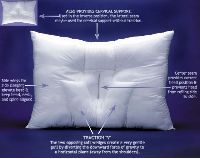
  • Amazon Testimonial #48 for Arc4life’s Cervical Neck Pillow

    Here it is, Amazon’s Testimonial #48 for the Cervical Traction Neck Pillow:

    This is by far the most comfortable pillow I’ve used”

    “After having trouble finding the right pillow and going through a number of mornings with stiff neck, I came across this pillow. This is a back sleeper pillow. What I like most about the pillow is the raised neck and shallow middle for my head. Most of the other pillows I’ve tried were either too soft and didn’t have enough neck support, or were too firm and felt like I had my head tilted upwards. I even tried the memory foam, both normal and ergonomically shaped pillows. While the ergo memory foam pillow would have extra neck support which I wanted, I felt it was tall and stiff lifting my head up to high and exaggerating the curve of my neck. I would usually end up taking a softer pillow and scrunching it up behind my neck to add extra support without all the head elevation.

    This pillow is almost 3 pillows (maybe 4) in one. The top main side (V shaped side) has the most neck support and bracing to help keep your head centered. If you rotate it 180 degrees, (so the V looks like an A) there is slightly less neck elevation/support if the V side is too extreme for you. If you prefer less neck elevation, flip the pillow over. The back side has a softer neck support area and but still has the shallow center for your head.

    This is by far the most comfortable pillow I’ve used because of the neck support and shallow center for my head. If you’re a back sleeper and can’t find the right pillow to support your neck, try this out. “

    A.Forward, California 04/19/2010

    The Cervical Traction Neck Pillow is currently available at Amazon.com and at Arc4life.com, under the category Neck Pillows > Traction for the Neck.

    Visit Arc4life.com for your online selection of cervical support neck pillows, orthopedic pain relief products and Home traction units. Products for pain relief. Add to Technorati Favorites Delicious Bookmark this on Delicious Stumble It!


  • Sprint Giving Away Ten EVO 4G Handsets

    Attention Sprint Premiere customers:  Sprint has gone mad and is looking to give away 10 — that’s right 10!– EVO handsets, four tips to either Maui, Chicago, Las Vegas or Houston, and $4,000 in cash. Simply incredible! Why you might ask? Well, it is to celebrate the launching of the sexiest Android handset yet–the Sprint EVO 4G.  Be sure to check out all the official rules (see Sprint below) before you do anything! That’s all for today!

    Source:Sprint

    Might We Suggest…

    • Sprint’s HTC EVO 4G: It Sizzles?
      I was just perusing through Sprint’s developers website and came across something kinda strange. On the site, Sprint’s upcoming 4G powerhouse device was listed with all of its glorious specs. However,…


  • Former Infinity Ward castaways joins Respawn

    As expected, a number of former Infinity Ward employees who recently resigned in their respected position has now teamed up with their former bosses, Vince Zampella and Jason West, over at the newly formed Respawn Entertainment.
     

  • 2011 Ford Mustang GT SMS 302 / SMS 302SC – Car News

    Saleen surprise: SMS whips up its first Mustang, and it’s based on the new 5.0.

    We were so duped. Steve Saleen invited us out to his company’s shiny new digs in toasty Corona, California, to show us the new Ford Mustang–based SMS 460, a follow-up to his first effort as a federally recognized OEM, the Challenger-based SMS 570. We sorta expected we’d see a hopped-up Mustang powered by a 4.6-liter V-8 with a few power upgrades and the styling and suspension modifications we’ve come to expect from Saleen.

    Keep Reading: 2011 Ford Mustang GT SMS 302 / SMS 302SC – Car News

    Related posts:

    1. 2011 Ford Mustang Shelby GT500 – Official Photos and Info
    2. 2008 Ford Mustang Shelby GT500KR: The Most Ridiculously Overpriced Mustang Ever – Car News
    3. 2010 Ford Mustang NASCAR Race Car – Car News
  • Life Without Gadgets, As Seen On TV [Infomercials]

    What would life be like without all of those helpful infomercial technologies? Without the Awesome Auger, the Doggie Step, the Closet Organizer, the Egg Genie, or countless others? As this impressively thorough compilation shows: a big, miserable mess. [Kottke] More »


  • 802.11n on Nexus One Coming Soon

    Soon, more likely in one of the next Cyanogen releases, you will be able to use wireless networks on the 802.11n standard, which is faster and has a better range than the other wifi standards, with the Nexus One. This is also faster than any other standard supported by other  Android devices (a/b and g). This is good news after today’s bad news with the announcement from Google that they will not be able to fix the 3G issues experienced by some users.

    Here is a short video made by Keyan Mobli, an Android developer from Texas to prove that he made it possible:

    Click here to view the embedded video.

    Might We Suggest…

    • Rumor: Nexus One getting major OTA update soon?
      Phandroid has pointed out a very interesting rumor circulating amongst the French. According to Smartphone France, the Nexus One is set to receive an over-the-air update in the coming days. The site s…


  • Surprise: California Tax Revenue Coming In Above Even The Most Optimistic Expectations

    (This guest post comes courtesy of The Mad Hedge Fund Trader)

    Those who followed my advice to “buy” California at the bottom by loading up on the state’s beleaguered tax free municipal bonds (click here for the call) will be excited by the latest report from controller, John Chiang. The Golden State’s revenues are suddenly running far ahead of even the most optimistic expectations, suggesting that the corner has been tuned on its seemingly endless fiscal crisis.

    March receipts came in $356 million above expectations, pushing the general fund revenues ahead of budget by a total $2.3 billion in the current fiscal year. Corporate income taxes were the main cash cow, no doubt powered by a booming technology sector, running 15.8% ahead of forecast.

    The Land of Fruits and Nuts is far from out of the woods. There is still a daunting $22.6 billion budget deficit to deal with, sales tax receipts are still down, and the Bureau of Labor Statistics says there are 600,000 fewer employed than a year ago. Personal income tax receipts have also shrunk, suggesting that investors are sitting on longs and piling up big unrealized capital gains for the monstrous stock market rally.

    Of course, it will be a long time before the legions of laid off teachers, firemen and policemen are hired back. The state is going to have to unload a few thousand prison guards before that happens. With California in the heat of the governor’ primary elections, this is good news no one seems to want to talk about. After a long famine, the state’s finances may finally be putting on some muscle. It is not too late to profit from this stealth recovery by picking up some municipal bond funds like (VCV), (NCP), and the (NVX).

    chart


    Get more market commentary at the author’s site >

    Join the conversation about this story »

  • Primer on How Plastic Bags are Recycled

    Trex logoWonder how plastic bags get recycled? You see the recycling bins in most grocery stores that take #1 and #2 plastic bags and newspaper sleeves. Watch the video to see how they are recycled back to plastic material.

    Trex recycles 2 billion bags / year and turns then into "plastic lumber" and recycles most of the other non PE that comes in with the plastic bags when they are recycled.

    Via: Clean Skies LINK

  • Video: New animated series The Driver is our kind of awesome

    Filed under:

    The Driver animated series – Click above to watch video after the jump

    There’s a reason we still stand behind the OG Speed Racer. Yes, the animation was about a half-shade above what we could crank out flip-book style, and yes, to call the plot repetitive would be gracious at best. But the series also featured what we loved most as young auto-obsessed creatures – insane cars doing insane things fender to fender every Saturday morning. That series likely drove some of us to bust our own knuckles and put our first cars through the kind of hell that can only be attributed to a proper learning curve.

    Now it looks like a new animated series has come along to whet our appetite for well-drawn cars, and judging from the trailer, it should make Speed Racer look like the half-effort it was. It’s called The Driver, and so far, we know next to nothing about it other than the creators are beyond obsessed. Everything from the metering on a DSLR camera to car interiors, physics and damage all drip with the kind of detail we aren’t used to seeing from the cartoon world. It’s delicious. The best part? It looks like our hero drives a Nissan GT-R.

    Don’t be fooled into thinking this is a ‘toon you can sit down and enjoy with your young ones, though. From tobacco use to blatant street racing, it’s clear this one is more likely to show up on Adult Swim than Nick Jr., and that’s just fine by us. The Driver site says it should launch by summer of this year, so we don’t have too long to wait to find out more. Until then, hop the jump to check out the trailer.

    [Source: The Driver via YouTube]

    Continue reading Video: New animated series The Driver is our kind of awesome

    Video: New animated series The Driver is our kind of awesome originally appeared on Autoblog on Thu, 22 Apr 2010 20:28:00 EST. Please see our terms for use of feeds.

    Permalink | Email this | Comments

  • A Free Market In Chains

    If left to its own devices, a truly free market would have already corrected many of the imbalances of the late, great credit bubble. Instead, US policymakers at the Federal Reserve and the Treasury Department have been trying to re-inflate the credit bubble by pumping trillions of dollars of fresh credit and currency into the financial system. The Fed is still maintaining these Keynesian tactics, despite the increasing possibility that inflation and other adverse outcomes will result.

    Kansas City Fed President Thomas Hoenig is one of the few policymakers who appear to grasp the following simple economic truism: There is no free lunch. In his April 7 speech “What About Zero?” Hoenig says, “Low rates, over time, systematically contribute to the buildup of financial imbalances by leading banks and investors to search for yield.” In other words, Hoenig doesn’t want to be complicit in the ZIRP (zero interest rate policy) experiment the Fed is currently conducting.

    “The search for yield involves investing in less-liquid assets and using short-term sources of funds to invest in long-term assets, which are necessarily riskier,” Hoenig continues. “Together, these forces lead banks and investors to take on additional risk, increase leverage, and, in time, bring in growing imbalances, perhaps a bubble and a financial collapse.”

    Hoenig has the courage to speak up about long-term consequences. This is a refreshing contrast to what passes for judgment among other Fed governors, whose votes reflect short-term thinking and ignorance of the long-term consequence of ZIRP.

    The rest of the Fed’s academics point to the alleged benefits of zero interest rates and deficit spending, while remaining either blissfully unaware of – or intellectually dishonest about – the unseen costs of these policies. A good example of this myopia was on display when Alan Greenspan testified in front of Congress last week. Even after the 2008 crisis, Greenspan still refuses to acknowledge the destructive economic distortions that his Fed policies nurtured.

    The unseen costs of “easy money” policies are hard to identify or measure, but that doesn’t mean they don’t exist. By definition, the Federal Reserve is giving a subsidy to someone anytime it provides credit that costs less than the private-market cost of capital. And, by definition, a subsidy is an expense that someone else must bear.

    In today’s post-crisis economic environment, the Fed’s ZIRP policy provides a very direct and obvious subsidy to the nation’s largest financial firms. These firms borrow from the government at low rates of interest, then loan the money back to the government at much higher rates of interest. In the first instance, only a handful of privileged financial firms may borrow money from the government at low, preferential interest rates. But in the second instance, we, the taxpayers, must bear the cost of the high rates of interest the government pays back to the financial firms.

    Meanwhile, in order to fund our growing national deficits – which are caused partly by the subsidies our government provides – political leaders in the US are making up for the lack of domestic savings by importing the excess savings of the rest of the world. Foreign creditors are financing our deficit-spending by buying Treasuries. But global savings don’t come free; they come in exchange for claims on the future productive capacity of the US economy. The US is selling claims on its assets in exchange for propping up an unsustainable status quo.

    Academic economists come up with overly simplistic reasons why this process can continue indefinitely, including the old standby, “Japan has done it for 20 years, and its bond market yields are still low.” Not all countries have the productive captivity and competitiveness that Japan has. Greece does not, and its government debt hasn’t turned out to be sustainable.

    China has its problems and bubbles, but at least its government’s make- work projects are adding to the productive capacity of its economy (physical and intellectual capital that will exist, even after the world abandons its unworkable currency and government debt systems).

    In China, politicians try to do everything they can to promote economic growth that adds to its productive base. In the US, politicians are doing everything they can to redistribute wealth, no matter the economic consequences. And all the while, the line of phony capitalists seeking subsidies in Washington, DC is growing longer. The more corporate subsidies the US government hands out – whether it be to banks, health insurance companies, or auto makers – the faster the government undermines its own creditworthiness.

    Treasury yields could rise sooner than most investors expect. Not because of inflationary pressures, or because of the Fed hiking rates, but because of the simple mechanics of overwhelming Treasury supply and falling creditworthiness. Bond investors know that a surging supply of Treasury securities is on the way. So these investors might become much less eager to pay high prices (low yields) at future bond auctions.

    In short, the federal government’s eyes have become much bigger than the taxpayers’ stomach. The illusion that the US government has unlimited resources will come to a painful and decisive end in the form of higher Treasury yields…and much lower profitability in the US financial sector.

    Dan Amoss
    for The Daily Reckoning Australia

    Similar Posts:

  • A Crazy 24 Hours In Europe, As Euro Takes Another Big Gap Down After Hours

    What a wild day in day in euro-ville. Greece continues to spiral, and once Europe went to bed, the euro took another huge gap down.

    Check out the chart.

    From FinViz.com:

    chart

    Join the conversation about this story »

  • The Great Correction Develops As It Should

    A short message after a long day…

    Anything happen while we were away?

    Not that we can see. We checked the news reports yesterday afternoon, after we drove in to Salta. Stocks seem to have edged up. Gold has slipped a little. Bonds still look like they’ve entered a bear market.

    Nothing really new.

    Apparently, more people still believe in ‘recovery’ than in the virgin birth… We’ll come back to that in a minute. First, we want to tell you about our trip. We just came back from the ranch yesterday. Dusty, tired…but glad we went.

    The ranch is a long way from anywhere. It is cut off from modern civilization. You might say it is cut off from civilization of any sort.

    On Monday, we rode 4 hours to see Ileena, a woman of about 75 who lives alone on a remote plateau up in the mountains. She grows corn and milks goats. She dries fruit. No electricity. No indoor plumbing. No central heating. As near as we can tell she lives the same way people have lived there for hundreds of years.

    It must be lonely, though.

    Then, on Tuesday, we met the teachers at the local school. One of them has been at her post for 26 years…only leaving the ranch about once every three months. Last weekend, she was so desperate for a change of company that she walked 6 hours to the ranch next door.

    Then, on Wednesday, the casket arrived. The old Chevy truck made a deep, rumbling noise as it came up the driveway…like death himself, just outside the door, clearing his throat before knocking.

    Yes, dear reader, we have some stories to tell. Life, death, sex…loneliness, desperation… there are no TVs in the high valley. But they don’t need them. You can find all the drama you want…just open your eyes.

    Stay tuned…

    In the meantime, last week, we went to a bootmaker in Salta. The old man showed us a pair of red boots.

    “Here, try these on. I made them for a big norte-americano like you.”

    We put them on. But they were a tad too large. Then, we saw the initials on the order form.

    “Who are you making these for?” we asked.

    “A fellow named Casey. Dooglas Casey.”

    Ah, now we know for sure. We could never fill Doug Casey’s boots.

    We had dinner with our old friend before leaving for the ranch.

    “The situation is worse than even I thought it was,” said Doug.

    But Doug didn’t seem any more worried about it than we are.

    This is the strange bifurcation in today’s financial world. Those of us who bother to think about it (both of us) believe there’s trouble coming. You can’t de-leverage a 60-year credit expansion in just a few months. You can’t correct a debt problem by adding more debt. And you can’t fix the private sector by beefing up the public sector.

    Still, the ‘recovery’ has gone on for so long we’ve forgot what the crisis felt like. Remember in the fall of ’08…when stocks were crashing and Lehman went bust? Fear…and loathing. Deep down. Dreadful. Terrifying. That’s what people felt back then. It was the ‘end of the world.’ The day of reckoning had come…

    Fear makes you do things you don’t want to do. It makes you cut expenses…cut projects…cancel vacations…trim…tighten… All the things you knew you should do but really don’t want to do.

    But as soon as the fear subsides, you’re able to shelve those plans and get back to doing what you were doing before. Even if the causes for the fear are still there…and even if you understand them and see them clearly.

    Probing our own feelings the other day, we realized that we were no longer afraid. As near as we can tell, the Great Correction is developing as it should. But the rebound has lasted longer and gone further than we expected. It’s taken the edge off fear. The Dow is over 11,100…bond yields are still near record lows…and more people believe the feds have mastered the art of crisis control than believe in the virgin birth.

    But the risks are still there. Sooner or later they will express themselves.

    Again, stay tuned.

    Regards,

    Bill Bonner
    for The Daily Reckoning Australia

    Similar Posts:

  • More Rubinstein interviews: Bullish, ‘strong pipeline of products’


    Palm CEO Jon Rubinstein and our favorite geek-of-the-year has been firing up the interview circuit lately – telling it like it is, clarifying Palm’s stance on licensing webOS and plenty more. More recently he chatted with the Financial Times (via Engadget) and MarketWatch. Those who have been following Palm like we have may not see much in the quotes, but we understand most people aren’t as obsessed as we are, so here are the highlights:

    • On future hardware: "Palm was working ‘fast and furious on new handsets’. ‘We do have a strong pipeline of products in the future,’"
    • On the possibility of an acquisition: "as [Palm] is publicly traded, it would consider a good offer if it came along."
    • On licensing webOS: "an interesting concept" [if the] "right strategic partner came along with the right kind of business model" and "obviously the more scale we get the more the benefit there is to us."
    • On Palm’s future as an independent company: "bullish" with a "plan that gets us to profitability." There are also no plans to raise additional capital. "We plan on sticking around."
    • On whether the buyout rumors could hurt Palm’s chances with developers: "clearly a concern," but Palm has a "great story" for investors, operators, and consumers.

    We’d say "Keep Calm and Carry On" but you know what? If Ruby (can we call him Ruby?) is out there talking about an exciting future roadmap then that phrase is too down-in-the-dumps. The new mantra for Palm (and for webOS developers): "Get Excited and Make Things" – because that’s what it’s going to take.


  • Bring Forward Demand, Push Back the Consequences

    It’s not May yet. But if you believe in the old Wall Street adage “Sell in May and go away,” you may want to consider getting into May early. From Greece, to valuations, to allegations of corruption at BHP, there would be more than a few reasons.

    Speaking of Greece, it ain’t over yet. Dow Jones Newswires reports that, “Concerns over Greece were reignited after Moody’s Investors Service lowered its ratings on the country. The ratings firm noted significant risk that Greece’s debt may only stabilise at a higher and more costly level than previously estimated.”

    That was enough to rain on Wall Street’s happy earning parade. But the storm clouds have been building for a while now. U.S. economist John Hussman says at current valuations, the S&P 500 is priced to return about 5.7% a year over the coming ten years. But Hussman thinks a correction is due that will lower that annual return to 2.97% – which is lower than bank interest but with a lot more risk.

    In a note to investors Hussman wrote that, “Wholly on the basis of current valuations, stocks are priced to deliver unsatisfactory returns in the coming years – a situation that is worsened by strenuous overbought conditions and upward yield pressures here.”

    By the way, the Austrians would have predicted this too. This is yet another example of “bringing forward demand” to try and solve one problem but creating a bigger one down the road. In this case, the rebound in global stocks has been led by financial and banks stocks. But their earnings were largely manufactured by policy.

    That is, with low short-term interest rates, banks around the world have been able to borrow short at low rates and lend long at higher rates. The spread between the short – and long-term rates is what delivered fat bank profits in the last two quarters and sucked investors back into speculating on higher house prices.

    But “bringing forward demand” for stocks to simulate a recovery in the economy is not the same things as a real recovery in the economy. It’s the opposite. The manipulation of interest rates incentivizes speculative behaviour and leads to false price signals in the market (buy banks stocks!). Real people lose real money when the policy failure is revealed as a sham.

    Coming to a stock market near you: the sham revealed!

    Hussman thinks the low return for stocks is set in stone. He writes that lower annual returns are, “not dependent on whether or not we observe a second set of credit strains, but is instead baked into the cake as a predictable result of prevailing valuations. The risk of further credit strains simply adds an additional layer of concern here.”

    There are “further credit strains” coming down the pike. But one last note on risk chasing. Risk, as we noted earlier in the week, isn’t bad. It’s essential. As John Dickerson wrote in Slate this week, for some high-achieving individuals (in any number of disciplines and pursuits), “risk is the animating and organising principle that drives every day.”

    The trouble isn’t failure. That’s also normal and essential in life. You just have to learn to fail quickly. The bad kind of failure is being led into taking a risk you aren’t aware of because of bad (or deliberately misleading) information – and then suffering the consequences. The consequences are so dreadful because they were not part of your calculation when you decided to take action. If you didn’t think it was risky, you’ll be surprised when you get punched in the face. And probably not pleased.

    That is the essential problem (and indictment) against rigging interest rates or flooding certain markets with government money – it alters perceptions of risk and shifts time preferences. People end doing things they wouldn’t normally do. And those things end up costing them a lot of money. And it takes time to make back money you’ve lost, or pay back money you owe. It’s not just a financial cost here. It’s a lifetime and lifestyle cost.

    Eric Johnston makes just this point in today’s Age, albeit indirectly. He writes that bigger loans and rising interest rates threaten to smash to pieces the personal finances of many new home buyers. “Over the past 18 months, first home owners have flooded the market, enticed by government grants and low mortgage rates. But a comprehensive snapshot of the mortgage market by brokerage JPMorgan and Fujitsu Consulting has shown first home owners are borrowing on average about $280,000. Remarkably, this is the same as established borrowers, who tend to earn more.”

    Does getting free money (although government money is never free) cause you to take on bigger and more dangerous risks than if you were making decisions with your own money?

    Probably so. JP Morgan analyst Scott Manning writes that “”The higher gearing tolerance of first owners results in greater sensitivity to rising interest rates.” He reckons that if interest rates reach pre-GFC levels, the first home-buyers could be spending as much as half their after-tax income to interest alone.

    Ouch.

    And speaking of rising interest rates, a research note from Morgan Stanley says you can bank on it. Morgan bond market strategist Jim Caron told the Wall Street Journal that the large supply of U.S. Treasury bonds hitting the market this year would push prices down and U.S. 10-year yields up to at least 5.5%. They’re 3.77% now.

    The Treasury will issue US$2.4 trillion in bonds this year to pay for, among other things, this year’s annual deficit of $1.4 trillion. The rest comes from the huge amount of short-term debt the U.S. must roll over. It’s bad when you’re selling new debt to pay off old debt. Ponzi finance?

    Now not everyone agrees that the increasing supply of Treasuries will drown demand and lead to spiking global yields. This is, at heart, an inflationary argument (and an argument for gold rising $500 by the end of the year). If you really believed it, you’d have a strong preference for non-paper money.

    But what does it mean for Australia? Ten-year government bond yields in Australia are 5.82%. You might then, wonder what would happen to Australian bond yields if Treasury yields went up. Would the rising U.S. yields make the dollar more attractive on a yield basis and lead to a weaker currency?

    Over a cup of coffee this morning, we reached the following conclusion: a dollar crisis doesn’t make the dollar more attractive. Yes, it’s a stunning conclusion. But what we mean is that Aussie bond yields might actually go lower in a dollar crisis. That would happen if central banks (other than the Fed) really do flee the Treasury market. They have to go somewhere, and higher yielding currencies like the Aussie might be that place.

    But this is not how it played out last time. By “last time” we’re referring to the credit crisis. That drove up everyone’s borrowing costs, destroyed the asset securitisation market, and kicked of a wider credit depression. And if THAT is what happens in a U.S. dollar crisis, it will put a lot of pressure on Aussie banks that source their funding abroad (you know who you are!).

    That brings us, finally, to the core of today’s Daily Reckoning: not much has changed since 2008. The core of the problem in the world’s financial system was that too much debt had been used to purchase assets (securities tied to U.S. houses) that fell in value, destroying bank collateral. What’s different today? Have those debts been written off? Or in Austrian terms, have the mal-investments been liquidated?

    Not really. Most policy measures then have been polite fictions designed to disguise the ongoing deterioration in bank collateral. Mark to market rules have been suspended. Anecdotal evidence has it that many Americans have simply stopped paying their mortgages. This boosts consumption figures in the GDP accounts (not paying your mortgage is a huge boost to discretionary income). And if the government is modifying some home-owner contracts, surely it sends a signal to otherwise law-abiding home owners that they can ignore contract too?

    On the part of U.S. banks, they’re happy to let a home slip well past foreclosure. What else is the option? Writing down the value of the asset and crystallising the loss? No thank you! It’s the old “extend and pretend” strategy…just give it more time and hope that somehow, some way, the housing market recovers and loan portfolios do too.

    The result of this refusal to confront reality means that the financial system remains propped up by a handful of accounting tricks, according to Nomura analyst Richard Koo, via ZeroHedge. Koo writes that, “If US authorities were to require banks to mark their commercial real estate loans to market today, lending to this sector would be extinguished, triggering a chain of bankruptcies as borrowers became unable to roll over their debt.”

    In a normal crisis, he writes, the banking sector is encouraged to write-off bad loans in order to clean up its balance sheet and unleash credit to fund the recovery. “But during a systemic crisis, when many banks face the same problems, forcing lenders to rush ahead with bad loan disposals (i.e., sales) can trigger a further decline in asset prices, creating more bad loans and sending the economy into a tailspin. I think the Fed’s shift in focus from conventional nonperforming loan disposals to credit crunch prevention is an attempt to avoid this scenario.”

    All of this many seem like mostly an American problem. But that’s what it seemed like last time…until the credit tide went out and Australian investors found out just how many firms had business models and balance sheets that depended on cheap funding and the ability to roll it over in a short amount of time.

    How much has that changed in the last two years? You’re about to find out. But in the meantime, most of our editors here are using trailing stops to lock in gains accumulated over the last year. And as for finding stocks that are actually undervalued? More on that on Monday.

    The discouraging aspect of all this is that so much capital remains tied up in non-performing assets. To save the bankers, we have killed off the future prospects for entrepreneurs. An economy that does that retreats from the frontier, where new productive possibilities emerge, and doesn’t take wealth-creating risks anymore. That’s bad for investors. But it’s not the end of the story either.

    Dan Denning
    for The Daily Reckoning Australia

    Similar Posts:

  • Your Mom’s Guide to Those Facebook Changes, and How to Block Them

    Facebook launched some fairly impressive new features and services at its recent f8 conference, but some of them were also more than just a little scary. Since a lot of what the company talked about was introduced in either “developer speak” — involving terms like API and JSON — or involved social-networking jargon such as “social graph” and “activity map,” we thought it would be handy to break it down for those who aren’t as well versed in such things (maybe your mom, maybe your brother-in-law — maybe you). What do these changes mean? And what should you do if you don’t like the prospect of automatically sharing your activity with everyone you know on Facebook?

    Liking without logging in:

    The biggest change Facebook has launched will let any website you visit display a simple “like” button, for example on a story at CNN.com — although CNN has decided to use the term “recommend” instead. If you click that button, it will show all of your friends back on Facebook that you liked that story, by posting it on your Facebook wall. It will also show you — in the same box on the CNN site that has the “recommend” button — how many of your friends liked that story.

    Note: The most important aspect of this feature is that CNN and other sites will be able to do this without you logging in with a user name and password, and without you clicking any Facebook Connect buttons. All that is required is that you have signed in to Facebook at some point before you visit the site.

    Instant personalization:

    As Liz explained in her piece on this issue, some sites will be allowed to take this ability even further, and show you personalized content based on the details of your public profile at Facebook, which they will be able to read and interpret without asking you. At the moment, only three sites have this extra ability, which Facebook calls “instant personalization” — they are Docs.com (an online document-hosting and editing site from Microsoft), the music site Pandora and the review site Yelp.

    Note: The important thing to note about this feature is that it is opt-in by default, which means it is turned on automatically, and you have to specifically turn it off if you don’t want these services to read your profile and customize their services for you.

    What should you do?

    The easiest way out of all of these new features, of course, is to simply not log in to Facebook, or to cancel your account. In order to do that, you have to go to this page, down at the bottom, and click “deactivate.”

    Note: Doing this doesn’t actually cancel your Facebook account, it simply hides it. As Facebook explains on its help pages, “your profile and all information associated with it are immediately made inaccessible to other Facebook users. What this means is that you effectively disappear from the Facebook service. However, if you want to reactivate at some point, we do save your profile information (friends, photos, interests, etc.).” If you want to actually delete it, you have to go here.

    But what if you don’t want to cancel your account? Then you can do one of several things:

    • Turn off instant personalization: Uncheck the box at the bottom of this page. This will prevent Facebook from allowing Pandora and Docs.com and Yelp to show you customized content based on your Facebook details.

    But as the site Librarian By Day explains, this won’t prevent your friends from sharing certain data about you with those services. And how do you stop that?

    • Block those applications: If you don’t want any information to be shared with those specific apps, either by you or by your friends, you have to specifically block each and every one of those apps (luckily there are only three so far).

    You can control which applications are allowed to share your data, as well as what your friends can share about you, on this page. All of your privacy settings –such as what turns up when people search for you, who you have blocked, and so on — can be controlled on this page.

    • Don’t click the “like” button at any of the sites you visit: This will prevent you from sharing that information with your Facebook friends, or having it show up on your wall, and sites won’t be able to send updates to your news feed.

    Related content from GigaOM Pro (sub req’d): Why New Net Companies Must Shoulder More Responsibility

    Post and thumbnail photos courtesy of Flickr user Jacob & Kiki Hantla

  • Circular Walking Bookshelf [Furniture]

    Pick a book from it, step inside, and start walking. Mens sana in corpore sano until you break all your bones falling down some stairs. [LikeCool] More »


  • Report: Next Mazda RX-7 in development, but don’t hold your breath

    Filed under: , , , ,

    Mazda Furai Concept – Click above for high-res image gallery

    It’s the rumor that just refuses to die. We’re not sure if that means there’s a lot of truth behind it or it’s just wishful thinking, but once again we’re hearing that Mazda is hard at work on a new RX-7 sportscar. And while you might think such a vehicle would be as easy as adding a turbocharger to the existing Renesis-powered RX-8 and jettisoning the back seat (or pulling a Kabura with the MX-5’s platform), Mazda apparently has much more grandiose intentions for its next range-topping sportscar.

    According to Motor Trend, Mazda’s oft-talked-about 16X rotary engine is now capable of running on either gasoline or diesel with nary a difference in performance. We have to wonder about the accuracy of such claims, but if true, perhaps running on diesel or biofuels would give Mazda the eco-cred it’s aiming for – specifically boosted fuel economy and lower CO2 output. In any case, MT says that Mazda is aiming for something north of 300 horsepower with improved fuel consumption, emissions and oil intake over the current Renesis.

    As ever, we’re taking a wait-and-see approach to these continuing rumors. As much as we’d love to see a new RX on the scene, we’re beginning to wonder if it’s ever going to happen. In the meantime, enjoy the photo gallery of the too-awesome-for-words Mazda Furai concept.

    [Source: Motor Trend]

    Report: Next Mazda RX-7 in development, but don’t hold your breath originally appeared on Autoblog on Thu, 22 Apr 2010 19:57:00 EST. Please see our terms for use of feeds.

    Read | Permalink | Email this | Comments

  • Creating the Black Rock City Café

    Early in 2000, a young restauranteur presented an idea for a huge “Cafe” at Center Camp. His premise was “the larger the structure, the more coffee would be sold,” so if it was big enough it would much more than pay for itself. However, even if this formula didn’t prove out, a grand central meeting […]