Category: News

  • Meet Nokia Lumia 928 Windows Phone

    On Friday, Nokia ended days of teases, officially taking the wraps off the Lumia 928 Windows Phone 8 smartphone. The handset, which will be available exclusively at US mobile operator Verizon, showcases a departure in design from current flagship, Lumia 920, while delivering similar hardware and software specifications.

    The Lumia 928 packs a 4.5-inch OLED display with a resolution of 768 by 1280 and 334 pixels per inch, protected by Corning’s Gorilla Glass. The screen can be operated using gloves or long fingernails (women should love this). Power comes from a 1.5 GHz dual-core Qualcomm Snapdragon MSM8960 processor, 1GB of RAM and a 2000 mAh battery. The 32 GB internal storage is non-expandable.

    The smartphone features a 1.2-megapixel front-facing camera capable of 720p video recording. On the back there is an 8.7 MP PureView shooter with Carl Zeiss Tessar f/2.0 lens, 1.4 sensor, OIS (Optical Image Stabilization) that is capable of 1080p video recording. The Lumia 928 uses a Xenon flash to take still photos and an LED flash for videos.

    Nokia says that users will experience “high-amplitude audio capture” while shooting videos thanks to three built-in microphones, which can “record sound naturally and distortion-free, up to 140db”. The company also touts a better speaker, which is located on the back of the device and delivers sound at “one to two Decibels higher than anything else out there” — so Nokia claims. That should please those listening to music using the built-in speaker in public, while annoying passersby.

    Just like Lumia 920, the Lumia 928 ships with built-in Qi wireless charging support and works with Nokia’s current accessories for the job, like the Wireless Charging Pillow by Fatboy (basically a wireless charging plate with a nicely designed fabric cover on top) and the JBL PlayUP speakers (which feature wireless charging support).

    In the connectivity department the smartphone delivers support for 4G LTE networks; Wi-Fi 802.11 a/b/g/n; Bluetooth 3.0 + EDR; microUSB 2.0; A-GPS with Glonass support; NFC (Near Field Communication) and the usual array of sensors including accelerometer, magnetometer and ambient light sensor, among others.
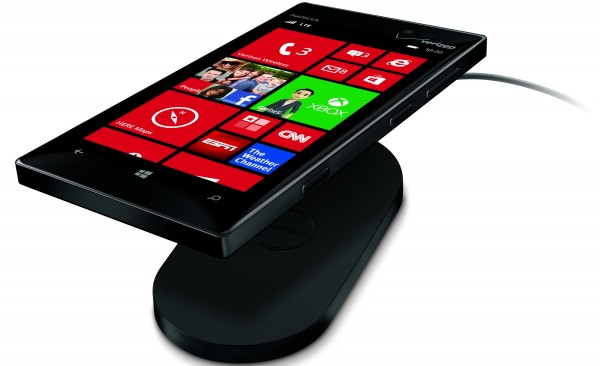
    In the software department, Lumia 928 provides access to Nokia’s exclusive app collection for Windows Phone 8, which includes the complete HERE suite (HERE City Lens, HERE Drive+ Beta, HERE Maps and HERE Transit), Nokia Music, Nokia Express, Burton and MICHELIN Travel, among others.

    The Lumia 928 measures 5.24 x 2.71 x 0.44 inches and weighs 5.7 ounces (133 x 68.8 x 11.1 mm and 161.59 grams), which means that it is taller, narrower, thicker and lighter than the 920 (130.3 x 70.8 x 10.7 mm and 185 grams). The Lumia 928 still has a generous footprint compared to its older brother.

    The Lumia 928 arrives in black or white, starting May 16, on Verizon’s online and brick-and-mortar stores. On a two-year contract, the smartphone runs for $99 after a $50 mail-in rebate. Early adopters, however, “for a limited time”, will receive a $25 credit that can be used to purchase Windows Phone apps and games.

  • Rodman Rips Obama: “He Can’t Do S**T”

    Dennis Rodman says he’s going back to North Korea to have a sit-down with Kim Jong-Un on August 1st because Obama “can’t do s**t”.

    The controversial baller has had an open line of communication with Jong-Un for months now and has reached out to him to get a pardon for Korean-American Kenneth Bae, who is serving hard time in North Korea on charges of entering the country under a false identity. Some say North Korea is using Bae as bait in order to get America to open up negotiations regarding their nuclear arms program and are wondering what Rodman’s end goal is.

    “I’m not a total idiot. I know what Kim Jong-un is threatening to do regarding his military muscle. I hope it doesn’t happen because America will take whatever actions to protect America and our allies,” Rodman said.

    Rodman recently said on camera that he has no faith in the president’s abilities to start negotiations with North Korea, which is why he’s stepping up.

    “We got a black president [who] can’t even go talk to [Jong-un] … Obama can’t do s**t, I don’t know why he won’t go talk to him,” he said.

  • Reuters – Owners Seek $1.3B for Finnish Mobile Co. DNA

    The owners of Finnish mobile phone operator DNA and financial adviser UBS have launched a sale of the company which could be worth more than 1 billion euros ($1.3 billion), Reuters reported, citing three people familiar with the matter. Swiss bank UBS this week sent out information memorandums to prospective buyers, the people said. The sources declined to be identified because the process is private. One of the people said Swedish buyout firms EQT and Nordic Capital were likely to bid for the number three-ranked operator.

    (Reuters) – The owners of Finnish mobile phone operator DNA and financial adviser UBS have launched a sale of the company which could be worth more than 1 billion euros ($1.3 billion), three people familiar with the matter said on Friday.

    Swiss bank UBS this week sent out information memorandums to prospective buyers, the people said. The sources declined to be identified because the process is private.

    One of the people said Swedish buyout firms EQT and Nordic Capital were likely to bid for the number three-ranked operator.

    DNA had earnings before interest, tax, depreciation and amortization (EBITDA) of 191 million euros in 2012 on revenues of 769 million. In the first quarter of 2013, revenues were flat versus the same period last year while profits rose.

    The Finnish mobile services market is the centre of fierce price competition and DNA’s larger rival Elisa in April reported falling revenue and profit and cut its earnings outlook for 2013.

    Sweden’s Teliasonera also saw falling revenue and profit in its Finnish business in the quarter.

    Elisa is valued at 6.5 times its EBITDA profit in the 12 months to March this year. Applying the same multiple to DNA would give it an enterprise value of 1.3 billion euros.

    DNA is controlled by companies that were previously local phone carriers in Finland. The largest shareholder is Finda Group, which owns close to 33 percent.

    One of the people said a listing for up to half of DNA shares on the Helsinki stock exchange, allowing owners to sell part of their holdings and take part in any additional upside to the business, was also an option.

    DNA and Finda declined to comment. A UBS spokesperson did not immediately return a request for comment. ($1 = 0.7637 euros) (Reporting by Sven Nordenstam; writing by Niklas Pollard; Editing by David Cowell)

    The post Reuters – Owners Seek $1.3B for Finnish Mobile Co. DNA appeared first on peHUB.

  • North Dakota Death Rate Highest For Workers, Shows Report

    The AFL-CIO, the largest union federation in the U.S., this week released its annual report on worker deaths. The report found that 4,693 U.S. workers died while on the job in 2011, and that an estimated 50,000 die each year from “occupational diseases.”

    The report breaks down the demographics of the latest worker death data available. Latino workers were found to have the highest workplace fatality rates, with a rate 14% higher than other workers. North Dakota was also found to be the most dangerous state, with a fatality rate of 12.4 per 100,000 workers.

    “In 2013, it is unacceptable that so many hardworking men and women continue to die on the job,” said Richard Trumka, AFL-CIO President. “No one should have to sacrifice his or her life or health and safety in order to earn a decent living. Yet, elected leaders, business groups and employers have failed to provide adequate health and safety protections for working families. At the same time, too many politicians and business leaders are actively working to dismantle working people’s right to collectively bargain on the job and speak out against unsafe, unjust working conditions. This is a disgrace to all those who have died. America’s workers deserve better.”

    The AFL-CIO’s statement on the report mentioned the recent West Texas fertilizer plant explosion as an example of how, it says, the U.S. Occupational Safety and Health Administration (OSHA) is underfunded and understaffed. The organization also stated that it believes OSHA penalties are “too low to be taken seriously.”

  • Nokia Announces The Lumia 928, Exclusive To Verizon

    Windows Phone fans on Verizon were disappointed last year to learn that the Nokia Lumia 920, ‘the” Windows Phone to have, would be exclusive to AT&T. They had to settle for the underpowered Lumia 820 or go with HTC’s 8X line. Good things come to those who wait, however, and that wait will soon be over.

    Nokia announced today that its bringing an updated version of the Lumia 920 exclusively to Verizon. The new hardware is called the Lumia 928, and it features a number of new features that may have AT&T subscribers feeling a tinge of jealousy.

    The Nokia Lumia 928 comes equipped with a 4.5-inch OLED display with a 1280×768 resolution, 1.5 GHz dual-core Qualcomm Snapdragon S4 CPU, and an 8.7MP camera compete with Xenon flash. It also features the same image stabilization software that made the original Lumia 920 a hit with AT&T subscribers.

    “Whether you’re attending a party, a concert or a sporting event with friends, the Nokia Lumia 928 excels at capturing high-quality video, audio and blur-free photos of life’s most share-worthy moments,” said Matt Rothschild, vice president, Nokia North America. “Verizon Wireless customers, we heard you and the wait is over – we’re excited to offer a Nokia flagship smartphone, specially designed and optimized for the nation’s largest 4G LTE network.”

    Those looking for a more visual tour of the phone can check out the below video from Nokia:

  • Reuters – Geldof’s Africa Fund Backs Commodity Exchange Startup

    Bob Geldof’s 8 Miles African private equity fund has made its first investment, backing a start-up company that plans to build commodity exchanges across Africa and improve food security, Reuters reported. The rock star activist’s $200 million fund has joined Morgan Stanley and the International Finance Corporation, in providing a total of $5 million of seed capital in eleni LLC, co-founded by Eleni Gabre-Madhin, the former head of the Ethiopia Commodity Exchange.

    (Reuters) – Bob Geldof’s 8 Miles African private equity fund has made its first investment, backing a start-up company that plans to build commodity exchanges across Africa and improve food security.

    The rock star activist’s $200 million fund has joined Morgan Stanley and the International Finance Corporation (IFC), in providing a total of $5 million of seed capital in eleni LLC, co-founded by Eleni Gabre-Madhin, the former head of the Ethiopia Commodity Exchange (ECX).

    Gabre-Madhin set up Kenya-based eleni in January with the intention of levelling the playing field for African farmers in need of greater price transparency as they contend with powerful and better-informed market participants.

    “We have closed (an agreement) this week with the 8 Miles fund,” she told Reuters on Friday at the World Economic Forum on Africa.

    Gabre-Madhin aims to challenge the dominance of the world’s commodity markets by exchanges based in developed nations.

    “It’s time the world looked to our markets as a reference,” she said. “There’s no reason why we shouldn’t have a west African cotton index that the world refers to, or an east African coffee index or African sesame seed index.”

    Africa is on the cusp of an agricultural revolution, Gabre-Madhin added, with only a quarter of its yield potential achieved and 70 percent of arable land uncultivated.

    To fulfil its potential in agriculture, Africa also needs to have structured trade, she said.

    WIDELY PRAISED

    Gabre-Madhin was widely praised for her work at ECX, which she co-founded and ran from 2008 to 2012. The exchange handled trades worth about $1.2 billion in 2011/12, with trading volume having risen to 601,000 tons from 138,000 tons in 2008/09.

    ECX trades coffee, maize, sesame and white pea beans through an open outcry system.

    Nairobi-based eleni aims to design, build and support similar exchanges elsewhere in Africa, Gabre-Madhin said.

    “The Ethiopian experience is a scratch on the surface of what we’re going to do with Africa,” she said.

    Gabre-Madhin wants to solve the problem of weak markets in African agriculture “by creating markets that take commodities from where they are produced and enable buyers to know how to get their hands on that commodity in a reliable, transparent, efficient way”.

    While at ECX, 18 different African governments approached Gabre-Madhin about replicating the Ethiopian model, which she says is a sign of the widespread acknowledgement of the need for commodity exchanges on the continent.

    Eleni is looking to launch two exchange projects within six months, she said on Friday, declining to name the countries involved.

    Each exchange is expected to cost between $20 million and $30 million and will be financed through a consortium of private investors.

    The investments by Morgan Stanley and the IFC were announced in January, but the backing from Geldof’s 8 Miles fund could raise eleni’s profile further as it seeks to raise an additional $200 million for new exchanges over the next three years.

    The 8 Miles fund declined to give details on its investment in eleni. (Editing by David Goodman)

    The post Reuters – Geldof’s Africa Fund Backs Commodity Exchange Startup appeared first on peHUB.

  • Falling iPad Mini Demand Claims Show Why Watching Suppliers For Apple Success Misses The Point

    ipad-mini-white

    This week, Bloomberg sparked a number of headlines with reports that iPad mini demand was failing based on supplier Pegatron’s earnings numbers as revealed at an investor conference. Those claims were later refuted by Pegatron CEO Jason Cheng, who argued that Bloomberg’s Tim Culpan had misquoted him to reach his conclusion about iPad mini numbers.

    The problem here is one that comes up repeatedly for Apple watchers, namely that of trying to divine from scattered sources what the future holds for the iPhone maker. Reports of slowdowns, layoffs or weak fiscal results from any number of supplier companies, including Pegatron, Foxconn and Sharp have bloggers feverishly pounding keys, predicting dire straits for Apple to come. The problem is, these have never been a very strong indicator of what’s actually going on with Cupertino and its products, and for good reason.

    As Fortune’s Phillip Elmer-DeWitt learned from Cheng via email, Pegatron has a wide customer base and never breaks out how each of those are affecting its bottom line or its quarterly financial outlook. Pegatron has its fingers in all kinds of pies, including home video game consoles and e-readers, both of which are currently suffering badly in terms of consumer sales.

    Here’s a look back at some equally dire reports from recent memory that also turned out not to have any relation whatsoever to anything Apple was doing, performance-wise.

    In the best of cases, supply chain reports offers some vague insight into the larger picture of Apple’s inventory channels, but when looked to for solid indicators of performance, they’re about as dependable as using a magic 8 ball. The iPad mini, by all reasonable accounts, looks to be a very strong performer for Apple, and it’s very likely we’ll see that trend continue.

  • You’re Doing Social Wrong. Your Teenager Does It Right. (The Shortlist)

    It seems that everyone is freaking out about teens abandoning social media sites like Facebook. By “everyone” I mean advertisers. They’re racking their brains trying to figure out why it’s happening. If you’re puzzled too, read this lovely piece in Medium by Cliff Watson, who argues that the number one reason kids don’t need Facebook is that they “literally don’t need Facebook.” After running through a host of theories as to why, including the fact that parents (ew) and even grandparents are on Facebook now, he comes up with a much more reasonable reason: Young people are gravitating toward messaging services such as Kik, and in doing so, they’re recapturing the intended meaning of social: “Making contact with other human beings. Communicating. Back-and-forth, fairly immediate dialogue. Most of it digitally.” In other words, it’s not a post; it’s an exchange. Snapchat anyone?

    Tips and Toes

    Nail Salons Show How Low-Wage Immigrants Stimulate the Economy Quartz

    For a ground-level perspective on the immigration debate, consider Tim Fernholz’s take on the world of U.S. nail salons, which tend to be staffed by low-wage immigrants. Research shows that while workers who are already in place do suffer from the competition when immigrants come to America, the new arrivals also create opportunities that lead to greater investment. Immigrants were responsible for significant innovation in the manicure business: They developed the idea of the stand-alone, inexpensive nail salon, which stimulated demand, which led to wage increases, which led to further economic growth. In fact, as immigration swells, average wages seem to rise, not fall. —Andy O’Connell

    Chicken Piccata With a Side of Networking

    Feed Your Employees’ Minds and Bodies Innovation Excellence

    Changing just one aspect of daily life in an organization can have a powerful effect on innovation. So why not try providing lunch for your employees? Meals build community and networks, writes Tim Kastelle. Idea generation will improve as people problem-solve together at meals. Employee relationships will change. Pretty soon, your company will be completely transformed. Kastelle cites a startup that not only provides meals, it also has an open dinner once a week where people outside the company can hang with employees – yet another way to build networks. Sign me up. —Andy O’Connell

    Please Hire My White Friend

    How Social Networks Drive Black Unemployment New York Times

    We know that turning to friends and family during a job search is a good way of getting a foot in the door. But Nancy DiTomaso, a professor at Rutgers Business School, found that many professional networks are still not particularly diverse, with the result that white people tend to recommend other white people for competitive positions. “Just as opportunities are unequally distributed,” she writes, “they are also unequally redistributed.” What’s also concerning is that, based on interviews DiTomaso conducted, people are convinced that skills and hard work are the primary reasons they landed good jobs — only 14% noted that they received help from others. In other words, race and employment are inextricably linked, but many prefer not to see it as discrimination.

    Stocks? No Thanks

    Equity-Market Boom Passes Many Americans By Gallup

    The DJIA’s unprecedented height this week was a matter of mere academic interest to a lot of Americans. Stock ownership among U.S. adults is at its lowest level since 1998, according to Gallup. Just 52% of Americans now say they personally, or jointly with a spouse, own stock outright or as part of a mutual fund or self-directed retirement account. The nation’s 7.5% unemployment rate is probably part of the reason: Back in the early 2000s, when unemployment was more modest than it is today, some 60% of Americans owned stock. Nevertheless, equity ownership is even lower today, by one percentage point, than it was in April 2012, when unemployment stood at 8.1%. Are Americans too poor to own stock, or are they still smarting from what happened to their portfolios in the Great Recession? —Andy O’Connell

    BONUS BITS:

    Now We Will Ponder Advertising

    This Ad Has a Secret Anti-Abuse Message That Only Kids Can See (Gizmodo)
    Advertising and The Future of the Less-Evil Internet (The Awl)
    10 Horrifying Stats About Display Advertising (HubSpot)

  • Truths for Our Daughters

    As a senior professional in financial services — an industry with comparatively few women in the executive ranks — I’ve spent a lot of time thinking about why there aren’t more women at the top-most levels of companies. I’ve read the studies and heard the theories that women don’t network well; don’t have the “vision thing”; communicate too passively; don’t ask for bigger jobs and the top clients; and have fewer sponsors who are willing to use political capital to advocate for them the way they do for their male colleagues. There’s a lot of agreement and repetition when talking about the problem. It’s when discussing solutions that things get quieter.

    As a mother watching her 18-year old college freshman daughter contemplate her summer job options and future career, I want her to be exposed to success stories — not to what women lack or haven’t done or can’t do — because I know these successes exist and we need to share more of them. If young women everywhere went into the workforce steeped not only in the message that “you can’t have it all” and inundated not only with data on the lack of senior women, but armed instead with all the accumulated advice and wisdom of experienced women who have thrived in and enjoyed their careers, then they — and the organizations they’re joining — would be much better served.

    Here is the advice I’ll give my daughter — and all young women like her eagerly anticipating building a career — as she starts to make decisions about her life. These are some truths that I know now, twenty-plus years into my career, but wish someone had told me earlier. And though I didn’t always follow these guidelines, my career has been more successful — and I got to where I am today — because of them. Maybe my daughter will embody these early on and be ahead of the game.

  • Be confident. I’ve watched you approach multivariable calculus class this semester with coolness and calm. Bring that spirit into the workforce with you. (For the record: I can’t think of a single thing I’ve done in my entire career that approaches the complexity of multivariable calculus).
  • You don’t need to “know it all” on day one. And neither does anyone else, including that very confident-sounding guy in the cube next to you. Even CEOs ask questions.
  • Get comfortable with being uncomfortable. It took me about a decade, if not longer, to figure this one out. It’s easy to hold yourself back by thinking there is someone else out there who is more talented, more experienced, more skilled. You won’t grow in your career if you won’t venture beyond what you already are comfortable doing.
  • You have no idea where your career will lead you longer-term so think of it in smaller, manageable stages. Opportunities will come along. Be fearless, take them, and don’t worry so much about what’s next.
  • Speak twice as loudly as you think you need to. I really wish someone had said this to me before my first presentation in a corporate boardroom — when someone actually asked me to “speak up”.
  • Be prepared. Practice. Know the numbers inside and out. Great business judgment develops with time, but even on day one, you can have the facts — and this is powerful.
  • Find that person who believes in you — and then listen to them, even if you don’t like what they’re saying. You will look back and be thankful that you did.
  • Draw lines in the sand. Know what it is you absolutely won’t give up and stick to it. No one will thank you for not having a life outside of work, never taking vacation. The most successful people I know weave their lives and work together throughout the week. This gives them both career longevity and life fulfillment.
  • You will frequently feel like you are not giving your 100% best anywhere — either at home, at work, with friends, with other outside interests. I feel like this all the time — and it’s okay. High achievers always strive to do more at work, with family and friends, with your other outside commitments and interest.
  • Pay it forward and good things happen. Take the call or the meeting request when friends and colleagues reach out for business or career advice and connect them with others who may be helpful. They will remember and it’s an easy and genuine way to expand your network.
  • Be ready — for anything.
  • It’s time for us to change the narrative of why there aren’t more women at the top. Can we simply whip up a “how to” and change the trends we all see? Likely not — because there is no Secret Formula X for success. We each bring a varying mix of talents, ideas and experience to the equation, as well as differing life circumstances. That’s why we need to start sharing our success stories, instead of focusing on all the reasons why women opt out or don’t live up to their potential in the workforce. On this Mother’s Day, share your story with someone who needs to hear it.

  • Boxfish lands on Android, has big plans for real-time TV data

    Palo Alto-based Boxfish, the second-screen TV guide that squarely aims at news junkies and sports fans, landed on Android this week with an app that tells you exactly what everyone on TV is talking about at any given time. Boxfish monitors conversations on close to 1,000 U.S. channels in real-time and automatically analyzes key topics to make TV searchable — and all of that data could one day also power your DVR or even your cable box.

    Boxfish first launched on iOS last August, and the company’s co-founder and CEO Eoin Dowling told me during an interview this week that a lot of his team’s work since has been spent on perfecting the identification of topics. The new Boxfish Android app automatically displays two hashtags with key topics per channel, and these get automatically updated as news anchors switch to the next topic or as a show goes into commercial break.

    These topics are being identified through cluster analysis, Dowling explained. That means Boxfish doesn’t query Wikipedia or any other dictionary source to make sense of conversations, but instead gathers meaning from the context of which words are used. That’s a necessity to make sense of TV in real time, explained Dowling: “News doesn’t exist in dictionaries yet.”

    The new Android app lets users check out the current topics on any given show, search for topics across all channels and set alerts for their favorite shows. It also allows users to control their DirecTV and Google TV set-top boxes, making it possible to to tune into a channel as soon as you discover that a certain keyword has been mentioned. It’s a bit less useful without that remote control capability, but still an interesting toy to play around with, especially if you’re a news junkie like me.

    However, Dowling made it clear during our conversation that the app is just a first step for Boxfish. The company also built out an API to give others access to its real-time data, and is already in conversations with cable providers, CE companies and others to give them access to this data.

    TV makers could for example use Boxfish’s real-time data to make viewing suggestions that are much more fine-tuned than simple show-based recommendations. Care only about a certain sports team? Then how about getting alerts whenever it is a major topic, no matter whether it’s on SportsCenter or the evening news?

    Likewise, DVRs could become much better at serving the things you really want to watch, for example by letting you jump right to a news segment you care about, as opposed to making you sit or fast forward through an entire show in search for those 45 seconds you want to watch.

    “I just want to see people use this to build a better TV,” said Dowling.

    Boxfish’s team of 10 is backed by Deutsche Telekom’s T-Venture fund, which has invested a total of $5 million into the company.

    Take a look a t a couple of screenshots of the app on my Nexus 7 below:

    Related research and analysis from GigaOM Pro:
    Subscriber content. Sign up for a free trial.


  • Interior Secretary To Continue Energy Embargo on Federal Lands

    On May 7, Interior Secretary Sally Jewell testified before the Senate Appropriations Committee on the President’s 2014 Budget Request. In an otherwise unremarkable and perfunctory presentation, Jewell’s testimony provides further insight into the Obama administration’s hostilities to low-cost, reliable energy …

  • Making the Soldier Decisive on Future Battlefields

    Final Book Now Available

    The U.S. military does not believe its soldiers, sailors, airmen, and marines should be engaged in combat with adversaries on a “level playing field.” Our combat individuals enter engagements to win. To that end, the United States has used its technical prowess and industrial capability to develop decisive weapons that overmatch those of potential enemies. In its current engagement—what has been identified as an “era of persistent conflict”— the nation’s most important weapon is the dismounted soldier operating in small units. Today’s soldier must be prepared to contend with both regular and irregular adversaries. Results in Iraq and Afghanistan show that, while the U.S. soldier is a formidable fighter, the contemporary suite of equipment and support does not afford the same high degree of overmatch capability exhibited by large weapons platforms—yet it is the soldier who ultimately will play the decisive role in restoring stability.

    Making the Soldier Decisive on Future Battlefields establishes the technical requirements for overmatch capability for dismounted soldiers operating individually or in small units. It prescribes technological and organizational capabilities needed to make the dismounted soldier a decisive weapon in a changing, uncertain, and complex future environment and provides the Army with 15 recommendations on how to focus its efforts to enable the soldier and tactical small unit (TSU) to achieve overmatch.

    [Read the full report]

    Topics: Conflict and Security Issues | Engineering and Technology

  • Adobe security failure of the DAY: 160K SSNs exposed

    Yesterday I wrote about Adobe’s latest security nightmare, this time involving web development environment ColdFusion. I also stressed that while aware of the problem, the company didn’t plan a fix until May 14, during its next monthly patch release. For the Washington state court, this is not soon enough.

    A ColdFusion vulnerability exposed 160,000 Social Security numbers and the driver’s license numbers and names of a million people. Before hitting the panic button, realize that if you have had no legal issues then you are likely safe.

    Social security numbers of those booked into a city or county jail in the state of Washington between September 2011 and December 2012 are compromised. Likewise are the drivers license numbers of anyone who received a DUI citation in Washington State between 1989 and 2011, had a traffic case in Washington State filed or resolved in a district or municipal court between 2011 and 2012 or had a superior court criminal case in Washington State filed against them or resolved between 2011 and 2012.

    The court discovered the breaches in late February, but waited to issue a statement, warning those who may have compromised information:

    Once the breach was discovered, AOC took immediate action to further secure the environment and begin investigation and analysis into the depth and severity of the breach. In addition, AOC collaborated with the Washington State Consolidated Technology Services (CTS) and the Multi-State Information Sharing & Analysis Center (MS-ISAC) for internet security, who provided valuable information in determining the scope of this security breach. MS-ISAC is a focal point for cyber threat prevention, protection, response and recovery for the nation’s state, local, territorial and tribal governments. The MS-ISAC 24×7 cyber security operations center provides real-time network monitoring, early cyber threat warnings and advisories, vulnerability identification, and mitigation and incident response.

    The court stresses that no financial data was obtained and that it has “implemented significant security enhancements to ensure that our systems and data are secure and to prevent the potential for future compromise”.

    As for Adobe? The company will get around to fixing this latest problem next week, along with the PDF flaw that is being utilized in the wild to compromise your Reader app — the one you should not be using.

    Photo Credit: OleGunnarUA/Shutterstock

  • HTC One Draws Interest From Men In San Francisco, LA And Houston

    The HTC One has become the smartphone of the hour, with pretty much overwhelmingly positive reviews. Naturally, its drawing a lot of interest from consumers, but according to search data from Yahoo, it’s drawing interest specifically from men in select cities in the U.S.

    Yahoo tweeted today:

    77% of searches? That’s a pretty big percentage.

    ZDNet says, “HTC has pulled out all the stops with the One, which looks great, performs well and includes some clever features. The lack of storage expansion and the persistence of BlinkFeed are irritations, but overall the HTC One stands up well against rival flagship handsets.”

    The Salt Lake Tribune says it’s “slightly better” than the Samsung Galaxy S4.

    IBN says it’s “beautiful to look at,” and “powerful to play”.

    Here are a few official videos from HTC showing off the device:

  • Financial Times joins Flipboard, says it’s a better deal than Apple

    The Financial Times is now making its content available through Flipboard, the popular reading platform that lets users draw on their social networks to assemble content from a variety of publications or create their own magazine.

    The partnership, which comes a year after a similar deal between Flipboard and the New York Times, will grant full access to FT subscribers and limited access to registered users. Casual visitors will be able to read a smattering of FT blog posts and cultural stories.

    Rob Grimshaw, managing director of the FT.com, said by phone that the deal will involve the FT and Flipboard sharing advertising revenue, but would not disclose what the exact revenue split is. In the past, the ad splits have been a source of contention for some publishers, including Condé Nast, which left Flipboard last year over the issue.

    Grimshaw also said that the FT is exploring selling subscriptions through Flipboard, and would be willing to share some of the proceeds with the platform. This is significant because the FT made waves by leaving iTunes in part due to the 30 percent commission (or “vig,” as the Brits call it) that Apple takes from every publisher.

    So why is the FT willing to partner up with Flipboard so soon after leaving Apple? Grimshaw says the difference lies in how the two platforms treat customer relationships.

    “The issue is not so much a percentage, it’s the relationship between publisher and audience. Paying a 30 percent finder’s fee is okay. Paying 30 percent in perpetuity and not knowing who the customer is not okay.”

    The Flipboard partnership also reflects the fact that the FT and other publishers are keen to get their stories in as many places as possible at a time when readers are consuming more and more content on mobile. As for the future role of Flipboard, which some describe as a “giant iceberg” in the way of publishers, Grimshaw had this to say:

    “I think the really interesting aspect to the platform is the way they’re giving readers the ability to create a bespoke user experience. I personally think this is going to be a strong strand in publishing and consumption of news in the digital space.”

    Related research and analysis from GigaOM Pro:
    Subscriber content. Sign up for a free trial.


  • Eyeing distributed antenna system boom, Cobham buys Axell for $131M

    As mobile broadband evolves and users want good coverage wherever they go, various strategies are evolving to make this happen. One involves the replacement of single high-powered antennas with multiple low-powered antennas that can be spread around specific locations, in order to either boost indoor coverage or shore up capacity in traditional outdoor networks – these are known as distributed antenna systems (DAS), and a major player in that space just got bought.

    That player is the UK’s Axell Wireless, whose commercial and public-safety-oriented DAS installations have aided coverage everywhere from the Pentagon to the London Olympics last year (and the London Underground, too) — interestingly, the company recently branched out into Wi-Fi DAS as well as cellular. The buyer is Cobham, also a British firm, which provides antennas and other technology for the aerospace and defense sectors, but also for commercial customers.

    The deal is worth £85 million ($131 million) — £60 million up front and the rest pending good performance in the next year or two. Axell CEO Ian Brown told me on Friday that the buy would mainly help the commercial side of that business:

    “The thing that’s really been driving the cellular part of the market is the mass proliferation of smartphones. Now 80 percent of mobile traffic emanates from the building – people are using their mobile phones more inside than when outside.

    “Cobham is obviously in the communications and technology business, selling to the defense and commercial markets. As a business, they’ve been looking for adjacent sectors to get into to extend the commercial mix… and that’s their strategic rationale for acquiring Axell.”

    Brown noted that the demand for DAS will increase greatly through the rollout of 4G networks (AT&T would no doubt agree), but also through regulations around public safety networks, the market in which Axell is particularly strong.

    “Since the unfortunate events of [9/11] a lot of governments around the world have put into statute that key pieces of infrastructure must have public safety communications,” Brown said. “You can’t open a road tunnel in Europe now unless you have public safety communications.”

    Related research and analysis from GigaOM Pro:
    Subscriber content. Sign up for a free trial.


  • Best Care at Lower Cost: The Path to Continuously Learning Health Care in America

    Final Book Now Available

    America’s health care system has become too complex and costly to continue business as usual. Best Care at Lower Cost explains that inefficiencies, an overwhelming amount of data, and other economic and quality barriers hinder progress in improving health and threaten the nation’s economic stability and global competitiveness. According to this report, the knowledge and tools exist to put the health system on the right course to achieve continuous improvement and better quality care at a lower cost.

    The costs of the system’s current inefficiency underscore the urgent need for a systemwide transformation. About 30 percent of health spending in 2009–roughly $750 billion–was wasted on unnecessary services, excessive administrative costs, fraud, and other problems. Moreover, inefficiencies cause needless suffering. By one estimate, roughly 75,000 deaths might have been averted in 2005 if every state had delivered care at the quality level of the best performing state. This report states that the way health care providers currently train, practice, and learn new information cannot keep pace with the flood of research discoveries and technological advances.

    About 75 million Americans have more than one chronic condition, requiring coordination among multiple specialists and therapies, which can increase the potential for miscommunication, misdiagnosis, potentially conflicting interventions, and dangerous drug interactions. Best Care at Lower Cost emphasizes that a better use of data is a critical element of a continuously improving health system, such as mobile technologies and electronic health records that offer significant potential to capture and share health data better. In order for this to occur, the National Coordinator for Health Information Technology, IT developers, and standard-setting organizations should ensure that these systems are robust and interoperable. Clinicians and care organizations should fully adopt these technologies, and patients should be encouraged to use tools, such as personal health information portals, to actively engage in their care.

    This book is a call to action that will guide health care providers; administrators; caregivers; policy makers; health professionals; federal, state, and local government agencies; private and public health organizations; and educational institutions.

    [Read the full report]

    Topics: Health and Medicine

  • Networking Company Cyan Prices Initial Public Offering

    Here’s some of today’s noteworthy links for the networking sector of the data center industry:

    Cyan Prices IPO.  Cyan (CYNI) a provider of software defined networking (SDN) and packet-optical platforms for network operators, announced the pricing of its initial public offering of 8,000,000 shares of common stock at $11.00 per share. Shares began trading May 9 on the New York Stock Exchange under the symbol CYNI, and ended the day at $11.14. Petaluma, California-based Cyan was founded in 2006 and has raised over $30 million in funding. Late last year, Cyan launched its software defined networking Blue Planet software, aimed at enabling service providers of all types to virtualize their networks.

    Fujitsu Develops SDN-based Platform. Fujitsu announced the development of FUJITSU Intelligent Networking and Computing Architecture, a new architecture for network-wide ICT platform optimization based on the principles of software defined networking (SDN). The new architecture employs a software-based approach to intelligently and flexibly enable optimized control over three unique domains: data centers, wide area networks, and smart devices. In the initial phase, Fujitsu is offering the following products based on this architecture: an updated version of unified administration and control software for server, storage and network resources, a new switch that supports network virtualization, and a new virtual appliance platform.

    Exinda Network Optimization Suite EnhancedExinda announced significant enhancements to the its Network Optimization suite that uniquely combines WAN Optimization, Network Control and Application Monitoring into an integrated solution specifically designed to meet the growing requirements of mid-market enterprises and educational institutions. With the release of its 6.4 firmware, the Exinda suite integrates many of these tools into a single converged solution that allows network managers better control of their network and create a more predictable user experience for applications that rely on it. “With the growth of tools for network management and the lack of integration between these tools, the complexity of performance management has increased,” said Jim Rapoza, senior network analyst for Aberdeen Group. “However, there has been a push among companies to deploy products that offer a single integrated platform for network control, along with deep visibility into user experience and application performance. Aberdeen Group data shows that 88 percent of organizations have or plan to centralize network and application performance and user experience visibility. By deploying an all-in-one integrated platform, these organizations are working to meet user demand, manage cost, and maintain or improve the overall quality of their network and application experience.”

    Silver Peak joins NEC. Silver Peak Systems  announced it has joined NEC Corporation of America (NEC) to include its data acceleration software as part of NEC’s new Software-Defined Networking (SDN) Application Center.  The NEC SDN Application Center focuses on solutions that address customers’ top-of-mind network concerns. “Silver Peak’s leadership in delivering software-based WAN optimization is the perfect complement to NEC’s market-leading ProgrammableFlow Network Suite,” said Don Clark, director of business development, IT Platform Technologies, NEC Corporation of America. “Silver Peak virtual products plug into our new SDN Application Center to give customers maximum flexibility and performance for extending business-critical applications across any distance.”

  • Samsung will reportedly launch an Android notebook in the coming months

    Samsung AndroidBook release date
    Earlier reports have indicated that Google and its partners are preparing to launch Android-powered notebooks that could debut later this year. Ming-Chi Kuo of KGI Securities notes that Samsung is just one of many companies that will launch such a product within the coming months, 9to5Google reported. The analyst warns that these “AndroidBooks” won’t be announced at Google’s upcoming I/O Developers Conference due to the delayed launch of Android 5.0, however, which is meant to help further bridge the gap between computers and smartphones.

    Continue reading…

  • Wade Robson: Nervous Breakdown Preceded Molestation Claims

    In the 2005, when Michael Jackson was on trial for molestation charges, Wade Robson defended the King of Pop in court, stating that Jackson never molested him or anyone he knew. Since that time, Robson has gone on to become an award-winning choreographer, working with stars such as Justin Timberlake and creating routines for the network TV show So You Think You Can Dance. He reportedly stayed friends with Jackson until the singer’s death.

    This week, Robson recanted his past claims, now stating that he was, in fact, molested by Jackson. According to a TMZ report, Robson is now calling Jackson a “monster” who molested him for seven years, from age 7 to 14.

    Robson’s Lawyer stated that Robson had a nervous breakdown last year due to his past. TMZ is now citing unnamed “sources close to the Robson family” as saying Robson began breaking contracts and attending therapy in March 2012.

    The claims came as a shock to Robson’s family and Jackson’s fans, as Robson had always staunchly defended the pop star against the allegations. His about-face has prompted much speculation on Twitter over whether Robson was lying in the past or is lying now:

    (Image courtesy Wade Robson/Wikimedia Commons)