 |
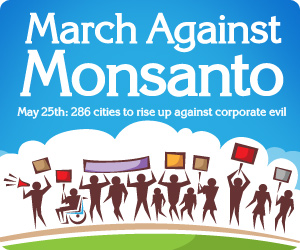
It’s nowhere to be found in the big newspapers or on the “network” TV news, but why? The highly successful, world wide “March against Monsanto” is nowhere to be found in mainstream media, and it wasn’t covered live either. Far bigger than any cancer march, or any MS… |
Category: News
-
World Wide March against Monsanto was widely censored by mainstream media
-
Acupuncture really works for lower back pain: Research
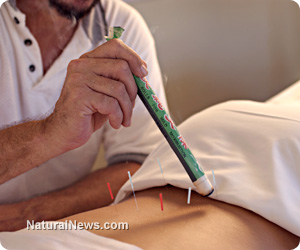
A unique and not well known type of acupuncture in the Western world, motion style acupuncture treatment (MSAT), is used in Korea for lower back pain (LBP) or other musculoskeletal areas of pain that hinder movement. MSAT requires assisted motion of the affected area… -
Eric Holder perjured himself in lie about AP – DOJ intimidation scheme
It is said that when you lie often, sooner or later you will be caught in your own web of deceit. That may have just happened with Attorney General Eric Holder. Last week Holder appeared before the House Government Reform and Oversight Committee to provide testimony… -
IRS hid scandal during 2012 election to help Obama get elected
By now most Americans know that the Internal Revenue Service’s (IRS)targeting of conservative, “patriot” and similar groups by some members of the the agency’s tax exempt status division did so for political reasons, but the political motivations behind those actions… -
FDA denies family’s alternative cancer treatment, shuts down clinic

The Camelot Cancer Care center in Tulsa, Oklahoma has been shut down. The FBI and the FDA showed up in April with a search warrant and seized computers, invoices, bills, cellphones, and important treatment that patients were receiving. Investigators would not speak about… -
The rebel against the controlled world
(NaturalNews)The campaign and attack against the individual takes many forms. In 2012, I was contacted by a disillusioned psychiatrist who had “left the field.” He told me he was interested in discussing his experiences. Here is a key remark he made in our conversation: …
-
Boy diagnosed with autism has higher IQ than Einstein; thriving despite failure of public school system

When the experts told Kristine Barnett of Indiana that her two-year-old son would probably never be able to read or even tie his shoes due to his severe case of autism, the brave mother of three decided to take matters into her own hands. And as a result, she helped… -
Arsenic being intentionally added to conventional chicken

The old saying, “You are what you eat,” poses troubling implications for public health in light of a new study on chicken meat, which found that most of it contains dangerously high levels of toxic arsenic. And the worst part is that industrial chicken producers are… -
How safe are root canals?

Almost 60 million root canals are performed a year (1), on individuals who are mistakenly informed that it is a safe and harmless procedure. While your teeth may look and feel fine after the procedure, the reality is that it is impossible for all of the bacteria to be… -
Why coconut oil is the best vegetable oil

Health is wealth. Additionally, having a healthy body can make people have fewer worries and be happy in life. If you are somebody who thinks the same way, you should beware of cooking oils with canola, sunflower, safflower, soy, or corn as a base. Don’t believe it… -
Bullied over butter: NYC education department threatens school cafeteria managers for using natural butter in meals

America truly is turning into a 1984-esque police state, and ground zero for this authoritarian onslaught appears to be New York City where government-run public schools are now on a crusade to eliminate butter from school cafeterias. As reported by New York Daily News… -
The dismal future of America’s food supply? Lab-grown burgers could eventually hit fast food menus

Scientists from the Netherlands have apparently come up with a new method to produce meat that almost completely does away with the animals. By combining animal stem cells with fetal serum and other materials in their laboratory, Dr. Mark Post and his colleagues from… -
Health benefits of eating pumpkin seeds

If you are acidic, or even somewhat acidic, in your stomach, you’d probably be thankful that pumpkin seeds exist. Everywhere, people are preparing dangerously acidic meals. To counteract the negative effects of acidic foods and meals, take note of studying and incorporating… -
Monsanto: The worst of the worst
(NaturalNews)Monsanto lies about everything and will commit any atrocity against the people to ensure profits. Recently, the Cornucopia Institute reported about the French farmer that was poisoned by one of Monsanto’s “safe” pesticides. Read it for your self. A French farmer…
-
Seven undeniable reasons to homeschool your children

So far homeschooling is legal in all 50 states. Some states require no monitoring, some moderate oversight, and a few require close supervision by testing. Here’s a color-coded-by-state map that indicates those different levels of acceptance (http://www.hslda.org/laws/… -
Samsung reportedly working on new design for mobile devices

According to the Korea Herald, high-level management at Samsung recently held a strategy meeting to talk design for their upcoming products. The members of the meeting discussed the trends in the electronics market lately, and they all agreed that Samsung devices need to remain easily recognizable by consumers. They’re reportedly working on “Design 3.0″ for their products, which is set to help keep Samsung devices ahead of the curve by focusing on “external beauty” as well as “technical practicality.”
While these details are extremely vague, it’s pretty clear that Samsung knows they can’t keep releasing the same device over and over and expect to stay at the top. Even with the Galaxy S4′s blistering sales and laundry list of features, the top complaint was how little it changed from the S3. Hopefully we’ll see Samsung shake the industry up by the end of the year. You never know, we may actually see an aluminum Galaxy device.
source: Korea Herald
via: SamMobile
Come comment on this article: Samsung reportedly working on new design for mobile devices
Visit TalkAndroid for Android news, Android guides, and much more! -
Google Calendar update includes new UI and color-coded events
 After launching a new Gmail interface and updated Play Store and Play Music apps, Google still wasn’t done for the day. They have also updated their Calendar app, which now features a new UI and custom event colors. The design is totally Holo-riffic now, with snazzy redesigned date and time pickers. Customizing event colors, a feature missing until now, is very to accomplish. In addition, the update also makes it easier to schedule repeating events and schedule events in different time zones.
While the update is technically live, it will be rolling out gradually. When it’s your turn, you can grab it from the link after the break.
Come comment on this article: Google Calendar update includes new UI and color-coded events
Visit TalkAndroid for Android news, Android guides, and much more! -
With state school partners, Coursera explores different uses for massive online courses
In the year or so since its launch, online learning startup Coursera has touted partnerships with some of the world’s most elite institutions. And, under most of those arrangements, the schools create online courses for tens of thousands of students anywhere to watch. But with its latest cohort of partners, which the company is set to announce Thursday, Coursera is trying a different strategy on for size.
Working with 10 state schools, including the State University of New York, the University of Colorado System and the University of New Mexico, Coursera said it plans to explore various uses for massive open online courses (MOOCs). Instead of just creating open courses for anyone, the institutions plan to use MOOCs for blended learning experiences (that combine online and offline instruction), as well as to improve completion rates, quality and access at their schools.
“Up until now we’ve been doing a very good job giving a free education to people around the world,” said co-founder Andrew Ng. “But one thing a lot of people still need is a college degree. This is a big step toward helping make that better.”
Noting that about 75 percent of people in the U.S. attend schools in state university systems, Ng said Coursera’s partners plan to experiment with Coursera in a variety of ways.
For some partners, Coursera could enable various campuses within a system to pool resources, which could be particularly helpful as state schools face tighter budgets. For example, one campus could create an effective Introduction to Biology class, another could create an Introduction to Psychology and the courses could be shared by students across the system.
For other partners, the platform could enable faculty to adapt existing MOOC content to fit their courses or offer courses to non-matriculated students that could potentially be used for credit. Ng said that very few partners currently award credit for Coursera courses offered by their institution but five courses have been won approval from the American Council on Education (ACE) for credit equivalency.
At the University of Kentucky, for example, the plan is to use Coursera to help prepare admitted students for college-level courses. As with several colleges, many students enter the University of Kentucky unprepared for science and math courses, Vince Kellen, the university’s CIO and senior vice provost, told me. While anyone online will be able to take the Introduction to Chemistry course the school plans to place on Coursera, he said it will primarily be intended for incoming freshmen and sophomores at his school.
“Rather than trying to build a course for the elite learning, this lets us reach a large percentage of students preparing for college,” Kellen said.
In the past few months, MOOCs have come under attack at a few universities, with faculty arguing that the massive online classes could weaken non-elite schools and promote a two-tier university system. Ng said he believes that Coursera’s partnerships could help strengthen state schools through blended learning and other approaches that enable professors to bring more resources into the classroom. And he said that he doesn’t buy the notion that MOOCs will lead to a two-class college system.
Even though Coursera may offer a great Intro to Calculus class offered by the University of Pennsylvania, that doesn’t mean students at every school should take it, he said, adding, “There are students at different levels, adding content makes sure you have content at different levels… [For some students], having their local professor create a different course would serve them better.”

Related research and analysis from GigaOM Pro:
Subscriber content. Sign up for a free trial.- Disrupting the university: near-term opportunities in the digital-learning market
- Survey: How apps can solve photo management
- Social networks will displace business processes, not socialize them
-
Tesla CEO: We’re tripling the size of the Supercharger network
Tesla plans to make an announcement about its Supercharger network on Thursday morning, but on Wednesday night at the AllThingsD D11 conference (our live blog here), Tesla CEO Elon Musk let the cat out of the bag early and said “What we were going to announce tomorrow is that there is going to be a dramatic expansion of the Supercharger network. By next month we’ll triple the coverage area.”
Musk said that on Thursday they’d unveil a detailed map and that Tesla Model S drivers would “be able to drive all the way from LA to New York using the Supercharger network.”
Superchargers are basically fast chargers that can charge up one of Tesla’s Model S cars in around 30 minutes (depending on how low the battery is). The idea is that because the market for electric cars is so new, there isn’t enough charging infrastructure out there to enable EV drivers the comfort of driving wherever they want, whenever they want — like taking a road trip up and down the state.
“Range anxiety is real,” said Musk at D11. That’s why Tesla has become an infrastructure provider as well as a car maker. The chargers have solar panels on them from Musk’s other company SolarCity, and Tesla has been building out the chargers along well trafficked long distance highways.
Until now most of the Superchargers had been installed on the coasts. But back in September 2012 Musk had said that within two years he wanted the U.S. to be covered in Superchargers. Tesla also wants to build them in Europe and Asia, too.

Related research and analysis from GigaOM Pro:
Subscriber content. Sign up for a free trial.- Cleantech first-quarter 2013 analysis and outlook
- The fourth quarter of 2012 in cleantech
- Cleantech and investment in 2013
-
Affordable self-driving cars could be available within the next three years
