Category: News

  • Netflix to offer $11.99 per month subscription supporting up to four simultaneous video streams

    netflix_banner

    If you’ve ever run into Netflix’s cap of two simultaneous video streams on your account and wished you could increase that cap, Netflix has an answer. Today the company announced that there will be a new pricing tier to allow a single account to deliver video to four separate devices simultaneously, up from the current cap of two. The pricing is just a tad higher than their current plan at $11.99 per month. You won’t be forced to move to that tier, and Netflix expects only about 1% of their subscribers to use the new tier, but having options is always nice.

    Personally, I’ve never hit the current streaming cap, even sharing an account with family members. I can see how it might be an issue for larger families who rely on internet streaming exclusively for entertainment, though. What are your thoughts? Are any of you going to move up to the new subscription price?

    source: Netflix

    Come comment on this article: Netflix to offer $11.99 per month subscription supporting up to four simultaneous video streams

  • Runtastic Mountain Bike and Road Bike now available in Play Store

    runtastic mountain bike

    If you made a New Years resolution to get in shape this year, and you’ve managed to stick to it so far, we’ve got a pair of apps that might help you along a bit. The developers of Runtastic Pro, who have also collaborated with Google for some nifty Google Earth features, have released Runtastic companion apps for mountain bikes and road bikes.

    Both apps feature specific features to whichever kind of biking you plan on doing, The apps features excellent GPS tracking, live data tracking, and interfacing with popular Runtastic fitness accessories. Both apps also feature a lite version with fewer features, and a paid version that has all the features in each app. If you’re already the exercising type or just looking for something to help you get started, these apps are worth checking out. Hit the break below for the download links.

    QR Code generator

    Runtastic Road Bike Lite

    QR Code generator

    Runtastic Mountain Bike Lite

    Come comment on this article: Runtastic Mountain Bike and Road Bike now available in Play Store

  • Fisker fails to deliver 1st government loan payment, DOE has already taken $21M

    Electric car startup Fisker Automotive did not pay its first $10 million loan payment due to the Department of Energy on Monday, reports the LA Times. At the same time, the DOE has already seized $21 million from Fisker from a reserve account close to two weeks ago anticipating a default on the loan, according to the Wall Street Journal.

    The bad news is the latest in a string of problems for Fisker, which has also seen lawsuits pile up in recent weeks, and laid off 75 percent of its staff earlier this month. According to several media reports, Fisker has been prepping bankruptcy documents, but at the same time has also been trying to raise funds to restart production of its first car the Karma.

    Fisker on DOE Loan Timeline (Next Month) and Pulling Out of Michigan

    We detailed Fisker’s long disturbing story in our lengthy piece: A look under the hood: why electric car startup Fisker crashed and burned. On Wednesday the Committee on Oversight & Government Reform has scheduled a hearing where Fisker founders Henrik Fisker and Bernard Koehler are expected to testify and Fisker CEO Tony Posawatz has been invited.

    Fisker raised $1.2 billion from over a thousand investors, including venture capitalists Kleiner Perkins and NEA, and drew down on a close to $200 million loan from the DOE. Fisker owes the DOE another $171 million. If Fisker files for bankruptcy, it will be one of the biggest losses in venture capital history.

    Related research and analysis from GigaOM Pro:
    Subscriber content. Sign up for a free trial.


  • Netflix may change policies to prevent customers from sharing accounts

    Netflix may change policies to prevent customers from sharing accounts
    For a monthly fee of $7.99, Netflix customers have access to a wide variety of TV shows, movies and original content. More often than not, however, users frequently share accounts between family members and friends due to the company’s relaxed policies. Michael Pachter of Wedbush Securities believes chief executive Reed Hastings should try to squeeze more profit from his 33.3 million customers by “cracking down on piracy” or even raising prices. The analyst claims that as many as 10 million people are accessing the service without paying, which is ultimately hurting Netflix’s potential revenue.

    Continue reading…

  • Data centers are getting more sophisticated, so why aren’t our metrics keeping up?

    The word is out. Legislators in Iowa say Facebook is the company behind what could be a $1.5 billion data center project in Altoona, Iowa, that will result in 1.4 million square feet of data center space for the social network. Not only is that a lot of money and a lot of space, it’s also mind boggling to think about a company spending $1.5 billion on physical infrastructure when it pulled in just $5.01 billion in revenue in 2012.

    But the servers, storage and networking gear inside the millions of square footage that Facebook has dedicated to data centers are where the bits that comprise Facebook’s online products are assembled. Every click, every upload and every message sent via the web passes through a data center somewhere.

    An economy built on digital bits

    And the relationships are getting more complicated with the rise of cloud computing and federated applications comprised of multiple services wrapped up in one program. So a data visualization service that ties your company’s Salesforce data with internal business data relies on servers hosted by Salesforce, possibly located in-house or, if the data visualization app is suing Amazon as its back end, one of Amazon’s data centers.

    Facebook data center in Prineville, Ore.

    Facebook data center in Prineville, Ore.

    This is no longer a call and response approach, where I call up a web site and a server sends it to me. And the value of those services is increasing in line with their complexity. Intel’s purchase of Mashery last week, for an example, was evidence of the chip giant realizing that this web of relationships is the new digital supply chain. And the ports of call are the data centers, as Mark Thiele an EVP of technology at Switch told me.

    So what does this have to do with Facebook? Or Google? In many ways they have pioneered the creation of a new model of data center and computing, where the data center is the computer. They did this because when offering a web-based service, their cost of goods was directly tied to their infrastructure. Knowing how much it costs servers to perform and deliver each search result is as important for Google as knowing what the cost of gas is for an airline.

    And yet… for the most part, how we discuss and think about data centers has not become more sophisticated beyond saying it’s a room full of servers. Yes, we have data such as power usage effectiveness ratios, but that’s not the most important metric for everyone. If data centers really are going to be the manufacturing floor of the digital economy, we need to start thinking about them at a higher level.

    Fortunately, some people already are. Here are two places we can start: understanding the operators and defining the metrics associated with success.

    Understanding the market

    Transformer switch to power data center

    Transformer switch to power data center

    All data centers are not equal. For years people have broken down data centers based on their redundancy and security, with a Tier-1 class of data center defined as a high-availability data center that has lots of redundancy and secured premises. This is where you host your financial information and NSA files, and it’s also the most expensive to build.

    But there’s another breakdown worth exploring and that’s the party that is building and oeprating the data center. Just like there are different types of computing out there requiring different gear and performance, there are also different types of data centers. I’ve broken it down into three categories, but I am on the fence if there should instead be four.

    • Master of their domain: This includes Google, Facebook and even enterprise customers. These operators control the hardware, the building and the apps running on the hardware so they can optimize the heck out of their infrastructure. Facebook and Google are the best known for doing this, but there’s no reason anyone who has the ability to control everything at a big enough scale can’t learn from Facebook and apply its tequiniques to their corporate operations. In the case of banks looking at Open Compute, this is already happening.
    • Master of their servers: This includes most hosting companies, like Peer1, Rackspace and others, who can build out their own hardware and servers but can’t control what people run on them. I’m struggling a little with this category because I’m not sure if Amazon Web Services or Microsoft Azure fits into this category, because they don’t control the end applications. However, they are able to limit the services they offer in such a way that their infrastructure is optimized for them, putting them on similar footing as the masters of their domain.
    • Masters of their cages:Companies such as Equinix, Switch and Digital Reality Trust that operate co-location space fall into the last category. These companies operate huge data centers that are like server hotels. People lease space, buy connectivity and pop their own gear into the space. They tend to offer customers multiple providers for connectivity or easy interconnects to other data centers. For example Equinix has a program where it can offer a direct connection to AWS. This cuts the distance digital goods have to travel and can also offer some additional guarantees.

    Defining the metrics for success

    google data center
    Once you break out the different builders of data centers, it’s possible to try to figure out the right metrics associated with how they run their data centers. David O’Hara, a GigaOM Research Analyst and consultant in the data center space, breaks this down into three sections:

    • Capital expenditures: How much does this data center costs to build a data center, per megawatt?
    • Operational expenditures: How much does it it cost me to run the data center, per megawatt?
    • Availability and redundancy: What is the availability in the data center in terms of networking, power and cooling?

    He suggested companies start thinking of data centers as a portfolio that should match the value and needs of the services they are trying to run. For example, he pointed to Apple’s data center in Maiden, N.C. as a beautiful, state-of-the-art data center with high reliability. However, building such data centers is expensive, so a service that doesn’t need high availability doesn’t need to be hosted there. So showing someone a trailer for an iTunes movie might be better off served fromm a less reliable data center while transaction processing should occur in Maiden.

    A company that is way ahead of the pack on this front is eBay, which has broken down its applications into specific workloads and assigned values to them to develop its miles per gallon or MPG for data centers. While the rest of the industry is obsessing over power usage effectiveness ratios (which matter to the companies operating their own data centers for cost reasons), eBay is tracking code, servers and overall infrastructure efficiency related to transactions (specifically URL requests) associated with users’ buying and selling on the site.

    So if Facebook is prepping to spent 30 percent of last year’s revenue on a new data center in Altoona, as the Iowa legislators maintain (Facebook didn’t return my request for comment), let’s start talking about data centers not just as a room full of servers, but as the manufacturing floor for the digital economy. To do that, we need to develop a better understanding of the different operators, the right metrics for each business and start collecting more data on them overall.

    Related research and analysis from GigaOM Pro:
    Subscriber content. Sign up for a free trial.


  • Survey shows 19% of North American consumers want an ‘iWatch’

    Survey shows 20% of North American consumers want an 'iWatch'
    One of the big questions surrounding Apple this year is whether there will be any significant market for its so-called “iWatch” that will reportedly act as a wearable computing accessory that can complement its other mobile devices. PCMag points us to a new survey of North American consumers from ChangeWave Research showing that roughly one in five consumers are either “somewhat” or “very” likely to buy an Apple-branded watch when it’s released. ChangeWave director of operations Andy Golub told PCMag that interest in the still-unconfirmed “smartwatch” is a testament to Apple’s enduring brand strength with consumers and noted that “Apple’s track record of delivering ultra-convenient, easy to use products with a perceived ‘cool factor’ is driving pre-release demand.”

  • How a Star Trek convention explains the secret to selling more stuff

    Star Trek conventions are diverse places. There are young children, old women, and, generally speaking, people from any number of different countries and backgrounds. At a recent convention in Chicago, there also was IBM Director of Business Analytics Erick Brethenoux.

    Surrounded by people he didn’t know, Brethenoux says he felt closer even than he sometimes does with members of his own family. At one point, he made eye contact with a young woman and both knew exactly what the other was thinking; her boyfriend wasn’t in on the mind meld. “During those two hours,” Brethenoux told me recently, “I had that feeling of belonging that was a little disturbing.”

    And, he added, replicating that feeling is exactly what good advertisers should be looking to big data to accomplish. “How can you take that concept and build trust around it?” he asked. The answer to his rhetorical question is that you have to listen completely to what customers are talking about online and figure out their emotional attachments to certain things.

    Manufacturing kinship

    Only most marketing folks looking at sales data, for example, can’t tell if there’s Star Trek convention going on in within their customer bases; they just see a gathering of people at a convention center. Brethenoux preaches something he calls  the “kin” theory in order to figure out what’s bringing this cluster of people together and, better yet, to figure out how to be the company bringing them all together.

    Done successfully, he said, “the attachment to the brand becomes very Apple-like.” The theory is that consumers will hold a special place in their hearts (or at least their subconscious) for brands they associate with the sense of kinship they experienced, and they’ll be more willing to become repeat customers. Some customers might share a sense of kinship around one topic, while others will rally around something completely different, but it’s that sense of belonging to a group that matters in the end.

    Erick Brethenoux

    Erick Brethenoux

    When he was working in the insurance industry, Brethenoux explained, the company discovered a group of young men under 25 years old who owned sports cars and were surprisingly low-risk drivers. This, of course, goes against the conventional wisdom that young men in fast cars are about the least-insurable people on the road. It turns out they were all sports-car aficionados who housed their cars in safe places, didn’t drive them in bad weather and made all their repairs themselves (this was good because it meant fewer expensive trips to the garage).

    The company reacted by creating a special policy category tailored to avid car collectors, one that Brethenoux said spread like wildfire and helped the company earn its money back about tenfold. And although, admittedly, the insurance company just cared that these guys took care of their cars, the insured felt like the company really understood their passion.

    In the realm of athletic shoes, Brethenoux added, a marketer might look beyond just a shoe’s functionality (i.e., what sport it was designed for) and start looking at what the people who buy it are doing when they’re not wearing shoes. I can’t help but think of number of teenagers sportings Airwalks and Vans in the 1990s, or my yuppie brethren of today sporting barefoot running shoes from REI. The easy conclusion to draw is that we all participate in a certain activity, but the harder part is digging deeper to find out if there are other, more personal interests we might share.

    Those ’90s teenagers might be wearing skateboarding shoes, but a love of indie music might be the real tie that binds. My fellow yuppies might all like trail running, but a large number of us might also be into microbrewing and craft beers. It’s capitalizing on this knowledge, Brethenoux said, that really forms a bond between brand and consumer.

    Big, social data says a lot

    And thanks to all the data people are giving away for free with their web-browsing behavior, as well as on social media, forums, user reviews and other places, brands can drill down pretty deeply, Brethenoux said. The consumer’s voice about who they really are and what they really like is louder than ever.

    In the case of Brethenoux’s Star Trek obsession, he said, a marketer might have been able to piece together his affinity for the franchise from other data points. As he explained it, a guy who spends a fortune on Star Trek Lego sets and digital content, who’s a member of the National Space Society but works in software rather than space exploration, and who prefers exploratory video games to first-person shooters, likely feels a strong connection to Star Trek.

    Although, he noted, despite all the hype about using analyzing social media data, most companies are still pretty unsophisticated, using it for simplistic and not-too-valuable insights such as overall brand sentiment. “We talk a good game about social data,” he said. “Very few actually leverage it effectively today.”

    But hotel and airlines companies, in particular, might want to pay better attention to what’s actually possible. “A little increment in a market that’s so aggressive in terms of competition,” Brethenoux said, “is where a little difference can make the biggest difference.”

    Feature image courtesy of Flickr user Magic Madzik.

    Related research and analysis from GigaOM Pro:
    Subscriber content. Sign up for a free trial.


  • Another bad sign for iPhone sales: LG Display profit misses expectations

    Another bad sign for iPhone sales: LG Display profit sinks
    Another day, another key Apple supplier posting disappointing earnings. Per Reuters, iPhone and iPad display supplier LG Display has posted a 74% quarterly drop in earnings, thus adding to worries that “demand for iPhone and iPad screens weakened amid concerns that Apple was losing its luster in the mobile device market.” Apple devices account for roughly 30% of LG Display’s overall revenues, so it’s likely that at least some of LG Display’s drop in earnings can be attributed to substandard iPhone sales. iPhone audio chip supplier Cirrus Logic and iPhone manufacturer Foxconn both recently also posted disappointing earnings that were reportedly at least partially due to lackluster iPhone sales.

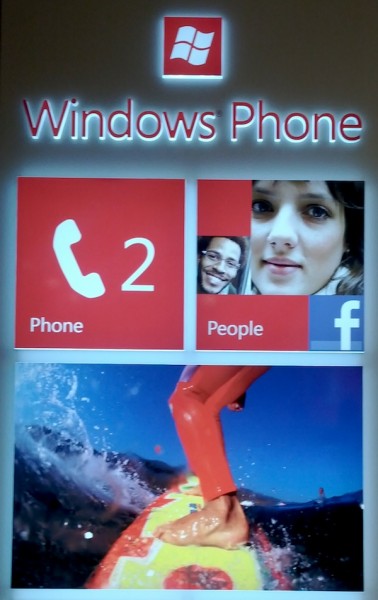
  • Why do you use Windows Phone?

    I am thinking about doing one of my weird experiments, by switching to Windows Phone for 30 days. This would be cold feet for me. I asked Microsoft for a loaner in December 2011 and was promised a device but never received one. So with the exception of scattered minutes inside the local Microsoft Store, I have little experience with the platform. That’s not right.

    This morning, I emailed the PR person who helped me more than a year ago, but the message bounced; perhaps she moved on to another job. Meantime, while figuring out whom to contact, I have a question for those of you using Windows Phone: Why? For others choosing (or switching to) something else: Why not? Your responses will be excellent start to this journey.

    My plan is to coordinate with Surface Pro, which resumes role as my primary PC. I will move from Android and share about that experience, also offering some how-to tips for anyone else looking to make similar move. I could review a device, but my priority is software, services, apps and the general Microsoft lifestyle user experience. I’ll migrate completely to Microsoft products and services during the 30 days, so the stories I write will be more expansive than just Windows Phone.

    Specifically to Windows Phone, I have several objectives:

    • See how well the platform lives up to the “glance-and-go” philosophy
    • Assess how satisfying is the overall user experience, especially NUI concepts
    • Experience firsthand the apps ecosystem and how it compares to Android and iOS
    • Determine how well Microsoft syncs apps, content and services across platforms and devices
    • Discover where Windows Phone fits as a digital lifestyle platform alternative to the big two

    I’m sure other things will come to mind as the experiment progresses, or if. I still need to obtain a device, whether loaner or purchased outright.

    Sadly, the tempting Lumia 920, which colleague Mihaita Bamburic raves about today, isn’t really an otpion. I just finished moving the entire family to T-Mobile from AT&T. So, lest I misunderstand, that means either Nokia 810 or HTC Windows Phone 8X.

    When I mentioned the idea of the 30-day switch in group chat today, Mihiata told me not to bother if using anything but the Lumia 920. He has experience with all the phones. Surely can get adequate apps, operating system and services experience, regardless of the handset. Right? You tell me, if using any of these devices and Windows Phone 8.

    Having been a huge Nokia fan in the past and seeing the apps and services the company brings to the platform, Lumia 810 appeals more to me. Granted, it’s kind of an ugly brick, but perhaps plain is great contrast that makes the colorful OS pop even more. If the 8X, I must admit that red really appeals.

    For now, I debate about which phone and must obtain one, of course. I’d like your advice for which one and reasons why (or why not) you use Windows Phone. Please answer in comments.

    Photo Credit: Joe Wilcox

  • QWERTY out, KALQ in: the new fast keyboard for touchscreens

    A re-imagined touchscreen keyboard layout promises to speed up typing on tablets. The split keyboard, known as KALQ, features two 4×4 grids of keys that were generated to produce optimal thumb typing, up to 34 percent faster than typing with QWERTY, according to new research. The new layout will be available as a free Android app in May.

    Research into optimal keyboard layouts is as old as QWERTY itself, a legacy inherited from 19th century typewriters. Thumb typing with QWERTY is notoriously inefficient on touchscreen tablets and phones. Starting from the basics — how a touchscreen device is held in one’s hands — an international team of researchers drew on user behavioral data and computational models to develop the new layout. The lead investigator, Antti Oulasvirta of the Max Planck Institute for Informatics, will officially unveil this research at CHI2013 on May 1.

    Theoretically, the model predicts that users should be able to reach 49 words per minute with KALQ, and because the study’s subjects were non-native English speakers, typing speed could conceivably be even better in natives. KALQ was designed so the most commonly used letters are clustered, which means the travel distances are short and both hands work roughly equally and alternately. Most of the vowels are positioned near the space bar and are handled by the right thumb, while the left thumb takes care of most of the consonants and most of the first letters of words. For lefties, the orientation can be reversed, and the key size can even be scaled for different hand sizes.

    KALQ keyboard layout

    For KALQ to work, tablets should ideally be gripped horizontally, with the corners cradled in the valley at the base of the thumbs. On a 7-inch tablet (the researchers used the Samsung Galaxy Tab), test subjects had the fastest movements times and best thumb mobility with this configuration, though the grip gave them access to less tablet surface area overall.

    Based on this tablet gripping strategy, the researchers used computational techniques to determine the optimal key assignments. Their model of thumb movements was trained on millions of English-language tweets that originated from mobile devices. The end result, KALQ, minimizes movement times, and worked even better when users were trained to move their thumbs simultaneously and anticipate moves by hovering the thumb over the next letter.

    Novice tablet users reached typing speeds that eclipsed those achievable with QWERTY after about 10 hours of training, and continued to improve, reaching 37 words per minute. This is the fastest thumb typing speed ever reported, according to Oulasvirta and colleagues, and is 19 percent faster than typing speeds found in previous studies. The end result represents a 34 percent improvement over baseline QWERTY performance in this study’s subjects.

    Related research and analysis from GigaOM Pro:
    Subscriber content. Sign up for a free trial.


  • Even if Path goes astray, the company has already blazed a trail in mobile design

    We’ve expressed some skepticism about Path’s potential reach as a social media network, at least in proportion to the amount of hype and funding that Dave Morin’s startup has gathered over the years.

    However, even if Path doesn’t make it as a long-lasting social network, it’s hard to ignore the influence the company has already had on mobile app design recently. Some of these concepts, like launching a full-featured messaging app, aren’t totally groundbreaking, but it’s remarkable how many features (like thematic search or large emojis), we’ve seen come to Path first and then show up on more mainstream apps like Facebook with features like Graph Search after the fact.

    Want to see which design features came to Path before the others? Take a look at just a few:

    One of the most distinctive design features on Path is the launcher button that brings up the navigation bar from the bottom left of the screen, with a series of options coming out of the primary button in a semicircle.

    Last month, Tumblr announced a new version for its mobile edition on Android, and the new navigation looks remarkably similar to the Path launcher:

    Path launcher bar imagetumblr launcher image path

    Stickers

    One major feature in Path’s most recent release revolved around the addition of stickers, or large chat emojis that let users communicate through pictures.

    While there’s nothing new about emojis (they’ve already become huge in Asia before they gained adoption in the U.S.), the distinctive size of the Path stickers looked remarkably similar to the stickers Facebook just launched last week:

    Path emojis messaging anonymousfacebook stickers design emoji

    Chat heads

    Before Facebook called them Chat Heads, Path already had bubble heads that popped up for individuals. Path launched a full-featured messaging component in the company’s last release, allowing you to drop your current location, insert audio clips, and share photos. Facebook’s new messaging updates look similar too:

    Path 3.0 messaging bi-ritefacebook messaging screenshot

    Related research and analysis from GigaOM Pro:
    Subscriber content. Sign up for a free trial.


  • Still no Galaxy S4 launch date from Verizon, but sign up page is now live

    Still no Galaxy S4 launch date from Verizon, but sign up page is now live
    While AT&T, Sprint and T-Mobile subscribers gear up for the Galaxy S4 debut later this week, Verizon Wireless is still nowhere to be found. Customers on the three aforementioned carriers will all be able to buy Samsung’s latest and greatest beginning this week, but the nation’s top wireless carrier has yet to announce any news as far as when its customers might be able to purchase the Galaxy S4. In fact, Verizon hasn’t even shared any launch details for the HTC One either, and it’s already available from other U.S. carriers and in other markets around the world. Despite the troubling trend, Verizon customers can at least sign up on Verizon’s website now to be notified as soon as more info becomes available regarding when the Samsung Galaxy S4 might launch.

  • Netflix CEO: password sharing is not a big deal

    Netflix CEO Reed Hastings isn’t all too worried about people sharing their passwords with strangers. “We really don’t think that there is much going on of the ‘I’m going to share my password with a marginal acquaintance,’” Hastings said during the company’s Q1 2013 earnings call.

    Hastings was asked about password sharing after Wedbush Securities analyst Michael Pachter had estimated in a Bloomberg story from Monday that as many as 10 million people may be watching Netflix without paying, suggesting that the company may start to crack down on the practice.

    Hastings said that sharing passwords with extended family members is “not what we would consider appropriate,” but he added that most of the account sharing would happen within the immediate family — something that Netflix wants to make easier with the introduction of both personalized profiles as well as a more expensive family plan.

    Personalized profiles that will allow family members to maintain separate queues and get more personal recommendations will launch internationally within the coming months, the company announced Monday. Netflix has been testing these personalized profiles since the beginning of the year, and Hastings said Monday that the response has been positive. “The key use case is between kids and parents,” he explained, adding that parents have told the company in the past that their experience is suboptimal.

    The company also announced Monday that it will launch a new $12 a month family plan that will allow users to stream up to four devices at a time, as opposed to the current two-device streaming limit. However, the company doesn’t expect a huge response to this offering, with Hastings saying Monday that he expect fewer than one percent of subscribers to jump on the offering.

    Related research and analysis from GigaOM Pro:
    Subscriber content. Sign up for a free trial.


  • Celebrate National Park Week!

    Saturday, April 20th was the first day of National Park Week – an annual tradition celebrating, enjoying and giving back to our country’s great natural and cultural landscapes. For the next five days, parks across the country will waive their entrance fees to provide free access to thousands of miles of trails and coastlines, as well as battlefields, archeological sites and waterways. With spring now in full swing, National Park Week is a great opportunity to dust off your bicycle or sneakers, grab some healthy snacks and a water bottle and get moving outside.

    You don’t have to be an outdoor expert or live near an iconic park to enjoy the broad network of national parks across the country. Some of the most treasured and well-used parks are located in and around America’s major cities, including San Francisco, New York City, Los Angeles, Chicago, St. Louis, Miami, San Antonio, Baltimore – and right here in Washington, D.C.

    If you don’t have a national park in your city or town, chances are the National Park Service has played a role in increasing access to outdoor recreational opportunities in your community. Through the Land & Water Conservation Fund, the National Park Service has funded recreational facilities, such as playgrounds and trails, in 99 percent of counties across America.

    read more

  • Tiger Global Leads $60 Mln Round for Eventbrite

    Eventbrite said Monday that it raised $60 million in financing led by Tiger Global Management. T. Rowe Price also took part, a statement says. San Francisco-based Eventbrite, an online ticketing company, has raised $140 million in funding. Other investors include Sequoia Capital, DAG, and Tenaya.

    PRESS RELEASE

    Eventbrite, the leading self-service ticketing company, today announced it has raised $60 million in financing, led by Tiger Global Management, and including a new investment partner, T. Rowe Price. After this round, the company’s total funding is $140 million.
    The additional capital will be used to continue innovating, building and changing the landscape of ticketing. This includes accelerating international growth, mobile, event discovery and innovation, as well as attracting and retaining top talent.
    This investment news crowns a year of rapid growth. Last month, Eventbrite announced that it had processed over 100 million tickets across 179 countries, totaling more than $1.5 billion in gross ticket sales. One-third of those ticket sales had occurred within the previous 9 months. The company also announced in March that it had doubled the total number of tickets processed — to 100 million — since February 2012. These milestones confirm the large, underpenetrated and global market for ticketing as well as the universal need for an easy-to-use and scalable platform for event organizers and consumers alike.
    “Live experiences are the new luxury good — from large festivals and concerts to conferences and political rallies, people are increasingly looking to share live experiences with people of similar interests and passions. We’re pleased to be able to work with existing as well as new investors who truly understand the opportunities that these kind of occasions represent, as well as the power of the platform we have built to make them happen,” said Kevin Hartz, CEO of Eventbrite. “This funding round is the most efficient way to scale our business around the world, while remaining totally focused on our users.”
    “Eventbrite remains a superb investment,” said Lee Fixel, Partner at Tiger Global. “Kevin and his team have built a sustainable business that not only captures real value, but also uncovers new sources of revenue at very low cost. We are pleased to increase our investment in Eventbrite to help the company further expand its tools and platform.”
    Henry Ellenbogen, Portfolio Manager at T. Rowe Price Associates, Inc., added: “We believe Eventbrite has a strong underlying financial model that will continue to scale, and its valuation will be well supported by traditional financial metrics in the future. When we look at private companies, we look for companies that possess the capabilities and mindset to build a much larger and durable company. We believe that the Eventbrite team has the track record and skills to achieve that status.”
    In addition to Tiger Global and accounts managed by T. Rowe Price, other Eventbrite investors include Sequoia Capital, DAG, and Tenaya.
    About Eventbrite:
    Eventbrite enables people all over the world to plan, promote, and sell out any event, and has sold over 100 million tickets and registrations worldwide. The online event registration service makes it easy for everyone to discover events, and to share the events they are attending with the people they know. In this way, Eventbrite brings communities together by encouraging people to connect through live experiences. Eventbrite’s investors include Tiger Global, Sequoia Capital, DAG Ventures, and Tenaya Capital. Learn more at www.eventbrite.com.
    About Tiger Global Management, LLC
    Tiger Global Management, LLC is an investment firm that deploys capital globally through its private investment and hedge fund partnerships. The firm’s private investment funds have ten-year investment horizons and focus on growth-oriented private companies in the global Internet and technology sectors. Tiger Global’s private investments include SurveyMonkey, Facebook, Linkedin, Square, Yandex, Mail.ru Group, Ctrip, New Oriental, 360buy, Flipkart, Makemytrip, Justdial, Netshoes, Despegar, MercadoLibre, Trendyol, and Eventbrite. The firm’s fundamentally oriented hedge funds invest primarily in public equities with an emphasis on long-term trends in the global technology, telecom, media, and consumer sectors. Tiger Global Management, LLC was founded in 2001 and is based in New York with affiliate offices in Beijing and Singapore.
    About T. Rowe Price
    Founded in 1937, Baltimore-based T. Rowe Price Associates, Inc. (troweprice.com) is part of a global investment management organization with $576.8 billion in assets under management as of December 31, 2012. The organization provides a broad array of mutual funds, sub-advisory services, and separate account management for individual and institutional investors, retirement plans, and financial intermediaries.

    The post Tiger Global Leads $60 Mln Round for Eventbrite appeared first on peHUB.

  • Atlas Venture Leads $7.5 Mln Round for Gizmox

    Gizmox said Monday it closed a $7.5 million round of financing led by Atlas Venture with participation from existing investors Citrix, IVC, Consolidated Investment Group, and others. Gizmox also named Eugene Kuznetsov as ITS CEO.

    PRESS RELEASE

    Gizmox, a leader in enterprise-class HTML5 for new and existing business applications, has closed a $7.5M round of financing and named a new CEO to accelerate its sales and marketing efforts. The round was led by Atlas Venture with participation from existing investors Citrix, IVC, Consolidated Investment Group, and others. Jeff Fagnan and Christopher Lynch of Atlas Venture will join the Gizmox Board of Directors. The funds will be used to build and staff the company’s headquarters in Boston.

    “There is an enormous platform shift of mission-critical business applications from traditional Microsoft client-server to mobile, web and HTML5. While this is well understood and underway for horizontal or consumer applications, the problem for complex business applications is still largely unsolved. Gizmox has a unique solution informed by years of technology development and many successful customer deployments, to facilitate this shift,” said Jeff Fagnan, Partner, Atlas Venture.

    Gizmox provides an enterprise-class HTML5 platform for building rich UI business applications. Its two components are VisualWebGUI, a widely adopted web and mobile HTML5 framework for enterprise apps, and InstantCloudMove, which easily migrates from client-server to pure HTML5 and the cloud. Gizmox is the enterprise HTML5 platform for native-quality user interfaces. Differentiated from consumer-grade technology, Gizmox software was built from the start to provide the security, management and rich functionality required for mission-critical business applications.

    Chris Lynch, Partner at Atlas Venture, added “Atlas Venture has led this investment in Gizmox to take advantage of the multi-billion dollar opportunity in enabling the transition to mobile HTML5 with the industry’s leading solution. With Eugene at the helm, having previously driven the shift to XML-based applications in the enterprise, we are thrilled to be part of this team.”

    More than 50% of all enterprise applications, in most cases the core critical mission ones, are still client server, representing over 55 Billion lines of code.

    In conjunction with the financing, Gizmox has named Eugene Kuznetsov as CEO. Kuznetsov was founder and President of DataPower, a SOA appliance company acquired by IBM, an IBM executive, and more recently co-founder and CEO of Abine, the leading online privacy company. Atlas Venture was an investor in DataPower and is the founding investor of Abine.

    Michael F. O’Connor, Consolidated Investment Group, said “As demonstrated by its success with major customers, Gizmox’s technology is unique in the rapidly-growing enterprise mobile market. We are excited to participate in this financing to support the next stage of Gizmox’s growth.”

    Guy Rosen, Maayan Ventures Chairman, said,”We are happy to complete this significant investment round in Gizmox, which has been led by an experienced VC such as Atlas Venture, with the participation of Gizmox’s existing shareholders. This round marks a great milestone for the company in materializing its vast technological and economic potential.”

    About Gizmox
    Gizmox is leading the transformation to enterprise-class HTML5 business applications. For more information visit www.gizmox.com.

    The post Atlas Venture Leads $7.5 Mln Round for Gizmox appeared first on peHUB.

  • Greycroft Leads Financing Round for Skimlinks

    Skimlinks has closed a growth financing round led by Greycroft Partners. Existing investors also participated in the round. Financial terms were not announced. London-based Skimlinks calls itself a content monetization platform that rewards publishers for the role their content plays in creating purchase intent.

    PRESS RELEASE

    Skimlinks, the leader in native monetization, announced today it has completed a growth financing round led by Greycroft Partners. Skimlinks will use the capital to further develop its revolutionary suite of content monetization solutions, and continue its geographic expansion across the U.S., Asia, and Europe.

    New York-based Greycroft Partners is the VC behind other ad tech and online publishing startups such as Buddy Media, Collective, Klout, Huffington Post, and many more. Also joining the round are Japan-based angel investors, Hiro Maeda and Ryota Matsuzaki , as well as Forum Foundry, a Texas-based network of blog and forum communities. Existing investors also participated in the round. Ian Sigalow , Co-Founder and Partner at Greycroft Partners, will join the Skimlinks Board of Directors as an Observer.
    “Hyperlinks are the core building block of the Internet and they exist on virtually every web page,” said Sigalow. “Skimlinks pioneered the concept of optimizing hyperlinks to create more revenue for publishers, and today the company is a leading Internet utility. This year, Skimlinks will be responsible for over $500 million of e-commerce sales globally. They are the most effective way for publishers to link content to commerce.”
    Skimlinks generates revenues of seven-figures every month from its network of 140,000 active publishers, which has been growing 100-200% year-over-year for four consecutive years. Skimlinks processes 300 million clicks per month, resulting in a retailer transaction every four seconds. The company is planning to build upon the rich data it collects to help publishers earn even more revenues from the purchase intent generated by their content.
    “Publishers and merchants alike are excited by the potential of native monetization, but it can be challenging to scale such solutions. Skimlinks is a scalable monetization solution that is inherently native, as it monetizes product links and product references seamlessly, with industry-leading accuracy and yield optimization,” said Skimlinks CEO and Co-founder, Alicia Navarro . “Our goal is to help every type of publisher, on every device, in every geography to monetize their commerce-related content without affecting the user experience. By bringing on Greycroft, we can tap their vast industry knowledge and contacts to further cement our position as the leaders in content monetization.”
    Headquartered in London, Skimlinks has 55 employees with additional offices in San Francisco and New York. The company will expand operations to Asia this year.
    Skimlinks was advised by Orrick, Herrington & Sutcliffe.
    About Skimlinks: Founded in 2007, Skimlinks is the leading content monetization platform that rewards publishers for the role their content plays in creating purchase intent. Skimlinks processes 300 million clicks a month on over 140,000 sites around the web, including Conde Nast , Gawker, AOL Europe, WordPress, Hearst Digital, Haymarket Consumer Media, Telegraph Media Group, and many more. Skimlinks is a team of 55 with offices in London, San Francisco, and New York. Sign up to be a publisher here.
    About Greycroft Partners: Greycroft Partners is a leading early stage venture capital firm focused on investments in digital media. With offices in the two media capitals of the world – New York and Los Angeles – Greycroft is uniquely positioned to serve entrepreneurs who have chosen us as their partners. Greycroft leverages an extensive network of media and technology industry connections to help entrepreneurs gain visibility, build strategic relationships, successfully bring their products to market, and build successful businesses. Greycroft manages $400MM and has made over 75 investments in leading companies including Babble, Buddy Media, Collective, Huffington Post, Klout, M5 Networks, Maker Studios, Paid Content, Pulse, and Trunk Club. For more information please visit the Greycroft Partners website at www.greycroft.com.

    The post Greycroft Leads Financing Round for Skimlinks appeared first on peHUB.

  • FTV Capital Leads $38 Mln Investment in MarketShare

    MarketShare said Monday it received a $38 million investment led by FTV Capital. Elevation Partners and other investors also joined in the deal. Los Angeles-based MarketShares is an analytics company.

    PRESS RELEASE

    MarketShare, the industry’s leading cross-media predictive analytics firm, today announced an investment led by growth equity firm FTV Capital and joined by existing investor Elevation Partners and other investors. The financing will be used to further enhance the company’s state-of-the-art technology platform as well as to accelerate growth in markets worldwide.
    Privately held MarketShare helps CMOs of Global 1000 companies, including many of the world’s most recognizable brands, tangibly improve marketing performance. The company has an unparalleled suite of software tools and solutions deploying its AOA Analytics™ (Attribution > Optimization > Allocation), unique in its ability to effectively evaluate all forms of marketing and sales investments, including paid media (i.e., TV, print, display, search, video, and social media, trade funds), owned media (i.e., website traffic), and earned media (i.e., word-of- mouth, social media, and PR), as described in a recent feature article in Harvard Business Review (March, 2013).
    MarketShare’s co-CEOs, Wes Nichols and Jon Vein , said, “Our new partners will bring a wealth of experience and wisdom to MarketShare so we, in turn, can bring richer insights and better decision-making to our clients and to the marketing community at large.” MarketShare’s COO Ivan Markman concluded, “We are confident our new partners will bring critical strategic value to fuel our continued investments in technological innovation, global expansion and acquisitions.”
    “As part of a successful, long-term theme, FTV continues to look for innovative, high growth companies at the cutting edge of analytics and digital marketing,” stated Eric Byunn , FTV Capital partner and new MarketShare board member. “We are highly enthusiastic about the advanced analytics capabilities MarketShare’s platform delivers. Enterprises in the FTV Global Partner Network, including some of the largest US financial institutions, have validated that MarketShare has built an essential navigation solution for CMOs.”
    Ted Meisel , Senior Advisor at Elevation Partners, former CEO of Overture Services and President of Search Marketing at Yahoo! said, “We invested in MarketShare five years ago with the goal of combining the world’s most sophisticated marketing models, cloud-based technology, and easier-to-use product interfaces.” Adam Hopkins , Managing Director at Elevation Partners, added, “We increased our investment because we think the team has nailed it, enabling marketing to be accountable for business results and manifesting itself in the form of rapid growth at the company.”
    Terence Kawaja and Brian Andersen of LUMA Partners served as advisors on the transaction.
    About MarketShare
    MarketShare is an analytics company that enables businesses to grow efficiently by uncovering which actions really drive results. Founded in 2005, MarketShare has a track record of ground-breaking innovations in data, modeling and software and has worked with over half of the Fortune 50. MarketShare’s platform provides a combination of technology, data, modeling and business intelligence solutions that lead to improved decision-making, next- generation attribution and optimization for businesses. The company is headquartered in Los Angeles, with offices in San Francisco, New York, London, Tokyo and Bangalore. For more information, please go to: http://www.marketshare.com; follow us on twitter @MarketShareCo
    About FTV Capital
    FTV Capital is a growth equity firm with over $1 billion under management that invests in high-growth companies offering a range of innovative solutions in four sectors: business services, financial services, payments/transaction processing, and technology. FTV’s experienced team leverages its domain expertise and proven track record in each of these sectors to help motivated management teams accelerate growth. FTV also provides companies with access to its Global Partner Network, a group of the world’s leading enterprises and executives who have helped FTV portfolio companies for more than a decade. Founded in 1998, FTV Capital has invested in 79 portfolio companies across four funds, and has offices in San Francisco and New York. For more information, visit www.ftvcapital.com.
    About Elevation Partners
    Elevation Partners is a $1.9 billion private equity firm that makes large-scale investments in market-leading media, entertainment, and consumer-related businesses where it can partner with management to enhance growth and profitability through a combination of strategic capital and operational insight. Its investment team has a unique combination of media, entertainment, and technology expertise and relationships; investing experience; and operating knowledge. For more information, please visit http://www.elevation.com.

    The post FTV Capital Leads $38 Mln Investment in MarketShare appeared first on peHUB.

  • Raising your hand is so passé: Pearson buys real-time student feedback and polling startup

    Pearson  – the big kahuna of ed tech — has snapped up another startup. The company on Monday said it had purchased Learning Catalytics, a company founded at Harvard University by a trio of academics.

    Like services from Top Hat Monocle, Socrative and other student response systems, Learning Catalytics turns students’ laptops, smartphones and iPads into classroom engagement tools. K-12 teachers and college professors can use Learning Catalytics to ask students questions during class and gauge their mastery of the material.

    But Paul Corey, Pearson’s higher education president of science, business and technology, said a few key features distinguish Learning Catalytics: it enables teachers to ask all kinds of questions (not just multiple choice) and it gives teachers a quick graphical display of student responses.

    Also, it doesn’t just turn students’ otherwise distracting devices into productive tools, it can promote more offline interaction between students. For example, if an instructor asks students to plot an equation, it can immediately determine who got it right and wrong and then pair up students based on their mastery.

    “As things get more digital, how can [we] take advantage of physical proximity?” asked Corey. “This is a very powerful way to engage students effectively in the classroom.”

    Earlier this year, Pearson announced a partnership with Top Hat Monocle, including a discounted subscription to Top Hat Monocle with the purchase of Pearson products. Even though the company now owns similar technology, Corey said they plan to continue its deal.

    Pearson declined to share the financial details of its acquisition. But Corey said that while co-founders Gary King and Eric Mazur, both of whom are Harvard professors, will work with Pearson as consultants, co-founder Brian Lukoff will join the company full-time to continue building out Learning Catalytics.

    Related research and analysis from GigaOM Pro:
    Subscriber content. Sign up for a free trial.


  • Google Now may be coming to Google’s homepage

    Google Now may be coming to the Google homepage
    Google’s award-winning intelligent personal assistant Google Now may be heading to the company’s homepage. The unofficial Google Operating System blog recently discovered the new feature mentioned in a series of code. Google Now is currently only available on Android smartphones and tablets running version 4.1 or later, and is rumored to be heading to iOS and Chrome in the near future. Adding Google Now to the company’s homepage will allow the feature to be utilized by billions of people worldwide. The source code suggests that Google Now on the Web will share the same features as on Android, allowing individuals to set a home and work location to show relevant information like weather, traffic conditions and nearby locations. Google could debut the new version of Google Now at its annual I/O Developers Conference on May 15th.