Category: News

  • How HBase converted MySpace’s MySQL champion and is driving Hadoop mainstream

    How’s this for an understatement: Operational databases are important for many, if not the majority, of web applications. And if you’re doing big business on the web, finding one that can scale with your data volumes and still perform like you need it to is critical. MapReduce for batch data processing and analysis? Not so much, actually.

    That’s why as Hadoop keeps thundering toward its destination as the de facto data platform for next-generation applications, companies such as Cloudera and Hortonworks that are making a killing off it might want to stop and thank the guys from Powerset for building HBase. Because the database — a columnar Google BigTable clone that runs on top of the Hadoop Distributed File System — is so fast and scalable, it’s helping Hadoop find a home in companies and with applications that HDFS and MapReduce alone might not have been able to penetrate so easily.

    The latest HBase user I’ve come across is Gravity, the interest graph company that powers content recommendations for some of the biggest publishers on the web.

    From big MySQL at MySpace to big data with HBase

    Its co-founders were all senior executives at MySpace, including Gravity CTO Jim Benedetto, who was SVP of technology for the social networking pioneer. He was actually MySpace’s first architect and helped build platform’s MySQL database. Although MySpace never reached Facebook’s scale, it did have 150 millions users at its peak, all able to store unlimited numbers of wall posts, messages and photos. Benedetto eventually oversaw a 600-instance cluster that required about 30 database adminstrators to keep it up and running.

    Structure Data 2012: Jim Benedetto – CTO, Gravity Ashlie Beringer – Partner, Gibson, Dunn & Crutcher

    Benedetto (center) at Structure: Data 2012. (c) Pinar Ozger

    So naturally, when it came time to build out the Gravity architecture, Benedetto opted for the MySQL he knew so well. Until about three years ago, he told me recently, that database held about 95 percent of the company’s data. At some point, though, Benedetto and his team realized they were spending way too much time keeping their MySQL environment up insteading of building new things, so it was time for a change.

    It ultimately opted for HBase, but the decision wasn’t easy. “For us,” Benedetto said, “our data and algorithms are our company,” so making the move from a relational database to a column-based database that can serve MapReduce jobs was nerve-racking. After all, he explained, “You never want to migrate your data … and if you have to, you never want to migrate it more than once.” In fact, he added, “you’re not going back.”

    But Benedetto says the move to HBase as Gravity’s primary data store has been “life-saving,” and it’s arguably a more important component of the company’s infrastructure than is Hadoop MapReduce. HBase handles the company’s real-time recommendation algorithms, and it does it across the entire Gravity platform rather than on a site-by-site basis. And although it’s not banking-grade when it comes to the consistency of transactions, Benedetto says it’s about 99.95 percent consistent in real time. Later on, batch MapReduce jobs swoop in and pick up whatever HBase dropped earlier, and process it all against the company’s graph algorithms.

    interest graph

    An example of an interest graph from Gravity,

    Scalable for sure, and getting easier to use

    And although it took some serious engineering effort to get HBase operational when Gravity began working with it three years ago, Benedetto thinks HBase is getting to the point (as is rival NoSQL database Cassandra, he acknowledged) where one could safely call it “enterprise-ready.” Right now, he noted, “You’re not gonna to see HBase in a company that just buys Oracle because Oracle is the name and Oracle has been around for 20 years,” but for web startups that hope to reach a certain scale and even for existing companies that are running into the MySQL wall, he sees a shift occurring.

    “The web farm is the easiest part of your infrastructure to scale because all it does is cost more money,” Benedetto explained. Databases, on the other hand, require a lot of thinking about how to migrate data, shard the database and otherwise make a piece of software likely designed for a handful of servers, max, spread across dozens or hundreds. HBase really eases the scaling process, as well as the subsequent management, he said. Now, Gravity’s 100-node HBase cluster has only two operations engineers dedicated to it.

    Indeed, there are startups trying to capitalize on HBase by using it to power SQL and even MongoDB-compliant databases that can scale beyond what most relational databases can do.

    Aside from scale HBase might soon start catching on because of the work companies like Gravity have been doing to make it more user-friendly. It might scale easily, but, as Benedetto noted, it’s not always easy to get started with — especially without some deep understanding of the intricacies of the underlying HDFS infrastructure. Last year, eBay VP of Experience, Search and Platforms Hugh Williams told me that although HBase is one of the big data tools the company is most excited about, it’s also the area where he’d like to see the most improvement.

    To help alleviate some of the learning curve, Gravity has developed an open-source tool called HPaste that lets developers access data and run jobs on HBase data using Scala rather than the more-bloated Java programming language on which Hadoop and HBase are built. One of the biggest benefits of HPaste, Benedetto said, is that it lets new HBase developers see the data in a way that makes sense to them: HBase stores everything in byte arrays, he explained, and “when a human tries to read a byte array, it looks like ancient hieroglyphics.”

    Kiji architecture

    The Kiji architecture

    Elsewhere, a startup called Wibidata has created an open-source framework called Kiji that aims to provide a collection of high-level APIs that should make it easier to store different data types in and develop applications on HBase. The company envisions Kiji being to HBase what the Spring Framework has become to Java over the course of the past decade.

    Hadoop’s weapon for the mainstream?

    But user experience aside, a lot of companies already invested in Hadoop — aside from expert users such as Facebook — are starting to see the promise of HBase and are incorporating it into their architectures.

    Wibidata co-founder Christophe Bisciglia, who also co-founded Hadoop pioneer Cloudera in 2008, gave me his take on the state of HBase while discussing its role in the future of Hadoop earlier this year. ”If you talk to anyone from Cloudera or any of the platform vendors, I think they will tell you that a large percentage of their customers use HBase. It’s something that I only expect to see increasing,”  he explained. “… HBase is gonna be what takes Hadoop from an ETL and BI platform into a real-time application platform.”

    The Cloudera Hadoop stack (Gravityu uses Cloudera's distro).

    The Cloudera Hadoop stack (Gravity uses Cloudera’s distro).

    Benedetto appears to agree. He considers Hadoop as a whole incredibly important, almost on par with what Amazon Web Services did for computing resources, because it lets startups use commercial-grade open source software to do data storage and processing that previously was only available to massive web companies. “More and more … the shining star in that suite is HBase,” he said. “If I were Oracle, I’d be scared.”

    Related research and analysis from GigaOM Pro:
    Subscriber content. Sign up for a free trial.


  • Method makes it easier to separate useful stem cells from ‘problem’ ones for therapies

    Pluripotent stem cells can turn, or differentiate, into any cell type in the body, such as nerve, muscle or bone, but inevitably some of these stem cells fail to differentiate and end up mixed in with their newly differentiated daughter cells. 
     
    Because these remaining pluripotent stem cells can subsequently develop into unintended cell types — bone cells among blood, for instance — or form tumors known as teratomas, identifying and separating them from their differentiated progeny is of utmost importance in keeping stem cell–based therapeutics safe.
     
    Now, UCLA scientists have discovered a new agent that may be useful in strategies to remove these cells. Their research was published online April 15 in the journal Developmental Cell and will appear in an upcoming print edition of the journal.
     
    The study was led by Carla Koehler, a professor of chemistry and biochemistry at UCLA, and Dr. Michael Teitell, a UCLA professor of pathology and pediatrics. Both are members of the Eli and Edythe Broad Center for Regenerative Medicine and Stem Cell Research at UCLA and UCLA’s Jonsson Comprehensive Cancer Center.
     
    In work using the single-celled microorganism known as baker’s yeast, or Saccharomyces cerevisiae, as a model system, Koehler, Teitell and their colleagues had discovered a molecule called MitoBloCK-6, which inhibits the assembly of cells’ mitochondria — the energy-producing “power plants” that drive most cell functions. The research team then tested the molecule in a more complex model organism, the zebrafish, and demonstrated that MitoBloCK-6 blocked cardiac development. 
     
    However, when the scientists introduced MitoBloCK-6 to differentiated cell lines, which are typically cultured in the lab, they found that the molecule had no effect at all. UCLA postdoctoral fellow Deepa Dabir tested the compound on many differentiated lines, but the results were always the same: The cells remained healthy. 
     
    “I was puzzled by this result, because we thought this pathway was essential for all cells, regardless of differentiation state,” Koehler said. 
     
    The team then decided to test MitoBloCK-6 on human pluripotent stem cells. Postdoctoral fellow Kiyoko Setoguchi showed that MitoBloCK-6 caused the pluripotent stem cells to die by triggering apoptosis, a process of programmed cell suicide.
     
    Because the tissue-specific daughter cells became resistant to death shortly after their differentiation, the destruction of the pluripotent stem cells left a population of only the differentiated cells. Why this happens is still unclear, but the researchers said that this ability to separate the two cell populations could potentially reduce the risk of teratomas and other problems in regenerative medicine treatment strategies.
     
    “We discovered that pluripotent stem cell mitochondria undergo a change during differentiation into tissue-specific daughter cells, which could be the key to the survival of the differentiated cells when the samples are exposed to MitoBloCK-6,” Teitell said. “We are still investigating this process in mitochondria, but we now know that mitochondria have an important role in controlling pluripotent stem cell survival.”                        
     
    MitoBloCK-6 is what is known as a “small molecule,” which can easily cross cell membranes to reach mitochondria. This quality makes MitoBloCK-6 — or a derivative compound with similar properties — ideal for potential use as a drug, because it can function in many cell types and species and can alter the function of mitochondria in the body for therapeutic effects.
     
    “It is exciting that our research in the one-cell model baker’s yeast yielded an agent for investigating and controlling mitochondrial function in human pluripotent stem cells,” Koehler said. “This illustrates that mitochondrial function is highly conserved across organisms and confirms that focused studies in model systems provide insight into human stem-cell biology. When we started these experiments, we did not predict that we would be investigating and controlling mitochondrial function in pluripotent stem cells.”
     
    The research was supported by the California Institute for Regenerative Medicine, the National Institutes of Health, the United Mitochondrial Disease Foundation, and the Development and Promotion of Science and Technology Talents Project of the Royal Thai Government.
     
    The Eli and Edythe Broad Center of Regenerative Medicine and Stem Cell ResearchUCLA’s stem cell center was launched in 2005 with a UCLA commitment of $20 million over five years. A $20 million gift from the Eli and Edythe Broad Foundation in 2007 resulted in the renaming of the center. With more than 200 members, the Broad Stem Cell Research Center is committed to a multidisciplinary, integrated collaboration among scientific, academic and medical disciplines for the purpose of understanding adult and human embryonic stem cells. The center supports innovation, excellence and the highest ethical standards focused on stem cell research with the intent of facilitating basic scientific inquiry directed toward future clinical applications to treat disease. The center is a collaboration of the David Geffen School of Medicine at UCLA, UCLA’s Jonsson Cancer Center, the UCLA Henry Samueli School of Engineering and Applied Science and the UCLA College of Letters and Science.
     
    UCLA’s Jonsson Comprehensive Cancer Center has more than 240 researchers and clinicians engaged in disease research, prevention, detection, control, treatment and education. One of the nation’s largest comprehensive cancer centers, the Jonsson center is dedicated to promoting research and translating basic science into leading-edge clinical studies. In July 2012, the Jonsson Cancer Center was once again named among the nation’s top 10 cancer centers by U.S. News & World Report, a ranking it has held for 12 of the past 13 years.
    For more news, visit the UCLA Newsroom and follow us on Twitter.

  • Tundra Geeks Icon Shock Raffle

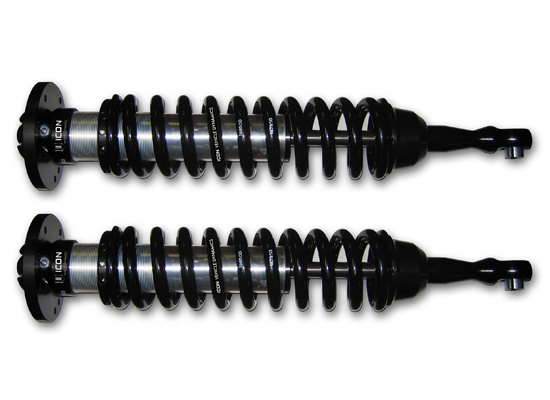
    Our friends over at TundraGeeks.com are running a new raffle for a really cool set of Icon shocks. This set includes the pieces to help you lift your 2000-2013, first and second generation Tundra owners. Head over there today and buy tickets for their raffle!

    Tundra Geeks Icon Shock Raffle

    Tundra Geeks is having a raffle for a set of Icon Shocks.

    They are also giving away prizes to 2nd and 3rd place winners. These prizes will be an Icon ball cap, tool bag and T-shirt Flag Pack.

    The post Tundra Geeks Icon Shock Raffle appeared first on Tundra Headquarters Blog.

  • Kik raises $19.5M to continue waging its messaging war

    Kik Interactive, the over-the-top communications startup that makes the popular Kik Messenger app, has raised a $19.5 million Series B funding round, led by new investor Foundation Capital, and added Foundation partner Anamitra Banerji to its board. Benarji was Twitter’s 30th employee and first product manager, so he knows a bit about building disruptive communications apps.

    Kik has been on a bit of a tear recently. After a year of inaction in the increasingly cutthroat market for OTT messaging apps, in November Kik launched a new update called Cards, which introduced HTML5-based mini-apps into its service and took advantage of its growing network of users. Since then Kik’s rate of growth has doubled from 100,000 to 200,000 new installs per day and its total customer base has grown from 30 million to 50 million registered users, the company said. Those customers have downloaded about 25 million of the card mini-apps, Kik said.

    Banerji said the added functionality evolves Kik from just another OTT text upstart to a social communications platform. “There are similarities between Kik and Twitter when it comes to growth, engagement and vision,” Banerji said in a statement.

    Based in Waterloo, Canada, the company is in a very crowded market where multiple dozens of competing messaging apps vie to lure consumers away from SMS into their private their networks. WhatsApp is the undisputed king of those apps, but there are numerous others, ranging from Pinger to Vibe to TextMe, all offering a slightly different set of communications features to distinguish themselves.

    Kik raised an $8 million round in 2011 from Union Square Ventures, RRE Ventures and Spark Capital. All three of those investors participated in its Series B.

    Related research and analysis from GigaOM Pro:
    Subscriber content. Sign up for a free trial.


  • 12 talks to watch this Earth Day

    EarthPlanet Earth doesn’t exactly have a birthday. But every year on April 22, we celebrate Earth Day — the anniversary of the moment the environmental movement went mass.

    According to EarthDay.org, Earth Day was founded in 1970 by U.S. Senator Gaylord Nelson, who called for a “national teach-in on the environment” after witnessing the terrible effects of the 1969 oil spill in Santa Barbara, California. The first Earth Day brought major actions to the streets of many major U.S. Cities. For fun, check out this vintage newscast from after that first Earth Day.

    Earth Day went global in 1990 and, today, is celebrated in an estimated 192 countries. Which makes today the perfect day to take time to appreciate the land, air, oceans and wildlife that sustain us — and to think about how our lives, both individually and as a group, affect the environment. To that end, here are 12 talks — some reflective, some terrifying, some beautiful, some galvanizing — to watch today.

    Al Gore: New thinking on the climate crisisAl Gore: New thinking on the climate crisis
    Al Gore: New thinking on the climate crisis
    Former vice president Al Gore flipped the way so many think about global warming in the documentary An Inconvenient Truth. Two years after the doc’s release, he returned to the TED stage with a new presentation … showing that the impact of climate change may be even worse than scientists had predicted.
    Louie Schwartzberg: Nature. Beauty. Gratitude.Louie Schwartzberg: Nature. Beauty. Gratitude.
    Louie Schwartzberg: Nature. Beauty. Gratitude.
    Louie Schwartzberg is a master of time-lapse photography, and his images of flowers dancing as they bloom will pierce your heart. In this talk from TEDxSF, he invites Benedictine monk David Steindl-Rast to lead a meditation on gratefulness for the beauty and bounty that surrounds us.
    Sylvia Earle's TED Prize wish to protect our oceansSylvia Earle's TED Prize wish to protect our oceans
    Sylvia Earle’s TED Prize wish to protect our oceans
    Ocean researcher Sylvia Earle knows that the waters of the deep contain amazing wonder. And yet, she worries that they are quickly becoming a “paradise lost.” Watch Earle accept the TED Prize at TED2009 and unveil Mission Blue, an initiative to protect our oceans. As she puts it, “No blue, no green. If you think the ocean isn’t important, imagine Earth without it. Mars comes to mind.”
    John Doerr sees salvation and profit in greentechJohn Doerr sees salvation and profit in greentech
    John Doerr sees salvation and profit in greentech
    Silicon Valley legend John Doerr had an ‘aha’ moment when his 15 year old daughter accused him and his generation of ruining the planet. In this talk from TED2007, he gives a personal, heartfelt call for investors to look at clean energy, and for big companies to make the little changes that will add up over time.
    Vicki Arroyo: Let's prepare for our new climateVicki Arroyo: Let's prepare for our new climate
    Vicki Arroyo: Let’s prepare for our new climate
    As our climate changes, many areas of the world — including major cities like New Orleans — are at risk of flooding and drought. In this talk from TEDGlobal 2012, Vivki Arroyo calls on use to prepare now, by sharing examples of cities that are planning ahead and implementing big projects that take these risks as a given.
    Karen Bass: Unseen footage, untamed natureKaren Bass: Unseen footage, untamed nature
    Karen Bass: Unseen footage, untamed nature
    Karen Bass shoots incredible wildlife footage for National Geographic and the BBC. In this talk from TED2012, she shares awe-inducing video — from the tube-lipped nectar bat feeding on a flower to grizzly bears emerging from hibernation.
    James Hansen: Why I must speak out about climate changeJames Hansen: Why I must speak out about climate change
    James Hansen: Why I must speak out about climate change
    Scientist James Hansen saw it as his moral imperative to speak out about the rapidly changing planet he saw in his work. In this talk from TED2012, Hansen explains why global warming is happening (“Adding CO2 to the air is like throwing another blanket on the bed”) and calls on us to start reversing it.
    Capt. Charles Moore on the seas of plasticCapt. Charles Moore on the seas of plastic
    Capt. Charles Moore on the seas of plastic
    We recycle a “diddly-point-squat” percentage of the plastics we use. The result — they end up in the oceans.  In this talk from TED2009, Captain Charles Moore shows us the Great Pacific Garbage Patch — an endless floating wasteland of plastic. His call to all of us: to stop our throwaway mentality and stop the plastic on land.
    David Keith's unusual climate change ideaDavid Keith's unusual climate change idea
    David Keith’s unusual climate change idea
    Environmental scientist David Keith bemoans the fact that we’ve been reading the same headlines about the environment since the 1950s, while achieving very little to change them. In this talk from TEDSalon 2007 Hot Science, he shares a bold idea: What if we released a huge cloud of ash into the atmosphere to deflect sunlight and heat?
    Cesar Harada: A novel idea for cleaning up oil spillsCesar Harada: A novel idea for cleaning up oil spills
    Cesar Harada: A novel idea for cleaning up oil spills
    When TED Senior Fellow Cesar Harada heard about the BP Oil Spill in the Gulf of Mexico, he quit his job and set about designing an efficient way to soak up oil. At the TEDxSummit, he shares his creation — a highly-manueverable boat that is capable of cleaning large tracts of oil quickly.
    Alex Steffen: The route to a sustainable futureAlex Steffen: The route to a sustainable future
    Alex Steffen: The route to a sustainable future
    If people across the globe had the ecological footprint of those in the United States, we’d need 5 to 7 planets to sustain it all, says Alex Steffen at TEDGlobal 2005. But of course, we only get one. Here, he asks us to actively reduce our footprint, especially as the consumer lifestyle spreads across the globe.
    James Balog: Time-lapse proof of extreme ice lossJames Balog: Time-lapse proof of extreme ice loss
    James Balog: Time-lapse proof of extreme ice loss
    Thanks to photographer James Balog’s Extreme Ice Survey, we can actually see glaciers recede before our eyes — the process of several years condensed into a few seconds.  In this talk from TEDGlobal 2009, Balog shares how he brings together art and science to deepen all our understanding of how quickly ice is disappearing. (See also: Camille Seaman’s haunting photos of polar ice.)

  • Data Center People: Geoghegan Rejoins Digital Realty

    Here’s our review of noteworthy links for the data center industry for April 22nd:

    Digital Realty Appoints Bernard Geoghegan Managing Director, EMEA – Bernard Geoghegan has rejoined Digital Realty Trust as managing director, EMEA. Geoghegan will be responsible for overseeing all Digital Realty’s operations in EMEA, which currently comprises of approximately 2.1 million rentable square feet. Geoghegan returns to Digital Realty from Colt, where he was executive vice president of the Data Centre Services division and was instrumental in developing its modular data centre offering. Prior to joining Colt, Geoghegan served as senior vice president of International Operations at Digital Realty from 2008 through 2010 after joining the Company in 2006 as vice president, Europe.

    Milldam Public Relations Appoints Adam Fairbanks – MilldamPR announced today that Adam Fairbanks has joined the firm as Executive Vice President, managing business development and client relations. In his role, Fairbanks will assist clients with nuanced messaging of technical products and services to media, end-users and product stakeholders, and will work with MilldamPR’s Director of Content on white papers and case studies. Fairbanks will also oversee MilldamPR’s continued expansion in the San Francisco Bay Area.

    NYI Names Mark Ward Director of Business Development – NYI, a specialty provider of colocation, dedicated servers, managed services and enterprise Cloud, has appointed Mark Ward Director of Business Development. Ward, a UK native, brings 9+ years of experience to the position as well as a global customer portfolio. Prior to NYI, Ward was Business Development Manager at Tata Communications. He has also been Business Development Manager at PacketExchange, a leading provider of private network services with Internet economics, and The Filter, a world-class recommendation platform with more than 100 million unique users, funded by Peter Gabriel and Eden Ventures.

    Virtus Data Centres Appoints New CEO – Virtus Data Centres has appointed Neil Cresswell as its Chief Executive Officer. Neil joins Virtus from Savvis (a leading global supplier of cloud and datacentre services) where he spent 6 years, latterly as Managing Director of the EMEA Region. Neil has more than 25 years of experience in the technology sector building successful, high growth, profitable businesses with a reputation for quality, innovation and customer service. He has worked across the UK, Europe, Asia and the U.S for companies such as Savvis, Attenda, BNP Paribas, IBM and Fiserv.

    FalconStor Names Robert Zecha Chief Product Officer – FalconStor Software (NASDAQ: FALC), a market leader in disk-based data protection, today announced that Robert Zecha has joined the company as executive vice president and chief product officer, a newly formed strategic position. In this role, Zecha will be responsible for all aspects of product development, product management, quality assurance and program management.

  • Public Open House Canceled at Cascades Volcano Observatory

    VANCOUVER, Wash. – The U.S. Geological Survey Cascades Volcano Observatory is cancelling its planned May 4th public open house due to to the federal budget sequestration.  

    USGS Cascades Volcano Observatory has hosted a public open house every few years at its offices on the east side of Vancouver since moving there in 2002, but with major budget cuts this year, cannot support “extracurricular” activities on top of the most critical work of studying, monitoring, and responding to volcanic eruptions in the Cascade Range and around the world.

    During past day-long open houses, USGS-CVO staff takes a break from regular research and monitoring duties and provide demonstrations of volcano monitoring equipment such as seismographs, specialized GPS units, and infrared sensors.  Staff members discuss results of recent local to global volcano research, eruption response, hazard maps, and ash and rock samples using a variety of visual aids. Volcano learning activities for children are a major attraction, as is the opportunity for the public to bring in rock samples for identification.

    CVO open houses are a rare opportunity for the public to meet one-on-one with the approximately 55 people who work at the observatory, and learn about the critical work done monitoring active volcanoes. The most recent public open house was in May, 2010.   About 1,200 people attended the event.

    The cancellation is being taken at a time when the USGS is making tough choices on how best to implement the mandatory budget cuts. The USGS has implemented a hiring freeze; eliminated or significantly reduced participation in all scientific conferences; cancelled all non-mandatory, non-mission critical training; directed a review of contracts and grants to determine which should be delayed, re-scoped, or terminated; and may have to furlough employees for an undetermined amount of time.

     The USGS will re-evaluate the future of USGS-CVO open houses as the budget allows. Please continue to check for updated information about Cascade volcanoes and future observatory events on the CVO website.

  • Google’s X Phone, Nexus 5 reportedly won’t debut at Google I/O

    Nexus 5, Motorola X Phone may not debut at Google I/O
    Google’s annual I/O Developers Conference is just around the corner and expectations are at an all-time high. In the past, the company has unveiled a number of flagship projects and devices at the event, such as Google Music, Google Now and the Nexus 7 tablet. Earlier rumors have suggested that, among other things, Google would announce a followup to its Nexus 4 smartphone and even the rumored Motorola X Phone at this year’s event, but a new report suggests this may not be the case.

    Continue reading…

  • AppShopper returns to iOS App Store with more Social approach

    Even before AppGratis was famously removed from the iOS App Store earlier this month, AppShopper, a similar app discovery service, had already been there: it was removed from the App Store late last year for similar reasons. It had been so long that I thought I would never see an updated version of the native AppShopper app back on my device again. But I was very happy to find out that AppShopper has recently returned to the iOS App Store with a completely new app titled AppShopper Social (free on iPhone).

    The team behind the app announced the news in a blog post on Sunday.

    AppShopper Settings

    AppShopper Social has a very familiar look and feel to it when compared to the original app. The app name has changed, which means I can continue to use the new app and the older version of App Shopper to find new apps to download. But the big difference in this version is that is no longer lists every app in the App Store in ranked order, which was too similar  to what Apple does with its own App Store lists.

    If you’re familiar with the old version of the app, what you’ll find missing from AppShopper Social are the What’s New and Top 200 lists. Thankfully the Wish List and My Apps lists are still present and are linked to my AppShopper.com account data. While I may not be able to use the new app to shop for apps that are trending toward the tops of the lists, I will at least be able to track all of the apps on my Wish List again.

    AppShopper Lists

    Another notable difference from the old app is a switch from a Popular list of apps to a new Stream list. The Stream, as AppShopper calls it, is a continuous list of app recommendations that have been made by the friends you have added to your friends list. Your friends list can be compiled by manually adding other users within the app. You can also enter your Twitter account credentials, which will let you add all of those you follow in Twitter that also have AppShopper accounts as friends. Attaching AppShopper to your Twitter account is currently not required, as I was able to add quite a few AppShopper friends to my list without linking my Twitter account directly.

    The current version will not allow you to drill down into your friends list of apps or wish lists directly.  It would be nice to see the apps my friends also want to buy, and that is a feature that AppShopper claims to be working on for a future release. Also on AppShopper’s to-do list is a way to make friend discovery an easier task. I can definitely see where I may want to follow one group of friends because they have interesting things to say, and another group of friends because they have interesting taste in apps. AppShopper will also be looking to update the iPad version of the app as this initial release is only for the iPhone, the developers said in their blog post.

    AppShopper Search

    The team behind AppShopper is still treading on thin ice with Apple’s App Store rules, apparently: its recent blog post states that “a few features didn’t make the first cut,” referring to the What’s New and Top 200 features. But the developer promises it “will see about returning those features in a future version.”

    I am just happy to see the app return as it has been an integral part of my app shopping experience for quite a while now.

    Related research and analysis from GigaOM Pro:
    Subscriber content. Sign up for a free trial.


  • Vubooo’s take on the second screen: Less talk, more gooooooals

    Ever found yourself at the edge of your seat during a soccer game, ready to yell at the TV at a moment’s notice? Then you might be a prime candidate for Vubooo, a new second-screen app that specifically targets soccer fans. Vubooo’s app has been available on Google Play for some time, but its new iOS app just found its way to the App Store Monday, in time for this week’s UEFA Champions League semifinal matches.

    vubooo screenshotHere’s what’s interesting about Vubooo: It does away with a lot of the notions of second-screen apps, and tries to reinvent the whole experience for soccer fans. You won’t get any badges for tuning into a game, the app won’t distract you with any trivia content while the game is going on, and there definitely won’t be any long-winded discussions about the happenings on the field.

    Instead, fans have a chance to predict the outcome of a game, and then simply cheer and boo as the action unfolds on the field. A few simple buttons also allow users to demand players be carded, spot offside violations and do a whole lot of virtual shouting. All of that action gets documented on a timeline that progresses as the game unfolds, giving users a chance to later on go back and see what exactly happened in that fateful 67th minute.

    I have to admit that, despite my German heritage, I’m only a soccer fan every four years (there’s nothing just like the World Cup). And even then, I might just leave the second screen in my pocket and instead follow the action without any distraction. However, Vubooo does deserve some credit for a new take on second-screen interaction. Also, the folks over on Google Play seem to love the app, so the Israel-based startup may just be onto something.

    Related research and analysis from GigaOM Pro:
    Subscriber content. Sign up for a free trial.


  • HTC One review: The best phone on the planet, but is it good enough?

    HTC_One_Front_Main_TA

    Last year, HTC promised a unified marketing effort with the One brand, but it didn’t seem to go as planned. They started with the One X, One S, and One V. Then came the One SU, One SV, One VX, several Desire devices, and the Butterfly. Lets not forget variants such as the EVO 4G LTE, the DROID Incredible 4G LTE, and the DROID DNA. Unfortunately 2012, was another bad year for HTC, and they have come back with the same story for 2013, which is to offer a unified marketing effort and one flagship phone. This time around they did indeed unveil “one” phone, appropriately called the HTC One. There are plenty of reviews already published on the HTC One, and you will have a hard time finding anyone who doesn’t think it’s the best phone ever made. I will cut to the chase and tell you that it’s very unlikely that I will disagree with that assessment, especially when you consider the fact that I picked the One X as the best phone for 2012 while everyone and their brother chose the Samsung Galaxy S III or Galaxy Note II. Unfortunately being the best doesn’t guarantee success nor does it mean that you should buy it. Sometimes its better for the average person to buy what’s popular rather than what’s considered to be the best. The bottomline is the One is the underdog salivating for your hard earned dollars. Underdogs need to prove their worthiness. In other words, does the HTC One provide enough greatness to break brand loyalty for the average consumer? A year and half ago, it was all about specs for phones, but Samsung and Apple recognized that mainstream consumers don’t buy on specs. They buy on consistency, software features, and a recognized brand. The One X may have achieved the best phone last year in terms of pure hardware, but they failed in all three categories. Will this year be any different? Hit the break to find out.

    Design

    Last year’s One X was stunning to say the least, but a year later the One somehow makes the One X seem cheap, I know that is an overstatement, but I say it to prove a point. How could HTC improve on something that was so great? Well I’m not part of the design team at HTC, so I can’t offer much more than they obviously have the most talented design team in place. When people stare at their phones, they are generally looking at their display to read emails or play a game, but HTC phones are different. Of course you look at the display, but when you have a phone as sexy as the HTC One, you sometimes pull it out of your pocket just to stare at the phone itself. You end up holding it at different angles to let the beautiful curves sink in. This is when your spouse or friend says, “What are you doing? It’s just a phone.” You just sigh knowing they will never understand.

    HTC_One_Back_Slanted_Camera_Lens_HTC_Logo_TAHTC_One_Top_Right_Corner_TA

    The One has an all aluminum body with a hint of polycarbonate as opposed to the all polycarbonate body of the One X. Each phone is made out of a single block of anodized aluminum and has a zero-gap construction. The edges are chamfered thanks to a special diamond cutter, and each unit goes through roughly 200 minutes of CNC machine cuts. There’s no question that HTC spent a lot of time and money to make the One the most attractive phone ever made. HTC is hoping consumers really care about this. I know I do, but I’m not convinced that others do. For more on their process click here.

    HTC_One_Back_TA

    HTC introduced the pyramid style design with the Butterfly/DROID DNA, which was also implemented on the One. The back is rounded and resembles a Hershey bar. It allows HTC to offer a thinner profile at the edges, which is roughly 4mm. At its thickest part, it’s 9.3mm, but because of the pyramid style, it feels so much thinner. It also feels more natural in your hand. Since it’s all metal, you can’t expect it to be the lightest phone as it comes in at 5.04 oz (143g). In contrast, the Samsung Galaxy S 4 weighs 4.59 oz (130g). Still, it’s not a big difference, and the One feels more solid.

    HTC_One_Bottom_TAHTC_One_Top_TA

    Other than the materials, HTC also changed the layout of buttons and ports from last year. Whether you like the changes or not, this is one of the weaknesses of HTC in that they just don’t seem to have any consistency, which ends in confusion for consumers. The power button (with built-in IR blaster) is now to the top left (was top right on the One X) and the microphone jack is now at the top right (was top left on the One X). The volume rocker remains at the top right, but is sleeker. The left side now has the microSIM slot towards the top (was on the top on the One X), and the microUSB port is now at the bottom towards the right (was on left side bottom on the One X). So far I have only compared these changes to the One X, but the Butterfly/DNA has even more differences. Now we get to one of the most dramatic changes and that’s the capacitive buttons on the front of the phone. HTC decided to get away from the Android concept and go with just two buttons, Home and Back (instead of Back, Home, Task). Not only that, they moved the Home button to the right and put an HTC logo at the center. It actually looks good, but it’s another example of HTC’s lack of consistency. Samsung has been criticized for their lack of quality in their phones, but one thing HTC can learn from Samsung is consistency. Consumers don’t feel lost when upgrading from one Samsung device to another. As much as I appreciate quality, consistency is probably more important to the overall marketing strategy.

    HTC_One_Back_HTC_Logo_TAHTC_One_Right_Side_TAHTC_One_Left_Side_TA

    Last but not least, HTC made a dramatic change with the speaker or shall I say speakers. The HTC One has two speakers on the front of the device, one at the top and the other at the bottom. This is something Samsung implemented with their most recent tablets, so it’s nice to see this same concept on a phone. While the majority of phones only have one speaker, they are generally found at the back, which never made sense. The speakers aren’t small either. In fact they are so big, they housed the notification light inside the top speaker to the left. I will talk more about the speakers in the performance section.

    HTC_One_Front_Top_Speaker_TAHTC_One_Front_Bottom_Speaker_Capacitive_Buttons_TA

    Hardware

    As far as specs go, the HTC One didn’t hold anything back. It has a 4.7-inch 1080p (1920 x 1080) LCD 3 display with a ppi of 468, a 1.7GHz quad-core Qualcomm Snapdragon 600 processor, Adreno 320 GPU, 2GB of RAM, 32GB or 64GB of storage, 4MP (with UltraPixel) rear camera, 2.1MP front camera, 2,300mAh battery, IR blaster, MHL, DLNA, WiFi 802.11 a/ac/b/g/n, WiFi Direct, and microUSB port. As for radios, it depends on your area. I am reviewing the AT&T version, which has 850/1900/2100MHz 3G and 700/850/AWS/1900MHz LTE. You will notice that I didn’t list a microSD slot, and that is because it doesn’t have one. This means there isn’t a way to expand the storage. Still, with 32GB and 64GB offerings, it should satisfy most people. It also needs to be noted that the battery cannot be removed since the One is a unibody design.

    Performance

    There really isn’t much to say about the speed of the One other than it’s very fast. Reviewing CPU performance is starting to get boring because phones are getting to the point where consumers aren’t going to notice much from phone to phone. The AnTuTu benchmark came in at 23,538, which is one of the highest scores we have ever seen. The bottomline is that the Qualcomm Snapdragon 600 performs very well.

    Much like quality of materials, HTC has been kicking major butt in the display department. Everyone was blown away with the 720p LCD 2 display on the One X, but the 1080p LCD 3 display that was introduced late last year in the Butterfly/DROID DNA left us completely speechless. The One has the same display as the Butterfly/DROID DNA, but it has a little higher pixel count (468 ppi vs 440 ppi) since the display is at 4.7-inches as opposed to 5.0-inches. No one is going to notice that difference, but it continues to be the best display on the market.

    HTC introduced Beats integration a couple of years ago, and most people saw it as a gimmick. I would tend to agree, but it appears HTC had a plan all along, and I don’t think any of us realized how committed they were to sound quality. The One is the first HTC phone to feature BoomSound, which is appropriately named. As I mentioned in the design section, there are two speakers at the front of the phone (top and bottom), which provides stereo sound as opposed to mono sound. The result is the best sound I have ever heard from a phone. You really have to hear it for yourself to believe it. Unfortunately I don’t get a lot of use out of it since I don’t use my phone to play music via the built-in speakers. I think most people use ear phones, and the good news is that you won’t be disappointed with that either because the One features the same 2.55V amp that’s in the DROID DNA. When it comes to sound, there isn’t a phone that comes close the what the One offers.

    HTC_One_Back_AT&T_Logo_Beats_Logo_TA

    Battery

    The One sports a much bigger battery than the One X, but only slightly bigger than the DROID DNA. The One has a 2,300mAh battery, while the One X had 1,800mAh and the DROID DNA had a 2,020mAh battery. 2,300mAh is pretty good, but the Galaxy S 4 sports 2,600mAh and it’s removable. If HTC is weak in one area, it seems to be in battery life. The One X was nothing to brag about and neither was the DROID DNA. With 2,300mAh, we were expecting a big improvement, but unfortunately it came up as a slight improvement. In my usual video rundown test in which I run continuous video with WiFi, Bluetooth, and GPS turned on (WiFi and Bluetooth not connected), I was able to squeak out a little over 7 hours. The DROID DNA came in at a little over 6 hours. An improvement, but nothing to write home about. Still, real world daily use is where it counts and you can expect to get about 15 hours with average use. However, if you’re at an event in which you plan on taking a lot of Zoes (see below), it will cut that down a lot.

    Software

    A couple of years ago, it was all about the specs, but things have shifted to the software side. When I say software, I really mean the proprietary features, not the user interface. Unfortunately HTC hasn’t figured this out yet as they seem to spend more time on their user interface, which is called Sense. On the other hand, Samsung spends more time on proprietary software features which translates to more phones sold. Most of them are gimmicks and probably rarely used, but they are marketable and exciting to consumers. In HTC’s defense, they did come up with some new software features this year (see below), but nowhere near the number that Samsung is rolling out with the Galaxy S 4. HTC’s continued focus on Sense only confuses consumers since a lot of the main aspects of the user interface change from phone to phone. HTC really needs to take a cue from both Samsung and Apple in this regard. Samsung has been criticized for their TouchWiz interface in that it hasn’t really changed much since Gingerbread. I agree, but this is what makes their phones more appealing to consumers. Consumers need familiarity when upgrading phones or receiving updates. Samsung adds new features, such as S Beam, Smart Stay, and All Share, but they keep the basic elements of their UI the same. Consistency is the key, and HTC lacks that.

    If you haven’t figured it out yet, this year’s version of Sense, Sense 5, has some changes from last year. I put together a tutorial video highlighting the major ones below.

    Click here to view the embedded video.

    Now as I mentioned, HTC did find time for a few proprietary features, which include BlinkFeed, HTC TV, and HTC Zoe / Video Highlights (see camera section). BlinkFeed is HTC’s version of Flipboard that looks like a widget, but isn’t removable. It’s a scrollable news feed that you can customize, but HTC made the choice that it has to take up one of your homescreens and there is nothing you can do about it.  It’s doesn’t have to be your main home page, but it’s shocking that HTC wouldn’t make it removable. HTC  found that consumers generally don’t bother with widgets and they generally leave their device’s “out of the box” setup intact. It appears they were trying to simplify things for the average consumer, but why not make it a removable widget for those advanced users?” See the video below to learn how it works and how to set it up.

    Click here to view the embedded video.

    HTC TV is one example of a newer trend for smartphones. The One features an IR blaster (just like the Galaxy S 4) built into the power button. You can control your TV, cable/satellite box, and home theater receiver.  Controlling your devices is just part of it since you can also get a more visual look to what’s on TV and get recommendations based on your interests. Just tap on a show that interests you, and the One will change your satellite/cable box to the appropriate channel. HTC TV is nothing new since Peel already offers something very similar, but it can bring this type of application to the forefront with some marketing. Below is a video showing you the setup process and how HTC TV works.

    Click here to view the embedded video.

    Camera

    This is the most controversial part of the HTC One. While phone manufacturers are in a race to offer the highest megapixels, HTC is making a very bold move in going in the opposite direction. While flagship phones are now at 13 megapixels, the One sports 4 megapixels. HTC is arguing that it’s not about the megapixels when it comes to quality photos, it’s the size of the actual pixels. HTC is marketing their camera as UltraPixel, which means they are using a large sensor (one-third-inch BSI) and combining it with bigger pixels. The result is better color and a dramatic difference in lower light situations. To give you an idea, most phones have 1.1-micrometers pixels, but the One has 2-micrometers pixels, which lets in 44% more light. Combine this with a 28mm f/2.0 AF lens and optical image stabilization, you have one of the best cameras on a smartphone.

    HTC_One_Back_Camera_Lens_TA

    The problem lies with the size of the photos. I agree, an 8MP sensor isn’t going to necessarily give you better photos, but as you know, smartphone cameras don’t offer optical zoom. This means that if you want to zoom in on your subject, you’re going to be left with a rather small photo if you’re starting with 4MP. The same goes for cropping after the fact because the detail isn’t going to be there. This is exactly where the controversy lies. The bottomline is that you will get amazing photos with the HTC One, but you are going to have to plan your shots better. You are going to have to make sure that before you press that shutter button, you will be satisfied as far as distance from the subject because your options after the fact won’t be there. I suspect this is the case for most consumers in that they are probably sharing their original shots and not cropping. I like this direction that HTC is going, but it’s going to take a lot of marketing to educate consumers on why their 4MP is better than the competition’s 13MP. Will the rep at the carrier store really understand the differences and be able to explain it to the consumer?

    Based on what I told you about UltraPixels, it’s no surprise that the One camera performs fantastically in low light, which is where the majority of photos are taken. In bright light, it’s not as noticeably better, but an update is coming that will help with that. It is also one of the fastest cameras as far as focusing. As soon as you hold the One up to take a shot, it’s ready to go. If you need to focus on another subject, it’s instantaneous when you tap your finger. As far as basic camera settings, everything is there from last year including panorama, HDR, various editing effects, and a slew of settings for fine tuning.

    You will find plenty of example photos online that were taken from the One, but here’s a few with different light variations for you to judge. The first two are in sunlight while the last two are in very low light conditions.

    HTC_One_Example_Photo_01_sunlightHTC_One_Example_Photo_02_sunlightHTC_One_Example_Photo_03_Low_LightHTC_One_Example_Photo_04_Low_Light

    I mentioned HTC Zoe and video highlights in the software section, but since it’s a camera function, I thought I would discuss it here. I have criticized HTC for not offering enough software features on the One as opposed to the Galaxy S 4, but HTC might have struck gold with Zoe and video highlights. It just might be the best feature to ever be offered on a smartphone, and I’m shocked Apple didn’t come up with it first.

    Let’s talk about Zoes first. The name Zoe comes from zoetrope, which is a device that produces the illusion of motion from a rapid succession of static pictures. HTC Zoes are 3 second 1080p videos, but also includes 20 images. It’s like an updated version of burst shooting, but much better since you’re getting video at the same time. You enter Zoe mode by simply hitting the Zoe button in the camera interface. You can still do traditional burst shooting, but Zoe is going to offer so much more. HTC has put together an algorithm that will turn your images, Zoes, and videos into a 30-second highlight video. The world has become very visual thanks to sites like Instagram, Facebook, and Google+, so why not turn it up a notch with highlight videos? Unfortunately that’s a daunting task for the average individual. Most consumers aren’t about to load video and images into a video editor and mess with that. Instead, HTC’s unique algorithm will do it for you automatically. When I say automatically, I mean it because you don’t even need to press a button to actually create one. Your 30-second highlight video with music will already be in your gallery without ever asking for it.

    How does it know what images / Zoes to use? Generally we take photos around certain events so HTC created event folders in the gallery. Each event will consist of images, Zoes, and videos that you took. You can move any of these media files from event to event, but generally it will go by date and time frame. In most cases, you won’t have to do a thing. When you tap on an event, you will see all the media associated with the event, but the top will already have a highlight video ready for you to watch and/or share. You can change the effects, and if you’re not certain you like the video, just hit shuffle and a new highlight video is ready in less than a second. You can even fine tune things by pre-selecting the images, Zoes, or videos that you only want to be utilized. You can share any of these videos via YouTube or through HTC Share. YouTube is the more permanent share, while HTC Share is only for 30 days. I can’t stress enough how incredible both the Zoe and video highlights features are. This alone is reason enough to buy this phone and is something that HTC needs to push in their marketing efforts.

    I put together a complete tutorial of the camera interface, Zoes, and Video Highlights which you can watch below.

    Click here to view the embedded video.

    And here is what the finished product looks like. I have six versions of the same event with the only difference being one of the six predefined filters:  Islandia, Burbia, Eifel, Vega, Avalon, and Polaris.

    Click here to view the embedded video.

    Now everything great does have its downside and Zoes are no exception. By using Zoes, you are going to use up your storage a lot faster since every Zoe is an mp4 video as well as 20 images. When using traditional burst shots, people generally pick the best one and delete the remaining shots. With Zoes, you will want to keep these videos because they are used for the video highlights. After you have created a video highlight that is acceptable, you should save it and/or share it. Then go through the remaining Zoes and save the images separately that you like and delete each Zoe. Unfortunately you won’t be able to create another video highlight in the future, but how many do you need from the same event? Another issue is battery. When people are at an event, they tend to leave their phone on a lot so they can take photos at a moments notice. If you do that while you’re set to Zoe, you will drain your battery faster because it’s constantly buffering video since every Zoe includes about a half a second before you hit the shutter button. The last issue involves instant uploads. You might want to turn this off because if you leave it on, you are going to have a lot of uploading, which could affect your data plan as well as battery life.

    Closing

    There is no question that the HTC One is the best phone on the planet, but the real question is if you should buy it. As I mentioned in my opening, consumers tend to choose what’s popular because the “best” doesn’t always translate into anything useful for mainstream consumers. Buying something popular means more people have it, which makes consumers feel more at ease since there will be more people to offer assistance. Popular phones are also likely to get more support since manufacturers tend to spend more money on the phones they sell more of. Last year I felt the One X was the best phone, but I had a hard time recommending it over the Galaxy S III. I feel like when I recommend something that someone isn’t familiar with, I am asking them to “take a chance” if you know what I mean. Fast forward to this year. Do I feel differently? The One is still the underdog and I already mentioned that consumers aren’t buying on specs, they are buying on consistency, software features, and a recognized brand. Last year, HTC failed at all three, but this year it’s a little different in that they succeeded in one area, software features. Samsung wins in the number of features, but the Zoe / Video Highlights feature is so good, it puts whatever Samsung is bring to the table to shame. Is this feature enough of a reason to break brand loyalty and force consumers to buy the HTC One? Unfortunately for people who aren’t into the camera so much, the answer isn’t so easy. For those that put the camera towards the top of their list, the answer is yes. The One seems to be a phone to build a brand upon and will hopefully allow HTC to be more consistent moving forward. I’m not sure HTC could have made a better phone, so the time is now for people to find out about HTC and “take a chance.” HTC has a long way to go to reach Samsung’s market share dominance, but they are well on their way to satisfying their hunger by getting a decent slice of the pie.


    Come comment on this article: HTC One review: The best phone on the planet, but is it good enough?

  • Range Rover Evoque: On and Off-Road Test

    Range Rover Evoque

    They’re a favorite amongst the California Cougar, amazing off-road and come with one helluva’ substantial price tag. Since 1970 Range Rovers have been giving the public a taste of their high-class ruggedness and have been doing so with a shape that has been recognizable for over 40-years. However now they’re bringing us the Evoque, a medium-sized SUV that’s been scaled back on performance, but thrust full-speed ahead on style. Hell, Victoria Beckham was a design consultant on the project. Matt Farah of The Smoking Tire recently got his hands on the Evoque to see if it was still worthy of the Range Rover name, or if it was simply all flash.

    Source: TheSmokingTire.com

  • Sponsored posts come to Tumblr mobile

    For years, Tumblr CEO David Karp balked at running ads. But, hey, you can only run a free service on startup capital for so long. Karp caved in 2012, allowing sponsored posts on the website. Today Tumblr brings them to the mobile app. Click carefully.

    The first one I see is for General Electronic. Surely there’s some pithy wisecrack to be made about GE, because of “30 Rock” — you know incorporating microwave ovens and other products into fictious “TGS with Tracy Jordan”.

    Gartner forecasts that mobile ad spending will reach $11.4 billion this year, up from $9.6 billion in 2012, and grow by 400 percent — to $24.5 billion — in 2016. I suppose Tumblr could leave money on the table, but why not cash in, eh? IDC puts mobile publishers like Tumblr in a category sure to take ad revenues away from mobile ad networks — right, Google, high among them. In 2012, Facebook, Pandora and Twitter took in more mobile advertising among mobile publishers, with the social network close to the search giant ($234 million to $243 million, respectively).

    “Mobile ad networks are losing market share to publishers, and we expect them to lose even more going forward”, Karsten Weide, IDC veep, says. “Networks, especially independent ones, are entering a difficult phase, in which, with an ever smaller share of revenue, they’ll have to compete with publishers, which will only grow in strength”.

    Tumblr is one of the first and most successful social sharing blog services, but some newer cloud startups gobble up pageviews, with Pinterest surging ahead of Karp’s baby last year.

    Tumblr’s official take on mobile ads:

    It’s been almost a year since our first sponsored post appeared in Tumblr Radar. Since then, our fashion, entertainment, and brand partners have created some truly delightful blogs and racked up tens of millions notes on their posts.

    We’re incredibly proud of our partners’ creativity and have been constantly amazed by how well these creations can fit into our Dashboards. So today we’re bringing these posts over to our mobile apps.

    It works very simply: Every now and then you’ll see posts from our partners as you scroll through your mobile Dashboard.

    While sponsored, I find the marketing posts to be one of the least-intrusive forms of advertising among popular websites or mobile apps. You?

  • Global Private Equity Funding Solid In 1Q

    Private Equity International found that $69.3 billion was raised globally by 130 private equity funds in the first quarter of 2013. The figure is similar to 2012 when on average $73.7 billion was raised in each quarter. However, the total represents a significant upside vs. fund targets of $59.9 billion – a suggestion of rising LP confidence.

    Below is the PEI press release. Unfortunately the included charts did not transfer well.

    PRESS RELEASE

    Private equity fundraising outstrips targets in Q1

    ·       Private equity funds collected $69.3bn in Q1 – $9.4bn in excess of fund targets
    ·       Buyout funds account for almost half all private equity closed funds
    ·       High targets of funds in market indicate returning confidence

    Private Equity International, the leading information provider for the global private equity, asset class (www.privateequityinternational.com), today publishes its quarterly report on global fundraising data.

    Funds raised

    The data, compiled by PEI’s Research and Analytics team, shows a total of $69.3bn raised globally, by 130 funds, across all private equity strategies in the first quarter of 2013. The figure is roughly in line with fundraising totals for 2012 – on average $73.7bn was raised in each quarter in the year – but represents a significant surplus on fund targets, with firms having aimed for an aggregate of $59.9bn.

    “The totals being raised are still no way near peaks of the pre-crisis period but closed funds are evidence of consistent returning confidence,” said Dan Gunner, Director of Research and Analytics, PEI. “What’s most striking about these Q1 figures is the capital raised in excess of what fund managers were targeting. It reinforces the belief that for those managers with strong track records and a good story to tell, there’s ample opportunity.”

    Funds with a focus on investment in North America proved the most popular, securing $23.3bn – a figure marginally higher than quarterly averages in the previous four years. Those looking to deploy capital globally raised $18.8bn. In 2012, such funds averaged quarterly fundraisings of $31.8bn.

    The single largest fund close in the quarter was that of Cinven, with The Fith Cinven Fund collecting $6.5bn for pan-European investment. Both EnCap Investments, a US firm focused on investment in oil and gas, and Highbridge Principal Strategies, also US-based, raised $5bn.

    Buyout funds proved most popular, accounting for $28.5bn of the total capital raised in the quarter. That figure is roughly in line with capital raised for the investment strategy in 2012 – $137bn was raised in the year, a quarterly average of $34.25bn.

    Venture capital and growth equity funds also demonstrated a strong quarter, collecting $17.9bn. Such funds had targeted capital of $14.5bn.

    Both distressed and secondary funds showed a marked decline relative to fundraising performance in 2012. The former raised just $1.2bn compared to a total of $15.3bn in the preceding 12 months. Secondary fund managers raised $2.1bn – in 2012 they collected $20.8bn.

    Funds in the market

    In addition to funds outstripping targets in Q1 2013, a review of those in the market also suggests a returning confidence among private equity managers. Seven funds are currently each aiming to raise at least $10bn with three firms, Apollo Global Management, TPG, and Warburg Pincus, targeting $12bn to invest globally.

    Funds aiming to invest in Asia-Pacific are notable for their growing confidence. In 2012, $34.6bn was closed by general partners (GPs) with funds targeting the region. Currently, however, there are 417 – almost a third of all funds in the market – aiming to collect $195bn.

    “Fundraising activity since 2009 has shown a gradual, steady improvement and the number of funds in the market is high”, said Dan Gunner. “The example of Asia-Pacific demonstrates neatly the disparity between what funds have raised in recent years and what they are aiming for now. There’s clearly an improved confidence globally but it’s never been more competitive to close funds. LP investors are increasingly choosing established managers with good track records so some of these funds on the road may not raise what they hope.”

    The post Global Private Equity Funding Solid In 1Q appeared first on peHUB.

  • Without a big product launch, don’t expect too much from Apple’s Q2 earnings tomorrow

    Early signs indicate that Apple’s second fiscal quarter earnings results, set to be announced on Tuesday, are not going to be a blowout.

    Why do Apple watchers have muted expectations? Foxconn parent company Hon Hai Precision Co. — whose fortunes are understood to be tied to Apple’s since the iPhone maker is its biggest client – saw its quarterly sales drop nearly 20 percent. Cirrus Logic’s results were also down: many investors read into its weak sales for the quarter as a clue that Apple’s ordering of audio chips for iPhones and iPads was lower than expected. LG, which makes displays for Apple, also saw its profits shrink and its orders slow down.

    There are some rather obvious reasons for this slowness. For one thing, it’s the wrong season: the sales period it will report is for January through March, during which consumer electronics makers always see slower sales compared to the October through December holiday buying period. (Still, Apple is anticipating revenues between $41 billion and $43 billion, which is just slightly ahead of the $39.2 billion in revenues it recorded in the same quarter last year.) But there’s another big reason, which we saw coming back in October: all of its major products — iPhone, iPad, iPad mini, Macs — were refreshed in the fall, leaving Apple with no major new device release during the January quarter. That means no huge sales bump and no one big sales statistic to brag about.

    That said, Apple is still Apple: people are still buying its products, as Verizon’s recent results showed us. But there are a few things to watch out for during earnings tomorrow:

    • Did Apple meet its own expectations? Apple has had a few earnings “misses” in recent months, but it was Wall Street’s expectations that it failed to meet. For the first quarter, look for how close Apple’s results come to its own admittedly less ambitious forecast of gross margins between 37.5 percent and 38.5 percent and revenues between $41 billion and $43 billion.
    • iPad mini versus iPad. Have customers been choosing the smaller, cheaper iPad mini over its larger, pricier tablet brother? If so, that’s going to hit Apple’s profit margins. The company makes more profit on the pricier iPad that starts at $499 than the one that starts at $329.
    • Did they catch up in Mac production? This is a huge question. Mac unit sales were down 22 percent last quarter and the company repeatedly blamed it on supply constraints with the new iMac. CEO Tim Cook promised next quarter would see improved efficiency in production — but has Apple met that goal?
    • Mac sales. More importantly, if Apple did catch up, what kind of demand for them was there? The first three months of this year saw the worst PC shipment results in two decades, according to IDC and Gartner. But it’s hard to get a good idea of how Apple did during the quarter: IDC had Mac shipments down 7.5 percent from a year ago, while Gartner saw the opposite, that Mac sales were up 7.4 percent. We’ll find how who was closer on Tuesday.
    • Dividend talk. Bernstein Research analyst Toni Sacconaghi told his clients that Apple will wait until after earnings to introduce a larger dividend payment for investors. But as we saw with last week’s stock slide, Wall Street is pretty negative about Apple right now. Discussion of a dividend or share buyback on Tuesday (as Morgan Stanley’s Katy Huberty is expecting) would raise analysts’ spirits — and the stock.
    • China. The country is bound to come up tomorrow — sales of devices in the region are massively important to Apple. But listen to hear if Cook or anyone else addresses the recent tensions between Apple and the government and media there.

    Earnings results are expected around 1:30 p.m. PT on Tuesday, with a call with investors and analysts scheduled for 2 p.m.

    Related research and analysis from GigaOM Pro:
    Subscriber content. Sign up for a free trial.


  • Galaxy Note III may have flexible, shatter-proof display

    Galaxy Note III may have flexible, shatter-proof display
    Samsung’s next-generation Galaxy Note III phablet may be a complete departure from the handsets that have made Samsung the world’s top smartphone vendor by shipment volume. The South Korea-based company’s current smartphones feature cheap-feeling plastic cases, but a report from last week suggested that the upcoming new Galaxy Note handset might ditch plastic in favor of a premium material for the casing. On the flip side, a new report now claims that the Note III will do away with the customary Gorilla Glass face in favor of a thinner shatter-proof OLED display assembly made of flexible plastic.

    Continue reading…

  • Zooey Deschanel Named As Suspect In Boston Bombing (In Captioning Error)

    Actress/musician Zooey Deschanel was named as the 19-year old suspect in the Boston Marathon bombing in an erroneous caption on FOX 4 in Dallas.

    Peter Ogburn noticed this, and tweeted the screencap:

    This was retweeted by Joel McHale:

    Then by Deschanel herself:

    The actual suspect, Dzhokhar Tsarnaev, is said to be responding to questioning by authorities, though he has to do so through writing, as a gunshot wound to the throat has left him unable to speak.

    [via TheFW]

  • 53 King Cobras In Car, Driver Arrested

    A man in Vietnam was arrested on Monday after officials discovered 53 King Cobra snakes in his car when he was stopped in Hanoi.

    The man says he was paid to transport them, but there are few details at this time as to where he was taking them or who paid him. Authorities say the snakes were taken to a wildlife rescue center before being released back into the wild and were unharmed despite being transported together in a large bag.

    Cobras are considered a delicacy in parts of Vietnam, so it’s possible the snakes were destined for a harsh fate before being rescued. They are also sought for their exotic skin, which is turned into items such as belts and shoes. The driver was paid $50 for his trouble, but was arrested since the hunting and trading of King Cobras is banned there.

  • Tumblr rolls out mobile ads, which will appear alongside posts in user streams

    Users of Tumblr’s mobile apps are noticing something new in their streams today: Ads. The company rolled out mobile ads for the first time Monday, after announcing that it would do so in March.

    The first participating advertisers are ABC, GE, Pepsi and Warner Brothers. AdAge described how the ads will work:

    “Users of Tumblr’s iOS and Android apps will see up to four ads per day, and they’ll be differentiated with a dollar-sign icon with beams shooting out of it, just as they are in the two existing placements. A Tumblr spokesperson said these ads will ultimately migrate to desktop computers but offered no timetable.”

    Tumblr tiptoed into ads last year with Radar, an ad unit that appears on a user’s dashboard. Tumblr founder David Karp said at the paidContent Live conference last week that the Radar initiative focused on “the type of advertising that creates intent. It gives room for the most creative advertisers to create their best work.” Tumblr is not yet profitable, but head of sales Lee Brown told Bloomberg last month, “We expect that the monetization will lead us to profitability this year.”

    Related research and analysis from GigaOM Pro:
    Subscriber content. Sign up for a free trial.


    • Google Enhanced Campaigns Get Social Annotations, Availability For Mobile App Advertisers

      Google announced social annotations and for enhanced campaigns and enhanced campaigns for mobile app advertisers today.

      Google announced enhanced campaigns earlier this year as the next evolutionary phase of AdWords. The move, which was designed to provide advertisers with the ability to manage bids across devices from a single campaign, has been a controversial one with some advertisers embracing it and others decrying it. Bing has even tried to capitalize on the controversy, telling advertisers it won’t implement the same strategy.

      According to Google, over 1.5 million campaigns have already been upgraded to enhanced campaigns.

      The new social annotations tie into Google+. “Starting today, enhanced campaigns will include social annotations when they can improve ad performance, without additional edits to campaign settings,” explains Christian Oestlien, Director of Product Management for the Google Display Network. All you need is a Google+ page with a significant number of followers and a linked website that matches the URL in your search ads.”

      Social Annotations

      Discussing enhanced campaigns for mobile app advertisers, Oestlien says, “Apps have become a significant part of people’s everyday mobile experiences. In fact, US consumers spend an average of 127 minutes per day using mobile apps. Advertisers can now reach app users, with ads in apps, based on people’s context like location, time of day and device, with enhanced campaigns. For example, if a certain mobile app has the most usage on Saturday evenings, you can increase your bid adjustments for mobile and this time of day to reach these users. You can also adjust bids across the key display signals like demographics, interests, topics and remarketing at the ad group level. All of these powerful bidding tools will enable you to reach the right people with the right ads.”

      Google has regularly been hosting webinars discussing how to get the most out of enhanced campaigns. Another one will take place on Tuesday.