Category: News

  • “Fabric Softener Jesus” Goes Viral After Laundry Mishap

    “Fabric Softener Jesus” found his way onto a man’s shirt after a laundry mishap, and now the image has gone viral.

    Martin Andrews says he was doing his laundry when he accidentally spilled fabric softener on a shirt. What happened next was a miracle. Sort of.

    “I showed my mates at work the picture and one of them said, ‘I’ve heard you can find comfort in Jesus but you’ve found Jesus in Comfort!’” Andrews said.

    The shirt was immediately transformed from a regular old piece of fabric to a cloth of divine intervention: Jesus Himself appeared in the fibers, and Andrews took a picture that has swept the web. It’s a bit blotchy, but Andrews and thousands of viewers have said they can definitely make out the shape of Jesus with his arms outstretched in a welcoming gesture.

    No word yet on what Andrews plans to do with the shirt.

  • Activist investor’s $2 billion Microsoft stake could put Ballmer on the hot seat

    Activist investor's $2 billion stake in Microsoft could put Ballmer on the hot seat
    While Steve Ballmer’s job is still safe for now, a major new investment from an activist hedge fund could put pressure on Microsoft’s chief executive to significantly boost shareholder value or risk coming under greater scrutiny. CNBC’s David Faber on Monday reported that hedge fund ValueAct has taken a $2 billion stake in Microsoft, which is likely large enough to make the firm one of Microsoft’s 15 largest investors.

    Continue reading…

  • Aquiline Buys Equity Insurance

    Aquiline Capital Partners said Monday that it has completed its buy of Equity Insurance Group. Financial terms weren’t announced. The seller was Insurance Australia Group. U.K.-based Equity Insurance is a specialist motor insurer. The deal includes Equity Red Star and Equity Syndicate Management Ltd., with its associated Syndicate 218 at Lloyd’s, as well as the broking business Equity Direct Broking Limited.

    PRESS RELEASE

    Aquiline Capital Partners (“Aquiline”), a New York-based private equity firm investing in financial services, today announced that it has completed the acquisition of Equity Insurance Group (“the Company”), a market-leading specialist motor insurer based in the United Kingdom. It was purchased from Insurance Australia Group (ASX: IAG). Equity Insurance Group includes motor insurer Equity Red Star and Equity Syndicate Management Ltd. (“ESML”), with its associated Syndicate 218 at Lloyd’s, as well as the broking business Equity Direct Broking Limited.
    The largest motor insurance syndicate at Lloyd’s, the Company is one of the ten largest motor insurers in the U.K. and has been insuring commercial and individual customers for more than 60 years.
    Aquiline announced that Ian Parker has become Chief Executive Officer of Equity Insurance Group. The Company has also announced a new board for the managing agency, which includes Patrick O’Sullivan as Chairman of ESML. Veterans in the insurance industry, Messrs. Parker and O’Sullivan will lead the Company’s senior leadership team in redirecting the emphasis of the business to its core specialty motor insurance lines.
    “Equity Insurance Group has been a leading underwriter in the specialty motor space,” said Jeff Greenberg, Chief Executive of Aquiline. “Ian and Patrick are great additions to the team and their leadership will be integral in building the Company’s reputation for market-leading underwriting profitability and customer service over the coming years. We look forward to working with Ian and Patrick and the rest of the senior leadership team.”
    “I am pleased to be joining the Equity Insurance Group management team and look forward to growing our strongest business – specialty motor insurance,” said Mr. Parker. “With Aquiline’s financial support and operational expertise, we will strengthen the business and our position as the leading specialty motor underwriter in the United Kingdom.”
    Mr. Parker joins Equity Insurance Group from specialist insurer and reinsurer Hardy Underwriting, where he was Chief Operating Officer. Previously, he served as Zurich Financial Services’ Chief Executive of Direct & Partnership European General Insurance and Chairman of Zuritel S.p.A and Deutsche Allgemeiner Versicherung.
    Mr. O’Sullivan brings to the Company decades of experience in insurance and financial services. Most recently, he served as Vice Chairman of Zurich Financial Services. He is the Chairman of Old Mutual and a non-executive director of Man Group plc and Bank of Ireland.
    Macquarie Capital (Europe) Limited acted as sole financial adviser to Aquiline on the transaction.

    About Equity Insurance Group
    Equity Insurance Group provides insurance to more than one million policyholders through its diverse divisions. These include Equity Red Star, the Lloyd’s underwriting business based around Syndicate 218, which has been a leading motor insurer for more than 60 years. Equity Red Star now offers a diverse
    range of insurance for private cars, classic cars, vans, motorcycles, taxis, minibuses, fleets, haulage and agricultural vehicles, households and personal accidents.
    Equity Insurance Partnerships (the trading name for Equity Direct Broking Limited) is one of the UK’s leading affinity brokerage businesses, working with a host of leading brands such as Banco Santander, HSBC, First Direct, Renault and Honda. With UK-only based customer contact centres and innovative web-based services, Equity delivers exceptional product and service solutions across car, home and motorbike insurance. In addition to affinity partnerships they also provide outsourcing for brokers and insurers seeking to exit personal lines administration.
    About Aquiline Capital Partners LLC
    Aquiline is a private equity firm based in New York investing in financial services enterprises in industries such as property and casualty insurance, banking, securities, asset management, life insurance and financial technology. Aquiline seeks to add value to its portfolio companies through strategic, operational, and financial guidance.

    The post Aquiline Buys Equity Insurance appeared first on peHUB.

  • Cinnamon Challenge Can Lead To Lung Scarring, According to Report

    The “cinnamon challenge” is one of those Internet things that you just can’t help but see from time to time. You know the deal. You take a tablespoon of cinnamon and try to swallow it within sixty seconds without taking a drink.

    You don’t have to try it to be able to tell that it won’t be a lot of fun. It turns out that it may actually be physically harmful. A new report out Monday indicates that it can lead to inflamed and scarred tissue. Chicago Tribune reporter Rachael Levy discusses the report:

    The report, whose results will also be published in an article in the May edition of the Pediatrics health journal, was based on testing with rats. Dr. Steven Lipshultz, the lead researcher, said the rats were made to breathe in cinnamon powder one time, then were followed as they aged.

    “(The) cinnamon would coat the airways and the lungs (of the animals) and it would lead to inflammation,” Lipshultz said. “It wouldn’t stop there. The inflammation led to scarring in the lungs, something called pulmonary fibrosis.”

    Symptoms of pulmonary fibrosis can include shortness of breath, chronic dry/hacking cough, fatigue and weakness, chest discomfort, loss of appetite, and rapid weight loss. It is often a secondary effect of interstitial lung diseases, including autoimmune disorders. Causes for the condition can include inhalation of asbestosis, cigarette smoking, and radiation therapy to the chest.

    Based on this new research, we might be able to add inhaling cinnamon to the list. Of couse, the research is not conclusive, but still, this seems like another reason (in case you needed one) to avoid the challenge.

    The following video has nearly 30 million views on YouTube, and that’s one of MANY:

  • jAlbum 11.2 improves project handling

    jAlbum AB is released a new version of its cross-platform web media album builder for Windows, Mac and Linux. jAlbum 11.2 builds on version 11’s added support for embedding video clips as well as photos into web albums.

    Version 11.2 allows users to include video without first processing it, adds play button for better identification and includes numerous bug fixes. It’s the third minor update to jAlbum in just 10 days, following on from builds 11.1 and 11.15.

    New features in jAlbum 11.2 include a new Project ordering option — accessible via dropdown menu, users can now sort their projects by name or last used. This is joined by an option allow users to embed videos directly into albums without first processing them – right-click the video clip in jAlbum and select “Include original” to do so.

    Version 11.2 also adds a prominent play button onto video clip thumbnails to make them more easily identifiable compared to photos. Users will also notice that tool-tips appear for longer on-screen when hovering over features — 10 seconds as opposed to the previous version’s four-second duration.

    Also updated is the bundled Turtle skin to version 4.1, while noteworthy bug fixes include updating the preview image when video clip sliders are dragged, fixing a broken filter (SimpleFilter demo) and resolving a character encoding issue for EXIF and IPTC metadata.

    Version 11.2 comes just nine days after version 11.1 was released — this added an option for users to simply link to files rather than copy them into the jAlbum project folder plus included minor UI tweaks and performance enhancements. It also includes updates found in version 11.1.5, released five days after 11.1 — notable changes introduced here included renaming the “Use a folder thumbnail” option to “Make key photo” and moving it higher up the context menu, a move jAlbum AB says was “inspired” by iPhoto.

    jAlbum 11.2 is a free-for-personal-use download for Windows, Mac and Linux. Published web albums are ad-supported — users can purchase a license or JAlbum hosting account to remove these. Prices start from $39 for a Standard, non-commercial license.

    Photo Credit: Laborant/Shutterstock

  • Huawei introduces the mid-range A199 smartphone, brings dual-SIM capability and Jelly Bean in a light package

    huaweia199-1366640548


    Huawei’s latest mid-range device has officially been outed for the masses. The device— identified as the A199— comes jam-packed with the usual allotment of goodies including a smooth 1.5GHz dual-core processor, 2 gigs of RAM, a 720p 5-inch IPS display, 2,150mAh battery and an 8MP camera (plus 1.3MP front-facer for good measure). Best of all— Huawei managed to stuff the pieces into a fairly slim package— as the A199 will arrive in a 8.9mm package weighing at a mere 160g.

    One major item to note is the device’s dual-SIM capabilities— which pretty much implies the device won’t make it Stateside… at least anytime soon. We’ll be sure to provide more launch details which will include the pricing and availability as we hear them.

    source: Huawei
    via: Engadget

    Come comment on this article: Huawei introduces the mid-range A199 smartphone, brings dual-SIM capability and Jelly Bean in a light package

  • JFK Airport Evacuation Caused By “Suspicious” Package

    JFK Airport suffered a minor scare on Sunday when a terminal was shut down due to a “suspicious” package found in the baggage holding area.

    Airport officials were being cautious when they closed the terminal due to recent events in Boston and the Ricin-laced packages sent to government officials just after the bombings last week; however, their worry was all for naught, as the package was actually just a tube of toothpaste.

    Apparently, the owner of the baggage had wrapped the tube in duct tape, which prompted an investigation. Why anyone would bring a duct-tape wrapped tube of toothpaste into an airport has still not been explained.

    The terminal was re-opened after an hour and a half, causing just enough of a delay to upset commuters. But authorities say they are on alert at the moment after the horrific bombings in Boston, which may have caused the rumors to start about the toothpaste being “wired”. Officials say that was never the case and that it was completely harmless.

    LaGuardia Airport was evacuated last week due to a bomb scare after travelers reported seeing suspicious wiring hanging from a fluorescent lighting fixture. The incident was quickly resolved, however.

  • Boston bombing lesson: Surveillance cameras work

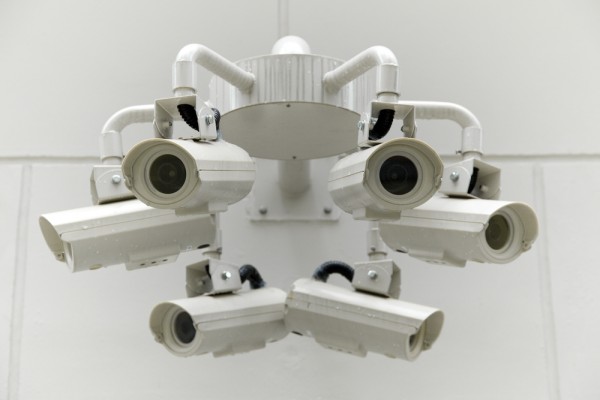
    As we all recap the Boston bombing and manhunt events in our minds, looking for lessons learned, the one that sticks out in my head is the value of surveillance cameras. They were essential to catching the perpetrators and doing so quickly. More aggressive use of them might have resulted in even faster capture, and the civil rights and privacy concerns people express about them are hysterical overreaction.

    The value of surveillance cameras was obvious almost immediately after the event. I remember many experts interviewed predicting that they would be used to narrow down suspects rather quickly. In fact, you don’t need an expert to understand this. The only people who didn’t seem to understand it well were the Tsarnaev brothers. They stayed in town and tried to go on with their lives, indicating that thought they wouldn’t be detected. They must have freaked out when they saw their pictures on the news, but they still didn’t get out of Dodge.

    The People Difference

    One of the more fascinating stories is that one of the victims, marathoner Jeff Bauman who lost both his legs as a result of the explosion, gave the police crucial witness testimony early on, according to Bloomberg News:

    He woke up under so much drugs, asked for a paper and pen and wrote, ‘bag, saw the guy, looked right at me,’ [the victim’s brother] Chris Bauman said yesterday in an interview…While still in intensive care, Bauman gave the FBI a description of the man he saw, his brother said. Bauman’s information helped investigators narrow down whom to look for in hours of video of the attack, he said.

    In other words, the witness account helped the police to use the video evidence more effectively. The description on its own would probably not have helped all that much.

    We still don’t know what led to them shooting an MIT policeman, starting a chain of events leading to both perpetrators being shot and the younger brother getting away for a time. But it’s safe to say that the massive lockdown of the city in that intervening period did not lead to the suspect being caught. In fact, what led to him being caught was that they ended the lockdown. That’s when the boat owner went out to look at his craft and noticed the blood. By taking people off the streets, the government also removed their eyes and ears.

    If you’re going to take human eyes and ears off the street you need alternatives: More public cameras and (and perhaps microphones) might have found the suspects sooner than they were found.

    Set Clear Rules

    Many people don’t like the idea of public surveillance cameras, fearing their rights will be violated. Consider this thought exercise: Wherever you have the camera (and perhaps a microphone), would you object to having a police officer in that spot looking and listening? Usually there’s no good reason to object. What’s the difference? The difference amounts to the fact that many cameras and microphones and big data analysis are more effective than human police. Is this really a reason to object? I say no.

    The 1984 image of Big Brother always watching wasn’t so scary because he was watching street corners and public plazas, but that he was watching in your house and in your car and at all times. Public surveillance cameras don’t belong where people have a reasonable expectation of privacy, and nobody has a reasonable expectation of privacy out on the street. It makes no sense to say that the police shouldn’t have the ability to observe public places.

    If only to make people more comfortable with the prospect, I think it’s reasonable and important to set clear laws on how data from this surveillance can and cannot be used. For instance, it might be reasonable to say that video can only be used in criminal, not civil investigations. Access to the data should be carefully controlled and all access, or at least all offline access to the data, should be carefully logged to show who was accessing it and for what reason. Abuse of the data for personal reasons should be punished.

    The above rules follow logically for cameras owned and operated by a governmental agency, but many of these cameras are privately owned. Even so, when government gains access to the data from private cameras the same rules can and should follow for government personnel. If Lord and Taylor has a camera showing the sidewalk outside their store then their security personnel aren’t under the same rules, but neither can they arrest nor prosecute people.

    It’s not surprising that people find public cameras spooky, but there’s no real need for surveillance to result in violations of any rights. Just because police officers are capable of violating someone’s rights doesn’t mean we do away with them. More effective law enforcement is a good thing.

    Photo Credit: brodtcast/Shutterstock

  • IBM buys UrbanCode for its devops chops

    If there was any doubt that devops — the practice of getting development and operations teams to work together to design and deploy software fast, here’s more evidence: IBM is buying UrbanCode.

    ibmlogoCleveland-based UrbanCode’s software helps automate the production and delivery of new applications in a way, IBM said is  aligned with own SmartCloud and Mobile First initiatives. Terms of the deal were not disclosed.

    According to IBM’s statement, UrbanCode will work nicely with IBM’s Worklight mobile application development platform,

    ” … by combining UrbanCode software with the IBM MobileFirst Worklight technology, businesses can now author and deploy an application for any mobile device in hours, versus a previous multi-day timeline. The UrbanCode solution also works with traditional applications including middleware, databases and business intelligence.”

    Legacy IT giants like IBM are trying to find ways to strip out overhead of the development process, particularly for mobile and cloud apps, and better compete with leaner, more nimbler startups. For example, last August, BMC, which competes with IBM in systems management tools bought Varalogix to bolster its devops story.

    IBM, the 100-year-old IT giant that has managed to stay relevant by changing when needed, is really focusing on cloud and mobile– and the middleware to power those efforts– to such an extent that it is reportedly thinking of selling off its server business to Lenovo.

    Related research and analysis from GigaOM Pro:
    Subscriber content. Sign up for a free trial.


  • NHL 14 Cover Athlete Voting Has Begun

    Electronic Arts is the go-to scapegoat for all of the anti-gamer decisions that have begun to creep into gaming. The video game publisher may be the internet’s favorite punching bag and America’s Worst Company two years running, but the organization does do some things right. One of those things is allowing fans to vote on which athlete will grace the cover of their sports titles.

    This week EA and the NHL announced that voting for the cover athlete for the upcoming NHL 14 has begun. Fans can vote at NHL.com/covervote. The voting will begin with 60 finalists that will be pared down in two preliminary voting rounds. A 16-player bracket will then determine the winner, who will be revealed during the Stanley Cup Final.

    “These 60 NHL stars are excited to be finalists in the vote campaign that will see the fans ultimately select the EA SPORTS NHL 14 cover athlete,” said Adam Larry, director of licensing for the NHL Player’s Association. “Following an impressive level of fan and player engagement shown in the cover vote last year, we are looking forward to seeing how the bar will be raised this year.”

    The voting will not be a simple popularity poll. Fans can vote as many times as they want, and using player-specific hashtags on Twitter can count as two votes if tweeted on Thursdays.

  • Microsoft Advertises Do Not Track In Internet Explorer

    Microsoft has been one of the strongest proponents of Do Not Track since it announced that Internet Explorer 10 would turn it on by default. Advertisers didn’t exactly like this, and even threatened to ignore all signals from Internet Explorer if Microsoft didn’t back down. Despite the threat, the Redmond giant didn’t back down, and is now even marketing Do Not Track as a key feature of Internet Explorer.

    Microsoft released a new ad for Internet Explorer today that talks about the differences between information you want to share with others and information you want to keep private. It never explicitly states browsing history as the kind of information you want to keep private, but it does say that it keeps your data private with Do Not Track.

    The Do Not Track debate is far more complicated than what Microsoft has presented in its latest ad. Microsoft may have implemented Do Not Track into Internet Explorer, but that doesn’t mean that advertising companies will suddenly stop tracking your online movements. In fact, these companies have even threatened to ignore all Do Not Track signals from Internet Explorer until Microsoft backs down.

    Since then, the Do Not Track debate has grown exponentially with Congress getting in on the action with some Congressmen saying that the government needs to introduce Do Not Track laws. Of course, such debates in Congress will probably fall victim to the same problem plaguing the debate between private companies and privacy advocates – what does Do Not Track actually mean?

    Still, it’s strange to see Microsoft advertising a feature that’s not only very divisive, but also possibly ineffective. There’s no legal mandate stopping advertising firms from ignoring Do Not Track signals, and Microsoft’s insistence that it be the turned on by default may actually do more harm than good until there’s a consensus on what Do Not Track actually means.

  • TeraCool’s Audacious Idea: Data Centers Next to Liquid Gas Plants

    Tokyo-gas_Negishi_LNG_Tarmi

    Will future data centers be located next to liquid natural gas plants, like this one in Tokyo? That’s the idea being put forth by TeraCool. (Photo by Yo-sei_Shoshi via Wikimedia Commons)

    Will data centers leverage liquid gas plants to generate cooling and electrical power for data centers? Concord, Massachusetts-based TeraCool believes so. By locating data centers in close proximity with liquid natural gas terminals, it improves the efficiency of both facilities, the company says. Natural gas storage plants produce excess refrigeration, and waste enough energy to potentially power data centers.

    TeraCool has developed a way to bring the two industries together. The company says its approach can achieve mutual energy conservation, significant cost savings and environmental benefits including air, water and green house gas emissions reductions. It has created a method that links a data center’s rejected heat and a Liquified Natural Gas (LNG) terminal’s surplus refrigeration via a heat transfer loop. There’s a potential symbiotic relationship here, as the waste heat from servers can help vaporize natural gas, and the energy released from the process could in turn power a data center.

    Natural gas is extracted from the ground, then liquefied by condensing it. It is transported in liquid form in tankers to LNG plants and stored in tanks, then turned back into a gas when it’s needed. The process stores energy, and the process releases energy. The energy and cooling normally go to waste because they’re usually isolated from other potential buildings and centers that might be able to use this excess energy. Now, it’s a matter of convincing data centers to build and align with this idea.

    TeraCool recently won the “Audacious Idea Award” at the Uptime Institute’s Green Enterprise IT (GEIT) awards 2013, which recognizes new, unprecedented ideas for realizing energy and resource efficiency. Other finalists included Microsoft’s “data plant” proof-of-concept in Wyoming and s freestanding chilled air duct developed by QTS (Quality Technology Services).

    Other GEIT Award winners of note

    The Uptime Institute says the award helps surface new approaches to complex problems, and contributes to industry innovation.

    “There’s two things behind the award scenes,” Matt Stansberry, Director of Content and Program Director, notes about the awards. “The judges panel consists of radical, household name companies. It’s a double blind process, one of the most democratic processes out there. The other thing that’s important about the rewards is the data churn. The documents they submit are really about sharing what worked for them. This is the biggest reason Ken (Brill, founder of Uptime Institute) started this was to get people talking.”

    “The bottom line is that Green IT has gotten a lot better, especially on the enterprise level,” said Stansberry.

    Interxion, TD Bank also noteworthy winners

    Other winners include Interxion which won the “Facility Retrofit Award” for its use of seawater to cool its Stockholm data center.  Interxion is a leading provider of cloud and carrier-neutral colocation data center services in Europe, supporting more than 1,300 customers at 33 data centres across 11 countries.

    Another noteworthy award winner was TD Bank Group, which won for Facility Design Innovation. TD Bank Group’s new facility integrates sustainable design elements including rainwater harvesting, onsite renewable energy generation, heat recovery systems and natural lighting. The company met its IT goals through server virtualization, tiered storage platforms, energy efficient infrastructure, overhead cabling and more. In short, it went above and beyond in terms of design and implementation. The phased construction project is Tier III certified by Uptime and LEED Platinum certified by USGBC.

    AOL, Barclays Feted in Server Roundup

    AOL and Barclays won the second annual Uptime Server Roundup for their efforts to improve data center efficiency. “The purpose of Server Roundup is to highlight what should be a routine activity – removing obsolete hardware from the data center, and moving it to the forefront of the conversation,” said Stansberry.

    This was the second straight win for AOL, which prevailed in the initial 2011 roundup. This year is decommissioned 8,253 servers, resulting in (gross) total savings of almost $3 million from reduced utility costs, maintenance and recovery of asset resale/scrap. Environmental benefits were seen in the reduction of more than 16,000 tons of carbon emissions, according to AOL.

    Barclays, a global financial organization, removed 5,515 obsolete servers in 2012, with power savings of around three megawatts, and $3.4 million annualized savings for power, and a further $800K savings in hardware maintenance.

    According to industry estimates, around 20 percent of servers in data centers today are obsolete, outdated or unused. Decommissioning one rack unit (1U) of servers can result in a savings of $500 per year in energy costs, an additional $500 in operating system licenses and $1,500 in hardware maintenance costs.

    Other finalists can be found here. The winner can be found here with all winners will present their case studies at Uptime Institute Symposium 2013, taking place May 13-16, 2013, at the Santa Clara Convention Center in Santa Clara, Calif.


  • The New Kind of Worker Every Business Needs

    We live in a world in which amplified individuals — people empowered by technologies and the collective intelligence of their social networks — can do things that previously only a large organization could. Indeed, they can do some things that no organization could do before. For better and worse, this is the world in which weekend software hackers can disrupt large software firms, and rapidly orchestrated social movements can bring down governments.

    Amplified individuals include artists, musicians, community organizers, and techies working alongside nontechies. For a glimpse of how their talents are “amplified,” visit, for example, BioCurious — a well equipped biology lab in the San Francisco Bay area that is actually a former garage full of apparatus bought on the cheap on eBay. Most of us think of biotech as the province of multinational pharmaceutical corporations and well-funded ventures, but the founders of BioCurious believe (as they say in their mission statement) “that innovations in biology should be accessible, affordable, and open to everyone.” The most capable synthetic biologists in the BioCurious community work not only on their own pet projects; they also help others learn to do so by offering classes in subjects like Molecular Biology, Bioinformatics, and Bioprinting. Unlike in traditional university settings, the classes are open to anyone; you don’t need to fulfill requirements or take a long list of prerequisites in order to attend. All you have to bring to the class is interest and curiosity.

    To use a term I introduced in an earlier piece, people like these are engaged in “socialstructing” — that is, bypassing established institutions and processes for building new things, and instead working to create what they find missing in the world by communicating the need to their social networks, mobilizing whatever resources they have at their disposal, and pursuing solutions collaboratively. Amplified individuals are an especially formidable force because the hard work they do is work they choose for themselves, and it is the focus of the strongest of their talents.

    This is the kind of amplification that plays out daily at the Tech Shop, where people are pioneering new manufacturing models. Hanging around there, you might come up with an idea for a product, then quickly prototype it at Tech Shop with advice and support from the larger community. You could get funding on Kickstarter, then manufacture it through a flexible network of small-scale producers in China and elsewhere around the world. Voila! No large-scale manufacturing facility required. A small group of individuals, amplified with connections to each other and access to resources previously available only to large organizations, can create at scales they could previously only dream of.

    Given that energized innovators like these are disrupting many existing products, and the business models behind them, you can feel threatened by them. Or you can learn from them and work to turn your own organization into a collection of amplified individuals. The latter is the path we’ve chosen at the Institute for the Future (IFTF). Based on what we’ve learned so far, I can offer a few tips for other organizations hoping to amplify their workers’ talents and energy for greater innovation capacity and impact:

    Change how you measure performance. The value you seek from employees, and should recognize and reward, can’t be measured only by focusing on their internal contributions. It also depends on their connections to and their standing in external communities that are important to your organization. At IFTF, several of our staff members run organizations of their own or contribute actively to other networks’ efforts. These activities contribute to our organization’s impact and increase the range of views and ideas we encounter. This is why we encourage our staff to expand and create their own external idea and knowledge networks.

    Design the organization to support individual initiative, not control employees’ actions. We proudly show people our unusual organizational chart (more a constellation of project networks than a linear hierarchy) because it casts IFTF as a platform on which project teams and other work structures can self-organize, tackle issues, and solve problems. “The value of self-organizing structures is that they can act quickly, responsively, and creatively from the edges,” we explain in our vision statement. “The guiding concepts in this view of leadership are openness, self-election, continuous prototyping, robust platforms, and low coordination costs. Leadership skills focus on community building, consensus building, mediation, commitment, and humility.”

    Socialize your underused assets. Under the traditional logic of management, it would make sense to jealously guard the use of any productive assets a firm has invested in. But in reality, nearly every organization has a surplus of resources of one type or another. Some have an abundance of physical space, others have equipment and tools that are rarely used, and still others have talent that is not fully engaged. A few years ago my colleagues and I decided that we could donate our surfeit of conference space to be used on weekends and some evenings by various communities whose work we want to encourage. We now regularly open this space to meetups, hack days, science bar days, and other informal gatherings of people with similar interests (science, biology, coding, 3D printing, and such). In the process we learn from these external innovators, extend our network, and engender a lot of goodwill. Think of the resources you have in abundance and how you might “socialize” them to build your organization’s social capital and enrich the flow of ideas.

    Stop to consider how these few managerial changes would support and extend an individual’s initiative in your organization, and you’ll soon start to think of other tactics as well. Undoubtedly the ideas you come up with will share the common theme of loosening traditional managerial reins. But don’t let that loss of control frighten you. By recognizing the power of amplification, you will be rewarded with more energized, empowered, and innovative workers, and be able to achieve a whole new level of reach and impact.

  • Yahoo Puts Summly To Use In New iPhone App

    Yahoo recently acquired mobile startup Summly, and the company is already putting it to good use. CEO Marissa Mayer announced a new Yahoo iPhone app today, which takes advantage of Summly’s capabilities.

    “Consuming news and information on the go has become the norm — whether waiting for a morning coffee or commuting home from work, content discovery is an insatiable daily habit,” writes Mayer on the Yahoo Yodel blog. “Our mobile phones have opened up a window to the world, with the latest news, sports updates, and entertainment coverage right there in our pockets. Because consuming content is such a core part of our everyday lives, today we’re launching our new Yahoo! mobile app for iPhone. Beautifully designed with smaller screens in mind, the new Yahoo! is all about delivering the best of the web — right on your phone.”

    Yahoo on iPhone

    “The new Yahoo! mobile app is also smarter, using Summly’s natural-language algorithms and machine learning to deliver quick story summaries,” she adds. “We acquired Summly less than a month ago, and we’re thrilled to introduce this game-changing technology in our first mobile application. And, with the immersive imagery of our virtually endless newsfeed, the new Yahoo! app has both great technology and beautiful design front and center. Because searching for great content is also core to the Yahoo! experience, we’ve also improved the search experience with better video and image search.”

    The app also comes with a great deal of personalization. You can select the types of stories you’re interested in, and within each article, you can select more topics you want and less of what you don’t.

    The app is available in the App Store for the iPhone and iPod Touch in the U.S.

    No word on other potential mobile apps utilizing the same technology.

    Last week, Yahoo launched new mobile apps for Weather and Mail. The Weather app, which utilizes Yahoo’s Flickr property, is just for iPhone while the Mail app is for iPad and Android tablets.

    Yahoo is said to have been in talks with Apple on deeper iOS integration.

  • Facebook’s Timelines Trial Gets Underway

    This morning, Facebook begins its defense of its Timeline product against a website who claims that its continued use amounts to trademark infringement.

    The website, Timelines.com, lets users create and edit “timelines” of historical events. They sued Facebook back in October of 2011, just weeks after Facebook announced their new Timeline product at the company’s f8 conference. As of now, all Facebook users have the new Timeline, which is an update of the traditional Facebook profile page.

    Timelines.com claimed that Facebook was infringing upon their trademarks by operating the new profile under the name “Timeline.” Facebook quickly countersued, claiming that the term “timeline” is generic – too generic in fact to deserve any sort of federal trademark protections. They have argued that the trademarks should be canceled.

    “Given the generic or at least merely descriptive nature of the term ‘timeline’ when used to identify chronologies of events and related information (or tools for their creation), as well as the prior and widespread use of the term by third parties, Counterdefendant does not own exclusive rights in the term ‘timelines’ as used in connection with timeline creation and collection services,” says Facebook.

    Earlier this year, Facebook asked U.S. District Judge John W. Darrah to dismiss the original suit. And a few weeks ago, Darrah ruled that the claim must go to trial. He said that Facebook had ““failed to demonstrate, as a matter of law, that the marks are generic.”

    He also concluded that with “millions of dollars invested in its business and more than a thousand active users,” it’s reasonable to believe that the word “timeline” has its own specific meaning to Timelines.com users.

    Timelines.com has just shy of 100,000 visitors a month, while Facebook boats over 1 billion monthly active users. The trial began this morning in the Northern District Court of Illinois.

  • Was Samsung caught fighting dirty in war against Apple?

    Samsung accused of fighting dirty in war against Apple
    Samsung recently admitted fault — to an extent — after being accused of false advertising when a group of paid bloggers flooded the web with posts that attacked HTC and its devices. Samsung issued a statement saying that the posts were the result of a misunderstanding, but that might not mean these aggressive tactics are being cast aside. CNNMoney’s Phillip Elmer-DeWitt on Saturday published an article discussing a “somewhat paranoid theory” that Samsung has quietly declared war on Apple after being called an iPhone copycat. The response to his article, as it turns out, suggests that the theory might not be so paranoid after all.

    Continue reading…

  • Google celebrates Earth Day with animated Doodle

    While I tend to visit the Google site daily, it is not to conduct a search — I can do that from the Omnibar in Chrome — but to simply to see if there is a new Doodle. Perhaps a silly reason, but it only takes a couple of seconds and sometimes I am rewarded with a small bit of entertainment.

    With today being Earth Day, which was first held on April 22nd 1970, I expected a nod from the search giant and I was not disappointed.

    To celebrate the occasion, the company posted a nifty little animated Doodle that you will need to sit and observe for some time to fully appreciate. At first glance it seems simple enough — the sun rises, travels across the sky and sets. But watch it long enough and you will note that each day is a different season and each night a different phase of the moon rises and travels across the sky.

    A Google Doodle is certainly not news, as the company produces them quite frequently — you can even view a gallery of all of the past iterations. But today’s version provides a bit of entertainment and forces you to watch a little longer. Perhaps the best doodle since Google made PAC-MAN playable back in 2010.

  • Google Now Coming To The Google Homepage?

    It appears that Google has big plans for Google Now beyond the Android operating system.

    The feature, which serves users relevant information when they are most likely to need it, without them having to search for it on their own, was introduced last year as part of the Jelly Bean version of Android. Since then, evidence pointing to a Chrome-based version, and even an iOS version has been spotted.

    Now, it appears Google is even going so far as to test Google Now right on the Google homepage. After being tipped by someone named Florian, Alex Chitu at Google Operating System points to a Google test page with source code suggesting the feature could make its way to the homepage.From Chitu’s post:

    “Get started with Google Now. Just the right information at just the right time.” That’s how Google introduces the new feature. “Google Now uses your Home location to show relevant information like weather, traffic conditions, and nearby places,” explains Google. You can edit the home location, work location and the current location. Another feature lets you track your favorite stocks.

    Google, of course, tests features all the time, and few every become actual features. That said, Google Now appears to be a big part of Google’s overall strategy. The company has talked about making search faster by pushing info to users when they don’t even realize they need it for years, and with Google Now, we’ve begun to see this strategy implemented. It only make sense that Google wants to get the feature in front of as many users as possible. I can’t think of a better way to do that than by making it part of the immensely popular Google homepage.

    But we’ll see.

  • Jennifer Lawrence: Haircut Gets Some Attention

    Jennifer Lawrence was tapped to introduce former president Bill Clinton at the GLAAD Media Awards this weekend, and though she stumbled over her lines at the event, her haircut was what everyone focused on.

    Lawrence, who hasn’t been seen much since her big Oscar win, has been busy filming the sequel to the highly successful film “The Hunger Games”, a role which required her to take her hair several shades darker than the honey-washed color we’re used to seeing. Now she’s back to those golden tresses and has chopped her locks to a shoulder-grazing length that flatters her heart-shaped face.

    The 22-year old actress was excited to share a stage with Clinton but says she’s out of her element when it comes to speaking in public.

    “Making movies is where I belong. I shouldn’t be heard just talking. So, when I’m doing movies, I’m really happy. That’s where I’m comfortable, that’s my home. When you put me on a red carpet or on a stage, I turn into chihuahua Jennifer,” she said.

    After a now-famous trip up the stairs to accept her Academy Award, Lawrence endeared herself to people everywhere with her self-deprecating wit and silly sense of humor; now she can add herself to the list of young stars with the power to start a trend, because if today’s news is any indication, it looks like girls will be lining up to copy that hairstyle.

    Image: WireImage

    jennifer lawrence haircut

  • Samsung to introduce the world’s first plastic OLED display on the upcoming Galaxy Note III?

    crt


    Could the end of broken displays truly be upon us? It appears that Samsung is certainly working hard behind the scenes for that to be a reality. Early rumors are reporting that with Samsung’s forthcoming Galaxy S III smartphone, the manufacturing giant is also planning on bringing a major first to the industry— the world’s first plastic OLED display. Early details highlight this breakthrough display will not only be light in capacity, but will also be of a RGB stripe variety and arrive on the Galaxy Note III in a 5.99-inch display capacity.

    Unfortunately, we have yet to see any news about what the exact resolution of this plastic display will arrive in, as well as if Samsung will be able to produce enough display units to meet demand of the Galaxy Note III— but we’ll be sure to keep you all posted as we get additional details.

    source: SamMobile

    Come comment on this article: Samsung to introduce the world’s first plastic OLED display on the upcoming Galaxy Note III?