Category: News

  • Set up two-step authentication for your Microsoft account on Windows Phone

    Following the lead of a number of high-profile companies like Apple, Dropbox and Google, Microsoft has finally embraced two-step authentication. Two days ago, the company unveiled the feature which, in order to “help keep your account more secure”, enables using security codes or application-specific passwords when accessing Microsoft services. Sadly, for Android and iOS users, Microsoft only offers a Windows Phone app, at this point, to generate security codes.
    The app is called Authenticator and works with both Windows Phone 8 as well as Windows Phone 7.5 (ironically, it was the app that revealed Microsoft’s plans to offer the security feature in the first place). This guide will show you how to enable two-step authentication for your Microsoft account and use Authenticator to generate security codes on your Windows Phone smartphone.

    Install Authenticator

    Before getting down to business, you have to install Authenticator. To do so, head over to the Windows Phone app store on your handset (which is known as Store inside the app list) or use the link provided above in order to find and install the app.

    Set Up Two-Step Authentication

    It is worth noting that after Microsoft enabled two-step authentication for my Outlook.com account, a verify button appeared next to my phone number and alternate email addresses. I have verified my contact information and you should do so as well. Microsoft will send you a security code, on your phone and alternate email addresses, which you must enter when requested in order to verify the contact information.

    After you have completed the aforementioned task, head over to the Security info control panel on your Microsoft account and follow the next steps:

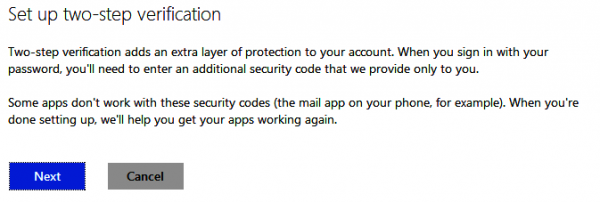
    1. Under Two-step verification, click on “Set up two-step verification”,
    2. Press Next and, finally, click on Done to complete the process.
    Depending on the app or service that you wish to access, you may be required to set up application-specific passwords. This is because security codes are not generally supported. One scenario where you may be required to use an application-specific password is with an email application like Apple’s Mail on iOS.

    You can create application-specific passwords through the App passwords panel inside Security Info.

    Also worth mentioning is that Microsoft doesn’t ask for a security code when using a trusted device. If you wish, you can remove all trusted devices by using the “Remove all the trusted devices associated with my account” option from under Trusted devices in the Security info control panel.

    Configure Authenticator

    Now that you have two-step authentication enabled for your Microsoft account you should use Authenticator to generate security codes. To do so, head over to the same Security info control panel and follow the next steps:

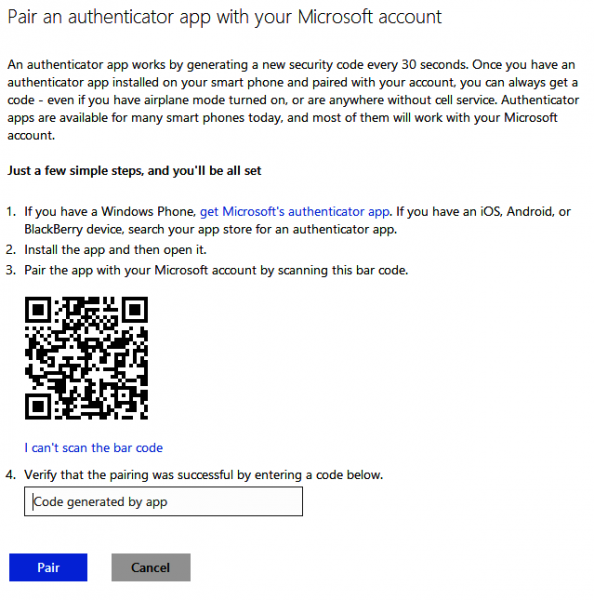
    1. Under Authenticator app inside Security info, click on “Set up”,
    2. Open Authenticator on your Windows Phone smartphone,
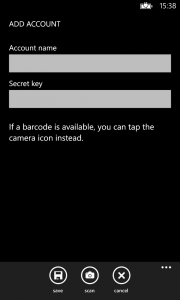
    3. Tap on the “+” icon, then tap on the camera pictogram (both are found on the bottom menu bar),
    4. Hold your device as to recognize the QR code displayed in the browser,
    5. Head over to the browser and enter the security code, that is provided by Authenticator, inside the box,
    6. Click on Pair to finish the process.

    Two-factor authentication is now enabled for your Microsoft account and you can use Authenticator to generate security codes on your Windows Phone smartphone.

    Microsoft says that you can generate security codes for two-step authentication using third-party dedicated apps available on Android, iOS and possibly BlackBerry. Similar steps should be carried out in such cases.

    credit: marekuliasz/Shutterstock

  • HTC One Now On Sale Across The U.S., Now We Find Out If HTC Has Done Enough

    htc-one-review01

    The HTC One, the Taiwanese company’s flagship smartphone device, goes on sale today across the U.S. at retail stores including AT&T, Sprint, Best Buy, Walmart Target and more, as well as online via those retailers, HTC itself, Amazon and beyond. The phone has already been highly praised by early reviews and anyone who seems to have gotten their lucky mitts on one, but will that be enough to sway consumers?

    HTC has arguably not made a truly bad phone in at least the past two years, and last year the HTC One X truly excelled. But that hasn’t stopped HTC’s earnings from sliding for five consecutive quarters now. The One, which is as significant a break from tradition in terms of how Android smartphones are designed as any we’ve yet seen, is the company’s big bet to turn things around, and they appear to have spared no effort.

    The One has a unibody full metal body design, a first for a smartphone, as well as speakers that don’t suck, itself an achievement for any kind of phone. Reviews of the UltraPixel camera have been good, too, with Mobile Syrup calling it “the best low-light camera you can buy.” And the HTC software features, including BlinkFeed and HTC Zoe, are also drawing praise from press and reviewers.

    HTC has a big mountain to climb in terms of coming anywhere close to competing with Android juggernaut Samsung, or Apple and its iPhone in terms of market share. But the HTC One is the best chances anyone has had of doing so in a long time. If only they’d left Van Der Beek out of this.

    For those looking to pick one up today, here’s a full list of its current U.S. availability direct from HTC:

    The new HTC One in silver is available nationwide at:

    • AT&T: Online and in retail with 32GB of memory for $199.99, or online with 64GB of memory for $299.99 with a two-year commitment.
    • Sprint: Online and in retail with 32GB of memory for $199.99 with a two-year commitment.
    • Best BuyRadio Shack, Walmart, Target, Amazon.com, Costco, Car Toys, Sam’s Club, HSN.com andHTC.com.
    • Coming soon to T-Mobile in silver with 32GB of memory, and available in the coming weeks in black at AT&T and Sprint with 32GB of memory.

  • Microsoft eyes iPad mini as exec hints at smaller Surface

    Microsoft eyes iPad mini as exec hints at smaller Surface
    Microsoft managed to emerge somewhat unscathed from the first quarter’s PC sales decline as it handily topped analysts’ fiscal third-quarter consensus and posted profits that grew 20% over the same period last year. The company’s stock climbed in after-hours trading as CFO Peter Klein, who is leaving the company at the end of the current fiscal year, made some intriguing comments about future products. For one thing, Klein suggested that earlier rumors about Microsoft bringing the Start button back in its Windows 8.1 update due later this year are accurate. The executive also hinted that Microsoft is prepping smaller Surface tablets that will launch later this year to combat Apple’s iPad mini and Amazon’s latest Kindle Fire lineup.

    Continue reading…

  • Get Xbox Live Gold free this weekend

    This may seem a bit ironic, given that Xbox Live spent much of last Saturday down, but this weekend Microsoft aims to make up for that little mishap with a free weekend of, well…possible service. Xbox Live Gold adds many of the features that the console has become known for, such as ESPN, YouTube, iHeartRadio and much more.

    Xbox Live chief Larry Hryb, better known as Major Nelson, announces “if you’ve always wanted to check out the latest entertainment experiences on Xbox 360, now is your chance”. The service will go free beginning at 10am ET today (Friday April 19) and remain that way though 1pm ET on Monday April 22.

    This is not only valid in the United States, but also Canada, Latin America and Japan. “All Xbox owners in these regions, regardless of their current Xbox LIVE subscription status, will have access to online multiplayer gaming, Video Kinect, and our entire catalog of entertainment apps” Hryb explains.

    This coincides with the debut tonight of the new Netflix (a Live Gold service) original series Hemlock Grove. The weekend also brings a special preview of Borderlands 2, for which Hryb provided a key — KTW3T-ZXXS5-JBSJF-5FJT3-6TB9X.

    Both the U.K. and Europe had a free weekend back in March, so this timing is seemingly coincidental and unrelated to last weekend’s crash of the service — in other words, it does not appear to be a Microsoft apology.

    Photo Credit: Aaron Amat/Shutterstock

  • Technology Proves its Value in Wake of Boston Bombings

    Bill Kleyman is a virtualization and cloud solutions architect at MTM Technologies where he works extensively with data center, cloud, networking, and storage design projects. You can find him on LinkedIn. Also, you can find more of his regular contributions here, on Data Center Knowledge

    Bill-Kleyman-tnBill Kleyman
    MTM Technologies

    In light of this week’s events in Boston and elsewhere, one of the strongest statements we can live by is “the good guys will always outnumber the bad ones.” While some people have said that these types of events bring people to live close to the edge (as in You Only Live Once or YOLO), the reality is that these horrible events actually bring people closer together and deepen our appreciation of each others’ humanity.

    In the wake of the Boston Marathon bombings – which brought many reminders of 9/11 – we saw a new hero emerge:  technology. The fast responses of medical professionals already onsite likely saved numerous lives. Furthermore, those runners that finished the race and then continued on to donate blood at the local hospital should be praised as well. The human element, no doubt, played a vital role in minimizing casualties and helping people get medical attention quickly. Still, as the smoke clears and we begin to analyze and understand the situation, law enforcement and the officials working on this case have some interesting new tools at their disposal.

    Technology: The ‘Good Guy’ Multiplier

    According to Boston Police Commissioner Ed Davis, the site of the bombing and the surrounding area – Bolyston Street which serves as the finish line of the Boston Marathon –  is one of the most well-photographed and documented areas in the country. Although the crime scene is complex, the use of technology can help pinpoint the line of events that led to this horrible incident. In 2001, the prevalence of recording and digital equipment wasn’t anywhere as high as it is today. On April 15, 2013, a lot more “eyes” were watching the course of the day unfold. Let’s look at some of the areas where technology was involved in the event and aftermath.

    • IT consumerization. This is a common marketing term; along with BYOD. But the true magnitude of IT consumerization was on display on Monday. Because so many people have cell phones or other devices with cameras, thousands of high-quality photos were taken from almost every angle and vantage point during the Boston Marathon. People were on the ground, in buildings, at the finish line and everywhere in between. Within minutes, photos of the bombing were circulated and analyzed. These digital photos were used to piece together a very difficult puzzle. Modern phones are capable of taking 8-12 megapixel images. Compare that with phones from 2002 which could only do 0.3MP. As people took videos and photos documenting the event, these digital images are higher resolution than ever before, capturing more image and allowing details to potentially be used by authorities to find those responsible.
    • Everyone is a “digital technician.” In the aftermath, the numerous high-quality images being produced from the event have helped law enforcement in their efforts to bring light to the situation, and citizens are helping to analyze them. All across the web, amateur digital technicians are examining photos and processing individual video frames to catch inconsistencies. Just like law enforcement, these technicians have an eagle-eye for technology and can actually help officials pinpoint irregularities. Cloud computing and social media have been busy sharing pictures; discussing analysis of the event and helping everyone involved understand what happened.
    • CCTV and surveillance. As runners approached the finish line, they made their way through 26 miles of very public road. Along the way, there were hundreds of cameras and CCTV instances where live video was recorded and documented. A department store’s high-quality outdoor security camera has already helped police identify people of interest. The ability to zoom into a face or feature is paramount to helping bring those responsible to justice. These technologies are becoming more and more prevalent where high-quality feeds are capable of doing so much more than ever before. As the picture becomes clearer, officials will use every single frame from every source  that they can. This means that if the perpetrators took public transportation, video surveillance from around the city can help show the footsteps.
    • Social media and the cloud. The events of April 15were captured both on video and, simultaneously, on the Internet. Social media reports were posted as quickly as professional reporters brought the news on TV, radio or Internet. Twitter, Facebook, and other heavily used sites became hot spots for conversation. Social media served as a way to determine if friends and family on the ground were alright. In fact, I found out that a dear friend who was only 2 blocks away from the blast was alright – via a Facebook update. Furthermore, valuable pictures, recordings, and new vantage points have helped people put together the course of events that happened that day. Above anything else, social media (and cloud computing) helped bring people together. Whether it was words of support, an image of a friend, or just a though posted on Facebook, technology pushed aside human differences and the sharing through social networks brought everyone closer together.

    Today’s always-on, always-connected world strives to bring people and information closer together. During these types of events, technologists all over the world offer their support and work to utilize technological advancements to help people progress. Everyone from pro photographers to ordinary people with their high megapixel smartphone cameras can help authorities solve one of the most complex crime scenes in recent history. During these difficult times, the IT community has continued to offer its support to anyone who needs it.

    As a technologist, journalist and writer for Data Center Knowledge – I say with my whole heart – Boston, we stand with you.

    Industry Perspectives is a content channel at Data Center Knowledge highlighting thought leadership in the data center arena. See our guidelines and submission process for information on participating. View previously published Industry Perspectives in our Knowledge Library.

  • Ionic Security raises $9.4M to make BYOD safe

    An Atlanta-based startup called Ionic Security has raised a $9.4 million Series A-1 round to develop its technology that aims to let employees access data on whatever devices and networks they want without fear of having their data stolen along the way. Kleiner Perkins Caufiled & Byers led the round, with Atlanta’s TechOperators also pitching in.

    Ionic’s Fusion product works in part, Kleiner Perkins General Partner Ted Schlein told me, by attacking all three critical aspects of cloud security: data at rest, data in transit and authentication. It encrypts data all along the line until policies are met and it’s actually unencrypted on the device, but for employees, the whole process doesn’t seem much different than standard single signon.

    Notably, it doesn’t require adding a performance bottleneck such as a VPN or security gateway, either. “If you want to try to attack them,” Schlein said, “you have to go after the endpoint itself.”

    Ionic’s authentication process is somewhat unique, too, thanks for what it calls the “skeleton key.” Users get one password to access all their corporate applications and cloud services, Schlein explained, but the IT department retains control because it changes the actual credentials and manages all policies on the backend. This way, if an employee quits or is fired, some just needs to delete that skeleton key in order to ensure the employee won’t be logging into those applications again surreptitiously.

    Schlein said he’s excited because it’s one of the few approaches to cloud and endpoint security that actually solves for the whole problem. The rest tend to “bite off little parts of the security world as it relates to the cloud,” he said, but it will be a nightmare to stitch together so many different products into a single security strategy.

    Related research and analysis from GigaOM Pro:
    Subscriber content. Sign up for a free trial.


  • Egyptology News 17th-18th April 2013

    Copied from Twitter @egyptologynews. Have a good weekend everyone!

    Amun in the form of a Ram, Kawa, Nubia.
    c.680BC.  1931.553. Ashmolean Museum
    Fieldwork
    The British Museum website has new pages re the BM and Sudan Archaeological Research Society excavations at Kawa  
    Free online
    RT Free online: Revisiting the harem conspiracy and death of Ramesses III. British Medical Journal

    Books 
    Audio: Peter Lacovara talking about his book “Ancient Nubia: African Kingdoms on the Nile” (AUC 2012). 3 mins. Emory

    Book review: T. M. Hickey, Wine, Wealth, and the State in Late Antique Egypt. University of Michigan Press 2012. BMCR

    Conferences
    American Research Centre in Egypt Annual Conference 2013, 19th-21st April. Em Hotep
    Museums and exhibitions
    Curating Ancient Egypt at the Manchester Museum. Ancient Egypt in Vancouver  
    Exhibition. El Louvre organiza la primera muestra mundial sobre el dibujo en el antiguo Egipto 19/04-22/07. Ushebtis  
    Via Gwyn Ashworth-Pratt. Cairo to Constantinople: Early Photos of the Middle East at the Queen’s Gallery. Culture24  
    ‘Echoes of Egypt’ reveals ancient culture’s impact across the millennia. Yale News
     
    Egypt’s Jewish community to refuse Israeli financial help for renovation of Egypt’s ancient Jewish synagogues. Ahram

    Research

    More re scan of Amunet. “Egyptian Mummy from OHS Collection Undergoes CT Scan.” Wall Street Journal

    Egyptomania 
    Egyptianized 1920s cinema reopens in Paris (with pics) IHT . Also a great video (in Spanish) at

  • In case you were thinking your vote counted in Kior’s annual meeting

    Biofuel upstart Kior has an annual meeting scheduled for next month in Houston Texas, in which shareholders will vote on such issues like electing seven people to the Board of Directors (one of those is Condoleezza Rice), as well as approving the compensation of Kior’s executives. Just some pretty basic stuff.

    And the Kior letter to shareholders starts out in the usual way, asking shareholders to make sure to vote:

    Your vote is important. Whether or not you plan to attend the meeting, we hope that you will vote as soon as possible.

    But then a few pages into the SEC filing you get into the funny thing about Kior. It’s dominated by its investor, the venture firm run by Vinod Khosla, Khosla Ventures, which owns 80.5 percent of the total voting power. It’s officially a “controlled company” under The Nasdaq Global Select Market corporate governance standards.

    Most of that voting control is through its 46.2 million class B shares (which are equal to ten votes per share). Class A shares only get one vote per share. No other entities own even close to that amount of class B shares — they’re like those invincibility stars on Super Mario: you got some of those and no one can touch you.

    Scroll down a few pages and it says:

    The vote of the shares held by affiliates of Khosla Ventures is sufficient to determine the outcome of all of the proposals to be voted on at the annual meeting.

    Well, that’s that. Quick, get your votes in!

    Check out my long opus on Kior and the perils of cleantech investing from about a year ago: The perils of cleantech investing: KiOR & the long term, high risk view. They’ve seemed to have hit some milestones recently. Kior makes a biocrude from grass, wood and plant waste using a thermochemical process that’s been used in the oil industry for decades.

    Related research and analysis from GigaOM Pro:
    Subscriber content. Sign up for a free trial.


  • We’re Giving Away Some Horns!

    The creator of the Toyota devil horns emblem shown below has graciously given us an emblem that fits a 2007+ Tundra, and we’re giving it away to you!

    Tundra Devil Horns

    Devil Horns – win them for free!

    Enter below (entry is 100% free).

    Enter to Win A Devil Horns Emblem For Your Tundra!You need to enable javascript to enter this campaign !
    Powered by PromoSimple.

    You can read an interview with Andres (the creator of this horns) here – Q&A with Devil Horns Maker Andres Diaz

    Questions, comments, reflections on how this devil horn emblem might bring your Tundra to life?

    The post We’re Giving Away Some Horns! appeared first on Tundra Headquarters Blog.

  • The Three Elements of Successful Data Visualizations

    Now that we’ve discussed when data visualization works — and when it doesn’t, let’s delve into what makes a successful data visualization. Although there are a number of criteria, including ease of comprehension and aesthetics, I’d like to explore the three that designers most often overlook.

    1. It understands the audience.

    Before you throw up (pun intended) data in your visualization, start with the goal, which is to convey great quantities of information in a format that is easily assimilated by the consumers of this information — decision-makers. A successful visualization is based upon the designer understanding whom the visualization is targeting, and executing on three key points:

    • Who is the audience, and how will it read and interpret the information? Can you assume it has knowledge of the terminology and concepts you’ll use, or do you need to guide it with clues in the visualization (e.g., indicated good is up with a green arrow)? An audience of experts will have different expectations than a general audience.
    • What are viewers’ expectations, and what type of information is most useful to them?
    • What is the visualization’s functional role, and how can viewers take action from it? An exploratory visualization should leave viewers with questions to pursue; educational or confirmational visualizations should not.

    2. It sets up a clear framework.
    The designer needs to ensure that everyone viewing the visualization is on common ground about what it is representing. In order to do so, the designer needs to set up a clear framework, which involves the semantics and syntax under which the data information is designed to be interpreted. The semantics involve the meaning of the words and graphics used, and the syntax involves the structure of the communication. For example, when using an icon, the element should bear resemblance to the thing it represents, with size, color and position all communicating meaning to the viewer.

    Lines and bars are simple, schematic geometric figures that are an integral component of many kinds of visualizations: lines connect, suggesting a relationship. Bars, on the other hand, contain and separate. In studies, when people have been asked to interpret an unlabeled line or bar graph, people overwhelmingly interpreted lines as trends and bars as discrete relations — even when conflicting with the nature of the underlying data.

    There is one other element to the framework: Before everything else, make sure your data is clean and you understand its nuances. Does your data set have outliers? How is it distributed? Where does your data have holes? Are you making pre-judgments about the data? Real-world data is often complex, of diverse types from diverse sources, and not always reliable. Getting to know your data will help you select and appropriately use a framework.

    3. It tells a story.
    Visualization in its educational or confirmational role is really a dynamic form of persuasion. Few forms of communication are as persuasive as a compelling narrative. To this end, the visualization needs to tell a story to the audience. Stories package information into a structure that is easily remembered which is important in many collaborative scenarios when an analyst is not the same person as the one who makes decisions, or simply needs to share information with peers. Data visualization lends itself well to being a communication medium for storytelling, in particular when the story also contains a lot of data. Minard’s graphic of Napoleon’s march on Moscow in 1812 is an exemplar. With newer technology freeing designers from the paper-based paradigm of images, even more compelling narratives can be constructed.

    Storytelling helps the viewer gain insight from the data. Information visualization is a process that transforms data and knowledge into a form that relies on the human visual system to perceive its embedded information. The goal is to enable the viewer to observe, understand and make sense of the information. The difference between information visualization and traditional storytelling in film, theater or television is that the information and story conveyed in information visualization environments are much more complicated. Design techniques that prioritize particular interpretations in visualizations that “tell a story” can significantly affect end-user interpretation.

    Visualization designers need to dig into the data in order to gain an understanding of it, and also to connect with the visualization’s audience. Good designers know not just how to pick the right graph and data range, but how to be a compelling storyteller through the visualization.

  • The sweet spot for tablets: 8-inch slates to grab 11.9% of tablet market in 2013

    8-inch slates to grab 11.9% of tablet market in 2013
    Apple reinvigorated the media tablet market when it launched the iPad in 2010, and it created a multi-billion dollar industry that most consumer electronics companies are still scrambling to grab a piece of. As rivals toyed with various tablet sizes in an effort to put some space between their offerings and the iPad, Apple once again managed to find a new sweet spot in 2012 with the iPad mini’s 8-inch display: According to China-based market research firm TrendForce, the iPad mini and new tablets with similar screen sizes will grow to control 11.9% of the tablet market in 2013.

    Continue reading…

  • Michigan County Offline After Data Center Fire

    IT services in Macomb County, Michigan are offline after a fire damaged the building that houses the county’s data center. Macomb County, which is just west of Detroit and has 850,000 resident, did not have a backup data center.

    The fire Wednesday was in the basement of the Old County Building. The data center is on an upper floor, but the county is unable to assess damage to the equipment because the building has no electricity. County Executive Mark Hackel declared a state of emergency Thursday, saying the building could be closed for months and require millions of dollars’ worth of repairs and upgrades

    The fire left county staff without Internet or phone service. “We ask the public to be patient with us while we assess the damage to our IT, internet and phone systems to determine the extent of damage,” the county said on its web site.

    Email is available due to a recent shift to Gmail, but with many other county computer systems unavailable, Macomb officials are resorting to pen and paper, carbon copies, and makeshift networks of laptops to try and maintain services. “The computers are down. What to do?” County Clerk Carmella Sabaugh told the Macomb Daily. “We have to go old-school and do everything on paper.”

    Old Buildings, Inadequate DR Planning

    The outage in Macomb County is the latest in a series of incidents that have underscored the vulnerability of local governments, who often have data centers in older buildings and maintain inadequate backup and disaster recovery plans.

    Last year a data center fire in a Shaw Communications facility in Calgary, Alberta crippled city services and delayed hundreds of surgeries at local hospitals. The incident knocked out both the primary and backup systems that supported key public services, providing a wake-up call for government agencies to ensure that the data centers that manage emergency services have recovery and failover systems that can survive a series of adversities.

    Macomb County was in the process of building a new data center, but never established a backup site for the existing facility at the Old County Building, a 13-story structure that was built in the 1930s and lacked a modern fire suppression system.

    Hackel, the county administrator, said he had warned county officials about the need for a backup facility, but the county was unable to implement a plan before the fire.

    The Macomb County Circuit Court is operating, but its case management system also is down, Court Administrator Jennifer Phillips said. “We’re up and running, but we’re asking people to be very patient,” Phillips told the Detroit Free Press. “We’re reverting back to processes not as efficient and not used in a long time.”

  • Foundation Venture Capital Commits $500,000 to NovoPedics

    NovoPedics has received a commitment of up to $500,000 from Foundation Venture Capital Group. NovoPedics will use the funds to its development of an implantable meniscus replacement/regeneration medical device.

    PRESS RELEASE

    Newly formed NovoPedics, Inc., has received a commitment of up to $500,000 from Foundation Venture Capital Group (FVCG) to advance its development of an implantable meniscus replacement/regeneration medical device.
    Currently in the United States, the treatment options for pain after meniscectomy are limited to replacement with allograft (cadaver) tissue, bone realignment surgeries and knee replacement surgery; there is no FDA-approved product for replacement of the meniscus.
    Meniscofix™, the company’s first product, uses a biodegradable polymer fiber-reinforced scaffold that restores mobility to patients suffering from severe meniscus knee injuries and can prevent the long-term development of arthritis.
    “There are more than 1.5 million meniscus tears each year, resulting in 800,000 meniscectomy surgeries,” explained Dr. Charles Gatt and Dr. Michael Dunn , company founders.  “Meniscofix is an innovative way to repair these tears and may also eliminate the development of arthritis that is often a complication of current meniscus repair surgery.  Meniscofix has a unique fiber-reinforced design similar to the native meniscus and can be attached to either soft tissue or bone, allowing it to be used in either partial or total meniscus replacement surgery.”
    According to James M. Golubieski , president of FVCG, the company invested in NovoPedics because few treatment options currently exist for significant meniscus knee injuries and Meniscofix has already shown strong results through in vivo proof-of-concept studies.  These pre-clinical studies were largely funded by the Department of Defense’s “Armed Forces Institute of Regenerative Medicine (AFIRM)” because meniscus injuries are common not only in athletes and laborers but in the military as well.
    “We look forward to helping advance this important research that could have far-reaching effects for those suffering with debilitating knee injuries,” added Dr. George F. Heinrich , vice chair and CEO of Foundation Venture Capital Group.  “This is a particularly exciting investment for Foundation Venture Capital Group as it has allowed us to expand our reach to support faculty members who hold positions at both the University of Medicine and Dentistry of New Jersey and at Rutgers University.”
    In addition to founding NovoPedics, Drs. Gatt and Dunn are faculty members at UMDNJ-Robert Wood Johnson Medical School.  Dr. Gatt is Chairman of the Department of Orthopedic Surgery where he specializes in sports medicine.  Dr. Dunn is an Associate Professor of Orthopedic Surgery and Founding Director of Orthopedic Research Laboratories there. His research focuses on tissue engineering approaches for regeneration and reconstruction of musculoskeletal soft tissues.  They are both also faculty members in the Graduate School of Biomedical Engineering at Rutgers, The State University of New Jersey.

    About Foundation Venture Capital Group
Foundation Venture Capital Group, an affiliate of New Jersey Health Foundation, invests in commercially viable new start-up companies developing technology by faculty at or affiliated with the University of Medicine and Dentistry of New Jersey.  In addition to NovoPedics, FVCG portfolio companies currently include:
    •    Actinobac Biomed Inc., developing a therapeutic agent targeting blood cells for the treatment of hematological malignancies;
    •    Affineti Biologics, Inc., advancing research in the development of therapeutic and diagnostic products based on new discoveries in oral biology and dental medicine;
    •    CellXplore, Inc., engaged in the development of biomarker-based in vitro diagnostic assays for cancer;
    •    Celvive, Inc., developing technology to treat patients with chronic spinal cord injuries with their own adult stem cells;
    •    Durin Technologies, exploring a blood test to diagnose Alzheimer’s, Parkinson’s and other neurodegenerative diseases;
    •    GeneAssess, Inc., developing a diagnostic tool for more accurate breast cancer staging;
    •    Longevica Pharmaceuticals, Inc., developing a chemoprotective agent that may keep normal cells healthy during cancer treatments (FVCG’s equity interest in Longevica was sold to Rostock International, LTD, a subsidiary of a Moscow (Russia) based global investment firm);
    •    MentiNova, Inc., working to reduce side effects of L-Dopa Induced Dyskinesia
    •    Snowdon Pharmaceuticals, Inc., a drug discovery company focused on several major therapeutic areas.

    The post Foundation Venture Capital Commits $500,000 to NovoPedics appeared first on peHUB.

  • Blackstone Pulls Out of Dell Bidding

    The Blackstone Group has informed Dell’s Special Committee of the Board that it will not submit a definitive bid to acquire the PC maker and is withdrawing from the process.

    PRESS RELEASE

    The Special Committee of the Board of Dell Inc. (NASDAQ: DELL) today announced that it has been informed by Blackstone Management Partners L.L.C. that the group led by Blackstone has decided not to submit a definitive proposal to acquire the Company and is withdrawing from the process.
    Blackstone followed with a formal letter, the text of which is below:
    Boulder Acquisition Corp.
    c/o Blackstone Management Partners L.L.C.
    April 18, 2013
    STRICTLY PRIVATE AND CONFIDENTIAL
    Special Committee of the Board of Directors of Dell Inc.
    One Dell Way
    Round Rock, Texas 78682
    Attention: Alex Mandl, Presiding Director
    Dear Alex,
    I want to thank you, the Special Committee, and its advisors for inviting us into the process and for granting us due diligence access to Dell Inc. I also want to express our gratitude to Michael Dell and the management team for spending time with us and providing us with information and data relating to the business plan and financial forecasts of Dell.
    You have asked for an update of our views after the intensive due diligence that we just completed. While we still believe that Dell is a leading global company with strong market positions, a number of significant adverse issues have surfaced since we submitted our letter proposal to you on March 22nd, including: (1) an unprecedented 14 percent market decline in PC volume in the first quarter of 2013, its steepest drop in history, and inconsistent with Management’s projections for modest industry growth; and (2) the rapidly eroding financial profile of Dell. Since our bid submission, we learned that the company revised its operating income projections for the current year to $3.0 billion from $3.7 billion.
    For the reasons set forth above, among other reasons, on behalf of Boulder Acquisition Corp., Blackstone Management Partners, Francisco Partners, Insight Venture Partners, and Riverwood Capital, I regret to inform you that we will likely not pursue this opportunity. I would welcome the opportunity to speak to you to follow up on these matters and answer any questions that you may have.

    Sincerely,

    BOULDER ACQUISITION CORP.

    By: /S/

    Name: Chinh Chu

    cc: Roger Altman, Evercore Partners
    Forward-Looking Statements
    Any statements in these materials about prospective performance and plans for the Company, the expected timing of the completion of the proposed merger and the ability to complete the proposed merger, and other statements containing the words “estimates,” “believes,” “anticipates,” “plans,” “expects,” “will,” and similar expressions, other than historical facts, constitute forward-looking statements within the meaning of the safe harbor provisions of the Private Securities Litigation Reform Act of 1995. Factors or risks that could cause our actual results to differ materially from the results we anticipate include, but are not limited to: (1) the occurrence of any event, change or other circumstances that could give rise to the termination of the merger agreement; (2) the inability to complete the proposed merger due to the failure to obtain stockholder approval for the proposed merger or the failure to satisfy other conditions to completion of the proposed merger, including that a governmental entity may prohibit, delay or refuse to grant approval for the consummation of the transaction; (3) the failure to obtain the necessary financing arrangements set forth in the debt and equity commitment letters delivered pursuant to the merger agreement; (4) risks related to disruption of management’s attention from the Company’s ongoing business operations due to the transaction; and (5) the effect of the announcement of the proposed merger on the Company’s relationships with its customers, operating results and business generally.
    Actual results may differ materially from those indicated by such forward-looking statements. In addition, the forward-looking statements included in the materials represent our views as of the date hereof. We anticipate that subsequent events and developments will cause our views to change. However, while we may elect to update these forward-looking statements at some point in the future, we specifically disclaim any obligation to do so. These forward-looking statements should not be relied upon as representing our views as of any date subsequent to the date hereof. Additional factors that may cause results to differ materially from those described in the forward-looking statements are set forth in the Company’s Annual Report on Form 10–K for the fiscal year ended February 1, 2013, which was filed with the SEC on March 12, 2013, under the heading “Item 1A—Risk Factors,” and in subsequent reports on Forms 10–Q and 8–K filed with the SEC by the Company.
    Additional Information and Where to Find It
    In connection with the proposed merger transaction, the Company filed with the SEC a preliminary proxy statement and other documents relating to the proposed merger on March 29, 2013. When completed, a definitive proxy statement and a form of proxy will be filed with the SEC and mailed to the Company’s stockholders. Stockholders are urged to read the definitive proxy statement when it becomes available and any other documents to be filed with the SEC in connection with the proposed merger or incorporated by reference in the proxy statement because they will contain important information about the proposed merger.
    Investors will be able to obtain a free copy of documents filed with the SEC at the SEC’s website at http://www.sec.gov. In addition, investors may obtain a free copy of the Company’s filings with the SEC from the Company’s website at http://content.dell.com/us/en/corp/investor-financial-reporting.aspx or by directing a request to: Dell Inc. One Dell Way, Round Rock, Texas 78682, Attn: Investor Relations, (512) 728-7800, [email protected].
    The Company and its directors, executive officers and certain other members of management and employees of the Company may be deemed “participants” in the solicitation of proxies from stockholders of the Company in favor of the proposed merger. Information regarding the persons who may, under the rules of the SEC, be considered participants in the solicitation of the stockholders of the Company in connection with the proposed merger, and their direct or indirect interests, by security holdings or otherwise, which may be different from those of the Company’s stockholders generally, will be set forth in the proxy statement and the other relevant documents to be filed with the SEC. You can find information about the Company’s executive officers and directors in its Annual Report on Form 10-K for the fiscal year ended February 1, 2013 and in its definitive proxy statement filed with the SEC on Schedule 14A on May 24, 2012.
    About Dell
    Dell Inc. (NASDAQ: DELL) listens to customers and delivers worldwide innovative technology, business solutions and services they trust and value. For more information, visit www.Dell.com. You may follow the Dell Investor Relations Twitter account at: http://twitter.com/Dellshares. To communicate directly with Dell, go to www.Dell.com/Dellshares.

    The post Blackstone Pulls Out of Dell Bidding appeared first on peHUB.

  • Saban Capital Opens Singapore Office

    Saban Capital Group has opened an office in Singapore. The office is led by Sumeet Jaisinghani, who has re-located to Singapore from Saban Capital Group’s Hong Kong office.

    PRESS RELEASE

    Saban Capital Group, a leading global media and communications investment firm, today announced the opening of a new office in Singapore by its wholly-owned subsidiary, Saban Capital Group (Asia) Pte Ltd. The office is led by Sumeet Jaisinghani, who has re-located to Singapore from Saban Capital Group’s Hong Kong office.
    Saban Capital Group began investing in Asia in 2010 and has five portfolio investments in the region:
    · Media Nusantara Citra (IDX: MNCN) – Southeast Asia’s largest, vertically-integrated media company;
    · MNC Sky Vision (IDX: MSKY) – Indonesia’s dominant pay TV operator;
    · Celestial Tiger Entertainment – a joint venture with Astro and Lionsgate on pay TV channels and content creation and distribution across Asia;
    · Taomee (NYSE: TAOM) – the largest children’s online entertainment company in China; and
    · Global Mediacom (IDX: BMTR) – Indonesia’s largest media holding company and the controlling shareholder of both Media Nusantara Citra and MNC Sky Vision.

    Mr. Jaisinghani, who joined Saban Capital Group in 2008, has been involved with all of the firm’s investments in Asia.
    Haim Saban, Chairman and Chief Executive Officer of Saban Capital Group, said, “Since we began investing in Asia in 2010, we have assembled a portfolio that includes partnerships with outstanding entrepreneurs, operating executives and leading business groups in the region, and is highly complementary with our relationships and investments outside of Asia. We have a strong desire to increase our capital commitment to Asia and further expand the footprint of our investment franchise.”
    Adam Chesnoff, President and Chief Operating Officer of Saban Capital Group, said, “The opening of our office in Singapore highlights our continued focus on expanding our investment presence in Asia and, in particular, the increased emphasis that we have placed on Southeast Asia and India. We believe that our approach as strategic investors in media and communications, with a permanent base of capital, provides significant differentiation and added value to leading entrepreneurs and business groups in the region.”
    Sumeet Jaisinghani, Director, Saban Capital Group (Asia), said, “We are excited about the opening of our Singapore office, which will result in closer touch points with investment activity in Southeast Asia and India. We will continue to be opportunistic on the investments that we seek and are open to a variety of growth equity, active minority investments and co-control situations. In addition to Southeast Asia and India, we are also looking selectively at opportunities in North Asia.” In the Singapore office, Mr. Jaisinghani will continue to oversee an investment team dedicated to transaction sourcing and execution.
    Saban Capital Group was established in 2001 by Haim Saban and its private equity investments outside of Asia have included: Univision Communications, the largest Hispanic media company in the United States; Partner Communications (TASE and NASDAQ: PTNR), a leading mobile operator in Israel; Saban Brands, a wholly-owned global intellectual property and entertainment platform; Bezeq Telecommunications (TASE: BEZQ), the incumbent telecom operator in Israel; and ProSiebenSat.1 (FSE: PSM), the largest television broadcast company in Germany.
    ###

    The post Saban Capital Opens Singapore Office appeared first on peHUB.

  • OpenStack Summit: Focus on Hadoop Support, File-Sharing

    As the Portland OpenStack Summit draws to a close this week,  Hortonworks, VMware, and NetApp all had announcements.

    Hortonworks, Mirantis and Red Hat boost Project Savanna.  Leading Hadoop contributor Hortonworks announced that it was working with OpenStack systems integrator Mirantis, and large OpenStack contributor RedHat (RHT) to contribute significantly to Project Savanna under the OpenStack community guidelines to deliver Apache Hadoop on OpenStack. This collaboration aims to provide many benefits including providing open source APIs and simpler transitions when moving Hadoop workloads between public and private clouds. Getting its start as an OpenStack project by Mirantis, project Savanna enables users to easily provision and manage elastic Hadoop clusters to speed the development and deployment of cost-effective Hadoop on OpenStack. “With its efficient use of hardware and unparalleled agility, the cloud is a logical deployment platform for Apache Hadoop and one that we see many of our customers preferring,” said Bob Page, vice president, products, Hortonworks. “Coupled with the fact that Hadoop is a net new workload for many organizations, deployment on OpenStack is a logical fit. By committing efforts to simplify the deployment and management of Hadoop on OpenStack through linkage with Ambari, we believe we can meaningfully accelerate the time to production for organizations building out new Hadoop projects.”

    Cananical and VMware Collaborate for OpenStack clouds. Canonical and VMware (VMW) announced a collaboration that will enable organizations to deploy VMware technologies, including VMware vSphere and Nicira NVP, with Canonical’s OpenStack distribution. The Canonical Ubuntu Cloud Infrastructure will now include the plugins required to use OpenStack with vSphere and NVP. VMware reaffirms its support of Ubuntu as a fully supported guest operating system (OS) on vSphere. “By fulfilling our promise to deliver VMware vSphere support in OpenStack, and teaming with Canonical to serve our collective customers, we’re delivering customer choice by providing a powerful platform for those interested in OpenStack clouds,” Joshua Goodman, vice president, Product Management, vSphere, VMware. “Canonical’s Ubuntu technology is widely used by those deploying OpenStack, and joint customers will be able leverage the familiar and proven capabilities of the vSphere infrastructure in which they’ve already invested.”

    NetApp Proposes FileShare service for OpenStack. NetApp (NTAP) announced it has submitted a prototype and proposal for a file share service capability for consideration by the OpenStack Foundation Technical Committee and community at large. The proposal will be a topic for discussion for inclusion in the Havana release. Native management support for file-based storage systems is not a part of OpenStack, and NetApp is proposing adding a “file share service” that is broad enough to address a range of file system types, either as an extension to the existing Cinder project or implemented as a separate project. ”NetApp is eager to work with the OpenStack community to establish the optimal path for bringing critical shared file services capabilities into the core of OpenStack,” said Jeffrey O’Neal, senior director, Solutions Integration Group, NetApp. “We have received good feedback to our blueprint through the Grizzly development cycle and look forward to identifying the best path for adoption in the Havana release. Our proposal is constructed to be broadly applicable, with the file system type abstracted to address any number of shared or distributed file system types, from CIFS and NFS/pNFS to something such as Gluster or Ceph.”

  • Do consumers really want touchscreen PCs? (Because I don’t)

    I own an iPad, which I love dearly. I use it for lots of things — games, email, browsing the web, social networking, writing, viewing photos and video, and remote accessing my PC. The iPad, like all tablets, is a true jack of all trades and a master of some too.
    But, try as I might, I can’t use it for “real” tasks. While it’s fine for writing small-ish articles on, I could never write a novel on it — and I’ve tried. For some reason, I just can’t connect with typing on a touchscreen in the same way I do when typing on a proper full-size keyboard. And I could never imagine attempting detailed Photoshop work on a touchscreen either (well, not without a fine stylus at least).

    Maybe it’s just because I’ve been using a keyboard and mouse combo for so long that the old control method has become part of who I am when working. I sit down in front of my PC and the mouse and keyboard are there, in my hands without my ever really having to think about what I’m doing.

    Touch is more deliberate. Of course I can zip around the iPad, switching apps, firing off emails and zooming in and out without thinking about it. It’s intuitive, but it’s not as fast or as comfortable. And when you put your fingers on the screen, you’re obscuring the view in a way a diminutive mouse cursor doesn’t.

    When I’m working I’m at least twice as quick on my PC as I am on my iPad, and I’m usually doing lots more tasks at the same time too.

    My point is while I love touch for lots of things, I can’t imagine it ever being the primary method of interacting with all the tech in my life and I really don’t see the purpose of touchscreen PCs.

    Is It Just Me?

    The problem I have is I just don’t think there’s a need for touchscreen on PCs. It adds a third control method that’s not required. And an awkward third control method at that. I know touch is useful for swiping through open apps in Windows 8, and performing other tasks in the OS (and admittedly it can be a little easier than using a trackpad at times), but I want to look at a screen directly ahead of me and interact with what it’s showing me without stretching my arms out to it.

    I asked around in our newsroom and my colleague Mihaita Bamburic agrees (so it’s not just me!), saying: “I share the same view. Touch is confusing because you have to reach out and then retract your arms in order to fully use it. I think we find it most convenient when the movement of our arms is done on the same level most of the time. Think about it, we move our left or right arm to the side to reach for the mouse and one stays on the keyboard at all times. It’s natural to do so, it’s habit. Now, with touchscreen PCs, we have to raise the left or right arm to do stuff, which I find tiresome in the long run”.

    Dire PC sales suggest — to my mind at least — that people don’t want to buy new computers with touchscreens and the touch-friendly Windows 8, because, well, they don’t need touchscreens. Touch is essential on tablets and mobile phones, but on PCs, where the issue of gorilla arm remains a problem, it’s not necessary, and it adds a lot of extra cost for no real gain.

    As Isabelle Durand, Gartner principal research analyst, says: “The majority of consumers remain unwilling to pay the price premium for touchscreen capabilities on PCs at this stage”.

    Frankenstein Hybrids

    Microsoft bet the farm on touch. It came up with an OS that works brilliantly on touch devices and not as well on bog-standard PCs (it’s not bad on them — far from it — but it’s not as good).

    There are rumors that Microsoft is considering allowing users to skip the Start screen and restore the Start menu in the next version of Windows 8, which a lot of mice and keyboard users will appreciate, and which is clearly a good idea, but PC manufacturers aren’t going to stop pushing touchscreens on us. It’s the future, you see. Isabelle Durand again: “Touchscreens and Windows 8 will represent key opportunities for PC manufacturers in the second half of 2013”.

    According to the latest Touch Panel Market Analysis Report from NPD DisplaySearch, which was released a couple of days ago, manufacturers believe the penetration of touchscreens in notebook PCs is going to grow from under 3 percent last year to over 12 percent this year. Growth triggered, naturally enough, by Windows 8.

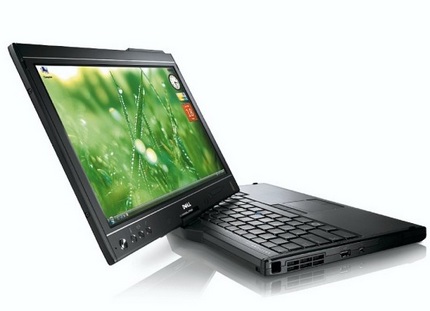
    To drive this growth many manufactures are coming up with new types of PCs, such as flip and convertible models that can be both PCs and tablets. Great, except isn’t that a bit like saying cars are great, and motorbikes are great, so here’s a car made up of two motorbikes stuck together. It can be an uncomfortable car, or it can be two slightly rubbish motorbikes.

    Er, can’t I just have a great car AND a great motorbike?

    Another analogy: touch is like 3D in the cinema. A few great movies came out which made excellent use of the third dimension — well, Avatar — and suddenly every film was 3D, including plenty which just didn’t work with an added dimension. Movie studios like 3D because they can charge more for people to see it, but consumers are less keen (a friend of mine runs a cinema and says 2D versions of movies are much more popular than their 3D counterparts, most of the time). 3D is a fad that’s now slowly dying out and hopefully touch — on devices where it really doesn’t serve any great purpose — will be too. But somehow I doubt it.

    So my question for you is this: am I just swimming pointlessly against the tide here? Should I be forcing myself to fully embrace touch and accept it’s here to stay — on all devices — or do you feel the same? Comments below please.

    Photo Credit: nrt/Shutterstock

  • Will gold’s glitter dim in India?

    Indians have reacted to the latest gold prices falls by — buying more gold. And why not? Aside from Indians’ well known passion for the yellow metal (yours truly not excluded) gold has by and large served well as an investment: annual returns over the past five years have been around 17 percent, Morgan Stanley notes.

    Now, gold’s near 20 percent plunge this year has wiped some $300 billion off Indians’ gold holdings, Morgan Stanley estimates in a note (households are believed to own about 15,000 metric tonnes of gold). So is the gold rush in India over?

    Possibly. Indian gold imports have doubled to around 3 percent of GDP in the past five years. That rise is partly down to greater wealth which translates into more wedding jewellery purchases. But the more unpleasant side of the equation is India’s inflation problem. Look at the following charts from MS that shows how negative real interest rates have encouraged savings in gold rather than financial instruments:


    Signs now are that inflation is ebbing — wholesale price growth in March slowed to the slowest in more than three years. The fall in oil and industrial metals prices, if sustained, should see this process continue. The government has also been slashing spending to bring its huge budget deficit under control. Morgan Stanley writes:

    Over the past five years, real rates have been largely negative. The source of negative real rates has been the high fiscal deficit. Fiscal support is unwinding and real rates are turning up. This will cause gold appetite to recede.

    So while Indians’ emotional attachment to gold may not be tarnished,  it could be less in demand as an inflation hedge. In fact, demand could fall by as much as two-thirds, MS reckons.  Gold savings have averaged 2.5% of GDP over the past three years versus 1.5% in the preceding 20 years.  So even a return to trend levels  would be very significant.

    If Indians do buy less gold in future, some of their cash could find its way into stocks and bonds — MS calculates a 100 basis-point  fall in demand relative to GDP will add $15 billion to liquidity and savings.  That’s at least one of the reasons Mumbai stocks are on track for their best week since early December.

  • Samsung Galaxy S4 coming soon to Verizon

    Unveiled in mid-March, the Samsung Galaxy S4 is one of the most eagerly awaited smartphones to be sold this year. Major mobile operators across the world have already announced pre-order offers, but one big player has yet to reveal any details concerning the Galaxy S4.

    Verizon, one of the largest mobile operators worldwide and second-largest in the US, is expected to sell the Galaxy S4 in the upcoming period but, until Friday, the big red did not disclose any details concerning the date of availability.

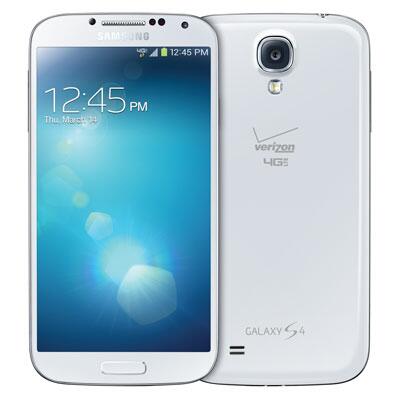
    In a Twitter post, Verizon has finally announced that the Galaxy S4 is headed to its network and arrives in May. As you might expect, the smartphone ships with 4G LTE cellular connectivity out-of-the-box and is big red-branded.

    The US mobile operator has also posted a picture of the Galaxy S4 in white trim, which shows the smartphone carrying the Verizon and 4G LTE logos on the back. There appears to be no other branding other than on the back of the device

    Verizon has also said that it will “soon” reveal more details, likely about pre-orders and the official sales date.

  • Listen to grassroots wisdom to tackle hunger

    Mitch and Vendell representing the Caribbean Union of Fisherfolk Associations. Picture: Anne Philpott/DFID

    Mitch Addison Lay has come all the way across the ocean to Dublin to tell us about the Caribbean Union of Fisherfolk Associations and their worries about diminishing fish stocks close to the shores of many of their islands. He was first and foremost a red snapper line fisherman but had worked hard to bring unity across his fellow Caribbean fisherfolk. The experience had taught him that, “It’s easier to get politicians to listen than to get fisherfolk together”. He told us that fishing for him and his fellow fisherfolk is “a way of life, which is not economic, but an entire life for us, socially and culturally”.The Dublin Conference on Hunger, Nutrition and Climate Change has been different in its determination to bring people who are immediately affected by these issues to ensure they meet policy makers. The messages generated will then feed into the post Millennium Development Goals (MDG) framework discussions. The conference is made up of ‘grassroots’ participants, many of whom are leaving their home country for the first time. These include pastoralists from Ethiopia, Malawian farmers, Arctic peoples and a group of Mongolian cattle herders. The other half of policy makers come from non-governmental organisations (NGOs), governments and UN agencies.

    The opening ceremony urged us all to “listen up” and started with Eamon Gilmore, the Irish Foreign Affairs Minister telling us how he felt a deep empathy for women headed small holders as he grew up on a small farm, run by his mother where weather was the determining force in their livelihoods – if it rained and a crop spoiled they would go hungry. The President of Ireland, Michael Higgens spoke of Ireland’s “deep compassion for others experience of hunger” due to their own history of famine.

    Runa Khatun from Shushilan NGO in Bangladesh with colleagues. Picture: Anne Philpott/DFID

    The day was spent listening to people telling their own stories of the impact of climate change, hunger and nutrition – and the relationship between them all. We also heard from World Vision youth ambassadors who spoke about hopes for their adult lives – Alex Nallo came from Palestine to urge action in tackling these issues which would have an impact on him in his 40’s. He said there will be “limits to their inventiveness” to deal with the combined stress of all three. Runa Khatun, representing Shushilan NGO in Bangladesh, said that they were women who classified themselves as extremely poor and vulnerable to floods who wanted to increase their resilience to disasters by organising together, and a combination of cash and food helped to improve their collective quality of life.

    I was nominated as a policy champion for one of these learning circles and needed to define, determine and articulate the lessons of empowerment we gained. Although empowerment was hard to define, key themes were emerging such as dignity, participation and knowledge, as well as discussion of what outcomes were empowering. We also tackled how to get there in terms of a collective process to a receptive environment and we were tasked to deliver a one minute video address – a real challenge when tackling a subject as complex as empowerment.

    Nick Dyer, Policy Director at DFID with Mary Robinson. Picture: Anne Philpott/DFID

    DFID’s Policy Director Nick Dyer met Mary Robinson earlier in the day and as well as discussing how we would work together towards the ‘Nutrition for Growth’ event on 8 June, she outlined her vision for wider use of clean energy in low income countries and how climate justice is a cause worthy of global solidarity.

    UNICEF rounded off the day by launching a new report on the status of stunting worldwide and successful nutrition responses. The report reminded us that one in four children globally are stunted, robbing them of critical life chances in many areas of their lives and their mental and physical potential. 80% of these children live in just 20 countries making targeting of simple and proven steps easier such as improving women’s nutrition, early and exclusive breastfeeding, providing additional vitamins and minerals as well as appropriate food in pregnancy and the first 2 years of a child’s life. The report ends on a hopeful note showing that stunting is reducing in specific contexts. In Maharashtra state in India, the percentage of stunted children dropped from 39% in 2005 to 23% in 2012 largely because of support to frontline workers who focus on improving child nutrition.

    On this hopeful note, Joe Costello, the Irish Minister for State for Trade and Development, spoke of 2013 being the moment to mobilise for nutrition. He linked this conference at the end of the Irish EU presidency with our own ‘Nutrition for Growth’ conference at the start the UK G8 presidency – and the need to continue to pitch high for delivery for the 870 million hungry in the world. The Dublin event highlighted just how far we have come to bring attention to the issue of malnutrition – and how we now need to tackle it.