A restaurant that has four stars on Yelp might be a big hit with a lot of people, but there’s no guarantee that you in particular will like it. What if you can’t stand Cuban-Japanese fusion? For you, that restaurant should be ranked zero stars. That’s the premise of personalized dining recommendation app called Ness that’s debuting a new version of its app on Wednesday.
Ness first came out with its free iOS app in 2011, but has gone back and improved the ability to predict what users will like. The app is a slick, beautifully designed way of helping you determine where to eat by asking you a few questions to get an idea of what you like and don’t like. It then adapts and learns from how you continue to use the app. Think of it like Pandora or Zite, but for eating out.
The subject happens to be dining , but what Ness is up to is really about maximizing the accuracy of personalization. With its own algorithmic models that use machine learning technology, Ness takes the user’s location, time of day, stated preferences and behaviors within the app (ignoring things, dismissing things) to basically build a dining guide for you. Its determination of how much you’ll enjoy the place or the cuisine is represented by a percentage grade out of 100.
Time of day is an example of a key indicator for the new Ness: if it’s mid-day the app will automatically search for good lunch places. If it’s nighttime, it looks for dinner spots.
It also detects your location to determine how far you’d have to go for food. If you’re in a densely packed metro area during the work week, you’re probably just looking to grab something close by, so Ness will search within a few-block radius for food options. If you’re in an office park in a suburb, Ness knows you’re going to have to drive a couple miles to find lunch, and will recommend places accordingly.
Ideally, this is supposed to happen automatically, without the user having to constantly remind the app of these search constraints.
What you don’t do is also important for Ness’s algorithm: if you search for coffee but never click on Starbucks when the option surfaces always opting instead for a local coffee bar, Ness will start to assume you don’t like chain coffeeshops in general and stop showing you them.
Using that approach to personalization, said Ness Computing founder and CEO Corey Reese, “takes longer to pick up that signal, but the benefit is you [the user] don’t have to do any thinking to make it work.”
Like recommendation services in other genres, like music or news content, the idea of Ness’s more personalized approach is not to keep you in a bubble of your established tastes only. It wants to understand what you like and point you toward places that you’ll enjoy, but not the same places all the time.
“We’re focused more on the moment of delight: ‘Oh, here is a place I had not known about,’” said Reese. “It’s less about making sure you don’t have a crappy meal.” In his mind, that’s more of what Yelp is for — ensuring a minimum level of quality.
“We’re really trying to find those hidden gems that you may not know about.”
The release of the 2.0 version of the app on Wednesday is just one step, he tells me. After the service understands what you like, the next step is for Ness to understand what it is about a place that makes you like it — the ambience, the food, the location, the staff, etc. But you’ll have to wait for improvements in that area in future updates.
Amazon apparently isn’t willing to let Apple and Google hog the market for voice-enabled personal assistants. Unnamed sources have told TechCrunch that Amazon has purchased Evi, a Siri-like voice assistant application that had been developed by True Knowledge, “a British startup with a natural language search engine developed in university labs.” Although TechCrunch has been unable to get official confirmation from Amazon, the publication’s sources say that Amazon paid around $26 million to acquire the app. Given Amazon’s investment in both Evi and voice recognition software company Ivona, TechCrunch speculates that the company may be inching close to developing its own smartphone to compliment its Kindle Fire line of tablets.
With PC laptop shipments projected to decline by 7.3% this year, Windows 8 machines desperately need a shot multiple shots of adrenaline. The Toshiba Kirabook may be just that.
The Kirabook is Toshiba’s first entrant in their newly fashioned “Kira” line of luxury ultrabooks. At first glance, you can see that the Kirabook is meticulously designed, and it radiates a Cupertino-esque level of fit and finish. We haven’t seen this kind of quality from Toshiba for a very long time (if ever).
That doesn’t mean the Kirabook offers anything new in terms of design. There are still shades of the Macbook Air to be found here and there, as is the case with all top of the line Windows ultrabooks.
The Kirabook has a smaller profile than the Macbook Air, but somehow manages to include a retina-quality 2560×1440 WQHD touchscreen display. Although I didn’t get an opportunity to compare it side by side with the retina Macbook Pro, or for that matter the Chromebook Pixel, but it’ll definitely be one of the best laptop displays out in the market once it’s released.
The display is most certainly the Kirabook’s marquee feature and Toshiba’s primary justification for its slightly onerous pricing, which I’ll get to in just a moment.
Inside the Kirabook, you’ll find an Intel Core i5 or i7 processor, 8GB of RAM, and a 256GB SSD. The Kirabook is also bundled with full versions of Adobe Photoshop Elements and Premiere Elements, as well as a complimentary two year service and support package that Toshiba claims to be on par with Applecare.
At least on a spec level, the Kirabook lives up to its “luxury” label. But that also means it’s saddled with a luxuriously high price.
The non-touch Kirabook with Core i5 starts at $1,599. It gets a little crazy from there. The touchscreen Kirabook with Core i5 goes for $1,789, while the top of the line touchscreen Kirabook, with Core i7 and Windows Pro, goes for a whopping $1,999. That kind of pricing blows its PC and Apple counterparts out of the water.
For comparison’s sake, the 13-inch Retina Macbook Pro starts at $1,499, albeit with a smaller 128GB SSD. The Lenovo Thinkpad x1 Carbon starts at $1,187, while the touchscreen equipped model starts at $1,319. The Asus Zenbook Prime, with a touchscreen and a nearly retina quality display, is currently retailing for $1,253 on Amazon.
Toshiba representatives told me that they don’t expect the Kirabook to become the bestselling laptop PC on the market. They understand it’s a bit of a niche product. If anything, the Kirabook is a statement that Toshiba is capable of producing top of the line hardware in a very appealing package.
No word on whether the Kirabook is worth its price tag, but we’ll be sure to keep you in the loop with a full review soon. It’ll be available in stores May 5th.
It was a shining moment for Fisker Automotive. In the summer of 2011, four years after the upstart electric car company opened its doors, its first cars were finally rolling off the factory line in Finland, and the sleek vehicles were landing in the garages of some of the biggest names in Hollywood, politics and Silicon Valley. Actor and Fisker investor Leonardo DiCaprio received one. Al Gore and Colin Powell were next in line.
Fisker’s Project Nina, later called the Atlantic, which was never manufactured.
That summer gas prices were predicted to rise about 40 percent, leading to a boost in sales of fuel-efficient cars. A year earlier, electric-car company Tesla held a blockbuster IPO, and Nissan’s low-cost electric car the LEAF had gone on sale. The country seemed like it might finally be ready for electric cars, and perhaps ready for the first car enthusiast’s plug-in hybrid, as the Fisker Karma was being called.
There are a lot of crash-and-burn stories in Silicon Valley. It’s in the nature of entrepreneurs, startups and investors to take risks and sometimes fail. But it’s not often that you see such a dramatic downfall.
Those that have been tarnished by Fisker’s demise include venture-capital grandaddy Kleiner Perkins; Fisker’s executives, many of whom had long distinguished careers in Detroit; and Fisker’s broker, Advanced Equities, which helped the company raise hundreds of millions of dollars and has now disbanded entirely. Fisker raised and spent more than a billion dollars over its lifetime.
A handful of celebrities and politicians that championed the company have also been caught up in its wreckage, as has the Department of Energy, which ended up loaning the company close to $200 million. The entire electric-vehicle industry could take a hit because of Fisker.
How did this do-gooder dream that was supposed to combine Silicon Valley-backed tech innovation, gorgeous design, and eco-friendly hot-rod cars turn out so horribly wrong for so many people? That’s what I’ve tried to find out in a dozen interviews in recent weeks with people at the center of the Fisker story.
Summer of 2011
It was in that summer of 2011 — even as the company outwardly was showing some signs of hitting its stride — that I first started to wonder if something wasn’t going awfully wrong at Fisker. Mitt Romney had just announced his presidential run, a federal grand jury had indicted John Edwards, and we were enduring the second hottest summer in the U.S. on record.
I had been following Fisker since its founding four years earlier, and the company was on the cusp of delivering its first electric hybrid sports car, the Karma, to customers. Though the delivery was running 18 months behind schedule, there was a sense of anticipation among the media, investors and car enthusiasts.
Then two things happened that gave me pause. An auto industry executive that I trusted made me an offhand bet that included the idea that Fisker’s second car — then called Project Nina and partly funded by a Department of Energy-approved $529 million loan — might never see the light of day. Fisker had deep pockets, such high-profile investors and so much media hype — I really hadn’t considered something so shocking. Clearly I lost that bet.
The second unsettling event of the ’11 summer was when Fisker invited the media to watch “the delivery” (re-enacted reality TV- show style) of one of the first Karmas to Kleiner Perkins partner Ray Lane. Outside Kleiner’s offices, in the hot parking lot, Lane held up the keys in celebration of the delivery and talked about the joys of driving his Karma as a large group of photographers, reporters and TV crews captured the moment.
Afterwards, I did a long interview with Lane back in the air-conditioned comfort of the Kleiner offices, where he explained to me his counterintuitive thesis for backing Fisker: Either get the valuation high enough so they don’t get crushed on dilution or get low-cost loans that are high leverage for equity investors. “My partners thought I was out of my mind. But I had a thesis,” said Lane.
Kleiner Partner Ray Lane receives the keys for his Fisker Karma, Summer 2011.
But to understand Fisker’s missteps you have to go back to at least 2006. Fisker’s founder Henrik Fisker was a well-known car designer formerly with BMW and Ford who had his name on hot cars like the Aston Martin DB9 and the BMW Z8 Roadster. In 2004 he started a luxury-car company called Fisker Coachbuild with his long-time buddy Bernhard Koehler, who was later his co-founder at Fisker. In late 2006, Henrik Fisker started working on a contract basis with Tesla, creating designs for Tesla’s second car, a sedan, later called the Model S.
This was also the year that Al Gore’s Inconvenient Truth debuted, and some in the Hollywood elite were starting to embrace hybrid cars and eco causes. Henrik Fisker has told reporters that he was inspired to build Fisker Automotive after seeing DiCaprio drive a Prius to the Oscars and thinking he should have something more high-end. DiCaprio later became an investor and marketing partner to the company.
In 2006 and 2007, cleantech investing was the all the rage among VCs. Research firm the Cleantech Group called 2006 a “watershed period” for cleantech venture investing. VCs put $3.9 billion into global cleantech startups that year, an increase of about 50 percent over 2005. The annual investment numbers grew even more in the following years, but 2006 was a turning point.
Around that time Kleiner Perkins had a plan to bet a third of its fund on cleantech investing. More than a decade ago, Kleiner made a fortune from investments like Google and Amazon, and in the early 2000′s was trying to find the next big thing. Some of the Valley’s most well-known investors like Draper Fisher Jurvetson and VantagePoint Capital Partners were also excited about cleantech back then, and had decided to put millions into Tesla, led by charismatic PayPal co-founder Elon Musk.
At some point at the very end of 2007, Kleiner became Fisker’s early flagship venture backer. Musk told PandoDaily’s Sarah Lacy last year that Kleiner actually tried to invest in Tesla before Fisker, during Tesla’s Series C round, but Musk said that Kleiner wouldn’t let him choose the Kleiner Partner for the board seat. Musk wanted John Doerr, but Kleiner’s transportation guy at the time was Lane, who later joined the board of Fisker. Musk ended up going with VantagePoint, and Kleiner ended up funding Fisker. Clearly Tesla’s VC funding, followed by its IPO in the summer of 2010, were significant motivators for Fisker’s investors.
Tesla’s Roadster, with VC-backing, was first delivered to customers in Feb 2008.
In early 2007, after a chance encounter with the girlfriend of then-Quantum Technologies CEO Alan Niedzwiecki, Henrik Fisker and Niedzwiecki decided to meet for lunch to discuss the possibility of launching an electric car based on the Quantum drivetrain. In late Summer of that year, Fisker Automotive was officially born as a joint venture between Fisker Coachbuild and Quantum.
The idea at the time was ambitious, exciting, and perhaps even a little threatening to potential competitors. A little over a year after Henrik Fisker did design work for Musk’s company, Tesla sued Fisker (Jalopnik called it the world’s most expensive girl fight) for breach of contract and allegedly using the design work to raise funds from venture capitalists and launch a company. The suit went to arbitration, and the arbitrator sided with Fisker.
The heart of Fisker’s business model was in that early deal with Quantum. The idea was to design a gorgeous car, and have suppliers like Quantum provide the technology because off-the-shelf parts from suppliers would help keep costs down.
But there were problems with this strategy: Sometimes, those parts had to be custom-made to fit the design vision, which resulted in higher prices for Fisker. Other times, parts were delivered late or, worse, faulty, but Fisker was locked in to those supplier relationships. Sources close to Fisker have also said that many of the parts were owned by the suppliers themselves, so Fisker didn’t own a lot of the internal technology.
Compare that approach with Tesla‘s strategy: Tesla has invested millions of dollars to amass electric car intellectual property. It can make money selling its core technology to other large auto makers like Toyota and Daimler, and a decent amount of Tesla’s value is in its tech IP.
Toyota’s electric RAV-4 has Tesla tech inside.
Indeed, Fisker’s business model wasn’t the type that funders in the Valley typically like — it’s the polar opposite of the ‘Intel inside’ approach. That so many investors were so eager to back the company has left many in the electric car and tech industries scratching their heads over the years. “It would have only taken a couple a phone calls to industry veterans to have prevented all of this,” says electric car advocate Chelsea Sexton, adding “there’s no excuse for not doing homework. It appears none was done.”
One of the things Fisker will be most remembered for is the huge amount of capital it tapped into — the at least $1.2 billion it raised and the close to $200 million loan it received from the government.
When Fisker first showed off the Karma at the Detroit Auto Show in January 2008, Kleiner Perkins investors were front and center. Lane told the Wall Street Journal that their early investment in Fisker was more than $10 million and was one of the firm’s bigger investments at the time. Lane also said that the Fisker deal was one of the first in which former Vice President and Kleiner advisor Al Gore provided advice.
But those funds were just the initial drop in the bucket for what Fisker would ask for to grow and produce its cars. In the following years, Fisker raised venture rounds of around $65 million and $86 million, respectively. But venture firms couldn’t supply all of the funds for building an electric car, which can cost a billion dollars.
Part of the answer came from the U.S. government. When President Obama took office in 2009, he pledged to support electric cars and low-emission vehicles. His administration used the massive stimulus package to create green jobs and build a so-called clean energy economy. But even before that, a program called the Advanced Technology Vehicles Manufacturing, or ATVM, was created in 2007 and funded by Congress in 2008 and offered loans for companies making vehicles in the U.S. that had better mileage or reduced dependency on foreign oil.
In the summer of 2009, the first wave of ATVM conditional loans were announced, and went to Nissan, Ford and Tesla. Soon after, Fisker itself got approval for a conditional loan of $529 million. Fisker’s goal at that time was to produce 11,000 to 15,000 Karmas per year by September 2011, and 75,000 to 100,000 Project Ninas (later called the Atlantic) in 2012. The DOE ended up only delivering about $200 million of that loan after Fisker didn’t meet milestones for its Karma. Fisker delivered none of its Ninas, later called the Atlantic.
Fisker targets vs. deliveries
Targets
Deliveries
Karma
11,000 to 15,000 cars by late 2011
2,000
Atlantic
75,000 to 100,000 cars in 2012
0
Much of the political reporting that will come out on Fisker, as well as a planned upcoming hearing on April 24, will likely focus on how Fisker got approval from the DOE. Was there cronysim, and did Gore play a role? In the past I’ve looked into rumors suggesting Fisker got the loan because it agreed to build a factory in Vice President Joe Biden’s home state and deliver Delaware green jobs. I’ve never found a direct connection there.
But I would imagine that, as with Solyndra, the DOE and the administration trusted the company’s backers and liked the idea of a beautifully designed, American-made electric car. Fisker fit into their thesis of using public funds to stimulate the clean-energy economy and create green jobs.
Joe Biden speaking at Solyndra’s ground breaking in August 2010
The broker
Getting the conditional loan was a key turning point for Fisker. It gave the company clout and the ability to raise additional funds. Soon after Fisker received the loan agreement, it started working more closely with a broker in Chicago called Advanced Equities.
Over the course of three years, according to my sources, brokers at Advanced Equities raised somewhere between $600 million and $800 million of Fisker’s over $1 billion in funding. The sources say Advanced Equities sold Fisker shares to over a thousand wealthy individuals. These aren’t professional investors that are used to taking on startup risk; they are people who did well in life and wanted to invest in the tech-driven dream of a sleek electric car.
One of those investors was DiCaprio, and numerous sources close to the company have told me that Kleiner Perkins partners Doerr and Lane put millions of dollars of their own money into Fisker. Another person that Fisker listed as a Director on a funding filing in late 2011 was Timothy Shriver. In a recorded internal sales call with Advanced Equity brokers from early 2010 that we’ve obtained, Advanced Equities co-founders tell their brokers that the Fisker opportunity is such a good one that they should bring the deal to their best customers.
Of course, many of the investors through Advanced Equities weren’t household names in San Francisco or Los Angeles. Chicago’s prepaid college saving’s fund, the Illinois Student Assistance Commission, invested $10 million. An investor named Daniel Wray invested $210,000, and later sued the company and its broker.
Fisker’s venture backers commonly pitched in to help Advanced Equities. Sources tell me that it wasn’t unusual for investment calls with Advanced Equities and potential investors to feature Kleiner’s Lane, as well as NEA’s Scott Sandell, sharing Fisker’s vision.
If you asked venture capitalists in the Valley around that time what they thought about Advanced Equities, a common response was that it didn’t have a very good reputation — “snake oil salesmen” was the term often used. I’ve long wondered why Kleiner and NEA would actively work with a broker that had a weak reputation. Advanced Equities brokers, for their part, made millions of dollars in sales commissions from these deals.
It wasn’t until December 2011 and into 2012 that the more dubious efforts of Advanced Equities became clearer to Fisker’s hundreds of investors. The last few hundred million dollars of Advanced Equities’ fund raising for Fisker, starting with the D-1 round, was what brokers call “pay to play.” As Fisker was running into technical, delivery and political problems, its valuation was quickly declining. But the company still needed more money, so the brokers went back to its current investors and said: Unless you give this more, your current shares will be diluted and your preferred stock will be converted to common stock.
It was essentially a gun to their heads. This is why investor Wray sued Fisker in February 2012, alleging he was on the receiving end of this tactic. In his lawsuit, he says Advanced Equities sent him a letter dated Jan. 18, 2012, stating that he needed to decide if he wanted to invest in Fisker’s next round, and pay around $84,000 by Jan. 27, 2012 — a little over a week from receiving the letter. He also says that Advanced Equities assured him that he would have anti-dilution protection. According to the audio clip from Advanced Equities’ internal sales call in early 2010, Advanced Equity leaders say that the Fisker deal will “suffer no dilution,” and was “a dream scenario.”
That dream would soon end. In September 2012 after Fisker closed on $1.2 billion in funding, the bulk of it organized by Advanced Equities, the SEC charged the broker with misleading investors when it raised money for another company back in 2009 and 2010 (Bloom Energy). Advanced settled, agreeing to pay $1 million, and its co-founders were personally fined. Two months later Advanced Equities closed up shop.
The public problems start
In the summer of 2011, Fisker cars finally start rolling off the production line — Lane got one of the first, and so did DiCaprio, Gore and other luminaries. By October, Fisker said about 40 Karmas had been shipped to the U.S. from the factory in Finland, and before the year was out, at least 200 people had Karmas.
But this was still a lower number than expected — delayed regulatory approval was part of the problem. As a result of the delays, Fisker’s battery supplier, A123 Systems, had to lower its yearly revenue guidance.
Ray Lane’s Fisker Karma, Summer 2011
At the end of the year, a dark cloud appeared over Fisker’s celebrity parade. In December, 239 Fiskers were recalled because of a faulty battery hose clamp. The news was alarming, but Tesla had faced the same type of recalls in its early days, and so customers and the media were somewhat forgiving.
Then another red flag: As the ball dropped on 2011, I noticed that Fisker was quietly raising more money using Advanced Equities. That seemed unusual because the company was now delivering its cars, meaning it could bring in revenue, and it had already raised so much. It would take another month for me to figure out why.
Fisker in February 2012 confirmed media reports that its DOE loan had been frozen after $192 million because it hadn’t hit the milestones with its Karma. The last payment Fisker had received was all the way back in May 2011. Many of Fisker’s investors are now wondering why the DOE wasn’t more vocal about the frozen loan when it happened back then, as they had continued to fund the company based on the assumption that the DOE loan was still moving forward.
Regardless, the confirmation of the lost loan kicked off one of the worst years — both self-inflicted and just plain bad luck — for a startup I have ever seen.
Founder Henrik Fisker stepped down as CEO, and he was replaced by an auto executive from Chrysler. Six months later that executive was replaced by a third CEO, who previously worked on the Volt at GM. Fisker stopped work on its second car and laid off all the workers in its Delaware factory. (When this story was published, the DOE still has a note on its ATVM page saying Fisker created 2,000 permanent jobs in Wilmington, Del.)
In the spring of 2012, Consumer Reports bought a Karma, and when it broke down after less than 200 miles, the magazine understandably gave it one of the worst reviews in automotive history. One of the problems with the Consumer Reports’ test car involved the battery. But the battery issue turned out to be much more widespread that just the review car, and Fisker’s battery supplier decided to replace faulty battery cells to the tune of $55 million.
Later that year, A123 Systems itself went bankrupt, causing more problems for Fisker. Fisker claimed that A123 Systems owed it $140 million, but a bankruptcy settlement reduced that to a paltry $15 million. Chinese giant Wanxiang wound up buying A123 Systems; adding insult to injury for Fisker, sources have told me that Wanxiang also looked at, but seems to have passed on investing in or buying the electric car company.
That summer, Fisker also recalled a cooling fan after it caused a slow-burning fire in a Karma in Woodside, Calif. Watch the disturbing video of a fireman putting out the flames. In hindsight, Fisker is lucky no one was killed while driving its vehicles.
Then there was the just plain terrible luck for the ironically named Karma: Super Storm Sandy wiped out 338 of its Karmas in storage in New Jersey. The cars first drowned, and then caught on fire — salt water damage caused a short circuit that was spread to other cars by high winds, Fisker said at the time.
With all of this happening in public — and in a presidential election year — Fisker’s struggles became highly politicized. The company was mentioned numerous times in presidential debates and speeches leading up to the election. Republican nominee Romney called Fisker and other DOE-supported companies losers.
Where did all the money go?
Fisker had a phenomenal amount of funding in its coffers — so where did all the money go? It’s no doubt expensive to launch a car company, but the way Fisker spent the money didn’t seem to create much lasting value.
The company didn’t seem to invest substantially in technology innovation or tech IP, and seemed to spend a disproportionate amount on suppliers. For example, numerous sources have told me that the company paid upfront for 15,000 of some of the parts for its planned 15,000 Karmas. It ended up only selling around 2,000 of the cars. I’ve also heard that Fisker paid some funds upfront to have BMW make engines for the 100,000 Nina cars it hoped to produce — in the end, Fisker didn’t deliver a single Nina.
Costs to build each Karma also creeped up because the company missed its volume targets, and because engineering had to change designs around supplier constraints. No wonder the company ended up adding $20,000 to its initial sale price.
Expensive hires may also have sucked away chunks of Fisker’s funding: Sources I’ve talked to say that Fisker filled the upper levels of the company with seasoned auto executives from Detroit. At the high point of Fisker, the company had around 300 employees, plus dozens of contract staff. Bringing in a certain amount of the old guard could help a car startup ramp up quickly, and also impress potential investors with “industry names.” But those people are also used to big auto-industry budgets that included extensive travel and salaries — that’s the opposite life of a tech startup.
The end
The bottom line for Fisker: It sucked down over a billion dollars and delivered around 2,000 cars to customers that now have few places to turn if those cars have mechanical problems.
At Kleiner Perkins, the dust is still settling. Reuters reported earlier this year that Kleiner partner Doerr apologized to his limited partners (groups that put money into VC funds) for a weak fund performance and promised to do better in the future. Lane has transitioned away from bringing in new investments for Kleiner’s future fund. Spooked by bad deals, venture firms across the board pulled back on cleantech investing by a third in 2012.
There are political repercussions, too. The DOE was on the hot seat when Solyndra went bankrupt, and now will be equally under scrutiny over Fisker. The ATVM program has essentially been frozen, and the DOE says that despite the fact that it has $16.6 billion remaining in the fund and seven applications pending, it will not award any more loans.
The worst part of the Fisker story could be the fallout for electric cars. Helping reduce America’s dependence on foreign oil and lowering the carbon emissions of personal transportation is necessary. Introducing more electric cars is one way to do that. But with the industry in such a fragile, nascent stage, Fisker could wind up delivering the knock-out blow.
Anonymous proxies can be a very useful privacy tool, hiding your IP address from websites, and perhaps allowing you to bypass local restrictions on the websites and pages you can visit.
The technology can also be complicated, interfering with your regular network settings, and drastically cutting your online performance, of course. But Freegate proves that it doesn’t have to be that way.
The program is a compact 2.75MB download, for example, with no installation required, no extra network layers to cause other issues: close Freegate down and your system will be back to normal.
It’s simple to use, too. After a one-time opening screen, where it asks whether you’d like to use its own servers or restricted Chinese offerings (it’s developed for use in China, though works well elsewhere, too), Freegate quickly finds a few servers and redirects your web traffic through them.
Once its working, the program will then open a browser window at a Chinese-language site, but otherwise there’s no adware or ads to worry about (and even that initial browser launch can be turned off in the settings).
And there are one or two configuration options which might be handy, too, like the ability to delete your IE history when Freegate closes (there’s no support for other browsers, though, unfortunately).
Performance during our tests wasn’t bad. Inevitably, there are some issues; pages might take longer to load than expected, and a few would freeze occasionally. But overall it worked well.
If you want an easy way to bypass some IP-related restriction on your general browsing, then, Freegate is ideal. It’s small, simple and won’t get in your way.
But as with most similar free tools, there’s no way to tell how secure your traffic really is. And so if you want to do anything sensitive — shopping, online banking and so on — then we’d recommend you close it down to restore your normal network settings, first.
Smartwatches have been around for the last decade, but they have failed to gain any real attention until recently. The Kickstarter-backed Pebble generated massive hype, as have rumored devices from Apple, Google, Samsung, LG and Microsoft. Market research firm ABI Research is now predicting that 2013 could be a breakout year for smartwatches with more than 1.2 million devices expected to ship.
That’s where Kinsa comes in. Launched Wednesday at the Demo Mobile and TEDMED conferences, the New York-based startup wants to create a real-time picture of the country’s health by using smartphones and simplified digital thermometers.
“Today, I can know what my friend’s dog at for breakfast, but I have so little insight into the health situation around me,” said founder and CEO Inder Singh. “We’re creating… a real-time map of human health [to] keep families and neighborhoods healthy.”
Building on technology developed by entrepreneur and investor Edo Segal and others, Kinsa developed a thermometer that plugs directly into a smartphone’s earphone jack. (Singh said they focused on the thermometer because a fever is often the first sign of illness.) Because it connects with a smartphone, it doesn’t include batteries, processors or an LCD, which means the device is cheaper and lighter than other digital thermometers.
After downloading the Kinsa app, users can see their temperature on the smartphone screen, as well as log other symptoms and share the information with a doctor, family or a private group.
Over time, as the thermometer gains traction, the company’s hope is that it can provide individuals, doctors, public health officials and health companies with better data on where and when illnesses are spreading, as well as inform next steps. For example, it could let individuals and doctors know about possible illnesses in the area. Or, it could enable pharmaceutical companies understand where and when their products might be most in demand.
But even before the company amasses a critical volume of data, early adopters will already be able to use the app to track a child’s symptoms and then share them with the doctor or create a private group to share information and check the health status of others in the group. For example, Singh said, parents could create a group for a child’s class and anonymously view illnesses among classmates.
Users who don’t want to join a private group can consult a map to view the “health weather” in their area, which is a report that combines data from Kinsa with public health data from other sources. The app also includes features for calling a nurse with one tap and forecasting when you’re likely to be contagious and when you’ll likely recover.
The startup, which has raised $2 million, expects the thermometer to become available later this year, after receiving FDA clearance. Initially, the company plans to sell the thermometer at a price comparable to other digital thermometers ($15 – $20) but, as penetration grows, they plan to drop the price.
To build buzz around the product, Kinsa also launched an Indiegogo campaign on Wednesday, with a goal of raising $75,000.
T-Mobile MVNO Solavei said on Wednesday it will fully support all of the HSPA+ radios in the new version of the iPhone 5. That means anywhere T-Mobile offers 3G service, Solavei will too. Previously all iPhones’ 3G capabilities were restricted to areas where T-Mobile had completed its ongoing network overhaul, which to date is about 50 cities. Solavei – which has adopted a multi-level marketing approach (think Amway) to distributing its service – is selling the unlocked iPhone 5 directly to customers for the steep price of $700 through its retail partner GSMNation. But unlocked versions of the device will work just fine with Solavei’s SIM cards.
Solavei, however, won’t get access to T-Mo’s latest and greatest 4G network though. The MVNO confirmed that none of its customers will be able to tap T-Mobile’s LTE network, no matter what phone they own. T-Mobile has only launched LTE in seven cities, and it appears to be keeping its new 4G service for itself for the time being. I would expect that change eventually though. Sprint, for instance, is already opening its new LTE network to its numerous MVNO partners.
T-Mobile’s 3G network, though, is nothing to scoff at. T-Mo the only U.S. carrier to offer dual-carrier HSPA+, which is now accessible by the iPhone 5 and many other devices supporting its Advanced Wireless Services (AWS) band. T-Mobile also has several other MVNO partners, such as Tracfone’s Straight Talk Wireless, that can theoretically support the iPhone 5. Solavei is the only one we know of that is selling a nano-SIM card that fits into to device, but many consumers are getting around that problem by cutting larger SIM cards down to size.
What’s your favorite color? Well unless you went on a tangent, you may be able to pick up Motorola’s X Phone in your color of choice. The rumor mill is churning and what’s being pumped out is word that Motorola’s new phone may come in 20 different colors. Now all of this is according to a source for Phone Arena, so take it with a grain of salt.
Is this part of what Eric Schmidt was hinting about? This also sounds like it could be some of the “wow” they want to put back into their phones. In any case, this sounds like an excellent idea by Google and Motorola. I’m sure customers will see it that way too. Let’s hope this is one of the few rumors that turns into reality.
As we shared yesterday, the process to actually pay for the Glass Explorer Edition was quite simple. The next step in the process is picking up your device at either the Mountain View, Los Angeles or New York City Google Campus. Of course, you can opt to have them shipped to you if you’re not in one of those areas, but what’s the fun in that?
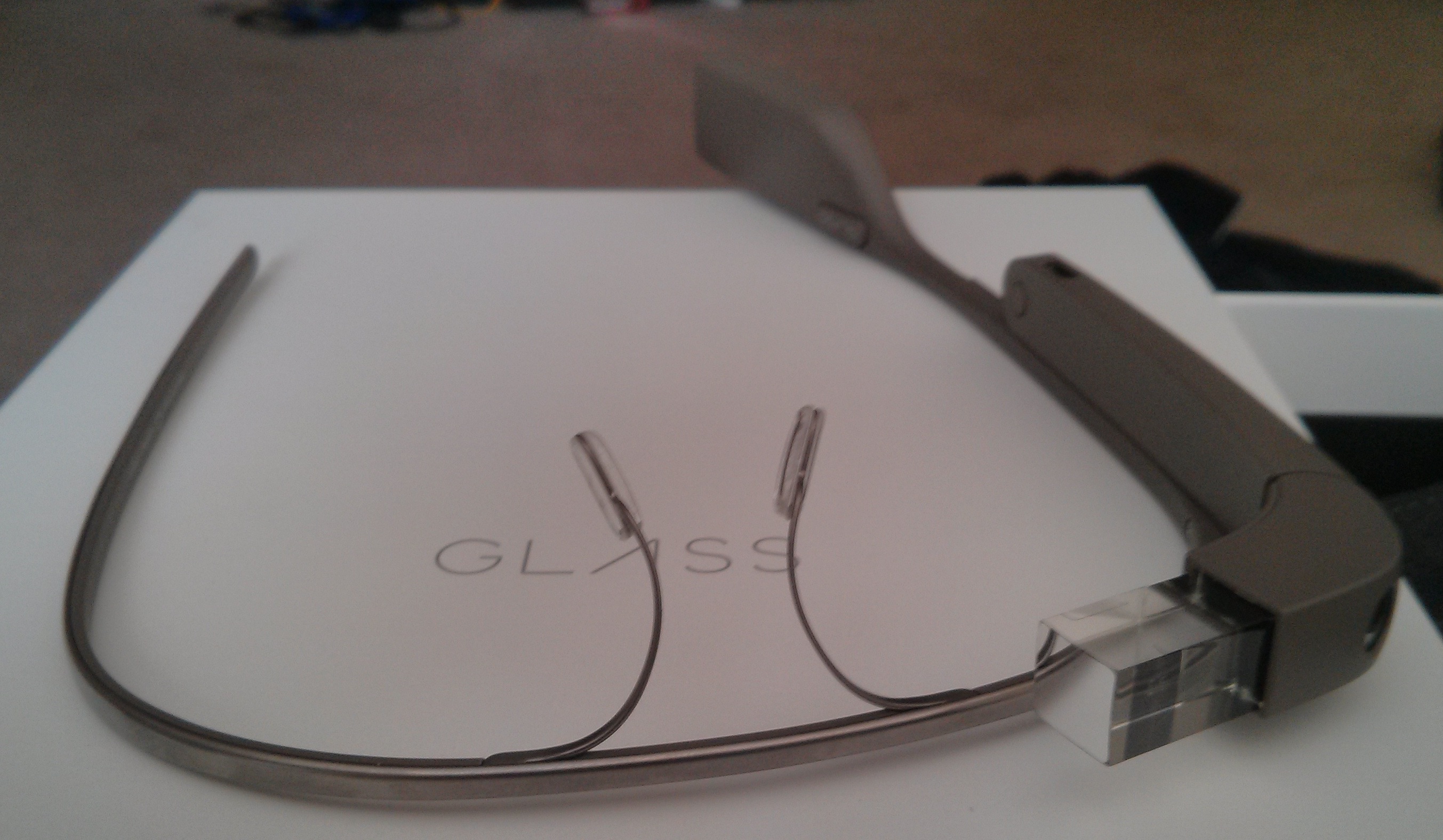
I picked up my Google Glass today in Mountain View and was told only that I would receive a bit of a walkthrough and proper fitting. I want to warn you, this isn’t a review, there won’t be any unboxing videos, you can find the technical specs here and there will be no pass or fail grade on this first iteration of Google Glass. If you buy into the potential for the device, and, more importantly the platform, then you know that this will be a true exploration into what Google has come up with here.
Some will see this device as a fad, something that isn’t really “necessary” in today’s world, and others will see this as the beginning of an adventure for users, developers and Google, of course. I tend to lean towards the adventure side, as it’s not fully known what impact Glass will have on society, your day-to-day activities, or the future of technology and hardware.
The setup
I arrived at the Googleplex and a few members of the Glass team greeted me. It’s been almost a year since Google’s last I/O conference where 2,000 developers signed up to be a part of the Glass Explorer program, and this is naturally the day that they’ve been waiting for.
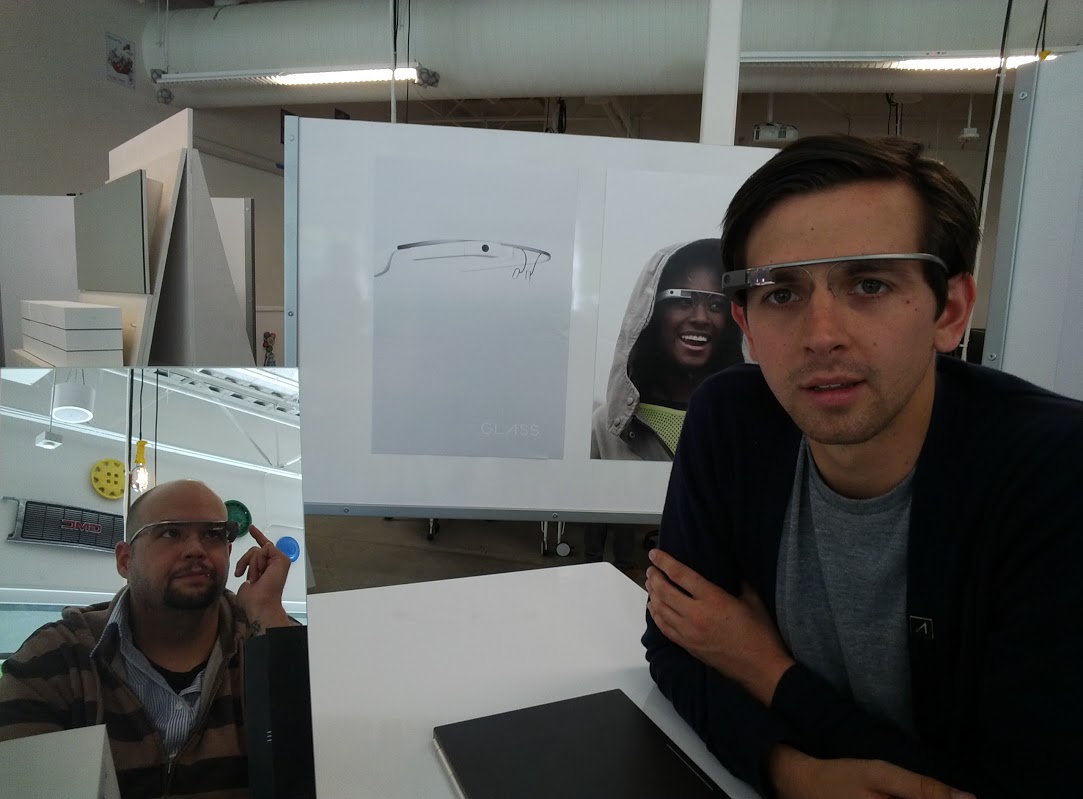
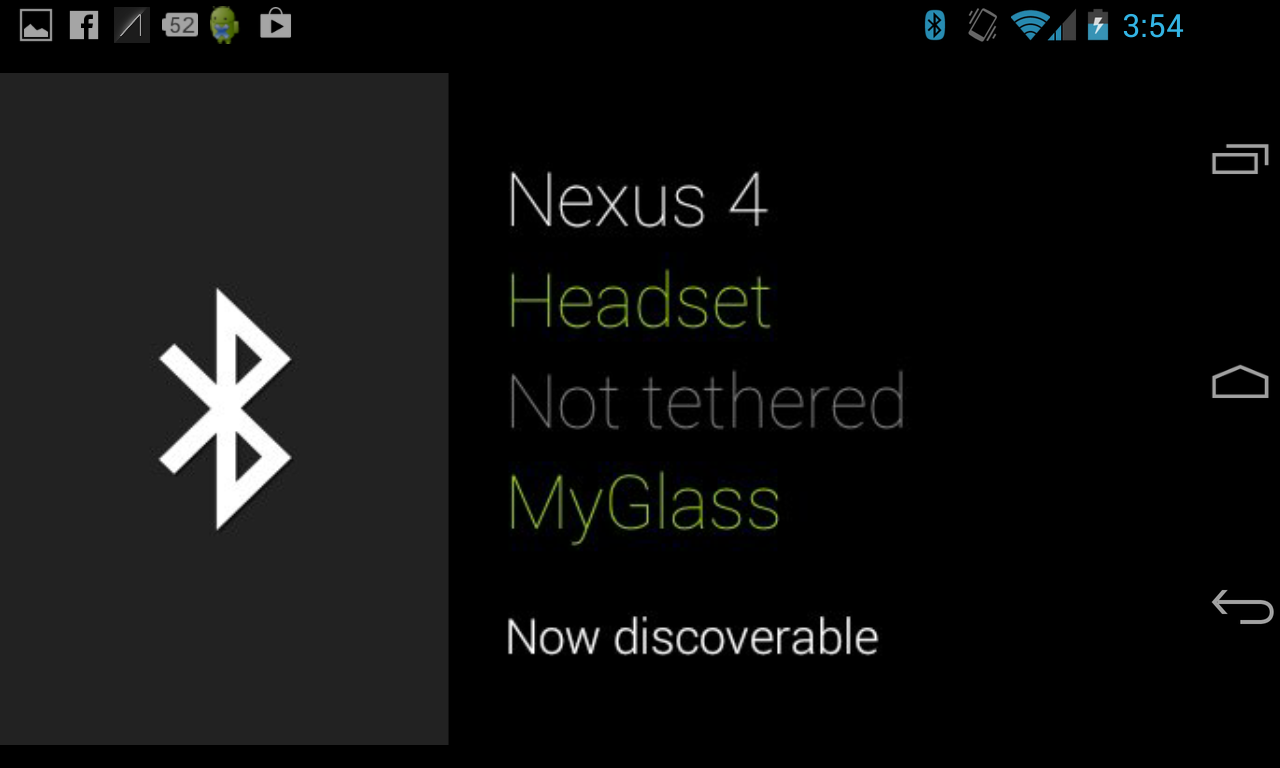
When I sat down to unbox my Glass, I was shown the proper way that they should sit on my face. The glass itself, where the screen is projected, should sit above your right eye and not in front of it. It’s easy to mess around with the nose pads to get the right fit. The second step is to pair your Glass with your device, using the MyGlass app that recently shipped. Since Glass pairs to your phone through Bluetooth, the device is pretty much useless until that’s done.
You log into the app using your consumer, not business, Gmail account, and then you’re off to the races once you’ve paired:
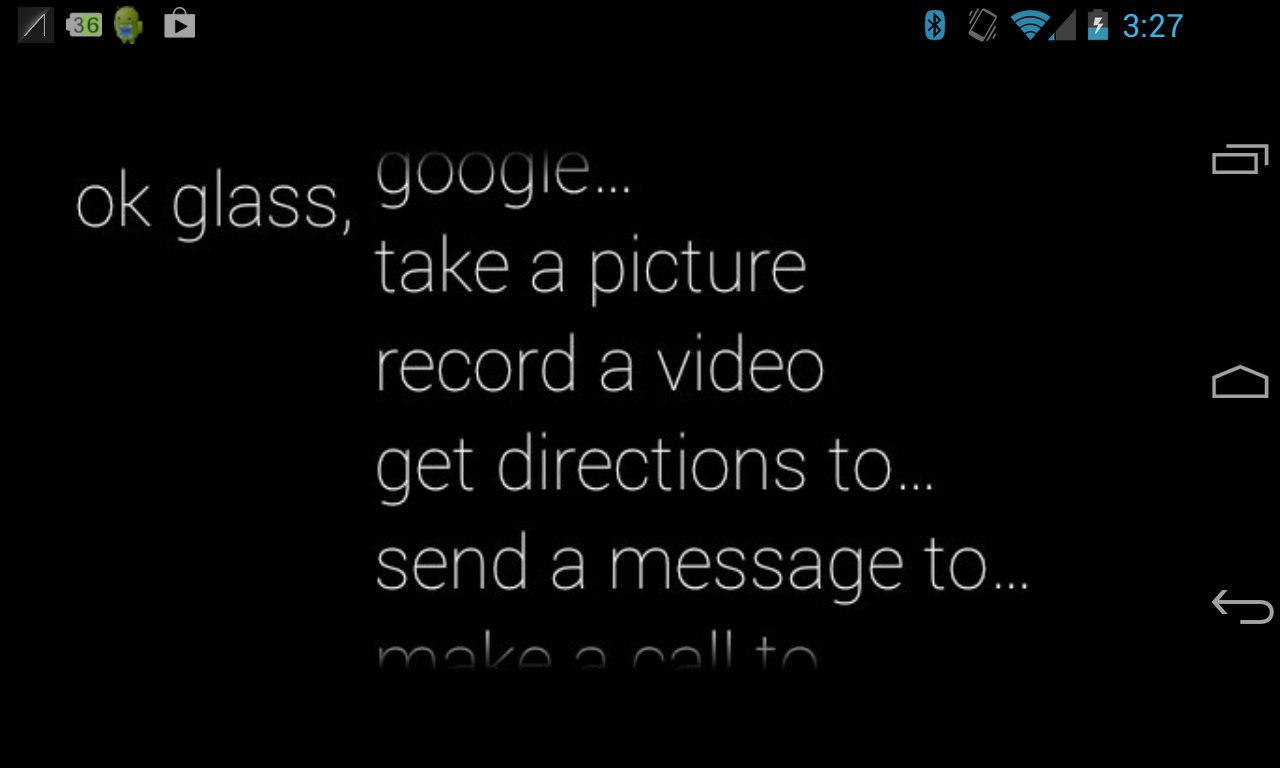
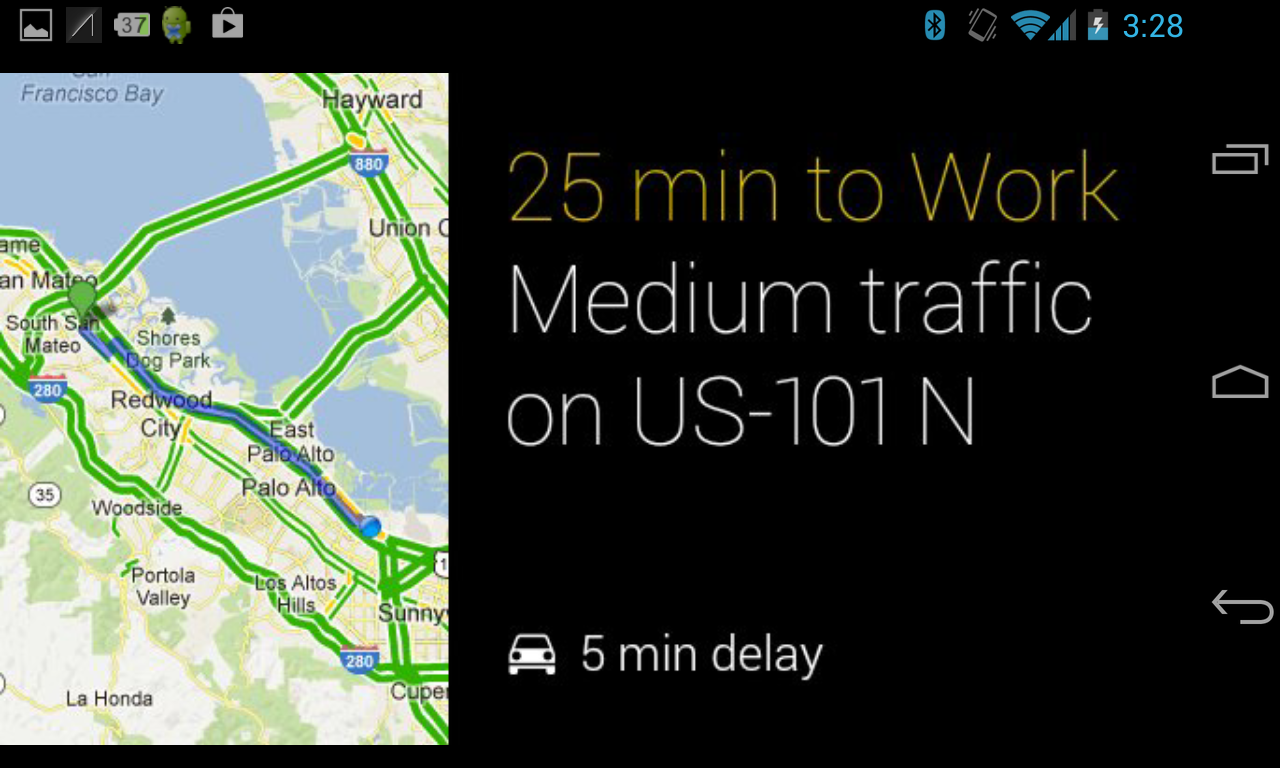
Something to note, all of these screenshots are coming from the handy “screencast” tool within the MyGlass app. It shows everything that you’re seeing on Glass. You’re paired, account is connected, Wi-Fi or mobile network is chosen, and you’re ready to use Glass.
As you swipe your way through some of the screens on the touchpad with your finger, you’ll notice Google Now cards (if you choose to turn them on), a settings screen, and of course, the all-important command screen that pops up after you say the magic phrase “Ok Glass.”
With these voice commands, you can Google things, find directions, send someone a message shoot a video or take a picture. There’s also a button on the top of Glass that lets you snap photos and shoot video as well. The audio, which comes out right by your ear, is crisp and not too loud.
The Glass team tells me that looking at the screen takes some time to get used to. Some of the folks who work at Google say it took them up to a week to be able to focus on the screen properly. Let’s be honest, looking up and to the right isn’t a natural movement for our eyes. I’ve found that as I’ve worn them longer, I can glance up pretty quickly and see what I need to see and go back to what I was doing.
One trick is to use the screencast function of the app so that you can understand fully where each screen goes and what it does.
What Glass is and isn’t
Let’s start with what Glass isn’t. Glass isn’t a replacement for your cell phone, since you have to pair the device with the one you have for cellular or Wi-Fi coverage. It’s not a device for watching movies or YouTube videos and it’s not going to replace your computer. You won’t be able to read full search results on the tiny screen, but you’ll be able to get to really relevant information quickly.
What Glass seems to be, in the few hours that I’ve spent with it, is a device that picks up some of the things you do throughout your day and makes that information more easily accessible. Currently, the only built-in integration for a third-party service is Path.
For example, how many times a day do you pick up your phone to check the time or to see if you have any missed calls or text messages? I couldn’t count the times that I’ve wasted that arm motion. Furthermore, every single time you take your phone out, you’re telling the people that are around you that you have no interest in interacting with them for at least 30 seconds while you dive into your phone. Now, am I saying that having a screen above your eye is any less socially awkward? No. But it lets you access the same information quicker without having to stop what you’re doing.
If you look at Glass in its existing state, it’s quite impressive that all of this was fit into a tiny package that sits on your face. Will I get weird stares for a while when I’m out wearing them? Probably. Do I care? Not really. But I do care how it affects others, and that’s something that nobody will be able to talk about for sure until these things are in the wild for a few weeks.
Now mind you, this is the Explorer Edition of Glass, and it comes with the barest bones of “apps.” The real magic is going to be what developers start building on the platform.
What Glass could be
This is where things get really interesting. As we covered last week, there are already investors that are chomping at the bit to put money into developers who are building apps on top of Glass. The possibilities are actually quite endless, starting from potential uses in hospitals for doctors to a new way for teachers to interact with their students.
As far as how we interact with the world around us, being able to take pictures from our own vantage point, without setting up a shot for perfect light or shade, is something that has yet to be uncovered. Glass can do that. Being able to join a Google+ Hangout and talk to your friends with nothing more than a device that sits on your nose is pretty cool, too.
It all goes back to the developers, though. They have the minds to push Glass forward as not just a geeky novelty, but as a platform to enhance our lives. I’m not going to sugarcoat it — this product has a lot of bumpy roads ahead of it. We have to assume that there are developers who can come up with big ideas, that consumers are ready for it and whether it can be at a price point that middle-America can afford. In its current developer-only state, it’s not that hard to grasp how to use it once you get past having something new on your face.
This is only a first step, and it’s going to be an interesting ride. Not only can I not wait to build my hands-free recipe app, I’m looking forward to speaking with developers who are forward-thinking enough to see Glass for what it is — not a futuristic gadget, but something that can help us explore the world in a new way. It’s going to take time, though. I mean, even my dog thinks it’s weird:
If you’re a developer who is working on, thinking about or are interested in building Glass apps, feel free to reach out to me, as we tell the story of the platform together.
Apple’s shares got hammered again on Wednesday and one major reason was the lackluster earnings guidance provided by chip vendor Cirrus Logic, which Apple has long used as a supplier for iPhone audio chips. Barron’s points us to a new note from Needham & Co. analyst Vernon Essi Jr., who claims that one big reason Cirrus will miss consensus on its quarterly revenues is because Apple is “losing its mobility mojo.” In particular, Essi says that the guidance “indicates that the recent fears of Apple’s lackluster iPhone demand in 2013 are warranted” and that sales “are more likely in the 55M range for 1H2013 vs. Street forecasts that are above 60M units.” Earlier this week R.W. Baird analyst William Power projected that iPhone sales were likely to come in lower than previously projected because of increased competition and because Apple may not launch a new version of its iPad, as it has done in previous spring quarters.
Tucked within the computer science deparment at the University of California, Berkeley, there’s an institution called AMPLab that’s making a name for itself by — among other things — essentially rebuilding the Hadoop platform, only faster.
Results for linear regression test
AMPLab’s most well-known product in the big data space, called Spark, is an in-memory parallel processing framework that’s comparable to Hadoop MapReduce except, its creators claim, it is up to 100 times faster. Because it runs in-memory, Spark might be comparable with something like Druid or SAP’s HANA system, too. Spark is the processing engine that powers ClearStory’s next-generation analytics and visualization service.
Like Hive as a data warehouse for Hadoop? Then you’ll love Shark, which is short for “Hive on Spark.”
Even as Hadoop gets more flexible thanks to new features such as YARN, which would technically allow it to run an alternative framework like Spark, AMPLab has its own cluster-management project called Mesos. Twitter is a big fan of Mesos, which is also an Apache Incubator project.
AMPLab’s latest target is the Hadoop Distributed File System, or HDFS. HDFS has long been criticized for availability and speed, so AMPLab created an alternative called Tachyon (hat tip to High Scalability for calling my attention to it). According to the Tachyon homepage, “it offers up to 300 times higher throughput than HDFS, by leveraging lineage information and using memory aggressively. Tachyon caches working set files in memory, and enables different jobs/queries and frameworks to access cached files at memory speed.”
But it’s probably unfair to call AMPLab’s projects competitors to Hadoop. They’re certainly alternatives, but they’re also complementary, as Twitter’s heavy use of Hadoop and Mesos demonstrates. And Spark, Shark, Mesos and Tachyon are all compatible with their peer projects from the Apache Hadoop project.
Really, AMPLab is doing what any research institution does by pushing the limits of the current commercially available software. If it happens to disrupt the status quo, then so be it. For users, though, it’s just providing some new options to play around with as they try to find the right tool for their particular jobs. Its partners and sponsors, including Google, Facebook, Microsoft and Amazon Web Services, certainly have an interest in finding the best-possible technology, or creating it if necessary.
The MLBase architecture.
Other related AMPLab projects include PIQL, a SQL-like query language that sits atop a key-value store; MLBase, a system for doing machine learning on distributed systems; Akaros, an operating system for manycore and large SMP systems; and Sparrow, a cluster-scheduling system designed for low-latency computing.
Surrounded by Americans whose lives and families had been forever changed by gun violence, President Obama spoke from the Rose Garden about today’s Senate vote on expanded background checks for gun sales.
A few months ago, in response to too many tragedies — including the shootings of a United States Congresswoman, Gabby Giffords, who’s here today, and the murder of 20 innocent schoolchildren and their teachers –- this country took up the cause of protecting more of our people from gun violence.
Families that know unspeakable grief summoned the courage to petition their elected leaders –- not just to honor the memory of their children, but to protect the lives of all our children. And a few minutes ago, a minority in the United States Senate decided it wasn’t worth it. They blocked common-sense gun reforms even while these families looked on from the Senate gallery.
“A majority of senators voted “yes” to protecting more of our citizens with smarter background checks,” President Obama said. “But by this continuing distortion of Senate rules, a minority was able to block it from moving forward."
Thanks to your courage and your resolve, we've been able to end one war, and begin winding down another. But for you, and for all our wounded warriors, coming home doesn't mean that the fight is over. In some ways, it's only just begun — President Barack Obama, April 17, 2013
Today we are privileged to celebrate the upcoming journey of some of our amazing Wounded Warriors. These inspiring Veterans will accomplish the daunting task of riding over the next three days and inspiring us all. For these combat-wounded veterans, Soldier Ride uses cycling and the bonds of service to overcome physical, mental, or emotional wounds of war. It’s a wonderful connection as they return to an active lifestyle.
President Barack Obama gives a high-five to a rider as he and Veterans Affairs Secretary Eric Shinseki welcome the Wounded Warrior Project’s Soldier Ride to the South Lawn of the White House, April 17, 2013.
(Official White House Photo by Lawrence Jackson)
President Obama is committed to caring for our wounded warriors by expanding access to the best health care available and helping them to overcome their injuries, assisting in pursuing employment, and connecting them to the best education available to meet their personal goals. The Administration understands that a successful recovery requires access and connection to quality care and services. That is why in August of last year the President signed a Military Mental Health Executive Order that increases the number of VA mental health professionals and peer-to-peer support counselors.
Thankfully, many speakers at the Open Networking Summit in Santa Clara, Calif., this week agreed on the definition of software-defined networking (SDN): the separation of the control plane and the data plane. But despite the growth of the conference, what people could do with software defined networking wasn’t completely clear, leaving enterprises unsure of what’s possible and what’s not and which vendors can solve which problems.
Bruce Davie, principal engineer at VMware, took the stage with a provocative message: SDN has promised many things, but most of those things are being delivered with network virtualization, and SDN isn’t necessary. Network virtualization, of course, is the preferredterm for Nicira, which VMware bought last year for $1.26 billion and subsumed into its own product last month. Davie said he often sees people claiming that SDN can let network administrators do application-level programming of networks, easily provision and manage networks, improve performance and add bandwidth. But Davie has his doubts about that.
After Davie’s address, I ate lunch with a bunch of network engineers from a Fortune 100 company who are getting pressure from executives to lower capital and operational expenditures with SDN. But they’re just not sure what to do. They need to find something fast, but they also don’t want to bring any more risk into their data center. That’s why implementing open-source code on the way from the OpenDaylight Project on top of white-label network gear might not be as good a choice as sticking with expensive hardware with reliable support from a legacy vendor. These guys already hear different definitions from different vendors. When they hear that, no, SDN is not going to make networks programmable, they only become more uncertain of what to choose.
It’s a little easier to see why about half of more than 200 enterprise network administrators surveyed earlier this year couldn’t identify the correct definition of SDN. And so it seems we still are arguing over definitions, that we are still in the hype cycle, that we are still trudging through the FUD phase.
Wireless charging advocacy group Power Matters Alliance (PMA) on Wednesday announced that it has recruited Samsung, HTC and LG to support its cause. The group has a long list of members, including AT&T, Google, Blackberry, NEC, Texas Instruments and ZTE. PMA is pushing a unified wireless charging standard and has already deployed with its partners more than 1,500 charging stations across Starbucks coffee shops, airports and other locations. The group has asked its device partners to integrate PMA-certified wireless charging solutions into their products by 2014 and AT&T has also pledged to embed the technology into its smartphones within the same timeframe. Until then, the group is working with members to “deploy PMA-certified handsets and accessories as quickly as possible.” PMA’s press release follows below.
It’s fair to say that the future of news consumption and media won’t look like a bunch of traditional newspapers copied onto the desktop web, and when five different entrepreneurs addressed paidContent Live Wednesday about the ways they’re bringing content online, the approaches were as diverse as the startups themselves.
However, a few themes came out of our presentations from Paul Berry, founder and CEO of RebelMouse, Jeff Fluhr, co-founder and CEO of Spreecast, Matt Galligan, co-founder and CEO of Circa, Aria Haghighi, co-Founder and CTO of Prismatic, and Josh Miller, co-founder of Branch. Here were the ones we found most compelling:
The future of news will come from other people. This isn’t to say that the majority of the world will eventually get all of their news from Twitter and Facebook, but it is fair to say that we’ll increasingly rely on recommendations and smarter social cues from friends and respected strangers as we sort through the vast amount of information available online. This could mean something like Prismatic, which as my colleague Mathew Ingram has written, is working to combine data from social media with individual interests to create a smarter social reader for news.
We’ll be reading all the news that fits — on mobile. For traditional sites, having a strategy that works for mobile is not longer an option, but we’ll increasingly see mobile-specific approaches from startups like Instagram, which was able to scale successfully by creating a simple, fast photo experience for mobile users in a hurry, or Circa, the startup that’s re-thinking how to structure news stories based on the attention spans and needs of mobile readers. ”We distill these important details into specific pages,” Galligan said. “You hop through and jump from point to point.”
It’s all about the individual person and the brand they build. Obviously individuals have always had a hand in shaping the news since the days of newspaper editors picking the stories that end up on the front page. But since the early days of blogging we’ve seen the rise of the personal brand grow in importance, and our panel earlier on Wednesday with some of the pre-eminent bloggers like Maria Popova and Andrew Sullivan only solidified the idea that smart, passionate writers can build their own readership online. Berry talked about how RebelMouse is allowing any individual, whether a famous blogger or not, to highlight personal achievements and content in one place, and with the rise of Twitter we’ll likely see this continue. “RebelMouse allows you in a very efficient way to say, let’s make this my splash,” he said.
People want to talk about the news but they’re looking for smart conversations. We’re moving on from the days of television round-tables and flame wars in comment threads — or at least many people are looking to move on. Several interesting tools have launched recently that allow for more dynamic conversations online about the news, and we’re seeing those conversations happen both in text and multimedia. Spreecast joins the likes of Google+ Hangouts in lettings users host video discussions with additional social components, and Branch is looking to re-invent online discussions by making them invite-only and embeddable across the web.
Traditional advertising can’t support the future, but no one’s clear what the alternative looks like. Some of our most heated discussions all day came from the discussion over how to make money from content in a way that allows writers and artists to benefit, consumers to enjoy reasonable prices, and businesses to stay afloat. From Popova discussing affiliate links to Buzzfeed discussing sponsored content, it’s clear we’re far from reaching a consensus. But from Prismatic’s efforts to work with brands to make money off their content on the service to Spreecast’s premium services, it’s clear that startups are at least considering smarter ways to approach the problem than traditional banner ads.
You can already spend Bitcoins on hand-crafted goods on Etsy, and you can keep romance alive on OKCupid using the crypto-currency. Now, thanks to Foodler, you can order food with Bitcoin from more than 17,000 restaurants nationwide.
Paying for food online with Bitcoins isn’t new. Pizzaforcoins has famously set up a site that takes Bitcoins in exchange for ordering a pie from your local Domino’s. Some entrepreneurial food purveyors online, such as Bitcoin Coffee, also deal in the digital currency. (For a detailed explanation of how the Bitcoin economy works, check out my colleague David Meyer’s comprehensive post.) But what’s interesting about Foodler is its scope.
Foodler is an online delivery and takeout portal a similar to GrubHub that hosts menus and handles orders for restaurants in 48 states, and it has made Bitcoin another option for payment alongside credit cards, debit cards and cash on delivery. You can’t pay for a pizza or your mu shu pork order with Bitcoin directly to the delivery guy, but Foodler has set up an account portal that generates a unique deposit address and QR code, which customers can use to deposit their Bitcoins. Using the current USD exchange rate, Foodler turns them into FoodlerBucks, which can then be used to pay for orders and even tip through its online portal or mobile app.
It might sound like a marketing gimmick, but Foodler CEO Christian Dumontet said the company is firm believer in innovation, whether it’s technological, economic or, in the case of Bitcoin, both.
“We understand that Bitcoin users are a small, but influential, group of early adopters and Bitcoin orders will likely be a small percentage of all Foodler payments this year, but as early adopters ourselves, we are excited to support the community and help it grow,” Dumontet said in an email. “We were surprised to receive our first Bitcoin payment from a customer in San Francisco just hours after making it available in our system – prior to any kind of public announcement.”
Of course, given the recent nosedive in Bitcoin value, some people may be reluctant to part with their Bitcoins just yet – it would take four times the amount of Bitcoin to buy an $8 burrito today than it did last week. Still, Dumontet isn’t letting the volatility of the crypto-currency phase him. He said would Foodler would hold on to the some of the Bitcoins it does receive, instead of immediately cashing them in for U.S. dollars, and it plans to participate in the Bitcoin economy by seeking out vendors that accept the currency.
Aereo’s approach to letting consumers access broadcast TV content on their mobile devices and computers is nothing if not disruptive, and Wednesday at our paidContent Live conference in New York, CEO Chet Kanojia upped the ante even more. Discussing how the company will be able to expand its channel offerings without falling into the old traps of cable pricing, he suggested that a free or low-cost news package is likely on the horizon.
It’s part of a bigger plan to figure out how to address consumers’ base needs first and foremost, before then adding the nice-to-have features for a price. Aereo sees the future of television content as being what Kanojia calls “skinny live, deep library,” so the live parts are only for the content people really need in real time — stuff like news and sports.
“(The consumer is) the one constituent in this industry that’s unserved,” Kanojia said. “Everyone’s businesses are stacked to take advantage of the consumer, not to serve the consumer.”
If on the other hand, the value-add of a movie channel (oh, Aereo’s probably going to add one of those, too) is to watch stuff on your own time, people will probably willing to pay 50 cents or a dollar a month, he said. The same thing goes for programming from, hypothetically, a content provider like Viacom has a broad range of shows that people don’t really need or want to see only while they’re airing.
The only way to do this correctly, though, is to avoid traditional licensing models that have jacked cable prices through the roof and have led to a lot bloat because consumers are getting way more channels than they ever would want to watch. Kanojia wants Aereo to provide 50 percent of the value for 10 percent of the cost of cable, and then let partners and services like Netflix or Amazon Prime fill in the rest.
“The last time I checked,” he joked, “there’s no need to have Desperate Housewives or the Real Housewives of Orange County running on four channels at the same time.”
As for those lawsuits that have plagued the company since its inception, Kanojia said he’s not surprised but he’s disappointed by threats from companies such as Fox and CBS to pull their stations off the public airwaves (the spectrum on which is provided for free because stations are supposed to operate in part in the public interest).
“I just don’t understand the logic behind that,” he said. “I think it’s disappointing to say the least.”
But with significant legal victories already behind it, the future looks a little clearer. He expects the company model could realistically net the company 20 percent of the American television market, and the company is expanding fast outside of New York. It’s supposed to be in 22 more cities by July.
“The one thing that would float by boat more than anything else,” Kanojia said, “is I get a chance to put my product in front of consumers and be judged by the consumers.”
HTC’s new flagship smartphone hasn’t even hit the shelves yet in the U.S. but it looks like the vendor’s next handset has already leaked. A recent filing in China’s TENAA database reveals an upcoming HTC smartphone dubbed “606w” that looks to be a mid-range entry to compliment the high-end HTC One. Specs uncovered in the filing include a 4.5-inch 960 x 540-pixel display, a 1.2GHz quad-core processor, an 8-megapixel camera, 1GB of RAM, a microSD slot, Android 4.1.2 Jelly Bean and HTC’s new BoomSound stereo speakers. Pricing and launch details are unknown at this point, but several photos of the HTC 606w follow below.
 Time of day is an example of a key indicator for the new Ness: if it’s mid-day the app will automatically search for good lunch places. If it’s nighttime, it looks for dinner spots.


 Anonymous proxies can be a very useful privacy tool, hiding your IP address from websites, and perhaps allowing you to bypass local restrictions on the websites and pages you can visit.