Category: News

  • Google Fiber officially coming to Provo, UT

    google_fiber_provo_announcement

    Provo mayor John Curtis took to the podium this afternoon to officially announce the “epic” news that Google Fiber is coming to Provo, UT. According to the deal that was announced, Google Fiber will offer free Internet service for any of Provo’s 115,000 residents who are currently on the existing iProvo network for a mere $30 activation fee for up to 7 years. Google will upgrade the existing network to Gigabit technology as part of the project and when the upgrade is complete, residents will be able to upgrade their service to Gigabit level.  Google is also offering to provide free Gigabit service to 25 local entities like schools, hospitals and libraries. Provo’s government has been struggling with their iProvo network, going so far as to solicit proposals to sell the network to a private entity. After making a trip to Silicon Valley and being able to meet with Google representatives, Provo officials realized Google Fiber fit in nicely with a 50-year visioning process that was underway for Provo. This announcement makes Provo the third city to have Google Fiber, following in the footsteps of Kansas City and Austin, Texas.


    Come comment on this article: Google Fiber officially coming to Provo, UT

  • Watch Politicians Struggle with Rap Lyrics [VIDEO]

    You can debate a politician’s motives, their efficacy, and their morals – but there’s one thing that you can’t debate: They really, truly suck at rapping. You can thank HuffPo for this wonderful compilation of politicians fumbling awkwardly through rap references.

    Check it out below for Joe Lieberman on “Slap a ho,” Orrin Hatch on “Hits from the bong,” Representative Rick Keller on LL Cool J, and much, much more:

    [via The Huffington Post]

  • 10 great talks about talking

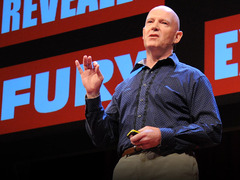
    Steven Pinker is one of several TED speakers who's given a talk about the art of verbal language. Photo: James Duncan Davidson

    Steven Pinker is one of several TED speakers who’s given a talk about the art of verbal language. Photo: James Duncan Davidson

    TED Talks cover an incredible breadth of topics – from mathematical origami to self-repairing architecture to personalized medicine. Some talks explore what lies at the very essence of TED — the act of talking. The 10 talks below explore the various dynamics of speech — from phonology to cognition to the socio-cultural role of language in society. These talks at times offer insight into the struggle for self-expression and at other times engage in contentious linguistic debates. As a whole, they provide a holistic and layered view of speech and language. Because what would TED be without talking?

    Roger Ebert: Remaking my voiceRoger Ebert: Remaking my voiceRoger Ebert: Remaking my voice
    We deeply miss Roger Ebert. In this poignant talk from TED2011, he shared his remarkable rediscovery of self-expression after losing his voice in the fight against jaw cancer. While he couldn’t speak for the last few years of his life, he explained how he found a captive audience on Twitter and through his blog. The talk, presented by Ebert, along with his wife and two friends, offers an inspirational glimpse into the life of someone who overcame incredible adversity.
    Julian Treasure: 5 ways to listen betterJulian Treasure: 5 ways to listen betterJulian Treasure: 5 ways to listen better
    A speaker is nothing without a listener, but as it stands, we retain only a quarter of what we hear. In this talk from TEDGlobal 2011, Julian Treasure offers five tips to better navigate our cacophonous soundscape and savor the noise around us. Following Treasures’s advice, we’ll become better communicators and will live in a better world. As he says, “A conscious listening world is a world of connection, of understanding and of peace.”
    Terry Moore: Why is 'x' the unknown?Terry Moore: Why is 'x' the unknown?Terry Moore: Why is ‘x’ the unknown?
    Basing his argument on our physical capacity to produce sounds, Terry Moore provides a phonetic explanation for a question we’ve all asked ourselves. This is a short and sweet talk from TED2012.
    Mark Pagel: How language transformed humanityMark Pagel: How language transformed humanityMark Pagel: How language transformed humanity
    “Our destiny is to be one world with one language,” argues biologist Mark Pagel in this talk from TEDGlobal 2011. Outlining the social function of language evolution, he highlights the importance of language in fostering cooperation in an increasingly globalized world. In the end, it’s worth making “all this fuss about a puff of air emanating from our mouth.”
    Wade Davis: Dreams from endangered culturesWade Davis: Dreams from endangered culturesWade Davis: Dreams from endangered cultures
    A fascinating speaker, with the opposite perspective. In this talk from TED2003, National Geographic Explorer Wade Davis emphasizes the importance of a diversity of languages and cultures in our world. What the world needs is not one universal language, but rather a respect for the unique values and worldview tied up in each linguistic system. Language loss is happening at an alarmingly rapid rate: 50% of the world’s languages are facing extinction — about one language dies every two weeks. “Language is a flash of the human spirit,” argues Davis.
    Patricia Ryan: Don't insist on English!Patricia Ryan: Don't insist on English!Patricia Ryan: Don’t insist on English!
    In this talk from TEDxDubai, Patricia Ryan – who has lived in the Gulf region for 30 years — argues for a multilingual education system. She asks: What if Einstein had to pass the TOEFL? We equate English with intelligence, but some of the world’s best thinkers may not be English speakers. In different linguistic systems, we’re able to conceive of different concepts. Until we encourage multilingualism, we can never know what we know.
    Steven Pinker: What our language habits revealSteven Pinker: What our language habits revealSteven Pinker: What our language habits reveal
    Linguist Steven Pinker argues that language is a window into what makes humans tick in this compelling talk from TEDGlobal 2005. From metaphors to bribes to threats, indirect language speaks volumes about the inner workings of individuals and the societies we live in. By understanding the “cognitive machinery to conceptualize the world,” we will better understand ourselves.
    James Geary, metaphorically speakingJames Geary, metaphorically speakingJames Geary, metaphorically speaking
    Metaphors give us Shakespeare, scientific discoveries and an understanding of financial crises. Metaphors are central to how we see the world, allowing us to understand complex or foreign concepts by putting them into a familiar context. Fun fact: we speak on average six metaphors per minute! In this cleverly worded talk from TEDGlobal 2009, James Geary explores the powerful force of the deeply influential word constructs that shape our reality.
    Melissa Marshall: Talk nerdy to meMelissa Marshall: Talk nerdy to meMelissa Marshall: Talk nerdy to me
    Great communication from scientists and engineers will change the world, says professor Melissa Marshall in her talk from TEDGlobal 2012. Left-brain thinkers don’t need to dumb it down to make their ideas accessible to people without a technical bent, she argues. In this funny talk, Marshall provides a mathematical formula for perfect scientific communication.

  • Why digital book publishers are starting to embrace data

    With more than 20 percent of Americans over the age of 16 having read an ebook in the past year, and publishers seeing more than 20 percent of revenues come from ebook sales, there’s no question the future of ebooks is bright, and the industry has a lot of potential customers.

    But how exactly ebook publishers reach that audience and how the industry tracks who’s interested in reading what is less clear. A series of ebook publishers who spoke at our PaidContent Live conference in New York on Wednesday talked about the critical importance of gathering data on readership and consumption, and using it to transform the industry:

    “The old eveolution of the book publishers used to be very allergic to data. And what you just heard is a very different approach from that. For us it’s about metadata and surfacing. And then rinse and repeat,” said Dominique Raccah, the publisher and CEO of Sourcebooks. “Metadata is a new term in our industry, but it really is the key.”

    Raccah pointed out that unless publishers know who is reading the content, it’s hard to craft specific marketing messages or know what people respond to:

    “It’s really important to know that book publishers know a lot about what touches readers,” she said. “So it’s important to help craft those messages in interesting ways.”

    Rachel Chou, the CMO for Open Road Integrated Media, said they’ve seen a lot of success working with Twitter, as well as sponsored stories in Facebook, to drive traffic and understand where customers are coming from.

    “Then after a while, you start understanding what the best partners are,” she said.

    Evan Ratliff, founder and CEO of Atavist, said they have a small team but because they’re especially focused on finding customers by building up the Atavist brand, understanding data on the company’s products is important.

    “We’re also on a very small level, we’re experiment with different ways of reaching people and social media,” he said.

    Check out the rest of our paidContent Live 2013 coverage here, and a video embed of the session follows below:


    Related research and analysis from GigaOM Pro:
    Subscriber content. Sign up for a free trial.


  • Etsy Launches Etsy Wholesale In Beta, New Digital Goods Delivery Process

    Etsy announced that the launch of Etsy Wholesale beta. The previously announced product is now live.

    “For the past few months, we’ve been doing in-person usability tests, building the site features of what we hope will be the ultimate place for professional buyers and independent designers to connect online,” writes Etsy Wholesale program manager Vanessa Bertozzi. “And now we’re excited to embark on the next — and most crucial — step towards making this marketplace a reality: to populate the marketplace with retail-ready products from remarkable designers.”

    Etsy Wholesale is free for buyers, but they still need to apply. It will be free to vendors during the beta period. Fees will apply once it’s out of beta. Criteria for what can be sold on Etsy Wholesale can be found here.

    “We are carefully doing more research here because Etsy Wholesale needs to make enough money to cover the costs of building and maintaining a professional marketplace, but we also want it to have a fair and straightforward pricing model, one that works for vendors across so many categories,” says Bertozzi. “Another note: the beta is open to applicants from around the world but will, at first, only be in English and only support US dollars. We plan to add many more languages and currencies very soon.”

    Etsy also announced a new delivery process for digital goods. For sellers offering downloadable items, the company has made “improvements” to the way they can manage and deliver these items.

    “Previously, sellers emailed the attachment to the buyer after every sale,” explains Etsy’s Jaclyn Fu. “Now, sellers can upload the file to the listing just once, and that’s it! After the payment successfully processes, the buyer will receive an automatic email notification letting them know the file is ready on the Downloads page.”

    Etsy community members sold $101.7 million worth of goods (after refunds and cancellations) in March, 9.7% higher than February’s $92.7 million. 4,534,479 items were sold during the month. See the latest weather report for more stats for the month.

  • Provo, Utah is the next stop for Google Fiber

    Google is bringing its gigabit, fiber-to-the-home network to Provo, Utah, a little over a week after it announced that it was taking its ISP dreams to Austin, Texas. The announcement was made by Provo Mayor John Curtis on Wednesday, and a local Provo site has a nice run down on why Provo is the next stop on the GooFi express.

    Those reasons include an updated web site, attributes the city shares with Austin, such as universities, and the fact that Provo previously attempted to build a fiber to the home network as part of a public-private partnership called iProvo. The network experienced financial troubles and parts of it were later sold to Broadweave, a private company before ending up in the hands of Veracity Networks. Apparently, those network assets changed hands about a year ago and were purchased by the city. That means the city is working with Google to provide the underlying dark fiber.

    The deal still awaits approval from the Provo City Council as well as more details from Google on the roll out, pricing and the deployment. Since Provo does have its own fiber network Google says it will provide its Free Internet service (5 Mbps speeds) to every home along the existing Provo network, for a $30 activation fee and no monthly charge for at least seven years. In Kansas City the service is provided for free with a $300 connection charge.

    Google’s Kevin Lo says the first residents will get connected later this year.

    Google’s announcement significant for a variety of reasons — not the least of which is that Google is planning to keep pushing its gigabit network to more places. It already is building a fiber to the home network in Kansas City, Kansas and Kansas City, Mo. But it also signifies the changing cost-benefit equation that municipalities and private companies are facing when it comes to fiber to the home networks.

    More municipalities from North Carolina to Seattle are trying to entice gigabit networks to their areas using a combination of leasing existing city assets or tax breaks for newcomers. Companies like Google and Gigabit Squared are trying to take advantage of the willingness of city officials to deal and the underlying assets in those cities, but even companies like AT&T and Time Warner Cable are also starting to play ball.

    The nature of network deployments are changing, and hopefully it will change the cost models to the point where more fiber to the home networks can become viable. However, it’s important to remember that private companies must act responsibly to their shareholders, while cities are accountable to their citizens. That’s a mix that might explode later on.

    This story was updated at 2:28 PT to correct information about iProvo’s history.

    Related research and analysis from GigaOM Pro:
    Subscriber content. Sign up for a free trial.


  • iPad mini shipments may drop by 30% in Q2 due to ‘lacking demand’

    iPad mini shipments may drop by 30% in Q2 due to 'lacking demand'
    More potential bad news for Apple investors on Wednesday: shipments of the iPad mini could drop by as much as 30% in the second quarter. According to unnamed supply chain sources speaking with Digitimes, Apple’s manufacturing partners will ship 20% to 30% fewer iPad minis this quarter than they did between January and March due to “lacking demand in the market.” According to the report, customers are waiting for the second-generation iPad mini with a Retina display to launch, and are therefore not interested in the first model, which was released just this past November. Digitimes states that Q2 iPad mini shipments are expected to fall to between 10 and 12 million units from about 15 million in the March quarter.

  • It’s not Microsoft’s fault you’re too stupid to protect your PC

    You may want to sit down, because I know this will comes as a shock, but it turns out that if you do not have antivirus software installed and enabled on your PC then you are more likely to get malware.  If my truck gets stolen the next time I am at the store then I am more likely to walk home also.

    Okay. I am making light of a serious study, but the statement from Microsoft that “malware infections [are] 5.5 times more likely without antivirus software” lends itself to a bit of levity.

    In fairness, I recommend all users run antimalware and antivirus software, even though I fail to heed my own warning. Microsoft also has no horse in this race, as its own security tools are available for free. The company does, however, have a vested interest in protecting its customers — that is just good business sense.

    The new report is available now. “People intuitively understand the importance of locking their front doors to prevent their homes from being broken into. Computer security is no different. Surfing the Internet without up-to-date Antivirus is like leaving your front door open to criminals”, Tim Rains, director of Trustworthy Computing for Microsoft, says. “With the release of this new research, Microsoft is urging people to make sure they have up-to-date Antivirus installed on their computers”.

    The report goes on to point out the greatest threats to computer users, including many that will seem obvious to the tech crowd that visits BetaNews.

    Do not click on unknown email attachments. “Microsoft detected and removed malicious email attachments from almost 3 million computers in the fourth quarter of 2012”. The report points out that “On average, about 24 percent of computers scanned by the MSRT each month in 2H12 were not running real-time antimalware software or were running outof-date antimalware software at the time they were scanned”.

    Websites for free or discounted software should be avoided (exceptions to reputable sources like Woot and Groupon) and simply paying attention to your protection software. A surprising number of users allow antimalware to expire.

    A couple of things go unmentioned in all of this — first and foremost is that Microsoft, without naming itself, implies Windows is not safe without security software. Second, this entire thing brings up the specter of the recent news that Bing displays more malicious sites than rival Google in search results. My take is a bit different.

    The report states that “the RTM version of Windows 7, which had the highest percentage of unprotected computers of any platform…also displayed the highest infection rates for unprotected computers, with a CCM of 20.4 for the 32-bit edition and 12.5 for the 64-bit edition”. No surprise given the market share.

    However, Windows 8 is not immune, just better protected. “On Windows 8, which had the lowest infection rate overall, unprotected computers have an infection rate (CCM) that is 16.2 times greater than the infection rate for protected users” — though it still points to having a software program to second-guess the user.

    A couple of things go unmentioned in all of this — first and foremost is that Microsoft, without naming itself, implies Windows is not safe without security software. Second, this entire thing brings up the specter of the recent news that Bing displays more malicious sites than rival Google in search results. My take is a bit different.

    While all of this may sound dire, Microsoft is simply doing what is in its own best interest — trying to protect the average user, which is probably 85 of its 90 percent market share. The company is not implying that Windows 8 is unsafe — it is the safest version of the operating system yet.

    In fact, much of what is pointed out is user behavior, which is what really needs to change in order to make the computing world a safer place.

    Photo Credit: Peter Bernik/Shutterstock

  • ACLU: Carriers leave consumers exposed by withholding Android updates

    The mobile industry’s practice of slowly parceling out Android smartphone updates has earned the ire of the American Civil Liberties Union. On Tuesday, the ACLU filed a complaint with the Federal Trade Commission to investigate the major U.S. carriers for not updating their customer’s phones whenever new security patches are available and for not warning consumers of the dangers that exposes them to.

    In the ACLU’s blog, Principal Technologist and Senior Policy Analyst Chris Soghoian wrote:

    “Google’s Android operating system now has more than 75% of the smartphone market, yet the majority of these devices are running software that is out of date, often with known, exploitable security vulnerabilities that have not been patched. For consumers running these devices, there is no legitimate software upgrade path. The problem isn’t that consumers aren’t installing updates, but rather, that updates simply aren’t available. Although Google’s engineers regularly fix software flaws in the Android operating system, these fixes aren’t packaged up and pushed to consumers by the wireless carriers and their handset manufacturer partners.”

    As the ACLU hints in that last sentence, carriers aren’t the only culprit here. Before they can send out an Android update, carriers have to wait until handset makers tweak Google’s code for their own purposes since no one – save Google – is running a generic version of Android on their devices. Recently, Android device makers have gotten faster at releasing updates for their phones, but it’s by no means instantaneous.

    Still, carriers are definitely a large part of the bottleneck, often asking for Android features to be removed from a build for competitive reasons. A case in point is Verizon’s disabling of Google Wallet on its NFC-capable phones. The fragmentation and politics of the Android ecosystem has led my colleague Kevin Tofel to call for Google to take back control of Android’s distribution from carriers and device makers.

    Getting timely updates for services and features is one thing, but the ACLU is saying that critical security fixes are getting lost in the shuffle. Carrier industry group CTIA didn’t comment directly on the ACLU’s accusations, but it did imply that the threat of security vulnerabilities in the U.S. was overblown. In a statement, CTIA VP of Cybersecurity and Technology John Marinho said:

    “Based on recent reports, U.S. wireless networks are among the most secure in the world because the carriers and the overall mobile industry are vigilant in preventing and protecting against malicious attacks. In addition, most U.S. wireless users shop at trusted application stores, which is why we have an app infection rate of less than 2 percent. Meanwhile, many other countries have app infection rates that are more than 10 times greater, and in the case of Russia, the app infection rate is reported at more than 90 percent.”

    Image courtesy of Shutterstock user gosphotodesign

    Related research and analysis from GigaOM Pro:
    Subscriber content. Sign up for a free trial.


  • Boston Suspect Id’d? Image of Suspect Could Lead to Arrest

    Conflicting reports today are indicating that a suspect may have been arrested in connection with the Boston Marathon bombings earlier this week.

    According to a report from the Boston Globe, a suspect in the attacks has been identified using a photo of someone with a black bag in front of a restaurant on Boylston Street, where the site of the second bombing occurred. The Globe’s source also stated that the police had surveillance footage of the location from Lord & Taylor, a store located directly across the street from the bombing.

    News outlets began reporting on Wednesday afternoon that a suspect in the bombings had been arrested this afternoon, but have since recanted the stories. The Boston Police Department has denied that any arrests have been made in the case:

    The FBI has scheduled a press conference at 5 pm EDT, where police will update the public on the investigation. Sean Kelly, a reporter for Boston’s WCVB news station, reported that federal police, who said a suspect would be arriving a a federal court house in Boston “soon,” were the source of the rumors:

  • Doodle3D Brings Your Drawings To Life Via 3D Printers

    3D printers are getting cheaper and cheaper all the time. Soon enough, we’ll start seeing more than just hobbyists and industrial designers working with the technology. Unfortunately, the CAD software designers use to make 3D models is still expensive and/or complicated. One new product hopes to solve that particular problem.

    Doodle3D, not to be confused with 3Doodler, is a tool that transforms any simple sketch into an object that can be created on a 3D printer. It removes the learning barrier by taking care of all the complicated steps in the software and focusing solely on creativity.

    Doodle3D is obviously not a replacement for traditional 3D printing software, but it’s a great tool that lets anybody just start creating with a 3D printer instead of learning how to use design software. The software then sends the file to the Doodle3D Wi-Fi box that connects to a 3D printer.

    The Doodle3D Wi-Fi box was available for $88, but the initial allotment of 100 boxes have already sold out. The box is now available for $99. The project has just started, and it has already raised over $16,000 of the $50,000 requested.

    [h/t: Engadget]

  • Google Now Automatically Mutes Loud Typers Inside Hangouts

    Google has just taken steps to eliminate a small, but annoying aspect of Google+ Hangouts: keyboard sounds.

    In an update launched today, Google will now mute your mic when you’re typing.

    Google’s Tim Haloun explains it as such:

    Does anyone actually like the sound of typing in a Hangout?
    click click clack clack click clack clack!

    If you’ve done Hangouts, you’ve almost certainly experienced it. It’s hard to chat over that typing. Maybe you’ve accidentally been that typist, and didn’t realize it until someone muted you! That’s why we’ve added automatic muting when you type. Specifically:

    – If someone keeps typing in a Hangout, their mic will be muted until they stop
    – They’ll see an in-Hangout notification, so they know they’re not interrupting the conversation
    – We’ll do this for larger Hangouts (4+ people).

    We hope this feature makes your Hangouts experience even more enjoyable, and we welcome your feedback in the comments!

    Users will be unmuted “within a couple hundred milliseconds of the end of typing.”

    The muting is triggered by the typing sounds, not the mere act of typing. And if you’re a quiet enough typer or use a headset mic, you’ll probably not trigger the mute.

    If you’re a person who types and talks a lot while using Hangouts, Google”s Chee Chew has this to say:

    “There are indeed cases where people want to type and talk. we’ve been dogfooding this internally within google, where we often have people presenting and such, so we’re sensitive to this concern. We find that the vast majority of times that happens in smaller hangouts where one person is showing something to someone else…which is why we turned this on for 4+ hangouts only.”

  • How Betaworks is rolling out its new machine gun-style media play

    Betaworks, the social media incubator and venture firm based in New York City, has slowly been morphing into a company that focuses on launching and operating projects — a whole lot of projects in recent months. The company has been working on five launches over the next five weeks, including one today, something in the music space next week, and Betaworks’ first game product coming shortly, Betaworks CEO John Borthwick told Om Malik during an interview at paidContent Live on Wednesday.

    Betaworks has developed a model for these rapid launches and development cycles (100 to 150 days), and the company relies heavily on data to see if they stick in the marketplace. On Wednesday Betaworks launched Poncho, a super simple weather app; a couple weeks ago there was Giphy, a search engine for GIFs, which Borthwick said was so popular that 2 million users crashed the system when it first launched. Before that there was tapestry, a collection of mobile tappable stories.

    But when Betaworks isn’t churning out its own content, it’s slicing, dicing, merging and mixing the content of others. One of the things that Betaworks is most famous for is its acquisition of the former social reading site Digg for a reported $500,000. Betaworks then merged it with some of the tools of its sluggish News.me creation.

    Borthwick said that when the company bought Digg it had $250,000 a month worth of legacy costs, with $10,000 in monthly operating profits. Digg was jacked up and it had to pull out the needle, said Borthwick. After switching over to Amazon, building a new stack and relaunching with Betawork’s algorithms, Digg now costs closer to $20,000 a month to operate. “That’s the math of the cloud,” said Borthwick.

    The overhaul seems to be working. The new Digg, and its users, are highly mobile-centric. Fifty percent of the traffic during the week and 55 percent on weekends comes from mobile traffic, said Borthwick. It was closer to 5 to 6 percent mobile before the relaunch. Digg now has a couple of million “active, rabid” users, said Borthwick. The Betaworks team pays particular attention to the amount of engaged users on Digg, which is high.

    Attention is being fractured into a bipolar fashion, leading to condensed, fractional content on one hand and uber long-form content on the other. It’s Twitter vs House of Cards and Homeland, explained Borthwick. To build media companies and products in this era, you have to keep an eye on both, said Borthwick. To address that long form content market, Betaworks has created some tools over the past year around long-form story telling.

    Not all of the innovation will come from newly launched media projects. Borthwick said he admires the work that Forbes and Bloomberg have done, as well as new media sites like The Huffington Post, Buzzfeed and Upworthy.

    CHeck out the rest of our paidContent Live 2013 coverage here, and a video embed of the session follows below:


    Related research and analysis from GigaOM Pro:
    Subscriber content. Sign up for a free trial.


  • Italian Prosecutor Appeals Google Execs’ Acquittal

    About seven years ago, a video was uploaded to YouTube featuring a group of school kids bullying an autistic child. This led to three Google executives – David Drummond, Peter Fleischer (pictured) and George Reyes – being convicted in 2010 by a judge in Milan on grounds of “failure to comply with the Italian privacy code,” though Google said it had removed the video after being notified, and had worked with Italian authorities to help identify the person responsible for uploading it.

    “In essence this ruling means that employees of hosting platforms like Google Video are criminally responsible for content that users upload,” wrote Matt Sucherman, Google VP and Deputy General Counsel – Europe, Middle East and Africa at the time. “We will appeal this astonishing decision because the Google employees on trial had nothing to do with the video in question.”

    Finally, this past December, the decision was overturned, and the execs were acquitted. Details of that ruling became pubic earlier this year.

    It didn’t end there, however. The three executives are heading back to court, as the prosecutor has appealed the acquittal, reports ComputerWorld. The publication points to a personal blog post from Fleischer, who writes:

    In December of last year, an Italian Court of Appeals overturned my conviction—as well as that of two other Googlers—for violating Italian privacy law in a case that stemmed from a user-uploaded video. I was pleased that well-reasoned legal principles had prevailed, and was hopeful that that would be the end of this long saga. Last week, however, the Italian prosecutor appealed the Court’s decision to the Court of Cassation (the Italian Supreme Court). This case, unfortunately, is not over. In its appeal to the Court of Cassation, the Italian prosecutor asserts—in addition to arguing that employees like me can be held criminally responsible for user-uploaded videos that we had no knowledge of and nothing to do with—that platforms like YouTube should be responsible for prescreening user-uploaded content and obtaining the consent of people shown in user-uploaded videos. I, and the many others who have voiced their support, view this as a threat to freedom of expression on the Internet. I’m disappointed that this case is not over, but continue to believe that ultimately justice will prevail.

    If justice does not ultimately prevail, then this could create some pretty big problems for the user-generated content Internet that we’ve all come to know and love. We discussed this back when the execs were convicted.

  • States Step Up to Help Veterans and Spouses Get Back to Work

    First Lady Michelle Obama watches Maryland Governor Martin O’Malley sign the Veterans Full Employment Act of 2013, April 17, 2013

    First Lady Michelle Obama watches Maryland Governor Martin O’Malley sign the Veterans Full Employment Act of 2013 during a ceremony at the State House in Annapolis, Md., April 17, 2013. Seated, from left are, Lt. Gov. Anthony Brown, Senate President Thomas V. Mike Miller Jr., Gov. Martin O’Malley, and House Speaker Michael Busch.

    (Official White House Photo by Chuck Kennedy)

    President Obama and the First Lady are committed to doing everything in their power to assist the brave men and women who have served our country in re-entering civilian life and finding employment. Over the last year and a half, the President has overseen the first re-design of the military’s transition assistance program in twenty years; created new tax credits to spur veteran hiring; expanded re-employment services, including the Veterans Job Bank and the Veterans Gold Card; and launched a series of initiatives to expand the number of veterans that get jobs in healthcare and first responder fields. Additionally, under the great leadership of the First Lady and Dr. Biden, Joining Forces has expanded hiring and training partnerships with the private sector in an effort to help our veterans and their spouses get back to work.

    Yet, our veterans still face major hurdles as they transition out of the military and into the civilian workforce. According to a 2012 survey by Prudential and Iraq and Afghanistan Veterans of America, 60 percent of survey respondents said they had trouble translating their military skills into civilian job experience, creating a significant barrier to employment. Many high-demand, good-paying jobs like paramedics, truck drivers, nurses, and welders, require either a national certification or state occupational license to be hired, and currently our national and state systems make it very difficult for service members and veterans to obtain these civilian certifications and licenses that directly translate to their military training. Often times service members and veterans are required to repeat education or training in order to receive these occupational credentials, even though much, and in some cases, all, of their military training and experience overlaps with credential training requirements. And employers, many with significant needs for skilled workers, are left waiting for these military members to complete these, oftentimes lengthy, credentialing training programs – programs that many veterans could have taught themselves.

    read more

  • CleanMyMac 2 – The New-Generation OS X Maintenance Tool

    CleanMyMac 2 is a powerful maintenance utility for keeping your Mac clean, organized, and free of clutter that slows it down. It’s been regarded as the best cleaning utility for years, and now version 2 is on the scene hoping to live up to the name of its predecessor.

    The people at MacPaw have invested a lot of time and ef… (read more)

  • PanaCast Is A Unique Panoramic Video Conferencing Experience

    panacast image

    Video conferencing, especially in a work setting, can be a real pain in the ass. But PanaCast, unlike other video conferencing platforms, actually seems like something that would be both fun and exceedingly useful.

    PanaCast is a crowdfunded panoramic video conferencing platform that Ross Rubin covered back in December in one of his Backed Or Whacked posts. Ross wholeheartedly backed the project, and since then PanaCast’s Kickstarter blew past its original fundraising goal of $15,000, raising nearly three times that amount.

    Today PanaCast will be made available for the public to purchase for what they call a “market disrupting price” of $599 with a monthly subscription fee of $19.99.

    What PanaCast offers is a unique panoramic video conferencing experience. It utilizes a special webcam that resembles, as Ross noted, an odd-looking UFO on a tripod. When the webcam is attached to the stand, it seems to be about two feet tall, so it’s fairly portable.

    Setting up the webcam is easy. Once you have the PanaCast app open on your iOS device and a cellular or wi-fi connection, you scan in the barcode on top of the webcam to connect to it.

    The webcam is composed of six different cameras that have had their feeds synchronized for one 200 degree video image that’s 2700 pixels wide and 540 pixels tall. The image itself is crisp and sharp, without any distortion whatsoever, and you can scroll and zoom to any part of the live video feed inside PanaCast’s iOS app.

    From the live demos I was shown by Altia Systems, the company behind PanaCast, it’s also extremely responsive. There wasn’t the slightest bit of lag with scrolling and zooming at all. Within the app, you can also switch between multiple feeds pretty easily.

    For now, PanaCast is only compatible with iOS devices. They’re planning on releasing desktop and mobile versions of the PanaCast app on Windows, Mac, and Android sometime in the near future.

    The PanaCast app is a free download in the iOS App Store, and you can place orders for the PanaCast Camera at Altia’s website here.

  • Microsoft told to bring back Start button as ‘a sign that it listens to its customers’

    Microsoft told to bring back Start button as 'a sign that it listens to its customers'
    While Windows 8 has a lot going for it, it’s also proven to be a very polarizing operating system that many users have criticized for departing too much from earlier versions. The most common complaint lobbed at Windows 8 is that it lacks the classic Start button that Microsoft users have long relied on as a central navigation tool. But with rumors percolating that Microsoft is considering dialing back some of the changes it made to Windows with the next major update to the operating system, Forrester analyst J.P. Gownder is encouraging the company to go all-out and bring back the Start button as a nod to users’ constructive criticisms.

    Continue reading…

  • Google Fiber’s Next Stop May Be In Provo, Utah

    Google Fiber is starting to pick up pace in Kansas City again, and Google is just starting to plan out its expansion into Austin, Texas. While all that’s happening, Google may be bringing its gigabit Internet service to another city.

    Provo Buzz reports that the city of Provo, Utah may be next in line to receive Google Fiber. Their reasoning seems to stem from an official Provo city Web page that promises we’ll “be amazed.” City officials are reportedly saying it will an “epic announcement.”

    So what makes Provo the more likely Google Fiber candidate over other past rumored locations like New York City? For one, Provo already has the Fiber infrastructure in place. The city has had a Fiber network for a few years now thanks to a project called iProvo. The project soon ran out of money, however, and transferred ownership to Veracity. After that, Veracity sold the network back to the city under a 14 month lease.

    According to Provo Buzz, that lease is now just about up. This gives the city and Veracity the perfect opportunity to unload the costly fiber infrastructure onto Google who will then use it to offer Google Fiber to the citizens of Provo.

    Of course, all of this is merely speculation for now. The city could be announcing something entirely different as there hasn’t been a single leak yet. There were numerous leaks before the announcements in Kansas City and Austin so it seems a little suspect that Provo could keep a Google Fiber announcement secret until today.

    We’ll continue to watch the Provo Web site for any sign of Google Fiber. If the city announces an expansion today, we’ll be sure to let you know.

    [h/t: DroidLife]

  • John McAfee Talked About Ricin Attacks In January, Puts Out Statement

    As you may know, letters poisoned with ricin were sent to President Obama and Senator Roger Wicker, though both were intercepted before they could do any harm. Investigators, reportedly see no link from the letters to the explosions at the Boston Marathon, at least so far.

    Interestingly a statement has come out from none other than McAfee antivirus founder John McAfee, who, if you’ll recall, was the center of a big manhunt in (and out of) Belize late last year. In January, McAfee did an interview with Alex Jones in which he predicted ricin attacks on U.S. soil.

    McAfee, today, took to his blog to say that he has been contacted my members of the press (linking to CNN), and asked about this prediction. “Meanwhile the same mainstream media channels reporting the current events refused to publish my findings of a potential threat,” he says.

    What he considers to be his comment on the matter is as follows:

    “The press is generally more interested in sensationalism than Truth. It is only when the Truth and the Truly Sensational coincide that the Truth plays much of a role in reported events.”

    He goes on to say, “In January I told the truth about my discoveries in Belize about impending Ricin attacks, but the more sensational story at the time was the story of a deceptive madman on the run who was manufacturing stories. I am tired of the games played by the press and now choose not to play.”

    He closes by saying that the truth is being told in an authorized movie of the events from Impact Future Media. Remember that?

    In the Alex Jones interview, McAfee talked about the Belize government aiding terrorists, resulting in ricin making its way into the U.S. He said that Belize has been accepting Hezbollah terrorists, changing their identities, giving them European names, then shifting them off through various countries, and eventually into the U.S. with ricin. The John McAfee story sums up his story:

    John goes on to say, that for the past three months he has employed two operatives that have infiltrated a Hezbollah Terrorist camp in Nicaragua who are manufacturing tons of Ricin that is destined for a major attack on USA soil. He has also placed three people who have gathered information from the Los Zetas Cartel about working with Hezbollah in trading weapons for access to drug routes. He says the Terrorists are using the drug routes for moving the Ricin … he claims the CIA must know about this. He says the pending Terrorist Attack will be much worse than 9-11.

    Here’s the Alex Jones video. The interview starts at 48:40