Category: News

  • Autism’s Competitive Advantage, and Challenge, in the Workplace

    Talk about turning a bug into a feature. SAP, the German software giant, announced that it hopes to hire hundreds of autistics as talented programmers and product testers. The firm told the BBC that by 2020 perhaps 1% of its global workforce of 65,000 would be people with autism. Though a medically recognized DSM-5 disorder, many diagnosed autistics apparently bring special cognitive flair to digital details and computational concentration.

    “We share a common belief that innovation comes from the edges,” said Luisa Delgado, an SAP HR director, who noted the company valued the ability of many autistic people to “think differently and spark innovation.” SAP’s Bangalore office saw its productivity increase after deploying autistic hires. The company is working closely with a Danish not-for-profit specializing in IT job placements for individuals with autism spectrum disorders.

    Special talents with serious personality disorders aren’t rare. While not autistic, the late Steve Jobs was described by many who knew and worked with him as classically in the grip of obsessive compulsive personality disorder (OCPD). In Joshua Kendall’s book, America’s Obsessives, the DSM defines the condition as “a preoccupation with orderliness …and mental and interpersonal control” and lists eight symptoms, at least four of which are necessary to reach a diagnosis. These include perfectionism; preoccupation with details, rules, orders, lists, organizations or schedules; excess devotion to work; inflexibility about matters of morality, ethics or values; reluctance to delegate tasks unless others submit to exactly his way of doing things; and rigidity and stubbornness.

    Does this describe any of your better colleagues, clients and/or employees?

    The thrust of Kendall’s thesis — which also profiles such innovative obsessives as cosmetics’ Estee Lauder, ketchup’s Henry Heinz and aviation’s Charles Lindbergh — is that such disorders are frequently inherent for relentless overachievers.

    But the undeniable success of individuals and entrepreneurs with disabilities and personality disorders raises disturbing questions. Helping determine their professional development and best interests becomes a welter of conflicting interests.

    What happens as medicines and therapies for autistics improve? If drugs and/or medical intervention effectively treat the awkwardness and dysfunction associated with autism, might they also undermine the cognitive skills and abilities that originally got those autistics hired by SAP and other IT firms? Would autistics feel compelled to cling to their disabilities for fear of losing their jobs? Would organizations be reluctant to encourage these employees to seek treatment because that hurt their performance and productivity? Ironically, a cure for autism likely obliterates the disorder’s competitive advantage in the global marketplace.

    Similarly, if Atari’s Nolan Bushnell had recognized the young Steve Jobs’ OCPD and insisted his highly talented technician get the counseling and pharmaceuticals he needed to be a healthier person, would there have even been an Apple Computer, let alone an iPhone and iPad? Well-intentioned top management interventions — sincere efforts to help produce an better balanced employee — might have snuffed out the entrepreneurial essence that made Jobs one of the world’s greatest innovators. The unavoidable ethical — and practical — business dilemma is whether it makes sense to “improve’” employees whose effectiveness may be contingent upon their disabilities, dysfunctions and pathologies. What does “professional development” mean if it runs the real risk of making a colleague or employee less valuable to the enterprise?

    If high-performers get measurable workplace results because — not in spite — of their disorders, the kinds of “professional development” investments that make sense and add value seem ethically and pragmatically unclear. There is a real risk that the cure could be worse than the disease.

    I see no happy resolution to these conflicts. For truly talented high performers, achieving “balance” may prove a self-destructive myth. They need their dysfunctions and disabilities to succeed. But is it honorable, ethical and even legal to hire people knowing that making them better as a person may make them less valuable as an employee? I don’t know. It will be fascinating to see how SAP’s talented recruits are promoted inside their organization and out.


  • Warburg Pincus-led Group Places $200 Mln Bet on Vietnam Retail Growth

    A consortium led by U.S. buyouts fund Warburg Pincus said on Wednesday it has agreed to buy around 20 percent of the retail unit of Vietnam’s Vingroup Joint Stock Co for $200 million, Reuters reports.

    (Reuters) – A consortium led by U.S. buyouts fund Warburg Pincus said on Wednesday it has agreed to buy around 20 percent of the retail unit of Vietnam’s Vingroup Joint Stock Co for $200 million, betting on retail growth in the Asian country.

    The unit, Vincom Retail, is Vietnam’s largest owner and operator of shopping malls with seven assets valued at around $1.1 billion, and the deal bucks a trend in the country where real estate sector growth has slumped as credit growth slows and banks are mired in non-performing loans.

    Hanoi-based Vincom shares ended the morning session down 2.24 percent on the benchmark VN index in Ho Chi Minh City before the announcement was made.

    Vincom’s assets include high-end malls Vincom Center B in Ho Chi Minh City and Vincom Center Ba Trieu in Hanoi, targeted to tap Vietnam’s growing consumer market.

    The deal is Warburg’s first investment in Vietnam, and it is the largest initial investment to date in a Vietnamese company by a global private equity firm.

    Warburg, which manages over $40 billion in assets and has been investing in Asia since 1994, said the investment in Vincom Retail should benefit from the country’s “favorable long-term economic outlook,” rapid urbanisation and growing middle class.

    Warburg has the right to participate in future capital raisings by Vingroup for up to $25 million, while the consortium has the right to invest an additional $100 million in Vincom Retail for expansion and future retail property-related deals.

    Vincom has two further projects due to launch this year, Vincom Mega Mall Royal City and Vincom Mega Mall Times City.

    Vingroup is Vietnam’s largest private-sector real estate operator and one of the largest companies by market capitalisation on the Ho Chi Minh City Stock Exchange.

    Citigroup Inc was hired as the sole financial advisor to Vingroup, while Credit Suisse Group was sole financial advisor to Warburg Pincus.

    The post Warburg Pincus-led Group Places $200 Mln Bet on Vietnam Retail Growth appeared first on peHUB.

  • AMD Launches New Line of Low-Power Processors

    The wafer for the AMD "Kyoto" series processors, which make their debut today, offering improved power efficiency. (Image: AMD)

    The wafer for the AMD “Kyoto” series processors, which make their debut today, offering improved power efficiency. (Image: AMD)

    In the continuing trend towards featuring ultra-low power processors in new classes of servers designed to run Internet-scale workloads AMD announced the Opteron X-Series, a new family of low power server processors formerly known as “Kyoto.” Optimized for scale-out server architectures, the new X1150 and X2150 processors feature four x86 CPU cores.

    “The data center is at an inflection point and requires a high number of cores in a dense form factor with integrated graphics, massive amounts of DRAM and unprecedented power efficiency to keep up with the pace of innovation of Internet services,” said Andrew Feldman, corporate vice president and general manager, Server Business Unit at AMD.  ”AMD has a proud history of server innovation, and the AMD Opteron X-Series processors challenge the status quo by providing unmatched capabilities to drive the most energy-efficient servers in the industry.”

    At as little as 11 watts, AMD says the Opteron X2150 is the first server APU system-on-a-chip integrating CPU and GPU engines with a high-speed bus on a single die. This enables customers to take advantage of leading-edge AMD Radeon HD 8000 graphics technology for multimedia-oriented server workloads. The AMD Opteron X1150, which consumes as little as 9 watts, is a CPU-only version optimized for general scale-out workloads. The X-Series processors will be a good fit for initiatives like Project Moonshot, HP’s low-power, many-core servers converged infrastructure.

    “Fundamental changes in computing architectures are required to support space, power and cost demands organizations need to deliver compelling, new infrastructure economics,” said Paul Santeler, vice president and general manager, Hyperscale Server business segment, HP. “The new x86 AMD Opteron X-Series processors integrated into future HP Moonshot servers will continue to push the boundaries of power efficiency for social, mobile, cloud and big data workloads.”

    Both X-Series processors have four “Jaguar” 64 bit x86 CPU cores, up to 32 gigabytes of DRAM and 2MB of L2 Cache. The X2150 also features 128 Radeon HD 8000 GPU cores.  Both Opteron X2150 APU and X1150 CPU are generally available now.

  • Apple to pay out $53m in iPhone ‘water damage’ lawsuit

    153,000 iPhone and iPod owners are in line for a payout from Apple after the company agreed to a $53 million settlement to a 2010 lawsuit. The class action suit concerned malfunctioning devices that the Cupertino, Calif. based company claimed had been damaged after coming into contact with water.

    A “liquid damage policy” allowed Apple to deny warranty coverage if the liquid indicator inside the device changed color from white to pink or red, “proving” contact with water.

    However, although the indicators were designed to show the presence of water, it was later found that heat could also cause the damning color change.

    Documents filed at the US District Court for the Northern District of California state that the money will be held in a fund and shared between the members of the class-action suit. Successful claimants can expect to receive around $200 — $300 each from Apple.

    The settlement is still to be approved by the court, but is unlikely to face further obstacles.

    Photo Credit: morrison77/Shutterstock

  • IVP Leads $25 Mln Round for TuneIn

    TuneIn said Wednesday raised a $25 million round of funding led by Institutional Venture Partners. Existing investors Sequoia Capital, Google Ventures and General Catalyst Partners also participated. Palo Alto, Calif.-based TuneIn is an Internet radio service.

    PRESS RELEASE

    PALO ALTO, CA–(Marketwired – May 29, 2013) – TuneIn, the leading service for listening to the world’s radio, today announced that it raised a $25 million round of funding led by Institutional Venture Partners (IVP), with participation from existing investors Sequoia Capital, Google Ventures and General Catalyst Partners. TuneIn also announced that it surpassed one billion listening hours in the first four months of 2013, with more than 227 million listening sessions in the month of March alone, solidifying the company’s position as the world’s number-one service for listening to live, online radio.
    “This investment gives us the capital to accelerate the development of new technologies and support our ongoing expansion,” said John Donham, CEO of TuneIn. “We will use this funding to leverage our momentum, with a particular focus on growing ad revenues for our broadcast partners.”
    TuneIn surpassed one billion listening hours between January and April of 2013, reinforcing the company’s status as the top live, online radio service in the world, with well over 40 million monthly active listeners across 230 countries and territories. The company also announced that it had 227 million listening sessions of 60 seconds or longer in the month of March.
    “TuneIn’s rapid growth, superior business model, and ubiquitous product make for a compelling investment,” noted Jules Maltz, General Partner at IVP, who will join the TuneIn board of directors. “John Donham is an exceptional leader with a vision to fundamentally transform the multi-billion dollar radio industry.”
    This announcement comes on the heels of TuneIn Live, a major platform redesign that provides a personalized way to find relevant radio stations, songs and live events from all over the world. Since its launch in March 2013, TuneIn Live has spurred a large uptick in listener engagement. The company released TuneIn Live for its popular iPhone apps last week, making the updated interface available across all Android and iOS devices and web browsers at www.tunein.com.
    In addition to new product developments, TuneIn is also investing in building its internal capabilities, including strategic, senior hires. Most recently, TuneIn selected Axel Martinez as its chief financial officer, overseeing the strategic business investments this round of funding allows. Axel Martinez, formerly the assistant treasurer — head of capital markets at Google Inc., holds a Bachelor of Arts in economics and political science from Columbia University and an MBA from Harvard Business School.
    About TuneIn
TuneIn lets people listen to the world’s music, sports, talk, and news from wherever they are, with more than 70,000 AM, FM, HD, and Internet radio stations and more than two million on-demand programs streaming from every continent, available across 200 connected devices. The company is headquartered in Palo Alto, California. Existing investors include Institutional Venture Partners (IVP), Sequoia Capital, Google Ventures, and General Catalyst Partners.
    About Institutional Venture Partners (IVP)
With $4 billion of committed capital, Institutional Venture Partners (IVP) is one of the premier later-stage venture capital and growth equity firms in the United States. The partnership is currently investing IVP XIV, a $1 billion later-stage fund focused on investments in rapidly growing technology and media companies. Founded in 1980, IVP has invested in over 300 companies, 94 of which have gone public. IVP is one of the top performing firms in the industry and has a 32-year IRR of 43.2%. IVP specializes in venture growth investments, industry rollups, founder liquidity transactions, and select public market investments. Since its inception, IVP investments include such notable companies as ArcSight (HPQ), Buddy Media (CRM), ComScore (SCOR), Concur Technologies (CNQR), Dropbox, Fleetmatics (FLTX), HomeAway (AWAY), Juniper Networks (JNPR), Kayak (KYAK), LegalZoom, LifeLock (LOCK), Marketo (MKTO), MobileIron, MySQL (ORCL), Netflix (NFLX), Omniture (ADBE), OneKingsLane, Polycom (PLCM), RetailMeNot, Seagate (STX), Shazam, Synchronoss (SNCR), Tivo (TIVO), Twitter, and Zynga (ZNGA). For more information, visit http://ivp.com or follow IVP on Twitter: @ivp.
    About Sequoia Capital
Sequoia Capital helps founders turn imaginative ideas into enduring companies. As the “Entrepreneurs Behind the Entrepreneurs,” the Sequoia team has worked closely with legendary founders such as Steve Jobs of Apple, Larry Ellison of Oracle, Len Bosack and Sandy Lerner of Cisco, David Filo and Jerry Yang of Yahoo!, Max Levchin, Elon Musk and Peter Thiel of PayPal, Sergey Brin and Larry Page of Google, Steve Chen and Chad Hurley of YouTube, and Reid Hoffman and Jeff Weiner of LinkedIn. Sequoia is now helping the next generation of innovators build the lasting companies of tomorrow.
    About General Catalyst
General Catalyst Partners is a venture capital firm that makes early stage and growth equity investments. General Catalyst Partners invests in exceptional entrepreneurs who are building the technology-based companies that will lead innovation and transform industries. Founded in 2000, General Catalyst Partners leverages its principals’ extensive operational, business development and technological expertise to provide portfolio companies with a catalyst for success through business-building and partnership development assistance. General Catalyst has offices in Cambridge, MA and Palo Alto, CA. For more information, visit: http://www.generalcatalyst.com/ or https://twitter.com/gcvp.

    The post IVP Leads $25 Mln Round for TuneIn appeared first on peHUB.

  • Ophthotech Raises $175 Mln

    Ophthotech Corp. has raised $175 million in financing. This includes $125 million from Novo A/S, in exchange for royalties on Fovista sales. The remaining $50 million is in the form of a Series C preferred stock financing from Novo A/S and current venture investors in Ophthotech. New York-based Ophthotech is a biopharmaceutical company.

    PRESS RELEASE

    NEW YORK–(BUSINESS WIRE)–Ophthotech Corporation today announced that it has raised $175 million to finance a global Phase 3 clinical program of its lead compound FovistaTM, an anti-platelet-derived growth factor (PDGF), in combination with anti-VEGF therapy for the treatment of neovascular age-related macular degeneration (wet AMD). The multi-national Phase 3 trial is expected to begin in the third quarter of 2013 and enroll nearly 1,900 patients in more than 200 centers worldwide.

    The financing of $175 million consists of $125 million from Novo A/S, in exchange for royalties on Fovista sales. The remaining $50 million is in the form of a Series C preferred stock financing from Novo A/S and current venture investors in Ophthotech. The royalty and Series C funding is structured in three equal tranches, the first of which has closed.
    “We are excited to lead this very large financing to drive Phase 3 development of Fovista,” said Henrik Gürtler, CEO, Novo A/S. “Ophthotech is well positioned to bring this important drug rapidly to market, based on the strength of Phase 2b results and the proven medical, regulatory and commercial capabilities of its management team.”
    To accelerate the clinical development of Fovista, Ophthotech also announced today the expansion of its management team. David R. Guyer, MD, the company’s Chairman of the Board since its inception, has accepted the position of Chief Executive Officer (CEO), and Samir Patel, MD, co-founder and current President of Ophthotech, has been appointed to the additional role of Vice Chairman of the Board. Under the new management structure, Dr. Guyer will direct the company’s corporate and financial strategy, while Dr. Patel will focus fully on clinical development.
    “We are grateful to our investors for their profound confidence in Ophthotech and Fovista as a potential game-changing therapy that we hope will improve outcomes for millions of people with wet AMD,” noted Dr. Guyer.
    In a large, randomized, controlled Phase 2b study reported last year, Fovista in combination with Lucentis® (ranibizumab injection) demonstrated superior efficacy over Lucentis monotherapy in patients with wet AMD. Patients receiving the combination of Fovista (1.5 mg) and Lucentis gained a mean of 10.6 letters of vision on the ETDRS standardized chart at 24 weeks, compared to 6.5 letters for patients receiving Lucentis monotherapy (p=0.019), representing a 62% additional benefit. No significant safety issues were observed for either treatment group in the trial.
    About Novo A/S
    Novo A/S, a private limited liability company fully owned by the Novo Nordisk Foundation, is the holding company in the Novo Group, and responsible for managing the Foundation’s assets, which are currently valued at more than USD 30 billion. Besides being the major shareholder in Novo Nordisk A/S and Novozymes A/S, Novo A/S provides seed and venture capital to development stage companies and takes significant ownership positions in well-established companies within life science and biotechnology, as well as manages a broad portfolio of financial assets. Novo A/S is an international investor working from Copenhagen, San Francisco and London. Through its teams of scientific and commercial experts, Novo A/S actively supports its portfolio of projects and companies, and manages a range of financial investments.
    About the Phase 2b Trial of Fovista
    In a prospective Phase 2b study of 449 patients with wet AMD, enhanced visual outcomes of Fovista anti-PDGF (1.5 mg) combination therapy as compared to Lucentis monotherapy were demonstrated at every monthly timepoint. In addition, the relative magnitude of visual benefit continued to increase over time. The visual benefit of anti-PDGF (1.5 mg) combination therapy compared to Lucentis monotherapy was greater at the 6-month timepoint than at the 3-month timepoint. The increasing divergence of the efficacy curves suggests the benefit of chronic anti-PDGF combination therapy. A classic dose-response curve was observed. No significant safety issues were observed for either treatment group in the trial. These data were previously reported by Ophthotech, and further results will be presented at future medical congresses and published in peer-reviewed journals.
    About Dr. Guyer
    Dr. Guyer, a former venture capitalist and Partner at SV Life Sciences, has significant medical, drug development and commercial experience in ophthalmology. Following a successful career in academic medicine as Professor and Chairman of the Department of Ophthalmology at New York University School of Medicine, Dr. Guyer co-founded and served as CEO and Director at Eyetech Pharmaceuticals, Inc. He led Eyetech through private, public and corporate financings over $400 million, and oversaw the rapid development and successful commercialization of Macugen® (pegaptanib sodium), the first FDA-approved anti-VEGF pharmacological treatment for wet AMD. Dr. Guyer negotiated a partnership with Pfizer for Macugen, which was one of the largest biotech-pharma deals executed at the time. The commercial launch of Macugen was the most successful ophthalmology product introduction at the time, based on the first twelve months’ sales. Under Dr. Guyer’s leadership, Eyetech reached a peak market capitalization of approximately $2 billion. OSI Pharmaceuticals subsequently acquired Eyetech in a deal valued at $935 million.
    Dr. Guyer received his Bachelor of Science (BSc) degree from Yale College summa cum laude and his medical degree (MD) from Johns Hopkins Medical School. Dr. Guyer completed his ophthalmology residency at Wilmer Ophthalmological Institute, Johns Hopkins Hospital and a retinal fellowship at the Massachusetts Eye and Ear Infirmary at Harvard Medical School.
    About Dr. Patel
    Under Dr. Patel’s leadership as founding CEO of Ophthotech, the company completed a large Phase 2b clinical trial in which Fovista combination therapy demonstrated statistically significant superiority in efficacy over Lucentis monotherapy in the treatment of wet AMD. Dr. Patel is also the former Chief Medical Officer of Eyetech, co-founded Eyetech with Dr. Guyer and served on its Board of Directors. Prior to joining Ophthotech, Dr. Patel spent over a decade in academic medicine. In 1991 he joined the Department of Ophthalmology and Visual Science at the University of Chicago, where he served as Director of the Retina Service and the residency program and was an Associate Professor of Ophthalmology. While at the University of Chicago, Dr. Patel focused on cell-based therapies for AMD, and was one of the world’s first retinal surgeons to perform a human retinal transplant. Dr. Patel received his MD from the University of Massachusetts Medical School and ophthalmology training from the University of Chicago. He received his training in retinal surgery from the Massachusetts Eye and Ear Infirmary at Harvard Medical School.
    About Ophthotech
    Ophthotech Corporation is a privately held biopharmaceutical company focusing on discovering, developing and commercializing first-in-class therapies for the treatment of major ophthalmic diseases. Ophthotech’s lead compound Fovista (previously known as E10030) is being developed for use in combination with anti-VEGF therapy for the treatment of patients with wet AMD. Today, despite the availability of anti-VEGF wet AMD drugs with worldwide sales of over $4 billion, there remains a significant unmet medical need. The majority of patients treated with anti-VEGF monotherapy, the current standard of care, are unable to achieve significant visual gain, and many of these patients lose additional vision.
    In addition to Fovista, Ophthotech’s pipeline includes an anti-C5 agent, ARC1905, a potent and selective inhibitor of factor C5 of the complement cascade being developed for the treatment of wet and dry AMD. There are more than 15 million patients suffering from dry AMD in just the United States and Europe, and there is no approved therapy.
    Ophthotech’s venture investors include SV Life Sciences, Novo Ventures, HBM Healthcare Investments, and Clarus Ventures. Ophthotech is headquartered in New York, and also has offices in Princeton, NJ. For more information, please visit www.ophthotech.com.
    Forward-Looking Statements
    Any statements in this news release about future expectations, plans and prospects for Ophthotech constitute forward-looking statements. Forward-looking statements in this news release include statements regarding the initiation and conduct of Ophthotech’s planned Phase 3 clinical trial of Fovista in combination with anti-VEGF therapies. Actual results may differ materially from those indicated by such forward-looking statements. In particular, the favorable results from Ophthotech’s completed Phase 2b clinical trial of Fovista do not guarantee favorable results in the planned Phase 3 clinical trial. Ophthotech anticipates that subsequent events and developments may cause its views to change. However, while Ophthotech may elect to update these forward-looking statements in the future, Ophthotech specifically disclaims any obligation to do so.
    Lucentis® is a registered trademark of Genentech, Inc.

    The post Ophthotech Raises $175 Mln appeared first on peHUB.

  • Warburg Exits Primerica

    Primerica has agreed to buy back about $154.7 million in stock and warrants from Warburg Pincus. Follow the sale, Warburg Pincus will no longer own Primerica stock. Duluth, Ga.-based Primerica distributes financial products to middle income households in North America.

    PRESS RELEASE

    DULUTH, Ga.–(BUSINESS WIRE)–Primerica, Inc. (NYSE:PRI) today announced that it has entered into an agreement to repurchase 2,488,621 shares of Primerica outstanding common stock and warrants exercisable for 4,103,110 shares of Primerica common stock beneficially owned by Warburg Pincus Private Equity X, L.P. and Warburg Pincus X Partners, L.P. at a purchase price of $34.67 per outstanding share and at a purchase price for the warrants equal to $16.67 per underlying share (which represents the closing price of Primerica common stock on May 28, 2013, less the warrant exercise price per share). The aggregate purchase price for the shares and the warrants is approximately $154.7 million. The purchase price was determined based on the closing price of Primerica common stock on May 28, 2013. Following the repurchase transaction, Warburg Pincus will no longer own any of Primerica’s outstanding common stock.

    Morgan Stanley & Co. LLC served as financial adviser to Primerica with respect to this repurchase.
    “We are proud of our partnership with Rick, John and the rest of the Primerica team since the company’s IPO,” said Michael Martin, Managing Director and Head of Financial Services Investing at Warburg Pincus. “Our experience as a Primerica shareholder has been a very positive one and we are confident that the company will continue to fulfill its mission of serving middle income households in better preparing for a more secure financial future.”
    “Today’s transaction marks the conclusion of Primerica’s IPO era. Warburg Pincus has been a great partner and was vital in helping us become a strong public company. In three years, our Company has completed an exit from Citigroup, and, with today’s acquisition of Warburg Pincus’ stake, we become a ‘fully’ public company. This is a proud day in Primerica’s history,” said Rick Williams, Chairman of the Board and Co-CEO of Primerica.
    Forward-Looking Statements
    Except for historical information contained in this press release, the statements in this release are forward-looking and made pursuant to the safe harbor provisions of the Private Securities Litigation Reform Act of 1995. Forward-looking statements contain known and unknown risks and uncertainties that may cause our actual results in future periods to differ materially from anticipated or projected results. Those risks and uncertainties include, among others, our failure to continue to attract and license new recruits, retain sales representatives or license or maintain the licensing of our sales representatives; our or our sales representatives’ violation of or non-compliance with laws and regulations; incorrect assumptions used to price our insurance policies; the failure of our investment products to remain competitive with other investment options; our failure to meet RBC standards or other minimum capital and surplus requirements; a downgrade or potential downgrade in our insurance subsidiaries’ financial strength ratings or our senior debt ratings; inadequate or unaffordable reinsurance or the failure of our reinsurers to perform their obligations; heightened standards of conduct or more stringent licensing requirements for our sales representatives; the inability of our subsidiaries to pay dividends or make distributions; the loss of key personnel; and general changes in economic and financial conditions, including the effects of credit deterioration and interest rate fluctuations on our invested asset portfolio. These and other risks and uncertainties affecting us are more fully described in our filings with the Securities and Exchange Commission, which are available in the “Investor Relations” section of our website at http://investors.primerica.com. Primerica assumes no duty to update its forward-looking statements as of any future date.
    About Primerica, Inc.
    Primerica, Inc., headquartered in Duluth, GA, is a leading distributor of financial products to middle income households in North America. Primerica representatives educate their Main Street clients about how to better prepare for a more secure financial future by assessing their needs and providing appropriate solutions through term life insurance, which we underwrite, and mutual funds, annuities and other financial products, which we distribute primarily on behalf of third parties. In addition, Primerica provides an entrepreneurial full or part-time business opportunity for individuals seeking to earn income by distributing the company’s financial products. We insured more than 4.3 million lives and approximately 1.9 million clients maintained investment accounts with us at December 31, 2012. Primerica stock is included in the S&P MidCap 400 and the Russell 2000 stock indices and is traded on The New York Stock Exchange under the symbol “PRI”.

    The post Warburg Exits Primerica appeared first on peHUB.

  • TA Associates Sells Alma Lasers

    Fosun International has acquired Alma Lasers. Financial terms weren’t announced. TA Associates was the seller. Alma makes and provides laser, light-based, radio-frequency and ultrasound devices for aesthetic and medical applications. Harris Williams provided financial advice to Alma.

    PRESS RELEASE

    London, May 29, 2013 – Harris Williams & Co., a preeminent middle market investment bank focused on the advisory needs of clients worldwide, announces the sale of Alma Lasers, a leading developer, manufacturer and provider of laser, light-based, radio-frequency and ultrasound devices for aesthetic and medical applications, to subsidiaries of Fosun International, a Chinese strategic buyer, for an enterprise value of $220 million.  Harris Williams & Co. acted as the exclusive advisor to Alma Lasers, a portfolio company of TA Associates. Somerley Limited, with whom Harris Williams & Co. has an exclusive relationship, provided support during this transaction. The transaction closed on May 27 and was led by Thierry Monjauze, Julien Darmon, Francois Morin and Alex Murrill from Harris Williams & Co.’s London office along with Turner Bredrup from the firm’s Healthcare and Life Sciences (HCLS) Group.

    “The acquisition of Alma Lasers by Fosun International is the largest technology-focused investment in Israel by a Chinese acquirer and represents a landmark transaction.  We were delighted to work with the management of Alma Lasers and TA Associates on the sale.  The management team and TA Associates have built an exceptionally high quality platform by focusing on delivering innovative multi-application treatment systems that offer considerable value to aesthetic and medical practitioners,” said Thierry Monjauze, managing director at Harris Williams & Co.

    “Following the transaction, Fosun International will leverage Alma Lasers’ market-leading product portfolio to drive growth globally and capitalize on the strong underlying market drivers for aesthetic and medical energy-based devices. The transaction also demonstrates the increasingly international appetite of Chinese strategic acquirers for high quality middle market businesses,” said Julien Darmon, managing director at Harris Williams & Co.

    In addition to the sale of Alma Lasers to Fosun International, Harris Williams & Co. has completed transactions across the Asia-Pacific region including the sale of Yakima to Kemflo International, Border Foods to Mizkan Group and Stolle Machinery to Toyo Seikan as well as Nippon Life’s minority investment in Best Doctors.

    Alma Lasers is a leading global medical and cosmetic energy-based (including light, laser, radio frequency and ultrasound) device manufacturer, with a comprehensive product offering and an international sales network. Alma Lasers has developed world-class R&D capabilities in the medical and aesthetic equipment manufacturing field and established a leading global brand in the market. The company has an outstanding track record of maintaining sustainable and rapid growth.

    Fosun Group is one of the largest private holding companies in China, with $25.8 billion of total assets and $12.5 billion of assets under management. The Hong Kong listed parent company Fosun International (0656.HK) had a market capitalization of approximately $4.3 billion based on its share price and underlying exchange rates at the end of March 2013. As a long-term investor, Fosun International has holdings in diverse sectors ranging from pharmaceuticals and property to financial services. Globally, Fosun International and its major affiliates have over 49,000 employees and is ranked 1019 in Forbes Global 2000.

    Harris Williams & Co. (www.harriswilliams.com), a member of The PNC Financial Services Group, Inc. (NYSE:PNC), is a preeminent middle market investment bank focused on the advisory needs of clients worldwide.  The firm has deep industry knowledge, global transaction expertise and an unwavering commitment to excellence.  Harris Williams & Co. provides sell-side and acquisition advisory, restructuring advisory, board advisory, private placements and capital markets advisory services.

    Harris Williams & Co. maintains an exclusive relationship with Somerley Limited to achieve enhanced access into Asia and Australasia. Established in 1984, Somerley Limited is a specialist investment bank focused on providing M&A and corporate finance advisory services in Greater China. Operating from offices in Hong Kong, Beijing and Shanghai, Somerley Limited’s team of 50 professionals offer a strong combination of local market knowledge and global experience.

    Investment banking services are provided by Harris Williams LLC, a registered broker-dealer and member of FINRA and SIPC, and Harris Williams & Co. Ltd, which is authorized and regulated by the Financial Conduct Authority.  Harris Williams & Co. is a trade name under which Harris Williams LLC and Harris Williams & Co. Ltd conduct business.

    For general release inquiries, please contact Kimberly Baker, marketing director, at +1 (804) 648-0072.

    The post TA Associates Sells Alma Lasers appeared first on peHUB.

  • Make your Firefox private browsing sessions even more private

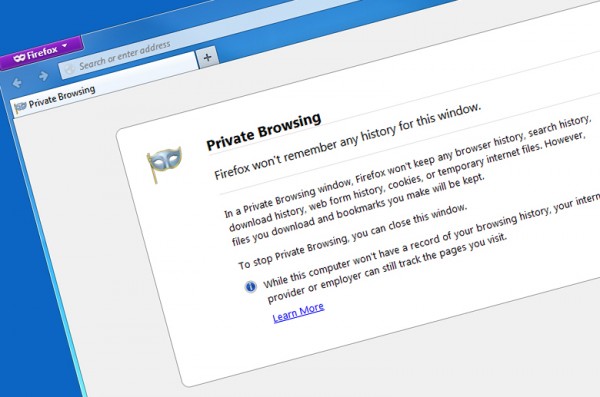
    These days, the ability to browse the web anonymously is built into most web browsers. Firefox has a special Private Browsing mode where no trace of your history — including searches, downloads, web forms and cookies — is kept, although any downloaded files and bookmarks will remain as evidence of your secret browsing session.

    It’s certainly more robust than a general browsing session, but it’s not as secure as it might be. That explains the reasoning behind Private Browsing by PortableApps.com 3.0, a free add-on for Firefox Portable Edition for Windows.

    Firefox Portable Edition is — as its name implies — a standalone version of Firefox for Windows PCs that can be run directly without installation, making it perfect for portable use on a USB drive. It too has the Private Browsing mode offered in the regular Firefox build, but install the Private Browsing add-on and you can go further.

    The add-on is launched separately from Firefox Portable, but then loads the parent application with its own customized profile in place. This sets things up in the same way a regular Private Browsing window would, with privacy risks such as cookies, download history and so on switched off, but it goes further.

    Private Browsing comes with the Flashblock add-in to block Flash-based cookies, which aren’t covered by Firefox, and AdBlock Plus (and a subscription to EasyPrivacy) to block tracking scripts and sites. It maintains its own separate list of bookmarks, allowing you to bookmark sites without them showing up in your regular list. All other Firefox add-ons are disabled too, so they can’t record any compromising information during your private browsing session.

    It’s not perfect — the authors themselves point out that it’ll only protect the data stored on your own PC, and that you’re still at risk from network admins and other snoopers if you’re using an insecure network to transmit and receive data. But as a step up from Firefox’s own Private Browsing mode, it’s well worth considering.

    Private Browsing by PortableApps.com 3.0 is available, along with Firefox Portable 21.0, as free, open-source downloads for Windows PCs.

  • Pure Storage nets new cash from In-Q-Tel to push its “flash for all” effort

    Flash storage dynamo Pure Storage has snagged new funding — the amount is undisclosed — from In-Q-Tel, the VC affiliate of the CIA and other security agencies. The fresh cash comes atop a $40 million D round closed last August, which brought the total tally at the time to a robust $95 million.

    Matt Kixmoeller, VP of products for Pure Storage.

    Matt Kixmoeller, VP of products for Pure Storage.

    In-Q-Tel backing should make it easier to get traction in defense and security-related venues which view In-Q-Tel backing as a sort of seal of approval, said Pure Storage  co-founder and CEO Scott Dietzen. “The immediate value  [of the In-Q-Tel relationship] is in the procurement and sourcing agreements with these  agencies,” he added.

    The Mountain View, Calif.-based company also unveiled the third major release of its core storage product that adds data-at-rest, 256-bit AES encryption that ensures that customer data is encrypted all the time — even if an array has to be taken out of service for transport or repair,

    “We are software guys who focus on value-add deduplication, and encryption — we bake them right in and don’t even let them be turned off,” said Matt Kixmoeller, VP of product marketing and management. “Our hardware-oriented competitors add these things after the fact and then see massive performance degradation as a result.”

    Pure’s flash-for-all motto is ambitious — solid-state flash memory is seen as much pricier than traditional disk drives and tape. But Pure executives said they’re serious about bringing the cost of flash storage down at least to spinning disk levels.

    “If you take traditional tier 1 drives, you generally pay $3 to $5 per gig, but as you provision it and do things to make it useful, the end price is more like $5 to $10 per gig. We can sell flash at about $5 per useable gig,” Dietzen said.

    Dan Iacano, IDC’s research director of storage systems, said Pure’s pitch has some merit.”You can probably still get tier 1 disks for a little it lower, but if you look at the all-in baked in price  [of the disk and all the software that makes it truly useful] Pure Storage close,” he noted.

    Pure Storage definitely generates  buzz but it also faces some talented competitors ranging from Violin Memory and Whiptail to  Texas Memory, which IBM bought last year to boost its stake in the super-heated flash memory market. The race to flash-enable the world is going to be fun to watch.

    Don’t miss Dietzen and Paula Long, who cofounded EqualLogic and now DataGravity, talk at GigaOM’s Structure event about the role storage plays in our highly distributed world.

    Related research and analysis from GigaOM Pro:
    Subscriber content. Sign up for a free trial.

  • Microsoft scales Mount Everest

    Google gets a lot of attention for its Street View adventures — it’s travelled from the Great Barrier Reef to the Grand Canyon — but Microsoft is not taking this lying down. The software giant has teamed up with David Breashears and his non-profit, GlacierWorks, to scale the heights of the Himalayas.

    The IE10 team, Microsoft Research, and the developers at Pixel Lab have come together to create a multi-touch experience that allows users to explore the work of David Breashears, who has spent considerable time exploring and photographing the world’s tallest mountain chain.

    Microsoft’s Roger Caprioti announces “renowned explorer, filmmaker and photographer, David began chronicling the changes to the glaciers of Mount Everest and the greater Himalayan region in 2007 when he first matched an iconic image taken in 1921 by explorer George Mallory. David’s photo revealed the stark changes occurred to this glacier during the 86 years since Mallory took his photo”.

    Using Gigapixel images and video, a simple tap or pan lets you fly across panoramic views of Everest and zoom into images composed of billions of pixels to discover the region in great detail. “If you want to explore an area, a peak or basecamp on the mountain, you simply draw a circle around a piece of the photo and the site will automatically zoom to what you want to explore” explains Caprioti.

    This is built with Internet Explorer 10 in mind, but the “browser you loved to hate” is not necessary in order to explore Mount Everest. You can check it out at GlacierWorks. Take that Google Street View!

  • TuneIn raises $25 million, nabs new CFO from Google to monetize radio streaming

    Palo Alto, California-based TuneIn has raised a new $25 million round of funding, and it plans to put that money to good use. TuneIn CEO John Donham told me Tuesday that he intends to spend a big chunk of his new funding on a monetization strategy that could help radio broadcasters finally make money with their programming online, and in turn transform a $30 billion industry.

    To help him with that task, Donham has also brought Axel Martinez as the company’s new CFO on board; Martinez previously worked ten years for Google, most recently as Assistant Treasurer, Head of Capital Markets.

    TuneIn is offering access to live and on-demand programming from some 70,000 radio stations, and Donham said that the service has seen a huge uptake on usage in recent months: TuneIn users streamed more than one billion hours of programming during the first four months of this year, he told me, and the company is now seeing more than 40 million active users per month. Growth is especially pronounced on mobile devices, where the company now sees the majority of its use.

    TuneIn now wants to make money on all those listeners, but Donham said that monetizing radio isn’t as easy as it may seem. In fact, many broadcasters are utterly unprepared.

    “Suddenly, a local radio tower can reach a global audience,” said Donham, explaining that it’s easy for a broadcaster in San Francisco to reach a listener in New York these days. Serving that listener with ads that are actually relevant to him is much harder, in part because that San Francisco broadcaster doesn’t have anyone selling ads for him in New York.

    Donham didn’t want to go into too many details about the solution his company is working on, but to me, it sounded like a kind of ad exchange that would allow New York broadcasters to not only sell ad inventory for their own stations, but also that broadcasters in San Francisco who happens to have listeners in New York.

    So why not offer broadcasters a way to make money with their content through subscriptions instead? “One of the compelling value propositions of radio is that it is free,” Donham told me, adding that he wants to keep it that way: “We want to further the value proposition of radio.”

    Including the most recent round, TuneIn has raised a total of $47 million. The new funding was led by Institutional Venture Partners, with existing investors Sequoia Capital, Google Ventures, and General Catalyst Partners joining in on the round.

    Image courtesy of Flickr user  C.P.Storm.

    Related research and analysis from GigaOM Pro:
    Subscriber content. Sign up for a free trial.

  • GoEuro takes on the challenge of multi-modal European travel

    GoEuro is one of a handful of companies that are trying to make multi-modal travel search – that is, being able to search at once across modes of transport including air, rail, bus and car – a reality. What’s more, like fellow Berlin startup Waymate, GoEuro is trying to accomplish this feat across national borders. The complexity of the data involved is staggering, not to mention the difficulty of acquiring that data in the first place.

    But GoEuro is doing it. The service has now launched – right now it’s optimized for those in the U.K. and Germany, but the goal is to make GoEuro’s coverage as comprehensive as its name suggests.

    Will it extend beyond Europe? According to GoEuro CEO Naren Shaam, the company is open to licensing its technology to operations in Asia and South America. The U.S. market is an unlikely prospect, though – that country simply doesn’t have a well-enough-established bus and train network for GoEuro’s technology to have an impact.

    So, what’s in GoEuro’s box? As mentioned above, you can search across multiple modes of transport in one go, with the results being ranked according to criteria of your choosing: speed, cost and convenience, with departure and arrival times “in the pipeline” according to Shaam. It’s all a bit like Kayak or Skyscanner, only for more than just flights.

    Naren ShaamIncidentally, the cost of the car journey is based on GoEuro’s estimate of fuel expenditure and so on, and clicking on that option also brings up affiliate links for the major car rental firms. Throughout GoEuro’s service, the emphasis is on sending customers to the transport operators’ websites to make final bookings. Waymate is trying to handle all bookings on its own site – a more ambitious goal, but one that makes it much harder to get the operators on board.

    And getting them on board is a big deal – wrangling disparate data is one thing, but partnerships constitute the other side of the coin. Shaam told me the train companies, which are largely monopolies in Europe, were the worst. “We have enough train companies in our system now, but as a young entrepreneur when you have zero train companies, that’s when they’re the hardest to get,” he said.

    Data from train companies is also way more complex than that for air routes – GoEuro’s systems have to have up-to-the-minute information relating to 25 airports, but also for 9,000 train stations… and that’s just for the UK and Germany. The complexity of bringing all that data onto a single platform is why, Shaam noted, GoEuro was lucky to have raised $4 million in its seed round a few months back.

    With Waymate also having launched last month, we now have two test cases to watch for their success or otherwise in this multi-modal booking space. No-one has managed to pull it off before, but a success story would be a huge win for consumers. Perhaps, with data complexity becoming more manageable these days, it’s an idea whose time has come.

    Related research and analysis from GigaOM Pro:
    Subscriber content. Sign up for a free trial.

  • Transform your printer and scanner into a powerful photocopier

    Multifunction printers have many useful features, but the ability to work as a photocopier has to be one of the best. Place your document on the scanner, click the Copy button, and a duplicate should appear in just a few seconds.
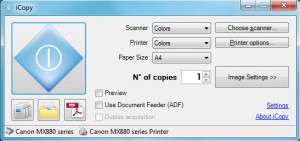
    You don’t have to miss out on this kind of convenience just because you’ve a separate printer and scanner, though. Grab a copy of iCopy and the program will combine your devices into a straightforward yet very capable photocopier.

    Getting started can be as easy as launching the program, perhaps choosing the number of copies you need, and clicking the Copy button. iCopy will then simply scan whatever is on your scanner right now, and send it to the printer.

    There are plenty of additional settings available, though. For example, you can choose your scanning mode (color, greyscale or text), resolution, brightness, contrast or more, and optionally display a preview if you need to check image quality.

    Printer controls include the option to set your print mode (color or black and white) and paper size, as well as configuring any of your regular printer settings.

    But the program doesn’t restrict itself to printing. You can also save pages as image files. And there’s even an option to save one or more scanned images into a single PDF file.

    Taken individually these functions aren’t any great surprise. In fact your scanner probably came with software which had most of these features, and many more.

    iCopy’s focus on simplicity, just scanning and printing (or saving) does make for real ease of use, though, and the program’s small size (1.3MB) and portability are also pluses. If you need simpler copying then we’d give it a try.



    Photo Credit: ColinCramm/Shutterstock

  • Five essential elements of natural self-confidence

    Self-confidence comes naturally when certain elements in your psyche line up. Self-confidence is not something you have to try for. It is a result. How do you produce the desired result? Check out the following five elements of natural self-confidence:1. Know…
  • Looking for a way to slim down, boost clarity and renew vitality? A healthy thyroid may be the secret

    Feeling sluggish with perpetual brain fog? What about weight gain, depression and hair loss? If suffering from these ailments, a lethargic thyroid may be the culprit. Modern lifestyles and toxins as well as gluten can wreck havoc on the gland and, in turn, health. Yet…
  • Obamacare to usher in 100 to 400 percent insurance rate increases across the board

    Seventeen of the nation’s largest insurance companies are now reporting that insurance premiums are set to spike anywhere from 100 percent to 400 percent for many Americans in 2014. These insurance companies, including the likes of Aetna, Blue Cross Blue Shield, and…
  • Psychiatry’s insiders revolt against flawed DSM-5

    The fifth edition of the Diagnostic and Statistical Manual of Mental Disorders, (DSM-5) is coming under scrutiny. Thomas Insel, The director of the US National Institute of Mental Health, is questioning the manual’s validity, pressing scholars and scientists to shift…
  • Wheat contains over 23,000 potentially harmful proteins

    It is no secret that the number of people with either gluten sensitivity or gluten intolerance, the latter of which is often diagnosed as Celiac disease, is on the rise all across the world. But what is commonly misunderstood about the difficulty or inability to digest…
  • Protect your heart with CoQ10 and vitamin B6: Research

    If you’re looking for ways to improve the health of your heart, don’t overlook the dramatic impact of two simple nutrients: vitamin B6 and CoQ10. In a controlled study published in the journal Nutrition Research in October 2012, researchers from Chung Shan Medical…