Category: News

  • You Probably Had a Better Week Than Ron Johnson

    AN APPLE A DAY KEEPS THE CUSTOMERS AWAY

    Tired of the “bad Apple” puns yet? Surely Ron Johnson is. After an epic battle over brand differentiation versus price, Johnson was booted as CEO of JC Penney. Many of the “juicy” details (oh, I couldn’t help myself) be found in this New York Times analysis, which begins with Johnson sweeping into his role “a star” and leaving after alienating what seems like most of the corporation and customers. What went so wrong? Sure, a few anonymous sources described his management style as condescending, but much of the problem comes from the page Johnson took from the successful Apple playbook: not testing any of his new ideas. While this is common at Apple — “customers don’t always know what they want” — the strategy backfired at JC Penney. Shoppers were inundated with the message that they “deserve to look better” — but who (other than Johnson) says they looked bad in the first place? (For a smart, albeit different take, our own Gardiner Morse analyzes “What Ron Johnson Got Right.”)

    MIRROR MIRROR ON THE CUBICLE WALL

    Hirable Like Me (Kellogg Insight)

    Most managers would like to think they base their hiring decisions on candidates’ skill. But new research suggests that once a candidate passes through an initial HR screening, a bigger factor comes into play: how similar the interviewee is to the person doing the hiring. Kellogg School of Business assistant professor Lauren Rivera spent nine months embedded in a professional service organization and noted three key reasons why this takes place: the “Will this person fit in?” question; the fact that people define merit on the basis of their own experiences; and that managers get excited by candidates who have similar passions and interests. Hiring managers forget that “there are other ways people can a) be likeable and b) be socially skilled other than being a mirror image,” Rivera says.

    NOW YOU HAVE MORE TIME TO WORK ON YOUR BENCH PRESS

    Brain Games are Bogus (New Yorker)

    Sad news for anyone who relies on a “Please make me smarter” iPhone app the way a spelling bee contestant relies on flash cards. Two European scientists recently analyzed 23 studies about the effectiveness of such brain training; their conclusion is that playing cognitive games makes you really good at cognitive games, but not necessarily good at anything else. Gareth Cook runs through a host of other studies, which all echo the finding in different ways. While this may not be a huge deal to the casual Luminosity user (aside from the 10 minutes or so you could actually be doing something productive), the stakes are much higher for people who really need memory help: children with learning disabilities, people with brain injuries, and seniors with diminishing memory capacity. The fear is that companies catering to these groups might be peddling much more than a product that doesn’t work very well: discouragement and false hope.

    WHO DO YOU CALL?

    Lonely at the Top: Being a Lady Boss Without Mentors (The Cut)

    You’re a woman. You’re 29. You suddenly have the word “executive” in your title. Who do you turn to for advice on managing others (and, for that matter, yourself)? No one, writes journalist Ann Friedman. “Even though I’d been working with professional women for about a decade,” she writes about becoming a boss two years ago, “I failed to come up with even one mentor-type figure I felt like calling up for advice.” Friedman, in a truly personal way, walks you through exactly what went through her head — from pondering the socioeconomic reasons she didn’t have a mentor to what, exactly, her proper “I’m managing others” attire should be. It’s a reminder that when it comes to women in leadership, the relationships necessary for tackling the “particularly thorny issues” women face are still, for many, sorely lacking.

    GO AHEAD, STRESS YOURSELF OUT

    Putting Things Off Isn’t Always Inefficient or Unproductive (Quartz)

    Turns out it’s possible to harness your tendency to procrastinate and turn it into a productivity tool (really). A study of a cohort of highly intelligent people showed that some of them use procrastination as a way to trigger just the right level of stress needed to ignite positive action. Others use procrastination as a “thought incubator” that allows their brains to process ideas unconsciously, according to Quartz. Some people are even able to use their procrastination time to take care of other responsibilities, such as going through their to-do lists. —Andy O’Connell

    BONUS BITS:

    No Rest for the Dead, Rich, or Powerful

    Margaret Thatcher Got By on Four Hours of Sleep. Should You? (BBC)
    What the Exhausted Will Pay for a Good Night’s Sleep (The Atlantic Wire)
    What Time Do Top CEOs Wake Up? (The Guardian)

  • 7 writer/artist/thinker groups whose members made a tremendous impact on their time … as well as ours

    Photo: James Duncan Davidson

    Photo: James Duncan Davidson

    In 1812, four men met for a “philosophical breakfast” at Cambridge University: Charles Babbage, John Herschel, Richard Jones and William Whewell. Over food and drinks, they debated the state of knowledge –- imagining a world in which thinkers drew conclusions based on data, where research was done for the good of humanity rather than for financial gain, where researchers questioned each other in the name of moving each other forward and where research received outside funding rather than requiring an individual to pay for it themselves.

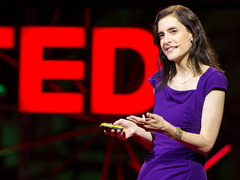
    Laura Snyder: The Philosophical Breakfast ClubLaura Snyder: The Philosophical Breakfast Club In today’s talk, historian Laura Snyder gives us an introduction to the discussions of these four men, who eventually became known as The Philosophical Breakfast Club. While their ideas form the basis of scientific inquiry now, their concepts were radical at the time, says Snyder in this talk from TEDGlobal 2012. It would be another 20 years before the term “scientist” would be coined — by Whewell. To hear about the word’s dramatic unveiling, watch this talk.

    The Philsophical Breakfast Club members went on to great things. Babbage invented the first mechanical calculator, and the first prototype of a computer. Herschel was an astronomer who mapped the stars – and also invented photography. Jones was an economist who inspired Marx. And Whewell – who also originated the words cathode and ion — spearheaded global research with his work on tides.

    Interestingly, groundbreaking work often seems to happen in groups. Throughout history, clubs of writers, philosophers and artists have formed, with thinkers in the same area gathering for discussion and collaboration. For some of these groups, multiple members went on to renown. It begs the question: Can collectivity push talented individuals to greater things than they could achieve on their own?

    Below, a few clubs notable for their influence on modern thought.

    The Socrates School
    Notable members: philosophers Socrates, Aristophanes, Xenophon, and Plato, who in turn taught Aristotle
    Time frame: Approximately 400 years BC
    Not at all a school with desks and a blackboard, this group was known for asking big questions about politics, human nature, life and reality, and debating the answers in riveting discussions, many of which were captured on paper in texts like Plato’s Dialogues. Socrates devoted his life to teaching the youth of Athens and, together, this group set the foundations for Western philosophy.

    The Bloomsbury Group
    Notable members: writers Virginia Woolf and E.M. Forster, economist John Maynard Keynes, critic Clive Bell and painters Vanessa Bell and Duncan Grant
    Time frame: 1907 through the 1930s
    While it’s clear that they had meetings, often at the home of Clive and Vanessa Bell in the Bloomsbury district of Central London, this circle of thinkers is hard to pin down as they denied being a formal group at all. The network included husbands, wives, siblings, friends and rivals, all exploring concepts of modernity in literature, criticism, economics and art.

    Stratford-on-Odeon
    Notable members: writers Ernest Hemingway, James Joyce, F. Scott Fitzgerald and Gertrude Stein, poet Ezra Pound, composer George Antheil, artist Man Ray
    Time frame: 1920s
    “Stratford-on-Odeon” was James Joyce’s nickname for the bookstore Shakespeare and Company, in Paris’ Left Bank on the Rue de l’Odéon. The store became a hub for British and American modernists, and store owner Sylvia Beach published James Joyce’s Ulysses in 1922. The store was closed during the German occupation of Paris in WWII — despite Hemingway’s fabled effort to liberate it himself. (A second bookstore, popular with the Beat Generation, continues to exist at 37 rue de la Bûcherie.)

    The Algonquin Round Table
    Notable members: writers Robert Benchley, Dorothy Parker, Alexander Woollcott, George S. Kauffman, Franklin Pierce Adams, Marc Connolly, Edna Ferber
    Time frame: 1920s
    This New York City writers group formed as a lark, convened to share wisecracks and snide remarks among a group of humor writers, critics, columnists and playwrights, many associated with the young New Yorker magazine. The group ended up meeting almost daily for lunch at the Algonquin Hotel.

    The Inklings
    Notable members: writers J.R.R Tolkien, C.S. Lewis, Owen Barfield, Charles Williams, Roger Lancelyn Green, Adam Fox, Nevil Coghilland
    Time frame: 1930s and 1940s
    A literary discussion group at Oxford, the Inklings would read and discuss each others’ work — most famously helping Tolkien shape The Lord of the Rings. While meetings were generally held in C.S. Lewis’ room, some were held at an Oxford pub called The Eagle and the Child.

    The Factory
    Notable members: artists Andy Warhol and his stars Edie Sedgwick and Gerard Malanga, artist Salvador Dali, writers Allen Ginsburg and Truman Capote, musicians Lou Reed, Bob Dylan and Mick Jagger, designer Betsey Johnson
    Time frame: The 1960s
    The Factory was the name of Andy Warhol’s 1960s studio in New York City. The aluminum-foil-covered space became a gathering spot for artists, filmmakers and musicians, many who were pioneering experimental art. The Factory was also famous for wild parties and sexual exploration – and for being the place where many of our modern ideas of fame were formed.

  • Want To Upgrade Your Verizon Phone? You’ll Have To Wait Four Months

    If you have tried to score an early upgrade from Verizon in the past year or two, you might have walked away disappointed. Ever since they picked up the iPhone in January, 2011, they essentially stopped allowing customers to upgrade before their eligibility date.

    “If you’re a doctor and absolutely need it, that’s a situation where we can help,” a Verizon store manager told me last year when I attempted an early upgrade. “And even then, there are absolutely no early upgrades on iPhone.”

    Instead of stonewalling customers, Verizon did make a concession. Previously they featured a 22-month upgrade cycle. That is, while your contract runs 24 months, you could upgrade your phone two months before your contract expired. In the last year or so, they reduced that to a 20-month upgrade cycle. That certainly compensates, at least a little, for the absolute rule of no early upgrades.

    Today they changed that, and at the expense of the consumer. From their corporate newsroom comes a notice that customers are now on a 24-month upgrade cycle. That is, you can’t upgrade before your contract actually expires. This is sure to spark some anger among consumer advocacy groups.

    VerizonLogo

    In a way this makes sense. The staggered nature of upgrade and contract expiration dates can cause some confusion among consumers, even if it benefits them. It also probably benefits Verizon in terms of paperwork. But it’s also a big drawing point for retaining customers. When a customer has a contract expiring in November, and you can extend that for another two years by offering them an upgrade in July, you’re probably going to retain him or her.

    The 20-month upgrade remains from now through essentially the end of August. Customers who have contracts expiring in January, 2014, are the first affected. Those customers would be eligible for a 20-month upgrade in September, but instead will be the first group to wait that extra four months. Those who have contracts expiring up to December 31, 2013, can still upgrade four months before contract expiration. But that means they’ll have to wait 28 months for their next upgrade.

    Also part of the announcement: all New Every Two credits will disappear into the ether this Sunday, April 15th. We knew this was coming for a long time; Verizon killed the program in January, 2011 — coincidentally the same month they announced the iPhone for their network. Chances are eligible customers have used these credits by now, but there are surely some who have not.

    In the end this represents a slight inconvenience for customers who have contracts expiring after January 2014. When Verizon did away with early upgrades, the switch to a 20-month upgrade cycle helped considerably. Now that they’re back to the standard 24-month cycle, and still don’t allow people to upgrade even a day early, they’re going to have a lot of frustrated customers.

    Via Phone Scoop.

    The post Want To Upgrade Your Verizon Phone? You’ll Have To Wait Four Months appeared first on MobileMoo.

  • Kris Humphries No-Show Leaves Kardashian Divorce Unresolved

    It seems that Kris Humphries‘ legal troubles will soon grow beyond being sued by an L.A. suit shop. TMZ is reporting that the NBA star did not show up for a mandatory settlement conference for his contentious divorce.

    Humphries, who plays for the Brooklyn Nets, and his estranged wife, reality TV actress and amateur porn star Kim Kardashian, have been separated for over one year now. Kardashian filed for divorce after only 72 days of marriage, leading many, including Humphries, to speculate that the entire marriage had been a Kardashian publicity stunt.

    The divorce proceedings have dragged on, and this week the couple were scheduled for a mandatory settlement conference to resolve the divorce. The TMZ report states that the conference was scheduled to take place in Los Angeles at 8:30 am PT on Friday, but that Humphries was spotted in New York early Friday morning – with the earliest flight to the west coast arriving at 9:15 am PT.

    The publication later confirmed that Humphries did not make it to the conference, though the paparazzi did catch Kardashian arriving on time:

  • Resourcing the Rebalance toward the Asia-Pacific Region

    At the very outset of his Administration, the President made a strategic decision to increase the United States’ focus on the Asia-Pacific region by rebalancing U.S. engagements, activities, and resources toward this vital region. The President made this plain in his speech before the Australian parliament in 2011:  “the United States will play a larger and long-term role in shaping this region and its future, by upholding core principles and in close partnership with our allies and friends.”  Our approach is grounded in the proposition that the United States is a historic Pacific power whose economy, strength, and interests are inextricably linked with Asia’s economic, security, and political order…and we are here to stay”

    In March of this year, National Security Advisor Tom Donilon highlighted in a speech at the Asia Society that the Administration: “has worked to make our rebalance to the Asia-Pacific a reality because the region’s success in the century ahead –and the United States’ security and prosperity in the 21st century—still depend on the presence and engagement of the United States in Asia.”  The President’s Fiscal Year 2014 Budget reflects this strategic priority by sustaining key investments made throughout the President’s first term and by investing in new initiatives to expand and deepen a Government-wide commitment across the region.  The Budget aligns resources and activities with the President’s Asia-Pacific rebalance objectives: shaping regional institutions and architecture, advancing economic integration across the region, strengthening and modernizing U.S. alliances, forging deeper partnerships with emerging powers, pursuing a stable and constructive relationship with China, and promoting universal and democratic values.

    read more

  • Supporting our Veterans and Military Families on Campuses

    Over the next few years, more than a million service men and women will end their military careers and transition back to civilian life. Many of these veterans will decide to go back to school to finish their degrees, enroll in a community college for the first time, or work to obtain a master’s degree.

    That’s why, on our campus communities, we need to make sure that our veterans have access to the programs that will help them succeed and obtain good jobs to support their families.

    This April, as we mark the second anniversary of Joining Forces, I am pleased to be visiting several higher education institutions to learn more about what they are doing to support student veterans.

    Dr. Biden participates on a panel with student, faculty and staff veterans at George Washington University

    Dr. Biden participates on a panel with student, faculty and staff veterans at George Washington University

    (by Jessica McConnell Burt / The George Washington University)

    On Wednesday, I visited George Washington University to meet with student veterans and hear about several of their initiatives. While I was there, I heard from members of GW Vets, their student group representing more than 1,500 student veterans, military dependent students and allies across campus. 

    One of those students was Nichole Krom, a freshman who became involved in GW Vets as soon as she heard about it and is now the organization’s secretary. Nichole is not a veteran herself, but her father recently retired from the New York Air National Guard. She is a wonderful example of an important truth about our service men and women who sacrifice so much for our country – their families serve right alongside them.

    read more

  • You’re Not Famous Enough to Play with Twitter Music Yet

    It turns out, reports that Twitter was launching their new music discovery service Twitter Music this weekend were true, and also not true.

    Twitter Music is available – but only for a handful of top influencers. We noted earlier that Ryan Seacrest was already tweeting about it – and now it’s clear why. Twitter is only letting a small number of celebs and other big Twitter personalities “test” the new app for now. And of course “test” means “tweet about and generate buzz for,” as Mr. Seacrest’s involvement would indicate.

    Peter Kafka at All Things D reports that us common folk aren’t going to be able to get a look at Twitter Music until sometime next week. Bummer.

    What we know about Twitter Music so far is that it’s a music discovery app that suggests music based on a number of signals – including who you follow. Users of Twitter Music will be able to stream songs via Soundcloud and iTunes – but no full-streaming service partners like Spotify are expected at launch. Also included in the package is a global trend tracker, which allows Twitter Music users to know what’s popular and playing in real time.

    For now, we just have a music.twitter.com site that teases the service, and has a Twitter sign-in button. But it doesn’t function yet.

    Expect more of this^ over the next few days.

  • FreeRIP Rips Audio CDs Without Additional Tweaking

    Ripping music from Audio CDs is far from being a difficult task these days. With more and more users relying on cloud storage to keep their files, this type of application is closer to becoming obsolete.

    However, before uploading your music collection, you still have to convert it to a standard format and FreeRIP might just cut it for a quick and easy job. It can rip… (read more)

  • Chat Heads From Facebook Home Now Part Of Facebook Messenger

    Facebook unveiled Facebook Home for Android last week, as I’m sure you recall. There was a lot of press about: the product, what it means for Facebook’s mobile strategy, the Eminem song Facebook used in a video for it, etc.

    One of the key features of Facebook Home is something called “Chat Heads”. These are images of your friends that appear on your device when you get a Facebook message (or text message) from them. They come up regardless of what app you’re currently using. They infiltrate the greater Android experience to inform you that your Facebook friend has something to tell you, regardless of whether or not you’re currently using Facebook (and assuming the standard notification wasn’t enough).

    But Facebook Home is only available for a handful of devices. Lots of Android devices have access to the Facebook Messenger app, however. In fact, lots of Android device-owning Facebook users already have the app installed. That app just got updated, and guess what’s listed in the “What’s New” section:

    – Keep chatting even when you’re using other apps. Just tap the chat head to reply, drag down to close.
    – Bug fixes.

    Sure enough, it works just like that aspect of Facebook Home. You know don’t have to have Facebook Home to have your friends’ messages intrude on whatever you’re doing on your device. Now, you can just have Facebook Messenger, and enjoy the same effect.

    Well played, Facebook.

  • White House Budget Taxes Producers, Subsidizes Inefficiency

    The White House has released its FY 2014 Budget Proposal. It is a mix of massive tax hikes on the most productive segments of our economy, and a continuation of wasteful subsidies to sectors that fail the market test. …

  • Nvidia Demos Kepler Mobile Chip, Closest Yet To PC-Level Graphics

    Nvidia

    Nvidia has lead the Android gaming space with its line of Tegra processors, and today showed off its next-generation Kepler Mobile chip. Chief executive Jen-Hsun Huang said the company has been working hard to bring its high-end Kepler desktop graphics chips to mobile. Nvidia engineers have managed to not only shrink the size of the Kepler chip, but reduce power consumption to just hundreds of milliwatts. In fact, Kepler Mobile is capable of running high-end PC games such as Battlefield 3. From Huang:

    “We want to get multiple years ahead of the competition. It was worth the sacrifice.”

    Kelper Mobile is a big leap forward for mobile gaming, and will allow smartphone or tablet owners to get a more similar experience compared to today’s desktops. Nvidia did a demo of the new chip, first showing what the latest iPad can do. You can watch the video below.


    Source: GamesBeat

    Come comment on this article: Nvidia Demos Kepler Mobile Chip, Closest Yet To PC-Level Graphics

  • BlackBerry Wants You To Design A Monster For Robert Rodriguez’ New Film

    Did you know that Robert Rodriguez and BlackBerry are collaborating on a new short film called Two Scoops? The movie follows the adventures of two monster hunters that pose as ice cream vendors during the day. The film is pretty much finished, but he’s letting the fans add the finishing touches.

    Rodriguez announced this week that he’s now accepting submissions for the monster that the two hunters will fight at the end of the film. Unlike the past few contests, aspiring designers don’t have to do a lot here. All they have to do is create a simple sketch of the monster. After that, Rodriguez’ designers will take over and bring it to life.

    For a chance to have your monster appear in Two Scoops, you just have to submit your design to BlackBerry’s Keep Moving promo site.

  • Will success be Samsung’s downfall? Samsung seen ‘stretching itself too far, too fast’

    Samsung Smartphone Tablet Roadmap
    Samsung (005930) made good on an impossible promise and the world’s top smartphone vendor is now seeing the hype surrounding its mobile products reach colossal levels. While this is great for Samsung in the near term, one industry watcher believes it may also be clouding management’s judgement as the company stretches itself “too far, too fast.”

    Continue reading…

  • NYPD uses Android as a tool of its trade

    NYPD-1-articleLarge

    It’s always nice to see progress. The New York Police Department has started issuing Android smart phones to their officers. As part of a pilot program that started quietly last summer with 400 officers, the hope is by having a smartphone with instant access to data, it will help the officers in the field. For now, the phones only have a data connection and don’t allow for calls or texts, however– that is not an issue because the officers now have a tremendous amount of access to central data. Cops now have information at their fingertips, which greatly helps improve the job they can do. Just look at this example:

    Officer Tom Donaldson typed in the building’s street address and, with a few taps of the screen, an astounding array of information bloomed in his palm.

    The officers suddenly had access to the names of every resident with an open warrant, arrest record or previous police summons; each apartment with a prior domestic incident report; all residents with orders of protection against them; registered gun owners; and the arrest photographs of every parolee in the building. The officers could even find every video surveillance camera, whether mounted at the corner deli or on housing property, that was directed at the building.

    “You can see that in this one 14-story building there are thousands and thousands of records,” Officer Donaldson said

    That one quote says it all my friends: the officers are loving the new technology as well. It is a great improvement over the standard in car computer they have relied on for so long. The computers can get spotty internet service throughout the city and they would have to log into multiple sites to get the same amount of information as the App on the smartphone.


    Source: New York Times

    Come comment on this article: NYPD uses Android as a tool of its trade

  • Facebook Messenger update brings Chat Heads to most Android phones

    Android phone users that don’t want the full Facebook Home experience but are still intrigued by Facebook Messenger’s Chat Heads are in luck: A Friday update to the Messenger app includes the new feature. Chat Heads, introduced during last week’s Facebook Home event, provide persistent pop-up bubbles for incoming chats and messages.

    Facebook home featuredThis new function works on all Android phones running Android 2.2 and later, meaning a huge percentage. That legacy support is a smart move by Facebook because the full Facebook Home app will only run on Android 4.1 or better. Initially, Facebook Home will only install on a half-dozen handsets, with more to follow. Of course, the launcher comes pre-installed on the new HTC First phone, which hits AT&T stores Friday.

    While I do use Facebook, I’ve never used Facebook Messenger, but did install it on my Galaxy Note 2 this morning. A few test messages with my wife showed the key feature of the update: her Facebook icon —  a Chat Head (or chat feet in her case) —  appearing atop all screens whenever she sent me a message. Provided you’re only chatting with one or two folks, I like the feature. I could also see it become obtrusive with heavy usage or with a number of simultaneous chats.

    Still, Chat Heads are well done and easy to dismiss by dragging down to the bottom of the display. Android users, particularly those that have older phones or don’t want the full Facebook Home experience, will likely appreciate the updated client.

    Related research and analysis from GigaOM Pro:
    Subscriber content. Sign up for a free trial.


  • Why Bitcoin crashed, and how Ripple might avoid the same fate

    To the surprise of very few people, Bitcoin has crashed. That’s not to say it’s a goner, but even those who bought into it just before the craziness of the last two weeks are now looking at losses: from a U.S. dollar exchange rate high of $266 two days ago, the crypto-currency is – at the time of writing – trading at around $70.

    What went wrong? Apart from being a bubble (albeit a bubble of a kind we’ve never quite seen before), it looks like Bitcoin fell victim to a single point of failure. But wait, you say, it’s a decentralized currency – how can that happen?

    Facepalm, face palmThat single point of failure is the most popular Bitcoin currency exchange, MtGox. There are other exchanges, but the bulk of Bitcoin trading happens there. MtGox claims to have been hit over the last couple weeks’ mania by the twin ills of denial-of-service attacks and sudden, excessive popularity, both of which amount to the same thing: MtGox’s systems falling over. The operation (which is based in Japan) has also shut down its own service at least once in an attempt to “cool down” the market.

    And every time that has happened, a panic sell-off has been the result. That’s not surprising: MtGox’s status as the best-known exchange has led it to become the main data source for most of the Bitcoin rate visualizations out there, so when Mt.Gox goes down it affects visibility for a lot of people. And when people can’t see what’s going on, they panic, find another exchange and sell, sell, sell. Same goes for the biggest exchange unilaterally deciding to cool down the market – hardly a sign of viability.

    (Some people have theorized about more sinister motives, too.)

    As I write, MtGox is conducting an AMA session on Reddit, in which it is explaining what it’s doing to stem the problems:

    “Upgrading computer systems means ordering more servers (two weeks timeframe), setting up (one day), load testing (two weeks) and deployment (one day). It’s a process that can take up to one month in total… We are now enforcing new rules for people placing large amounts of trades in order to reduce risks of lag.”

    Hardly ideal. But what – apart from boring old state-issued currency – is the alternative?

    Introducing Ripple

    The ideal alternative for Bitcoin as an ecosystem is to try to even the load between different exchanges, or at least settle on one that doesn’t fall over when people get keen on the currency. However, there is also an emerging rival of sorts called Ripple (not to be confused with the charitable donation tool of the same name).

    RippleAlthough its use is also pseudonymous, Ripple isn’t quite the grassroots effort that Bitcoin is: on Thursday its sponsor, OpenCoin, picked up a round of funding from Andreessen Horowitz, FF Angel IV, Lightspeed Venture Partners, Vast Ventures and Bitcoin Opportunity Fund, “an investment vehicle for Bitcoins and Bitcoin-related companies.” OpenCoin’s development chief is Jed McCaleb, the guy who founded MtGox in 2010.

    However, while it doesn’t have the same Stick-It-To-The-Man vibe as Bitcoin does, Ripple does have a few advantages over its better-known rival. Chief among those is the fact that it doesn’t need currency exchanges: in fact, it is its own distributed currency exchange.

    Ripple can be used to convert dollars into rupees, or for that matter Bitcoins, and send them across the world for the nominal fee of one “ripple” – this fee is only charged to stop people from swamping the system with millions of transactions. OpenCoin says a ripple is worth around a thousandth of a cent, and the company will put 100 billion of them into circulation — three quarters of which it will give away and a quarter of which it will keep for itself, in the hope that the value goes up. No more ripples will ever be created.

    So, ripples are both in-service tokens for the mechanism of sending and exchanging real money, and a virtual currency in their own right. Of course, Ripple users will need to get their hard cash into the system somehow, so the system employs what it calls “gateways.” Anyone will be able to act as a gateway, even individuals and convenience stores – although online services will probably be the most convenient.

    A faster self-regulating network

    Ripple is a bit like Bitcoin, in that the network verifies transactions – this is essential if you’re removing the “trusted third party” role that banks usually fill, because someone needs to ensure that people aren’t double-spending their virtual money. However, there’s a big difference in how this happens.

    hand shakeWith Bitcoin, nodes on the network called “miners” compete with each other to verify each block of transactions every 10 minutes. To verify a block, the miner has to complete a complex computational puzzle faster than its rivals do. In return for the electricity spent in doing so, the miner gets a certain number of freshly minted Bitcoins – this is how the system keeps working, and how new Bitcoins get brought into the system.

    With Ripple, the nodes on the network also maintain a shared ledger – the equivalent of Bitcoin’s blockchain – but they don’t compete with each other to do so. Instead, the system uses a complex consensus mechanism to make sure transactions get verified and added to the ledger.

    As this process has nothing to do with mining the virtual currency, there is no need to control the timing of the verification, meaning transactions can happen within seconds rather than in 10 minutes or more it takes with Bitcoin. This is clearly a big advantage, and there are others, such as the ability to create a chain of IOUs, either through people they personally know and trust, or by using ripples.

    But…

    Thus Ripple solves some of Bitcoin’s problems: transactions can take place more quickly, there’s no need for shaky third-party exchanges, and the whole shebang doesn’t need to waste a bunch of electricity on solving computational problems. However, I suspect Ripple will have its own problems.

    The first is to do with money-laundering. This is also a big potential problem for Bitcoin – although good luck to anyone who tried that this week – but I’m a bit confused about how well-controlled these “gateways” will be. Ripple’s own explainer states that “your neighbor or corner grocery could be a gateway,” but OpenCoin told me that “we believe these gateways should be properly licensed and regulated in the same way as other financial institutions,” Does. Not. Compute.

    The second problem is OpenCoin’s role in Ripple. The company maintains that it’s “just here to pay to develop and promote the network,” and doesn’t control Ripple, but at the same time it’s a for-profit company (hence this week’s investment) that has a vested interest in seeing the value of ripples increase. At the very least, there may be an inherent problem of perception here, particularly for those subscribing to Bitcoin’s core ethos.

    Ripple will also need to find enough “validating nodes” to ensure an above-board network consensus process. Unlike Bitcoin’s miners, these nodes don’t get anything for their efforts other than seeing the system stay up and running. Granted, they also don’t need to expend as much electricity in doing their job, but their participation is still not a sure thing.

    Finally – and perhaps most importantly – Ripple is really hard to understand, compared with traditional “fiat” currency. A lot of pieces need to be in place for it to work, and a lot of education needs to take place too. I would even go so far as to say that Ripple is more complex (even on a conceptual level) than Bitcoin, and that’s saying something.

    Still, Ripple is interesting, and perhaps having an official sponsor will make it more viable than Bitcoin. Whatever happens, it’s another step towards the post-experimental use of digital currencies.

    Related research and analysis from GigaOM Pro:
    Subscriber content. Sign up for a free trial.


  • Watch These Videos About Google’s Testing Processes

    Google has released a couple of new videos featuring interviews with engineers responsible for testing features on Google Maps, and a hangout with some other testing engineers.

    Google shares the videos in a blog post, explaining:

    The Life at Google team produced a video series called Do Cool Things That Matter. This series includes a video from an SET and TE on the Maps team (Sean Jordan and Yvette Nameth) discussing their work on the Google Maps team.

    The Google Students team hosted a Hangouts On Air event with several Google SETs (Diego Salas, Karin Lundberg, Jonathan Velasquez, Chaitali Narla, and Dave Chen) discussing the SET role.

    Here are both:

  • Top 10 BlackBerry 10 Apps for Business

    This may just be due to the fact that I had lunch with IBB for Business blogger Luke this week; or maybe I’ve just got business apps on the brain because I’ve grabbed a couple of good ones for my Z10 this morning. Whatever the reason, I’ve been doing a bit of research on business apps lately, and I wanted to share ten of my newly discovered gems with you. If you happen to find yourself with enterprise on the brain after reading this and jamming on some of these apps, pay Luke a visit for more BlackBerry business goodness. Ready for the list? Great, let’s go!


    1. Vault Password Manager by XLabz Technologies Pvt Ltd: If you spend any time online at work, you have passwords. If you have passwords, you know how frustrating it is to forget a password, so you end up writing them down, compromising your security in the process. Consider Vault your encrypted digital notepad of passwords that is far more secure and just as accessible.
    2. Business Cards for BlackBerry 10 by Saper-ek: How many times have you come home from an event with business cards from and could not remember why you needed to connect with them? Using the Business Cards app, you can scan them in and make notes, saving hours of guesswork.
    3. Hide Files for BlackBerry 10 by Runisoft Ltd.: Hide Files is perfect if your company uses one device for multiple people, or if you simply want to keep your data safe from snoops. This app allows you to hide photos, videos, documents, music and any other type of file in your SD Card or in your device’s memory. Of course if you’re using your own BlackBerry 10 device with BlackBerry Balance, you already have a pretty cool way of keeping your personal things personal.
    4. Find Near Me by XLabz Technologies Pvt Ltd: Here’s a familiar situation for me: An important client is coming into the office and is staying for a working dinner. The problem is that you’re unfamiliar with the fancy restaurant scene around the office, and this is a meal where you need to impress. Find Near Me is an app that helps you locate a variety of places – from Restaurants to Wi-Fi hotspots – near your location. Using the app’s detailed information about the location, you are sure to find a place to impress your client and look like a hero at the office.
    5. A Day in Life by XLabz Technologies Pvt Ltd: Ever have a great idea, or think of something you just have to write down at that moment? There have been times I’ve been on the road and thought, “I have to remember to do this when I get home” so I BBM, text or email it to myself. A Day in Life allows you to jot down your free-form thoughts in a digital journal for later reference.
    6. SayIt by BachKhoa University: If you ever find yourself needing a personal assistant, organizer, encyclopedia, or a dictionary while on the go with your BlackBerry Z10, you are going to want SayIt. Offering all of these features plus a 25 language translator, SayIt is a veritable Swiss knife of usefulness. This app is part of the Built for BlackBerry program, and you can find a handy video demo right here.
    7. Stocks for BlackBerry 10 by Alex Garipian: Day traders, night traders, bulls and bears all will love this BlackBerry 10 app. True to its name, Stocks for BlackBerry 10 helps you track your stocks, monitor your portfolio when the market is open, and after hours trading after the markets close.
    8. NYTimes for BlackBerry10 by The New York Times: Even if I can’t yet consider myself a native New Yorker(maybe a “Canadian port?”) I can still keep up with the news there. This app syncs the news and give you limited access for free, with a small fee to open up the whole pizza pie.
    9. TV for BlackBerry 10 by Yaybe.tv Television TV and Video Tablet Apps: Keeping up with the news is an essential part of my job, and I appreciate the multitude of channels this app provides for me to watch. I can catch news reports from around the world with the TV app on my BlackBerry Z10 as well as use the PlayBook version to watch TV on a larger screen if I want.
    10. Print My Files by Runisoft Ltd.: Print My Files is a slick and easy way to print from your mobile device just as you would if you were sitting at your desk. You can also use PMF to connect directly to a Wi-Fi printer and print documents on your device right from your BlackBerry device.

    There you have it, 10 of the more useful apps I’ve seen hit BlackBerry World for business folks of all stripes. If you have any that you use or you think I missed, share them in the comments!

  • Glee: School Shooting Episode Gets Mixed Reviews

    [Author’s Note: Spoilers ahead]

    Network TV viewers who are still following the Fox show Glee got quite a treat Thursday evening. The only problem is, the consensus is still out on whether it was salty or sweet.

    This week’s Glee featured a ‘school shooting’ of sorts. Though no one is injured, two shots ring out through McKinley High. In the aftermath of the shooting, a flashback reveals the shooter’s identity, and shows why a well-loved teacher takes the blame for the incident.

    Fans of the episode are calling it a bold step for a network TV show, while critics are trashing the episode as exploitative and insensitive toward families who just months ago lost children in the Newtown elementary school shooting. The comments being left on Twitter show the mixed reaction of fans:

  • Watch Steve Wozniak Talk About His Love For Tetris

    Steve Wozniak is best known as the co-founder of Apple. He’s also an opponent of patent laws and a friend of Kim Dotcom. What many people may not know is that he’s also a huge fan of Tetris.

    In this video from Game Informer, Wozniak plays Tetris on the Game Boy while reminiscing about his time with the game. He apparently wasn’t very good at the game when it first came out, but his son showed him the ropes. After that, he was one of the best players around. When Nintendo Power used to publish high scores in Tetris, he had the highest score for many consecutive months. He even had to submit his scores with his name spelled backwards because the folks at the magazine were tired of printing his name every month.

    It’s really interesting to see Wozniak talk about games since he himself has a history with the medium. He designed the original Breakout arcade cabinet and game, but Atari ditched the hardware design while keeping his original game design. It’s a shame that he didn’t stick with game development. It would have been really interesting to see what would have come of his ability to build gaming hardware.