Category: News

  • Huron Capital’s Ronnoco Buys International Blends

    Huron Capital Partners portfolio company Ronnoco Coffee has acquired International Blends, a distributor of coffee and other related products to convenience stores, restaurants, and offices. Terms were not disclosed.

    PRESS RELEASE

    Huron Capital Partners LLC (“Huron”) announced today that its portfolio company, Ronnoco Coffee, LLC (“Ronnoco”), has acquired International Blends. International Blends is a distributor of coffee and other related products to convenience stores, restaurants, and offices. The transaction brings Ronnoco and International Blends together and expands Ronnoco’s service area in its core markets.

    Scott Meader, CEO of Ronnoco, noted, “We are very excited to partner with International Blends and have the opportunity to serve their customer base. International Blends is a well-known name in its geography and we believe it fits well into the strategic acquisition plan that we are currently pursuing in partnership with Huron Capital.”

    Huron originally invested in Ronnoco in July 2012, and was attracted to the company’s outstanding reputation in the industry, high quality product offering, and differentiated service model. “When we partnered with Ronnoco, our plan was to continue growing the business through geographic expansion, new product offerings and strategic acquisitions. The International Blends acquisition is a great first step and we look forward to pursuing additional acquisition opportunities with the Ronnoco management team,” said Huron Senior Partner John Higgins.

    About Huron Capital Partners LLC

    Huron Capital is an operationally-focused private equity firm with a long history of growing lower middle-market companies through customized buy-and-build investments. Huron seeks opportunities where it can help companies reach their full potential by combining its operational approach, capital, and transaction experience with proven operating executives. Founded in 1999, Huron has raised over $1.1 billion in capital through a series of committed equity funds and its portfolio companies have employed over 7,500 people throughout North America. With offices in Detroit and Toronto, Huron sponsors family succession transactions, market-entry strategies, corporate carve-outs, management buyouts, and recapitalizations of companies having revenues up to $200 million. Huron has broad investment discretion and has invested in a variety of geographies and industry sectors.

    The post Huron Capital’s Ronnoco Buys International Blends appeared first on peHUB.

  • ZTE, Intel’s BFF, puts a new Atom chip in the Geek smartphone

    Last month Chinese handset maker ZTE announced a “strategic collaboration” with Intel, and this month the early fruits of that labor are here. At an Intel developer event in Beijing on Wednesday the ZTE Geek smartphone was unveiled and it’s the first handset to use Intel’s new 32 nm Atom Z2580 chip known as CloverTrail+.

    What does that mean for the Geek? According to ZTE’s tests — which of course will have to be independently confirmed by us geeks — the phone’s 2 GHz chip is “twice as fast for computing and three times as fast for graphics” while also reducing power consumption over the previous Atom.

    ZTE hasn’t shared much additional information on the phone; there are no availability dates, no prices, nor target markets although I’d assume Europe, Australia and Asia will be important markets as ZTE’s prior Intel-powered phones have done well there. The phone itself has a 5-inch 1280 x 720 display, runs Android Jelly Bean with 8 GB of internal storage and 1 GB of RAM. A pair of cameras (8 and 1 megapixels) adorn the back and front, and the rear camera has an LED flash. Wireless charging is supported.

    intel-atom-inside

    Partners such as ZTE are extremely important to Intel, which until recently has been on the sidelines when it comes to the mobile market. Most of the top handset makers — Samsung, Apple, HTC, Nokia and others — have long used chips with the ARM architecture, leaving Intel with few mobile partnership options.

    Motorola did make one effort, the RAZRi, but aside from that, ZTE is Intel’s new BFF. Intel couldn’t ask for a better partner either: since ZTE is based in China, Intel has a foot into the door of the biggest mobile opportunities on the planet today. And that could pay off down the line if ZTE keeps pushing forward with Intel Atom inside its smartphones.

    Related research and analysis from GigaOM Pro:
    Subscriber content. Sign up for a free trial.


  • NBC Sports To Use Windows Azure Media Services

    At this year’s National Association of Broadcasters (NAB) show, Microsoft (MSFT) announced that it is partnering with NBC Sports Group to use Windows Azure Media Services across NBC Sports’ digital platforms. Through the agreement, which rolls out this summer, Microsoft will provide both live-streaming and on-demand viewing services for more than 5,000 hours of games and events on devices, such as smartphones, tablets and PCs.

    Previously at the 2012 NAB event, Microsoft  announced its Media Services cloud platform, with a Broadcast Reference Architecture.

    “Microsoft is constantly looking for innovative ways to utilize the power of the cloud, and we see Windows Azure Media Services as a high-demand offering,” said Scott Guthrie, corporate vice president at Microsoft. “As consumer demand for viewing media online — on any available device– grows, our partnership with NBC Sports Group gives us the opportunity to provide the best of cloud technology and bring world-class sporting events to audiences when and where they want them.”

    Microsoft is working with iStreamPlanet Co. and its live video workflow management product Aventus to integrate with Windows Azure Media Services, and provide a scalable, reliable, live video workflow solution. This will enable NBC Sports Group to bring its portfolio of properties to the cloud. These properties include the Sochi 2014 Winter Olympic Games, “Sunday Night Football,” Notre Dame Football, Premier League soccer, Major League Soccer, Formula One and IndyCar racing, PGA TOUR, U.S. Open golf, French Open tennis, Triple Crown horse racing, and more.

    “NBC Sports Group is thrilled to be working with Microsoft,” said Rick Cordella, senior vice president and general manager of digital media at NBC Sports Group. “More and more of our audience is viewing our programming on Internet-enabled devices, so quality of service is important. Also, our programming reaches a national audience and needs to be available under challenging network conditions. We chose Microsoft because of its reputation for delivering an end-to-end experience that allows for seamless, high-quality video for both live and video-on-demand streaming.”

  • Adapt Your Technology, Services and Organization to Cloud

    Let’s face it – the cloud is here and cloud computing is only going to continue to evolve. Many organizations are either looking at some type of cloud solution or have already jumped in. The reality is that the cloud can be a very powerful platform which can bring numerous benefits to your organization. They key to creating that powerful cloud environment would include deploying the right model, involving the right technologies, and having the right business case.

    In doing this alone, you may face various challenges in terms of best practices, services and just general knowledge around the cloud. This is where cloud innovators can offer some help. HP’s Converged Cloud Workshop helps you gain clarity on your cloud strategy, identify the cloud initiatives that can work for your business, and create a roadmap that defines your steps forward. It is an exploration and expansion of your understanding of the cloud computing model and how it fits in with, and changes the dynamics of, traditional IT solution sourcing.

    HP2

    [Image source: HP – Adapt your technology, services, and organization to cloud]

    In this white paper, you learn not only about the evolution of the cloud, but you are also able to see how a strategic cloud workshop can set your organization on the right path towards the cloud. The workshop involves discussing a range of cloud computing concepts with customers, followed by questions about where they see themselves in their current as well as future cloud computing plans. The Converged Cloud Workshop works through several cloud elements including:

    • Applications
    • Facilities
    • Infrastructure
    • Security
    • Reliability

    Download HP’s white paper today to see how the Converged Cloud Workshop can help your organization integrate the cloud directly with your business and growth plans. In working with cloud computing, it’s always important to involve partners who can help guide the way. By partnering with HP and using their workshop, an organization can better understand the direct impact and fit that cloud computing can have.

  • Deutsche Private Equity Closes Second PE fund

    DPE Deutsche Private Equity has closed DPE Germany II and its related feeder fund (DPE II). Offshore law firm, Mourant Ozannes advised on the fundraising.

    PRESS RELEASE

    Leading offshore law firm, Mourant Ozannes, has advised on a €350 million Private Equity Fund for DPE Deutsche Private Equity. The team, led by partner Joel Hernandez and assisted by Kerill O’Shaughnessy, Jonathon MacFeeters, Matt Satchell and Stefan Chinniah, provided Jersey advice in connection with the launch and closing of DPE Germany II and its related feeder fund (DPE II).
    DPE II is the second fund for DPE Deutsche Private Equity (DPE), a leading German investment firm. DPE II has closed with approximately €350 million of capital commitments from approximately 20 institutional investors. DPE Fund II intends to invest in medium-sized companies with enterprise values of between €10m and €100m in Germany, Switzerland and Austria.
    P+P Pöllath + Partners advised DPE as the lead law firm (advising in relation to German law), alongside Proskauer Rose LLP (advising on US and UK law), Canadian law firm Gowling Lafleur Henderson LLP (advising on Canadian law), the Luxembourg office of Arendt & Medernach (advising on Luxembourg law) and Mourant Ozannes (advising on Jersey law).
    ENDS
    For all media enquiries and interview requests, please contact:
    Nicola Nicholson Head of Marketing & Communications, Mourant Ozannes E [email protected]

    Editor’s Notes
    Mourant Ozannes’ vision is to be consistently recognised as the leading law firm offshore. Mourant Ozannes:
    • advises on the laws of the BVI, the Cayman Islands, Guernsey and Jersey from these jurisdictions and from offices in Hong Kong and London;
    • has over 50 partners and 440 staff in six offices, spanning Asian, American and European time zones;
    • has the largest litigation practice of any offshore firm; • has more top tier directory rankings across its locations than any other offshore law firm
    (Chambers & Partners, IFLR1000, Legal 500, 2012/13); • has more Leading Lawyer recommendations in Citywealth than any other offshore firm (2013) • advises more FTSE 100 and FTSE 250 companies than any other offshore law firm (Hemscott,
    2012); • advises 19 of the world’s top 20 banks (Bankers Almanac, 2012); • Best Offshore Law Firm – Client Service: HFMWeek US Hedge Fund Services Awards 2012; • M&A Deal of the Year: International Financial Law Review 2012; and • Equity Deal of the Year: International Financial Law Review 2012.

    The post Deutsche Private Equity Closes Second PE fund appeared first on peHUB.

  • ‘Disappointing’ iPhone sales lead to 19% revenue decline at Foxconn

    Foxconn iPhone Sales
    Just because the iPhone is still the world’s best-selling smartphone, that doesn’t mean its sales can’t be disappointing relative to expectations. Reuters reports that iPhone manufacturer Hon Hai, which trades publicly as Foxconn, reported a 19% decline in revenue compared to a year ago. What’s more, Reuters says that the decline is due primarily to “disappointing” iPhone sales over the past quarter and notes that revenue from building iPhones and iPads typically account for at least 60% of Foxconn’s sales. Recent estimates have suggested that Apple’s (AAPL) iPhone 5 has been selling below expectations but that the company is still in line to meet or exceed overall iPhone sales targets due to the continued strong demand for iPhone 4 and 4S models.

  • Playboy Bunny House Up For Sale: $11 Million

    Looking to live in the Playboy Mansion? You can’t. However, a piece of L.A. real estate just went up for sale that could offer Playboy fans a chance to run into Hugh Hefner while getting their mail. Though it’s not the Playboy Mansion itself, it very well could be the next best thing.

    TMZ is reporting that the famed ‘Playboy Bunny house’ is now up for sale. The abode is located directly across the street from the larger and more infamous Playboy Mansion in the Holmby Hills neighborhood of Los Angeles. The house is 6,690 square-feet and includes 5 bedrooms, and 6 and a half bathrooms. The place also, of course, has a whale-shaped pool with an “oasis waterfall.”

    The bunny house is known for having housed Playboy centerfolds such as Jayde Nicole, the 2008 Playmate of the Year. It was also home to a portion of the cast of the Playboy reality TV series The Girls Next Door.

  • Burner, the Popular iOS Disposable Number App, Launches on Android

    Sometimes you just need to contact and be contacted with a temporary number. And the iOS app that has popularized that practice since last August has just launched on Android.

    You can grab Burner at the Google Play Store today.

    Burner allows users to easily create disposable phone numbers for both voice and SMS communications. All you have to do is open the app, tap to create a new burner, pick an area code, and tell the app which number the burner should forward all messages to. Now you have a temporary number to use in any variety of dealings, one that prevents any contact from knowing your true phone number.

    Upon downloading the free app, users are given one free burner applications. After that, additional numbers can be purchased through credit packages starting at $1.99.

    “We’re really excited to launch Burner for Android. Android is a huge market opportunity for us, and along with making Burner for iOS free, is a key step in making Burner available to everyone,” said Greg Cohn, CEO Ad Hoc Labs. “As privacy is becoming an increasingly hot issue in the mobile space, Burner is an important tool for users to protect themselves by adding an extra layer of anonymity to their phones.”

    If you’re like me, the word “burner” brings up thoughts of The Wire and cheap dumbphones that can be used for illicit activities. But in reality, there’s a host of reasons why you would want to call and text from a number that’s not your own.

    Think communications with buyers on a service like Craigslist. Or even dating – you sure don’t want that guy to have your real number if he turns out to be a creep. Burner suggests that their service is perfect for things like job searches, short-term projects, and social networks. It’s also ideal for professionals who don’t really want clients ringing them at all hours of the night – think doctors, lawyers, or teachers.

    Along with the big Android launch, Burner has also made significant improvements to their iOS app:

    “Burner has also made significant upgrades to its iOS app. New features include: customizable voicemail greetings; the ability to manage call history by starring, renaming or hiding conversations; improved notifications of in-bound calls, missed calls and voicemails; and other enhancements. In addition, consumers can now refer Burner to friends to earn credits for their account.”

    Although you’re not going to be able to use the Burner app to completely hide yourself from the prying eyes of the law, it’s an incredibly useful app when you want to hide yourself from people you don’t know, don’t trust, or don’t particularly wish to have long-term communications with.

  • Will Google Help Competitors To Appease Regulators?

    As you may know, the European Commission has been investigating Google’s search business for about two years. This is expected to reach a conclusion soon, as Google recently submitted a proposal for settling concerns.

    The Financial Times is now reporting (via TechCrunch) that Google will likely bow to regulatory pressure by taking measures to more prominently show results from competing vertical search engines.

    The publication reports:

    One of the European Commission’s primary concerns, according to officials involved, is the visibility in search results of rival so-called “vertical search” services – in areas such as maps, finance or weather – that may provide more relevant results to a query.

    This specific finding indicates that alongside widely expected concessions to more clearly label Google’s own services, the US group will also need to offer solutions that give more prominence to rival specialist search services and consumers clearer alternatives.

    While it remains to be seen if this will actually happen, this would go significantly further than Google’s concessions in the U.S. Federal Trade Commission investigation.

    Should Google be required to give competing services more visibility in its own search results, even if it hurts the user experience?

    The New York Times reported this week that EU antitrust chief Joaquin Almunia said he’s receiving proposals from Google this week. While Almunia has not commented on the angle, a new complaint was filed by Google competitors claiming that the company unfairly uses Android to help its search business.

  • How Sales Reps Can Succeed in the Social Era

    Social media is clearly a disruptive force for business. Although many companies started with social media monitoring and customer service, it’s exciting now to see a growing number go beyond the reactive and harness Facebook, LinkedIn, and Twitter for sales and customer engagement and service.

    In my role as CEO of the enterprise software company Hearsay Social, I’ve worked with a number of companies that have identified novel and effective ways to address these channels and incorporate them into their businesses for the better. Companies such as Allstate, AXA Advisors, Northwestern Mutual, and others recognize the new role salespeople must play in the social, mobile, and digital era: that of a trusted advisor and subject matter expert offering highly personalized, human service.

    Whereas Web 1.0 was about replacing human capital, what makes social media so exciting is that it is about enhancing human capital, to “make your reps superhuman,” as Duane Morrow, Chief Marketing Officer of Primerica described to me.

    So, how do the reps of today justify their value and avoid getting replaced by a website or outcompeted by other reps? Here are three best practices of successful salespeople in the social era:

    1. Be findable and credible. Today’s customers want to make purchases on their terms, and that means doing research online before walking into a store or talking to a rep. There is an unstated expectation from buyers now that they should be able to find you on Google and social media. Creating a profile on LinkedIn or Facebook is only part of the equation. When buyers know a purchase is going to require working with a sales rep, they want to know that person is credible. The best social salespeople build out their online presence by sharing pertinent education and work experience information, connecting to their customers (who can provide references), and participating in relevant LinkedIn Groups.

    Here is an example of a beautifully branded Facebook Business Page belonging to a financial advisor at Thrivent Financial. By walking relationship managers through the profile creation process, explaining compliance considerations, and establishing baseline business rules, organizations like Thrivent are able to balance encouraging an authentic, human voice for each rep while aligning with corporate guidelines.

    clara shih facebook final.jpg

    2. Become the trusted advisor and teacher. Today’s customers want to feel empowered to make a purchase decision after doing their own research rather than feeling sold to. If you aren’t adding value by building a relationship and guiding your prospect along this journey, you risk losing out to someone who does play the role of trusted advisor or being undercut in price by a website. Social media is an enormously powerful and effective tool for sales reps to demonstrate expertise and consequently build trust. Successful salespeople stay top of mind with their customers and prospects by regularly sharing helpful tips relating to the products they sell, relevant news, and personal updates that build emotional connection and convey positive character such as a philanthropic interest. The personal connection is equally important in B2B as B2C sales — so long as you are not just competing on price and there is risk in the purchase decision, prospects will always be inclined to buy from someone they feel they know, like, and trust.

    3. Deliver highly personalized service at scale. Delivering personalized service is nothing new to a seasoned salesperson, but scaling this with social media technology is key to continuing to drive up sales productivity and effectiveness. Today’s customers expect reps to do their homework and to reach out at the right time with the right message. Successful social salespeople don’t annoy prospects before they are ready to hear from them. There simply aren’t enough hours in the day to be high-touch with everyone all the time, so the smart salesperson strives to be low-touch until it’s the right time to become high-touch.

    And, in the social era, it turns out the very type of updates people love to share on Facebook happen to be buying signals for many B2C relationship-based sellers and at least opportunities to build rapport for B2B sales reps.

    For example, people don’t want to hear from a mortgage broker until they are ready to buy a house. They typically don’t want to hear from a life insurance advisor until they’re married or are having their first child and suddenly need to plan for the future. As a sales rep, your social media accounts are a gold mine of data. But you better listen or you may miss these golden opportunities.

    There is no time like the present to start strategically taking advantage of social media to up your game as a sales rep. The first reps in any industry to embrace smartphones and social media (once their prospects have) are always at a clear advantage. Over time, every rep eventually gets with the program and the competitive advantage equalizes and wanes.

    If you are in sales management or work in marketing in an organization with a large sales force, you also have an important role to play in ensuring your reps are fully equipped with the training, content, workflow, and governance required to succeed on social media.

  • T-Mobile goes even lower: bring in old iPhone, waive $99 fee for iPhone 5

    If you think zero dollars sounds better than $99, T-Mobile has an iPhone deal for you. Starting on Friday, if you trade in an iPhone 4 or iPhone 4S, the carrier will waive the down payment for a new iPhone 5.

    Friday is also launch day for the T-Mobile iPhone. It is the last of the major U.S. wireless providers to get the iPhone, and as a result is looking for ways to boost its appeal to potential customers beyond its unusual new payment plan structure.

    T-Mobile’s new no-contract payment plans, introduced last month, mean customers can walk out of a store with a new iPhone 5 for $99, with $20 monthly payments for the next  two years. It actually works out to be cheaper than buying an unlocked, full-price iPhone directly from Apple by about $70. The plans are also slightly less pricey than what T-Mobile competitors are offering.

    While the pricing does work out to be slightly cheaper, the fact that T-Mobile is getting the iPhone so late in the game — AT&T has had it for almost six years; Verizon for two, and Sprint for about 18 months — means many customers have already settled in with a provider. T-Mobile’s novel pricing plans are intended to appeal to people who may not otherwise have considered an iPhone or a smartphone; but this trade-in deal also could interest people who are at the end of a contract on an older iPhone and could be tempted to find a carrier offering the best deal.

    The trade-in offer is available to ”well-qualified customers” (those who can pass a credit check) through June 16.

    Related research and analysis from GigaOM Pro:
    Subscriber content. Sign up for a free trial.


  • iPhone 5S again said to come with new color options

    iPhone 5S Specs
    Apple’s (AAPL) next-generation iPhone will reportedly be available with three or five different color options, including one to three new colors on top of the current black and white options. Topeka Capital Markets analyst Brian White reported as much back in January, and now a new report from Japanese blog Macotakara reinforces those earlier claims. A translation of the post says that the iPhone 5S will be announced in July with three new color options, though a subsequent report from AppleInsider suggests the translation is not accurate and the original post says only one new color option will be available in addition to black and white. Macotakara says Apple’s new entry-level iPhone will be available in several different colors as well.

  • Learn How To Use The Application Data Folder In The Google Drive SDK

    The Google Drive SDK has received a lot of love over the past few weeks, especially with the launch of the Realtime API. Google has also been releasing more tutorial videos to help developers get the most out of the cloud service.

    Google’s latest Drive SDK video will show developers how to use the Application Data folder:

    During this session we’ll build up on the Android quickstart application and show how to create configuration files in the cloud that can be seamlessly synced across devices using the Application Data folder and custom file properties.

  • Does Money Really Affect Motivation? A Review of the Research

    How much should people earn? Even if resources were unlimited, it would be difficult to stipulate your ideal salary. Intuitively, one would think that higher pay should produce better results, but scientific evidence indicates that the link between compensation, motivation and performance is much more complex. In fact, research suggests that even if we let people decide how much they should earn, they would probably not enjoy their job more.

    Even those who highlight the motivational effects of money accept that pay alone is not sufficient. The basic questions are: Does money make our jobs more enjoyable? Or can higher salaries actually demotivate us?

    Let’s start with the first: does money engage us? The most compelling answer to this question is a meta-analysis by Tim Judge and colleagues. The authors reviewed 120 years of research to synthesize the findings from 92 quantitative studies. The combined dataset included over 15,000 individuals and 115 correlation coefficients.

    The results indicate that the association between salary and job satisfaction is very weak. The reported correlation (r = .14) indicates that there is less than 2% overlap between pay and job satisfaction levels. Furthermore, the correlation between pay and pay satisfaction was only marginally higher (r = .22 or 4.8% overlap), indicating that people’s satisfaction with their salary is mostly independent of their actual salary.

    In addition, a cross-cultural comparison revealed that the relationship of pay with both job and pay satisfaction is pretty much the same everywhere (for example, there are no significant differences between the U.S., India, Australia, Britain, and Taiwan).

    A similar pattern of results emerged when the authors carried out group-level (or between-sample) comparisons. In their words: “Employees earning salaries in the top half of our data range reported similar levels of job satisfaction to those employees earning salaries in the bottom-half of our data range” (p.162). This is consistent with Gallup’s engagement research, which reports no significant difference in employee engagement by pay level. Gallup’s findings are based on 1.4 million employees from 192 organizations across 49 industries and 34 nations.

    These results have important implications for management: if we want an engaged workforce, money is clearly not the answer. In fact, if we want employees to be happy with their pay, money is not the answer. In a nutshell: money does not buy engagement.

    But that doesn’t answer the question: does money actually demotivate? Some have argued it does, that there is a natural tension between extrinsic and intrinsic motives, and that financial rewards can ultimately depress or “crowd out” intrinsic goals (e.g., enjoyment, sheer curiosity, learning or personal challenge).

    Despite the overwhelming number of laboratory experiments carried out to evaluate this argument — known as the overjustification effect — there is still no consensus about the degree to which higher pay may demotivate. However, two articles deserve particular consideration.

    The first is a classic meta-analysis by Edward Deci and colleagues. The authors synthesized the results from 128 controlled experiments. The results highlighted consistent negative effects of incentives — from marshmallows to dollars — on intrinsic motivation. These effects were particularly strong when the tasks were interesting or enjoyable rather than boring or meaningless.

    More specifically, for every standard deviation increase in reward, intrinsic motivation for interesting tasks decreases by about 25%. When rewards are tangible and foreseeable (if subjects know in advance how much extra money they will receive) intrinsic motivation decreases by 36%. (Importantly, some have argued that for uninteresting tasks extrinsic rewards — like money — actually increase motivation. See, for instance, a meta-analysis by Judy Cameron and colleagues.) Deci et al’s conclusion was that “strategies that focus primarily on the use of extrinsic rewards do, indeed, run a serious risk of diminishing rather than promoting intrinsic motivation” (p. 659).

    The second article is a recent study by Yoon Jik Cho and James Perry. The authors analyzed real-world data from a representative sample of over 200,000 U.S. public sector employees. The results showed that employee engagement levels were three times more strongly related to intrinsic than extrinsic motives, but that both motives tend to cancel each other out. In other words, when employees have little interest in external rewards, their intrinsic motivation has a substantial positive effect on their engagement levels. However, when employees are focused on external rewards, the effects of intrinsic motives on engagement are significantly diminished. This means that employees who are intrinsically motivated are three times more engaged than employees who are extrinsically motivated (such as by money). Quite simply, you’re more likely to like your job if you focus on the work itself, and less likely to enjoy it if you’re focused on money. This finding was true even at low salary levels (remember, as per Gallup and Judge et al, there’s no correlation between engagement and salary levels). Now, a skeptic might ask if this is just a correlation showing that people who don’t like their jobs have nothing to think about other than the money. This is hard to test. Yes, that could be one reason; another could be that people who focus too much on money are preventing themselves from enjoying their jobs.

    This research also begs the question: Is this a money-focused, engagement-eroding mindset one that employees can change? Or is does it reflect an innate mindset — some people happen to be more focused on extrinsic rewards, while others are more focused on the task itself? We don’t know. But my guess is that which you’re focused on depends mostly on the match between your interests and skills and the tasks you’ve been given. And in theory, your mindset should be malleable — the brain is remarkably plastic. We can try to teach people that if they focus on the task itself and try to identify positive aspects of the process, they will enjoy it more than if they are just focused on the consequences (rewards) of performing the task. The analogy here is that it’s much more motivating to go for a run because it’s fun than because I must get fit or lose some weight.

    Intrinsic motivation is also a stronger predictor of job performance than extrinsic motivation — so it is feasible to expect higher financial rewards to inhibit not only intrinsic motivation, but also job performance. The more people focus on their salaries, the less they will focus on satisfying their intellectual curiosity, learning new skills, or having fun, and those are the very things that make people perform best.

    The fact that there is little evidence to show that money motivates us, and a great deal of evidence to suggest that it actually demotivates us, supports the idea that that there may be hidden costs associated with rewards. Of course, that doesn’t mean that we should work for free. We all need to pay our bills and provide for our families — but once these basic needs are covered the psychological benefits of money are questionable. In a widely cited paper, Daniel Kahneman and Angus Deaton reported that, in the U.S., emotional well-being levels increase with salary levels up to a salary of $75,000 — but that they plateau afterwards. Or, as Arnold Schwarzenegger once stated: “Money doesn’t make you happy. I now have $50 million but I was just as happy when I had $48 million.”

    But one size does not fit all. Our relationship to money is highly idiosyncratic. Indeed, in the era of personalization, when most things can now be customized to fit our needs — from social media feeds to potential dates, to online shopping displays and playlists — it is somewhat surprising that compensation systems are still based on the premise that what works for some people will also work for everyone else.

    Other than its functional exchange value, pay is a psychological symbol, and the meaning of money is largely subjective. For example, there are marked individual differences in people’s tendency to think or worry about money, and different people value money for different reasons (e.g., as a means to power, freedom, security, or love). If companies want to motivate their workforce, they need to understand what their employees really value — and the answer is bound differ for each individual. Research shows that different values are differentially linked to engagement. For example, income goals based on the pursuit of power, narcissism, or overcoming self-doubt are less rewarding and effective than income goals based on the pursuit of security, family support, and leisure time. Perhaps it is time to compensate people not only according to what they know or do, but also for what they want.

    Finally, other research shows that employees’ personalities are much better predictors of engagement than their salaries. The most compelling study in this area is a large meta-analytic review of 25,000 participants, where personality determined 40% of the variability in ratings of job satisfaction. The more emotionally stable, extraverted, agreeable or conscientious people are, the more they tend to like their jobs (irrespective of their salaries). But the personality of employees’ is not the most important determinant of their engagement levels. In fact, the biggest organizational cause of disengagement is incompetent leadership. Thus, as a manager, it’s your personality that will have a significant impact on whether your employees are engaged at work, or not.

  • Jay-Z to Sell Nets to Expand Sports Rep Business

    Rapper/producer Jay-Z owns a portion of the Brooklyn Nets. However, Jay-Z this year launched a new sports representation venture called Roc Nation Sports. This could become a conflict of intrest if the rapper were to ever represent NBA players.

    Yahoo Sports is reporting that Jay-Z is now looking to sell off his share of the Nets to expand Roc Nation into representing basketball players. The NBA Players Association requires that certified agents not be owners of any NBA team.

    Jay-Z founded Roc Nation in early April, and he is rumored to be planning on becoming a certified sports agent. The agency has already signed New York Yankees second baseman Robinson Canó.

    The report cites unnamed sources as saying Jay-Z’s sell-off should be complete in time for Roc Nation to sign players in the NBA draft this June. The sources also mentioned that other sports agents are becoming “anxious,” believing that Jay-Z’s fame and marketing resources could lue players to Roc Nation.

    (Image courtesy Mikamote/Wikimedia Commons)

  • iPhones Are Not Losing Popularity Among Teens

    If this is the look of waining popularity, I’m sure Apple is quite content to let it continue.

    Piper Jaffray’s 25th bi-annual teens and devices survey just came out. And in continuing what has been a trend over the last few surveys, Apple comes out on top. Although Android OS smartphones made some (very) small gains, the iPhone is far and away the most desired smartphone on the market among our nation’s bright future.

    According to the survey, 48% of teens already own an iPhone. That’s up from 40% in October (the last time this survey was published), which is in turn up from 34% in the spring of 2012. So, in a year, we’re looking at a 14% increase in the iPhone’s market share among teens.

    And 62% of teens said that their next device purchase will be an iPhone.

    On the Android side, 23% expressed future plans to buy a smartphone, which is up 1% from last October.

    Overall preference for the OS – 59% of teens say they’re likely to buy an iOS device (unchanged) compared to 21% likely to buy an Android OS device (up 1%).

    Proclamations of the iPhone’s decline in popularity among today’s youth have been coming for a couple of years now. Upon the launch of the iPhone 4S, you may remember HTC President Martin Fitcher said that the iPhone is a dad phone, and that kids don’t find them cool anymore. Then, a couple of months later, a Nokia product manager called iPhone’s “black mono boxes” and said that the youth are fed up with the ubiquitous Apple product.

    More recently, you may have read one of the many articles discussing the iPhone’s loss of cool with teens. “Teens are telling us Apple is done,” said one youth marketing director.

    Sure, the U.S. smartphone market still has room to grow. And that means that all types of devices have room to grow. And with the gains we’ve seen recently from manufacturers like Samsung, it’s possible that Apple loses some of its dominance over the next few survey periods. But for now, it’s clear that teens love their iPhones.

    [Image via heyheygig, Flickr]

  • Nintendo Says The Wii U Has Plenty Of Third-Party Support

    One of the perceived weaknesses of the Wii U is that it doesn’t have any third-party support. A survey of GDC attendees suggested as much as only 4.6 percent of respondents claimed to be working on Wii U games. Well, Nintendo wants you to know that it has plenty of third-party content.

    Nintendo confirmed today that a number of third-party titles will be hitting its newest console starting this month with Injustice: Gods Among Us and continuing through the end of the year with high profile releases from Disney, Ubisoft and others.

    “Disney, Ubisoft and our other third-party partners have a great lineup of exclusive games and unique experiences for fans of all ages,” said Steve Singer, Nintendo of America’s vice president of Licensing. “Their creativity spans every audience and genre, creating new ways to play that can only be experienced on Nintendo platforms.”

    Disney seems to be throwing all in with Nintendo with the release of a Planes adaptation exclusively for Nintendo consoles. The game will probably not appeal to adults, but Disney’s Cars adaptation for the Wii sold surprisingly well. If Disney’s Planes film is even half as popular, it could see some success on Nintendo platforms as well.

    In more exciting news, Disney Infinity will be coming to the Wii U on August 18. For those unfamiliar with the title, Disney Infinity is much like Activision’s Skylanders franchise in that it’s a game where players unlock new characters by buying physical toys. It worked amazingly well for Activision, and Disney’s stable of classic characters should make it a hugely popular game across all platforms.

    Despite earning the ire from Wii U fans for its delay of Rayman Legends, Ubisoft still seems committed to Nintendo’s platform. The publisher announced today that Splinter Cell Blacklist will be coming to the Wii U. This one is a legitimate surprise as the publisher said the game would only be coming to the PS3, Xbox 360 and PC at E3 last year.

    As for Rayman Legends, Nintendo says the expanded “demo,” including the online challenge mode, will be available in late April. The challenge mode contains four levels, including “Murfy’s Dungeon,” which is exclusive to the Wii U version of the game.

    Here’s the other third-party titles confirmed for the Wii U in the coming year:

  • Injustice: Gods Among Us
  • LEGO Batman 2: DC Super Heroes
  • Resident Evil: Revelations
  • Fast & Furious
  • Sniper Elite V2
  • Deus Ex: Human Revolution – Directors Cut
  • Ducktales Remastered
  • Dungeons & Dragons: Chronicles of Mystara
  • Mutant Mudds Deluxe
  • Spin the Bottle
  • Scram Kitty and the his Buddy on Rails
  • To be honest, it’s strange to see Nintendo sending out a press release confirming a number of third-party titles when the respective publishers will probably be sending out their own press releases. It seems that the Kyoto-based company wants people to know that the Wii U hasn’t lost on third-party support just yet, and Nintendo is obviously working to secure content from publishers and developers.

    Unfortunately, it may not be enough as we move into the next generation of consoles this year. The PS4 and next Xbox will be more powerful than the Wii U, and developers may not want to downscale their titles for Nintendo’s console. If that’s the case, the Wii U may miss out on some of the biggest releases of the next few years.

    That being said, most buy a Nintendo console for the first-party games and a handful of exclusive third-party titles that really take advantage of the hardware. That will probably be the case with the Wii U, and honestly, that’s not so bad.

  • Worker Health and Safety on Offshore Wind Farms – Special Report 310

    Final Book Now Available

    The United States holds a large amount of untapped wind energy, both land-based and offshore. The strongest and most consistent winds are either offshore or in rural areas, far from population centers that could benefit from the electricity produced. As of December 31, 2012, the United States had more than 60,000 megawatts of installed wind capacity—second only to China—all of it from land-based wind farms. Offshore wind development would supply energy to nearby population centers, especially on the East Coast. Yet the United States has no offshore turbines installed; many European nations have developed dozens of offshore wind farms over the past 15 years.

    Congress passed the Energy Policy Act of 2005, which authorized the Secretary of the U.S. Department of the Interior (USDOI) to regulate renewable energy sources on the outer continental shelf (OCS). Initially, the Minerals Management Service (MMS) had responsibility for essential regulations and for implementing this new authority, in addition to regulating oil and gas development. In April 2010, MMS was reorganized (see Chapter 3), and previously coexisting functions were separated: resource development and energy management are now administered by the Bureau of Ocean Energy Management (BOEM), and health, safety, and environmental enforcement for offshore oil and gas is now administered by the Bureau of Safety and Environmental Enforcement (BSEE). The regulation of renewable energy is an exception to this organizational structure. USDOI issued its final regulations in 30 CFR 585, which gave BOEM authority to regulate all renewable energy development activities on the OCS. The agency still needed to provide guidance in many areas of offshore wind development, including ensuring the health and safety of offshore wind workers.

    In August 2011, USDOI requested that the Marine Board of the National Research Council assess its approach for regulating the health and safety of wind farm workers on the OCS. Worker Health and Safety on Offshore Wind Farms reviews the following statements of task:

    – Identify unique risks to worker health and safety on wind farms, as compared with oil and gas operations on the OCS;

    – Identify any gaps or overlaps in jurisdictional authority; and

    – Evaluate the adequacy of existing regulations and recommend enhancements to
    regulations for worker health and safety on OCS wind farms.

    [Read the full report]

    Topics:

  • BMW Films: Star

    Star BMW E39 M5

    Between 2001 and 2002 BMW produced a series of short films to be aired only on the internet. They featured some of the film industries greatest directors and some of its best talent. “STAR” showcases the then new, BMW E39 M5 in what is perhaps its best starring role to date. This is a car that some consider to be the last true M5. Equipped with a naturally aspirated V8 that pumped out 400 hp through a 6-speed manual transmission, the E39 M5 was not only one of the best muscle-sedans ever produced, but a true drivers car. Clive Owen and Madonna star in the video as well, but can’t hold a candle to what may be one of the best cars BMW ever produced.

    Source: Vimeo.com

  • 7 covetable toys that blurred the line between robot, pet and friend

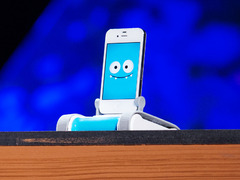
    Romo-at-TED

    Romo takes a bow on the TED2013 stage. Photo: James Duncan Davidson

    Childhood pals Keller Rinaudo, Phu Nguyen and Peter Seid had a simple motivation for creating the smartphone toy robot Romo. As Rinaudo told CNET, it was because most personal robots on the market are simply “sucky.”

    Keller Rinaudo: A mini robot -- powered by your phoneKeller Rinaudo: A mini robot — powered by your phoneRinaudo, Nguyen and Seid — who founded the company Romotive — set out to build a personal robot that harnesses the powerful processor available in every smartphone. They aimed to make their bot highly programmable. And they wanted it to have a lot of personality.

    “We think if you’re going to have a robot in your home, that robot should be a manifestation of your imagination,” says Rinaudo in yesterday’s talk, filmed at TED2013. “We don’t know where the future of robots will go. But what we do know that it isn’t 10 years or $10  billion away … The future of personal robotics is happening today.”

    So how does Romo work? Your iPhone docks into a robotic base that looks a bit like a white and blue tank. When you download the Romo app, the bot springs to life, giving you facial expressions and responding to your movements. Romo can be driven, and thus can perform simple tasks for you. He can even be a roaming photographer or videographer.

    Romo starts shipping in June. Meanwhile, online ads for the bot proclaim, “I’m Romo the Robot, your pet and friend.” Naturally, this reminds us of a few prior inventions that also attempted to blur these lines.

    Here, a look…

    Giga Pets
    Often credited as the “first virtual pet,” Giga Pets were released in 1997 by Tiger Toys. While the 2-bit graphic keychain critters seem quaint now, they were much-loved at the time for their ability to tell their owners when they were hungry. (Yes, they grew with proper care.) Above, a vintage commercial.

    Furby

    The Furby
    For anyone who scoured toystores and braved unthinkable lines during the holiday season of 1998 — in hopes of getting their hands on a Furby  – the concept of an electronic pet will sound familiar. The owl-like robotic toys started out speaking “Furbish.” But over time – with human interaction – they learned bits of English and developed personalities. According to Wikipedia, more than 40 million were sold in their first three years on the market. Hasbro revived Furbies in 2012 – this time with an app that allows people to translate Furbish as well as feed the little guys.

    AIBO

    AIBO
    A year after the Furby, Businessweek ran an article about a new offering from Sony – the robotic puppy AIBO. The article opened, “Toshi T. Doi, Sony Corp.’s leading computer engineer, is obsessed with robots. His small, third-floor lab is a breeding ground for robotic pups taking their first wobbly steps, chasing balls, and barking for attention. ‘We’re getting ready for the age of digital creatures,’ says Doi.” These cute pups, which cost more than $2000, lasted through 2005.

    i-CYBIE

    i-Cybie
    AIBO inspired many a robotic dog—the cutest of which was i-Cybie, from Silverlit Toys. I-Cybie could respond to voice commands, a la “wag your tail,” and exhibited what seemed like real emotions. The adorable metal dog could even pick itself up if it fell down. Read this New York Times piece on how this virtual pet arrived in the U.S.

    PARO
    PARO, the “healing robotic seal,” comes to life when you say his name. Thanks to tactile sensors, writes Mashable, he responds to petting and coos excitedly when you rub his forehead. Why was he designed? Japanese company AIST explains on their website that he was created to provide the benefits of animal therapy – reduced stress, emotional stimulation – to people in hospitals and other environments where a real-life pet wouldn’t be allowed. He’s been covered in The New York Times … and tested by Barack Obama.

    Pleo

    Pleo
    Who wouldn’t want a miniature dinosaur? In the TED Talk “Caleb Chung plays with Pleo,” the famed toy designer introduces us to Pleo, a robotic dinosaur that acts like a pet. Pleo is curious about the world around it and explores, plays and even learns. The bot responds to touch and, of course, cuddles. Reborn in 2010 as Pleo rb, these bots now have born-in personality traits — think courage and obedience — and go through a four-stage life cycle.