Category: News

  • How Can You Save Up to 30% in Data Center Operation Costs?

    With more users, more devices and many more connections coming into the cloud – the data center has become an integral part of any IT infrastructure. There is much more reliance on data center operations and there is a direct need for optimal efficiency.

    This leads to an increased demand for controlling data center components that goes far beyond hardware management and advanced cooling systems. The complexity of the modern environment calls for a more holistic energy optimization solution.

    Accurate monitoring of power consumption and thermal patterns creates a foundation for enterprise-wide decision making with the ability to:

    • Monitor and analyze power data by server, rack, row, or room;
    • Track usage for logical groups of resources that correlate to the organization or data center services;
    • Automate condition alerts and triggered power controls based on consumption or thermal conditions and limits; and
    • Provide aggregated and fine-grained data to web-accessible consoles and dashboards, for intuitive views of energy use that are integrated with other data center and facilities management views.
    Rich-Miller-Staff-tnRICH MILLER
    Editor-in-Chief

    Moderated by Data Center Knowledge Editor-in-Chief Rich Miller, this webinar will feature an in-depth conversation with Intel’s Jeff Klaus, General Manager of Data Center Manager (DCM) Solutions. The webinar will revolve around specific use cases as they apply to real data center situations. For example, in a jointly tested POC conducted over a three-month period in late 2011 at Korea Telecom’s existing Mok-dong Data Centre in Seoul, South Korea, results showed that a Power Usage Effectiveness (PUE) of 1.39 would result in approximately 27 percent energy savings. This could be achieved by using a 22◦C chilled water loop.

    Jeff-Klaus-smJEFF KLAUS
    Intel

    The 60-minute online conversation will explain Data Center Infrastructure Management (DCIM) and its contributions to managing power and cooling usage in the data center. For example, identifying temperatures at the server, versus at the room or even rack levels, can help data center managers more accurately understand what the real ambient temperature should be for individual servers to have optimal lifespans. Register today to join Rich Miller of Data Center Knowledge and Intel’s Jeff Klaus on April 25, 2013 (2:00pm-3:00pm EDT) to learn how these types of assessments can represent a significant savings in data center environment management.

  • Visualizing Hip-Hop Lyrics as Cultural Indicator

    Editor’s note: We’ve asked contributors to the Visualizing Data Insight Center to show us some of their favorite examples of dataviz with short explanations of what makes those visualizations so effective. Today, HBR senior editor Jeff Kehoe shares one of his favorites.

    People often think of data visualization as an alternative to representation in words. But there are creative, effective visualizations that have been developed that vividly illustrate how, and how often, words themselves are used by people in various contexts. Note the recent rise in popularity of word cluster tools.

    These kinds of tools can go even deeper, to highlight interesting and powerful cultural indicators. I’m a hip-hop fan, so this particular data viz caught my attention last week. It charts brand references to champagne in rap songs from 1979 to the present. (See the full visualization at Fast Company):

    hiphopviz.jpg

    The idea of tracking changing cultural references across artists, or the changing vocab styles amongst groups or individual artists, turns me on. As more and more of the world’s textual knowledge, recorded in books and other printed material, gets digitized, we’ll be able to visualize and explore more about ourselves. The possibilities are pretty mind-boggling.

  • PE-Backed Persante Health Care Completes Refinancing

    Persante Health Care, a portfolio company of Harren Equity Partners, recently wrapped up a refinancing, with Abacus Finance Group acting as Administrative Agent and Sole Lead Arranger for senior secured credit facilities. Based in Mt. Laurel, NJ, Persante is a provider of outsourced sleep disorder diagnostic services and therapeutic solutions.

    PRESS RELEASE

    Abacus Finance Group, LLC (Abacus), a New York-based specialty finance company, announced today that, it served as Administrative Agent and Sole Lead Arranger, for senior secured credit facilities to support the refinancing of Persante Health Care, Inc. (Persante), a portfolio company of Harren Equity Partners, LLC (Harren). Abacus focuses exclusively on providing senior cash-flow financing for private equity-sponsored, lower-middle market companies.

    Based in Mt. Laurel, NJ, Persante is a leading provider of outsourced sleep disorder diagnostic services and therapeutic solutions to hospitals and physicians in the Northeast region. With more than $250 million under management, Harren is a Charlottesville, VA-based private investment firm focused on lower-middle market companies.

    “We have known the Abacus team for a number of years,” said Harren Managing Partner Thomas A. Carver, “but this was our first transaction with them, and it was highly successful from our point of view. They proved to be flexible in their approach, and most importantly, they were able to provide certainty of close at a relatively early stage in the negotiations.”

    “Harren’s lower-middle market focus and their investment criteria are a perfect match for us,” said Tim Clifford, President and CEO of Abacus. “Tom Carver, Garrick Brown and the entire Harren team are knowledgeable investment professionals and great to work with. As in other recent transactions, factors critical to success included our healthcare expertise, our strong working relationships with company management, and, as Tom mentioned, providing certainty of close early in the process – important aspects of what we call our Total Partnership ApproachTM.”

    Other Abacus team members involved in the transaction included Robby Abraham. Bingham McCutchen LLP acted as legal counsel to Abacus.

    About Persante Health Care, Inc.
    Persante Health Care, a privately held company based in Mt. Laurel, NJ, is a leading provider of sleep disorder diagnostic services and therapeutic solutions. Persante is the largest provider of outsourced sleep diagnostic services and the largest provider of outsourced balance/vestibular testing to hospitals in the Northeast region. Persante currently manages over 80 sleep and balance diagnostic centers on behalf of more than 35 hospital partners in six states. Furthermore, Persante provides therapeutic solutions for sleep and respiratory disorders with an emphasis on convenience, continuity of care and high-quality patient outcomes. Visit persante.com for more information.

    About Harren Equity Partners, LLC
    Based in Charlottesville, VA, Harren Equity Partners is a private investment firm dedicated to the growth and development of industry-leading companies through the creation of strong partnerships with outstanding management teams. Harren’s unique approach focuses on operational excellence and insightful strategic analysis, rather than financial engineering. The principals of Harren have significant operating experience and work closely with portfolio company management teams to continue to grow companies and improve profitability. Harren focuses on investment opportunities in the lower-middle market, defined as companies with $20 million to $200 million of annual revenue across a broad range of industries. Visit harrenequity.com for more information.

    About Abacus Finance Group, LLC
    Abacus Finance, headquartered in New York, is a lower-middle market specialty finance company, focused on providing senior cash flow financing to private equity-sponsored companies nationwide. Formed in June 2011, Abacus targets debt financing opportunities of up to $50 million with a typical hold size ranging from $10 million to $25 million, and the companies it finances generally have EBITDA between $3 million and $15 million. Abacus is an affiliate of New York Private Bank & Trust, the holding company for Emigrant Bank, which was founded in 1850 and is the largest family-owned bank in America.

    Abacus is headquartered at 6 East 43rd Street, 20th Floor, New York, NY 10017. All inquiries and new investment opportunities should be directed to Tim Clifford at 212-850-4620 or to [email protected]. Visit abacusfinance.com for more information.

    The post PE-Backed Persante Health Care Completes Refinancing appeared first on peHUB.

  • Leaked photos of next-gen iPad bezel reinforce reports of major redesign

    iPad 5 Photos Leak
    Photos of what is claimed to be the front glass and bezel assembly from Apple’s (AAPL) fifth-generation iPad leaked on Wednesday, reinforcing earlier reports of a major upcoming redesign. An image of the new iPad’s purported rear shell was published this past January, showing a redesigned case that closely resembles the iPad mini. Now, French blog Nowhereelse.fr has photos of what it claims to be the new iPad’s front bezel and glass display cover. While their authenticity is not guaranteed, the photos show a new thinner bezel that aligns with earlier reports suggesting the new iPad will have a smaller overall footprint while maintaining the same 9.7-inch display size. An additional photo of the purported fifth-generation iPad bezel follows below.

    Continue reading…

  • Reuters – Advent Opens Office in China

    Private equity firm Advent International has opened its first office in China to take advantage of investment opportunities in the country, Reuters wrote. Advent, founded in 1984, previously operated in China through an affiliate. It does not currently have direct investments in China, but some of the companies it backs, such as Spanish explosives maker MAXAM, have operations there. The decision to open a Shanghai office follows a review of the Boston-based firm’s operations, which led to the closure of offices in Milan and Istanbul last month, an Advent spokeswoman said. Advent already has an office in India.

    (Reuters) – Private equity firm Advent International has opened its first office in China to take advantage of investment opportunities in the country.

    Advent, founded in 1984, previously operated in China through an affiliate. It does not currently have direct investments in China, but some of the companies it backs, such as Spanish explosives maker MAXAM, have operations there.

    The decision to open a Shanghai office follows a review of the Boston-based firm’s operations, which led to the closure of offices in Milan and Istanbul last month, an Advent spokeswoman said. Advent already has an office in India.

    “There are many interesting investment prospects in China to which we can apply our international experience,” Andrew Li, Advent’s principal and co-head of Greater China, said in a statement.

    Private equity companies like Advent buy businesses and aim to sell them or list them on the stock market at a profit.

    Many of the biggest private global equity firms, including The Carlyle Group CVC and Bain Capital, already have offices in China.

    Last year Advent, which targets investments in companies worth between 200 million and 2 billion euros, raised 8.5 billion euros ($11.10 billion) in one of the biggest private equity fundraisings since the financial crisis in 2008.

    The Shanghai office will provide local support for companies backed by Advent which want to grow in China either organically or through acquisitions. It will also help Advent’s global team assess the China angle on international deals.

    The six-person China team, led by Filippo de Vecchi and Li, will also look to invest in Chinese companies, focusing on those in the chemicals, healthcare, retail, consumer and leisure sectors.

    The post Reuters – Advent Opens Office in China appeared first on peHUB.

  • Reuters – Gulf Capital Portfolio Co. Buys Turkish Diagnostics Co.

    Abu Dhabi-based private equity firm Gulf Capital said on Wednesday that its portfolio company, Techno Group Investment Holdings, bought a 75-percent stake in a Turkish provider of outsourced diagnostic imaging services, Reuters reported. Techno Group bought the stake in Turkish firm Dogu Tip, Gulf Capital said, without revealing the financial details of the acquisition.

    (Reuters) – Abu Dhabi-based private equity firm Gulf Capital said on Wednesday that its portfolio company, Techno Group Investment Holdings, bought a 75-percent stake in a Turkish provider of outsourced diagnostic imaging services.

    Techno Group bought the stake in Turkish firm Dogu Tip, Gulf Capital said, without revealing the financial details of the acquisition.

    Dogu Tip will be merged with Techno Group, which already operates 34 diagnostic imaging centres in Egypt, Jordan and the Gulf region, the statement added.

    Healthcare-related private equity activity in Turkey has seen increased activity in recent years as the fast-growing economy’s growing population of about 75 million people provides growth opportunities for companies offering such services.

    The country also passed new regulations in February aimed at making private investment in its healthcare sector easier, a move which officials hope could unlock billions of dollars of investment over the next few years.

    Gulf Capital, which manages close to $2 billion in assets currently, plans to double its assets under management by 2018, its chief executive said earlier this month. (Reporting by Mirna Sleiman; Editing by Dinesh Nair)

    The post Reuters – Gulf Capital Portfolio Co. Buys Turkish Diagnostics Co. appeared first on peHUB.

  • MarkLogic nets $25M to keep up enterprise NoSQL pitch

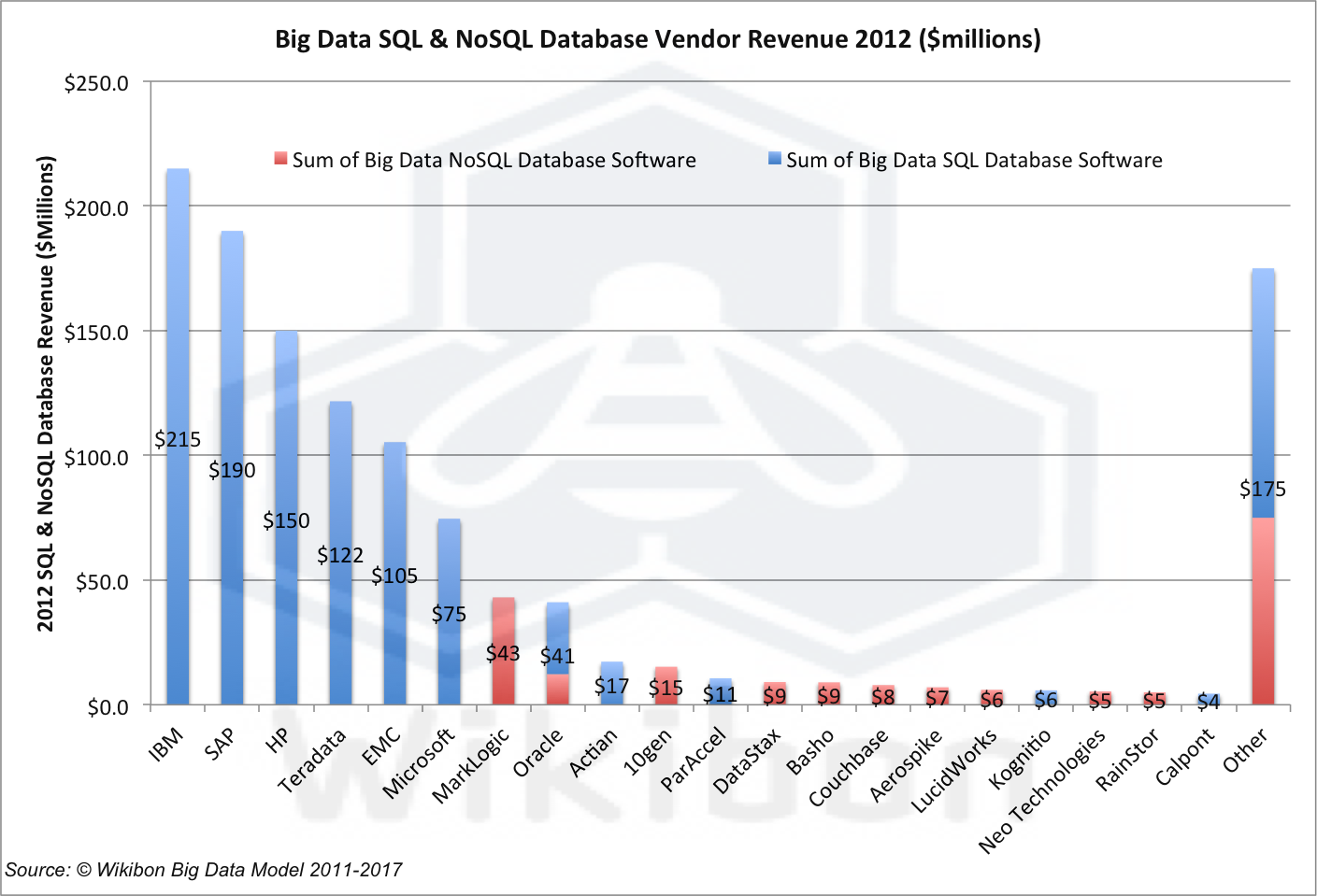
    When MarkLogic Founder Christopher Lindblad started working on a database for unstructured data in 2001, his efforts were prescient. Since then, the database market has since seen a proliferation of non-relational, or NoSQL, startups to handle the wide variety of data types that new data sources such as web applications and digital documents generate. The space has grown so big, in fact, that it has already started to consolidate. Amid all this, MarkLogic has managed to stand out by generating more revenue than pretty much any other vendor, according to figures Wikibon released in February.

    On Wednesday, MarkLogic’s success was validated again, as the company announced a $25 million round of venture funding, bringing the total it has raised to $71.2 million. Sequoia Capital and Tenaya Capital led the round; CEO Gary Bloom and other MarkLogic executives also contributed.

    MarkLogic like to tout the fact that it’s geared for enterprise use. Features such as high availability, replication, clustering and ACID compliance help differentiate the company from other NoSQL databases, Bloom told me. And although the company is taking in revenue and looks robust enough to go public now, Bloom said he would rather boost revenues to the point that MarkLogic could sustain success after an IPO.

    Rather than go after the revenues that open-source NoSQL databases generate, Bloom said he wants to take away database marketshare from legacy companies peddling SQL databases, including IBM, SAP and Bloom’s previous employer, Oracle. That means MarkLogic salespeople will have to convince slower-to-change enterprises on the reality that relational databases might not be the best choice if they want to take advantage of unstructured data. MarkLogic also will have to put up with fellow NoSQL players that are adding enterprise functions, such as MongoDB,

    But if MarkLogic’s plan turns out to be fruitful, a public offering could come within a year or two, Bloom said.

    Related research and analysis from GigaOM Pro:
    Subscriber content. Sign up for a free trial.


  • WellTok Raises $18.7M From Emergence, InterWest, NEA

    WellTok, Inc. said it closed an $18.7 million Series B funding with  Emergence Capital Partners and InterWest Partners co-leading the round and New Enterprise Associates joining the funding. The company also appointed Executive Chairman Jeff Margolis to chief executive officer. Margolis founded TriZetto.

    PRESS RELEASE 

    WellTok Closes $18.7M Series B Funding:

    Appoints Jeff Margolis as CEO

    Emergence Capital Partners and InterWest Partners co-lead round

    Denver – April 10, 2013 – WellTok®, Inc., developer of CaféWell®, the leading Social Health Management® platform that drives increased consumer engagement in health activities sponsored by their health plans, today announced that it has closed a Series B funding with investments from Emergence Capital Partners, InterWest Partners and New Enterprise Associates (NEA). The company plans to use the funding to accelerate product development and strategic partnership efforts, expand into new markets, and build account teams to support the rapidly growing base of clients.

    In conjunction with the financing, Jeff Margolis, who served as the company’s executive chairman for the past eighteen months, was appointed chief executive officer. Margolis is one of the healthcare information technology industry’s most successful leaders, having founded and led TriZetto® as CEO from start-up, through IPO, to a $1.4 billion LBO. In addition to pioneering the first commercially successful SaaS enterprise in healthcare, he brings strategic healthcare industry knowledge and the expertise to quickly monetize and scale the business.

    “I am particularly pleased to be working with this incredibly strong consortium of visionary investors who have highly relevant portfolio expertise that can be leveraged to grow WellTok and the CaféWell platform,” said Jeff Margolis. “We are addressing the significant challenges consumers face as they try to optimize their own health in partnership with their plans and providers, and have built new support structures that combine the best in purpose-driven social, community, personalization and gaming technologies.“

    Since its commercial launch in late 2011, WellTok’s CaféWell social health network has become the leading platform for health plans and other population managers, with two of the nation’s five largest health plan organizations among its customers. The company is currently contracted to serve nearly 10 million consumers on its flagship CaféWell platform, and is looking to sign its tenth customer in the coming months. Privacy, anonymity and security are fundamental to CaféWell and WellTok is HITRUST CSF Certified.

    Through its personalized tools, compelling content, gaming/incentive platform and vibrant community, CaféWell’s ability to provide a fun and rewarding health experience for consumers has resulted in engagement rates above 400% of industry average. Health plan members in these programs average 50 minutes per month on the site with a third participating in over 30 CaféWell engagement activities. Return on investment is rapid, as consumer brand affinity toward the population manager increases along with healthy activities. For example, members of two pedometer-based CaféWell programs have walked 5 billion steps in the last 18 months.

    One of the innovative health plans to roll out the CaféWell platform is Coventry HealthAmerica, where David Fields is the chief executive officer. Fields commented, “Based on the health improvements and member engagement in our Race to the Moon™ wellness challenge, we are looking to expand the use of CaféWell for chronic conditions, care management and quality improvement, furthering Coventry HealthAmerica’s leadership in serving its employers and members.”

    WellTok’s Social Health Management® platform-as-a-service strategy combines healthcare system knowledge and many significant advancements in consumer-empowering technologies to give healthcare population managers, such as health plans and accountable care organizations, a comprehensive solution that makes health more fun and more rewarding for everyone – while allowing consumers to control anonymity.

    “Welltok’s CaféWell platform has quickly become the platform of choice for health care population managers who recognize the importance of engaging with consumers,” said Kevin Spain, general partner at Emergence Capital. “We have a great deal of confidence in Jeff Margolis and believe the company is well-positioned to build on its leadership position.”

    “Jeff is one of the very few proven entrepreneurs who really understands the big picture in healthcare and why previous efforts to engage consumers in health management programs have failed,” said Nina Kjellson from InterWest Partners. “He has built a half-billion dollar healthcare I.T. business before, and with the talented team at WellTok, we are excited to help him do it again.”

    About CaféWell® and WellTok®, Inc.
    CaféWell is a social health network that makes getting better connected to your health and fitness more fun and more rewarding. CaféWell provides one stop for consumers’ health, wellness and fitness across an array of proprietary and third-party engagement activities, including fun health challenges with other users; compelling economic and social rewards; social networking; advice from experts, peers and veteran professional athletes; and reliable health and fitness information.

    Healthcare population managers such as health plans and employer groups, sponsor their members into CaféWell. In return, those population managers gain the use of a neutral, trusted consumer communications channel; build consumers’ affinity with their brand; positively engage consumers with their health; and increase members’ healthy behaviors. CaféWell can be used to power base participatory wellness programs, device-integrated wellness programs and chronic condition programs that drive high value at a significantly lower cost than traditional disease management and wellness programs.

    Institutional and strategic investors with continuing investment in the company include Miramar Venture Partners, Okapi Venture Capital and TriZetto Corporation. WellTok, Inc. is headquartered in Denver, Colo. To learn more about CaféWell’s ability to engage members and consumers, visit www.cafewell.com and www.welltok.com. To learn more about social health management, visit Jeff Margolis explains Social Health Management.

    The post WellTok Raises $18.7M From Emergence, InterWest, NEA appeared first on peHUB.

  • With $18.7M, WellTok wants to make you healthier — and actually like your health plan

    When it comes to popularity, the health insurance industry isn’t likely to be at the top of anyone’s list. In fact, a survey last year from market firm Temkin Group found that health insurance received the lowest customer service ratings of any industry.

    But WellTok, a Denver, Colo.-based startup, believes its health-centric social network can not only encourage healthier behavior among users, but build consumer trust for their health plans. And it just raised $18.7 million more to prove it.

    The company said Wednesday it had raised a Series B round from Emergence Capital Partners, InterWest Partners and New Enterprise Associates (NEA), bringing its total amount raised to $26 million. It also said that former executive chairman Jeff Margolis would serve as its new CEO.

    Launched in late 2011, WellTok targets health plans with a health-related social network, called CaféWell, that uses personalized tools, fitness-tracking devices, wellness-focused content, game mechanics and community dynamics to encourage healthy steps. Users can choose to be as public or as private as they’d like to be about their behavior and, as they log healthy activities, they earn points which can translate into discounted premiums or other financial rewards, Margolis said in an interview.

    In a way, it’s very similar to corporate wellness programs like Keas and ShapeUp, which similarly offer patient engagement platforms for encouraging healthy behavior. But Margolis said he believes that, by reaching consumers through their health plans, the company can generate more value for consumers and employers.

    In addition to keeping patients healthy and managing chronic conditions, the company says it can also help health plans with their popularity problem.

    “People tend not to have a high degree of trust for the health plans – they tend not to understand the value their health plans can bring them,” Margolis said. But by structuring CaféWell so that the health plans sponsor consumers’ access to the site (and by making sure that consumers see their health plan’s branding), he added, “it makes consumers say, ‘Hey, my health plan isn’t just there to hassle me during enrollment or deny my claims, they’re actually here to help me.’”

    So far, Margolis said, CaféWell users engage with the site four times more than they engage with their health plan’s regular website (which is just about never) and that they average about 50 minutes per person per month.

    Nine health plans currently use CaféWell, but Margolis said the new funding would be used to expand into new markets, accelerate product development and build new strategic partnerships.

    Related research and analysis from GigaOM Pro:
    Subscriber content. Sign up for a free trial.


  • Podcast: Shark Week for the Internet of Things

    Want to know how many fish there are in the sea? The amount of carbon dioxide in the water in the mid-Pacific? How about getting humpback whales a record deal? These are all projects that Liquid Robotics’ connected, sensor packed robots have undertaken. The company, which makes self-sufficient, autonomous ocean-going robots, has built a sea-faring internet of things. And like all seagoing entities its robots have had their share of shark attacks and are always on the lookout for pirates.

    The Wave Glider robots are pretty amazing machines, with a dry box packed full of server gear, solar panels and the original wave-harnessing energy technology all packed onto what used to be surfboard. Add to it, a satellite radio, cellular and some shorter range radios so a fleet of Wave Gliders can create what is essentially a distributed computing platform in the ocean. To learn more about how they work and what they do, check out this week’s podcast with Graham Hine, the SVP of product management for Liquid Robotics.

    (Download this episode)

    Subscribe to RSS

    iTunes

    Stitcher Radio

    Show notes:
    Host: Stacey Higginbotham

    • How does an autonomous ocean-going robot work? And why do we need it?
    • Packing computers on surfboards and a year-long trip from California to Australia
    • Shark attack! Also, Pirates.
    • Why robots and the internet of things belong together.

    PREVIOUS IoT PODCASTS:
    What the Internet of Things can learn from Minecraft and Lemmings

    Podcast: How IBM uses chaos theory, data and the internet of things to fix traffic

    Electric Imp aims to make the Internet of Things devilishly simple

    IoT podcast: When devices can talk, will they conspire against you?

    What the internet of things can learn from Minecraft and Lemmings

    Podcast: Why the internet of things is cool and how Mobiplug is helping make it happen

    Related research and analysis from GigaOM Pro:
    Subscriber content. Sign up for a free trial.


  • Renaissance Offshore Buys Black Elk Energy Assets

    Houston-based oil and gas company Renaissance Offshore said that is has acquired certain assets from Black Elk Energy. Terms were not disclosed. Renaissance Offshore was founded in December of 2011, in partnership with buyout shop Quantum Energy Partners.

    PRESS RELEASE

    Renaissance Offshore LLC, a privately held Houston-based oil and gas company, announced today that it has completed its acquisition of select Black Elk Energy assets, effective January 1, 2013. The acquisition consists of three operated fields at Eugene Island 331, Ship Shoal 219 and South Timbalier 314/317 with net production of approximately 950 boepd (90% oil).

    This is the third acquisition Renaissance has made since its inception in December of 2011, building production to approximately 2,750 barrels of oil per day equivalent (75% oil). Renaissance has committed to two drilling rigs and plans to begin drilling in the second quarter of 2013, while continuing with workover programs and optimization work on the initial acquisitions.

    “We are excited about this transaction and the breadth it brings to our portfolio,” said Jeff Soine, Chief Executive Officer at Renaissance. “Keeping with our business philosophy of exploiting mature oil fields, this acquisition allows us to add three mature properties to our asset base that have had historical production of over 100 million barrels of oil and half a trillion cubic feet of gas. When combined with the talented team of professionals we have put together and our strong relationship with our partner Quantum Energy Partners, we believe the addition of these mature oil fields will leave us well positioned for the future and continued growth.”

    About Renaissance Offshore

    Renaissance Offshore was founded in December of 2011, in partnership with Quantum Energy Partners, to acquire and redevelop legacy oil properties on the Gulf of Mexico shelf. Renaissance Offshore focuses on selective acquisitions of mature, oil-weighted properties and the redevelopment of those assets to unlock hidden value by deploying technology, capital and the collective experience of our seasoned management team. For more information on Renaissance, please visit www.renaissanceoffshore.com.

    About Quantum Energy Partners

    Founded in 1998, Quantum Energy Partners is a leading provider of private equity capital to the global energy industry, having managed together with its affiliates, more than $6.5 billion in equity commitments since inception.

    The post Renaissance Offshore Buys Black Elk Energy Assets appeared first on peHUB.

  • T-Mobile announces trade-in offer for the iPhone 5

    In just two days, T-Mobile customers will be able to purchase the iPhone 5. The fourth-largest carrier in the US offers the smartphone for $99.99 upfront paired with $20 monthly payments over two years, when purchased alongside the Simple Choice Plan. Also, prospective buyers can pre-order the iPhone 5 today, until April 12 when the device officially goes on sale.

    In order to boost the adoption and initial sales of the iPhone 5, T-mobile is also offering users the option to trade-in another iPhone to lower the overall cost. “Our message to iPhone 4S and iPhone 4 customers is simple: bring in your device and trade up to iPhone 5 on T-Mobile”, says Mike Sievert, chief marketing officer for T-Mobile. So what do you get in return?

    T-Mobile says that “the special trade-in offer, which lasts through Father’s Day on June 16” allows “well-qualified customers” to hand over an iPhone 4S or iPhone 4 and in return they will get the iPhone 5 for no upfront cost alongside monthly payments.

    The mobile operator also says that customers can get up to $120 in credit as well, which can be used to pay the monthly bills, depending on the value of the device that is traded-in.

    T-Mobile has not specifically mentioned which iPhone 5 model this offer extends to, but it’s fair to assume that we’re talking about the 16GB variant. Also, according to T-Mobile the offer might not be available in every location, and certainly not in the District of Columbia.

  • Worthington Industries Buys Palmer Mfg. & Tank

    Worthington Industries Inc. said that its pressure cylinders segment has acquired Palmer Mfg. & Tank Inc. Palmer is located in Garden City, Kansas. Terms were not released.

    PRESS RELEASE
    Worthington Industries, Inc. (NYSE: WOR) announced today that its Pressure Cylinders segment has acquired Palmer Mfg. & Tank, Inc. business, a manufacturer of steel and fiberglass tanks and processing equipment for the oil and gas industry, and custom manufactured fiberglass tanks for agricultural, chemical and general industrial applications. Palmer is located in Garden City, Kan., and employs approximately 200 people.

    “We are very excited to add the capabilities of Palmer to further the growth in Pressure Cylinders,” said Andrew Billman, president of the business segment. “The Palmer business strengthens our energy position and fits our strategy to geographically expand in the oil and gas industry. When combined with our alternative fuel cylinder business and our entry into the cryogenics arena, we are broadening our energy product offerings.” Billman added, “This strategy allows us to participate in the expanding North American oil and gas markets, as well as global growth in alternatives for gas and diesel to power vehicles, which include compressed natural gas (CNG), liquefied natural gas (LNG), autogas (propane) and hydrogen.”

    Palmer manufactures both steel and fiberglass tanks in a comprehensive range of sizes and is strategically located to serve the Bakken formation in North Dakota, the Uinta and Denver-Julesburg basins, along with several of the shale formations in northern Texas. Palmer was founded in 1971 and has 184,000 square feet of manufacturing space at the Garden City headquarters. The privately owned company generated sales of $70 million in its fiscal year ended June 30, 2012.

    “Worthington continues to pursue new markets that are accelerating our growth,” said John McConnell, Chairman and CEO. “The acquisition of the Palmer business, together with our recent acquisition of Westerman, gives us a strong footprint in the oil and gas industry. This high-value added manufacturing business complements our existing capabilities and should generate strong commercial synergies.”

    About Worthington Industries

    Worthington Industries is a leading diversified metals manufacturing company with 2012 fiscal year sales of $2.5 billion. The Columbus, Ohio based company is North America’s premier value-added steel processor and a leader in manufactured pressure cylinders; custom-engineered open and enclosed cabs and operator stations for heavy mobile equipment; framing systems for mid-rise buildings; steel pallets and racks; and through joint ventures, suspension grid systems for concealed and lay-in panel ceilings, current and past model automotive service stampings; laser welded blanks, and light gauge steel framing for commercial and residential construction. Worthington Industries employs approximately 10,000 people and operates 83 facilities in 11 countries.

    Worthington’s Pressure Cylinders business segment is the world’s leading global manufacturer of pressure cylinders, delivering products and value-added services to its customers designed to exceed their expectations in quality, service and value. The company offers the most complete line of pressure cylinders in the industry, including storage of liquefied petroleum, compressed natural gas, refrigerant, oxygen and industrial gases. BernzOmatic ®, Balloon Time® and Worthington™ products are available at retailers nationwide and provide products to consumers for grilling, party planning, outdoor leisure activities and home repair.

    Safe Harbor Statement
    The Company wishes to take advantage of the Safe Harbor provisions included in the Private Securities Litigation Reform Act of 1995 (the “Act”). Statements by the Company relating to the expected benefits of the acquisition including the expectations for accretiveness, synergies and growth; expected growth of the pressure cylinder business; increases to product lines and participation in markets; opportunities to participate in certain markets; and other non-historical matters constitute “forward-looking statements” within the meaning of the Act. Because they are based on beliefs, estimates and assumptions, forward-looking statements are inherently subject to risks and uncertainties that could cause actual results to differ materially from those projected. Any number of factors could affect actual results, including, without limitation, the possibility that the costs or difficulties related to the integration of the business acquired are greater than expected; the ability to maintain relationships with customers of the acquired business; the outcome of negotiations surrounding the United States debt and budget, which may be adverse due to its impact on tax increases, governmental spending, and customer confidence and spending; the effect of conditions in national and worldwide financial markets; product demand and pricing; changes in product mix, product substitution and market acceptance of the Company’s products; fluctuations in the pricing, quality or availability of raw materials, supplies, utilities and other items required by operations; the ability to realize price increases, cost savings and operational efficiencies on a timely basis; capacity levels and efficiencies within facilities, within major product markets and within the industry as a whole; financial difficulties of customers, suppliers, joint venture partners and others with whom the Company does business; the effect of national, regional and worldwide economic conditions generally and within major product markets, including a prolonged or substantial economic downturn; the effect of disruption in the business of suppliers, customers, facilities and shipping operations due to adverse weather, casualty events, equipment breakdowns, acts of war or terrorist activities or other causes; changes in customer demand, inventories, spending patterns and supplier choices; the ability to improve processes and business practices to keep pace with the economic, competitive and technological environment; deviation of actual results from estimates and/or assumptions used by the Company; the level of import and import prices in the Company’s markets; the impact of governmental regulations, both in the United States and abroad; and other risks described from time to time in filings with the United States Securities and Exchange Commission.

    The post Worthington Industries Buys Palmer Mfg. & Tank appeared first on peHUB.

  • NXT Capital Adds Stuart Smartt

    NXT Capital announced that Stuart Smartt has joined the company as Managing Director, Head of Healthcare, for the Corporate Finance Group. Smartt joins NXT Capital from CIT, where he was a Director in the company’s Healthcare group.

    PRESS RELEASE

    NXT Capital (www.nxtcapital.com) today announced that Stuart Smartt has joined the company as Managing Director, Head of Healthcare, for the Corporate Finance Group. Smartt’s responsibilities include originating and leading senior secured credit facilities for private equity sponsors and middle market companies across all sectors of the healthcare industry.

    Smartt joins NXT Capital from CIT, where he was a Director in the company’s Healthcare group. His experience also includes serving as a Vice President in GE Capital’s Healthcare Financial Services group.

    “We’re excited to have a professional of Stuart’s caliber join NXT Capital and lead our healthcare group,” said John Finnerty, Group Head, Corporate Finance. “Stuart’s expertise is a valuable addition to NXT’s proven ability to serve middle-market healthcare sponsors and companies.”

    Under Smartt’s leadership, NXT will continue to provide a full range of financing products to healthcare companies, including senior, stretch senior, unitranche and second lien term loans to facilitate leveraged buyouts, refinancings, recapitalizations and add-on acquisitions for middle market companies with $5 million to $75 million of EBITDA.

    “NXT is a dynamic company with a well-deserved reputation for superior, client-focused execution,” said Smartt. “I look forward to further expanding NXT’s footprint in the healthcare sector and building strategic relationships with best-in-class healthcare sponsors and management teams.”

    NXT Capital provides structured financing solutions to middle-market and emerging growth companies, as well as real estate investors, through its Corporate Finance, Equipment Finance, Real Estate and Venture Finance groups. Based in Chicago, NXT Capital has offices in New York, Atlanta, Boston, Dallas, Phoenix, Newport Beach, San Francisco and Silicon Valley. See www.nxtcapital.com for more information.

    ###

    PRIVILEGED AND CONFIDENTIAL
    This e-mail message and/or any attachments thereto (the “Communication”) are intended only for the use of the individual or entity to which it is addressed and may contain information that is privileged, confidential and exempt from disclosure. If you are not the intended recipient, or believe that you have received this Communication in error, please do not disseminate, distribute, print, copy, retransmit (except as set forth in the next sentence), or otherwise use this Communication. Instead, please notify the sender of the Communication immediately by return e-mail (including the original message in your reply) and by telephone (you may call NXT Capital toll-free at 1-877-698-6111) and then delete and discard all copies of the e-mail. Thank you.

    The post NXT Capital Adds Stuart Smartt appeared first on peHUB.

  • CFOs get bill shock too: Wandera lands $7M to optimize mobile data for enterprises

    Mobile data optimization is by no means a new business. Ever since the advent of the iPhone, startups and big network equipment makers alike have promised to transrate, compress and cull extraneous video frames, image resolution and Java script from congested mobile networks.

    Invariably those companies have targeted the mobile carriers that run those networks, but a new startup called Wandera is focusing its MDO technology on the people who get stuck paying those data bills: enterprises. Wandera has attracted the attention of Bessemer Venture Partners, which lately has been investing heavily in the telecom and mobile infrastructure space. Bessemer is the sole investor in Wandera’s Series A round, forking over $7 million.

    Wandera was founded by Eldar and Roy Tuvey, two brothers from London who created security software-as-a-service company ScanSafe and sold it to Cisco Systems in 2010 for $183 million. After working for Cisco for two years, the Tuveys decided to return to the SaaS model with a new startup, this time selling optimization rather than security software to their enterprise clients.

    Eldar Tuvey said Wandera has built what is in essence a cloud proxy server through which all phone-bound HTTP traffic is routed on its way to an enterprise’s mobile devices. During that traffic’s brief stay in that cloud, Wandera applies any number of optimization and compression techniques intended to reduce the amount of data that flows over the airwaves to those devices – and ultimately reduce the mobile data bill the company has to pay each month.

    But Tuvey said Wandera is providing more than just a megabyte-culling data grinder. It’s developed a sophisticated set of monitoring and control tools that allows an enterprise to keep tabs on what apps, webpages and services its employees are using and to apply specific policies on that use.

    For instance, an enterprise could set strict limits on social networking use, banning it outright or imposing caps on the amount of data an employee can consume in the Facebook app. Or it could prohibit video streaming when employees are roaming internationally, but allow it when they’re on their home networks.

    Tuvey said enterprises can even go so far as to apply specific optimization features depending on the app used. So a company could let employees consume as much video or social networking content as they please — as long as they’re willing to put up with choppy frame rates and pixelated images.

    “They can implement whatever policies they see fit,” Tuvey said. “It’s completely up to the company.”

    Related research and analysis from GigaOM Pro:
    Subscriber content. Sign up for a free trial.


  • European governments agree to open up public data

    Member states of the European Union have endorsed new rules for opening up publicly-funded data to developers, businesses and citizens.

    The 27 countries agreed on the rule change on Wednesday, according to the European Commission, which is behind the proposed revision of a 2003 directive on public sector information. If the European Parliament adds its stamp of approval, national governments will then transpose the changes into their laws sometime in the next 18 months or so.

    According to Neelie Kroes, the digital agenda commissioner, the European Parliament will sign off on the change soon:

    The change will give developers, businesses and citizens the right to get their hands on public data at low cost or for free. They will also be able to use data from museums, libraries and archives for the first time. Public sector bodies will only be able to charge marginal costs for sharing their data, and will also have to be more transparent about their charges. They will also be encouraged to make their data available in machine-readable formats.

    According to a webpage setting out the Commission’s hopes on the matter, the data in question will cover digital maps, weather data and road congestion data, as well as information on companies and court proceedings:

    “Most of Public Sector Information raw data could be re-used or integrated into new products and services, which we use on a daily basis, such as car navigation systems, smartphone apps with weather forecasts, information services for companies integrating information from various sources, such as statistical data with economic forecasts, company register data and other publicly available information.”

    Some European countries, such as the UK, already have established open data initiatives (and so, of course, does the U.S.).

    Sources close to the negotiations tell me that agreement was reached on the basis that cultural institutions in particular could charge a bit more than originally planned for handing out their data. Some governments had apparently been hoping to be able to charge a lot more for their institutions’ data, but were convinced that they would get more money in the form of taxation from the businesses that would spring up around open data, the sources noted.

    Related research and analysis from GigaOM Pro:
    Subscriber content. Sign up for a free trial.


  • MoneyPlus Appoints Commercial Director

    UK-based debt management company MoneyPlus Group has appointed Richard Elgott as commercial director. The company is backed by Palatine Private Equity.

    PRESS RELEASE

    Debt management company MoneyPlus Group (MPG), backed by Palatine Private Equity, has appointed Richard Elgott as Commercial Director.

    Elgott has spent the past seven years working in professional services, most recently at Deloitte and, prior to that, KPMG. He is an accountant by profession and has worked in corporate finance and transaction services providing specialist operational advice on strategy, integration and disposals.

    Elgott has significant experience across a range of industry sectors including telecoms, oil and gas, consumer goods and energy. He has also worked with financial services clients including HSBC, Royal Bank of Scotland, ING and Virgin Money. Prior to that he worked in industry in roles for Virgin Media and Littlewoods Pools.
    MPG offers a range of services to improve consumers’ financial situations, including debt management plans and Individual Voluntary Arrangements. It is also extending its offering into other areas, such as insurance and legal services, under the MoneyPlusbrand.
    Palatine originally backed the management buyout of MPG in June 2011. Since then MPG has completed sixacquisitions and employs more than 190 people at its offices in Manchester city centre.
    Chris Davis, Chief Executive Officer at MoneyPlus Group, said: “I am delighted that Richard has decided to join MoneyPlus. This senior appointment underlines our commitment to the future growth of the company. Richard brings with him a wealth of experience and expertise in the financial services sector which will be put to good use by way of our continued expansion in the debt advice sector and in other financial areas in general.”

    Richard Elgott, Commercial Director at MoneyPlus Group, said: “I am delighted to have joined MoneyPlus Group and look forward to working with Chris and his team to deliver against the growth strategy and desire to create an industry leading organisation, both in terms of the range of services we offer and the way in which we provide a quality service to our consumers.”

    ENDS

    Press contact: Chris Hopper / Liam Buckley @ MC2 (0161 236 1352)

    Notes to editors

    About Palatine Private Equity:
    Palatine Private Equity (“Palatine”) was originally known as Zeus Private Equity before rebranding in January 2011. The firm was formed in 2005 by Gary Tipper, Ed Fazakerley and Tony Dickin and closed its maiden fund in December 2007 at £100m.

    From offices in Manchester, London and Bristol, Palatine seeks to invest in established UK companies with enterprise values of up to £50m. The investment team looks at opportunities and provides funding for MBOs, buy and build strategies, acquisition finance, equity release and restructuring. Palatine completed its first successful exit in September 2010, generating a 4.5x return with the secondary buyout of telecommunications provider XLN Telecom, after three consecutive years of profit growth. Palatine’s portfolio currently comprises:

    – Hallmark Hotels: a UK regional 4* hotel chain (Buy and build)
    – MJ Quinn: an infrastructure services business providing electrical, mechanical and fire protection services to the London Underground and rail sector (Buyout)
    – Electranet: a specialist networking services supplier, primarily to public sector organisations (Buyout)
    – MoneyPlus Group: a provider of consumer financial services including Debt Management Plans, IVAs and other financial solutions (Buy and build)
    – Wealth at Work: a provider of financial education and employee wealth management services in the workplace (Buy andbuild)
    – Selection Services: a provider of IT services, delivering a broad array of managed services, hosting and cloud solutions along with bespoke projects and strategic advice (Buy and Build)
    – Chase Templeton: a the leading private medical insurance intermediary (Buy and Build)
    – Playnation: the leading supplier of amusement and entertainment machines and supplies to holiday parks, motorway services, bowling centres and airports (Buyout)

    Liam Buckley

    0161 236 1352 [email protected]

    The post MoneyPlus Appoints Commercial Director appeared first on peHUB.

  • Microsoft continues its childish attacks on Google

    Microsoft’s Scroogled campaign, in which the technology giant attacks Google for various perceived transgressions, has now turned its sights to Android, or more specifically the Google Play store.

    Past Scroogled “attacks” (aka petty whining) have taken Google to task for using a pay-to-rank practice in Google Shopping, and reading emails in Gmail. The newest complaint is that Google shares your personal info with app makers.

    Or more specifically:

    When you buy an Android app from the Google app store, they give the app maker your full name, email address and the neighborhood where you live. This occurs without clear warning every single time you buy an app.

    If you can’t trust Google’s app store, how can you trust them for anything?

    Microsoft then helpfully provides a couple of videos explaining how this happens (watch them below).

    If you were unaware that Google passes on your information to app makers, and you’re concerned about this, then you’ll probably be thankful to Microsoft for pointing it out. Even though there’s actually nothing particularly nefarious about it. When you buy something from pretty much anywhere on the internet, the seller gets your information. That’s how things work. If you don’t trust a retailer — or an app maker — don’t buy something from them.

    The problem I personally have with the Scroogled campaign is I (like most people) don’t view Microsoft as the people’s champion. It’s not warning consumers, it’s trying to get them to switch from Google to Microsoft (something I’ve actually done, but out of interest rather than any concern about what Google’s doing with my information).

    If Microsoft truly had our best interests at heart, then it would be providing useful advice on what to do to safeguard privacy — like setting up a second Google account purely for purchasing apps. Instead, what it does is say “Unlike Google, Windows Phone Store doesn’t share your personal information with app makers” and then helpfully provides a button to “Explore Windows Phone”.

    Microsoft should, in the interest of full transparency, also perhaps add “Unlike Google, Windows Phone Store doesn’t offer anywhere near the breadth and quality of apps”, but obviously it doesn’t say that because Scroogled isn’t about truth, it’s about trying to snare customers through fear, uncertainty and doubt — instead of wooing them with great products, as a company of Microsoft’s size and standing should be doing.

    The Scroogled campaign continues to be a sad and embarrassing waste of Microsoft’s time and money and really it’s time it was laid to rest now.

    Photo Credit: Denis Belyaevskiy/Shutterstock

  • Viber for BlackBerry finally finds its voice

    The Skype and WhatsApp competitor Viber has at last released a beta version for BlackBerry OS that features voice calling, Viber for BlackBerry 2.4.

    In a statement on Wednesday, the Cyprus-based startup said the new version of its BlackBerry app, which was previewed in January, included free calls to other Viber users for those on BlackBerry OS5 and OS7, as well as “performance improvements” for OS5 and various other bug fixes. However, BlackBerry 10 – the make-or-break latest version of the platform – is not supported.

    “BlackBerry is one of the most important markets for us and represents our third largest user base,” Viber CEO Talmon Marco said. “We are thrilled to bring this community free voice calling, letting them communicate freely with all of their important contacts across multiple platforms.”

    The release means that, over two years after Viber first hit the scene, the only remaining major platforms on which Viber is a voiceless, text-and-photo-only service are Nokia Series 40 and Samsung’s Bada OS. The omission of BlackBerry 10 support isn’t as crazy as it might sound — most BlackBerry users will still be on older versions of the platform, and the company is still launching new BlackBerry OS7 devices in emerging markets.

    Related research and analysis from GigaOM Pro:
    Subscriber content. Sign up for a free trial.


  • Reuters – Foundation Capital Raises Seventh Fund

    Foundation Capital has unveiled its seventh fund, a $282 million pool of money that the venture firm plans on investing in early-stage startups, according to VentureBeat, writes Reuters. Menlo Park, Calif.-based Foundation Capital primarily invests in early stage companies and plans to focus this current fund on consumer technology, information technology, and clean technology.

    Reuters – Foundation Capital announced its seventh fund today, a $282 million pool of money that the venture firm plans on investing in early-stage startups.

    Menlo Park, Calif.-based Foundation Capital has handled a total of $2.7 billion since it was first founded 17 years ago. This firm primarily invests in early-stage companies and plans to focus this current fund on consumer technology, information technology, and clean technology.

    Eight of the venture firm’s partners will invest from this funding, including Charles Moldow and Ashmeet Sidana who we chatted with last year about the state of venture capital and then unique relationship VCs have with each other. Moldow refers to it as “coopatition” a little cooperation and little competition mixed in together.

    Some of the most well-known companies that Foundation Capital has invested in includes Chegg, Ebates, and Netflix.

    The post Reuters – Foundation Capital Raises Seventh Fund appeared first on peHUB.