 |
Two closely related strains of clostridium difficile, better known as C. diff, have become resistant to antibiotics, allowing them to spread rapidly to hospitals around the world, according to a new study. The researchers have also managed to show how the bacterium… |
Category: News
-
Clostridium difficile antibiotic-resistant infections rapidly spreading in hospitals worldwide
-
Miracle fungus naturally produces cancer-fighting nanoparticles

Researchers from the University of Tennessee-Knoxville have discovered that a species of fungus naturally produces nanoparticles capable of boosting the immune system and killing tumors. Their findings were published in the journal Advanced Functional Materials. … -
Will Big Brother read brain scans to ‘see’ who will commit future crime?
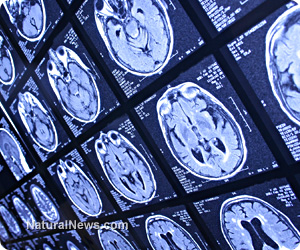
Imagine a society where your brain can be scanned to see if you are a danger — because the scan can predict that you are likely to commit crime. This may sound like a sci-fi movie but the brain scanning technique already exists, according to a new study conducted by… -
Milk thistle is a natural medicine

Milk thistle is a flowering plant that is part of the daisy family. It gets its name from its bristly and prickly nature and the “milky” sap that oozes out of the plant. The leaves, fruits and seeds of milk thistle have been used for centuries as a natural medicine… -
UK doctors put infants, newborns on ‘end of life’ death treatments
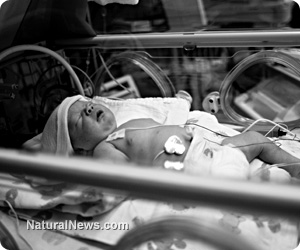
State-sponsored euthanasia ought to shock and outrage every compassionate, sensible human being, but unfortunately there are still too many people willing to trust government-run healthcare managed by faceless bean counters. Great Britain’s National Health Service… -
Four ways to vastly improve your sleeping quality and dream life

Too much stress and too little sleep is the fool-proof recipe for declining long-term health — including a weakened immune system, impaired cognitive/memory function, heart disease, mood disorders, premature aging and accelerated tumor growth, among others. And it’s… -
Food supply threatened by pesticides that kill bees: Honey and almonds are at risk

Two studies have found that the pesticide neonicotinoid, used since 1990, is contributing to killing the honeybees needed for pollination of our food crops. Our food supply is reliant on bees to pollinate the crops. They contribute to $15 billion worth of our food supply… -
The globalization of GMOs: How genetic engineering is destroying the developing world

Globalization affects everyone. The shrinking world brings people in the United States closer to ideas and cultures from all corners of the earth. Likewise, other countries are introduced to many facets of the American life and that way of life includes genetically modified… -
The government has the right to infringe on your freedom, says Bloomberg

You’re not smart enough to make your own decisions. You’re irresponsible with liberty and you can’t be relied upon to know how best to live your own life. Only government can make those decisions for you, and by golly, government ought to be doing that. Or so says… -
Experiencing an erection of collectivism lasting 4 hours? Stop watching MSNBC

Bye-bye daddy, bye-bye mommy: MSNBC discovers who children really belong to. Finally. This burning question has been answered. What a relief. Melissa Harris-Perry, a university professor and weekend host at MSNBC shares the wisdom: ”We have never invested as much… -
The Feds are spending your tax dollars on million-dollar grants to study sex habits of mud snails

Another irritating example of government waste at its most absurd, the taxpayer-funded National Science Foundation (NSF) has reportedly awarded a sizable grant to researchers at the University of Iowa to study the reproduction habits of New Zealand mud snails. According… -
Fisker hit with lawsuit over layoffs
Struggling electric car maker Fisker Automotive has yet another thing in common with infamous solar panel maker Solyndra. Shortly after Fisker laid off 160 of its workers — or 75 percent of its staff — last Friday, law firm Outten & Golden hit the company with a class action lawsuit alleging that Fisker violated the Warn Act, which requires companies with 100 or more employees to provide at least 60-days notice before conducting mass layoffs or closing plants.
I reported that Outten & Golden was investigating Fisker and interviewing employees last Friday, and Auto News has the full report of the filed lawsuit, as well as a PDF of the filing itself. Outten & Golden won a $3.5 million settlement against Solyndra using a similar suit.

Fisker Karmas
The suit, filed Friday in U.S. District Court in Santa Ana, Calif., against Fisker alleges that the company violated both federal and California state WARN acts, and the class action lawsuit was filed on behalf of lead plaintiff and former Fisker employee Sven Etzelsberger. The suit is asking for an unspecified amount of damages including unpaid wages and accrued holiday pay for 60 days, as well as legal fees.
Fisker laid off 160 employees last week and has kept 53 around to negotiate with the Department of Energy and to work on selling its assets. Fisker owes the DOE the first loan repayment at the end of this month for its $193 million loan. The company hasn’t made a car since the Summer of 2012, reportedly saw potential acquisition and investment bids from two Chinese auto makers fall through in recent months, and announced last month that its founder design Henrik Fisker had left the company over disagreements.
Filing for bankruptcy is a very real next possible step for the company. Fisker has reportedly hired a bankruptcy lawyer to look at its options.
Fisker has raised over a billion dollars in private funds, including money from Valley venture capitalists Kleiner Perkins and NEA. The company has sold a couple thousand of its $100,000 electric hybrid Fisker Karmas to customers, including celebrities like Al Gore, Matt Damon, Leonardo DiCaprio, Justin Bieber and the Game.

Related research and analysis from GigaOM Pro:
Subscriber content. Sign up for a free trial.- Ups and downs for cleantech in Q1
- Green IT Q4: solar, subsidies and the outlook for EVs
- Green IT’s Q4 Winners: Wind Power, Solar Power, Smart Energy


-
Sony Xperia Z could be on the way to T-Mobile

Sources are indicating that T-Mobile is in the process of testing the Sony Xperia Z, which could result in Sony returning to the T-Mobile portfolio. TmoNews reports three different sources over the past two weeks have all confirmed Sony is testing the device. The Xperia Z is a 5-inch 1080p display smartphone powered by a 1.5GHz quad-core Snapdragon S4 Pro chip, a 13MP camera with Exmor RS for mobile and HDR video, and is dust and water resistant. Although it may not be garnering all of the attention that the Samsung Galaxy S 4 or the HTC One are grabbing, the Xperia Z is still a top tier device and should be a welcome option for consumers on the T-Mobile network.
Just because T-Mobile is testing a device does not guarantee it will be offered to consumers. This happened last fall with the HTC One X+ which was never picked up by T-Mobile. Still, the fact that the device is getting put through the paces by T-Mobile is a good sign.
source: TmoNews
Come comment on this article: Sony Xperia Z could be on the way to T-Mobile
Visit TalkAndroid for Android news, Android guides, and much more! -
The Impossible has happened: Bootloaders now unlocked on Motorola DROID RAZR HD, DROID RAZR MAXX HD, DROID RAZR M, and Atrix HD

We usually don’t get exciting news on Sunday nights, but get ready for this one. A method to unlock the bootloaders on a few popular Motorola phones has been achieved by Dan Rosenberg. If you own a DROID RAZR HD (and MAXX HD), DROID RAZR M, or Atrix HD you are in luck. This method appears to be tied to Snapdragon processors only since it will not work on any devices with OMAP CPUs.
The instructions haven’t been posted yet, but the above image, as well as the one below, is proof enough. Word is the method will be posted tomorrow, and we will let you know as soon it’s posted. Hit the break for another image and a video of the Atrix HD unlocked.

Click here to view the embedded video.
source: droidrzr
Come comment on this article: The Impossible has happened: Bootloaders now unlocked on Motorola DROID RAZR HD, DROID RAZR MAXX HD, DROID RAZR M, and Atrix HD
Visit TalkAndroid for Android news, Android guides, and much more! -
News story: Death of Lady Thatcher
Prime Minister David Cameron has made a statementat Downing Street following the death of Lady Thatcher:
Margaret Thatcher didn’t just lead our country; she saved our country. And we should never forget that the odds were stacked against her. She was the shopkeeper’s daughter from Grantham who made it all the way to the highest office in the land.
He paid tribute to her patriotism:
For many of us, she was an inspiration. For others, she was a force to be defined against. But if there is one thing that cuts through all of this, one thing that runs through everything that she did, it was her lionhearted love of this country. She was the patriot Prime Minister, and she fought for Britain’s interests every step of the way.
Earlier, the Prime Minister gave his initial reaction to the news of death of the UK’s first female Prime Minister:
It was with great sadness that l learned of Lady Thatcher’s death. We’ve lost a great leader, a great Prime Minister and a great Briton”.
It followed the announcement that Baroness Thatcher died in London at the age of 87. Serving from 1979 to 1990, she was the UK’s first female Prime Minister and the longest serving of the 20th century.
In Downing Street, the Union flag was flying at half mast following the announcement.
The Number 10 website has a condolence pageon which people are able to write private messages for the Thatcher family.
It has also been announced that Lady Thatcher will receive a Ceremonial funeral with military honours at London’s St Paul’s Cathedral.
Lady Thatcher’s family have asked that, if people wish to pay their respects, they consider making a donation to the Royal Hospital Chelsea, rather than laying flowers. Details of how to do so available on the Royal Hospital Chelsea website .
The public will be unable to attend the funeral service itself but can line the route of the funeral procession from the RAF Church in the Strand to St Paul’s Cathedral.
Further details will be made available in due course. -
News story: Information on arrangements for Lady Thatcher’s funeral
In line with the wishes of her family and with the Queen’s consent, Lady Thatcher will receive a ceremonial funeral with military honours. The service will be held at St Paul’s Cathedral on Wednesday 17 April.
A wide and diverse range of people and groups with connections to Lady Thatcher will be invited. The service will be followed by a private cremation.The funeral
The funeral will be a mix of the public and private. The service at St Paul’s Cathedral will be televised and members of the public can watch the coffin procession from the Palace of Westminster to St Paul’s.
Lady Thatcher’s wish was for the armed forces to be able to take part in the funeral. And more than 700 Armed Forces personnel will take part on the day with all 3 services involved, including those from ships, units and stations notable for their service during the Falklands Campaign. Read more about the Armed Forces’ role in the funeral of Lady Thatcher.On the day before the funeral, the coffin will be moved to Chapel of St Mary Undercroft in the Palace of Westminster. There will be a short service following its arrival. The coffin will rest in the chapel overnight.
On the day itself, the streets will be cleared of traffic and the coffin will travel by hearse from the Chapel of St Mary Undercroft in the Palace of Westminster to the Church of St Clement Danes, the RAF Chapel, on the Strand.
At the church the coffin will be transferred to a gun carriage drawn by the King’s Troop Royal Horse Artillery. The coffin will then be borne in Procession from St Clement Danes to St Paul’s Cathedral. The route will be lined by tri-service military personnel.
The coffin will be met at St Paul’s Cathedral by a guard of honour tri-Service personnel and Pensioners of the Royal Hospital Chelsea will line the steps of St Paul’s Cathedral.
The coffin will be borne into and out of the cathedral by a tri-service bearer party.
The guest list for St Paul’s will include family and friends of Lady Thatcher, those who worked with her over the years, including members of her Cabinets when she was Prime Minister, and representatives from a range of groups she was associated with. The Prime Minister and Deputy Prime Minister will attend and the Cabinet and Shadow Cabinet will be invited.
Flags will be flown at half mast at Downing Street today and tomorrow, and will be again on the day of the funeral.Information for the public
Lady Thatcher’s family have asked that, if people wish to pay their respects, they consider making a donation to the Royal Hospital Chelsea, rather than laying flowers. Details of how to do so available on the Royal Hospital Chelsea website.
The Number 10 website has a condolence page on which people are able to write private messages for the Thatcher family.
The public will be unable to attend the funeral service itself but can line the route of the funeral procession from the RAF Church in the Strand to St Paul’s Cathedral.
-
News story: Lady Thatcher’s funeral
Downing Street can announce that, with The Queen’s consent, Lady Thatcher will receive a ceremonial funeral with military honours. The service will be held on Wednesday 17 April at St Paul’s Cathedral. A wide and diverse range of people and groups with connections to Lady Thatcher will be invited. The service will be followed by a private cremation. All the arrangements being put in place are in line with wishes of Lady Thatcher’s family. Further details will be published over the coming days.
In response to the news that Lady Thatcher had died the Prime Minister said:
It was with great sadness that I learned of the death of Lady Thatcher. We have lost a great leader, a great Prime Minister and a great Briton.
Details on media access to Lady Thatcher’s funeral will be released by the Cabinet Office on Thursday morning (11 April).
-
News story: Statement on death of Lady Thatcher
Prime Minister David Cameron gave a statement following the death of former Prime Minister Baroness Thatcher.
He paid tribute to her “lion-hearted love for this country”.
Watch the full statement below.
-
News story: EU reform: PM takes case to Madrid, Paris and Berlin
Update – Monday 8 April 2013
Due to the death of Baroness Thatcher the Prime Minister has cancelled planned talks in Paris with President Francois Hollande and will return to the UK today.
Starting the week with his first official visit to Madrid since taking office, the Prime Minister will hold bilateral talks with Prime Minister Rajoy. He will then travel on to Paris for a working dinner on Monday evening with President Hollande. At the end of the week, the Prime Minister will meet with Chancellor Merkel in Germany for further discussions about taking forward his reform agenda.
Ahead of the visits, the Prime Minister has spoken to leading newspapers in France, Germany, Italy, Spain and Poland to make the case directly to a European audience about the need to reform the EU to make it more open, competitive and flexible; and to address the issue of democratic consent.
He said:
What I want to do is to achieve a reform of the European Union. That is what my Bloomberg speech is all about. I think this organisation is ripe for reform. I think we’re in a global race where we have to compete with [countries like] India, China, Indonesia and Malaysia. We need a Europe that is more open, that is more competitive, that is more flexible, that thinks more about the cost that it’s putting onto its businesses, particularly small businesses; we want a Europe that wakes up to this modern world of competition and flexibility. That is the aim.
We are a major European power, a major European player. But do we think that the European Union has sometimes overreached itself with directives and interventions and interferences? Yes, it has. And that needs to change.
There are some reforms I think we need to make. Already we’re starting to make some of them. I would say there’ve been successes in recent months. For the first time, probably since the European Union was founded, we now have a Commission that is committed to withdrawing proposals, a Commission that is committed to deregulation, that is committed to taking costs away from business. We’ve had the budget deal, which I think was a great success. For the first time in Europe’s history we’re going to see the budget go down, rather than the budget go up. That is real progress, because in Europe, we’re all having to do more with less. We’re all having to spend less money and Europe should not be immune from that. So I would say already on the agenda of reform, there’ve been some successes. More flexibility, more competitiveness, more single market and reduced seven-year budget.
The agenda of the speech is change that all of Europe can benefit from. It is a more competitive, open, flexible Europe for all countries of Europe. And the second thing is that – you know, this is not about cherry-picking, but to argue as some do that you can’t have a flexible Europe is wrong. We have a flexible Europe.
Britain is not in the single currency; neither are many other countries. Not all of us are members of Schengen. You know, some countries want to go ahead with the financial transaction tax. We don’t. You know, so I think we can have a flexible Europe where we don’t all have to do the same things in the same way at the same time. I think, as I say – as I argued in my speech that Europe will be more successful if it has the strength of flexibility rather than the weakness of inflexibility.
I think the best outcome for Britain is our membership of a reformed European Union. But just as the two themes of my speech, if you like, are first that Europe needs reform, the second is that we need to recognise that consent for Britain’s membership of the European Union, and all the ways that it’s changed, has become wafer-thin in Britain. And politicians, if they do their job properly, have to recognise this fact rather than try and brush it under the carpet.
The fact is that in British politics, the fact that parties and governments year after year promised referendums, didn’t hold referendums when they could have done, that damaged consent for Britain’s membership of the European Union and there’s no good wishing that away. It exists; it’s a fact. And the best thing to do when you have a problem is to confront that problem, deal with it. And to those people who say to me, ‘Ah, but you’re creating uncertainty’, the greatest uncertainty would be to have this problem and to wish it didn’t exist. Much better to have a plan for how we make changes to the European Union, how we make changes to Britain’s membership, how we secure Britain’s membership of a reformed European Union and we settle this issue. I have a plan.
-
Microsoft wins, even if the PC loses

I am simply stunned by the ridiculous number of “Microsoft will be dead in four years” stories, following Gartner’s grim PC forecast three days ago. I offered brief analysis then and promised something later, and this is it. Yesterday, colleague Alan Buckingham posted first: “Microsoft is nowhere near death’s door” — and he absolutely is right.
Throw a rock, and you can’t miss a doom-and-gloom armchair analysis. Among the many are “Gartner: Microsoft is dead, Windows has expired, Office has ceased to be” (Computerworld); “How long can Microsoft go on like this?” (InfoWorld); “Apple’s ultimate victory over Microsoft” (Motley Fool); and “Gartner may be too scared to say it, but the PC is dead” (ReadWrite). For the most part, all these armchair pundits are mistaken. Hugely.
Counting is Bad Math
By the numbers, the PC’s future looks grim compared to rising smartphone and tablet shipments. But the data misleads. Gartner sees PC shipments falling from 315 million this year to 271.6 million in 2017 — that’s a 13.7 percent decline. Mobile phones rise to 2.1 billion from 1.9 billion, a 13.5 percent increase. Tablets: 197 million to 468 million, or 137 percent growth. Microsoft’s presence in both latter categories is negligible. Windows mobile operating systems had 3 percent smartphone sales share in fourth quarter (Gartner) and Windows on tablets 4.7 percent forecast this year (IDC).
The numbers and pundit analysis about them ignore several key factors:
1. The addressable computing market isn’t growing gangbusters. For the four categories — ultramobiles like Microsoft Surface Pro is the other — total shipments rise from 2.4 billion this year to 2.96 billion in 2017. That’s just a 22.9 percent increase. It’s healthy growth but not large expansion, which reflects something not expressed in the data (see #3).
2. The overall market actually changes little in four years compared to today. Based on Gartner’s data, mobile phones will account for 77.7 percent of shipments in all four categories this year but only decline to 72 percent in 2017. Handsets are most important among the devices, and that’s not a new situation. Microsoft’s mobile OS position is equally as weak two years ago as it could be in 2017, if not better then.
Armchair pundits fixate on a couple data points. Android is one of them. The operating system rises from 35.7 percent of all devices shipped this year to 49.5 percent in 2017. There’s presumption this rise will shift developers away from Windows, establishing a new dominate ecosystem. That’s absolutely true for mobile phones. But most people, not even in emerging markets, will replace PCs with smartphones. In some markets, buyers will take smartphones instead.
Something else: Gartner’s numbers are for all mobile phones. The analyst firm expects 1 billion smartphones sold this year, for example, out of 2.4 billion handsets. Dumb phones aren’t really viable PC replacements, or displacements.
3. Shipments don’t reflect install base. A category’s actual size matters more, particularly when assessing the ecosystem of applications, services and other things. This is important addressing tablets’ real impact on PCs. Cumulative tablet ships are forecast to be 1.05 billion between 2012 and 2017, which would be the install base increase if every unit sold (unlikely). PCs: 1.23 billion — more when adding ultramobiles.
The personal computer starts out with a larger install base (well over 1 billion, according to combined analyst and Microsoft reports). I don’t have data for tablets, but guesstimate a couple hundred million (based on analyst shipment data). If overall PC shipments are greater, and from a larger install base, the category is by no means dead. Nor is Windows, which still has 90 percent PC market share.
4. The PC is more like the television 15 years ago. By the 1980s, most people who wanted a TV had one. The market saturated and sales slowed to replacements and younger adults buying for the first time. HDTV changed everything, by giving consumers reason to replace their sets. Larger screens and clearer audio and video made replacement attractive. Suddenly existing TVs weren’t good enough.
There was a time, during these lackluster TV sales days that some analysts started comparing PC shipments to televisions, and some tech companies (Microsoft among them) bought into the popular idea that personal computers would replace televisions. That didn’t happen for many reasons. Yes, the PC displaced some TV-watching behavior, but in certain contexts, such as bedroom or dorm room or where the consumer could afford one device and chose the PC’s utility. The number comparison and talk about future trends back then remains of PCs and tablets today.
Once big-screen TVs hit the market, roles reversed. Television sales rebounded and newer models took on PC-like capabilities, which is particularly common during this decade. I can see several scenarios where the PC could equally revive and survive any competition smartphones or tablets pose.
That’s excellent segue to the next section, about context.
Worldwide Devices Shipments by Segment (Thousands of Units)
Device Type 2012
2013
2014
2017
PC (Desk-Based and Notebook) 341,263
315,229
302,315
271,612
Ultramobile 9,822
23,592
38,687
96,350
Tablet 116,113
197,202
265,731
467,951
Mobile Phone 1,746,176
1,875,774
1,949,722
2,128,871
Total 2,213,373
2,411,796
2,556,455
2,964,783
Context is King
As I’ve repeatedly expressed here: There is no post-PC era. It’s a fiction coming from the minds of analysts (looking for things to count and sell), Apple cofounder Steve Jobs (when alive looking to sell more devices) and people pretending to know more than they really do but who can shout, be heard and be believed across the Internet’s vast reaches of fools. They are many.
We have entered the contextual cloud computing era, where the PC’s role moves from the center to being one of many devices connecting to the cloud as hub. The PC is unique for being a Swiss Army Knife — a device that does many things, and not often all of the well. Single utility is more commonplace, with products designed to one thing, sometimes a couple, really well. Cloud services and supporting apps pick up the Swiss Army Knife role, delivering what people want, or need, in context. What the device is matters less.
Take watching a movie as example. Most people would prefer to do so on their big-screen TV. But when traveling smartphone or tablet will do, in that context. The film you start at the airport can be finished at home. Location and device change, but content stays the same. The example applies to music or personal interactions.
What changes in the new era is the PC’s relevance, which decreases as the cloud — and some apps, too — enables other devices’ broader contextual usages. Granted, smartphones, and to lesser degree tablets, are more personal than PCs because they’re carried more frequently and act as gateways that matter most — everything from family and friends to new “Game of Thrones” episodes.
Microsoft’s problem is two-fold, and obvious: Windows Phone is a market loser, and legacy Windows has no perceptual market share on tablets, which are the two biggest computing device categories. Neither’s situation likely changes for Microsoft in four years.
But that’s okay. As I explained on March 25 and last week, there’s a new Microsoft. The company already executes on CEO Steve Ballmer’s pledge to reinvent as a “devices and services” company. Signs are everywhere, as Microsoft updates products faster and moves more of them to the cloud. Think Office 365 and server hosting, for example.
The company is transforming from a developer of PC applications and platforms to to a provider of middleware — products and services that bind any platform to its server and datacenter software and services and major applications, principally from Office System. Think glue. Cloud middleware isn’t sexy, but it’s platform independent and provides essential contextual services that can be consumed on any device, anytime, anywhere.
The best mobile apps on Android or iOS should be from Microsoft, not Apple or Google, and leverage the established enterprise stack. That’s how Microsoft solves the mobile and PC problems. Ballmer clearly is leading the company that way, which can preserve its relevance even as the PC declines.
Worldwide Devices Shipments by Operating System (Millions of Units)
Operating System 2012
2013
2014
2017
Android 497,082
860,937
1,069,503
1,468,619
Windows 346,457
354,410
397,533
570,937
iOS/MacOS 212,899
293,428
359,483
504,147
RIM 34,722
31,253
27,150
24,121
Others 1,122,213
871,718
702,786
396,959
Total 2,213,373
2,411,796
2,556,455
2,964,783
Bring Your Own Service to Work
Microsoft is wed to the PC, for better or worse. The company saw the better days, now they’re worse. But the aggressive contextual cloud services approach can take Microsoft where Windows doesn’t reach widely enough — aforementioned smartphones and tablets.
Gartner’s data — and most certainly little of the punditry about it — fails to ask and answer question: Why? And why now? The mobile phone trend isn’t new, as I explained above. Tablets are the bigger encroachers on PC turf, starting three years ago with iPad’s release, and they are more likely than smartphones to displace new computer sales.
There, changing purchasing habits in emerging markets is one factor displacing PC sales. Gartner and IDC both call out this trend in reports released within the past month. The so-called BYOD — bring your own device — to work is the other. BYOD is not a new trend, contrary to perceptions analysts, bloggers and other pundits foster. Cell phones, BlackBerries, laptops and PDAs all found there way into offices in employee hands during the last century, for example.
Following the 2008 stock market collapse and, coincidentally, as iPhone created more demand for Apple products and other smartphones, many enterprises grew more permissive about BYOD. With IT budgets slashed, managing new device categories employees owned took on a money-saving role.
According to “Good Technology’s 2nd Annual State of BYOD Report”, 76 percent of enterprises with more than 2,000 employees have programs in place, and the total is expected to reach 88 percent this year. However, in half the companies with BYOD programs, employees pay for devices and supporting services, such as cellular data for cell phones, tablets and some laptops. You want a new laptop, or to use a smartphone or tablet — “bring your own” is the new trend. The devices are cheaper to manage than to buy.
Where device-counting comes up short: Explaining why bring anything. Contextual cloud, and apps supporting it, is the answer. BYOD is a misnomer. The acronym should be BYOS — bring your own services. Even BYOA, bring your own apps, applies.
Microsoft is in process of using its enterprise entrenchment to become the defacto standard for managing BYOD and BYOS. If that strategy succeeds and is contextual, which includes separating work and personal spaces and behavior, Microsoft will easily be highly relevant during the next computing era. Let other companies sell devices, while Microsoft provides contextual end-user experience leveraged first from core market of businesses then extended to organizations serving consumers.
The problem: Apple controls the most direct user experiences on its devices, as do Android device manufacturers. Unquestionably, Microsoft needs to up the game in smartphones and tablets, but because of other software and services strategies, it’s not game over.
Think Apple, Not IBM
Many pundits compare Microsoft to IBM, and I’ve made some allusions myself. They see similarities between Microsoft today and Big Blue at the dawn of the PC era. But Ballmer, who has made many strategic mistakes the last 13 years, gets context enough and steers the Good Ship Redmond on a path that preserves the core enterprise business while opening relevance in the cloud. Seas ahead are stormy enough to sink even this mighty monopoly, however.
Microsoft already is in process of reinvention, such that Apple applies more than IBM as comparison. How often before 2007 did pundits predict Apple’s decline? Now look at what has become the most profitable tech company on the planet. Apple was near bankruptcy in 1996 and looked like a goner to grim reaper pundits in 2001, too. Jobs and Company stood against Microsoft’s monopoly and the impenetrable 90-percent PC market share. There was no hope. Yet Apple adapted, by opening up new product categories and revenue streams with them. Microsoft does likewise (see paragraph after next one for more). Now the grim reapers talk of another death — and they’re wrong.
Microsoft’s fortunes are less tied to PC sales than the armchair pundits would have you believe. If consumers and businesses choose not to buy new personal computers for sake of, say, tablets, OEMs lose out. But not necessarily Ballmer and Company, and that is one explanation why a new Windows version ships this year. Upgrades — Microsoft can trigger a new software upgrade cycle on existing PCs. Remember, the install base is huge and most of it on Windows 7 and hardware that will run 8, and presumably 8.1, just fine.
There is much Microsoft can do to trigger upgrades and even co-opt rivals in the process. Windows RT runs on ARM processors. Microsoft and OEMs distribute the software on new computers, but it doesn’t have to be this way. Suppose the company tweaked RT for ARM tablets, like Google Nexus 10, and allowed upgrades. Users could bring Windows along, allowing Microsoft to gain faster foothold on tablets for its connected cloud services.
Something else: Microsoft puts subscription revenue first in the most recent product cycle. Office 365 is at least partly platform and device independent. The cloud service runs in different browsers on multiple operating systems, although Office 2013 still needs an OS X or Windows PC. As more consumers subscribe, the more Microsoft revenue smooths out — status already achieved among enterprises. Sixty percent of Business division (aka Office) revenue comes from annuity licensing contracts — 50 percent for Server & Tools. That’s money in the bank.
Microsoft isn’t dead yet and nowhere close to it. The company has a clear strategy that can and will transcend the PC. Unquestionably, the company’s position would be stronger if more smartphones or tables shipped with some Windows version. That said, Microsoft can win, even if the PC market loses to other devices.
Photo Credit: Kucher Serhii/Shutterstock