
Category: News
-
Former Windows 8 bull changes tune, says platform is ‘challenging our optimism’
-
Microsoft Is A Bit Sour Over Facebook Home
Yesterday, Facebook announced Home, a custom Android skin that replaces the default Android experience with one that’s entirely based around Facebook. As part of the presentation, Mark Zuckerberg lamented the current state of app-centric phones, and said that Home would finally bring people to the forefront of the mobile experience.
The mission statement of Home seems to have caught the ire of Microsoft as the company’s VP or corporate communications, Frank Shaw, took to the company blog today to say that Facebook is late to the party. Shaw says that Windows Phone 7.5, which was introduced in 2011, was in fact the first phone based around people instead of apps.
You could argue whether or not Shaw’s claim is true, but the company was marketing Windows Phone 7.5 as a people-first phone back in 2011. It’s understandable that the company would be a little upset over Facebook essentially stealing its nonexistent thunder.
Shaw ends his mini-rant with the suggestion that Windows Phone is superior to Home because Home is just an Android skin. Besides, Home takes away some features from Android while Windows Phone offers all the features of Home and then some without sacrificing any core features.
What makes this even sadder is that Home isn’t even out yet. It’s entirely unproven, and yet Microsoft is already on the offensive. As TechCrunch rightly points out, Microsoft’s readiness to attack Facebook Home shows just how sensitive it is over how nobody cared about its people-first device in the first place.
All this leads us to the million dollar question – will people care about Facebook Home when they clearly didn’t care about Windows Phone? Facebook certainly seems to think so, but the tepid reaction to Windows Phone shows that the majority of mobile device users are probably pretty happy with their app-centric devices.
Besides, I’m sure most Android users would prefer a better Facebook app over Home anyway.
-
Gay NFL Players Could Come Out “Sooner Than You Think”
The last few weeks have been significant for the gay rights movement. In mid-March Republican U.S. Senator Rob Portman became the first sitting U.S. senator to publicly endorse gay marriage. This was followed by the U.S. Supreme Court hearing two different gay marriage-related cases in one week, sparking the red equality symbol movement on social media and leading to the usual online debates.
Now it appears that even professional sports will become part of the gay rights movement in the U.S. In addition to Mark Cuban’s recent statement that he would be “honored” for the Dallas Mavericks to have the first NBA player to come out as gay, rumors have now surfaced that several NFL players will soon be coming out of the closet.
Linebacker Brendon Ayanbadejo was released from the NFL’s Baltimore Ravens this week. As an outspoken advocate for gay rights, speculation centered on the rumor that Ayanbadejo’s release was related to his views. However, in an interview with the Baltimore Sun this week, Ayanbadejo stated that this was not the case, and that the Ravens organization had always supported his outspokenness on the issue.
Ayanbadejo went on to say that gay NFL players will soon be coming out of the closet. In fact, he told the Sun that “the groundwork is being laid” for as many as four NFL players to come out simultaneously, to reduce the pressure on any one player.
“I think it will happen sooner than you think,” said Ayanbadejo.
When the story hit, Ayanbadejo took to his Twitter account to defend his views and set the record straight:
I’m really ashamed of the ravens fans and nfl fans spewing this homophobic bullshit on my twitter. Shame on you and shame on your parents
Dick Cass and the @ravens had my back all year. Why would I say I was cut cuz my views? Makes no sense.
(Image courtesy Keith Allison/Wikimedia Commons)
-
This Week On The TechCrunch Gadgets Podcast: Facebook Phone AKA The FF

This week on the TechCrunch Gadgets Podcast we talk about bold moves by Verizon and T-Mobile and the Facebook Fone and Facebook Home.
This week we welcome Darrell “Patents” Etherington to our soundstage and I’ve removed quite a bit of the messy static.
We invite you to enjoy our weekly podcasts every Friday at 3pm Eastern and noon Pacific.
Click here to download an MP3 of this show.
You can subscribe to the show via RSS.
Subscribe in iTunesIntro Music by Rick Barr.
-
Games for the weekend: Block Fortress
Games for the Weekend is a weekly feature aimed at helping you avoid doing something constructive with your downtime. Each Friday we’ll be recommending a game for Mac, iPhone or iPad that we think is awesome. Here is one cool enough to keep you busy during this weekend.
 Block Fortress ($1.99, Universal) is a mix of tower defense and first person shooter style games where you must create your own fortress to defend. As if defending a fortress is not challenging enough already, you must also collect rare minerals to craft better and stronger defenses to use while protecting your fortress. This game will push your warrior, engineering and crafting skills to their limits.
When building up your defenses, you can fly around the environment putting the various elements and materials in place. This helps you survey the land to determine where the most defensible position is, as well as check out your fortress before you go to battle. The left side of the screen is a virtual d-pad for strafing left and right as well as moving forward and backward. When designing your fortress, on the right side of the screen are two arrows that allow you to fly by controlling you movement up and down. However, when you are battling the enemy and defending your fortress, you are not able to fly over your opponents as you remain firmly on the ground. Also when battling, your player will be equipped with a weapon and a red fire button will appear on the right side of the screen replacing the up and down flying buttons. You look around as well as turn directions when walking or running by dragging your finger across the screen.

In this game your barracks is your home base that you must defend. If destroyed, the game is over. Placing your barracks in a defendable position and building up a fortress to defend them is more than half the fun of the game. More than just your creative building skills will be used as you must think about how the enemy will attack your fortress; there are over 30 different building blocks to choose from, each with their own characteristics, strengths and costs. You will choose between different types of wood, stone and steel materials when you build your defenses. The weapons you mount on your turrets have their own characteristics as well: each has a different range and will inflict varying amounts of damage. Some weapons will require mounting an accompanying spotlight when fighting at night. You are also responsible for placing power blocks and boosters around your fortress in order to supply your weapons with the energy they need to operate.

Your fortress is not the only thing that needs to be well equipped to fight off the enemy. Being a first person shooter as well, your avatar also needs to suit up for battle. For the most part, this involves selection of various hand weapons that you will use to take out individual attacking units on the battlefield. As you continue to play the game, you will see that your avatar levels up and unlocks additional weapons, armor and tools.

There are three main gaming modes to choose from. Survival is the most difficult of the three as you must gather the minerals you need in order to build up your defenses. There is no pause button in survival mode. In Quickstart mode, you are given enough resources to build a defendable fortress. When the game begins you are given time to build these defenses before starting the battle. With the Sandbox mode of gameplay, you have an unlimited supply of resources and you can start and stop the battle whenever you need to in order to readjust your strategy. Sandbox is a great mode to get started with, as you can work your way of to playing in Survival mode.

You can also choose where on the map of a fairly large region you would like to set up your barracks. Green Hills, Jungle, Snowy Hills, Rocky Mountains, Tropical Islands and Tidal Cliffs are the terrains you have to choose from. Each terrain has a set of minerals that are more common in that area of the map. The Jungle and Green Hills, for instance, have an abundance of rare green minerals. If you don’t want to choose where you start, there is a random setting that will pick the terrain for you. It is important that you play in different locations in order to collect minerals from each region.

As you accumulate these minerals, you can use them to create crafting mods that will permanently upgrade your blocks, weapons and equipment. Each resource you use to build up your defenses and equip your avatar for battle can be upgraded. The more minerals you collect in each of the different regions, the more you can upgrade your favorite gear.
There is certainly a lot going on within this game. The 3D environment you play, while not the most stunning graphically, does captivate you. The landscape you have to work with is very large, and you are free to roam around while your fortress is being invaded. You are even able to save your creations so you can modify them and tweak them in order to get your strategy down to a science. So this weekend find a secure location in your household and prepare to defend it, because you will be spending a lot of time playing Block Fortress.

Related research and analysis from GigaOM Pro:
Subscriber content. Sign up for a free trial.- How do developers ride the Siri wave?
- Connectivity means making the machine disappear
- Access vs. ownership: Why UltraViolet has already lost


-
Running out of memory on a Chromebook? Here’s a 30-second solution
Several Google Chromebooks, particularly the lower-priced models, come with just 2 GB of memory and for some, that’s just not enough. What often happens is that as more browser tabs are opened, data on older tabs simply disappears. These tabs have to be refreshed and that’s not ideal, especially if those tabs are being used for any communications or media consumption.
The problem happens on Chromebooks with 4 GB of RAM as well, but much less often. Still, even on the Chromebook Pixel, I experience it from time to time. The good news is that regardless of your Chromebook model, one quick command line with a restart can definitely help. The solution uses zRam or compressed swap space and you can use it on a Chromebook because it’s part of Linux, which is the underlying core of a Chrome OS device.
Essentially, zRam creates a swap disk to virtually increase the amount of memory your system can use. This is a description from the zRAM / compressed cache project site:
“This project creates RAM based block device (named zram) which acts as swap disk. Pages swapped to this disk are compressed and stored in memory itself. Compressing pages and keeping them in RAM virtually increases its capacity. This allows more applications to fit in given amount of memory.”
Here are the simple steps I found in the Chromebook Central Google Group to enable it:
- Open up a terminal tab with the CTRL + ALT + T keys.
- Type “swap enable” (without the quotes).
- Restart your Chromebook.
That’s it! The change is persistent, meaning the swap file will stay active after each restart. If you want to disable it, just follow the same instructions but type “disable” instead of “enable.” And if you want to manage the actual size of the swap file, you can do that too: When enabling it, follow the command with a number representing the size of the swap file in megabytes.

I’ve used this function on several Chromebook models and have noticed that blank tabs are mostly a thing of the past, even after opening and closing dozens of tabs during a typical day.
The nice thing is that you have nothing to lose by enabling the swap function since it can easily be disabled. Even better: As of last month, Google is experimenting to see if enabling swap by default is a viable option.

Related research and analysis from GigaOM Pro:
Subscriber content. Sign up for a free trial.- Life After Chrome: What’s Next for Android
- Analyzing the wearable computing market
- Carrier IQ and the continued erosion of operator trust

-
Who Has It Right On Enhanced Campaigns: Google Or Bing?
In early February, Google introduced Enhanced Campaigns, which it described as an “evolution” of AdWords. While embraced by some advertisers, others do not like the direction Google has elected to take.
Microsoft, Google’s competitor in the space and a frequent critic of numerous Google practices, has now laid out its policy aimed at attracting advertisers who don’t like Google’s new model.
Which model do you prefer: Google’s or Bing’s? Let us know in the comments.
If you’re still unfamiliar with Enhanced Campaigns, here’s a look:
David Pann, GM of Microsoft’s Search Network, spoke to advertisers at a San Francisco Forum to address concerns Microsoft Advertising has heard around whether Bing Ads will go down a similar path as Google with Enhanced Campaigns. This is a legitimate concern, considering how Microsoft has been openly adapting other models that Google has embraced.
Microsoft is not going down the Enhanced Campaigns path ,however.
“While Enhanced Campaigns may seem to provide greater management efficiencies and improve mobile traffic, our customers have expressed worry that this change may in fact bring inefficiencies for more sophisticated advertisers or those with specific targeting needs,” a spokesperson for Microsoft tells WebProNews, echoing sentiments shared in a blog post from Pann.
During the forum, Pann expressed a commitment to “making it simple for small business advertisers to participate across devices while at the same time, enabling more sophisticated advertisers to have the fine grain targeting controls they require.”
Pann expands in the blog post:
At Bing Ads, we believe very strongly in giving advertisers the tools and flexibility to control their spending, target the most relevant audiences, and ensure they can get the best return on investment. We do not believe bundling mobile, desktop and tablet advertising together in an opaque manner is in the best interests of our customers.
Our own customers have been concerned whether we would sacrifice control for convenience, and our answer is no.
We are committed to reducing friction by providing advertisers with the transparency and controls needed to maximize campaign effectiveness. We strive to make it simple for small business advertisers to participate across devices and more sophisticated advertisers to have the fine grain targeting controls they require. Our stated goal of providing advertisers the ability to do in 15 minutes what it takes them 45 minutes to do on Google, should not – and does not – come with any caveats or loss of control.
Bing Ads believes in building long-term trust through consistency, expectancy and transparency.We know budgets and resources are limited – we want to enable our customers, not hinder them.
Bing Ads Platform Manager Dare Obasanjo discusses Microsoft’s policy in a separate post.
“With enhanced campaigns, fine-grained targeting by operating system, device model and carrier is no longer available,” writes Obasanjo. “More importantly, tablets and desktop PCs are now treated as a single entity. It is no longer possible to target an iPad or Kindle Fire user differently from a user of on Dell or HP desktop PC.”
“Another elimination of flexibility also occurs when it comes to targeting users on mobile devices. All search marketing campaigns in AdWords are now desktop/tablet targeted campaigns. The ability to target mobile devices is only available by augmenting certain aspects of a desktop/tablet campaign.”
Microsoft says it will be updating its product to ensure AdWords advertisers can “seamlessly” transition between both products, despite Bing’s absence of Enhanced Campaigns-like functionality.
At least there’s not a “Scroogled” campaign this time.
As mentioned, some advertisers see the value of what Google’s doing, and certainly Google thinks there is plenty of good reason to operate this way.
Will you be switching from Google to Bing? Do you think Enhanced Campaigns are good or bad for advertisers? Let us know in the comments.
-
Microsoft exec tells critics of possible always-online Xbox to ‘deal with it’ [updated]

-
Featured Android App Review: Todoist: To Do List, Task List [Productivity]

Todoist has always been one of the best personal task managers, but it was only available on the desktop until November of last year. That’s when Doist released native apps for both Android and iOS, which brought Todoist’s robust elements to users for on-the-go task management. With the addition of the app, Todoist users are now synced across nine platforms, which include Android, iOS, Web, Chrome, Firefox, Outlook, Thunderbird, Windows, and Mac.
I generally don’t use the desktop to manage my tasks, although it’s important to me that the tasks are synced and accessible from various platforms. With that said, the desktop Web interface is a tremendous application for those that really need a lot of control for their tasks. The Todoist app for Android brings most of those features to your phone or tablet.
Todoist is aimed at the professional and is more comprehensive than most of the other task managers available on Android. What separates Todoist from other todo apps is the ability to organize tasks into projects with labels. You can even create sub tasks as well. By including projects, it effectively organizes everything in a logical manner. Who wants to look at a list of 30 todos when you can look at a list of 3 or 4 projects. Tapping on projects will give you the list of todos that are only related to that project. Color-coding is quite popular as well, and Todoist has you covered. You can select from 22 different colors to help you further organize things.
If you’re new to Todoist, you will need to setup an account in order to sync data to the cloud. You can simply use your gmail or any other email account. This enables you to utilize the app or the desktop via your favorite Web browser. If you’re using Chrome on your desktop, you can also install the Chrome Extension, which will allow you to manage tasks from your toolbar. You can also use it as a “read it later” type of app in that you can add URLs as tasks. It even integrates with Gmail so that you can add any email as a task.
When using the app for the first time, you will find handy popup tutorials walking you through some of the basics. The interface is very clean and easy to get around. Everytime you open the app, you will see the tasks that are due today. Just swipe to the right, and the side menu appears. This is where you will see the list of your color-coded projects. Tapping on any of the projects brings you to the tasks that are due for the respective project. You will also see “Manage projects” at the bottom, which lets you add, edit or delete projects. The labels tab will show you any labels you have created and what tasks are associated with those labels. It works the same way as Projects in that you tap on the labels to see the listed tasks. You will also find “Manage labels” at the bottom. The last tab is filters, and this is where you can create predefined filters. For example, you could have a filter for all tasks that are due on Friday or all tasks that are labeled as personal and due next Wednesday. Again, you will find a “Manage filters” option at the bottom.
Setting up a task is quite easy. Once you are in a project, just hit the “+” sign at the top right. You can title the task, give it a due date, assign a project, label it, set the priority (1-4), and assign a sub-task. Now this is where things get a little weird. You can enter textual dates in the date field, and there are a number of abbreviated commands to learn such as “tod” for today, “tom at 16:30″ for tomorrow at 16:30, “+5″ for 5 days from now, “ev day” for every day, “ev 7″ for every 7th of the month, and so on. Thankfully you can tap the three dot menu for the full list of commands. You can still enter a date by tapping the clock icon, but the displayed calendar is very small, and unless you have a magnifying glass, you won’t be able to read the dates.
One of my biggest complaints is the use of reminders. The only way to set a reminder (in the app) is to type a command as part of the title of the task. So you would have something like this: Wash the car <remind tom at 13:00>. For an app that stresses productivity, this is highly unproductive. I believe they will resolve this issue with a future update so I wouldn’t use it as a reason to detract you from trying the app. On the flip side, you can easily manage reminder notifications from the desktop by just entering the date and time. If you’re someone who likes to manage your tasks from the desktop then it won’t be an issue, but for those of you that are on the go or would rather use the mobile app, it’s not the best situation. Even using the desktop isn’t so easy as you should be able to just click on a date and pick a time rather than being forced to type it out. As far as notifications go, you can set the default to be push (notification panel), SMS text, or email. You can only do this via the desktop interface, but once it’s set, you shouldn’t need to change it that often.
Just like most Android apps, a widget is included. They only offer one size (4 x 3), but it’s resizable. You can also choose what information you would like to show up in the widget, and that includes any of the default views (tasks due today or the next 7 days), Projects, Labels, or Filters.
As you would imagine, an app like this probably isn’t free or at least there has to be a premium version. The app itself is actually free, but the premium version is my second biggest complaint. It costs $29 per year. The premium version adds notification reminders, use of the labels and filters, task notes, SSL encryption, access to iCalendar, task searching and the ability to add emails as tasks. If you don’t rely on notifications and you think you can go without labels and filters, the free version can do a lot for you. For me personally, $29 is too much because I am not a heavy todo and task user. With that said, I think Todoist is the best task management app I have seen, and is sure to suit those that need more productivity out of their todos.
It seems to me that Doist is going after the serious professional only, and not catering to the casual user. I would rather see the free version offer everything the premium version offers, but make it a trial for 14 days. After the trial period has ended, offer a version priced at $4.99 (one time purchase) with a limit of how many projects, labels, and filters you can have so that casual users can enjoy this type of productivity. If someone needs to manage more projects and tasks, they can pay the annual fee of $29.99. If you’re in that camp, it’s not too much to ask for something as powerful as Todoist. Either way, if you’re someone who could use a little more organization and productivity in your life, then you need to look at Todoist. It won’t cost you a dime to see what it’s all about, and you probably won’t find anything better.
Check out my hands on video below and hit one of the download links to get started. You can also visit their website for more information. As always, let me know what you think.


Click here to view the embedded video.
Come comment on this article: Featured Android App Review: Todoist: To Do List, Task List [Productivity]
Visit TalkAndroid for Android news, Android guides, and much more! -
T-Mobile starts taking iPhone 5 preorders
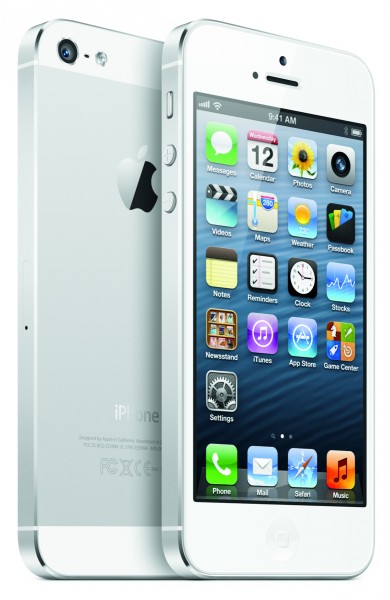 One week from today, Apple’s smartphone goes on sale from the nation’s fourth-largest carrier. But you can order now. The 16GB iPhone 5 is available with T-Mobile USA’s new Simple Choice, no-contract plan. The device is $99.99 upfront, plus tax, and $20 per month for 24 months — or $579.99 outright. Full price elsewhere: $649. The 32GB is $199.99 and the 64 gigger $299.99 upfront and 24 monthly payments, or $679.99 and $779.99 outright, respectively. Full price elsewhere: $749 and $849.
By several measures, T-Mobile offers the most-affordable iPhone 5 around, but it’s the odd duck of the flock. Apple only sells devices for AT&T, Sprint and Verizon from its online and retail stores, which is advantageous sales placement. Perhaps T-Mobile’s status will change after official sales start, but I suspect the carrier will join regionals selling iPhone in the backwater. C`mon, none of the big three would want T-Mobile’s model listed alongside theirs for about $100 less.
Money down is another odd thing. Upfront pricing from the big three for 16GB, 32GB and 64GB iPhone 5 is $199, $299 and $399, with 2-year contract. T-Mobile not only asks for less at time of purchase, but there are no contracts, and no financing charges to pay off the phone. So when full price is reached, the bill goes down by $20 a month. With, say, AT&T, your bill stays the same after the contract commitment is complete.
Contract-free is another way this odd duck stands apart from larger rivals. They sell you iPhone at a lower subsidized price, with contract commitment. My soon-to-be old carrier, AT&T, charges considerably more, particularly for data, and plan is required for smartphones. Minimum: $20 for 300MB per month (cough, cough).
AT&T’s cheapest family plan starts at $59.99 per month for 550 minutes. For two lines, with minimum 300MB data for both phones ($40) and unlimited family messaging ($30) monthly bill is $129.99 for iPhone 5 (two). T-Mobile is $80 ($50 for first line and $30 for the second) and comes with unlimited talk and text and 500MB high-speed data and unlimited slower speed through end of the monthly bill cycle. Adding monthly fee for two iPhones, brings T-Mobile to $120, but for more of everything.
AT&T’s Mobile Share plan, with unlimited talk and text would be $130 ($40 for plan and $45 for each phone). T-Mobile’s bill would go up $20 a month ($10 for each line) for 2.5GB data and tethering or $140 for unlimited data. That 2.5GB is for each line versus 1GB shared from AT&T. Going up to the 4GB shared plan raises AT&T’s monthly commitment to $150 ($70 for the plan and $40 for each phone). Remember, if you bring your own phone, then T-Mobile is $40 less per month — that’s $100 for 2.5GB data for each of two lines or $120 for unlimited.
I ordered one black and one white 16GB iPhone 5 this morning, setting me back nearly $293, thanks to California’s outrageously high sales tax (yeah, I know it’s a pittance to many Europeans). The handsets are for my college-age daughter and 91 year-old father-in-law. I already moved over three lines. My total bill, even paying $40 a month for two iPhones, should be about one-third less with T-Mobile compared to AT&T.
One more odd thing: T-Mobile’s iPhone 5 includes the 1700MHz, which along with 2100MHz, supports the carrier’s HSPA+ network. Am I confused. No 1700MHz is the reason other iPhones unlocked and brought to T-Mobile can’t use the high-speed data network. If Apple can add the radio now, why not years ago? There is also 4G LTE, but coverage is limited to a handful of cities, for now.
-
Samsung found to infringe Apple’s patent for text-selection feature

-
The Rising Tide Lifts One Boat Most of All

“Kaiea” is Hawaiian for ‘rising tide.’ I grew up in Hawaii, and “kaiea” is one of my favorite words. I like its meaning, the memories and images of the Pacific Ocean it conjures up and how it sounds onomatopoeic to me (like a wave crashing on the rocks), especially during Chicago winters.
It is also the underlying idea for an effective — and underutilized — growth strategy. My consulting firm works with many successful market leaders with amazing market shares — 30%, 50%, 70% and even 90%. Since these companies already effectively own their existing categories, the only way to grow is to find the rising tide to grow or create a new category.
One example of a company in this situation is Gillette, which has approximately a 70% share of the shaving market. For decades, the shaving market was men’s facial hair removal. Everyone is familiar with the primary methods Gillette used to grow: It innovated via technology (with the Sensor, Mach 3, and Fusion razors), and in 2001 it formally expanded into the women’s leg shaving market with a new brand called Venus.
Now Gillette is formally expanding into the men’s body shaving market via a new product called the Fusion ProGlide Styler.
The Gillette story clearly illustrates the simple math of Category Growth. Category Growth = A (# of consumers) x B (units per user) x C (price per unit). To grow a category, you can focus on A (by luring new consumers into the category), or B (by convincing existing users to buy additional units) or C (by increasing prices).
Gillette’s waves of growth illustrate how a company can use these different growth strategies. Since Gillette already had a 70% share of adult men who were shaving most of their faces, for many years its best growth strategy was to increase pricing (C) by rolling out innovative new kinds of blades.
With the rollout of Venus, Gillette refocused on increasing its number of customers (A) by formally inviting women into the franchise to not just settle for a razor designed for a man’s face, but rather one tailored for women shaving their legs.
Now with its focus on body shaving, it’s targeting variable B. They’re taking existing users and encouraging them to use their products to ‘manscape’ their way to masculinity — a process that generally requires either a new razor (such as the ProGlide Styler) or more razor blades. (Most men won’t use the same razor for their face and their body.)
This is why Interbrand valued the Gillette brand at $25 billion in 2012, making it the 16th most valuable brand in the world, ahead of Amazon.com, American Express, and Nike.
But you don’t have to be a market leader like Gillette for Category Growth as a growth strategy to work. My colleague, Linda Deeken, and I did some analysis of the top 75 Food & Beverage categories sold in classic retail channels that Nielsen measures for a 4 year period from 2007-2011. What we found was that only 1 in 5 categories experienced true category growth — meaning they grew faster than inflation. Of the 20% of categories that experienced growth, 80% of the incremental growth was captured by 1% of the companies or brands. The 1% was a mixture of market leaders, new entrants, and players in between.
In contrast, any growth strategy that doesn’t seek to grow the pie or create a new pie is by definition a pie-splitting, share-stealing strategy. But our prior post shows a wealth of Nielsen analysis that shows that pie splitting is a long-term losing strategy. Economics 101 will tell you that any industry with positive profits invites competitors into it until industry profit goes to zero.
Sometimes it is hard for executives to accept that their growth strategy is fundamentally one of pie splitting. The easy diagnostic here is to ask a few questions of various functional leads. Ask your CFO if greater than 50% of their profit objective is a combination of population growth, raising prices (without real innovation), or cost cutting. Ask your head of sales if greater than 50% of their profit objective is based on increased trade rates, buying slotting and/or forcing competitors out of the shelf set. Ask your head of strategy or marketing if greater than 50% of their profit objective is based on close-in innovation, superior marketing plans, increased marketing spend, or a key competitor stumbling in the marketplace. If any of these answers are yes, then you have a pie splitting strategy.
In my consulting work, when I ask an executive to describe their company’s growth strategy, 9 of 10 times it is a pie splitting strategy. Their eyes light up when I tell them 80% of category growth is captured by 1% of the companies. Or that category creators grow sales and market capitalization 4x and 6x faster than the other fast growing companies, respectively.
Imagine if the idiom “The rising tide lifts all boats” actually said “The rising tide lifts all boats…but lifts one boat most of all”? That’s the reality of category growth: It can deliver far greater growth than pie-splitting, and many companies should be spending much more time and energy trying to achieve it.
-
How did supercomputer Watson beat Jeopardy champion Ken Jennings? Experts discuss.

Ken Jennings (left) faces off against supercomputer Watson (center) and his fellow Jeopardy champion, Brad Rutter (right).
Perhaps you know Ken Jennings by name, perhaps you simply know him as “that guy with the winning streak on Jeopardy.” In 2004, this trivia enthusiast won an incredible 74 consecutive times on Jeopardy, setting the record as the classic game show’s most winning contestant and securing the Guinness World Record at the time for “most cash won on a game show.”
 Ken Jennings: Watson, Jeopardy and me, the obsolete know-it-allIn today’s talk, he shares how he became obsessed with trivia as a young child.
“I remember being able to play Trivial Pursuit against my parents and hold my own,” says Jennings in this talk, given at TEDxSeattleU. “There’s a weird sense of mastery you get when you know some …. Beattles factoid that dad didn’t know. You think, ‘Aha. Knowledge really is power.’”
In 2011, however, Jenning’s legacy changed when he accepted a match against the IBM supercomputer, Watson.
“I was pretty confident that I was going to win,” says Jennings of how he felt going into the match. “I had taken some Artificial Intelligence classes and I knew there were no computers that could do what you need to do to win on Jeopardy. People don’t realize how tough it is to write that kind of program that can read a clue in a natural language like English — to understand the puns, the red herrings, to unpack just the meaning of the clue … I thought, ‘Yes I will come destroy the computer.’”
But that’s not exactly what happened. To hear how the match what down (interestingly, Jennings said it had an energy far more like a basketball game than a game show) and the profound lessons Jennings learned from it about the state of knowledge, watch this hilarious talk.
Shortly after the Jennings-Watson showdown in 2011, TED hosted a panel of IBM experts and insiders about the supercomputer and its Jeopardy victory. Below, see the discussion between Final Jeopardy: Man vs. Machine author Stephen Baker, Watson’s principal investigator Dr. David Ferrucci, IBM Fellow Kerrie Holley and Columbia professor Herbert Chase.
So how did it feel to lose to Watson? Jennings shares in this talk.
“I felt obsolete,” he reveals. “I felt like a Detroit factory worker in the ‘80s seeing a robot that could now do his job on the assembly line. I felt like ‘Quiz Show Contestant’ was now the first job that had become obsolete under this new regime of thinking computers.”

-
Deal: Best Buy has some Great Android Deals
For the past few years Best Buy has struggled to remain relevant. That might sound odd, since Best Buy is the country’s No. 1 electronics retailer. But these days that’s not enough. More and more people are shopping online, and for electronics particularly. Brick and mortar stores become glorified showroom floors.
Best Buy does have a strong web presence, but it still needs to drive sales to its retail outlets. Otherwise it can’t justify paying the rent and keeping the lights on. To that it has created several stores within its stores. It is currently planning Samsung stores, which will sell products ranging from tablets and smartphones to TVs. It’s one way to generate foot traffic and interest in Best Buy physical outlets.
One mini-store Best Buy has always boasted is its Mobile Solutions. There they sell phones and plans from all major service providers. It’s hard to miss it when you walk into a Best Buy store. Of course, they also have a mobile section online. And there are some deals to be had currently.
While there are plenty of deals you can find directly with a carrier — the BlackBerry Z10 from T-Mobile and AT&T are the standard $200 — there are some discounts to be had. The Galaxy S3, for instance, is $100 from AT&T and $150 from Verizon, cheaper than you’ll find them in stores (at least without a special sale). They’re definitely worth checking out.
So check out Best Buy Mobile Solutions for deals on a new smartphone. Any time you can get a better price than the carrier offers, you should take it.
The post Deal: Best Buy has some Great Android Deals appeared first on MobileMoo.
-
Hide your Bitcoins from Skype!
 Another day, another threat to your computer. Kaspersky Labs is reporting that your faithful communication app may in fact be looking to steal your virtual money right out of your virtual pocket. The attack is underway in many locations around the world, and this is not the first malware to target Skype, just the latest and potentially most costly for users.
Kaspersky’s Dmitry Bestuzhev reports that the latest curse on Skype “turns the infected machine to a slave of the bitcoin generator”. The attack affects users in Russia, Poland, Costa Rica, Spain, Germany, Ukraine, Italy and is spreading to other locations, but the initial dropper is downloaded from a server located in India and the malware connects to its C2 server located in Germany.
Once the malware is on a victim’s computer, it begins usurping the PC’s processing power in the service of mining Bitcoins. The Bitcoin network is reliant on a rather complex system that creates each Bitcoin and verifies that it is valid and is being spent by the owner of the Bitcoins. The process requires a lot of processing power, and that is exactly what the attackers behind this malware are after. This news follows closely on the heels of a DDoS attack of Bitcoin Exchange service Mt. Gox.
The biggest clue is if your machine begins ramping up CPU usage. You need to look into why it is doing that, though that is something you should always do, virus fear or not. According to Bestuzhev “as I said the campaign is quite active. If you see your machine is working hard, using all available CPU resources, you may be infected”. As of this writing, a single Bitcoin is worth $115.
Photo Credit: Seleznev Oleg/Shutterstock
-
Fraunhofer tests an LED lamp that will light up your PC at 3 Gbps
When you think about broadband connections, you usually picture radio airwaves or wires, not ambient light. But the emerging field of LED broadband (sometimes dubbed Li-Fi) aims to turn your light bulbs into data transmitters by subtly manipulating the rate they flicker. One of the organizations researching such optical communications technology, Germany’s Fraunhofer, has hit a new milestone: a lighting system that could deliver up to 3 Gbps.
Fraunhofer’s Heinrich Hertz (yes, that Hertz) Institute said it has developed components in the lab that will allow off-the-shelf LED lights to transmit data at a rate of 1 Gbps on a single frequency. Since most commercial LEDs support three frequencies (or colors) of visible light, that gives the system a total capacity of 3 Gbps.
The institute has achieved this, in part, by expanding the size of each frequency transmission band from 30 MHz to 180 MHz. Basically, Fraunhofer has developed a bigger light pipe into which it can cram more data.

The transmission is one-way of course — unless your PC or smartphone is equipped with its own LED — but the technology could be used as a high-powered supplemental downlink, say, for streaming video. And being that they’re light, the beams are also visible and can be highly focused. Wi-Fi may permeate your home, but once you walk out from under the warm glow of your lamp, your LED connection disappears. Fraunhofer said that could be useful in places such as hospitals where there is strict control over which devices and can access the network and where they can access it.
Fraunhofer’s claims that its technology will work with off-the-shelf LEDs could have significant consequences. As my colleague Ucilia Wang points out in recent GigaOM Research report (subscription required), LED lighting prices are falling but haven’t reached the price point necessary to spur mass consumer adoption. LED manufacturers are trying to make their lighting systems smarter to boost their value. Connecting our light bulbs to the internet of things is one way to make them more valuable. Another way is to make a ceiling lamp that could function as high-speed broadband link as well as pleasant illumination source.
Fraunhofer also points out that the technology could be used in other places beyond the indoors. For instance, the LED headlights in a car could be used to beam information to vehicles ahead about velocity, trajectory or even destination, allowing them to coordinate their driving patterns on the road.

Related research and analysis from GigaOM Pro:
Subscriber content. Sign up for a free trial.- How to deliver the next-generation web experience
- What to watch in mobile in 2013
- How tomorrow’s mobile-centric data centers will look

-
5 lessons I learned at Apple about how to design and build hardware
Manufacturing beautiful and functional hardware is more difficult than ever due to capital demands and a lack of hardware experience on most startup teams. My experience at Apple taught me some important lessons about hardware design and production that, if heeded by hardware startups, provide an opportunity to bring innovative products to market without suffering setbacks – or even failure – from preventable mistakes.
1. Get inside the factory
I’ve met too many people in this game who make one trip to China, pick a manufacturing partner, and never visit again. All of the companies they represent eventually end up with enormous problems when it comes time to launch. Get out on the manufacturing floor and talk to the line managers and operators. You’ll be amazed at what you learn about the manufacturing process and about your manufacturing partner. Seemingly small pieces of information from the factory floor can later help you refine product design for better manufacturability or even clue you in to larger issues with factory management.
In 2010, we had a supplier in China that had agreed to increase capacity by 50 percent over the next nine months. It had been a few months since anyone from my team had visited the factory, so I stopped by to see how the expansion was coming along. To my surprise, only about half of the new equipment needed was actually on order. After speaking with the floor manager, we learned that he was not given the resources to meet our expansion plans. Needless to say, we had to have a fairly direct conversation with senior management to get the expansion back on track.
2. Build prototypes close to home
3D printing houses and rapid prototyping shops are popping up all over the U.S.. You often get what you pay for in this realm, so it isn’t where you want to pinch pennies. Use the proto phase to refine, refine and refine some more. That way, when it comes time to spend money on pricey mass-production equipment, you only have to do it once. Mass production molds for plastic parts can cost upwards of $50,000, so finding out two parts just don’t fit together quite right after you’ve started mass production is an excellent way to jeopardize and even kill your company.
The added benefit of prototyping close to home is that your engineering team can iterate faster. 3D prototypes can be on your doorstep in a few days, compared to the four to six weeks needed for other prototyping methods. Expedited turnaround times accelerate overall development cycles, and in turn, reduce development costs. Rapid development also gets your product to market faster than the competition!
3. For mass production, China isn’t the only game in town
Examine the total cost of your supply chain. If you’re building product in China, you need to do the math on how it is getting to the U.S., where it will be packaged, cost of import duties, what happens if a product is defective, and a thousand other questions. Each of those factors has a cost implication, and when added together, startups sometimes discover that Chinese manufacturers are not price leader after all.
Look for manufacturing opportunities closer to your customer. For instance, there is tremendous manufacturing talent and capacity in places like Guadalajara, Mexico, where you can benefit from NAFTA tariffs and reduced logistics costs, not to mention low cost of labor.
4. The job doesn’t end after launch
Once you launch (congrats!), resist the temptation to sit back and watch it all happen. To the contrary, monitor your supply base like a hawk. There is a reason Apple has thousands of supply chain professionals on the ground in countries around the world. When things go wrong, they can go very wrong very fast. Actively monitoring supply chain data and maintaining a transparent relationship with managers at each node in the supply chain will prevent most issues.
When it comes to tracking data, inexperienced startups are often overwhelmed with the amount of data and tracking options a modern-day supply chain produces on a second-by-second basis. It doesn’t take an Apple-size team to avoid most supply chain issues. Figure out what your key data points are and track those on a daily or weekly basis. Take the time up front to build reporting tools that make it easy for you or your team to see at a glance if there is a problem building.
For instance, my team was able to monitor over a billion dollars of annual procurement across 22 factories using just six spreadsheets. Careful planning and foresight will go a long way towards ensuring that data can be used to proactively identify and resolve issues.
5. Tim Cook is right – inventory is “fundamentally evil”
Most startups I’ve encountered are unaware of how excess inventory can quickly crush a small business. The simple answer to inventory management is to never carry more inventory than you absolutely, positively need (easier said than done). Before production starts, set realistic goals for inventory turns and days of inventory. If inventory exceeds pre-defined levels, shut down your supply chain. Shut it down entirely.
You simply can’t afford to have more product coming off the line if you’re not going to be able to sell it. You may find yourself in an uncomfortable position with your supply chain, but that discomfort is minor compared to the pain of writing off a massive inventory. If you don’t agree with this approach, please refer to RIM’s colossal $485 million inventory write-off at the end of 2011.
Oh, and one more thing: Fire any engineer that ever says “it’s not possible.” That no-can-do mentality has no place at an innovative startup. Attitudes are infectious and that one is positively poisonous within an engineering organization that strives to innovate. People who are motivated by the challenge to push a manufacturing process to a smaller tolerance or a larger scale than ever achieved before are the lifeblood of innovative hardware organizations. Everyone else is just dead weight and a liability to your mission.
Bill Banta is currently a student at the Stanford Graduate School of Business and CEO of Stealth HD, which builds 360-degree video technology for the military and media broadcasters. Previously he worked at Square and also at Apple.

Related research and analysis from GigaOM Pro:
Subscriber content. Sign up for a free trial.- Forecast: Tablet App Sales To Hit $8B by 2015
- How consumer media will change in 2013
- The state of cross-platform media measurement

-
Audi S4 v Audi RS4. Does Supercharging Rule?

Making more engine power used to mean that you’d be changing everything from the camshaft and carburetor, to the intake and heads. It was an arduous process that was time consuming and at days end, cost major money. In today’s world though, increasing horsepower can be as simple as plugging in a laptop computer and hitting a few buttons. Chris Harris recently found this out when a little bump in software gave his lightly battered Audi S4 wagon a big boost in performance. Check it out after the jump.
Source: Youtube.com/DRIVE
-
Google and the City of Austin are hosting a shindig. Could Austin be getting a gigabit network?
Will Austin be the next city to get a gigabit network?
The City of Austin and Google are hosting an event next Tuesday on April 9, and sources in the city suspect it is related to a broadband announcement. As a resident whether or not we are getting Google Fiber is my first and most pressing question, but if this is a gigabit announcement, it has big ramifications beyond my personal broadband speeds.
The invitation reads:
You are a leader here in Austin. Every day, your work and contributions help make our community better and stronger. That’s why we want you to be one of the first to hear about something new coming to Austin. Please join Google and the City of Austin for an announcement on Tuesday.
It’s possible that Google’s invite is nothing more than an invitation to business leaders to hear about a new office or a pilot program for a Google service such as same-day delivery. However, Google has said that it is thinking about deploying other gigabit networks outside of the one it is turning on in Kansas City. And Austin was pretty high up in the running with regards to the initial competition between cities to get Google’s fiber network. With a tech savvy population, a city-owned utility that might be able to offer concessions when it comes to stringing fiber along telephone poles and business and a government willing to work with Google, Austin has many of the elements that might draw Google.
Google declined to comment for this story.
At the launch of Google Fiber last summer in Kansas City, Google’s Milo Medin was clear in his frustration with how access speeds and costs were not keeping up with computing speeds and costs. As the man who helped build the first cable broadband business back when everyone said DSL speeds would suffice, he’s well aware that if you give people faster speeds they will use them. And that’s the stated rationale for Google to get into the broadband business — it wants to see what people will do with a gigabit connection.
But if Google really wants to put pressure on incumbents, perhaps rolling out fiber in one place isn’t enough?
Equipment, communities and even developers aren’t ready to support gigabit speeds yet, but as more places get them, companies will develop products and services that can handle those with gigabit connections. Maybe Google is ready to invest more dollars into broadband networks to drive demand. After all it can’t see what people will do with a gig if people can’t actually find ways to use it — and if people don’t have other gigabit communities to share their gigabit applications with.
So I’m hoping that the Google announcement next Tuesday in Austin is about a gigabit network for the Texas capital. Any expansion of Google’s network is a benefit not just to the cities that get it, but it also places pressure on incumbents to invest in upgrading their own networks. Maybe we can get to gigabit networks in all 50 states. Or even better — gigabit networks in every area where the population densities let the economics make sense.

Related research and analysis from GigaOM Pro:
Subscriber content. Sign up for a free trial.- The 2013 task management tools market
- How consumer media will change in 2013
- Social 2013: The enterprise strikes back

-
Google expected to exercise ‘gradual muscle flexing’ to retake control of Android


