Category: News

  • Flipboard 2.0 for iOS lets YOU create magazines

    If you’re a Flipboard user then you need to read this. On Wednesday, Flipboard 2.0 for iOS made its way onto the App Store bringing along important new features, changes and improvements, among which is the the ability to create magazines.

    Users can “collect and save content” into their own magazines by tapping on the “+” button from any item in Flipboard. To fully personalize the experience, Flipboard 2.0 allows you to name the magazine, add a description and choose whether to let other users view it or keep the new creation private. As the company says, “now everyone can be a reader and an editor”.

    Flipboard users can create as many magazines as they want, according to the company, and pull items from any available source. That includes social networks like Instagram or LinkedIn, cloud music service SoundCloud and micro-blogging platform Tumblr, among others.

    Flipboard 2.0 also allows users to take advantage of the new bookmarklet, which can be pulled from share.flipboard.com, in order to add items to the magazine straight from the browser, email or share magazines to various social networks including Facebook, Google+ or Twitter, personalize recommendations and receive notifications when others comment, like or subscribe to the user’s own magazine.

    The news aggregator app also touts improved search results, faster loading times and flipping performance.

    Flipboard 2.0 is available to download from the App Store.

  • Dan Simmons testifies to House Foreign Affairs Subcommittee

    IER’s Director of Regulatory and State Affairs Dan Simmons testifies on the importance of our relationships with Canada and Mexico and the consequences for energy production.

  • UK carrier Three to launch 4G LTE, just not before the end of the year

    threeUK

    If you’re a Three customer in the UK, you’ll be pleased to know that Three‘s CEO Dave Dyson is excited about his company’s 4G LTE rollout, and vaguely discussed it during a quarterly earnings call yesterday. Unfortunately, he’s in “no rush for LTE,” and by that he means you shouldn’t actually expect it until later this year. Like, Q4 of this year. We know waiting is really, really hard to do, but hey, this is going to make a great Christmas present from your cellular provider.

    He did also say that Three has no plans to charge their customers extra for LTE, so that’s another plus. According to Dyson, Three wants to see how competing companies set up their 4G before making any huge moves into the LTE space, so that’s a pretty sound decision. Better to do something right and take a bit longer the first time instead of rushing through it and putting out a bad product.

    source: Mobile News

    Come comment on this article: UK carrier Three to launch 4G LTE, just not before the end of the year

  • Duo Is A DIY 3D Motion Sensing Controller

    duo

    The Duo is a 3D motion sensing controller, much like the Leap Motion Controller and the Kinect – but with a DIY twist. Whereas the Leap Motion Controller comes in a small and elegant package, the Duo is meant to be tinkered with.

    A $20 contribution on their Kickstarter page is enough to nab detailed instructions, a comprehensive list of the off-the-shelf components, and CAD files – enough for hardcore DIYers to jump right in and assemble their very own motion controller. For the less courageous, a $140 contribution will get you a fully assembled Duo, ready for plug and play out of the box.

    The Duo uses two PlayStation Eye cameras (a webcam for Sony’s PS3 gaming console that is readily available in stores) to detect motion. The demo videos on Duo’s website show that the webcams, coupled with Duo’s motion tracking software, work just a well as the Leap Motion Controller. The minimum operating range seems to be further away than the Leap, although that’s purely based on observation and I couldn’t find any concrete specs on their website. The video also shows the Duo breezing through Windows 8’s gesture based interface, just as you would with a Kinect. And of course, the Duo passed the prerequisite Fruit Ninja test with flying colors.

    Given that the Leap Motion Controller will soon be hitting retail stores for $79.99, it’s true that you’re paying a premium for a device that has pretty much the same functionality. Motion sensing technology is red-hot and there are plenty of other projects we’ve chronicled that are also worthy of your attention. If anything, the one thing that Duo has going for it is that you can take it apart and mod it to your heart’s content. If you’re willing to pay a premium for that ability alone, you can check out Duo’s Kickstarter page here.


  • Overall Capital buys Honeycomb Co. of America

    Overall Capital Partners has acquired Honeycomb Company of America. Financial terms weren’t announce. Sarasota, Fla.-based Honeycomb makes , flight critical, bonded, composite assemblies for U.S. military aircraft platforms. BB&T Capital Markets | Windsor Group provided financial advice to Honeycomb.

    PRESS RELEASE

    Honeycomb Company of America, Inc. (“HCOA” or “the Company”), a Sarasota, Florida-based manufacturer of complex, flight critical, bonded, composite assemblies for U.S. military aircraft platforms, has been acquired by Overall Capital Partners (“Overall”).  BB&T Capital Markets | Windsor Group served as the exclusive financial advisor to HCOA. The terms of the transaction were not disclosed.

    HONEYCOMB OF AMERICA

    For more than 50 years, HCOA has served as a trusted supplier of factory new, spare parts for the maintenance, repair, and overhaul requirements of the U.S. Air Force, and various commercial suppliers. The Company offers a full-service solution encompassing the complete manufacturing lifecycle of design, engineering, fabrication, and quality assurance for multiple mission-critical military aircraft platforms. HCOA’s success has been predicated on the Company’s extensive experience in delivering assemblies that adhere to strict military and original equipment manufacturer (“OEM”) quality guidelines and specifications.

    OVERALL CAPITAL PARTNERS

    Overall Capital Partners is a private equity fund which invests in market leading businesses with proven management teams. Overall seeks to partner with industry leading executives who are pursuing significant growth opportunities. In doing so, they provide an unusual amount of business support and capital to special opportunities at growing business. Overall uses a platform of partnerships to allow management teams to access world class resources on a low cost, targeted basis. This approach enables entrepreneurs to stay nimble and focused on their business while utilizing big company resources and deep capital to pursue extraordinary opportunities.

    AEROSPACE, DEFENSE & GOVERNMENT SERVICES INVESTMENT BANKING

    BB&T Capital Markets | Windsor Group is one of the industry’s leading full-service investment banks specializing in mergers and acquisitions and capital markets transactions in the Aerospace, Defense & Government Services industries.  BB&T Capital Markets offers an integrated platform of investment banking, research, sales and trading, and corporate banking.

    John Hagan
    Head – Aerospace, Defense & Government Services
    [email protected]

    Lee Priest
    Managing Director
    [email protected] Sam Maness
    Senior Vice President
    [email protected]

    Andy McEnroe
    Associate Vice President
    [email protected] Ellis Chaplin
    Associate
    [email protected] Alex Sevilla
    Associate
    [email protected]

    BB&T CAPITAL MARKETS
    Headquartered in Richmond, VA; with offices in Boston, MA; and Reston, VA; we have specific expertise within eight distinct industry verticals including Aerospace, Defense & Government Services; Automotive Aftermarket; Commercial & Industrial; Financial Services; Food & Agribusiness; Logistics & Transportation Services; Real Estate; and Retail & Consumer. Our commitment to industry expertise, combined with our resources as one of the nation’s largest financial institutions, strategically positions BB&T Capital Markets to build lasting relationships and contribute measurably to the long-term success of each client.

    The post Overall Capital buys Honeycomb Co. of America appeared first on peHUB.

  • My Year of TED: How 54 talks changed a life

    Kylie Dunn embarked on a mission to change her life by emulating TED Talks. Here, illustrations of her "30 days of fashion" and "30 days of drive" activities. Illustrations: Matthew Dunn

    Kylie Dunn embarked on a mission to change her life by emulating TED Talks. Here, illustrations of her “30 days of drive” and “30 days of fashion” activities. Illustrations: Matthew Dunn

    By Kylie Dunn

    What do you get when you cross a 39-year-old perfectionist with 54 TED Talks and far more honesty than any person probably needs to experience? You get my Year of TED.

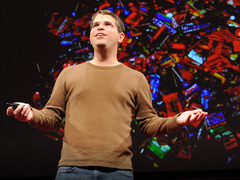
    I’ve been inspired by TED Talks for years, and felt the urge to do something noteworthy and challenging to ring in my fortieth year on the planet. Matt Cutts: Try something new for 30 daysMatt Cutts: Try something new for 30 days Inspiration struck when I watched Matt Cutts’ talk, “Try something new for 30 days.” Something in this talk reminded me of A.J. Jacobs’ “My Year of Living Biblically” — and the seed was sown. I decided to develop a list of new-to-me activities based on TED Talks, and to try each one of them in my life for 30 days.

    How did it work? On the 1st of the month, I’d start one new activity, and then roll out another on the 15th — so at any given time I was doing two activities that were new to me.  Some activities were practical (30 days with less meat), others more philosophical (30 days of vulnerability). To plan out a year’s slate of 23 activities, I listened (or re-listened) to around 200 TED Talks. The whole list took a couple of months to plan out, and I left a few gaps in case there were any new talks during the year I really wanted to include. I pledged to blog the full experience, being completely vulnerable as I wrote.

    I also decided to contact each of the speakers whose talks inspired my activities, to let them know just how much their talk resonated with me. Many of them wrote back — I cannot tell you how it feels to open your inbox and find emails from Seth Godin, Alain de Botton, Barry Schwartz, JD Schramm, Susan Cain, Derek Sivers and Richard St. John. Their words were powerful, and many were generous with support and encouragement, too. Jessi Arrington: Wearing nothing newJessi Arrington: Wearing nothing newCarl Honoré and Sheena Iyengar tweeted about the project, which gave the blog a massive boost; David Logan had a lengthy email chat with me about leadership.

    On November 1, 2011, I started the year-long challenge. My first activity was 30 days of fashion, inspired by Jessi Arrington’s talk “Wear Nothing New.” I thought this would be a fun, easy way to start the project — to break free from my standard black, white and gray wardrobe and do some strategic shopping at secondhand clothing stores to make my appearance more colorful. But by the end of day two, I was feeling incredibly exposed to the world. When it comes to clothing, my subconscious mantra had always been  ”just don’t stand out.” Not caring whether people thought I was a little odd for dressing a certain way?Graham Hill: Why I'm a weekday vegetarianGraham Hill: Why I'm a weekday vegetarian It felt like a big change.

    I realised that this entire project would be harder than I ever imagined.

    By Activity 4, in mid-December, I had a pretty good routine down: think through the activity, then set up practical steps to put it into action. And by Activity 9, I was pleasantly surprised to find that 30 days of less meat was an easy challenge. For the month of February, I became a weekday vegetarian, as suggested in Graham Hill’s talk. Not only was this activity inspiring, but I liked the change in my diet … and in my weekly grocery bill. I’ve kept it up ever since.

    Year-of-TED2

    “30 days of choice” and “30 days of compassion.” Illustrations: Matthew Dunn

    As I got into the second half of the year, my Year of TED became a struggle. The last six activities were all so introspective that I’m surprised I made it to the end of October. Barry Schwartz: The paradox of choiceBarry Schwartz: The paradox of choice 30 days of choice was based on three talks — Barry Schwartz’s “The paradox of choice,” Sheena Iyengar’s “The art of choosing” and Alain de Botton’s “A kinder, gentler philosophy of success.” This activity involved putting a magnifying glass on my choices — being aware of what was driving my choices, setting boundaries to limit my choices when I could, and recognizing that there is no such thing as a perfect choice. I also took time to think about what success means to me — writing this out helped me understand myself better and gave me vital information to help inform future choices. That said, who enjoys looking at themselves on paper in the third person? I wasn’t always proud of how I dealt with past choices.

    Speaking of being unprepared, the 30 days of time activity brought a revelation that helped me understand some of my not-so-good perceptions of myself. Based on the talk “The psychology of time” by Philip Zimbardo, I took a careful inventory of how I think about the past, present and future. Philip Zimbardo: The psychology of timePhilip Zimbardo: The psychology of timeI found that what Zimbardo calls “past negative” weighs heavily on my mind. I thought hard about what I needed to do to shift my focus.

    My complete list of activities, in order: fashion; thanks, praise and mindfulness; better listening; living the 3 A’s; an Asian diet; drive; slowing down; simplicity; less meat; more happiness; preconceptions; letters; starting a movement; choice; being wrong; vulnerability; time; compassion; and balance.

    By the end of October 2012, I had completed 21 activities and one project — the development of the Do-Pad, a notepad for people who like to doodle, based on Sunni Brown’s “Doodlers, unite!” I learned so much about my strengths, my weaknesses, my hopes and, most of all, what I really want in this world. I am extremely proud that I finished the full year.

    These activities were emotional, particularly since they coincided with the stresses and demands of day-to-day life. At times, they helped me get through hard times — I’m so glad that I was working on “more happiness” when we visited my father-in-law for the last time. At other times, these challenges made my life so much more difficult. I spent way too much time on “choice” and “being wrong” when I was far too busy with work.

    Overall, here are the main lessons that I’ve taken away from this project:

    • You never really know what you are capable of until you try. I’m stronger than I thought I was — certainly more so than I ever thought I could be.
    • Being open about imperfections is important. It has deepened my connections with so many others.
    • There is a power in simply doing something. Really, don’t underestimate it.
    • Sometimes you can be too introspective, to the point that it is not good for your mental health.
    •  If you are going to try something like this, you need to build in time to be kind to yourself.

    In the end, I’ve developed a new appreciation for my capacity to be courageous. I’ve always known that I am a survivor, and that I usually come out the other side of life challenges as a better person – if not a little more scarred and cynical. I always thought of strength and courage as things I wanted in my life, but wasn’t quite sure how to harness them. Now I see that this is already inside of me. It’s just one of the realisations this project allowed me to discover, and which I’m still trying to process.

    I’d like to thank TED for providing me with such a fantastic source of inspiration. And I’d love to thank the speakers who inspired me to take action and think differently. Most important, though, I couldn’t have done this without the love and support of my partner, my family (particularly my wonderful brother for his artwork, featured above) and my close friends. Hopefully it wasn’t too onerous.

    Read Kylie Dunn’s Year of TED Blog »

    See nore artwork from Matthew Dunn »

  • Google Glass Will Be Made In The U.S.A., Report Claims, At An Assembly Facility In Santa Clara

    google glass

    Google Glass, the advanced head-mounted computing project the company is gearing up for a possible launch later this year, will be assembled in the U.S., according to a new report from the Financial Times today. The assembly will take place in a facility located in Santa Clara and managed by partner Hon Hai Precision, also known as Foxconn.

    Google is building the first run of its ambitious close to home so that it can be close to the action in order to tweak the process and easily add last-minute fixes into the mix, the FT’s unnamed sources say. Assembly will take place in the U.S., but will use components supplied mostly by partners in Asia. Google has a rather checkered history when it comes to making gadgets close to home, however: its Nexus Q media streaming device was originally touted for its U.S.-based manufacturing, but the project was ultimately shelved without official explanation after it baffled early reviewers.

    As of today, Google is notifying the winners of its #IfIHadGlass competition for early access to Project Glass devices, which will give 8,000 lucky people the opportunity to pay Google $1,500 for the device months before it launches to the general public. Production for those devices is said to be ramping up “in the coming weeks” according to the new report, at the facility located near Google’s Silicon Valley headquarters.

    The effort to manufacture Glass at home likely has a lot to do with quality control for a product that for now will have an extremely high price tag and an extremely low unit count. But Foxconn has in the recent past talked about plans to expand its U.S. operations, and Apple got a specific callout during this year’s State of the Union address for bringing some Mac production back to U.S. shores, so this could be about more than just wanting to make sure the first production runs go very smoothly.

    We’ve reached out to Google for confirmation or additional comment, and will update if they provide a response.

  • Penguin’s Jeff Gomez moves to e-singles startup Byliner

    Byliner is one of a number of startups seeking to publish books in a new way, and now it’s made its first traditional book publishing hire: Jeff Gomez, who was the VP of online consumer sales and marketing at Penguin, has moved to Byliner as the head of writer marketing, a new position, Byliner announced Wednesday.

    In his new role, Gomez — who was the director of internet marketing at Holtzbrinck before he went to Penguin — will “work with the company’s team of accomplished editors to continue to grow the Byliner Writers Network,” according to the announcement. “He will be responsible for helping Byliner authors communicate more effectively with their readers and fans, and ensure that Byliner remains the premier source for the best stories by the best writers.”

    Byliner, which was founded in 2011 by former Outside magazine editor John Tayman, publishes e-singles — works of fiction and nonfiction that are shorter than a full-length book but longer than a magazine article. (To see why I like this format, click here.) The site also hosts a large library of content published elsewhere and lets users follow their favorite writers. Byliner recently launched a subscription service for its e-singles, and it is publishing the New York Times’ ebooks.

    “Our goal is to give readers the most satisfying, seamless way to discover and enjoy stories by the writers they love, and to provide Byliner writers with exceptional support and a platform that lets them grow and directly engage their fan bases,” Tayman said in a statement. “Jeff’s unique combination of publishing savvy, leadership ability, and writing background makes him a great fit for us.”

    Related research and analysis from GigaOM Pro:
    Subscriber content. Sign up for a free trial.

    • FBI UFO Memo is the Agency’s Most-Requested

      The FBI revealed this week in a blog post that an agency memo referring to “flying saucers” is the most-requested file in the FBI vault.

      The memo is dated March 22, 1950 and was written by the FBI’s Washington, D.C. field office head at the time, Guy Hottel.

      The document is freely available via the FBI records vault. It reads:

      An investigator for the Air Forces stated that three so-called flying saucers had been recovered in New Mexico. They were described as being circular in shape with raised centers, approximately 50 feet in diameter. Each one was occupied by three bodies of human shape but only three feet tall, dressed in metallic cloth of a very fine texture. Each body was bandaged in a manner similar to the blackout suits used by speed fliers and test pilots.

      According to Mr. [REDACTED] informant, the saucers were found in New Mexico due to the fact that the Government has a very high-powered radar set-up in the area and it is believed the radar interferes with the controlling mechanics of the saucers.

      No further evaluation was attempted by SA [REDACTED] concerning the above.

      According to the FBI, the Hottel memo was first released to the public in the 1970s. Though it is often assumed to be connected to the legendary Roswell UFO crash, the memo is dated almost three years after the Roswell incident.

      The agency also stressed that the Hottel memo is not proof of extraterrestrials, in that it refers to a second- or third-hand account that was never investigated further.

    • The best news for BlackBerry: Its success may not hinge on the American market

      BlackBerry American Consumer Market
      Everything we’ve seen so far suggests that AT&T (T) has put absolutely no effort into marketing the BlackBerry (BBRY) Z10 to its customers or has even trained its retail staff how to talk about the benefits of the Z10. But there’s some good news for BlackBerry out of all this — it made not even need the American consumer market to thrive. Barron’s points us to a new note from Bernstein Research analyst Pierre Ferragu, who says that the slow start on AT&T shouldn’t derail BlackBerry’s fortunes long-term because “BlackBerry isn’t a U.S. story anymore.”

      Continue reading…

    • GDC 2013: The Phantom Pain Revealed To Be Metal Gear Solid V

      At last year’s Video Game Awards, a title called The Phantom Pain from Moby Dick Games was revealed. Within minutes of being shown, the Internet was convinced that it was Metal Gear Solid V. Since then, all manner of conspiracy theories emerged all pointing to The Phantom Pain being the next entry in Hideo Kojima’s venerated franchise.

      Well, Internet, pat yourselves on the back. You were right. At GDC 2013, Hideo Kojima unveiled Metal Gear Solid V: The Phantom Pain. It would be much more of a shock if the Internet didn’t already have pages of evidence pointing to this conclusion, but it’s still nice to be vindicated nonetheless. What is legitimately surprising, however, is that Metal Gear Solid V is also Metal Gear Solid: Ground Zeroes, an open-world stealth-action game revealed last year.

      So, how does this all fit together? Kotaku reports that The Phantom Pain trailer shown at the VGAs is the opening of Metal Gear Solid 5. It takes place right as Snake has woken up from a nine-year coma. Once Snake escapes the hospital seen in that trailer, the game becomes the open-world title that we saw in Ground Zeroes.

      There are not many details available regarding Metal Gear Solid V just yet, but the trailer did offer a few tidbits of information. For starters, Kojima is back in the director chair on this one. He’s also credited as a game designer and producer. Series veteran Yoji Shinkawa is back on board as character and mechanical designer as well.

      As for platforms, the game looks like a next-generation title. That might be because the trailer was taken from the PC build, but the trailer also said the game would be coming to the PS3 and Xbox 360. It’s unknown at this point if the title will show up on the PS4 and the next Xbox.

    • A new way to lose your Xbox controller

      Microsoft loves its special edition Xbox customizations. In the past we have seen such things as the Star Wars Xbox and the white Xbox to name only two. Now the game console maker is pushing out a new limited edition controller to make you feel more a part of your first-person shooter game: camouflage version of the wireless device.

      Xbox Live chief Larry Hryb explains: “Today we are announcing the Xbox 360 Special Edition Camouflage Wireless Controller, which features a transforming D-pad and a unique camouflage design. The price will be $54.99 USD (ERP). In the U.S., the controller will be available exclusively at Walmart beginning in May. Outside the U.S., the controller will be available in select regions worldwide, also from May”.

      You have to hand it to Microsoft — the company has come up with an almost endless way to continue to profit from a gaming console that launched way back in the dark ages of 2005. With a continuous parade of new games and custom, limited-edition consoles and controllers, Xbox is still a cash cow eight years later. And this, given that we are all pretty sure that Microsoft is just about to unveil the next version of its living room stealth takeover device.

    • Source Refrigeration Buys Fournier Air

      Source Refrigeration & HVAC, which is backed by Arsenal Capital Partners, has acquired Fournier Air Conditioning and Refrigeration. Financial terms weren’t announced. Jacksonville, Fla.-based Fournier provides refrigeration and HVAC services to grocery, commercial, industrial, and retail clients throughout Florida and South Carolina.

      PRESS RELEASE

      Source Refrigeration & HVAC (Source), a portfolio company of Arsenal Capital Partners (Arsenal), today announced the acquisition of Fournier Air Conditioning and Refrigeration – Florida (Fournier).

      Based in Jacksonville, Florida, Fournier is a leading provider of Refrigeration and HVAC service solutions to grocery, commercial, industrial, and retail clients throughout Florida and South Carolina. The acquisition builds on Source’s strong platform as the leading independent provider of commercial refrigeration and HVAC services in North America, serving the nation’s top supermarket chains, many of the largest convenience store chains, and leading telecom and industrial companies.

      “We are excited to add Fournier’s service and installation offering and strong customer relationships to our growing platform, and welcome their employees and customers to the Source family,” said Bruce Buchholz, President and Chief Executive Officer of Source. “Expansion in the southeastern United States continues to be a critical element of our national expansion strategy,” added Buchholz. “Fournier enjoys strong, long-standing relationships with the leading grocery retailers in their markets and we look forward to continuing to serve them with expanded capabilities. This acquisition, along with our existing Source operations in Alabama, Florida and Georgia, position us well for continued growth and penetration throughout the southeast.”

      Neil Lansing, President of Fournier, commented that “Source’s commitments to employee training, advanced information technologies and delivering high-quality customer solutions fit very well with Fournier’s approach to the market”. Lansing added that “the Fournier team is excited to join forces with a national market leader like Source who has the resources, focus and offerings to grow the business and take customer service to the next level.”

      Sal Gagliardo, an Operating Partner at Arsenal Capital Partners said, “Fournier is well-established in the Florida and South Carolina core markets for mission critical refrigeration and HVAC services and provides Source with complementary capabilities and expanded market coverage in the southeast. The recent acquisition of TP Electrical and now Fournier demonstrates our commitment to expand Source into the leading service provider in the southeast and to better serve our valuable national and local customer base. We will continue to review opportunities for further expansion of Source’s national presence and service offering.”

      About Fournier Air Conditioning and Refrigeration Fournier is a leading provider of refrigeration and HVAC solutions to grocery, commercial, industrial, and retail clients across the Southeastern United States. Fournier offers a complete suite of services including maintenance programs, emergency repairs, new installations and remodels of mission-critical refrigeration and HVAC systems. Their growth and leading market-share position are attributed to their reputation for outstanding quality and reliability. For additional information about Fournier Air Conditioning and Refrigeration, please visit www.fournierair.com.

      About Source Refrigeration & HVAC
      Source Refrigeration & HVAC is the leading independent provider of commercial refrigeration and HVAC services in North America, serving the nation’s top supermarket chains, many of the largest convenience store chains and leading telecom and industrial companies. With over 1100 employees and service locations nationally, Source designs, installs, services, maintains and optimizes mission-critical refrigeration & HVAC systems. For additional information about Source Refrigeration & HVAC, please visit www.sourcerefrigeration.com.

      About Arsenal Capital Partners
      Arsenal Capital Partners is a leading New York-based private equity firm that invests in middle-market specialty industrial and healthcare companies. Arsenal makes investments in sectors where the firm has prior knowledge and experience, and targets businesses that have the potential for further value creation by working closely with management to accelerate growth and leverage the firm’s operational improvement capabilities. Arsenal currently has over $1.6 billion of committed equity capital. For additional information on Arsenal Capital Partners, please visit www.arsenalcapital.com.

      The post Source Refrigeration Buys Fournier Air appeared first on peHUB.

    • EPA: Top Ten Questions for Obama Nominee Gina McCarthy

      President Obama recently nominated Gina McCarthy to replace Lisa Jackson as Administrator for the federal Environmental Protection Agency. For the duration of the Obama administration, Gina McCarthy has been the top regulator in the Office of Air and Radiation. In …

    • Windows Blue won’t be the end of the Desktop UI

      Tech journalists are talking about what Windows Blue will mean for the future of Windows. Actually, no matter what anyone suggests, only Microsoft really knows what it has planned for future versions. What really is important though is how changes to the operating system will affect software developers, plus businesses, and why considering this may be far more important in the long run.

      In recent years we have seen the over-consumerization of computers, in particular the shift from desktop PCs to tablets and other portable devices. Everything seems to be all about mobile today. But is mobile and touch the future of computers ?

      What we are seeing is not the shift from desktop computers to mobile, but a significant split between business and consumers. When I started programming in the late 80s and early 90s, computers were business tools, not consumer products. A computer with a 20MB hard drive, RGB monitor and 640 KB of memory could cost you $2,000 to $3,000. A computer was a business investment and productivity was vital to make it worth the investment. In time the prices of computers dropped significantly, so much so that average people could afford PCs.

      The strange thing about this though was the consumers didn’t know what to do with their computers, they looked for software that provided some kind of entertainment value. Consumers played games. They listened to music. With the coming of the Internet, they browsed the web, did their shopping online, emailed friends and family. A powerful tool became a toy, an entertainment device. Many of these same consumers — who were watching videos online, buying stuff at Amazon — failed to see the key functionality built into their PCs. Many didn’t know how to create folders, copy files, delete files, etc. Many consumers never realized that they needed to purchase a new subscription to the antivirus software that came with their PCs, after 90 days.

      Looked at from this perspective, it’s obvious that many consumers used a tool which they barely knew anything about. Having been a computer consultant and programmer for so long, time after time I find myself again and again suggesting to consumers I deal with that maybe they should buy a book about Windows and learn a little more about and what the software can do.

      I realized the average consumer bought something he or she didn’t fully utilize — the PC exceeded need. Then along came MP3 players, smartphones and tablets. Consumers didn’t need a keyboard, they simply touched the device. They didn’t have to learn all the complexities of a full blown PC. Finally, people started buying what they wanted all along. Something designed to do a specific task, and that is it.

      Now we see PC sales slowing down significantly. Manufacturers should have seen this coming. The computer market is changing in ways we all should have expected. But there is a problem here. Windows means more than browsing the web, watching videos and visiting Facebook. Windows is part of another key market, and that is business computing, not just consumer devices. Computers started out as tools, not toys. They still are tools and very important ones. So where does Windows 8 come in ?

      Windows 8 is not the End of the Desktop but bridges the Gap between Consumer Devices and Business Tools

      The Modern UI or Windows Store side of Windows 8 are all about two things: Consumerization of electronic devices and touch. These two aspects are not necessarily the same thing. Touch has a big value in consumerization, but it can also be a useful tool in the right situation. Touch, though, is more meaningful for consumer devices because that is what consumers want and need. Touch is useful for business, but it is not the end all. It has a place, but also has its limits and why many don’t see this is confusing. Businesses can’t make their decisions about tools by watching fancy TV commercials with everybody dancing around and touching their computer screens (for Surface).

      Businesses can ill-afford to waste their money on mobile devices if they don’t have a real purpose to their core operations. A tablet PC is only valuable if it really increases productivity for a business. There are some cases where it will and there are many cases where it simply won’t. Just putting a tablet PC in an employee’s hands won’t automatically improve productivity. Put a tablet PC into the right employee’s hands and with the right software and for the right reason, it may make a difference. Computers cost money and like any business tool they must be used in the right way and the right situation, otherwise they are a bad investment.

      Having written software for a variety of businesses from local mom-and-pop stores to manufacturing environments, I appreciate how important PCs are, but only when they are used effectively. Journalists like to talk about software and how once Microsoft Office is ported to Modern UI, the Desktop is no longer needed. The real question, though: How much do these writers really know about how computers are really being used today in business?

      Many people may not appreciate that a significant portion of business software is custom-designed for specific tasks or for specific vertical markets. Large corporations likely spend millions of dollars developing custom software specific to their business alone. Every time there is a change in how an operating system works and rewrites of their software become necessary, huge sums of money must be spent just to keep up. The less a company has to redo things that currently work fine, the more money they save (and that is important today). Why do you think so many companies still used Windows XP? The old adage “if it is not broke, don’t fix it” means saving money in the long run.

      So, for consumers, maybe Windows could do away with the Desktop. But as far as businesses are concerned, to do away with the Desktop could mean the loss of millions, if not billions of dollars. But wouldn’t Microsoft recognize this? I can’t speak for the company, but I venture a guess of yes. So how does one create a totally new operating system that solves the needs of the consumer, while satisfying the needs of businesses? The answer, merge a new operating system into the existing one and have the best of both worlds. That is what Windows 8 does.

      If the Desktop was not important, it would be broken already in Windows 8

      The Desktop has huge value, is evident in Windows 8’s dual-motif design. Windows 8 doesn’t break the Desktop. One of the first things I did when first getting my hands on Windows 8 Developer Preview in late 2011 was to test and see how well it supported the core WIN32 APIs, which have been around since Windows 95/98. I expected a lot of things to possibly be broken, since Windows 8 is so different, but amazingly it all worked and very well.

      Now I was not testing just some simple user interface stuff but quite a lot of lower-level stuff, like the Windows DIB engine, OpenGL, subclassing, superclassing, ownerdraw, customdraw, GDI drawing, MDI, MCI, complex window regions, custom window classes, drag and drop and more. I wanted to know right at the start: Would Windows 8 break a lot of my code ? It didn’t. I had only one little problem and even that was fixed in a later preview version of Windows 8. Given Microsoft’s care for core WIN32 APIs, developers should feel confident that the Desktop is well and alive in Windows 8.

      So why all this effort to maintain what some may refer to as legacy technology? Because it is important — no vital — to businesses. I can understand Microsoft’s need to promote the new UI stuff in Windows 8. It is important to the consumerization of PCs and to mobile. But the Desktop surely is not dead yet and hopefully will be with us for a good time longer.

      Touch and the Modern UI don’t fit all Business Needs

      Another reason the Desktop needs to stick around for some time is that touch is not the solution to everything. Touch is great in the right situations. It may even be preferred by consumers. But touch is not going to replace the mouse anytime soon. Productivity is vital in business and, remember, for most organizations, a computer is a tool. No touchscreen can replace a real keyboard for fast character input. This is so obvious I cannot see how anyone could even suggest otherwise. As a programmer the speed of typing is so critical to me that I still use a 20 year-old IBM keyboard because few modern keyboards come even close to the quality of my older one. Big Blue built some of the best keyboards ever and mine is key to my own productivity.

      The mouse is far superior to touch for fine-tuned accuracy in pointing. Actually a mouse can do some things touch cannot (trust me it’s true). Not even a touchpad on a laptop comes close to the accuracy of a real mouse. and that is surely better than touch alone. The beauty of the mouse comes from its ability to separate movement from a touch action (a click for a mouse), plus its accuracy. Many business applications require a real keyboard, a real mouse and yes a real desktop environment (aka. the Windows Desktop).

      A lot of Software is Boring

      Most consumers get excited about the latest fad in software. It has to look pretty. It has to be exciting (like touch). It has to be new! Not so with business. Actually a lot of business software is quite boring, and that is a good thing. The so-called modern look of Modern UI is meaningless for some software. It doesn’t matter whether the look is flat or 3D. What matters is the job the software does. Many tasks a computer is used for are simply boring. It is the work they do which is important:

      • Does it solve a problem?
      • Does it interface with some machine?
      • Does it do the job it was intended to do?
      • Does it make critical calculations a business may depend upon?

      The whole reason many started using PCs is that computers don’t mind doing boring jobs, unlike people who do. For many businesses software is just a tool and the tool has to do its job and do it right. Some companies spend a lot of money developing such boring software, because it does the job and does it right. What businesses need to know, though, is that all the efforts to create such software is not in vain. A lot of money is lost by companies trying to “build a better mousetrap” as they say, only to find that the original application worked fine and wasn’t worth the effort to recreate it as something new.

      What businesses need is backward compatibility in the operating systems they use. They don’t want to have to rewrite every application ust because they bought some new computers. That is not cost-effective.

      We still need the Desktop, and it’s nonsense tech writers spread about its imminent demise. How long the Desktop will stay with us, I cannot say and won’t even try guessing. But for now, there is a good reason why Windows 8 provides all the necessary Desktop features we require. If it wasn’t necessary, it wouldn’t be there in Windows 8.

      Photo Credit: auremar/Shutterstock

      Chris Boss is an advanced Windows API programmer and developer of 10 year-old EZGUI, which is now version 5. He owns The Computer Workshop, which opened for businesses in the late 1980s. He originally developed custom software for local businesses. Now he develops programming tools for use with the PowerBasic compiler.

    • Google: That Paid Links Thing Goes For Google News Too

      After the whole Interflora paid links fiasco, Google took to its Webmaster Central blog to remind webmasters about the no-nos of paid links and advertorials.

      Today, Google took to the Google News blog to remind bloggers and publishers that the rules apply in Google News too.

      “Credibility and trust are longstanding journalistic values, and ones which we all regard as crucial attributes of a great news site,” writes Google Sr. Director of News and Social Products, Richard Gingras. “It’s difficult to be trusted when one is being paid by the subject of an article, or selling or monetizing links within an article. Google News is not a marketing service, and we consider articles that employ these types of promotional tactics to be in violation of our quality guidelines.”

      “Please remember that like Google search, Google News takes action against sites that violate our quality guidelines,” he adds. “Engagement in deceptive or promotional tactics such as those described above may result in the removal of articles, or even the entire publication, from Google News.”

      You can get a look at the Google News quality guidelines here. Similar language in those says:

      Google News is not a marketing service. We don’t want to send users to sites created primarily for promoting a product or organization, or to sites that engage in commerce journalism. If your site mixes news content with other types of content, especially paid advertorials or promotional content, we strongly recommend that you separate non-news types of content. Otherwise, if we find non-news content mixed with news content, we may exclude your entire publication from Google News.

      “If a site mixes news content with affiliate, promotional, advertorial, or marketing materials (for your company or another party), we strongly recommend that you separate non-news content on a different host or directory, block it from being crawled with robots.txt, or create a Google News Sitemap for your news articles only,” says Gingras. “Otherwise, if we learn of promotional content mixed with news content, we may exclude your entire publication from Google News.”

      Don’t say you weren’t warned. Now we’re wondering what exactly prompted this post. Did Google just bust someone? That appeared to be the motivation for Cutts’ earlier post.

      We’re also wondering whatever came of that recent incident where Google itself was busted with paid links again.

    • Baby Born 15 Pounds, 7 Ounces in the U.K.

      A woman in the U.K. has reportedly given birth to a humongous baby more than twice the size of a normal infant.

      According to a BBC News report, Jade King of Bristol gave birth last month to a baby George. The newborn was reported to have weighed 15 pounds, 7 ounces at the time of his birth.

      As you might imagine, a baby that large caused some complications during childbirth. George’s shoulders became stuck during birth, and the baby reportedly went five minutes without oxygen. Doctors told the couple that George had only a 10% chance of survival as they transferred him to St. Michael’s Hospital in Bristol. Luckily, doctors were able to help the baby and George was allowed to go home for the first time only four-and-a-half weeks after his troubled birth.

      George is getting regular check-ups and Jade stated that an MRI did not reveal any major brain damage to the child. She did relate, though, that none of the clothes they had bought before his birth were able to fit him.

    • Now Even Beer Ads Are Making Fun of Apple Fanboys

      Well, cider ads to be more precise.

      Less apps, more apples. That’s the tagline for Somersby Cider, the new cider brand from Carlsberg, who just released the beverage’s first U.K. advert. In it, fans eagerly await the opening of a minimalistic store so they can be the first to experience the new product.

      Sound like anything familiar? Cider. Apples. Apple. There you go.

      Part homage and part ridicule, the new ad for Somersby Cider looks and sounds like a cross between an actual Apple ad and those Samsung ads that lampooned Apple fanboys. Anyway, check it out below:

      [Somersby Cider UK via Mashable]

    • Mozilla and Epic Games Bring Unreal Engine 3 To The Web

      For the longest time, HTML5 was far behind Flash in terms of game development as it didn’t offer a native experience. Mozilla and others have been bridging that gap over the last year, however, and the non-profit’s latest move inspires more hope that HTML5 can deliver native gaming experiences sooner rather than later.

      Mozilla and Epic Games announced at GDC that Unreal Engine 3 is now available to HTML5 developers. The epic achievement (pun so intended) was made possible through Mozilla’s work in developing “a highly-optimized version of JavaScript” that allows game developers to bring graphically intensive content to the Web.

      To see it in action for yourself, check out this quick run through of Epic Citadel running on a Web browser:

      It’s Mozilla’s hope that developers will use this to bring more visually striking, and maybe even AAA games, to the Web. Of course, HTML5 is still in its infancy and developer adoption is low. Still, it’s incredibly encouraging to see HTML5 progressing this fast especially when Flash only just got Unreal Engine 3 support at last year’s GDC.

    • Office 365 gains eight new state-and-local government customers

      Google news, at least for some of us, recently is grim (Reader goes bye-bye). In fact, I no longer trust the search company will keep anything, while my colleague Wayne Williams dumps Google for Microsoft. Trust is essential and Google has lost it for me. Microsoft, on the other hand, is on a roll, of sorts, with its Windows Blue “leak” and now another cloud win for its Office platform.

      Microsoft announces eight more government offices have adopted its Office 365 platform, further rubbing salt into the Google Docs wound. At today’s CIO Summit, the company welcomes aboard: metros Kansas City and Seattle; counties Dupage and King; colleges California State University Sacramento, University of Colorado Springs and University of Miami; and San Diego County Regional Airport Authority.

      “The rapidly increasing public sector adoption rates for Microsoft Office 365 are directly tied to current budget realities and the fact that our customers need to be more productive at a lower cost”, Curt Kolcun, vice president of Microsoft U.S. Public Sector, says.

      These latest moves join a number of other high-profile adopters that include the city of Chicago, among others. And, with Office 365 recently receiving a major overhaul with the Office 2013 release, it has become a tempting proposition for individuals and business alike. Now the ball is in Google’s court awaiting a big update to Docs and Apps to counter this move.

      Photo Credit: Dudarev Mikhail/Shutterstock