Category: News

  • RightScale: Cloud Providers Aggressively Slashing Prices

    rightscale-cloud-price-cuts

    The cloud pricing wars are on. Cloud management specialist RightScale says it is seeing aggressive price-cutting on the part of major cloud providers.

    The company has counted 29 price reductions over the course of 14 months from AWS, Google Compute Engine, Windows Azure, and Rackspace Cloud. Amazon led the pack with eight price reductions on core cloud services, while Rackspace had four and Google and Azure cut prices three times in eight months. Rightscale tracks pricing with PlanForCloud, a tool that attempts to track cloud pricing across the major providers; it includes over 12,000 different prices across 6 cloud providers.

    Pricing remains volatile, which is partly due to competition. Rackspace introduced new tiered pricing for storage just this February that resulted in price reductions of as much as 25%; AWS, Azure, and Google keep one upping each other with price cuts.

    PlanForCloud is useful in the sense that cloud pricing is in no way uniform, and so can often be like comparing apples to oranges. There are several subsets of services, and these cuts have varying degrees of impact.

    RightScale, as a management platform for cloud, wants the underlying infrastructure to be as transparent as possible. It gives the following recommendations:

    1. Develop competency in cloud forecasting – Price cuts are a positive trend when justifying cloud, but it doesn’t eliminate the need to forecast as accurately as possible. Of course, the pitch for the tool is assisting in this regard.
    2. Consider all your options for price, performance, features and support – Again, each cloud provider has a different mix of features, performance, and support, so pricing is only one consideration. Pricing often gives a cloud provider the edge in one arena, but you can bet they make up that cost somewhere else.
    3. Efficiently use the cloud resources you have – Over-provisioning, running unnecessary resources is a costly proposition. Cloud doesn’t make sense if you’re not using it properly and efficiently.

    Keep RightScale’s position in mind here, as this information is in support of using their platform. However, it’s all sound advice regardless of vendor. RightScale has been going the extra mile in trying to provide a transparent look into clouds lately, recently releasing an overview of major outages the company tracked across public, private cloud, and hosting providers. It all makes for a useful compendium when shopping around.

  • Screenshot Captor 4.00 supports webcams, adds free-hand painting

    Donationcoder.com has released Screenshot Captor 4.00 and Screenshot Captor Portable 4.00, brand new versions of its powerful screen-capture tool for Windows PCs.

    Version 4.00 builds on features introduced last year in version 3 with the addition of support for capturing images from webcams, a new — and dockable — QuickCapture bar, extended Undo support and rewritten image uploader tool.

    The most visible new feature in Screenshot Captor 4.00 is the new floating quick-capture bar, which can be docked to the top or bottom of the screen where it hides minimized until the user rolls the mouse over it. The bar provides convenient access to all the program’s capture functions, plus shortcuts to the main program window, screenshot settings and the program’s main user preferences.

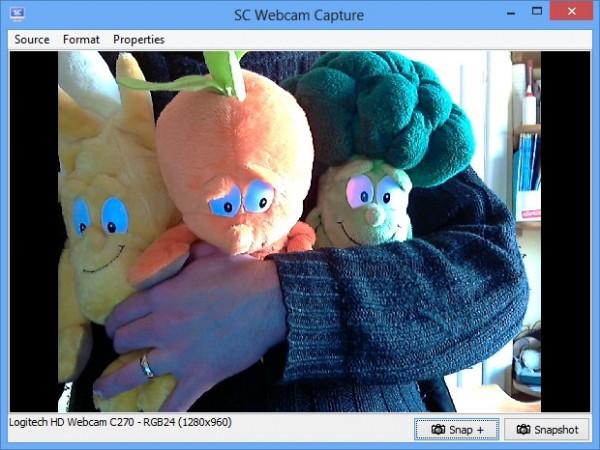
    Another major new addition to Screenshot Captor’s arsenal is support for capturing still images from webcams. Users can switch between different webcams, choose the capture resolution and access the webcam’s own configuration tools. Support for capturing video is available through the ESR add-on.

    Version 4.00 also introduces freehand painting and annotation tools that, like objects, can be edited after the image has been saved. Undo support has also been widened to include most object manipulation actions, and users can now specify custom comments in the pop-up dialog that appears after a screen capture.

    Screenshot Captor 4.00 also overhauls the image uploader tool introduced in version 3 to make it significantly easier to use with supported accounts – currently ImageShack and imm.io. Users can also select the open-source ShareX tool (a separate download) should they wish to upload to other services.

    Other notable improvements include the ability to save and load custom configuration files, allowing users to easily switch between different profiles for different applications. Users can also now save all selected images to an animated GIF.

    A new Quick Expand Canvas item has been added to the Edit menu, and users can now define their own custom list of preset sizes for resizing and scaling. Also added to the resizing and selection dialogs are percentage options.

    The SaveAs dialog now remembers the last file format and directory used, and Screenshot Captor has a new option that should improve its accuracy when selecting active windows.

    For a full list of new features, improvements and bug fixes — all comprehensively documented — see the program’s version history.

    Screenshot Captor 4.00 and Screenshot Captor Portable 4.00 are both available as a free-for-personal-use downloads, but users will be periodically prompted to register for a free download key. Donating $25 to Donationcoders.com entitles the user to a single, universal (and non-expiring) product key for all of its products.

  • Liberate Your Employees and Recharge your Business Model

    It finally seems that the uproar over Marissa Meyer’s diktat banning flexible work policies at Yahoo is dying down. While good arguments were made on both sides of the issue, what got lost in the charged debate was the potential for evolving traditional business models through changing the employee-employer relationship.

    Our research on identifying replicable templates for business model innovation shows that innovating how a company engages with its workforce is an often overlooked way of increasing business model performance. The basic structure of the firm-employee relationship has not changed much over the last 50 years. Relying on a forecast of organizational needs, firms select the nature and number of employees, who are then assigned some working hours and tasks to do in those hours.

    But a few pioneering companies are challenging each aspect of this traditional model and are offering unprecedented opportunities along the way.

    Rethinking Who Your Employees Are

    Traditional organizations identify a set of individuals as their “employees” before they are fully aware of the employee’s talents and their needs. LiveOps is a fledgling provider of customer contact services maintains a virtual workforce of independent agents who, based on their schedules, signal their availability to join a pool of talent waiting to be “hired” once a call that matches their skills and experience comes in. Agents are paid only for their time spent on the call, and LiveOps gathers enough data on agent performance and abilities to intelligently route calls to the bets available agent.

    Agents, for their part, have incentives to work hard to keep their ratings high in the system. This setup eliminates the multiple inefficiencies associated with traditional call centers: idle employees, long wait times, calls routed to uninterested or incompetent agents. Changing “Who” the employees actually are, has allowed LiveOps to shake up the customer contact industry. Today over 200 companies use LiveOps technology to support their multi-channel customer contact efforts.

    Rethinking Where and When They Work

    Automattic Inc, the parent company behind WordPress, the leading platform for powering blogs is a company that is 100% distributed. All Automattic employees work from home, or wherever they may be located, and the firm has been very successful with this strategy. Automattic employees have no set working hours, nor do they have to check in to any office. While there are many cultural issues that allow Automattic to manage and thrive with this distributed model, it is fundamentally challenging the key assumption regarding physical presence of employment.

    Rethinking What They do

    Traditional organizations assign employees to teams, projects and tasks. Based on their best assessment of an employee’s talents and interests, managers assign different employees to projects that they might be best suited for. Google’s famed 20% time to work on passion projects directly challenges this notion of clearly defining what each employees does. Reportedly, 50% of new projects came from this 20% of time including Gmail, Google News, Orkut, and AdSense.

    Even the best informed manager does not know exactly what his/her employees are most passionate about and where they can excel. Giving employees (some) freedom to choose what they do, transfers this matching problem to the decision maker that has the best information to make this choice: the employee. Not surprisingly, employees are more likely to choose what they are interested in doing and might achieve better results. For instance, LiveOps agents know their skills and interests best, so they pick products to sell that best match their personalities and knowledge.

    To be sure, the firm needs to retain some control to ensure employee efforts are aligned with firm goals, but this unshackling of employees can lead to dramatic increases in productivity. This is why Southwest replaced hundred-page long manuals of what the gate agent must do with a simple directive: “do whatever is necessary to get the plane out of the gate, fast”. Certainly, from time to time employees will go overboard and spend too much time and money trying to get job done, but it is easier to deal with these individual cases than to create constraining, enterprise-wide rules. The resulting productivity of employees at Southwest is several times higher than at any legacy airline, more than compensating for their higher salary.

    Not all of these innovations are likely to be appropriate in every organization, and each of them comes with its own caveats, but they all highlight how powerful it can be to challenge assumptions around the employee-employer relationships. Most often, changes in the way company employs people will involve changing why people work (i.e., their compensation structure). But for organizations that heavily rely on the workforce to create value these alternative approaches can be equally, if not more, effective.

  • Keep Your Samsung Galaxy SIII Powered on with a Powerskin case

    For the first few months I owned the Samsung Galaxy SIII, I noticed few issues related to battery life. With a powerful processor and an LTE radio, I did fear that the battery wouldn’t be sufficient for many of my needs — including hour-long train rides into New York City. With those fears allayed I got a bit comfortable. That is, until last week, when my battery was halfway drained after just the train ride into Manhattan.

    The MLB At Bat widget is to blame, apparently. After changing the refresh rate I was able to conserve battery throughout my trip, but the damage was done. Keeping widgets like this running can cause significant battery drain, to the point where I now need to charge the device every 20 or so hours (i.e., not quite a full day’s usage). At home that’s no big deal. On the road, it becomes a bigger issue.

    While there are many solutions, there is one that I’ve found satisfactory in more than one way. The Xpal Powerskin case has proven an excellent form of protection, both against dings and battery drain. It’s a very thin silicone case that, with a little added thickness, provides more protection than your average silicone case. The charging feature means I won’t have to worry if my battery usage gets out of hand at some point.

    XpalPowerskin

    I will admit, the case is a bit thicker than the one I’d been using, so it does feel a little awkward in my pocket. The charge feature also doesn’t quite provide a full charge. That’s fine, since it’s mostly a break glass in case of emergency tool. But it would be nice to essentially get a mulligan when abusing my battery. I’ve used various iPhone charging cases, and they all provided a full charge.

    As with all battery backup cases, you’ll only get a certain number of charges. There are plenty of complaints that the Xpal works for only a few months. If you chew up battery life quickly, this probably isn’t the solution for you. You probably need a more full-powered extended battery (which means a much larger case) or a spare battery. For those who need the occasional boost, the Xpal will work well.

    If you have a Galaxy S3 and want to get that little bit of insurance, you can get the Xpal Powerskin case for $37.95 from Amazon. Don’t have the S3 but still want a case like this? Check out Xpal’s entire line of smartphone cases.

    The post Keep Your Samsung Galaxy SIII Powered on with a Powerskin case appeared first on MobileMoo.

  • Samsung smartphone sales expected to hit record 70 million in Q1

    Samsung Smartphone Sales Q1 2013
    Samsung (005930) is expected to report another massive quarter despite experiencing a seasonal speed bump, the Yonhap News Agency reported. According to a report from Counterpoint Research, the company was able to achieve record sales during a notoriously slow fiscal quarter and even with the release of its new Galaxy S 4 smartphone looming in the distance. Samsung is estimated to have sold 25 million smartphones per month in 2013 to drive its quarterly sales over 70 million units. 

    Continue reading…

  • Apple Claims Reduction Of Samsung Damages Was An $85 Million Mistake

    Apple vs Samsung

    Samsung can’t seem to shake Apple off its back and although damages of $599 million were awarded to Apple, the tech giant still isn’t satisfied. In documents filed by Apple, they claim Judge Lucy Koh made an $85 million error in calculating damages. Supposedly, Koh thought the jury had granted $44,792,974 for the Infuse 4G and $40,494,356 for the Galaxy S II on AT&T. However, according to Apple, Samsung’s own statements prove that “disgorgement of profits for design patent infringement”, were permissible.

    In that case, Apple claims they should be awarded damages from 16 products, not 14, and would increase the damages to $685 million. Still, that’s about $365 million less than the original verdict. Moving forward, Apple wants Koh to redetermine the damages immediately while Samsung wants a stay, “a suspension of a case or a suspension of a particular proceeding within a case”, as it believes Apple’s findings are premature.

    Source: FOSS Patents

    Come comment on this article: Apple Claims Reduction Of Samsung Damages Was An $85 Million Mistake

  • Doritos Locos Tacos Chips Coming to Stores in April

    Frito Lay seems to have discovered that its customers apparently enjoy tacos as well. Earlier this month, Taco Bell debuted its cool ranch Doritos-flavored Locos Tacos, continuing its Locos Tacos success.

    This week, Frito Lay announced that Doritos Locos Tacos will soon become a flavor for Doritos chips. That’s right. The tacos at Taco Bell that have shells based on classic Doritos flavors will now themselves become “new” flavors of Doritos tortilla chips.

    The Locos Tacos Doritos will come in either nacho cheese or cool ranch varieties, and both will also have “crunchy taco” chips in the bag as well, which will presumably hold the flavor of an entire Taco Bell taco. The flavors arrive in stores starting April 8:

    Doritos is also holding a Twitter contest in which the winner will win a pallet (132 bags) of Locos Tacos Doritos:

  • Make Your Own Ouya Console Case With A 3D Printer

    One of the more interesting things about the Ouya game console is that its completely open source, including its design. To help things along, 3D printer owners will soon be able to print their own console cases.

    At the Game Developers Conference, Ouya announced that it has partnered with MakerBot to provide custom 3D printable Ouya cases via Thingiverse. Ouya will be showing off the 3D printed Ouya game console this week as part of the console’s official unveiling.

    Make Your Own Ouya Console Case With A 3D Printer

    “We are pretty excited to be able to provide a 3D Printing Development Kit on Thingiverse.com for OUYA,” noted Bre Pettis, CEO of MakerBot. “OUYA is one of the most exciting new developments in the gaming world, and MakerBot is thrilled to be a part of it. The custom 3D printed console cases are also really cool.”

    Future Ouya owners that have access to a 3D printer can download the files necessary to print the console case today. MakerBot has also made the .3dm file as well for those who want to create their own custom designs based on the initial design provided by MakerBot.

    Make Your Own Ouya Console Case With A 3D Printer

    MakerBot notes that the custom Ouya cases were made with its PLA filament, but says that ABS plastic should work just as well. Likewise, the cases were printed using MakerBot’s Replicator 2, but any 3D printer with a suitable build volume should work.

  • Bill Gates’ Condom Contest Gets the NMA Treatment

    As previously reported, the Bill & Melinda Gates foundation is looking for new innovations in the new round of their “Grand Challenges Explorations” initiative. One of these contests is for a $100,000 grant to develop a better condom, you know, to increase usage around to world to help protect against unwanted pregnancies and diseases.

    The condom hasn’t really received an upgrade in nearly 50 years, argues the foundation. And why not?

    The story is big enough that our favorite Taiwanese animators, NMA, decided to give it their treatment. As expected, it’s pretty off-the-wall. Check out the video below for hilariously misguided attempts to use condoms, Sims-like lovemaking, and a not-so-subtle hint that Apple is also looking to score in this department.

  • Vamonos! Runkeeper adds support for new languages in global sprint

    Runkeeper, one of the more popular fitness tracking apps, has already found its way on to millions of smartphones overseas. But the company is making an even bigger international push by adding support for 6 new languages.

    Already two-thirds of its 17 million users are in more than 200 countries outside the U.S., the company told me Wednesday. But Runkeeper believes that there are many others who would use the app if not for the language barrier.

    To date, the company has offered the app in English only, but added Spanish, French, German, Italian, Brazilian Portuguese, and Japanese. As of today, the changes are live for Android users and the iPhone version is comings soon, Runkeeper said.

    Given rising competition among fitness tracking apps and devices — and the foothold the company already has overseas — it’s not surprising that Runkeeper wants to ramp up international outreach.

    Runkeeper, which launched in 2008, has a strong user base. But Nike, for example, has said that its Nike+ community (encompassing its app and devices) includes 11 million people and MapMyFitness, another fitness tracking company, said it crossed the 10 million member mark last summer. Nike supports other languages on its app, but it appears that MapMyFitness does not (although I’ve reached out to the company to confirm).

    Related research and analysis from GigaOM Pro:
    Subscriber content. Sign up for a free trial.

  • Google Maps Gets More Live Transit Info In Certain Areas

    Google has added live transit information to more cities on Google maps. Users can now access live departure times for seven lines on the New York City subway system (MTA) and buses and trams in the greater Salt Lake City area (UTA).

    “With these updates – part of the millions of live transit schedule updates we process every day – you get instant access to the latest information right on Google Maps, making trip planning a cinch,” says Google Maps Partnership Development Manager, Soufi Esmaeilzadeh.

    Live departure times

    “Riders on the nation’s second largest subway, Metrorail in Washington, D.C., can now see live service alerts, including unplanned delays and scheduled track work, straight from Metro’s Control Center on Google Maps,” adds Esmaeilzadeh. “To adjust your travel around the alerts you see, simply choose another suggested route or change your departure time.”

    There are now pick-up locations, departure times, estimated travel time, and fare amounts for over 800 cities in over 25 countries, with live trip updates only available in select cities.

  • What you need to know about the world’s biggest DDoS attack

    The last week has seen probably the largest distributed denial-of-service (DDoS) attack ever. It’s being reported in fairly dramatic terms, with the New York Times and BBC talking about the internet getting jammed or slowed down.

    So what’s actually going on? Here’s a rundown of some key points:

    A what attack?

    DDoS attacks, as the “distributed” part suggests, involve large numbers of computers bombarding a target system with traffic, with the idea being to stop that system from functioning. A bunch of South Korean banks and broadcasters got temporarily crippled by such an attack a week ago, for example.

    Who got hit this time?

    The intended target appears to be Spamhaus, a European organization that maintains a blacklist of ISPs that supposedly host “spam gangs” and refuse to stop serving them as customers. Spamhaus is pretty resilient, as its own network is distributed across many countries, but the attack was still enough to knock its site offline on March 18.

    The reason was the attack’s sheer volume. At the time, it looked to be around 75Gbps of traffic — which is a lot — hammering Spamhaus’s servers. Cloudflare, the security firm that Spamhaus called for help, subsequently published a good explainer of what happened:

    “The largest source of attack traffic against Spamhaus came from DNS reflection… [This method has] become the source of the largest Layer 3 DDoS attacks we see (sometimes well exceeding 100Gbps). Open DNS resolvers are quickly becoming the scourge of the Internet and the size of these attacks will only continue to rise until all providers make a concerted effort to close them…

    “The basic technique of a DNS reflection attack is to send a request for a large DNS zone file with the source IP address spoofed to be the intended victim to a large number of open DNS resolvers. The resolvers then respond to the request, sending the large DNS zone answer to the intended victim. The attackers’ requests themselves are only a fraction of the size of the responses, meaning the attacker can effectively amplify their attack to many times the size of the bandwidth resources they themselves control.”

    Whodunnit?

    Spamhaus has no shortage of enemies, given its line of business. Spammers are a nasty lot, although there are in fact some serious arguments to be had around the weight carried by blacklists of this kind, and who controls them.

    However, all eyes seem to be on CyberBunker, a Dutch host that prides itself on hosting anything except terrorist material and child pornography (Wikileaks was a client). Spamhaus lists CyberBunker (or CB3ROB, as it is also known) as the world’s number-one offender when it comes to hosting spam gangs, and around 18 months ago it blacklisted the host’s ISP, A2B Internet. A2B responded by reporting Spamhaus to the Dutch police as DoS offenders – if you want to delve deeper into that nasty dispute, here are accounts of what happened from CyberBunker, A2B and Spamhaus.

    After this latest attack hit, the NYT got hold of one Sven Olaf Kamphuis, who claimed to represent the attackers. Kamphuis claimed CyberBunker was retaliating against Spamhaus in concert with Eastern European and Russian gangs, saying: “Nobody ever deputized Spamhaus to determine what goes and does not go on the internet… They worked themselves into that position by pretending to fight spam.”

    Spamhaus itself is reticent about naming CyberBunker as the culprit. I’ve approached CyberBunker for comment, and will add it in if and when I get it.

    What about this “slowing down the internet” stuff?

    Remember that 75Gbps number? Well, that was then and this is now. The BBC quoted Spamhaus CEO Steve Linford on Wednesday as saying the attack had peaked at 300Gbps. That would make it the biggest DDoS in history – or at least the biggest publicly disclosed DDoS.

    Professor Alan Woodward of the University of Surrey, one of the UK’s premier computer security experts, told me that the attack “seems to be orders of magnitude larger than anything seen before”:

    “In some places it’s been mounted, it has had some collateral damage, for example Netflix, although these are transient effects… The thing that got people talking is that it’s a DNS amplification attack. The point is, if you’re targeting something and [the target has] a 10Gbps switch, you only have to throw 11Gbps at it and you’ve pole-axed the system. If it is at 300Gbps, then potentially some of the main infrastructure is being affected, though I’m not sure how much it’s really affecting it.”

    Woodward used the analogy of a highway. Such an attack could briefly take out the highway ramps, he said, but the “main backbone of it is unlikely to be affected for any length of time”.

    The thing is, in terms of figuring out whether this attack really has slowed down chunks of the internet, there are other factors to consider. For example, in the last week we’ve also seen a yet another submarine cable cut off Egypt, slowing down internet access in that region. Together, these factors could have a cumulative impact.

    “I don’t think there’s any immediate effect on the internet, but it is a wake-up call,” Woodward said. “If it was done really seriously in a wider attack, then it could affect [many users]. Trying to take down the whole internet is impractical, but you could start to decapitate sections of it.”

    Related research and analysis from GigaOM Pro:
    Subscriber content. Sign up for a free trial.

  • Tiny nTelos will join the 4G club, launching LTE in the Virginias this year

    T-Mobile wasn’t the only U.S. mobile operator with big LTE news this week. nTelos, a small carrier operating in the central-eastern U.S., announced Wednesday it is constructing its own LTE network and will have a live 4G service up and running in Virginia and West Virginia later this year.

    Even if you don’t happen to live in nTelos’s operating territory of 6 million people in the Virginias, Kentucky, Maryland, North Carolina and Ohio, its name might still ring a bell. That’s because nTelos was one of the first small providers to land the iPhone during Apple’s big carrier partner expansion of 2012. Many people, including us, noted the irony that a tiny rural carrier could sell the iPhone, while a U.S. giant like T-Mobile could not. (T-Mobile, in addition to launching LTE this week, also joined the iPhone club).

    nTelos has tapped Alcatel-Lucent for the whole LTE kit and caboodle. The Franco-American vendor will supply the wireless infrastructure, including its ultra-compact remote radio heads, and the LTE mobile data core. Alcatel-Lucent will also replace parts of nTelos’s older 2G CDMA network with a new 3G CDMA EV-DO architecture, giving customers faster data rates when they aren’t in 4G coverage.

    No word yet on where exactly in the Virginias nTelos will launch, though its headquarters in Waynesboro, Va., might be a good bet. According to RCRWireless, nTelos holds both PCS licenses and Advanced Wireless Services (AWS) licenses, which means its devices could line up with those of Sprint or MetroPCS.

    Related research and analysis from GigaOM Pro:
    Subscriber content. Sign up for a free trial.

  • White House Hangout: The Maker Movement

    This week, the White House will continue a series of conversations with Administration officials on Google+. On Thursday, March 28th at 3:00 pm ET, White House innovation advisor Tom Kalil will join a Google+ Hangout to discuss the Maker Movement with leading innovators and Makers from around the country.

    More and more Americans are becoming Makers, a growing community of young people and adults who are designing and building things on their own time. For example, 120,000 people participated in the May 2012 Maker Faire in San Mateo, California, sharing projects such as a flame-powered pipe organ, a fully automated ragtime band, and a 12-foot-tall aluminum robotic face controlled by 12 joysticks. 

    President Obama believes we need to give more young people the ability to become Makers. As the President said at the launch of his Educate To Innovate campaign to improve science, technology, engineering, and math (STEM) education, "I want us all to think about new and creative ways to engage young people in science and engineering, whether it's science festivals, robotics competitions, fairs that encourage young people to create and build and invent—to be makers of things, not just consumers of things." The Maker Movement can also promote innovation in manufacturing, one of President Obama’s top priorities. 

    During the Hangout, Tom Kalil will discuss the elements of an "all hands on deck" effort to promote Making, with participants including:

    Watch the hangout with Tom Kalil live on WhiteHouse.gov, or tune in to the White House's Google+ page or YouTube channel. You can also join the conversation on Twitter using the hashtag #WHHangout.

    read more

  • Nook makes ‘free book and magazine offer’ to Windows 8 users

    On Wednesday, Nook Media — Barnes & Noble subsidiary — announced that Windows 8 users can take advantage of a “free book and magazine offer”, available for a limited period of time, after installing the Nook app.

    All that users have to do is download the Nook app — which is available for any Windows 8-based device — and sign in with their Microsoft account. From there on, they can choose up to five popular books and five top magazines (all free) from a specific list that includes titles such as Blue Bloods, Hello, Life of Pi, The Enemy, GQ, HGTV Magazine and Time, among others.

    “With the NOOK app for Windows 8, customers get an incredible reading experience and can choose from over 3 million NOOK Books, including 1 million free titles, as well as magazines, newspapers and comics on any Windows 8 device”, Jamie Iannone, president of Nook Digital Products, says. “Nook is the highest-rated reading and digital bookstore app for Windows 8, and by providing bestselling books and top magazines for free, new NOOK customers can start their digital libraries with some of the best content in the expansive NOOK Store”.

    The 10 titles can be pulled from the “Welcome Offer” category inside Nook, but only after adding a credit card. The app displays a message that informs users that they will not be charged for free content. The eligible magazines are listed as free per month, and as a result users should not be charged for future issues as well.

    Nook is available to download from the Windows Store.

  • 4 unexpected lion stories

    Richard-Turere-TED2013Richard Turere, 13, grew up hating lions. In Nairobi National Park, where he lives, lions roam freely and often targeted his family’s livestock at night. And yet Turere also hated the only solution his community had come up with to stop lion attacks on cows — killing the majestic creatures.

    Richard Turere: My invention that made peace with lionsRichard Turere: My invention that made peace with lions“I had to find a way of solving this problem,” says Turere in today’s talk, filmed at TED2013.

    First, Turere tried using fire and scarecrows, but both failed to scare off lions for the long-haul. So electronics-tinkerer Turere had another idea.

    “I discovered that lions are afraid of a moving light,” he says. “So I got an old car battery and an indicator box, a small device found in a motorcycle that tells motorists when they want to turn right or left. It blinks.”

    He combined these items with a light switch, a torch from a broken flashlight and solar powering. Together, they made a blinking device that flashes in unpredictable patterns, emulating a person walking with a flashlight. The device works wonders for keeping lions away.

    “I set this up in my home two years ago and since then we have never experienced any problem with the lions,” says Turere, adding that he has now made devices for seven families in his community and taught friends to build them too.

    Turere boarded his very first airplane to come to TED2013. And on stage he shared with Chris Anderson the next device he’d like to build to keep lions away — his version of an electric fence. Young Turere may be on to something. In an article in today’s The New York Times, the director of the Lion Research Center at the University of Minnesota says that, after 35 years of research, he sees fences as the most promising way to save the dwindling lion population, keeping them away from both livestock and people.

    Turere’s device has helped him make peace with lions. Here, watch three more TED Talks that give unexpected looks at these oversized cats.

    John Kasaona: How poachers became caretakersJohn Kasaona: How poachers became caretakers
    John Kasaona: How poachers became caretakers
    In this talk from TED2010, conservationist John Kasaona shares a wild idea his community had for conserving their local lion population: pay poachers, who know the bush and animal behavior incredibly well, to look out for the beautiful cats. And this approach is working. In 1995, there were 20 lions in Northwest Namibia. Today, there are more than 130.
    Beverly + Dereck Joubert: Life lessons from big catsBeverly + Dereck Joubert: Life lessons from big cats
    Beverly + Dereck Joubert: Life lessons from big cats
    “Our lives have basically been like a super-long episode of ‘CSI,’” says documentary filmmaker Dereck Joubert, who has spent 28 years following leopards and lions along with his partner, Beverly Joubert. And while, yes, these cats are killers — they also have incredible personalities. In this talk from TEDWomen, the pair shares amazing footage that humanizes lions.
    Anders Ynnerman: Visualizing the medical data explosionAnders Ynnerman: Visualizing the medical data explosion
    Anders Ynnerman: Visualizing the medical data explosion
    What do lions have to do with medical data visualization? In this talk from TEDxGöteborg, Anders Ynnerman shares how scientists parse the reams of data that medical scans produce for each patient. In it, he reveals how and why they took CAT scans of a lion from a local zoo.  “I think this is a great application for the future of this technology because there’s very little known about the animal anatomy,” he explains.

    Richard Turere was just 12 when he came up with his lion-scaring device. Watch 8 more TED Talks from impressive kids, from a preteen app developer to an elementary school class that wrote a scientific research paper in crayon »

  • openElement WYSIWYG HTML editor mini-review

    We’re a little skeptical of “free” WYSIWYG HTML editors. Most are either outdated, too basic or packed with adware (and some manage to be all three). OpenElement claims to be different, though: ” a powerful next-gen HTML editor” with “no ads, no restrictions, no experience necessary”, meaning that a “professional and dynamic website is within reach to anyone with zero coding”. Sounds great, so we decided to take a closer look.

    Installation is easy, and the program really doesn’t have any adware or other hassles. There is no commercial version, you don’t have to register, there are no nag screens or anything else. The “worst” we see is a tiny “Contribute” icon on the many window, so small and unobtrusive that you may not notice it for a week, and a suggestion on the “Publish” dialog that you use their partner for your hosting (but that’s easy to ignore, if you like).

    The program opens with an appealing web-like interface, clean and straightforward. And you’re prompted to create either a new project, or choose from a range of templates. These are quite complex, lots of color and graphics, more suitable for personal than business use. But most do look quite good, as least for this type of site; you can preview them online before you start; and there are a few more minimalist templates on offer, if you look carefully.

    Opening a sample template reveals multiple pages, and you can switch between these using a Site Explorer panel, or just by clicking tabs at the top of the site window. And making basic template changes is fairly easy. In just a few minutes you can change text, add your own images and more.

    Try to move on, though, and life gets more complicated. Our tab has sites labelled “Menu”, for instance — how to customize those? Clicking them displays an option to “open the layer containing this element”: not so clear to beginners. And clicking this doesn’t help, either. No “menu designer” dialog pops up, and if you’re a web design beginner than it won’t be at all obvious how you can make this work.

    If you do have more web design experience, though, it will be a little different. OpenElement supports lots of different page elements — text, images, tables, links, tree views, menus, forms and so on. You can add Flash animations, HTML5 or YouTube videos, Google Maps, a PayPal button, and even unexpected extras like a “disable right click” option. Just drag and drop these onto a page, organize them as you like, and click “Preview” occasionally to make sure all is well.

    Exploring the menus further reveals lots of other useful options (again, if you’re experienced). So the Project tab has options to edit your .htaccess file, for instance, or add a FavIcon. And the Resources tab not only provides folders to hold the images, Flash, video, audio and other files for your site, but even has a tab where you can access fotolia.com to, say, find more photos for your site.

    And once you’ve finished all this, an extremely comprehensive “Publish” dialog helps you get everything online (the program can generate a sitemap file, a robots.txt, help with translations support, and upload everything to your FTP server).

    Even if you’re a knowledgeable user, though, there will be issues. The program isn’t always intuitive, for instance. Right-click a page object and you might expect a “Properties” option, or at least quick access to all the things you can do with that element — but this doesn’t happen. You may have to left-click an object, then click the separate Properties tab to get more of a clue (and sometimes even that will tell you “no element selected”).


    There are plenty of options to create and customise your site

    There are translation issues, too. Remnants of the original French pop up here and there: “Nouveau Project” isn’t difficult to guess, but “Parcourir” is less obvious for non-French speakers.

    On balance, then, the program is going to be too complex for most web design beginners. And everyone will have to struggle occasionally to find their way around the interface, and figure out what’s going on.

    But that doesn’t make openElement a bad program. It has far more scope and range than most free HTML editors, while also avoiding the usual toolbars, ads and more. The program has lots of templates, supports all kinds of page elements, and if you know what you’re doing, could be a very good website creator. We’ll be interested to see how it develops in future.

    Photo Credit:  YuanDen/Shutterstock

  • Judge Judy’s Son Accused of Influencing Child Rape Case

    Judge Judy certainly hasn’t let her legal career get in the way of motherhood. Judith Scheindlin (her real name) has seven children and 12 grandchildren. At least one of those children has followed in their mother’s footsteps and entered the legal profession.

    Adam Levy, son of Scheindlin and her first husband, is now the district attorney for Putnam County, New York. This week, Levy has found himself embroiled in a child molestation investigation due to what appears to be a disagreement with Putnam County Sheriff Donald Smith.

    Last week, Alexandru Hossu was arrested and charged in connection with the rape of a 12-year-old girl back in 2010. The statement released by the sheriff’s office listed Hossu’s address as Levy’s home address.

    The county sheriff’s office has stated that Hossu is a personal trainer and that he may have been a “live-in personal trainer” with the Levys for a time. When Levy’s office learned of the arrest, it released a statement that included Levy recusing himself from the case. The statement included the acknowledgement that Levy’s family had known Hossu “for years,” but pointed out that Hossu does not live at Levy’s address.

    The sheriff’s office shot back, releasing a statement that Levy “is trying to influence and affect the investigation” by publishing Hossu’s address. Levy’s office offered another retort, releasing a statement calling Smith’s statement “unfounded”:

    Despite Sheriff Smith’s unfounded allegations and misstatements, the facts will show my office acted properly in every aspect of the investigation. Now, I need to continue to concentrate my efforts on the work that I was elected to do by the people of Putnam County as its District Attorney.

    The nearby Westchester County district attorney has taken over the investigation.

  • How to Use Temptation to Strengthen Your Willpower

    I was running a leadership offsite at The Allison Inn and Spa in Oregon — one of my favorite hotels — and the food, as always, was exquisite. The carrot cake at lunch was so delicious that I ate two pieces. And when the staff brought out big, thick, gooey, homemade cookies during a break, I was already so far outside my circle of guilt that I ate three of them.

    The offsite was a success. But physically, I felt so full, it hurt. So why did I keep eating?

    The answer is simple: It’s hard to resist temptation.

    Picture the gap between wanting something and having it. Now imagine a rubber band stretched between you and that thing you want, pulling on you, drawing you toward that thing. We have a hard time staying in that tension and resisting the pull. So we do things — eat, buy, speak, act — to release the tension.

    The idea is that once we release the tension, we feel better.

    But the reality is very different. Yes, for a moment —usually a very short moment — we feel better. But then, very quickly, we go back to feeling the same as before or, in my case, worse.

    There’s a term in psychology for this disappointment: The Hedonic Treadmill.

    We relentlessly pursue things and experiences that we think will make us happier. But once we acquire them, we quickly return to our previous level of happiness. So then we look for the next thing. That car you’ve been lusting after? The first day you sit in it you feel wonderful. You’ve dreamed of this moment. But within a couple of weeks, the car feels like every other car you’ve ever owned. That’s when you start lusting after another new car.

    This got me thinking: Maybe getting the object of our desire isn’t what we really desire. Maybe it’s the desire itself which we desire. In other words, maybe it’s more pleasurable to want things than to have them.

    Think about any good movie you’ve seen recently. I bet the first few minutes introduced a problem and the rest of the movie was devoted to the tension of a protagonist who wants something, usually with some urgency, that she does not get. Then, it was only in the last few minutes that the tension was resolved and she achieved whatever it was she was seeking.

    The reason good movies follow that formula is that there is no way to keep an audience engaged once that tension is dissipated.

    That’s because ninety-five percent of our pleasure is in that tension. It’s the tension of suspense, of anticipation, and it feels at least as good and lasts much longer than the resolution. In fact, we only care about the resolution because of the anticipation.

    When I explored the pain I felt after overeating, some of it came from feeling overstuffed. But there was something else too, a disappointment that caused far more pain than my distended stomach.

    I was too full to eat dinner.

    Dinner at the Allison is truly my favorite meal — fish cooked to perfection, wild mushrooms, desserts to die for. I look forward to dinner well before I arrive at the hotel. And now I knew I would have to give it up. That disappointment robbed me of hours of anticipatory, tempting pleasure.

    It’s easy to think that it’s mainly the dinner itself that gives me the pleasure. And it is, for the few short moments that I’m eating it. But consider how much time I spend anticipating the dinner, compared to eating it.

    This, it turns out, is the key to strengthening our willpower. Willpower is mastering the tension of not getting what we want in the moment. How much easier would it be if, instead of withstanding, we could actually enjoy?

    Want to make progress in the “opportunities to improve” section of your performance review? Changing your behavior is almost always about resisting temptation — either to act or not to act.

    Feedback that you talk too much? Or not enough? Told that you need to work better with others? Or more independently? Need to micro-manage less? Or be more on top of your department? Yes, your ability to change is based, in part, on having a particular skill. But mostly it’s about willpower and managing your impulses long enough to avoid getting in your own way. This is critical for managers and leaders.

    The CEO at my offsite demonstrated that behavior admirably. He knew what he wanted from his direct reports. Yet he sat quietly as they worked their own way through the issues to arrive at the best answer.

    It’s tempting to jump in and give people the answer when they’re struggling, especially when you’re accountable for the result. And they want you to give them the answer. But that’s a set up for failure, as it creates an organization dependent on you for everything.

    Next time you feel tempted by something, take a moment to feel the pleasure of that tension. Don’t think of it as temptation; feel it as anticipation.

    Indulge yourself fully — think about what you want and feel the emotions of wanting it. Then realize that as soon as you give in to the temptation, as soon as you release the tension, all the pleasure will be gone.

    I wish I had delayed my gratification long enough to enjoy the anticipation of dinner AND enjoy dinner itself. Unfortunately, because I ate so much at lunch, I lost both.

    We know from research that people who delay their gratification succeed more on a number of different criteria — relationships, finances, achievements.

    I’d like to add one more: Pleasure.

  • Park perks: Teenagers who live close to a park are more physically active

    California teenagers who live close to a park or open space are more likely to get exercise than those who live in areas without parks nearby, a new policy brief from the UCLA Center for Health Policy Research shows.

    While the findings might not be surprising, they are important in park-starved areas of California. Across the state, only 25 percent of adolescents live near a park or open space. But those who do seem to benefit, according to the study, which linked 2009 California Health Interview Survey data to park locations provided by the Trust for Public Land.

    Nearly 45 percent of California teens who live near a park — within a quarter-mile of a small park or a half-mile of a large one — reported that they bike, run, play sports or engage in other physical activities for at least one hour a day, at least five days a week. Only one-third of teens who don’t have access to a nearby park reported the same level of physical activity.

     
    “There are perks to having a park nearby,” said Susan Babey, a senior research scientist at the UCLA center and lead author of the study. “And one of the biggest ones for teens seems to be physical activity. Having access to a welcoming green space makes it more likely that teenagers will get up and get moving.”
     
    The U.S. Department of Health and Human Services recommends at least 60 minutes of daily physical activity for teenagers. In California, only 15 percent of teens meet this recommendation, down from 19 percent in 2007.

    While proximity to parks was associated with more physical exercise, the study also found that the perceived safety of neighborhood parks was a significant factor in park use. Low-income teenagers were more likely than teens from higher-income families to report that their neighborhood park was unsafe. Unsurprisingly, low-income teens were less likely to be active for at least one hour daily.

     
    “Too many of our youth do not have access to the supports they need to achieve good health,” said Dr. Robert K. Ross, CEO and president of The California Endowment, which funded the report. “Access to parks is a necessity, not a luxury. If we are to effectively address the childhood obesity epidemic in California, we must put resources where they are needed. All families, regardless of income, need access to safe parks where children and youth can engage in physical activity.”
     
    Among the report’s findings:
     
    Less physical activity among low-income teens
    Only 34.5 percent of low-income teens were physically active for at least an hour a day on five or more days a week, compared with 40 percent of higher-income teens, whether or not they lived near a park.
     
    More low-income teens perceive parks as unsafe
    The percentage of low-income teens reporting that their neighborhood park was unsafe was more than double the percentage for higher-income teens (16.1 percent vs. 5.8 percent.)  
     
    Perception of park safety influences park visits
    Eighty percent of teens who strongly agreed that their neighborhood park was safe reported a recent park visit, compared with just 66 percent of those who thought their nearby park was not safe.
     
     
    Regular physical activity is an important factor in preventing obesity and maintaining good health, the study noted. A lack of physical activity contributes to obesity and other chronic health conditions, including diabetes, coronary heart disease and hypertension.
     
     
    The California Endowment, a private, statewide health foundation, was established in 1996 to expand access to affordable, quality health care for underserved individuals and communities and to promote fundamental improvements in the health status of all Californians.
     
    The California Health Interview Survey (CHIS) is the nation’s largest state health survey and one of the largest health surveys in the United States.
     
    The UCLA Center for Health Policy Research is one of the nation’s leading health policy research centers and the premier source of health-related information on Californians.
     
    For more news, visit the UCLA Newsroom and follow us on Twitter.