Category: News

  • HTC Windows Phone 8X vs Nokia Lumia 920

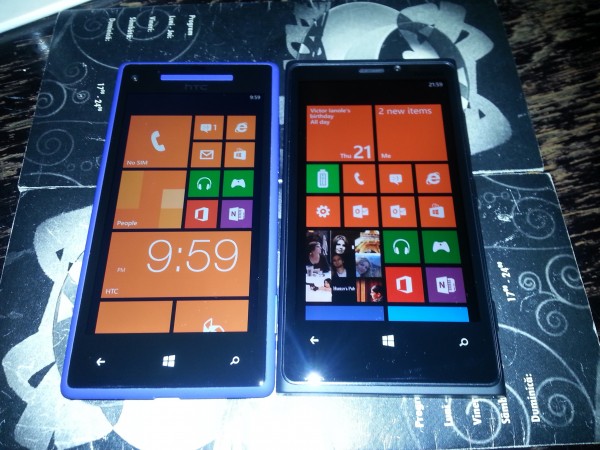
    Born as two flagship devices built on the Windows Phone 8 platform, the HTC Windows Phone 8X and the Nokia Lumia 920 could not be much further apart in delivering two polarizing user experiences. In boxing terms, Windows Phone 8X is the light flyweight and Lumia 920 is the super heavyweight, fighting each other with two different software and hardware skill sets for the “Best Windows Phone 8 smartphone” title.

    But this one is a tough nut to crack as there are many aspects to consider. Price, performance, build quality, software and hardware features, dimensions, weight, look and feel, color trim, among others, are all very important when choosing a device that will likely be alongside you for two years. So without further ado, let’s pit the two against each other and see how they stack up.

    Physical Differences

    First, let’s talk about the dimensions. The Windows Phone 8X comes in at 132.4 x 66.2 x 10.1 mm and 130 grams while the Lumia 920 measures 130.3 x 70.8 x 10.7 mm and weighs 185 grams. At a first glance the two smartphones are similar in footprint, however that impression changes shortly after holding them.

    The Windows Phone 8X feels small in the hand because of its highly-tapered edges and is comfortable to use and hold due to its textured back and low weight. I have never once had the Windows Phone 8X slip from my hand. By comparison, the Lumia 920 tells a different story that highlights the contrast between the two.

    The Nokia has rounded (and not tapered) edges that make it feel big in the hand, something that is easily noticeable after holding the Windows Phone 8X. Furthermore, the handset has a more substantial weight and a very, very smooth back (even with the matte colors, and especially with the glossy ones) that make holding it more difficult and potentially more slippery.

    Overall Windows Phone 8X takes this round.

    Build Quality

    After using the Windows Phone 8X and the Lumia 920 for extended periods of time I have no doubt in saying that the Nokia-branded handset has the better build quality of the two.

    Whereas the area under the volume buttons on the Windows Phone 8X creaks and the back travels a bit under pressure, the Lumia 920 shows no such weak spots. I could definitely see the latter making a dent in the floor and not the other way around. But that’s not the whole story, as there are other differences as well.

    One weak trait of the Lumia 920’s build quality — and the only one I noticed thus far — is the power button, which after a couple of days of use does not require the same firm press as the volume keys or the camera shutter button. By comparison, the buttons on the Windows Phone 8X held up pretty well over time but they are flushed with the case and very difficult to find and press at times, especially the power key which is placed at the top of the handset.

    Looks

    Colors spruce up one’s life. And the Windows Phone 8X and Lumia 920 sure embody this philosophy. The former is available in Black, California Blue, Limelight and Red with a matte finish while the latter can be purchased in Black, Gray, Red, Yellow and White with a glossy or matte finish, depending on the color.

    Looks are always subjective, but from my point of view the Windows Phone 8X features the less mature and futuristic design of the two. It’s not boring, but it’s not great nor impressive either to look at — at least the bolder colors help. On the other hand the Lumia 920 has a more industrial design that looks more professional and high-tech.

    Lumia 920 takes this one.

    The Display

    Let’s talk display differences first. The Windows Phone 8X comes with a 4.3-inch S-LCD2 display while the Lumia 920 features a 4.5-inch IPS LCD screen with PureMotion HD+ and ClearBlack technology. From the two, I prefer the panel on the Lumia 920 because it’s both more lively and bigger. Colors pop more and there’s also less bleeding. As a bonus, the display can also be operated using gloves which is something to consider for folks in colder climates.

    The panel on the Windows Phone 8X, on the other hand, has more real-to-life colors and a higher 342 pixel-per-inch density (compared to the 332 ppi on the Lumia 920’s display). Sadly, it takes the second place because it has plenty of bleeding (black is not quite black) and the viewing angles are not as good as on the Lumia 920.

    Hardware Features

    On the hardware forefront, the Lumia 920 also takes the crown for features such as wireless charging (which is not available on the Windows Phone 8X — except on the Verizon model) and extra storage (32GB of internal memory out-of-the-box). Both are features to consider as wireless charging plates are cheap, while the extra storage is more than welcomed when there is no microSD card slot on either device.

    Lumia 920 takes another round.

    The Cameras

    Windows Phone 8X has a bigger front-facing camera — 2.1-megapixel shooter with 1080p video recording — but from my experience it is not necessarily better than the 1.3MP front-facing camera on the Lumia 920, which can shoot up to 720p video. Both are not good (I shall not call them crap), so comparing is similar to tasting and judging two mediocre apples.

    The best back-facing camera of the two is, undoubtedly, on the Lumia 920. I managed to snap some pretty impressive pictures in pitch-dark conditions with the Nokia, while the HTC only delivered average-looking photos. In good lighting conditions from my own experience the two are closer in terms of quality.

    Overall the Lumia 920 has the better camera.

    Software Differences

    After I got the Lumia 920 I wrote a first-impressions review where I briefly discussed the apps that the Finnish manufacturer provides atop of Windows Phone 8. After using the smartphone for longer I can definitely say that Nokia collection puts HTC’s exclusive app collection to shame.

    There are 58 exclusive games and apps (some can be had from the app store on other devices as well from different publishers) ranging from the HERE suite — City Lens (augmented reality), Drive+ Beta, HERE Maps and HERE Transit — to Accuweather, Bloomberg (news and finance), Burton (skying and snowboarding), Cinemagraph (photos), Draw Something, Express, Glam Me (portraits), Nokia Music, Panorama and Smart Shoot (equivalent to burst shot), among others. HTC only offers weather, data and time apps, a photo enhancer and a couple other basic and not-all-that-valuable additions.

    I like and use the HERE City Lens to find nearby places and get directions via HERE Drive+ Beta. Smart Shoot is great for snapping a couple of pics at once and choosing the best one. Also, Nokia Xpress is a nice and basic browser that compresses websites as to use as little cellular data as possible. I’ve only touched the surface of what these exclusive apps can offer, but suffice to say I’m genuinely impressed by the added benefits. Nokia even adds extra ringtones, alarm sounds and menus in Settings to further customize the experience.

    I have to point out that the I’m running the latest software update on the Lumia 920, which was announced by Nokia in mid-March. The build also allows to clean temporary files, among other improvements, a feature not (yet) available on the Windows Phone 8X. Unquestionably, Nokia is the manufacturer that brings more value to the table, whereas HTC places its faith more on the ecosystem.

    Lumia 920 is the better of the two in the software department.

    Performance and Battery Life

    Both Windows Phone 8X and Lumia 920 are based on the same 1.5 GHz dual-core Qualcomm Snapdragon S4 processor alongside an Adreno 225 GPU (Graphics Processing Unit) and 1 GB of RAM.

    The difference between the two smartphones, therefore, is practically non-existent. Both perform similarly in apps, games and run Windows Phone 8 just as good. What about battery life?

    I use all my smartphones in a similar fashion — answering and making calls, reading and writing texts, surfing the web here and there when I’m away, installing and using apps, etc. From this point of view both Windows Phone 8X and Lumia 920 deliver decent results (to be honest, I didn’t benchmark either).

    The latter has more potential to live through the day than the former because of the larger battery — 2000 mAh vs 1800 mAh for Windows Phone 8X. In one instance I managed to get more than 24 hours of battery life from Lumia 920, with light gaming, browsing, calling, texting and surfing the web. Windows Phone 8X is not that far off, however, managing to post similar results. This, as you might imagine, depends largely on usage patterns.

    There is no winner, only a tie.

    Price

    Depending on where you live, you may find the Windows Phone 8X and the Lumia 920 at two different price points. In Europe, at various mobile operators, the former — available at roughly EUR450 — is significantly less expensive than the latter — available at around EUR600 — when purchased without a contract. Meanwhile, in the United States they are available at the same $99.99 on a two-year contract at AT&T or Verizon, for instance.

    They’re Different

    HTC and Nokia have released two different smartphones that cater to two different kinds of needs. Lumia 920 is for people who want a great camera and build quality while providing more software benefits, meanwhile Windows Phone 8X pits itself as a light and comfortable to hold smartphone for people satisfied with the Windows Phone 8 ecosystem.

    I’ve said this in my initial-impressions review for the Lumia 920 and I say it again now — Windows Phone 8X, to me, feels agricultural by comparison. All the little downsides add up to a point where I regret choosing it, so pick your Windows Phone 8 smartphone carefully.

    Having owned both, I prefer Lumia 920 to Windows Phone 8X. I like the heft of the smartphone, which feels just right in my fairly large hands and appreciate the hardware and software improvements it brings along. The Nokia-branded handset is what I should have bought in the first place, a realization that, sadly, only came to me a little too late.

    Photo Credit: Mihaita Bamburic

  • Unlikely collaborations: 5 TED Talks that reach across fields

    Architecture and microbiology may seem like an odd couple, but TED Senior Fellow Jessica Green would beg to differ. In today’s talk, she reveals what’s teeming all over the surfaces around us, and how it can help us build smarter, healthier buildings.

    As the founding director of the Biology in the Built Environment Center at the University of Oregon, Green knows that it’s time for biology to join physics and chemistry as a way for architects to study buildings. When she collaborated with architect Charlie Brown to study the microbes at UO’s Lillis Business Complex, they tracked the health benefits of the ventilation louvers that Brown had designed. The result? A wealth of information and a new approach that Green is calling bioinformed design.

    We thought this creative crossing of fields was brilliant — and also familiar. Some of the most interesting TED Talks come from a blend of the artistic and the analytical, the silly and the serious, the personal and the political. Here are five talks that make interdisciplinary magic.

    1. Mathematics meets history

    Human history has produced a lot of data – words, dates, things, people – but we don’t usually examine it with a quantitative eye. At TED2012, TED Fellow Jean-Baptiste Michel gets computational with the stuff of our past.

    2. Art meets government

    When your city has a mayor who’s an artist, he may just paint the town red … literally. And it turns out that’s not such a bad idea. Tirana, Albania’s former mayor, Edi Rama, explains why at TEDxThessaloniki.

    3. Music meets medicine

    Robert Gupta is a violinist with a mission to heal – he brings his neurobiology background into his life as a professional musician. At TEDMED 2012, he explores the way that music reaches with ease into the brain’s secret corners.

    4. Programming meets parenting

    Agile development – a system of iteration, feedback and self-management – really works. It works for software, it works for business, and at a TED@250 salon, Bruce Feiler shows how it even works for families.

    5. And, of course, dance meets science

    In one of the most inspired cross-fertilizations ever to appear at a TEDx event, John Bohannon eschews the slide deck and collaborates with the dance company Black Label Movement to explain complex ideas in physics and biology. Together they make a gorgeous case for the value of the arts.

  • Anime video service Crunchyroll reaches 200,000 paying subscribers

    San Francisco-based video startup Crunchyroll now has more than 200,000 paying subscribers to the premium tier of its service. The company surpassed that milestone just six months after announcing 100,000 paying subscribers, and Crunchyroll co-founder and CEO Kun Gao told me during a phone call Monday that he attributes the growth to entering new markets as well as getting onto additional devices.

    Crunchyroll has been specializing on bringing Anime shows to the U.S. and other countries the day after episodes air on Japanese TV. The company has also been branching out to carry Korean drama and Asian live action content, and it’s been exploring ways to add additional content verticals.

    However, Gao told me Monday that content is only part of the picture for the company. Crunchyroll launched an expanded e-commerce operation in January, offering subscribers access to special deals for merchandise from their favorite Anime shows. “We’d like to use the membership more like a Costco membership,” he said.

    Check out an interview I did with Gao a few months ago below:

    Related research and analysis from GigaOM Pro:
    Subscriber content. Sign up for a free trial.

  • Summly’s teenaged founder says he wants to help make Yahoo great again

    Nick D’Aloisio just agreed to sell his mobile news-reading startup Summly to Yahoo for a rumored $30 million — which wouldn’t be that unusual, except for the fact that D’Aloisio is 17 years old. But while many seem to be assuming the young entrepreneur will take his windfall and flee the faded internet portal as soon as he possibly can, D’Aloisio said in an interview that he has no intention of doing this — on the contrary, he says he wants to stay and help Yahoo capitalize on its strengths and find a way to return it to greatness.

    The young Brit created Summly to try and help solve the problem of consuming news content on a mobile device (something a number of others are focusing on as well, including San Francisco-based Circa). The app created machine-generated summaries of news articles, and D’Aloisio said in a phone call from London that he wants to see what Yahoo can do by applying the same kind of algorithmic approach to some of the company’s other news and entertainment content:

    “It’s going to be a really fun journey. To see where we can take our technology with Yahoo’s focus on mobile under Marissa Mayer will be really exciting… there is so much opportunity to take these daily habits like weather, news, stocks and sports and use technologies like Summly to really turn them into an A-star experience. And I want to be there for as long as I feel is necessary to get Summly and Yahoo really doing well with mobile.”

    Yahoo has a chance, D’Aloisio says

    Although Yahoo has been criticized by many (including us) for being too large and slow to adapt to the new age of digital content, D’Aloisio said that he is excited about joining the company, and thinks that Yahoo under Marissa Mayer has a chance to be great again:

    “Definitely with the approach they are taking at the moment — they’re moving at light speed, and it’s really exciting to be joining the company at this stage, because there’s so much opportunity in the next 12 to 24 months to take technologies like Summly and the other assets they have, like the newsroom and all of this content, and take it to the larger mainstream.”

    The Summly founder said that while many see Yahoo as an also-ran, he thinks the company still has a chance to take advantage of the millions of users it has:

    “Yahoo to me, as the founder of a company, is one of the biggest opportunities you could have — it’s one of those classic internet companies… the fact is that they have massive leverage in the industry, they have hundreds of millions of people coming to their content every month, and it’s really exciting to be building for that scale. That’s the exciting thing — it’s the scale that Yahoo brings, and that user base, that I really want to build products for.”

    A “surreal journey” at times

    D’Aloisio also admitted that he was surprised at how something that began as a hobby has turned out, and how much he has accomplished at such a young age:

    “It’s a surreal journey. I guess I always saw this as a hobby — it’s just a passion of mine. And the fact that it’s [resulted in] an acquisition is something I never expected… and it wouldn’t have been possible without Horizon Ventures and Li Ka-shing, who took a gamble on me as a teenager. I really owe it to them and to everyone who has been by my side supporting me.”

    The young entrepreneur said he has had a number of learning experiences along the way — including one described in a Gizmodo post from 2011 entitled “How I Made a 15-Year-Old App Developer Cry” — but added that it has been “a really incredible journey,” and he is looking forward to the next chapter with Marissa Mayer and Yahoo. One thing is for sure: If everyone at the company was as eager as D’Aloisio seems to be, the company would have no reason to fear the future.

    Related research and analysis from GigaOM Pro:
    Subscriber content. Sign up for a free trial.

  • Windows Blue Build 9364 [slideshow]

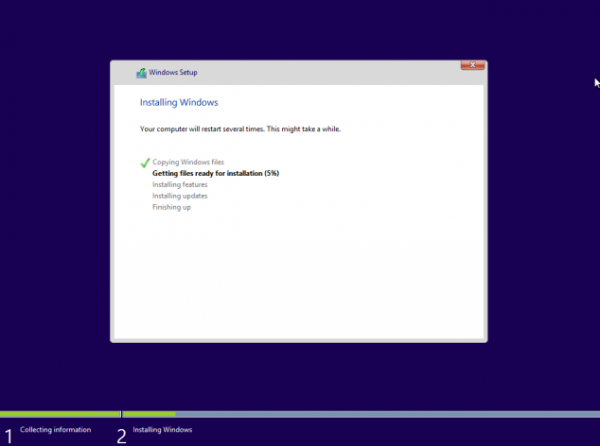
    windows blue installing

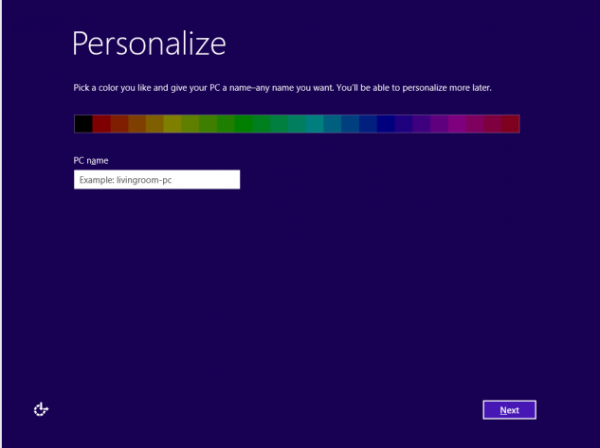
    windows blue colors

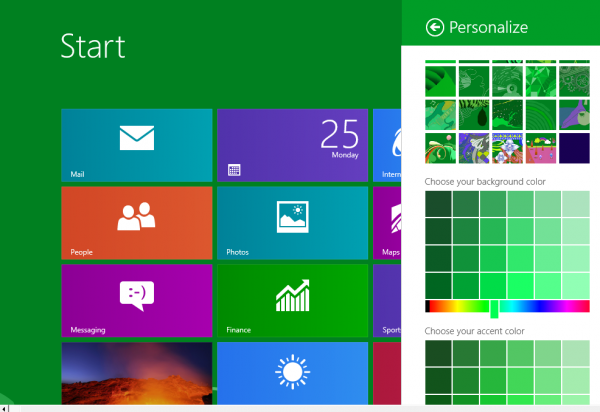
    windows blue start screen

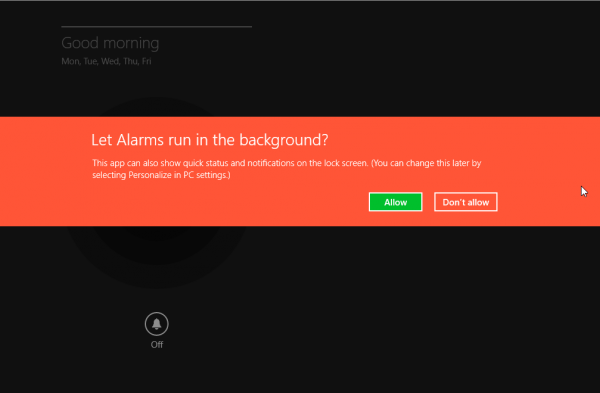
    windows blue alarms

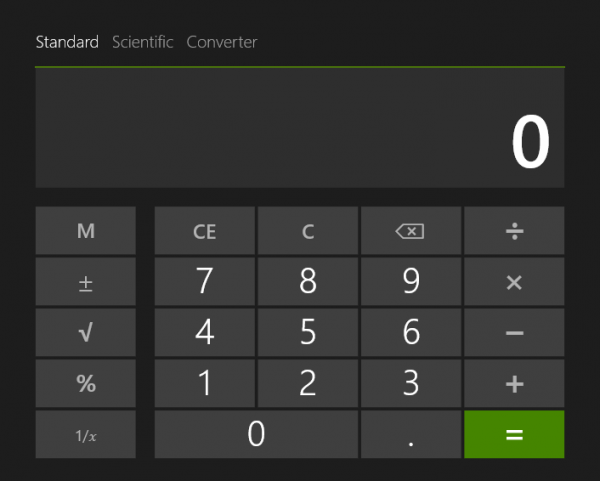
    windows blue calculator

    windows blue lock screen

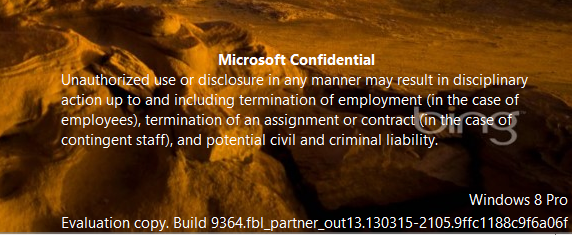
    windows blue disclosure

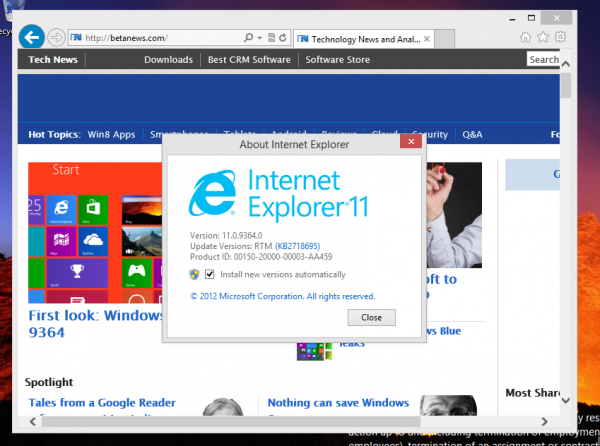
    windows blue ie11

    windows blue ie 11

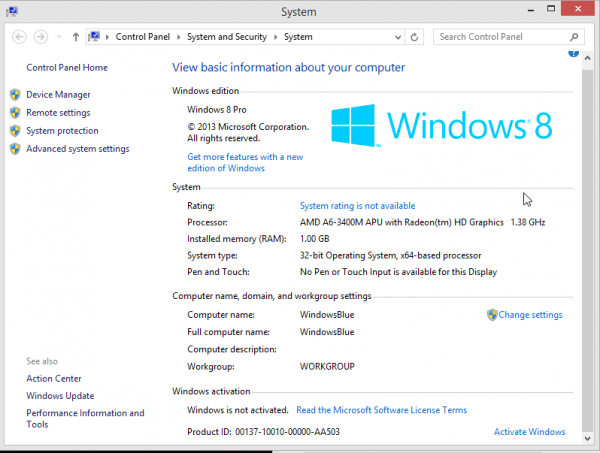
    windows blue computer info

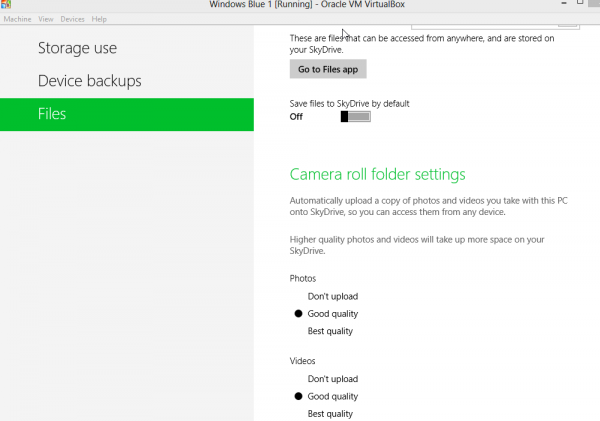
    windows blue skydrive settings

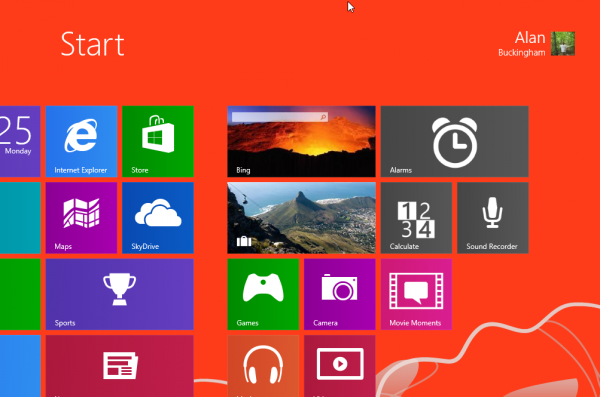
    windows blue start screen in red

    Windows Blue owns tech news for the past two days, from its leak to BitTorrent yesterday, to first-look articles today. While we all try to digest what is included in the next version of Windows, which really is more of an update to the current iteration, it really is much easier to get a sense by visual aid as opposed to listening to talking heads like me drone on with descriptions.

    When I installed the leaked build, 9364, yesterday and fired it up I was blown away by all of the changes Microsoft has made in what is essentially an interim update. Over the coming days I will take a more in-depth look at some of these things, but for now, I at least have plenty of screen grabs to try and illustrate what your next operating system will look like.

    I also have a better idea of where the company is heading in the future, and some of you will likely not be happy with it. The addition of Metro versions of the Calculator (now called Calculate) and Sound Recorder are harbingers of the continued move away from the desktop and onto the Start screen.

    I am not saying the desktop will be gone when Windows 9 debuts (rumored for late 2014), but I think it will, at the very least, be squeezed out of the picture even further. When Office gets there, then the move may be complete. Personally, as long as the apps are there in Metro, I don’t really care, but I know the traditionalist change-haters will be out with fangs showing over this.

    Scroll through the slideshow of images I grabbed as I tested the new build. Windows Blue is not ready for Prime Time by a long shot, but there is much to get excited about.

  • New York Times closes another loophole in its digital paywall

    Look out media cheapskates — the New York Times is losing patience with your skinflint ways. After imposing a so-called “metered paywall” last year to restrict how many articles non-subscribers may read for free, the Times is clamping down on popular tricks to get around the wall.

    The latest casualty is NYClean, a bookmarklet that lets readers zap away “over the limit” messages that appears in front of Times stories. I discovered the change on Monday when, after having reached my monthly quota of 10 free stories, I tried and failed to use NYClean to read another story. The tool (see the arrow) zapped the message for a second but then the message came right back:

    NYT paywal

    This is the second time in as many months that the Times has shut down a trick to evade its meter; in February, readers discovered they could no longer access a blocked story by chopping off the end of the article’s website address. Times spokesperson, Eileen Murphy, explained the situation this way:

    “As we have said from the time we launched our digital subscription model, we are aware of various loopholes to access our content beyond the allotted number of articles each month. It remains a priority for us to protect the value of our content so we will continue to make adjustments to optimize the gateway through technical security solutions.”

    The new restrictions come at a time of increased acceptance of metered paywalls. In recent months, popular blogger (and paidContent Live guest) Andrew Sullivan introduced a meter — now at $1.99 a month — while longtime paywall holdout, the Washington Post, said it will introduce one this summer.

    The Times‘ get-tough measures create dilemmas for readers like me who are running out of workarounds. I like the New York  Times but, since I already pay hundreds of dollars a year for a Wall Street Journal subscription, I am not in position to shell out full fare for a second paper. Perhaps the Times will introduce a grazing option (say 50 articles for $5) or introduce paywall partnerships across publications.

    Related research and analysis from GigaOM Pro:
    Subscriber content. Sign up for a free trial.

  • Debra Chrapaty Departs Zynga to Head Nirvanix

    Debra Chrapaty, who has served in infrastructure leadership positions for some of the Internet’s largest players, is now calling the shots for a cloud service provider. Chrapaty is departing Zynga, where she had been CIO, to become the chief executive officer at enterprise cloud storage specialist Nirvanix.

    Chrapaty’s tenure at Zynga spanned the company’s effort to shift away from a heavy dependence upon cloud services, moving much of the gaming company’s infrastructure to in-house data centers. Her experience prior to Zynga included a stint as VP of Global Foundation Services for Microsoft . She also served as Senior VP of the software collaboration group at Cisco Systems and COO of E-TRADE Technologies.

    Nirvanix provides cloud storage services focused on enterprises with massive amounts of large unstructured content files, and offers usage-based pricing across public, hybrid and private cloud storage deployments. Last year the company raised $25 million from backers including Khosla Ventures, Intel Capital, Valhalla Partners, Mission Ventures and Windward Ventures. Customers include Cerner Corporation, IBM, USC Digital Repository, National Geographic and Relativity Media.

    “I believe there is room for innovation in the enterprise storage market,” said Chrapaty. “Nirvanix is already ahead of the game and differentiating services and gaining traction against some of the storage goliaths. Having built and run some of the industry’s largest cloud environments, I know the importance of secure, available, cost efficient infrastructure and storage. Now we have the chance to build a truly differentiated cloud offering and pass that value on to our enterprise customers. That’s exciting for me and, more important, for the industry.”  


  • Google to begin shipping LTE-equipped Chromebook Pixel in early April

    LTE Chromebook Pixel Release Date
    The LTE version of Google’s (GOOG) touch-enabled Chromebook Pixel computer has been unavailable since it was announced in February. An update to Google Play on Monday, however, revealed that the $1,449 Chrome OS-powered computer will ship out to customers by April 8th. The LTE model is compatible with Verizon’s (VZ) high-speed network and includes a 64GB solid-state drive, while the Wi-Fi only version is available now for $1,299 and is equipped with 32GB of internal storage. Both models feature a 12.85-inch touch-enabled display with a class-leading 2560 x 1700 pixel resolution, a 1.8GHz Core i5 processor, 4GB of RAM, integrated HD Graphics 4000, a microSD slot and two USB ports. The LTE-equipped Chromebook Pixel also comes with 100MB of free data per month for two years.

  • Pac-Man + Tournaments hits the Play Store for free

    Pac-Man_Tournaments


    The original Pac-Man quite simply revolutionized video gaming as we knew it with its insane graphics and incredibly addictive gameplay. So it’s fitting that as part of a special commemoration of the famed game, Namco has placed a special edition of the game called Pac-Man + Tournaments available for free exclusively in the Play Store— not on Apple’s platform as of this time. Here’s Namco’s reasoning for why Android fans get first dibs on this new take on the classic game:


    “Android is the biggest OS in terms of installed base today. While PAC-MAN is already very present on iOS, it can benefit from a lot more visibility with Android users. Additionally, Google’s recent initiatives on games have really won us over, and it was a logical step for us to launch this new title first on Google Play.”


    The game will come jam-packed with custom goodies as well. In addition to the standard mazes the game will come with, gamers will have the option of obtaining weekly updates containing additional mazes and levels to play. Of course individual gamers will try and beat out the scores of other folks all across the world, allowing for hours and hours of gaming fun. So what are you waiting for…? If you’re a Froyo+ user, hit the break and grab the game today using the Play Store or QR code link.


    unnamed4
    unnamed5
    unnamed6
    unnamed7

    Pac-Man_Tournaments_Play_Store

    Play Store download link

    Come comment on this article: Pac-Man + Tournaments hits the Play Store for free

  • Google+ Now Lets You Use Animated GIFs as Your Profile Pic

    Google has just unveiled a Google+ update that’s sure to thrill all you GIF lovers out there.

    Starting today, you can now use an animated GIF as your profile picture. The GIF will animate on profile pages on both mobile and desktop. As of now, the GIFs don’t animate in the stream – so make sure that the still image for your new profile GIF is also presentable.

    Matt Steiner

    You can now use an animated gif for your profile photo!  It will animate on the profile page on both desktop and mobile

    edit:  like newspapers in Harry Potter :)

    Google software engineer Matt Steiner has implemented the new profile GIF, and you can check it out here.

    Speaking of Google and GIFs, they recently made it easier to find animated GIFs by adding a new “animated” search filter in Image Search.

  • Cross Atlantic To Wind Down 1999 Fund

    Cross Atlantic Capital Partners said it is winding down its vintage 1999 fund, Cross Atlantic Technology Fund, LP, and liquidating portfolio holdings, including 668,572 shares of Rubicon Technology stock. The firm said it will continue actively managing Cross Atlantic Technology Fund II and continue to hold about 4.99 million shares of Rubicon stock and warrants. Rubicon traded for $6.37 on Nasdaq today.

    PRESS RELEASE

    Cross Atlantic Capital Partners’ Initial Venture Capital Fund to Wind Down; Sell Remaining Portfolio Assets

    RADNOR, Pa.–(BUSINESS WIRE)–After a number of successful exits, including three IPOs, Cross Atlantic Capital Partners (“XACP) has announced that it is terminating its vintage 1999 fund, Cross Atlantic Technology Fund, LP (“XATF”). As part of the termination process, XATF is liquidating its remaining portfolio company holdings, including its 668,572 shares of common stock in Rubicon Technology (NASDAQ: RBCN).

    XACP expects the shares of common stock in RBCN held by XATF to be fully divested by June 30, 2013, although a specific schedule for the sales has not yet been set.

    XACP will continue to actively manage Cross Atlantic Technology Fund II and its Co-Investment family of funds, and the sales for XATF will not affect the continuing ownership of the aggregate 4,985,677 shares of common stock and warrants for common stock of RBCN held by these other funds.

    About Cross Atlantic Capital Partners

    Based in Radnor, Pa, Cross Atlantic Capital Partners (“XACP”) is one of the leading venture capital firms based in the mid-Atlantic region, with over $500 million under management. XACP invests primarily in technology companies in the United States. Leveraging its deep, multi-disciplined network of global contacts, and the operational experience of its investment team, the firm actively assists its entrepreneurs and portfolio companies. The XACP portfolio currently includes a diverse array of companies focusing on Enterprise Software, SaaS, IT Services, Telecommunications, Financial Services, and other innovative technologies.http://www.xacp.com/

    The post Cross Atlantic To Wind Down 1999 Fund appeared first on peHUB.

  • 3D Printing Is Fueling Innovation In Cosmetics

    3D printers are usually thrust into the spotlight only when something controversial happens. It makes it easy to forget how the technology is improving established industries all around the world.

    Stratasys has the story of Collcap Packaging, and how the UK-based company is using 3D printers to prototype the latest packaging for the cosmetics you use everyday:

    Collcap Packing in the UK is using revolutionary 3D printing technology to prototype cosmetics packaging for their many international perfumery and cosmetics suppliers. Using the Stratasys Objet30 Pro 3D printer, Collcap’s designers are able to turn 3D CAD designs into accurate prototypes using a choice of 7 different materials ranging from blue, gray, white and black to clear transparency, high temperature resistance and polypropylene-like.

    The transparent material (Objet VeroClear) is particularly useful in simulating glass and PMMA. 3D printing allows Collcap to place precise transparent replicas in the hands of their customers only a few short hours after their initial design. Once the chosen 3D printed models are approved the designs are sent to glass cutting and then final manufacturing.

  • Rock Band My Chemical Romance Splits After 12 Years

    Some band break-ups can be as bad as romantic ones, and for dedicated fans they are often worse.

    Rock band My Chemical Romance was formed in September 2001 and used the new influence of MySpace to propel itself to nearly instant stardom. Since that time, the band released four studio albums, most notably Three Cheers For Sweet Revenge and The Black Parade.

    The band announced its break-up on Friday, March 22 with a short message on the band’s blog:

    Being in this band for the past 12 years has been a true blessing. We’ve gotten to go places we never knew we would. We’ve been able to see and experience things we never imagined possible. We’ve shared the stage with people we admire, people we look up to, and best of all, our friends. And now, like all great things, it has come time for it to end. Thanks for all of your support, and for being part of the adventure.
    My Chemical Romance

    The message bewildered fans, who wondered why Eleven years of music had ended with a terse message.

    Today, My Chemical Romance singer Gerard Way released his long, rambling take on why the band’s journey is over. He stated that the band had always had a “fail-safe” that “should certain events occur or ceace occurring, would detonate.” From Way’s message:

    Personally, I embraced it because, again, it made us perfect. A perfect machine, beautiful, yet self aware of it’s system. Under directive to terminate before it becomes compromised. To protect the idea- at all costs. This probably sounds like something ripped from the pages of a four-color comic book, and that’s the point.
    No compromise. No surrender. No fucking shit.

    To me that’s rock and roll. And I believe in rock and roll.

    He goes on to say that “when it’s time, we stop,” and that the band did not want to wait for its audience to to tell it that the music was getting old.

    Many a band have waited for external confirmation that it is time to hang it up, via ticket sales, chart positioning, boos and bottles of urine- input that holds no sway for us, and often too late when it comes anyway.

    Way states that, starting in May 2012, he began “acting” on-stage instead of performing and that he soon after stopped listening to music altogether. In closing, he thanks “every single” fan and refers to My Chemical Romance as an idea, rather than just a band.

    My Chemical Romance is done. But it can never die.
    It is alive in me, in the guys, and it is alive inside all of you.
    I always knew that, and I think you did too.

    Because it is not a band-
    it is an idea.

    Love,
    Gerard

  • Zynga CIO Chrapaty jumps ship, becomes cloud-storage CEO

    Debra Chrapaty, a former executive at Cisco Microsoft, and E*Trade, will leave her CIO post at Zynga next month to become CEO of enterprise cloud-storage vendor Nirvanix.

    Chrapaty’s move isn’t a complete surprise, given that (a) cloud storage is hot, (b) Zynga is not and (c) Chrapaty has served as Nirvanix’s executive board chairwoman since November.

    Chrapaty has the infrastructure chops to lead a company keen on expanding clouds. At Zynga, she oversaw the company’s switch from Amazon Web Services to its own specialized cloud. Earlier, she was in charge as Microsoft expanded its data center footprint. She has also been president and chief operating officer of E*Trade and senior vice president of the Collaboration Software Group at Cisco.

    Based in San Diego, Nirvanix has racked up more than 1,200 customers and $70 million in venture funding. Backers include Khosla Ventures and Intel Capital. Peddling as it does public, private and hybrid clouds and cloud gateways for enterprises, it sees competitors in many directions, including Amazon and Microsoft on the public front, Dropbox and Box in the smaller-business area, and EMC and NetApp on the legacy-vendor stage.

    Chrapaty nevertheless sounded optimistic as she talked about her new gig. “What I’m excited about for Nirvanix is we actually offer this unique solution that’s both public- and private-cloud based, highly available, secure for the enterprise, but also variable deployment models,” she said. “So we’re meeting a unique need for the Fortune 1000 companies.”

    In the coming months, Nirvanix will make some decisions about expand its focus to products other than storage, which could distinguish it, but Chrapaty declined to go into detail about the possibilities. We’re eager to see the game plan, as it could bring more enterprises into the cloud-storage fold and make Nirvanix a bigger player.

    What will come of Zynga? That’s a whole other story. Chrapaty is the latest executive to leave the one-time social-gaming star, and the stock has lingered under $4 since August.

    Zynga on Monday sent a statement from its chief operations officer, David Ko, naming Chrapaty’s successor:

    “We thank Debra for her leadership and contributions to Zynga over the past years and wish her luck in her future endeavors. Today, I am proud to announce that Dorion Carroll is moving into the role of Chief Information Officer effective immediately. Dorion is a 25-year engineering veteran with deep experience developing products and services as well as scaling teams from start-up phase to large companies. As one of our Zynga Fellows, Dorion has provided direction, leadership and management across numerous technology and products teams at Zynga over the past 3 years as well as being one of our most senior technology leaders. Our global network of players relies on the exceptional talent of our technology teams and the services they provide. We look forward to Dorion’s leadership to bring even more prioritization and focus to these teams.”

    Related research and analysis from GigaOM Pro:
    Subscriber content. Sign up for a free trial.

  • Analyst: Verizon’s network neutrality challenge may have to wait until fall

    The D.C. Circuit Court of Appeals is likely to wait until September before hearing arguments in a case that challenges the Federal Communication Commission’s right to implement network neutrality, according to a research note. This would delay a decision until the end of this year or early 2014. Originally the arguments in the case, which was filed by Verizon and Metro PCS, were anticipated by May, with a decision made some time over the summer.

    At this point the excruciating slog that has been the network neutrality rule-making process just continues to play out like some sort of successful Disney franchise moving from movie theaters to several straight-to-video releases. The news about the shift in timing from the court comes via a research note penned by Stifel Nicolaus, an investment bank, on Monday afternoon. The note said:

    The briefing schedule was completed in January and there seemed to be a good chance a three-judge panel would be named any day to hear the case, with oral argument scheduled for no later than May and a ruling possible over the summer. But our understanding is the case will not be scheduled for oral argument before next September (absent unforeseen circumstances), though the panel could be named sooner. The court generally takes a break from oral arguments between May and September.

    Analysts Chris King and David Kaut note that the timing for the eventual ruling would subsequently get pushed back to the fourth quarter of this year or early next year. They also note that the timing is likely a disappointment for both Verizon and Metro PCS. Recall that the network neutrality regulations were released in Dec. 2010 and weren’t published in the Federal Register (and thus becoming both real regulation and now open to a lawsuit) until November 2011.

    I suppose another nine months or a year before the fate of those rules will be decided is just par for this particular regulatory course.

    Related research and analysis from GigaOM Pro:
    Subscriber content. Sign up for a free trial.

  • Apple loves China, but its government is not returning those feelings

    A week after what appeared like a coordinated attempt by China’s state-run TV network to have celebrities badmouth Apple’s customer service in social media, a newspaper known as the Chinese government’s “traditional mouthpiece” publicly went after Apple over another issue: the way it handles media relations. For a country so prized by Apple, why all the Apple hate lately?

    The Wall Street Journal has a good post on the recent drama. It explains that these recent brushback pitches the state-run media outlets are throwing could be the government’s way of defending Chinese companies from being crowded out by foreign competitors, or its way of “doing more to encourage the growth of domestic smartphone companies and eat away at dominant foreign companies, such as Apple.”

    In the most recent case, it’s not clear if Apple’s PR team in China is acting any different than their PR teams do everywhere else on the globe – let’s just say Apple is extremely choosy as to what kinds of requests it responds to.

    This story is important because Apple’s increased presence in the country, and how its products and brand are portrayed, is critical to Apple’s future: CEO Tim Cook said he’s set his sights on China becoming Apple’s No. 1 market eventually. Right now, it’s No. 2, behind the U.S., but China’s growing population along with the company’s growing momentum in sales make it almost inevitable that the Chinese market will one day be the most important to the company.

    But operating in a country run by the Communist Party of China, which has outsize control over domestic businesses, industries and press, means the rules are much different than almost anywhere else Apple has a significant presence. As with the copyright and trademark laws in the country, Apple’s relationship with the Chinese state-run media is going to be something to keep an eye on.

    Related research and analysis from GigaOM Pro:
    Subscriber content. Sign up for a free trial.

  • Is that the new BlackBerry Z10? Can I see it?

    I’ve been seen out in public using my BlackBerry Z10 for a while now, and I’ve noticed a trend with my friends, family, strangers on the street—and really anyone who notices me using my smartphone. Everyone wants to test it out. When I was in New York City last week for the U.S. launch, I was even stopped in a restaurant and asked about it.

    Here are the most common reactions and questions when giving my BlackBerry Z10 a test drive:

    “Wow. The screen is bigger than I pictured and the device feels comfortable in my hand.”

    When people get their hands on my BlackBerry Z10, they almost always mention how natural the peek gesture feels when first learning how to navigate through the device. I think many don’t realize how easy it is to truly use this device with one hand.

    “Can I test the Time Shift camera?”

    I LOVE showing people this feature in greater detail. Many people are shocked to learn that not only can you shift the image of the person’s face, but also on the larger picture too. A lot of my friends have small children, and the general consensus is the BlackBerry Z10 has the best camera for capturing photos of their wiggly little kids.

    “Is BBM Video Chat and screen sharing as seamless to use as I saw during the live launch?”

    “It sure is,” is how I respond to this question. I typically call fellow Community Manager, Donny to showcase this one. He’s always good for a screen share that features his dog, George.

    “Does the keyboard actually learn how you type?”

    I love showing off this feature, primarily because it’s very clear this keyboard is already used to my typing patterns. For example, when typing that I’m laughing I always use “ha ha”. So when I type ‘ha’ the suggestion above the “H” is almost always a repeat of ‘ha’. I like to laugh, what can I say?

    “What do you think about having all of your messages in one spot? Is it distracting?”

    I think people have seen what the BlackBerry Hub can do, but I’ve started wondering how people feel about having literally every message being listed in one area. Many people don’t realize you can pick and choose which accounts are brought into the BlackBerry Hub. It’s also great to see the look on their faces when they see that you can sort by account too. It’s Always a great crowd pleaser.

    These are the reactions and questions I get most.

    What are you most excited about with your BlackBerry Z10?

  • President Obama Establishes Five New National Monuments

    Today, President Obama signed proclamations establishing five new national monuments that celebrate our nation’s rich history and natural heritage. The monuments, located in Delaware, Maryland, New Mexico, Ohio and Washington, help tell the story of significant people and extraordinary events in American history, and also help protect natural resources and supporting economic growth in local communities through tourism and outdoor recreation.

    “These sites honor the pioneering heroes, spectacular landscapes and rich history that have shaped our extraordinary country,” President Obama said. “By designating these national monuments today, we will ensure they will continue to inspire and be enjoyed by generations of Americans to come.”

    read more

  • Torque Capital Buys Brake Parts

    Torque Capital Group led a group of investors to buy Brake Parts. Financial terms were not announced. McHenry, Ill.-based Brake Parts makes and supplies global brake system products for the transportation industry. Affinia Group spun off Brake Parts to its shareholders in November 2012.

    PRESS RELEASE

    Brake Parts Inc announced today that it has been acquired by a group of investors led by Torque Capital Group, a New York based private equity firm. The business was spun off to its shareholders in November 2012 by its parent, Affinia Group Holdings, of Ann Arbor, Michigan.
    “Now that the deal has been completed, the BPI team along with our strategic partners are eager to move forward,” said President and CEO David Overbeeke . “Brake Parts Inc has a strong heritage of leading the category in product quality and innovation, first to market applications and superior customer service.”
    Joseph Parzick , Managing Partner of Torque Capital Group said, “Torque and our investors were particularly attracted to BPI’s strong management team and their leading market position in the North American brake parts aftermarket. We are excited by the prospect of leveraging the Raybestos® brand of brake products to drive international sales growth, particularly in Asia.”
    BPI recently completed a comprehensive restructuring of its global manufacturing footprint in best-cost countries investing in new world-class, state-of-the-art operations, incorporating lean manufacturing principles for optimum quality consistency and maximum productivity and efficiency. Equally important in the BPI global strategy is a strong commitment and dedication to research, development and testing to ensure our entire offering of friction, drums and rotors, calipers and hydraulic products meet or exceed original equipment fit, form and function specifications and performance requirements.
    “We are in one of the most dynamic categories in the global automotive aftermarket,” said Overbeeke. “We are dedicated to continuous improvement in everything we do, each and every day in order to meet the demands of our highly valued customers!”
    About Brake Parts Inc
    Brake Parts Inc (BPI) headquartered in McHenry IL, is a leading global brake system products manufacturer and supplier to the transportation industry. The BPI brake product offering includes brake pads, shoes, rotors, drums, calipers, hydraulic parts and wheel hubs. For more information about Brake Parts Inc visit www.BrakePartsInc.com and for Raybestos brakes, visit www.Raybestos.com. Raybestos trademark used under license from Affinia International, Inc.
    About Torque Capital Group
    Torque Capital Group is a New York-based private equity firm that actively partners with leading industrial players and high-quality management teams to invest in best-in-class manufacturing businesses.

    The post Torque Capital Buys Brake Parts appeared first on peHUB.

  • ESPN should just hire Nate Silver already

    OK, so your NCAA tournament bracket has officially been busted. Don’t feel so bad. ESPN college basketball analyst Jay Bilas, stat-geek superstar Nate Silver and even SAP’s vaunted predictive analytics software all missed the upsets, too. So did President Obama.

    Three of the four correctly picked 11 of the Sweet 16 teams, while Bilas correctly chose 10. But despite the similariy in results between men and models, I’d follow Silver’s model-based forecast every time. Not only is it accurate, but it stands to make people a lot of money.

    Just to be clear, though, Silver doesn’t actually pick winners and losers (at least not publicly, as far as I can tell). Rather, he uses a model that takes into account a number of variables — including a handful of popular computer rankings — and produces the probability of each team advancing through each round of the tournament. That’s what makes his forecast so effective if you’re a betting man: It’s easy enough to pick the winner and most of the final four by just choosing the top seeds (I’m looking at you, POTUS), but the way to accel past everyone else in points is to spot the Cinderellas.

    If I were ESPN, I’d pay Silver a boatload of money to come on TV once a year and present his forecast to a March-Madness-obsessed nation. I’m fairly certain the network could extend the broadcast out to about three hours and charge Super-Bowl-like advertising rates. Here’s why.

    It’s the probabilities, stupid

    As I was saying, anyone, including Silver, can spot the best teams in the tournament by watching enough basketball, settling on some important data points to analyze or just following the NCAA’s seeding. Here are the seeds my experts, data analysts and the leader of the free world chose for the Sweet 16:

    • Bilas: 1, 1, 1, 1, 2, 2, 2, 2, 3, 3, 3, 3, 4, 4, 5, 5
    • Obama: 1, 1, 1, 1, 2, 2, 2, 2, 3, 3, 3, 3, 4, 4, 4, 5
    • SAP: 1, 1, 1, 2, 2, 2, 2, 3, 3, 3, 4, 5, 5, 6, 7, 8
    • Silver: 1, 1, 1, 1, 2, 2, 2, 2, 3, 3, 3, 3, 4, 4, 4, 5

    Here are the actual seeds that advanced to the Sweet 16: 1, 1, 1, 2, 2, 2, 3, 3, 3, 4, 4, 6, 9, 12, 13, 15.

    SAP's mid-seed-heavy bracket

    SAP’s mid-seed-heavy bracket

    The smart money is always on the higher seeds from a pure probability standpoint (although I have no idea how SAP built its model to get so many 5-8 seeds in the Sweet 16). But strange things can, and often do, happen in the NCAA tournament. This year, those strange things are called Wichita State (9-seed), Oregon (12-seed), LaSalle (13-seed) and Florida Gulf Coast University (15-seed).

    So why am I so high on Silver if his Sweet 16 probabilities were just as off-base as the two non model-based human brackets and SAP’s model-based picks? Because if I were looking for a few upsets, he might have helped me spot them. Here some of his notable projections for lower-seeded teams most likely to advance:

    • Arizona (6-seed): 38.1 percent of reaching the Sweet 16 — they made it (SAP picked this correctly)
    • Florida Gulf Coast (15-seed): 3.3 percent chance of making the Sweet 16 — they made it
    • Oregon (12-seed): 17.5 percent chance of making the Sweet 16 — they made it
    • Minnesota (11-seed): 61.9 percent chance of winning its first game — it won (Bilas, SAP and Obama picked this, too)
    • California (12-seed): 32.8 percent chance of winning its first game — it won (SAP picked this correctly)

    538bracket-3-blog480

    And in my neck of the woods — Las Vegas — being smarter than the sportsbooks means big money. No. 12 Oregon and No. 13 LaSalle didn’t really sneak up on the oddsmakers (60-1 and 100-1 odds to make the Final Four, respectively), but No. 15 Florida Gulf Coast is paying out 1,000-1 should it reach the Final Four.

    I wouldn’t count on that happening, though. Silver now gives those teams a 1 percent, 5.1 percent and 0.8 percent chance, respectively, of making the Final Four. Louisville, Florida and Indiana look like locks to make it, and one of them should win the tournament.

    Men vs. models: Let’s call it a draw

    If you’re looking at these selections as some sort of man-versus-machine competition, I don’t think you’ll find a clear winner. Although Silver comes out looking the best of the four brackets I analyzed, his projections aren’t that much different than Bilas’s picks. And although SAP’s picks fall apart in the end — two of its Final Four selections (including its national champion pick) are out — it did correctly pick a couple upsets. President Obama, well, he pretty much picked chalk.

    The better way to look at these results is probably as further evidence that man and machine need to work together more closely, something we highlighted heavily at our Structure: Data conference last week. Men create models, but men probably don’t crunch the numbers. And when there’s pride or money on the line, knowing which No. 15 seed has the best chances of making a run is probably what matters most.

    Your chances of picking every upset without a little help: not good at all.


    Related research and analysis from GigaOM Pro:
    Subscriber content. Sign up for a free trial.