Category: News

  • Dammeyer Joins Square 1 Bank

    Ryan Dammeyer has joined Square 1 Bank as a VP for the Midwest region. He will be based in Chicago and responsible for building the bank’s portfolio of clients in the technology and life sciences sectors. Previously, Dammeyer was CFO at Liquidus Marketing.

    PRESS RELEASE

    Square 1 Bank, the premier banking partner to entrepreneurs and the venture capital community, today announced that Ryan Dammeyer has joined as senior vice president for the Midwest region. Based in Chicago, Mr. Dammeyer will be responsible for building the bank’s portfolio of clients in the technology and life sciences sectors.

    “We are excited to add another senior member to the Square 1 Bank team. Ryan’s deep experience as both a venture banker and CFO of a venture-backed company equips him with a unique perspective that will be a tremendous asset to our clients and staff,” said Doug Bowers, president and CEO. “Ryan is really tapped into the Midwest’s entrepreneurial community and sees firsthand the robust increase in activity it is experiencing. We are proud to support the area’s growth economy by establishing a dedicated presence in Chicago.”

    Mr. Dammeyer joins Square 1 Bank from Chicago-based Liquidus Marketing, a venture-backed video marketing, merchandising and technology company, where he served as the chief financial officer. In this role he oversaw all financial activity for the company, and provided leadership on key business development and operational measures. Prior to that, he spent nearly a decade at Silicon Valley Bank in roles of increasing responsibility, culminating as deal team leader for the Midwest market. He also served as a director for a specialty finance hedge fund. Mr. Dammeyer holds a B.S. in Public Financial Management from Indiana University.

    “Joining Square 1 presents a phenomenal opportunity. As the bank expands its market presence in the Chicago area, I have the opportunity to continue to help Midwestern entrepreneurs by providing local access to the financing solutions they need to be successful,” said Mr. Dammeyer. “Helping entrepreneurs is something I have dedicated my career to and I look forward to partnering with others who share my commitment as we strengthen existing relationships and develop new connections in the Midwest.”

    About Square 1 Bank

    Square 1 Bank is a full service commercial bank dedicated exclusively to serving the financial needs of the venture capital community and entrepreneurs in all stages of growth and expansion. Square 1′s expertise, focus and strong capital base provide flexible resources and unmatched support to meet our clients’ needs. The bank offers tailored products and solutions aided by the latest in technological innovations. Square 1 has offices coast to coast in Austin, Boston, Denver, Durham, Los Angeles, New York, San Diego, Seattle, Silicon Valley and Washington, DC. For more information, visit www.square1bank.com.

    The post Dammeyer Joins Square 1 Bank appeared first on peHUB.

  • How indoor location could find its way into Apple services

    The fate of an acquired startup is never certain, and that’s especially true at secretive Apple. This question hangs over its latest acquisition, a small Silicon Valley indoor location company called WifiSlam. Apple may have simply wanted its Stanford-educated founders, or — more likely — it wants to integrate WifiSlam’s technology into its mobile products and develop the technology further.

    Here’s what WifiSlam says its service does:

    Allow your smartphone to pinpoint its location (and the location of your friends) in real-time to 2.5m accuracy using only ambient WiFi signals that are already present in buildings. We are building the next generation of location-based mobile apps that, for the first time, engage with users at the scale that personal interaction actually takes place. Applications range from step-by-step indoor navigation, to product-level retail customer engagement, to proximity-based social networking.

    WifiSlam uses a combination of Wi-Fi hotspots, as well as a mobile device’s compass, GPS and gyroscope to navigate indoors. (It’s not entirely unique — other companies, like Wifarer — are working on similar indoor positioning technology.) And to work, it needs buildings with prevalent Wi-Fi signals, which tend to be large public areas like malls, airports, train stations, museums and sports arenas.

    While it’s not very likely to pop up in the next version of iOS, here are a couple of ideas to give an example of how Apple some day could integrate WifiSlam’s capabilities to augment or improve Apple services as they stand today.

    Maps

    An example of indoor maps, from Google.

    An example of indoor maps, from Google.

    Apple still has its work cut out for it improving the GPS location data for its Maps app. But what if, like Google has already begun to do, Apple could map the inside of buildings and not just the outside? It could add extra layers to its maps so that it wouldn’t matter if you were indoors or outdoors; it could direct you right to your location no matter where you needed to go — and with far more specificity. Instead of providing you driving directions to the airport, for example, what if Apple Maps could switch to walking directions and show you how to navigate to your gate, a place to eat, grab coffee or pick up a book. And if it could show you those things, it seems feasible that you could also have the map display the location of Wi-Fi hotspots or charging stations at that airport.

    Passbook

    Besides Maps, this one seems the most obvious to integrate with indoor navigation. Passbook is for holding your movie passes, travel and event tickets, gift cards, coupons and rewards cards; an awful lot of things you do indoors. If you have, say, a Fandango ticket in your Passbook, the app can currently tell you when you’re close to the movie theater. Same with a Starbucks gift card — it can let you know you’re in range of a place to pick up a tall latte. But that’s where there’s somewhat of a disconnect right now: Passbook’s notification doesn’t tell you exactly where that theater or Starbucks is or how to get to it.

    Obviously if you’ve got an iPhone you can open up the Starbucks app to find the closest store, or Yelp or a maps app to find the theater. But what if Passbook could direct you to the Starbucks inside the airport? Or to the theater at the other end of the mall? Or if you were on a Wi-Fi-enabled train and had an Amtrak ticket in Passbook, the location of the quiet car or where your seat is located?

    With WifiSlam’s technology, Passbook could become a better or more accurate way for retailers to engage customers too: imagine if you had a Walgreens or Target card in your Passbook that could show you a deal on laundry detergent or toothpaste once you’ve walked into the store and direct you right to the aisle carrying that promotion.

    Find My Friends

    WifiSlam says it can do “proximity-based social networking.” In the case of what Apple is already doing, a new and improved Find My Friends with WifiSlam technology could notify you if a friend or co-worker or child is inside a building and possibly where to find them.

    findmy_friends_sharingReminders

    Reminders was introduced with iOS 5 in late 2011. It lets you set alerts based on locations, so when you when you’re arriving or leaving a place it can remind you of whatever you asked it to — call your spouse, pick up a prescription — though I haven’t had great luck with this feature working consistently myself. With Wi-Fi positioning of indoor locations, Apple could make this location-based service more accurate and useful if it could pinpoint you inside of buildings.

    Apple Store

    Apple has integrated its App Store app with other services: You can already use the app to order anything from an iPhone or MacBook to a Nike Fuel Band; you can search its contents via Siri; you use the Apple Store app while in an Apple Store to check out and pay for some items without interacting with a cashier. A natural extension of this, with indoor positioning technology, would be to direct you to an Apple Store in a mall. And in stores, even guide you right to the item you’re looking for or to the Genius Bar for your appointment.

    These are just a couple of thoughts as to how indoor location could make Apple’s services more helpful or interesting. But there are probably many more possibilities. What else would you like to see?

    Related research and analysis from GigaOM Pro:
    Subscriber content. Sign up for a free trial.

  • Looks Like Those 1M Mystery BlackBerry 10 Devices Went To A Verizon Distributor

    blackberry logo

    BlackBerry delivered one of the world’s most mysterious press releases a short time ago when it revealed that it had sold a cool 1 million BB10 devices to an unnamed partner, but now it looks like some sleuthing has turned up the real client. AllThingsD and Detwiler Fenton both report that the likely source of the order was Brightstar, an international distribution company that counts Verizon, along with carriers around the world as its partners.

    Brightstar is an established BlackBerry customer, and distributes handsets from the Waterloo manufacturer in some of its strongest markets, including in countries like Malaysia where BlackBerry retains very high popularity. Brightstar’s order (if indeed this is the client in question) would indeed be the largest ever single order of BlackBerry devices, but it’s also potentially a way for companies like Verizon to make a sizable bet on the company’s brand new OS and hardware, without taking on all the risk for such an order itself.

    Detwiler Fenton says that the move indicates “Verizon doesn’t believe this well be a strong seller since it normally tries to allocate hot product on its own,” and that using Brightstar means it will spread out some of the responsibility and potential reward that comes with placing inventory in big-box retail locations like Best Buy, in exchange for the security of not being left solely on the hook should things go south. The U.S. launch of BlackBerry 10 happened last Friday, and while not all the cards are on the table, there’s still some early reason to believe things didn’t go amazingly well.

    BlackBerry has its earnings coming up this week on Thursday, but sales of BB10 devices in the U.S. won’t be included in or influence the results. Still, stock price is down today after last weekend’s launch failed to garner the kind of high-profile success and buzz associated with new hardware from Apple or Samsung.

    That million is still a big number, and a sizable order. But if Detwiler Fenton is accurate in its report and this involved carriers like Verizon placing an order through their distribution partner, it’s a lot less significant than were it to go to a single buyer. We’ve contacted RIM for comment, but they did not respond by time of publication.

  • Foundation wants a better way of combing through isolated data on nonprofits

    Sure, plenty of websites maintain free data on public health, nonprofits and startups focused on health and governments’ health initiatives. The thing is, they don’t combine easily to show the bigger picture. The Bill & Melinda Gates Foundation is offering a $100,000 grant to solve the problem, which it calls a matter of data interoperability.

    One scholar has likened the data interoperability predicament to a bunch of Legos, Lincoln Logs and Erector sets — lots of building materials, but they don’t come together seamlessly. Kids should be able to bring all those toys together in one magnificent sculpture that sticks together elegantly without Krazy Glue or duct tape, just as different kinds of users should be able to evaluate data from different sites without having to normalize it all. A potential donor considering an investment in, say, a health nonprofit shouldn’t have to spend lots of time digging and bringing information together from Guidestar, Glasspockets and local and state government sites in order to check a nonprofit’s goals and progress and compare against other nonprofits.

    The resulting product could draw on natural language processing, APIs for grabbing data and compelling visualizations with maps and other Tufte-approved images. The deadline for submissions is May 7.

    Just as companies and federal agencies find themselves awash in big data and in need of clarity as more data sets become available for analysis, the nonprofit space needs its own way to make sense of it all. The result of the challenge — a common place to check out interdisciplinary data — could be introduced to other areas with big public data repositories, too.

    Related research and analysis from GigaOM Pro:
    Subscriber content. Sign up for a free trial.

  • President Obama to new citizens: “In each of you, we see the true spirit of America”

    Watch this video on YouTube

    Today, President Obama spoke at a at a naturalization ceremony for active duty service members and civilians at the White House. He welcomed 28 new American citizens to our nation of immigrants and called for reforms to our immigration system that will help harness the talent and ingenuity of all those like them who want to work hard and find a place here in America.

    President Obama said that in each of the men and women who had earned the right to call this country home, we're reminded of the millions who came before them and our "faith in the idea that anyone, anywhere, can write the next great chapter in this American story. "

    We are so proud of everybody here. In each of you, we see the true spirit of America. And we see a bit of ourselves, too, because most of our stories trace back to moments just like this one.  To an ancestor who -– just like the men and women here today –- raised their right hand and recited that sacred oath. 

    And the point is that unless you are one of the first Americans, unless you are a Native American, you came from someplace else. That’s why we’ve always defined ourselves as a nation of immigrants.  And we’ve always been better off for it. The promise we see in those who come from all over the world is one of our greatest strengths. It’s kept our workforce young. It keeps our businesses on the cutting edge. It’s helped to build the greatest economic engine that the world has ever known.  

    read more

  • T-Mobile Makes A Play To End Subsidies and Contracts

    Things have a funny way of timing out sometimes. Last week I responded to a piece at Phone Scoop about the carrier pricing model. The author claimed that cell phone companies were “scamming” you by charging you a price that includes a device subsidy, even if they aren’t currently subsidizing your device. My response is that if you don’t like it, you can find another carrier where you can pay an unsubsidized price. Starting today, T-Mobile will be one of those carriers.

    For about a year now T-Mobile has been vocal in its opposition to device subsidies. They work for the larger carriers, giving them predictable monthly income streams. But smaller carriers need a competitive advantage at this point. Instead of merely speaking out about the inefficiencies of subsidy pricing, T-Mobile acted — and in a bold manner. Their new plans really do take the subsidy out.

    The idea is similar to that of AT&T and Verizon, in that every plan gets unlimited talk and text. The costs of those services have shrunk so greatly in the past few years that carriers can afford this allotment without taking much of a hit on the margins. The real battle is for data profits, and that’s where every carrier focuses its attention. T-Mobile is no different. It provides you 500MB of high-speed data with the basic plan. After that you don’t get cut off, but instead are reduced to 2G speeds. Not ideal, but it’s better than being cut off.

    TMOPlans

    Where T-Mobile truly differentiates itself is with data pricing. You want 2GB of additional data? That’ll cost you only $10 per month extra. So for $60 per month you get unlimited talk, text, and 2.5GB of data. You can’t get a smartphone plan for that cheap at any of the big carriers. want unlimited data? T-Mobile offers that, too: that’s only $70 per month, with 500MB allocated for mobile hotspot service. You can also pay to add to your hotspot allotment; hotspot tethering is included with limited data plans.

    These prices look so attractive, because T-Mobile is no longer offering device subsidies. That is, you’re on the hook for the full cost of the device. But even then, the pricing can work out in your favor. T-Mobile essentially offers 0% financing on handsets, so you can pay it off during the course of your contract, with no additional fees. That is, you can walk into a store and get a Samsung Galaxy S III for $70 up front, and then add $20 to your monthly bill.

    Let’s work that out compared to Verizon. With Big Red you’re paying $200 up front for the Galaxy S III, and then $100 per month on an individual plan that provides 2GB of data. In 24 months that comes to $2,600. With T-Mobile you get the same phone, plus an additional 500MB of data each month, for $1,990. If you so choose you can pay 65 percent less up front, and pay $80 per month for service, which is still far cheaper than Verizon. Or you can upgrade to unlimited and pay $2,230 over 24 months, or $90 per month with handset financing.

    Make no mistake: T-Mobile just made smartphone ownership cheaper. Now that subsidy you pay is actually a payment for your device. Once you’re paid off, you stop paying. The zero percent financing means you don’t have to — and shouldn’t, really — pay for your device in full up front. They still have plenty of disadvantages, such as a weaker network. But they can compensate much for that with both their new plans and the MetroPCS merger. It’s tough to view T-Mobile optimistically, given all the trouble they’ve faced in the last two years. But for the first time in a while things are starting to look at least partly sunny.

    The post T-Mobile Makes A Play To End Subsidies and Contracts appeared first on MobileMoo.

  • Podcast: How enterprises can build successful BYOD programs

    Implementing a formal BYOD strategy is key for many companies today. But finding one that can be managed in a secure and organized fashion is a challenge for many. In the latest GigaOM Research podcast, curator Cormac Foster and analyst Aileen Arcilla discuss challenges and steps for successful, cost-effective BYOD programs in enterprises.

    (download)

    iTunes

    Stitcher Radio

    SHOW NOTES
    Host: David Linthicum
    Speakers: Cormac Foster and Aileen Arcilla

    • What is BYOD?
    • What is the value of BYOD when leveraged within enterprises?
    • What are some of the technologies that enterprises can leverage to manage a BYOD workforce?
    • What should enterprise do to get ahead of the use of BYOD technologies?
    • What about security and privacy?
    PREVIOUS GIGAOM PODCAST EPISODES:

    Instgram’s Twit-storm, Netflix nabs Disney, GMail’s Pretty iPad App

    RoadMap re-run, our talk with Instagram’s Kevin Systrom

    iTunes 11, When Things Connect, Sun Volt

    What Aspiring New Media Stars Should Know About Agents and Managers

    Holiday Gadget Gift Guide

    War Tweets, Google TV and Nexus 4

    Director Jay Duplass on low-fi movies through high-tech

    Election Dissection, Ditching DSL and Dumping the iPad

    Sandy’s Social, Infrastructure Impact and Forstall

    Windows 8 Surfaces, and disruption eruption

    iPad Mini, iMac gets skinny

    Boxee Cloud DVR, Apple Rumors and Chromebook

    Commutist interview: Joy of X author Steven Strogatz

    Commutist podcast: Patent trolls, Costco ban and Passbook’s home run

    Commutist, meet Nerdist, and interview with Chris Hardwick

    T-Metro, Broadband Caps, Remembering Steve Jobs

    Apple’s iO-Mess, Dirty Data Centers and Tesla

    News from the Mobilize Conference

    Paul Tough: How Children Succeed and what you can learn from them

    The iPhone 5 Event

    Come on, Kindle, Light My 4G Fire

    Related research and analysis from GigaOM Pro:
    Subscriber content. Sign up for a free trial.

  • Don’t Understand The 3D Printed Gun Controversy? Watch This Documentary

    3D printed guns were viewed as more or less a curiosity when they first started to gain mainstream exposure last year. It wasn’t until the tragedies at Aurora and Sandy Hook that 3D printed firearms became a full blown controversy with gun control advocates calling for the renewal of the Undetectable Firearms Act, and opponents, namely Defense Distributed, pushing the boundaries of 3D printed weaponry.

    It’s this latter party – Defense Distributed – that’s at the center of a recent documentary from Vice Magazine’s Motherboard. Cody Wilson, head of the non-profit organization, talks about Defense Distributed, his views on gun control and where 3D printers are headed.

    You will either hate Wilson, or think he’s the only person standing in the way of tyranny . Either way, this is one of the best films you can watch about the 3D printed firearm revolution as seen through the eyes of one of its most outspoken proponents.

  • Facebook’s Threaded and Reorganized Comments Go Live for Pages on an Opt-in Basis

    As expected, Facebook has just rolled out their new Replies feature for Pages.

    Starting today, you can choose to turn on Replies for your page. The new feature changes the way post comments are shown and organized, and it allows users to reply directly to other comments on the post, creating comment threads.

    “Today, we’re improving the quality of conversations on Pages with Replies. Reply directly to comments left on your Page and start a conversation thread. The most active and engaging conversations will be shown at the top of your posts,” says Facebook.

    The new Replies feature is pretty self-explanatory. Instead of commenting on the post in general, or tagging a user in your comment in order to show that you’re responding directly to them, now you can simply reply to their comment inside the page post. It’s a feature that Facebook has had for a while on their Facebook commenting plugin for sites, and it will no doubt make conversations inside heavily-commented page posts much easier to follow.

    The new ranking system that sorts conversations should also help to bring the best comment threads to the top. Facebook says that the new system is based on which conversations are the most “active and engaging,” which most likely means the conversations that contain the most likes and individual replies. We heard last week that the algorithm also takes into account your connections, so you could see a different comment on the top of a post than your friend does – depending on who you know. We’ve reached out to Facebook for more explanation on this and will update you when we hear back.

    Starting today, you should be able to opt-in to the new comment structure. Simply go to your page, click “edit page,” and go to “manage permissions.” If you scroll all the way to the bottom, you should see you should see a Replies filter box you can check off to “Allow replies to comments on my Page.” It should be under “Post privacy gating.”

    For now, the new replies are opt-in only. But starting July 10th, Facebook says they’ll be rolling it out to all pages.

    Previously, a TechCrunch source said that the feature will only be rolling out to pages with over 10,000 followers. We don’t yet have confirmation on this, and will let you know when Facebook gets back to us.

  • Jesse James Marries Pro Drag Racer Alexis DeJoria

    It seems that both Kat Von D and Sandra Bullock are in the rear view mirror of Jesse James’ love life.

    People magazine is reporting that the 43-year-old James has married his fiance, Alexis DeJoria, at her father’s home in Malibu. DeJoria is the daughter of John Paul DeJoria, the billionaire co-founder of John Paul Mitchell Systems and the Patrón Spirits Company.

    Alexis DeJoria is a professional drag racer who races with the NHRA. She races for the Kalitta Motorsports team and competes in the Nitro Funny Car class.

    James’ love life has been the stuff of tabloid fodder since he married actress Sandra Bullock in 2005. Their 2010 divorce was overshadowed with allegations of James’ infidelity, and he began dating reality show star Kat Von D later that year. James and Von D were engaged in 2011, but split before the end of that year. Though Bullock has not been linked to any suitors since that time, Von D last year accepted a public Twitter marriage proposal from famous DJ Deadmau5.

    (Image courtesy pinguino k/Wikimedia Commons)

  • Google to ship LTE Chromebook Pixel by April 8; here’s the LTE service pricing

    Few may have ordered them, but the LTE version of Google’s Chromebook Pixel is set to ship by April 8. That’s the date currently showing on the Pixel product page in the Google Play store, as noted by Jeff Jarvis. The Wi-Fi models of Google’s newest Chromebook began shipping out several weeks ago, so only the LTE models have been held up from delivery.

    Pixel LTE shipmentTo add mobile broadband connection in the Chromebook Pixel, potential buyers not only had to wait a few extra weeks, but they had to also pay an additional $150: The LTE version costs $1,449 as compared to $1,299 for the Wi-Fi only Pixel. Aside from the broadband radio, there is no difference in the two devices aside from 64 GB of local storage capacity in the LTE Pixel, which is double that of the Wi-Fi edition. Both machines get access to 1 terabyte of Google Drive storage for 3 year after purchase.

    The $150 premium for the LTE model also includes a small bit of LTE service: 100 MB each month for two years. After that, it will cost an additional amount for mobile broadband service on Verizon’s LTE network. I spoke with a Google representative a few weeks back to verify this no-contract plan pricing for the Chromebook Pixel:

    • $9.99 = an unlimited day pass
    • $20 = 1 GB good for one month
    • $35 = 3 GB good for one month
    • $50 = 5 GB good for one month

    Given that the LTE model can still use any Wi-Fi hotspot, including one created by a smartphone, having these pay-as-you-go plans are a reasonable way to ensure connectivity in a pinch on the Pixel. Even better: I was told that the Pixel can also be added to an existing Verizon Share Everything plan for $10 per month. That way, you can just use the data you’re already paying for.

    Related research and analysis from GigaOM Pro:
    Subscriber content. Sign up for a free trial.

  • HTC marketing chief plans ‘loud’ campaign to boost HTC innovations, bash Samsung

    HTC Marketing Campaign
    HTC (2498) is tired of being “quietly brilliant” and now wants to make some noise. In an interview with The Wall Street Journal, new HTC chief marketing officer  Benjamin Ho said that his company in the past hadn’t “been loud enough” in promoting its own innovations and promised to take a bolder approach that would attract more attention to the company’s products. As the Journal notes, part of the campaign will involve fighting dirty against its rivals — for example, we’ve already seen how HTC has started publicly bashing Samsung (005930) and its Galaxy S 4 smartphone, which the company’s official Twitter account described as “the next big flop.” Additionally, the Journal reports that Ho plans on “increasing the digital marketing budget for the company by 250% this year compared with 2012, and increasing traditional media marketing spending by 100%.” Which is to say, expect to hear a lot more from HTC in the coming months.

  • Rumor: Motorola X phone to be launched in November with a 4.8-inch display, Sapphire glass, and Qualcomm Snapdragon 800

    motorola-x-Logo

    Another day, another Motorola X rumor. Unlike previous rumors claiming the Motorola X will be a series of phones rather than a singular phone, the latest rumor shows specs for a single Motorola X phone. PhoneArena received a tip from an anonymous source stating that the Motorola X phone will have a 4.8-inch display made out of sapphire, which is said to be three times tougher to break than Gorilla Glass. Other specs mentioned are a quad-core Qualcomm Snapdragon 800 CPU clocking in at 2 GHz and a 4,000 mAh battery. The device is said to also be water resistant with a design that includes a carbon fiber back and rubber bumpers on the corners. Whether or not there is any legitimacy to this rumor remains to be seen, but if they are indeed true, this is sure to be a very impressive smartphone.

    Source: PhoneArena

    Come comment on this article: Rumor: Motorola X phone to be launched in November with a 4.8-inch display, Sapphire glass, and Qualcomm Snapdragon 800

  • We’ll be live from T-Mobile’s ‘UNcarrier’ event tomorrow at 11:00AM!

    T-Mobile UNcarrier Liveblog Link
    T-Mobile will start off a major re-branding effort on Tuesday and we’ll be there to cover it live and give you all the details. Among other things, we expect T-Mobile to provide details of its no-contract smartphone plans, deliver a progress report on its impending LTE launch and maybe even give us the scoop on when we can expect to see the iPhone available on its network. The no-contract plans are the centerpiece of T-Mobile’s efforts to make itself the “uncarrier” that doesn’t tie users down to long-term deals and lets them decide from month to month whether they want to stick with the service. The one downside of this, of course, is that the carrier has also eliminated its smartphone subsidy program so users will have to pay full price for their devices going forward.

    Bookmark this link, which will go live shortly before the event begins tomorrow, and make sure to head there for our live coverage of T-Mobile’s press conference! Coverage will begin just before 11:00 a.m. EDT / 8:00 a.m. PDT.

  • Oracle aims to shape the flow of mobile data with Tekelec buy

    Oracle isn’t quite done shopping in the telecom market. On Monday it announced it is acquiring Tekelec, a company that specializes in controlling the flow of data throughout mobile and wireline networks.

    In February, Oracle announced it would buy VoIP signaling vendor Acme Packet for $1.7 billion. The terms of the Tekelec deal weren’t disclosed. Once it closes on both investments, Oracle is set to become a signaling powerhouse.

    Tekelec specializes in the signaling protocols and load balancing technologies that prevent mobile networks from getting overloaded. For instance, the outages Verizon experienced on its LTE network in late 2011 were partially attributable to signaling overload. Meanwhile, Acme Packet makes session border controllers (SBCs), which manages VoIP and multimedia control traffic that pass between carrier and enterprise networks.

    Oracle, however, will get more out of Tekelec than just signaling expertise. Tekelec is also a big player in the traffic-shaping world. Mobile operators use its policy servers to prioritize bits from certain type of applications – and certain subscribers’ – over others. The result is a bunch of things most of you don’t often find pleasant, such as throttling back your data speeds when you exceed your monthly cap or detecting when you use your phone as a mobile hotspot and charging you extra for it.

    But eventually those same policy management features will be used for a much broader range of features and tailored data plans. Jasper Wireless is using Tekelec traffic shaping technology to make data flow more smoothly in the internet of things, for example. And operators are weighing new types of tiered data plans that allow customers to customize their network connections based on the types of apps they use.

    “Oracle has in the past partnered to provide these capabilities, but by bringing them in-house it will have more opportunity to shape the roadmap and combine the capabilities in a more tightly-coupled solution,” Ovum Principal Analyst Dana Cooperson said in a research note. “Expect Oracle’s telecom-focused competitors (Alcatel-Lucent, Huawei, Ericsson, etc.) and it’s IT-focused competitors (HP, SAP, SAS Institute) to do more strategic soul-searching and, as their financial situation allows, to pursue acquisitions of their own.”

    Many of them already have. Cisco Systems bought policy management firm BroadHop in December, while Citrix System acquired ByteMobile.

    Related research and analysis from GigaOM Pro:
    Subscriber content. Sign up for a free trial.

  • HTC’s marketing chief talks about brand making a bolder approach

    htc_marketing


    HTC certainly has one heck of a smartphone that the world is anticipating, but it’s up to the marketing chief to ensure that the masses recognize not just what the HTC One is, but how HTC as a whole can get its groove back. That’s why its marketing chief Benjamin Ho took some time to answer some of the ever-growing concerns that we here in the Android world are thinking and pondering about. In regards to why the One smartphone is delayed, Ho stresses that “there is some shortage, because the phone’s camera was designed specifically for us, and production cannot be ramped up so quickly”, which confirms what we have heard before.

    As far as it goes with its marketing strategy, HTC appears to be pulling no stops either. Ho highlights that HTC has “a lot of innovations but we haven’t been loud enough”. What this will mean is the fact that HTC will be much more bold with its promotions and marketing of its devices and the features of its devices. It certainly didn’t take long for the brand to be bold too, considering it launched a full-fledged attack against Samsung during its flagship announcement which also included a pretty clever “#theNextBigFlop” Twitter campaign.

    Looks like HTC is finally moving from being “quietly brilliant” to being boldly brilliant— which may be a good thing of course.

    source: Wall Street Journal

    Come comment on this article: HTC’s marketing chief talks about brand making a bolder approach

  • Finally, Yahoo does something kind of smart by buying mobile news app Summly

    We’ve beaten up on Yahoo a number of times for the company’s lack of innovation and other weaknesses, including CEO Marissa Mayer’s edict against remote working, so it’s probably fair to point out when the moribund web portal actually does something interesting — and the acquisition of news-reading app Summly arguably falls into that category. This deal isn’t going to magically transform Yahoo into a star, but at least it shows Mayer is serious about pushing the company forward in ways that are becoming increasingly important.

    The most obvious appeal of a purchase like Summly is that Yahoo gets access to a brilliant and charismatic young programmer in founder Nick D’Aloisio, who started the company in Britain when he was just 15. Om met D’Aloisio in Berlin and did an interview with him about the concept behind Summly not long after the teen launched his startup, and described how far ahead he was of many of his much more experienced peers. If nothing else, D’Aloisio might inject some fresh thinking into Yahoo, something it desperately needs.

    Nick D'Aloisio

    Nick D’Aloisio

    It’s not just fresh thinking about content or design either: while it may not be a blockbuster success story like Instagram or SnapChat, part of what made Summly interesting is that it was an attempt to rethink how we consume content on a mobile device. Circa, which is funded by Cheezburger CEO Ben Huh (and is part of our startup showcase at paidContent Live in April) is another startup focused on the same problem: how does news content need to be rethought for mobile?

    Yahoo News may be far from cutting edge, but it still pulls in a fairly large audience — far larger than Google News. If Yahoo can use D’Aloisio and Summly’s algorithms to figure out how to take advantage of that on a mobile device, it could potentially have a winner on its hands. Google has done virtually nothing to optimize its news-reading experience for mobile, and efforts at recommendation or curation apps like Currents have mostly fallen flat.

    According to an All Things Digital report, Yahoo may have paid as much as $30 million — primarily in cash — for Summly. That’s a lot for an app that only racked up about a million downloads and hasn’t really taken off in terms of readership, but for Mayer it theoretically accomplishes two important things: it shows that the company is intent on figuring out how content works on mobile, and it sends a message that Yahoo is willing to make acquisitions and bring in new talent in order to fix itself. Whether those efforts work, of course, remains to be seen.

    Post and thumbnail image courtesy of Getty Images / Chris Jackson

    Related research and analysis from GigaOM Pro:
    Subscriber content. Sign up for a free trial.

  • The Right Tool For The Job

    swissfone

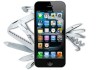
    The mobile phone is today’s PC, but not necessarily in the way you think. Fifteen years ago, the PC was the central hub in one’s interactions with the wider world. This was largely because of the state of miniaturization; our electronics simply weren’t small or efficient enough to make mobile phones and laptops nearly as powerful as desktops.

    So we made do with the PC — it was a jack of most trades, and getting more powerful all the time. Then, cue the proliferation of smaller devices like iPods, feature phones, and pocket GPS units that were fairly powerful and useful. The PC declined in the universality of its application, and while it remains popular to this day (however one defines it), its usefulness has been honed to a finer point — stationary productivity, gaming, storage, and so on.

    Imagine, if you will, a graph with power (roughly speaking, including efficiency and variety of capabilities as well as raw horsepower) on the X axis and intended use cases on the Y. The PC usually ended up in the top right corner, a sort of computing Swiss Army knife that lacked only portability. On the bottom left you have things like calculators. The bottom right, corresponding to high power and few intended use cases, was empty until those new devices took up residence there, using advanced technology to accomplish more narrowly-defined tasks — playing music, finding one’s location, checking email, etc. Keep this graph in mind.

    Fast forward to the present. Smartphones are enjoying their salad days at the moment, as PCs were in the late 90s. We have reached a pleasant plateau hardware-wise (barring any major breakthroughs), and divergence in software is now the word.

    Smorgasbord

    Samsung’s recent press conference, although excruciating in every other respect, was fun for me because of the sheer amount of features being discussed. It reminded me of that trick where a clown pulls scarves or the like from his mouth, and they just keep coming out (it was about as funny, too).

    I don’t blame them for throwing the kitchen sink at us, even if the feature list ends up reading like a Skymall catalogue. They love technology! They love what it can do! We can all be positive about that. And believe it or not, there are millions of people who love gadgets like this. My dad, for instance, would flip over the two-way video thing. And built-in automatic spoken translation? It’s really quite impressive!

    But here’s what interested me about it. Remember that graph from earlier? Let’s tweak it a little bit. If we only include mobile devices, what you find at the top right is almost certainly the latest Galaxy, a “life companion” device meant to be applied to practically every situation you could ever encounter.

    At the lower left is the lowly feature phone, humble in its capabilities and its ambitions. Towards the upper right you have the iPhone, which, despite being advanced and versatile, is not explicitly intended for quite so many uses as the larger, more intense Samsung (witness the extra sensors, larger screen, etc on the latter). In fact, most everything would likely be clustered loosely around a line between the origin and the Galaxy.

    Solve for Y

    Now, if you’ll recall, the lower right was, previously, where the world shifted to as soon as it was possible. What do we see there now?

    Not a lot.

    There are a few, arguably. Wearable devices like the Fitbit or iPod shuffle, for instance, or e-paper devices imitating paper but communicating over 3G. And while wearable devices are indeed an increasingly popular area of development, they don’t quite scratch the itch I’m reaching for here. For one thing, they mostly offload their interfaces and many functions to other devices, and as such act more as an extension of your phone or PC, an extra accelerometer or temperature sensor that’s more convenient to carry or embed than a whole phone.

    What the generation of devices succeeding the PC (back to the first graph, now) added was portability, certainly, but more importantly, they added focus. They took the idea of the PC and redesigned it around a single purpose. This produced some wonderful devices: The original iPod and dedicated GPS units I mentioned were incredibly good at what they did.

    Now we have come full circle: Mobile devices built around the idea of the original PC — Swiss Army knives once more.

    But think about what you do with your phone. The readers of this site probably do a lot more than the average user, but still, most use would fall within the basic categories of calling, written communication, web, imaging, gaming, and location.

    I think we’re going to see devices laser-focused on one or two of these categories fairly soon. Maybe that sounds a little weird, first because there are already devices like that, and second because one might credibly argue that there’s no point to them. But I disagree with both points, thou man of straw.

    Devices like the Galaxy Camera and Xperia Play (and to a certain extent Google Glass) may appear in some ways to be an attempt at a totally refocused mobile device, but let’s be honest: they are grotesque frankengadgets, the modern equivalent of CD-MP3 players, combining the drawbacks of two device classes in one handy package. We haven’t seen, for example, a device that truly marries the accessibility and connectivity of an iPhone with the picture-taking prowess of a DSLR, or a device that revolves entirely around your location while providing the versatility of apps and services, or a device focused specifically on the storing and organization of rich silent media like articles and books. Instead, every device is a compromise rather than a reinvention.

    …When there’s nothing left to take away

    But the iPhone’s camera is great, you say! And you can get apps that provide the functionality you speak of, without removing other functionality from the device!

    This perspective, however, is a by-product of peak multifarity. The more the better! Go Samsung! Ten pages of apps! But good design, which one encounters surprisingly seldom these days in the devices and interfaces we use the most, may be considered the result of subtraction rather than addition. People didn’t stop buying regular knives when Swiss Army knives came out. And of course people didn’t stop buying PCs when BlackBerries, iPods, and GPS units came out. Some things do one thing well, and some do many things adequately. It’s good to be able to choose between them.

    Because you want the right tool for the job, of course. And right now we’re using the same tool for every job — which is a natural thing when we are exploring the capabilities of a technology. The first guy to build a hammer probably didn’t stop banging on things for days. And we’re so enamored of our all-purpose pocket computers that we haven’t thought how we might improve them by reducing their scope rather than increasing it.

    People want focus, and people want to belong to a niche. We gravitate naturally towards these things as reflections of our personality and of our needs. Those needs and, it goes without saying, our personalities, differ widely. One person wants a six-inch screen with LTE and unlimited data so he can watch Netflix on the train. Another wants one with no audio at all, because it’s used entirely for pictures and email. Another (me, in fact) wants an e-ink screen on one side and a solar panel on the other.

    The variety we crave does not exist yet; the variety we have is of the most limited sort. It may take a while, and there will probably be a few false starts, but I think (and hope) that this will be one of the next steps in the evolution and further proliferation of our companion devices.

  • BlackBerry Z10 sales said to have ‘dramatically slowed’ with Galaxy S 4 on the way

    BlackBerry Z10 Sales
    BlackBerry (BBRY) had a very short time to enjoy the spotlight this winter before the Galaxy S 4 tap danced onto the scene and now it seems that the company’s momentum has slowed in the wake of Samsung’s launch extravaganza earlier this month. Barron’s points us to a new research note from Citigroup analyst Jim Suva, who says that BlackBerry Z10 sales have “dramatically slowed” after an initial “honeymoon” and that carriers “have already shifted promotions to other products (Samsung) and moved the Z10 to less favorable in store locations.”

    Continue reading…

  • Why the collision of big data and privacy will require a new realpolitik

    When it comes to protecting privacy in the digital age, anonymization is a terrifically important concept. In the context of the location data collected by so many mobile apps these days, it generally refers to the decoupling of the location data from identifiers such as the user’s name or phone number. Used in this way, anonymization is supposed to allow the collection of huge amounts of information for business purposes while minimizing the risks if, for example, someone were to hack the developer’s database.

    Except, according to research published in Scientific Reports on Monday, people’s day-to-day movement is usually so predictable that even anonymized location data can be linked to individuals with relative ease if correlated with a piece of outside information. Why? Because our movement patterns give us away.

    The paper, entitled Unique in the Crowd: The privacy bounds of human mobility, took an anonymized dataset from an unidentified mobile operator containing call information for around 1.5 million users over 14 months. The purpose of the study was to figure out how many data points — based on time and location — were needed to identify individual users. The answer, for 95 percent of the “anonymous” users logged in that database, was just four.

    From the paper:

    “We showed that the uniqueness of human mobility traces is high, thereby emphasizing the importance of the idiosyncrasy of human movements for individual privacy. Indeed, this uniqueness means that little outside information is needed to re-identify the trace of a targeted individual even in a sparse, large-scale, and coarse mobility dataset. Given the amount of information that can be inferred from mobility data, as well as the potentially large number of simply anonymized mobility datasets available, this is a growing concern.”

    Just because you’re paranoid…

    For those already worrying about the privacy-busting implications of mobile device use, this should come as no surprise. As CIA CTO Ira “Gus” Hunt stressed last week at GigaOM’s Structure:Data conference, mobility and security do not go hand-in-hand. You can be constantly tracked through your mobile device, even when it is switched off. What’s more, those sensors you’re pairing with your device make it ridiculously easy to identify you.

    From Hunt’s speech:

    “You guys know the Fitbit, right? It’s just a simple three-axis accelerometer. We like these things because they don’t have any – well, I won’t go into that [laughter]. What happens is, they discovered that just simply by looking at the data what they can find out is with pretty good accuracy what your gender is, whether you’re tall or you’re short, whether you’re heavy or light, but what’s really most intriguing is that you can be 100 percent guaranteed to be identified by simply your gait – how you walk.”

    One of the explicit purposes of Unique in the Crowd was to raise awareness. As the authors put it: “these findings represent fundamental constraints to an individual’s privacy and have important implications for the design of frameworks and institutions dedicated to protect the privacy of individuals.”

    But this isn’t just about mobility; it’s also about the implications of our big data society. These are effectively two sides of the same coin – mobile devices make it easy to collect data, while big data capabilities make it increasingly trivial to take the resulting mass of supposedly anonymized data and tease out the kind of specificity that the anonymizers were trying to erase.

    This was precisely the sort of problem foreseen by Europe’s cybersecurity agency, ENISA, a few months back when evaluating the continent’s proposed “right to be forgotten”. If a citizen really wants all traces of their personal data removed from the web, ENISA pointed out, that would have to mean removing their data from anonymized datasets as well as from more obvious repositories such as social networks and search indices.

    As ENISA said at the time:

    “Removing forgotten information from all aggregated or derived forms may present a significant technical challenge. On the other hand, not removing such information from aggregated forms is risky, because it may be possible to infer the forgotten raw information by correlating different aggregated forms.”

    Shall we just give up now?

    The Unique in the Crowd authors stressed in a BBC interview that “we really don’t think that we should stop collecting or using this data — there’s way too much to gain for all of us — companies, scientists, and users.” So what can be done?

    Personally speaking, I have been writing about issues around data privacy for many years, and I still cannot see any easy solution to this problem. If it were simply a case of which side of the argument carries more weight, I would have no hesitation in siding with the privacy brigade: selling data to advertisers in order to fund that “free” app does not justify the creation of a surveillance society.

    But it’s just not that simple. That Fitbit is also trying to help you keep fit — the fact that it can identify you by accident doesn’t change that fact. Mobile operators’ datasets help keep their networks running. Location-based services don’t work without location. We even hope big data capabilities will help us fight diseases and socio-economics problems. And, most importantly, despite the fact that most people in the U.S. and European Union insist they want better data privacy, we see time and again that this desire doesn’t translate into action – people still give up their data without much consideration.

    What we need is a new realpolitik for data privacy. We are not going to stop all this data collection, so we need to develop workable guidelines for protecting people. Those developing data-centric products also have to start thinking responsibly – and so do the privacy brigade. Neither camp will entirely get its way: there will be greater regulation of data privacy, one way or another, but the masses will also not be rising up against the data barons anytime soon.

    There needs to be better regulation that works in practice – unlike Europe’s messy cookie law or the “right to be forgotten”. It may be that the restrictions will need to be on the use of data rather than its collection, as proposed in a recent World Economic Forum report. However, regulators tend not to be very proactive, particularly when the risks, while inevitable, remain mostly theoretical.

    I suspect the really useful regulation will come some way down the line, as a reactive measure. I just shudder to think what event will necessitate it.

    Related research and analysis from GigaOM Pro:
    Subscriber content. Sign up for a free trial.