Category: News

  • Better late than never, Free Studio 2013 v6.1 supports Windows XP

    DVDVideoSoft Ltd has released Free Studio 2013 v6.1, a minor update for its freeware media tools bundle for Windows PCs. The tool, which provides a front end of no less than 48 different tools for recording, downloading, converting and editing both audio and video, comes with the promise of unspecified improvements and new features.

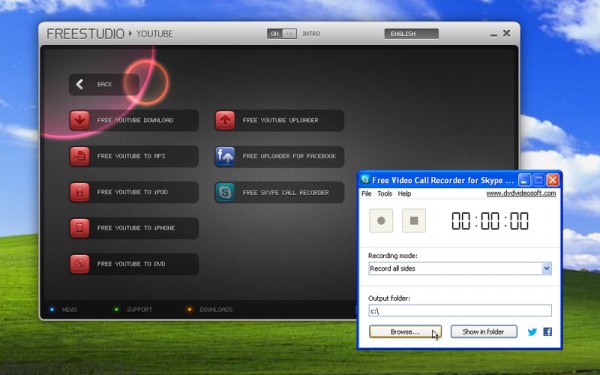
    Notable changes include adding Windows XP support to the recently released Free Video Call Recorder for Skype, which is now also available in additional 12 languages, including Chinese, Dutch, German, Portuguese, Russian and Spanish.

    Free Video Call Recorder for Skype isn’t included with the main Free Studio package, but a shortcut is provided within the Free Studio main interface that either points to the download link or launches the program once it’s been installed separately.

    The various YouTube tools have also been updated in Free Studio 2013 6.1, with the promise of improved performance through proxy connections, plus increased links detection speed and addition of presets for the fourth-generation iPad.

    Other applications within the suite have also been updated, but no release notes have been made available, suggesting only minor tweaks and bug fixes have been applied here.

    The minor update follows on from version 6.0, which introduced a new interface for its YouTube downloader, reworked Uploader to Facebook component and fixed a problem with mistimed videos during editing with Free Video Dub.

    FreeStudio 2013 v6.1.0.320 and Free Video Call Recorder for Skype 1.1.0.319 are both freeware downloads for PCs running Windows XP or later. An annual ad-free subscription with the promise of improved download speeds — dubbed the Rocket Subscription — is available for $9.99.

  • Code Red! Windows Blue leaks

    That sure looks like the case, and how timely, too. Microsoft needs a little Windows excitement, given the sorry state of PC shipments and efforts to jump start Surface sales. We haven’t seen a good leak like this for awhile, and right now any buzz is beneficial. Even if this thing turns out to be fake, blogs and social shares are worth their weight in gold.

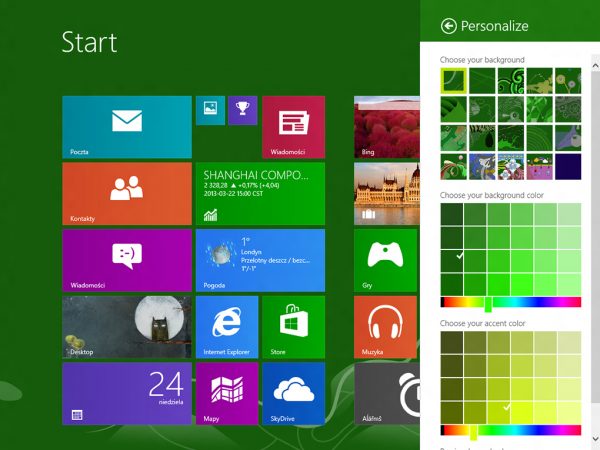
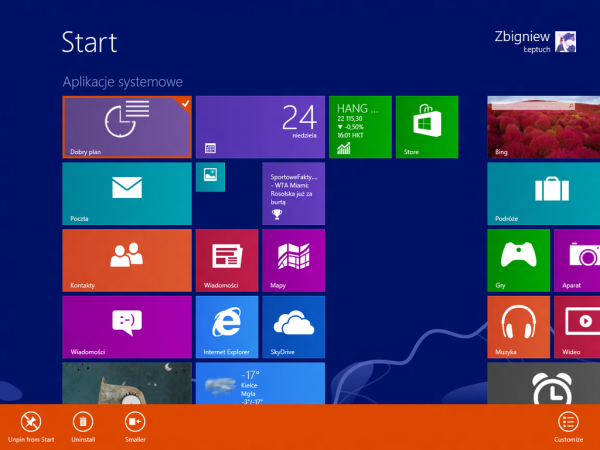
    Over at The Verge, Tom Warren offers a great rundown of features. WinBeta provides an intro video and (via Mary Jo Foley tip) there’s a Dropbox with screenshots. Briefly, the purported build, 9364, is nothing but — borrowing from the oft-overused Microsoftie term — goodness. There is increased emphasis on customization, answering user complaints that Modern UI provides too little, and even hints of Internet Explorer 11. More importantly, everything about Windows Blue suggests an accelerated OS development pace, which significance cannot be understated.

    Pick Up the Pace

    Situation is this: Google cranks out new Android, Chrome and Chrome OS updates at frenetic pace, along with a plethora of supporting services. Meanwhile, Microsoft development, by comparison, is more like IBM at the end of the mainframe era set against the PC. Microsoft really, really, really needs to pick up the pace.

    Look how far Google’s mobile OS and browser have come since their release in late 2008. Chrome, which is version 25 in little more than 4 years, had 37.09 percent global usage share at the end of February compared to 29.82 percent for Internet Explorer, according to StatCounter. Android smartphone share, based on actual sales, was 69.7 percent in fourth quarter, according to Gartner. Windows Mobile/Phone: 3 percent.

    Google has great brand engagement, in part because its products improve by seemingly daily pace and so many are indispensable. Look at the crazy furor over Google Reader, which use is limited mainly to bloggers, journalists and the Technorati (According to a Google Consumer Survey, 9.5 percent of respondents have ever “subscribed to an RSS feed or used an RSS reader like Google Reader”). The service is indispensable to some, nothing like the many of, say, search.

    Too Much Like Big Blue

    Microsoft is the new IBM. The company that caters to big business and doesn’t bring big ideas to market. Enterprises hate change, while consumers embrace it, which is one reason for the recent surge of people bringing their own devices to work rather than just using company-issued gear. Whose software runs these gadgets? Not Windows. Android and iOS are the main benefactors. Microsoft’s challenge is two-fold: Matching competitors’ pace and rebuilding brand excitement.

    Windows Blue could be a bold, next step. Microsoft’s long-standing strength is executing on long-term plans, whereas many public company competitors set quarterly goals that change too often. The Microsoft that released three versions of Internet Explorer in about 18 months during the late 1990s executed tactically while keeping long-term plans in place. The company needs to get back to form. Setting and achieving short-term goals can boost mindshare — that Microsoft actually innovates.

    As I’ve so often expressed, in business perception is everything. Look at Apple. Negative perceptions about Apple Maps, iPad mini and iPhone 5 contributed to falling stock price following September’s all time high (down 35.5 percent after Friday’s close). Meanwhile, after getting sacked during the late-2008 economic collapse, Google shares fly high — $811.26 on Friday, up from $262.43 in November 2008. Positive perception, bolstered by ongoing release of new things, makes shares attractive. In terms of sales, there is no real comparison. During calendar fourth quarter, Apple generated more than three times Google’s revenue for all 2012.

    Microsoft remains a tech giant, in terms of reach and actual financial performance, but the stock is a dog — and has been for more than a decade, rarely climbing above $30 a share. Perception is the problem.
    True Blue

    Windows Blue is an opportunity for Microsoft to show that it can keep pace with Google, and that’s no easy feat. The software giant must balance the preferences of the enterprise, which accounts for the majority of sales, against the need to move faster. Slow-moving big businesses abhor change. There, hosted-server apps and Office 365 can shift some of the dynamic by getting more businesses using software or services that Microsoft updates regularly, rather than relying on cautious IT departments to do upgrades.

    Windows remains the enigma, in a global market making smartphones and tablets buying priority over PCs. Microsoft has to do something fast. Given that most businesses recently migrated to Windows 7, anyway, adoption of the current operating system should be slow for some time or even its successor. Microsoft risks little then, with core customers, cranking out Windows Blue this year — and in process aligning all operating system development, including Windows Phone.

    Microsoft has got the right idea with touch and other natural-user-interface motifs. Having used, and really loving Surface Pro, the potential is clear: Windows can be the best NUI platform, second to none and making Android and iOS look like toys by comparison. Windows Blue is opportunity to push voice, touch and other NUI tech forward, while demonstrating the ability to rapidly release innovative products, too. Microsoft already does — look at Skype and SkyDrive updates, for example — but no one seems to notice in the mainstream media.

    I hope that today’s purported leak foreshadows that Windows Blue Developer Preview will release imminently, with official launch coming this year. Some advice to Microsoft: No more Service Packs! Call Windows Blue a new version and — damnit! — keep the code name as the official moniker.

  • Hot Rod Revue: ROCKETBIRD! 1962 T-Bird

    1962 Ford Thunderbird

    When it comes to hot-rods, doing things on the cheap is not always the best idea. Sure it can be done, but I’ve always found it comes back to bite you in the ass later on down the line. Sometimes though, starting a project on the cheap leads to bigger and better things, as there are times when having no planned course of action produces the best results.

    Source: chromjuwelen.com

  • We can’t let the Internet of Things become the Tyranny of Things

    If you’re one to track the Q rating of tech trends, then you know the cloud is so last minute and big data is good for little more than wrapping fish at Whole Foods. For 2013, it’s all about the Internet of Things.

    Cisco, a company that stands to make a lot of money by bringing the network to the disconnected objects in our lives, has released a study exploring what the networking giant is re-branding the “Internet of Everything.” On the one hand, its content is comfortably predictable – essentially a wide-eyed promise that the market is going to be really, really big. More interesting though is the accompanying blog entry by CEO John Chambers, who doesn’t just summarize his company’s findings, but actually offers an important shoutout to the Internet of Everything Economy.

    My belief is that the Internet of Things (IoT) will succeed or fail based on its capacity for creating its own economy. But counting devices and multiplying by people isn’t quite the right math to satisfy this equation. The real key to IoT success is how open – and more significantly, how accessible – the technology is to independent innovators. The real numbers game counts the number of potential developers, not the number of things.

    It’s economies that drive innovation

    Economies are a lot more interesting than technologies, because economies tend to be the real drivers of innovation. Take Apple, which created an economy around its iPhone by designing both a platform on which third parties could innovate, and then the means to capitalize on their applications. Facebook used APIs to build their platform and create around it a diverse economy ranging from social login startups to analytics and gaming. The lesson is that if you give people the opportunity and audience, they will build interesting products.

    Internet of Things exists, often badly

    If you stop and look around, you will find that the Internet of Things is really already here. It quietly crept into your house on the back of consumer society’s most desirable gadgets. And moreover, we can even identify the early winners and losers. Scattered among these are the clues that suggest how we might make IoT a success the next time around.

    IoT done wrong is the much maligned Internet refrigerator. Seriously? People have been talking about this dog for years now and seemingly every year some earnest manufacturer actually demonstrates yet another realization of this dubious vision, which usually consists of little more than a screen stuck onto the door like some giant fridge magnet. This is IoT designed by a committee.

    IoT done wrong is all of the proprietary protocol nonsense around home entertainment. When I purchased my last TV, I also bought the same manufacturer’s BluRay player in the hope I could get away with one remote and hiding the latter in a closed cabinet. Boy, was I naïve. I finally succumbed to an expensive universal remote and an IR repeater—a brute force approach if there ever was one. This is not IoT; it is the Tyranny of Things.

    IoT done right is open and integrated

    It doesn’t have to be this way. Take a walk into the living room and you will find an excellent example of IoT meeting its potential. IoT done right is the Nest. A brilliant team of ex-Apple employees found a completely moribund corner of everyday technology and transformed it. They created an irresistible object of desire that quietly adapted a ponderous machine of steel and natural gas into an Internet connected device. It’s brilliant.

    IoT done right is Netflix, an innovator that came up with an open API that allowed all manner of devices to integrate using simple web-based protocols. Netflix could have easily screwed this one up. They might have decided to design arcane, binary protocols optimized to support minimalist devices.

    Instead, they opted for open and well-documented APIs that leverage existing web understanding. The effect was to make integration accessible instead of intimidating—and in doing so, Netflix tapped into a vast developer population. The result was a Cambrian explosion of applications and devices streaming the service. You would be hard pressed to find a modern TV, disk player, or media streamer that doesn’t now have a Netflix logo somewhere on the box.

    It’s time to worry less about trying to make the Internet of Things something different. Instead, we need to focus on making it more of the same, more like, well, the internet. Declare IoT open, base it on APIs, and then step back and watch the engine of Silicon Valley engage.

    Scott Morrison is chief technology officer at Layer 7  Technologies. Follow him on Twitter @KScottMorrison.

    Related research and analysis from GigaOM Pro:
    Subscriber content. Sign up for a free trial.

  • The week in cloud: reports of a spy cloud from Amazon and lotsa outages

    Amazon reportedly to build CIA secret cloud

    Probably the biggest news of  the week was a Federal Computer Week report that public cloud leader Amazon is building a private cloud for the CIA. Citing unnamed sources, the story put the worth of the contract at about $600 for 10 years. What was unclear — since no one is speaking officially — is if this completely separate from Amazon’s existing Govcloud, although that appears to be the thinking.

    fingerprint secretAs the exec of one cloud competitor put it — this shows that Amazon will, for the right price, get into the private cloud business.

    CIA spokespeople would not comment; Amazon did not respond to request for comment. Asked last week at GigaOM’s Structure Data event about the report, CIA CIO Ira “Gus” Hunt said he could not comment now but “maybe someday.”

    A bad week for cloud-based services

    Google Drive logoThe week started off rough for many Google Drive users who reported ttheir service was down, As Engadget put it, if there’s ever a time you don’t want your shared documents to go inoperable it’s Monday morning. There were additional intermittent troubles with the cloud storage system for two days.

    On Wednesday, it was LinkedIn’s turn to flake out. The professional social networking site was down for about 45 minutes over a two-hour period, according to InfoWorld.

    Not to be an apologist for cloud services — God knows I was ticked off with problems with Google Drive last week –but it helps to remember how many times on-premises applications go awry.

    My last employer ran an email system from a huge vendor. And we had multiple multi-day outages every year. I’m sure the vendor (it’s in the great northwest and is now trying to forklift its users to cloud ) would probably blame the implementation, the on site admin guys would beg to differ. Bottom line however was that the poor schmuck end-users couldn’t get their mail. Moral of the story? Technology can fall down no matter how it’s delivered.

    Related research and analysis from GigaOM Pro:
    Subscriber content. Sign up for a free trial.

  • Shame on us? Why the power of social media must be used wisely

    Looking back on the nearly 20 years since we’ve embraced the World Wide Web, the social media revolution is probably the most important thing that’s emerged from the medium. However, it’s pretty clear that we are not sure to handle the power that revolution can allow us to wield.

    We were reminded of this once again this past week by two separate stories: Adria Richards, a developer evangelist for SendGrid, was fired by her employer after tweeting a picture of two men at a Silicon Valley tech conference who she said were making inappropriate and harassing sexual comments. A firestorm erupted, as one of the men was fired from his job at Playhaven, Richards was subjected to horrifying abuse from anonymous internet trolls who were outraged that she used Twitter to shame men for making juvenile and inappropriate but not exactly hateful comments, and bystanders were left shaking their heads by the speed at which two people lost their jobs over a dongle joke.

    And in San Francisco, the capital of the social media revolution, laid-off Uber drivers protested the company’s business model after they felt they were wrongly fired for receiving poor feedback in the company’s user-rating system. among other things. At first glances, this seems like exactly the sort of thing a social-media driven on-demand service should do: give its customers a way to identify the bad drivers while rewarding the good ones.

    But like all crowdsourced feedback systems, Uber’s feedback system depends on the notion that all the feedback presented to it is genuine, as opposed to the feedback from a rich, entitled and drunk San Francisco resident who spends three seconds leaving a one-star rating if his black Town Car doesn’t arrive exactly when it should because traffic was bad. (Om explored the ramifications of this on labor rights in a recent piece on “data Darwinism.”) Uber drivers can rate passengers, but as long as the passenger isn’t obnoxious or threatening, it’s hard to know which passengers are merely aloof jerks; and Uber doesn’t have a lot of incentive to shame its paying customers.

    These types of problems will continue to happen so long as we continue to find immense value in social media. And for the most part that value is deserved: social media gives a voice to important and creative people who otherwise would have been ignored, allows strangers to meet and old friends to stay in touch, and has even helped organize political revolutions. The public values of companies like Google, Facebook, and (soon enough) Twitter are not a mirage; they provide services people adore while allowing marketers to find their best customers.

    But as we explored last year in our discussion on ComfortablySmug, the use of these services to publicly shame individuals is a very tricky thing. Some people deserve it, and some people don’t; but the speed at which pointed accusations can fly can have permanent consequences that don’t necessarily fit the crime.

    Social media

    This has always been true with media, social or not. But now reports can appear in search engines almost immediately tied to an individual’s name, regardless of how large a media entity picks up the story. They can spread like wildfire before the person even has a chance to respond, and they can be used to determine if you keep your job. There’s a reason online reputation management firms are growing.

    Some feel that identifying and shaming inappropriate (not illegal or dangerous, but out of line) behavior on the web will lead to a reduction in such behavior, as people learn there are consequences to their actions. But that presumes that the shamers always correctly interpret the situation; that the two men at the conference were creating a hostile environment, or that the driver actually provided you with subpar service.

    And even if they do correctly interpret the situation, is it right to conclude that digitally shaming those you feel have wronged you is the proper response? The use of public shaming in the criminal justice system is certainly controversial; why should ordinary folks feel the right to employ such tactics indiscriminately?

    This is far from the first time we’ve had such a discussion, and it’s not going to be the last. We’re hopefully going to be able to figure this out as a society: we need to create a digital code of conduct that extends the grace and decency human beings generally show each other in public to the web, where an astonishing number of people leave those traits behind.

    But the problem is that we’re trying to do this at warp speed, and it’s only getting faster. We’re walking around with ever-more sophisticated recording instruments and we might even soon wear them on our faces.

    Are we really heading toward a future in which we feel it’s appropriate to judge each other’s behavior in an instant and publicly share it with the world?

    Featured photo courtesy Flickr user jetheriot, text photo courtesy Flickr user Rosaura Ochoa.

    Related research and analysis from GigaOM Pro:
    Subscriber content. Sign up for a free trial.

  • ICYMI Podcasts: ChromeDroid and how can chaos theory relieve traffic jams?

    It was a light week of podcasts at the old GigaOM ranch this past week (we were kinda busy with our Structure:Data conference). But what we lacked in quantity we more than made up for with quality. Kevin Tofel’s call-in show touched on some great subjects like a potential Samsung watch and what will happen to Chrome and Android. Meanwhile, Stacey Higginbotham’s Internet of Things podcast features an in-depth talk with IBM’s VP of Innovation to talk about chaos theory and data.

    (Download the Call-in Show podcast)

    (Download the Internet of Things podcast)

    Related research and analysis from GigaOM Pro:
    Subscriber content. Sign up for a free trial.

  • 2013 Lamborghini Aventador LP 700-4

    2013 Lamborghini Aventador LP 700-4

    John Davidson, host of MotorWeek, has been coming into our homes for over 30 years and bringing with him the latest and greatest in automotive news and reviews. Davidson is like that one great teacher you had in school. He’s the guy you listened to because his delivery was always spot on, and at days end you knew he was telling the truth. On this episode of MotorWeek a 2013 Lamborghini Aventador LP 700-4 makes an appearance, a car that just about everyone on the planet earth lusts after.

    Source: MotorWeek.com

  • Last week on Pro: big data in business, mobile ads, and social in the workplace

    Unsurprisingly, big data was on everyone’s minds this week, as we kicked off our conference season with Structure:Data in New York City. The two-day show had plenty of highlights – check out GigaOM’s complete coverage here. But one of the most buzzworthy talks of the day was from Ira “Gus” Hunt, the CTO of the CIA, which included the eerily provocative factoid that we can all allegedly be identified by our gaits, as measured by 3 axes recorded by our smartphones (or Fitbits). While you mull that over, catch up on your weekly dose of GigaOM Pro content, where our analysts have their own take on big data, the mobile ad space, and social’s role in the workplace.

    Note: GigaOM Pro is a subscription-based research service offering in-depth, timely analysis of developing trends and technologies. Visit pro.gigaom.com to learn more about it.

    Cloud/Big Data: How to use big data to make better business decisions
    Paul Miller

    Big data, it seems, is everywhere – we’re now producing exabytes of it each day. But regardless of what industry you’re in, this sea of (largely) unstructured data needs to be curated, cleaned and queried before it can be strategically used for data-driven decision making. Analyst Paul Miller provides a primer on big data in the business context, including an overview of analytics, performance measurements, and structured versus unstructured data. Machine learning isn’t perfect (yet), and Miller emphasizes the importance of learning to ask the right questions and how to use the smartest queries when it comes to handling your bit data intelligently and strategically.

    Mobile: Why mobile advertising should finally soar in the next year. No, really!
    Colin Gibbs

    After years of disappointing numbers and overhyped false starts, Analyst Colin Gibbs thinks that mobile ads will finally deliver in 2013.  Gibbs contends that the rise of tablets (and phablets), the wider implementation of LTE networks and Wifi, and the increased traction for technologies such as NFC and augmented reality will all converge to make mobile ads a viable, successful channel. However, it still remains to be seen if advertisers can truly leverage these factors to create and implement compelling and innovative campaigns to attract consumer attention. Gibbs cites a few promising examples from Starbucks and Adidas to get your creative juices going.

    Social: Social is the new production line, not the new water cooler
    Stowe Boyd

    Social isn’t always trivial: Analyst Stowe Boyd dispels some misconceptions around the use of social tools in the workplace. Rather than serve as a mere outlet for banter, Boyd looks to none other than IBM’s CEO, Ginni Rometty, who argues that ” social networks will supplant the business-process model.” Boyd takes it a layer deeper, comparing and contrasting company structures that are more networked (with looser social affiliations) versus those that are more process oriented (with subsequently tighter social affiliations). Boyd divides these characteristics into cooperative versus collar, and creates assumptions as to how each type of business values and implements social tools and techniques.

    Related research and analysis from GigaOM Pro:
    Subscriber content. Sign up for a free trial.

  • Sony Patent Reveals Google Glass Competitor With A Head Mounted Display For Each Eye

    sony-glass-1

    Watch out, Google. A recently published patent application reveals that Sony’s head mounted display glasses are progressing down the evolutionary path rather nicely. What once amounted to just wide-eyed concepts, this latest patent filing, a continuation patent filed on November 14, 2012, shows that Sony, with perhaps a bit of inspiration for Google Glass, is nearing a practical model. And unlike Google’s take on HMDs, Sony’s has information displays for both eyes.

    This isn’t the first patent to reveal Sony’s HMD aspirations. A patent published in the summer of 2012 shows a futuristic device — it looks like something from a made-for-TV sci-fi movie. The device in that patent has two lens, not connected by a traditional bridge, with each lens acting also serving as a display. There are cameras and battery packs and the works. This is, after all, just a concept.

    Sony’s most recent patent is a more practical take on HMD glasses. They’re built on a traditional glasses frame in a sort of Google Glass fashion. The actual pop-up display sits behind the glasses’ lenses and, as previously mentioned, there are two displays along with ear buds mounted on little arms.

    The patent doesn’t reveal any information on the displayed content, but it does state it’s a 2D interface. The screens are also movable by several millimeters, allowing the wearing to fine tune the placement.

    Sony has long history with head mounted displays and augmented reality units including commercially available home entertainment devices like the HMZ-T2 Personal 3d Viewer. This recent filing is a continuation on patents filed in 2008 and 2009; Sony has been working on this particular device for a significant amount of time. A bunch of recent patent filings show the company is committed to these devices. Google is not alone in this space.

    The war for your eyes is about to take on a whole new meaning.

    This is a brand new market. There is enough room for Sony, Google and likely several companies quietly building their own head mounted displays. Each company has unique strengths. Google has the advantage of its all-knowing, always-connected services. Sony has been building world-class hardware for 50 years — and has a dynamic new CEO in Kazuo Hirai.

    Now about that bar in Seattle. They only banned Google’s model, right?

  • A Reliable Download Management Utility

    Download managers are applications used to grab files from the Internet and manage them with ease. Some of these utilities, such as Progressive Downloader, will also provide multi-threaded downloading, a feature that enables users to download files at increased speeds, since it allows the utility to grab them using multiple server connections.


    While … (read more)

  • New widget puts the latest Google Doodle on your home screen

    google-doodle

    Chances are you’ve seen a few Google Doodles during your adventures on the internet. Google occasionally puts some artistic flair into their logo on their search page, and it’s generally some pretty cool stuff to see. Unfortunately, with our search widgets and Google Now and mobile browsers, we miss many of those doodles. Today, however, thanks to XDA member emprize, you can grab a neat widget that puts the doodle of the day right on your home screen, so you’ll never miss another iteration again.

    It also functions as a full search app, complete with current doodle, and lets you view past doodles. Nothing fancy, but in this case, it doesn’t need to be. The developer has put up two versions of the app on the Play Store. One version is ad supported, while the paid version has no ads. This idea is definitely worth the small price he’s asking. Hit the links below to get your hands on the app.

    QR Code generator

    Play Store Download Link (Free)

    QR Code generator

    Play Store Download Link (Paid)

    Come comment on this article: New widget puts the latest Google Doodle on your home screen

  • Sergey Brin’s discussion on Google Glass at TED now available [Video]

    Sergery_Brin_Speaking_At_Ted_02

    Earlier in the month we reported about Sergey Brin’s comments at TED regarding Google Glass. Up until now, the video wasn’t available. He spoke more about the motivation of Google Glass rather than the actual features. In his opinion smartphones are emasculating and a nervous habit, and the future isn’t looking down at phones, but rather engaging with people and getting information at the same time.

    The vision when starting Google 15 years ago was that people wouldn’t need a search query and information would just get delivered as needed. He feels Google Glass is the first form factor that can deliver this vision. As you know, Google Now was the first step to this in software form. He also mentioned the first prototypes of Glass didn’t have a camera.

    It should be noted that this wasn’t an actual Ted talk, but more of spontaneous appearance. Hit the break for the full talk and interview.

    Click here to view the embedded video.

    Come comment on this article: Sergey Brin’s discussion on Google Glass at TED now available [Video]

  • Android 4.1.2 Update Causing Problems for Motorola DROID RAZR/RAZR MAXX Users

    DROID_RAZR_jellybean_announcement

    Are you the proud owner of the DROID RAZR or RAZR MAXX? Did you update to Android 4.1.2 when it became available earlier in the month? Is it working perfectly? Well if that’s the case, you’re one of the lucky ones. It appears that a growing group of people are having issues with the Jelly Bean update. A tipster told Phone Arena that Verizon has received numerous complaints on the matter. People are having issues with dropped phone calls, widgets not updating, and apps not working at all.

    While the hope is that Big Red will hopefully push an update out soon to fix these issues, they aren’t commenting. We’ll keep you up to speed as the story develops. What about you readers out there that own either of these phones? Are you having issues with Android 4.1.2? Let us know in the comments below.

    source: Phone Arena

    Come comment on this article: Android 4.1.2 Update Causing Problems for Motorola DROID RAZR/RAZR MAXX Users

  • Senate vote promotes investment in broadband infrastructure for rural areas

    According to Nebraska .TV

    U.S. Senators Deb Fischer (R-Neb.) and Al Franken (D-Minn.) announced that, early this morning, the United States Senate approved a bipartisan amendment they introduced to promote investment in broadband infrastructure for rural areas. …

    “Access to reliable Internet is critical to growing our economy. People living in rural parts of Minnesota are just as entitled to high quality Internet as those living in our cities and towns. Passing my bipartisan amendment will prioritize the expansion of broadband connectivity in rural areas, something that I will continue to work toward until every Minnesotan has broadband access,” said Franken.

    The amendment was offered by Senators Fischer and Franken to the Senate budget and was approved unanimously by voice vote.

    It’s a good sign – but according to Bloomberg, it sounds as if it’s mostly just that – a sign…

    The votes are mostly symbolic because they come in the form of amendments to the budget, which isn’t a bill and can’t be signed into law. It’s an internal agreement among lawmakers establishing the boundaries of their tax-and-spending debate for the coming fiscal year. Congress would have to pass separate legislation making any of the policy changes endorsed in the measure.

    Still, the amendment-vote tallies can provide a barometer of support among lawmakers for a specific proposal, which can either help to generate — or to kill — political momentum behind the idea.

  • Apple buys indoor location company WifiSlam

    Apple is still working to improve its outdoor mapping capabilities, and meanwhile looks to be getting into indoor navigation too. The company has acquired an indoor GPS service called WifiSlam.

    Apple confirmed the acquisition, and the Wall Street Journal reports that it paid around $20 million “recently” for the Palo Alto, Calif. company. Indoor mapping is the next phase of mobile location services; Google already offers indoor maps in a dozen countries. Most of its indoor navigation is limited to public buildings like airports, malls, train stations, sports stadiums and museums. It’s likely Apple is looking to beef up its own location services in a similar manner.

    WifiSlam’s service claims to be able to locate a mobile device with up to 2.5 meters of accuracy using just Wi-Fi signal nearby.

    The company is only two years old and it’s fairly small, with four founders — which is pretty much in line with the kind of small acquisitions Apple makes every year. What is less usual for Apple is the company’s close connection to its archrival Google: one of the WifiSlam founders, Darin Tay, is a former Google engineer, and one of its investors, Don Dodge, is a current Googler.

    Related research and analysis from GigaOM Pro:
    Subscriber content. Sign up for a free trial.

  • Magmic Launches Free Texas Hold’em King Poker for BlackBerry 10

    Magmic Texas Hold'em King

    Magmic’s Texas Hold’em King has been an immensely popular game for BlackBerry since the early days when it got a special preload on legacy BlackBerry devices. The latest version, Texas Hold’em King for BlackBerry 10, is now available for free in BlackBerry World. The game features real-time multiplayer over Magmic’s fast game servers, and in-app purchase of chips if you want to be a high roller.

    Download Magmic’s Texas Hold’em King for BlackBerry 10 at this link.

  • Ashampoo WinOptimizer 10 – Review [GIVEAWAY]

    Ashampoo released WinOptimizer 10 at the beginning of the month, advertising new utilities and overall improvements.

    Installing Ashampoo WinOptimizer is a breeze, especially since the company has taken the toolbars out of the express installation process. Just before completing the process, you are prompted to set up an automatic cleaning schedule, whic… (read more)

  • Lenovo announces S920 – quad-core smartphone powered by 4.2 Jelly Bean

    Lenovo-S920-Android-Jelly-Bean-official

    Earlier in March, images of  mid-range devices from Lenovo appeared online implying the company was working on more affordable handsets for consumers. One of these devices, the S920, has been officially announced by Lenovo with specs matching previous reports. The S920 features a 5.3 inch 1280 x 720 HD display, Android 4.2 Jelly Bean, a rear camera coming in at 8 megapixels with a 2 megapixel front facing camera, 1 GB of RAM and a Micro SD slot all powered by a 2,250 mAh battery. The device also features a 1.2 GHz quad-core processor made by MediaTek whom Lenovo is partnering with. All of these components are encased in a sheer 7.9mm body. The S920 will be available in China in early April, but Lenovo has not yet announced global availability. Other devices that were seen in recent images have not been officially announced yet so check back with TalkAndroid in the coming weeks for more official announcements.

    Source: UnwiredView

    Come comment on this article: Lenovo announces S920 – quad-core smartphone powered by 4.2 Jelly Bean

  • HTC One shows off Boomsound in latest commercial

    HTC_One_Press_Shot_10

    HTC is definitely making some waves with their advertising for the HTC One. We’ve already seen a short ad showing off BlinkFeed, and now we’re getting a look at BoomSound, which is the catchy name they use to describe the fantastic sounds the One is capable of producing. The clip demonstrates how phones without BoomSound are quiet and small sounding compared to the stereo speakers found on the HTC One. While the ad is only 1 minute long, I think HTC could have done a better job of putting the One in the spotlight earlier in the commercial for a more dramatic effect. But, then again, I’m not marketing expert. Check out the video below and let us know what you think.

    Click here to view the embedded video.

    Come comment on this article: HTC One shows off Boomsound in latest commercial