Category: News

  • Jennifer Capriati Charged For Allegedly Stalking, Hitting Ex-Boyfriend

    Less than one year after being inducted into the International Tennis Hall of Fame, tennis prodigy Jennifer Capriati could be in trouble with the law.

    The 36-year-old Capriati has been hit with battery and stalking charges in Palm Beach County, Florida. The charges stem from an incident between the former tennis star and her ex-boyfriend on Valentine’s Day. She is alleged to have hit Ivan Brannan on that day, and is also charged with “willfully, maliciously, and repeatedly” stalking the man around Valentine’s Day in 2012.

    The New York Post has reported that Brannan told police that Capriati accosted him at a gym on Valentines day and hit him in the chest four times. The report also recounts accusations that Capriati stalked Brannan at his workplace, pounding on the windows and calling him dozens of times a day.

    Capriati has denied the allegations via Twitter, stating that Brennan is lying and that she is “outraged” about the allegations:

    (Image courtesy daramot/Wikimedia Commons)

  • BlackBerry Travel Arrives on BlackBerry 10 With New Features

    BlackBerry Travel is an app that helps manage your air travel. This first party app notifies you of your flight’s status and automatically imports your flights by scanning your device for trip details.

    A mobile travel management app like BlackBerry Travel can bring a lot of piece of mind to an otherwise stressful travel experience. No more double-checking printed confirmations or missing an important announcement about your flight. Be instantly notified of flight changes so that you can be one of the first to re-book. The BlackBerry 10 version sports a few new features as well as Turkish localization.

    Here are some of the new BlackBerry 10 features:

    • BlackBerry ID now controls access making it more secure
    • Book Hotel rooms or compare your hotel reservation with a better deal or a better hotel in the same price range
    • Added sharing with BBM, LinkedIn, Facebook and Twitter

    Click here to download BlackBerry Travel for the Z10 for free from BlackBerry World.


  • ClearFit Raises $7M From GrandBanks & Relay Ventures

    ClearFit Inc., a developer of human resources software for the construction, retail, restaurant, hospitality, and franchise industries, has raised C$7 million in Series A financing from GrandBanks Capital and Relay Ventures. ClearFit, which has offices in San Francisco and Toronto, previously raised C$1.7 million in late 2012 from Relay and a group of Toronto-based investors.

    PRESS RELEASE

    ClearFit Secures $7 Million in Series A Funding

    Funding from GrandBanks Capital and Relay Ventures will help ClearFit to grow team and fix North America’s hiring problem for the construction, retail, restaurant, hospitality, and franchise industries.

    TORONTO – March 21, 2013 – ClearFit, the company that makes it easy for organizations to find and hire the best person, has closed a $7 million Series A round of funding from GrandBanks Capital and Relay Ventures.

    Over eight thousand businesses use ClearFit. The company offers a free trial that can be set up in a quarter of the time of a traditional job posting, then — with partners like Monster.com and CareerBuilder — helps find candidates. ClearFit’s patented software then uses data analysis to predict employment success five times better than traditional hiring, all included in the cost of a regular job posting.

    Tim Wright, partner with GrandBanks Capital, will join the ClearFit board. Wright has over twenty years of operating experience in various technology industries and his significant operational experience and work in the human capital management (HCM) space offer strategic alignment with ClearFit’s focus on small businesses.

    “Small businesses are inadequately served by large, enterprise hiring software. ClearFit puts enterprise-class capabilities within reach and tailors them directly to the needs of small business owners,” said Tim Wright, partner with GrandBanks Capital. “They are addressing a massive sector of the economy that does not have a capable solution.”

    ClearFit addresses a $60 billion underserved market, delivering a tailored hiring solution to construction, retail, restaurant, hospitality, and franchise customers. The company previously raised $1.7 million in late 2012 with investments from Relay Ventures and a group of prominent Toronto investors.

    “We’ve experienced incredible growth this year and we’re scaling ClearFit to keep up with demand,” said Jamie Schneiderman, co-founder of ClearFit. “Scaling this quickly would be impossible without our own product to help us find the best people for our culture.”

    ClearFit is building a unique organizational structure, designed to appeal to entrepreneurial talent. According to Ben Baldwin, co-founder of ClearFit, “an increasing number of enterprising young people are choosing incubators and accelerators over continuing school or traditional entry level jobs. We’re attracting this talent by allowing young entrepreneurs to run a vertical business within ClearFit.”

    Photo courtesy of Shutterstock.

    The post ClearFit Raises $7M From GrandBanks & Relay Ventures appeared first on peHUB.

  • Google Glass Patent Shows How It Could Be Used To Control Appliances

    The smart home is still a few years away as companies are now just dabbling in the idea of a smart fridge or a smart washing machine. Even so, Google is preparing for this future if its latest Glass patent application is any indication.

    In a patent filed on September 21, 2011, Google outlines how Glass could be used to control appliances within the home, like a washing machine or refrigerator.

    A wearable computing device includes a head-mounted display (HMD) that provides a field of view in which at least a portion of the environment of the wearable computing device is viewable. The HMD is operable to display images superimposed over the field of view. When the wearable computing device determines that a target device is within its environment, the wearable computing device obtains target device information related to the target device. The target device information may include information that defines a virtual control interface for controlling the target device and an identification of a defined area of the target device on which the virtual control image is to be provided. The wearable computing device controls the HMD to display the virtual control image as an image superimposed over the defined area of the target device in the field of view.

    In layman terms, Google’s patent would basically allow Glass to bring up a menu whenever you look at an object that can be controlled via Glass. The menu would be laid over the item in question to bring an augmented reality flair to the experience. From there, the user would be able to control the object in question with either a touchpad, voice command or gesture.

    Like most patent applications, this is just one possible idea out of many for Google Glass. I wouldn’t be surprised to see something like this come to Glass in the future, but we’re probably going to see simpler apps starting out. We’ll have to wait for the smart house of the future, and hopefully not Disney’s Smart House, to come along before stuff like this becomes more common.

    [h/t: Engadget]

  • 693 Star Trek Episodes Are Now Free on Hulu Until the End of March

    In honor of William shatner’s birthday (he’s 82 today), Hulu is looking to kill your productivity this month by making nearly every Star Trek episode free until the end of the month.

    This includes Star Trek: The Original Series, Star Trek: The Next Generation, Star Trek: Deep Space Nine, Star Trek: Enterprise, and Star Trek: Voyager.

    In all, this is 693 episodes. And you have just under 10 days to catch them while they’re still free.

    You do the math.

    “Resistance is futile. Almost as futile as controlling a population of tribbles,” says Hulu.

    The last limited time deal that Hulu ran was a little more up my alley. On Valentine’s weekend, Hulu opened up over 800 Criterion Collection films for free.

    To get started on all 693 episodes, head here.

  • Games for the weekend: Vector

    Games for the Weekend is a weekly feature aimed at helping you avoid doing something constructive with your downtime. Each Friday we’ll be recommending a game for Mac, iPhone or iPad that we think is awesome. Here is one cool enough to keep you busy during this weekend.

    VectorVector ($0.99 iPhone, $0.99 iPad) is a side-scrolling runner that mimics the street gymnastics of modern day free running. Given the fact that the character in the game is attempting to free himself from a mind controlling regime, there is more of the philosophy of parkour, which is free running with the intent of expressing your own freedom, at play here.

    As a practitioner of parkour, your traceur as they are referred to, starts every level running from the authorities. As obstacles present themselves, you have to decide how you want to get around them. For instance, there is a water tower obstacle in the game that you can either jump up and climb over, or slide under from a distance. Sliding under the water tower is quicker, and helps increase your distance from the authorities that are chasing you. Jumping up and climbing over the water tower on the other hand could allow you to grab extra coins that may be stashed atop the water tower. It’s up to you how you approach each obstacle.

    Vector

    There are two major environments to choose from, with a third new environment on its way via a future update. Each environment has 57 levels to complete. There is a countdown timer on each level where the faster you complete each level, the faster you earn your stars. These stars are important as they unlock various elements throughout the game. The second environment, Construction Yard, will only unlock when you earn 25 stars in the first environment, Downtown. With each level giving up a maximum of three stars, you will need to complete at least seven levels Downtown before you can take a chance on jumping into the Construction Yard.

    Vector

    Along the way you also collect coins that can be used to increase your character’s abilities. You can purchase gadgets, tricks and gear with these coins. The gadgets can buy you extra time, slow things down to help you perform difficult combinations, and even stun the authorities when they get too close.  Don’t be too quick to purchase a hoard of coins through the in-app purchase, as many of the items you will want to purchase are only unlocked when you achieve a certain number of stars in each environment.  The game does truly reward your skill rather than block you from advancing until you pay.

    Vector

    Increasing your character’s abilities is important as each level requires a different skillset. If you do not have a skill, you are offered a chance to purchase the skill at the beginning of the level. If you do not have enough coins, you can either go back and try to improve your score and earn more coins on previous levels, or make your way to the store to purchase more.  I have tried completing levels without all of the necessary skills just to see what would happen, and it ended up being much more challenging than I expected.  After gaining the recommended skill I was missing, passing the level was much easier.

    Stars are also used in the game to unlock bonus levels. Each of the 57 levels in each environment also has an accompanying bonus level.  After achieving the right number of stars, previous levels you have already completed unlock their bonus levels. This is a great way to go back and play previous levels and collect some more stars and earn some extra coins.  You never really can play each level exactly the same way, so going back to play earlier levels with newly acquired skills can be more fun the second time.

    Vector

    The opening cut scene looks like it is taken from Apple’s famous 1984 commercial with a single authority figure speaking to a mindless society. While the backstory explaining why you are running is a nice addition to a game of this genre, it is the variations you can apply to your jumps that keeps the gameplay interesting.  You will play Vector this weekend, you will enjoy playing Vector this weekend, everything has already been thought of for you, you have no choice.

    Related research and analysis from GigaOM Pro:
    Subscriber content. Sign up for a free trial.

  • Hulu beams up free Star Trek for the rest of March

    The tech news these days seems filled with stories of piracy, security flaws and every company trying to push its latest software and hardware releases. Then, every once in a while, something truly fun and enjoyable comes along to save us from our otherwise overwhelming tech world.

    Today is the birthday of Captain James Tiberius Kirk, who also goes by the alias of William Shatner. To celebrate the Captain’s birthday, online TV streaming service Hulu wants to open up the Star Trek world to even more viewers.

    The service today announces that users should “set phasers to Hulu“. The company’s Katherine Rea tells us that “Hulu is making every episode from every Star Trek series available to watch for free until the end of the month. Resistance is futile. Almost as futile as controlling a population of tribbles”.

    Hulu is also playing off of the March Madness frenzy that is currently in full swing. The service has set up “Star Trek Madness 2013” brackets and is looking for your input on the best episodes ever.

    You have nine days to try and catch every show, unless of course, you subscribe to the service. Fire up your browser or comapible set top box and…Live long and prosper.

  • Ruling In AP/Meltwater Case Could Be Trouble For Search Engines

    Search engines and fair use suffered a legal blow this week, as a judge sided with the Associated Press in its ongoing case against Meltwater, a service that scans news from around the world, and helps businesses track keywords and topics of interest.

    Essentially, Meltwater’s service displays content with links and snippets in a similar format to Google News and other search engines and aggregators, which is why this case could have broader industry significance.

    Last month, we saw newspapers like The New York Times, Gannet and McClatchy get on board with the AP.

    Mike Masnick at TechDirt, who shares the court document, highlights a section where the court says:

    “Next, Meltwater argues that the extent of its copying is justified because its purpose is to serve as a search engine. But, Meltwater has failed to show that it takes only that amount of material from AP’s articles that is necessary for it to function as a search engine. Indeed, the evidence is compellingly to the contrary.”

    Masnick writes that the court “seems to think it knows how to run a search engine,” adding, “I’m curious. What is ‘the amount necessary to function as a search engine?’ One might reasonably suggest that a search engine would be wise to index everything. Yet the court here seems to be suggesting otherwise. I’m curious how many search engines the judge has built.”

    “Basically, Meltwater points out that what it does is no different than a search engine, and the court says (without much basis) that it doesn’t think Meltwater really is a search engine, and thus these defenses don’t apply,” he adds. “But this is extremely troubling for actual search engines, because you can take each of the pieces out and then try to apply them to a basic search engine, and you’ll find that if this ruling stands, it makes being a search engine much more difficult as well.”

    Meltwater will of course be appealing the judge’s decision. AFP quotes CEO Jorn Lyseggen as saying, “We’re disappointed by the court’s decision and we strongly disagree with it. We’re considering all of our options, but we look forward to having this decision reviewed by the Court of Appeals, which we are confident will see the case in a different way.”

  • HTC Updates One Availability, Will Hit North America By End Of April

    HTC Updates One Availability, Will Hit North America By End Of April

    We’ve talked about HTC having to delay the One and although it won’t be out as originally expected, they’ve released an official statement today. According to HTC, “unprecedented demand for and interest in the new HTC One, and the care taken to design and build it” is to blame. The HTC One will roll out in the UK, Germany, and Taiwan next week while North America and Asia will see the phone by the end of April. Next month will be tough for HTC considering the Galaxy S 4 will launch around the same time, and we’ll keep you updated on carrier details.

    Come comment on this article: HTC Updates One Availability, Will Hit North America By End Of April

  • CheckThis: a simple mobile blogging tool for the iPhone (video)

    What if Tumblr started on mobile instead of on the web? It might look something more like CheckThis, an app from a startup that began in Brussels and is now based in New York City. The app was launched very quietly over a week ago; it’s free and available for the iPhone only right now.

    The idea behind it came from the founder’s history running his own digital agency for 15 years: his musician and creative friends wanted a way to share content online, but felt limited by some of the more popular social tools available. “People wanted a place to make content and share,” Frederic della Faille told me when we met up in midtown Manhattan earlier this week. ”A tweet was not enough, an image was not enough. They wanted bigger space for more content.”

    Della Faille likes Tumblr, but he’s not a huge fan of the comparison. “CheckThis is for producing content and Tumblr is for browsing,” he said. And I think I agree with him, as a user of both services.

    CheckThis is a great way to tell stories with your mobile device: as I demonstrate in the video below, with just a few taps, you can create a “story” with color, some images, some text, and even take polls of fellow CheckThis users. While most stories I saw were very image-heavy, CheckThis stories are more like a blog posts than social photo-sharing. It has an “insta” aspect to it because the app is on an always-on type of device, but it also lets you be more reflective and thoughtful about what you share.

    A standout element of CheckThis is the design: you can tell this is made by hyper-creative types. The choice of fonts; the ability to select specific colors and shades; and the clever scrolling that you won’t find in other iOS apps were purposeful. But the key is giving users just enough tools without overwhelming them, della Faille said. “We try to create a product where you can’t make an ugly thing, where you are proud of every post.”

    Like, Vine, it’s almost stupidly simple to use. But unlike Twitter’s short-video sharing app, it’s not nearly as intimidating when it comes to actually producing content. Vine seems to assume a certain facility with what makes a good video; CheckThis is far more open.

    Naturally, an important question is: Do we really need another social network? For some people, they will. They might appreciate the creative community popping up in CheckThis. And for those who just want to use the tools, you can connect your account to other platforms you use, like Facebook and Twitter. It isn’t yet connected to Tumblr, but della Faille tells me that will be added in a future update.

    The team of seven developing the app has been mostly quiet about CheckThis, but it has raised funding over the last year: just under $1 million from Lerer Ventures, Betaworks, Index Ventures and SV Angel.

    Related research and analysis from GigaOM Pro:
    Subscriber content. Sign up for a free trial.

  • Hey, people who really like Barnes & Noble: Buy a Nook tablet, get a Nook e-reader free

    Barnes & Noble is seemingly trying to get some stock off its hands with a new, week-long promotion: Anybody who buys a Nook HD+ tablet between March 24 and 31 will get a Nook Simple Touch e-reader (the non-front-lit version) for free.

    The offer applies at Barnes & Noble retail and college stores, online, and third-party retailers Walmart, Best Buy and Target. The Nook HD+ tablet, which has a 9-inch screen and is Barnes & Noble’s answer to Amazon’s Kindle Fire HD, is $269 for the 16 GB model and $299 for the 32 GB model. The Nook Simple Touch is normally $79.

    Jamie Iannone, president of digital products at Nook Media (the spinoff of Barnes & Noble’s digital and college businesses, which was completed in October and includes investments from Microsoft and Pearson), said in a statement that the two-for-one deal lets customers “fully experience all that the expansive Nook Store of more than 3 million titles has to offer.” The idea is that tablet users who are coming to the Nook HD+ for its “movies, apps, magazines and more” — though it’s unclear how many people actually want these things from Nook, especially following the launch of the iPad Mini) — might stick around and buy some ebooks if they have a device to do so. (Of course, they can also read ebooks on a Nook Tablet.)

    The deal might just be intended to get rid of Nook e-readers — it’s possible that Barnes & Noble wants to focus on the Nook Simple Touch with GlowLight going forward. It may also be Barnes & Noble’s effort to compete with Amazon, which recently slashed the price of the 8.9-inch Kindle Fire HD, bringing the WiFi versions price in line with the Nook HD+.

    Related research and analysis from GigaOM Pro:
    Subscriber content. Sign up for a free trial.

  • Kate Winslet to Star in ‘Divergent’

    Kate Winslet has been on a bit of a hot streak lately. The actress, who won an Oscar in 2008 for her role in The Reader, recently married Ned Rocknroll and discussed her love life (including her divorce from director Sam Mendes) in the latest issue of Harper’s Bazaar.

    Now, it appears that the Titanic actress could be part of the next big young adult movie series. Reuters is reporting that Winslet has been cast in the role of Jeanine Matthews in the movie Divergent.

    Divergent is will be adapted from a series of young adult novels by Veronica Roth. The books are set in a dystopian Chicago, where a young girl deals with the political and philosophical realities of the different factions that rule society.

    Though Winslet’s name will lend credibility to the movie, it could also be a chance for the actress to step away from the more serious dramatic roles she is known for. Winslet has shown a knack for comedy in the past, as the clip below from a 2005 episode of the Ricky Gervais/Stephen Merchant comedy Extras demonstrates:

    (Image courtesy Andrea Raffin)

  • Good news for Nokia: The Lumia 920 has stayed far above bargain bin prices in Europe

    Nokia Lumia 920 Price
    Nokia (NOK) priced its latest flagship Windows phone ambitiously — the Lumia 920 was at parity with the 16 GB iPhone 5 in early January. Both the Lumia 920 and the 16 GB iPhone 5 cost €540 in Germany, the largest smartphone market in Europe. By third week of March, the 16 GB iPhone price in Germany has dropped to the €510-€520 range at retailers such as Modeo, Notebooksbilliger and Handyschotte. The price of the Lumia 920 has declined to €497 at retails like Handyshop and Notebooksbillige, but perhaps surprisingly, the price has remained above €520 at most retailers, ranging from Modeo to Notebook.

    Continue reading…

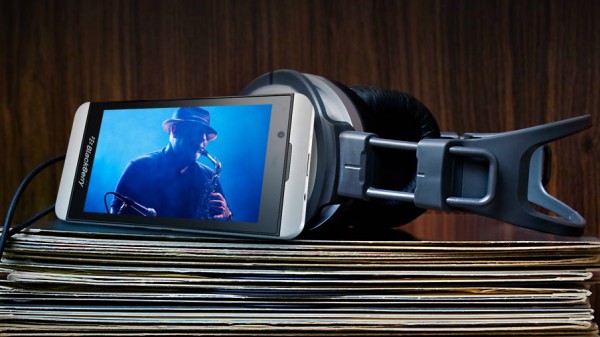
  • Who will buy the BlackBerry Z10?

    The question is top of my mind as the smartphone arrives in the United States today from AT&T and next week from T-Mobile and Verizon. Did I miss something, or is this an atypical debut? AT&T usually starts sales on Sundays. This is Friday, right? The phone, which launched January 30, could be yours today for around $200 with two-year contractual commitment.

    Way back then I asked: “Will you buy BlackBerry Z10?” The responses aren’t as interesting as the lack of them. Less than 700 as I write, which is a surprisingly low number for one of my buying polls and for such a hotly-anticipated device. One-third of you say, yes, by the way, “as soon as available”, which for Americans is today. Nearly an equal number of respondents will buy immediately or within three months as won’t buy at all — around 43 percent for each.

    AT&T sells BlackBerry Z10 for $199.99 with two-year contract, $449.99 with single-year commitment and $549.99 no contract or month to month. Obviously the carrier wants your money for 24 months. Verizon, which is accepting preorders (for March 28 availability), offers the Z10 for same longer-commitment price but more, $599.99, off-contract. All three carriers tout 4G LTE. Verizon’s network is largest, followed by AT&T, while T-Mobile is in processing of building out LTE.

    BlackBerry Z10 specs: 4.2-inch touch display with 1280 x 768 resolution and 356 pixels per inch; 1.5GHz dual-core processor; 2GB RAM; 16GB storage (expandable to 64GB with microSD card); 8-megapixel auto-focus rearing-facing and 2MP fixed-focus front-facing cameras; 1080p video recording (rear camera), 720p (front); 4G: Quadband LTE 2, 5, 4, 17 (700/850/1700/1900 MHz), Triband HSPA+ 1, 2, 5/6 (850/1900/2100 MHz), Quadband HSPA+ 1, 2, 4, 5/6, (850/1700/1900/2100 MHz), Quadband EDGE (850/900/1800/1900 MHz); Verizon 4G: LTE Band-13 (700 MHz), CDMA Cell-band and PCS-band (800/1900 MHz), WCDMA Band-1 and Band-8 (2100/900 MHz), GSM/EDGE Quadbands (850/900/1800/1900 MHz); WiFi N; 4G mobile hotspot; Bluetooth 4; NFC; micro-HDMI; accelerometer; ambient light sensor; gyroscope; magnetometer; proximity sensor; 1850 mAh battery; and blackBerry 10. Measures 130 x 65.6 x 9 mm and weighs 137.5 grams.

    Crappberry?

    Yesterday, BlackBerry revealed reaching 100,000 mobile apps in its store. “Top brands and application providers are joining us every day and are seeing the benefits of being early supporters of the new platform”, Martyn Mallick, BlackBerry vice president, says. “We constantly hear from developers that the BlackBerry 10 tools are easy to build with and that we provide opportunities for app differentiation that they do not see on other platforms”.

    While the number pales in comparison to Android or iOS, selection matters more. There, like Windows Phone, choices trouble — not so much for what’s missing but who isn’t supporting the platform. Facebook is available, but like Windows Phone, the app is homegrown, as is Google Talk. Instagram and pretty much anything Google are among the missing apps. Updated LinkedIn and Twitter apps arrived earlier this month.

    Showcase developers are crucial to gaining support, particularly with Android and iOS combined smartphone sales share topping 90 percent, according to Gartner. BlackBerry now battles Microsoft for the role of third platform, and there’s not much share to share.


    Sink or Swim

    During fourth quarter, BlackBerry OS smartphone sales share was 3.5 percent, just barely ahead of Windows Phone/mobile. By comparison, Android and iOS had 69.7 percent and 20.9 percent share, respectively.

    Three years ago, BlackBerry’s share of smartphones was 15.9 percent, according to IHS iSuppli. In 2012: 5.2 percent. For fourth quarter 2009, BlackBerry commanded 19.6 percent market share, putting it ahead of Apple (16 percent) and behind category leader Nokia (38.2 percent), according to IDC. Three years later, BlackBerry didn’t even make the top 5, with Apple in second place.

    So question “Who will buy BlackBerry Z10?” is no small one. Flagship smartphone, along with BlackBerry 10 OS, in some ways represent the company’s last stand. It’s do or die time. Gartner forecasts BlackBerry 10 market share not reaching 5 percent by 2010. Then again, the smartphone market remains volatile and analysts have repeatedly proved wrong forecasting sales or shipments.

    Loyalty Question

    What BlackBerry commands is loyalty, particularly among some enterprise customers and even President of the United States. In late January I asked you: “Should Barack Obama stick with BlackBerry?” The majority of respondents say “he should upgrade to BlackBerry 10”. From the arguably small sample size, nearly 50 percent say the President should stay with the BlackBerry platform.

    Gartner sees consumers as being more important and warns enterprises to “wait six months until it is clear that BB10 has proven successful in the consumer market”. That strikes me as putting BYOD — bring your own device — ahead of corporate IT needs, which include deciding whether to upgrade existing BlackBerries or switch platforms.

    Platform switching is crucial for BlackBerry, whether keeping existing customers or gaining new ones. Smartphones are more than devices, or even platforms, they are anchors to digital lifestyles. The more people invest in one, the less likely they will switch to another. BlackBerry’s immediate need is to close the artery and stop bleeding loyal customers to Android and iOS.

    Now that BlackBerry Z10 is really here, will you buy? Please take the original poll embedded above, if you haven’t already, and comment below.

  • Capcom Is Remaking The NES Classic DuckTales

    DuckTales is fondly remembered as one of the few licensed games that actually got it right. The perfect platforming and the amazing music have inspired countless gamers the world over. Now the classic is coming back and it looks better than ever.

    Capcom announced today at PAX East that it’s working together with Disney and developer WayForward to bring DuckTales back to current gen consoles. The game is being billed as a remake of the original NES title, but WayForward will be adding much more to the game. One of the additions is a recreation of Scrooge McDuck’s money vault that players will be able to swim in.

    Check out the first gameplay footage below and be prepared to get the DuckTales them stuck in your head all over again:

    DuckTales Remastered will be available this summer on Xbox Live Arcade, PlayStation Network, Nintendo eShop and PC for $14.99.

    In other classic gaming goodness, Capcom will also be bringing two classic Dungeons & Dragons arcade titles to XBLA, PSN, PC and the Nintendo eShop later this year:

  • Sony Xperia Tablet Z gets the teardown treatment

    Sony_Xperia_Tablet_Z_Teardown


    We know Sony’s Xperia Tablet Z is one heck of a device, but we know that more than a few of you out there have been intrigued to say the least to take a gander at its innards, right? Well you’re in luck as some ambitious folks decided to take some time and give us a gander of what’s inside powering the device. If you recall, the device is completely dust and water-resistant, so it’s only fitting that it is difficult to even access the inside of the device thanks to its heavy-duty tape on the back cover which covers the battery. Once that task is done, getting into the guts of the device is even more difficult as the teardown includes delicately handling the tablet in order to remove miniscule screws that hold much of the important components together.

    When all’s said and done— this job is certainly not one for everyone… but you’re probably going to want to see the insides of the device anyways– so hit the flip and check out the juicy teardown for yourself.


    Click here to view the embedded video.

    Come comment on this article: Sony Xperia Tablet Z gets the teardown treatment

  • How closely knit design and engineering teams put Pinterest on a rocket ship

    As businesses increasingly prioritize good design and as we start demanding it in our daily lives, more and more technology companies will face tensions over how to incorporate design principles without compromising on the engineering goals that can also make or break a product or service. It’s a challenge that every company handles differently, and in many cases, one group wins out at the expense of another’s ideals.

    But at Pinterest, the social media darling that has seen incredible user growth over the past few year and whose design has copied widely, the designers and engineers have one seemingly-improbable message: We can do both. At least for now, anyway: one of Pinterest’s greatest challenges in turning from web sensation into a viable business will be its ability to adhere to these principles as revenue and profit pressures sink in.

    pinterest

    I talked with Pinterest software engineer Joshua Inkenbrandt and lead product designer Jason Wilson this week, and we discussed the recent Pinterest re-design: specifically, how both visual and engineering elements played into the overhaul, and how those tensions play out at Pinterest. The two were obviously passionate about the issue, re-iterating the unique qualities of Pinterest’s internal culture and the crossover between their roles. At one point, Inkenbrandt referred to a feature that Wilson had designed, and Wilson automatically jumped in to correct him:

    “It’s the designs that I visualize. We’re all designers.”

    But at an awful lot of companies, designers and engineers aren’t finishing each other’s sentences. Kleiner Perkins partner and former Twitter VP of engineering Michael Abbott explained the tensions best at our Structure:Data conference this week: “The tension on the design side is that it’s never good enough,” he said, “and on the engineering side he or she wants to ship… How do you get that balance? Because you still need to ship.”

    Building a culture of mutual respect

    It’s not that Pinterest is somehow immune from the tensions that other companies face. In fact, Wilson and Inkenbrandt noted that they think the media has probably underplayed just how much the site has changed over the years and the compromises that are inherent in every tweak:

    “With every feature, there’s that tension between it being beautiful and then figuring out how hard it is to actually implement it. So everything you see on the new site has actually gone through that balance,” Inkenbrandt said. For instance, just looking at the main Pinterest grid — which doesn’t feel like it’s changed all that much since the site launched in limited beta in March 2010 — you would never know the number of iterations it has gone through.

    RoadMap 2012 Ben Silbermann Pinterest

    Ben Silbermann, CEO, Pinterest RoadMap 2012 (c) 2012 Pinar Ozger [email protected]

    “We’ve iterated on that 70+ times,” said Inkenbrandt, who just joined the company slightly more than a year ago. Of course, rapid iteration on the web wasn’t invented at Pinterest: Google’s web development strategy in its early years, overseen in large part by current Yahoo CEO Marissa Mayer, blazed this trail for a generation of Silicon Valley engineers and designers.

    In the relatively short time Inkenbrandt has been with Pinterest, the company has grown from about 17 employees to more than 100. Pinterest does not release official user stats, but recent ComScore numbers put users of the popular social content pinning site at more than 48 million unique visitors globally, and a February Pew report put the percentage of online adults using Pinterest at 15 percent, which is about the same as the number who use Twitter. The company recently raised $200 million in a new round of financing, putting its valuation at $2.5 billion.

    So the fact that the company has managed to weather this type of rapid growth without any notable or constant outages (just compare to the number of fail whales in Twitter’s early years), while also remaining one of the most-copied designs on the web at the moment, certainly speaks to Pinterest’s ability to balance both priorities.

    It comes down to the company’s culture, the two said, in that the company values open communication among employees and prioritizes the goals of both designers and engineers. Of course, whether this can scale along with the company is always in question — it’s easier to support both when you’re just a 20 person operation. But the two said that heavy involvement from co-founder Evan Sharp plays a key role in fostering that balance.

    “Evan himself designed and coded the original site,” Wilson said. “So we know that at the end of the day he understands what it takes to get it done.”

    Wilson, who’s designed for companies like Apple, Lytro, and Adobe, said he thinks the company’s efforts to make sure new hires understand the importance of collaborative culture has helped keep the company on that track:

    “I’m basically a vagabond in the industry. I’ve worked at a hell of a lot of places. And every place has its way of doing things. When I worked at Apple, it was very design-centric, and things came from the direction of the executive and it’s thrown over the wall at the engineers. And I’ve worked at places like Adobe, where they develop the features and then say, make it look good. And I don’t believe personally — and this is just a personal opinion — that either of those really are ideal. It’s not bullshit to say that here, it’s a total team effort. I can point to a design element, like actual pixel-level design elements, that Josh gave me creative direction on.”

    Design and engineering building the new look

    pinterest new look screenshotPinterest rolled out its new design to the general public earlier this week, and to the un-trained (or un-Pinterested) eye, the new look wouldn’t seem too different. But two key changes to the look — larger pins, or photos, that come with the content suggestions along the side, and a new way to remain in-stream while scrolling — actually started at engineering problems that were solved by the design team.

    The engineering team had long wanted to fix some of the structural issues that had come with the site’s rapid growth, Inkenbrandt said, and one of them was how to suggest more content for users in a way that was both natural and useful. But in the end, it was Wilson’s design team that found an answer to the recommendation engine quest, by surfacing similar pins from boards users had created:

    “One of our challenges was how to recommend content,” Inkenbrandt said. “So we’re coming up with like, secret sauce algorithms, where we’re trying to figure out based on content what people might like. And then it turns out that based off the design, just having the actual board where the pin was from, well, that content is obviously highly relevant, usually in the same theme, and can help people find great stuff.”

    By showing related content next to individual pins, and then allowing users to navigate to that content without leaving their spot in the stream, also solved another engineering issue with navigation. Wilson said Sharp gave him and the designer some high-level goals for the re-design, and one was to make the overall feel much more lightweight.

    “Before, you would look at one close-up and then go back to the grid and then back to the close-up. So we wanted to figure out a way so you wouldn’t have to do that jump. It seems like a simple thing, but if you’re on there for an hour let’s say, and you do that repeatedly, you might do that a few hundred times.” he said. “To me anyway the holy grail to navigation is to get to the user to navigate via content.”

    But while Pinterest has been able to balance the priorities of design and functionality fairly remarkably so far, the rubber might be about to hit the road. The company has been nudging its way toward a business model recently, adding features like analytics for businesses and encouraging marketers to the site, which makes sense if the company is going to live up to that $2.5 billion valuation.

    But just ask Twitter and Facebook: it’s a lot easier balancing design and engineering when salespeople aren’t breathing down your neck every day.

    Related research and analysis from GigaOM Pro:
    Subscriber content. Sign up for a free trial.

  • Why Bitcoin poses an interesting ethical conundrum for journalists

    Bitcoin is having a wild ride right now. Partly due to the euro crisis, and partly due to a lot of press coverage, some people seem to be taking a keen interest in the crypto-currency — in the last week, its value in relation to the U.S. dollar has shot up by almost 60 percent.

    As I mentioned the last time I wrote about Bitcoin, I’m not an economist: I’m a technology journalist who is intrigued on a technical level by the theory and mechanics behind a distributed, algorithmically-generated “currency”, and that makes me want to track it and occasionally cover it when the tech angle is strong. Now, I don’t actually own any Bitcoins, but what if I did?

    If I were to own stock in a tech company (I don’t, by the way) and I found myself writing about said company, I would at the very least be obliged to put a disclosure into the article — in fact, I would probably just avoid writing about the firm altogether. However, bloggers and journalists don’t follow that convention with currencies. Imagine an American journalist covering the fortunes of the dollar, and putting in a disclaimer to say that all her savings are held in USD – it would seem daft.

    So I posed the question on Twitter earlier: “What are the ethics of writing about Bitcoin if you’ve bought some (I haven’t). Does it require stock-style disclosure?” Some quickly responded in the affirmative:

    Whereas others were more circumspect:

    There’s some serious debate going on about whether or not Bitcoin actually is a currency, but I (like the U.S. Treasury Department, it seems) feel that it is, albeit an unique one. Its uniqueness stems not only from the way in which its creation is automated, but also from its current volatility and, crucially, the fact that people don’t generally understand it very well. We all know what nationally-issued currencies like dollars and yen are, and we don’t need the concept explained to us every time we read an article about them. The situation with Bitcoin is very different.

    I strongly suspect Bitcoin’s meteoric rise in recent weeks is largely an echo chamber effect — coverage begets coverage — which puts those writing about it in an unusual position. We bloggers and journalists have an extraordinary amount of influence in people’s perceptions of Bitcoin and, as a result, the trajectory of its value. For that reason alone, I think any coverage from a writer who has bought into Bitcoin should come with a clear disclosure.

    That said, my colleague Tom Krazit also brought up an interesting tangential point in discussion, suggesting that writers covering Bitcoin may actually have an obligation to buy into it on a low level, so they can conduct a few transactions and basically have a clearer idea of what they’re talking about in their coverage.

    This is all clearly a new and unusual field to explore, so I’d be interested in hearing further thoughts on the subject.

    Related research and analysis from GigaOM Pro:
    Subscriber content. Sign up for a free trial.

    • ZTE Grand X Quad Shown Off In Leaked Photo

      ZTE Grand X Quad

      evleaks on Twitter has a history of leaking photos and one such photo of the ZTE Grand X Quad is up for all to see. It looks relatively nice and specs aren’t so bad either with a 5-inch 720p HD display, 1.2 GHz quad-core processor, 8 megapixel camera, dual-SIM support, and 2500 mAh battery. As with any leak, we can’t guarantee this is what the ZTE Grand X Quad will truly look like and it may not make it to the US. Also, with ZTE not releasing any pricing, availability, or specs, one should take these specs with a grain of salt until we hear more.

      Source: evleaks

      Come comment on this article: ZTE Grand X Quad Shown Off In Leaked Photo

    • Google’s Brin says Glass fits with company’s plan for ditching traditional search [video]

      Google Founder Brin
      If you’re the sort of person who walks into lamposts because you look at your smartphone too much, then Google (GOOG) founder Sergey Brin thinks you’re the perfect person to buy Google Glass. Speaking at the TED2013 conference this week, Brin explained that Google wanted to develop the Glass headset to free people from constantly looking down at their smartphones and declared that Glass “frees your hands and frees your eyes.”

      Continue reading…